

Articles Archive - Page 291 of 928 - REMINET
REMI

Attracting talent in a competitive job market

In today’s competitive job market, finding, recruiting, and retaining employees is a challenge for most business sectors. But for rental housing providers catering to a wide range of demographics and personalities, the importance of having a reliable, professional, service-oriented staff can’t be underscored enough.

“We have an operating philosophy at M&R Holdings that we’ve been adhering to for decades,” says Randy Daiter, Vice President, Residential Properties. “We put our employees first, and our customers second. The reason is that if you take care of your employees first then they’ll take care of your customers.”

Daiter says this strategy has contributed greatly to his company’s high employee and tenant satisfaction ratings, which in turn, has helped produce a continuous stream of brand ambassadors. Given one of the primary goals of this business is to attract new tenants and fill vacancies as efficiently as possible, the positive word-of-mouth generated by those immersed in a building’s culture is an advantage with lasting results.

“We found that our operating practices for the preceding decades helped us when our industry was in a crisis,” he says, referring to COVID. “In the end, we experienced lower vacancies than other buildings, and lower employee turnover. As Collin Powell once said, organizations don’t really accomplish anything. Plans don’t accomplish anything, either. Endeavors succeed or fail because of the people involved. Only by attracting the best people will you accomplish great deeds.”

Sarah Yusyp, Director of Human Resources at Skyline Living, concurs, calling the process of finding, hiring, training, and retaining the right people for her organization critical.

“We are an essential service that provides best-in-class living accommodations and superior customer service to our tenants,” she says. “Our front-line staff are the face of our organization and the individuals offering that exceptional customer service. If those front-line employees are understaffed or poorly retained and are leaving our organization taking their years of knowledge with them, it affects the service our tenants receive. Hiring, training, and retaining the right talent is what keeps Skyline competitive. It’s at the forefront of our operational needs.”

So, how does an organization attract the best people?

According to Daiter, if your company has a good reputation which it continuously upholds with a track record that can be researched, job candidates will be more inclined to apply for an open position.

“Our corporate culture and clearly-defined values have taken us a long way, helping us win two FRPO customer service awards two years in a row,” he says. “This acknowledgement by the industry has translated into our strong reputation both online and informally among industry employees and talent recruitment agencies.”

Having solid leadership is another important cog in the machine—as is an organization’s commitment to developing, nurturing, and recognizing talented prospects. If an employee seems like a “good fit” and shows long-term potential, keeping that individual engaged, motivated, and properly compensated for their efforts is better than the alternative: losing out to a competitor after months of investing in training and development.

“It’s nothing like it was a few years ago,” Daiter says. “People want more flexibility and the right to work from home. There just aren’t as many qualified candidates to choose from, and salary expectations have gone up along with the expenses of running an apartment building.”

Impacts of the pandemic

Since COVID-19 shuttered the world in March 2020, the employment landscape has changed considerably. Long-term efforts to mitigate the virus have impacted everything from where and how people work, to what they expect from their employers. For rental housing providers, even the tenants have been affected—meaning both employees and residents are demanding more from property management, and both are prepared to walk if the conditions aren’t right.

Five years ago, we could find highly skilled candidates and fill a vacancy within a few weeks,” Yusyp says. “Today, it’s the opposite. With a surge of open positions following the curve of the pandemic, paired with labour shortages, it’s now a candidate’s market.”

In other words, candidates are in the driver’s seat throughout the recruitment process unlike the days of old. Candidates are being more selective about which employers they will apply to from the get-go, resulting in fewer applications and far less choice. Adding to the challenges, Yusyp says jobseekers today are fierce about negotiating higher salaries while considering multiple offers at once.

“We just can’t spend as much time evaluating a candidate anymore, or we may lose them to our competitors,” she says. “Furthermore, we’ve seen a notable shift in our interview process: it’s not just us asking the candidate why they’d like to work for us, it’s the candidate asking us the tough questions. Today, we have to sell our company just as much as the candidate has to sell themselves.”

For this reason, Yusyp says Skyline Living has had to evolve the ways in which it attracts candidates to remain competitive in this new labour market, putting more emphasis on the benefits the organization has to offer versus the vacant position simply selling itself.

Mental health, wellness, and the environment

While COVID has left a devastating trail in its wake, it has also shone a spotlight on our mental health and wellbeing— something that used to be considered out of the realm of an employer’s responsibility. But after months of isolation, uncertainty, and operating in an environment with heightened needs to sanitize and social-distance, pandemic measures have taken their toll on much of the workforce and altered the perspective of what’s considered normal.

“Gone are the days of working long, grinding hours,” says Yusyp. “Employees today aren’t just expecting a paycheque for their hard work; they want to work for an employer who truly cares about their needs and supports work-life balance. Based on these expectations, at Skyline we heightened our focus on training and communication. Our front-line staff require training that is more readily available, accessible, and functional in a virtual environment.”

Clear, timely and continual communication is another requisite of site-staff who want to feel seen and heard. Essentially, Yusyp says employees are seeking a caring work community that respects them and aligns with their values, while also showing a commitment to the greater good. More than ever, employees are placing a high importance on their companies’ environmental, social, and governance (ESG) strategies, reinforcing the point Daiter made earlier that corporate culture counts for a lot.

In closing, Daiter says, “I wouldn’t be surprised if we moved to a four-day work week at some point in the future given the importance of work-life balance. Five years ago, that concept would have seemed far-fetched.”

job satisfactionThe Pillars of Job Satisfaction

Sarah Yusyp, Director of Human Resources at Skyline Living, shares what matters most to employees in today’s competitive job market: 

Purpose – employees need to know how their efforts contribute to the organization they work for. They want to be a part of change and growth.

Growth – employees want to know that they have a future at their organization. They want their employer to provide a place where they can develop their skills and be recognized for their achievements.

Culture – the call to organizations for systemic reform has never been louder. “At Skyline Living, we hear those calls and are committed to change. We are continuously learning and actively exploring what it means to be a diverse, inclusive, and sustainable employer, with the goal of fostering an environment where social and environmental sustainability is upheld, and where all our employees feel supported to be their most authentic selves.”

Total Rewards – employees want to work for an organization that compensates them fairly for the work they do and provides them benefits that promote and support their mental well-being.




Bruny Surin tapped to motivate Quebec landlords

Olympic gold medalist and entrepreneur, Bruny Surin, has signed on as a motivational consultant for Quebec’s rental housing industry association, CORPIQ (Corporation des propriétaires immobiliers du Québec). The new role is envisioned as a chef de mission for Quebec landlords with Surin available to offer mentorship and team-building guidance.

“The decision to select this world-renowned candidate reflects CORPIQ’s values to promote: self-improvement; the continuous acquisition of knowledge; personal and professional growth,” affirms a statement from the organization, which boasts more than 30,000 members who collectively own more than 600,000 rental housing units, and a network of 150 product and service providers to the industry. “His human approach, personal experiences and life journey will be an asset to the well-being of both landlords and tenants.”

Surin is leadership consultant, philanthropist and owner of an apparel company. He is a member of the Order of Canada and an inductee in the Canadian Sports Hall of Fame, the Canadian Olympic Hall of Fame and the Quebec Sports Hall of Fame.

Surin has been appointed chef de mission of the Canadian Olympic team for the 2024 games in Paris. During a long and successful track and field career, he competed in four Olympic games, was a 1992 finalist in the 100 metres and a 1996 gold medalist in the 4×100 relay. He also won two world championships as a 4×100 relay team member.

Through the new collaboration with CORPIQ, Surin will be available as a workshop leader and motivational speaker. CORPIQ and Surin will also continue existing joint efforts as patrons of Projet Clé, a foundation of Centre de protection de l’enfance et de la jeunesse, which provides support for youth as they turn 19 and move out of government custodianship.

Alexandra Park opens in City of Richmond

The City of Richmond has officially opened its new Alexandra Park within the Cambie neighbourhood.

“Dynamic parks such as this, which provide amenities for residents to play sports, enjoy a new playground, walk their dogs or simply enjoy nature right here in the city centre are key to making Richmond the most livable and appealing community in Canada” said Mayor Malcolm Brodie. “The main objectives of the Alexandra Neighbourhood Park design were to preserve the natural character of the existing site, meeting community needs for active recreational opportunities and addressing sustainability and environmental features”.

The park’s ecological features include incorporating existing established trees, shrubs and undergrowth; adding over 80 new trees and more than 2,300 new shrubs and perennials; as well as groundcover plants, wildflower meadows and a new storm water retention pond. The meadows offer important foraging opportunities for resident barn owls in the area.

The park shares its location with the city’s internationally recognized and award-winning Alexandra District Energy Utility – a low carbon energy plant and underground renewable energy source. Renewable energy is extracted from the earth at the location from more than 300 vertical boreholes, each 250 feet deep, using ground-source heat pumps and geo-exchange technology. These provide heating and cooling for over 2.5 million square feet of space in the surrounding buildings. The colourful utility plant also offers public washrooms, an overhang for rain shelter for park users, along with nesting boxes for local barn owls.

In addition, the park hosts the city’s newest public artwork, Pergola Garden, which will serve as an impressive focal point and a place for people to gather and build community under a canopy of climbing plants in the years to come.

In conjunction with existing and future sections of the Alexandra Greenway to the north and south, this park contributes to a continuous green corridor between the Garden City Lands and Cambie Road contributing to pedestrian and recreational opportunities in the neighbourhood.

Permanent repairs to begin on Coquihalla Highway

Permanent repairs to flood-damaged sections of the Coquihalla (Highway 5) and Highway 1 are set to begin this summer.

The contract for development and early construction work on sections of the Coquihalla between Hope and Merritt has been awarded to KEA5, a joint venture between Peter Kiewit & Sons and Emil Anderson Construction.

The work to return the Coquihalla to the previous full, four-lane capacity will take place at three sites:

  • Bottletop Bridges, 50 kilometres south of Merritt;
  • Juliet Bridges, three kilometres south of Bottletop; and
  • Jessica Bridges, 48 kilometres south of Juliet.

Work is expected to be substantially complete this winter. All efforts will be made to minimize traffic disruptions during peak travel hours, and crews will work overnight when possible.

“This marks a significant milestone in our recovery from the devastating atmospheric river events of last fall,” said Rob Fleming, minister of transportation and infrastructure. “Following the extraordinary work that was done to reconnect these highways in December, we’re building back permanent infrastructure that will be equipped to better withstand the impacts of climate change and future extreme weather events. I want to extend my sincere thanks and appreciation to all those who have worked together to help us recover from the unprecedented floods, including the local First Nation communities that continue to work closely with us as we move into this next phase of recovery.”

The project will be completed through a collaborative construction model where the owner and contractor work together to complete the design and construction of the project, including sharing risks and incentives.

The ministry has also issued a request for proposals (RFP) for damaged sections along Highway 1 through the Fraser Canyon. The RFP process invites select contractors who qualified through the Highway Reinstatement Program request for qualifications (RFQ) process to take part in the competitive selection process to design and construct the permanent repairs needed at:

  • Falls Creek Bridge, 55 kilometres south of Spences Bridge;
  • Tank Hill Crossing, 23 kilometres south of Spences Bridge; and
  • Nicomen River Bridge, 19 kilometres south of Spences Bridge.

The RFP for the repair project will close Sept. 14, 2022, with the contract awarded shortly after.

Largest mixed-use Forest Hill project in the works

A three-tower community will take shape on a vacant corner near the St. Clair West subway station. Forêt will be the largest mixed-use project to rise in Forest Hill —a neighbourhood with an aging population potentially looking to downsize.

Forêt is the latest project by Canderel. Suites ranging from studios to three-bedrooms will top ground-floor retail and a childcare centre at Bathurst and St. Clair, with new pedestrianized areas and green space surrounding the transit-oriented development. The dedicated St. Clair streetcar is located directly in front of the community.

Across the 40,000 square feet of indoor and outdoor amenity space are exterior terraces and two pools, a wine lounge, co-working spaces, games room, a kids indoor playroom that connects to an outdoor movie theatre, a “Secret Garden” and a health and wellness facility.

Forest Hill

A kids playroom. Image by Canderel.

“Forest Hill historically has been known as a neighbourhood at the forefront of high design with some of the most sought-after real estate in the country,” says Ben Rogowski, COO, Canderel. “In keeping with that sentiment, we’re bringing a vision that will celebrate the history of the area while ushering in a new era of sophisticated urban living.”

Forest Hill

Ground-floor retail enlivens a new urban public square and city park. Image by Canderel.

The three buildings appear aesthetically similar yet with slightly different features.

The first tower has tall and slender proportions. A light-coloured podium façade, accented by bronze panels, adorn the second and third towers. “With Forêt, we’re marrying the modernist, luxury buildings and wide boulevards of St. Clair to the east of the site with the charm of the traditional retail storefronts to the west,” says BDP Quadrangle Principal Sami Kazemi.

Landscape Architecture Firm, Site/C, led the vision for the privately owned public space, which will become a corridor to a new city park. “The intent behind the public space at Forêt was to create a dynamic area for people to walk, sit, and participate in activity, not just pass through,” says Marvin Cruz, principal, Site/C Landscape Architecture. “We are working towards a design to include a variety of programming such as feature walls with natural elements, street furniture, public art and feature lighting.”

A nine-floor “Boutique” on top of the East tower will include access to a private lobby, amenities, and suites with 10-foot ceilings. Purchasers can also combine suites to create larger homes with custom finishes. The private, boutique level amenities include a chef’s kitchen with dining and seating connected to an outdoor terrace with barbecues, fireplaces, and communal seating.

Inside, the design will bring together materials of natural wood, stone and metal to create a sense of calm. Dan Menchions, partner, II BY IV DESIGN, says the firm is also working with Canadian artists to install traditional and sculptural art throughout the buildings’ corridors, lobbies, and amenity spaces.

Forest Hill

Forêt’s towers. Image by Canderel.

New UBC residences open with Musqueam names

Five new UBC Vancouver student residence buildings were formally opened at a special naming ceremony hosted by xʷməθkʷəy̓əm (Musqueam Indian Band) in June.

The buildings, initially called UBC Pacific Residence, were collectively gifted the hən̓q̓əmin̓əm̓ name tə šxʷhəleləm̓s tə k̓ʷaƛ̓kʷəʔaʔɬ (The Houses of the Ones Belonging to the Saltwater) by Musqueam in the spring of 2021.

Since then, each of the five buildings received its own name:

  • təməs leləm̓ – Sea Otter House, opened to residents Apr. 2022
  • sqimək̓ʷ leləm̓ – Octopus House, opened to residents Apr. 2022
  • sɬewət̕ leləm̓ – Herring House, opened to residents Jan. 2022
  • q̓əlɬaləməcən leləm̓ – Orca House, opened to residents Sept. 2021
  • qʷta:yθən leləm̓ – Sturgeon House, opened to residents Sept. 2021.

“UBC is deeply honoured to be gifted these hən̓q̓əmin̓əm̓ names from Musqueam, and we respectfully acknowledge that gift,” said UBC president and vice-chancellor Santa Ono. “UBC’s 2020 Indigenous Strategic Plan pledges to enrich our campus spaces with a stronger Indigenous presence, and we commit to being good stewards of the names that have been entrusted to us. It is the university’s hope that through these names and the buildings’ design that residents and guests will develop a deeper appreciation and understanding of Musqueam history and storytelling.”

Construction on the new residences began in October 2019. The development provides 743 beds for upper-year and graduate students and another 196 hotel suites at the northeast corner of campus. Total floor size is 334,000-square feet and the total cost of the development was $165 million.

The residence buildings are between seven and 10-storeys and are sited in a horseshoe shape around the Walter Gage Residence buildings at Wesbrook Mall and Student Union Boulevard, near the AMS Nest, Aquatic Centre and bus loop.

Each building’s front features signage displaying the hən̓q̓əmin̓əm̓ and English names. Etched-glass canopies with designs by Musqueam artist Kelly Cannell cast shadows of the namesake animals over key pedestrian walkways. Inside, lobbies feature story walls, detailing the significance of each of the animals to Musqueam.

OXWELL: The perfect modern disinfection solution

In just a few years, cleaning and facility management have undergone big changes. The renewed focus on cleaning and disinfecting for health has raised standards, streamlining cleaning operations and increasing efficiencies are vital, and the ongoing quest to operate sustainably and with environmental responsibility continues.

Marrying all these objectives together can be difficult for facility management and staff.

OXWELL SOLUTIONS offers environmentally friendly, low-cost solutions using proprietary electrotechnology to protect workers and the public from pathogens. The company, based in Sherbrooke, Queb., is a spin-off of environmental company E2metrix, which makes and sells reactors for wastewater treatment and has a total of 14 patents and more than 200 reactors deployed on 24 sites, providing environmental solutions with annual saving of up to $1 million.

To combat the challenges posed by the pandemic and to leverage its proprietary electrotechnology, E2metrix launched OXWELL SOLUTIONS to supply a top-quality hypochlorous acid (HOCl) solution, OXWELLTM Multipurpose Disinfectant.

The marvels of HOCl have been known by scientists for decades, but industries are only just waking up to the power of this agent to combat pathogens. OXWELL SOLUTIONS has created a technology platform to generate a readily available HOCl-based solution that can be delivered in bulk at a variety of concentrations or produced on-site with a unique, pay-per-use business model to avoid unnecessary transportation costs and greenhouse gas emissions.

The E2MOXTM STATION: A self-sustaining solution

Developed from a patented process and using HOCl as the active ingredient, OXWELLTM Multipurpose Disinfectant is a ready-to-use, broad-spectrum, Health Canada-authorized disinfectant that kills bacteria and viruses on hard, non-porous surfaces. While OXWELLTM disinfectant is available in pre-packaged form, OXWELL SOLUTIONS has also made its production capacity available to the market to support your expanding commercial activities, no matter the industry.

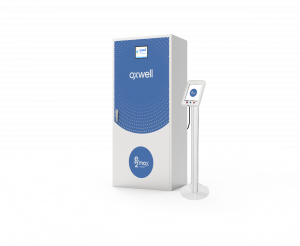
This innovative solution, the E2MOXTM STATION, is an on-site, on-demand OXWELLTM production system. The station, with its paradigm-shifting pay-per-use model, is easily usable by in-house facilities management team, staff, and employees as well as designated cleaning service providers and allows for both large-scale facility disinfection and individual employee workspace use.

The on-site production offers you the chance to be self-sustainable in your disinfection process via numerous benefits including:

  • Flexibility and automation – the E2MOXTM STATION allows more control and customization of disinfection processes and is readily available across all functions and areas, whether you’re operating a small individual building or a large industrial or institutional complex. The flexibility allows for increased frequency and spread of disinfection as needed. The automated production and remote monitoring mean the Station can operate with minimal maintenance.
  • Cost savings – installing the station on-site dramatically lowers disinfectant and environmental costs. Its innovative pay-per-use model requires little capital expenditure, and the disinfectant is made only with water, salt, and electricity. The ready-to-use disinfectant requires no mixing, dilution, special handling, or protective equipment.
  • Peace of mind – beyond meeting technical facilities disinfection needs, the Station facilitates employee engagement and provides a sense of well-being and comfort around the safety of personal and shared work areas.

Just ask Parks Canada’s La Mauricie National Park in Quebec, which produces OXWELLTM on-site using the E2MOXTM STATION for widespread daily use in its 536km² park. Park staff and services employees report finding it very efficient and easy to use, without smell and with rapid drying on surfaces. “Producing this top-quality local product on-site means we will never wait for delivery again!”

OXWELLTM Multipurpose Disinfectant: Simple, effective, and secure

Produced by the E2MOXTM STATION, OXWELLTM Multipurpose Disinfectant is ideal for use in commercial, industrial, hospital, and domestic environments. It is non-irritant and 99.99 per cent effective against the human coronavirus in 60 seconds and can be freely applied near people without vacating the area. Made from only water, salt, and electrotechnology, it does not tarnish or degrade surfaces, leaves no surface residue, and contains no dyes, fragrances, or additives. It’s a significant cost and time savings, too, with no mixing, measuring, or trained technicians needed to administer.  OXWELL™ is available in 946 ml, 3.78 L, 18.9 L, 205 L and 1,000 L formats.

Ontario’s Live Active Sports Medicine uses the pre-packaged disinfectant at its two locations between every patient and on all major touchpoints throughout the clinic. The disinfection is handled easily by all medical staff, who love its soft, anti-irritant nature and the fact it does not damage the material of treatment tables, “something that has been hard to find during COVID”. Overall, they describe it as the best disinfectant they have used throughout the pandemic.

Meet your ESG goals with OXWELL SOLUTIONS

As any facility owner or manager will know, meeting your environmental, social, and governance (ESG) goals can be difficult, particularly in the post-pandemic climate when resources are often stretched thin while the standards for disinfection keep rising. OXWELL SOLUTIONS can help you achieve these targets and build for a sustainable future with a cost-effective solution that fits neatly into your budget.

It is increasingly important in today’s world to be concerned about what is actually in the products you are using. Disinfecting for health extends to your disinfectant itself. OXWELLTM Multipurpose Disinfectant uses just salt, water, and electricity to create a stable solution that respects the environment at each step of the production process and in its usage. That’s it – there are no harmful additives or environmentally harmful byproducts. This is greener disinfection that is simple to understand and allows you to kill germs, not the environment.

Installing the E2MOXTM STATION on-site and utilizing its pay-per-usage model offers clear benefits that lower both financial and environmental costs. Implementing the system allows you to keep up with changing health and sustainability benchmarks and quickly adapt without costly disruption to your existing protocols and workflow.

OXWELL SOLUTIONS also offers facilities a system with the ability to produce HOCl on-site for several industries, such as pharmaceutical, food and beverage, agricultural, jan-san, real estate, schools, public transport, and many more.

Ultimately, OXWELL™ and the E2MOXTM STATION are an ideal pairing to help project and expand your environmental commitments to and achievements in wellness and sustainability in a transparent and tangible way both internally and externally.

ESG and sustainability processes and policies have become a more important priority than ever for staff, stakeholders, and customers. With OXWELL SOLUTIONS, you can meet these challenges head-on and safeguard the future of your facility and industry.

Fuel-switching challenges expected to ease

Climate, cost and capacity pose fuel-switching challenges for building owners looking to curb greenhouse gas (GHG) emissions in line with Canada’s target for a 40 to 45 per cent reduction below 2005 levels by 2030. Industry panellists contemplating the electrification of mechanical systems during a recent Canada Green Building Council (CAGBC) conference in Toronto acknowledged that the leap to net zero comes with varying degrees of difficulty from region to region across the country.

For example, British Columbia’s lower mainland enjoys the twin advantages of a clean electricity grid and milder winter temperatures that generally don’t compromise the effectiveness of air-source heat pumps. Elsewhere, the arrival of new technologies and ongoing replacement of fossil-fuel-fired power generation with renewable sources are expected to ease the transition to low-carbon heating and domestic hot water systems, but that’s occurring on a patchwork of timelines.

A carbon price on pace to reach $170 per tonne by 2030 and the potential for other regulatory and investment-related imperatives are now reshaping conventional cost-benefit analyses. Yet, even as the commercial real estate industry is urged to readjust priorities from incremental improvements with quick paybacks to big-ticket, deep retrofits, energy efficiency continues to be a preferred gateway to decarbonization for many companies pursuing emissions reduction targets.

“One of the goals along with heating electrification is to reduce the amount of heat we need. It seems like now we’re talking about carbon, carbon, carbon, carbon, but energy efficiency is still very much the first thing that we focus on,” affirmed Ariel Feldman, director of sustainability with Choice Properties. “You still need to take all those steps first because, from the owner’s perspective, electrification is not necessarily going to pay back. You might spend more money up front and you might spend more money on the operations side. That’s not a very good business case to start from.”

That said, he maintains business cases should no longer be anchored in the supposition that a boiler has a 30-year life cycle. Speaking at the REMI Show earlier this month, Jeff Ranson, director of energy, environment and advocacy with the Building Owners and Managers Association (BOMA) of Greater Toronto, hammered home the same message.

“If you’re comparing the cost of zero carbon with your current operating costs, that’s a false equivalency because your current building operations may not be possible in the future. Business as usual may not exist, and probably won’t exist,” Ranson submitted. “We’re not typically factoring in changes to the asset value whether or not your building is aligned with carbon targets. We’re not factoring carbon pricing. We’re not factoring in policy risk.”

“The sticks are coming,” Steve Kemp, a principal with RDH Building Science, warned CAGBC conference attendees.

Incentives and obstacles for electric heat pumps

In British Columbia, there’s now one such stick intertwined with a carrot. Since the release of the provincial budget on February 23, 2022, the provincial sales tax (PST) on gas-fired heating and cooling systems has jumped from 7 per cent to 12 per cent, while heat pumps are now exempt from PST.

“To qualify, it must be a heat pump for air-conditioning and heating, where your heat pump is your primary heating and cooling system,” said Pushpinder Rana, senior director, commercial products and industry relations, with Mitsubishi Canada’s HVAC division. “Those are huge trigger points, and we are seeing similar movements across Quebec.”

Kemp outlined some of the obstacles to adoption. Notably, some air-source heat pumps employing variable refrigerant flow (VRF) technology function well down to temperatures of minus 30⁰ Celsius, but, predominantly, hydronic systems “go kaput” at about minus 15⁰ C, necessitating backup boilers in areas where the temperature falls below that threshold. Because heat pumps circulate lower-temperature water — at about 49⁰ C versus 82⁰ C with boiler systems — a switchover will likely also entail replacement of space heating equipment.

“Whether it’s a fan coil, baseboard convector or radiant panels, at these lower temperatures, you need a bigger physical thing to deliver the same amount of heat to that space,” Kemp advised. “We may be gutting every baseboard convector, every fan coil in the building.”

Retrofitters are installing larger convectors and fan coils, multiple-row fan coils or fan-assisted baseboard convectors. However, reinforcing Feldman’s argument for prioritizing energy efficiency, Kemp also cited an example of a major retrofit where his firm derived sufficient savings from building envelope improvements to cancel out such required investments.

“There, we basically cut the heating demand by 75 per cent and theoretically could have kept the same mechanical system,” he noted. “Sometimes you can get lucky.”

In the future, hybrid hydronic-VRF heat pump systems are expected to improve cold-weather performance and mitigate uncertainty around pending phase-downs of some hydrofluorocarbon (HFC) refrigerants. Rana sketched out a range of existing and emerging VRF heat pump and heat recovery products he predicts will increasingly capture market share, including hyper-heating technology for cold-temperature performance and a water-source format.

“There is a huge gap between what a heat pump or heat recovery solution provider can offer to the market and the understanding and the knowledge the market has,” he asserted. “We have training for consulting engineers. We have training for contractors. The objective is to educate the market.”

Alternatively, geo-thermal systems promise consistent output everywhere the required wells can be accommodated.

“If you’ve got space on your site for geothermal, you can do it across the country and we’re seeing really good paybacks even on a 15-year assessment,” reported Cara Sloat, senior engineer with the mechanical and electrical engineering firm, Hammerschlag and Joffe. “It’s worth looking at that technology even if you’ve previously been worried that you can’t afford it. Some of the big banks are financing that now also, so that can take it off your project’s books and get it somewhere where it’s easier to deal with.”

Mapping out strategies to 2030 and 2050

She suggests the timing is right to convert to a heat pump in any building with a cooling system approaching the end of its life cycle, but also highlighted potential for capital planners to stretch the expenditure over a longer period.

“There are a variety now of quite good heat-only heat pumps on the market so you can get something that is optimized for heating only that would do your domestic hot water plant and directly replace a boiler,” Sloat said. “So maybe you do half the plant now and you think about phasing. That is available.”

Meanwhile, a portfolio primarily consisting of open-air retail and industrial warehouse buildings has given Choice Properties more flexibility for a phased approach to its 2050 net zero target. Feldman projects rooftop HVAC units will need to be replaced at least twice in that period and, for now, that means dual-fuel gas and electric systems in some cases. It’s an approach he aims to minimize given the extra costs of two systems, but it’s a necessary contingency to address concerns about pass-through utility costs to tenants and capacity of the electrical grid. The latter can be a particular vulnerability when landlords have little ability to control tenants’ energy use.

“That was a limiting factor at one of our sites where we decided, even though we would have ideally liked to go all-electric, we’re doing dual-fuel for now while the grid is improved,” Feldman recounted. “We’re hoping with the next iteration in 15 years, we’ll go all-electric at that point. We have a little bit more leeway than you have on a multi-unit residential building or an office where you’re replacing a boiler that lasts 30 years.”

“We find that trying to retrofit heat pumps into existing buildings with limited space for additional transformers is very challenging,” Sloat concurred. “Doing a study on a high-rise building, we saw we were adding maybe 3 megawatts to back it up with an electric boiler, which is the same as a whole new building.”

Regardless of complications, with a the carbon price now at $50 per tonne, Kemp calculates electric heat pumps are already more cost-efficient than natural gas systems in British Columbia, Manitoba and Quebec. That pool should expand rapidly as the price takes its ordained trajectory to $170/tonne over the next eight years, and on up to possibly as high as $300/tonne by 2050.

By 2030, Kemp foresees Saskatchewan and Nunavut will be the only areas of Canada where fuel-switching may not be a money-saving proposition. Feldman concludes it’s best to get proactively ahead of that curve.

“British Columbia, Manitoba, Quebec, where the grids are clean and the electricity is relatively inexpensive, that’s where you want to focus at the start. Start with the ones that are a bit easier and then build your experience,” he urged. “As the technology improves and the supply chain improves and costs start to come down relative to the existing technologies, you will get to a point where it starts to look better and better in other provinces as well.”

Barbara Carss is editor-in-chief of Canadian Property Management.

Employees expect environmentally friendly offices

Employees in 2022 have high expectations for environmentally friendly offices and expect more eco-friendly practices from their employers than in past years.

That’s according to new research from global hygiene and health company Essity, which surveyed employees who have returned to the office at least part-time.

The survey found that three in every four employees (75 per cent) say they want more environmentally friendly offices.

In addition, just over half of employees working from an office (51 per cent) say they became more eco-conscious while working from home during lockdown periods. Nearly the same proportion (46 per cent) say they now feel more aware of how “green” their workplace is than they were when they worked in the pre-pandemic office.

Many offices are not meeting their workers’ standards. Six in 10 (58 per cent) workers surveyed feel their office is “shamefully eco-unfriendly” and one-third (34 per cent) believe the introduction of eco-friendly practices within their workplace is often an afterthought.

The survey found that a majority of employees working in the office (71 per cent) feel it is the employees themselves who are leading the charge to make sustainable changes in the workplace rather than management. Over half (51 per cent) believe their employers need to better communicate the ways they intend to address sustainability in the workplace, and 56 per cent think their fellow employees could be doing more to make their office environmentally friendly.

When asked who should be responsible, reactions were mixed.

Roughly a third of survey respondents pointed to employers (32 per cent), but nearly as many (28 per cent and 27 per cent, respectively) said the onus should be on employees or split 50/50 between employers and employees.

As for how office managers and landlords can go about making offices more environmentally friendly, Essity suggests both businesses and workers can:

  • Encourage office recycling and re-use initiatives, such as the use of recycled paper
  • Look into eco-friendly product options, such as hygiene products and surface cleaners
  • Upgrade facilities with digital solutions, such as dispensers that give cleaning teams access to real-time data.

A one-point equipment solution for your facility

Operating and managing real estate facilities is never an easy task. Whether it is private residences, multi-tenant offices, hospitality establishments, or any other building, the challenges are continual and varied.

While the pandemic-related economic slowdown grounded many businesses to a halt, property management never stops. In fact, the responsibilities of property managers have only intensified. The best way to overcome these new challenges is to work with partners that can provide you with strategic benefits without overburdening you or stretching your finite resources.

You need to be able to count on your equipment. While you may already have sufficient equipment for your properties to provide heating, cooling, and hot water to your residents, ownership comes with many costly and time-consuming responsibilities; even the best equipment will require maintenance and replacements in order to perform optimally over time.

That’s where Reliance comes in.

Making property management easier

Reliance’s Property Management program is built to be a one-point solution for real estate owners, managers, and operators of residential and commercial properties.

The program’s numerous strategic and tangible benefits include:

  • Minimizing your operational costs
  • Freeing up useful capital that can be used for other needs
  • Establishing cost certainty for your facility operations
  • Reducing the risks incurred through deficient, outdated, or broken equipment
  • Securing high-end rental equipment to offer to your residents and tenants

The program is designed to provide property managers and landlords with best-in-class installation and ongoing service and support for their properties in both the public and private sectors.

Here’s just some of what the program encompasses:

  • Heating and cooling solutions that align with your needs and budget
  • Trusted custom air purification solutions that respond to the pressing need and increased demand for effective air flow and purified air in indoor spaces
  • Tailored water heating and purification solutions for residential and commercial applications
  • Plumbing and electrical installations, renovations, or repairs

Property managers receive all these solutions with 24/7/365 dedicated, live telephone support regardless of the services you need. Hundreds of fully-licensed technicians and installers provide top-rated, guaranteed service when you need it most.

Ultimately, you can provide your residents and tenants with energy-efficient equipment from top manufacturers and expert services without having to worry about the significant capital expenditures that are inevitable with ownership. Putting your residents’ and tenants’ service needs in Reliance’s hands lets your team focus on other core management duties and re-invest capital into high-value areas. You can also speak with a Reliance representative to find out more about potentially gaining access to government grants by outfitting your properties with Reliance equipment that may be energy-saving.

There’s no need to go through this uncertain time alone. Teaming up with Reliance ensures you can rest easy knowing your equipment is being cared for by experts and allows you to reap the reward of benefits for property management and residents alike.

To learn more about Reliance’s equipment solutions or to speak to a dedicated Key Account manager, call 1-866-764-8131 or visit Reliance Commercial Solutions – Property Management Program online.

Cultivating a culture of care in the cleaning industry

Businesses, large or small, are always faced with challenges. That’s nothing new. It’s part of the landscape we’ve become accustomed to. However, it’s fair to say the last two years have presented some unique obstacles, namely: a global pandemic, job losses either through lay-offs or the Great Resignation, supply chain issues, and economic uncertainty.

The pandemic has had the world scrambling; never before has the world become so fixated on healthy spaces, cleanliness, and wellness. It created an interesting dynamic for the home services industry. The demand for cleaning has boomed and will remain high through this decade and beyond, as customers want to know they are being serviced by well-trained professionals who will take care of the job and ensure it’s done right.

In today’s market, the pandemic shifts have pushed the industry to think in new and different ways. We can’t shy away from challenges. It’s time to dig in and remain laser-focused on key concepts. Being an innovative brand that can evolve and quickly pivot creates a great culture. What it takes is doing what’s best for the team, your workforce, and allowing all the pieces to fall into place in a number of ways.

Communication goes both ways

Best habits should become routine, so create a culture of balance. Be purposeful in communication and dedicated to the process. Leadership should meet regularly and not just talk but listen. There are so many platforms enabling you to meet “face-to-face” virtually; take advantage of the technology and allow it to improve you, not hinder you. Don’t fight it, embrace it.

If you are franchised, meet regularly with your franchise owners and engage in a franchise advisory council. Collect feedback and listen; you must, in order to fully comprehend what’s going on “in the trenches.” Your crews are your lifelines. Listening to homeowners and customers about their concerns helps you develop improvements, tweak what you’re doing, and nix the failures. Utilize the concerns, address them, and make your company better.

Connect

Never before has human connection been more important. Yes, utilize digital innovations to stay connected, but more than ever, whenever possible, it’s important to safely come together. Human interaction, being eye-to-eye, shaking hands — there’s something truly special about that. It’s how we’re hard-wired as humans.

As a leader, it’s important to touch base as often as possible. This is how you get feedback. This is big-picture, visionary stuff; trying new things, seeing what works. Reconnecting and putting people first is valuable. Creating this culture is a giant challenge in a larger company, but it’s so worth the effort.

People need to be heard, now more than ever. Not just customers, but your team. There is a very real human component that needs and deserves attention. Focusing on the people in your company means the details will fall into place. This business is more than about providing a service; it is about people.

Flexibility

The world has changed. Business has changed. We are challenged in a few ways, not least the need to adapt to the changing needs of the workforce. Finding the balance between preventing burnout and embracing retention is vital. Does it mean paying more in salaries to make people feel appreciated and needed? Yes, to some extent. Does it mean you have to find the sweet spot by avoiding large price increases to cover rising costs? Yes, on both accounts.

But here’s where feedback comes full circle. With a rising inflationary rate, we need to provide for cost-of-living increases, but not all motivation is monetary. People want to work when they love what they do, so let them be great at what they do. Providing flexible schedules allows a comfortable work-life balance and prevents burnout from long hours. As long as the work is getting done, you can adapt to the needs of your employees.

The reward culture is based on simple practices that go a long way regarding staff appreciation.

Here are some things that seem to work:

  • Relay good reviews
  • Give employees a pat on the back
  • Provide group incentives like pizza lunches or drawings
  • Create group sales goals
  • Create contests
  • Provide feedback to manage performance

What’s the why?

Empowering your team with your “why” can be a game-changer. Training is no longer solely focused on how to do your job, but on why you do this. It adds necessary buy-in and gives everyone a voice. The results will be a higher level of performance as everyone from leadership to franchisees to crews in the field feel that they are part of something.

We need workers to meet the growing demand in our industry. But we don’t need to just fill schedules. We need a quality workforce so pleased with the company they work for that they recruit their friends, family, and work acquaintances to be part of it. The ultimate compliment in a competitive marketplace is that employees are seeking you out because they like what you stand for, they appreciate your culture, and they want to share that.

In some regard, these are not new concepts. We are going back to basics, and they are effective. Change can be hard but adapting to that change is what creates a strong company. As leaders, it’s important to track the metrics of the effectiveness of these changes. Not everything is going to work for everybody, but we must give it a try. We are navigating new waters and what will keep us sailing is making sure our crew is performing well.

What matters is putting your people first.

Ed Quinlan is the President of carpet and upholstery cleaning specialists Chem-Dry and oversees business support services for Chem-Dry’s franchisees.

Canada’s Affordability Plan includes one-time renter payment

The federal government will soon be providing a one-time payment of $500 to nearly one million low-income Canadians struggling to pay their rent in 2022. The new measure is one of several outlined today by Deputy Prime Minister Chrystia Freeland in Canada’s $8.9-billion Affordability Plan, a plan she says will help Canadians contend with sky-high inflation driven by the pandemic and amplified by Russia’s invasion of the Ukraine.

“We know that Canadians are worried about inflation and that they’re asking what their government is going to do about it,” Freeland said in today’s keynote address.  “That’s why we have a new Affordability Plan — $8.9 billion in new support this year — that is going to put more money in the pockets of Canadians at a time when they need it most.”

In addition to the one-time Housing Affordability Payment to support struggling renters, the plan includes: $1.7 billion in new support for workers through the enhanced Canada Workers Benefit; a nation-wide cut in average child care payments by roughly 50 per cent; a 10 per cent increase to Old Age Security (OAS) funding; dental coverage for Canadians earning less than $90,000 per year; and adjustments for inflation over time to OAS, Guaranteed Income Supplement, Canada Pension Plan, the Canada Child Benefit, and the GST Credit. Freeland added that the $15-an-hour federal minimum wage will also be indexed to inflation.

“The pandemic has been—we hope—a once-in-a-generation crisis,” she said. “But like any major crisis, this one has after shocks, and inflation is chief among them. “Inflation is not a made-in-Canada challenge, and it is actually less severe here than among our peers.”

Freeland went on to point out that inflation in Canada was 6.8 per cent in April compared to 9 per cent in the United Kingdom,, 7.4 per cent in Germany, and 9.2 per cent across the OECD. In the United States, inflation was 8.6 per cent in May.

“We spent an extraordinary amount of money to make it through the pandemic,” she said. “Eight out of every ten dollars invested to rescue Canadians and the Canadian economy — more than $300 billion — was deployed, rightly, by the federal government.”.

For more on the new Affordability Plan, click here: Deputy Prime Minister outlines government’s Affordability Plan for Canadians  – Canada.ca

GBAC, IAEE offer infection education for events professionals

The Global Biorisk Advisory Council (GBAC), a Division of ISSA, and the International Association of Exhibitions and Events (IAEE) are expanding their partnership to include GBAC’s Infection Disease Awareness Course in IAEE’s Certified in Exhibition Management (CEM) Learning Program for exhibition and events professionals.

As a result of the partnership, IAEE will offer the Infection Disease Awareness Course from GBAC Academy, designed to increase participants’ knowledge of infectious disease basics, including how they spread and how people become sick. The course will supplement the Security, Risk, and Crisis Management module within the CEM Learning Program curriculum.

“IAEE’s partnership with GBAC began in 2020 and has been instrumental in helping exhibition and event professionals feel confident in managing the challenges of not only the COVID-19 pandemic but any infectious diseases that may emerge,” said IAEE President and CEO David DuBois, CMP-F, CAE, FASAE, CTA. “With this new course offering, exhibitors, show organizers, and attendees can remain confident in their health and safety at these essential in-person events.”

The GBAC Infection Disease Awareness Course is approximately 30 minutes, and covers the following:

  • Increase awareness around the chain of infection
  • The importance of infectious disease or communicable disease prevention programs in the workplace
  • Regulatory compliance
  • Risk assessment
  • The hierarchy of control
  • Personal protective equipment (PPE)

Individuals who successfully complete the course within 30 days will receive a Certificate of Completion from GBAC. This course brings increased value to participants’ employers and customers because it demonstrates competence to carry out their responsibilities and their commitment to the standards of excellence and continuous learning.

RELATED: GBAC publishes IAQ infection prevention strategy paper

“We are excited to continue our partnership with IAEE while educating events professionals on the intricacies of safe in-person events,” said GBAC Executive Director Patricia Olinger. “As the world enters the post-COVID-19 pandemic phase, it’s more important than ever to remain diligent in health and safety efforts.”

The GBAC Infection Disease Awareness Course is offered in English, Spanish, French, Italian, Simplified Chinese, and Haitian Creole. Through the IAEE Referral Program, members of IAEE will receive ISSA membership pricing.

Preventing occupational disease when working with chemicals

When chemicals are used, stored, or generated in the workplace, there are unique hazards. Some have properties that make them an immediate safety concern, like explosive, flammable, and corrosive chemicals. Others cause adverse health effects on our body and even long-term illness.

The Canadian Centre for Occupational Health and Safety notes that over the last several decades, research has not only offered insight into why certain illnesses are common in certain occupations, but also led to advances in preventing occupational disease through the implementation of control measures, such as using alternative chemicals that are less harmful.

Identifying hazards and assessing risk

Each workplace is unique. Employers have a responsibility to recognize the hazards by identifying all chemicals that are used, stored, handled, and generated in their workplace. They must also assess the risk of exposure to chemicals for their specific workplace, considering both the likelihood and severity of the exposure. These risks will be dependent on the chemicals that are present, the type and duration of tasks being performed, the work environment, and other workplace-specific factors. Once risks are assessed, employers must implement appropriate control measures, following the hierarchy of controls. In some situations, additional information such as occupational hygiene monitoring is needed to assess the hazard.

Understanding routes of exposure is another key part of the risk assessment. Inhalation is the most common, followed by contact with skin or less frequently, eyes. Accidental ingestion can happen if food, hands, or cigarettes are contaminated, so workers should not drink, eat, or smoke in areas where they may be exposed to chemicals. Injection is a less common method of exposure, occurring when a sharp object punctures the skin and injects a chemical directly into the bloodstream. Regardless of how the chemical gets into the body, once inside it is distributed by the bloodstream. In this way, the chemical can harm organs which are far away from the original point of entry, as well as where it had entered the body.

It may be many years between the time of exposure to the hazardous chemical and the development of a disease. This is known as the latency period. Many occupational diseases have longer latency periods – they tend to be detected after prolonged exposure over time, making it challenging for researchers to track and study. For example, mesothelioma (from asbestos exposure) rarely appears less than 10 years from the time of the first exposure and it may only appear after 40 years. It is critical that employers provide education and training about the potential hazards of the products and how to work with them safely.

There are several places to obtain information on the hazards and how to work safely with chemicals, including the supplier and workplace labels, and safety data sheets (SDSs). Section 2 of the SDS includes an overview of the physical and health hazards and any special warnings about the physical and health hazards of the chemical. Always consult the manufacturer’s instructions for the safe use, handling, and storage of the substance. You can also source credible information from health and safety organizations.

General health and safety when working with chemicals

After the hazards and risks of chemicals have been identified and assessed, appropriate control measures need to be put in place to protect workers. It is important to control the hazards by considering the most effective measures first, also known as the hierarchy of controls.

Elimination and substitution are the first and most effective control measures in the hierarchy, which involve removing the hazardous chemical from the workplace and/or replacing it with a less hazardous one. If elimination or substitution is not feasible or if there is remaining risk, the next most effective measure is engineering controls. These include design updates or modifications to plants, equipment, ventilation systems, and processes that reduce the source of exposure. Administrative controls, the third-most effective measure, alter the way the work is done, including timing or work, policies, work practices, and other rules. Workers also need to be trained on these workplace-specific procedures, including first aid measures in case of exposure and how to respond to spills. The last control measure to consider when other controls are unable to adequately protect workers is personal protective equipment (PPE).

Workplace hazard control should be overseen and implemented by qualified individuals, and in consultation with health and safety committees or representatives, supervisors, and workers. It is also important to always follow the requirements of the applicable occupational health and safety legislation, fire codes, building codes, environmental regulations, transportation of dangerous goods (TDG) regulations, and industry standards. When developing procedures for proper storage and disposal of a chemical, follow the SDS recommendations, along with any regulatory requirements, standards, and codes for your jurisdiction. Ensure all containers are clearly labelled to avoid misuse or incidents.

The psychological safety of a workplace has the potential to be a major hazard. Stress is often a factor when workers take shortcuts with handling chemicals, so it’s crucial that employers create an environment where workers are encouraged to come forward immediately to report hazards such as exhaustion, a lack of proper PPE, missing labels, or improper storage. Workers need to feel safe to voice their concerns and to request additional training or other solutions to protect their health and safety, without fear of reprisal or humiliation.

Finally, when working with a chemical, make sure the necessary controls are followed to limit exposure, as outlined in your workplace’s procedure for the specific chemical and task. This will include requirements for ventilation, the kind of PPE that needs to be worn, proper storage and disposal procedures, and other measures. If you have not received training on how to work safely with the chemical, or have other concerns, report this immediately to your supervisor.

Source: CCOHS

Cost-cutting tips for installing EV chargers

In Canada, the governing Liberal Party announced a mandatory target for all new light-duty cars and passenger trucks to be zero-emission by 2035. Many suburban homeowners are warming up to the idea of trading in their tried-and-true gasoline engines. With gas prices on the rise, and the federal government expanding its electric vehicle rebate program in April to include new larger, more expensive offerings from automakers, it may not be difficult to justify an investment in an upgraded 200-amp service and a home charging station.

The same is also true for new residential and high-rise construction where developers are keen to take advantage of clean technology incentives and rebates and recognize the long-term benefits of an all-electric infrastructure. However, the path to real EV adoption lies in building a robust infrastructure for city dwellers who did not have access to this technology in the past.

An EV challenge in older buildings

For residents of older, existing multi-tenant condo and residential buildings, charging station availability is a major issue. An April 2021 Metro Vancouver Climate Action Committee report found that despite EVs being key to the region reducing its carbon emissions, there wasn’t enough infrastructure in multi-residential buildings for drivers to charge their vehicles at home.

Installing one or two charging stations in older buildings shouldn’t present a problem. The additional electrical load won’t be significant and should be easily supported by the existing infrastructure. But ultimately, adding more than a few stations is where mass adoption may come to a screeching halt since the costs to retrofit an entire parking lot are significant.

A challenge for energy providers

Energy providers have been optimizing the way their grid is utilized for about a decade now. Many of us are familiar with time-of-use rates which enable us as consumers, and as Canadian citizens, not only to manage energy costs, but also to be more conscious of our collective energy usage and how it affects the infrastructure and the country we live in.

With the advent of mass EV charging, grid utilization patterns will experience a paradigm shift as hundreds of thousands of Canadians plug in their EVs after work. As governments continue to promote adoption of zero-emissions vehicles, our energy providers are challenged to scale their distribution grids to be able to accommodate significant loads associated with hundreds of thousands of future charging stations.

A range of rebates

Fortunately, there are rebates available to offset the cost of installing EV chargers. For example, B.C. and Québec offer rebates specifically targeted at multi-residential buildings.

In B.C, there are two provincial rebate options: the EV Ready rebate program and a standalone EV charger rebate.

For the first, there are three components. A rebate of up to $3,000 is offered for the creation of an EV-ready plan, which is defined as a professional strategy to have at least one EV charging spot available for each residential unit. The EV Ready infrastructure rebate offers buildings up to 50 per cent of costs to install the electrical infrastructure required to implement the EV Ready plan, to a maximum of $600 per parking space and a project maximum of $80,000. Finally, as of May 2022 the EV charger rebate has some limited-time increases, and offers up to $4,400 per charger (regularly $1,400) to purchase and install Level 2 networked EV chargers to implement your building’s EV Ready plan, to a maximum of $25,000 (normally $14,000).

As of May 2022, the second rebate offer has also increased temporarily. The EV charger rebate provides up to $5,000 per charger (regularly $2,000) for the purchase and installation of Level 2 networked EV chargers at residential parking spaces. This is up to a maximum of $25,000 (regularly $14,000).

In Québec, buildings can receive 50 per cent of eligible costs for the acquisition and installation of EV chargers, up to a maximum of $5,000 per wireless station or $5,000 per connector for charging stations with one or more connectors, which allow for simultaneous recharging for the equivalent number of electric vehicles. The maximum total a building can claim through the program varies depending on the number of units. The maximum for a building with 20+ residential units is $25,000.

Nationally, Natural Resources Canada accepted requests for proposal (RFP) for charging in public places, on-street, multi-unit residential buildings, workplaces and light-duty vehicle fleets until August 11, 2021. For Level 2 chargers, the ministry offered to cover up to 50 per cent of the total project cost, up to a maximum of $5,000 per connector. The ministry plans to launch another RFP process early this year.

Potential solutions

With many people still working from home in the face of the global pandemic, smart building and smart community solutions aim to enhance the way property managers operate their infrastructure. Submetering systems, moisture sensors for leak detection and indoor air quality—among other Internet of Things (IoT) devices—are quickly becoming essential to providing an efficient and safe environment, especially in multi-residential buildings.

Experienced utilities providers can offer a robust smart building platform to ensure EV stations are seamlessly added to the building infrastructure as easily as installing new applications on a cellphone.

Besides providing a common interface to manage various maintenance tasks (service calls, resident move-in/out, etc.), these platforms can easily pair new EV chargers to their respective owners, so once the necessary power cabling is complete, energy consumption is added to the tenants’ electricity bills.

Accurate billing of residents and visitors for station usage is an out-of-the-box service, but as more stations are added to the platform in the future, energy and property managers will leverage the smart building and EV infrastructure to ensure optimal energy utilization, manage demand, and monitor other building operational efficiency metrics.

Rebates offered by the Canadian government significantly offset the initial costs, making it more affordable to set up an EV charging footprint and attract new residents—transforming the charging infrastructure into a stable source of recurring revenue.

There are many new solutions to put EV infrastructure within reach for Canadian developers and property managers looking to do their part in making the country a safer, cleaner, and smarter place to live.

Ilia Alexeev is a solutions architect with Trilliant, a global provider of smart communications platforms.

Upgrading operations: How technology transforms commercial cleaning

Cleaning professionals are under mounting pressure to work faster and more efficiently to meet customer demands. This can be difficult in a time of labour shortages, budget restraints, and intensifying public health standards. As within many industries, however, commercial cleaning leaders are rising to the challenge and growing their businesses with the support of technology.

“The pandemic reinforced the demand for clean and hygienic environments, and that led building owners and managers to lean even heavier on their cleaning partners,” says Chris Coulter, enterprise sales consultant with Aspire Software, noting, “The expectations are high, but tech can lessen the load.”

A single source of truth for businesses

AspireManaging janitorial teams across disparate properties is no small feat. Doing so effectively requires visibility into all activities at all moments, which can be difficult to achieve with old-school, analog processes.
“Visibility is extremely important, especially today when a cleaning company may be working with many contracts and need to confi rm their employees are hitting expectations,” says Coulter. “But if you’re working off of static whiteboards, physical notes, and end-of-day reports, you’re likely not getting the whole picture.”

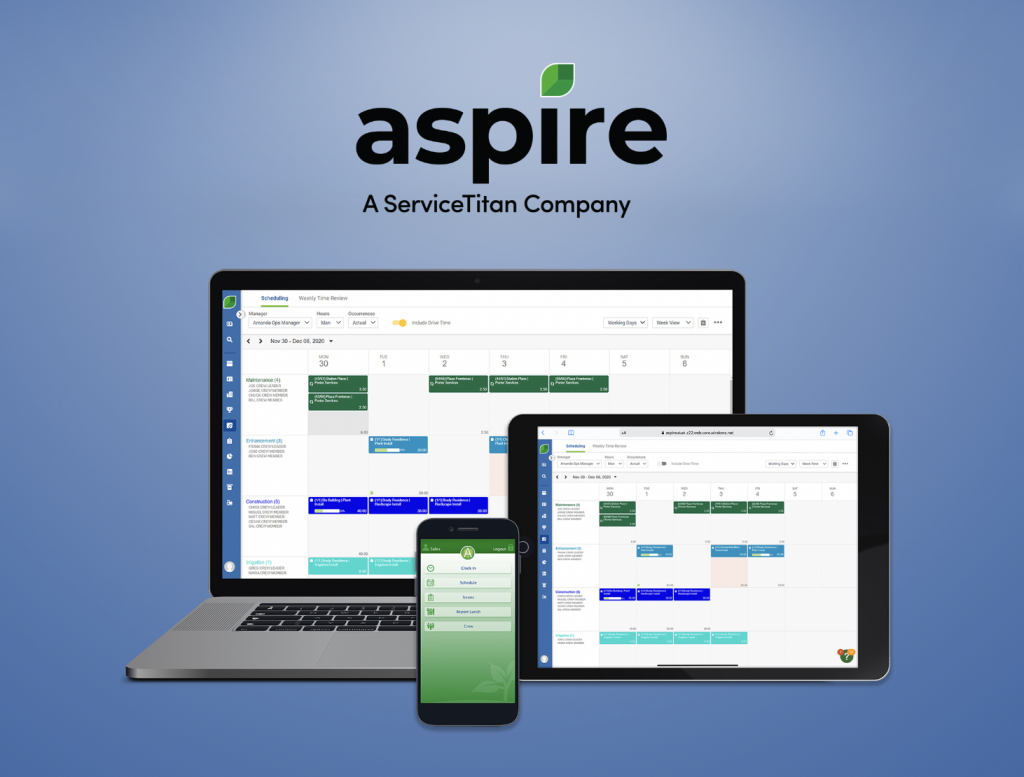
Understanding this, Coulter says one of the greatest strengths of Aspire’s own janitorial business management software is the ease with which it collects and streamlines data from job sites into one digital platform. This provides users with a holistic, real-time view of their operations as it applies to inventory, budgeting, scheduling, workflow management, and other key functions.

“The whole design philosophy around tech like ours is to give our clients the tools to run their business with confidence,” Coulter adds. “By having access to ‘one source of truth’ on a computer or mobile device, they can easily look up where their employees are and what they’re doing at any point in time. And, if problems do come up, they can respond in the moment rather than find out at the end of the day.”

Improving communication and sales opportunities

There are benefits to staying connected on the job. Here again, tech has a role in giving janitorial crews the means to connect instantly with their teammates on-site or in the office via apps on their mobile devices. Using mobile communication tech in this manner keeps everyone working on the same page and ensures vital information is passed to the right people at the right time. Moreover, it reduces the risks of miscommunications and delays that can crop up when relying on paper-based notes and reports.

“There are also the upsell opportunities to consider,” adds Mark Layton, enterprise sales consultant with Aspire. “For instance, you might have a day porter who sees that the client’s kitchen floors really need to be redone but forgets to mention it at the end of their shift. Through a platform like ours, they can open the Aspire app on their device, tag that potential job, and send it to someone on the team who will follow up with the client.”


Backing decisions with hard data
With greater visibility comes the opportunity to enhance service delivery. Here again, there is value in using digital tools that can collect and assess data across multiple teams in multiple locations.

“You can do a lot with those aggregated insights,” explains Layton. “Combining data from cleaning teams across various properties allows a user to see how long it takes their teams to perform specific jobs across different buildings, what resources those jobs require, and other factors that impact profitability and quality outcomes.”

It’s also about driving better team performance, Layton continues. Through a janitorial business management platform, companies can collect, assess, and track all evidence (e.g., photos, videos, reports, etc.) from site inspections in one secure, cloud-based location. This enables the company to spot where employee training or intervention is required.

“At the end of the day, this is still a people-driven business,” he says, adding, “Labour is such a critical part of a janitorial contract, so anything you can do to support teams and incentivize performance is valuable.”

Property managers also love their numbers. Herein, Coulter notes that service providers who can back their performance with hard data stand out from the competition: “It’s one thing to have glowing testimonials and a solid bid, but there is a definite advantage to coming to a client with cold, hard data showing how you can deliver on every one of their needs.”

A competitive eco-advantage

The push for greener, more energy-efficient building operations is at an all-time high. There is a competitive advantage for commercial cleaning companies who can demonstrate they have their clients’ eco-interests at heart.

“That goes back to having the data,” says Coulter. “If you can come to the client with a report showing that you’re using eco-friendly chemicals, equipment, and processes, that will give you an advantage.”

Promoting better work/life balance

There can be a reluctance to invest in tech. Even when the benefits of stronger efficiency, visibility, and data-driven business decisions are clear, some companies may still be hesitant to take the digital plunge. It’s during these discussions that Coulter, Layton, and the Aspire team reiterate the work/life balance that comes with any tech upgrade.

“A lot of cleaning business owners spend way too much time in the business versus being on the business,” Coulter says. “When I see this, I ask, ‘What price are you willing to pay to have the freedom and flexibility to manage more and worry less? What would you pay for the ability to go on vacation and only have to look at a simple dashboard with all your business metrics on it to know that everything is running smoothly?’”

“We can all benefit from stepping back and working smarter, and technology like Aspire gives you the opportunity to do that,” he adds.

Learn more about Aspire’s business management platform at aspirejanitorial.com or by calling 866.727.7473.


Recapping the ISSA Show Canada 2022

The anticipation of reconnecting with the industry came to fruition last week when ISSA Show Canada – held June 8-9, 2022 – made its return to an in-person exposition. Only the second live event since the show’s launch in 2019, the 2022 edition, held at the Metro Toronto Convention Centre in downtown Toronto, ticked all the boxes when it came to delivering on new technology, educational opportunities, and networking events.

“Although the COVID pandemic continues, our industry proved it was ready to re-connect and meet again face-to-face,” said ISSA Canada Executive Director Mike Nosko. “Judging by the feedback we’ve received thus far from both exhibitors and attendee delegates, we were all ready for the ‘reset’.”

With a theme of “Reset for the New Clean,” this year’s trade exposition focused on educating and inspiring the industry following the transformation experienced during the COVID pandemic.

The show kicked off with an inspirational panel discussion featuring some of the leading ladies in the industry. Moderated by Shannon Hall, Vice president of Sales, Dustbane Products Ltd., and captain of the ISSA Hygieia Network Canada Region, the Breakfast & Panel Discussion featured wise words from Laura Craven (Imperial Dade Canada), Sandra Hudon (Polykar), Margo Hunnisett (Bunzl), Judith Virag (Clean Club Calgary) and Kathy Kroupa (United Services Group).

With over 100 delegates in attendance, the skilled panelists detailed their personal journeys to achieve the success they have today. Additionally, they each provided words of wisdom on how to recruit and, more importantly, retain more women in the cleaning industry.

The ISSA Hygieia Network is an ISSA Signature Charity focused on advancing the careers of women (and men) in the cleaning industry. The organization provides education, mentoring, networking and support programs to help women succeed in the workplace.

Following the ISSA Hygieia Breakfast was the highly-anticipated keynote session sponsored by the ISSA Canada Building Service Contractor Council. Featuring professionals from the property management and commercial cleaning sectors, the 125 delegates who packed the room were certainly not disappointed.

Moderated by Philippe Mack (Bee-Clean building Maintenance), building service contractor representatives Roberta Polyak (Bee-Clean Building Maintenance), Chris King (Hallmark Housekeeping Services) and Tony Raposo (GDI Integrated Facility Solutions); and property management professionals John Castelhano (BGIS), Elspeth Evans (QuadReal Property Group) and Kimberly Train (Oxford Properties), provided insight into the question many are currently asking – where do we go from here?

Representing both industry sectors, the packed room listened to the panelists as they detailed the latest technologies they have implemented in their facilities, the challenges they currently face in terms of labour, and the pain points experienced by property managers. Of particular interest was the conversation regarding attracting, developing and retaining quality people, the capability of providing a living wage, and the challenges of poor service delivery/scope degrading resulting from inflationary circumstances.

Another issue top of mind in both the business and consumer markets is the ongoing supply chain issues. Moderated by Tom Fournier, founder of Shade’s Mills Group, the “Valuing the Role of Distribution in the Cleaning Products Supply Chain” session featured professionals from distribution. Giselle Chartrand of Balpex, Brock Tully of Bunzl Canada, and building service contractor David Clementino of Hallmark Housekeeping, outlined the measures they took to ensure product continued to flow to ensure end-users had the tools and resources required to battle the unseen enemy.

“Everyone assembled in the room, including myself, was awed by the quality of the individuals on the panel both in terms of their knowledge, and their varied perspectives and experiences,” Fournier said. “Afterwards, I was approached by many who spoke about how valuable the session was.“

Speaking of value, the Value of Clean Moving Forward was also a worthy topic of discussion at ISSA Show Canada. Featuring an entertaining and informative presentation by Jim Flieler, Vice President of Global Sales for Charlotte Products, the approximately 60 delegates in attendance were reminded of the critical importance of cleaning as an investment in human health, worker retention and wellness. Additionally, Flieler also touched upon human resources and labour shortages, logistics and supply chain issues, and financial challenges and return on investment.

The educational programming was rounded out by two sessions focused on infection prevention and indoor air quality – two areas of critical importance in the battle against COVID-19. The first session featured Dr. Mark Hernandez who addressed several options for improving the quality of indoor air in non-healthcare settings such as schools, recreation facilities, commercial spaces and more. The information provided in this session was based on a recently-released peer-reviewed paper from the Global Biorisk Advisory Council (GBAC), a Division of ISSA, of which Hernandez was a co-author.

The final session revolved around the proven technologies that were vital during the pandemic. Featuring Michael Diamond, Senior Director of GBAC, and Shawn Watkins of LuminUltra, delegates were schooled on qPCR testing which became the gold standard in COVID testing and was later adapted to test surfaces and wastewater for the infectious virus. Watkins also discussed how qPCR technology can be deployed as part of either a routine monitoring program to evaluate the efficacy of cleaning protocols and products, or deployed as pre-clean as a non-evasive way to routinely monitor regular occupants.

Although ISSA Show Canada is built on an extensive educational program, developed by committees representing all facets of the sanitary maintenance and supply industry, the event also featured a large trade show floor and multiple opportunities to connect via various networking receptions – two on the trade show floor and another at the nearby Elephant & Castle.

“It’s been a difficult two years of meeting in the virtual space and people were just zoomed out,” Nosko said. “Early in the year, there was fear that ISSA Show Canada could be in jeopardy due to the surge in the Omicron variant. Fortunately, all of our show partners were in agreeance that the show must go on and judging by the turn-out, the industry was also ready for a reset. We are already looking forward to another outstanding event in 2023.”

The result of a partnership between ISSA, the International Facility Management Association (IFMA) and MediaEdge’s Real Estate Management Industry (REMI) Network, ISSA Show Canada provides an ideal forum for facility, property and operations managers, environmental services executives and facility managers in the healthcare, education, government, hospitality, building services and residential sectors to meet leading suppliers of cleaning products and services, keep up with industry trends and share experiences with peers to benefit their buildings, staff, customers and tenants.

Attendance data from the 2022 ISSA Show Canada is still being processed and details will be released soon.

Source: ISSA Canada