Articles Archive - Page 278 of 928 - REMINET
REMI

Alberta prompt payment comes into effect

Alberta has a new prompt payment framework, saying it ushers in payment timelines and a dispute resolution process for the construction sector.

Formerly known as the Builder’s Lien Act, the Prompt Payment and Construction Lien Act is now in force. The new act creates rules for the timing of payments and sets out a streamlined adjudication process for disputes related to payment or work performed as an alternative to court.

“Albertans in the construction industry have been advocating for prompt payment legislation for nearly 10 years, so I am excited to celebrate this important milestone. I am proud of the work that Alberta’s government did, collaborating over the last three years with members of the construction industry to develop and pass legislation that will protect jobs and unlock cash flow in this multibillion-dollar industry that employs hundreds of thousands of Albertans,” said Nate Glubish, minister of Service Alberta.

Prompt payment is introduced by mandating owners to provide payment to their contractors within 28 days of receiving a proper invoice for construction services and requires that those contractors who receive payment from an owner subsequently pay their subcontractors within seven days.

“Payment practices in Alberta have deteriorated over many years. Accounts receivable frequently in excess of 60 days shifts the burden of project financing to contractors and subcontractors. This legislation provides certainty of regular payment for work properly performed and invoiced. The new prompt pay provisions will play an essential role in keeping cash flowing through the life of a construction project. Annual release of lien holdbacks will also free up cash much earlier than under the past legislation,” said Terry Doucette, senior vice-chair, Alberta Construction Association.

The new act applies to all private construction contracts in Alberta created on or after Aug. 29, 2022. Current contracts that extend past two years must become compliant with the new rules by Aug. 29, 2024.

Freehold and lot line condos: Which insurance do you need?

It’s a common scenario: a homebuyer purchases what appears to be a regular townhome only to be told it classifies as a “freehold condominium.” This can be a confusing descriptor, but it technically holds true. The term “freehold” is frequently used as a marketing strategy to suggest purchasers are getting more than they would ordinarily receive when buying a unit, such as a front or back yard. That being said, a more accurate term for these types of condominiums would be a “lot line” condominium where the owner’s unit includes not just the building but also a portion of the land surrounding it.

Atrens-CounselRegardless of the marketing terms used to describe your condo unit, when you are setting up your personal insurance you should be most concerned if your condo is classified as a standard registration and what is indicated in your condominium’s unique standard unit description.

It is important to note that the most common kind of condo registration in the province of Ontario is a standard registration. If a condominium is not described as a “Common Element Condominium” or a Vacant Land Condominium” within the registered name of your condominium, then it is highly likely it is a standard registration condo.

Who insures a freehold?

Freehold or lot line condos carry unique maintenance obligations, and this is where confusion over insurance can set in. Specifically, freehold or lot line condo declarations often hold owners more responsible for the ongoing repair and maintenance of lot elements (e.g., roof, building envelope, driveway, trees, etc.).

Reading this, owners then might assume that they need insurance to cover any sudden or accidental damage that occurs on their lot, but that is often not the case. In truth, the Condominium Act of Ontario states that if a condominium is a “standard registration condominium,” then the condominium corporation is required to insure the common elements and the units, but not any improvements to the units. That includes the actual homes and any other common corporation property such as curbs, roadways, and light standards. Moreover, condominium corporations must insure a basic level of finishes within each home, as described by the condominium’s standard unit bylaw. As such, it is critical to pay attention to your corporation’s standard unit bylaw to understand what materials and finishes are considered part of a standard unit, and thus insured by the condo. Anything over and above those standard finishes and materials need to be insured by the owner under a condo unit owner policy and are commonly referred to as betterments or improvements.

The right policy
One question we get from owners of freehold or lot line condos is “What kind of insurance do I need?” The answer is that you should not be purchasing a standard home insurance policy, but rather a condominium unit owners’ insurance policy. This requires bringing a copy of your standard unit bylaw to your insurance broker and understanding what’s covered.

Overall, anything inside your unit that is not described in the standard unit bylaw is your responsibility to insure. As such, you should be sure to include the replacement value of any of those finishes or features (over and above what is listed in the bylaw) within your own betterments limit of insurance in your unit owners’ insurance policy.

To review, condominium unit owners are responsible for the following:

• Personal property: such as furniture, clothing, appliances, electronics, any moveable property within the unit, all personal effects stored in lockers, etc.
• Improvements or Betterments: such as moldings, lighting, flooring, upgraded cabinetry, and anything over-and-above what is described in the standard unit bylaw.
• Additional costs to live elsewhere: if your unit is so badly damaged that you cannot occupy it until repairs are complete.
• Personal liability: condo owners are legally liable for any bodily injury or property damage arising out of their personal activities as a unit owner and from the ownership
of your individual property.
• Charge back of corporation deductible: unit owners may be responsible for the deductible under the Corporation’s Insurance Policy if the corporation has a bylaw that dictates this, or if the owner’s act or omission results in damage to any property the corporation is responsible for insuring.
• Loss assessment coverage: if there is a major property or liability event that results in a shortfall in your condominium corporation insurance, you may be personally assessed as a unit owner.
• Additional unit owner protection: a unit owner policy should contain additional contingent protection to cover grey areas between the condo’s insurance and your own.
• Special limits and extensions of coverage: there may be other special limits of coverage required for jewelry, bicycles, sewer backup, and other exposures that may exist.

Your condo’s standard unit bylaw, like many others, may also indicate that the unit owner must insure all of their floor coverings. If this is the case, be sure to include the replacement cost of all floors above the sub-floor within your betterment limit of your own policy as well.

Avoid mismatched policies
If you purchase a regular homeowners policy to insure your property in a standard registration condo, you are making a big mistake. Not only will you have double coverage for a lot of the property that your condo already insures, but you could also be paying up to four times what you would for a condo unit owner’s policy. Additionally, you will be missing key elements of coverage that you need based on exposures you have as a condominium unit owner.

It pays to get advice
The insurance requirements for a condo unit owner can be complex depending on the unit owner’s needs and their specific condominium bylaws. That’s why we strongly recommend working with an insurance broker that understands the complexities of condominium insurance and can recommend the right protection for you.

Learn more at Atrens-Counsel Insurance Brokers.

Ontario extends deadline for virtual meetings by one year

The Ontario government has extended the deadline for condo corporations to call and hold virtual meetings and permit electronic voting without a bylaw. The previous deadline of September 30, 2022, has now been pushed ahead one year to September 30, 2023.

The extension applies to owners’ meetings, directors’ meetings and Annual General Meetings. Condos will also be able to continuing providing electronic notices to owners without their agreements or consents.

In early August, the industry was concerned the deadline wouldn’t be stretched out. Many are calling for permanent changes under the Condo Act.

The Ministry of Government and Consumer Services is still exploring potential comprehensive permanent changes that allow for broader participation.


Cameron Stephens Equity Capital partners on two condo projects

Cameron Stephens Equity Capital has partnered with Originate Developments and Westdale Properties on two condo projects that will ultimately bring more than 1,000 new housing units to North York and the city’s downtown east side.

One proposal includes repurposing the Japanese Canadian Cultural Centre (JCCC) in North York into two residential towers rising 48 storeys and 55 storeys.

As one of the largest Japanese cultural centres in the world, the JCCC moved to a larger site to make space for its growing community. The re-design, led by Moriyama Teshima Architects, will preserve many cultural aspects of the now vacant building. For instance, the first ten storeys will reflect the original design through flared wrap-around balconies that resemble a traditional Japanese Pagoda.

The second proposal is for a 58-storey connected community at Jarvis and Earl Place, designed by Kirkor Architects and Planners.

Cameron Stephens Equity Capital is overseen by Executive Vice President Steve Cameron and Managing Director Sean Fleming.

“Originate has a deep understanding of the complexities of the development process and identified two fantastic sites that our team and advisory board were excited to move forward with,” Fleming said in a statement. “Now that the high-rise applications for the sites have been submitted, we are confident these sites will be rezoned appropriately, and both projects will be brought to life, adding more vibrancy to the communities where they are located.”

These are the firm’s first major condo projects. Cameron Stephens Mortgage Capital Ltd, established in 2004 by former MPAC President Scott Cameron, entered the equity capital space in 2020 through its subsidiary Cameron Stephens Equity Capital, which has so far invested in four projects, including an industrial site along the 401 and a low-rise residential development.

“The expertise and years of experience present on our advisory board allows us to make excellent decisions when it comes to site selection and choosing the right partners,” said Steve Cameron. “Our partners then have access to this advisory board as we navigate bringing the project to fruition together.

“Our group also contributes a substantial proportion of capital to the raise. This ‘skin in the game’ is important to the market and gives us an edge over groups that rely more heavily on third-party investors for their raises.”

Cameron and Fleming plan on identifying new developer partners to further expand their portfolio as 123 Wynford Drive and Jarvis and Earl Place take shape.


New funding for B.C. employers to hire apprentices

The BC Construction Association (BCCA) has received more than $21M in funding from the Government of Canada’s Apprenticeship Service to enable small and medium sized employers in B.C.’s construction industry to hire and register first-year apprentices.

An employer with fewer than 500 employees in B.C.’s construction industry can receive financial incentives for hiring new employees or registering existing ones as first-year apprentices in 39 Red Seal Trades.

Participating employers will receive $5,000 for hiring or registering any worker. An additional $5,000 will be received if the worker self-reports as a woman, new Canadian, LGBTQ+, Indigenous, a person with a disability, or a visible minority, which contributes to much-needed workforce diversity. Employers can receive payments for up to two first-year apprenticeship positions per year during the two years of the drive, for a maximum of $40,000 per employer.

“B.C.’s construction industry is in a vice grip right now, and it’s tightening,” says Chris Atchison, BCCA president. “Employers are dealing with rising costs, material shortages, increased taxes, mandatory sick pay, labour shortages, and late payments. It can be costly to hire and train new apprentices, and especially in this climate, $40,000 can go a good distance to alleviating some of that cost burden.”

Employers can spend the financial incentives at their discretion. For example: hiring bonuses, gear and work apparel, childcare costs, offsetting business taxes, offsetting costs of mandatory sick leave, training and mentoring, raises for field or office staff, safety equipment, or new technology. As part of the service to employers, BCCA will provide culture training via its Builders Code program, and mentorship support through its new Building Builders initiative.

B.C.’s construction industry is approximately 95 per cent male and continues to face a skilled workforce shortage during a time of high demand for construction services. Most employers are small, with 90 per cent employing 20 workers or less.

In addition to the financial incentives, the BCCA will conduct a major promotional campaign to attract new talent to the industry.


UBC’s Passive House residential building opens

One of Canada’s largest residential buildings targeting Passive House certification has opened at the UBC campus.

Construction of the six-storey, 103,000-square foot building began in 2020. Residents began moving in to studio, one, two, three and four-bedroom units in mid-August.

The new 110-unit faculty and staff rental building in UBC’s Wesbrook Place neighbourhood will consume up to 90 per cent less heating and cooling energy than conventional buildings.

The first of its kind on UBC’s Vancouver campus, Evolve aims to be one of the most energy-efficient multi-family residential buildings in Canada. It will also provide an opportunity to study the benefits and trade-offs of Passive House construction, and share the learnings for the public good.

“Evolve demonstrates UBC’s commitment to the vision of a net positive campus and provides affordable housing that has a reduced carbon footprint and promotes health and wellbeing for the occupants,” says Penny Martyn, green building manager at UBC Sustainability. “Research conducted on the building will be shared among the property development community to make future buildings more energy efficient.”

Evolve was designed by ZGF Architecture and built by Peak Construction Group for UBC Properties Trust.

Evolve’s Passive House design elements include:

  • High performance windows – triple glazed “tilt and turn” windows that significantly increase natural ventilation rates over typical residential buildings in B.C.
  • High-efficiency mechanical system – heat recovery ventilation system continuously providing filtered air to create a healthy living environment
  • Thermal insulation – a thicker insulation and assembly was required to create a thermal barrier
  • Building envelope continuity – elimination of cold patches or drafts. The design and construction both account for less air leakage through the structure and the building envelope
  • Mixed-mode cooling – ventilation air provided throughout the building is cooled via an energy-efficient heat pump, but sensors on operable windows and patio doors ensure maximum cool air is only supplied to residential suites when their windows are closed– the ventilation will reduce to a minimum but will not fully turn off.
  • Exterior shading – movable shades to limit heat and exposure of the sun.

Six in ten non-homeowner millennials intend to buy a home

A large swath of millennials believe they will own a home someday, despite previous buyer despair during the pandemic from those aged 26 to 41.

A new Royal LePage survey, by Ledger,  found that 60 per cent of this cohort claim they’ll be homeowners, but to achieve this dream 52 per cent said they will have to relocate. The majority would, however, stay put in their current city or town if they could afford the cost of living.

Millennials account for a large proportion of Canada’s population. Those under 35 have more faith they’ll be able to buy in the future, according the June survey of 2003 Canadians. Meanwhile, 25 per cent of non-homeowner millennials across the country do not believe they will ever own a home.

“Many Canadians who are in the stage of life where homebuying is a top priority, especially younger millennials, remain committed to achieving home ownership and are optimistic about the opportunities that lie ahead, due in large part to the example of their parents and family members who have reaped the benefits of our nation’s historically strong real estate market,” Phil Soper, president and CEO, Royal LePage, said in a recent statement.

According to the survey, 57 per cent of Canadian millennials are already homeowners, and 51 per cent plan to purchase a home within the next five years. This figure includes those who intend to buy a first home, a move-on property or a secondary residence. Royal Lepage estimates  more than 4 million young Canadians will be looking to make a purchase between now and 2027, and almost half will be first-time homebuyers.

Of the millennials who plan to buy their first home or sell their current home and move within this period, 47 per cent say they will remain in their current city or town, while 41 per cent say they plan to relocate.

The current market slowdown is expected to rise again, although not at the levels seen during 2021 and earlier this year, Soper predicts.

“The return of these sidelined purchase intenders, a growing population, largely from increased immigration levels, together with household formation changes – individual households made up of boomer parents and their millennial children evolving into two, three or four households – will require more available housing stock to ensure a balanced market and to help bring affordability back within reach of many Canadians,” he said.

As sidelined purchasers return to the market, he said the country could see another surge in price appreciation, following short-term economic softening.


Keeping night cleaning workers safe

In some cases, it makes sense to carry out cleaning and maintenance work after dark. There is less foot and vehicular traffic and fewer distractions and interruptions in most facilities at night, and that can lend itself nicely to a job well done. But, of course, night cleaning brings its own set of specific challenges and potential hazards.

Poor visibility, tiredness, and the potential for a reduced amount of immediate help on hand are just some of these possible pitfalls. It’s important to safeguard against these potential issues before they occur to better prepare and protect your employees out in the field.

Janitorial Manager outlines nine ways that night cleaning crews can be kept safe on the job.

Identify potential hazards early

Before your team begins working in a location, it’s important to note potential hazards on site. Be switched on to potential dangers and conduct a full health and safety inspection, if necessary, so you can prepare your crew ahead of time.

Be attentive to basic safety principles

According to the U.S. Bureau of Labor Statistics, the most common on-the-job injuries in commercial cleaning are muscle injuries from falls. The likelihood of this happening can reasonably be assumed to be greater after dark, so be sure to take the basic step of reviewing safety protocols and practices for night cleaning crews.

Be conscious of scheduling

Some people on your night cleaning crew can be more at risk than others in certain situations, such as over-tiredness. Create your schedule in a mindful and empathetic manner with this in mind.

Work in groups of two or more

Wherever possible, try to schedule teams of two or more for your night and overnight cleaning shifts so nobody is ever left isolated and alone after dark, as well as to quicken tasks.

Have first aid on hand

Keep a first aid kit close by while workers are on the job. Additional kits can be kept in a janitorial closet or other areas throughout a facility for backup.

Train for emergencies

In the event of a night cleaning emergency, good training can make all the difference.

Practice proper chemical safety

Cleaning chemicals can cause an array of issues, from skin irritation to breathing problems and more. OSHA has a wealth of information regarding workplace safety for cleaning organizations, but every team member needs to understand how to interpret the Safety Data Sheets on cleaning products, as well as things such as the importance of ventilation and what to do in the event of exposure.

Offer situational awareness classes

A good instructor will go over issues like situational awareness, knowing how to recognize a potentially dangerous situation, and what you can do to avoid it.

Communication, communication, communication

Communication is important for safety reasons, but it also improves the overall effectiveness of a night cleaning crew. Ensure staff have access to a phone or other instant communication device throughout the entirety of their shift so that they can get in contact if an unsafe situation occurs.

Electricity grid capacity a 2030 imperative

Electricity grid capacity is critical to enable the buildings and transportation sectors to move away from fossil fuels and reduce greenhouse gas (GHG) emissions. Energy management specialists stress the importance of infrastructure investment to support clean generation, stable transmission and the integration of smart technologies that will be central to monitoring demand and dispatching a complicated supply mix.

Conservation and demand management (CDM) is likewise considered key to ease the pressure on the electricity system as Canada pushes toward a targeted 40 to 45 per cent reduction in GHG emissions relative to 2005 levels over the next eight years. In Ontario, building decarbonization is expected to bring new variables to the already byzantine mechanisms for allocating global adjustment (GA) costs, further bolstering the case for simply reducing electricity loads as much as possible.

Large commercial customers participating in Ontario’s industrial conservation initiative (ICI) program pay GA costs linked to their electricity use in the five hours of system-wide highest demand during the period from May 1 to April 30. A wide-scale switch from gas boilers to electric heat pumps — as envisioned in Canada’s emissions reduction plan and related decarbonization strategies — could influence when those five peaks occur and make them trickier to predict during the transition period.

“If we go to electrification, we’re going to see a higher load in the wintertime,” Scott Rouse, managing partner with the consulting firm Energy@Work, observed earlier this year during the annual seminar the Building Owners and Managers Association (BOMA) of Greater Toronto sponsors to discuss the GA and electricity cost issues. “We’re accustomed to those peak hours in the summer, but we may start seeing more in the winter. That’s another scenario that you need to think about.”

“The capacity of the grid to allow for more electrification really depends on our ability to manage the peaks,” added Jeff Ranson, BOMA Toronto’s senior director of energy, environment and advocacy.

The Canada Green Building Council (CAGBC) points to the same likelihood in its 2021 evaluation of the technical requirements and costs of deep carbon retrofits. Researchers found that buildings of 1990s’ vintage, in particular, could experience higher annual peak demand and a shift from summertime to wintertime peaks when heat pumps replace gas-fired space and domestic hot water heating. Fuel-switching could even necessitate expansion of a building’s electrical capacity, although that risk was deemed to be rare.

“The anticipated energy demand shifts illustrate the importance of demand reduction strategies to minimize both project costs and the potential increased strain on regional electrical grids,” the CAGBC report states. “If a building owner pursues electrification measures without first investigating and mitigating potential peak-demand increases, project costs could soar as a result of needed building electrical distribution upgrades and localized improvements to electrical grid distribution.”

Alternatively, early adopters in Ontario might see cost benefits while summer peaks are still the norm, provided they qualify as Class A customers — with annual average monthly demand of at least 1 megawatt (MW) — to participate in the ICI program. Edward Newton, an energy analyst with Energy@Work, told BOMA Toronto webinar attendees that’s been the case for some electrically heated residential buildings in his firm’s client base.

“With the current system the way it is, they’re taking great advantage of that because all the peaks are occurring in the summer and they’re seeing lots of savings in the winter paying the Class A (GA) rate,” he reported. “For Class A customers, there are definitely advantages for electric heating.”

Multiple challenges in preparing to accommodate net-zero buildings and vehicles

Rob Edwards, private sector business manager with Ontario’s Independent Electricity System Operator (IESO), told webinar attendees many of these issues are being examined in a current IESO consultation and study.

“We are quite aware of folks pursuing GHG reductions and decarbonization through electrification. The broader public sector has been pursuing this quite a bit and now large commercial, retail and hospitality are doing so,” Edwards said. “ESG (environmental, social, governance) is going to really impact the grid. So we’re quite aware of it.”

An intimidating array of complicated and capital-intensive components will have to come together fairly quickly if the electricity system is to be net-zero-ready in line with national and global targets. Beyond an ample supply of low-carbon generation, it needs to be effectively delivered to users with controls in place to safeguard against the inherent fluctuations in some forms of supply — notably, wind and solar. Energy storage is tapped to be pivotal, but it’s still at an embryonic stage that will have to be vastly and rapidly scaled up to be economically feasible and widely integrated into the system.

Tallying some of the challenges during a recent online media briefing sponsored by the United States Energy Association, Andres Carvallo, an engineering professor and specialist in smart technology applications based at Texas State University, noted that the U.S. currently has about 1,100 gigawatts of electricity production capacity nationwide. Meanwhile, the 280 million registered automobiles in the country would theoretically represent 28,000 gigawatts of demand if they were all somehow magically converted to electric vehicles (EVs) with 100-kilowatt batteries.

“We are going to add 28,000 gigawatts (of demand) in the next 20 to 30 years. This needs to be done in a very, very, very well-integrated and thoughtful way,” Carvallo cautioned. “Otherwise, we will start having serious brownouts.”

Also participating in the briefing, John Bear, chief executive officer of the Midcontinent Independent System Operator (MISO) reported there is about USD $30 billion of investment in transmission expansion and upgrades slated or underway in the jurisdiction, which encompasses 15 U.S. states and Manitoba. That’s largely to make way for new renewable generation caught in an “interconnection queue” as it’s added to the system.

“We’ve got to get the transmission in place so we can allow that interconnection and get rid of the congestion,” he said.

The gross required investment is smaller in Canada, of course, but the federal commitment to phase out most fossil-fuel-fired generation by 2035 arguably makes enhanced electricity grid capacity an even more urgent priority. Much hinges on commercially viable energy storage and smart technology.

“Broadband is the single most important missing piece of the whole thing being stitched together,” Carvallo asserted. “All this needs to be controlled real-time. If it’s not, it doesn’t matter what we do; it doesn’t matter how much energy we pump; this grid is never going to deliver what we need.”

In the interim, he urges governments, system operators and utilities to prioritize energy efficiency and make demand response programs more lucrative. “A negawatt should be compensated pretty similarly to the price of a megawatt. It doesn’t happen. This is something that should be changed to entice behaviour change at large scale,” Carvallo said.

Barbara Carss is editor-in-chief of Canadian Property Management.

Demand for rentals soars in downtown Toronto

Demand for rentals in downtown Toronto soared in July, 2022, and will continue to accelerate in the short-term according to projections from Bullpen Research & Consulting and TorontoRentals.com.

Overall, average monthly rents across the GTA rose by more than $400, or 19.3 per cent year over year, and by 3.3 per cent month over month. At the high end for condo rentals, average rents reached $2,667—up by nearly 25 per cent since last July.

While rents in all Toronto postal codes were up, rents in M5V, which includes the Entertainment District, King West and Cityplace, increased by a whopping 43 per cent since last year. Meanwhile, in postal code M4Y, which includes “The Village” and part of the Downtown Yonge area, average rents grew by 24 per cent to $2,674 per month.

“The Greater Toronto Area continues to see unprecedented rent growth, with monthly increases exceeding 3 per cent in May, June, and July,” said Ben Myers, president of Bullpen Research & Consulting. “The average rent in the GTA in July of $2,482 per month has now topped the previous market-high recorded in November 2019 of $2,460. With further interest rate hikes coming, uncertainty in the ownership market, and the high-demand fall rental season upcoming, expect further outsized rent increases over the next few months.”

Rents per square foot 

The average monthly rent per-square-foot in July for 24 neighbourhoods in Toronto was $3.73, an increase of 20 per cent year over year.

The most expensive neighbourhood is currently Casa Loma, where average rent per-square-foot in July was $4.40, representing an annual increase of a 43 per cent. Much of this rise can be attributed to the completion of the luxury rental development 2Fifteen, and the inclusion of the newly renovated, high-end rental Two Clarendon.

The most active neighbourhood in terms of listings was Waterfront Communities-The Island, where monthly rent increased to $3.96 per-square-foot in July, up 19 per cent from $3.32 per-square-foot a year ago.

The least expensive neighbourhood tracked was Thorncliffe Park where average rents ifor all property types hovered at $2.04 per-square-foot.

Read the complete report here: https://rentals.ca/national-rent-report

Healthcare housekeeping & EVS in good hands

Healthcare housekeeping (HSK) and environmental service (EVS) work is a hard job. It is also a crucial job. Those two things should be obvious, but that hasn’t always necessarily been the case.

“Typically, in the past, the general understanding has been that HSK/EVS are the folks who come in and cleaned up after everybody,” says Julie Hoeflaak, Education Chair of the Canadian Healthcare Housekeepers Association (CHHA). “There wasn’t the realization that we do more than surface-level cleaning; that we’re essential and we’re vital. Our role as part of the healthcare team was not acknowledged; it was thought not to be integral in disinfection or infection control or preventing transmission. There was even ignorance of the fact there was science and standards and protocols behind what we do.”

In that context, the CHHA dedicates itself to embodying, advocating for, and educating and training housekeeping and EVS professionals across Canada.

Founded 65 years ago in 1957, the Ontario Healthcare Housekeepers Association Inc. (OHHA) spent decades leading from the front to increase the recognition and understanding of the integral role of housekeeping and EVS workers as part of the team caring for patients, residents, staff, and visitors in healthcare facilities.

In October 2020, OHHA merged with ISSA, the worldwide cleaning industry association, to expand its mission across Canada and better reflect its new national goals. Now, nationwide, it offers opportunities for housekeeping and environmental supervisors, managers, team leads, and frontline staff through standardized educational programs, expanded resources, and networking opportunities. It carries the mission statement of uniting all facets of the Canadian cleaning and sanitary maintenance industry and helping to change the way the world views housekeeping and EVS work.

The perception problem

That mission is an ongoing battle being fought. As Hoeflaak and CHHA Executive Director Wendy Boone emphasize, the lack of recognition for the importance of housekeeping and EVS was not just the sector’s key issue before the pandemic; it is still a key issue today.

“The public perception of what our frontline staff do, what the managers and directors do, is unclear,” says Boone. “People in these jobs and careers don’t get the credit they deserve, and there’s also a huge disconnect with salaries. PSWs have had a lot of plaudits during the pandemic – and rightly so – but what about the frontline housekeeper in the same facility?”

The bottom line, Boone and Hoeflaak say, is that HSK/EVS is one of the first areas looked at whenever a budget needs to be trimmed or a workflow reshuffle is needed in a facility or network. That can come in the form of cutting frontline staff but also in eliminating leadership and management positions and merging departments – something that can be a real detriment if expertise is lost. A facility may end up with an EVS supervisor whose background is maintenance and who may not have the knowledge or experience needed.

HSK/EVS can also be seen as a foot in the door to get on the corporate ladder, but it’s an area that needs total commitment and dedication because of its importance. “From frontline staff to leadership, we see a huge turnaround, which is not good to elevate or improve any department,” says Hoeflaak.

As well as budget cuts and instability, that lack of recognition can stymie progress in housekeeping and EVS in another regard: lack of technological development.

“It’s not just about recognition; HSK/EVS need the right tools to do their job effectively,” says Hoeflaak, who works in a large acute healthcare facility. She adds that long-term care was hurt more in that regard than acute care over the last few years and particularly during the pandemic.

“People don’t realize that when it comes to HSK/EVS, there is innovative technology to help with our cleaning.” She recalls that access to funds for evolving and present disinfecting was not as readily available for HSK/EVS as it was for acute care before and in the early days of the pandemic. Fast-forward to the pandemic hitting with full force and facilities were scrambling for technology. “Had the pandemic not hit, I probably still wouldn’t have that technology available to me,” she says. “The technology has been there and has been evolving, but in HSK/EVS it wasn’t a priority until now.”

Increased recognition and attraction

All in all, over the course of the pandemic, the public perception of cleaning and disinfection has heightened tenfold. Happily, says the CHHA, that has also encompassed healthcare housekeeping and EVS.

“We saw a whole world open up in long-term care,” says Hoeflaak. “If EVS was ignored anywhere, it was in long-term care. It was like a light switched on; the pandemic was tragic, but it was a hit that needed to happen for the future of the long-term care sector. The world needed to see what the people who were cleaning the facility were having to do and what resources they had to work with.”

That has even extended to staffing. CHHA and its associated facilities have not been immune to the labour crisis, of course. There was a mass exodus during COVID-19, which stretched already thin resources even further. Hoeflaak and Boone attribute that to the pandemic shifting many people’s priorities away from work and onto their home life and/or their mental health. As Boone puts it: “There is a greater awareness of mental health and work-life balance and what, at the core, is important – health and happiness.”

However, more than two years on from the onset of the pandemic, a bright silver lining has emerged. In fact, the situation has been turned somewhat on its head.

The CHHA has noticed an increase in the number of people who are directly seeking out a role in HSK/EVS healthcare as a career, rather than as a foot in the door. Hoeflaak notes that her facility, for example, has seen far fewer total applicants for housekeeping and EVS jobs, but far more people who are applying because they have learned that healthcare HSK/EVS can be their career in the long term; that it’s more necessary and vital than they had realized.

“More people now want to find somewhere they can make a lasting and a real difference as part of the bigger picture,” she reflects. “They understand the HSK/EVS role is way beyond cleaning and disinfecting. As a staff member, you have a huge impact on our patients that the world never saw until COVID. It’s cleaning, yes, but it’s also true emotional support, keeping patients emotionally intact. It is a 100 per cent pure-joy visit and people are now recognizing that and wanting to be a part of it. We complete the circle, really, from the moment people enter to the moment they leave.”

Training for the future

Much of the conversation around the cleaning industry – whether it is disinfection, janitorial, housekeeping, or another role – has been around safeguarding the future of the sector by attracting workers.

The CHHA plays a huge role in that via the training and education it offers.

The association offers numerous educational programs geared to the healthcare housekeeper and environmental services professional, including the EVS Leadership Course, the EVS Frontline Course, Housekeeping Methodology, Infection Control and Laundry/Linen Technology. CHHA also has a Professional Healthcare Housekeeper certification process.

Boone notes that two of the most popular of those courses are the EVS Leadership and EVS Frontline program, and they have only swelled in popularity during the pandemic. CHHA will soon be offering the EVS Frontline Course in French this fall.

“What’s great is that many long-term care facilities have made it mandatory for their EVS manager or supervisor to have the EVS Leadership program. I think they realized during the pandemic that maybe the standard required was lacking in some cases. Even with the frontline course, an entry-level training program, we saw a huge increase during COVID-19 and facilities have made it a requirement for their staff. That’s hugely promising for the present and the future of the HSK/EVS profession.

Working together with the industry, the CHHA is working tirelessly to safeguard that future and ensure that healthcare housekeeping and environmental services are in good hands.


CDC updates COVID-19 school recommendations

Though it seems that the worst of the pandemic is thankfully behind us, as students across North America return to schools, the U.S. Centers for Disease Control and Prevention (CDC) has released updates to its COVID-19 school recommendations to help schools ensure they offer the safest environment possible.

The recommendations for safe in-person learning for K–12 schools and early care and education programs have undergone a few changes ahead of the fall term of 2022.

For a start, several guidelines have been removed, including:

  • The recommendation to cohort
  • The recommendation to quarantine, except in high-risk congregate settings
  • Information about “Test to Stay.”

Replacing those COVID-19 school recommendations are newer, detailed information about wearing masks, managing cases and exposures, and responding to outbreaks.

The CDC also changed its recommendation to conduct screening testing to focus on high-risk activities during high COVID-19 community level or in response to an outbreak.

Amid those changes, many day-to-day strategies have been reinforced by the CDC, including continued COVID-19 recommendations regarding good air quality and ventilation, proper hand hygiene, and adequate cleaning and disinfecting.

RELATED: 5 ways to create cleaner environments in schools

While this guidance has been written specifically with COVID-19 in mind, the CDC reminds school facilitators that this advice can also help stop the spread of other infectious diseases, such as influenza, respiratory syncytial virus, and norovirus, while generally supporting overall healthier learning environments.

There are no “Non-Seismic” Zones

One of the most persistent myths in building design in Canada is that parts of the country are “non-seismic”— meaning they are unlikely to experience any earthquake activity, and therefore buildings within those districts are not required to meet seismic loads. The truth, however, is that there are no non-seismic zones in Canada—at least in the eyes of the Canadian Building Code. Rather, there is a continuous sliding scale of seismic intensity, with places like Vancouver having very large response values and places like Edmonton being on the lower end of the scale.

“All sites today must be designed for seismic loads,” confirms Kevin Zwaagstra, project engineer with RJC’s structural group in Calgary, a city often considered to be a low-seismic area. “The misconception about zones likely stems from older building codes that used to specify regions according to the prevalence of earthquakes. For instance, buildings in ‘Zone 0’ did not need to be designed for seismic loads, unlike the way it is today.”

Since the 1970s, Zwaagstra points out that seismic loads have generally increased with each iteration of the building code. For example, in the 1970 National Building Code, Calgary’s seismic design load was zero. With the values used in the 2020 National Building Code (which Alberta’s provincial code will be based on in a few years’ time), it will govern a significant number of building lateral load resisting systems.

“Additionally, the requirements for ductile building design—which better dissipates the energy of a seismic event in a building’s structural system—have steadily increased as the research has guided each new design standard for steel and concrete structures,” he says. “Even in a lower seismic region like Alberta, buildings used for post-disaster services such as communications, hospitals, fire halls, etc., must have lateral load resisting systems that have markedly improved energy dissipation than conventional construction.”

In the 2010 iteration of the National Building Code, seismic restraints—which restrain the contents of buildings from lateral motions, such as bracing equipment, walls, storage racks, etc.—was exempt in low-seismic areas. By 2015, that exemption was removed, since requiring that all post-disaster structures, regardless of the seismicity of the region, have seismic restraint of non-structural components.

In fact, wherever you live in Canada, seismicity shouldn’t go ignored.

“In general, the best seismic improvement one can make to a structure, particularly in low to moderate seismic regions, is to provide seismic restraint of heavy, unrestrained building components, such as large equipment, storage racks, and masonry partition walls,” Zwaagstra says. “Historically, during seismic events, the movement and collapse of the building components has caused far more damage to life and property than the collapse of structures themselves, which is much rarer.”

Additionally, upgrading the primary building structure is often cost and use prohibitive, effectively requiring a complete stripping of the building’s components to access the primary structure. Seismic restraint of components in existing structures is less invasive, less expensive, and offers a greater improvement to the protection of life and property.

For more information on seismic loads, visit www.rjc.ca or contact Kevin Zwaagstra directly at [email protected].

First campus housing coming for Douglas College

A new campus housing project at Douglas College in New Westminster will provide students a place to live where they learn. Construction is expected to begin in summer 2023, with anticipated completion in summer 2026.

The college’s first on-campus housing will be a 20-storey building with 368 student beds, academic space and parking. This will be the largest provincial capital investment into a post-secondary institution, benefitting both students and local renters.

“Students at Douglas College have told us everything we need to hear. They need access to affordable housing so they don’t have the barrier of long commutes and expensive rent,” said Anne Kang, Minister of Advanced Education and Skills Training. “I’m incredibly excited by this project and historical investment by our government. We’re going to change lives, both at Douglas College and in New Westminster.”

The $292.5-million project received $202.3 million in provincial funding, while Douglas College provided $90.2 million. The new building will have 368 student beds in one-, two-, and four-bed units, as well as academic space, including more than 30 classrooms, student collaboration space, labs and offices, and food services. The student residence will be built over the academic space.

With classes moving to the new academic building, space will become available for other purposes, including a potential expansion of the college’s child care facility.

“The new building, 808 Royal, is the culmination of years of consultation and collaboration to develop a unique building that reflects the kind of supportive community that students have come to expect from Douglas College. This will be a welcoming and accessible space that inspires students to achieve their educational goals and to become resilient global citizens,” said Kathy Denton, president, Douglas College.

The building will be constructed using natural products, including stone and wood, consistent with the province’s CleanBC plan. Designed by Stantec Architecture, the project will aim to achieve BC Energy Step Code 4, LEED Gold BD+C certification, and zero-carbon certification.


Planning a career change in facility management

Facility management professionals partaking in continuing education courses are anxious and excited to explore the next step in their career journey, either to apply newly-acquired skills and knowledge at their current workplace or to seek out other opportunities in the industry. In doing so, these learners seek support and guidance for their next career move.

Here are some tips on how to prepare for a career change in facility management, based on personal experience in career planning and mentorship with 200-plus learners, colleagues, and friends.

Identify your accomplishments and passion

First, think about the accomplishments that you would be proud to share and talk about in your present job, volunteer life and past work experiences. It is vital to identify your strengths and passion to showcase in your professional profile when seeking new career opportunities. Your accomplishments are who you are. Articulated properly, they will profile your confidence, ability to take on new challenges and your breadth of experience.

Be honest with yourself

Take a step back and review your weaknesses, as this is critical to assess. Are you able to overcome any through additional education or mentorship?

Ask yourself— are you working in your ideal job and, if not, what do you envision as the ideal job? Take a clear look at the reasons why you seek movement in your career. There could be a lack of stimulation, challenges and opportunities, changes in corporate culture and work responsibilities, difficulty with communication or colleagues, or family changes and relocation.

Aligning with company’s vision and mission

Employees who are able to connect with their company’s values, mission and vision will enjoy and believe in the strategies and direction the company is aiming for.

If you want to work towards making buildings more energy efficient for the future of the planet, does the company you are interested in joining have a mandate for retrofitting their buildings to achieve that goal and become more environmentally economical?

Work culture

Sometimes we get into a slump and maintain the status quo in our work environment. Part of all basic human needs, even in employment, is having a strong work culture that offers trust, respect, and loyalty. These factors are very important when starting the search for new employment.

Professional development

Professional development can be an important tool to continue boosting skills, knowledge and making connections. Search out greater knowledge and skills that you can showcase for the next opportunity.

Job changes

For many industry members, there seems to be a basic pattern to job hop every two to five years. In today’s changing work environment, it is acceptable to desire greater career challenges or opportunities.

Your resume

What you’ve learned about yourself and your accomplishments can now be reflected in your resume. Searching for your dream job becomes clearer and more defined.

Becoming the greatest asset to an employer involves challenging and educating oneself, and selecting advantageous career paths in facility management. You will need commitment and focus to follow-through with your next career move as it takes a lot of thought and steps to prepare for advancing forward.

Marcia O’Connor is president of AM FM Consulting Group. She is a strategic-minded leader with more than 20-plus years of progressive experience in corporate real estate, asset management, and integrated facilities management. Marcia has a passion for mentoring young professionals and helping people, teams, and organizations see their potential. She is the lead instructor for the University of Toronto School of Continued Studies’ facilities management courses, including the FM Certification Program and many others.

GTHA lab space scarcity portends opportunity

Market analysts see a vibrant niche of investment potential in current lab space scarcity across the Greater Toronto and Hamilton Area (GTHA). A new report from CBRE pegs the vacancy rate at 0.2 per cent within approximately 12.3 million square feet of inventory. Meanwhile, there’s presumed demand for about 3.6 million square feet of either research and development (R&D) or good manufacturing practices (GMP) space.

Life sciences enterprises have few options to secure space in multi-tenant facilities outside of two highly in-demand R&D campuses in Toronto and Hamilton — MaRS Discovery District and McMaster Innovation Park — and have often invested their own capital to get accommodations suited to their needs. This has translated into a fragmented supply of predominantly smaller owner-occupied buildings.

It’s estimated that about 70 per cent of the GTHA’s existing R&D and GMP lab space is found in venues no larger than 100,000 square feet. Pharmaceutical and bio-manufacturer firms typically operate most of the larger facilities.

“The concentration of lab space in smaller facilities greatly limits the ability for occupiers to expand and grow at scale. The shortage of true multi-tenant lab properties has limited options of occupiers over the years, forcing them to buy or build their own facilities,” observe CBRE’s Daniel Lacey and Evan Lee, the authors of the report. “Occupiers lacking the upfront capital and/or ability to wait for years before occupying have often been compelled to look to U.S. markets for available space.”

In characterizing the demand, Lacey and Lee sketch out the differing profiles of R&D and GMP operatives. Research and development firms occupy about 8.5 million square feet of existing lab space, including 3 million square feet in the MaRS and McMaster campuses, the small 280,000-square-foot quotient of multi-tenant facilities elsewhere and 5.3 million square feet in single-user buildings. Manufacturers occupy fewer, but larger buildings — nearly 4 million square feet in single-use facilities, of which 54 per cent are larger than 50,000 square feet and about 27 per cent are larger than 100,000 square feet.

The same patterns play out in prospective space demand. Lacey and Lee project a need for 1.9 million square feet of R&D lab space, with the majority of proponents seeking between 10,000 to 20,000 square feet. “These smaller requirements are best accommodated by multi-tenant facilities,” they contend. Meanwhile, the estimated demand for 1.7 million square feet of GMP space, would typically be in portions of 100,000 square feet or larger.

Demand for R&D space represents a range of sectors including from companies specializing in advanced materials, medical devices, biotechnology, agri-tech, clean tech, genomics, infectious diseases and energy. Contract development and manufacturing organizations (CDMO) and vaccine manufacturers are leading the push for GMP space. Preferred timelines for the delivery of new lab space ranges from within the next 18 months for R&D firms focused on deploying venture capital to up to three years for GMP users with complicated facility requirements.

Both types of users are placing a priority on “wet lab” space that accommodates the safe and environmentally appropriate handling of chemicals and hazardous materials. Many are also interested in the synergies of the GTHA’s existing lab space clusters, which — along with MaRS and McMaster — include the Pill Hill pharmaceutical node, located near the Mississauga campus of University of Toronto, and the Sheridan Research Park in south Mississauga. As well, convenient highway access is on many space seekers’ wish list.

It all amounts to what Lacey and Lee present as a lucrative void for investors and developers to fill, particularly through the delivery of multi-tenant facilities. Taking the MaRS and McMaster campuses out of the mix, other multi-tenant options make up just 2.3 per cent of the current lab space inventory.

“The laboratory real estate market in the GTHA is a nascent one, but ballooning demand domestically and from abroad is attracting growing investor interest,” they maintain. “Combined with the success and growth of the lab sector seen in the U.S., investor demand has also grown as they come to better understand the nuances and associated costs with building and leasing highly sophisticated lab space.”

More than a map: The many uses for digital signage

Are you making the most of your digital signage? While “digital directories” in a healthcare setting are most often used to help people find their way, wayfinding is just one of several ways they can benefit patients, visitors and staff.

“One screen can serve many useful purposes in a hospital,” says Scot Martin,  President and CEO of youRhere. “Sure, they’re extremely helpful in letting people know how to get to a certain destination within the hospital but that’s only a fraction of their potential.”

From raising money to promoting events, reducing stress to offsetting staffing pressures, there are ample ways digital signage can enrich a healthcare space.

Consider the following:

YouRhere digital signage• Fundraising: When not being used as an interactive map, digital directories can be
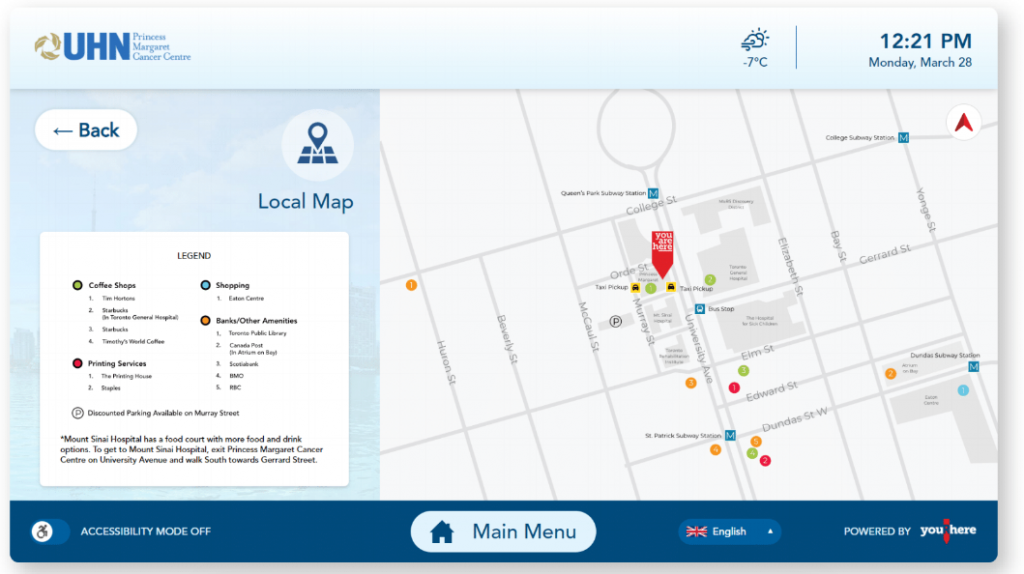

programmed to display a scrolling “playlist” of posters informing viewers on a variety of topics, including a hospital’s fundraising initiatives.

For example, says Martin, “Say your hospital has launched a capital campaign to fund a new cancer research department or encourage donations for the hospital foundation; you can use your sign’s screen to rotate through posters talking about those initiatives and providing info on how viewers can contribute.”

• Promoting healthy and safety: There are many steps that hospital guests and staff can take to maintain a clean, hygienic environment. And for its part, a digital directory’s screen can include messages that promote sanitary practices (e.g., hand washing, social distancing, etc.) or drive home important health and safety messages, such as the use of masks to mitigate ongoing pandemic risks.

“There are a lot of easy but important actions people can take to keep everyone safe. Sometimes, they just need a visual reminder,” adds Martin.

• A more welcoming space: Visiting a hospital can be stressful for patients and their visitors. Emotions are already running high the moment they step through the doors, and frustrations can mount if they feel lost or unable to access help. Here’s where a digital directory can help make hospital information more accessible by including directions in multiple languages and ensuring visual supports are accessible to everyone, including those in wheelchairs.

Beyond making the search for key information more user-friendly, digital signage can provide instant information on where users can pick up vital supplies (e.g., medical  items, gifts, etc.) or what shops and other amenities are nearby.
• Connecting commuters: Digital directories can be set up to provide real-time transit information that removes the stress of finding a way home.

For example, says Martin, “One of the things that we frequently do in our installation is provide up-to-the-minute information on the local transit. For instance, our signs can show people when certain busses are due to arrive at the stops servicing the hospital, so they know exactly when to head to the bus stop instead of waiting around outside, particularly in inclement weather.”

YouRhere digital signage

• Champion sustainability: Sustainability is a healthcare priority; yet it’s not always top of mind in a medical facility. Here again, interactive and passive digital signage can display updates on a hospital’s sustainability missions, be they recycling programs, energy and water conservation practices, or environmental awareness campaigns.

Moreover, digital signs can display the real-time impacts and results of these actions, such as the amount of energy being saved, how much waste has been diverted from landfills, and other encouraging stats.

“It’s also about engaging visitors and guests to join with staff in those sustainability goals as well,” adds Martin. “You can have pre-programmed messages cycle through that screen reminding people to toss their soda cans in recycling or help the hospital preserve energy where they can.”

• Hospital team support: Staff shortages are a growing challenge in the Canadian healthcare sector. Digital signs can help alleviate workforce pressures by answering many frequently asked questions otherwise directed to short-staffed help desk teams or security personnel.

More than a map

YouRhere digital signageThere is plenty of potential in a digital sign. More than a valuable source for directions, today’s smart and connected solutions are being used to promote hospital programs, champion eco-forward practices, and relieve common stress points that may otherwise hurt the visitor experience.



Importantly, Martin adds, they can offer these benefits without breaking the bank, adding, With the option we provide to lease signs, there isn’t a big capital cost that needs to be absorbed up front. Facilities can pay for this extremely useful resource under their operating budget instead of having a large one-time capital outlay.”

“There’s a lot you can do on that screen,” he continues, “and by tapping into that full potential, digital signage becomes an investment that pays off in many ways.”

Scot Martin is CEO of youRhere, a leading provider of interactive digital signage solutions for commercial, retail, healthcare, and educational properties across Canada.