Articles Archive - Page 200 of 927 - REMINET
REMI

Minimizing the risk of winter mould

Winter brings increased precipitation, melting snow and ice, and warmer temperatures indoors – ideal conditions for indoor mould growth. Prevention is the key to avoiding mould, and planning ahead can help keep your building safe and dry.

Along with potential repair and replacement costs, mould can pose health risks for staff and visitors like eye, nose and throat irritation, shortness of breath, worsening of asthma, and more. Upping your indoor air quality and keeping moisture at a minimum will help you avoid mould in your building this winter:

  • According to the Environmental Protection Agency, humidity levels should be kept between 30 and 50 per cent, so the air is too dry to promote growth. Use a humidity gauge to determine your levels and assess its stability.
  • Mould can aggravate allergies, even in the winter. Look for signs of symptoms in your employees or visitors.
  • Your HVAC system helps remove moisture from the air, so conduct regular assessments and perform updates and repairs to ensure it is helping to reduce the risk of mould for your building. If not properly serviced, your HVAC system has the capacity to spread spores throughout your building.
  • Quickly address any moisture you have in your building like damp carpets, standing water or puddles, condensation, or any other moisture that can lead to mould growth if left untreated.
  • If you experience any winter flooding, ensure that you remove contaminated material and seek professional services for remediation where necessary.
  • Places like warehouses, which can be more susceptible to cold exposure run a higher risk for pipes bursting, causing water damage. Insulate pipes to protect them from splitting and bursting and to protect your space from water damage.
  • There is a common misconception that mould dies in the winter and while it may remain dormant if the temperatures dip really low, the spores remain alive and are ready to spread as soon as the temperature rises enough.

Mould is something that you never want in your building, but it can become even more complicated in the colder weather, when increased ventilation and rapid drying is not as simple as it is in the summer months. Get ahead of the risks by assessing your building and conducting the proper maintenance this fall to carry you through to the spring.

Nova Scotia to launch net-zero resource hub

Commercial and multifamily landlords in Nova Scotia are invited to check out a new resource hub for net-zero buildings. It’s set to launch later this month with an agenda to help nurture retrofit expertise and connect property and facilities managers to a range of services for pursuing decarbonization.

The new Building to Zero Exchange (BTZx) is envisioned as a collaborative forum to promote low-carbon building performance, bringing together building owners/managers, technology and service providers, researchers and policy-makers. Membership is free and open to organizations and individuals with an interest in net-zero buildings and reducing greenhouse gas (GHG) emissions.

Founding sponsors include: the Nova Scotia government and its energy efficiency agency, Efficiency One; Halifax Regional Municipality; national not-for-profit, the Clean Foundation; the Construction Association of Nova Scotia; Dalhousie University and Nova Scotia Community College. Collectively, they are pledging to: help build Nova Scotia’s net-zero capacity; champion policies and codes to drive the adoption of low-carbon technologies and net-zero development; and support research and pilot projects that can accelerate uptake and/or demonstrate large-scale applications.

An official launch event is scheduled for October 25 at Dalhousie University in Halifax.

Beedie donates $5M to Delta Hospital campaign

Ryan and Cindy Beedie have donated $5 million to Delta Hospital and Community Health Foundation (DHCH Foundation) in support of their ‘Coming Home’ campaign. This is the largest, single gift received toward DHCH Foundation’s $18.25 million campaign for a new long term care community at the Delta Hospital Campus of Care.

In recognition of this transformational gift, the new 200 bed facility will be named Beedie Long Term Care Centre.

Beedie is one of the largest industrial and residential real estate companies in Western Canada with Ryan Beedie as president and Cindy Beedie as executive director of the Beedie Foundation.

“For Cindy and I, helping communities here in Canada and around the world has always been a part of our lives. We truly believe that giving back and sharing our success with others is a key part of being thoughtful and caring world citizens. We’ve partnered with Delta Hospital and Community Foundation on this critical Long Term Care project to help support local seniors who really made this area what it has become today. We’ve had the pleasure of building in Delta for over 50 years, and our family is proud to be able to give back to a community that’s so important to us,” said Ryan.

Owned and operated by Fraser Health Authority, this new long term care community will replace the 92 beds at Delta Hospital’s current facility, Mountain View Manor. It will include social and recreational spaces found in a typical home, such as a living room, dining room, activity space and access to the outdoors.

In addition, the project will add a 32-space adult day program. An innovative, stand-alone 49-space child daycare facility will also be constructed and create opportunities for intergenerational programming with long term care residents.


Building for a climate resilient future

The City of Edmonton has a commitment to cut the city’s emissions in half by 2030 and achieve carbon neutrality by 2050, even while adding a million people. One project on the road to meeting that commitment is the new Windermere Fire Station 31, which was built with sustainability and climate resilience top of mind.

Station 31 is setting a strong precedent for new construction in the age of climate change. It is a net-zero-energy building, using geothermal and solar energy and a state-of-the-art building envelope to produce as much energy as it consumes.

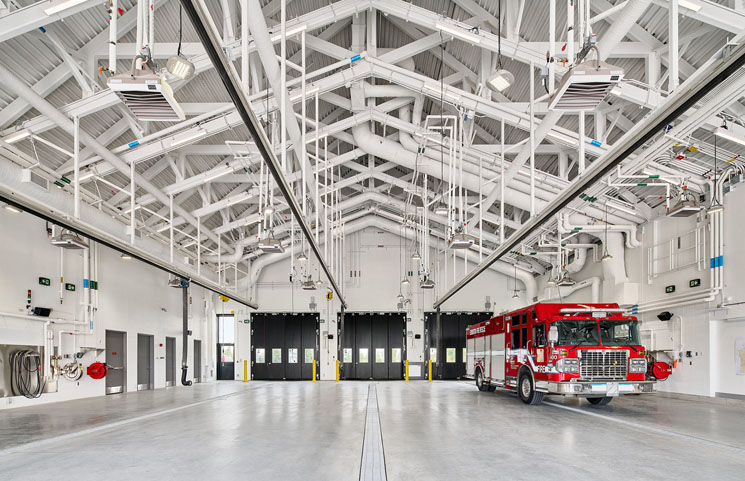
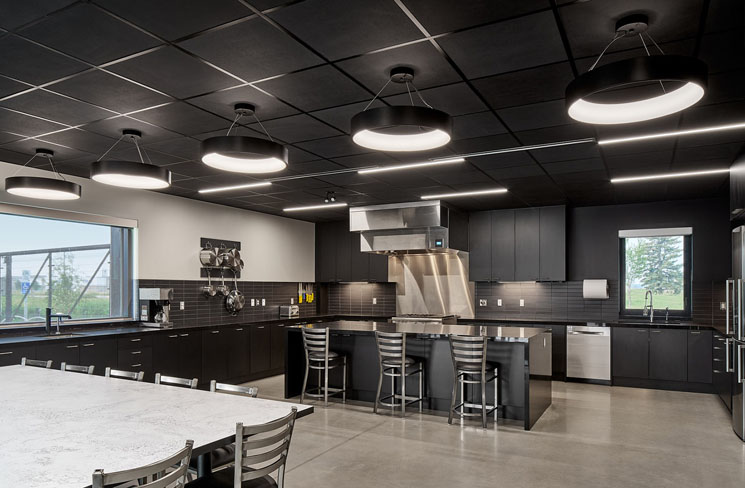
At 1,520 square metres (16,400 square feet), Station 31 has three bays for fire engines, offices, sleeping quarters and a kitchen and dining area. It will operate with up to 12 firefighters. It will serve people in the fast-growing southwest of the city, bringing with it, in addition to its environmental credentials, the promise of greater safety and security for people in the event of an emergency.

Building for a sustainable and resilient future demands innovative approaches to building and systems integration.

The city and the project team, which included the architectural team of S2 Architecture and gh3, were able to combine community needs with technical sophistication by collaborating closely from the earliest conceptual and design stages. PCL Construction’s in-house sustainability experts engaged with the city, architects and consultants to enhance design solutions, reduce costs, lean the schedule and drive value to the client.

The team shaped the building to maximize the generation of solar energy and minimize heat gain. The striking south-facing roof, featuring 382 panels with a rated capacity of 143 kilowatts, is gently sloped to capture the sun’s rays most effectively.

“The subtle swoop of the roof is designed around the sun’s movement,” says Linus Murphy, an architect and principal with S2 Architecture. “It is designed for the Edmonton area, and you couldn’t take this design and put it in Calgary or in any other location with the same effectiveness.”

Just under half of the sun’s energy passes through the atmosphere and is absorbed by the Earth’s surface. Accessing that energy to heat and cool Station 31 became a shared sustainability goal for this landmark project.

To that end, a team that included architectural, civil, construction and geothermal experts came together to design and build a geothermal field that would meet the client’s goals. “We had a lot of back and forth in terms of the environmental numbers that are produced from this building, from the roof of the solar and from the geothermal,” says Andrew Brennan, a superintendent with PCL’s specialized contractor team — Special Projects — which delivered the project. “This had to be closely coordinated and verified with the experts to get us to net zero.”

The geothermal field was made in an L shape outside the perimeter of the building itself, with the header pipes feeding into the station. It features 35 75-metre boreholes which provide energy for heating and cooling.

The importance of a well-designed and -built building envelope in the quest to reach net zero can hardly be overstated. Any failure of the envelope can lead to moisture damage, air leakage, poor indoor air quality and costly repairs. PCL’s building envelope engineering specialist, Lori O’Malley, says the challenges start when two of a building’s four control layers — the air, moisture, vapour and thermal barriers — come into contact. “If those areas aren’t designed correctly or they’re not coordinated properly when they’re put together — or materials are used that don’t work together — you will have issues,” she says.

For Station 31, PCL provided constructability solutions and built an envelope featuring walls with an R-value of 35 (compared with a typical house wall of R-20). The roof insulation is R-50 and the underslab R-20.

“We have virtually no thermal bridging, which is when metal goes from the warm side into the cold side,” says Murphy. “We’ve reduced the glazing down to about 14 per cent of the building, which is really phenomenal.”

One thing the team is particularly proud of is the bi-folding doors that allow the trucks in and out. “They open two-and-three-quarter seconds faster than an overhead door goes up,” says Murphy. “That may sound miniscule, but when those doors are opening 4,000 times per year, that adds up to hours and hours that those doors are closed rather than open.”

Other sustainability and occupant-comfort measures the team incorporated include:

  1. Maximizing natural light in the work environment to reduce energy loads and improve occupant comfort,
  2. Innovating the storm-water-management landscape innovations, and
  3. Enhancing the health of the occupants in the engine bays through suction hoses that attach to the fire trucks’ exhaust systems as soon as they enter the bay and do not release until they leave.

Along with reducing the fire department’s response time, Station 31 will be a community centre in the event of an emergency. It is a post-disaster, non-combustible, sprinklered building with a complete alerting system. It also has a dedicated room to receive donations for the many community drives the department supports.


Photos and text courtesy of PCL Construction

Commercial cleaning remains critical even with lower building occupancy

Building occupancy has changed, and that means that commercial cleaning has had to pivot once again to accommodate the needs of their corporate customers. Less frequent cleaning and more flexibility means adjusted budgeting, labour, and scheduling for cleaning companies. Employees are still coming into the office though, so systems need to be put in place to accommodate businesses and cleaners.

RELATED: How cleaners can still thrive with lower building occupancy

The heightened attention to cleanliness and sanitization means that employees are concerned about how clean their offices are, and not just for safety. Despite many of them not being there full time, cleanliness is still important to staff, with 70 per cent of employees feeling that the cleanliness of their work area affects their job satisfaction.

In addition, three out of 4 employees believe that the level of cleanliness at their workplace is a reflection about how much their employer cares about their wellbeing. This means that cleaning companies are more important today than ever before, even if their schedules might look a little different.

As more companies accept a hybrid work model, many companies are downsizing their footprint, creating shared workspaces, and meeting rooms are being used on a rotating schedule. This could be good news for cleaners, as the offices will still be used daily, needing cleaning and sanitization. Research shows that office buildings have about 4,800 dirty surfaces, and even without full-time occupation, spaces like refrigerators and door handles remain high-touch and high risk for the spread of viruses.

Technology can help cleaners and businesses decide on a cleaning schedule that suits everyone’s needs, with innovation like occupancy sensors which can analyze the building use, assess traffic patterns, and predict high traffic times so health and safety can remain a priority.

Because of the lower building occupancy, cleaners have more flexibility for labour and scheduling, often allowing them to come and clean during the day, rather than at night. This means that cleaners may be able to achieve a better work-life balance while servicing their customers and better managing labour.

Even though building occupancy may remain lower for years to come, commercial cleaners need to lean on their expertise to accommodate evolving needs and continue to grow the business.

Social destabilization unsettles city fabric

Data, collaborative networks and a suite of tested best practices can be valuable resources for property managers pressed to respond to the unsettling social destabilization occurring in many Canadian cities. In Edmonton and Calgary, local chapters of the Building Owners and Managers Association (BOMA) have been instrumental in pulling these pieces together, helping their members quantify the impacts of safety and security transgressions, and connecting them into broader city-level action plans.

Lisa Baroldi, president and chief executive officer of BOMA Edmonton, and Lloyd Suchet, executive director of BOMA Calgary, outlined their efforts during a panel discussion on downtown safety and revitalization at the recent BOMA Canada national conference in Edmonton. After sponsoring independent research projects to identify priority concerns and collect measurable data in their own cities, the two BOMA chapters are helping to launch an Alberta-wide alliance and are also seeking cross-Canada input from the commercial real estate sector.

“Maybe there’s something that we’ve done that you can learn from us, but we’re certainly here to learn from you,” Baroldi told conference attendees. “We’re in conversation with other BOMA local associations and BOMA Canada so that we can have national data to help with both advocacy and decision-making as we really take downtowns to the next level and revitalize.”

Data distinguishes evidence from anecdote

Circa-2022 surveys have helped to establish a baseline for progress in both cities. BOMA Edmonton engaged the research firm, Leger, to conduct its work with the support of a grant from the City of Edmonton’s Downtown Vibrancy Fund. The research included 30 in-depth interviews with property managers and an online survey that elicited 110 submission from a fairly even split of building management and tenant respondents. A mix of qualitative and quantitative questions complemented the need for data to fill information gaps, which was earlier identified in Edmonton’s downtown strategic plan.

“It was really helpful to get this data,” affirmed Andre Corbould, Edmonton’s City Manager, who also participated in the panel discussion.

Among some of the key findings, survey participants revealed that they had spent more money since the outbreak of the COVID-19 pandemic to address safety and security concerns. That’s pegged at an average $200,000 additional expenditure for building owners in the roughly two-year period from 2020 to 2022 and an extra $30,000 for the average tenant.

As of 2022, 72 per cent of respondents considered downtown public safety uncertainties to be a discouraging influence on workers’ return to the office, while one third of respondents indicated they were likely to relocate from the downtown. Those sentiments also align with some of Leger’s national and provincial data for the same period, showing that 45 per cent of Canadians and 47 per cent of Albertans perceive that downtowns are in decline in either the city where they live or the nearest urban centre (for non-urban dwellers).

Baroldi cited reservations about the potential for sensationalistic misinterpretation behind BOMA Edmonton’s decision not to publicly release the larger share of survey findings. Rather, they have been reserved for advocacy and strategic planning to provide measurable insight on the repercussions of social and economic upheaval — homelessness, mental health afflictions, overdoses, violence, etc. — that are increasingly playing out in public spaces.

“When we share this information, it really helps to open decision-makers’ eyes and brings it all together in a very clear and concise way rather than us all just sitting around the table with anecdotes,” Baroldi observed.

Similarly, Suchet characterizes the findings from BOMA Calgary’s survey as the kind of verifiable data that policy-makers demand to support program and spending decisions. That survey produced a comprehensive overview of property crimes and disturbances at more than 70 downtown office properties over the course of 2022, with a detailed breakdown of types of incidents, the times they occurred, the victims involved and the costs of response and recovery. Notably, related monetary costs for the year are estimated at an average of $120,000 per property — evidence that BOMA Calgary has presented to Calgary’s Mayor, Council and senior bureaucrats.

“This is the first empirical data coming out of our downtown,” Suchet reported. “At BOMA, we are perfectly situated to collect the tangible data that political and community leaders are planning for, and that can drive change.”

Collaborative efforts leverage partners’ connections

Baroldi agrees the commercial real estate sector can be particularly effective when it works within its sphere of influence and leans into its strengths. That’s both the clout of the industry’s collective economic contribution and a myriad of potentially productive, creative partnerships leveraging members’ vast connections. For example, BOMA followed up on the City of Edmonton’s desire to get the Alberta government more engaged in a provincial-municipal discussion of the issues.

“We were able to be the association that convened the first meeting of three provincial Ministers to get it on their radar — just to plant that seed and say: Hey, come to the table. We’ve got all of these knowledgeable people in Edmonton trying to do good things,” Baroldi recounted.

“This is a big problem and we operate in one corner of it.” Suchet reflected. “Understanding the opioid crisis, the mental health crisis, that’s not our corner, but we can certainly be in the room in supporting those efforts.”

BOMA’s niche strengths are also at the heart of the envisioned broader alliance to address public safety concerns, promote continued recovery from pandemic-related setbacks and support vibrant, welcoming downtowns. The root causes of social destabilization may be outside the industry’s control, but a cohesive and well-resourced network of supports can make it easier to respond empathetically and tackle what is solvable. In this, the Calgary Downtown Association and the Edmonton Downtown Business Association have been key partners with the two BOMA chapters.

“We’re seeing so much collaboration — meeting regularly, sharing ideas, sharing data, cooperating, advocating collectively to people in government,” Puneeta McBryan, executive director of the Downtown Edmonton Business Association, advised conference attendees. “We’ve had so much good engagement from the City, and one of the most important things for us has been relentless advocacy to all levels of government.”

The Alberta-based proponents are now calling on peers from across Canada to share their experiences and examples of property-level or community-scale actions they have implemented. “Perhaps some of the best information we’ve gathered thus far are best practices — just things that are being tried that are producing some results,” Baroldi reiterated.

McBryan speculated that’s likely to entail a combination of security initiatives and “vibrancy” measures that business improvement area (BIA) associations could help to produce. She frames the latter — such as special events or exhibits in public areas of commercial properties — as “positive interventions” that entice people to congregate and spur positive spinoffs from the enjoyment they derive from the space.

“I think there’s really a sweet spot in the partnership and collaboration between BOMAs and property owners and managers and BIAs. I think we create so much magic when we work together,” McBryan submitted. “Just as much as this is a tactical and operational challenge at properties and across downtown, it’s a leadership challenge. It’s taking control of the things that we can control.”

Barbara Carss is editor-in-chief of Canadian Property Management.

Jock Finlayson joins ICBA as chief economist

The Independent Contractors and Businesses Association (ICBA) has appointed Jock Finlayson as the association’s first chief economist.

As chief economist, Finlayson will monitor and analyze industry trends, market conditions, and economic factors to provide insights and forecasts relevant to the construction sector. In addition, he will advise ICBA and its members on developments in the business and policy environment affecting construction and the broader economy, and assist ICBA in strategic planning and public policy advocacy.

“For many years, Jock Finlayson has been one of the most respected and insightful voices shaping economic and public policy analysis and discussion in British Columbia, and we are thrilled to have him as ICBA’s first chief economist,” said ICBA president Chris Gardner. “Jock’s experience and expertise will be brought to bear on some of the key issues facing construction and the broader economy, including fiscal policy, the shortage of people, regulatory creep, declining productivity, and loss of economic competitiveness.”

Previously, Finlayson served as executive vice president and chief policy officer at the Business Council of British Columbia, directing the council’s work on economic, fiscal, tax, environmental, regulatory, and human capital issues of interest to the largest employers in the province and the wider business community.

“Construction is a sector full of savvy entrepreneurs and visionary builders, creating companies and projects that deliver tremendous value to British Columbia,” said Finlayson. “It’s an honour to be named ICBA’s first chief economist, and to provide analysis and insight for an industry that makes up nearly 10 per cent of the economy. A thriving construction sector is vital to the economic health of our province.”


How AI can improve your warehouse operations

Smart buildings and technology adoption have become so popular in the last few years, with facility managers streamlining operations, better managing inventory, and minimizing labour. From sensors to AI, there are several technologies that can optimize your warehouse operations. Studies show that 74 per cent of people fear that AI will cause unemployment, but instead of replacing labour, technology can make jobs easier for employees, better allocate staff, and improve efficiency.

RELATED: How smart building affect commercial cleaners

Increase safety

Safety is paramount and technology can help elevate your safety standards and make your warehouse safer for your staff. Sensors can allow forklift drivers to avoid collisions, by alerting drivers when they get close to an object or person.  As well, AI can also be used to train operators in safety practices by simulating situations that can make them more qualified to complete their jobs at a higher level. For r example, showing videos of ‘narrowly missed accidents’ can help your team become more aware of the risks and ways to avoid dangerous mishaps in the warehouse.

Boost optimization

AI and innovation can also help improve your processes, making your warehouse more efficient and saving you time and money. By better monitoring picking processes, tracking inventory, and gathering data you can become more informed and improve your operations. This technology gets to know your facility, identifying where too much time is being spent on one task or suggesting different storage placement for easier access to your inventory. AI-powered algorithms can also help you create better ways to fill orders and faster travel paths, alleviating some of the stress on your teams and improving efficiency.

Technology like robotics can also help with picking, easily navigating warehouse aisles and reaching places it may be difficult or unsafe for staff to access.

See into the future

Some of the power of AI is its predictive nature, allowing you to plan ahead by identifying patterns and detecting anomalies to predict supply chain issues and customer behaviours. Forecasting can help you better manage your inventory, service your customers, and look ahead for future spending. Predictive picking allows you to manage storage; when you know what will get picked next, you can store your inventory accordingly, saving time and the hassle of rearranging your shelves.

AI can help warehouses function more efficiently, making processes simpler, and improving performance. With the help of humans, AI can help you better manage your warehouse and your business.

Vaughan receives $59 mil in federal funding

The federal government announced it has reached an agreement with the City of Vaughan to fast-track the development of over 1,700 new housing units and incentivize thousands of additional homes over the next three years. Issued through the Housing Accelerator Fund, $59 million in funding will be used toward the creation of high-density residences near public transit, prioritizing apartments and affordable housing and helping fix outdated permitting systems and zoning by-laws.

“The status quo on home building in this country just isn’t working,” said Prime Minister Justin Trudeau. “We need more apartments, affordable housing, homes within walking distance of public transit – and we need to do it faster. That’s what today’s announcement in Vaughan is all about. We’re going to keep working with local governments on their innovative approaches to building more homes, faster.”

According to the government, the Housing Accelerator Fund is helping cut red tape and develop housing for people in towns, cities, and Indigenous communities across Canada. When developing their action plans, local municipalities are encouraged to “think big” and “be bold” in their approaches, which could include steps to accelerate project timelines, increase housing density, and encourage affordable housing units.

“Vaughan has always been a destination of choice that people dream of calling home and where future generations wish to raise their families, start businesses, and enjoy an unrivalled quality of life,” said Steven Del Duca, Mayor of Vaughan. “Working with my fellow Members of Vaughan Council, we were pleased to work with the federal government to ensure Vaughan secured this critical city-building investment. I am proud to stand alongside Prime Minister Trudeau for this historic announcement as part of the Housing Accelerator Fund to build new housing units in Vaughan and to help bring this dream closer to reach for countless families and residents.”

Vaughan is one of Canada’s fastest-growing cities, expected to welcome 7,700 new residents each year over the next 30 years.. The Housing Accelerator Fund is a $4 billion initiative from the Government of Canada that will run until 2026-27.


Home sales steady and listings rise in Montreal CMA

Residential sales in the Montreal Census Metropolitan Area remained moderate in September, but still below the historic average for this time of year. According to new statistics from The Quebec Professional Association of Real Estate Brokers (QPAREB), sales stood at 2,738, with an increase of 9 per cent or 224 transactions.

“The Montreal CMA market continued to stabilize in September, with transactional activity comparable to that of a very quiet month of August,” said QPAREB Market Analysis Director Charles Brant. “If sales are up compared to same period last year, it is because 12 months ago activity had started to drop towards an all-time low. The same phenomenon is observed in the mainly positive variation in prices.”

Residential property sales are rising in all of the main metropolitan areas of the Montreal CMA. The Island of Montreal and Saint-Jean-sur-Richelieu, with 1,007 transactions and 64 transactions, had notable increases of 18 per cent and 14 per cent compared to the same period last year. Vaudreuil-Soulanges (125 sales), the North Shore of Montreal (650 sales) and the South Shore of Montreal (650 sales) follow with respective increases of 11 per cent, 7 per cent and 7 per cent in sales. Laval, at 242 sales, is an exception and posted a 10 per cent drop.

With 1,391 transactions, the number of single-family homes sold was up 5 per cent compared to the same period last year. Condominiums and small income properties reached 1,068 sales and 276 sales respectively, both growing by 13 per cent.

September saw an increase in active listings, up 10 per cent from a year ago to reach 16,398 in the Montreal CMA. This increase in listings was observed across all property categories.The inventory of available properties has reached a level not seen since fall 2019.

The price of single-family homes seems to be falling after reaching a peak in August. The average price stood at $549,000, an increase of 3 per cent compared to September 2022. Condominiums saw an increase of 6 per cent for the period, with a median price of $402,000. Plexes were $730,000, a jump of 7 per cent compared to last year.

Brant said the new wave of interest rate hikes in the summer prompted a more cautious approach among buyers.

“Household purchasing power remains eroded by inflation and the savings cushion accumulated during the pandemic is rapidly depleting,” he said. “For their part, sellers are trying to cash in their added value while market conditions, supported by a solid migratory flow, are still favourable to them.

“Good marketing at the right price will be more and more critical in attracting a motivated buyer pool which, however, will most likely be smaller and more selective. This is particularly the case for single-family homes, as prices have almost reached the last peak of 2022.”

Big six banks feeling little office fallout

Canada’s big six banks are considered well insulated against declining prospects in the office sector. Newly released commentary from the credit rating service, DBRS Morningstar, reiterates the general negative outlook for office properties in both Canada and the United States, but highlights lending and underwriting trends that have limited the big six banks’ exposure.

As of the third quarter of 2023, office properties account for 13 per cent of the six banks’ collective commercial real estate (CRE) loan portfolio, while CRE represents about 10 per cent of total loans. The total exposure to office is pegged at $51 billion or 1.2 per cent of total loans.

“Canadian banks have prudently limited new lending in the office space and are closely monitoring and increasing provisions for credit losses on existing CRE loans. Conservative underwriting should help mitigate potential credit risks, with generally low loan-to-value levels at origination providing a buffer against collateral value risk,” says Josh Veenkamp, assistant vice president, North America, with DBRS Morningstar’s financial institutions group.

In contrast to the United States, there was a 0 per cent delinquency rate on office loans packaged into Canadian commercial mortgage backed securities (CMBS) as of August. The outstanding loan volume shrank quarter-over-quarter, attributed to tightened lending and negligible loan growth of 0.1 per cent.

Exposure to the U.S. market is considered more of an issue for four of the six banks — BMO, CIBC, TD and RBC — accounting for about half of their office loans. “The Big Six’s impaired loans on CRE have started to tick up, and a substantial portion of the increase is likely being driven by the U.S. office portfolio,” the commentary submits.

However, this is deemed to be “manageable” given it remains such a small portion of their total loan portfolios. Meanwhile, in tallying the office sector’s frequently chronicled woes related to climbing interest and vacancy rates and falling values, DBRS Morningstar analysts also make equally unstartling observations about the unevenness of the impacts.

“The Big Six maintain office portfolios that are generally well-diversified by geography, location and class, with many properties backed by strong financial sponsors,” they conclude. “In the near term, long-term leases to high-quality tenants and the aforementioned flight to quality should continue to mitigate downside risk for rated real estate issuers, to some extent. In the longer-term, a shrinking construction pipeline expected to reach a 20-year low at the start of 2024 and conversion of obsolete office buildings into alternative uses point to reduced supply growth, which will help supply and demand find equilibrium.”

How to secure the best insurance rates

Canada’s insurance landscape has changed dramatically in recent years, and for multi-residential landlords, the road forward has been particularly fraught with added costs and complications. According to Mark Fujita, the newly appointed VP of Partnerships at APOLLO Insurance, increases in overall property insurance costs have been steeper than ever, driven by significant losses for water damage, fire, and natural disasters, combined with inflationary pressure increasing the costs of claims through labour and materials.

“This pricing ‘hard market’ is leading to higher deductibles and reduced coverage options,” he said. “Higher interest rates and natural disasters are driving capital to look to other investments instead of insurance, meaning reinsurance companies and primary insurance companies have been raising their prices or exiting some categories or geographies.”

In light of this stark reality, we asked Fujita to share some tips and suggestions for multi-res landlords seeking coverage in 2023 and beyond:

What’s changed the most for landlords and tenants on the insurance front recently?

A big change we’re seeing is that building insurance providers are craving more data about the physical structure, as well as ongoing data from smart building systems to inform sophisticated risk management practices and insurance pricing. We’re also seeing an increasing number of landlords requiring proof of insurance as a condition of their leases, which means they have the added administrative challenge of validating and tracking renters insurance for each resident. For the tenants, the experience of getting insurance has improved greatly thanks to the ability to get quotes and buy coverage online, or even by having an insurance offering embedded directly into the lease execution process.

Will rates continue to climb in the foreseeable future?

Frequency of water damage claims continues to be a challenge in multifamily buildings, particularly in newer buildings equipped with inexpensive connection parts for washing machines and dishwashers. Also, the severity and frequency of natural disasters is putting pressure on property insurance globally, and this isn’t likely to change anytime soon. On the positive side, as Canada’s inflation rate slows and interest rates stabilize, we should see some easing of industry rate increases.

 What can multi-residential property owners do to secure the best rates?

Insurers today prefer property owners that focus on risk management, so having risk reduction and mitigation measures in place will help landlords get better rates. Some examples of risk mitigation include making properties non-smoking, limiting BBQs on patios, reviewing hose connections for water-based appliances, having leak detection alarms, water shutoff valves and caging fire sprinklers in place. Another great way to reduce risk and therefore reduce costs is to have a well-defined and tracked renters insurance program to recover costs for claims that were caused by tenant negligence.

Any other advice for landlords and renters?

For landlords, the best thing to do is ensure a comprehensive renters insurance program is in effect. The landlord can mitigate reputational, business, and personal risk by ensuring their tenants have proper insurance. Also, landlords and tenants alike should consider the inevitability of natural disasters and have a plan in place in case evacuation is needed due to a catastrophic event, such as a fire or flood. For renters, having adequate coverage for contents, additional living expenses and liability, will reduce their personal risk of loss. Most tenants underestimate the total cost to replace their belongings, plus the cost of living in a hotel in the event their unit is rendered uninhabitable. They also underestimate the number of claims that are caused by their neighbours, such as a leak in the unit above them or a fire. Modern renters’ insurance policies insure much more than what’s inside the tenant’s apartment; they can provide coverage for property in their storage unit, work supplies and tools related to their business, and even items they’ve brought with them on a trip.

APOLLO Insurance is a Canadian digital insurance provider and innovator in the emerging embedded insurance sector. Last year, APOLLO partnered with Yardi Systems to offer an insurance interface embedded into Yardi’s software that allows Canadian tenants and landlords “an effortless digital insurance experience.”

Find out more at: www.apollocover.com


2023 scholarship winner pursues RPA designation

Madeline Krieger, retail coordinator for Niagara Casinos, has been awarded the 2023 Vyetta Sunderland Scholarship to support her studies toward a Real Property Administrator (RPA) designation. BOMI Education Canada bestows the bursary every year to a Canadian student who is pursing career advancement in property or facilities management.

Krieger spent five years in a customer service role at Niagara Casinos before joining the in-house retail division in 2019. She credits BOMA Education Canada for helping her navigate the learning curve of a new career path.

“I entered the property management industry in 2019 with limited experience. BOMI Education Canada has given me the tools, education and confidence I need to succeed as a retail coordinator,” Krieger recounts. “I am beyond grateful to be selected as the successful recipient of the Vyetta Sunderland Scholarship Award.”

The scholarship is named for BOMI International’s chair, who is a longstanding champion of professional development through ongoing education. It was conveyed during the National Awards Gala at BOMEX, the Building Owners and Managers Association (BOMA) of Canada’s annual conference, which was held in Edmonton last week.

“Working with Vyetta Sunderland on various BOMI boards and committees, I know she would agree that Madeline embodies the characteristics the committee seeks for the scholarship recipient,” says Kim Saunders, chair of BOMI Education Canada and property manager at East Port Properties Limited.

Keep your team safe and healthy this fall

As the seasons change, everything from people’s mental state to the indoor air quality shifts. For your cleaning practices and maintenance procedures, it’s important to prioritize the staff and visitors in your building. There are steps you can take to improve the environment and look out for your employees, keeping everyone safe, happy, and healthy this season.

It’s cold and flu season, so a healthy staff with high attendance is important for your business and for your teams. Reminding people of regular handwashing, setting up sanitizing stations, paying attention to high traffic areas, and staying home when sick is a start to keeping a virus from spreading through your facility and staff. Here are some of the things you can do to maximize the health of your staff and visitors this season:

  • Look at your schedule to ensure that you have backup labour available, should someone call in sick.
  • Check your HVAC, change the filters, and conduct any seasonal maintenance to optimize the air quality in your building. Conducting an air quality assessment will also let you know if there is a build up of contaminants that may be affecting your staff and visitors.
  • Similarly, if weather permits, leave windows or bay doors open to allow fresh air flow into the building.
  • Adjust outdoor lighting to allow a safe and easy path from the parking lot to the entrance as it gets darker earlier.
  • Prepare early for the arrival of snow with ice melter and equipment needed so you are ready to clear pathways and provide safe entry into the building when winter comes.

Work-related stress is at an all-time high across all industries, with 20 per cent of Canadians reporting high or very high levels of stress at work. Here are some of the things you can do for your facility or cleaning team to help prioritize mental health and show you care:

  • Provide opportunities for your team to connect with common areas, break rooms, or lunch gatherings to get people together.
  • Offer services to help struggling employees. There are several free support sites in Ontario that you can recommend and make available to your team.
  • Review your employee workloads, consider flexible hours, and distribute work as much as you can to allow your team a work-life balance. Even during a labour shortage, ensure that your team knows that you value their time and their efforts.
  • Rotate shifts for people like cleaners working overnight so they can enjoy a life outside their place of work.

From their physical safety to their mental health, your staff and visitors need to know they are protected as much as possible. Whether you are a maintenance manager, commercial cleaner, or staff member, take precautions to keep all employees and guests happy and healthy this season.

Final test precedes LEED v5 O+M 2024 launch

LEED v5 is nearing final form, with the updated rating system for existing buildings operations and maintenance (O+M) undergoing final refinements ahead of a projected 2024 rollout. The draft version was released in conjunction with the U.S. Green Building Council’s annual conference last week along with a call for projects to help with the final testing.

This will replace LEED v4.1, which was introduced in 2017. LEED v5 will place greater emphasis on all significant sources of carbon emissions in buildings, resilience and the social and health impacts of buildings. That includes new credits for: decarbonization and net-zero planning; operational preparedness for extreme events; continual assessment and verification of measurable indoor air quality; and protections for cleaning staff.

“The launch of LEED v5 underscores our unwavering commitment to our mission of fostering sustainable building practices that embrace principles of equity, health, biodiversity and resilience,” says Peter Templeton, president and chief executive officer of USGBC.

A draft of LEED v5 for building design and construction (BD+C) is expected for next year.

Buildings without barriers on 2024 agenda

The Rick Hansen Foundation is now welcoming prospective participants in its 2024 Buildings Without Barriers Challenge. By pledging to undertake Rick Hansen Foundation Accessibility Certification (RHFAC) assessments at three or more of their properties, organizations with real estate portfolios become eligible for four awards recognizing commitment, progress and achievement in providing accessible space.

“We’re challenging property owners and managers to accelerate their accessibility journey and support their tenants by making spaces such as our stores, malls, offices and condominiums more inclusive for employees, customers and visitors of all ages and abilities,” says Brad McCannell, vice president, access and inclusion, Rick Hansen Foundation.

Participating companies can submit their pledges by November 15 and must complete the RHFAC assessments between January 1 and June 30, 2024. Four awards are on offer:

  • The Commitment Award will go to the organization with the greatest number of properties and/or pre-construction plans that have obtained an RHFAC rating;
  • The Innovation Award will recognize the building that achieves the highest score in the innovation category of the RHFAC rating;
  • The Accessibility Progress Award will recognize the building with the best improvement in its score from its previous RHFAC rating; and
  • The Accessible Future Award will go to the organization that achieves the highest RHFAC rating for a new development that is in the design or pre-construction phase.

“These four aspects look at the holistic and overall approach to accessibility,” McCannell observes. “When organizations are looking at accessibility during all stages of building whether it’s a brand-new build or a renovation, we know that attitudinal changes are happening.”

Award winners will be announced at BOMEX, the annual national conference of the Building Owners and Managers Association (BOMA) of Canada, in Vancouver in September 2024.

Harassment against condo managers on the rise

Condo managers in Ontario are experiencing escalating incidents of workplace harassment and abuse from board directors and condo owners. The Association of Condominium Managers of Ontario (ACMO) sounded the alarm this week in the wake of a critical labour shortage ripping through the condo industry.

Likely contributing to this trend are more people working from home, more individuals moving into condos because of economic pressures, and the housing shortage.  “Many of these new condo owners may not be familiar with the intricacies of condominium living, leading to unrealistic expectations and demands put on condominium managers,” ACMO states. “These individuals often expect the same level of autonomy as living in a single-family dwelling, which can lead to conflicts over shared living spaces and community rules.”

Skilled managers are choosing to leave the profession because of the “relentless pressure and lack of support,” as they endure sustained abuse, hostility and stress. The Condominium Management Regulatory Authority of Ontario (CMRAO) reported that 124 managers (nearly 5 per cent of all general licensees), chose not to renew their licences as of March 31, 2023, a 107 per cent increase over 2022.

“The influx of new owners who are unaccustomed to the condominium lifestyle has created a challenging environment for condominium managers,” said Eric Plant, RCM, director at Brilliant Property Management Inc. and president of ACMO, “This has led to an increase in disputes and tensions between managers, boards of directors, and residents, contributing to an unsustainable level of stress for these professionals.”

Widespread misunderstanding about the specific role condo managers play in their communities has existed for a long time now. “Managers do not have decision-making power over policy development, financial decisions, or major property alterations,” ACMO states. “These areas fall under the purview of the condominium’s board of directors. Contrary to popular belief, condominium managers do not wield unlimited power within their positions – they are tasked with implementing decisions made by the board of directors, acting as intermediaries between the board and the owners while following current legislation (i.e. Condominium Act, 1998; Condominium Management Services Act, 2015).”

What managers are expected to do is serve the condo board and operate within the terms of the management agreement between the board and the management firm the board hired. They play an essential role in ensuring the efficient operation of a condominium complex, managing day-to-day tasks such as overseeing maintenance, repairs, financial administration, and resident communications.

There is also a lack of understanding regarding the scope of a condominium manager’s authority, condo by-laws, rules, and lifestyle has fueled unrealistic expectations, setting the stage for clashes between managers and owners.

Some disgruntled owners have reportedly resorted to filing frivolous, unfounded, or vindictive complaints with the CMRAO, adding more stress to managers in responding to accusations and defending their position and diverting attention away from addressing legitimate concerns.

Threatening to report a manager to the CMRAO has become a common tactic used by directors and owners to manipulate managers, creating an atmosphere of distrust and further straining the relationship between condominium managers, boards and owners.

“It’s not unusual to hear an owner or director try to bully a manager with words like ‘You better listen to me and do what you’re told because I pay your salary,’” comments Juliet Atha, president of Best Practices Property Management. “This kind of intimidation increases the manager’s feeling of vulnerability and being stressed in their workplace.”

ACMO is seeking to stamp out workplace harassment through collaboration, education, and respect, while creating a more positive and effective working environment within the condominium management sector. This approach includes:

Clear Communication Channels: Establishing clear communication channels with regular, ongoing, effective two-way communication between owners, directors, and managers is essential.

Education and Training: Enhanced education training initiatives and enforcement from the Condominium Authority of Ontario (CAO) aimed at educating boards of directors and owners about the roles and responsibilities of condominium managers. Clear communication about the division of authority and responsibilities can promote healthier working relationships. Meanwhile, ACMO will continue to build on the skills of condominium managers, board members, and the industry at large by providing education on conflict management, communication best practices, and safety & security for the communities they manage.

Supportive Policies: Condominium corporations, together with their condominium management providers, should adopt policies that promote a respectful and inclusive work environment, encouraging open communication and collaboration among all parties. Many management firms have started implementing harassment clauses in their contracts with condominium corporations.

“We understand that our staff can find themselves in situations that are unpredictable. In order to protect our managers, we have added a harassment clause to all of our management contracts,” says Melissa Kirkaldie, RCM, vice president of operations, Waterloo Region for Wilson Blanchard Management. “This clause states that WB is legally obligated to take reasonable measures to protect our employees from harassment that includes oral or written statements, actions or behaviour which is intimidating, threatening, violent, or offensive, and we will limit communications with the offending owner or board member at our discretion.”

“As a company, we must ensure that all our employees feel safe conducting business and acting as agents to our clients.”

Condominium managers follow a strict code of ethics as codified in Ontario legislation. Implementing and enforcing a similar board of director’s code of ethics and an owners code of conduct agreement with residents can provide a framework for appropriate behaviour and expectations and help establish boundaries for a respectful and collaborative environment.

Industry Collaboration: Collaboration between industry associations, regulators, and condominium management providers on developing industry-wide guidelines and standards for respectful and professional conduct can provide a framework for appropriate behaviour and expectations within the condominium management sector.

Towards this, ACMO, along with the Canadian Condominium Institute’s (CCI) Toronto Chapter and the Community Associations Institute (CAI) Canadian Chapter, launched a joint initiative earlier this year to develop resources and educational programming and propose legislative reforms to help ensure that the condominium industry is better equipped to manage concerns relating to violence and mental health in communities. Three working committees were formed to address harassment, safety and security in condominiums:

  • The Legislation Committee will review appropriate opportunities for legislative reform to better protect personal safety in condominiums and educate government agencies about how best to minimize risk for condominium communities.
  • The Resources Committee will identify and promote appropriate mental health resources and conflict de-escalation resources to support condominium corporations in the future. This may include better educating other organizations about the unique challenges in condominiums. The committee may also identify missing resources that should be developed.
  • The Policy Committee will review and identify best practices and template policies to improve governance and proactively support condominium corporations.

ACMO says its committed to addressing these issues head-on by providing ongoing professional development opportunities for condo managers and those in the industry, empowering them with the skills and knowledge needed to navigate complex situations, and maintaining a harmonious working relationship with boards and owners.