Articles Archive - Page 163 of 928 - REMINET
REMI

Alberta leads provinces for housing starts in 2024

New data from the Canadian Mortgage and Housing Corporation (CMHC) shows that total housing starts in Alberta reached 9,722 from January to March, representing a 50 per cent increase from the 6,200 starts over the same period in 2023. This growth puts Alberta well ahead of the rest of Canada, which averaged a 16 per cent growth rate since January.

“Our province is leading the way in getting more homes built,” said Jason Nixon, Minister of Seniors, Community and Social Services. “We will continue to support our partners in the residential construction industry to help increase housing options available for all Albertans. Our construction industry is making strong progress addressing our market housing shortage through these new builds.”

Alberta has seen considerable growth in rental homes in the last three years, with 25,477 units constructed; this amounts to more new rental housing starts than the previous 15 years combined (25,285).

“The government has prioritized removing red tape while adding critical elements of predictability,” said Scott Fash, CEO, BILD Alberta Association. “This has supported Alberta’s residential construction industry in achieving record levels of housing construction, including purpose-built rental units. The industry is building at a historic pace to meet rising demand, and through continued collaboration with the government, we can help secure Alberta’s housing advantage for generations to come.”

Alberta’s government is also making progress on its Stronger Foundations affordable housing strategy to make sure its vulnerable citizens have a safe, stable and affordable place to live. The province says it is on track to support a total of 82,000 low-income households by 2031.

For more on Canada’s housing starts, click here: Housing starts for March 2024 | CMHC (cmhc-schl.gc.ca)

Canadian renters are leaning right

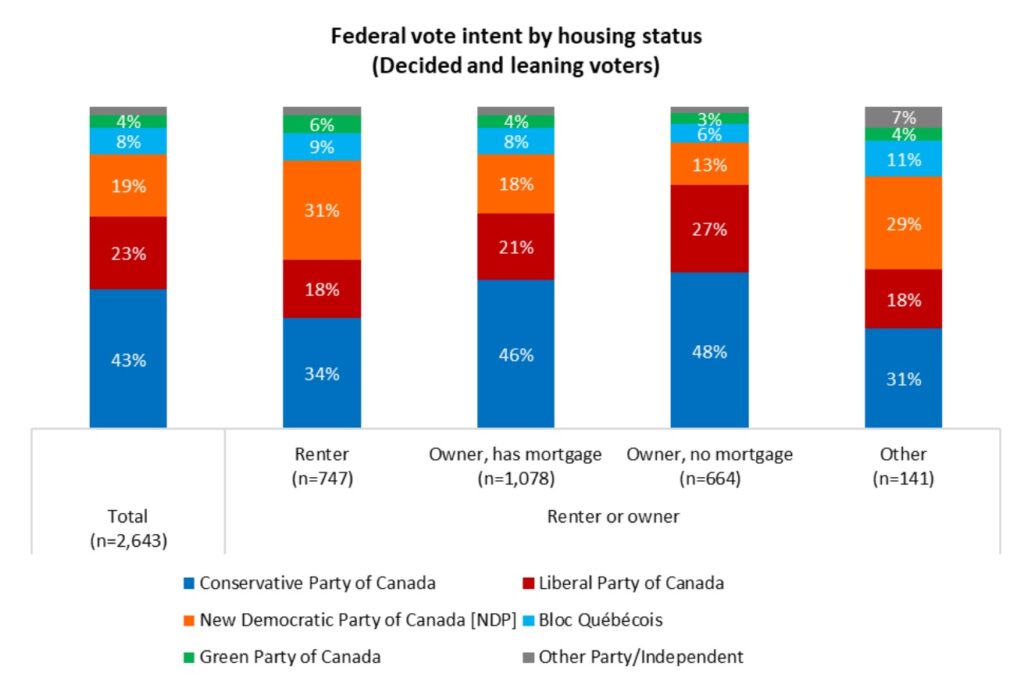
According to new research from Angus Reid Institute (ARI), Canadian renters are more likely to vote for the Conservative Party if a federal election were to happen today. This follows months of concerted effort by Prime Minister Trudeau, his cabinet and caucus, to drum up support for the new measures announced in the 2024 federal budget that promise to “restore generational fairness for renters” and “make life more affordable for Canadians.”

The poll, conducted online from April 19 to the 23rd, found that the Conservatives are currently leading the Liberals by a margin of nearly two-to-one (43 per cent versus 23 per cent) while the NDP are a not-too-distant third at 19 per cent. Among Gen Z and Millennial voters, the Liberals are a strong third; meanwhile, 34 per cent of renters say they are  more likely to vote for the Conservatives or the NDP (31%) over the Liberal Party (18%) in an upcoming election.

“With the slew of new measures intended to support renters and improve affordability, it is surprising that the Liberals are now the third choice among younger Canadians,” said Jon Roe, Research Associate with ARI. “We’ve done some surveying around the concern over the deficit, government spending and its impact on inflation, and this does play a role in why they are wary of voting for the Liberals. But we also found that Canadians just don’t believe the new measures will work.”

Released in mid-April, the 2024 federal budget includes $8.5 billion in financial supports and programs intended to spur affordable housing development. It also includes the Tenant Protection Fund, which introduces new measures and a code of conduct to prevent landlords from unfairly hiking rents.

For those currently renting but looking to buy a home, the plan offers a 30-year amortization period for insured mortgages on new construction—which isn’t enough, according to the Residential Construction Council of Ontario (RESCON).

“We commend the federal government for seriously trying,” said Richard Lyall, RESCON president. “There are positive measures here to assist purpose-built rental housing supply. That much is encouraging. But there is no relief for first-time buyers who have been pushed out of the market. They are being taxed on new housing at rates which would have crushed their parents and grandparents. Why are we doing that to them?”

ARI pollLong-term outlook

Housing affordability aside, the big picture issue is that the federal budget forecasts a nearly $40-billion deficit for the next fiscal year—a worrisome reality for all Canadians, and particularly younger cohorts. As per the poll’s findings, 56 per cent say their outlook for Canada’s economy has grown more negative in the wake of the budget, and only 9 per cent say they believe the new measures will bring about financial relief or stability for them personally.

But that’s not to say each individual measure was perceived negatively. As Roe pointed out, 68 per cent of Canadians say they support the government’s plan to lease out federally owned lands for the construction of affordable housing and 65 per cent say they approve of funding infrastructure for new housing developments.

“The problem lies with the budget as a whole and fears that the changes could have a detrimental effect on Canada’s economy,” he said. “Nearly half of Canadians (47%) are more pessimistic about the future of their personal financial situation now than they were previously.”

As for rental housing providers, the ARI poll didn’t address them specifically, but both the Federation of Rental-Housing Providers of Ontario (FRPO) and the Canadian Federation of Apartment Associations (CFAA) have issued statements calling the new measures “encouraging” for future purpose-built rental developments.

“Budget 2024 takes significant steps to support housing growth from coast to coast to coast,” CFAA interim president, Tony Irwin said. “CFAA welcomes the government’s continued commitment to address our national housing shortage through continued funding and policy changes.”

Also noteworthy is that while nearly half of Canadian homeowners (with and without mortgages) say they would vote for the Conservatives in an upcoming election, 27 per cent of homeowners with no mortgage say they would support the Liberals—the largest cohort among the groups surveyed.

More key findings:

  • Conservative leader Pierre Poilievre is viewed more positively among Gen Z adults than Trudeau (29% vs 17%). He also has a higher favourability among younger (35% vs. 27%) and older (39% vs. 27%) Millennials.
  • Half (49%) of Canadians say their opinion of the prime minister has worsened, while a handful (5%) say it has improved in recent weeks.
  • Since the budget, the Conservatives are ahead of the Liberals in every region in the country, but the Liberals garner the most support in Atlantic Canada.
  • Half (50%) believe increasing the capital gains inclusion rate is a “good idea” because “wealthy Canadians do not pay their fair share of taxes.” One-third (34%) disagree, saying “taxing capital gains hurts economic growth”.

Survey methodology:

The Angus Reid Institute conducted the online survey from April 19-23, 2024, among a representative randomized sample of 3,015 Canadian adults. The survey was self-commissioned and paid for by ARI.

For detailed results by vote intent, renters and owners, and other cross tabulations, click here. For detailed results by age, gender, region, education, and other demographics, click here.

BC Embodied Carbon Awards winners revealed

The Zero Emissions Innovation Centre, through its Carbon Leadership Forum British Columbia (CLF British Columbia) program, hosted the second annual BC Embodied Carbon Awards in Vancouver. The awards, the first of their kind in North America, aim to showcase and celebrate leadership and inspire others to reduce embodied carbon in their projects.

“These awards demonstrate leadership and climate actions that are much needed and achievable today as we work towards 2030 emissions reduction targets. We are pleased to be celebrating those who are committed to accelerating the effort to reduce embodied emissions in this province’s building sector. These winners are proving that our climate goals are achievable when we collaborate and prioritize innovation and sustainability in our buildings,” said Melina Scholefield, ZEIC executive director:

Six individuals, projects, and organizations were recognized for their leadership on reducing embodied carbon pollution in the province.

WINNERS

Organizational Commitment to Change: ZGF Architects
This award recognizes a company or organization that has shown exemplary leadership in reducing embodied carbon in British Columbia’s built environment.

Public Sector Leadership: University of British Columbia
This award recognizes a British Columbia-based local government, public sector organization, or non-profit organization that has demonstrated exemplary leadership in reducing embodied carbon in British Columbia’s built environment.

Large (Part 3) Buildings: North Island College Student Housing, HDR Architecture
This award recognizes a large new development or a substantial renovation of a large building that demonstrates excellence in low-embodied-carbon design and construction . The relevant local government or permitting authority must classify the recognized building(s) under Part 3 of the building code.

Small (Part 9) Buildings: Phoenix House, Carbon Wise
This award category recognizes excellence in low-embodied-carbon design in a small new project such as a single-family home or laneway home, or a substantial renovation of an existing single-family home or smaller building. The relevant local government or permitting authority must classify the recognized building(s) under Part 9 of the building code.

Commitment to Circularity: Renewal Development
This award recognizes exceptional initiatives and projects that embrace and tangibly advance circularity or circular concepts within British Columbia’s buildings sector.

Strengthening the Practice: Anthony Pak
This award recognizes a building sector professional who has demonstrated an exemplary commitment to reducing embodied carbon across British Columbia’s built environment. (This is a nomination-based award)


Update your lighting system with LEDs

Sustainability continues to influence facility and maintenance managers’ decision-making. As more halogen and incandescent light bulbs are being banned from sale and removed from the market, what are the best options for keeping your lighting system up to date?

Before the time comes to replace those halogen and incandescent bulbs, you need to have a plan – and a budget – in place.

LED lighting

LED lights are rapidly becoming the new norm, offering longer life spans, better efficiency (up to 80 per cent more than fluorescents), and higher performance than their predecessors. Swapping out your old lighting system with LEDs can be simple with retrofit kits that allow you to make an easy switch.

Planning ahead

Getting ahead of the game will make a retrofit more seamless and easier on your budget. Start by assessing your needs by looking at how many replacements are needed. Decide whether there is a control system in place and whether you’d like to add one. Decide whether this will simply be a replacement job or an upgrade to better address the needs of your building.

Getting smart

Here’s where you might want to add a tech component to your lighting system to allow you better operational control, performance data, and more options like dimming, colour temperature, motion sensors, and more. Adopting smart technology can be a way to increase performance, reduce costs over the long term, and head towards your sustainability goals.

As part of your project, you may also want to optimize natural lighting in your building with skylights or larger windows to let the light in.

You may also want to consider adding automation with tools like smart glass, which is a dynamic glass that automatically adjusts the tint level, adjusting to augment the natural light in your building as it’s needed. Studies show that installing smart glass could result in a 20 to 30 per cent savings on your heating and cooling bill, as well as letting in more light when it’s available.

RELATED: Get smarter with your lighting

As technology and tools evolve, so, too, must your lighting. Get ahead of the game with a plan to replace your old lighting for an easier transition and less stress on your budget.

Alberta aims to smooth utility bill volatility

The Alberta government is aiming to smooth out utility bill volatility through a stabilized default rate for customers who do not have a competitive contract for electricity and/or gas, and restrictions on how municipalities can calculate the fees they charge to utilities in lieu of property taxes. Proposed legislation in the newly tabled Bill 19 would amend the allowed parameters for local access fees, while further legislation is promised to convert the default electricity and gas rates from month-to-month variables to a firm two-year certainty.

“Unpredictable power costs make it hard for families to plan their household budgets,” says Alberta Premier Danielle Smith.

Currently, utility customers throughout the province pay sometimes widely divergent pass-through costs on their utility bills depending on the option that municipalities use to charge fees in lieu of property tax — which appears as a bill line item, labelled as local access fees. Alberta’s Municipal Government Act allows them to collect the fees based on: a percentage of transmission and distribution costs; a fixed rate per-kilowatt-hour or kilojoule of consumption; or, as is the case in Calgary, a combination of those two formulas. The Alberta Utilities Commission, the provincial regulator, must also grant approval for the fee collection model municipalities adopt.

Under Bill 19, municipalities could still choose the approach for collecting local access fee, but that would have to be pegged to a stable rather than variable utility rate. Notably, recent spiking costs in default utility rates that change from month to month are considered a prime reason why local access fees have been higher in Calgary than in Edmonton.

As it takes steps to stabilize default rates, the Alberta government also plans to give them a new name. In future, it will be known as the rate of last resort. This is presented as an effort to combat what the government terms a “false sense of protection” tied to the rate. Currently, about 32 per cent of commercial customers, 29 per cent of residential customers and 46 per cent of farm customers do not have a competitive contract and are subject to default rates.

“Addressing high, unpredictable fees on utility bills is an important step in making life more affordable for Albertans,” says Chantelle de Jonge, parliamentary secretary to Alberta’s Minister of Affordability and Utilities. “Alberta’s unique, deregulated electricity market gives Albertans the power to choose the best energy providers, plans, and payment options to fit their needs. By encouraging competition, these policies will help make utility bills more affordable.”

Navigating supply chain transparency legislation 

A deadline is approaching for many Canadian businesses to file their first annual report on supply chain transparency. Reporting requirements under the Fighting Against Forced Labour and Child Labour in Supply Chains Act are due May 31, 2024.

The legislation, which came into effect on January 1, is largely a response to post-pandemic challenges that have exacerbated human rights and labour equity concerns. Over the past two years, risk factors that lead to exploitation in the global workforce have skyrocketed.

Katie Martin, director of sustainability at Avetta, a risk-management software provider, unpacked Canada’s modern anti-slavery law during a recent seminar and discussed various technologies that help identify illicit supply chain behaviours.

Across the globe, post-pandemic re-openings have created labour shortages, while climate change has also shaken up human capital in the workforce as people migrate into new regions due to extreme weather conditions and loss of land. More than 100 million are expected to migrate over the next decade, causing further economic and social disruption. This is adding new context to an already pervasive issue.

“When we critically pull back the layers of our supply chains and our businesses, a significant amount of our economies relies on slave labour and forced labour,” said Martin. “This is prompting nations to put this in a regulatory perspective to drive change.”

As mandates roll out in other countries, Canada is establishing parity on this front to keep up with business opportunities.

Companies are being urged to update their policies, procedures and supplier due diligence. To understand the multiple facets of forced labour, the International Labour Organization has identified 11 key indicators that businesses can refer to for tracking risks and sufficiently meeting reporting requirements. Further guidance on how to use the indicators is offered through an ILO e-learning tool.

What’s required under Canada’s modern anti-slavery law?

As businesses prepare their report for the Ministry of Public Safety and Emergency Preparedness, they must have it approved by an appropriate governing body with legal, binding authority, complete an online questionnaire that aligns with the report, upload the report, and then make it publicly available on their website.

“Organizations that fail to submit a satisfactory annual report or make it public, obstruct a designated official, or fail to comply with an order from the Ministry are guilty of a summary offence and liable to a fine up to $250,000,” said Martin.

Failure to act can also tarnish reputation as consumers readily scrutinize brands and create liability for directors and officers who may have participated in any offences.

“As you’re thinking about planning and submitting your questionnaire, make sure you are also aware that it does need to be executed and signed off by your governing body, whether that is your senior leadership or official board,” she cautioned. “Make sure you leave time for that as the fines are pretty significant for failing to comply.”

Who is eligible?

Eligible businesses are considered an entity under the Act’s definition. They are either listed on a Canadian stock exchange or have a place of business in Canada while meeting two of the following criteria: have a minimum of $20 million in assets, generate $40 million in revenue, and employ at least 250 people.

In addition, businesses must be involved in producing, selling and or distributing goods within Canada or abroad, import goods outside Canada, and control entities engaged in such practices.

As it currently stands, companies are to report on their efforts to prevent or mitigate the risk of forced and child labour in their supply chains. The legislation does not prescribe the specific measures that a company must take to remediate the problem. “The onus is on the business who is pulling in suppliers from high-risk regions of the world or high-risk products to prove that there is no forced labour, rather than respond to a claim of forced labour,” said Martin.

The report encompasses both internal and external data, such as relevant due diligence policies and processes and employee training, as well as how the entity assesses the effectiveness to ensure this labour type isn’t being used.

Companies with multiple legal entities can file one joint report. All entities must share the same risk profiles and controls to address risks in their supply chains. The Act also creates a prohibition on importing goods made by forced and child labour. Canada Border Services Agency will be enforcing this.

Moving towards best practices

Since the onus is on the business to determine what suppliers pose this risk, it is crucial to engage with suppliers to extract necessary external data to grasp an understanding of how they are preventing forced and child labour.

Looking internally, in their first reporting year, businesses may need third-party support from consulting groups that can help audit current processes and specific sector risks.

A business is liable once it becomes aware of forced labour, but companies often bookmark their response plans until risks are found, warns Martin. In the past, companies have immediately detached from suppliers when incidents come to light.

“While that is an approach, what we’ve come to find is that, oftentimes, the context, the societal challenges and the regulatory challenges pushing people into labour that is exploitative is only exacerbated when that connection is broken,” she said. “We have child labourers in areas of the world where, if they’re not working in this factory, they still need to be earners in a much more dangerous situation.”

Beyond compliance

Following reporting requirements entails engaging partners in preventative measures for mitigation, assessing supply chain risks and impacts, training and communicating across the supply chain, and developing a code of conduct. To assert internal controls, businesses can monitor compliance, remediate violations, conduct an independent review, and report performance and engagement.

“Every organization has some risk for forced labour,” said Martin. “If you’re in the construction sector, manufacturing sector or facilities management, it’s likely to be much higher than finance or professional services. . . and sometimes we’re surprised at how these things are pulled into our supply chain. A lot of that has to do with vending out contract work.”

Engage and educate

A first step is to engage and educate partners and stakeholders in preventative measures. This can include: helping sourcing teams to identify forced labour; training suppliers and their line managers on the ILO’s indicators and how to work with responsible recruiters and agencies; and teaching line workers to understand their rights and what to do if they see or experience forced labour.

Obtaining on-the-ground information can create a more transparent working environment. In one example, a manufacturing corporation rolled out e-learning classes in an overseas factory about workplace rights and safety and how to report instances of non-compliance.

“Within 30 days of having that compliance training completed, they saw a 50 per cent increase in the number of health and safety incoming messages they were getting through the channels they built for people to give feedback,” said Martin,

This also helps create reportable data on how companies are building a culture of safety and compliance and providing opportunities for workers to engage, which is one of the reporting requirements.

Assess risks in supply chains

Supply chains are incredibly complex and yet companies must extract data and verify that suppliers are operating in a way that protects them and the company itself.

One step is to cross-reference suppliers against relevant industry lists of entities that are presumed to be using forced labour, such as UFLPA.

When you have a sense of the high-risk suppliers, map out your supply chain—both upstream and downstream—for forced and child labour hotspots to understand where exposure points are and which suppliers require deeper due diligence, said Martin.

Investing in tech capabilities and third-party services, such as SaaS and sSCM, further conducts due diligence and executes dynamic screening at scale. Companies can also consider integrating screening into business infrastructure systems, such as CRMs.

Train and communicate across supply chain

Once high-risk suppliers are identified, they require training. Maximizing compliance can unfold through accessible training, either developed in-house or through other services. Risk mitigation can integrate into existing SCRM programming to ensure suppliers are set up for success. They should be knowledgeable about company standards, best practices, and the ILO’s forced labour indicators.

“A lot of times we already have the data or connections with our Tier 1 suppliers, those that we’re vending with directly,” said Martin. “The challenge is that those suppliers vend out labour and contracts and sometimes vend out further. That Tier 2 and beyond is where a lot of the social risks lie.”

Building relationships with Tier 1 suppliers and incorporating their mapping into due diligence processes is vital for minimizing risk.

Develop code of conduct

“Companies creating modern day slavery policies for the first time should refrain from using templates as this could leave them exposed in ways unique to their geography or offerings,” said Martin, cautioning against artificial intelligence (AI) systems like ChatGPT to maximize time. “This is an extremely high-risk space not to have direct expert human capital oversight, especially in this first year,” she noted.

Monitoring compliance and remediating violations

Subcontracting can add layers between the company and the worker and exists out of the scope of many audits, which are one control mechanism for mitigating risk. Audits are often “one piece of the puzzle” and provide only a snapshot of a specific moment. Companies can begin with audits before moving beyond this mechanism.

Change comes by working with suppliers to recognize business constraints while acting in compliance. Martin said suppliers should be empowered to address challenges and deliverables without feeling that they will lose the contract and make poor staffing decisions as a result.

Reporting performance and engagement

Besides compiling regulation-specific reports, Martin discussed incorporating broader supply chain performance data into traditional reporting.

After digesting what the data is showcasing, begin to integrate some of that data and KPIs into existing business dashboards, across other functions like procurement, health and safety and compliance training. “There is going to be a rich story coming through and an opportunity to capitalize on it,” she explained.

She further shared tips that apply to each of the 11 indicators of forced labour, for instance, copies of pay slips and digital payment systems when it comes to “withholding wages.”

Speed and scale through technology

Martin described three main tech enablers in this space that are driving value for mitigating this issue. Blockchain, IoT and AI are boosting rapid and scalable assurance and transparency.

“Blockchain is becoming a really strong tool to mitigate the risks that we have with our audit process, both in terms of how slow and labour-intensive they are and how prone to corruption or editing,” she said. Transactions recorded on blockchain cannot be altered or deleted. You can trust the efficacy of it, both while you’re reviewing it and when your auditors are going through that process as well, which can reduce the risk of fraudulent activity.”

Through AI, free-form text and unstructured practices help identify forced labour patterns. Data mining tracks illicit behaviours. Supply chain management software such as Forced Labor Risk Determination & Mitigation (FRDM) uses machine learning to measure forced labour risks at each level of production in real time.

“In this year one, there’s not an expectation to get to Tier 2 and Tier 3 but you should have that on your data map for 2025 submission. I think there will be requirements for that since we know that’s where a lot of the risk is.”


The feature image was generated with AI.

 

New BC Cancer Centre in Nanaimo approved

The new BC Cancer Centre at Nanaimo Regional General Hospital (NRGH) has been approved and procurement is underway. Construction is expected to begin in 2025 and be complete in 2028.

The three-storey centre will be built next to the ambulatory care building. It will house a computed topography (CT) simulator, a PET/CT diagnostic scanner and an oncology ambulatory care unit with 12 exam rooms, four consultation rooms and space for medical physicists and radiation therapists. The lower level will contain four linear accelerator vaults, which are heavy concrete structures that contain radiation equipment used in the treatment of cancer patients.

Upgrades to NRGH include a new single-storey addition to the ambulatory care building that will be home to a new community oncology network clinic and expanded pharmacy.

The upgraded clinic will have 16 treatment bays, private consultation rooms, a medication room and support space. Cancer care delivered through the clinic will include oral and intravenous cancer treatment, chemotherapy, immunotherapy, targeted therapy and hormonal therapy. The clinic also provides initial consultation and treatment planning with a medical oncologist, supportive care, followup care and patient education.

The pharmacy will be updated to current standards and feature more space. Construction work also includes 164 new parking spaces featuring a two-storey parkade next to the cancer centre as well as parking stalls in the north lot.

“We are excited to bring a new BC Cancer centre to Nanaimo. The new cancer centre will complement the existing services provided by BC Cancer – Victoria and reduce the burden of travel for people living in central and north Vancouver Island communities. We look forward to working in partnership with Island Health to expand cancer care in this rapidly growing region,” said Tracy Irwin, chief operating officer, BC Cancer.

The project budget is approximately $289 million.

Canadian real estate icon David Podmore retiring

David Podmore, a Canadian real estate icon, will be retiring as chair of Concert Properties effective June 30, 2024.

Podmore started the Vancouver company with co-founder Jack Poole in 1989. Since then, the company has grown to include a number of corporate entities with diversified operations across the country, with over $9 billion in assets.

After a new chair is named, Podmore will work closely with the appointee to ensure a smooth transition. On July 1, he will remain in an advisory capacity as chair emeritus to support the board and Christine Bergeron, president and CEO, Concert Properties.

“I am confident that now is the time to step aside and entrust the company’s continued success to our highly qualified and knowledgeable board of directors, and the experienced leadership team led by Christine,” said Podmore. “It has been the honour and privilege of my life to lead Concert. I will leave knowing my partner Jack would have been proud to see all that we have accomplished.”

In June, Podmore will be celebrating his 75th birthday and Concert Properties will be turning 35.

“We have achieved a great deal over the years. Among our accomplishments, we have built over 13,800 homes, which include 1,450 assured and affordable homes, with approximately 9,000 more in our development pipeline. Additionally, we currently own and manage over 13 million square feet of industrial and commercial properties,” said Podmore.

Through Concert Infrastructure, the company has invested in, developed and now manages 10 essential Canadian public infrastructure projects.

”David’s legacy is truly remarkable, not only in the impact he has had on the Canadian built landscape, but perhaps more importantly the tremendous impact he has had on so many lives. On a personal note, I am thankful for David’s trust, leadership and friendship, and am grateful for the opportunity to learn from one of the most respected icons in Canadian real estate,” said Bergeron.

In addition to retiring as chair of Concert Properties, Podmore will also be stepping down as chair of Concert Infrastructure Fund (CIF) at the same time.

With an aggregate portfolio capitalization of $3.3 billion, CIF is an independent long-term investor, developer, and manager established 14 years ago to partner with governments to deliver critical public infrastructure assets that support essential public services that strengthen the economic and social fabric of Canadian communities.


SUMO rental project kicks off in Montreal

An elegant new rental property called SUMA is underway in the heart of Montreal, featuring 66 units spread over seven floors. The project is a joint initiative of Omnia Technologies, Groupe HD, and Kastello Immobilier. According to the partners, every detail of the plan was carefully considered to meet the daily needs of residents, offering “maximized and inspiring spaces” to prioritize occupant well-being.

“We are delighted to present the SUMA rental project, a perfect fusion of elegance, proximity, and quality of life,” said Jean-François Beaulieu, President of Omnia Technologies. “This new rental project fits perfectly into the vision of this booming neighbourhood and will provide future residents with high-quality homes close to services, shops, and public transportation.”

Beyond the appeal of its central location just metres from Papineau metro station, SUMA has an aesthetically pleasing, sleek style envisioned for a young, urban demographic. According to the partners, SUMA will be a reflection of their commitment to creating an exceptional residential community that redefines the standards of urban living.

“Kastello is proud to participate in this project with Groupe HD and Omnia Technologies and to take over property management upon the opening of SUMA,” said Eric Fortin, president at Kastello. “This is part of our business model on a human scale to create strong relationships with our partners and tenants by offering high-quality living environments.”

Summary of the SUMA rental project:

  • 66 rental condos spread over 7 floors
  • Prime location (Papineau metro station) offering panoramic views of the Jacques Cartier Bridge, Mount Royal, and downtown Montreal
  • Indoor parking
  • Rooftop terrace
  • BBQ and dining areas
  • Loggia balcony
  • Sleek style, zen aesthetics, and maximized spaces for daily well-being
  • Project partners: Omnia Technologies, Groupe HD, Kastello Immobilier

For more information on SUMA, visit sumacondos.com

Main image: From left to right – Danny Galimi (Groupe HD), Jean-Philippe Hébert (Groupe HD), Thomas Dufour (Groupe HD), Jean-François Beaulieu (Omnia), Mathieu Collette (Kastello), Richard Jutras (Omnia) (CNW Group/Omnia technologies)

New home sales in March continue record low trend

New home sales across the Greater Toronto Area in March continued the record low sales trend seen since January, the Building Industry and Land Development Association (BILD) announced on Monday.

Condominium apartments, including units in low, medium and high-rise buildings, stacked townhouses and loft units, accounted for 601 units sold in March, down 38 per cent from March 2023 and 73 per cent below the 10-year average, according to Altus Group.

Single-family home sales (524) rose 38 per cent from last March and 51 per cent below the 10-year average. Overall, 1,125 new home were sold, down 66 per cent below the 10-year average. Edward Jegg, research manager with Altus Group, said builders are announcing fewer new launches until sales begin to recover.

Average prices increased last month for both single-family homes and condo apartments compared to February The benchmark price for new condominium apartments was 1,054,906, which was down six per cent over the last 12 months and 16 per cent from the 2022 peak. The average price for new single-family homes was $1,594,951, down 11 per cent over the last 12 months and 18 per cent since the 2022 peak.

Total new home remaining inventory decreased compared to the previous month, to 19,508 units. It included 16,318 condominium apartment units and 3,190 single-family dwellings.

This represents a combined inventory level of 13.5 months, based on average sales for the last 12 months. This remains one of the highest inventory levels for new homes seen in the last decade and, when combined with the decrease of 16 to 18 per cent in the benchmark price since the peak in 2022. BILD said there is now much choice “due to high inventory levels, and that purchasing a pre-construction home today will allow buyers to lock in a price now, while benefiting from lower interest rates that may be on the horizon, when they close.”

“While the current situation is very beneficial for prospective new home buyers, it is a period of increased jeopardy for builders and developers that is becoming more critical with every passing day,” said Justin Sherwood, senior vice president of communications and stakeholder relations at BILD.

“At the very time when builders should be ramping up production, they cannot due to a combination of high interest rates, elevated construction costs and slow demand. This is becoming a very concerning situation and persistence of these market conditions risks future housing supply.”


The intricacies of EV infrastructure remain at odds with condo legislation

The electric vehicle landscape is complex, ever-changing and at the cutting edge of technology. For condominium corporations and their owners, this means that there is no one-size-fits-all solution.

Unfortunately, the current iteration of the condominium legislation in Ontario, the Condominium Act, 1998, treats the installation of electric vehicle charging stations or electric infrastructure to support such charging stations as binary — i.e. that is to say that there are only two straightforward streams: an installation of infrastructure or communal charging stations by a condominium corporation, or the installation of a charging station by an individual owner.

To simplify the legislation:

1. For a condominium corporation to install infrastructure or communal charging stations, the corporation must send a notice to the owners. Depending on the cost of the installation and/or if the installation will reduce an enjoyment of the common elements or units, a vote of owners may be required; and

2. For an installation by an owner, the owner must submit an application; the corporation then has 60 days to respond, the parties have 90 days to enter into an agreement, and once registered on title to the unit, the installation can proceed.

In reality, however, these processes are much more complex and intertwined than was envisioned when the legislation was drafted.

For example, we are seeing many clients take advantage of various different incentives or solutions to help facilitate the ease of and to reduce the cost of their project; this includes partnering with electrical contractors to assist in utilizing government grants and with electrical contractors to provide the condominium corporation infrastructure, while also providing owners with reduced rates on the purchase of a charging station. These electrical contractors also provide solutions to assist the condominium corporation with maximizing their electrical capacity, including through smart panels or smart chargers.

Unfortunately, these solutions do not fall squarely within the current legislation. There are no provisions that take into account a corporation overseeing a project for the installation of various numbers of charging stations for the owners, or utilizing a government grant that has specific requirements in order to be compliant.

Furthermore, regardless of the scenario, there is no flexibility in the legislation, and sometimes unnecessary steps must be taken in order to strictly comply. The end result is generally extra work on the already overworked property manager.

There are also ancillary concerns. Does a condominium corporation really want many different contractors engaging with the corporation’s electrical infrastructure? Can a condominium corporation force an owner to install a specific type(s) of charging station that fits within the condominium corporation’s plan to maximize its electrical infrastructure? What if an owner’s
actions lead to a breach of contract between the condominium corporation and its electrical contractor?

There are certainly many concerns that are not addressed by the current legislation. Yet, how can we expect legislators to draft legislation to protect against scenarios that are not even contemplated? We can’t.

So much has changed since the drafting of the electric vehicle provisions that it is no wonder that they are not all-encompassing. Coupled with the fact that the Condominium Act, 1998 is consumer protection legislation, any amendments to the legislation will be a balancing act of (at times) competing interests.

Until legislators figure that out, condominium corporations must work within the legal parameters that are in place and make the best of the situation at hand. That involves implementing creative solutions and looking at the spirit or intention of the Condominium Act, 1998 to get the job done. At the end of the day, as long as the goal is to allow owners to install and use charging stations, then the purpose of the legislation is achieved.

Jake Fine is a lawyer with Lash Condo Law LLP, and has taken a keen interest in electric vehicles in condominiums. Jake also serves as the President of CAI Canada.

Airport wildlife hazards prompt pond prohibition

Ponds could be prohibited in specified areas in the vicinity of the Vancouver International Airport under new rules for wildlife hazards on lands within Transport Canada’s regulatory jurisdiction. A package of proposed changes to the Vancouver International Airport zoning regulations — now posted for public feedback on the government of Canada’s website — would also introduce building height limitations in two areas where a future runway might be located, and disallow potential sources of communication interference with air traffic, such as radio stations, cellular and 5G towers.

The latest step in the consultation process is open until June 19, and follows after more focused consultation Transport Canada conducted with the municipalities of Vancouver, Burnaby, Richmond and Delta, potentially affected landowners and other stakeholders. The proposed new height restriction regulations are intended to preserve flexibility to accommodate a future new runway in one of two identified possible expansion zones.

Accompanying analysis notes that there are no plans to develop a runway in the near term, but it’s considered prudent to ensure that high-rise buildings that could obstruct future flight paths do not spring up in nearby municipalities where “rapid land development” is occurring. If the proposed regulation is adopted, existing buildings in the designated areas that are more than 45 metres in height would be grandfathered in as legal non-conforming uses. However, the analysis also notes there are relatively few of them.

The proposed prohibition on land uses that attract wildlife updates a 43-year-old current regulation, which more narrowly bans waste dumps or accumulations of edibles that birds favour. The rules also require the Vancouver Airport Authority to have wildlife mitigation controls in place, but the analysis notes that bird harborage just beyond the airport’s boundaries makes that task more difficult and increases risk. The proposed regulatory update would disallow most forms of standing open water in specified areas where the zoning regulations apply, but would permit open water storage reservoirs for a period of no more than 48 hours.

Transport Canada has promised to publish supplemental non-regulatory guidance on both land uses that are considered attractants to wildlife and mitigation measures to discourage birds. The analysis also acknowledges some pushback on the issue during the earlier consultations with affected municipalities.

“Municipalities were concerned that the restrictions would impact their ability to manage stormwater and make their cities less attractive and liveable by limiting the number of ponds and parks they could establish,” it states. “The restriction would not prevent the establishment of parks or the management of stormwater but would require a municipality to look at other methods of managing stormwater, such as underground storage or grass and reed covered ponds.”

Meanwhile, the regulations have not previously addressed land uses that could create communications interference. “Currently, these interferences are identified through NAV CANADA assessments when instrument landing systems and navigation aids are installed, and when interference incidents are reported,” the regulatory analysis states.

SWTCH Energy announces new funding for EV infrastructure

Toronto-based SWTCH Energy announced it has raised $27.2 million in new funding to enable the acceleration of EV charging infrastructure in multi-residential buildings. This is the second round of funding secured by the company following a tenfold increase in its charging network.

The ‘Series B’ funding was led by Blue Earth Capital on behalf of its investment vehicles with participation from Alantra’s Energy Transition Fund, Klima. Additional Series B investors include Active Impact Investments and GIGA Investments Corp.

With the new funding, SWTCH is leveraging machine learning and artificial intelligence to advance its energy management solution, SWTCH Control, and expand integrations with industry-leading software to create “a seamless experience” for both property managers and tenants who drive EVs.

“Today, a third of Americans live in multifamily buildings, largely without home charging access,” said CEO Carter Li. “As right-to-charge laws and energy efficiency mandates continue to gain traction, SWTCH is in a unique position to help real estate customers close this gap. We’re always looking for ways to push our solutions forward to make EV charging a no-brainer. With this new capital, we will scale our EV charging solutions to ensure no building, and no driver, is left behind in the EV future.”

With EV sales expected to rise dramatically in the coming years, governments are busy amending building codes and zoning ordinances to require properties to be EV-ready. SWTCH, a pioneer of EV charging solutions for multifamily, commercial, and workplace properties across North America, has been an important part of this mission to bring the technology to market.

According to Kayode Akinola, Head of Private Equity at Blue Earth Capital: “We’re pleased to see SWTCH’s innovative deployments and technological leadership to date, and are excited to partner with the company to support their pivotal growth stage. Electrification and supporting the energy transition is a key investment theme for our climate growth strategy, and an important component of this is the continued expansion of EV infrastructure. The multifamily space served by SWTCH offers a valuable market opportunity to grow our clean energy economy.”

For more info, visit: SWTCH EV Charging Solutions (swtchenergy.com)

Mitigating the risk of slips and falls on dry floors

Slip and fall accidents pose a risk with wet and dirty floors, but floors can be slippery when they’re dry, too. Floors become slippery when the friction coefficient is reduced, and this can be caused by dust, residue or excess product that’s left on your floors, even after they’ve been cleaned.

Detergent residue

When the floors are cleaned or mopped, a residue can be left from the detergent. When that excess product dries, it leaves a layer over the floors, which builds up over time and can cause the floors to be slippery. If you are using a floor cleaning machine or automated cleaner, ensure that the dilution is the right for the amount of detergent you are using to limit the film that remains after cleaning.

RELATED: Spring cleaning your floors

Wax or polish

Similarly, hardwood flooring can become slippery when too much wax or polish has been used or if the correct products are not being used on your flooring. If the floors look cloudy or hazy, that’s a sign that there has been too much product used and it could present a slipping hazard. To minimize any build-up, use high-quality products, apply an even, thin layer, and use a damp mop to remove any excess.

Dust

Flooring can become slippery when exposed to fine powder or dust, so places like warehouses with bay doors become a risk when the doors are left open, unprotected from pollen and dust from the outdoors. Regularly cleaning the floors to remove debris, installing partitions or wall curtains, monitoring your air quality, and maintaining your HVAC system will help you keep particles out of the air and off your floors.

Wet floors are an obvious hazard, but keep your eye out for potential slip-and-fall risks on dry floors as part of your regular maintenance and cleaning practices to mitigate risks and keep floors in great shape.

BCCA annual survey highlights industry pressures

Demand for construction services is high, but labour supply, costs, and faltering public sector standards and systems around permits, contracts, procurement, and payments are undermining development and putting pressures on B.C.’s builders.

Those are the key findings from the annual BC Construction Association (BCCA) Industry Survey.

“It’s true that labour shortages and the cost of materials are constant challenges,” said Chris Atchison, president of the BCCA. “But industry can manage these pressures – it’s what we do. The biggest hindrances to building housing and other infrastructure today are the associated operations of the authorities having jurisdiction, from crowns to ministries and municipalities.”

The survey reveals that more than 80 per cent of contractors, regardless of size, were paid late for their substantially completed work at least once this past year. Nearly half of large contractors (100 employees plus) report being paid late at least 25 per cent of the time, and 30 per cent of small contractors (20 employees or less) report the same.  With the cost of borrowing skyrocketing, financing projects for owners is a burden most businesses cannot afford.

Contract disputes related to costs are a common occurrence, with 44 per cent of small contractors saying they’ve filed a fixed price contract dispute in the last 12 months, compared to 31 per cent of medium contractors and 28 per cent of large.

BCCA is advocating for three changes that it says will address the challenges facing builders as well as the owners who need the work to be done on budget and on time. They are:

  • Introduce prompt payment legislation to normalize standard, reasonable payment terms of 30 days, ensure proper invoices are paid, and give clear rights to lien holdback monies.
  • Make public sector projects more attractive to industry by having fair, open and transparent procurement processes and reasonable contract conditions.
  • Speed up the permit process with the authorities having jurisdiction, including municipalities and BC Hydro.

“Until B.C. catches up to the rest of Canada, the USA and Britain, and introduces Prompt Payment Legislation, policy-makers need to be tuned into the fact that the financial risks for BC’s contractors are nearing a breaking point,” said Atchison. “There are actions that industry and government can take together and separately that will alleviate the challenges contractors are facing.”


Decarbonization roadmap navigators in demand

A decarbonization roadmap is ultimately intended to guide its users to a single destination — a targeted reduction in greenhouse gas (GHG) emissions — but, to do so, it plots the arduousness of the journey for every traveller. In commercial real estate, that means charting out a route for each asset in a portfolio.

“The roadmap covers all the projects needed to get each building to its target, and the organization’s portfolio-wide target is then the aggregate of all these buildings’ targets,” James Dice, founder and chief executive officer of the buildings information forum, Nexus Labs, advised during a recent webinar. “You consider the achievable targets that you plan to hit in each individual building and what that means in terms of the carbon emissions of your portfolio. That’s really what’s required to get a real roadmap.”

To forge such a roadmap and then proceed along it, real estate operators are also likely to need some navigational support. As part of his firm’s mission to objectively highlight technologies and resources that can advance building decarbonization and digitalization, Dice outlined some of the industry services that can be instrumental to both a portfolio’s big-picture analysis and asset-level decarbonization measures.

He explored the roles that consultants, turnkey contractors and software can fill at various stages of developing and implementing a decarbonization roadmap, and suggested some considerations to help prospective purchasers match services to their needs. Meanwhile, service providers who shared their experiences in an associated panel discussion noted that chance detours still lead many building owners/managers to action.

“A common project scenario is that it starts with one engineering pain-point. When we fix it, we find other stuff as well,” observed Tom Arnold, chief executive officer and co-founder of Gridium, a provider of energy upgrade projects through efficiency-as-a-service and on-bill financing. “I never walk in and say: We’re here to decarbonize your building. I walk in and say: What’s broken in your building and can I help you fix it?”

Typically, decarbonization consultants supplement an organization’s in-house staff, provide expertise for a range of technical and project management functions and tend to be involved over the longer horizon of devising and implementing the roadmap. They may be tasked with overarching coordination of various different professional disciplines and action areas within an organization, ensuring consistency when staff turns over and gaining and maintaining buy-in from sometimes diverse interests.

“It’s a longer-term partnership for keeping the program updated over time and helping with the prioritization of projects,” Dice suggested. “The roadmap needs to be realistic to the people who are running the buildings so it gets taken seriously by them and it needs to be realistic to the people in the boardroom so it gets funded. That’s the gap that good consultants need to fill — the ability to talk to both in different languages to make these projects happen.”

Turnkey contractors also assume a multiplicity of roles within a project-specific scope that shifts risks and upfront capital burden off their clients. At the asset level, they can focus on case-by-case achievement of the emissions reductions identified in a portfolio’s roadmap, but they are also tapped to play a larger enabling role in the low-carbon transition.

“They do design; they hire subcontractors; they work with utilities to gather incentives; they work with finance providers to get funding; they work with building owners to provide these projects — off balance sheet, essentially — and sometimes they even guarantee the savings,” Dice tallied. “For the building owner, it’s simplifying the process and reducing risk. For lenders, they often aggregate and thus derisk smaller deals. For the supply chain, they’re helping contractors reduce their customer acquisition costs. For the utility, they are providing a new capability and value stream for the customers.”

That’s also occurring in what he terms a “highly dynamic space” for retrofit financing options with both emerging and “super time-tested” mechanisms to reduce the capital expense. Nevertheless, panel discussion participants report that many clients are skittish.

“In the context of turnkey retrofits, we have a hard time getting our clients to take on third party financing in almost every case. It’s super scary for them for whatever reason,” affirmed Jim Meacham, a principal with the energy and smart building consulting firm, Altura Associates.

“The barrier is, people are scared of financing so they will need a very careful and judicious explanation,” Arnold acknowledged. “Our experience is, once the asset manager understands the financing, it gets easy. In fact our project sizes go up because they want to pile more wish-list items onto the financing.”

Finally, software informs all aspects of roadmap development and implementation and is critical for gathering and interpreting the data that drives decision-making. It provides energy use and cost projections, design and project management insight and also facilitates reporting, feedback, real-time adjustments and sharing of insight from multiple sites and players in the portfolio.

“This is a place where, theoretically, you could have a bunch of different people logging in and interacting around the roadmap. Things are changing all the time so you really need a digital collaboration tool,” Dice said. “The roadmap should be data driven, and the consultants and contractors you hire should be using data and software in their processes, or else you should find different ones.”

Beyond that rather obvious tip, he recommends that portfolio managers assess their in-house capabilities and consider where extra outside expertise may be required and/or how some job descriptions could be refined to better support the roadmap. For example, procurement is one area where guidelines and stated expectations are warranted. As well, communications is key for conveying the roadmap’s intent and gauging staff’s ability to deliver on it.

“Folks at the portfolio level, who often don’t talk a lot to people on-site, really need to be able to close that gap and cross that line. It’s really about change management,” Dice submitted.

Navigating the Fire Code

Navigating Fire Codes across Canada can be a daunting task—that’s why fire safety plans exist. What’s more, they should be reviewed annually, and updated as needed, to best manage risk in the event of a fire.

In apartment buildings, fire safety plans help ensure the effective use of equipment, fire safety systems, and procedures to protect occupants when hazard strikes. These documents are required by law for almost every apartment building in Canada. For those that don’t require one, the building owner must still comply with the Fire Code. In other words, fire safety plans are the best way to ensure compliance.

Typically, a building’s detailed Fire Safety Plan is developed to meet the Fire Code requirements, after which it must be reviewed by the Chief Fire Official of a local fire department. Upon approval, the property manager, on behalf of the apartment building owner, must implement the plan, often within a 30-day period.

fire safetyStaff training & implementation

All supervisory staff members with roles and responsibilities outlined in the Fire Safety Plan must receive a full copy to ensure they are up to speed. This typically includes the building manager, the building superintendent, and sometimes cleaning personnel and trades.

In addition to distributing the plan, property managers are required to maintain evidence of staff training conducted as per site specifics, and maintain thorough up-to-date training records, certificates, or rosters. Most fire safety plans have an “Acknowledgement Table” for supervisory staff to sign every 12 months, ensuring they are aware of their roles and duties. Completing this step is critical in that it provides evidence of compliance for the property manager, and failing to obtain sign-off may result in a Notice of Violation for not implementing the plan accordingly.

Transparency & preparation

While it isn’t necessary to distribute the full Fire Safety Plan to residents, applicable pages should be provided to tenants so that they understand what to do in the event of a fire alarm and know what to expect from staff. A fire-safe building begins with everybody understanding their roles, whether it’s during a fire drill or a real emergency. Transparency and preparation are known to reduce resident complaints after a fire alarm by over 50 per cent—and more importantly, they consistently lead to significantly safer outcomes.

Communicating fire safety procedures to residents can be done via email using a PDF attachment; after which the communication should be documented as part of the risk management program for the owner. The best time to share this info is right after the tenant moves in, but annual reminders are also advised. Additionally, property managers should consider holding “Resident Information Evenings” every so often to inform about evacuation procedures and other fire safety tips and reminders. There should also be a printed copy of the approved Fire Safety Plan, floor plans, drawings, and a current list of Persons Requiring Assistance (PRA) during a building evacuation inside the Fire Safety Plan box on site, for retrieval by arriving fire services.

Documenting inspections

The approved Fire Safety Plan should include an overview of any weekly or monthly inspections, system checks, and other tests related to maintaining a fire-safe building. As with staff training, these inspections should be documented as they occur and are typically assigned to the superintendent.  While the Fire Code does not specifically state the need for documentation records for all inspections, other standards do require evidence, and industry best practices suggest documentation should be retained for a period of 12 months. It is this documentation that proves your efforts under the Occupational Health and Safety Act, as well as the Occupiers Liability Act.

In addition to inspections conducted by staff, the approved Fire Safety Plan should also keep a record of any tests completed by third-party service providers. This includes annual fire alarm and sprinkler testing, generator testing and other regular inspections. Remember, each apartment building is unique with specific requirements for preventative maintenance. Always follow the Fire Safety Plan and keep records up to date.

Keeping the plan current

Finally, a Fire Safety Plan must be current, ensuring it reflects all conditions in a building. As stated, it must be reviewed at least once every 12 months and updated whenever there is a change due to building upgrades or renovations, occupancy, new technology or other factors affecting the plan. For example, many 2024 Fire Safety Plans are now being updated to include risks associated with Lithium-Ion batteries, to draw attention to their potential hazards and keep residents and building staff informed of their risks.

When a Fire Safety Plan is created and implemented properly, it can reduce damage to the building and ensure the safety of all individuals residing within it. Property managers are the primary connection to maintaining a fire-safe building.

Visit www.nationallifesafetygroup.ca or call 647-794-5505 for more info