Articles Archive - Page 162 of 928 - REMINET
REMI

New award shines spotlight on BOMA BEST enablers

The teams that work to achieve and maintain BOMA BEST certification are now in line for some recognition of their own. The inaugural Spotlight award will be conveyed at the Building Owners and Managers Association (BOMA) of Canada’s national awards gala this fall to celebrate best practices within buildings enrolled in the BOMA BEST Sustainable program.

Joint management-operations teams at buildings that have attained any level of certification are eligible. BOMA Canada’s awards administrators confirm they’re out to shine a spotlight on both “unique sustainability stories” and replicable strategies that can inspire other building teams to follow suit.

The entry portal is now open, inviting candidates to share how BOMA BEST fits into their building’s sustainability strategy and performance outcomes. The judging panel, drawn from BOMA Canada’s slate of technical advisory experts, will also assess teams’ efforts to: foster commitment to sustainability; identify and collaborate with partners; and develop and employ innovative operational procedures.

Building teams seeking the spotlight have until July 15 to submit their entries. The winner will be announced at the 2024 BOMEX, set for September 23 – 25 in Vancouver.

Transit Integrators BC selected for SkyTrain work

The Government of British Columbia has selected Transit Integrators BC as the preferred proponent team to design and build the systems and trackwork for the Surrey Langley SkyTrain project.

The Transit Integrators BC team is comprised of: AtkinsRéalis Major Projects Inc., AtkinsRéalis Canada Inc. and Western Pacific Enterprises Ltd.

Transit Integrators BC will start initial design work and planning for the systems and trackwork of the project. Western Pacific Enterprises Ltd. is a Surrey-based company that has contributed to previous SkyTrain projects, including the original Expo Line, Millennium Line, Canada Line and the Evergreen extension.

Works related to the guideway and stations components of the project are underway along the new SkyTrain route. This includes work to relocate power lines and prepare for the start of major construction this year.

The Surrey Langley SkyTrain project is a 16-kilometre extension of the Expo Line from King George Station to Langley City Centre, the first rapid-transit expansion south of the Fraser River in 30 years.

Once complete, the project will provide high-quality and low-cost transportation for people in Surrey, Langley and across Metro Vancouver. Passengers will be able to travel between Langley City and Surrey Centre in approximately 22 minutes and between Langley and downtown Vancouver in just over an hour.

The Surrey Langley SkyTrain project is being delivered through three separate contracts. In April 2024, the province announced the selection of South Fraser Station Partners to design and build eight new stations for the project, including cycling and walking paths around the new stations.


Using AI to address the labour gap

The construction industry is facing a daunting challenge: a significant shortage of skilled labour. To say that the construction industry has a labour “gap” is an understatement. It’s more akin to a swiftly expanding chasm. Increases in trade school enrollment, training, and recruitment won’t suffice. What’s needed is transformational change across every aspect of how the industry operates.

The labour shortage is a core component of ongoing construction productivity and growth stagnation. Reversing this productivity decline requires rapid advancements in process innovation, digitization, and automation.

Technology has long been touted as the key to unlocking productivity and growth in construction, as it has done in virtually every other major global industry. Digital transformation promises to increase productivity by 15 per cent, while real-time data utilization can make construction work 50 per cent more efficient. Despite significant investment in construction technology over the past decade, progress in solving labour and productivity problems has been limited.

The industry is inundated with platforms and point solutions to address these issues, yet we’re still only scratching the surface of the data potential and have not significantly improved productivity. We’ve largely shoehorned technology into traditional processes instead of leveraging it to rebuild those processes from the ground up.

Enter artificial intelligence (AI) as the game-changer. AI has the potential to cut through the noise of construction technology and the data it generates. By collecting vast datasets, identifying meaningful connections and insights, and deploying this intelligence to improve processes, AI can automate redundant tasks, streamline project planning, and de-risk project controls.

Where will we find the workers we need? Gen Z, dubbed “the toolbelt generation,” is entering trade schools and apprenticeships in unprecedented numbers. They are the first digitally native generation, already fluent in technology like ChatGPT. As they join the construction workforce, digitization and technology can attract them to the field, leveraging their tech fluency to drive the industry’s transformation.

However, technology alone won’t suffice unless it’s broadly deployed across the construction process and adopted by stakeholders across the value chain. Before delving into how AI can help, it’s crucial to acknowledge that the goal must be to address pain points and process inefficiencies, not merely install new IT solutions. We’ve identified several client use cases with significant potential to impact the labour shortage:

  • AI-enhanced computational design can minimize human error and rework. By leveraging AI to identify conflicts and potential issues in real time, construction teams can save time and labour while ensuring greater accuracy and faster project completion.
  • Automation goes beyond direct labour savings to provide nuanced, impactful uses of generative AI. By automating repetitive tasks and reducing human error, AI-driven automation accelerates preconstruction, improves project productivity, and keeps projects on budget. AI can help do it right the first time by overcoming the lack of data and poor communication, contributing to 52 per cent of global construction rework.
  • AI-driven scheduling optimizes project timelines, ensuring efficient resource allocation and accurate schedule maintenance in real time. By managing project controls and providing data-driven insights, AI enhances decision-making and profitability.

And, so you ask, will AI take construction jobs?

While robots and “cobots” can replace and/or enhance workers’ performance in the field, and technology will undoubtedly be at the heart of how we solve the labour shortage, the future rests squarely on humans’ shoulders, their experience and intelligence, and their ability to use AI as a tool.

AI will augment human experience and supercharge the performance of individuals and teams.  It will help us connect the dots in our data, and in doing so, it will help us communicate better, make rework a problem of the past, and force us to reconsider how we use labour to begin with.  Those who already use AI can deliver better projects faster and more profitably, giving innovators a rapidly accelerating competitive edge. As Harvard Business School’s Karim R. Lakhani aptly puts it, “AI won’t replace humans, but humans with AI will replace those without.”


Trevor Schick is CEO of Slate Technologies, a leading provider in construction management software.


Capital gains tax adjustment unnerves CRE

Looming changes to Canada’s capital gains tax will have the most immediate implications for private real estate investors who were in the process of divesting properties when the federal government announced its intentions in the 2024 budget, released on April 16. In the longer term, it’s expected that the jump from a 50 to 66 per cent inclusion rate, which takes effect on June 25, will be factored into a range of asset management and investment decisions.

Regardless, some of the most prominent players in the Canadian commercial real estate market won’t incur direct fallout since pension funds are exempt from capital gains tax. Nor is the tax applicable on deals that render a loss on the seller’s acquisition costs so many insolvency-triggered offerings in the marketplace won’t be affected.

For corporate property owners, the new capital gains inclusion rate means that 66 per cent of the realized profits from a sale — i.e. the gain above original acquisition costs — will be added to their taxable income for the year. A more moderate two-step formula will be applied to non-incorporated individuals who sell investment properties,. They will be taxed on 50 per cent of capital gains up to $250,000 and then on 66 per cent of the remainder of their profits.

“If you’re a private investor subject to the capital gains tax, based on our initial quick calculation, the new inclusion rate probably adds anywhere between 8 and 12 per cent to your cost, depending on your tax bracket,” Mark Sinnett, executive vice president of capital markets with Avison Young, told webinar attendees last week.

Yet, it’s not clear if commercial real estate will be a big booster of government revenues in the near term. Transaction volume has dropped significantly since early 2022, linked to uncertainties around financing costs, prospects for returns and an often unnegotiable gap between vendors’ and would-be purchasers’ expectations. Speaking during the same webinar, Amy Erixon, Avison Young’s president, investment management, noted that institutional investors have been among the most active sellers in this low-activity period, as they seek to shift their asset allocation away from office properties and/or cash out holdings to then reinvest in new development.

“The capital gains tax change is so recent, we haven’t had a chance to see what the market’s reaction is going to be,” she observed. “A lot of the sales that are going on are from tax-exempt pension funds so it’s sort of irrelevant to the amount of property that’s coming to the market. Private sellers are a very small piece of the market currently.”

June 25th deadline could work in buyers’ favour

Other industry insiders see June 25 as a formidable deadline that may work in buyers’ favour with vendors who are aiming to realize their profits before the inclusion rate rises. Depending on the tax implications, more sellers may opt to lower their prices in order to get deals done and/or offer attractive vendor take-back financing if they’re in a position to do so.

“The banks are only lending 45 to 55 per cent on apartments now and it takes three to six months, if you’re lucky, to get approved for financing,” says Lorenzo DiGianfelice, owner and broker of record with Commercial Focus Realty Inc., specializing in multi-residential transactions. “I have clients who want their properties moved ASAP due to the (capital gains) announcement, and they will take a first mortgage vendor take-back for a year so a buyer can get financing later.”

“The bid-ask gap, the difference between buyer and seller expectations, is the reason we’re seeing less investment activity and some properties on the market for a long period of time. So it’s going to be challenging for anyone who’s in the position of having to sell for a certain reason,” predicts Raymond Wong, vice president of Altus Group’s data and research division. “If you throw in the tension of this time factor, buyers are going to ask for a further discount.”

Once the new inclusion rate comes into effect, DiGianfelice foresees there will be more manoeuvrability within larger portfolios to find offsetting capital losses, while small-scale owners of low-rise multi-residential buildings or investment condominium units could be more exposed. Adding to the blow, incorporation will effectively add an extra $40,000 to their taxable incomes when they realize upwards of $250,000 in capital gains (or a prorated differential for lower amounts of profit) versus owning the property as an individual.

“The larger landlords have top accountants and tax planning advisors to figure out all this stuff; the smaller mom-and-pops do not,” DiGianfelice submits. “Most small landlords have put their buildings in a corporation and that’s going to hurt them now.”

Alternatively, vendors may begin to proactively account for higher tax costs. “We suspect we’re going to see pricing that somewhat reflects that. It will just get priced in. That’s, unfortunately, an unintended consequence,” Sinnett hypothesized.

Pondering the impact on competitiveness

There is also trepidation the pullback on capital gains could generally inhibit real estate investment, undermine key office tenancies and disadvantage REIT unit-holders versus stock shareholders. While citing Canada’s many competitive strengths — solid real estate fundamentals, lower labour costs than in the U.S. and a steadier economy with less geopolitical upheaval than much of the G20 — industry players nevertheless express concern that foreign investors could be put off.

“Last year, five of the top 10 investment transactions for real estate involved foreign buyers. They are coming to Canada because of the stability,” Wong reports. “The question is whether this capital gains tax will deter them from further investment. Any time you add another factor to the issue when you’re trying to compare where to invest — what country or asset type — that plays into it.”

Wariness in other industry sectors could likewise filter down to commercial real estate. “If tech activity and demand is dampened due to entrepreneurs looking to the U.S. instead of Canada, this would reduce demand for office leasing in particular,” CBRE Canada chair, Paul Morassutti, stated in a recent blog.

The 2024 budget documents presents the capital gains adjustment as a move to better equalize the marginal tax rate across the Canadian population and to generate an additional $19.4 billion in federal revenue over five years. Parsing out the tax-paying profile of more than 2.4 million Canadian corporations, the budget document shows that about 307,000 or 12.6 per cent registered net capital gains in 2022. This group posted average taxable income of $702,000 versus an average of $174,000 across more than 2.1 million, or 87.4 per cent of corporations with no capital gains.

The budget document projects that Canada’s marginal effective tax rate (METR) — representing the average level of business taxation when accounting for federal and provincial/territorial tax, investment tax credits and capital cost allowances — will continue to be the lowest among G7 nations out to 2028, and will also be lower than the average for the other 37 nations in the Organisation for Economic Co-operation and Development (OECD).

It pegs Canada’s METR at 14.5 per cent for 2024 and projects it will rise to 16.8 per cent by 2028. Looking south, the U.S. METR is plotted at 19.7 per cent for 2024 and expected to climb to 24.9 per cent by 2028.

REIT unit-holders hit at front end of distributions

There is also something of a tie-in to issues raised in the 2022 fall economic statement and 2023 federal budget, which ushered in a new tax on the repurchase of equity (also known as share buybacks). Entities that trade on public exchanges will be subject to a 2 per cent tax on the net annual value of repurchased equity, mimicking a 1 per cent levy introduced in the United States last year. In both countries, it’s in part seen as a measure to discourage the redistribution of company profits through share buybacks, which are taxed as capital gains, versus dividends, which are taxed as income.

“Differences in taxation rates between income earned from wages, capital gains and dividends currently favour the wealthiest among us,” the 2024 budget document states. “The proposal would reduce the tax rate differentials that currently exist between the various sources of income, for instance between dividends and capital gains.”

However, real estate investment trusts (REITs) are already compelled through their legal structure to pay out 85 to 100 per cent of their taxable income to unit-holders via monthly distributions. Rather than closing the tax gap between earnings from REIT distributions and stock-related earnings from a combination of dividends and share buybacks, analysts argue that the 66 per cent inclusion rate will hit REIT unit-holders at the front end of their distributions.

“Since REITs do not pay taxes at the REIT level, capital gains from a sale of property are reflected to unit-holders. If capital gains are taxed more now, the tax burden of REIT distributions will be higher,” advises Erkan Yonder, an associate professor of real estate and finance at Concordia University’s John Molson School of Business. “The impact of capital gains tax on regular corporations will be indirect to shareholders, and it will be minimal if the income of a corporation is not dependent on capital gains. So, opposed to the investors of firms with income less dependent on capital gains, REIT investors will be impacted more.”

The 50 per cent inclusion rate for capital gains has been in place since October 2000. That was a year when the government and Finance Minister of the day, Paul Martin, pulled it down, in two phases, from a 75 per cent threshold as the 21st century began.


CEA presents 2024 Showcase Awards

The Consulting Engineers of Alberta (CEA) held its annual Showcase Awards Gala in Edmonton, presenting 13 awards of excellence and 12 awards of merit, from a total of 54 submitted projects by CEA member firms.

“These awards recognize the best-of-the best in engineering design and innovation,” said CEA president Jason Maurer. “The winners this year reflect the exceptional minds in engineering who make a difference in the lives of all Albertans.”

The Lieutenant Governor’s Award for distinguished service was presented to
Mr. Herb Kuehne, MBA, P. Eng. Also in recognizing young professionals, the Harold L. Morrison Award was presented to Caityln Osz-Theriault, P. Eng., CSM, a low-carbon solutions specialist with Stantec Consulting.

Award of Excellence Winners:

Building Engineering – Commercial
Ricochet Oil Corp Aquatic Centre
Firm: WSP

Building Engineering – Institutional
University of Calgary Haskayne School of Business Mathison Hall Expansion (Photo Above)
Firm: Smith+Andersen

Community Development
Downtown Flood Barrier and Public Realm Improvements, Eau Claire Plaza to Riverwalk
Firm: Klohn Crippen Berger Ltd.

Community Outreach and In-House Initiatives
Inclusion & Diversity: A Culture of Belonging Where Everyone Can Thrive
Firm: GHD Limited

Sustainable Design
Northwest Inner City Upper Plateau Separation
Firm: Associated Engineering

Transportation Infrastructure – Roads
West Calgary Ring Road DB1
Firm: AECOM

Transportation Infrastructure – Transportation Structures
Athabasca River Bridge on Hwy 813: Bridge Replacement on Active Landslide
Firm: COWI North America Ltd.


To see all the winners, visit CEA.

8,050 housing units set to proceed at Lakeview Village

The City of Mississauga and Lakeview Community Partners Ltd. (LCPL) announced they are moving forward with several agreements that will enable them to begin construction on the first 8,050 housing units at the 177-acre Lakeview Village development.

City Council has approved a by-law, supported by the Ministry of Municipal Affairs and Housing, ensuring that LCPL meets the City’s parkland requirements; completes future transportation studies and commits to necessary traffic improvements; completes odour and noise mitigation measures; sets aside land for a Peel District School Board school site; and provides a mix of housing units of which a minimum of five per cent are affordable units. Council also approved a by-law to execute a community benefits agreement in which LCPL must provide the City with a $14 million contribution toward Lakeview Pier and other cultural amenities.

“This is a significant milestone,” said Acting Mayor Matt Mahoney. “The City has been working closely with the Office of the Provincial Land and Development Facilitator and LCPL for almost a year to ensure the increased density assigned for Lakeview Village will be built in an appropriate way. We remain committed to attracting a new generation to live and work in Mississauga by doing what we can to support the transformation of this area into a liveable, walkable, waterfront community connected by parks, open spaces, cultural facilities and an innovative employment hub.”

Through a provincial facilitator, the City and LCPL have been working to finalize a number of agreements in order to proceed with the massive waterfront development located on the former site of the Lakeview Power Generating Station. The site was originally zoned for 8,050 units, but an enhanced Ministerial Zoning Order (MZO) issued in May 2023, doubled that number to 16,000.

“We are pleased to be moving forward with the development of Lakeview Village so that we can get homes built and welcome new residents to one of Mississauga’s most important waterfront sites,” said Shari Lichterman, City Manager and CAO. “We’re pleased that LCPL has committed to ensuring the area has the schools, transportation infrastructure, affordable housing, parks and cultural facilities the community needs to thrive, and will be making significant investment into the community to support increased density on the site.”

The City says it will continue to work with LCPL and the provincial facilitator to finalize the remaining agreements for the Lakeview Village development by October 1, 2024.


BC Hydro selects Stantec for major power contract

BC Hydro has selected Stantec to provide transmission and distribution engineering as well as project delivery services for the electrical infrastructure in B.C. The initiative is part of BC Hydro’s 10-year capital plan to modernize its electrical grid and provide reliable energy while driving the clean energy transition forward in the province.

The $186-million master services agreement (MSA) between Stantec and BC Hydro is initially termed for seven years, with a potential total term of up to 20 years. Stantec will supply transmission and distribution services along with substation design, including electrical, mechanical, civil, structural, and geotechnical engineering services. Stantec will also oversee project management, scheduling, cost control, procurement, and contract management, as well as materials management, equipment management, and logistics.

This is the latest agreement between Stantec and BC Hydro, which allows Stantec to support any development from initial system studies, environmental permitting, Indigenous consultation, and engineering design to construction management and post construction monitoring.

“Stantec is proud to assist BC Hydro in this major endeavour to modernize and expand the electrical grid in British Columbia,” says Mario Finis, executive vice president of Energy & Resources at Stantec. “Renewable energy generation is only part of the transition to a clean energy future. We must also design, build, and maintain the transmission and distribution infrastructure needed to safely and reliably deliver clean energy to meet the needs of our communities. Stantec will be there to support these grid modernization efforts in British Columbia and around the world.”


Record-high housing starts bolster supply in GTHA

According to newly released data from Urbanation Inc., a dramatic increase in housing starts and completions in the Greater Toronto and Hamilton Area (GTHA) over the past 12 months have led to higher vacancies. Record-high condo completions drove down condo rents by 7.4 per cent in Q1-2024 compared to Q3-2023, with average condo rents now coming in at $2,732 (or $3.89 per square foot). Meanwhile, purpose-built rental vacancy rates also edged up by 2.6 per cent, with rental construction starts over the past year soaring 174 per cent compared to 2022 lows.

“While the market remains expensive with rents 15 per cent higher than two years ago, renters waiting for some reprieve in the market have found it thanks to a temporary supply infusion from condo investors,” said Shaun Hildebrand, President of Urbanation. “This isn’t expected to last long, and rents should continue rising as construction falls short of demand.”

Despite this decline, average condo rents in the GTHA increased 1.6 per cent year-over-year to $3.89 per square foot ($2,732 for 702 sf). Outside of the rent declines experienced during COVID-19, this represents the slowest annual pace of rent growth in nine years and a substantial deceleration compared to the 13.3 per cent annual increase recorded a year ago in Q1-2023.

As per Urbanation’s data, supply from newly completed condos made a significant impact on the rental market. Over the past four quarters, a total of 23,095 new condos were registered — a 21 per cent increase over the same period ending Q1-2023 (19,028) and the third highest four-quarter total ever recorded. Additionally, a record high 12,132 new condo units began occupancy in Q1 alone, adding further ‘shadow’ rental supply to the market.

Condo rental listings

Buildings registered in the past four quarters represented a record 24 per cent share of all condos listed for rent in Q1-2024. Overall, the 37 per cent year-over-year increase in condo rental listings more than doubled the 15 per cent increase in leases signed during Q1-2024. This pushed active condo rental listings at quarter-end up to 5,078 units — a 55 per cent quarter-over-quarter increase and more than double the level from Q1-2023 (2,516).

Purpose-built data

For purpose-built rental buildings completed since 2003, rents increased 2 per cent quarter-over-quarter and 4.5 per cent year-over-year to an average of $4.14 psf ($2,933 for 723 sf). The continued growth in rents for purpose-built rentals came as new supply slowed. After reaching a multi-decade high of 5,779 units for the year ending 2023, purpose-built rental completions in Q1-2024 fell to a six-quarter low of 783 units.

The 2.6 per cent vacancy rate for purpose-built rentals in Q1-2024 represented a slight increase from Q4-2023 (2.5%) and a modest increase compared to a year ago in Q1-2023 (2.0%), but still representative of an undersupplied market. Vacancy rates were highest in non-rent controlled buildings completed since 2019 at an average of 3.5 per cent, compared to pre-2019 rent-controlled buildings averaging vacancy of only 1.7 per cent.

Improved construction activity

Since the government announced the removal of GST on new purpose-built rentals in November 2023, progress has been made towards improving construction activity. Over the last four quarters, a total of 5,976 purpose-built rental units started construction, a 174 per cent increase off the low of 2,182 starts in the four-quarter period ending Q3-2022. However, the latest annual total for starts remained below the recent high of 7,540 starts recorded in 2021, and starts were down 21 per cent year-over-year in Q1-2024 to 1,329 units. The total inventory of purpose-built rentals under construction in the GTHA reached a multi-decade high of 22,064 units in Q1-2024.

Click here for more GTHA Q1-2024 data from Urbanation 


Ali Hoss honoured for sustainability leadership

Ali Hoss, chief sustainability officer with Triovest, has been identified as one of Canada’s best executives in the Globe & Mail’s 2024 search for leading business influencers. He emerged atop the category for sustainability and diversity, equity and inclusion (DEI) in the annual awards that honour executives outside the ranks of chief executive officer for leadership and impact within their organizations.

Hoss is a professional engineer with a PhD in mechanical engineering, a certified energy manager, a certified measurement and verification professional and the instigator of Triovest Sustainability Solutions, through which the investment management and real estate services provider deploys its ESG strategy for a 33-million-square-foot portfolio. The Globe and Mail citation commends his leadership in integrating sustainability into Triovest’s day-to-day operational agenda, including incorporating ESG metrics into the company’s bonus structure.

Hoss is also active in commercial real estate networking, professional development and sustainability advocacy through his roles as co-chair of the Building Owners and Managers Association (BOMA) of Greater Toronto’s SMART committee, and member of the Ontario Society of Professional Engineers (OSPE) energy task force, REALPAC’s ESG committee and the leadership advisory board for Center for Active Design.

“Ali has been instrumental in integrating sustainable practices into our core business strategies and fostering an inclusive culture that reflects the diversity of the communities we serve,” says Ted Willcocks, president and CEO of Triovest. “This award is a testament to his visionary leadership and the positive impact his initiatives have had on our company and the broader commercial real estate industry in Canada.”

IFMA partners with National Fire Protection Association

IFMA is partnering with the National Fire Protection Association to offer its members training and resources that enhance the safety and performance of facilities and facility professionals globally.

Through this collaboration, IFMA members will have access to NFPA’s training and certification programs, as well as knowledge on fire prevention, wildfire preparedness, electrical safety, hazardous materials and community risk reduction. NFPA members will also benefit from the collaboration through discounted courses that expand the understanding of core facility management concepts and competencies.

“Facility managers are the unsung heroes of fire and life safety, operating at the heart of the NFPA Fire & Life Safety Ecosystem,” said Mike Brunzell, vice president of global business development for NFPA. “Through this collaboration, IFMA members will gain access to unparalleled training, certifications and resources from NFPA, empowering them to further safeguard buildings and the individuals who inhabit them. Together, we’re strengthening our goal of advancing safety and preventing harm from fire, electrical and related hazards around the world.”

IFMA established its strategic partner program in 2021 to provide built environment professionals with a single source of interdisciplinary skill-building training offered by the industry’s most well-respected and influential organizations. The program offers specialized training opportunities that address a range of mission-critical roles and cover the entire operational life cycle of the built environment.

“NFPA joins IFMA and 14 other esteemed organizations in sharing essential training and expert knowledge relevant to built environment practices and priorities,” said IFMA President and CEO Don Gilpin. “We’re proud to work together with NFPA to provide all those responsible for ensuring the safety of people and organizational assets – from facility management and wider building professionals to first responders – with access to top training solutions and informational resources geared toward creating and sustaining facility excellence.”


Infrastructure BC releases major projects brochure

Infrastructure BC has released its Spring 2024 BC Major Infrastructure Projects Brochure. This brochure showcases the public projects planned or underway in B.C., with a value of more than $50 million each. These projects range from early planning to pre-procurement and active procurement stages.

“At a time when B.C.’s construction needs are great, the ability to access high-quality, transparent project information is key to helping general and trade contractors plan and understand the direction of the market both locally and across the province,” says Chris Atchison, president of the BC Construction Association.

By publishing this brochure each spring and fall, Infrastructure BC aims to inform and engage the industry, contractors, subcontractors, and market participants about the upcoming opportunities.

“As part of our role in supporting the province and the industry in dealing with market dynamic challenges, Infrastructure BC will continue to examine and implement innovative procurement models, such as Progressive Design-Build, Alliance, and Target Price Contracts,” said Mark Liedemann, Infrastructure BC president and CEO.

Procurement models for current projects in the market include Alliance (Burnaby Hospital Phase 2 and BC Cancer Centre), Design-Build (Belleville Terminal Replacement, Highway 1 – 264th Street Interchange Project, Jumping Creek to MacDonald Snowshed, and the Kamloops Cancer Centre), and Progressive Design-Build with Target Price (Fraser River Tunnel).

Infrastructure BC supports government and project owners in choosing the most suitable delivery model to build complex projects such as highways, bridges, schools, and hospitals.

The BC Major Infrastructure Projects Brochure can be accessed online at InfrastructureBC.com. The Spring 2024 brochure includes projects from the province of B.C., Metro Vancouver, BC Hydro, Capital Regional District, TransLink, and Vancouver Fraser Port Authority.


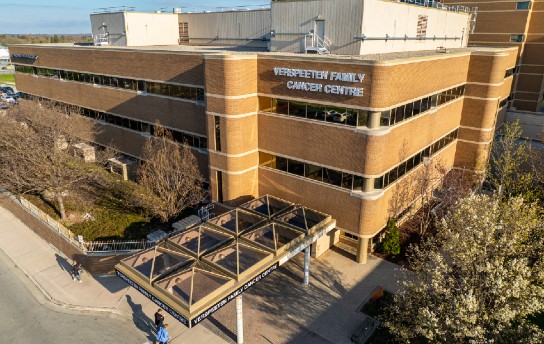
Verspeeten Family Cancer Centre unveiled

The Verspeeten Family Cancer Centre was unveiled at London Health Sciences Centre today.

LHSC’s London Regional Cancer Program was renamed after the late Archie Verspeeten, a fervent champion for cancer research who donated $20 million to London Health Sciences Foundation last November. The donation marks the largest gift ever in the history of hospital foundations in southwestern Ontario.

“The Verspeeten Family Cancer Centre will ensure we continue pushing the boundaries of cancer care at London Health Sciences Centre, setting new standards for others to follow,” said John. H MacFarlane, LHSF president and CEO. “This is only made possible by the generosity of selfless donors, like Archie and Irene.”

The gift includes $10 million for improving patient care, $5 million to establish the Verspeeten Chair in Translational Cancer Research, $3 million to enhance the Verspeeten Clinical Genome Centre and $2 million to support medical oncology and radiation oncology fellowships to attract the next generation of specialists.


“We are immensely honoured to see how our parents’ legacy will inspire future generations to embody their spirit of generosity and resilience,” said Dennis Verspeeten, son of Archie and Irene.

“Dad understood this donation wouldn’t single-handedly eradicate cancer, but he believed it could win a couple battles and maybe contribute to the larger war. His greatest wish was for no other family to have to endure the loss we have experienced because of this disease.”

Feature photo: From left to right: Dianne, daughter-in-law of one of Archie’s sons who passed; Mark Verspeeten and wife Julie; Brian Verspeeten and wife Marlene; and Dennis Verspeeten and wife Nancy.

ZGF Architects names new leadership

ZGF Architects has named Sharron van der Meulen as managing partner. She will provide the next generation of leadership for the firm’s international design portfolio and its 700 plus employees across seven offices.

“I am incredibly honoured to assume the role of managing partner, and to continue on our path of making a positive difference through the built environment,” said van der Meulen. “After 35 years at the firm I remain inspired by our foundational values of community, equity, and sustainability – and I’m energized by the design opportunities ahead of us.”

Her career has focused on interior architecture, spanning over three decades across many project typologies, to design award winning healthcare, workplace, cultural and higher education projects. Most recently, she has been the lead interior designer for the Portland International Airport main terminal expansion, set to open later this year.

In addition, ZGF named Solvei Neiger managing partner of the Portland office, and Mitra Memari managing partner of the Los Angeles office. The firm said van der Meule, alongside Solvei, Mitra, and ZGF’s partners will guide designing solutions that enhance the human experience and enrich communities at every scale.

Founded in Portland, Oregon in 1946, ZGF is a global interdisciplinary design firm with offices in Los Angeles, New York, Portland, Denver, Seattle, Vancouver B.C., and Washington D.C.


Thorold fire station being converted into museum

A new project will convert a retired fire station in Thorold, Ont., into an energy efficient, climate-controlled cultural hub and museum that will house the town’s historical artifacts.

Once Fire Station 1 re-locates to a new modern facility, the vacant space will be re-deigned with an investment of more than $7.8 million from the federal and municipal government.

The hope is that the Thorold Historical Museum and Cultural Centre will become an important meeting place for the community and a catalyst for future investments into the downtown.

The design will increase comfort and usability, while honouring its past as a fire hall. Work  includes accessible improvements such as a new elevator and barrier-free modifications to meet the highest accessibility standards.

Major updates to the exterior of the building will improve insulation, prevent leaks, and enhance energy efficiency. A new HVAC system will support heating and cooling and also control humidity levels in the building to preserve the historic artifacts that will be on display.

“Fire stations house the protectors of our communities,” said Niagara Centre MP Vance Badawey. “It’s only fitting that the old walls of Fire Station 1 will continue to protect our community’s history and culture.

“Thorold is a dynamic and changing city and as it continues to make history, having the spaces and facilities to record and preserve our knowledge will ensure we can continue to learn and grow as a society.”


The value of workloading

Many owners and managers are looking into “workloading” as a solution for office cleaning. Introduced more than a decade ago and advocated by a leading janitorial consultant, David Frank, workloading has been adopted by many larger cleaning contractors servicing large facilities such as multi-storey office buildings.

Low building occupancy levels continue to be a concern for many throughout Canada and in most of the U.S. Office vacancies soared during the pandemic and have yet to come down, currently at 15.7 per cent in Canada, while nearing 20 per cent in the U.S. Further, instead of rushing back to the office after the pandemic, about half of all office workers decided they preferred to work at home, creating a sizable dilemma for building owners, managers, and the investors and bankers who have a financial interest in these properties.

RELATED: Commercial cleaning remains critical, even with lower building occupancy

Some facilities are being “rethought” and turned into apartments, hotels, and industrial facilities for more efficient use. However, many building owners and managers are holding the line, waiting it out with the belief that more former building users will eventually return to the office. In the interim, they are focused on effectively maintaining their facilities and, simultaneously, finding ways to reduce costs as much as possible. Historically, cleaning represents 20 to 35 per cent of a facility’s budget. While these percentages may have been altered with the pandemic, cleaning remains a big piece of the building budget, and it may present an opportunity for cost savings.

Today, more cleaning contractors, in-house cleaning workers, and building owners and managers are looking into or adopting workloading as part of their management strategy. The key benefits of workloading are clear: it can significantly reduce operating costs, enhance efficiency, and improve the appearance and health of facilities.

Defining the process

There is no universal definition of workloading, however, all the definitions point in the same direction. According to Frank, workloading answers the following questions:

How long does it take to complete a task or clean an area?

  • How does changing task frequency affect cost and cleaning results?
  • What happens to the bottom line when square footage is added or subtracted?
  • What would a change in wages (due to adding more or fewer cleaning tasks, cleaning frequencies, or cleaning workers) for a facility’s overall budget?

These are questions some building owners and managers have never considered before, and they may be new to many cleaning contractors as well. A common assumption is that many cleaning contractors walk into a facility and still guesstimate from past experience what cleaning needs to be performed, how frequently, and what it will cost.

Workloading offers managers and owners the insight they need to benefit from higher efficiency, reduce costs, and better relationships. Here’s how:

  1. Efficiency increases when every cleaning task is documented and timed; cleaning crews avoid wasting time and ensure all areas are cleaned properly.
  2. Costs are reduced because when cleaning contractors have a data-based estimate of how much time and resources are needed to clean a facility, there is no wasted time or extra time spent to complete the job.
  3. Communication between clients and cleaning workers is enhanced when both parties are aware of exactly which tasks will be performed, when, and how long each one will take.

However, considering today’s difficult situation, guesstimating is no longer an option. Today, everything about cleaning must be data-driven.

How to begin

Starting the process means adding the right people to the team, so key stakeholders in the facility’s operation must be selected to participate. These people are typically building owners or managers, cleaning contractors, and distributors. Having distributors on board from the onset will guide the other stakeholders in determining which cleaning products, robots, tools, and cleaning methodologies are the highest-performing and most cost-effective. Further, if the facility wants green cleaning performed, the distributor will know precisely which products are best for the job.

Next, there are a few steps involved to begin workloading:

Cleaning the slate. This means a fresh start and a new approach to practices, products, and data. Forget about current cleaning procedures, the scope of cleaning work, and the number of cleaning workers now used to clean and maintain the facility. These will come to light once the data has been collected and the workloading procedure has been completed.

 Scope of work. Scope of work is the formal document that outlines all the cleaning needs of a facility, the cleaning tasks that are to be performed, how often they are to be performed, what types of cleaning solutions, tools, and equipment are to be used, and quality requirements. Determine and divide all the cleaning tasks that need to be done into three categories: daily cleaning, interim cleaning, and project cleaning.

Taking inventory. Determine the total amount of cleanable space in the building. This is not gross square feet, it is cleanable square footage (space used by tenants for working) and it will likely be less today than it was just a few years ago. Often, the best way to do this is to review the building’s architectural drawings or, if necessary, measure all cleanable spaces in the facility for an accurate assessment.

Cleaning standards. This is the only subjective part of workloading and needs to be addressed at this juncture. In a post-pandemic world, standards have gone up and most managers are focused on thorough, hygienic cleaning. However, other facilities, such as warehouses or industrial locations, may be less concerned. The more concerned the customer is, the more time and energy is needed to maintain the facility.

Cleaning times. In the past, stakeholders referred to ISSA’s 612 Cleaning Times, developed by experts in the cleaning industry. This booklet reported, for instance, how long it should take to vacuum so many square feet of carpeting or mop so many feet of hard surface floor. Today, there are software programs that can help with these calculations for a simple and accurate look at the time required to complete assigned tasks.

Frequencies. Next, we assess how often each cleaning task should be performed. Frequency refers to the number of times a task needs to be performed per year. A task that is performed five nights per week, or 260 times per year, would fall into the daily cleaning category. Cleaning tasks that need just interim cleaning, possibly once per week, fall into interim cleaning and are usually performed 52 times per year. Project task frequencies are typically based on past experiences, such as how often carpets need deep cleaning.

Labour hours. Using our cleaning times and frequency data, we can now turn to a software program or an Excel spreadsheet to determine labour cost totals. Added to the labour costs, should be percentages paid for taxes, insurance, and employee benefits. Finally, as mentioned earlier, we must bring in our distributor to help us select the cleaning products needed to best complete the job.

Historically, some building owners and managers have viewed cleaning as a service, a needed commodity, assuming most cleaning services offer about the same value. That was never true, and that way of thinking has been tossed out the window with the pandemic in many cases.

Cleaning today must be based on data and proper workloading to improve efficiencies, reduce waste, increase revenues, and offer more value.

Michael Wilson is the CEO of AFFLINK, a distributor membership organization comprising nearly 300 distributors in North America. He has been with the organization since 2006 and provides strategic leadership for distributor members around the country. In his free time, Michael works with the Wounded Warrior Project, helping veterans heal and get their lives back on track.

Blackstone’s takeover of Tricon closes May 1

Tricon Residential Inc. announced it has received final approval by the Investment Canada Act to move forward on its previously announced plan to sell its remaining common shares to US-based global investment company, Blackstone Real Estate.  The $3.5-billion transaction is expected to close on or around May 1, 2024.

Tricon Residential and Blackstone have been business partners since August 2020, when Blackstone made a $300-million preferred equity investment in the Canadian rental housing company. Tricon’s portfolio consists of 38,000 single-family rental homes in the U.S. Sun Belt region, 786 multifamily rental homes throughout Canada, and a pipeline of 4,800 multifamily rental homes in various stages of construction and lease-up in Canadian markets, including the Greater Toronto Area.

In March 2021, Tricon began the process of selling its US multifamily portfolio to Blackstone, which continued into 2022.

Following the latest and final transaction, the Tricon shares and common shares will be delisted from both the Toronto Stock Exchange and the New York Stock Exchange, and the company will become a wholly owned entity within the Blackstone group of companies.

Blackstone Real Estate is a U.S.-based global investor with $339 billion in capital under management and a global real estate portfolio valued at $569 billion.

Financial details regarding this transaction can be found here: 2024-04-05-final-court-approval-pr.pdf (q4cdn.com)

Construction starts on Little Mountain project

Development of a new 48-unit affordable rental housing building in the Vancouver Little Mountain neighbourhood took a major step forward with the start of construction.

The future six-storey building includes a new neighbourhood house, a childcare facility, a community plaza and 48 units of social housing. The project is being constructed by Holborn Properties.

Construction is expected to be completed by late spring 2026.

“This ground-breaking highlights our commitment to building inclusive communities with diverse housing options for families of all income levels,” said Mayor Ken Sim. “This redevelopment is proof of what can be achieved when government and home builders work together and remove barriers to get housing built.”

The city-owned building located at 167 E 36th Ave, will provide a mix of housing options, including 12 studio units, 8 one-bedroom units, 16 two-bedroom units, and 12 three-bedroom units. Accessible units will also be available for people living with disabilities.

Last fall, following recommendations from city staff and BC Housing, council made the proactive decision to remove the occupancy permit hold on the Little Mountain redevelopment project. This allowed Holborn to secure the necessary financing, with the understanding that the social housing requirement would still be fulfilled. Before this bold decision, the 6.2-hectare lot sat mostly vacant for more than a decade and a half.

“The Little Mountain redevelopment is a testament to our shared vision for inclusive urban development that prioritizes social responsibility alongside economic growth,” said Joo Kim Tiah, CEO of Holborn Properties. “Together with the City of Vancouver, we’re creating hubs of opportunity where everyone can thrive.”