Articles Archive - Page 120 of 928 - REMINET
REMI

Arts Commons Transformation breaks ground

After three years of meticulous planning and design, The Arts Commons Transformation (ACT) expansion broke ground, marking a significant step forward in the delivery of the largest arts-focused infrastructure project currently underway in Canada.

The ACT expansion is the first phase in the campus transformation, and will see the development of a new three-level building with 170,000 square feet of modern features and amenities, including a new 1,000-seat theatre and 200-seat studio theatre, boosting Arts Commons’ seating capacity by 45 per cent.

Construction on the ACT expansion, designed by KPMB Architects, Hindle Architects and Tawaw Architecture Collective, will begin in January 2025. Construction will be managed by EllisDon with project management by Colliers Project Leaders, and is expected to be completed in 2028.

The project is being delivered in partnership by development manager Calgary Municipal Land Corporation, Arts Commons and The City of Calgary.

The other two phases include the Olympic Plaza Transformation (OPT) project – which is now fully funded – and the ACT modernization, for which efforts are underway to secure the remaining required funds.

Design is underway for the Olympic Plaza Transformation (OPT) project, which will create a more modern, inclusive and accessible arts-focused outdoor gathering space as part of the contiguous Arts Commons campus upon its completion in 2028. The design for the Olympic Plaza Transformation project will be revealed in late Q1 2025.

The Arts Commons and Olympic Plaza Transformation projects are a $660M investment in Calgary’s arts community, expanding and modernizing the Arts Commons campus and supporting The City of Calgary’s downtown revitalization efforts.

“Investing in our world-class performing arts centre will create a beacon for Calgary’s downtown and encourage further private sector investment in our city’s core,” said Mayor Jyoti Gondek. “This is the kind of project that shows the world how exceptional Calgary-made architecture and cultural experiences have become through collaborations like this one between CMLC, Arts Commons and The City of Calgary.”


Indigenous Gaming Partners completes first deal

Indigenous Gaming Partners, a newly formed partnership of five Nova Scotia-based First Nations and Sonco Gaming Inc., has acquired PURE Canadian Gaming and its portfolio of four Alberta casinos. The deal will see the new casino operators assume the master lease for facilities located in Calgary, Edmonton and Lethbridge with VICI Properties, a U.S.-based hospitality REIT that owns 59 gaming properties and 34 other hospitality venues throughout the United States and Canada.

“We’re excited to take this significant step forward in diversifying and building lasting economic opportunities for our Nations,” says Michael Peters, chairman of Indigenous Gaming Partners (IGP) a member of the Glooscap First Nation and chief executive officer of its economic development arm, Glooscap Ventures. “This acquisition allows us to enter the gaming industry at scale, creating new opportunities for growth and meaningful benefits for our communities.”

Other IGP partners include Millbrook First Nation, Annapolis Valley First Nation, We’koqma’q L’nue’kati, and Paqtnkek Mi’kmaw Nation, teamed with Sonco Gaming Inc. a leader in Indigenous-owned casino development and management. Some high-profile Sonco projects include The Great Blue Heron Casino on Mississaugas of Scugog Island First Nation in Ontario, The Grey Eagle Resort & Casino on the lands of Tsuut’ina First Nation outside of Calgary and Casino New Brunswick.

“This transaction represents an important step toward economic reconciliation and demonstrates the potential for meaningful partnerships in Indigenous gaming,” says Sonco Gaming’s chief executive officer, Anthony Novac.

“We are pleased to welcome IGP as a new partner, and we look forward to expanding our relationship with IGP and Sonco as they pursue additional growth opportunities in the future,” observes Danny Valoy, vice president of business development and acquisitions with VICI Properties.

The transaction has received regulatory approval from Alberta Gaming, Liquor & Cannabis and the Canada Competition Bureau.

Existing buildings sector limbering up with AI

Artificial intelligence (AI) is proving useful for teaching old dogs new tricks in the existing buildings sector. Energy management and decarbonization specialists speaking at The Buildings Show in Toronto last week highlighted some AI applications that can be effective ahead of comprehensive retrofits, to find and deliver energy savings and emissions reductions while legacy HVAC and building envelope systems are still in place.

Notably, some older buildings are now leveraging thermal mass to offset heating and cooling. Tobias Janes, director of technical services with the AI-based energy management service, EcoPilot Canada/US, explained how the technology now rapidly interprets outdoor conditions, energy sources and the thermal conductivity of materials within a space to derive a more precise reading of HVAC requirements and more efficiently control the supply of heating and cooling.

He likened it to using buildings as batteries, with AI supplying the insight on how to draw on stored energy and when to recharge. That’s based on the premise that allowing for a 3-degree Celsius swing in building temperature can reduce HVAC energy requirements by 25 to 40 per cent.

“Using free energy and artificial intelligence, we can optimize HVAC efficiency and comfort,” Janes said. “We never want to heat and cool at the same time, and we want to push those periods farther apart so that we don’t heat and cool in the same hour or we don’t heat and cool in the same four-hour window.”

A range of energy performance variables underpin how proficiently that might occur, but data is the critical element to reveal how it can be realized. The energy-saving approach, based on thermodynamic principles, was long ago identified as theoretically possible, but has only more recently become practically achievable.

Janes noted that pioneering 1970s-era research at Sweden’s KTH Royal Institute of Technology remained largely aspirational until technology caught up. The first step — the outside air reset control — arrived in the 1980s, but it would be a few more decades before other enabling technology was commonplace.

“In 1975, computers were these massive things that cost hundreds of thousands of dollars. It just wasn’t practical to do these strategies they thought could be implemented,” he observed. “Now you can buy an industrial computer with an expected lifespan of 10 years for $2,000.”

Today, wireless temperature sensors can deliver a detailed breakdown of variations throughout a building, while AI-based systems factor in variables such as the current outdoor temperature, forecasted weather conditions, heat output from solar radiation, plug load and the building occupancy and how various building materials store and release energy. Using that information, the EcoPilot system uses standard open protocols (BACnet over IP or Modbus TCP) to disable or enable heating and cooling and control the supply temperature setpoint. That compares to the conventional building automation system (BAS) approach of disabling the boilers when the outdoor temperature hits 15⁰ C and enabling the chillers at 18⁰ C.

“Each building — how it’s laid out, where it’s positioned, what it’s made from — has its own dynamic structure and you’ve got to be able to measure that,” Janes advised. “It’s looking at how much energy is stored in the space, how long it’s going to take that energy to dissipate out of the space and how the dynamic effects — solar radiation, outside air, temperature, occupancy — are going to affect it in the future. So instead of constantly reacting to this outside air temperature, it’s constantly preparing for what’s going to happen in the future.”

Although a more finely tuned HVAC control system cannot rectify building design or systems inadequacies that undermine energy performance, it does deliver data that can help to identify imbalances, system failures and other chronic issues. “We’re able to pull all of the data for the building automation system — pump speeds, damper positions, valve positions, all of these things — all in one place where it can be visualized,” Janes said.

Looking at energy savings and emissions reductions, he cited the example of a 1970s-vintage, concrete office building in Halifax achieving a 25 per cent reduction in HVAC costs for a two-year payback on the investment. That came with combined emissions reductions from gas and electricity equivalent to 1.2 million kilowatt-hours in the first year. Since then, the building owner, Crombie REIT, has adopted the system in other buildings in its portfolio.

Other Buildings Show presenters commended the role AI can play in developing cost-effective building- and portfolio-level decarbonization plans. Marine Sanchez and Ian Miller, principals with the consulting firm, RDH Building Science, stressed the importance of such plans to help owners/managers plot out and prepare funding strategies for emissions-reducing interventions. They also highlighted the virtual energy modelling and decarbonizing planning tools from the digital data service provider, OPEN Technologies.

“We’ve done energy modelling the long and detailed way and we’ve also used their AI tool and found it’s coming up with very similar results,” Miller reported. “You essentially plug in the parameters of the building — the size; the construction; your energy bills; all those sorts of things — and it uses artificial intelligence by comparing it to other projects that they’ve done in the past. It’s allowing the audits to be done and these plans to be developed for a much lower cost.”

“They are technically a competitor to us, but, the truth is, there is so much work (to achieve industry-wide decarbonization) that we need everything to get faster and cheaper,” Sanchez concurred. “What they are providing is information that is good enough for us to then add value with our expertise.”

For owners/managers in Toronto, it’s expected that Toronto Hydro will soon unveil an incentive covering up to 100 per cent of the cost of a decarbonization plan through OPEN Technologies. “This is one great way that you can get a fairly basic virtual decarbonization plan that may be zero cost to you. So it’s definitely something to look into,” Miller urged.

Average rents declined slightly in November

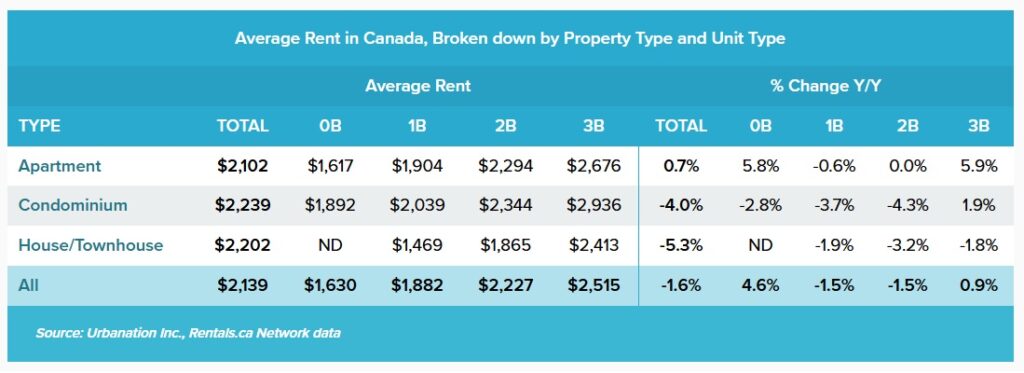
Average rents for vacant rental properties in Canada declined to $2,139 in November, marking a 15-month low, according to the latest National Rent Report. On an annual basis, rents declined 1.6 per cent compared to the same period last year, while month-over-month, they dipped slightly by 0.6 per cent, continuing the trend seen in October.

According to the analysts, much of the annual decrease is due to rents dropping in the latter half of 2024, with rents currently down 2.8 per cent since July. That said, they still remain elevated compared to historical levels—up 6.7 per cent from two years ago and 18.8 per cent from three years ago. Over the past five years, rents have grown at an average annual rate of 3.4 per cent, in line with long-term trends.

“Overall, the recent decline in rents has been very mild and is allowing affordability to improve following a rapid escalation in rents over the past few years,” said Shaun Hildebrand, President of Urbanation. “Declines so far are mainly focused within the secondary market for condos and houses, mostly in B.C. and Ontario, while purpose-built rents are stable.”

average rents

Average asking rents for vacant purpose-built and condominium apartments decreased by 0.2 per cent annually to $2,120 in November. One-bedroom rents declined 1.2 per cent year-over-year to $1,921, while two-bedroom rents fell by 1 per cent to $2,302. In contrast, rents for studios and three-bedroom apartments continued to rise, increasing 5 per cent and 5.1 per cent, respectively.

In Ontario, the rental market experienced the sharpest declines, with apartment rents dropping 6.4 per cent annually to $2,351, led by a 7.6 per cent decrease in two-bedroom rents. British Columbia saw more moderate declines, with apartment rents falling 2.3 per cent year-over-year to $2,524. Meanwhile, rents in Quebec edged down by 0.4 per cent to $1,969.

While the decline in national rent was driven by decreases in the most populous provinces, there have been some regional increases, including Alberta (up 3.7 per cent), Saskatchewan (up 12.1 per cent), and Manitoba (up 7.9 per cent). In the Maritimes, New Brunswick saw a 5.1 per cent increase in average asking rents, and Nova Scotia saw rents rise by 4.4 per cent. Rents in Newfoundland and Labrador remained close to flat throughout the past year, declining by just 0.4 per cent.

Meanwhile, Canada’s largest rental markets saw significant rent decreases in November. Average rents in Toronto fell 9.4 per cent year-over-year to $2,640, a 28-month low. Vancouver rents dropped 8.9 per cent to $2,888, marking a 30-month low. Calgary, Ottawa, and Montreal also recorded declines of 5.8 per cent, 3.0 per cent, and 2.3 per cent, respectively.

Listings for shared accommodations increased 52 per cent year-over-year in November. The national average asking rent for shared units rose by 3.9 per cent to $997, with growth led by British Columbia and Ontario.

For the full report, visit www.rentals.ca 


Perkins&Will opens new Calgary studio

Architecture and design firm Perkins&Will has unveiled its new Calgary studio in the historic Glenbow building at 822 11th Avenue SW, in the heart of the city’s bustling Beltline neighbourhood.

This strategic move to a public-facing workspace reflects the firm’s vision for a beautiful, sustainable, and equitable downtown through placemaking, adaptive reuse, and community-centric design.

“Opening our Calgary studio in the Glenbow building reflects our belief that design should be a catalyst and a source of inspiration for the community,” said architect Kaz Bremner, who co-leads Perkins&Will’s Calgary studio. “Here, sustainability meets public engagement. This new chapter allows us to turn our workplace into a launchpad for collaboration and innovation, where diverse voices come together to create meaningful change.”

The project transforms what was once a restaurant on the street-level of an iconic 1921 red brick building into a modern, high-performing creative environment. The design prioritizes health and well-being, with a focus on pursuing WELL and RESET Air certifications. Strategies like healthy material selection, quality lighting, continuous air quality monitoring, and controllable comfort systems all center on supporting human health.

The adaptive reuse approach revitalizes the existing street frontage while leveraging the structure’s embodied carbon. Reused furniture and low-carbon materials further reduce the project’s carbon footprint. The new studio also features amenities that promote active mobility, including end-of-trip bicycle facilities—elements that contribute to a livelier scene and increased foot traffic throughout the day.

“We’ve been working in Calgary for over 20 years on a range of project types, from multi-family residential and institutional to commercial, civic and cultural, and transportation, and we’re proud to be part of its story. This city’s potential is extraordinary, and we’re excited to partner with clients and the community to build a thriving, inspiring future together,” said Derek Newby, managing director of the Calgary studio of Perkins&Will.


The EPA bans TCE and PCE, commonly used in commercial applications

The U.S. Environmental Protection Agency (EPA) has finalized the latest risk management rules for trichloroethylene (TCE) and perchloroethylene (PCE) under the bipartisan 2016 Toxic Substances Control Act (TSCA) amendments, marking another major milestone for chemical safety after decades of inadequate protections and serious delays.

TCE is used as a solvent in consumer and commercial products such as cleaning and furniture care products, degreasers, brake cleaners, sealants, lubricants, adhesives, paints and coatings, arts and crafts spray coatings, and is also used in the manufacturing of some refrigerants. PCE is a solvent that is widely used for consumer uses such as brake cleaners and adhesives, in commercial applications such as dry cleaning, and in many industrial settings.

Safer alternatives are readily available for the majority of these uses.

“It’s simply unacceptable to continue to allow cancer-causing chemicals to be used for things like glue, dry cleaning, or stain removers when safer alternatives exist,” said Michal Freedhoff, assistant administrator for the Office of Chemical Safety and Pollution Prevention. “These rules are grounded in the best-available science that demonstrates the harmful impacts of PCE and TCE. EPA continues to deliver on actions that protect people, including workers and children, under the nation’s premier bipartisan chemical safety law.”

TCE is an extremely toxic chemical causing damage to the central nervous system, liver, kidneys, immune system, reproductive organs, and fetal heart defects. These risks are present even at very small concentrations. Under the new rule, all uses of TCE will be banned over time (with the vast majority of identified risks eliminated within one year).

PCE is known to cause liver, kidney, brain and testicular cancer, as well as damage to the kidney, liver and immune system, neurotoxicity, and reproductive toxicity. The new rule will better protect people from these risks by banning manufacturing, processing, and distribution in commerce of PCE for all consumer uses and many commercial uses, while allowing some workplace uses to continue only where robust workplace controls can be implemented.

In response to public comments on the proposed rule, most workplaces now have 30 months instead of 12 months to fully implement a Workplace Chemical Protection Program. The EPA also revised several other aspects from the proposal to strengthen and clarify aspects of the Workplace Chemical Protection Program, including monitoring requirements. The EPA also ensured the employees’ designated representatives, such as labour union representatives, have access to occupational exposure monitoring and records.

RELATED: EPA proposes banning a chemical found in cleaning products

Yonge City Square breaks ground in Hoggs Hollow

A parking lot at the corner of Yonge street and Wilson Avenue, across from the York Mills subway station, is beginning its ascent into Yonge City Square, a 700-suite mixed-use development, which is the largest new condo project to start construction in Toronto this year.

The Gupta Group held a ground-breaking ceremony on Tuesday for what will become two high-rises at 32 and 14 storeys, with ground-level retail and commercial space. This is also the first new development in the Hoggs Hollow neighbourhood in more than 20 years.

Renderings of the design showcase a lush green landscape surrounding the buildings, which back onto the Don Valley Golf Course. The development will directly connect to the York Mills subway station. About 36,000 square feet of resort-inspired amenities, include an expansive ninth-floor terrace, a fitness centre, entertainment lounges with golf simulators, an outdoor mini-put golf course and a luxurious outdoor pool. Occupancy is expected in spring 2028.

“Yonge City Square is a reflection of our belief in Toronto’s potential as a world-class city,” said Dr. Steve Gupta, founder and chairman of The Gupta Group. “It’s about creating homes, opportunities, and communities that elevate the way people live and connect.”

The site plan was originally meant to be a Hilton Hotel and office condo to meet demand for owned office space, but has evolved since 2016 to meet housing demand.

Yonge City Square

Feature photo caption: Reema Balaram, Rashmi Gupta, Dr. Steve Gupta, Ontario Premier Doug Ford, Reetu Gupta, and Suraj Gupta (left to right) Credit: George Pimentel.

Alberta invests $1.5M for Indigenous trades training

Alberta is addressing the growing demand for skilled tradespeople in the province with a $1.5 million investment in Indigenous-led trades training. Over the next three years, the funding will support Trade Winds to Success, a non-profit organization that prepares Indigenous students for rewarding careers in residential construction and other skilled trades.

“Trade Winds to Success has an impressive history of helping Indigenous students to discover new career opportunities in the skilled trades, overcome barriers to education and thrive in the workplace. Supporting Trade Winds is a win-win for Indigenous workers and Alberta’s economy,” said Minister of Advanced Education Rajan Sawhney.

Through partnerships with Alberta’s government, Union Training Trusts, employers, and the Indigenous community, Trade Winds to Success has helped to increase the number of Indigenous people training and working in the skilled trades, with more than 3,000 individuals supported since 2005.

This new funding will support Trade Winds to Success’s operations so they can deliver valuable programming, including their Residential Construction Program. Students in this program take foundational courses for six weeks, followed by 12 weeks of hands-on training where they learn techniques to construct eco-smart small homes for Indigenous community members. Upon completing the program, students receive 330 hours towards their first year in Alberta’s carpenter apprenticeship education program.

The Residential Construction Program is expected to enrol 156 participants over three years. This investment will help address labour needs in the province, while empowering Indigenous students to find rewarding careers as they help build their communities and the economy. Alberta’s government continues to support Indigenous Peoples and all Albertans in meeting the economic needs of today and tomorrow.

Linda Domak, president of Trade Winds’ board of directors, emphasized the importance of operational funding in enabling the organization to address core needs and build future capacity. “This is reconciliation in action,” she said, expressing gratitude to Alberta’s government for its support.

B.C. awards top transportation contractors

The 2024 B.C. Transportation Contractor of the Year awards were handed out, celebrating achievements in construction, road and bridge maintenance, safety and community service.

“These awards are a spotlight on the tremendous contributions that construction and maintenance contractors make to life in British Columbia,” said Minister of Transportation and Transit Mike Farnworth. “By supporting our world-class highway system, they keep travellers safe, our communities connected and our economy strong. The stories behind this year’s winners point to the entire sector’s commitment to public service, effective partnerships and excellence in road construction and maintenance.”

The winners are:

Bridges and Structures

Coquitlam Ridge Constructors Ltd., an ECV Group Company won for its critical work to restore Highway 1 after 2021’s floods. The team adapted to challenges, such as wildfires and extreme weather, working without safety incidents and finishing the bridge on time and under budget in June 2024.

Paving

Emil Anderson Construction exceeded design standards and created an exceptionally smooth riding surface for its work from the Elkhart brake check to John’s Creek on Highway 97C east of Merritt.

Grading

Conwest Contracting Ltd. provided exceptional grading work that plays a crucial role in the Phibbs Transit Exchange improvements in North Vancouver.

Workplace Health and Safety

Lafarge Canada Inc. received the Workplace Health and Safety award for a remote transfer-switch system that enhances driver safety during trailer hookups.

Road and Bridge Maintenance

Yellowhead Road & Bridge (Fort George) Ltd., also known as YRB – Fort George, was recognized for its exceptional commitment to maintaining safe and reliable roads and bridges in the Fort George area (Service Area 19).

Community Service

Cutting Edge Consulting Inc. (CEC) received the Community Service award for its outstanding support for many communities in B.C.

The company supports many local initiatives and community events, such as Kamloops Boogie the Bridge, the Salvation Army’s Adopt-A-Family and the Kamloops Food Bank.


Water quality standard boosts healthcare industry

As healthcare facilities increasingly focus on patient safety and infection prevention, effective water management has become a critical aspect of medical device processing. To address this, ANSI/AAMI ST108:2023 was introduced last year as a new, comprehensive standard for water quality systems in device reprocessing.

This standard, built on years of guidance and technical revisions, provides a clear framework for healthcare organizations to ensure proper water quality during decontamination, disinfection and sterilization processes.

The journey toward ST108:2023 began with the release of AAMI TIR34: 2014/(R)2017, which offered initial guidance for managing water quality in medical device reprocessing. Over the past decade, this technical report has evolved into a full-fledged standard with expanded requirements for water system performance, testing and team collaboration, offering healthcare organizations a detailed roadmap for compliance.

Strengthening existing water management systems

Healthcare organizations likely have existing water management procedures that align with elements of ST108:2023. However, a thorough review of current practices is essential to identify opportunities for building upon these systems rather than starting from scratch.

Medical device manufacturers often specify water quality requirements in their instructions for use (IFUs) for different stages of device processing. These requirements should be a cornerstone of any water management plan. Additionally, hospitals must implement strategies to reduce the presence of biological agents like Legionella in their water distribution systems.

Key components of an effective water management system include:

  • Clear roles and responsibilities for the water management team;
  • A comprehensive risk analysis,
  • Routine water quality monitoring, and
  • Regular system maintenance and performance qualification.

Adapting to local regulations

In the U.S., some states have already integrated the requirements of ST108:2023 into their regulations, which means healthcare organizations in those regions may be required to comply with the new standard sooner rather than later. Therefore, it’s important for healthcare leaders to assess whether their current water management plans meet respective national and local regulation standards.

Preparing for future requirements

Although the Accreditation Commission for Health Care (ACHC) does not plan to change its standards related to water quality systems in 2025, healthcare facilities should begin preparing for future compliance with ST108:2023. Improvements to water processing systems often require careful planning, time and funding, so early preparation can help avoid future disruptions.

Key considerations for implementation

When preparing to implement ST108:2023, healthcare organizations should ask:

1. Are device and equipment IFUs being followed? Identify the water quality requirements for each stage of the device processing cycle, from decontamination to sterilization.
2. What types of water are defined and required in your facility? Understand the distinction between utility water, critical water and steam, and ensure that each is processed and used according to the standard.
3. Is the water management team multidisciplinary? Expand the team’s scope to include key personnel involved in device processing, such as central sterilization staff and clinical engineering personnel.

Monitoring and continuous improvement

To ensure the efficacy of water systems in producing disinfected and sterilized medical devices, organizations must engage in routine monitoring. Meaningful metrics should include checking for corrosion, biofilm buildup, scaling and potential microbial contamination. Monitoring these factors not only protects the integrity of medical devices but also ensures the safety of patients and personnel.

By starting with a gap analysis and expanding the water management team, healthcare organizations can begin taking actionable steps toward full compliance with ST108:2023. Preparing now will enable smoother transitions when upgrades to water systems are required, whether driven by regulatory changes or accreditation standards.

As water quality continues to be a critical factor in effective medical device processing, healthcare facilities have a clear opportunity to strengthen their systems in line with this updated standard. By addressing potential gaps and incorporating cross-functional expertise, organizations can ensure better patient outcomes and safer environments for both staff and those receiving care.

Richard L. Parker, MBA, CHFM, CLSS-HC, FASHE, FACHE, is Associate Director, Physical Environment and Life Safety at Accreditation Commission for Health Care, Inc. (ACHC), where he provides guidance to customers and surveyors in the ASC and hospital programs. Prior to joining ACHC full-time, Richard was an accreditation surveyor while also serving as Executive Director of Facilities for a 615-bed hospital system in Arizona.

Navigating N13 challenges in Ontario

Toronto, Hamilton and London all passed similar anti-renoviction bylaws in 2024 intended to prevent evictions under the guise of renovations. But now, as the three municipalities prepare to implement their new licensing programs in June/July of 2025, some experts warn that the incoming requirements may do more harm than good. According to the three panelists who spoke at the “Revitalize and Relocate” seminar on December 6 at the Buildings Show in Toronto, landlords and tenants should expect more delays and disruptions to the renovations process, with trickier timelines that will likely lead to fewer new rental units and sub-par conditions going unaddressed—especially given landlords aren’t able to increase rents for returning tenants after investing heavily in their properties.

“It’s all just a lot of political smoke-blowing,” said Justin Taylor, Chief Operating Officer at Signet Group and Chair of the Greater Toronto Apartment Association. “The City of Toronto is instituting a program ostensibly to protect the rights of tenants from improper use of N13s when those protections are already in place under the RTA. Currently, corporations can be charged $250k per unit on top of a year’s rent for bad faith evictions. Adding this new licencing requirement will only make the planning process longer, more complicated, and more expensive—to no one’s best interest except to garner votes and add some revenue for the City.”

As Taylor pointed out, it isn’t usually necessary to move tenants out of their suites to perform renovations, except in the case of emergencies, substantial upgrades, and of course, demolitions.

“I am unaware of any major landlords that are moving people out under false pretences,” he added, noting that City staff have stated only about 120 bad faith incidents occur each year. “These are coming from small landlords, condo rental owners or home owners who likely want to end their rental agreements to sell their properties or to increase income, as costs for upkeep, taxes, utilities, condo fees, and mortgages have all far outpaced annual guideline increases.”

When the Notice to End Tenancy is needed 

The N13 form is a legal document used by Ontario landlords to notify tenants of the termination of their tenancy for a pending demolition, conversion, renovation or major repair. Previously, the permit application sufficed as proof of the intended work, but beginning in July 2025, landlords will need to obtain a building permit before filing for a Residential Rental Renovation Licence within seven days of issuing an N13 notice. The landlord will also have to post a city-provided Tenant Information Notice at each affected unit informing tenants that the licence has been applied for and instructing them on how to obtain information about their rights.

The cost for the licence will be $700 per unit in Toronto and Hamilton, and $600 per unit in London. Though each municipality’s bylaw differs slightly, documents needed to get the license may include: a report from a qualified building professional confirming the need for the unit to be vacated; confirmation of the approved building permits; confirmation that the Tenant Information Notice was posted; a copy of the N13 notice; and a tenant accommodation and compensation plan, ensuring all displaced tenants have temporary housing or monthly ‘rent-gap’ payments to cover the rent difference if they find their own interim accommodations.

According to Kristin Ley, Partner at Cohen Highley LLP Lawyers, incorrectly completing an N13 form in Toronto can have significant repercussions for property owners in that errors or omissions may lead to delays, penalties, or even fines up to $100,000 for a failure to comply.

“There is already a lot of uncertainty in the renovation process, and this will only exacerbate and complicate that process more,” she said. “With multiple timelines running at once, knowledge and coordination will be key. Landlords will have to be aware of all the steps and have everything in order so that when they get to their hearing, they can be successful.”

Harry Fine, a former LTB adjudicator, licensed paralegal and former director of the Paralegal Society of Ontario, concurred, adding that landlords have been painted as the “bad guys” by various levels of government and the media—especially since COVID-19—and now the majority are paying the price for the undeserved reputation.

“These new bylaws won’t make it easy, especially for the small mom and pop landlords who are trying to comply and make the necessary improvements at their properties,” he said. “We may see more instances where landlords are making private deals with their tenants to get them to move out rather than going through the official eviction process.”

Fine refers to this approach as “Cash for Keys”, describing it as a route taken by a landlord to remove the risk of being rejected for city-approved evictions or to move things along quickly before permits expire. This type of deal involves the tenant agreeing to leave without the right to return, with compensation usually starting at about four months’ rent. However, as Fine noted, even that sum is often insufficient to compensate for the increased rent tenants will pay if they agree to move out of their current unit.

“An alternative will be to do smaller, quicker jobs on an individual basis rather than undertaking full renovation projects,” he said. “This might allow the tenant to stay in the unit while the work is being done, or perhaps the tenant will be satisfied with a five-day stay at a hotel while the renovations occur.”

According to Ley, landlords need to understand that regardless of how they choose to approach their renovations in the future, with or without the N13, they should expect to pay more than they used to.

“The bylaws, especially those in Toronto and Hamilton, have introduced tremendous cost for a landlord to carry out necessary repairs to their properties where vacant possession is required,” she said. “If some work can be accomplished while the tenants remain in the units, that will likely be preferred, but landlords will then need to ensure that they are complying with a different set of regulations to minimize liability (i.e. rent abatements) relative to any potential interference with tenants’ reasonable enjoyment.”


 

Top 5 coverage gaps and how to solve them

Between rising interest rates and uncertainty in the marketplace, high costs and compliance issues, the real estate business can be tough. Most real estate owners and operators know they need insurance coverage to protect them, but they may not understand the risks or the nuance of the coverage. That’s when the real trouble starts. Circumstances change, an earthquake strikes, and suddenly there’s a damaged building with no funds to cover the repair – or worse.

Many real estate owners and operators have no idea there might be potential issues with their coverage. They don’t know what to watch out for or which questions to ask. Most of the time, mitigating these risks is less about appropriate insurance coverage and more about being aware.

There are a number of potential issues, but here are the most common gaps for real estate owners and operators:

1. Vacant properties. The line between unoccupied and vacant is very thin, but it’s crucial. Vacant properties have a higher incidence of vandalism and undiscovered damage, so insurers may have vacancy exclusions. Once your property has been empty for 30 or 60 days, insurers may reduce or eliminate coverage altogether, often with no warning.
Solution: Learn what your insurer requires to maintain a property as “unoccupied” rather than “vacant,” and follow those guidelines to maintain coverage. Some policies include a “protective safeguard endorsement” requiring building owners to maintain certain standards, such as performing daily visits to the building, running sprinklers in the summer and maintaining appropriate heating in the winter, in order to maintain the “unoccupied” status.

2. Roof value. Insurers prefer to offer coverage to real estate owners and operators who take care of their properties. If you have an older roof, you may attract more scrutiny from insurers during the underwriting process.
Solution: Real estate business owners should replace any roof that is more than 15 years old to secure better rates at renewal time.

3. Percentage deductibles. Percentage deductibles have become so commonplace that many real estate owners and operators haven’t given this structure enough thought. These deductibles normally apply to some kind of catastrophic weather, such as earthquake or hail, and they cover the listed value after you pay the minimum.
Solution: Like many real estate owners and operators, you likely have this as part of your policy. Be sure you understand what your deductible is so you can plan for it; 10% of a $20 million building is still $2 million. It’s a good idea to set aside some emergency money to cover that deductible.

4. Multiple insurers. Depending on how you created your insurance program, you may have policies from several insurers, layering the policies to ensure adequate coverage. However, this strategy is unnecessarily complicated. Even worse, it becomes expensive.
Solution: Consolidate your risk with a single insurer wherever possible. As the value of your property increases, your rates will go down. Work with a broker who is an expert in real estate coverage to guide you and ensure adequate protection.

5. Executive liability. Many real estate businesses are limited liability corporations (LLCs), which may also require additional coverage that owners may be less familiar with, such as Directors and Officers (D&O) insurance or employment practices liability insurance (EPL).
Solution: Many people mistakenly believe that D&O and EPL policies will cover anything that crops up, but insurers will confirm and exclude any claims from the past from the start. Don’t expect these claims to bail you out from past issues, but do make use of them going forward.

Making sense of the insurance landscape

Unfortunately, many business owners simply don’t understand their insurance programs – or how much risk they still have to balance, even with their policies in place. In the end, though, the key to managing coverage gaps is through awareness. And while many real estate owners are experts in real estate, they aren’t often insurance experts as well. Work closely with an expert advisor or broker to review all policies and ensure you truly understand what’s at stake.

Drew Fenton is the real estate practice leader for global insurance brokerage Hub International in Toronto. 


Surrey launches early excavation pilot program

Surrey City Council has endorsed an early excavation pilot program aimed at expediting the construction of new multi-family housing projects. This initiative allows for the issuance of “excavation only” building permits for qualified development projects, enabling excavation work to commence before the final adoption of rezoning and development permits.

“The early excavation pilot program is another example of Council’s commitment to accelerating housing in Surrey,” said Mayor Brenda Locke. “By enabling excavation work to begin earlier, we are taking an important step towards addressing our urgent housing needs, while ensuring community safety and project integrity. We are dedicated to providing a diverse range of housing options in a timely and this initiative will help us achieve that goal.”

With the current housing market under pressure, the pilot program seeks to optimize project timelines and streamline the development process. Currently, with more than 43,000 new housing units conditionally approved by council, approximately 25,000 units may be eligible for this expedited process. By allowing excavation to occur concurrently with the finalization of necessary permits, the city aims to reduce the overall delivery time of new homes significantly.

The pilot program is designed to identify projects that have reached a satisfactory level of certainty, ensuring that rigorous safety and environmental standards remain a priority. Among the conditions for eligibility, projects must have received preliminary approval from council and align with existing city regulations to minimize risks associated with excavation.

Moving forward, council will monitor the program’s effectiveness and provide updates in the first quarter of 2025. If successful, the initiative may lead to permanent changes in housing development processes in Surrey.

Council also approved amendments to the City Centre’s office and residential development density bonus policies. These changes will establish minimum density expectations and clarify the collection process for density bonus contributions, aligning the city’s policies with provincial legislation while fostering growth in the City Centre.


Landmark standard propels accessible employment

A newly released standard represents a significant step forward in fostering inclusion in workplaces across Canada as it sets best practices for accessible employment.

Accessibility Standards Canada (ASC) published the CAN/ASC-1.1:2024 – Employment standard, which was officially approved as a National Standard of Canada by the Standards Council of Canada (SCC).

The standard addresses organizational policies, systems, and leadership as it provides organizations with guidance to proactively remove barriers in the workplace and create more access to job opportunities for people with disabilities.

The entire employment lifecycle is a key focus, including recruitment, hiring, on-boarding, retention, career development and promotion, performance management, redeployment, compensation and job exit.

ASC’s technical committee led the development of the standard. The majority of members identified as persons with disabilities or as part of equity-deserving groups. They have lived experiences and expertise to better address real-world barriers and deliver meaningful change.

“Employment was identified as a top priority for Canadians during consultations for the Accessible Canada Act and our 2020 public consultation,” said Dino Zuppa, ASC’s acting CEO. “This standard is a direct response to that call. It’s designed to provide organizations with the tools they need to remove barriers and to promote equity and inclusion in the workplace. With support from our technical committee members, a vast network of stakeholders, diverse disability organizations and communities and experts, we are building a future where accessibility is the cornerstone of our workplaces and communities.”

The standard is available for free on the ASC website, and offered in English and French.

təməsew̓txʷ centre wins Prix Versailles Special Prize

The təməsew̓txʷ Aquatic and Community Centre was awarded a Prix Versailles 2024 World Title Special Prize for an Interior in the Sports category. The recently completed facility in New Westminster is the third Canadian project to earn recognition since the prize was established in 2015 (the others being the Apple Centre in Vancouver and Holt Renfrew in Montreal).

Prix Versailles is a annual series of architectural competitions that recognize “the finest contemporary projects worldwide.” Winners were announced at a ceremony at UNESCO Headquarters in Paris on December 2.

The $114-million aquatic and community centre opened in May 2024. Designed by hcma architecture + design, təməsew̓txʷ is the city’s largest capital project to date. The facility, whose name is derived from the hən̓q̓əmin̓əm̓ language, meaning “Sea Otter House”, was also recognized with a World Architecture Festival award for Civic Facilities (Future Projects) in 2021.

“We would like to recognize the City of New Westminster for leading the way and setting a bold, ambitious agenda for this project,” said Paul Fast, principal at hcma architecture + design. “This building creates a new picture of civic life – proud, inspiring and most importantly, one in which everyone in this community can find their place.

“It is a building that works with the land, not against it, and acknowledges the role that design can play in the work of reconciliation. Architecture that is founded on these principles achieves a beauty that is not just skin deep, but lasting, just and equitable. We are grateful for the support of the project manager, the entire design team and the contractor in bringing this vision to life.”

The facility has been earning accolades all year, recently achieving a Rick Hansen Foundation Accessibility Certified Gold rating under the RHF Accessibility Certification program.

Keeping your HVAC system in tip-top shape for winter

For facility and maintenance managers, HVAC is something that needs seasonal attention and regular maintenance to keep it performing at its best and benefiting your building. Winter’s cold weather has your HVAC system working hard while it heats your building as the temperatures drop and efficiency is key to lowering your energy use and your expenses.

Through the winter months, there are several steps you can take to reduce energy use, increase efficiency, and lengthen the life expectancy of your HVAC system.

  • Ensure your air filters are clean so heat can pass through easily without your system having to work extra hard to pull the air through. Check your filters monthly, removing them and holding them up to the light. If you can’t see through them, it’s time for replacement.
  • Calibrate your thermostat to be sure that it’s reading the correct temperature in the building. To test that it’s calibrated, tape a thermometer beside the thermostat loosely so that you can slip a towel between the thermometer and the wall. Turn the heat on, wait 15 minutes, and confirm whether the thermometer and the thermostat’s readings match. If they don’t, it’s time to re-calibrate.
  • Take a look at your ductwork and seal any gaps in the joints with metal tape or duct sealant to limit the amount of air escaping and decrease costs.
  • Ensure that you are regularly cleaning your vents. This helps with the look of your facility, by eliminating visible dust, and it allows for better airflow throughout your building.
  • Remove any dust or dirt from your HVAC unit to lengthen your equipment’s lifespan. Turn the unit off and clean interior components with a soft brush or vacuum.

As the seasons change, it’s important to assess, maintain, and address any issues with your HVAC system to ensure that it is at optimal performance this winter.

National infrastructure advisory body appointed

The Canadian government has appointed an 11-member advisory body to provide expert guidance on key infrastructure requirements to support housing production. The newly appointed council will focus on water, wastewater, public transit, active transportation and waste management to launch an envisioned research repository and think tank to be known as the National Infrastructure Assessment (NIA).

The group has been tasked with compiling data, conducting research and analysis and drawing on their own insights and networks relating to planning, funding, building and maintaining infrastructure in various regions throughout Canada. Their work is expected to inform federal decision-making and also serve up infrastructure planning resources for provincial/territorial and local governments and other potential investors.

“A National Infrastructure Assessment will help communities across the country plan for infrastructure they will need in the future, while ensuring that it can support a growing population and is resilient to the impacts of climate change,” says Sean Fraser, Canada’s Minister of Housing, Infrastructure and Communities.

Jennifer Angel, chief executive officer of Evergreen Canada, a national non-profit facilitator of public spaces, will serve as the council’s chair. Previously, she was the president and chief executive officer of the provincial Crown corporation, Develop Nova Scotia.

“By harnessing data and evidence, the NIA will enable communities to plan and invest for the long-term so they can grow and thrive now and into the future,” she says. “I’m honoured to be working alongside the council to deliver an NIA that will be a useful tool so that infrastructure operators, owners and investors can make decisions with confidence to contribute to strong and resilient infrastructure across Canada.”

Peter Weltman, director and proprietor of the data analysis and cost engineering firm, Technomics Inc., will serve as vice-chair. He is also Ontario’s former financial accountability officer.

“A key reason for an NIA is to ensure each dollar is invested in a way that effectively contributes to productivity and economic growth, and that improves the quality of life of our growing population,” he observes.

Other council members bring expertise in housing research, climate resilience, transportation, architecture and planning, community development and infrastructure design and delivery. Their work will be in a part-time capacity for a term ending on March 31, 2027.