





Condo buildings in Ontario attract residents who desire urban convenience without the hassle of home maintenance. Yet behind these vibrant communities lie the oft-debated condo fees. While monthly payments are a frequent point of contention for owners, comparing costs to other provinces and building types provides insight into their value.
At their core, condo fees are designed to cover the expenses required to maintain and operate the building and shared amenities. These monthly payments are not arbitrary; they represent each owner’s share of costs for services such as landscaping, snow removal, garbage removal, electricity, and security. The fees also fund the maintenance and repair of common elements: lobbies, elevators, hallways, swimming pools, fitness centres, and parking garages, all of which contribute to a functional and comfortable living environment.
The structure of Ontario condo fees is often opaque to new buyers. A condo’s overall budget is divided into three main categories:
Operating Budget: Day-to-day costs like utilities (water, electricity, gas), cleaning, maintenance, property management, and insurance for the building.
Reserve Fund Contributions: A legally mandated fund, set aside for major repairs and replacements. This fund will pay for significant costs that do not occur annually, such as roof replacement, HVAC upgrades, and façade restoration. Ontario’s Condominium Act requires regular reserve fund studies to ensure adequate savings.
Special Assessments: Occasionally, unexpected expenses arise (such as emergency repairs or legal costs) that the reserve fund cannot cover, resulting in additional levies on owners.
The first two categories, operating budget and reserve fund contributions, comprise the monthly condo fees. The actual fee amount varies widely, influenced by building age, amenities offered, location, and fiscal prudence. Luxury buildings with extensive amenities often charge higher fees, while older or smaller complexes may offer lower monthly rates, sometimes at the expense of needed upgrades. Special assessments may occur on top of the condo fees, and while they certainly happen in Ontario, provinces such as British Columbia see them far more frequently under the name special levies.
Increasing fees and financial transparency
Ontario’s condo owners frequently express concern over rising fees, sometimes outpacing inflation and wage growth. Deferred maintenance and inadequate reserve funds can lead to sudden increases, catching owners off guard. The lack of transparency in some condo boards’ financial reporting fosters mistrust, with residents demanding more clarity and input into budget decisions. Yet, Ontario maintains formal audit requirements that neither Alberta nor British Columbia mandate.
Another issue is the potential for special assessments, which can put significant financial strain on owners, particularly retirees and first-time buyers. Cases reveal residents facing tens of thousands of dollars in unexpected charges due to mismanagement or unforeseen repairs, prompting calls for stricter regulatory oversight and improved governance. Yet once again, Ontario’s requirement to have adequate reserve funds relative to engineering studies places itself in a better position relative to other provinces.
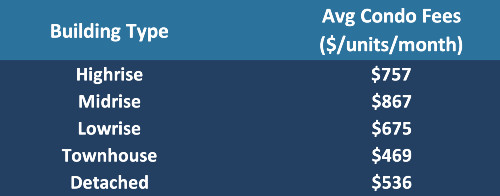
Ontario condo fees by building type, as of February 12, 2026.
Building type significantly influences fees. High-rise (11-plus storeys) and mid-rise (5-10 storeys) structures command the highest fees in Ontario, with elevated operating costs and often more amenities in areas of greater density. Townhomes and detached homes attract the lowest condo fees, though some upkeep is the responsibility of the owners.
Age also tells a story. Buildings from the 1980s demand substantially higher fees, reflecting higher levels of capital replacement and reserve funding in communities of that vintage. Those built in other periods, prior to 2000, are not immune either, as they reflect the impact of capital improvements and, to a lesser extent, reduced energy efficiency.
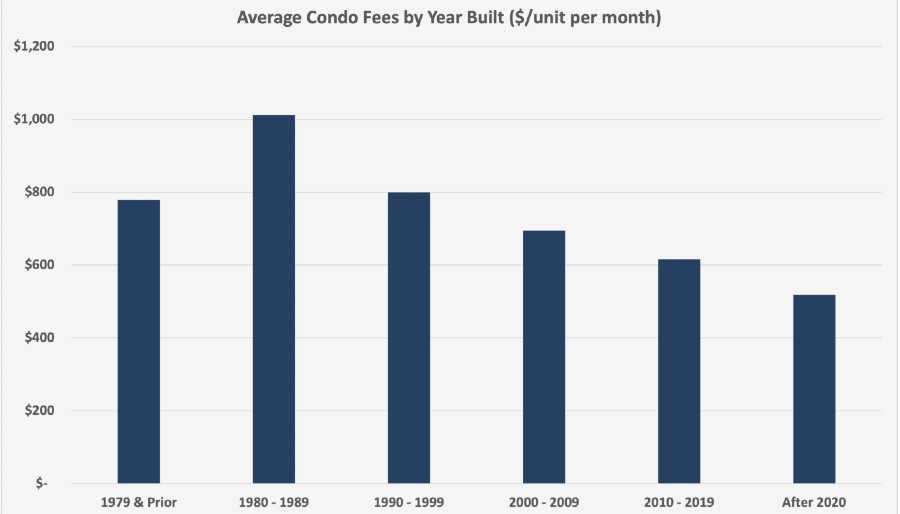
Ontario’s average monthly unit condo fees as of February 12, 2026: 1979 & Prior ($779), 1980 & Prior ($1,012), 1990-1999 ($800), 2000-2009 ($695), 2010-2019 ($616), and after 2020 ($518). Source, the Eli Report.
What prospective owners should know
Condo buyers in Ontario are advised to scrutinize a building’s financial health before purchasing. Reviewing the status certificate (a document outlining the condo’s finances, reserve fund, and any pending legal issues) can reveal red flags. What the status certificate does not describe are the issues affecting the community; those matters are discussed in AGM and meeting minutes, as well as the full reserve fund study.
Why those documents are not considered core records or mandatory disclosure in Ontario, when they are in British Columbia and Alberta, remains a a mystery. A buyer cannot understand from a status certificate whether the building has ongoing problems with its elevators, a pest infestation, or may be undergoing a significant envelope project over the next couple of years.
Regardless, condo buyers should review and benchmark the condo fees against other communities of a similar type, size and age to get a better understanding. Drawing on analysis of 10,000+ condo communities across Canada, a clearer picture has emerged with respect to operating budgets and reserve fund allocations from condo fees across Ontario, Alberta and B.C.:
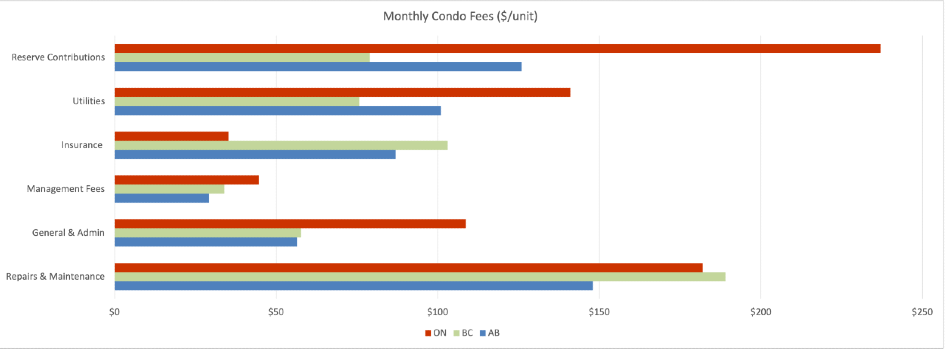
Cross-country comparison as of February 12, 2026. Source, the Eli Report.
What is immediately apparent is that Ontario’s fees are a couple hundred dollars a month higher than other provinces. Higher fees in Ontario reflect a regulatory framework that prioritizes financial stability over short-term savings. The main driver is the higher reserve contributions, though utilities, management and administration costs are also higher.
Regardless of the baseline, engaged boards and professional management can help keep fees predictable, while proactive maintenance avoids costly surprises. While Ontarians pay more in monthly fees, the reduction in special assessments relative to other jurisdictions is significant.
Condo fees are the price of shared ownership and collective responsibility. As the condo market evolves, expectations must rise to meet new challenges, ensuring that fees serve everyone’s best interests. Ultimately, the balance between quality of life, financial stewardship, and active community involvement rests on informed and engaged owners. By requesting reserve fund studies, meeting minutes, and insisting on open board communication, Ontarians can help condo living fulfill its promise, delivering both peace of mind and a strong sense of community.
Thomas Beattie is CEO of OctoAI Technologies, a condo intelligence company that provides reports and data to buyers, owners, property managers, realtors and businesses that serve condo communities.

