Articles Archive - Page 584 of 929 - REMINET
REMI

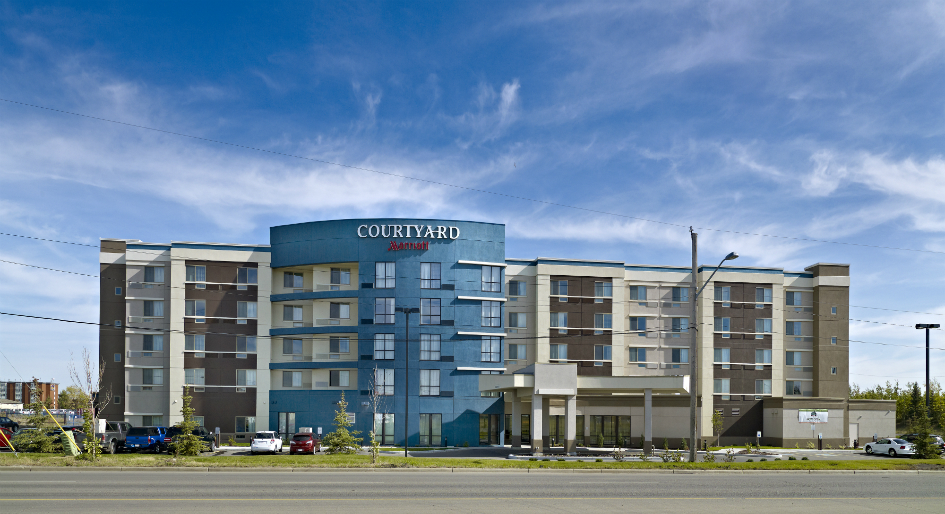
Genesis Hospitality acquires two Edmonton hotels

The sale of two large hotels in Edmonton, AB, was announced on Thursday.

The 136-room Courtyard by Marriott Edmonton West and 103-room Hampton Inn & Suites by Hilton Edmonton West, part of Platinum Investments’ Edmonton Focused-Service Portfolio, have been sold to Genesis Hospitality Inc.

The hotels are situated adjacent to each other on a large 6.55 acre site in a vibrant West Edmonton location.

hotels

The double acquisition by Genesis Hospitality adds to the 11 strong portfolio the company currently operates across Canada.

The sale by Platinum Investments was advised by Colliers International Hotels.

They described the portfolio as offering “an excellent opportunity to acquire two established and well-maintained focused-service assets in a major Canadian market, with strong management and operational synergies.”

Vacant dwelling tax deemed costly to collect

A tax on vacant residential units would be costly to collect and do little to increase Toronto’s supply of affordable housing, a new report to city council’s executive committee concludes. Provincial legislation enacted last year gives Toronto the flexibility to impose a special levy on houses and condominium units that owners have purposely left unoccupied, but financial policy staff advise that won’t be a straightforward task. They recommend more study, including monitoring the results of similar taxes now being rolled out in Vancouver and Melbourne, Australia, before council makes a decision.

“There is no reliable estimate for the number of residential units that may be vacant in Toronto, but could otherwise be rentable,” the report states. “If homes that are rentable, but are intentionally being left vacant could be readily identified, then a vacant home tax would be simpler to implement and would be a sensible tool to apply to achieve the policy objectives of increasing housing supply or providing a source of funds for housing initiatives, or both.”

In contrast, the report outlines the many complications that could push administrative costs above expected revenue. Much of the data that might indicate if a unit is vacant comes from fragmented sources, is not currently collected or inaccessible due to privacy issues, and is frequently inconclusive.

For example, recent Toronto hydro and water data reveals 15,000 to 28,000 residential units with low consumption levels, but that could be attributable to various reasons. Owners could be travelling, convalescing in a healthcare facility or simply frugal. The city also issues thousands of residential building permits every year, which often means units are vacant because they under renovation.

Vancouver’s methodology — requiring all householders to annually declare whether a property is their principle residence or be subject to an automatic surcharge on their tax bills — would be much more unwieldy across Toronto’s approximately 752,000 residential tax accounts. “It is difficult to anticipate the significant administrative challenges associated with adoption of such an approach for Toronto,” the report observes.

Drawing on more than 8,000 survey responses from the public consultation conducted last year, about three quarters of respondents favour the general concept of a vacant dwelling tax. However, only 39 per cent would support the tax if it generated less revenue than the cost to administer it.

Beyond the challenge of identifying who should be taxed, the report questions how vacant residential units relate to the dearth of affordable supply and if a tax would motivate owners to release vacant housing to the market. It hypothesizes that owners who have already chosen to forego approximately $32,000 in annual rental income that a two-bedroom condo unit could typically command in the Toronto market may not be swayed by an additional $4,000 to $5,000 in tax. Owners of vacant units who responded to the city’s consultation also confirmed they would be unlikely to offer them for affordable rents.

“The hallmarks of a good tax tool is that it is shared in a fair an objective manner having regard for capacity to pay, that it can be provided at a low administrative cost with an objective assessment mechanism, that tax avoidance will be negligible and that the tax will be accepted by the public,” the report states. “Based on this evaluation, a vacant home tax does not meet many of the principles of a good tax.”

Local governments in New York and London appear to have drawn the same conclusion, as they considered then rejected the imposition of a vacant unit tax. Toronto policy advisors will be observing and assessing outcomes in Vancouver and Melbourne, where 2018 will be the first year a vacant dwelling tax will be collected. Already, the costs to implement Vancouver’s program have increased from the 2016 estimate of $4.7 million to $7.4 million across a base of approximately 225,000 residential taxpayers.

Cominar finalizes $1.14 billion sale of property portfolio

Cominar has confirmed the closing of its $1.14 billion sale of its non-core market property portfolio to Slate Acquisitions Inc.

Sylvain Cossette, president and CEO of Cominar, said he was pleased to have closed the sale.

“This transaction will enable Cominar to focus on its core markets portfolio in Montreal, Québec City and Ottawa, while also strengthening its balance sheet,” he added, “I am also pleased that the vast majority of the employees affected by this transaction will continue to be employed and I want to thank all of those who are leaving us today for their contribution and wish them the very best of success.”

The portfolio, which is made up of 95 properties totalling 6.2 million square feet, is located in the Greater Toronto Area, the Atlantic Provinces and Western Canada.

Slate will be assuming approximately $106.2 million of mortgage debt and Cominar revealed that it intends to use the net proceeds of the transaction for debt repayment and general trust purposes.

Cominar is the third largest diversified real estate investment trust in Canada and currently remains the largest commercial property owner in the Province of Quebec. Their portfolio totals 38.2 million square feet spread out across Quebec and Ottawa.

Trans Mountain pipeline delay concerns industry

The future of the $7.4 billion Trans Mountain pipeline expansion is in question after Kinder Morgan announced it is suspending non-essential construction on the project.

Reaction from the B.C. construction industry and business communities was quick with calls on the B.C. government to end all actions intended to delay the project and restore investor confidence in the province.

“By strangling Trans Mountain, the B.C. NDP government would throw away $5.7 billion in provincial tax revenue, $1 billion in municipal tax revenue, and the opportunities that come with 15,000 construction jobs and 189,000 person-years of employment,” said Chris Gardner, ICBA president. “This decision will send a simple chilling message to businesses looking to start or expand major projects here – stay away from B.C. because you cannot rely on the government to honour its commitments or follow the law.”

The Trans Mountain Expansion Project received federal government approval in November of 2016 after a rigorous and thorough 29-month regulatory process that resulted in Kinder Morgan meeting 157 environmental and legal conditions during the construction and operation of the pipeline. The project has gone through extensive public hearings and has filed voluminous reports on every aspect of the project, meeting all National Energy Board requirements.

This scientifically-vetted and legal process is being threatened by the B.C. provincial and Burnaby city governments, who, once the project received federal approval, were required by law to process permits properly. They have instead engaged in activities designed to deliberately terminate the project, not only to this project’s detriment, but potentially impacting future projects in this province.

“If investors cannot rely on a process that spells out what specific steps need to be taken for a project to proceed, especially for major projects that can take years to review and involve billions of dollars, why would they even consider future investment in British Columbia?” said Keith Sashaw, president and CEO, ACEC-BC. “While the announcement from Kinder Morgan is upsetting and frustrating, it is not surprising, as the decision is a logical outcome of the uncertainty created by the political posturing currently taking place in B.C.”

ACEC-BC joins the Greater Vancouver Board of Trade, the Independent Contractors and Businesses Association, and the BC Business Council in a call for:

  • The B.C. government to immediately stand down on the current Spill Response Review process that will delay and/or endanger the Trans Mountain Expansion Project and, to the extent new and legitimate issues remain in this area, work jointly with other levels of government to collaboratively address them.
  • The B.C. government to withdraw from the City of Burnaby’s appeal to the Supreme Court of Canada on the matter of issuance of municipal permits for a federally-approved project.
  • The Prime Minister to convene an in-person meeting with the Premiers of British Columbia and Alberta as soon as possible, and secure their cooperation to address the issues facing the Trans Mountain Expansion Project and, failing quick agreement, to seek final resolution by way of exercising the federal government’s legitimate authority in this matter.

“It’s about time the federal government showed Canadians that it’s willing to act in the national interest,” said Paul de Jong, president of the Progressive Contractors Association of Canada (PCA). “Rhetoric won’t save thousands of skilled jobs and billions in economic benefits that are at stake in communities along the pipeline. We need a government that’s willing to put lawbreakers in their place, once and for all.”

Copper allays germy fitness centres

Copper alloys, traditionally used in hospitals to help fight health-care acquired infections, aren’t as prevalent in non-traditional spaces where germs also spread.

While it’s been determined that antibacterial properties of copper metals kill 99.9 per cent of bacteria within two hours when installed on high-touch surfaces, there isn’t as much uptake in facilities like athletic centres or trendy mixed-use developments that add fitness areas.

Commercial use, however, has been on the upswing ever since Health Canada and the U.S. Environmental Protection Agency registered copper—the only solid antimicrobial touch surface to be approved by both agencies. This use is administered somewhat in healthcare facilities to bed rails, toilets, computer devices and IV stands. The goal is to reduce the spread of superbugs like Staphylococcus aureus (MRSA), which is increasingly seen in non-clinical settings, as well.

According to David Anonychuk, former president of the Canadian Copper Association and currently managing director of Aereus Technologies, a copper alloy manufacturer, incorporating copper into facility renovations could be one way of controlling the spread of harmful pathogens.

“Hospitals are more mandated and regimented in terms of cleaning protocols,” he notes. “In a fitness centre, everyone is moving in and out, sweating, coughing, using equipment. There is great opportunity, where there is a high turnover of people, to add copper in the background.”

More researchers are starting to analyze community environments where viruses thrive. A recent study out of Iowa’s Grinnell College in the U.S. found that copper alloy surfaces can enhance infection control and potentially reduce community-acquired infections in fitness centres.

The 16-month-long study examined the ability of copper alloy surfaces to lower bacterial burden associated with high-touch athletic centre equipment, such as weights and grips. Staphylococcus was the most common bacteria found in the facility, and results showed an 85 to 97 per cent reduction in bacteria on all equipment.

“In a fitness centre, the only chance you get to reduce bacteria is the next time someone cleans the surface,” says Anonychuk. “Copper immediately goes to work, reducing and maintaining a low bacteria count. It’s an enhancement, not a replacement for cleaning.”

There’s been extensive research on MRSA (a Staphylococcus species) in hospital settings, but a lack of research analyzing the prevalence of MRSA on surfaces in athletic centres.

To get an idea of how many germs people encounter in fitness centres, fitness equipment review site FitRated.com recently gathered samples from 27 pieces of equipment from three different gym chains in the U.S.

Treadmills were found to have an average of more than 1.3 million colony-forming units per square inch, 74 times more bacteria than a typical public bathroom faucet. Exercise bikes and free weights also harbour more bacteria than cafeteria trays and toilet seats.

All three types of equipment yielded gram-positive cocci (a common cause of skin infections and other illnesses), gram-negative rods (which can prompt many types of infections and sometimes resist antibiotics) and gram-positive rods (which can – but don’t often – cause various types of infections. The exercise bikes and free weight samples also turned up Bacillus – a potential cause of various conditions, including ear, eye and respiratory infections.

In spaces outside of healthcare, copper has a different utility. Companies who want to be leading edge and accommodate clientele in an innovative way are incorporating copper surfaces into renovation projects, Anonychuk notes. The Ontario Racquet Club in Mississauga, Ont. is one early adopter. Aereus Technologies added 1,000 copper alloy pieces to its locker room renovation in 2007.

Copper alloy surfaces are also believed to address some operational and health concerns when combined with effective cleaning regimes. They offer a passive and continuous way to reduce and control bacteria in facilities with a dearth of cleaning staff. They also provide greener solutions with no chemicals because they are all natural, and work well in a wide temperature range.

When bacteria lands on a copper surface, copper ions puncture the bacterial cell membrane, prevent cell respiration and destroy the cell.

“Thinking about the advent of superbugs, it also kills the DNA,” says Anonychuk. “If you can’t replicate the cell, then you’ve stopped any chance of reproducing or mutation occurring. That bacteria is permanently dead.”

According to the World Health Organization, antibiotic resistance is increasing globally. While copper alloys have been used for health purposes since ancient times, only now does research delve into its antimicrobial properties.

“Pathogens have been around forever,” says Anonychuk. “Having something as simple as copper on touch surfaces is one other weapon.”


Vancouver wants ban on foam cups and containers

The City of Vancouver is proposing to reduce the amount of single-use packaging like plastic bags and straws and ban polystyrene foam cups and containers.

There would be a requirement for single-use cups and containers to be recyclable or compostable and for food vendors to ask if customers would like a straw, according to a new draft strategy unveiled on March 29. The city would also investigate options for recovering the cost of collecting single-use items.

The plan includes flexibility and choice for businesses in order to make the transition manageable, such as ending the use of disposable cups and shopping bags or no longer providing them for free.

Support for Metro Vancouver’s work to develop a Regional Single-Use Item Reduction Strategy is also part of the draft.

Every week, more than two million disposable cups and two million plastic bags are thrown in the garbage in Vancouver. Cups and take-out containers make up about 50 per cent of all items collected in public waste bins and a significant portion of litter on Vancouver streets.

“Vancouver and cities around the world are struggling with litter and waste from disposable items like plastic bags and straws, coffee cups and polystyrene foam containers,” said Mayor Gregor Robertson. “We’re hearing strong support from businesses, environmental groups, and the general public who want to take action to reduce litter and the plastic garbage that’s polluting our oceans, and help us reach our zero waste goals.”


Four priorities for JanSan distributors in 2018

The JanSan distribution and resale industry has been slow to adopt digital marketing and e-commerce, according to Essendant. However, as large retailers encroach in the space and elevate customer demands for online, self-service experiences, JanSan distributors can no longer rest on their laurels.

To take a closer look at how the industry is changing and how distributors can adapt accordingly, Essendant surveyed 114 JanSan distributors (manager level and above) about their pain points, investments, and plans for digital marketing and commerce strategies.

The report found that few JanSan distributors today enable e-commerce, but those that do find their sites to be effective channels for driving additional sales. So as customer demand for e-commerce in B2B industries grow, JanSan distributors have an opportunity to capture market share by embracing digital.

JanSan distributors may want to consider the following investments to gain a competitive edge in 2018 and beyond:

Hire a digital marketing and/or e-commerce coordinator. To get the most out of your digital marketing investments, the first thing you should do is hire a digital marketing or e-commerce coordinator. Without an experienced professional dedicated to pushing the program forward, digital initiatives won’t be prioritized ‒ especially if your organization has historically resisted digital change.

Integrate digital marketing to boost product awareness. Today, many business buyers research products online before ever reaching out to a sales person. So JanSan distributors can gain a leg up by engaging these potential buyers digitally. According to the survey, distributors note that social media (54 per cent) and email marketing (37 per cent) are the most effective digital marketing tactics.

Invest in e-commerce capabilities. The study also found 28 per cent of distributors have a website, but don’t sell or list products online, and another 11 percent don’t have a website at all. While it’s important to maintain the human element in the JanSan sales process, it’s critical that you  build an online brand and storefront to keep up with competition and buyer expectations.

If you already have e-commerce, boost your capabilities. Of the 53 per cent of distributors that have an e-commerce channel, three in five (59 per cent) say their online presence is ‘excellent.’ And another 73 per cent report less than half their revenue comes from e-commerce ‒ indicating distributors aren’t using it to their full potential.

While it’s a great first step, distributors need more than just a basic e-commerce channel. They should look to invest in additional features like guided selling, complex pricing, flexible checkout options and more to drive more traffic and conversions on the channel.

To learn more key findings from the report, visit http://info.essendant.com/jansan-report-2018#

Nightmare bacteria spreading across U.S.

Nightmare bacteria resistant to most antibiotics are spreading across the US, according to the Centers for Disease Control and Prevention (CDC).

Health departments working with CDC’s Antibiotic Resistance (AR) Lab Network found more than 220 cases of unusual antibiotic-resistant genes in bacteria across the U.S. last year, according to a new CDC Vital Signs report.

These superbugs include those that cannot be killed by all or most antibiotics, are uncommon in a geographic area or the U.S. or have specific genes that allow them to spread their resistance to other germs.

One in four germs the CDC tested contained special genes that allow them to spread their resistance to other germs. When the CDC screened for superbugs, further investigation uncovered a hard-to-treat germ that spreads easily in one in ten people, even when they showed no symptoms. This means the germ could have spread undetected in the health care facility.

Rapid identification of the new or rare threats is the critical first step in CDC’s containment strategy to stop the spread of antibiotic resistance (AR). When a germ with unusual resistance is detected, facilities can quickly isolate patients and begin aggressive infection control and screening actions to discover, reduce and stop transmission to others.

“CDC’s study found several dangerous pathogens, hiding in plain sight, that can cause infections that are difficult or impossible to treat,” said CDC principal deputy director Anne Schuchat. “It’s reassuring to see that state and local experts, using our containment strategy, identified and stopped these resistant bacteria before they had the opportunity to spread.”


ACI releases National Cleaning Survey

The American Cleaning Institute (ACI) released its 2018 National Cleaning Survey, revealing that 76 per cent of American households will undertake spring cleaning this year.

Millennials (38 per cent) reported deep cleaning their homes more often than both Boomers (13 per cent) and Gen-Xers (28 per cent), who more frequently perform light cleanings.

“ACI’s Cleaning Survey tells us that Millennials are embracing the need to give their homes a thorough cleaning, even more than their parents,” said Brian Sansoni, ACI vice-president of communication. “However, each generation’s cleaning priorities are aligned when it gets down to the nitty gritty.”

According to the research, Americans of every age most frequently deep clean their bathrooms, kitchens, living rooms and bedrooms. Their collective primary reasons for spring cleaning are to give their home and belongings the thorough cleaning they need, reduce clutter, remove asthma or allergy triggers, and prevent the spread of illness.


LED incentives still relevant in U.S. market

Conservation advocates continue to endorse LED incentives even though a prohibition on the sale of more energy-intensive lighting products is only about 20 months away in the United States. A new position paper from the American Council for an Energy-Efficient Economy (ACEEE) notes that halogen and incandescent bulbs still garner strong sales, and advises that utilities, state and local governments shouldn’t be too quick to step back from the longstanding focus on residential lighting as easy an cost-effective source of energy savings.

“While the growth in LED market share is promising, these LEDs are largely displacing CFLs (compact fluorescent lamps),” observes Jennifer Thorne Amann, buildings program director with the ACEEE. “The market share of halogens and conventional incandescents has held steady, hovering close to 50 per cent of sales since the end of 2014.”

As of January 1, 2020, lighting products sold in the U.S. will have to comply with a minimum energy efficiency standard of 45 lumens per watt (LPW), meaning that currently available halogen and incandescent bulbs must be removed from the market. Thorne Amann expresses confidence that legal challenges will not derail the looming implementation of the standard, but acknowledges that the sales prohibition may be difficult to enforce if some, or many, retailers attempt to surreptitiously unload non-compliant stock. The best case scenario may be somewhat optimistic.

“Rather than pre-determine the final fate of programs while the transition plays out, programs should take more of a ‘wait and see’ approach,” Thorne Amann maintains. In the interim, she sees opportunities for conservation gains through a range of targeted programs for both population segments that have been slower to adopt LEDs and early adopters of LEDs bulbs who would be open to LEDs in specialty lamps or associated lighting controls.

Environmental Protection Agency (EPA) data for 2015-16 shows LEDs have achieved varying market penetration from state to state — garnering upwards of 40 per cent of market share in California, Oregon and Washington, but less than 20 per cent in many more states. She also points to studies showing a drop in LED sales when incentive programs were scaled back in New York and Massachusetts.

“As the market shift to LED progresses throughout the country, it is likely that residential lighting programs will no longer be cost-effective beyond 2021,” Thorne Amann projects. “The residential lighting market will have transformed from an incumbent technology, largely unchanged for more than 100 years, to an entirely new technology with unprecedented speed — a major energy efficiency success story.”

Canadian housing starts trend stable in March

According to CMHC, March 2018 delivered stable housing starts with 226,842 units compared to 225,804 units in February. This trend measure is a six-month moving average of the monthly seasonally adjusted annual rates (SAAR) of housing starts.

“In March, the national trend in housing starts was stable for the fifth consecutive month, as diverging trends for multi-unit and single-detached dwellings continue to offset each other,” said Bob Dugan, CMHC’s chief economist. “Over this period, multi-unit starts have trended higher in most major urban centres while single-detached starts have trended lower.”

Monthly Highlights

Vancouver
Rising March housing starts capped off a strong first quarter in starts in the Vancouver Census Metropolitan Area (CMA). Starts of multifamily condominium and rental units led the increase, with activity concentrated in the core areas of the City of Vancouver, Richmond, and North Vancouver in the first quarter of this year. Demand for new homes continues to be supported by strong migration, household formation and employment growth in the region.

Victoria
Housing starts in Metro Victoria appear to be moving in different directions with single-detached and apartment units diverging. Overall, the total starts are trending downward from a peak in late 2017. However, apartment starts were 77% above the March 2017 year-to-date figures, while single detached starts were down 32%. Inventory in single-detached units has shown signs of accumulation, but remains below average.

Edmonton
Housing starts in the Edmonton CMA continued to trend lower in March due in part to a declining trend in multi-family construction where inventory levels remain elevated. Weakness in multi-family construction lowered actual total housing starts for the month of March, down 44% compared to March of last year.

Toronto
Led by condominium apartment starts, the total number of housing starts in the Toronto CMA trended up to reach a seven month high during March.  Relatively affordable prices of condominium apartments continued to draw price weary buyers towards purchasing pre-construction units, particularly within the City of Toronto, and thus drove up their construction.  High house prices and tighter borrowing conditions weighed on demand for single and semi-detached homes and consequently their starts trended lower.

St. Catharines-Niagara
The St. Catharines-Niagara CMA saw 165 total actual starts in March, the highest recorded for the month since 1992. The trend towards relatively more affordable higher-density housing continued with multi-units accounting for 73% of total starts, up from 41% last March. Weaker employment conditions and rising housing prices continue to favour a mix toward more affordable housing driving multi-unit starts.

Brantford
Housing starts trended up in Brantford due to single-detached starts, which were already high in January and February. The strong March allowed single-detached starts to reach its highest first quarter total in over 10 years. A primary driver behind the increased demand for new single-detached homes in Brantford has been Greater Toronto and Hamilton area buyers seeking more affordable housing options.

Province of Québec
The level of housing starts for the total aggregate of Quebec’s urban centres remained stable in the first quarter, in both the single-detached home and multi-unit housing segments. Apartment starts decreased in all of the province’s census metropolitan areas (CMAs) except in the Québec CMA, where an increase was recorded in the first quarter. The increase for that segment in the Québec CMA offset the decreases in the other CMAs of the province.

Halifax
The single-detached market in Halifax continues to expand over the first quarter, up 42 per cent compared to the same period last year. Despite the price differential, with the number of active listings on the resale market remaining low, buyers may be increasingly looking to the new home market to meet their purchasing needs. On the contrary, construction in the typically busy multiples market has slowed over the first quarter, down 37% year-over-year.

CMHC uses the trend measure as a complement to the monthly SAAR of housing starts to account for considerable swings in monthly estimates and obtain a more complete picture of Canada’s housing market. In some situations analyzing only SAAR data can be misleading, as they are largely driven by the multi-unit segment of the market which can vary significantly from one month to the next.

The standalone monthly SAAR of housing starts for all areas in Canada was 225,213 units in March, down from 231,026 units in February. The SAAR of urban starts decreased by 2.8 per cent in March to 208,237 units. Multiple urban starts decreased by 7.3 per cent to 144,578 units in March while single-detached urban starts increased by 9.5 per cent to 63,659 units.

Rural starts were estimated at a seasonally adjusted annual rate of 16,976 units.

Preliminary Housing Starts data are also available in English and French through CMHC’s website and through its Housing Market Information Portal.


Smart tech enhances restroom maintenance

It’s well known that poorly cleaned and maintained restrooms, regardless of facility type or industry, can damage reputation, negatively affect perception and impact a business’s ability to attract and retain tenants/customers. Still, many companies fail to recognize the significance of this threat to their bottom line. Those that do are turning risk into opportunity, and focusing on leveraging their approach to restroom service and maintenance as a point of differentiation.

Setting the bar

Benchmarks need to be established in order to identify improvement opportunities and measure success in achieving goals. When it comes to reporting on restroom maintenance and patron satisfaction, those benchmarks have typically been set by surveying restroom users. While that may be the best way to identify issues and measure improvement, it is costly and time-consuming. Moreover, its validity relies on sufficient levels of participation and frequency. Even then, the data can be skewed by one-off events and short-term conditions.

Acquiring and analyzing reliable data in sufficient quantities is a challenge; however, there’s no shortage of innovation, from proprietary Internet of Things (IoT) solutions and manual rating systems to advanced touchscreen technology, to help overcome the difficulty of monitoring restroom maintenance. These options offer a variety of ways to not only improve the quality and efficiency of restroom maintenance but enable ongoing data capture for results measurement, trend analysis and predictive analytics that increase patron satisfaction, improve labour allocation and decrease overall costs.

Internet of more and more things

Many industry leaders in the away-from-home towel and tissue, hand hygiene and cleaning chemistry markets are developing or already have IoT systems that monitor restroom conditions through the status of dispensing units (operationally and product fill levels) to indicate service and requirements. Some of the systems also capture traffic data via door sensors to enable more robust analysis and predictive modelling. These proprietary dispensing systems transmit data to the cloud, where it is stored and then accessed by facilities maintenance teams for appropriate action.

Advantages of using these systems include the ability to improve efficiency through labour allocation, report on quality and customer satisfaction, and identify cleaning and maintenance issues for proactive action and/or follow-up. However, because the systems are proprietary, a specific brand of product must be used throughout the facility.

Voice of the customer

Manual rating systems are currently appearing at restroom entrances. Patrons indicate their degree of satisfaction by pressing a button. Results are tracked and measured over time to improve quality and customer experience.

Unfortunately, this tool does not produce a particularly accurate representation of overall user satisfaction since customers more commonly comment when dissatisfied; however, it can provide a good indication of the frequency of user dissatisfaction with restroom conditions (although not the specific cause).

Digital restroom attendants

Digital restroom attendant systems are replacing antiquated restroom wall log sheets with advanced touchscreen technology and door sensors that not only record cleaning and maintenance activities and restroom traffic but also direct user feedback. Restroom patrons can identify supply or cleaning issues using an antimicrobial touchscreen, or provide an assessment of the quality of their experience. Alert messages are sent directly to cleaning staff for immediate action. Use thresholds can be set for each restroom so that service requests and replenishment notifications are sent directly to cleaning staff once restrooms have been used by a specific number of patrons.

Dashboards and real-time reporting can then be employed to analyze data over extended periods, generate predictive analytics and enable cleaning staff to proactively address restroom needs before they become a source of tenant/customer dissatisfaction and, ultimately, complaints. The data can be used for performance management, staff training and monitoring of patron satisfaction. It provides facility managers and building service contractors the opportunity to increase efficiency through better labour planning and allocation, address service issues to improve customer satisfaction, adjust activities and implement process improvements, and regularly measure and report on quality and customer satisfaction.

Digital restroom attendants, by their very existence, communicate to tenants, customers of building service contractors and restroom patrons that a facility’s management team is committed to quality and the provision of positive customer experiences. This has been validated by a University of Alberta study of 12 of the most trafficked restrooms at Edmonton International Airport, where digital restroom attendants have been in place since 2015. The study examined the effect of placing a digital restroom attendant system outside one set of restrooms and not outside an identical set. Patrons were asked which restroom they believed to be cleaner. Seventy-five per cent selected the restrooms with the digital restroom attendant, citing the display of the last cleaning time and that cleaning activities were being monitored.

The digital restroom attendant system provides an ongoing indication of the level of restroom patron satisfaction throughout the airport. According to Shilendra Singh, general manager of Carillion Canada, the system has helped the maintenance provider better understand traffic trends and enabled his team to fine tune scheduling and resource allocation while being more proactive around stocking soap, toilet tissue and other supplies. Since its installation, he has seen a significant drop in the number of e-mails maintenance staff receives, which has declined to an average of 20 per month from 60 to 70.

Bruce Ferguson is director of national accounts at Bunzl Canada, which provides cleaning and hygiene supplies, equipment, food and retail packaging, safety and industrial supplies to more than 45,000 Canadian businesses. Bruce has more than 25 years’ experience in the cleaning and hygiene industry. He is a recognized expert in facility cleaning and maintenance with a passion for infection prevention and control and assisting clients to create cleaner, healthier environments.

Fairmont Royal York: Service Second to None

There’s no missing the Fairmont Royal York when flying over Toronto, pulling into Union Station on one of the main train lines or travelling into the downtown core via the Gardiner Expressway. At 28 storeys, the recognizable landmark may no longer be the tallest tower in the city (or the British Commonwealth, for that matter) – a title it lay claim to in 1929, when it opened to great fanfare – but its presence is still pronounced amidst the massive office buildings and condos that now surround the chateau-style hotel. Popularity has rarely waned since the first guests walked through the doors nearly 90 years ago into an opulent interior fit for not just a queen but ‘the’ queen; Canada’s monarch has called the historic hotel ‘home’ while visiting Toronto, as has several members of the royal family.

While many of the hotel’s original heritage features remain, including the famed ornate crystal chandeliers found throughout and the hand-carved wood lobby ceiling, it has gone through a number of renovations throughout the years, even expanding to welcome a new type of guest – rooftop honeybees. In 2014, Fairmont unveiled its first bee hotel, providing the endangered species with a safe place to rest their wings. Most recently, the famed building underwent an extensive renovation that included the complete redesign of nearly 900 guestrooms across 11 floors as well as updates to its pool and health spa – a task that was no easy feat given the hotel was fully operational throughout the five-year construction process.

“We are fortunate enough at the Fairmont Royal York to run high occupancy levels but with these high business levels it was crucial to keep in mind the impact renovations would have on our guests,” says the hotel’s director of housekeeping, Nicole (Nikki) Stewart. “A main goal was to create a clear separation from our guests and the work being completed, whenever possible. In regards to noise, we had specific hours that construction could take place during the day and we ensured that construction hours were communicated to our guests before arriving at their rooms.”

Fairmont has since embarked on Phase 2 of its multimillion dollar hotel transformation, which includes the lobby, dining venues, meeting spaces as well as the complete redevelopment of more than 100 of the hotel’s most prestigious guestrooms.

“It’s a very exciting time seeing the Fairmont Royal York being transformed,” says Stewart, who joined the hotel in June 2016, upon relocating from Scottsdale, Ariz., where she served as housekeeping manager at the Fairmont Scottsdale Princess.

Stewart’s storied career with Fairmont dates back more than a decade. She began working for the luxury chain of hotels in 2005, as a room attendant at the Fairmont Jasper Park Lodge in Alberta, where she held progressive positions including housekeeping supervisor, housekeeping manager and laundry/valet manager. After five years at the mountain resort, Stewart briefly parted ways with Fairmont to serve at sea, specifically on a luxury cruise line as the ship’s senior assistant chief executive housekeeper. Eight months later, her feet returned to dry land and Fairmont where they have remained firmly planted ever since. From 2011 to 2015, Stewart called the Fairmont Chateau Whistler in B.C. home before heading south of the border to the Grand Canyon state, only to travel back to the true north a little more than a year later.

“My role here is to support all the hardworking staff, my colleagues and leaders to deliver engaging, thoughtful service and to ensure every one of our guests is well taken care of,” says Stewart, who originally joined the Fairmont Royal York as senior housekeeping manager, laundry, and then quickly moved into the positions of director of laundry operations, assistant director of housekeeping and finally director of housekeeping.

Fairmont Royal York

Fairmont Royal York, in Toronto, Ont.

In her current post, Stewart oversees a large team of more than 350 people – 297 housekeepers and 57 launderers to be exact. All cleaning and maintenance-related tasks are performed in-house, with the exception of the hotel’s overnight cleaning, dry cleaning services and maintenance of the iconic rooftop sign, which involves regular removal of debris that accumulates in the letters and yearly inspection of wiring components to ensure proper operation.

“Having all trades, from an engineering perspective, represented in-house is unique to our property and extremely advantageous in terms of timeliness and accuracy because this is an old building filled with a lot of nooks and crannies,” she explains.

On-premises laundry operations have also proven beneficial, says Stewart, who is thankful the original owner, Canadian Pacific Railway, had the foresight to include it in the building design.

“Having laundry on-site allows us to control the turnaround time and care of our linens,” she says, noting the facility processes an average of 1,000 pounds of laundry per day.

In an effort to become more efficient in its operations – laundry consumes copious amounts of H2O – the Fairmont Royal York installed a commercial water softener in 2005, which has reduced water use in the laundry to one wash and one rinse per cycle, saving 476,000 litres of water per day (enough water to supply 500 homes). To put this in perspective, the hotel was originally using 676,000 litres of water daily to double wash and triple rinse the laundry.

The addition of the water softener is but one of many sustainable initiatives Fairmont has undertaken to reduce the hotel’s environmental footprint. Others include the installation of LED lights in each of the 1,373 guestrooms, implementation of an optional towel and linen reuse program, use of Green Seal or Safer Choice-certified cleaning products and donation of discarded guestroom soap and plastic shampoo/conditioner amenity bottles to Clean the World, which then recycles and distributes them to homeless shelters across the country.

“We are one of the top donors in Canada,” Stewart proudly notes.

She is also pleased with the pace of cleaning at the hotel. While it varies depending on the size of the space, it takes 30 minutes on average to fully clean a guestroom. She credits this to the dedicated, tenured employees who pride themselves on providing an exemplary guest experience, the recent adoption of a hotel service optimization system, or HotSOS, and Fairmont’s extensive training programs.

HotSOS is a cloud-based solution that automates and prioritizes housekeeping operations, resulting in reduced check-in wait times. Housekeeping staff use mobile devices to receive tasks, submit maintenance issues and send guestrooms’ availability to the front desk, all in real-time.

“It has already proven, in the short nine months that we’ve had it, to be a room expeditor, which has improved guest satisfaction,” says Stewart. “We can assign a housekeeper to a room for cleaning if a guest is waiting, instead of tackling one that doesn’t need service. It makes the most effective use of their time.”

However, without proper training, or a lack of, the quality of cleanliness would suffer. That’s why new employees begin their journey at Fairmont with Service Promise training, which focuses on the brand’s differentiator – providing exemplary customer service – followed by two weeks of extensive on-the-job training. In an effort to help staff apply what they’ve learned in training to their daily jobs, the hotel added a dedicated operations training manager to its team last year. This past January, Fairmont introduced its newest training program, Heartist, which teaches participants of the four-day in-class course, administered over four months, how they can connect with guests on an emotional level.

“Instead of process-oriented training, we’re focusing on delivering unexpected and personalized gestures that will surprise and delight those we come in contact with,” explains Stewart.

This heartfelt approach extends to hotel staff who are regularly recognized and rewarded for their achievements. Fairmont’s ServicePlus program encourages colleagues to honour the exceptional work of their peers by submitting ‘bravo-grams’ monthly. Each department also nominates one employee as ‘star of the month.’ This is in addition to the hotel’s recognition of leader, health and safety, and sustainability/charitable stars every month.

“It doesn’t stop there,” says Stewart excitedly. “Throughout the year, each department has its own initiatives in appreciation of colleagues, including monthly celebrations specific to their teams and daily recognitions.”

In the housekeeping department, staff are awarded a coin whenever they go above and beyond their job description to contribute to the hotel’s success. Collected coins are redeemable for a reward of the employee’s choosing, such as a movie gift card or monthly transit pass.

“Rewarding in a meaningful way inspires and motivates, and makes people feel appreciated,” says Stewart. “When you’re investing in your employees, you’re investing in yourself and the company’s success.”

Clare Tattersall is the editor of Facility Cleaning & Maintenance.

CAO launches public registry of condo corporations

The Condominium Authority of Ontario (CAO) officially launched its public registry of condo corporations on April 1, 2018.

The registry can be used to obtain information about a condominium corporation in the Province of Ontario. The registry makes public information about condo corporations, including the names of the directors and when each director’s term began; the name of the condominium management company and condominium manager; the registration date of the declaration; the name of the developer; the address for service for the condominium corporation; the address listed on the declaration, which may be the address of the condo property; the number of units and number of voting units; the fiscal year end; and the date of the last Annual General Meeting (AGM).

If your condominium corporation is not listed in the public registry, your corporation may not have filed its returns, which are required by law to be filed by every condominium corporation in Ontario. Annual and transitional returns were to be filed by March 31, 2018.

ACEC-BC honours best of B.C. engineering

The Association of Consulting Engineering Companies British Columbia (ACEC-BC) honoured engineering innovation at its 29th Annual Awards for Engineering Excellence Gala.

Awards were given in the following categories: Buildings, Municipal & Civil Infrastructure, Transportation & Bridges, Energy & Industry, Natural Resource & Habitat, Soft Engineering and Projects Under $2.5 Million. ACEC-BC also recognized the outstanding contributions of two individuals.

“The Awards for Engineering Excellence winners represent the best and brightest in our industry,” said Keith Sashaw, president and CEO, ACEC-BC. “The winning projects are some of the most impressive work we have seen from B.C.’s consulting engineers, who have been showcased on this stage for nearly three decades.”

This year’s Lieutenant Governor’s Award for Engineering Excellence winner was Fast + Epp for the Tallwood House at Brock Commons project (photo). The TallWood House at Brock Commons is an 18-storey, 400-bed student residence on the campus of the University of British Columbia (UBC). Reaching 53 metres, it has been recognized as the tallest mass timber hybrid building in the world.

From the outset, the question was not, “Is it possible to go 18-storeys with timber,” but rather, “Can this be built at a price competitive with concrete construction?” A “no” answer would have meant the building would be constructed with concrete – and there was just 10 months to design it.

The Meritorious Achievement Award, presented annually to an individual for significant lifetime contributions to engineering, the industry and the community, was awarded to Ahmet (Met) Ulker, P.Eng., FEC., AES Engineering Ltd.

The Young Professional Award was handed out to Graham Lovely, P.Eng, LEED AP BD+C of MCW Consultants Ltd. recognizing his achievements in the first 10 years of his career, demonstrating excellence in consulting business practices, outstanding achievements in his field, and leadership in the community.

The 2018 Client of the Year Award was provided to the City of Coquitlam. This award serves to promote and encourage best practices by clients, and nominations were based on criteria that included communication and relationship management, appropriate risk assessment management and allocation, use of fair and balanced contracts and appropriate procurement and delivery methodology that leads to clear scope.

In an industry where price is often the determinant factor rather than qualifications, and where engineering services are often viewed as a commodity, the City of Coquitlam is setting an excellent example of valuing the professional services that consulting engineers provide via qualification based selection.

For full list of winners, visit ACEC-BC

GTA home sales fall 39.5 per cent YOY in March

There were 7,228 home sales in the Greater Toronto Area in March 2018, a 39.5 per cent decline compared to the record 11,954 residential sales in March 2017, according to the Toronto Real Estate Board (TREB). This figure is also 17.6 per cent below the 10-year average for the month of March.

The number of new listings in March fell 12.4 per cent year-over-year to 14,866, which is also three per cent below the average for the past 10 years.

“TREB stated in its recent Market Outlook report that Q1 sales would be down from the record pace set in Q1-2017,” said Tim Syrianos, TREB president, in a press release. “The effects of the Fair Housing Plan, the new OSFI-mandated stress test and generally higher borrowing costs have prompted some buyers to put their purchasing decision on hold. Home sales are expected to be up relative to 2017 in the second half of this year.”

The MLS Home Price Index Composite Benchmark fell by 1.5 per cent compared to March 2017 for the TREB market area as a whole. The overall average selling price declined by 14.3 per cent year-over-year.

Although the change in market conditions played a role in this decline, the dip in average selling price was also compositional in nature. Detached home sales, which generally represent the highest price points in an area, fell much more than other home types. In addition, the number of high-end detached homes priced over $2 million in March 2018 was half of what was reported in March 2017, further impacting the average selling price.

“Right now, when we are comparing home prices, we are comparing two starkly different periods of time: last year, when we had less than a month of inventory versus this year with inventory levels ranging between two and three months. It makes sense that we haven’t seen prices climb back to last year’s peak,” said Jason Mercer, TREB’s director of market analysis. “However, in the second half of the year, expect to see the annual rate of price growth improve compared to Q1, as sales increase relative to the below-average level of listings.”

TREB continues to stress that housing and housing affordability must be at the forefront of the policy debates leading into this year’s provincial and municipal elections.

“A well-functioning housing market is not only important to ensure that people have a place to live; it is also important because it supports hundreds of thousands of jobs, billions of dollars in spin-off expenditures and billions of dollars in government revenues,” added Syrianos. “Issues such as the below-average level of housing supply and often inadvisable policy ideas and negative measures such as land transfer taxes, vacancy taxes, speculation taxes and second home taxes should also be thoroughly debated by all candidates.”

Winning design team selected for The Arbour

The winning design team of Moriyama & Teshima Architects + Acton Ostry Architects has been selected by George Brown College to design The Arbour — its tall wood campus building on Toronto’s waterfront. This moves the project one step closer to construction of Ontario’s first tall wood, low carbon institutional building.

Poised to transform the Toronto skyline, the team’s eye-catching design for the planned facility features breathing rooms — using solar chimney systems to capture and harness light and air for sustainable natural ventilation. The building design also offers flexibility of learning spaces, enabling walls to expand and contract as needed, as well as a “Made in Canada” approach using nationally sourced mass wood components.

The Arbour, a 12-storey mass timber building at our Waterfront Campus, will mark an important step forward in Canadian mid-rise wood structures and will be the first project of its kind in Ontario.

Toronto-based Moriyama & Teshima Architects has received more than 200 awards, including six Governor General’s Medals for Architecture, Canada’s highest architectural honour. Award-winning Acton Ostry Architects, based in Vancouver, recently completed the Brock Commons Tallwood House, an 18-storey student residence at the University of British Columbia.

“Our team is thrilled and honoured to have our design for the Arbour selected for this transformative project. The Arbour comes with tremendous responsibility and we are ready to embark on this exciting journey with George Brown, Waterfront Toronto and the City of Toronto. We look forward to ushering in a new era in Canada’s design and building industry for our collective low-carbon future,” said representatives from Moriyama & Teshima Architects + Acton Ostry Architects.

Construction of this $130-million building is scheduled to begin in 2021 at the southeast corner of Queens Quay East and Lower Sherbourne Street, across the street from the Daphne Cockwell Centre for Health Sciences at Waterfront Campus. The Arbour will serve as an educational and research hub, and will also be home to a new child care facility to serve the growing East Bayfront community.

The Arbour will be home to Canada’s first Tall Wood Research Institute and will also house house George Brown’s School of Computer Technology.