Articles Archive - Page 53 of 928 - REMINET
REMI

Pattullo Bridge receives First Nations name

The Government of British Columbia announced that with the bridge deck connected and final paving underway, the new crossing that will replace the Pattullo Bridge has received its name from Kwantlen First Nation and Musqueam Indian Band: stal̕əw̓asəm Bridge.

stal̕əw̓asəm can be understood as “a space where you can view the river”. The English name is Riverview. The name recognizes First Nations’ historical and current connections to the area. Former Musqueam Indian Reserve No. 1 and Kwantlen Indian Reserve No. 8 were in qiqéyt, an important village site near the base of the bridge in Surrey.

“stal̕əw̓asəm Bridge is more than just a name. It acknowledges the history of these lands, and represents the preservation of culture and language,” said Mike Farnworth, Minister of Transportation and Transit. “This new bridge is going to transform the region’s transportation network, support people and businesses in the region, and strengthen B.C.’s economy for generations.”

This also marks a major milestone as traffic will begin shifting to the stal̕əw̓asəm Bridge from the Pattullo Bridge in phases over the coming weeks as final works wrap. The new bridge includes four wider lanes with a centre median, and barrier-separated walking and cycling lanes.

Traffic will be switched onto the stal̕əw̓asəm Bridge from the old Pattullo Bridge in phases to allow for completion of the tie-ins to the roadways on either side. On opening day, a single lane of northbound traffic will exit to eastbound East Columbia via the new off ramp.

The new bridge optimizes the use of the existing road network and it has also been designed to meet modern seismic, structural and roadway design standards.

The new bridge is expected to be fully open by February after being phased in beginning Dec. 24.

Fraser Crossing Partners, a joint venture between Aecon and Acciona, was selected by the Province of British Columbia to design, build and partially finance the project.


Toronto Council to ponder heightened safeguards

Heightened safeguards could help improve Toronto’s statistics for cardiac arrest survivability and balance out the risk profile of high-rise and low-rise dwellings. Toronto Council will consider a call to make automated external defibrillators (AEDs) more widely available in private high-rise residential buildings during its upcoming December meeting.

If Councillor Shelley Carroll’s motion is adopted, City staff will be asked to investigate and report back on possible voluntary or regulatory approaches to drive installation of what is described as “basic life-saving equipment”, given the city’s densification trends and aging population.

Carroll cites a 2016 study, published in the Canadian Medical Association Journal, which uncovered statistically significant lower survival rates when cardiac arrests occur in the higher reaches versus the lower levels of a multifamily building. That varies from a 4.2 per cent survival rates for occurrences below the third floor to 0.9 per cent above the 16th floor. Other statistics show that AEDs are deployed less frequently outside hospital scenarios in Toronto than in other peer cities, such as Seattle, that register higher survival rates.

“The City has multiple potential avenues to address this issue, including regulatory measures, fiscal incentives to support AED installation, and advocacy to the provincial government for Building Code amendments,” the preamble to Carroll’s motion states.

She suggests staff should be given until the summer of 2026 to conduct a comprehensive review, in consultation with both the City’s Buildings department and Medical Officer of Health, before making recommendations for Council’s future consideration. City Council’s Planning and Housing Committee has endorsed the motion and it has also drawn supporting letters from the Heart and Stroke Foundation and a noted researcher on cardiac arrest response, Dr. Steven Brooks, an emergency physician and professor with Queen’s University’s department of emergency medicine.

“Toronto has a rare and important opportunity to lead internationally on equitable, evidence-driven cardiac arrest prevention and response for residents living in vertical, high-density communities,” Brooks submits. “The presence of a nearby AED can mean the difference between a survivable medical emergency and an irreversible tragedy. In cardiac arrest, every minute without CPR and defibrillation reduces survival by approximately seven to 10 per cent.”

Minimizing absenteeism during flu season

Flu season can wreak havoc on a business, as we spend more time indoors and germs are more easily spread. For the second year in a row, health professionals are predicting an above-average season for influenza and are urging HR departments to be as prepared as possible. Recent data from the Government of Canada indicates that in the last week of November, 1.4 per cent of the 9,525 FluWatchers survey participants experienced symptoms of cough and fever, and 72 per cent of those people reported missing work or school.

“Ensuring a safe and healthy work environment not only helps maintain productivity and morale but also reduces absenteeism and protects the well-being of employees,” says Pam Patry, Health & Safety Consultant with Workplace Safety & Prevention Services (WSPS).

Absenteeism can become a serious concern for businesses as managing labour remains challenging for many industries. In order to best “flu-proof” your business, try and adopt a few simple practices this season:

  • Identify symptoms early. Symptoms like headaches, chills, body aches, and fatigue can develop throughout the day, often worsening to include a cough and sore throat. Encourage staff experiencing these symptoms to see a doctor immediately to help form an early diagnosis and treatment plan.
  • Encourage workplace hygiene practices to help keep everyone protected and safe. Start with hand hygiene by adding signage to remind staff to be vigilant, and add handwashing or disinfectant stations to make it easy for staff to sanitize their hands.
  • At this time of year, there are often holiday gatherings like potlucks or people bringing in sweet treats for the team. Try and limit the amount of food sharing to cut down on the risk of sharing germs and infecting large groups.
  • Prioritize regular cleaning and sanitization of your facility to help prevent illness and stop the spread of germs. Pay special attention to high-traffic high-touch areas like door handles, keyboards, phones, shared equipment, meeting rooms, and break or lunch areas.
  • Training your team about risks and procedures is key, too. Post information about the spread of germs and preventing illness, make handwashing reminders prominent, provide educational resources, and communicate your policies regularly to keep it top of mind. You may even want to consider adjusting the facility layout as a preventative measure, or if an outbreak occurs, to try and minimize the germs spreading through the office.
  • Studies show that over 50 per cent of employees will come into work if they’re sick with the flu – and that’s especially true if your company does not have a flexible sick leave or work-from-home policy. Encouraging employees to avoid the office when they are feeling under the weather can help decrease absences throughout your company – a short absence for one employee is far better than weeks of disruptions caused by an internal outbreak and staff staying home on rotation.
  • Lead by example by enforcing these policies with management. If employees see their managers in the office when under the weather, they will feel pressure to do the same. Practice sick policies with all staff for a united approach to health and safety.
  • As the viral concentration builds up indoors, respiratory viruses can spread more easily through the winter months. Focus on ventilation and improving your indoor air quality with regular HVAC maintenance like replacing air filters and maximizing the IAQ in your building.
  • Even by taking all the steps you can, there will still be some absenteeism as flu season continues. Plan for this eventuality by scheduling strategically and effectively managing your labour. If you have access to data from previous years, track any patterns that can help you plan better for the season. This will make it easier to stay profitable while still serving your clients and supporting your staff.

Seasonal influenza costs Canadian workplaces more than 1.5 million lost workdays each year and remains one of the top 10 leading causes of death in Canada. Though we are well into winter, getting ahead of a crisis can help your employees stay healthy, and your business thrive. By planning ahead, instituting policies that work for your business, and prioritizing a “flu-proofing” approach, you can help limit the spread of germs and reduce absenteeism in your company this season.

Canada announces major investments in Ottawa

Through its newly established agency, Build Canada Homes, the federal government announced it has partnered with the City of Ottawa to deliver up to 3,000 mixed-income and affordable housing units beginning in 2026. The joint investment of $400 million will fast-track 2,000 housing units on federal lands, with the City reducing or waiving development charges, permit fees, and property taxes. It will also finance 1,000 additional affordable units from Ottawa’s existing housing projects and streamline permitting and development timelines to accelerate construction.

“Canada’s new government is delivering a nation-building agenda with local partnerships,” Prime Minister Carney said. “Our new agreements with the City of Ottawa will build more homes, protect our communities, and catalyse new opportunities for collaboration in defence and technology. We’re building Ottawa strong and building Canada strong.”

All projects will operate under the government’s new Buy Canadian Policy, prioritizing domestic materials such as Canadian lumber, to strengthen supply chains and create local jobs.

“Today’s historic housing agreement represents hundreds of millions of investment in our city to build a total of 3,000 affordable homes in Ottawa,” added Mark Sutcliffe, Mayor of Ottawa. “We are working together to build more affordable homes, support those struggling with substance use, strengthen our local economy, and showcase our city on the world stage. Thank you to Prime Minister Carney and our local MPs for their support and collaboration on these important initiatives that will directly benefit the lives of our residents. We will keep working closely with our federal partners to make Ottawa safer, more reliable, and more affordable for everyone.”

While housing dominated the agenda, the federal government also unveiled a $1.2 million pilot project to confront Ottawa’s drug crisis. The initiative will support city-led programs and establish a coordinated framework with the Canadian Centre on Substance Use and Addiction, aiming to reduce crime, deter substance use, and strengthen collaboration with health services.

Prime Minister Carney further highlighted Ottawa’s role as a hub for defence innovation, announcing plans to leverage the city’s industry as part of a $9 billion national investment in the Canadian Armed Forces this year. The funding will include pay raises for service members and new international agreements to bolster Canada’s security.

Finally, Carney confirmed Canada’s bid to host the Sommet de la Francophonie in 2028 in the National Capital Region. Officials say the summit would reinforce Canada’s bilingual identity while deepening economic ties with Francophonie nations, which together represent one-fifth of the global economy.

Canada’s average rent falls below $2,100

Average rent in Canada dropped 3.1 per cent year-over-year in November to $2,074 marking the 14th consecutive month of annual residential rent decreases, according to the latest National Rent Report from Rentals.ca and Urbanation. Rents now sit $100 below last year’s level and 4.6 per cent lower than two years ago, though they remain 3.4 per cent higher than three years ago.

“The rental market in Canada continues to face short-term challenges as demand pulls back due to a flattening in population growth and continued economic uncertainty, while at the same time supply ramps up as record number of apartments finish construction,” said Shaun Hildebrand, President of Urbanation. “In this environment, rents can be expected to continue trending down in the next few months during the typical seasonal slowdown.”

November’s 1.5 per cent month-over-month decline was the largest of 2025, pushing the national average to its lowest level since June 2023. The three-month rolling average fell 1.0 per cent from October, while the 12-month average change showed a 3.2 per cent annual decline, the steepest since October 2021.

Segment performance varied. Purpose-built rentals proved most resilient, with rents down just 2.0 per cent annually to $2,060. Condo rentals fell 3.7 per cent to $2,157, while secondary market units dropped 5.2 per cent to $2,087. Larger units showed relative strength: three-bedroom purpose-built apartments rose 2.5 per cent annually to $2,743. By contrast, one-bedroom rents fell 3.8 per cent to $1,811, two-bedrooms declined 2.1 per cent to $2,179, and three-bedrooms dipped 0.4 per cent to $2,503.

Provincial trends highlight regional disparities. Saskatchewan (+0.5%) and Nova Scotia (+1.8%) were the only provinces to post gains. British Columbia (-6.4%), Alberta (-4.3%), and Ontario (-3.5%) saw the sharpest declines. Over three years, Saskatchewan rents surged 21.8%, while B.C. and Ontario recorded decreases of 2.6 per cent and 5.2 per cent respectively.

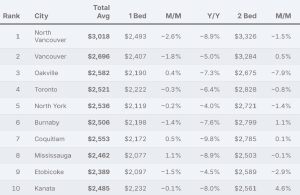
Canada’s six largest cities all reported annual rent declines. Vancouver rents fell 6.8 per cent to $2,692, their lowest since March 2022. Toronto dropped 5.0% to $2,508, the lowest since May 2022. Calgary declined 5.9 per cent, Montreal 3.3 per cent, Edmonton 2.8 per cent, and Ottawa 0.7 per cent. Notably, three-bedroom rents rose in Ottawa (+5.0%), Montreal (+2.5%), and Edmonton (+1.9%), while Toronto’s two-bedroom units fell sharply (-8.3%) and Vancouver’s three-bedrooms dropped (-8.8%).

Shared accommodations also weakened, with average asking rents across B.C., Alberta, Ontario, and Quebec declining 8.3 per cent annually to $914, the lowest in over two years.

For the full report: visit www.Rentals.ca

New companies join B.C. circular construction group

More B.C. companies have joined the Circular Construction Accelerator (CCA) program administered by Light House and backed by a $1-million investment from PacifiCan.

This expanded cohort of 17 strengthens a growing portfolio of ventures transforming how materials are created, buildings are constructed, and resources are recovered. Their innovations span low-carbon and bio-based materials, modular and prefabricated building approaches, deconstruction and reuse solutions, and technologies that are scaling circular practices. 

Through tailored one-on-one advisory support and strategic access to investors, visibility platforms, and industry partners, CCA gives companies the backing they need to strengthen and scale their circular solutions.

Across B.C., organizations are embracing circular and regenerative approaches across design, construction, policy, and material management. This cohort reflects and accelerates that shift, highlighting innovators driving a more resource-efficient, resilient, and low-carbon future for the built environment.

Collectively, the cohort demonstrates Canada’s broader shift toward low-carbon, circular construction, aligned with Build Canada Homes, emerging embodied-carbon requirements for public projects, and new federal green-procurement priorities, their solutions support climate-resilient buildings, reduce waste, and strengthen Canada’s capacity to deliver affordable, sustainable construction at scale.

“We are proud to support this cohort of innovators whose work represents the promise of a more circular and regenerative future. Each company shows what’s possible when we rethink how buildings, materials, and systems can support healthier communities and lower-carbon outcomes. Light House is committed to backing the visionaries who are helping define the next generation of Canada’s built environment,” said Gil Yaron, managing director of Circular Innovation, Light House.


Integrated housing project breaks ground in False Creek

Construction crews have started building a 28-storey mixed-use tower that promises 283 non-market homes, a 44-seat child-care centre, and a new four-bay Firehall 8 in Northeast False Creek.

City officials say the project marks a major push to build more complete communities, which maximize scarce urban space while addressing multiple civic needs under one roof.

The building will offer 283 homes for seniors, families, individuals and people with disabilities at deep subsidy income limits, rent-geared-to-income and lower-end-of-market levels. Of these, 117 units are designed specifically for families.

The project is being delivered through a partnership between the City of Vancouver, the province of British Columbia, via BC Housing, and the Brightside Community Homes Foundation. The city is contributing roughly $47.2 million through a mix of capital funding, fee waivers and land value, while BC Housing is providing $44.8 million through the Building BC: Community Housing Fund, plus $5 million annually for operations. Brightside will operate the housing and is collaborating with M’akola Development Services to complete the project.

The childcare centre, operated by the Vancouver Society of Children’s Centres (VSOCC), is a key component of the City’s Making Strides Childcare Strategy. Meanwhile, the new Firehall 8 will replace the aging and undersized facility in Yaletown and include four apparatus bays, modern training facilities and an energy-efficient design that will meet Passive House standards.

“We are working together to help create homes for Vancouver residents and add services in the community that make life better for everyone,” said Terry Yung, MLA for Vancouver-Yaletown. “This project means more security, more opportunity and a stronger, safer community for everyone.”

Construction at 95 Nelson Street is anticipated to be complete in 2029.

As part of a land transfer agreement with Concord Pacific, funding has been confirmed for three affordable housing projects in False Creek North—including 95 Nelson, 1010 Expo Boulevard and 450 Pacific Street—with construction expected to finish in 2028 and 2029.

This project is part of a broader land transfer agreement with Concord Pacific that includes two other affordable housing projects in False Creek North: 1010 Expo Boulevard and 450 Pacific Street.

Why the demand for commercial disinfection services is here to stay

The commercial cleaning and maintenance industry continues to shift toward a long-term focus on health-centred facility care, and disinfection services have become a foundational part of that evolution. Facility managers and cleaning organizations now view disinfection as a core operational requirement rather than a temporary response to past global events.

The demand has stabilized at levels far higher than anything seen before 2020, and indicators suggest this need will remain permanently embedded in future facility maintenance strategies.

A lasting shift in facility expectations

A widespread mindset shift has shaped this new reality as employees, tenants, and customers maintain higher expectations for the spaces where they work, visit, and interact. People expect clean environments that support their health and instill confidence – and these expectations are influencing facility standards and service contracts. Organizations understand the link between indoor environmental quality, workforce productivity, and business stability and cleaning providers who respond to this shift are positioned to deliver solutions that support modern operational requirements.

Disinfection programs provide consistency under these conditions, and cleaning professionals who include disinfection in routine service plans help their clients maintain healthier environments regardless of day-to-day fluctuations.

Compliance, wellness, and technology strengthen demand

Regulated industries further reinforce the long-term value of advanced disinfection. Health care facilities, pharmaceutical manufacturers, foodservice operators, and educational institutions must comply with strict sanitation and documentation standards set by OSHA, the FDA, the USDA, and state or provincial agencies. These requirements do not soften during economic cycles. Cleaning and maintenance providers that offer specialized disinfection programs play a critical role in helping facilities prepare for inspections and audits.

Many organizations have also expanded their focus on environmental health within workplace wellness goals. Indoor air quality, surface hygiene, and occupant well-being now factor into corporate responsibility metrics. Facility managers recognize that healthy buildings reduce absenteeism, support employee retention, and improve overall occupant satisfaction.

Cleaning organizations that position disinfection within this larger wellness landscape deliver meaningful value that extends beyond basic cleaning.

Brand reputation also drives ongoing demand. A clean facility communicates professionalism and reliability, but a poorly maintained space creates concern immediately. Industries that depend on public confidence, including hospitality, retail, entertainment, and fitness, rely on consistent disinfection to protect customer trust. In fact, according to a Cintas study, 87 per cent of Americans want proof that workplaces and businesses are following a recurring cleaning schedule. Many organizations have overhauled their cleaning programs so that cleaning and disinfecting processes now happen in the presence of visitors.

Routine disinfection acts as a safeguard for both daily operations and long-term brand strength.

The path forward for cleaning and maintenance providers

Facility managers increasingly build disinfection into annual budgets, preventive maintenance plans, and tenant experience strategies. Cleaning organizations embed disinfection into standard service packages rather than treating it as a temporary or optional add-on. This priority remains strong because the service meets ongoing needs that support continuity, safety, and operational resilience.

Cleaning and maintenance providers can strengthen their position in this evolving environment by investing in technician training, enhancing reporting systems, educating clients on the distinctions between cleaning and disinfecting, and aligning their services with broader workplace wellness goals. Facilities that work with providers who understand these priorities benefit from stronger performance, healthier indoor environments, and improved occupant confidence.

The long-term outlook for commercial disinfection remains strong because the service addresses real and lasting needs across all industries. Facility managers and cleaning organizations that adapt to this permanent shift will continue to create safer, healthier, and more resilient environments for the people who rely on them each day.

What should facility managers look for in a disinfection program?

  1. Clear service scope – Ensure the provider outlines specific disinfection tasks, frequencies, and targeted areas.
  2. Trained and certified technicians – Confirm that staff have current training on chemical usage, dwell times, and application methods.
  3. Documented compliance support – Look for providers who can help meet OSHA, FDA, USDA, and state or provincial-level requirements when needed.
  4. Technology integration – Ask about electrostatic sprayers, ATP testing, and digital QA tools that improve accuracy and reporting.
  5. Transparent validation and reporting – Request documentation that verifies when and how disinfection tasks are completed.

You can’t manage what you can’t measure. If a cleaning partner lacks the technology to validate their work or the compliance knowledge to back it up, they’re a liability, not an asset. Don’t settle – demand data, transparency, and proof.

Eddie Khan is the Master Franchise Owner for Anago of Hawaii, part of the Anago Cleaning Systems brand supporting over 1800 franchises across the U.S. and Canada. For more information about Anago of Hawaii, visit www.AnagoCleaning.com/Hawaii.

Unlocking Toronto’s Missing Middle housing

Toronto’s housing landscape has long been defined by two extremes: soaring concrete towers and single, detached dwellings. What remains conspicuously absent is the “Missing Middle” — low- to mid-rise apartments, townhouses, and multiplexes that bridge the gap between high-density towers and suburban-style homes. Despite being recognized as essential for building affordable, livable communities across the GTA, these projects are not advancing at the pace needed to meet the city’s changing population.

The reasons for this gap are complex. At the Buildings Show in Toronto on December 3, 2025, three panelists explored the issue, arguing that systemic barriers have made Missing Middle housing projects difficult to deliver. Financial pressures, regulatory hurdles, labour shortages, and community resistance all play a role, discouraging developers from pursuing smaller-scale housing. The discussion underscored how deeply intertwined these challenges are—and how solving them will require coordinated action from governments, industry, and communities alike.

“Sometimes with smaller projects, there just aren’t the economies of scale,” observed Jordan DeBrincat, Vice President at Altree Developments. “People assume smaller projects mean smaller budgets and lower costs—which is true in the long run. But up front, you still need the same staff, the same consultants, and the same costly steps for what ultimately becomes a smaller pay-off.”

According to DeBrincat, unfavourable market conditions since 2022 have only compounded the problem. Condo prices have declined, squeezing margins and discouraging risk-taking, while rental projects today are generating less income due to slowing rent growth. Although she expects conditions to improve in the near term, profitability remains weaker than in previous years.

Investor appetite has also cooled. Foreign buyer restrictions have reduced capital inflows, while development charges—among the largest upfront costs—hit smaller ventures hardest. The City’s decision to remove deferrals has added further strain, leaving developers with fewer financial levers. Meanwhile, unsold inventory ties up capital, discouraging experimentation with new housing types.

“Zoning and regulatory barriers are contributing to these financial challenges,” said Sean Lawrence, Partner at Kohn Partnership Architects. “Smaller, less lucrative projects are taking far too long to get through the lengthy permitting process before construction can even begin.”

Meanwhile, the city has 14 overlapping building code requirements adding further costs and delays. Although it recently began streamlining approvals, progress has been slow—raising questions about what role the government should play in housing development, whether it’s offering subsidies and tax incentives or directly investing in mid-rise construction.

Sajjad Siraty, General Manager at LCG Residential Builders, argued that stronger incentives are urgently needed.

“Toronto missed an opportunity to embrace modular construction during the condo boom,” he said. “Whilst it is still positive to see government promoting modern methods of construction (MMC), with the current market conditions prohibiting new residential developments, further incentives and subsidies are needed to make modular construction a viable option and to close the innovation gap.”

Labour shortages further complicate matters. Fewer students are entering skilled trades, and expertise is dwindling.

“Major upcoming projects in the GTA will be stretching resources thin, resulting in labour shortages across the industry,” Siraty noted.

Ironically, the smaller projects are often more architecturally complex. According to Lawrence: “Mid-rise, wood frame construction demands specialized skills that can come at a premium. Balancing cost with quality partners is particularly acute in the Missing Middle segment.”

DeBrincat added that developers face additional costs due to infrastructure requirements like underground drainage, and community opposition to changes in density can greatly delay projects, often requiring her team to spend longer periods engaging with stakeholders.

Uptowns

“I understand wanting to protect your neighbourhood, but land in the city is limited and there’s an urgent need for affordable housing,” she said. “It takes countless meetings and assurances that projects will add value—parks, green spaces, community benefits.”

In other words, developers must invest heavily in outreach, even as limited land supply forces mid-rise projects to compete with high-rise towers for scarce sites. While mid-rise builds offer quicker turnaround and smaller footprints, they face logistical challenges in dense areas, where safety and site management add complexity to already tight budgets.

The path forward

In an effort to support greater housing supply and density along the city’s Avenues, Toronto updated its Mid-Rise Building Design Guidelines in December 2024, now allowing buildings up to 14 storeys (45 metres) on streets with a 45‑metre right-of-way. Other updates include removing front and rear angular plane requirements and introducing more flexible, performance-based massing standards. Complementing these reforms, the Mini-Mid-Rise concept by Smart Density enables mid-rise construction on narrower lots, unlocking new opportunities for efficient and thoughtful infill development across Toronto’s main streets.

While these updates mark progress, the three panelists cautioned that deeper reforms are essential to overcome systemic barriers in financing, regulation, labour, and community politics if Toronto truly intends to unlock the Missing Middle housing segment. Achieving this will require:

  • Streamlined zoning and approvals to reduce delays
  • Relief or deferrals on development charges to ease financial pressures
  • Federal and municipal subsidies to support modular and mid-rise projects
  • Investment in skilled trades training to address labour shortages
  • Robust community engagement strategies to build local support

Without these measures, Toronto risks reinforcing its housing imbalance—dominated by investor-oriented towers and single-family homes—while leaving little room for the attainable, family-friendly options most residents need.

Renderings courtesy of Kohn Partnership Architects. For more on mid-rise residential development in Toronto, visit: Mid-Rise Building Design Guidelines – City of Toronto


Arcadis selected to design new TMU residence

Cedar Podium Investment Management has appointed Arcadis as the architect and interior designer for Toronto Metropolitan University’s (TMU) new 21‑storey residence on Bond Street. Once complete, the building will provide 1,382 additional beds, greatly expanding affordable student housing and strengthening TMU’s presence in the heart of downtown Toronto.

Backed by an $83 million investment from the Building Ontario Fund, the new TMU residence will more than double the capacity of student housing, from 1,144 to 2,526 beds. Each suite will include an eat-in kitchen, offering students an alternative to traditional meal-plan living. Residence rates are anticipated to remain significantly below average rental market rates in Toronto.

To support both academic and residential needs, Arcadis also designed the building’s two large auditoriums, lounges, study areas, and creative spaces in partnership with Cedar Podium Investment Management.

“TMU’s newest residence is an excellent example of how we can address the student housing gap in a major city and leverage design and planning to make the most of the site,” said Mansoor Kazerouni, Global Director of Architecture and Urbanism at Arcadis. “From a design perspective, by including auditoriums and study areas, we can truly maximize the Building Ontario Fund investment and create a purpose-built residence that is vibrant, connected, and inclusive.”

According to Kazerouni, the residence introduces a contemporary form defined by two distinct vertical volumes wrapped in a striking bronze-and-white façade pattern.

“The building’s chiselled corner facing the TMU campus, which is accented with the university’s colours, marks a highly visible and deliberate entrance point,” he said.

Excavation is slated to begin in 2026.

Edmonton celebrates top urban design projects

The City of Edmonton celebrated 23 projects with Edmonton Urban Design Awards across nine categories, including a People’s Choice Award winner selected by Edmonton voters.

The award winners vary from open spaces, streetscapes and heritage projects to future plans and housing opportunities. The awards are held every two years.

“The Edmonton Urban Design Awards showcase the best of Edmonton’s design community,” said Mayor Andrew Knack. “Artists, architects, landscape architects, planners and students are accomplishing remarkable things, and these awards highlight not only their talents, but their understanding of how to make architecture and public spaces inviting for Edmontonians.”

The 20th anniversary of the Edmonton Urban Design Awards featured 51 submissions. The winners were chosen by an international jury from Canada and the United States.

Winners in five of the categories are eligible to be submitted for honours from the National Urban Design Awards hosted by the Royal Architectural Institute of Canada and the Canadian Institute of Planners, as well as recognition from the National Trust.

The winners in each category are:

Climate Resilience Award of Excellence
Northeast River Valley Park – Public City Architecture

Climate Resilience Award of Merit
Klondike Park Redevelopment – groundcubed

Civic Design Award of Excellence 

  • Calder Corner Store Public Realm – Green Space Alliance with WSP
  • 105 Avenue (Columbia Ave) Streetscape – AECOM

Civic Design Award of Merit
Centennial Plaza Rehabilitation – MBAC with PFS Studio

Heritage Projects Award of Merit
Fort Edmonton Park – DIALOG with Clark Builders and PCL

Housing Innovation Award of Excellence 

  • The Stacks – Thomas Perl
  • E4c – Dub Architects

Housing Innovation Award of Merit 

  • Point Access Block Guide – Dub Architects
  • Inglewood Lofts – Dub Architects

Housing Innovation Honourable Mention
Lauderdale Terrace – DIALOG (formerly RPK Architects)

Urban Architecture Award of Excellence 

  • Station Park- HSEA Architecture
  • Roundhouse Park at Station Lands – DIALOG with ECOM, ISL and Ledger

Urban Architecture Award of Merit 

  • Coronation Park Sports & Rec. Centre
    HCMA Architecture + Design and Dub Architects (Joint Venture) with FaulknerBrowns
  • Jasper Place Bowl – Dub Architects

Urban Design Plans Award of Excellence

  • Touch the Water Promenade
  • Dub Architects with Stoss Urbanism and ISL

Urban Design Plans Award of Merit
Okîsikow (Angel) Way – Al-Terra with Thurber

Urban Fragments Award of Excellence 

  • A Mischief of Could-Be(S) and UGO – Edmonton Arts Council and Red Knot Studio
  • Lulu Lane – HCMA Architecture + Design with Jamelle Davis, Macha Abdallah and Bashir Mohamed

Urban Fragments Award of Merit
Parallax – Next Architecture with Entuitive Corporation

Student Projects Award of Excellence
Winter City Urbanism: A Winter-First Reimagining of Warehouse Park – Danielle Soneff

Student Projects Award of Merit
Established Neighbourhoods Revitalization Master Plan
Neil Roy Choudhury, Gabriella Dunn, Shirley Le-Huynh and August Milan

People’s Choice Award
Polykar Edmonton – Farmor Architecture


Kalesnikoff announces family leadership transition

Chris Kalesnikoff has been promoted to president and chief executive officer of Kalesnikoff Lumber Company and Kalesnikoff Mass Timber Inc., effective January 1, 2026. Krystle Seed has been promoted to chief financial and strategic services officer. This marks the fourth generation of family leadership.

Ken Kalesnikoff is stepping down as president and CEO, turning his full-time attention to industry advocacy and will remain a principal and a director of Kalesnikoff’s external advisory board.

“I am incredibly proud of Chris and Krystle’s accomplishments, as well as the entire Kalesnikoff team’s, in transitioning the company from a sawmill and lumber focus to one of North America’s leading mass timber companies and now North America’s first fully integrated mass timber modular offering,” said Ken. “Given global economic challenges impacting the forestry sector, and Kalesnikoff’s recent success, this felt like the right time to focus on supporting our industry and to make way for this next generation of leaders.”

Kalesnikoff has operated for more than 85 years, and opened its first mass timber facility in 2020 in South Slocan, which has been expanded twice; and launched North American’s first modular mass timber facility in Castlegar in June. Both facilities use timber from the company’s legacy and foundational sawmill operation in Thrums making Kalesnikoff one of only a handful of fully integrated mass timber facilities in Canada and the U.S.

“Our growth in the last few years has been exponential and we’ve had an opportunity to work with exceptional partners and clients on many important and spectacular buildings including schools, community facilities, multi-story housing and commercial buildings across North America,” said Chris. “I’m grateful to previous generations for this opportunity and to our team as we move forward to expand the use of mass timber and modular prefabricated products and services.”

“Our father, Ken, is a visionary and generous leader, and we are incredibly grateful for his guidance and the opportunities he has created here at Kalesnikoff over the last 50 years,” said Seed. ““We’re excited to lead our exceptional team into the future and to continue his legacy as he shares his many skills with the broader sector.”

Kalesnikoff has 375 employees in the Castlegar region, Vancouver and throughout the province and has completed more than 400 mass timber projects in Canada and the U.S. since 2020.


B.C. prompt payment receives royal assent

As the B.C. legislature wraps up the final week of the fall session, BCCA is very pleased to see Bill 20 receive royal assent and officially become the Construction Payment Act, SBC 2025, c 24. This marks a significant milestone for B.C.’s construction sector.

This achievement reflects decades of consistent, principled advocacy and represents real progress toward a payment system that is fairer, more predictable, and more sustainable across the entire construction sector and the infrastructure and housing it delivers province wide.

VRCA also applauds Bill 20 becoming law.

“We are thrilled that prompt payment legislation has passed this milestone,” said Jeannine Martin, president of the VRCA. “For too long, late payments strained cash flows, delayed payment, and created unnecessary risk throughout the construction supply chain.”

With this step, B.C. joins other Canadian jurisdictions in establishing a modern prompt payment framework. It is a significant step forward, but the association says the work does not end here. The effectiveness of the Construction Payment Act will depend on clear, practical regulations that reflect the realities of the industry, and BCCA will continue working closely with government to ensure the next phase advances promptly and with meaningful input from industry.

“The success of the Construction Payment Act depends on clear, practical regulations that reflect the realities of the industry,” said Martin, “The adjudication process must be efficient, accessible, and easy to navigate to deliver a healthier, more sustainable industry.”

The VRCA looks forward to collaborating with the BCCA, the province, and industry partners to ensure the Construction Payment Act delivers real, measurable impact where it matters most: on the job site.

The Act will not take effect until supporting regulations are enacted, which is anticipated in spring 2026 at the earliest.

Tariff blowback exerts ill force on wind farms

Tariff blowback could cause a lull in wind power production, advocates for Canada’s renewable energy industry maintain. They’re calling on the Canadian government to exclude wind turbine towers from the list of imported steel-based products that will be subject to a 25 per cent tariff as of Dec. 26, 2025.

While voicing support for the Canadian steel industry, the Canadian Renewable Energy Association (CanREA) argues that there is currently inadequate domestic manufacturing capacity to supply critical infrastructure for a burgeoning number of new wind farms. Project proponents that currently have new generation under development and/or are preparing to respond to imminent deadlines for energy procurement processes in various Canadian jurisdictions have already secured supply chains that often involve offshore tower manufacturers. There’s now a risk purchasers will have to pay a 25 per cent premium on their contracted prices to take delivery of inbound products.

“Imposing steep tariffs on turbine towers risks derailing projects and, in turn, jeopardizes Canada’s ability to power its future economy on time,” says Vittoria Bellissimo, CanREA’s president and chief executive officer.

Prime Minister Mark Carney announced the measure last week as part of a package of supports for Canadian steel and lumber producers. The new tariff will apply on the full value of designated imported products that are primarily derived from steel and can be readily sourced from manufacturers based in Canada. The full list of products slated for tariffs has not yet been released, but background information released along with Carney’s announcement identifies seven categories of imports in line for the new 25 per cent surcharge.

“The initial, carefully selected list is expected to apply to over $10 billion in steel derivative imports. It will cover derivatives for which steel content is a large portion of the full value of the product,” the backgrounder states.

Wind turbine towers are flagged in the “structures” category, which also includes prefabricated buildings and bridges. (Other designated product categories are also pertinent for buildings and facilities management, including: doors and windows; and metal-framed seating and certain metal furniture.)

“Whether we’re building bridges, wind towers or the new homes that people need, we should be using the steel made right here in Saskatchewan and across Canada by our own world-class steelworkers,” Buckley Belanger, Canada’s Secretary of State for Rural Development, observed during an address in Regina last week.

However, for now, there is just one domestic supplier of wind turbine towers, based in Quebec. In 2023, the Canadian International Trade Tribunal decreed that Chinese- manufactured wind towers should not be construed as harmful dumping west of the Ontario-Manitoba border.

CanREA is particularly advocating for tariff exemptions in scenarios where overseas suppliers have already been contracted, or for project proponents approaching the imminent Dec. 18 deadline for a major energy procurement in Ontario. “The companies designing multi-million-dollar projects cannot go back to the drawing board within this short window of time,” it submits.

Prioritizing Aligned Boards, Diffusing Financial Conflicts, and Building Long-Term Relationships

The impact of industry regulations on property management has evolved over recent years. While regulatory and reporting requirements have improved professional standards, they have also added costs and administrative burdens to management companies and the buildings they oversee. Professional development is of key importance for condominium managers, but it also comes at a cost.

For management companies, staying competitively priced is a delicate balance. When reviewing annual contracts, Boards can often underestimate the true costs of supporting building systems and infrastructure. Older properties often face unforeseen and unplanned expenses. Preventative maintenance is preferable to reactive repairs but requires adequate funding.

Effective budgeting means analyzing the previous years’ expenses while removing one-time costs and adding inflation factors, plus any maintenance items the board wants to pursue. When corporations run deficits, they can either build the deficit recovery into the next budget via an increase in fees or implement a Special Assessment. The benefit of a Special Assessment is that the fees are not affected year-over-year. The downside for some boards and owners is that the cost of a Special Assessment can be difficult to pay, so some boards prefer the cost to be built into the next budget.

Special Assessments are often necessary when prior boards have been reluctant to increase fees sufficiently or budgets being too low for needed expenditures.

Board Responsibilities and Conflict

It is important that Boards make decisions for the entire community, which can be challenging when individuals have opposing priorities. Common and costly maintenance items that boards often underestimate include repairs to the mechanical systems and HVAC equipment, and roofing. Other expensive items like concrete sealing, brickwork, and repointing can also be a shock to an inexperienced board. Most conflicts between boards of directors and owners revolve around maintenance, repairs, capital improvements, and how money is spent.

Townhomes

An authoritative and experienced voice in the industry, Ryan Stone, President and CEO of Summa Property Management, has seen these issues firsthand.

“Having boards with aligned priorities who understand their fiduciary responsibilities leads to better outcomes,” says Stone. “When dealing with difficult conversations around finances, it’s important to stay calm and diffuse any uncomfortable situations.”

“It’s a walk, rather than a run,” he says.

Ryan Stone’s own career in property management began in 1984. After taking a work-study course in property management at George Brown College, Stone worked in residential property management for a couple of years before managing several shopping centres. He spent fifteen years as a director for a property investor before launching Summa Property Management in 2005.

He says some policies stay consistent.

“Having an odd number of board members (3 or 5) is important for effective voting,” affirms Stone, “and it’s important to review multiple quotes and take direction from the board with our input to help demonstrate the true value of necessary work.”

Modernization and Efficiency

To counterbalance the cost of administrative fees, management companies – including Summa Property Management – have looked to technology to streamline processes. While tech investments can be expensive, they save time and improve efficiency.

As an example, advancements in accounting software now eliminate the need for physical cheques through electronic signatures and online invoice approvals.

“This streamlines the payment process by reducing paper and time spent on printing cheques, collecting signatures, and mailing,” explains Stone.

Additionally, pre-authorized payment (PAP) systems have significantly reduced administrative time compared to processing physical cheques, and the financial statements can be customized to meet the individual boards’ needs.

“Electronic payments benefit both the management company and the ‘younger people’ today who do not use cheques,” he acknowledges.

Outstanding Service and Client Retention

Summa Property Management takes its name from “Summa-Cum-Laude,” reflecting a commitment to superior service. Specializing in smaller boutique properties, the company prioritizes long-term relationships with both clients and staff.

“Long-term relationships provide continuity and better service,” he says, noting that sometimes his management reports will even contain humorous elements to counteract the “dryness” of the report’s proceedings and to see if the report is being actively read by board members.

Stone’s approach to property management sees him supporting regular communication with boards about all property concerns, not just those needing approval. He stands by open communication and says this is key to a successful working relationship.

“We keep a stable team with long-term employees who currently have tenures of up to 14 years with the company. This ensures they understand the requirements of each property.” He affirms that employee turnover can be disruptive to operations.

The company’s hands-on, communication-focused approach has contributed to client retention and satisfaction. In fact, some of Summa’s clients have been with the company since 2005 when the company first began, something which Stone is immeasurably proud of.

“We may not charge the least — or the most — but we try to keep owners and boards happy, which results in us being kept long-term. We focus on results rather than hours worked,” he summarizes.

Summa Property Management offers management services to residential rental, commercial, and condominium corporation management to properties throughout the GTA. To learn more, visit www.summapm.com.

Summa


WoodWorks BC appoints executive director

Annabelle Hamilton has been appointed executive director of WoodWorks BC.

Since joining WoodWorks in 2023, Hamilton has brought exceptional vision, technical depth, and industry experience to the team. Her leadership has helped advance the adoption of wood construction in British Columbia, strengthen performance on key market-growth indicators, and build critical partnerships across the development and municipal sectors.

With a background in real estate development and project delivery across international markets, Hamilton combines hands-on project experience with strong strategic insight. Her work supporting developers with real-project financial data has strengthened the economic case for mass timber and contributed to continued market confidence in wood solutions.

Hamilton’s dedication to innovation, collaboration, and industry advancement has made her a trusted voice in B.C.’s construction ecosystem and will lead WoodWorks BC in this next chapter.


ISSA Hygieia Network honours award recipients

The ISSA Hygieia Network is a community dedicated to advancing the careers of women in the global cleaning industry by providing education, mentoring, networking, and support. By providing the programs, tools, and support, they are helping to enable all women in the cleaning industry to accelerate their careers and achieve their full potential.

On November 12, 2025, the community came together to celebrate empowering women in the cleaning industry at the ISSA Hygieia Network Awards Reception at Mandalay Bay Resort and Casino Convention Center.

The evening’s honourees included:

  • Caitlin Lockett (Sales Enablement Specialist, Avision): Hygieia Network Scholarship Winner
  • Meghan Becker (HR Manager, Network Distribution): Hygieia Network Coaching Grant Recipient
  • Wendie Manion (Vice President Strategic Accounts, Avision): Hygieia Network Coaching Grant Recipient
  • Ashley Butler (VP & General Manager, Georgia-Pacific LLC): Rising Star of the Year
  • Alan Tomblin (President & CEO, Network Distribution): Ally of the Year
  • Caroline Bane (Senior Director, Merchandising BradyPLUS): Member of the Year
  • Nicole Bernardo (Fractional Chief Operations Officer, Cornerstone Virtual Partners. Inc.): Mentor of the Year
  • GOJO, Makers of PURELL: Company of the Year

The honour of International Member of the Year went to Lori Armitage, Canadian Sales Manager
at Essity, who was recognized for her outstanding leadership, dedication, and advocacy for advancing women within the cleaning and facility solutions industry.

Lori’s commitment to mentorship, professional development, and fostering opportunities for women has made her a respected and influential voice across Canada and the industry as a whole. Throughout her career, Lori has championed initiatives that inspire, empower, and elevate individuals at all stages of their professional journey. Her recognition at the Hygieia Award Night underscores the meaningful impact she continues to make, both within her organization and across the global cleaning community. The award serves not only as a tribute to her achievements but also as an inspiration to others striving to create a more inclusive and supportive industry.

For more information, please visit this link.