


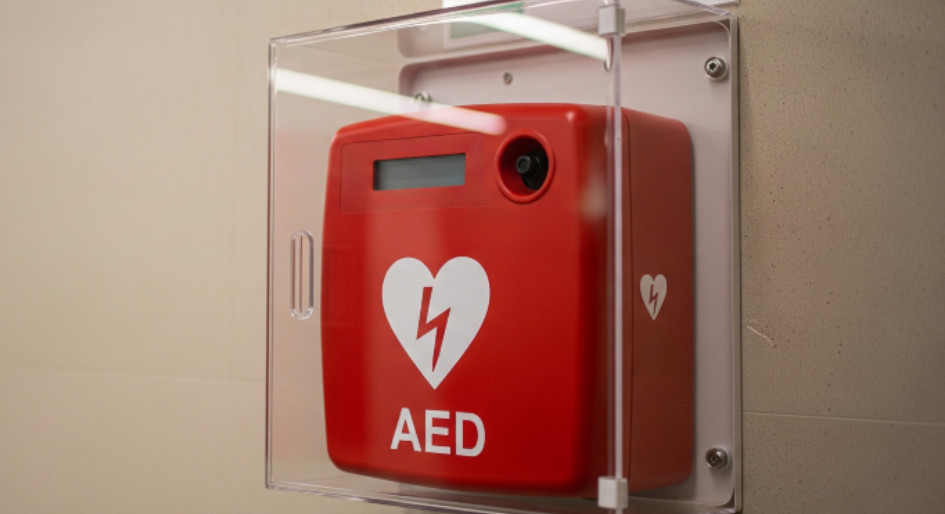
Heightened safeguards could help improve Toronto’s statistics for cardiac arrest survivability and balance out the risk profile of high-rise and low-rise dwellings. Toronto Council will consider a call to make automated external defibrillators (AEDs) more widely available in private high-rise residential buildings during its upcoming December meeting.
If Councillor Shelley Carroll’s motion is adopted, City staff will be asked to investigate and report back on possible voluntary or regulatory approaches to drive installation of what is described as “basic life-saving equipment”, given the city’s densification trends and aging population.
Carroll cites a 2016 study, published in the Canadian Medical Association Journal, which uncovered statistically significant lower survival rates when cardiac arrests occur in the higher reaches versus the lower levels of a multifamily building. That varies from a 4.2 per cent survival rates for occurrences below the third floor to 0.9 per cent above the 16th floor. Other statistics show that AEDs are deployed less frequently outside hospital scenarios in Toronto than in other peer cities, such as Seattle, that register higher survival rates.
“The City has multiple potential avenues to address this issue, including regulatory measures, fiscal incentives to support AED installation, and advocacy to the provincial government for Building Code amendments,” the preamble to Carroll’s motion states.
She suggests staff should be given until the summer of 2026 to conduct a comprehensive review, in consultation with both the City’s Buildings department and Medical Officer of Health, before making recommendations for Council’s future consideration. City Council’s Planning and Housing Committee has endorsed the motion and it has also drawn supporting letters from the Heart and Stroke Foundation and a noted researcher on cardiac arrest response, Dr. Steven Brooks, an emergency physician and professor with Queen’s University’s department of emergency medicine.
“Toronto has a rare and important opportunity to lead internationally on equitable, evidence-driven cardiac arrest prevention and response for residents living in vertical, high-density communities,” Brooks submits. “The presence of a nearby AED can mean the difference between a survivable medical emergency and an irreversible tragedy. In cardiac arrest, every minute without CPR and defibrillation reduces survival by approximately seven to 10 per cent.”