




Articles Archive - Page 52 of 928 - REMINET
REMI

2026 cleaning trends: workforce supply, demand and expectations

The cleaning labour market has changed dramatically in the past five years, and that has redefined the industry overall. Many of those changes will continue to evolve in 2026, while others will begin to take on a new shape.

Looking ahead, the cleaning industry is facing a similar tight labour market that has defined the industry for years. As demand for cleaning and janitorial workers continues to rise across sectors from healthcare and hospitality to logistics and manufacturing, the available workforce is shrinking. Likewise, the growing gap between what employers need and what workers expect has become larger.

But there’s light at the end of the tunnel. Cleaning is gaining recognition as a skilled profession, and new technology is making the work easier and more efficient. These trends point to steady growth, with the industry on track to reach $800 billion by 2035.

Cleaning as skilled work

In 2026, there will be a further shift toward recognizing cleaning as skilled work, rather than just a temporary job. From compliance requirements to specialized environments like data centres, biotech labs and electric vehicle (EV) plants, cleaners are gaining training and experience that open doors for advancement. That means workers can earn more, achieve stability, and build a solid career path. Going forward, companies that offer growth opportunities for their teams will be the ones to retain talent.

Better technology adoption

Many platforms are making a difference by simplifying the day-to-day logistics that used to slow companies down. Quick job postings, instant communication with workers, and clear scheduling remove friction for both employers and employees are a few of the advantages of today’s technology. But technology isn’t just a tool; it’s a way to make shifts easier to fill, keep workers engaged, ensure everyone knows what’s expected, and increase productivity.

Fewer workers, more options

The fallout from the demise of the COVID-era labour pool in 2020 to 2021 is still evident today, as many workers who left five years ago – deciding to shift industries, go into early retirement, or for other reasons – have not returned. Immigration slowdowns and fewer young people entering hourly service jobs have made replacing those who left even harder, and that means competition for dependable cleaners is fierce, and retention is more important than ever.

For employers, the old playbook (offering hourly wages and minimal benefits) is no longer enough. Workers now have more options than ever. Cleaning companies that want to fill shifts will need to meet workers where they are, not where they were five years ago.

Quality and compliance will raise the bar

From building certifications to sanitation logs, compliance is shaping how cleaning labour is being organized and tracked. Facilities want consistency, accountability, and verified service, and that pressure trickles down to every cleaner on every shift.

At the same time, new sectors are fueling demand. Data centres and biotech facilities all require specialized cleaning teams with training that goes beyond mops and vacuums. That means more upskilling and a clearer path for workers who want to build careers in the field, rather than just filling the hours.

Worker expectations in 2026

Pay still matters most, but it’s not the whole story. Workers want stable schedules, clear communication and respect for their time. Many also expect training, experience, and opportunities to move up and get ahead. Flexibility with scheduling, location, or facility type has become a major factor in where people choose to work.

For employers, that means treating recruitment like retention. Actions like quickly responding to applications, offering transparent pay rates, and practicing easy onboarding can make or break hiring success.

In the coming years, the cleaning industry will likely see an increase in technology that meets workers where they are, such as apps and platforms that facilitate scheduling, automate pay, offer quick messaging, and provide clear job descriptions. These advancements can help eliminate some of today’s common labour challenges.

A positive approach to next year

The cleaning labour outlook for 2026 is straightforward in concept, but challenging in practice: there are fewer available workers, higher client demands, and shifting worker expectations. Companies that stay competitive will need to act fast, communicate clearly, and match the right workers to the right shifts.

Cleaning will always be essential work, and the companies that treat it as human work first – and connect with the right people – will have an advantage in the year ahead.

Archie Heinl is President of JaniJobs, an online platform and app that helps cleaners, companies, organizations and property owners connect. Learn more at www.janijobs.com.
Alliance team complete for UNHBC tower project

PML Professional Mechanical Ltd. and Houle Electric have been named the preferred mechanical and electrical non-owner participants (NOP) for the University Hospital of Northern British Columbia (UHNBC) Acute Care Tower project.

This milestone marks the full formation of the alliance for the UHNBC Acute Care Tower. The alliance contract is a collaborative approach to project delivery that brings together the owner, designers, and contractors as one integrated team under a single agreement.

Unlike traditional contracting methods, the alliance contract emphasizes shared responsibility, transparency, and collective decision-making. All partners work toward common goals, share risks and rewards, and commit to resolving challenges jointly, ensuring alignment and accountability from the very beginning. This approach fosters innovation, efficiency, and trust, which are critical for delivering a project of this scale.

“This is a significant step for the UHNBC Acute Care Tower project and for patients and families across Northern BC,” said Minister of Health Josie Osborne. “With the NOPs now selected, we’re moving closer to providing the timely, high-quality health care services that communities throughout the North deserve and rely on.”

The next phase of the procurement process will see the full alliance team, Northern Health, EllisDon, and DIALOG, working alongside Infrastructure BC as they enter the Alliance Development Phase.

During this period, planning and design will advance to prepare for key milestones: The Northern Interior Health Unit relocation in spring 2026, the start of tower construction in fall 2026, and the anticipated opening for patients in winter 2031.


Cleaning Innovation in Property Management

As Canada’s rental landscape evolves, purpose-built rental developments are transforming what residents and investors expect from property management companies—especially in markets like Toronto, where many new projects are designed to rival top-tier condo communities,

Yet amid the buzz around amenities, sustainability, tenant experience, and cost control, one operational cornerstone often remains underestimated: the cleaning and maintenance partner. More than ever, this quiet force plays a pivotal role in shaping resident satisfaction, asset longevity, and brand reputation. It shouldn’t be treated as an afterthought.

Today’s forward-thinking property management companies are redefining operational excellence by partnering with cleaning and maintenance providers that fuse innovation with human expertise. In this new era, cleanliness is just the beginning. What truly matters is accountability, transparency, financial stewardship, and data-driven decision-making.

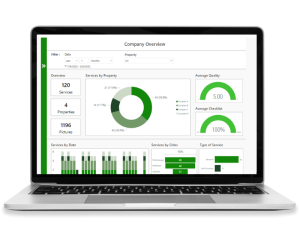
As managers increasingly demand real-time visibility into service execution—whether it’s suite turnovers, corridor upkeep, or deep cleans between tenants—leading providers are responding with proprietary technology that tracks every task, while empowering frontline teams to uphold consistently high standards.

This is the future of smart service delivery: a seamless blend of people and platforms. Intelligent systems provide proof of performance, operational efficiency, and actionable insights. Skilled professionals bring care, context, and consistency. Together, they ensure that what’s promised is precisely what’s delivered—every single time.

“Owners increasingly expect formal, accurate, and accessible reporting from their property management partners. Technology-enabled service delivery makes that possible.”

Owners are asking for more visibility

Across Canada, ownership groups and REITs are setting a higher bar. They now expect formalized, accurate, and easily accessible reporting on all building operations. From janitorial schedules to maintenance tasks, they want documented evidence that services are being executed properly—and the ability to review that information anytime.

This shift has put new pressure on management firms to deliver proof of delivery and performance analytics. Tech-enabled cleaning partners meet this demand by providing time-stamped reports, photographic verification, and portfolio-wide dashboards. These tools not only assure owners that standards are being met, but also simplify compliance, budgeting, and audit readiness.

Purpose-built rentals demand a new standard

In purpose-built rental communities, the service experience is an extension of the brand. Residents expect hotel-level cleanliness, proactive maintenance, and seamless communication. When cleaning services are powered by integrated technology, managers gain visibility into scheduling, completion rates, and quality control in real time—enhancing both the resident experience and operational reliability.

Since these assets are designed for longevity, consistent quality over time becomes a strategic investment. Innovative cleaning partners help maintain that consistency across an entire portfolio, ensuring every property—new or established—meets the same high standard.

The competitive edge for property managers

iRestifyIn today’s market, property management companies that can demonstrate operational transparency to ownership will lead the pack. Those with data-backed service insights can make smarter staffing, budgeting, and maintenance decisions—and stand apart when competing for new management mandates.



Partnering with a company that combines proprietary technology with human excellence isn’t just efficient; it’s a strategic differentiator. It shows that your portfolio is managed with the same precision and accountability applied to financial performance.

A leading example in the field

Across North America, companies like iRestify have pioneered this model—developing in-house technology that provides live visibility into service delivery while supporting it with professional teams on site. Their approach proves that innovation and people can work hand-in-hand to elevate service quality and transparency across portfolios.

As the property management industry continues to evolve, one thing is clear: technology alone isn’t enough. The future belongs to companies that understand that when exceptional people are empowered by intelligent tools, the results redefine what “clean” really means.

For more information, visit www.iRestify.com

Heidi Nesbitt named HCMA associate principal

HCMA announced that Heidi Nesbitt has taken on the role of associate principal at the firm. Her focus will be on housing and spaces that support recovery, wellbeing, and healing for vulnerable populations, families, and elders.

The firm says Nesbitt brings a powerful blend of curiosity, care, and experience to her work. “Whether listening deeply to people who have been historically excluded from decision-making, or pushing for more meaningful engagement practices, she helps shape processes that empower and connect.”

Nesbitt first joined HCMA in 2006. She became a registered architect and helped to deliver the award-winning UniverCity Childcare Centre, West Vancouver Community Centre, and Whistler Public Library. In 2010, she left to build her practice through roles at Urban Arts, Local Practice, and as a principal with Human Studio. At each of these firms, her work championed social and environmental outcomes that put people first and she developed deep experience in designing homes for historically underserved populations.

Since returning to HCMA in late 2024, Nesbitt has made swift, significant contributions to Housing and First Peoples work. Current projects include Community Housing in Sts’ailes, Upper Stá7mes Hiyam Housing, and the Soonats’ooneh Health Centre. She is also working on the Urban Indigenous Youth and Education Centre in Vancouver, a transformative, Indigenous-led urban hub that will bring together education, culture, housing, wellness, and childcare under one roof.


Vancouver approves abandoned buildings by-law

The City of Vancouver approved the Abandoned and Vacated Buildings By-law (AVBB).

Poorly maintained vacated buildings can become fire hazards, attract unsafe activity, and remove potential long-term homes from Vancouver’s housing stock. Once a building falls into disrepair, it often requires significant, costly upgrades or demolition.

The new by-law will help prevent buildings from becoming derelict and protect public safety. It will also reduce the burden on city resources and ensure sites can return to housing use more efficiently.

“Neglected, vacant buildings are more than an eyesore, they threaten the safety, health and well-being of nearby residents and anyone who might take shelter inside,” said Saul Schwebs, chief building official. “The AVBB provides the tools we need to secure or remove unsafe buildings, uphold community standards, and protect potential long-term housing units in Vancouver.”

Thoughtful solutions to seasonal stressors

The holiday season brings joy and community spirit, but for multi-residential apartment owners, it also presents unique challenges that require thoughtful solutions. From decorations and logistics to noise control and snow removal, the goal for property managers is to foster festive cheer while maintaining safety, courtesy, and seamless operations.

“As a fully inclusive rental housing provider, our goal is to ensure the holiday season is one where every resident feels included, celebrated, and supported,” said Izabela Konopka, Portfolio Director, Daniels Gateway Rental Communities. “We recognize the importance of creating an environment where diverse traditions and celebrations are honoured. Through inclusive holiday décor and programming—supported by local caterers and community organizations—we ensure all residents feel represented and welcome.”

Operational excellence is especially critical during the busy holiday season. To achieve this, Daniels Gateway prioritizes proactive communication around holiday hours, offers the support of on-site superintendents, and provides SMART Parcel delivery systems across its purpose-built rental communities for secure, convenient package handling during peak delivery periods. The organization also leads resident-focused initiatives, including annual food drives, and offers bookable amenity spaces where residents can gather with friends and family to celebrate.

In keeping with Daniels’ effective, inclusive strategies, here are 5 tips to help property managers navigate the hectic holiday weeks ahead:

  1. Make décor inclusive.
    Holiday decorations should welcome all residents, regardless of cultural or religious traditions. Neutral, seasonal themes—such as winter greenery, lights, or snowflake motifs—create a warm atmosphere while respecting diversity. LED lighting reduces fire risk and energy costs, while outdoor touches like wreaths or planters enhance curb appeal. Safe decorating contests for doors or balconies encourage resident participation and build community spirit.
  2. Plan logistics with foresight.
    The season brings a surge in package deliveries, making secure lockers or package rooms essential to prevent theft and clutter. Increased guest traffic calls for reminders about visitor policies, parking rules, and noise expectations. Sharing holiday office hours ensures residents know when staff are available, while preparing heating, plumbing, and snow removal systems in advance helps avoid costly disruptions.
  3. Prioritize courtesy and harmony.
    Holiday gatherings often mean extra noise. Reinforcing quiet hours and encouraging communication between neighbours helps maintain peace. Shared spaces such as gyms, laundry rooms, and lounges see heavier use, so etiquette reminders are key. Parking diplomacy is also vital—guest spots should be clearly marked, and fire lanes kept unobstructed to ensure safety and fairness.
  4. Strengthen community bonds.
    Seasonal events like hot cocoa socials, toy drives, or charity fundraisers foster goodwill and connection. Recognizing multiple traditions through décor or newsletters ensures inclusivity and makes residents feel valued. Communication channels—bulletin boards, apps, or emails—can share updates, safety tips, and event invitations, keeping everyone informed and engaged.
  5. Stay ahead with preventive maintenance.
    Winterizing systems, clearing snow and ice, and testing alarms reduce emergencies and keep residents comfortable. Framing notices as friendly reminders rather than strict warnings helps residents feel respected. Transparency about seasonal challenges—such as utility costs or service schedules—and inviting feedback builds trust and strengthens relationships between management and residents.

By anticipating challenges and applying thoughtful solutions, apartment owners and renters can balance festive cheer with safety and order. That way the holidays become not only a season of celebration, but also an opportunity to demonstrate attentive management, ease seasonal stressors, and strengthen community spirit.

Izabela Konopka is the Portfolio Director at Daniels Gateway Rental Communities. 


Vancouver approves space-saving stair designs

Vancouver City Council approved new space-saving stair designs that will create more flexible apartment layouts, improve access to natural light and fresh air, and make it possible to build homes on smaller sites.

They were developed following a comprehensive review of the latest research and consultation with the Vancouver Fire Rescue Services, industry experts and building officials from other municipalities. The design also prioritizes the safety of residents, visitors and first responders.

“During a fire or emergency, stairwells are the critical lifelines for residents and first responders,” said Karen Fry, fire chief and general manager of Vancouver Fire Rescue Services. “The two new stair design options maintain a good level of protection needed to keep those pathways safe while supporting new housing options for Vancouver.”

As approved additions to the Vancouver Building By-law (VBBL), the new designs can be used in buildings up to six storeys and include:

  • External single egress stairs: A single exterior stair and corridor that maximizes space efficiency, enabling more housing options such as family-sized, multi-bedroom units on smaller lots in low-density neighbourhoods.
  • Scissor stairs: Two staircases within a single enclosure, separated by fire-proofed walls, providing two pathways while saving space. A key improvement removes the minimum distance requirement between exit doors, making it more space efficient.

Amendments to the VBBL are expected to be enacted at the next council meeting on January 20.

RHF announces Barrier Buster Grants Program

The Rick Hansen Foundation (RHF), RBC and RBC Foundation are awarding forty grants of up to $40,000 to municipalities, schools and community groups across the country for accessibility improvement projects.

RBC Barrier Buster Grants Program aims to remove barriers for people of all ages and abilities. The announcement coincided with the 40th anniversary of Rick Hansen’s Man In Motion World Tour and the International Day of Persons with Disabilities on December 3, 2025.

“Accessibility isn’t just about removing physical barriers — it’s about creating opportunity, independence, and belonging for everyone,” said Rick Hansen, the RHF’s founder. “Over the past four decades, RBC has been a steadfast champion of accessibility and inclusion in Canada, and we are incredibly grateful for their ongoing leadership and commitment. Together, we’re continuing the spirit of the Man in Motion World Tour by creating awareness of the potential of people with disabilities and helping realize it by identifying and removing barriers.”

One in four people in Canada have a disability and that number continues to grow as the population ages.

“Over half of buildings in Canada are either not accessible or only partially accessible,” added Andrea Barrack, senior vice president, sustainability and impact, at RBC. “Through the RBC Barrier Buster Grants Program, RBC and RBC Foundation are proud to support the Rick Hansen Foundation in equipping communities with the tools and resources needed to help reduce physical barriers, enhance accessibility and foster greater inclusion in communities across Canada.”

Potential projects may include:

  • Accessible play spaces;
  • Improved parking and exterior access;
  • Interior accessibility improvements for community facilities and workspaces;
  • Elevators and lifts;
  • Accessible washrooms and showers;
  • Accessible kitchens, cafeterias and eating spaces;
  • Emergency response and safety improvements; and
  • Improvements to parks, trails and marine access

Grant applications are open until March 15, 2026. Forty recipients will be announced in May/June 2026 during National AccessAbility Week.

Accessibility-first focus strengthens communities

Accessibility is frequently sidelined during building and public-space design, with key features added long after construction is completed. This approach reinforces the notion that such accommodations are only relevant for people with disabilities. However, advocates with lived experience argue that integrating accessibility from the outset benefits everyone and creates communities where all individuals can fully participate and thrive.

This conversation gained new momentum with the announcement of 40 accessibility grants from the Rick Hansen Foundation (RHF), RBC, and the RBC Foundation. The grants, unveiled on December 3, 2025, coincided with the International Day of Persons with Disabilities and the 40th anniversary of Rick Hansen’s Man in Motion World Tour. In a related webinar, hosted by RHF, sector leaders discussed the hidden barriers still present in everyday spaces and the sustained effort required to dismantle them.

Hidden barriers and spotty inclusion

Dr. Darda Sales, a Paralympian gold and silver medalist, World Champion swimmer and wheelchair basketball player, and RHF Ambassador, shared how inconsistencies in the built environment undermine true inclusion and defeat the purpose of accessibility, which is to help everyone—whether navigating in a wheelchair or carrying bags.

Based on her personal experiences, a designated accessible parking spot might exist, but obstructed curb cuts make it unusable. A makeshift ramp at a motel might lead to a room where the hair dryer is out of reach, even as grab bars stand ready by the toilet. She has also observed powered doors being switched off in restaurants, with managers explaining that too many people were using them.

“The inconsistency of accessibility features makes it difficult for people to feel valued and included in these environments,” she said. “Often, it’s on the individual who requires the accessibility features to figure it out and adapt.”

Even well-designed spaces can present hidden challenges, added Mary Ann Bent, manager of accessible navigation and way-finding solutions at CNIB Access Labs. Toronto’s Martin Goodman Trail, for example, is wide and open, but its edges are hard to detect for someone who can’t see them. Bike paths, uneven shoreline sections, and other obstacles make an otherwise vibrant area difficult to safely navigate. “Having consistent detectable features doesn’t mean everything has to be the same,” she explained. ”Variety is good.”

Meanwhile, other features that appear functional can fall short. Mia de Freitas, director of accessibility enablement at RBC, said poorly places sensors make automatic doors hard to trigger. Lighting that creates a perfect ambiance can also pose barriers, such as flickering lights that disorient users.

These small oversights can have a big impact on usability. As Christopher Sutton, Accessibility Commissioner of the Canadian Human Rights Commission, emphasized, designing accessibility from the start opens up opportunities for innovation and is more affordable in the long-term.

“We all know that accessibility is a smart investment for aging populations, temporary injuries and people with changing abilities,” he said. “However, there’s a myth that accessible design is expensive, complicated and unattractive.”

Accessibility-first planning equals affordability

One area where early, thoughtful design is particularly critical is washrooms, observed Bent. Beyond wheelchair accessibility, restrooms must also accommodate invisible disabilities, such as irritable bowel syndrome, which require privacy and easy access to sinks. Caregivers also need features such as hydraulic adult change tables to safely assist individuals with mobility challenges. Planning these spaces from the ground up helps avoid the higher costs of retrofitting them later.

Teale Phelps Bondaroff, a councillor for the City of Saanich in British Columbia, highlighted how accessibility can intersect with broader affordability challenges. For example, the cost to install an elevator in Canada costs roughly three times higher than in European countries, according to a 2024 report from the Center for Building in North America. As a result, developers install fewer elevators in Canada, just four per 1,000 people compared with more than 20 in countries like Switzerland, Spain, and Greece.

Earlier this year, Phelps Bondaroff brought a motion forward, calling on the provincial government to adopt European standards that favour smaller cabins for buildings under six storeys. While these elevators can feel cramped, they cost less and developers are more likely to install two, This ensures people aren’t stranded if one elevator malfunctions.

“They take up less space, so housing becomes more affordable,” he pointed out. “Something as small as getting the cost of elevators down by 40 per cent can also help us tackle the housing crisis.”

Dr. Paul Clark, chair of the accessibility advisory committee at the City of Kelowna, concurred that accessibility-first design creates future value “Just like a residential tower where people might retire, if the units are accessible, you don’t age out of them and have to move. This is an investment, not an expense.”

Sutton explained that such a mindset is part of a larger critical mandate to involve people with disabilities into every decision-making conversation regarding policies, services, and design so that accessibility is meaningful, practical and truly inclusive.

Embedding the lived experience

Design decisions should budget for people with lived experience, urged Bent. For example, the high cost of crosswalk lights requires input from a wide range of people. But those who can’t afford to volunteer are often excluded. “Sometimes they can’t show up and give their opinion because it’s a burden,” she added. “While a small cost, compensating input ensures ‘nothing about us without us’ is upheld.”

Making progress requires consistent advocacy, which often feels frustrating. As Clark noted, the City of Kelowna offers an accessibility button on its website for residents to report concerns, but many in the disabled community no longer use it due to a lack of response.

Meanwhile, there is also a need for more compassion regarding past inequities. “Infrastructure sticks around for 50 to 80 years and we shouldn’t blame or embarrass anyone,” he said. “It’s about moving forward with a positive attitude.”

As these efforts continue, Sutton acknowledged that while much work remains, it is crucial to recognize the positive contributions within communities and how ongoing conversations will drive inclusion for people of all abilities.

“Our choices today shape future inclusion, economic participation, and social connections for generations,” he said. “Accessibility isn’t a checkbox, but it’s a human-centred approach supporting dignity, independence, and support for all.”

Proactive post-holiday office cleaning practices

Holiday parties, extra visitors, and even office closures can leave workspaces in need of a little TLC before the new year begins. Studies show that employees who work in a clean and organized office can be up to 15 per cent more productive, so focusing on starting 2026 off on the right foot can benefit your business.

Reorganize your space

Often holiday décor stays up over the holidays, and leftover party food remains in the fridge as parties end and employees spend days away from the office. Start by taking down any remaining holiday décor, cleaning out the fridge, and rearranging any office furniture that has been moved. Check the entrance matting to ensure it is fresh and clean, replacing any wet or dirty mats. Once everything is in its rightful place, you can focus on cleaning and sanitizing the space.

Kitchens and restrooms

These two areas tend to receive the most traffic during the holiday season and are likely to require some extra attention. Look for any staining or damage, and once addressed, tackle the sanitization. Disinfect all surfaces, paying special attention to high-touch surfaces like door handles, appliances, and counter areas. Empty all garbage and recycling, disinfect the bins, and ensure that they are located in the best areas for use next year.

Purge and remove clutter

This is a great time to get rid of anything you no longer need and start 2026 uncluttered. Test and remove old or inoperative technology and dispose of it properly. If there are desks that are no longer being used regularly, clean and dust the areas so they stay clean when there’s little to no traffic. Go through your cleaning carts, equipment and supplies, too, reorganizing your storage area for maximum efficiency. Replace any tools where needed, throw away any expired products, and replenish inventory to ensure that everything is functional and up to date for the new year.

Deep cleaning

If you did not do an end-of-the-year deep clean, take the opportunity to clean the windows, upholstery, furniture, scrub the grout, move kitchen appliances, dust fixtures, and shampoo carpeted floors. These tasks can stir up dust, so try and complete these tasks at night or before employees return to the office.

Starting 2026 off on a successful note means keeping employees safe and healthy, while offering a space that promotes productivity in the new year and beyond.

Construction underway at 3201 Highway 7

Graywood Developments, in partnership with Phantom Developments, has commenced construction on a 55-storey purpose-built rental development located at 3201 Highway 7 in Vaughan, Ontario. This initiative marks the second collaboration between the two companies, following their recent completion of JAC Condos in downtown Toronto.

Exterior rendering of 3201 Highway 7 (CNW Group/Graywood Developments & Phantom Developments)

“I am happy to be here with members from Graywood Developments and Phantom Developments as we continue to deliver vital housing supply to the City of Vaughan,” said Steven Del Duca, Mayor of Vaughan, and the ground-breaking ceremony in late November. ”Projects like 3201 Highway 7 are critical to ensuring healthy, diverse housing options for the residents of Vaughan and I look forward to the continued development of the VMC.”

The 55-storey Vaughan project will house 617 rental units, comprised of studios, one-bedroom, two-bedroom and three-bedroom suites along with numerous amenities, including a gym, party room, swimming pool, co-working space, an outdoor terrace and a dog run. The site’s location is a 5-minute walk to the Vaughan Metropolitan Centre (VMC) Subway with quick access to Highway 400 & 407 and an abundance of amenities within walking distance.

“3201 Highway 7 fits everything we look for when assessing a development project: premium location, great access to transit and a wealth of amenities for our future residents to enjoy”, added Stephen Price, President and CEO, Graywood Developments. “Downtown Vaughan is in the midst of a generational transformation, and we are excited to deliver this project to the vibrant and diverse community.”

The first of three planned towers, designed by Arcadis, will soon rise as part of a master plan that brings 1,700 new units to the area. The goal for Vaughan is to create a transit-focused downtown featuring distinct residential, office, and mixed-use districts, all connected by parks, squares, open spaces, and an intricate street grid. By 2031, the City aims to reach 12,000 residential units, 1.5 million square feet of commercial office space, and 750,000 square feet of new retail space.

“We are excited to be starting construction on this three-tower masterplan, which will deliver quality housing options to the community,” said Stanton Strasser of Phantom Developments. “After a successful partnership on JAC Condos, we are excited to work together and continue to shape the future of Vaughan through this project”.

More details about the additional two towers will be released at a later date.

Cindy Beedie Place opens for single mothers

A new long-term housing complex for single mothers and their children has opened in Burnaby, offering 56 new affordable homes and 37 new child care spaces.

YWCA Cindy Beedie Place is a four-storey building with 41 two-bedroom and 15 three-bedroom homes, each with a bathroom, kitchen and dining area. Eleven of the homes are adaptable and accessible for people with mobility and other physical-accessibility requirements.

The building includes an attached child care centre, partially funded by Cindy Beedie, a philanthropist, and an anonymous donor, as well as additional funding through ChildCareBC’s New Spaces Fund. The YWCA Metro Vancouver will operate the housing and child care facility.

“YWCA Cindy Beedie Place is extremely unique in that not only does it offer deeply affordable housing for single mothers and their children leaving violent situations, it also includes an on-site child care facility,” said Beedie. “I deeply appreciate the years of incredible commitment, co-operation and generosity from the three levels of government involved, as well as the YWCA, in bringing this vision to life.”

The building features an amenity room, a communal kitchen, a residential courtyard and a children’s play area. Residents will be a five-minute walk to Douglas Road Elementary school and will be living directly on the frequent 123 bus route connecting to Brentwood and New Westminster.

The province is providing approximately $40 million through the Women’s Transition Housing Fund for the project and more than $4 million through the ChildCareBC New Spaces Fund to create the 37 child care spaces.


Toronto funds gird against malevolent drivers

One-time funding is now available to reinforce eligible Toronto-based facilities against malevolent drivers deliberately intent on causing harm. The City of Toronto has opened applications for a new grant, providing private non-profit or charitable organizations with up to $100,000 to implement protective measures against vehicle incursions.

To qualify, facilities must routinely accommodate user groups that are vulnerable to hate-motivated attacks and meet other specified criteria. A total of $2.5 million is available to be allocated to at least 25 operators of places of worship and/or providers of community, educational or daycare space for potentially targeted groups.

“Keeping our communities safe and free from hate is essential,” asserts Toronto Mayor Olivia Chow.

“The new hostile vehicle mitigation grant is an important step the City is taking to ensure different cultural, spiritual and religious groups are safe while practicing their faith and gathering in community,” concurs Toronto Councillor James Pasternak.

Funds can be used for physical barriers, crash-rated bollards, fencing, gates or street furniture, and to cover required assessment, planning, design, construction and applicable permit costs. As part of the application process, grant candidates must outline their potential exposure to hate-motivated aggression and engage a qualified professional to prepare a threat, risk and vulnerability assessment (TRVA) pertaining to vehicle-related threats.

Grant recipients must either own the facility designated for protective measures or be long-term occupants and secure written approval from their landlords. Building permits may be required for protective measures that could have implications for fire services, public utilities, transit services, heritage properties or tree protection zones and/or encroach into public rights-of-way.

Applications can be submitted through Toronto’s online portal for grants, rebates and incentives until 12 noon on March 2, 2026.

REUSE Act directs EPA to study reuse and refill stations for environmental impact

Recently, the Senate unanimously passed the bipartisan Research for Environmental Uses and Sustainable Economies (REUSE) Act, which directs the U.S. Environmental Protection Agency (EPA) to collect data on reuse and refill systems across various sectors, including consumer packaging, personal care products, and wholesale shipping of retail goods.

This legislation also instructs the EPA to provide information on the types of support at the local, state, and federal levels that could enhance reuse and refill systems. This information will help inform stakeholders about how to harness the environmental benefits and economic potential of reuse and refill systems.

“For years, we were taught the three Rs – reduce, reuse, and recycle; but too often the reality with plastics is the three Bs – buried, burned, and borne out to sea,” said Oregon’s U.S. Senator Jeff Merkley, senior member of the Senate Environment and Public Works (EPW) Committee. “We are on the way to improving reuse systems as the REUSE Act comes even one step closer to becoming law. When we better understand how reuse and refill systems most effectively operate, we are better able to create a healthier planet and future.”

The REUSE Act demonstrates a significant step forward in reducing waste and conserving resources across the country by turning reuse and refill systems into a central part of a circular economy.

“Refillable and reusable systems play a key role in reducing waste and supporting a more sustainable economy. This legislation will give Congress the information it needs to understand where these systems work best, what challenges remain, and how we can support their growth in a way that benefits both consumers and businesses,” said West Virginia’s U.S. Senator Shelley Moore Capito, Chairman of the Senate Environment and Public Works (EPW) Committee.

To learn more about the REUSE Act, including the full text of the legislation, click here.

New Brunswick unwraps contaminated site status

Property owners, potential investors and other stakeholders can now find the status of any registered contaminated site in New Brunswick via an online interactive map. The new resource responds to a 2022 recommendation from the provincial auditor general, which called for publicly accessible information about contaminated sites.

At that time, Auditor General Paul Martin concluded: “The Department of Environment and Local Government is not effectively administering the contaminated sites management process.” Auditors found a backlog of more than 1,000 sites for which there was little monitoring to determine if remediation was underway or had been completed, and recommended an update to New Brunswick’s Clean Environment Act to specifically reference standards for site management and requirements for parties responsible for contamination.

The report also criticized the fee-based structure for providing site information, which charged applicants $55 per property to receive “summary information of environmental impacts on the property” and an additional fee of $30 per hour to retrieve information from scientific reports such as environmental site assessments or documentation of remediation. In turn, it maintained that publicly accessible information on the Department of Environment and Local Government’s website would increase government transparency and accountability, allow for broader general knowledge about contaminated sites and potentially reduce the Department’s administrative burden.

The new online map shows all contaminated sites that have become known since the 1980s and summarizes the extent of their contamination and progress to remediation. A contaminated sites regulation under the Clean Environment Act, which came into force in August 2024, now requires property owners to provide the Department with notice of new or historic contamination within 30 days of becoming aware of its existence.

“It gives the public critical information they need to identify potential environmental concerns and make informed planning and development decisions,” says Gilles LePage, New Brunswick’s Minister of Environment and Climate Change.

First condo breaks ground in Inlet District

Construction is officially underway on 1 Market Square, the inaugural condo tower in the Inlet District community in Port Moody.

Inlet District

View of 1 Market Square from the park. Photo courtesy of Wesgroup.

The 27-storey building will bring 299 new homes to the city as well as a grocery store and daycare. Units will be a  mix of studio, one-, two- and three-bedroom homes ranging in size from 381 to 1,034 square feet.

Interiors feature wide-plank laminate flooring, quartz countertops, induction cooktops, blackout blinds in bedrooms, and energy-efficient heating and cooling for year-round comfort.

Inlet District residents will also have access to The Well, a 27,000-square-foot central amenity space featuring an expansive gym, yoga studio, pools, sports courts and a synthetic ice rink as well as a co-working space, music bar with vinyl library, adults’ and kids’ lounges, and cinema.

“We designed Inlet District as a complete community,” says Joey Coupland, senior vice president of sales at Wesgroup Properties. “We wanted to give residents the convenience of urban living with high-impact amenities and services like a grocery store, sports facilities and SkyTrain right at their doorstep and combine it with the proximity to nature, the water, local breweries and restaurants that make Port Moody such a desirable place to live.”

Unlicensed retailers subvert NS cannabis market

Nova Scotia has launched a crackdown on illicit cannabis sales after a province-wide scan revealed that unlicensed retailers outnumber regulated outlets by more than two-to-one. Under provincial legislation, the Nova Scotia Liquor Corporation (NSLC) is the sole authorized vendor, but its 51 legal cannabis stores currently share the market with nearly 120 identified unregulated shops.

“Illegal dispensaries pose a real threat to consumers, to youth and to the integrity of our regulated system,” says Scott Armstrong, Nova Scotia’s Attorney General and Minister of Justice. “Protecting Nova Scotians means strengthening our efforts, advancing new measures, and shutting down this shadow market before it can cause more harm to public health and safety.”

He has now directed all police forces within the province to prioritize enforcement of laws related to cannabis. That includes instruction to “disrupt the sale of illegal cannabis sold in storefronts across the province” while also gathering intelligence on illegal cannabis growing operations, distribution networks and trafficking activity, and targeting individuals and organized crime groups involved.

Provincial officials underscore that unregulated retailers pose risks of lax health and safety controls and are vulnerable to purposeful or inadvertent organized crime infiltration and money laundering.

“Cannabis sold outside the regulated system can have serious health impacts,” warns Dr. Robert Strang, Nova Scotia’s Chief Medical Officer of Health.

