Articles Archive - Page 449 of 928 - REMINET
REMI

IICRC calls for board of directors nominations

The Institute of Inspection, Cleaning and Restoration Certification (IICRC) is welcoming nominations for its board of directors, with the window for submissions closing Saturday, May 30, 2020.

As Kevin Pearson, IICRC chairman, explained in a statement, “We are looking for experienced and passionate individuals with fresh ideas who are interested in helping to drive the industry forward. Becoming a board member allows you to influence and shape the direction of the Institute and give back to the industry.”

The board is made up of 15 volunteers who serve to represent the interests of registrants and help direct the organization. Five directors are elected each year.

Nominees should be able to commit to a three-year term, bring with them industry knowledge and experience, and be willing to contribute to the mission and ideals of the IICRC.

Activities and objectives of the board include, but are not limited to, the following:

• Being the leading independent, non-profit, certification and standard-setting body in the inspection, cleaning and restoration industries
• Setting and promoting high ethical standards
• Advancing communication, collaboration and technical proficiency within the industry

All nominees who meet the eligibility requirements as per IICRC policy are sent to the shareholders. The vote will take place at the shareholders’ meeting on October 5, 2020.

To submit a nomination or to find out more information, please visit the IICRC website.

Average monthly rents decline in April

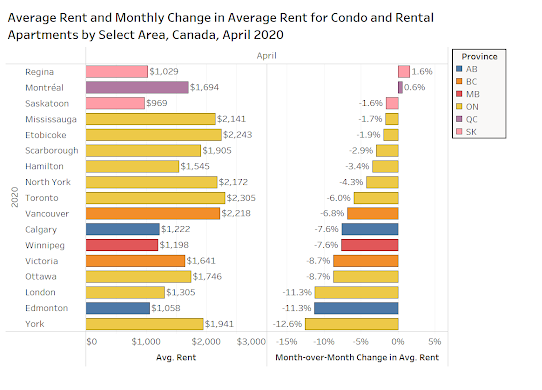
Average monthly rents were down in April over March in most Canadian cities, according to the latest data from Rentals.ca and Bullpen Research & Consulting. The new monthly report also shows that both rental apartments and condo apartments listed on Rentals.ca were down 3.2 per cent and 4.6 per cent respectively month over month.

“The average monthly rents for all listings on Rentals.ca in Canada did not decline in April, but the COVID-19 pandemic is having a big impact on the national rental market in Canada,” said Ben Myers, president of Bullpen Research & Consulting. “Larger single-family and townhouse units are remaining on the market, pulling the average rent up, while other major landlords are offering a free month of rent or other substantial incentives to entice tenants.”

Most areas saw decreases in average monthly rents of 6 per cent or more, with the exception of Montreal and Regina. The former municipality of York saw a monthly decline of 12.6 per cent, while Edmonton and London both declined by 11.3 per cent.  Victoria and Ottawa decreased by 8.7 per cent, while Calgary and Winnipeg declined 7.6 per cent. Vancouver and Toronto declined by 6.8 per cent and 6.0 per cent respectively.

Other key takeaways:

  • There has been much talk about COVID-19’s impact on the short-term rental market with travel restrictions in place. This can play out with more furnished apartments listed for long-term renters. On Rentals.ca, 25 per cent of Quebec’s rental and condo apartments were furnished; 17 per cent were furnished in Ontario and 15 per cent were furnished in British Columbia.
  • On a provincial level, Ontario had the highest rental rates in April, with landlords seeking $2,141 per month on average for all property types. British Columbia had the second highest rental rate at $1,946 per month, while Newfoundland and Labrador had the lowest at $1,001.
  • Average monthly rents declined from March to April in three large provinces: Alberta dropped 5.7 per cent; Ontario showed a 4.6 per cent decrease and British Columbia was down 0.7% monthly.
  • In Toronto, the areas experiencing the biggest declines are the prime downtown markets ranging from an 8 per cent to 13 per cent decline month over month. The Yorkville area has also experienced a decline of 9.4 per cent monthly. These areas have plenty of AirBnB activity, which has likely depressed rental rates.

“The sharp monthly declines in the average rental rates in major cities in Canada was stark,” said Matt Danison, CEO of Rentals.ca. “The average two-bedroom unit in old Toronto was offered at $2,669 per month in April, the lowest rate in 16 months. One-bedroom rental rates haven’t been this low in Toronto since 2018. With the gradual opening of the economy, this may be the low point for rental rates in some time if tenants feel comfortable enough to move.”

Rentals.ca recently published seven predictions on how the pandemic could reshape the rental market.


CWWA releases water guideline to reopen buildings

The Canadian Water and Wastewater Association (CWWA) has released water guideline documents to help members work with building owners and operators looking to re-open buildings during the COVID-19 pandemic.

As provinces lift COVID-19 restrictions and look to re-open buildings, there are critical steps that governments, water utilities, and individual property owners must take to ensure the safety of their community.

According to CWWA, when buildings are closed or on low occupancy for any prolonged period, water in the building becomes stagnant and can pose serious health risks. Harmful microbiological and chemical contaminants can grow or leach into water supply.

The effect of such stagnation will vary between each building based on factors such as length of the shutdown, size of the building, number of occupants, complexity of the system, integrity of the plumbing, and maintenance performed during the shutdown.

Part One is a General Guidance for Water Utilities and provides:

  • Advice on steps to take to prepare for increased flushing.
  • Recommendations for distributing information to building owners.
  • Guidance on communicating with the public and media.

Part Two is a Fact Sheet for Building Owners/Operators which is intended for public distribution to building owners and operators and it:

  • Provides general instruction for flushing and cleaning water systems.
  • Directs to more detailed resources and guidance.

The CWWA is encouraging utilities and owners to adapt the fact sheets and guideline to reflect their own situations and water parameters such as chlorine residual and temperatures.

Click here to access these guidance documents or contact the CWWA.

Pension fund watchdog tuned to real estate arms

Board trustees for some of Canada’s most prominent commercial real estate portfolios are underscoring the obligations owed to on-site building services personnel during the COVID-19 crisis. The Canadian Capital Stewardship Network (CCSN) — established earlier this year to scrutinize investors and investment decisions on behalf of pension plan members — has announced its intentions to examine commitment to worker health, safety and well-being within the real estate arms of ten Canadian pension funds.

CCSN has developed four principles for responsible real estate management during the COVID-19 pandemic, which will also serve as the metrics for assessing the ten companies’ performance. These consider practices and policies related to workers’ financial stability, safety, flexibility to deal with family and personal pressures, and potential vulnerability as contractors’ employees.

“We know that for service providers such as cleaners and security guards to be able to do their job properly, they must be adequately trained, able to access proper personal protective equipment, appropriately supported, fairly compensated and provided with decent working conditions,” reiterates Shannon Rohan, chief strategy officer with the Shareholder Association for Research and Education (SHARE), the sponsoring organization for CCSN.

The four principles align with the Building Owners and Managers Association (BOMA) of Canada’s Pathway Back to Work guidance document, which provides guidance on reopening buildings from the four key perspectives of: building operations; suppliers and vendors; tenant and building communications; and human resources.

“The questions and guidelines are thoughtful and appropriate and we look forward to engaging constructively with the industry on this critical topic,” notes Cam Nelson, a union-appointed trustee on the board of the Healthcare of Ontario Pension Plan (HOOPP).

HOOPP, however, does not have a real estate arm but, instead, outsources portfolio management to various third-party managers. Pension funds with prominent in-house real estate divisions include Ontario Teachers’ Pension Plan, Ontario Municipal Employees Retirement System (OMERS), British Columbia Investment Management Corporation (bcIMC), and Caisse de dépôt et placement du Québec.

Unions represented in CCSN include the Public Service Alliance of Canada, United Steelworkers, Canadian Building Trades Union, Service Employees International Union, British Columbia Government and Service Employees’ Union and la Fédération des travailleurs et travailleuses du Québec.

The keys to reopening multi-res operations

On May 14, the Province of Ontario announced it will be rolling out a 3-phased approach to reopening the economy. For multi-res operations, how will the uncharted journey unfold?

To date, no two provinces’ relaunch plans have looked exactly alike, and as one of the two hardest-hit provinces in Canada, Ontario’s restrictions have been slower to lift. With the state of emergency now extended to June 2, Premier Ford says progressing to the next stage will be based on a range of criteria, including a consistent two-to-four-week decrease in the number of new daily COVID-19 cases. In other words, all businesses preparing to resume operations must be diligent about following strict health and safety guidelines, and remain focused on making risk mitigation the top priority.

To steer reopening businesses in the right direction, each phase of Ontario’s plan is accompanied with multiple documents related to protecting the health and safety of workers. But for multi-res operations, it’s not just workers who are potentially facing exposure – it is each and every resident and visitor who steps foot onto the property.

“The clear risk of reopening multi-res operations is that regardless of whether the recommended regulatory and suggested protocols are followed, if a worker, resident or visitor to the building contracts COVID-19, the landlord will likely be the target of a lawsuit alleging that he or she was at fault and therefore liable for damages,” warns Joe Hoffer, Cohen Highley LPP. “That being said, there are steps that can be taken to avoid this outcome.”

For starters, Hoffer can’t stress enough the importance of following the recommended protocols for each component of the 3-phased reopening.

“The province has created over 90 documents setting out detailed health and safety protocols to be followed in relation to the permitted activities,” he says. “The onus will be on landlords to research those documents; accurately determine which protocols apply to which activity; ensure the protocols are communicated to workers and occupants at buildings; and, ensure that there is compliance by workers and residents with those protocols…leaving a paper trail at each step to lay the groundwork for a defence in future potential legal action.”

Naturally, it’s the smaller landlords with limited resources and those unpracticed at risk mitigation who will have a harder time adjusting to the “new normal.” Hoffer advises anyone in this situation to step up their efforts immediately.

“This can be done by designating staff members to develop and implement COVID-19 compliant reopening policies – including staff training – which are key components of a risk mitigation process. In turn, everything should be rigorously documented,” he says.

Managing staff, worker and resident compliance in multi-res operations

Another challenge for multi-residential building operators will stem from gaining compliance from workers, staff, residents and visitors in terms of their commitment to following health and safety protocols. As part of Ontario’s proposed Phase 1, workers will be permitted to re-engage in multi-residential construction, maintenance and repair, painting, cleaning and pool maintenance.

“Landlords have a legal right to exercise a level of control over employees and contractors,” Hoffer says. “So that challenge should be manageable. The greater challenge will come with managing compliance by residents and occupants. Landlords have far less control over tenants than they do over workers.”

To address this, Hoffer advises landlords who use the standard industry lease (or other professionally drawn leases) to introduce new rules that set out the protocols tenants and their households must follow during the reopening process. “Such rules would direct compliance with social distancing relative to each other and employees; contractors; delivery personnel; and visitors, among other things,” he says, pointing out that many such rules are effectively in place now, although not necessarily formalized as a term of the tenancy agreement under the “Rules and Regulations” section.

Where a more formal approach will likely be required pertains to usage of amenity spaces. As Ontario moves to allow more common areas to reopen—i.e. pools, patios, fitness centres and party rooms—tenants may not only expect, but demand, the right to regain access, exposing landlords to rent reduction applications if they fail to make them available. At present, the risks of exposure to COVID-19 have warranted the temporary closure of these shared facilities, but as restrictions lift, landlords will be on the hook to make them available while still keeping occupants safe from the threat of disease.

Balancing the risks

Assuming authorization is given in the near-term for the reopening of swimming pools and other shared facilities, how will landlords balance the risks of liability and potential rent reduction applications?

“In our view,” says Hoffer, “landlords will be faced with a grim challenge. The liability risk of reopening arises when there is a failure by tenants to comply with protocols and an inability of the landlord to constantly monitor and take action against those who breach them. At this time, a landlord’s primary responsibility to enforce strict safety protocols arises upon receipt of very specific complaints of incidents of breach where the detail is sufficient to generate an N5. With re-opening, there should not be a greater onus on landlords to ensure tenants are following the rules, but there may be an expectation that the landlord do so.”

The key, says Hoffer, is to create clear rules in the tenancy agreements requiring compliance by residents, their households and guests at each stage of any reopening. Some internal physical changes and time of use/occupancy restrictions will likely be necessary, as will enhancements to cleaning protocols.

“Include a requirement that tenants using the reopened facilities must sign a waiver agreeing to the posted protocols and that they assume the risks inherent in the use of the facility,” he says. “This will release the landlord from liability in the event that a person becomes ill and alleges the illness resulted from landlord negligence regarding safety protocols.”

Administrative burdens

There is no doubt that the new normal multi-res operations are about to encounter will come with substantial administrative burdens. Similar to the government, Hoffer says landlords must turn their minds to the implementation of measures that are designed to protect the health and safety of all persons at their buildings.

“The establishment of clear rules for health and safety and the implementation of protocols together with the use of waivers provide mechanisms for mitigating risk,” he says. “If you require legal assistance in developing an appropriate set of COVID-19 policies, our legal team can help; otherwise, we wish you all the best with risk management and surviving the “new normal.”

For more information, visit: http://cohenhighley.com/lawyers/joe-hoffer/ 

Vancouver Airport selects new president, CEO

Tamara Vrooman has been appointed president and Chief Executive Officer (CEO) of the Vancouver Airport Authority, effective July 1, 2020. Vrooman succeeds Craig Richmond who announced in November 2019 that he will be retiring at the end of June after seven years leading the organization that operates Vancouver International Airport (YVR).

Vrooman, who is the first woman to lead the airport authority, had been on the authority’s board of directors since 2011.

“Tamara is a visionary executive with an exemplary track record leading large, complex institutions in both the private and public sectors, including through periods of enormous challenge, innovation and growth,” said Annalisa King, chair of the board of directors. “By applying deep strategic, operational and financial abilities, matched by bold positions on sustainability and inclusion, she has led transformative change resulting in global recognition and commercial success, all while doing good. This, combined with her comprehensive understanding of YVR gained by her nine-year tenure on its board of directors, will enable her to reimagine YVR as a benchmark airport of the future.

Vrooman joins YVR following 13 years as president and CEO of Vancity, Canada’s largest community credit union. She assumed leadership of Vancity at the beginning of the global financial crisis and transformed the business and service model, delivering record profitability and doubling its assets.

During her tenure, Vancity has become a global reference point, and Vrooman has been a leading voice in the Canadian and international financial sectors, demonstrating a successful new vision for values-based banking.

“I am honoured to lead the talented team that has made YVR the best airport in North America for 10 years running,” said Vrooman. “I look forward to working with them as we reimagine our business and how we operate in this challenging new environment as the world adapts following the COVID-19 crisis. I know from experience that crises provide an opportunity for innovation, creativity and renewal. I am eager to get to work as we chart a path forward that supports safe and efficient passenger and cargo travel, while recognizing YVR’s important role in the Lower Mainland, B.C. and the global markets we serve.”

Look, don’t touch at Alberta museums

Alberta museums and galleries are readying to receive the public again now that the provincial government has lifted shutdown orders imposed more than two months ago. Edmonton’s Royal Alberta Museum will reopen on Saturday, May 16, while the Royal Tyrrell Museum in Drumheller will unlock the doors to its renowned paleontological collection on Friday, May 22. Thus far, Calgary’s Glenbow Museum has not announced its reopening day.

“We know Albertans are craving those regular activities, like going out to museums, and we understand how important it is for people to safely get back to their everyday lives,” says Alberta’s Minister of Culture, Multiculturalism and Status of Women, Leela Sharon Aheer. “Our museums are following cleaning guidelines and capacity limits, as well as informing visitors how they can participate so we can make this a successful relaunch.”

“Normal might not look very normal these days. However, perhaps the little things like a visit to your favourite exhibit might make your day feel a little less strange,” the Royal Alberta Museum’s website suggests.

Entries will be limited to no more than 100 visitors at a time at the Royal Alberta and no more than 150 at the Royal Tyrrell, and both museums will be closing interactive areas that normally invite hands-on experiences. Instead, museum goers will be reminded to look, but not touch any of the available exhibits.

Tickets must be purchased online and for a specific time. Both museums will also be offering a 20 per cent discount until June 30.

The cultural institutions are on a longer list of businesses and services that have been okayed to resume operations, albeit on a somewhat varied schedule depending on where they are located in the province. That includes retailers, restaurants, hair stylists, daycares, places of worship and funeral homes. All are instructed to follow social distancing protocol and stringent cleaning regimens.

North York ice rink converts to food bank

The hockey rink at Oriole Community Centre in North York has been converted to an emergency food bank to accommodate increased visits while adhering to social distancing guidelines.

North York Harvest Food Bank began operating at the closed community centre through a partnership with the City of Toronto. Using this space allows the organization to meet the increased demand from community members.

Aoyuan International, developers of the nearby M2M master plan project located at Yonge and Finch, donated $25,000 in support.

“We wanted to find a meaningful way to help North York as we all face the COVID-19 pandemic together,” said Vince Santino, senior vice-president of development at Aoyuan International. “We believe by donating to North York Harvest Food Bank and supporting their network of front-line agencies throughout the GTA, we can help their incredible team continue to do their vital work of ensuring everyone has access to food and that we can help them respond to the increased demand they are facing during these unprecedented times.”

As the primary food bank in northern Toronto, North York Harvest distributes more than two million pounds of food annually through a mix of neighbourhood programs and by supporting front-line service agencies. The majority of the front-line service agencies they support through food distribution have been forced to close due to their locations being in public spaces or because they were operated primarily by volunteers.

With the $25,000 donation from Aoyuan, North York Harvest will be able to accommodate 16,000 food bank visits from 5,000 households throughout the month.

“Food security and hunger are complex and persistent issues in the GTA, said Henry Chiu, director of development and marketing, North Harvest Food Bank. “These issues have become magnified as a result of the COVID-19 pandemic and the unprecedented challenges it presents. “We are so grateful for the support of Aoyuan during times like these.”

Ten practical tips for virtual meetings and e-voting

Virtual meetings and electronic voting in condos was a topic of discussion during The Canadian Condominium Institute’s first national webinar addressing pandemic-related industry concerns from coast to coast. Lawyers, property managers, owners and service providers were among those gathered to discuss everything from landscaping to liens.

Nancy Houle, partner at Davidson Allen Houle, spoke on the topic, stating there is no one-size-fits-all approach.

“Over the next few years, I’m sure we will see a whole new variety of processes evolving,” she said. “We’ll also see virtual and electronic meetings being used more frequently, even when large gatherings become the new, new normal.”

She offered up ten practical tips to consider for virtual meetings and e-voting.

1. Make sure your condominium corporations are legally permitted to have a virtual meeting and/or conduct electronic voting. First consider if this is allowed in your jurisdiction, how and for how long. Some jurisdictions have emergency orders in place to temporarily permit electronic and virtual meetings; others don’t. Some jurisdictions allow for virtual or electronic meetings generally, without emergency orders in place, either in the legislation itself, or by allowing condo corporations to pass bylaws to permit such meeting and voting practices. Make sure you understand what is or isn’t permitted in your jurisdiction.

2. Remember that virtual meetings and electronic voting are not the same thing. Make sure you are legally permitted to do both—allowing for participation and attendance virtually, and allowing for voting electronically.

3. Should the meeting be held virtually, consider what business you absolutely need to transact at the meeting and what must be accomplished. For example, in some jurisdictions, the annual budget must be approved at the Annual General Meeting (AGM) and can only be done once. Arguably this must be done and a virtual meeting is necessary. In other jurisdictions, certain meetings, such as AGMs are permitted to be both postponed. Ask what makes the most sense for your condominium community.

4. Should a meeting be postponed, subject to changes and circumstances with the pandemic until such time as a large gathering can be held. New controversial issues really can wait. Maybe it makes sense to wait for now until a fulsome discussion in person can be held.

5. Procedure is crucial. Be sure to follow all the generally mandated process to make sure your virtual meeting is validly called. Follow the requirements of your jurisdiction, for notices, pre-notices, proxies, etc.

6. Participation is necessary. Ensure alternate methods of participation for those owners who do not have access to a computer. For example, the ability to still mail in a proxy combined with attending the virtual meeting by telephone.

7. Communication is key. Make sure all notices to owners let people know exactly how they can participate in various forms

8. The validity of your meeting cannot be lost. For whatever form you choose for your virtual meeting, your goal must be to make every effort to mimic an in-person meeting. You need to be confident that you can validate your registration and attendance, validate there is no duplication of proxies or attendance, validate the voting process, allow for motions and votes from the floor, and allow for questions and answers.

9. Book everything and everyone early. If you are using a third party service provider, they are booking up fast and have a limit of how many meetings can be done in one evening. There is going to be a lot of catch-up going on so make sure you are prepared.

10. Do a dress rehearsal involving the host, board members and who else will be playing a key role in your meeting so everyone is comfortable with the technology used during the meeting. Then sit back and enjoy the meeting and continue learning about these tools at your disposal.


Nova Scotia scurries to expand internet coverage

COVID-19 has prompted accelerated delivery of high-speed internet to some overlooked or underserviced areas of Nova Scotia. Not quite two months after Premier Stephen McNeil allocated $15 million to speed up the project, the crown corporation overseeing the effort is boasting it has shaved six months off the original timetable for the first phase of installations and is on pace to build 19 towers within 100 days in Cumberland and Colchester counties.

“The importance of high-speed internet for Nova Scotians is pressing. We engaged our internet service provider partners to help solve this critical challenge with ingenuity and urgency and we are seeing results,” maintains Jennifer Angel, chief executive officer of Develop Nova Scotia, which is tasked with developing infrastructure and “high-potential property” in the province.

The first phase of the work will allow up to 18,000 homes and businesses to connect to wired or wireless technologies, while access for another 24,000 is expected to be “substantially complete” within 12 months. That will expand province-wide internet coverage to about 86 per cent of the population — up from the current 70 per cent.

Ultimately, the government has pledged that at least 95 per cent of province will enjoy access to high-speed internet. That goal was seeded with $193 million when the Nova Scotia Internet Funding Trust was created in 2018, but the cost of required investment has been projected in the range of $300 to $500 million. Another request for proposals (RFP) process is now underway, with a new round of projects expected to be announced in August.

“We’re confident we can meet and exceed this goal, working to get as close to 100 per cent as possible,” Develop Nova Scotia reports. “There are now 15 pre-qualified providers that are eligible to respond to this, and future RFPs. Having more organizations to bid on solutions will increase options for solutions and potentially open the door for more evolving technologies.”

Plans for reopening condo amenities

As provinces gradually gear up for reopening and ease some coronavirus restrictions, there are proactive measures and legal concerns condo communities might want to think about when it comes to managing and maintaining amenities like pools and fitness centres.  Perspectives were shared amongst property managers, legal professionals and building service providers during a CCI Huronia webinar on Tuesday evening, hosted by Sonja Hodis, a litigation lawyer at Hodis Law.

Legal considerations for opening amenities

Condo corporations in Ontario are currently required to keep common element areas closed as stated in a provincial order issued by the Emergency Management and Civil Protection Act.

Ashley Winberg, associate at Elia Associates, notes that once this order is lifted, there may still be municipal requirements and recommendations to keep these areas closed. If this is the case, she suggests following suit. If common elements are permitted to open, any authoritative guidelines issued should be followed.

“Once there is no requirement or recommendation that facilities be kept closed, it’s really going to be up to your condominium corporation to decide whether or not to open these facilities,” she says.

When condos do decide to open amenities, there are some legal items to consider. She says that under the Condo Act and Occupiers’ Liability Act, a corporation would be deemed to be the occupier of the common element facilities for liability purposes. Under the Occupiers’ Liability Act, the corporation would have to take reasonable steps to prevent against foreseeable harm.

“If there is no vaccine and COVID-19 is still present in Ontario, it could be foreseeable that someone could contract COVID-19,” she says, noting that a waiver could be executed to absolve the corporation of having the liability in the event someone does get COVID-19 in relation to using any of the facilities.

“However the waiver in and of itself would not be enough. Ideally you want your condo corporation to create rules and restrictions or policies with respect to how and when facilities can be used.”

Restrictions should be consistent with government orders and might require a cap on the number of people who can use the facility at one time: limit hours or require users wear personal protective equipment.

These restrictions, however, will only be effective if enforced—a much more difficult feat for smaller corporations without security staff or an on-site superintendent. She also notes the frequent cleaning and disinfecting that will have to be completed—additional costs that should also be factored into the decision to open a facility.

“At the end of the day, you may determine that it’s in your corporation’s best interests not to open up the facilities, given the increased cost or risk because you’re not able to prevent against the foreseeable harm in a reasonable manner,” she cautions.

Property manager perspective

When it comes to reopening amenities, Jeff Struewing, vice-president of operations and licensed property manager at Shore-to-Slope Property Management, says much will depend on the unique assets of each condo corporation. For large outdoor assets, like tennis courts or park areas, physical distancing should be easier to enforce.

“When you get into tighter confined spaces, like small fitness rooms, saunas or hot tubs, it is very difficult to maintain the two-metre separation,” he says.

He recommends signage for facilities include the number of users allowed and necessary precautions. Messaging should be sent to all owners. A registration process for booking time at a facility could also be rolled out, with sanitation occurring between users.

The cost for extra sanitizing and cleaning could be rather excessive and make it cost prohibitive for smaller corporations without staff on site, he notes. Larger corporations might also face issues, such as not having enough time to wipe down all the equipment and touch points, like hand rails and washrooms frequented by owners and guests.

“If it is not financially feasible or the staffing isn’t available to maintain the safety and sanitization required, then it might not be the best thing to open the facility,” he suggests.

Reopening and maintaining the pool

Despite the idle use of condo pools right now, Leigh Merswolke, CEO of LCM Property Services Inc., offered some advice for condo corporations when it comes to protecting and reopening the pool. Besides securing the premises to prevent access to unauthorized persons, condo corporations should consider the following items:

  • Continue to operate circulation equipment where the water is present, and reduce flow where it is allowed through that jurisdiction or if your system allows for it. Reduce the make-up water used, but continue to add fresh water to the pool.
  • Continue regular inspection using a Certified Pool Operator. Monitor water quality, keep water balanced and think about lowering the usual level of sanitizer. Keeping the sanitizer level “at two or three” is recommended for healthy water.
  • Monitor filter pressure and continue the process of backwashing to thoroughly clean the filter and subsequently the water.
  • Heat can be turned down or even turned off, but plan ahead for reopening to make sure it is tested and operational.
  • Take steps to stop legionella and other bacteria from growing, due to extended closures in areas like hot tub spas.
  • Examine equipment daily, watch out for any leaks and check seals, to make sure everything is running properly. Before reopening, anticipate additional needs like spacing between chairs and the number of people who may be allowed into the pool.
  • To protect an outdoor pool, even if it remains closed through the year, all surfaces should be cleaned and inspected for repairs to prevent two seasons of dirt and staining from accumulating. Now may be a good time to catch up on necessary maintenance for tanks, filters or cement repairs. Different materials call for different treatments. Check rubber liners for leaks; all pools, especially with liners, need to have pressure on the pool wall to offset ground pressure on the outside. Rainwater runoff can erode around the pool and side walls can cave in without the pressure of water in the pool—a very expensive repair.
  • Maintain good communication with staff working in the building so they know what to do, who should be in the facility and how it should be maintained. Also sustain communication with the community. Residents need to anticipate what is happening and understand the reasons why, so they won’t be upset.
  • Schedule health inspections as soon as possible. Some condo corporations may be required to have pools inspected before they open. Keep in mind, public health teams are under pressure now so they may be working with limited resources.
  • Review insurance policies, and perhaps speak with legal counsel to see if there is general liability for the premises; most of those will exclude injury from communicable diseases so we want to be cautious there. We also want to schedule increased cleaning and sanitation for washrooms and all facilities connected to the pool, including the deck.

“We want to be ready to open when restrictions are lifted, even if it is a limited capacity,” he says. “This will likely reduce the time needed to gear up for increased capacity when it is permitted. But we also want to be patient; it is important that we do not open our facility before the guidelines allow. Be cautious here; we don’t want to jump the gun.”

Despite a lack of government directives on reopening amenities like pools, Anne Maria Korpikoski, public health inspector, safe water, rabies and vector borne disease, Middlesex – London Health Unit, said condos should think about employee screening, what physical distancing looks like for venues, how to increase accessibility for hand hygiene and how you will meet requirements prior to opening. Public health officials in various jurisdictions offer online guidance and resources when it comes to sanitizing and disinfecting high-touch areas, along with steps to take regarding social distancing—an important component for trying to prevent spread once facilities open.

Maintaining the pool surfaces will also help from a number of standpoints, she adds, such as preventing diseases from issues like standing water known to attract mosquitoes.


Chartwell announces new fund for senior living employees

Chartwell Retirement Residences announced it has launched the CaRES Fund in partnership with other sector leaders to help support senior living workers on the front-lines of the COVID-19 battle.

The CaRES Fund – which stands for Chartwell Retirement Residences, Revera Inc., Extendicare and Sienna Senior Living – will offer one-time financial grants of up to $10,000 for urgent financial needs to employees of all retirement and long-term care operators in Canada.

In addition to its original $500,000 contribution, Chartwell’s Board of Directors have waived a portion of their 2020 compensation to add an additional $225,000 toward the fund, which currently consists of $2 million.

Longer term, the CaRES Fund will work to achieve charitable status for continued emergency support and to provide assistance for employees and their families seeking to pursue higher education and/or training. The founding partners are inviting other operators to join in and expand both the vision and resources for this important initiative.

Chartwell was also a founding member of the Canadian Alliance to Protect and Equip Senior Living (“CAPES”).  CAPES represented the coming together of senior living operators, volunteers and partners who combined funds to act as a joint purchasing group to supply much needed personal protective equipment (“PPE”) to front-line employees in senior living.  The founding members over-funded their PPE orders by 35 per cent to allow the excess supply to be available at cost to smaller operators across Canada.

With COVID-19 having particularly impacted the senior living sector, Chartwell says it is standing together with all senior living operators to put the safety and support of staff and residents first. “It is truly humbling to see the commitment of employees in all retirement and long term care residences across Canada, despite the risks, to care for someone else’s loved one,” the press release said. “The CaRES Fund is our collective thank you.”

Applications for financial assistance can be made online at https://www.seniorlivingcares.ca/


Minority, women entrepreneurs hit harder by economic fallout

There has been a greater economic impact from COVID-19 on underrepresented business owners in Canada than on other segments of the population, according to a nationwide survey of women, visible minorities, indigenous, LGBTQ+, refugee and immigrant entrepreneurs.

The Falling Through The Cracks survey of close to 350 entrepreneurs, conducted by the Canadian Women’s Chamber of Commerce (CanWCC) and Dream Legacy Foundation (DLF), sought to provide a fuller, more diverse picture of the economic crisis in Canada.

Findings show that 53 per cent of women entrepreneurs have experienced an additional burden of childcare as opposed to only 12 per cent of male entrepreneurs. Meanwhile, 61 per cent of women-owned businesses reported loss of contracts, customers and clients. In contrast, 34 per cent of businesses across Canada report cancellation of contracts.

The survey also revealed that 50 per cent of underrepresented respondents indicated a 10-20 per cent decrease in revenue, compared to only 22 per cent of small businesses and entrepreneurs across Canada, and 16 per cent of underrepresented respondents reported a 80 per cent decrease in revenue.

Another concerned flagged, is the inability to access government programs and benefits. The joint survey will use the findings to form recommendations to government policymakers on behalf of underrepresented entrepreneurs.

“The narrative right now around business and economic stimulus is very homogenous,” said Nancy Wilson, CEO and founder of CanWCC. “It’s critical that we don’t use COVID-19 as an excuse to erase the gains we’ve made in business diversity. We want every level of government to include the voices and experiences of all business owners when drafting policy and allocating financial support.”

Nancy Wilson and DFL’s Danielle Graham first developed this survey to enable data-driven advocacy for women-identified business owners, but the survey grew to encompass other underrepresented founders who have been disproportionately affected.

“Marginalization becomes even more pronounced in times of crisis,” notes Isaac Olowolafe, founder, Dream Legacy Foundation. “We need to ensure that we are listening to a diversity of experiences, advocating to centre their voices but also providing data for them to take independent action.”


Ledcor donates $400,000 to food banks

The Ledcor Group of Companies is supporting children and families affected by the COVID-19 pandemic by donating $400,000 to local food banks in Canada and the US.

“COVID-19 has had many negative impacts in our communities, and we want to help families that have been hard hit economically,” said Dave Lede, chairman and CEO. “Ledcor is donating $400,000 to over 20 local food banks to support emergency food supply. We want to help children that have lost access to school and community food programs, and families experiencing job loss.”

Through its charitable foundation, Ledcor is contributing funds to local food banks in the communities where its employees work and live:  Vancouver, Langford, Kelowna, Kamloops, Kitimat, Edmonton, Calgary, Fort McMurray, Yellowknife, Saskatoon, Regina, Winnipeg, Toronto, Mississauga, Chicago, Louisville, Austin, Reno, San Diego, Irvine, Hercules, Bellevue and Maui.

“Today food banks are dealing with increased demands and food supply shortages. We want to ensure our communities are supported by helping to relieve hunger and food insecurity in this time of crisis,” said Lede.

Food banks use funds to buy fresh, healthy foods in bulk to extend the value of the funds received to as many families as possible. During the COVID-19 crisis food banks and other charities are stepping up to ensure that food can reach Canadians and Americans who need it the most.

Ledcor and its employees have regularly supported food banks through its Ledcor Cares program.

AFBC moves Architectural Awards to 2021

The Architectural Awards, a program which celebrates the very best in architecture from the B.C. architecture community, is moving to a new two-year award cycle.

The Architecture Foundation of British Columbia (AFBC) has announced that that the next Architectural Awards ceremony is anticipated to be held in the fall of 2021, including the prestigious Lieutenant Governor of British Columbia Medal and Merit Awards in Architecture.

Applications for the 2021 Architectural Awards Program are scheduled to open in the Spring of 2021, with the award winners announced later that same year. In keeping with the foundation’s commitment to uphold the highest standards for the awards program, all components of the program are undergoing extensive review, and updates will be provided prior to the opening of the awards submissions.

Celebrating architecture from the talented community of B.C. architects and designers is an integral component of the Architecture Foundation of BC in its commitment to building architecture and design awareness in British Columbia.

The Architecture Foundation of B.C. took over hosting the awards program in 2019, which was previously ran by the Architectural Institute of B.C. Transferring the program to the AFBC was made possible given a revitalized relationship between the two organizations whose mandates are separate and distinct.

Construction survey reveals recovery concerns

According to RICS’ new quarterly Canada Construction and Infrastructure Survey, fears about implications for economic activity have deepened. Despite a huge array of government fiscal interventions (worth in the region of 14 per cent of GDP), the recovery process is likely to be protracted.

“It is clear that professionals expect governments to boost infrastructure spending on the road to economic recovery,” said Sean Ellison, senior economist at RICS. “This will provide a ray of light amid the gloomier outlook for the sector, perhaps pointing to a way out of the current downturn.”

Some key findings include the anticipation that workloads are to remain subdued over the next 12 months, with employment projected to drop and, most notably, profit margins viewed as coming under significant pressure.

Generally, shortages of skills and labour continue to be highlighted as obstacles to activity by survey participants (with the inference that they will again be relevant when the lockdown ends). However, the proportion of respondents signalling concerns about these issues has diminished somewhat since the end of last year. For skills, the proportion identifying this to be a problem has dropped from over 60 per cent to less than 50 per cent. And for the wider category of labour, it has slipped from just under 60 per cent to close 40 per cent.

Predictably, insufficient demand is now viewed as more of threat with an increasing number of responses noting material shortages as a barrier. Financial constraints remain an ongoing theme although encouragingly for now at least, this issue doesn’t appear to be worsening.

“Three months ago, the skilled labour shortage was top of mind for survey respondents, whereas today the focus has shifted more towards dealing with shrinking profit margins, material shortages, and customers reluctant to continue work. The fluidity of the COVID-19 pandemic has forced individual companies and entire industries to find creative and adapti,” said Sheila Lennon, CEO, Canadian Institute of Quantity Surveyors.

The survey also shows a substantial disparity in conditions based on geography. In net balance terms, workloads in the Prairies and Northwest Territories contracted at a much quicker pace than in other parts of the country. The bulk of respondents in this region are based in Alberta and also dealing with the fallout from the collapse in oil prices. This dynamic is mirrored in other metrics, most notably expectations for tender prices and construction costs, where deflation appears to be a significant risk

Respondents from British Columbia noted a sharp reversal in activity. After reporting increasing workloads in all sectors (including infrastructure) in Q4 of 2019, construction market activity was said to have contracted, albeit modestly, at the start of 2020.

There are some signs that this will persist in the near term with new enquiries and new workloads contracting, as delays in payment are rising. There does not yet appear to be a significant reduction in headcounts, however. Contributors appear to believe that it may get worse before it gets better.

Uninsured property disqualified for Alberta aid

Condo boards and residential landlords in Fort McMurray and surrounding flood-stricken areas of northern Alberta will have until August 5 to apply for provincial funding to help cover uninsurable damage. Unit owners and tenants may also be eligible for the newly announced disaster recovery program, which will make up to $147 million available for restoring public infrastructure and private property.

More than 3,000 people are still displaced from their homes and/or businesses after massive ice jams caused flooding along the Athabasca, Clearwater and Peace Rivers last month. At its height, more than 14,000 residents were forced to evacuate.

“These immense challenges are only made worse by the ongoing pandemic, and I know that many people are overwhelmed and worried for the future,” says Alberta Premier Jason Kenney. “I want to tell you that your government is here for you. All of Alberta is here for you and, together, we will get through this and rebuild.”

Notably, though, the funding applies to uninsurable losses rather than uninsured property. To qualify, homeowners and tenants will have to submit a letter from their insurers to prove that they have a policy and to outline the reasons why they will not be reimbursed for some damage.

Eligible landlords and small business owners must be hands-on operators/managers and own at least 50 per cent of the subject business. They must also generate between $6,000 and $15 million in annual revenue, have fewer than 20 fulltime equivalent employees and commit to rebuilding in the community.

The program rules clarify that funds are “a final resort to assist after a disaster” and are solely to “return essential property to its basic, pre-disaster, functional condition”. To qualify for the disaster recovery program, an afflicted region must also have experienced an extraordinary hardship, generally defined as “one-in-100-year event” related to natural forces such as rainfall, stream flow, ice jams, overland flood, wildfire or strong winds.

“Dealing with this disaster amid a pandemic makes this situation uniquely challenging, but the people of northern Alberta are determined and strong. We will be there to support them, and their local leaders, in their rebuilding efforts,” asserts Alberta’s Minister of Municipal Affairs, Kaycee Madu.