Articles Archive - Page 390 of 928 - REMINET
REMI

The new Triangle Green plaza opens in Victoria

The new Triangle Green plaza near the Johnson Street Bridge in Victoria is now open for public use and features new trees, seating, lighting, landscaping and improved pedestrian and multi-use access.

Anchored by Illarion Gallant’s iconic public art piece, Commerce Canoe’s scale, material and theme made it the perfect fit for Triangle Green’s harbourfront location. The large-scale piece features an aluminum boat suspended in five tall reeds.

“The new plaza provides a vibrant gateway to downtown that celebrates public art and welcomes everyone entering the urban core with new plantings and bright colour,” said Mayor Lisa Helps. “The new green space complements other recent improvements near the waterfront and provides a cheerful space for pedestrians, cyclists and vehicles in this bustling location.”

The new black tupelo trees planted in the plaza were donated by the Royal Commonwealth Society Vancouver Island Branch to mark the Common Centennial Celebration.

“Our ongoing Trees for Life campaign is a natural fit to celebrate our centennial with the City of Victoria and Triangle Green,” said David Spence, president of the Royal Commonwealth Society Vancouver Island Branch. “Black tupelo trees grow in this beautiful garden and can lead the way across divides by building bridges with democracy, diplomacy, and diversity.”

“The trees contribute to Victoria’s urban forest and will add brilliant colour to this highly visible location each fall,” said Councillor Geoff Young, Neighbourhood Liaison for downtown Victoria.

The City of Victoria was recently recognized with a Tree Cities of the World award from the Arbor Day Foundation and the Food and Agriculture Organization of the United Nations, which recognizes cities and towns committed to ensuring their urban forests and trees are properly maintained and sustainably managed.

Work underway on Royal Columbian acute care tower

Construction is underway on a new acute care tower, the next phase of the redevelopment of Royal Columbian Hospital in New Westminster.

“This project will increase the hospital’s capacity by approximately 50 per cent, help ease congestion, introduce advanced medical technologies and enhance the working environment for health-care workers,” said Adrian Dix, Minister of Health. “The work being done will make sure people continue to get the public health care they need for current and future generations at B.C.’s oldest hospital.”

The tower will add more beds for intensive care, cardiac intensive care and surgical patients. There will also be a new, larger emergency department with a satellite medical imaging unit, with two radiology suites, an ultrasound suite and a CT scanner. This will allow patients to have a number of diagnostic procedures without needing to leave the emergency department.

The tower will have four more operating rooms, including one for cardiac patients and three more cardiology suites. In addition, Phase 2 will provide more maternity beds and maternity operating rooms.

The new acute care tower will include a two-level underground parkade and a rooftop helipad. Work is expected to be completed in 2025 by EllisDon.

“This is an exciting day for our community. When our loved ones need care, we rely on Royal Columbian Hospital and our health-care workers to keep us safe and healthy,” said Jennifer Whiteside, MLA for New Westminster. “Work is officially underway on site for the next phase of hospital redevelopment, and the associated construction jobs will also be a large boost to the local economy.”

The estimated $1.49-billion, three-phase redevelopment is funded by the provincial government, Fraser Health and the Royal Columbian Hospital Foundation.

Phase 3 of the redevelopment project will upgrade and expand areas in the existing Health Care Centre and Columbia Tower. Phase 3 is projected to start in 2023 and be completed in 2026.

Energizing assets with NRCan’s ENERGY STAR® for buildings 

There is no shortcut for sustainability. No cookie-cutter playbook for energy efficiency. Yet while the route towards greener and cleaner building operations may be different for every asset, programs like Natural Resources Canada’s (NRCan) ENERGY STAR® Certification for Commercial and Institutional Buildings put stakeholders on the right path.

“In 2018, NRCan saw an opportunity to recognize top tier energy-efficient buildings in the commercial and institutional sectors by adapting the US Environmental Protection Agency’s ENERGY STAR Certification for Buildings program for the Canadian market,” says Mike Dennison, Senior Program Officer, in NRCan’s Office of Energy Efficiency.

NRCan
Eligible buildings
NRCan has big ambitions for certification uptake in all of the eligible building types in Canada, including:
  • K-12 schools
  • hotels / motels
  • warehouses
  • medical offices
  • hospital
  • ice / curling rinks
  • commercial offices
  • senior care communities and residential care facilities
  • supermarket and food stores
  • retail stores

Applications open

NRCan’s ENERGY STAR Certification program is powered by the ENERGY STAR® Portfolio Manager® platform. Available online and at no cost to program participants, the platform enables users to measure, track, and optimize energy consumption by comparing their building’s performance against itself as well as modeled similar buildings. It is also powered by up-to-date data from Statistics Canada’s Survey of Commercial and Institutional Energy Use (SCIEU), which is conducted every five years to assess building characteristics and energy usage across the commercial and institutional sectors.

“The Canadian adaptation of the ENERGY STAR Portfolio Manager tool is a modification of the US EPA’s proven benchmarking tool with the intent to give Canadian users an easy, secure, and cost-free way to benchmark a building’s energy use, and to generate a wide array of performance metrics,” notes Dennison.

ENERGY STAR Portfolio Manager is the gateway for ENERGY STAR Certification. Eligible building types that achieve a score of 75 or higher (top quartile) on the ENERGY STAR 1-100 score scale can submit an application for certification through the Portfolio Manager tool; however, building set-ups and data must be verified by an in-house or third-party Licensed Professional. If successful, applicants receive ENERGY STAR branding materials and entrance into the program’s online registry.

At last count, ENERGY STAR Portfolio Manager® has been used to benchmark over 26,000 buildings in Canada, representing approximately 35 per cent of the commercial/institutional floor space.

There’s no cure-all strategy for saving energy. Thanks to initiatives like NRCan’s ENERGY STAR Certification for Commercial and Institutional Buildings, however, there are invaluable tools, insights, and innovations to spark the journey.

Learn more about ENERGY STAR Certification for Buildings and registering for the free ENERGY STAR Portfolio Manager.

New fee model for Ontario elevator licenses

A new billing model for annual elevator licenses could be startling for some Ontario property owners and managers. Beginning May 1, the provincial Technical Standards and Safety Authority (TSSA) will introduce fee increases for its oversight services in tandem with bundling some costs that were previously invoiced separately into new upfront flat rates.

For example, it may appear that the license fee for elevators that serve four or five floors has tripled from $110 to $330. However, the rate will now include the cost of the periodic inspection and one follow-up inspection to a maximum of one hour. Beyond that allowable hour, there will be a significant upward spike in charges for necessary additional inspection time.

“Theoretically, the cost should be more-or-less similar to what owners were paying before, depending on the complexity of their elevators. The risk is that it initially may be confusing when it’s all billed as one package,” notes Rob Isabelle, chief operating officer with the elevator specialty firm, KJA Consultants, and a member of the TSSA’s elevating devices advisory council.

The TSSA promotes the flat rates as “fair, predictable and efficient” since licensees will receive just one invoice and will have a known fixed fee for their budgeting process. The new billing formula is part of the TSSA’s evolution to what it terms an “outcome-based regulator”, which directs more resources and staff time to elevating devices that are shown to pose a higher degree of risk for the public. Accordingly, it aims to derive a greater share of its self-sustaining revenue from the owners/operators of those devices, and also to create an assured pot of funds from prepaid fixed fees to underwrite non-income-producing risk reduction programs.

“The fee-for-service model currently in use by TSSA dates back to 1997 and is best suited to a prescriptive model with cost recovery focused largely on inspection,” an accompanying explanatory document states. “As TSSA supplements its safety services with improved risk analytics, compliance support, an emphasis on reducing high risks and a focus on pursuing unlicensed devices and illegal workers, its current business model must change as well.”

Flat rates based on five-year historical averages

Ironically, the flat license rate will penalize most owners with extra costs if an elevator passes the periodic inspection and does not require a follow-up. Factoring in a follow-up inspection, there will be savings of varying amounts in low-rise, mid-rise and high-rise buildings.

In place of the previous basic split of elevators serving fewer than six or 6+ floors, the billing formula now has three categories of license costs:

  • Elevators serving up to three floor at $250;
  • Elevators serving four to 20 floors at $330; and
  • Elevators serving 21+ floors at $400.

Based on license fees and an hourly inspection rate of $137 in place until April 30, 2021, annual license costs for elevators that pass first inspection would currently be $247 for an elevator serving up to 6 floors or $263 for an elevator serving 6+ floors.

As of May 1, the hourly rate for periodic inspections will rise to $140 — completing a phased three-year 7.7 per cent increase that bumped the rate up from $130/hour prior to August 2019 — while the minimum charge for a follow-up inspection that lasts no more than an hour jumps nearly 130 per cent to $315, with additional time billed at $210/hour. Thus, the flat license rate will be a bargain if just one follow-up inspection lasting no more than one hour is required.

“The new flat fees are based on a five-year historical average of inspection hours for each category of device, business or facility type,” the TSSA advises. “Additional fees will apply when customers require repeated follow-up inspections due to non-compliance.”

Building owners/managers with elevator license renewals due in early May should have already received invoices for the new flat rates since the TSSA has pledged to send them at least 60 days in advance. Information pertaining to the new rate structure is posted on the TSSA’s website, which also reports that customers have received two previous notices of the new billing model — via email on Nov. 20, 2020 and in a letter mailed out on Jan. 29, 2021.

“I don’t have an issue with this in principle, as long as we are getting value for the rate alignment that will be implemented,” reflects Randy Daiter, vice president, residential properties, with M&R Property Management. “It may prove beneficial for customers if there is less incentive for the TSSA to inspect sites on a fee-for-service basis, or if rates are scaled to apportion fees more equitability to smaller landlords, businesses and/or operators. However, we won’t really know the true impact of the new rate schedule until we look in our rear view mirror and are able to compare actual year-over-year costs.”

Reviewing and approving designs and commissioning

Flat rates will also be introduced for the various oversight services required when elevating devices are newly installed, extensively retrofitted or altered in more minor ways. As with license fees, these flat rates will bundle in the cost of an initial inspection and one subsequent inspection with the engineering services related to reviewing and approving plans and commissioning. In addition, the hourly rate for engineering services will rise from $143/hour to $146/hour on May 1, completing a three-year, phased 6.8 per cent increase from $136/hour prior to August 2019.

Of note, the new fee schedule simplifies engineering service rates to just two categories of elevators — elevators serving up to three floors, and elevators serving 4+ floors — in place of the current five different rates for initial inspections based on the elevator’s propulsion system. As with license inspection fees, the minimum cost of required subsequent inspections will jump from the current $137 to $315 for the first hour, with additional time billed at $210 per hour.

The TSSA estimates the new flat rate of $1,400 for elevators serving two to three floors will typically be higher than the total costs now charged for hydraulic or roped hydraulic elevators, but lower than total charges for traction elevators serving up to 15 floors. The new flat rate of $1,850 for elevators serving 4+ floors is estimated to be about 7 per cent higher than current total costs for traction elevators serving 16 to 30 floors and about 1.7 per cent lower than current total costs for traction elevators serving 31+ floors.

Meanwhile, engineering service costs for installing a lift for barrier-free access are projected to drop 29 per cent when the new flat rate goes into effect. Currently, the average total cost for engineering services and an initial inspection is pegged at about $990, while the new flat rate is $700.

Barbara Carss is editor-in-chief of Canadian Property Management.

Women in roofing group launches Canadian council

The National Women in Roofing (NWiR) Canadian Council has been established with its first board of directors.

The council will be led by chairperson Lillianne Dunstall. She worked for Tremco for over 17 years before retiring as vice president, North American Business Ops and Canadian Roofing. She has been involved in NWiR since its inception in 2016 and is excited to begin a Canadian council.

“From every corner of the roofing industry, the response to NWiR’s launch in Canada has been instant and overwhelming,” says Dunstall. “Not only from contractors but from manufacturers, consultants and supply chain partners the message has been loud and resoundingly clear. ‘We support you 100 per cent in all your endeavours.’ Having this early support from the industry helps create the momentum needed to move forward with exciting speakers, programs and projects that will help women fulfill their career aspirations, while offering a support system second to none.”

Joining Dunstall on the board are:

  • Ashley Sindall, Tremco (vice-chair)
  • Anne Marie Bourque, Enercorp (vice-chair, Quebec)
  • Lucie Quigley, Roofers World (secretary)
  • Tania Skapura, Bothwell-Accurate (treasurer)
  • Chantalle Hepburn, Tremco (communications chair)
  • Mylène Tremblay, Soprema, (communications chair, Quebec)
  • Marceh Materi, Flynn Group of Companies (education chair)
  • Isabelle Morrissette, Pentagone Group (education chair, Quebec)
  • Wendy Fraser, CRCA (membership chair)
  • Audrey Bourque, Beacon (membership chair, Quebec).

NWiR has long had Canadian members, but the organization is thrilled to be representing

Canada’s women roofing professionals through the NWiR Canada Council. In the beginning, NWiR will launch NWiR Canada as a single council whose members will meet remotely. Later, when the pandemic is over and it is safe to gather in person, NWiR Canada will plan gatherings in cities with a concentration of members. Eventually, NWiR will launch councils throughout Canada, wherever NWiR members in Canada want to establish them.

“We are excited to be able to launch a Council in Canada. After supporting the development of 40+ Councils in the United States, a sister organization in New Zealand, and fielding inquiries from Mexico and Central America we are so glad that the Canadian women who work in the roofing industry are joining NWiR. Although we have always had Canadian women as members, this marks our first official Council expansion from the U.S. into North America,” said Renae Bales, chair of NWiR.

First cleaning service provider achieves GBAC STAR accreditation

Cleaning service providers are taking new steps to show off their cleaning credentials.

Colorado-based CCS Facility Services has become the first business in the world to achieve GBAC STAR’s new Service Accreditation.

The Global Biorisk Advisory Council, a Division of ISSA, announced the new program last month. The service accreditation is designed for building service contractors and other outsourced cleaning service providers seeking third-party validation for their cleaning, disinfection, and infection prevention programs.

“Cleaning service providers are instrumental in the quest to maintain the cleanest and safest facilities around the world,” said GBAC Executive Director Patricia Olinger. “We congratulate CCS Facility Services for their dedication to formal accreditation that will benefit both their customers and their employees. This is the first of many upcoming GBAC STAR Service accreditations that will help people feel more confident when entering facilities of all types and sizes.”

Headquartered in Denver, Colo., with multiple offices across the Western U.S., CCS Facility Services is one of the largest privately held integrated facility services companies in the United States. It provides janitorial, restoration services, and building engineering across multiple industries.

To earn accreditation, CCS fulfilled 20 key GBAC STAR program elements including program controls and monitoring, risk assessment and mitigation strategies, worker health programs, and many more.

“CCS Facility Services is incredibly proud to be the first business in the world to achieve GBAC STAR Service accreditation,” says Troy Coker, founder and CEO of CCS Facility Services. “It validates the work we’ve done to respond to COVID-19 and provided us with the best practice framework to create a sustainable, evolving response to biorisk situations. We could not have earned this achievement without our incredibly hardworking staff of cleaners and building engineers who demonstrate their commitment to the health and safety of customer facilities every day. We thank the Global Biorisk Advisory Council for its leadership and for honoring our team’s hard work.”

Cleaning service providers must also ensure that at least five per cent of their frontline cleaning staff have completed the GBAC Fundamentals Online Course: Cleaning & Disinfection Principles. One supervisor per every 10 frontline cleaning workers must also complete the course to ensure leadership is knowledgeable about the steps necessary for preparing for, responding to, and recovering from biorisk situations.

Learn more and apply for GBAC STAR™ Service accreditation at gbac.issa.com/gbac-star-service-accreditation/.

GBAC, ISSA, and MediaEdge have already seen great success with the vast uptake of the GBAC STAR Facility Accreditation program in Canada and across the world.

To track accredited cleaning service providers and facilities, access the GBAC STAR Facility Directory at gbac.org/directory.


CA-BC HB rental assistance program launches in B.C.

The Government of Canada and the Province of British Columbia announced a new housing benefit that will provide monthly rental assistance to marginalized and low-income groups across the province. The 10-year, $517 million investment in the CA-BC HB program (Canada – British Columbia Housing Benefit) will support more than 25,000 households.

Half of the investment is already being used to support enhancements that were made to the provincial Rental Assistance Program (RAP) or Shelter Aid for Elderly Renters (SAFER) in 2018. The program will be delivered to households that are not eligible for RAP or SAFER, and fall within one or more targeted priority groups, including women and children experiencing or at risk of domestic violence, Indigenous peoples, racialized communities, veterans, youth leaving care, people with disabilities and people experiencing or at risk of homelessness.

“Our government is committed to ensuring that every Canadian has a safe and affordable place to call home and we recognize the long-standing need for predictable funding for housing,” said The Hon. Ahmed Hussen, Minister of Families, Children and Social Development and Minister responsible for Canada Mortgage and Housing Corporation (CMHC). “Today, we are taking another significant step toward our goal of building strong communities where British Columbians continue to prosper and thrive, now and for generations to come.”

The benefit will be provided directly to selected qualifying households through non-profit housing providers or by BC Housing, through The Housing Registry.

“The federal government is back into affordable housing with our National Housing Strategy,” said the Hon. Joyce Murray, Minister of Digital Government and Member of Parliament for Vancouver Quadra. “The Canada – British Columbia – Housing Benefit is a key component in developing an ambitious 10-year plan for the housing sector to make real progress for British Columbians. I am committed to working with all levels of government to ensure that our communities have access to safe, affordable, and stable housing.”

More information on the CA-BC HB program is available here: Working for British Columbians (gov.bc.ca)

Hatch celebrates 65th anniversary

Engineering firm Hatch is celebrating its 65th anniversary in 2021. Today, the company has grown to more than 9,000 employees in more than 70 offices around the world.

The engineering firm is commemorating its history with a new campaign, “Positive change: leadership for a better world.” The campaign includes a report, curated video content, and a microsite, which detail how, in the last 65 years since the firm’s inception, it has changed to meet clients’ evolving needs.

Hatch was founded in the 1950s as an engineering and technology consultancy firm primarily serving the metals and infrastructure sectors. The company’s first projects included work on the subway tunnels beneath Toronto for the Toronto Transit Commission and work for Québec Iron & Titanium’s (now Rio Tinto) metallurgical complex in Sorel-Tracy, Québec.

The campaign examines how the world is facing its toughest challenges, how clients have responded, and how the role of engineers has transformed to deliver holistic solutions.

“Some of the major themes occurring in our market sectors include the energy transformation towards renewable power and decarbonization, infrastructure development towards large, livable cities with sustainable resources, and a shift towards a new, digitized world. The climate change and sustainability solutions we identify in partnership with our clients will not only positively impact their businesses, but the communities and environments we all live and work in,” said John Bianchini, Hatch’s chairman and CEO.

Hatch looks at issues such as climate change, food accessibility and security, the energy transition, digitization, urbanization, and community engagement, providing their insights into how these challenges are transforming how we work together and lending insight into their visions for the future.

“Communities, industries, engineers, and advisors will need to come together and demonstrate the leadership that’s required to build the world we want and can sustain. Tackling the challenges of the future will require solutions that are bold, innovative, and challenge the status quo,” said Martin Doble, Hatch’s global managing director of Strategy and Development.

Report highlights resilient commercial real estate markets

While endless challenges faced commercial real estate markets in 2020, investors and end users in Western Canada showed incredible resilience in their ability to both adapt to changing conditions and position themselves for the future, according to a report released today by RE/MAX of Western Canada.

The RE/MAX Commercial Real Estate Report, highlighting trends and developments in seven major centres in Western Canada, found that institutional investors and private equity played a substantial role in almost every market in 2020, fuelling demand for multi-unit residential, industrial product, and office buildings while end users and smaller investors were strong in the industrial and, to a lesser extent, retail sectors.

Industrial was the top performer from Vancouver to Winnipeg, driven by increased demand for warehouse and fulfillment space from multi-national companies such as Amazon and FedEx, while demand for multi-unit residential remained consistent, with higher CAP rates and lower values attracting investors in markets like Edmonton and Calgary. Farmland rounded out the top three sectors, with robust demand in Saskatchewan sparking strong sales and upward pressure on values.

“Despite a strong start to 2020 in virtually all asset classes across Western Canada, the pandemic shook the very foundation of the commercial market, and ultimately altered the playing field,” says Elton Ash, regional executive vice president, RE/MAX of Western Canada. “Industrial captured the spotlight in the aftermath as e-commerce sales exploded across the country – prompting even greater demand – while the retail and office sectors struggled with lockdowns and safety measures.”

Closure of bricks and mortar during lockdown and the acceleration of e-commerce placed retail tenants behind the proverbial eight ball in 2020. Smaller retailers used the opportunity to invest in their future by purchasing smaller storefront locations, especially in high-traffic areas – with equity gains buffering any downturn in sales. Others looked to upgrade their online presence and augment with a reduced physical footprint, and if need be, industrial space for warehousing and distribution.

“The country’s largest landlords were able to evaluate and pivot with some success in 2020,” explains Ash. “Changing up the tenant mix has been one option exercised by landlords over the past year, while redevelopment is another, with some malls owners planning future multi-unit residential development on their properties.”

Conversion of retail vacancies to industrial space is also likely in the future, with large companies such as Brookfield already pushing forward with retail conversion to distribution models within their US portfolio.

Lockdowns and uncertainty contributed to negative absorption and higher vacancies in the commercial office sector throughout Western Canada in 2020, although year-over-year dollar volumes in some markets indicate the sale of larger properties. Institutional investors in Calgary accounted for 48 per cent of sales volumes while private equity represented 24 per cent in the office sector last year.

With CAP rates rising to their highest levels in recent years at 10.1 per cent, according to CoStar’s Office Capital Markets Report, the growing presence of institutional investors and private equity in Calgary suggests the market is at or near bottom.

“Rebounding global demand for primary energy should help bolster economic performance, as well as demand for commercial real estate, in Alberta in the second half of 2021,” explains Ash. “In the interim, we could see out-of-province institutional investors walk-away with some of the city’s most coveted assets.”

Major drivers identified for the upswing in demand in the year ahead include historically low interest rates and strong economic recovery. The Bank of Canada (BOC) has indicated that it intends to keep overnight interest rates at 0.25 per cent and has predicted a strong second quarter rebound with “consumption forecast to gain strength as parts of the economy reopen and confidences improves, and exports and business investment is buoyed by rising foreign demand.”  The BOC has projected GDP growth at four per cent in Canada in 2021.

Limited inventory, shortage of available zoned land, and strong demand overall have made industrial real estate the cash cow of 2020. Vacancies remain low for industrial product, with Vancouver posting the tightest rate at under 1.5 per cent, and rental rates climbing 10 per cent year-over-year. Large multinational companies have been behind the push as they gear up efforts to support a rapidly expanding e-commerce industry.

Institutional and private investors flocked to multi-unit residential in 2020, spurred on by the promise of greater security and lower interest rates. Calgary and the Greater Edmonton Area saw consistent demand in 2020, although much of the activity occurred in the first quarter, while Vancouver kicked off 2021 with a $292 million sale of 15 rental apartments to two Ontario-based Real Estate Investment Trusts (REIT).

“While the COVID-19 vaccine roll out should have been well-underway at this point, supply issues continue to hamper progress, with just 10 per cent of Canada’s population expected to be vaccinated the end of the first quarter,” says Ash. “Economic growth, as such, will remain on standby in short-term. However, once that objective is achieved, the general consensus is that economies across Canada will roar back to life, fuelling an upswing in commercial real estate activity as greater stability returns to major centres.”

ULI Toronto extends noms for WLI Championship Team

Urban Land Institute Toronto’s Women’s Leadership Initiative (WLI) is now accepting nominations for the WLI Championship Team until March 15.

To advance and recognize women leaders, industry members are asked to nominate a female-identified leader who has demonstrated excellent leadership within the real estate development, land use, and city-building industry in the Greater Toronto and Greater Golden Horseshoe region.

A press release on International Women’s Day encourages people to identity women in their network who exude excellence, “particularly those from equity-seeking groups, including racialized people and people of all backgrounds, abilities, ages, ethnicities, gender identities or sexual orientations.”

2021 WLI Championship Team nomination criteria includes:

  • A minimum of 10 years’ experience in either the public sector or the private sector focused on real estate, land use planning, or city building;
  • Exceptional leadership skills within their employment sphere and externally;
  • Dedication to, and success at, building or facilitating thriving and inclusive communities across the Greater Toronto Area and Greater Golden Horseshoe;
  • Capacity to inspire others in the industry and related public sectors; and
    Commitment to community initiatives as demonstrated through leadership in community organizations, mentoring activities, and industry-related organizations.

New inductees will be welcomed to the WLI Championship Team at the annual WLI reception in June. The 2021 reception will be held virtually. Click here to begin the nomination process.

Rethinking office density and cost

After months of remote work environments, many companies are now reviewing their workspace strategy, as the empty office could become a new reality for an unknown period.

Reducing office density and expenses has become a new mandatory norm

Once buzzing with activity, downtown offices are now empty and under-utilized. Although the pandemic might have been the catalyst for adopting a new model and a new corporate vision, offices did not become empty overnight. In fact, most companies had an average utilization rate of only 40 per cent before the pandemic. Now it’s getting even worse.

Methodology is being developed to analyze the employee experience by using analytics and ethnography. Proprietary research has already uncovered new trends to help companies rethink their office spaces and operating costs while maintaining productivity and employee motivation. Data scientists analyze patterns and correlations of office space utilization. By relying on an analytical platform and on an in-house dashboard, consulting teams can crunch the data to better implement solutions and new workplace models.

Teleworking, the perfect solution? Not so fast.

The satellite workplace could symbolize a new workplace trend for companies that want to cut costs and density. Teleworking has been optimal for those who wish to be closer to their loved ones or want to reduce their daily commuting time. Although this new model seems to work well for many and meets a strong need for flexibility, the ability for employees to get together physically remains paramount.

Productivity has also decreased for a small part of the workforce due to lack of access to the right material, such as powerful computers or because employees are no longer able to properly collaborate. Further, some feel the need to physically return to the office, whether for mental health reasons, to maintain their motivation or simply because the tasks require it.

The return of the office cubicle

Some have even suggested that cubicles could make their come back. Wrongly defined as the most despised piece of furniture in modern workplace design, cubicles have been criticized for obstructing the flow, visual interaction and the ability to freely discuss with colleagues in the office. But this could change.

Cubicles could be reintroduced in an intelligent and modern way, alongside spaces dedicated to collaboration. While being an inexpensive solution to create some sort of privacy at work, they are practical and modular. Cubicles may not on their own be a solution, but ultimately, they remain a key piece of the puzzle for workplace reorganization when combined with other collaborative spaces.

Towards a premium workspace

Offices do have a place, but one thing is certain: they will no longer have the same usefulness. To maintain, or even improve, productivity, creativity and innovation, a reorganization is necessary, and it should go through an experiential transformation.

The office will become more collaborative with an enhanced quality of services available. For companies whose nature of services requires the physical presence of employees, the traditional office will have to be reinvented in order to create spaces entirely dedicated to collaboration. It will go premium.

More services could be introduced within the company, increasing the food services offering and bringing in a new type of facility management. It is for these reasons why it is important to innovate and invest in data-driven research to better anticipate clients’ needs.

COVID-19 could also introduce a new workplace trend: “the liquid workplace.” Tech giant Dropbox already embraces this model. It has cut down on space and turned its offices to a collaboration-only environment, which is at the core of its business model. This allows employees to work from home a large part of the time while still having the option of being present in the office at a time when collaboration is required. By using data, the company has determined that offices have a purpose. They acknowledged that without it, company culture could suffer due to zero in-person interaction and that the risk of miscommunication would be higher. Overall, the liquid workplace is intended to encourage collaboration while embracing flexibility.

Companies will have to reorganize themselves to further encourage collaboration while allowing private spaces. Flexibility will have to remain a key component in companies’ evolving workplace strategy.

Bill Robert is co-founder of Wx, a workplace consulting company and a fully-owned subsidiary of Sodexo, one of the largest facility management organizations in the world.

Northwest Ontario inmates await needed space

Work will soon be underway to ease overcrowding for Northwest Ontario inmates in the interim before a planned new correctional complex is built in the region. Bird Construction has been awarded a design-build contract for expansions at the Thunder Bay Correctional Centre and Kenora Jail through the provincial government’s fast-track infrastructure procurement process. It opened for proposals last fall and called on bidders to deliver completed projects by the spring of 2022.

“This is a key milestone in the expansion projects for the Kenora and Thunder Bay jails and an important step as we move these projects forward on an expedited timeline,” says Greg Rickford, Ontario’s Minister of Indigenous Affairs and the member of provincial parliament for Kenora-Rainy River.

The expansions will create more space for education, skills training and cultural activities, which will be programmed with input from Indigenous leaders and organizations. That’s part of the government’s pledged $500-million investment over five years to improve the cultural responsiveness of the justice system and the physical condition of correctional facilities.

“It is vital that Indigenous inmates remain connected to their culture as Ontario works to provide long-term solutions for these facilities,” observes Grand Chief Alvin Fiddler. “This modular infrastructure will help alleviate pressures from overcrowding and we welcome these interim improvements for the safety of inmates in Kenora and Thunder Bay.”

The Ontario government has also indicated that a Request for Proposals for the new 325-inmate Thunder Bay Correctional Complex will be released early in 2021. It’s to be a design-build-finance-maintain contract.

Five building tips to help migrating birds this spring

Spring songbird migration in the Great Lakes area is taking place from mid-March through early June, but many feathered friends won’t be making it to their northern breeding areas due to fatal collisions with reflective and transparent glass. Light pollution in urban areas intensifies this problem by throwing migrating birds off course and drawing them closer to buildings.

Fatal Light Awareness Program (FLAP) Canada, a non-profit organization that protects migratory birds in urban settings is urging facility owners and managers to help prevent bird deaths.

Collisions with buildings are a leading cause of migratory bird mortality in North America. Helping to avert this fate is said to increase a building’s reputation, satisfy some green certification requirements, incorporate a more holistic view of sustainability and prevent liability.

Here are five helpful tips to help migrating birds this spring, via FLAP Canada.

Make windows bird-safe

Birds collide with windows because they do not see glass as a barrier to flight. Instead, they see the reflection of habitat or sky, or a clear passageway. To help birds recognize that glass is a barrier that they must avoid, apply visual markers in a dense pattern to the outside surface of the glass. To make these markers most effective, follow FLAP Canada’s BirdSafe Building Standards. There are many cost-effective and aesthetically pleasing options on the market.

Buildings which follow certain standards for bird-safe practices, including treating windows to be bird-safe, can consider pursuing certification opportunities to get recognition for their efforts. BOMA BEST Sustainable Buildings certification and LEED are two options that recognize efforts to make buildings safer for birds.

There are laws protecting migratory birds in Canada, and building owners have a legal obligation to exercise due diligence in avoiding harm to birds. Building owners who permit the killing of protected bird species, even unintentionally through untreated glass at their building, can open themselves up to legal prosecution.

Turn off the lights to save birds, energy, and money

Many songbirds migrate at night, and light pollution from urban areas can throw them off course and increase the likelihood of them hitting buildings. Reducing unnecessary lighting at night, especially during the critical periods of spring and fall migration, is a simple way to help migrating birds while also leading to energy and cost savings from decreased electricity usage.

Follow these guidelines for reducing the impact of both interior and exterior lighting on migrating birds.

Interior Lighting

  • Turn off all lights in unused interior spaces.
  • Draw blinds when interior spaces are occupied, i.e., workstations.
  • Turn off non-security overhead lighting in occupied spaces, while encouraging the use of task lighting at workstations.
  • Human safety and building security lighting should be isolated to areas as the law and code requires.
  • Switch to cleaning of interior spaces during daylight hours.
  • Dim lights from 11 p.m. to 6 a.m. in public areas, i.e., lobbies, atria, retail, etc.
  • Install motion sensors or an auto shutoff system with a maximum 30-minute vacant period.

Exterior Lighting

  • Install only shielded, downward directed fixtures.
  • Exterior architectural lighting fixtures are limited to grade level.
  • Lighting should be limited to areas where required for safety and security.
  • Prohibit spots, floods, and advertising lighting during bird migration months: March through early June and August through mid-November.

Assess the building for bird-collision potential

Some buildings, and some façades of individual buildings, pose a much greater threat to birds than others. Factors that influence how dangerous a building or façade is include the square metres of glass present, the reflectivity and transparency of windows, the abundance of nearby vegetation, and the amount of nighttime lighting emissions.

Assess the building for bird-collision potential using FLAP Canada’s free, online building self-assessment tool. Additional support, including creating a plan for mitigation action, is available from FLAP Canada.

Monitor the building for bird-window collisions

During migration seasons, complete a daily morning walk around the perimeter of your building to look for evidence of bird-window collisions. This could be a dead or injured bird, a pile of feathers, a powdered imprint, feathers or bodily fluids on glass, or witnessing a collision yourself. Document your observations, including a photo if possible, on the Global Bird Collision Mapper. This will give you an overview of collision hotspots at your building.

If you find an injured bird, follow these guidelines.

Sign up for migration alerts

FLAP Canada offers migration alerts specifically tailored to property owners and managers. By signing up, you will receive a timely reminder of peak migration activity, along with useful tips and guidance to take targeted actions to help migrating birds. Sign up for migration alerts. You can unsubscribe at any time.


Flu shots still have a place for workplace employees

While controlling the potential for the spread of COVID-19 remains the top health priority for many facility managers, we cannot forget about influenza. Flu shots should still be top of mind.

The 2020-2021 flu season has been exceptionally mild across North America compared to usual rates, due in no small part to the much lower volumes of people present in facilities, as well as enhanced cleaning and disinfecting measures across all industries.

However, a new study published in the American Journal of Infection Control is encouraging facility managers and employers to ensure their workers still receive flu shots.

The study found that people who received flu shots this season were less likely to test positive for COVID-19. In fact, the odds of testing positive for COVID-19 were reduced by 24 per cent in patients who received an influenza vaccine compared to those who did not. If they were infected with the SARS-CoV-2 virus, those who got flu shots were less likely to be hospitalized.

Researchers studied data from 27,201 patients who were tested for COVID-19 from February 27, 2020, to July 15, 2020, in the Michigan Medicine healthcare system. Of those patients, the researchers found that 12,997 (47.8 per cent) were vaccinated against flu between August 1, 2019, to July 15, 2020.

Among those vaccinated patients, 525 (4.0 per cent) tested positive for COVID-19, compared to 693 (4.9 per cent) who did not receive flu shots

Researchers speculated that the influenza-vaccinated group may have included healthier people with fewer chronic health conditions, accounting for the lower likelihood of contracting COVID-19 or experiencing less severe symptoms.

However, patients who got flu shots tended to have more comorbidities than the unvaccinated group, including higher rates of chronic pulmonary disease (16.4 per cent vs. 13.4 per cent), congestive heart failure (9.2 per cent vs. 6.7 per cent), diabetes (11.1 per cent vs. 9.7 per cent), and hypertension (23.9 per cent vs. 22.3 per cent).

The feared “twindemic” of COVID-19 and influenza has not materialized through winter 2020-21, but that doesn’t mean protection is any less important for worker and workplace safety. The study noted influenza vaccine “should be promoted to reduce the burden of COVID-19”.

Three steps for avoiding washroom pests

Washroom care is critical to creating a favourable impression of any establishment. Patrons expect facilities to always be in sanitary and working order, which means routine vigilance must be taken in these delicate areas. Hopefully, washroom pests are the last thing on your guests’ mind, but that’s only possible if pest management remains top of mind for management and staff.

Use these tips below as guidelines to help you create an action plan for the prevention of washroom pests.

Know which pests to look out for

Pests are often drawn to washrooms because of odours, trash, moisture and the shelter they can provide. While every facility is different, the most common offenders are cockroaches, psocids, centipedes, rodents and small flies.

  • Cockroaches can measure over 50 millimetres in length, have six legs, two antennae, and some species have wings. Certain types are more indoor pests and can hide in very small spaces, hitching rides on things like backpacks or briefcases.
  • Psocids. There are over 200 species of psocids, most of which are tiny insects. Their size ranges from 1 to 6 millimetres, and colour varies among species. They like to inhabit warm, moist places. They feed on mould or fungi and are common in humid habitats and poorly ventilated areas. Damp paper products or cardboard boxes, moulded wood, leaking sinks, and cracks and crevices in baseboards and walls are large attractants.
  • Centipedes can have several different colours and patterns, range in size from 4 to 152 millimetres, and can have anywhere from 15 to 177 pairs of legs. The most common indoor centipede is the common house centipede, brown and reddish-orange in colour and 25 to 40 millimetres long. Centipedes cannot survive in the cold, so they often move inside through pipes, drains, or cracks in walls to avoid harsh winters and prey indoors. When temperatures are cold outside, you can likely find them in washrooms. They seek out moisture, so maintaining humidity, ensuring wet areas are dried frequently, and thoroughly closing off any cracks and crevices or unscreened vents are the best deterrents.
  • There are many different types of rodents that could be offenders here, from mice to rats. Rodents squeeze through small openings and lap up small puddles of water – both of which washrooms can have.
  • Small flies. Small species such as phorid flies, drain flies, and fungus gnats, are all common in washrooms. Phorid flies breed at the base of toilets if not properly sealed (resulting in pipe condensation that attracts them), and are also attracted to poorly maintained drains, both at sinks and in the floor. Drain flies will breed in drains as well, and fungus gnats like potted plants or moist organic matter that can collect in cracks and crevices on restroom floors.

Keep an eye on pest hidings spots

Have cleaning staff regularly check these spots for pests or signs of pest activity – ideally every time they clean – so you will know as soon as possible when signs of pest activity, such as sightings, droppings or chew marks, have begun.

  • Always make sure plumbing seals are tight and not leaking.
  • Trash receptacles. Look around, in, and behind all trash receptacles – including ones mounted on the inside walls of stalls – as waste buildup attracts rodents and provides a soft hiding spot.
  • As a space that can often be neglected when cleaning, be sure staff pays proper attention to cleaning closets as often as they do the rest of the washrooms to avoid pests hunkering down.
  • Ceilings and light fixtures. Ceilings, especially those with removable foam tiles, and light fixtures are common hiding spots for pests. Be sure staff regularly checks light fixtures for any debris inside them, as these are often pests, and make sure regular ceiling maintenance is scheduled and kept to.

Keep up with sanitation and maintenance

Regular, preventive tasks, in addition to monitoring, is one of the best ways to not only keep pests out but also keep your restroom clean – as these can often go hand-in-hand.

  • Maintain toilets. Unclean toilets can produce odours that attract pests. Automatic flushing mechanisms can reduce build-up as well as the spread of germs through physical contact. Toilet bases can also wear out over time, so ensure they are inspected regularly to make sure there is a proper seal and avoid a source of odour as well as a breeding medium for small flies.
  • Regularly clean floors. If not cleaned properly and regularly, dirty floors and drains can cause issues with odours, buildup of decaying organic material, and trash. Wide tile grouts serve as wells, retaining water and sediments of debris that provide a fly breeding ground – ensure gaps between tile are properly caulked and dried. When mopping, make sure water is clean to avoid the risk of transferring dirt and bacteria from surface to surface.
  • Inspect sinks and faucets. Fix any broken or leaky sinks and faucets, as well as regularly sanitizing the area. Ensuring sinks and faucets are properly caulked is crucial, as gaps can trap moisture that attracts pests. Inspect these areas regularly and reseal whenever necessary.
  • Take out the trash often. Trash offers shelter and food for many pests – rounding out the trifecta of what a pest needs to survive (food, water, and shelter). Ideally, trash should be emptied daily and always kept in a bin with a liner and a lid that stays closed. Under liners should always be cleaned and dried before re-lining bins, and occasionally the bottom of receptacles should be cleaned as well.
  • Eliminate foul odours. As a good sanitation practice, odours should always be dealt with at the source and never just masked. Strict sanitation practices all around washrooms can help here. Utilize odour-neutralizing products to break down odour molecules and eliminate airborne odours.
  • Properly ventilate. Ensure proper ventilation and illumination in washrooms, as this reduces the suitable breeding conditions for many of the problematic restroom pests.
  • Maintain potted plants. If your restroom has potted plants, regularly check for fungus gnats. Do not overwater plants, and make sure soil dries in between watering to avoid too much moisture buildup. Do not let dead leaves accumulate on top of the soil, as this offers a great breeding ground for small flies.

Keep in mind the specific needs of your facility. For example, older buildings are notoriously more susceptible to pest issues than newer buildings, as they tend to have more cracks and crevices for pests to wriggle through. Public washrooms in high-traffic areas, like in schools or universities, are highly susceptible to pest issues.

Make sure to incorporate these methods into your current sanitation and maintenance plans as a holistic approach to restroom care. Executing on a well-developed plan is the best way to keep your restroom pest-free between your regularly scheduled pest management visits. Should you come across signs of any pest activity, contact your pest management provider immediately to assess and help rectify the issue.

Alice Sinia, Ph.D. is quality assurance manager of regulatory/lab Services for Orkin Canada focusing on government regulations pertaining to the pest control industry. With more than 20 years of experience, she manages the quality assurance laboratory for Orkin Canada and performs analytical entomology as well as provides technical support in pest/insect identification to branch offices and clients. For more information, email Alice Sinia at [email protected] or visit www.orkincanada.com.

First mobile government office opens in Langford

The first fully mobile shared office space for B.C. Public Service employees has opened in Langford. The new Westhills ShareSpace is a modern, spacious and flexible co-working office that provides government employees with alternative workplace options.

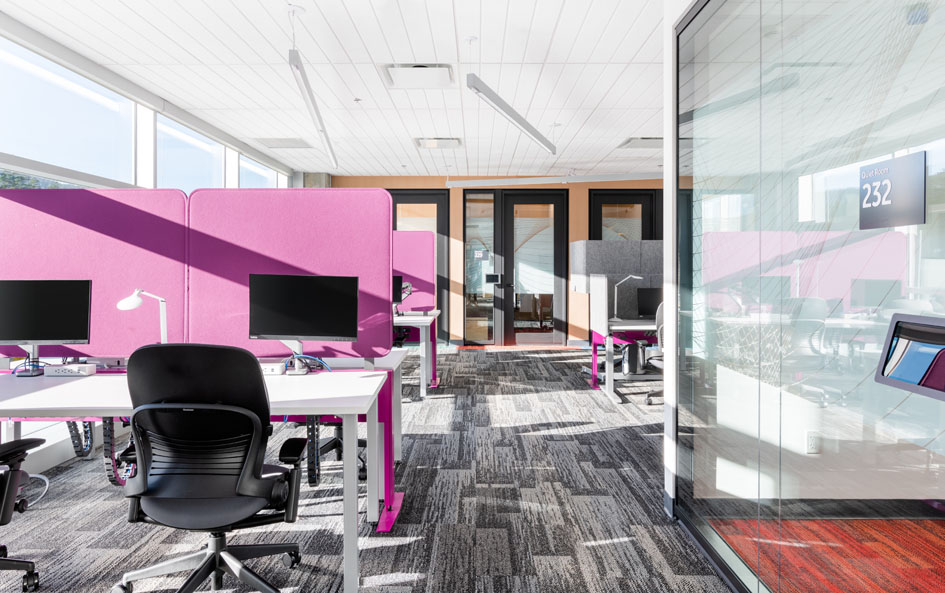
Designed by Western Interior Design Group Ltd., the space promotes collaboration, community and innovation and will give government employees who live in Langford or surrounding communities the choice to work closer to home. This contributes to a positive work-life balance and reduces environmental impacts.

The more than 930 square-metre (10,000 square-foot) office space is fully accessible and certified Built Green, making it sustainable and energy efficient. Many green design elements and locally sourced materials were used throughout the space to reduce negative environmental impacts and create a healthy, productive space for employees. Some examples include:

  • natural and exposed Hemlock wood ceiling and wall features manufactured in Abbotsford;
  • Douglas fir textured wood features used on the front desk, manufactured in Victoria;
  • modern furniture, made in Victoria from sustainable plywood; felt ceiling and wall coverings, suspended dividers and carpeting are made from recycled materials; and
  • energy smart kitchen appliances, heating and ventilation systems and LED lighting to reduce energy consumption and save energy costs.

“Having the option to work and collaborate in a bright, open and innovative workspace near home will be a game changer for many people – giving them more time with their families, cutting commute times and helping reduce our greenhouse gas emissions.” said Premier John Horgan.

More than 2,000 B.C. government employees live in the Westshore area. Many have long advocated for an office space close to home due to the time and money they spend commuting each day. The new office will help ease commute times and support government’s goal to lower greenhouse gas emissions and other pollutants by reducing congestion and traffic idling.

During COVID-19, the occupancy of the office has been reduced from 100 to 50 people to ensure physical distancing and worker safety. A COVID-19 safety plan, including behavioural and wayfinding signage, is in place, per the direction and orders of the provincial health officer and WorkSafeBC.

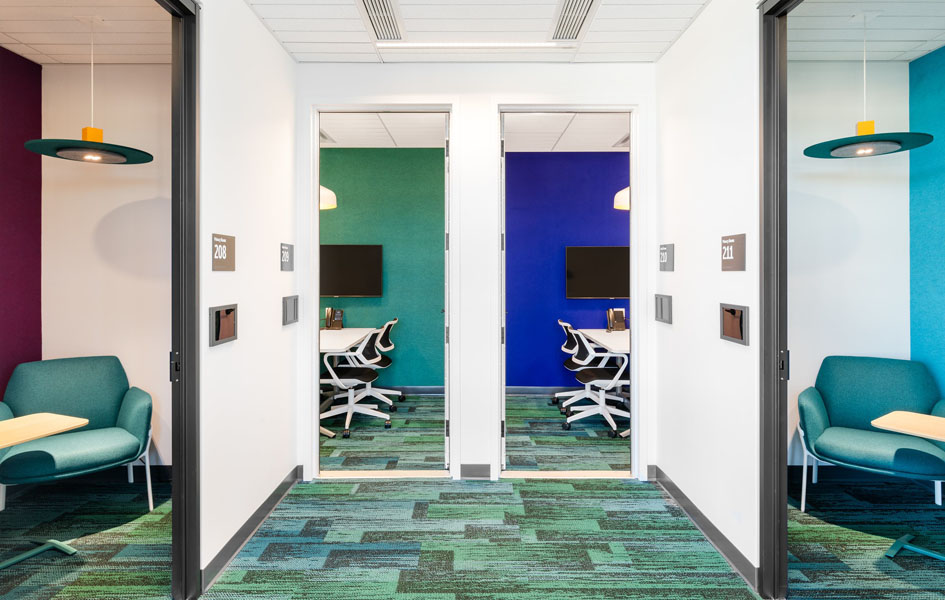
The space includes a mix of co-working and private rooms, natural light with floor-to-ceiling windows and an outdoor patio and workspace with views of Langford Lake. Innovative office technology is used throughout, such as interactive room and desk-booking apps, digital signage and audio-visual meeting systems.

It also has electric-vehicle charging stations, bike storage, day-use lockers and showers that promote active and green transportation options. With brightly coloured felt pendant lighting, exposed natural B.C. wood elements, textured graphic and interactive walls, the space aims to inspire creativity and provide a collaborative, healthy and positive work environment.

“We’re using technology and innovation to change the way we live and work,” said Lisa Beare, Minister of Citizens’ Services. “The new office model will help us keep pace with a growing mobile workforce, support collaboration and shared ideas in the BC Public Service and give people the flexibility they need and want.”

Located at 1311 Lakepoint Way in Langford, the Westhills ShareSpace office was announced as part of a pilot in November 2019.

Gaps flagged in new CDM programs

Condo corporations in Ontario have more opportunities to manage their energy costs amidst the challenges of COVID-19 and potentially keep maintenance fees in check. As directed by the provincial government, the Independent Electricity System Operator (IESO) rolled out a list of new electricity conservation and demand management (CDM) programs on January 1, 2021.

This 2021-2024 CDM framework was devised to reduce peak demand and bring guidance and new incentives to electricity-saving projects. Over the four-year period, the CDM framework is aiming for more than 2,509 gigawatt-hours in energy savings and almost 410 megawatts of peak demand reduction from the industrial, commercial, institutional (ICI) sectors.

The budget currently allocates a total $692 million (up to $457 million for ICI consumers and other yet-to-be-announced “consumer solutions”) and includes key updates to condo-related areas: a prescriptive retrofit program and new whole-building saving incentives through the energy performance program. Previous funding which directly supported 150 energy managers will veer to other uses. After 2022, companies must use their own funds to reimburse embedded energy managers, but will be offered “an enhanced level of technical support and resources.” It’s a move some see as more short-sighted.

“People will point to this as creating savings for the rate payer,” says Rob Detta Colli, manager of energy and sustainability with Crossbridge Condominium Services. “However, it effectively ends a program that has been proven to be one of the cheapest ways to reduce energy usage for the province. Peak consumption in Ontario is still an issue, and the generating stations are not getting any younger.”

Speaking from personal experience, he says that being able to attack energy consumption and peak demand from within his company’s portfolio has not only generated millions of dollars in savings directly to condo owners and benefited the province, but also increased the capability of the entire company. “Having one energy manager supporting all of the property managers means we’ve got 250 “mini” energy managers out there.”

Incentive pathways

Looking at prescriptive retrofits, to which the majority of CDM funding is geared, there are now more energy efficiency measures to choose from across three streams: lighting, HVAC and other equipment such as motors and variable frequency drives. The program is also expected to have quicker pre-approvals and payments. Incentive levels are predefined and based on the amount of energy or demand savings of the new equipment. As such, the program eliminates the previous custom track, which could leave behind some gaps.

“The custom track allowed the dollar value of the incentive to be proportionate to the savings— if you showed more savings, you got a larger incentive,” says Detta Colli. “The only choice now is a prescriptive system that should make the application and approval process simpler. But prescriptive incentives tend to provide significantly less funds. It looks like the incentives for lighting will be reduced by 20 per cent.

“The pay-for-performance energy performance program could fill the gap left behind by the elimination from the custom track. But I see that requiring quite a bit of work to make this successful in the condominium segment where the cycle time on projects is very long.”

Incentives through the energy performance program are now offered for three years compared to a previous prorated iteration. As long as an application is approved by December 2024, the IESO will offer a three-year agreement until the end of 2027.

The incentive is $0.04 cents per kilowatt-hour (kWh) annually for metered energy savings relative to the baseline energy use determined at the beginning of the contract. It will also pay $50/kWh for peak demand reduction and provide upfront payments for capital improvements and energy management practices. Condos would first need to create a baseline energy model then take a deep dive into savings, which could look at operational, capital and behavioural.

“What I like to stress is a kilowatt hour is a kilowatt hour, and we’re going to pay you every year based on what you save,” said Robert Edwards of the IESO, who spoke at a recent CAI Canada seminar: The Importance of Energy Audits and Available Government Incentives for Condo Corporations.

Condos are asked to commit to saving at least five per cent energy by the end of year two, with “data normalized for weather and significant building operations.” If this feat is achieved in year one, condos that maintain this mark would reap the $0.04 kWh incentive for the following two years. “That is money you can invest for tenant engagement or programs or maintenance, capital projects and best practices, all of which can lead to savings,” said Edwards. “If you’re going to go down this path, it’s beneficial to do as much saving as you can upfront in year one so you get to account that year over year.”

Deciphering sound investments

Often, the first step in understanding how to make a condo less of an energy hog is an energy audit. It’s also hard to know which investments might make the most sense.

Some retrofits bring a two-year payback or less; others incur savings that are difficult to quantify or could involve “out-in-left-field” technologies that have yet to be proven, advised Fan Fong, director of energy management at Complete Energy Solutions and another panelist at the CAI Canada event. “You need a firm number to present to your board, and you can’t exactly present something that will not guarantee some sort of return or have numbers rooted in reality.”

Similar to a yearly doctor’s physical, a good energy audit, he adds, should answer two main questions: how efficient is the building and what are the small changes with the shortest payback period. In an ever-changing digital marketplace, an audit should occur every five years to account for shifts.

Efficiency metrics include analyzing a corporation’s historical energy usage and tools like the Energy Usage Intensity score generated through the Energy Water and Reporting Benchmarking (EWRB) initiative. Corporations can see where their building sits on the energy efficiency spectrum, for instance, higher consumption during winter compared to others in its peer group.

How conservation funds best suit a condo can be tricky to determine. Not all measures are created equal. As Fong noted, some have a payback of one to five years; others, like solar panels, might have a payback of eight years, and some, like windows, have a payback of 20 years. “Depending on how much energy your building actually uses, some might not make sense whatsoever,” he added. Take heat recovery systems, for example, which could have a payback of more than 30 years. “If the payback exceeds the useful life of the equipment, it’s not a worthwhile investment; you’ll lose money.”

If they haven’t already done so, condos should consider implementing high-payback items like variable frequency drives and building automation systems. For LED retrofits, next generation fixtures are worth considering, especially in the case of botched colour temperatures from a previous job.

“There have been some condominiums that have saved an additional 30 to 40 per cent off their hydro consumption usage with new type of fixtures available in the marketplace,” said Emmanuel Eframidis, CEO of Complete Group of Companies. “So, just because a condo has done a lighting retrofit 10 years ago, doesn’t mean it’s not worthwhile or beneficial economically to do another one.”

The prescriptive incentive for lighting also pays more for areas overlooked under the custom track, such as mechanical and communication rooms and some outdoor stairwells, which often operate 24/7. Fong pointed out these spaces could benefit under the new track because corporations will be paid a fixed amount, not through savings.

Looking at how energy upgrades impact a building long-term, he showcased one condo where the operating fund was $1 million annually. Post-retrofit, the budget decreased to $850,000. “This building is banking $150,000 a year,” he said. “Adding that up and factoring in inflation over the next 20 years, you’re looking at more than $3.8 million of savings.” That’s including incentives and minus the project cost.

Amidst the aging stock of condos, even fancier new builds aren’t immune to wasteful equipment. Having conducted hundreds of energy audits and served as a condo board president for 11 years, Eframidis said newer condos can be highly inefficient.

“Buildings that have been constructed over the last six or seven years that you may think are efficient in nature, it’s the exact opposite,” he says, adding, there are always at least one to three problem areas that result in a payback of less than two years.

Retrofit Budgeting

While some retrofits bring a one-year payback, other energy conservation projects in need of budgeting could look to incentives like flexible financing. “The one catch I strongly advise property managers of is there is no such thing as a free lunch,” said Fong. “If someone offers zero capital upfront, they’re going to make it on the back-end somehow. Guaranteed savings do come at a cost to residents.”

Unfortunately, there is often the “obvious” retrofit, one that interferes with residents’ daily lives. “If it floods your department with complaints, it’s not a good retrofit,” he said. “When you sign on to one of these guarantees, you’re going to be facing exit fees or married to them for the next few years. They may also operate equipment below manufacturer recommended levels and cause damage.”

Contracts should be scrutinized, as many won’t cover damaged equipment. Many will offer a deductible only for repairs and service calls. In turn, emergency calls can also bring unplanned expenses to operating budgets.