




Articles Archive - Page 315 of 928 - REMINET
REMI

Average rent in Canada up 4.4%

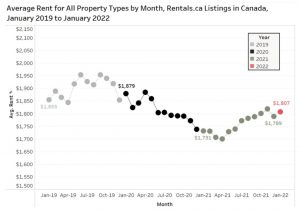
After the typical seasonal decline in December, the average rent in Canada is trending upwards once again. Fears around the Omicron variant have all but vanished, and prospective tenants are back on the hunt for rental housing.

At the national level, the rental market peaked in late 2019 and fell steadily over the course of the pandemic, hitting rock bottom in April 2021. This is the fifth consecutive month average asking rents for all property types were positive year over year based on Rentals.ca listings, following 16 consecutive months of annual decline.

“January rents increased monthly in Canada, following a decrease in December, which we believe was just the typical seasonal decline, as opposed to Omicron fears,” said Ben Myers, president of Bullpen Research & Consulting. “However, the pandemic trend of much higher demand for larger properties continues, with average rental rates for single-family properties up 20 per cent annually. The need for more space, a frothy resale market, future interest rate hikes, and the decoupling of workers from their place of employment remain key factors in the rise.”
Municipal rates

Many municipalities across Canada are experiencing substantial annual increases in average rent, although analysts do warn that comparisons this year will skew high.

Vancouver currently has the most expensive rents in the country for all property types at $2,550 per month, which represents an annual increase of 16.2 per cent. Toronto was the next most expensive city in Canada coming in at $2,317 per month, up 14.5 per cent annually.

Meanwhile, Gatineau and London experienced the largest annual increases in average rent: Gatineau increased 17.8 per cent to $1,657 per month, while London increased 17.2 per cent to $1,820 per month.

Other municipalities with annual increases include: Etobicoke, up 12.4 per cent; Ottawa, up 5.1 per cent; Mississauga, up 5.1 per cent; Montreal, up 4.1 per cent; Saskatoon, up 4 per cent; Hamilton, up 3.9 per cent; Winnipeg, up 2.5 per cent and Calgary, up 2.3 per cent.

Only a handful of municipalities experienced annual declines in average rent, including Scarborough, which fell 1.9 per cent to $1,848 per month.

Property types

The largest increases in rent across Canada continue to be for single-family rentals, as many potential buyers choose to avoid entering the “frothy” ownership market. Potential government intervention and future interest rate hikes are likely playing into their decision to postpone buying.

The average rent for a single-family home in January was $2,652 — up nearly 20 per cent above last January’s average of $2,215. Average rent for condo rentals increased 13.8 per cent annually to $2,227, while apartment rents were up 2.1 per cent annually to $1,639 in January.

In Vancouver, average rent for single-family homes rose from $2,758 per month in 2021 to $2,987 in January 2022, represenitng a 8.3 per cent increase. Condominium rents were up  7.1 per cent and apartment rents were up 8.4 per cent.

Toronto saw a similar increase in average asking rent for single family homes, while condo apartments made a real come-back, rising 13.6 per cent in January 2022. Average rents for apartment rentals increased  5.7 per cent.

All the data can be found in the February National Rent Report at: www.rentals.ca

 

Pre-fabricated CLT condo will be a first in Toronto

The cross laminated timber “CLT” construction of a new condo in West Toronto will be prefabricated off-site to significantly reduce embodied carbon. The project will be a first in the city as plans are realized through a joint venture between Windmill Developments and Leader Lane Developments.

“Our team believes real estate is ripe for innovation, especially when it comes to making an impact in the fight against climate change,” says Jonathan Westeinde, CEO of Windmill Developments. “Not only will these buildings be built faster, and with less waste, they will be the most sustainable homes available on the market.”

In total, 83 condo units will be spread between three properties, each of which is located next to each other and anchored by the Mimico GO Train Station.

Each building is being developed to Passive House standards through the use of a CLT structure and will be targeting LEED Platinum certification with inspiration from the One Planet Living principles.

R-Hauz will be the design-build contractor on each building, following its pre-fabricated pilot project which is the first all mass timber six-storey residential building in Ontario, located on Queen Street East.

Leader Lane partner Don Manlapaz says the new partnership with Windmill is intended to support missing middle housing types, introducing soft density into supply-constrained neighbourhoods that are experiencing high demand.

“Not only will our approach allow for a total construction timeline of eight to twelve months, but we anticipate efficiencies in planning and approvals as well,” says Manlapaz. “The scale of projects we are pursuing means we should avoid a lengthy re-zoning process, focusing instead on Site Plan Approval and Minor Variances. The net result is both speed to market, and speed to occupancy, both of which are critical in a city experiencing a housing crisis. We’re excited to be getting started.”

All three properties will be receiving funding from the One Planet Living Fund.

Promoting hygiene through traffic-based cleaning

GP PRO and Butlr Technologies are partnering in an attempt to enhance washroom hygiene and facility maintenance beyond the pandemic. The companies will use the latter’s innovative traffic-based cleaning, which is based on a heat-detecting, people-sensing platform.

The two companies have announced a new collaboration that is designed to help facilitate a safer return to facilities by providing a comprehensive differentiated washroom maintenance solution that improves hygiene and reduces labour costs, two major pain points that commercial facilities are facing more than ever in the wake of COVID.

Butlr Technologies, an offshoot of the Massachusetts Institute of Technology (MIT) Media Lab, has built a people-sensing platform using thermal wireless sensors and artificial intelligence to passively and anonymously detect human presence indoors.

Specifically, the platform uses body heat to anonymously infer occupancy, headcount, and activity to generate accurate, real-time, and historic spatial insights at a fraction of the cost and time of legacy alternatives. Since its launch in late 2021, Butlr is already working with dozens of top occupiers, landlords, and service providers in North America, Europe and Asia.

A release says that, in combination with GP PRO’s KOLO Smart Monitoring System, Butlr and GP PRO will enable traffic-based cleaning as a means to increase hygiene while enabling labour savings. The partnership aims to help drive market awareness of the potential and the benefits of traffic-based cleaning solutions.

“Butlr is proud to be cooperating with GP PRO and its innovative KOLO Smart Monitoring System,” said Honghao Deng, founder and CEO of Butlr. “Gone should be the days of schedule-based cleaning. Butlr’s real-time traffic insights will allow users of GP PRO’s KOLO system to achieve a better customer experience while realizing labour and environmental impact savings.”

“Butlr demonstrated a great deal of insight in developing its Heatic platform as a way for facility managers to address several critical implications from COVID-19,” said John Strom, vice president and general manager of connected solutions with GP PRO. “When deployed in combination with our KOLO system, there’s no doubt in my mind that customers will achieve a new level of operational efficiency and hygiene. In tandem, these two technologies have the potential to dramatically and positively impact facility management.”

Photo: Butlr Technologies

Building code harmonization advances

Consultations are underway in the ongoing exercise to harmonize the Ontario Building Code with model national building, energy and plumbing codes. Several proposed provisions for the next version of Ontario’s code are now posted on the provincial Regulatory Registry for public comment until March 13.

Final publication of the 2020 model national codes has been delayed, but is slated to occur this year. It’s expected the updated Ontario code will be released in 2023 and come into effect in early 2024. An earlier stage of consultation, last fall, dealt with tidying up variations in the technical language in the two sets of codes, while this winter’s focus is on changes to be introduced in the new national codes.

“While the Building Code will change to be increasingly harmonized, and the code development process will change in accordance with the Reconciliation Agreement on Construction Codes under the Canadian Free Trade Agreement, Ontario will continue to uphold high standards and leading practices for construction, and offer design flexibility through objective-based design solutions,” states the briefing document accompanying the proposed changes.

Proposed code changes are organized in 10 categories:

  • Farm buildings
  • Encapsulated mass timber construction
  • Earthquake and structural design
  • Accessibility
  • Energy efficiency
  • Fire safety and fire protection systems
  • Safety glazing
  • Plumbing
  • Home-type care occupancies
  • Other, including: stairs/ramps/handrail/guide design, use and egress; insulated concrete forms; and corrosion resistant ties

A third phase of consultation will occur later in 2022 to address Ontario-specific issues and/or other concerns that arise from public feedback.

Sustainability is now a priority in property management

Ready or not, sustainability has become table stakes in property management. Tenants and investors are increasingly intent on partnering with operators who are committed to greening their operations and taking the lead on climate issues.

“The idea of sustainability has been around for decades, but the awareness around climate-related issues has evolved,” agrees Kim Saunders, RPA®|HP®, CLO®, BOMA Fellow, Property Manager with East Port Properties, adding, “Today, there’s a recognition that real estate accounts for a significant portion of the world’s energy usage – up to 40% according to the United Nations – and that property managers and operators have a big role to play in contributing to a healthier, more resilient planet.”

Prioritizing sustainability also makes business sense. Assets that embrace energy-saving equipment and eco-forward practices are more resilient and cost-effective to run. It’s little wonder, then, that a recent Bloomberg report states Global ESG assets will surpass $53 trillion by 2025 to represent over a third of the world’s total assets under management1



In short: It pays to put environmental, social, and governance (ESG) strategies at the top of the property management agenda. And to do that, says Saunders, property managers need the training, skills, and support to lead the way.

“To be successful, [property managers] need to know a bit about everything when it comes to sustainability,” says Saunders. “They need to know what technologies or processes will make their buildings more efficient, and they have to be able to sell sustainable strategies and investments to owners and other stakeholders.”

Going further with BOMI
Championing sustainability in property management takes more than good intentions. It requires additional training and resources to ensure impactful strategies take root. It’s for this reason that programs like BOMI’s High Performance (HP) Sustainable Buildings and Real Property Administrator Designation programs are designed to provide property managers with the tools, resources, and skills to rise above evolving climate change challenges.

“BOMI’s RPA® designation basically prepares you for anything that comes your way,” says Saunders. “It gives you the additional skills and knowledge to take your job to the next level or even take steps towards your future career in property management.”

“I always tell my coworkers to plan for the job they want, and that’s what the RPA® course allows,” she adds.

BOMI’s RPA® program is complemented by the organization’s HP program, a designation source that offers a more granular exploration of this fast-evolving topic.

“The BOMI-HP® program is deep dive into the things you do as property managers, how they relate to sustainability, and how to get future ESG initiatives off the ground,“ Saunders explains.

“And that’s an important piece,” she continues. “To make any progress on sustainability, you need to know how to engage stakeholders and communicate both the financial and social benefits.”

Indeed, gaining buy-in for sustainable initiatives can be a barrier for property management teams. It is a skill that requires insight into how investments in cleaner, more efficient operations translate into long-term savings. And that’s not always an easy sell.

“I remember trying to implement daytime cleaning among our tenants because I knew it would save energy,” Saunders recalls. “I got a lot of resistance at first until one of the tenants finally agreed to try it on a pilot basis. I kept track of the results and shared them with other tenants, and pretty soon everyone started seeing the benefits. Soon after, they started asking me to sign them up.”

The good news is that it’s getting easier to sell property management stakeholders on sustainability – both in regards to the return on investment and the positive impact on tenant relations. The key, Saunders notes, is communicating the value: “Once people understand how sustainability benefits an operation, it’s easier to get that support and engagement. And now, because climate change is such a public issue, that buy-in is becoming easier to secure.”

The pressure is on property managers to go further with sustainability and ESG. For those in the industry, that means understanding what needs to be done and acquiring the skills to take action.

Learn more about BOMI’s RPA®  and BOMI-HP® Designation courses.

1  https://www.bloomberg.com/professional/blog/esg-assets-may-hit-53-trillion-by-2025-a-third-of-global-aum/

Sustainability is now a priority in facility management

Sustainability has taken precedence in facility management, and for good reasons. Beyond the fact that greener operations unlock savings and protect asset values, tenants and investors are more interested than ever in partnering with facilities that demonstrate an awareness for – and resilience against – evolving climate issues.

“The idea of sustainability has been around for decades, but the awareness around climate-related issues has evolved,” agrees Kim Saunders, RPA®|HP®, CLO®, BOMA Fellow, Property Manager with East Port Properties, adding, “Today, there’s a recognition that real estate accounts for a significant portion of the world’s energy usage – up to 40% according to the United Nations – and that property managers and operators have a big role to play in contributing to a healthier, more resilient planet.”

Prioritizing sustainability in asset management also makes business sense. Facilities that embrace energy-saving equipment and eco-forward practices are more resilient and cost-effective to run. It’s little wonder, then, that a recent Bloomberg reports states Global ESG assets will surpass $53 trillion by 2025 to represent over a third of the world’s total assets under management(1)

In short: It pays to put environmental, social, and governance (ESG) strategies at the top of the facility management agenda. And to do that, says Saunders, facility teams require the training, skills, and support to lead the way.

“To be successful, [facility managers] need to know a bit about everything when it comes to sustainability,” says Saunders. “They need to know what technologies or processes will make their buildings more efficient, and they have to be able to sell sustainable strategies and investments to owners and other stakeholders.”

Going further with BOMI
Championing sustainability in facilities management takes more than good intentions. It requires additional training and resources to ensure impactful strategies take root. It’s for this reason that programs like BOMI’s High Performance (HP) Sustainable Buildings and Facilities Management Administrator programs are designed to provide
facility managers with the tools, resources, and skills to rise above evolving climate change challenges.

“BOMI’s FMA® designation course basically prepares you for anything that comes your way,” says Saunders. “It gives you the additional skills and knowledge to take your job to the next level or even take steps towards your future career in facilities management.”

“I always tell my coworkers to plan for the job they want, and that’s what the FMA® program allows,” she adds. BOMI’s FMA® program is complemented by the organization’s HP program, a designation source that offers a more granular exploration of this fast-evolving topic.

“The BOMI-HP® program is deep dive into the things you do as a property or facility manager, how they relate to sustainability, and how to get future ESG initiatives off the ground,“ Saunders explains. “And that’s an important piece,” she continues. “To make any progress on sustainability, you need to know how to engage stakeholders and communicate both the financial and social benefits.”

BOMI

Indeed, gaining buy-in for sustainable initiatives can be a barrier for facilities management teams. It is a skill that requires insight into how investments in cleaner, more efficient operations translate into long-term savings. And that’s not always an easy sell.

“I remember trying to implement daytime cleaning among our tenants because I knew it would save energy,” Saunders recalls. “I got a lot of resistance at first until one of the tenants finally agreed to try it on a pilot basis. I kept track of the results and shared them with other tenants, and pretty soon everyone started seeing the benefits. Soon after, they started asking me to sign them up.”

The good news is that it’s getting easier to sell building owners and tenants on sustainability – both in regards to the return on investment and the positive impact on tenant relations. The key, Saunders notes, is communicating the value:

“Once people understand how sustainability benefits and operation, it’s easier to get that support and engagement. And now, because climate change is such a public
issue, that buy-in is becoming easier to secure.”

The pressure is on facility teams to go further with sustainability and ESG. For those in the industry, that means understanding what needs to be done and acquiring the skills to take action.

Learn more about BOMI’s FMA® and BOMI-HP® Designation courses.

1 https://www.bloomberg.com/professional/blog/esg-assets-may-hit-53-trillion-by-2025-a-third-of-global-aum/

Proactive Pest Management

April showers bring May flowers … and pests! Generally, many insects survive the winter months as immature larvae with the protection of heavy debris litter, and when the weather doesn’t fluctuate between thawing and freezing temperatures. With the pandemic shifting food waste to residential buildings, however, now is also the time for property owners/managers to protect their residents from these unwanted guests.

For insights into pest control challenges and tips on how to swat them, we turned to Paolo Bossio, president and CEO of Advantage Pest Control.

Why is spring an important time to consider pest management?
This is the time of the year when the weather starts warming up and most pests begin to become active from their dormant state to forage, lay eggs, and expand their colonies. However, mice and rats remain active all year long, even during the colder months. They will eat just about anything to survive, and the gestation period for mice is anywhere from 21 to 28 days. So, it is smart to consider pest management all year round.



How has the pandemic compounded the problem?
One major problem is that it has forced many restaurants to rely on food delivery services to serve their customers. What that does, though, is it transfers the food waste from commercial properties to residential establishments. Now, all the mice and rats who used to feed on the dumpsters behind restaurants or strip malls are following that food trail to condos, apartments, or single-family dwellings.

Over the year, we have witnessed thousands of mice and rats behind multi-residential buildings where they’re very well fed. That’s why we sent our technicians to our property managers to check if that is happening at their property and ensure they were well prepared to manage the issue. This is an example of our dynamic integrated pest management approach.

What is dynamic integrated pest management?

Integrated pest management (IPM) describes an ongoing process of pest control that takes an eco-forward approach to manage pest populations. The first step is an inspection of the pest population or environmental conditions indicating that pest control must be taken, and the second is identifying and monitoring pest activity. Next comes preventative measures and exclusions, and the last step is controlling the problem by using physical trappings and using baits and sprays when appropriate.

Dynamic IPM, however, is about seeing things before they happen and adapting to our customer’s needs. Each program is specifically curated to each multi-residential building since each residential home is unique. As Wayne Gretzky said, “it’s about where the puck is going, not where it has been.”

For example, when we do a roach service treatment and we are using a combination of a spray and aerosol inside an apartment, what if the person cannot leave? What if they are bedridden or have no place to go because of the pandemic? We must get creative and maybe slightly alter how we complete the service by using the vacuum or use more glue boards. We cannot just say, “Well, this is the IPM program, so we can’t change anything.” Our team is trained to be agile and ready to modify their approach according to the circumstances, even if that means taking more time to do the job more thoroughly and responsibly.

One of the questions I ask during technician interviews is, “How many units can you treat in a day?” which is a trick question. Some applicants come from pest control companies where they are expected to handle 30 or 40 units a day, but if they say they’re proud of doing that many, they usually don’t make it past to the next round since it isn’t about the number of treatments they can do, but the quality and outcome from doing the job. I want to ensure our team delivers quality treatments and top-notch customer service, even if it takes more time to get the job done efficiently and effectively.

What pest management tips can you offer property managers to prepare for spring and summer?

There are a few things property stakeholders and property managers can do. For instance, always check the exterior of your property to make sure there is no water leaking from the gutters, and the water pump is pushing the water away from the property if you have one. Standing water is a breeding ground for insects! Also, do not store any debris or firewood at the side of the property because that can act as a new point of the harbour for mice or rats.

Another tip is to check surrounding trees are not touching the property. If you have a limb touching the roof or a balcony, that can be an open invitation to unwelcome guests like squirrels, which are now looking for places to procreate.

Lastly, take a moment to consider how else you can deter pests from making your property their new home. Keep food out of reach and eliminate easy points of entry. Seal up any entry points, especially have a harsh winter, for gaps around pipes, vents, windows, and doors. If you need help or want a partner who will spot and address pest control issues on your behalf, give us a call.

Advantage Pest Control

Paolo Bossio is the President and CEO of Advantage Pest Control Inc., a family-owned and operated business specializing in Dynamic Integrated Pest Management programs. 

Dream and Great Gulf selected to develop Quayside

Waterfront Toronto announced it has begun negotiations with Dream Unlimited Corp. and Great Gulf Group for the development of Quayside in downtown Toronto. The announcement on Tuesday followed a competitive process in which four teams vied for the opportunity to transform the 12-acre site into a mixed-use community.

“The opportunity to develop Quayside with Waterfront Toronto is the perfect development at the perfect time,” said Michael Cooper, Chair, Quayside Impact Limited Partnership. “Dream and Great Gulf regard our activities in real estate as a canvas on which we can make our communities more inclusive, sustainable and healthier. With Quayside, Waterfront Toronto has created the greatest opportunity for impact development in the country, and we believe that the Partnership is ideally suited to deliver on this opportunity.”

The 12-acre site at the foot of Parliament Street and Lake Shore Boulevard East was formerly the site of docks and industrial buildings. Waterfront Toronto had been working with Google subsidiary, Sidewalk Labs, but plans were dropped two years ago over concerns related to privacy issues.

As per the winning submission from Dream and Great Gulf, the future Quayside community will include:

  • 800+ affordable housing units, more than doubling the affordable housing currently there, with many delivered in earliest stages to address an urgent need;
  • New public spaces, including a two-acre forested green space, plus a significant urban farm atop one of Canada’s largest residential mass timber buildings;
  • A landmark cultural destination and multi-use arts venue that brings together space for the performing arts, Indigenous-centered cultural celebrations and flexible education spaces;
  • Exemplary low-carbon development and innovations, making Quayside the first all-electric, zero-carbon community at this scale;
  • World-class architecture that will raise the bar on design across the entire neighbourhood and create a visually striking focal point on Toronto’s waterfront.

“Today we take an important next step in unlocking the full potential of the city’s waterfront,” said Jack Winberg, chair of Waterfront Toronto’s Investment and Real Estate Committee (IREC). “Dream Unlimited and Great Gulf together with their team of architects and local partners have a strong proposal to make Quayside and Toronto’s waterfront among the best in the world. As we begin negotiations on a project agreement, we are more confident than ever in the transformative power of the Quayside project to the economic and social recovery of Toronto, Ontario, and Canada”

The project will be led by developers with a proven ability to deliver on their commitments, alongside world-class architects and expert local partners including The Bentway, Centre for Social Innovation, Crow’s Theatre, George Brown College, Rekai Centres and WoodGreen Community Services.

Five towers including one of Canada’s largest residential mass timber buildings are planned for the site, with an emphasis on family-sized units. A community care hub offering a range of programs and services to support aging-in-place, recreation and wellness for all residents, has also been tabled.

Moving forward, Waterfront Toronto and Quayside Impact Limited Partnership will  negotiate a project agreement, which is expected to be completed by fall 2022.

Architecture regulators form new Canadian group

Members of the former Canadian Architectural Licensing Authorities (CALA) have incorporated as a new not-for-profit group, the Regulatory Organizations of Architecture in Canada (ROAC).

As a unified body, ROAC includes the 11 provincial and territorial bodies responsible for regulating the practice of architecture. To serve the public interest, these regulators set qualifications and practice standards for entry into the profession, issuing registration and licences to those meeting them.

ROAC will continue the former CALA’s work on a national level. This includes the Examination for Architects in Canada (ExAC) and the Internship in Architecture Program (IAP), as well as serving as the conduit between the regulators and the Canadian Architectural Certification Board (CACB).

Headquartered in Vancouver, ROAC seeks to enhance the strength and diversity of the profession in the public interest, and to ensure modern, appropriate recognition of qualifications are maintained. The national body will continue developing nationally recognized standards and programs to meet regulatory responsibilities as well as the needs of the public and the architectural profession. This includes improving professional mobility throughout Canada and internationally using tools such as Mutual Recognition Agreements to honour architectural credentials and qualifications, and provide a path for obtaining registration across participating jurisdictions.

These regulatory bodies made the decision to incorporate as ROAC to more effectively continue the longstanding work historically conducted by CALA. Ian McDonald has been named the group’s inaugural chair.

“Several principles established by the CALA Incorporation Task Force were important for us to preserve,” he explains. “These include flexibility and efficiency, equality of voice, autonomy and decision-making, architectural voice, preserving working structure, and funding and administrative support. The principles were designed to ensure what was working well with CALA remains true in ROAC.”

Under the new not-for-profit’s governance structure, each member organization appoints a director to represent their jurisdiction on the ROAC Board of Directors. These directors will meet regularly to oversee the organization’s activities, while member meetings with the broader regulatory bodies will happen at least annually.

“The primary goal of the new ROAC and all of its member organizations is to protect the public interest,” says McDonald. “Working together under this new official structure allows us to enhance and strengthen the standards, programs, and opportunities within the architecture profession across Canada, while preserving the tradition of provincial and territorial regulatory autonomy.”

Vancouver firms honoured with NKBA Awards

At this year’s National Kitchen & Bath Association (NKBA) Design + Industry Awards, three Vancouver firms were honoured for excellence in design and execution.

Beyond Beige Interior Design, PURE Design Inc. and WW Design Studio received awards in the Traditional Kitchen (large), Traditional Kitchen (small) and Traditional Bath (small) categories, respectively.

The design competition received hundreds of entries and winners were ultimately chosen based on factors like innovative design, presentation, superior function, creativity, safety and ergonomics and adherence to NKBA Planning Guidelines

NKBA’s CEO Bill Darcy and EVP & CSO Suzie Williford hosted the ceremonies, presenting 28 awards, including the NKBA Student Design Competition winners as well as the NKBA Innovative Showroom Awards Competition winners.

TRADITIONAL KITCHEN, LARGE (250 Square Feet and Over):
Second Place — Reisa Pollard, lead designer and owner, Megan Bouchard, senior designer,
Beyond Beige Interior Design, Vancouver

The concept for this kitchen was a modern twist on classic luxury. From the hidden doorways in the kitchen perimeter millwork to the custom designed gold hood fan, this kitchen is the home’s masterpiece. Adding to the layers of interest, the wood floor was intricately laid in a herringbone pattern. Floor to ceiling dark blue cabinetry was used to hide all the appliances and island cabinetry with gold inlay. This allowed the glamourous gold hood fan to be the showstopper.

TRADITIONAL KITCHEN, SMALL (Under 250 Square Feet):
Second Place — Ami McKay, founder and creative designer of PURE Design Inc., Vancouver

European bistro tiles were used with the millwork designed around them, helping to showcase this small kitchen’s big personality while at the same time keeping the design clean and simple, including a cheeky secret panty hidden off to the right of the stove. Simple modern pendants were chosen to hang above the white oak framed cooking area, creating a design focal point with handy shelves tucked out of the way on each side.

TRADITIONAL BATH, SMALL (Under 250 Square Feet):
Third Place — Wanda Weston, CKBD, principal designer, WW Design Studio, Burnaby


For this bathroom makeover, a custom glass shower screen was used to allow natural light into the space and framed in matte black to match the plumbing fixtures and hardware. Gold accents in the mirror and floating shelves added warmth to the otherwise cool tones used in the bathroom.

Find all the winners at NKBA.


Watchdog projects Ontario electricity subsidies

Ontario’s spending watchdog calculates Class B commercial electricity customers will realize an $8.4 billion subsidy over 20 years through the transfer of a major share of renewable generation costs to the provincial tax base. A newly released report from the Financial Accountability Office (FAO) of Ontario pegs the total cost of nine provincial energy subsidy programs at more than $118 billion for the 2020-21 to 2039-40 period, with the largest portion of that ascribed to the Ontario Electricity Rebate (OER) for residential, small business and farm customers.

In 2021-22, the renewable cost shift — which removes approximately 85 per cent of the costs for 33,000 wind, solar or bioenergy generation contracts from the electricity rate base — resulted in a 16 per cent average hydro bill reduction for Class B commercial customers paying the global adjustment on a volumetric per-kilowatt-hour basis, and a 14 per cent average reduction for Class A customers with the option of participating in the Industrial Conservation Initiative. The provincial outlay for subsidies will diminish annually as renewable generation contracts expire, dipping to about 10 per cent over the next 10 years then falling sharply and dissipating entirely over the remainder of the 2030s.

For the purposes of the report, the FAO lumps Class A commercial customers, with an annual average energy demand of 1 megawatt, in with industrial consumers. Together, those groups are projected to receive a $7.2 billion subsidy over the 20-year period of the renewable cost shift. Small business customers will be eligible for an estimated $24.3 billion via the OER during the same timeframe.

For small business and residential account holders, including the multi-residential rental and condominium sectors, the FAO confirms that future costs will be lower than was envisioned under the previous government’s pricing scheme. It would have seen electricity rates jumping 6 per cent annually from 2022 to 2028, following a four-year period in which increases were kept on par with the inflation rate. In contrast, the current government has said it intends to hold increases to 2 per cent annually.

While the subsidized hydro bill is slated to increase by 2 per cent annually, taking it from a monthly average of $121 in 2021 to $178 by 2040, the FAO notes that the “unsubsidized” bill — meaning the actual after-tax cost to supply residential and small business customers — will increase at a more moderate 0.7 per cent annual rate. In the absence of the OER, it’s estimated the average bill would increase from $171 per month in 2021 to $194 by 2040.

“The slow growth in the unsubsidized electricity bill is due primarily to slow projected growth in the cost of generating electricity in Ontario,” the FAO report states. “The IESO (Independent Electricity System Operator) projects that the unit cost of electricity in Ontario will grow at an annual average rate of 0.6 per cent from 2021 to 2040.”

Programs to address energy poverty accounted for $694 million in provincial spending or about 10 per cent of the subsidies for 2021-22. This includes the energy portion of the Ontario Energy and Property Tax Credit (OEPTC) and the Ontario Electricity Support Program (OESP), which provides monthly on-bill credits for residential ratepayers with low to moderate incomes.

During the 20 years from 2020-21 to 2039-40, the FAO projects approximately 13.7 billion will be allocated to the energy portion of the OEPTC, which applies on heating fuel costs as well as electricity. The tax rebate amount, which topped out at $243 for eligible claimants in 2021-22, is indexed to the rate of inflation, underlying the FAO’s projection that it will increase by 2.8 per cent annually.

In contrast, the OESP, which provides direct on-bill credits ranging from $35 to $113 per month for eligible customers, is not indexed to inflation and is projected to represent a smaller portion of total subsidies over time. In 2021-22 it accounted for 2.5 per cent of Ontario electricity subsidies versus a projected 2.1 per cent for the entire period to 2040.

“The FAO projects that annual OESP spending will decline by $99 million from $181 million in 2020-21 to $82 million in 2039-40,” the report states. “Changes to the credit amounts and income brackets can be made through regulation, which the Province has done only once (in 2017) since the creation of the program in 2015. Consequently, the FAO has assumed no change to the credit amounts or income brackets over the 20-year review period. If the Province does change the credit amounts or income brackets, then the cost of the OESP will increase.”

B.C. introduces new skilled trades legislation

New legislation to establish a made-in-B.C. system to support and train apprentices and modernize the Crown agency responsible for trades training has been introduced in the legislature.

The new Skilled Trades BC Act lays the foundation to address labour shortages, and  support and recognize the critical work that skilled tradespeople do in British Columbia.

In 2003, compulsory skilled trades certification was eliminated, making B.C. the only province without this requirement.

“We want apprentices in British Columbia to be able to count on having good, family-supporting jobs with steady work once they complete their training,” said Anne Kang, minister of advanced education and skills training. “As the only province without skilled trades certification, B.C. workers and employers have been at a disadvantage. With 85,000 new job openings expected in the trades by 2031, there are so many opportunities for meaningful work in B.C. That is why we’re launching a new, made-in-B.C. skilled trades certification system to encourage more people to choose careers in the trades, so they can prosper and employers can find the workers they need as B.C. builds a strong economic recovery.”

Skilled trades certification will require people to register as an apprentice or be a certified journeyperson to work in one of the 10 initial mechanical, electrical and automotive trades.

Skilled trades certification for these initial trades will be implemented in phases between 2022 and 2024, pending the passage of legislation.

The new legislation will replace the Industry Training Authority Act and transform the Industry Training Authority into SkilledTradesBC, the modernized Crown agency responsible for skilled trades training in British Columbia.

“The future is bright for a career in the trades and Skilled Trades Certification will help more workers standardize their skills at a high level, ensuring that the best trained will be helping build B.C.’s economy into the future,” said Cindy Oliver, board chair, Industry Training Authority.

The renewed focus of SkilledTradesBC reflects the expanded responsibilities associated with skilled trades certification, and a new focus on promoting and supporting apprentices and trainees throughout their training journey. SkilledTradesBC will remain the authority on trades training in B.C. with enhanced and streamlined services to help apprentices navigate training and get access to support.

“BCCA supports a fair, flexible solution that achieves a high standard of skill and safety without over-burdening workers or their employers with unnecessary barriers,” says Chris Atchison, BCCA president. “BCCA will continue to be at the table, working to ensure the depth and scope of this new policy is balanced and fair to employers.”

Vancouver home to first Chinese Canadian Museum

The historic Wing Sang Building, the oldest building in Vancouver Chinatown, will be the permanent site of the country’s first Chinese Canadian Museum.

The Chinese Canadian Museum will highlight places of historic significance throughout the province, celebrating the heritage of Chinese Canadians in B.C. The building will be owned and operated by the Chinese Canadian Museum Society of British Columbia.

The province is providing $27.5 million to the Chinese Canadian Museum Society of British Columbia to support continued planning and operations of the society, as well as the purchase of the historic Wing Sang Building at 51 East Pender St.

“The contributions of Chinese Canadians to this province have been invaluable,” said Premier John Horgan. “The Chinese Canadian Museum responds to the community’s long-standing desire for a place to share stories of achievement and shine a light on injustice. The museum will be an important place for all British Columbians, connecting the past to the present and future generations.”

First constructed in 1889 for Mr. Yip Sang’s business, the Wing Sang Company, then expanded to provide a home for his family, the Victorian Italianate building at 51 East Pender Street is Chinatown’s oldest structure. In 2004, Bob Rennie, founder and executive director of Rennie, acquired the historic building and funded an extensive five-year heritage renovation and restoration.

“Our family’s duty to 51 East Pender has always been to be a good custodian and we are honoured and excited to have Vancouver Chinatown’s oldest structure now celebrated as home to the Chinese Canadian Museum for all Canadians to experience this piece of history and the journey of Chinese Canadians,” said Rennie.

“Our family met recently, and we really want to make sure that the Chinese Canadian Museum has a solid foundation to carry out its mission, and so to help ensure the museum’s success we intend to have the Rennie Foundation make a gift of $7.5 million to the Chinese Canadian Museum Society in the near future.”

The Wing Sang Building will feature space for permanent and temporary exhibits, multi-purpose programs and events, and learning spaces for students.

The museum is expected to open in 2023.

The new commercial office takes shape

According to commercial real estate leader CBRE, “office market activity strengthened in the second half of 2021,” and Cushman & Wakefield reports the vacancy rate for office space in Canada declined through 2021. Many organizations are also considering ways to adapt their physical footprints to accommodate hybrid policies.

While most of today’s offices are not as crowded as they once were, the fact is that many people are either required to or want to work in offices. Thus, an increased level of care needs to go into designing and maintaining these spaces.

This begs the question: how are on-site offices adapting to employees’ new expectations and the evolving best practices that promote health and safety?

For those responsible for overseeing these spaces, like facility managers and building service contractors (BSCs), it’s important that they understand the trends that are shaping the maintenance of commercial offices.

Designing a better office space

The pandemic has caused a shift in the demand for certain commercial office features and priorities. These include:

  • Cleaning for health – Just like good IAQ, cleanliness is another key factor in upholding health and safety among the workforce. In addition to removing harmful pathogens from surfaces, cleaning gives employees greater peace of mind. Since the pandemic began, there has been a shift from cleaning for appearance to cleaning for health. On average, Americans spend around $5 billion per year on the common cold, which amounts to $3 billion on doctor’s visits and $2 billion on treatments. Additionally, around 50 million days of work are lost per year due to this illness.
  • Experiences and amenities – With many employees working from the convenience of their homes, companies are tasked with putting more thought into the design of commercial offices in an effort to make these spaces more inviting and experience-driven. Both large and boutique buildings have seen the adoption of food halls, tenant-only fitness centres, wellness rooms, lounges, and connected retail stores. The move to a more “hotel-centric” office entails reworking their blueprint to include more shared spaces that encourage collaboration among coworkers and customers.
  • Indoor air quality – Because COVID-19 spreads through the air via respiratory droplets from infected people, indoor air quality (IAQ) is an increasing concern. Good IAQ can also better support those who have health conditions like asthma and allergies. Many offices have had to reassess their heating, ventilation, and cooling systems and, in some cases, implement indoor air safeguards to support IAQ. Some high-efficiency particulate air filters can remove 99.97 per cent of airborne bacteria, dust, mould, and pollen particles as small as 0.3 microns. Filters such as these provide the best defence against those dangerous microns, which are the most penetrating type of particle.
  • Sustainability – A report from the Gensler Impact by Design 2020 states that 49 per cent of U.S. energy consumption is associated with the built environment. Therefore, corporations have a responsibility to reduce the impact their commercial offices have on the planet. Doing so can positively affect how prospective and current employees feel about an organization. According to a 2021 survey from IBM, 71 per cent of employees and job seekers say that sustainable companies are more attractive employers. To showcase commitment to the environment and support recruitment and retention, some companies have incorporated a biophilic design that brings green spaces and wildlife into offices.

Addressing lingering concerns regarding cleanliness

Upholding cleanliness helps protect occupants, visitors, corporate reputation, and even the design elements in an office. BSCs and in-house cleaning teams alike should take the following strategies into consideration given that the public still has concerns around cleanliness:

  • Set cleanliness benchmarks – To understand the current state of facility cleanliness, consider carpet cleanliness measurement tools and indoor air quality measurements that deliver key metrics on soil levels and air pollution. Take a close look at cleaning schedules to assess frequencies. Then, determine what benchmarks you should be working toward and regularly conduct tests, visual inspections, and check-ins with cleaning staff to track your progress.
  • Incorporate sustainability into cleaning – To give employees reassurance that buildings are safe, cleaning is happening more regularly and while workers are present. It is important to be mindful of the ingredients in the cleaning chemicals that custodial teams are using, as some can irritate the eyes and skin and negatively impact IAQ. Look for products that have been certified by trustworthy organizations like Green Seal, so you know they have been properly vetted against performance, health, and sustainability criteria.
  • Consider the impact of new layouts – Renovated workspaces may see changes such as fewer traditional desks, cubicles, and single-person offices in exchange for more shared collaboration spaces. Due to this, cleaning teams may have to adjust their routines, as areas frequented with multiple people will now require regular cleaning and disinfecting. In particular, carpeted areas with comfortable chairs and couches will need consistent upkeep for stains and spots. If windows and doors are being left open to aid ventilation, cleaning teams may need to perform more frequent floorcare and surface cleaning in case things like leaves, dust, soils, and moisture enter the facility.
  • Minimize disruption – Understandably, it can be difficult to clean with little disruption while workers are present. Bear in mind that employees want to see cleaning take place. Cleaning teams should opt for equipment that operates at lower decibels and allows quick but thorough cleaning. For example, low-moisture encapsulation carpet cleaning machines are quiet, easy to operate, and enable carpet to dry in under 30 minutes, rather than hours. Quieter vacuums also support soil removal and IAQ maintenance during the workday.

Meeting employee expectations and demands

According to the 2021 Work Trend Index from Microsoft, which gathered insights from more than 30,000 people in 31 countries, more than 65 per cent of respondents are craving more in-person time with their work teams and 66 per cent of business decision-makers are considering redesigning physical spaces to better accommodate hybrid work environments.

Just as architects and interior designers are having to rethink the layout of commercial offices, facility managers and BSCs are reassessing how they maintain safe office environments. Keeping the above trends and best practices in mind will help facility managers and outsourced providers create welcoming and clean office environments.

Joseph Bshero is the director of technical services with R.E. Whittaker Co., a family-owned carpet care system manufacturer celebrating 60 years in business in 2021 and the pioneers of the first commercial carpet encapsulation system.

Ontario may relax squeeze on storage sheds

A proposed regulatory change would allow storage sheds to be 50 per cent bigger before Ontario property owners would be required to obtain building permits and ensure compliance with the Ontario Building Code. An advisory on the provincial Regulatory Registry underscores that municipal zoning and property standards by-laws would continue to set rules for on-site auxiliary buildings even if “more flexibility” for larger sheds is provided.

Currently, one-storey buildings with footprints less than 107 square feet (10 square metres) are exempt from Building Code provisions if they are located at least three metres from other structures and do not contain plumbing. It’s proposed to lift the threshold for exemption to 161 square feet (15 square metres).

“Local requirements, that differ from one municipality to the next, can include whether one or more auxiliary structures can be placed on a property and setbacks of those structures from property lines,” the advisory notes.

The proposal is open for public comment until March 12, 2022.

GBAC publishes IAQ infection prevention strategy paper

A new scientific paper from the Global Biorisk Advisory Council (GBAC) addresses several strategies for improving indoor air quality in facilities such as schools, restaurants, convention centres, and gyms.

“Biological Air Quality Considerations for Non-Healthcare, As Built Environments” is the first official scientific paper of GBAC, a Division of ISSA, and was developed with support from the National Airduct Cleaners Association (NADCA).

“It was a privilege for our scientific advisory board to work with NADCA on this multi-authored paper which provides actionable steps to make facilities safer during and beyond the pandemic,” said GBAC Executive Director Patricia Olinger. “Achieving peer review and publication means that our paper has met standards for quality and importance to global health.”

The GBAC-funded paper has been published in the GBAC-TIPS Journal, an open-access journal founded by The Infection Prevention Strategy (TIPS) to advance innovations, ideas, and processes that make a difference in global health. The journal aims to provide access to evidence-based science through both peer-reviewed and perspective articles.

The paper will also be indexed into Google Scholar and ResearchGate for the global scientific community to reference and cite in future publications.

“This accomplishment further demonstrates how GBAC prepares the world to respond to current and future biological crises,” said GBAC Senior Director and TIPS Co-Founder Michael Diamond. “The GBAC-TIPS Journal makes crucial scientific research and information like this paper accessible to the public to promote collaboration and make strides in improving public health.”

The focus of the paper’s conclusions is on the importance of good air quality in buildings in mitigating the spread of infectious diseases such as SARS-CoV-2. The paper addresses several options for improving the quality of indoor air in non-healthcare settings such as schools, restaurants, and gyms, the implementation of which will make these facilities safer not only during a pandemic but also after the current crisis is behind us.

RELATED: Know your way around indoor air quality improvement

It highlights the importance of the process of first assessing the risk of airborne disease in a facility and then evaluating how to mitigate that risk. In particular, it emphasizes that elimination at the source, mitigating re-entrainment risks, and best utilizing HVAC, ventilation, and filtration are vital steps for facility managers to take, as well as highlighting the need for proper disinfection, monitoring, and air cleaning.

Read more about the paper here.

Catastrophic flooding causes slump in sale prices

Catastrophic flooding in Canadian communities has resulted in an average 8.2 per cent reduction in the final sale price of houses, 44.3 per cent reduction in the number of houses listed for sale, and 19.8 per cent more days on market to sell a house.

A new report released today from the Intact Centre on Climate Adaptation at the University of Waterloo focuses on five Canadian cities, each of which had experienced catastrophic flooding between 2009 and 2020: Grand Forks, B.C.; Burlington, Ont.; Toronto; Ottawa; and Gatineau, Que.

The impact of flooding was measured for periods of six months before and after flood events. Attribution of flood impacts was determined by comparing changes in nearby non-flooded control communities over identical time frames.

“The findings of this report do not surprise me,” said Gary Will of Will Davidson LLP, a firm that advises on flood risk. “They underscore the impact on housing prices and the need to actively reduce flood risk through updated flood plain modelling and mapping, and to re-think development, without delay, as flooding affects everyone from planners, home owners to government decision-makers.”

The study also examined the impact of community level flooding on mortgage arrears and deferrals in two Canadian cities for six months pre and post flooding. Results showed no change in homeowners’ ability to pay their mortgage, but a reduction in the appraised value of a house due to flooding would influence limits on lending by mortgage providers.

“For most homeowners, their house is their biggest financial investment. As this report clearly shows, an all-of-society effort to protect that investment from the growing threat of flooding would be of great benefit to many Canadians,” noted Steve Mennill, chief climate officer at Canada Mortgage and Housing Corporation (CMHC).

Study co-author Dr. Blair Feltmate said Canada must learn to manage flood risk. “Recognizing that residential flooding is the most costly and pervasive impact of extreme weather, municipal planners should double-down on ensuring that adaptation factors into community design,” he said.

Actions recommended in the report to curb flood risk include:

  • Home flood protection guidance: Municipalities, banks, insurers and real estate associations should distribute guidance to home owners on means to lower risk of basement flooding;
  • Climate Adaptation Home Rating Program (CAHRP): The federal government should link the CAHRP to EnerGuide home energy audits;
  • Flood risk maps: The federal government should update flood risk maps and ensure they are publicly accessible;
  • Residential flood risk scores: The federal government should develop a home flood-risk scoring system based on postal code (as already exists in the US).
  • Natural infrastructure: All governments should commit to retaining and restoring natural infrastructure (forests, grasslands, wetlands) to limit current and future flood risk.


To access the full report, Treading Water: Impact of Catastrophic Flooding on Canada’s Housing Market, please find the study here.