




Articles Archive - Page 312 of 928 - REMINET
REMI

HSC & Green Seal unite on standard for IAQ in schools

The Healthy Schools Campaign (HSC) and Green Seal have announced a pilot Healthy Green Schools & Colleges certification standard to improve indoor air quality (IAQ) in educational facilities.

The public pilot standard is designed to support facility managers in identifying and implementing low- or no-cost measures that make a significant difference in a school’s IAQ. The standard can be implemented district-wide or university-wide to ensure an organization-level commitment to standard operating procedures, resource distribution, and facility maintenance that supports the health of students, staff, and the environment.

Nine U.S. school districts and 10 colleges have already signed on as early adopters and will begin formally implementing the standard to provide data and advice on thresholds for certification levels.

“The pandemic has made creating healthy school environments an urgent national priority and brought to light the significant under-investment in school facilities nationwide,” said Doug Gatlin, Green Seal CEO. “This national standard fills a critical gap to provide schools with the resources and network to ensure a quality of school facility that every student in America deserves.”

“Unhealthy indoor air, inadequate ventilation, and chemical exposure from cleaning and maintenance routines are linked to poor concentration and test performance in students. These conditions are disproportionately found in schools serving primarily low-income Black and Latin students, making this an important issue of equity,” says Rochelle Davis, president and CEO of Healthy Schools Campaign.

The first-of-its-kind standard for healthy and sustainable facilities management was designed in partnership with the K-12 and university facility directors on the Healthy Green Schools & Colleges Steering Committee and with input from early adopters, stakeholders and the public.

It covers the full range of facilities management practices, including:

  • Cleaning and Disinfecting to reduce exposure and injury risks to cleaning staff; reduce the risk of virus transmission; reduce exposure to environmental health hazards; and support student health needs.
  • Integrated Pest Management to protect occupants from environmental health hazards and improve the IAQ of school facilities.
  • Sustainable Purchasing to ensure school district or university purchases reduce negative environmental and human health impacts and help reduce the spread of infectious disease, while also delivering effective functional performance.
  • HVAC and Electric Maintenance to ensure proactive, preventative, planned, and reactive maintenance for all installed HVAC devices and fixtures to maximize their period of usefulness and improve the IAQ of school facilities.
  • IAQ Testing and Monitoring to ensure processes, procedures, and tools are in place to monitor IAQ, while balancing the impact of HVAC on energy consumption and helping to identify opportunities to improve IAQ.
  • Training to ensure cleaning and maintenance personnel work in the safest and most effective manner possible and receive appropriate training to promote health, safety, sustainability, sanitation, and minimize the spread of infectious disease through their work.
  • Communication to encourage cleaning staff, management, school building administrators, employees, and students to practice clear, effective, and equitable communication to develop trust.

The standard will be the centrepiece of a comprehensive program launching this spring to support school facility management professionals in transforming the health and sustainability of school campuses.

First, a self-assessment tool will allow schools to objectively measure their current indoor environmental health and sustainability performance, while guidebooks, training, and tools will help facility professionals determine and take the next steps.

Then, the standard’s points-based scoring system encourages schools to keep improving at their own pace, with support from a network of facility management peers across the country who are on a similar journey. Schools that reach the top level of achievement can apply for third-party certification, earning public recognition for their verified expertise in providing healthy school environments.

Learn more about the Healthy Green Schools & Colleges standard and program here.
Alberta prompt payment in effect August 2022

Alberta’s government has passed the Prompt Payment and Construction Lien Act and supporting regulations. This framework sets out clear timelines and rules for payments and liens as well as a new adjudication framework for payment disputes within the construction industry. Regulations come into force on Aug. 29.

The new regulations address rules for administration of the adjudication process, including eligibility; payment of lien holdbacks; transition of existing construction contracts; and adjudication procedures and timelines. It also addresses change orders and how those may be subject to prompt payment rules.

“This framework has been a long time coming. It’s great to see that this government took a problem and consulted extensively with industry to reach a solution,” stated John Winter, chair of the Alberta Construction Association. “This framework will be beneficial for all levels of construction, and I look forward to seeing it come into force.”

Owners have 28-day timelines to pay proper invoices from general contractors. Contractors and subcontractors are required to pay their own subcontractors within seven calendar days of being paid themselves.

Timelines for registering liens move from 45 days to 60 days for the construction industry and from 45 days to 90 days for suppliers within the concrete industry. The oil and gas lien period remains at 90 days.

“We’ve been hard at work over the past two years collaborating with the construction industry to develop a prompt payment framework. This important effort will ensure that hard-working Albertans will be paid on time. These measures support our economic recovery – as well as economic growth – and I’m excited to see them come into force this summer,” said Minister of Service Alberta Nate Glubish.


Kingston City Hall achieves GBAC STAR accreditation

Kingston City Hall in Kingston, Ont., is the latest Canadian facility to achieve GBAC STAR Facility Accreditation from the Global Biorisk Advisory Council™ (GBAC), a Division of ISSA.

The City of Kingston is the first municipality in Ontario, and the second in Canada, to receive this accreditation.

Kingston City Hall is a nationally designated historic site and the administrative center of the city. Inside, it hosts the city council and nearly 40 government departments that work to meet the needs of residents and visitors and achieve the goal of becoming the most sustainable city in Canada.

“I have been humbled by the performance of our frontline staff throughout COVID, and I’ve been further impressed by their willingness to embrace training, technology, the application of new, industry best cleaning applications, and standards as part of the GBAC accreditation process,” states Therol Peterson, Manager, Facilities Management & Construction Services. “We have introduced electronic scheduling/forensic auditing/reporting tools, electrostatic spraying devices, other highly efficient, effective equipment, detailed job plans (Work Orders), application methods, tasks etc. and our staff have willingly embraced the change management process with vigour.”

GBAC, a division of ISSA, helps organizations and businesses prepare for, respond to, and recover from biological threats, and biohazard situations and real-time crises by offering education, training, certification, response management, and crisis consulting for situations where environments require a much higher level of cleaning, disinfection, and restoration.

“City of Kingston custodians have stood in the face of the pandemic since the beginning, but the pressures of increased cleaning schedules have led to exploring the most up-to-date industry best practices”, continues Peterson. “When applied GBAC methodologies supported by our highly skilled custodial services team will ensure the health and safety for all who come to work, visit, and play in the buildings cleaned by the City of Kingston’s Facilities Management & Construction Services team.”

The performance-based GBAC STAR program requires facilities to meet specific requirements, in order to earn accreditation and display the seal that promotes their commitment to public health and safety. This accreditation means that Kingston City Hall has:

  • Established and maintained a cleaning, disinfection, and infectious disease prevention program to minimize risks associated with infectious agents like the novel coronavirus (SARS-CoV-2).
  • The proper cleaning protocols, disinfection techniques, and work practices in place to combat biohazards and infectious disease.
  • Highly informed cleaning professionals who are trained for outbreak and infectious disease preparation and response.

The GBAC STAR Accreditation Program is designed to help facilities establish a comprehensive system of cleaning, disinfection, and infectious disease prevention for their staff and their building. The program relies on GBAC’s comprehensive training, which teaches the proper protocols, correct disinfection techniques, and cleaning best practices for biohazard situations like the novel coronavirus.

“Achieving GBAC accreditation at City Hall represents a major advancement in the custodial services being delivered in response to the ongoing COVID pandemic,” explains Pierre Bartkowiak, Supervisor, Facilities Management and Construction Services. “This ensures the staff and members of the public accessing the building can be assured that the highest levels of custodial standards are being delivered. Our front-line staff have been instrumental in the program’s implementation and have risen to the challenge of using new tools, scheduling tasks through electronic work orders and advancing their knowledge with GBAC training.”

Successful GBAC STAR facilities can demonstrate that correct work practices, procedures and systems are in place to prepare, respond, and recover from outbreaks and pandemics.

“Government and senior living facilities are two of the most vital places for preventing pathogen spread,” said Patricia Olinger, GBAC Executive Director. “Kingston City Hall has demonstrated its commitments to keeping essential services running during and beyond the COVID-19 pandemic.”

Kingston City Hall’s accreditation is the latest GBAC STAR announcement from within Canada. Dozens of facilities across the country have achieved certification.

In June 2021, Edmonton became the first Canadian destination to achieve Destination GBAC STAR accreditation, wherein Explore Edmonton, in collaboration with Edmonton International Airport, Edmonton Destination Marketing Hotels (EDMH), Oilers Entertainment Group, TRAXX Coachlines, Edmonton Convention Centre, and Edmonton EXPO Centre, has successfully secured facility accreditation.

RELATED: Two BC companies achieve GBAC STAR Service Accreditation

Learn more and apply for GBAC STAR Accreditation at gbac.org/star.

Find accredited facilities and those pursuing accreditation via the GBAC STAR Facility Directory at gbac.org/directory.

Photo: City of Kingston

VRCA celebrates two years of industry excellence

The Vancouver Regional Construction Association (VRCA) recognized the best of B.C.’s construction industry at its 32nd annual Awards of Excellence gala held in downtown Vancouver.

For the first time, after a two‐year hiatus due to COVID‐19 restrictions, the event combined two years of competition, with 237 nominations representing 89 separate projects and more than $3.5 billion in construction value.

A total of 48 awards were presented, including 31 Gold Awards for projects, seven Outstanding Achievement Awards, and 10 additional Special Recognition Awards in the categories of Environment and Sustainability, Heritage, Innovation, and the Judges’ Award.

“While we of course celebrate the exceptional work of our members, we also celebrate the resilience of our industry,” said VRCA president Donna Grant. “We have so much of which to be proud and an unprecedented bounty of success to celebrate. The level of competition is always increasing, with members who are determined to exceed past achievements, so it’s always thrilling to see how high the bar is set for next year.”

Standout projects included the Clayton Community Centre (photo above), which received four Gold Awards; and Air Canada L4 Signature Lounge and Joyce‐Collingwood SkyTrain Station, both of which earned two Gold Awards. Other Gold Award winners included North Surrey Sport and Ice Complex; Undergraduate Life Science Teaching Labs Renewal – Biological Sciences Building Project; G3 Terminal Vancouver West Gate Project; and Pier D Expansion ‐ Phase 1.

Multiple winners included Houle Electric who two Gold Awards for projects; the Environment & Sustainability Award; the 2021 VRCA Safety Award for a Superior Safety Record; and the 2021 Innovation & Productivity Award for their Project Planning Services. Western Pacific Enterprises Limited was another big winner, earning four Gold Awards in the Electrical Contractors category.

“The strategies and creative solutions our members used to overcome the unique challenges faced over the past two COVID‐ridden years were truly impressive. You may notice more special awards than usual this year, there were so many worthy. We applaud the membership for incorporating sustainable materials and technologies that enhance the quality of projects and drive value to owners. Congratulations to all 2020 and 2021 award winners,” said Awards of Excellence committee chairperson Bob Proctor.

For full list of winners, visit  VRCA and look for the April issue of Construction Business.

Strategies to reduce the risk of COVID in schools

As a new year started in January, 2022 began much like March of 2020 ended. Millions of children were not in the classroom as half of Canada’s provinces delayed returning to school after the holiday break. The reason: the COVID-19 Omicron variant was spreading like wildfire. While this new variant is less severe than other variants like Delta, it is more infectious and has threatened to overwhelm our healthcare systems with increased hospitalizations.

School boards or systems are responsible for making the learning environment as safe as possible for both staff and students. There are many ways to accomplish this and prepare for future health crises. Schools should implement these layered prevention strategies to mitigate the risks of infection or transmission to the school community and beyond.

Breathe easy

We know that COVID-19 is transmitted through the air either by droplets or tiny aerosol particles that come from an infected person speaking, singing, coughing, or sneezing. To be infected, the droplets or aerosols must make direct contact with the mucous membranes in a person’s nose, mouth, or eyes or be inhaled into the airway and lungs. However, there is a major difference between the droplets and aerosols. Droplets are usually visible and fall to the ground fairly quickly after leaving a person’s body. They are most dangerous to those within three to six feet. Aerosols, by comparison, are microscopic and can float in the air for minutes or even hours. It helps to picture aerosols like smoke from a cigarette. It floats, spreads, and lingers in an enclosed space for a long time.

Statistically, there is a significant decrease in the chance of spreading the COVID-19 virus while outside compared to being inside. However, it is not practical to hold classes outside due to the weather (i.e. rain, snow, too hot or too cold).

However, there are ways to make the air inside safer for everyone. One fundamental method is to improve the ventilation throughout a building. The Public Health Agency of Canada (PHAC) offers numerous suggestions on how to increase airflow, including opening windows and doors if the weather and security situation permits it. The environmental situation around the school will influence this move, as the air quality outside could trigger asthma or other health risks to students and staff. If possible, a school’s maintenance team can modify a building’s heating, venting, and air conditioning (HVAC) system to increase airflow to occupied parts of a building and draw air from the outside. The HVAC system should also include high-efficiency particulate air (HEPA) filters.

School boards can install air purification devices to the existing HVAC systems or stand-alone units in classrooms for added protection. In addition, these devices help filter out airborne particles while pushing out clean, refreshed air. The PHAC recommends devices that include HEPA filters, which effectively capture viruses. Machines that include ultraviolet germicidal irradiation (UVGI), which can inactivate viruses, could also help mitigate the spread of germs. These machines purify the air from other contaminants like dust, mould, pollen, and potentially toxic pollutants. The net impact of this improvement could be an increase in productivity and fewer sick days for staff and students.

Vaccinate where possible

Currently, anyone over the age of five can get the COVID-19 vaccine, while people with two doses are eligible for a booster shot. They are safe and effective. Currently, most hospitalizations from the Omicron variant are unvaccinated people. If possible, getting every staff member and student inoculated would make the school setting safer for everyone. The PHAC promotes vaccination as the leading public health prevention strategy and could allow a reasonably typical school year that includes extracurricular activities.

Mask up and be distant

The PHAC advises everyone in an indoor setting, like a school, to wear a mask, preferably an N95 model. That includes teachers, students, staff, and visitors, regardless of their vaccination status. As mentioned above, physical distancing plays a significant role in this strategy. It is recommended that everyone maintain a distance of at least two metres whenever possible.

Screening and testing

Preventing the spread of COVID-19 requires vigilance. Parents should screen their children daily for fevers or other possible symptoms. School staff should also monitor themselves for any potential signs of infection. If there are any symptoms, the affected person needs to take a rapid test and stay home. Unfortunately, due to the explosive growth of Omicron, PCR testing has become limited, but public health officials are still doing contact tracing to limit the possibility of further community spread. Where practical, teachers could take the temperature of children as they arrive at school to check for fevers.

Hand hygiene

Good hand hygiene is probably the easiest and most effective way to prevent illness. People should wash their hands often using soap and water for at least 20 seconds. There is no need for special antibacterial soap. When used correctly, regular soap will remove virtually all the harmful viruses, toxins, dirt, and bacteria that could cause illnesses. Staff and students should be encouraged to wash their hands regularly, like when they touch their masks, before or after eating, after using the washroom, or coming into the classroom. There should be reminders for students not to touch their eyes, nose, or mouth with dirty hands.

Another effective method is using hand sanitizer. Products with at least 60 per cent alcohol will kill germs. However, they will not remove dirt or chemical residue that could be harmful. Dispensers should be in every class so students and teachers can sanitize when they enter the room.

Prevention is key

While many thought vaccinations would bring about the end of COVID-19, variants like Omicron and Delta are prolonging the situation. But, despite this, schools must continue being vigilant to protect their staff and students. While no single method is completely effective on its own, a layered prevention strategy will stop or limit the number of people who contract or spread the disease. It will also hopefully allow the rest of the school year to be as close to normal as possible.

Marshal Sterio is the CEO of Surgically Clean Air Inc., a Toronto-based manufacturer of portable systems that purify air by supplementing existing HVAC systems. The company’s products are market leaders in dental practices, currently protect over 50,000 dental professionals, and are used by Fortune 500 companies, Major League Baseball clubs, the NBA, the NHL and thousands of other organizations.

4 steps for proactive cleaning

The pandemic has drastically changed perception around building cleanliness. Now, two years since the beginning of the pandemic, many people continue to feel wary of public spaces – particularly in businesses that serve food and beverages. Over the past two years, facility maintenance professionals have helped businesses to not only clean for appearance, but to practice proactive cleaning for health and hygiene.

As restaurants, retail, and hospitality facilities continue to reopen, customers need to feel confident in facility cleanliness. Proactive cleaning and hygiene will be critical, and it’s an approach to facility maintenance that can be effectively implemented in any environment with four key steps:

Step 1: Set a cleaning benchmark

What constitutes clean in your facility?

The first step to ensuring your facility meets its cleaning goals is to set a benchmark of the current cleaning program. In hospitality and retail spaces, this should include reviewing cleaning routines to understand what areas are being cleaned, how often, and how effectively these cleaning methods are being executed.

This assessment helps to establish the appropriate cleaning protocols for each area of the facility. It serves as the starting point against which cleaning activities will be measured for compliance and allows managers to identify key cleaning areas that need to be addressed with additional cleaning processes. High-touch surfaces, traffic flow, and building occupancy are all key factors to take into consideration for benchmarking. This established cleaning standard will dictate cleaning tasks, frequency, specific products, and labour needed to successfully keep spaces clean and safe.

Step 2: Proactively ramp up cleaning

Understanding where high touchpoints are is one thing; keeping them safe is another. With a benchmark in place, the next step for increased infection prevention is to prepare all areas for increased foot traffic.

Here are the top three cleaning areas to focus on when standardizing cleaning routines in hospitality and retail spaces:

  • Promote proper hand hygiene: When promoting proper hand hygiene, communication is key! Seventy-eight per cent of Canadians agree that they would feel safer if businesses clearly communicated which services, tools, or technology they are using to protect their customers. To help build customer confidence, ensure patrons are practicing proper hand hygiene before entering your space. Clearly communicate hand hygiene practices with posters, signage, and by training frontline team members to encourage hand sanitizer use at entrances.
  • Ensure adequate product supply: Proper cleaning can’t be achieved without the necessary tools and products. Work with your supplier to ensure access to the supplies best suited to each space’s unique needs, paying special attention to hand hygiene products, disinfectants, and personal proactive equipment (PPE).
  • Prioritize touchpoint cleaning and disinfecting: More than 84 per cent of Canadians think public spaces have an obligation to improve their disinfection practices for post-pandemic life to protect the health and safety of their customers. While it’s nearly impossible to keep high-touch surfaces completely free from bacteria, regular cleaning and disinfecting is critical to minimizing pathogens and the risk of disease outbreaks. Choosing easy-to-use disinfecting methods, such as disinfecting wipes or electrostatic disinfecting, reduces the barrier to completing disinfecting.

 Step 3: Train your whole team

Proper facility cleaning and disinfecting is a big job that requires a team effort. Customer-facing employees in retail, restaurants, and other hospitality facilities can help lighten the load for already overstretched cleaning teams by taking on light disinfecting tasks. With the right training, customer-facing teams can disinfect high-touch surfaces between customers to help limit the spread of pathogens.

Ongoing workplace training is important in any industry – especially when it relates to the health and safety of others. For cleaning teams, staff training is critical to ensuring that chemicals and tools are used safely, tasks are performed correctly, and key cleaning areas have been addressed. Not sure where to start? Seek out industry cleaning training programs or talk to your cleaning supply specialist to help set staff up for success.

Step 4: Verify and validate cleaning

It’s time to ask “how do I know my space is actually clean?”

Having systems in place to verify and validate cleaning effectiveness is key when trying to meet customers’ cleaning expectations. While tracking all cleaning activities in a facility may seem overwhelming, smart cleaning management systems simplify the process by connecting people, devices, and equipment. These digital systems store cleaning protocols, products and cleaning plans, allowing them to work as a roadmap to guide staff through necessary cleaning tasks. They also have powerful reporting tools that provide detailed insight into completed cleaning activities. This is especially helpful when keeping track of touchpoint cleaning and disinfecting that needs to be performed multiple times a day.

System features and capabilities vary – some, such as the WandaNEXT™ platform, allow cleaning teams to log cleaning activities by scanning a room’s specific QR code, allowing for touch-free, accurate task logging. It also allows patrons to quickly and easily scan the codes to alert cleaning teams to service issues, elevating their experience and positioning the facility as exceptionally well maintained, clean, and safe. Talk to your cleaning supply provider to learn more about how these innovative tools can be customized to suit your facility’s unique needs.

David L. Smith is the Cleaning, Hygiene & Sanitation Director at Bunzl Cleaning & Hygiene, Canada’s largest specialist distributor of cleaning and hygiene products and equipment.

This article was also published in the Spring 2022 issue of FC&M magazine.

Michelle Noble to champion Ontario cleantech

Michelle Noble has been named executive director of the Ontario Environment Industry Association (ONEIA), representing the expanding clean technology and environmental services sectors. She’ll be the organization’s first fulltime executive director, taking over from Alex Gill, who has served on a part-time basis since 2005.

“ONEIA is about to embark on an exciting growth path and we look forward to Michelle’s ideas and leadership as we drive that forward,” says Terry Obal, chair of ONEIA’s board of directors.

Noble brings both public and private sector experience to her new role, having held senior public affairs positions with corporations, trade associations and both the Ontario government’s Growth Secretariat and the federal-provincial-municipal agency, Waterfront Toronto. She joins ONEIA as its growing membership continues to see strong business results in traditional in environmental concerns such as resource recovery, organics, water, brownfields and excess soils, while realizing new opportunities through innovation in climate change resiliency, environmental infrastructure and energy.

“I am thrilled to be joining ONEIA at such an exciting and formative time,” Noble reiterates. “I look forward to working with members, government and other stakeholders, and building on ONEIA’s impressive track record of representing Ontario’s environment and cleantech industry.”

Alex Gill will remain as executive director emeritus until ONEIA’s 2022 fiscal year ends in August.

Saskatchewan ORT launches online portal for landlords, tenants

Saskatchewan’s Office of Residential Tenancies (ORT) has launched an online portal for landlords and tenants involved in disputes.

The new portal will provide landlords and tenants with the ability to create notices, file applications and upload evidence, photos and other ORT-related documents from the convenience of a computer or mobile device. Clients can log into the online portal using their Saskatchewan Account at www.saskatchewan.ca/ort.

“The new system will allow ORT staff to respond to claims faster and better manage claims from beginning to end, improving access to justice and reducing paper usage,” said Justice Minister and Attorney General Gordon Wyant. “Landlords and tenants will now have 24-hour access to complete notices, file applications online, upload evidence and track the progress of their dispute.”

The ORT provides information and services to landlords and tenants to help them work toward the early resolution of disputes. The ORT also adjudicates disputes between landlords and tenants where necessary. The office has eight hearing officers and four Deputy Directors who hear approximately 6,000 applications annually.

The ORT saw over 150,000 inquiries via email and phone in 2020-21 and accepted 3,969 applications from tenants and landlords. Applications typically involve disputes over security deposits, overdue or unpaid rent, damages to property, and abandoned personal property.

More information on the online portal can be found here.   

Architecture schools strategic to accessibility

Academic curriculum developers are exploring how to embed universal design standards into the programs and guiding principles of 12 Canadian architecture schools. University of Waterloo has initiated the effort with support from newly announced grants from the Ontario government’s EnAbling Change Program.

The project proponents will take a two-pronged approach, examining both course content and the schools’ own educational spaces. The latter will serve as a living lab for mitigating and removing barriers and applying innovative approaches to design, with the lessons learned then cycled back into students’ training.

Looking to the broader post-secondary sector, University of Waterloo has also received funding to develop a guiding framework for the design and development of new buildings and/or assessment and retrofit of existing campus facilities. It’s intended to broaden general understanding of how design decisions affect people with disabilities and to promote possibilities for inclusive spaces.

“We are very pleased to be receiving these EnAbling Change grants to ensure accessibility is incorporated as a standard in architectural curriculum,” says James Rush, University of Waterloo’s vice president, academic, and provost.

“It is a significant step on our path to be more inclusive while ensuring that accessibility and sustainability are at the forefront in spatial design,” concurs Marilyn Thompson, associate provost and Waterloo’s lead on accessibility.

Together the two grants total nearly $225,000 and are part of an announcement of 14 new projects, collectively receiving about $1.3 million in funding, aimed at building awareness and improving accessibility. The EnAbling Change program supports shared-cost endeavours led by not-for-profit corporations, industry organizations or professional associations.

This year, the Ontario government had three priority objectives in its choice of grant recipients:

  • projects aligned with the economic bounce-back from COVID-19;
  • projects focused on online support for people with disabilities, seniors and/or marginalized communities; and
  • development of best practices that can be scaled up for broader use throughout the province or country.

Also of interest to the commercial real estate sector, the Retail Council of Canada has been awarded $120,000 to develop a webinar series and guidebook, which will provide information on preventing and removing barriers for both customers and employees within retail venues. This will also focus on mental health and accessible online services.

Lower-income renters still lack housing options

As the second quarter of 2022 approaches, all signs indicate the rental market is bouncing back thanks to improvements in economic conditions, increased migration, and high vaccination uptake reducing the need for widespread pandemic containment measures. But what’s welcome news for apartment owners is worrisome for lower-income renters.

According to CMHC’s 2022 Rental Market Report, affordable housing supply continues to fall short of demand in most Canadian cities. The majority of markets surveyed in 2021 cited a relative lack of affordable units for households in the lowest income quintiles, while some reported significant declines.

“Our data indicates that rent growth has exceeded wage growth in most centres between October 2020 and October 2021,” said Gustavo Durango, Senior Economist at CMHC. “In real terms, the decline in wages over the course of the year exceeded the decline in rents, which further deteriorated affordability conditions.”

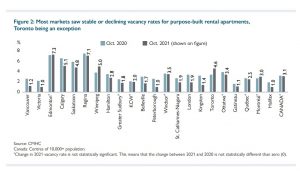
While the national vacancy rate for purpose-built rental apartments  hovered at 3.1 per cent—down slightly from 3.2 per cent in 2020—vacancies declined more sharply in 21 of the 39 census metropolitan areas surveyed. Vancouver, and most cities in Alberta, Saskatchewan, and the Atlantic region, all experienced low vacancies akin to 2019 levels.



Toronto, Winnipeg, and Abbotsford-Mission were the only markets in Canada that saw a rise in vacancy rates, while 13 city centres held steady—including, notably, Montréal which accounts for roughly 30 per cent of Canada’s rental market universe.

“The vacancy rate in the Montréal remained stable at 3 per cent in 2021,” commented Francis Cortellino, Economist. “The gradual resumption of international migration and the return to in-person classes decreased the vacancy rate in the downtown area, but it remained at a higher level than before the pandemic.”

In Vancouver, however, the apartment vacancy rate dropped from 2.6 per cent in 2020 to 1.2 per cent in 2021. The return of students and increased migration led to tightening conditions that have since intensified the existing imbalances in the rental market. Throughout the pandemic, lower-income households faced significant challenges finding affordable units; even with B.C.’s rent freeze temporarily easing pressure for existing tenants, rents increased in 2021 by roughly 2.1 per cent at unit turnover.

“With the return of economic growth, rental demand increased faster than supply in 2021,” commented Eric Bond, Senior Specialist, CMHC. “The Vancouver rental market again faces many of the same imbalances it did in 2019.”

The good news for Vancouverites is that more rental housing seems to be coming. CMHC’s data indicates rental starts during the first three quarters of 2021 increased 31 per cent year-over-year, signalling that new construction will soon be bringing much-needed supply to the west coast market. But will there be enough affordable units to address the growing need?

Unlikely, given new rental buildings tend to garner higher rents. That said, CMHC research shows some relief is typically seen at the regional level when demand is eased for existing housing.

GTA market: slower to recover

In Toronto, it continues to be a slightly different story. Throughout 2021, the lingering effects of the pandemic impacted the purpose-built rental sector negatively, leading to a second consecutive annual increase in the average vacancy rate. Ontario faced more stringent COVID-virus containment measures compared to other provinces, and restrictions were often implemented for longer periods of time given case counts were higher in the dense Toronto neighbourhoods. As 2021 unfolded, those measures continued to disproportionately impact service-sector industries that were more reliant on in-person interactions, delaying the economic recovery for segments of the population that were more likely to rent. Although the vacancy rate for purpose-built rental apartments in Toronto rose to 4.4 per cent, the number of affordable units geared to lower-income renters declined.

“The stock of row and apartment units affordable at 30 per cent of monthly income, to low- and middle-income renter households decreased from the previous year, down 0.6 per cent and 0.4 per cent for the second- and third-income quintiles, respectively,” the report states.  “Our data indicates that removals in 2021 due to demolition, condominium conversion, or for the owners’ own use, were concentrated mainly in the City of Toronto.”

Meanwhile, the average monthly rent for condominium apartments in Toronto was 45 per cent higher than the average rent for purpose-built rental units, and vacancies were significantly lower at 1.6 per cent. CMHC accredits this discrepancy to the fact that higher income earners were less impacted by the pandemic, and therefore more able to afford the higher rents.

Other key markets:

In Ottawa, rental demand in 2021 increased sufficiently to offset the addition of a considerable number of units that were added to the rental stock. The vacancy rate remained stable at 3.4 per cent, the highest its been in the last 25 years. Yet, according to the data, options were still limited for lower-income households.

In Edmonton, the average vacancy rate was 7.3 per cent, statistically unchanged from October 2020. Rental demand kept pace with supply increases, and was backed by improved labour market conditions, the return of students and improvement in international migration. Though less of a challenge than in other Canadian centres, the supply of affordable purpose-built rental options remained on the low side compared to the need.

In Halifax, the vacancy rate declined to just 1 per cent in 2021, with rental supply unable to keep up with the higher demand. Canadians fleeing COVID-19 restrictions, crowded the city resulting in record interprovincial migration trends. Lower vacancy rates and higher rents likely challenged lower-income households, young adults, fixed-income seniors and new immigrants searching for affordable rental apartments.

For the complete report, click here: www.cmhc-schl.gc.ca


Potential cost of CMRAO’s discipline process

According to its website, the Condominium Management Regulatory Authority of Ontario (CMRAO) is a regulatory body providing oversight of condo managers and management companies.

We normally think of the CMRAO as the body that oversees the licensing of Ontario’s condominium property managers. But the CMRAO’s mandate also includes education, training, discipline and enforcement. In other words, there’s more to the CMRAO than just licensing.

The CMRAO’s enforcement rights

In a case late last year, two condominium corporations complained to the CMRAO about a manager’s failure to turn over records following termination of the management contract. The failure to turn over records was a specific violation of Section 54 of the Condominium Management Services Act, 2015 (CMSA) and Section 35 of Regulation 123/17 (the general regulation under the CMSA).

Quite separate and apart from any consideration of disciplinary procedures, the CMRAO brought a court application against the manager; and the CMRAO successfully obtained an order requiring the manager to comply with a manager’s obligations under Section 54 of the CMSA. The court also ordered the manager to pay costs of $7500 to the CMRAO.

The CMRAO’s authority to make this sort of court application exists under Section 67(1) of the CMSA, which reads as follows:

‘If it appears to the director (of the CMRAO) that a person is not complying with this Act or the regulations or an order made under this Act, the director may apply to the Superior Court of Justice for an order directing that person to comply, and, upon the application, the court may make the order that the court thinks fit.”

So, the bottom line is that the CMRAO can be a powerful enforcement alternative for anyone (for instance, a condominium corporation) who is concerned about a manager’s failure to comply with the CMSA.

The potential cost of the CMRAO’s discipline process

The CMRAO also has the authority, in an appropriate case, to discipline a condo manager. The CMSA and regulations spell out the mandate of the CMRAO to receive complaints and to take disciplinary procedures. Among other things, the CMRAO may:

  • Attempt to mediate or resolve a complaint.
  • Give the manager a written warning.
  • Require a manager to take further educational courses.
  • Require a principal condominium manager to take further educational courses.
  • Refer a matter, in whole or in part, to the CMRAO discipline committee.
  • Suspend or revoke a manager’s license (with prior notice and the right to a hearing).

Depending upon the circumstances, a discipline process, particularly a hearing by the discipline committee, could become very expensive and sometimes quite lengthy, involving lawyers and expert witnesses. This, in turn, raises the following questions: Who would be responsible to cover the manager’s costs for the hearing? Normally, a complainant would not be ordered to pay such costs. And the CMRAO also won’t normally be ordered to pay such costs. Is this cost simply part of a manager’s “cost of doing business”?

Let’s take a simple example: Mary Smith is managing a 100-unit high-rise, Condominium Corporation No. 123. One of the owners in the condominium, Fred Jones, makes several complaints about Mary to the CMRAO. Some of the complaints are very serious, including allegations of unprofessional conduct involving alleged discrimination and harassment. The CMRAO is not able to “get to the bottom” of the complaints. The CMRAO concludes that the complaints are serious enough to merit a hearing by the discipline committee. The committee holds a hearing and ultimately determines that the complaints are without merit, and orders no discipline against Mary. However, the costs for Mary’s defence total $100,000.

The management contract (between Mary’s principal condominium manager and the condominium corporation) includes a typical indemnification provision, whereby the condo corporation agrees to indemnify the manager against costs incurred as a result of claims, provided the claims don’t result from the manager’s negligence or misconduct. Does that indemnification provision apply? Is the condo corporation obligated to cover the costs of Mary’s discipline hearing?

And of course this raises some further questions: Are these costs covered by the manager’s professional (E & O) liability insurance or by the condo corporation’s insurance? And is the manager even a named insured under the condo corporation’s insurance?

According to our enquiries, the answers to these questions may, in many cases, be unclear. So, our recommendations are as follows:

First and foremost: Ask the insurers involved—the manager’s insurer and the condo corporation’s insurer—whether or not they would cover the defence costs in the event of a hearing by the CMRAO discipline committee. If not, you might also ask whether or not it is possible to obtain such insurance for an added premium.

Then, with the benefit of that “insurance information”, and after a good discussion between the condo corporation and the manager about responsibility for such costs, you can hopefully make the appropriate revisions to the indemnification provision in the management contract so that the responsibility is clear.

When it comes to the CMRAO, there is more to think about than just licensing.

James Davidson and Nancy Houle are partners at Davidson Houle Allen LLP Condominium Law. dhacondolaw.ca

New 9th Avenue bridge opens to traffic in Calgary

The 9th Avenue S.E. bridge, connecting Inglewood and downtown Calgary, has officially opened. It replaces a temporary bridge that had been in place during the removal of the original 110-year-old Inglewood bridge that had reached the end of its lifespan.

In partnership with the Calgary Municipal Land Corporation (CMLC), the city began replacement of the original, 110-year old Inglewood bridge in 2019. Drawing inspiration from the original structure, while boasting modern design standards, the new bridge will improve flood resiliency, reduce maintenance costs and enhance cycling and walking connections.

“We know that folks in the community have been eagerly awaiting the new bridge and we are thrilled to be able to now open for drivers,” says project manager Evan Fer. “We thank Calgarians for their patience, and we look forward to our next milestone of welcoming pedestrians and cyclists onto the bridge later this spring.”

The bridge will initially open with one lane in each direction and will provide a similar level of service to the existing temporary bridge, while construction continues over the coming months. The additional lanes will be opened later in spring which will provide improved service for transit and motorists.

With this milestone achieved, work will now focus on preparing the structure’s north and south multi-use pathways to open for cyclists and pedestrians in spring 2022, as well as landscaping the area surrounding the bridge. Existing pedestrian detours will remain in place until the new bridge pathways are complete.

Removal of the 9th Avenue temporary bridge will be completed in spring 2022. The west Elbow river pathway will also be reopened later this spring when remaining work is complete.

Affordable housing gets nod in Alberta budget

Alberta’s 2022 provincial budget commits $118 million in capital funding over three years to launch a 10-year affordable housing scheme aimed at easing a current waitlist of 24,000 households seeking subsidized accommodations. The strategy, dubbed Stronger Foundations, is targeting a 40 per cent expansion of Alberta’s affordable housing portfolio, to support 25,000 more households, through a combination of new supply and rent assistance.

The vast share of funding will be drawn from the federal government’s National Housing Strategy, but the Alberta government has pledged to augment those dollars with proceeds from the sale of surplus or under-used provincial real estate assets. The initial capital budget allocations will be largely channelled to developing an envisioned affordable housing asset management framework “to optimize the affordable housing portfolio owned by the Alberta Social Housing Corporation” and to develop a framework for delivery of affordable housing in partnership with municipal, non-profit and private developers.

The newly released Alberta budget earmarks $16 million to begin that work in 2022-23 with installments of $33 million and $48 million set for the following two budget years. In addition, it promises $21 million over three years for Indigenous housing, and $14 million in operating funds over three years for additional rent supports that will enable approximately 3,000 households to obtain private market housing.

“The strategy will transform the province’s affordable housing system to address growing demand, increase long-term financial sustainability and improve accessibility for Albertans with low income,” the budget document states. Meanwhile, Alberta Finance Minister Travis Toews stressed Alberta’s relative affordability advantage in his budget speech.

“We offer a more affordable province to live than virtually any other Canadian jurisdiction,” he boasted. “Albertans have some of the lowest home prices and rents among Canadian urban centres. In fact, Albertans are able to purchase at least two homes for every one home purchase in Toronto or Vancouver.”

All-women development team breaks ground on Reina

The Reina condo project, a boutique mid-rise fully developed and designed by women, is one step closer to rising in  Etobicoke, Ont. as it’s set to begin construction.

A significant gender gap among leaders in the development industry inspired Taya Cook of Urban Capital and Sherry Larjani of Spotlight Developments to ‘change the narrative,’ and bring together a team of women across industries, from construction to sales.

Reina, which means Queen, was designed by an extensive community consultation process and uses forward-thinking design to resolve common pain points of condo living.

“It feels wonderful to be at this stage in our journey now, getting ready to deliver on our promise of a community-first mixed-use building that doesn’t compromise on style,” says Cook. “It is our hope that young women continue to consider development for their future careers so that we can better incorporate their diverse perspectives in city-building.”

“To be at our ground-breaking now demonstrates the powerful energy created when women direct on real estate developments,” adds Larjani. “We’re so proud to be here and the market response is a testament of the strength of vision of our all-women leadership team. Let’s keep the momentum going and continue to champion diverse projects across our industries.”

The year-long community consultation process into Reina’s development gathered feedback and varied perspectives from multigenerational families, parents with young or adolescent children, and single people.

After listening to and reviewing feedback, Reina’s resulting design is a contemporary mid-rise with large, flexible floor plans and an amenity program geared towards fostering community between residents and neighbours. Amenities are sized at 25 per cent larger than guidelines established by the City of Toronto and include a gym and fitness studio strategically located by the kids’ playroom with windows for parents to keep an eye on their children.

Other amenities include a hobby room, a snack shack inspired by a consultation with the Girl Guides, a sound(less) room for meditation, music lessons, or karaoke among other activities, as well as a library, parcel room, a games room and a community room. A property manager will be hired and provided a budget to actively program these spaces and build community.

Reina

Picketed balconies wrap around Reina’s exterior as the building steps back, with beautiful south facing views of the new oasis-like courtyard and Etobicoke’s lakefront.

Architecture by BDP Quadrangle features a subtle white brick exterior with soft curves and rounded corners with generous setbacks on the east and west to activate the public realm. A series of picketed balconies offer beautiful south-facing views overlooking the 6,500-square-foot exterior courtyard with barbecues, harvest tables, shared outdoor workstations and a children’s play area.

Live-work suites on the ground floor are designed for multigenerational living offering two entrances, a full-sized kitchen, and a smaller kitchenette for families with adolescent children or aging parents in need of an in-law suite. Stroller parking is available on almost every floor while suites are arranged to maximize storage opportunities or support add-ons. Additionally, a higher proportion of generously sized two and three-bedroom plans are offered.

Feature photo: FRONT ROW (L – R) Sahar Borodinas (Electrical Engineer, MCW Consultants Ltd.), Wendy Chase (Surveyor, R. Avis Sureying Inc.). MID ROW (L – R) Frances Hahn (Interior Designer, BDP Quadrangle), Mara Nicaolou (Construction – Urban Capital), Manali Pradhan (Lawyer – Harris Sheaffer LLP). BACK ROW (L – R) Sunhwa Kim (Interior Designer, BDP Quadrangle), Nataliya Tkach (Hydrogeologist, EXP), Stacy Meek (Project Manager, EXP), Lisa Ward Mather (Associate, Urban Strategies), Eve Lewis (Sales, Marketvision), Lisa Spensieri (Architect, BDP Quadrangle), Taya Cook (Development – Urban Capital), Heather Rolleston (Architect – Quadrangle), Sherry Larjani (Development – Spotlight Development), Mercedes Byers (Energy Consultant – Pratus Group Inc.), Fatima Shakil (Structural Engineer – Adjeleian Allen Rubeli Limited), Oleksandra Onisko (Energy Consultant – Pratus Group Inc.), Tina Pham (Construction Manager, Bluescape), Jane Almey, (Construction Manager, Bluescape), Fung Lee (Landscape Architect, PMA Landscape Architects).

Corporate officers to assume more liability

Ontario employers and corporate officers could be in line for significantly steeper fines for violating the Occupational Health and Safety Act. Newly introduced amendments propose a fivefold increase in the maximum fine levied to individuals, taking it up to $500,000, and the inclusion of corporate officers on the list of those designated to hold corporate liability and potentially face fines of up to $1.5 million.

The move is part of a package of legislation in the omnibus Bill 88, Working for Workers Act, introduced yesterday in Ontario’s legislative assembly. It would impose new obligations on employers and professional/trades regulatory bodies through amendments to the Occupational Health and Safety Act, the Employment Standards Act and the Fair Access to Regulated Professions and Compulsory Trades Act. It would also enact the new Digital Platform Workers’ Rights Act to address minimum wage and working conditions for contractors to app-based service delivery channels such as Uber and Door Dash.

Of note for the property and facilities management sectors, Bill 88 aims to ease the transition for licensed trades and professions moving to Ontario from another province or territory within Canada. The proposed amendment to the Fair Access to Regulated Professions and Compulsory Trades Act would establish a maximum period of 30 business days for regulatory bodies to process applications from qualified domestic labour mobility candidates, and to either grant credentials entitling applicants to work in their new jurisdictions or give reasons for refusal. As well, applications would have to be formally acknowledged within 10 days.

“We want more skilled professionals and tradespeople to come here,”  says Monte McNaughton, Ontario’s Minister of Labour, Training and Skills Development.

“It’s never been more important that we attract more workers to fill in-demand jobs,” concurs Premier Doug Ford. “To do so, we’re cutting red tape to make it easier for skilled professionals from across Canada to get the papers they need to work in Ontario, faster.”

Other proposed amendments to the Occupational Health and Safety Act would require employers to include naloxone in their emergency and first aid supplies if there is a reasonable risk of opioid abuse in the workplace, and to ensure that staff is appropriately trained to recognize the signs of an overdose and administer the antidote.

Also among the proposed amendments, a list of 11 “aggravating factors” would be explicitly stated in the Act to provide context for determining penalties. These pertain to: the seriousness of harm to workers; defendants’ recklessness or lack of remorse; previous incidents of non-compliance or convictions under the Act; the influence of profit-seeking or cost-cutting motives in workplace conditions; and attempts to conceal the commission of a violation or failure to cooperate with investigating authorities.

Bill 88 also proposes an amendment under the Employment Standards Act to require employers to state policies and reveal intended practices for electronically monitoring employee activity in all workplaces with at least 25 employees.

Canadian companies earn CIMS certification

Numerous Canadian cleaning and maintenance service companies have achieved the Cleaning Industry Management Standard (CIMS) certification, ISSA has announced.

Created by the industry for the industry, the certification is the first consensus-based management standard that outlines the primary characteristics of a successful, quality cleaning organization.

“Earning CIMS certification demonstrates that organizations are dedicated to a higher standard of cleanliness, which is essential given the biorisks that exist today,” said ISSA Executive Director John Barrett. “Using CIMS as a management framework allows cleaning organizations to maintain quality, efficiency, and customer satisfaction.”

This year’s new and renewing companies that have earned CIMS-Green Building with Honours include Commercial Cleaning Services in St. Catharines, Ont.; Hines Facilities Services Ltd. in Fort McMurray, Alta.; Kleenway Building Maintenance Services, Inc. in Richmond Hill, Ont.; MP Group Ltd. in Edmonton, Alta.; and Power Clean Building Maintenance Ltd. in Saanichton, B.C.

In addition, Classic Building Systems, Inc. in Calgary, Alta. achieved CIMS-GB.

Meanwhile, Ottawa’s Service Star Building Cleaning Inc. earned CIMS with Honours, and Goldstar Cleaning Services out of Fernie, B.C. is one of three companies in North America to achieve certification without honours.

Relevant for in-house operations and outsourced building service contractors of all sizes, CIMS leverages five core elements of management best practices and requires participants to meet 100 per cent of the mandatory elements and 60 per cent of the recommended elements, per section.

An ISSA-accredited third-party assessor completes an on-site evaluation to validate that the cleaning operation follows documented systems and processes that support cleaning for health.

Preparing for another pandemic

COVID-19 took much of the world by surprise. But it shouldn’t have. For several years, public health experts had warned of the importance of preparing for a global pandemic, and this is the fifth since the beginning of the 20th century, according to the CDC: The Spanish flu in 1918, the Asian flu in 1957, the Hong Kong flu in 1968, and the Swine flu in 2009.

Since they weren’t as deadly or as widespread as COVID-19, and only one happened in recent memory, the memory was long buried before 2020.

It will happen again, though.

In July 2021, the Center for Global Development gathered a panel to discuss ways to predict and prepare for the next pandemic, which they believe may come much sooner and be more severe than we think. People have started travelling again, so once a virus has been identified in one part of the world, it’s only a matter of time until it spreads across the globe.

How COVID-19 changed the cleaning industry

In the post-pandemic world, professional cleaners have become a necessity; an essential service that businesses need to fit in their budget for the health and safety of their employees and their customers. Before, many companies wanted their cleaning service to work at night, after everyone had gone for the day. Now, some opt for daytime cleaning so people can see the building being sanitized, reassuring them that it’s safe. The invisible has become visible.

Moving forward, there will be a continued high demand for cleaning and sanitizing services. Cleaning companies will need to use what they’ve learned from COVID-19 and adapt to this new normal if they want to survive.

Stay up to date on CDC and EPA recommendations

What we know about COVID-19 and the latest strains is constantly changing as scientists continue to study the virus. The same will be true of viruses that may cause future pandemics. The CDC continually updates its guidelines on the best ways to clean and disinfect to fight the viruses in accordance with this new information. Cleaning services need to keep up with the latest guidelines and make sure all their employees are trained to follow them consistently.

The Environmental Protection Agency keeps a list of disinfectants they recommend as the most effective in killing the COVID-19 virus. As other viruses threaten our health and new disinfectants become available, that list will change. A cleaning company that works with chemists and other scientists to successfully develop new germ-killing formulas would have an edge on its competitors.

Consider cutting-edge technology

Long gone are the days when a professional cleaning crew did their job with only a mop and a bucket. Companies are employing cutting-edge technologies that help them clean faster and more efficiently. For instance, my company has been using ultraviolet (UV) radiation as a method to disinfect for more than a decade, and it’s now a technology that is gaining widespread interest.

Researchers at the University of California, Santa Barbara, are experimenting with short-wavelength ultraviolet light, UV-C light, which is deadly to bacteria and viruses. They are working to make LEDs that emit this light more effective and cheaper to use. At least one company is using similar technology in the form of robots to disinfect and sanitize hospital rooms.

Drones are being used to clean large spaces, like stadiums, quickly and efficiently. They fly overhead and spray down the area with a powerful disinfectant.

Innovation is even protecting the technicians by engaging battery-powered, touchless cleaning for bathroom fixtures and surfaces. Removing contaminants through a top-down wash, rinse, sanitize and wet-vac removal keeps the cleaning technician safe from the contaminants and helps prevent cross-contamination.

Market to the well-informed, health-conscious consumer

Since the start of the coronavirus pandemic, the public has become more concerned with cleanliness. They are washing their hands more frequently and wiping down high-touch surfaces like door handles and computer keyboards. They’ve learned the importance of disinfecting their spaces and expect more from their cleaning company.

In this climate, the cleaning industry must stress it does more than “clean.” We also sanitize and disinfect. We need to let prospective customers know that the chemicals we are using are safe, yet strong enough to kill COVID-19 as well as other viruses that have become a health threat. They need to be confident that we are on top of the latest protocols to get the job done correctly. Companies that don’t keep up may find themselves edged out of this growing and rapidly changing industry.

As we look ahead to our future, it’s important to keep that next pandemic at the forefront of our planning. It’s not pleasant to think we could all be in a similar situation again and it would be great if this never happened in our lifetimes. But cleaning companies can benefit greatly from being prepared and ready to respond if a new pandemic emerges.

Doug Flaig is President of Stratus Building Solutions, a janitorial services franchise organization, and has spent over 20 years in the world of multi-unit retail with Dunkin’ Donuts, Burger King, 7- Eleven stores, and Wetzel’s Pretzels overseeing hundreds of franchise retail locations. Prior to joining Stratus Building Services, he served as Chief Operating Officer with Safe Facility Services in Thousand Oaks, Calif.