Articles Archive - Page 303 of 928 - REMINET
REMI

FC&M’s Spring 2022 issue is out now!

What does the future hold for cleaning? That’s the million-dollar question now, over two years into a pandemic that has left an indelible mark on the industry.

In the immediate term, cleaning and maintenance companies and staff are having to wrestle with yet another new normal – in some areas of Canada, a full-capacity reopening with various restrictions such as proof of vaccination or mask mandates lifted. While we have been there before with reopening at various capacities, the lifting of restrictions has not gone this far earlier in the pandemic. Though there is some concern that COVID-19 is resurging, the hope is for a sustained spring and summer of business as usual – or, at least, as usual as we can get in the first half of 2022.

That will present challenges for the industry, particularly when it comes to high-traffic facilities such as hospitality and retail establishments.

In the FC&M Spring 2022 issue, we have aimed to alleviate the concerns that many companies and workers may be feeling about the months ahead with some sage advice from well-placed veteran of the industry.

In our Expert Q&A, the American Cleaning Institute’s Brian Sansoni reminds all of us of the importance of getting the basics right and not overcomplicating the approach to disinfection, and experts from around the industry advise on core issues such as dealing with increased foot traffic, proactively cleaning for the future, and ensuring the lessons learned from the last two years stay top of mind.

Meanwhile, our cover story this issue sees us chat in-depth with Russell Hay of Scandinavian Building Services about the importance of family values, both literal and figurative, in running a nationwide BSC in today’s world.

We also catch up with ISSA Canada on key developments in the industry since last fall, as well as looking ahead to the return of in-person ISSA Shows later this year. We must also take the time to note that our REMI Show also returns in person in Toronto in June – we can’t wait to be reunited with the industry and catch up after so long of only seeing each other on a screen.

As always, thanks for reading.

Explore the full issue here!

Kandas Miller joins Colonnade Bridgeport as Director, Residential Real Estate

Colonnade BridgePort, a leading full service real estate investment and management company based in Ottawa, announced it has welcomed Kandas Miller to the new role of Director, Residential Real Estate. Working with cross-functional teams across the company, Miller will be instrumental in growing its residential property management business by building on its current success to create a scalable platform that benefits investors, clients and tenants through greater operational efficiency and enriching living spaces.

As Ottawa’s largest real estate services and management company for over 35 years, with a growing presence in the Greater Toronto Area, the company has been focused on developing and managing high-quality mixed-use residential, office, retail and industrial properties. The creation of the Director, Residential Real Estate role is in response to the growing need for high-quality rental properties in Ottawa and the GTA. As a member of Colonnade BridgePort’s Extended Leadership team, Miller will work closely with leaders across the company’s marketing, financing, development management and operations groups while leading the residential team in building out its current processes and procedures into a scalable platform that will fuel growth of the company and its clients.

“The depth and breadth of Kandas’ experience in residential and her passion for the human side of our business make her a strong addition to our leadership team,” said Ron Matheson, Vice President, Property Management at Colonnade BridgePort. “Kandas is a strategic, seasoned professional who knows our markets, has a vision for what living in a Colonnade BridgePort property should look and feel like, and she knows how to bring that vision to life. She and her team will even influence how we design the properties in our development pipeline with a community-building mindset.”

Previously, Miller was vice president at an Ottawa-based property management company where she developed expertise in all areas of managing residential assets, including leasing, overseeing the portfolio, and business development.

“A residential building is unique,” she said. “Not only do you manage the building, you manage the people who live in it. You’re building a community within its four walls. Well-managed, efficient buildings create communities with happy, long-term tenants, which leads to happy investors and owners. Colonnade BridgePort already has a strong blueprint for managing efficient, high-quality residential properties. I’m looking forward to working with my team to bring the current processes and procedures into a scalable platform that can be applied to any property.”

Capilano University adds first on-campus housing

Capilano University is building its first on-campus housing, creating 362 beds and a 250-seat dining hall at the main campus in North Vancouver.

The province is providing $41.5 million toward the $58.2-million project. Capilano University is investing $16.7 million in the project. Construction is anticipated to begin in early 2023 and complete in late 2024.

“We know how stressful it is for some students who are unable to find housing and are balancing long commutes on top of their schoolwork,” said Anne Kang, Minister of Advanced Education and Skills Training. “To make life easier for students, we are building thousands of student housing spaces throughout the province. The first-of-its-kind new on-campus housing at Capilano University will help ease those pressures, ensuring more students can focus on their schoolwork knowing their housing is secure.”

Designated for first- and second-year students, there will be priority access for Indigenous students. The six-storey building will include common space, laundry facilities, a First Nations-focused reflection and gathering space, and a dining hall on the main level. The other five floors include a mix of single- and double-occupancy rooms, 12 of which will be accessible units.

“Offering on-campus student housing marks a major step forward for Capilano University,” said Paul Dangerfield, president, Capilano University. “Creating this opportunity for learners to live where they study will bring a pivotal revitalization to our main campus, reduce housing barriers and enhance the experience for student residents.”

This project is part of the Provincial Homes for BC plan, which includes building 8,000 new student beds by 2028 so more people studying in B.C. can have affordable housing alternatives to pursue post-secondary education.

Aligned with the Province’s CleanBC plan, the building will be built with wood framing and mass timber. The dining hall will be built with mass timber and feature a green roof.

The allure of small markets

Demand for housing in Canada continues to rise in 2022, with small markets gaining popularity among prospective renters and homeowners alike. Before COVID-19 reared its head, places like Hamilton and Kitchener were already attracting house-hunters in seek of affordable properties within a reasonable proximity to the city. Since then, smaller communities further afield have been emerging as popular options for reasons  beyond affordability.

According to RE/MAX Canada, small markets are attracting new residents primarily for their “quality of life” factors which include more green space and access to the great outdoors. Entitled, 2022 Small Markets Report, it looks at the results of a Leger survey analyzing home sales and price trends among Canada’s fastest-growing small markets, defined by RE/MAX as those with the highest population growth rates in 2021 and having a population of less than 440,000. From Chilliwack B.C, to Stratford, ON, the data shows that housing and rent prices in these popular small markets are continuing to rise due to low inventory and growing demand. In fact, RE/MAX anticipates that the average residential price growth for these regions will increase between three and 20 per cent by the end of 2022. Unsurprisingly, some of the markets have already experienced significant year-over-year price appreciation in the range of 17 to 38 per cent.

“Liveability is all about quality of life, and as we all work toward getting back to enjoying the things we love the most about our communities, it’s not surprising that it ranks so highly in importance for Canadians – especially now,” said Christopher Alexander, President, RE/MAX Canada. “Despite the fact that the national housing market still has challenges to overcome, smaller communities are viable options for Canadian homebuyers looking for the right balance between liveability and affordability. The increase anticipated for home prices for the remainder of 2022 by our network of brokers and agents is a good indicator of the appeal of these communities.”

However, the desire for liveable communities plays both ways, with more than half of small market residents voicing concern that the distinct liveability qualities of their town (i.e. its charm) may be eroded as a result of rising demand from buyers. Many (43 per cent) also said they share the same anxiety about rising prices, feeling that they could potentially be priced out of their community if the small-market trend persists. According to the survey, nearly a quarter of Canadians moved from a larger to a smaller market during the pandemic, with the majority (85 per cent) stating they were happy about their decision. Half of those surveyed said moving to a small town or community has helped improve their mental health.

“We’ve seen a greater influx of buyers moving to smaller markets over the past two years, a trend that’s prompted some concern among existing residents. However, the diversity of new homebuyers can be a positive thing for local communities,” said Elton Ash, Executive Vice President, RE/MAX Canada. “The recent notable growth of Canada’s small markets makes it an opportune time for municipal and provincial governments to focus on alleviating these concerns through measures that address affordability and housing supply, but also aim to revitalize and improve community liveability that has made these regions the preferred choice of many Canadians.”

The keen interest in small towns doesn’t seem to be waning, even as pandemic restrictions ease and more Canadians are being ushered back to the old office setting. Survey says, 11 per cent of respondents  would rather look for another job than be forced to move back to the city.

small markets ListowelAnd homeowners aren’t the only residents enjoying the small-town lifestyle vibes; renters are settling into smaller communities too. Proving the trend is real, Skyline Living recently opened “Twamley Manor” in December 2021, providing an attractive option for Torontonians escaping the urban grind.

“We aren’t surprised by the far-reaching interest in these brand-new rental apartments,” said BJ Santavy, Vice President, Skyline Living. “The location is perfectly situated just far enough away from urban sprawl to capture all the friendly connections and social potential of coveted smaller towns in Ontario, while still offering all the modern-day necessities like groceries, restaurants, parks, and services just minutes from the front door.”

Built by Hyde Construction, the 118-unit rental complex features two four-storey residential buildings, and a separate amenity space for residents called “The Club House”. With the second building underway and expected to open later this summer, the current tenant pool includes a significant portion of residents who recently downsized and relocated from the GTA and beyond.

“Listowel is the ideal place for this new Skyline Living community with its many annual festivals, vibrant downtown, and welcoming people,” said Santavy. “Many of our early tenants mentioned that they are following their children out of the larger cities to a town that boasts more opportunities for growing families. They like that they can age in place in a new property that is geared to a mature rental lifestyle with tubs with tile and grab bars, tenant activities, and amenity spaces built for their needs.”

Sharon D’Arcey, General Manager of the North Perth Chamber of Commerce has also noticed the growing appeal of the region since the pandemic made working from home a possibililty for so many. “Having Skyline Living choose our area for this apartment complex is just what we needed,” she said. “People tell us we are the centrally located on the map – just 45 minutes from anything and everything. Out of the city, but close enough to everything else. A small town with enough of the amenities that people are looking for.”

Visit www.twamleymanor.ca for more info.


VIU expanding Indigenous gathering place

Work has begun to expand Shq’apthut (A Gathering Place) at the Vancouver Island University (VIU) Nanaimo campus.

The building is a home away from home for Indigenous students where cultural, academic, recreational and social activities are promoted and celebrated.

The expanded Shq’apthut building will add more ceremonial space, Elder-in-residence offices and additional washroom facilities, all within a fully accessible building. The new space will be heated and cooled by VIU’s District Geo-Exchange Energy System, which harnesses the geo-energy stored in sunken mine shafts under the campus. The surrounding site will undergo extensive landscaping that will exemplify and celebrate Indigenous culture.

“VIU is proud of its long-standing commitment to reconciliation and our collaborations with the Nations. The expansion of Shq’apthut is a tangible demonstration of our strategic commitment to build stronger partnerships with Indigenous communities in the regions we serve,” said Deborah Saucier, president, VIU. “Working with the provincial government on this project will enhance the on-campus learning experience for Indigenous and non-Indigenous students at VIU and allow the Elders the space they need to do their work.”

With $3.7 million in new funding between VIU and the province to expand Shq’apthut, completion is slated for spring 2024.

“Expanding Shq’apthut will allow us to host more cultural events because of increased capacity, and it will include dedicated office space for our Elders in residence to engage one-on-one with students in a culturally appropriate environment,” Sylvia Scow, interim director, Office of Indigenous Education and Engagement, VIU. “Having this space to build relationships and share traditional knowledge is key in our work to implement the Calls to Action of the Truth and Reconciliation Commission and the United Nations Declaration on the Rights of Indigenous Peoples.”

ACDF Architecture unveils The Pacific

The Pacific, a residential tower by ACDF Architecture, reflects the firm’s evolving approach to developing high-rise buildings entrenched in the public realm.

Located at the corner of Hornby and Pacific streets, in a cityscape framed by the Granville Street and Burrard Street bridges, The Pacific features 224 condominiums across 39 floors. The building was developed in collaboration with IBI Group, a Canadian architectural consulting firm, for Grosvenor, a private real estate group.

“Grosvenor is very respectful and refined in its embrace of quality, but also in its deep consideration of the impacts that its developments have on surrounding streets and neighbourhoods,” explains Maxime-Alexis Frappier, partner and co-founder of ACDF. “We wanted to propose a different approach in the form of an urban gesture that contributes something much more than just a building.”

Quiet distinction

As one of several new additions to the Vancouver skyline, The Pacific has earned its place alongside cutting-edge buildings designed by some of the world’s most renowned architects. Rather than competing within Vancouver’s already dense and varied landscape of tall buildings, ACDF adopted a more complementary approach, prioritizing clean, subtle, and human scale elements to provide a wealth of urban experiences among the more dramatic architectural gestures of neighbouring buildings.

“A philosophical alignment with the client provided us with the freedom to express our belief that sometimes quiet and humble architecture can be even more elegant and relevant,” says Frappier. “Our role was not to create noise, but rather to provide our building with a quiet, but recognizable identity.”

Human-scale dialogue

That approach began with numerous elemental considerations, including a strong focus on creating a dialogue at street level with the neighbourhood and its pedestrians. They focused the development of shape and form on simple massing that would capture attention through its textures, the quality of its assembly, and the transposition of its details. The firm envisioned a structure whose materiality would emit its own unique character, while blending into the built, environmental, and social fabric of its surroundings.

The Pacific is a visual landmark devoid of sculptural drama. Vertically, the structure’s slick north and south facades, layered with glass and black granite, contrast with its more pictural east and west facades, with the latter featuring protruding triangular balconies in a woven pattern.

Taking a sensitive approach and putting people at the heart of all its design decisions, ACDF Architecture made an exhaustive study of all components of the project that could have an impact on the immediate area, its residents, and passers-by: general volumetry, materials (tonality, reflectivity, durability, etc.), shadows, winds, and the obstruction of existing views. Accordingly, the east façade of the tower, for instance, was designed in consideration of its west-facing neighbours, while the omission of balconies on the building’s north side was purposeful in order to prevent direct views between neighbours. In giving careful consideration to each façade of The Pacific, the architects quickly realized that the pedestrian view at street level alone formed a new perspective, or a ‘fifth façade’.

The ‘fifth façade’

At its base, The Pacific is grounded to the site’s location, its history, and the vibe of the street, not just in terms of materials, but also in terms of how the building would be viewed from the ground up.

“While the allure of traditional skyscrapers often fades with closer proximity, we created a ‘fifth façade’ for The Pacific in the form of vertical views provided through strategically positioned design elements,” explains Frappier. “You can look up from the street level and discover a new skyscraper language in the form of new relationships between pedestrians and the building.”

From its street-level base, vertical views are enriched by balcony textures, including three tones of grey on their undersides, inspired by cloud formations and creating a sense of movement within their patterns. The triangular balconies above also provide plays on reflection to the streets below. As the sun sets on the city, the building begins to glow, reflecting light downward from the white, marble-like porcelain finish of the balconies, as well as a pinkish hue that emanates from the stainless-steel framing. During those transitions of light, two facades begin to glow, while the other two sides fade to darkness.

An integration of art and heritage

Leading up to the entrance of the tower, ACDF designed a long, dramatic colonnade. Its oversized, angular columns are purposefully misaligned, providing Vancouver-based artist, Lyse Lemieux, with a blank canvas upon which to pay homage to the site and its history. She subsequently developed a mosaic composition of nine figures, each more than 20 feet in height. Each of the columns faces in a different direction and features a different personage, creating a sense of movement and delivering a strong contribution to the neighbourhood, the public realm, and the city. The columns also transition into the fully glazed lobby and remain the main actors that animate the space’s minimal, simple, and toned-down design, featuring black brick walls, in a grid pattern, and stainless-steel finishes.

“From the beginning of the design process, we focused on developing a tower whose contribution would extend from the skyline right down to the micro level,” explains Frappier. “Our intention was to positively impact the animation of the area at street level by establishing meaningful connections between the building, pedestrians, and residents. Lyse Lemieux’s extraordinary artwork on the ground floor colonnade succeeds in capturing the essence of that intent.”

Five tips for safe and effective disinfecting

With the worst of the pandemic hopefully in the rearview mirror for good, cleaning professionals are re-evaluating what they did right to stop the spread of the disease and what may need to be reconsidered. This is especially true when it comes to the use of disinfectants.

“For many in the professional cleaning industry, a review of cleaning, sanitizing, and disinfecting ‘best practices,’ may be called for,” says Lee Chen, President, and COO of ProNatural Brands, manufacturers of natural, sustainable cleaning solutions designed to protect human health and the environment.

Fortunately, the industry can follow some basic general guidelines to accomplish this.

Among Chen’s suggestions are the following:

  1. Determine when and where disinfectants are needed. During the pandemic, cleaning professionals often overused disinfectants. That’s harmful to the user and the environment.
  2. Clean first. Not only does this help the disinfecting process work better, but it may eliminate the need for disinfectants. Effective cleaning is usually sufficient to eliminate more than 80 per cent of the microbes and pathogens on a surface.
  3. Evaluate current disinfectants in use and look for safer alternatives. As a general rule, target for elimination any disinfectants that contain chlorine bleach, quaternary ammonium chloride compounds (quats), and peroxyacetic acid. Safer alternatives include hydrogen peroxide, lactic acid, caprylic acid, and citric acid. Citric acid is now found in more professional and consumer disinfectants because it is environmentally friendly, biodegradable, and effective.
  4. Follow label instructions closely. This typically applies to dilution ratios and dwell time. During the pandemic, many disinfectants were not appropriately diluted. Too much or too little can eliminate the effectiveness of the product. As for dwell time, if a disinfectant is wiped or rinsed from a surface before the required dwell time, it will not effectively kill the germs, pathogens, and bacteria on that surface.
  5. Select concentrated disinfectants. Invariably, concentrated cleaning solutions, including disinfectants, are the most cost-effective purchasing option. Concentrates are also more environmentally preferable because they reduce the need to ship large volumes of cleaning solutions over long distances.

“While it is recommended to clean surfaces first and then disinfect, some disinfectants can be used to both clean and disinfect,” adds Chen. “This can be a major time-saver, improving worker productivity considerably.”

Residential renters offered Manitoba tax credit

Manitoba has renamed its previously available education property tax credit for residential renters and extended it to tenants in subsidized housing. The new Renters Tax Credit, announced in the 2022 provincial budget earlier this week, promises a $525 refundable credit to all eligible recipients who claim it on their personal income tax returns.

The new credit will be more straightforwardly calculated than the previous formula, which was pegged to the lesser of either 20 per cent of the claimant’s annual rent or a designated maximum available amount, set at $525 last year. (Homeowners are eligible to recoup the lesser of 75 per cent of school taxes paid on their principal residence or the maximum available credit.) Now, it will be calculated as a fixed monthly rate of $43.75 for the number of months rented in a tax year.

An estimated 45,000 additional renter households can now claim the credit with the extension of eligibility to tenants in subsidized housing, equating to an extra $23.6 million in provincial spending this year. Even so, for some recipients, the credit will be less generous than it was a decade ago when the maximum available amount was $700.

“For a household paying the average $1,000 per month in rent, the Renters Tax Credit is equal to over half of one month’s rent,” the budget document states.

Meanwhile, rental housing landlords and other residential and farm ratepayers can look forward to a larger rebate this year as part of the phased elimination of education property tax. For 2022, they’ll be reimbursed for 37.5 per cent of paid education property taxes — an increase from the 25 per cent rebate provided in 2021.

The provincial government expects to return approximately $350 million to property taxpayers, up from $246.5 million last year. Next year, a 50 per cent rebate is promised, representing a provincial payout of more than $453 million.

“For residential properties, net school tax (per cent tax paid) will decrease to 35 per cent in 2023 from 71 per cent before the introduction of the Education Property Tax Rebate as the value of tax credit and rebate savings increase to $463 million in 2023 from $208 million in 2020,” the budget document states.

10 Roof Inspection Tips for Spring

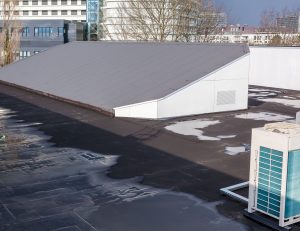
Spring is the perfect time to perform a roof inspection to ensure it functions correctly and lasts its intended service life. Roofing is one of the largest capital replacement projects a building will face, yet it is often neglected or ignored unless a resident has reported a leak. But just because the roof isn’t leaking doesn’t mean it doesn’t require maintenance and repairs. Like sunscreen going on before the burn, inspections and regular maintenance will help prevent costly damage.

Here, Justin Tudor, President, Keller Engineers, shares his top 10 roof inspection tips for flat-roof residential buildings (scroll down for tips related to sloped asphalt shingle roofs):

  1. Check the seams and laps. Many cold- and torch-applied roof systems are installed in a roll format, such as 2-ply modified bitumen, TPO, and EDPM. The laps in the membrane are the natural weak spot on the roof system and bear the brunt of the abuse from freeze thaw cycles common in Canada. After the snow melts, check the seams to ensure they are still fully adhered to the adjacent roll of membrane, then repair and reseal any sections that have debonded.
  2. Clear away any organic growth. While green roofs are all the rage these days, unintentional green roofs are damaging to roof membranes and lead to premature failure. Any organic growth, such as moss, saplings, weeds and residue typically found at the perimeter of a roof should be removed.
  3. Inspect low spots for ponding water. As your building shifts and ages, slight adjustments may occur to the sloping of the roof. If the sloping is modified through natural movement, ponding water can occur, which can prematurely degranulate membranes and expose them to harmful UV rays. Additionally, leaks that occur where ponding water is present can cause additional water infiltration that can be difficult to repair.
  4. Check for sealant failure. Sealant is often thought of as a magical product that keeps all water out of our buildings. However, sealants will harden and lose their elasticity over time, causing them to crack and delaminate from surfaces. As such, sealants should be replaced when they are dry, cracked, hard, or delaminated. It is important that the existing sealant is completely removed prior to new installations as many sealants do not adhere well to one another. Furthermore, selecting the proper sealant for the application is important, as sealants are not ‘one-goop-fits-all’.
  5. Inspect and clear drains. Flat roofs are usually internally drained, meaning they have a roof drain that catches the water and expels it through piping hidden inside the walls of the building. Drains have numerous parts that all require review and maintenance. The clamping ring bolts should be tight so that they make positive contact with the membrane. The drain cage should be installed and attached to the clamping ring to ensure that no foreign debris gets inside the piping. Lastly, all debris needs to be removed regularly to allow water to flow freely.
  6. Look for signs of animals and nesting. Birds love making their nests on top of various roof top penetrations, or under the protection of a penthouse. Animals that live on your roof will bring random debris, which leads to drain cloggage. Even worse, animal droppings contain ammonia that will damage roof membranes. As such, nests should be removed from the roof as soon as possible, and prevention steps taken.
  7. Ensure metal flashings are secure. Flashings are typically capping the parapet and around curbs on the roof. It is important to ensure that they are adequately secured and do not move, bend, or shake in the wind. Loose flashings can be a safety concern, as they could dislodge and hit pedestrians. Loose flashings may also allow water penetration into the roof system.
  8. Review all penetrations. Your flat roof contains many penetrations, whether they are plumbing stacks, roof anchors, chimneys, or curbs for mechanical equipment. All of these penetrations contain a unique set of challenges when keeping your roof watertight. Each penetration should be carefully reviewed, and any repairs made should be unique to the penetration.
  9. Check transitional walls. These transitions are found when there are multiple roof levels, or when a penthouse is present on the roof. Transitions typically see multiple trades and building components coming together. Special care should be given to these details to make sure none of the waterproofing components are delaminating or failing. Fixing leaks at transitions is one of the most expensive and difficult leaks to repair, so its important to be diligent to avoid this from happening.
  10. Inspect parapets. Parapets are one of the most common points of failure on a roof and should be treated with special care. Parapet membranes have the tendency to delaminate from the substrate. When membrane delaminates, the seams in the membrane tend to split open under stress and allow water infiltration.

roof repairs

Here are 10 things to check if your condominium is protected by a sloped asphalt shingle roof:

  1. Look for shingle degradation. The first sign of asphalt shingle failure is visible changes to the aesthetic of the asphalt shingles. Degranulation and curling are the roof’s way of telling you that they are nearing the end of their service lives. When degranulation and curling worsen, small pieces of the shingle may become dislodged and fall off the roof. Checking for degranulation may be difficult from the ground and therefore a walkover inspection is recommended to ensure accurate documentation is performed.
  2. Replace missing shingles. Shingles can become dislodged and blow off the roof under high winds. Often these go unnoticed, as the backup membranes tend to blend into the surrounding shingles. If an inspection leads to the discovery of missing shingles, these should be replaced promptly to ensure the roof is not  compromised.
  3. Secure and seal exposed fasteners and nails. Fasteners are used to secure various flashings and cappings on the roof. Contractors either seal the fasteners with sealant or use a neoprene gasketed fastener. In both circumstances, the sealant needs to be refreshed. Additionally, shingles are secured to the roof with nails that are hidden under the adjacent shingles. During installation, nails can be errantly installed and slightly exposed, known as ‘low nails’ or ‘shiners’. These exposed nails may require additional sealant.
  4. Clear debris in the eavestroughs. Eavestroughing can get clogged with granules from the shingles, organic growth, or a combination of both. Once the eavestrough is clogged, it no longer functions as intended and can force watershed near the foundation wall. As such, the eavestroughing should be cleaned regularly so that it performs as designed.
  5. Check sealant. Just like flat roofs, sealants on sloped roofs will eventually harden and lose their elasticity, requiring replacement.
  6. Review the ventilation. Sloped roofs require ventilation to regulate the internal temperatures of the attic space and to remove moisture-laden air, which could migrate into the attic from inside living spaces. Sometimes vents become dislodged, clogged, or break. Vents should be reviewed and repaired during your spring inspection to ensure they perform adequately during the hottest months of the year.
  7. Inspect and repair penetrations. Sloped roofs, just like flat roofs, contain many penetrations, whether they are plumbing stacks, exhaust vents, chimneys, or roof vents. Each penetration should be carefully reviewed and subsequently repaired.
  8. Check fascia, soffit, and offset walls. While the asphalt shingles are commonly thought of as the roof’s main protection against water penetration, the fascia, soffit, and offset walls work just as hard to keep water out. These metal flashings can be damaged from hail, heavy rain, or foreign objects. Damaged flashings can lead to water infiltration into the roof system and attic.
  9. Look for sagging roof decks. Sometimes your roof will show you that it needs some attention when it looks like gently rolling hills. Roof sheathing spans across the roof trusses, and typically bridges about 24” (600mm). By design, if the sheathing starts to weaken, it will sag between the trusses, indicating a problem. While sometimes the sheathing sags naturally, it is important to ensure there was no damage due to snow accumulation.
  10. Check for ice damming. How can you tell if your roof has ice damming issues if there is no longer snow or ice? Signs may include curling shingles, broken tabs, and excessive degranulation that is not present on the rest of the roof. Catching ice damming early is vital to ensure your roof does not prematurely fail. If your spring inspection shows signs of ice damming, modifications to your attic ventilation system may be required—or in drastic cases, it may involve a full system re-design.

Lastly, whether your condominium is protected by a sloped or a flat roof, it is important to have a trusted industry professional perform a regular roof inspection. While spring is the perfect time for maintenance, a similar check should be done in the fall before the snow comes. There is nothing worse than trying to track a roof leak when it’s covered in two feet of snow!

For more information, please visit www.kellerengineering.com

Minto acquires interest in two new rental properties

Minto Apartment REIT announced it has acquired interest in two residential properties located in Toronto and Calgary. In downtown Toronto, the REIT will soon own a 28.35 per cent managing interest in the newly-built “Niagara West”,  a two-tower property comprising 501 apartment suites and 52,600 square feet of at-grade retail. The purchase price for the property is reported as being of $114.5 million.

The remaining 71.65 per cent interest in Niagara West will be acquired by the third party Canadian institutional investment manager and majority owner of the vendor. Upon closing of the acquisition, the REIT will earn property and asset management fees to manage its co-owner’s interest in the property.

The second property, “The International” in downtown Calgary, was constructed in 1970 as an apartment building but later operated as a hotel. It was then acquired in 2015 and converted to luxury apartments with substantial infrastructure upgrades, common area and amenity improvements, as well as the full renovation of all 247 suites. The building has a commercial component comprising roughly 2,700 square feet.

“This is a unique opportunity to acquire institutional-quality assets in highly desirable downtown markets,” said Michael Waters, Chief Executive Officer at Minto Apartment REIT.  “These acquisitions increase our scale to 8,277 suites, reduce the average age of the portfolio by 2.6 years, increase our exposure to Toronto to 33 per cent and improve operating efficiencies in the management of our Calgary portfolio. The acquisitions also underline the value of our relationship with the Minto Group, through which we were able to acquire these premier assets in off-market transactions.”

Subject to approval by the TSX and satisfaction of all customary closing conditions, the REIT expects to close the Niagara West acquisition on or about April 22, and the International acquisition on or about May 6, 2022.

Click here for more details. 


Breaking down home buying supports in ‘demand-sided’ budget

The Liberal government promised new incentives and tax credits for first-time homebuyers in its 2022 federal budget, as well as measures to curb rising home prices that remain untouchable for many Canadians.

Christopher Alexander, president of RE/MAX Canada, says measures like the multigenerational home renovation tax credit and doubling the first-time home buyers’ tax credit will encourage people to enter the market, but supply will remain an ongoing issue for first-time homebuyers looking to purchase any property type, including condos.

“Condos in particular, have been the go-to for young couples and professionals looking to enter the market at a reasonable price-point,” he says. “However, the incentives and tax credits are increasing demand in a market that is not only the most popular entry-point for aspiring home-buyers, but also absorbing the demand from those unable to purchase semi-detached or detached properties.

“Although the government’s pledge to build 100,000 new homes in the next five years may ease some pressure in the long-term, the incentives and tax credits do not address the supply challenges that have been and will continue to be at the core of our fast-rising property values.”

The budget also proposed a two-year ban on foreign home buyers to help cool the market. “In reality, these measures will only impact a small segment of homeowners,” Alexander adds. “We anticipate that this measure and others related to it, will have little to no effect on real estate prices across the country.”

The government earmarked $10 billion for residential construction to correct the housing crisis, which includes the Housing Accelerator Fund to incentivize cities and towns to modernize and build more housing units over the next five years. But much remains unclear, and industry advocates feel the supply won’t come fast enough.

In an earlier statement, RESCON President Richard Lyall, expressed his concern over a lack of specifics in the demand-sided budget on how these measures will increase housing stock.

“We are critically short of housing and demand is only going to increase due to immigration and population growth, so it’s critical that we pull out all the stops to boost supply,” he said. “Ontario is short about 25,000 housing units a year so more measures are needed but there is a lack of specific information on how these funds will put a dent in the problem and substantially boost housing.”

RE/MAX’s latest report, Unlocking the Future: A Five Year Outlook, found the number of employees and workers in the trade industries, specifically construction, won’t be enough to build the amount of real estate needed to meet the targets, says Alexander.

“The targets set by the government to welcome over 400,000 new Canadians each year, would be a great opportunity to increase the number of trade skilled workers in the market, which would contribute to closing the supply gap,” says Alexander.

In Ontario, more than 92,000 construction workers will retire by 2030, according to RESCON. With the projected volume of work, the industry will need to hire, train and retain more than 100,000 more workers by the end of the decade.

Housing can’t come fast enough as prices are expected to continue rising beyond 2022. In the Greater Toronto Area alone, the average home price is currently $1.3 million, a year-over-year increase of 18.5 per cent.

“The Canadian housing market has historically given homeowners great long-term returns and solid financial security,” says Alexander. “In order to maintain this, as we look ahead, it’s crucial that governments and policy makers take a thoughtful and collaborative approach that addresses our core issue of affordability and incentivizes Canadians, with regards to interest rates, immigration and taxation.”

He says it’s crucial for the government to consider the effect that multiple cooling measures, along with rising interest rates, will have on the market.

“In fact, the outcome may have greater consequences than intended and likely create a pent-up demand, like we saw in the Ontario Fair Housing Plan of 2017 and the market explosion during 2020,” he adds. “However, despite this and our housing supply issue, if economic decision-makers make pragmatic decisions in collaboration with the government, it is likely that the housing market will remain stable, albeit expensive over the next five years.”

Just a few of the promises to increase home ownership opportunities in Budget 2022 include:

A tax-free first home savings account
Budget 2022 plans to introduce the Tax-Free First Home Savings Account that would give prospective first-time home buyers the ability to save up to $40,000 beginning in 2023.. Like an RRSP, contributions would be tax-deductible, and withdrawals to purchase a first home—including investment income—would be non-taxable, like a TFSA.

Doubling the first-time home buyers’ tax credit
The First-Time Home Buyers’ Tax Credit would double to $10,000. The enhanced credit would provide up to $1,500 in direct support to home buyers. This measure would apply to homes purchased on or after January 1, 2022.

An extended and more flexible first-time home buyer incentive
The First-Time Home Buyer Incentive allows eligible first-time home buyers to lower their borrowing costs by sharing the cost of buying a home with the government. Budget 2022 announced an extension of the First-Time Home Buyer Incentive to March 31, 2025. The government is also exploring options to make the program more flexible and responsive to the needs of first-time home buyers, including single-led households.

A multigenerational home renovation tax credit
A Multigenerational Home Renovation Tax Credit would provide up to $7,500 in support for the construction of a secondary suite for a senior or an adult with a disability. Starting in 2023, this refundable credit would allow families to claim 15 per cent of up to $50,000 in eligible renovation and construction costs associated with these projects.

Supporting rent-to-own projects
To help develop and scale up rent-to-own projects across Canada, Budget 2022 proposes to provide $200 million in dedicated support under the existing Affordable Housing Innovation Fund. This will include $100 million to support non-profits, co-ops, developers, and rent-to-own companies building new rent-to-own units. Examples of eligible projects, which must include safeguards and robust consumer protections, could include the repair and renewal of housing for rent-to-own purposes, innovative financing models, and programming that assists rent-to-own participants in preparing for homeownership.

Banning foreign buyers from purchasing Canadian homes
To make sure that housing is owned by Canadians instead of foreign investors, Budget 2022 proposed restrictions that would prohibit foreign commercial enterprises and people who are not Canadian citizens or permanent residents from acquiring non-recreational, residential property in Canada for a period of two years.

Refugees and people who have been authorized to come to Canada under emergency travel while fleeing international crises would be exempted. International students on the path to permanent residency would also be exempt in certain circumstances, as would individuals on work permits who are residing in Canada. Non-resident, non-Canadians who own homes that are being underused or left vacant would be subject to the underused housing tax once it is in effect.

Putting limits on property flippers
There will be new rules to ensure profits from flipping properties are taxed fully and fairly. Any person who sells a property they have held for less than 12 months would be considered a “flipper” and subject to full taxation on their profits as business income.

Exemptions would apply for Canadians who sell their home due to certain life circumstances, such as a death, disability, the birth of a child, a new job, or a divorce. The measure would apply to residential properties sold on or after January 1, 2023.


 

CAGBC brand undergoes new look

The Canada Green Building Council (CAGBC) brand has gone through a major refresh as it celebrates its 20th anniversary.

“CAGBC’s new look is bold, like the action the building sector must take to reduce carbon emissions. It is approachable, like our staff who support you in your sustainability goals, and it is dynamic and forward-looking, like the sector we represent,” said Thomas Mueller, president and CEO.

Central to the rebrand is the new logo mark. It features our recognizable short form CAGBC with a stylized letter G. The arrow’s upward trajectory signifies the need to accelerate green building to realize our shared mission: a more sustainable future for all.

The new tagline, Building our way forward, reflects green building’s potential as a force for positive change. It recognizes that our collective impact on the environment demands urgent attention and that by working together, green buildings can create a prosperous, low-carbon, and livable future for all.

The brand refresh also includes a new colour palette and approach to visuals, most evident in the redesigned CAGBC website, cagbc.org. The website is now cleaner and designed to showcase CAGBC members and green building in Canada. While these brand changes come as CAGBC enters its 20th anniversary year, they are designed to take the Council into the next 20.

“Change is part of CAGBC’s DNA,” said Mueller. “We are in the business of changing hearts and minds about how buildings are designed, constructed and managed. Supporting the sector’s transition to green and zero-carbon building requires constant innovation and a drive to keep moving forward. Our new brand reflects how we are changing to meet our industry’s needs in a time of rapid transformation.”

After two years of pandemic restrictions, the organization’s annual conference, Building Lasting Change returns to Toronto’s Beanfield Centre, June 1-3, 2022.


Two Calgary arenas reopen after $12M upgrade

After completing a $12.5 million upgrade, Calgary’s Rose Kohn and Jimmie Condon arenas (502 Heritage Drive S.W.) have reopened. The upgrade project included expanding the ice size at Jimmie Condon Arena, replacing two existing refrigeration systems with a single refrigeration system to improve energy efficiency, adding accessible change rooms and quadrupling spectator seating with spots for more than 240 people.

The project, which was completed on time and on budget, also included the addition of new accessible public washrooms, meeting rooms, a multipurpose room, improved energy efficient lighting and equipment, flooring improvements, and new exterior finishing.

“The upgrades to Rose Kohn and Jimmie Condon arenas are a welcome improvement to a key community gathering place. Accessibility and capacity for spectators has been increased and amateur sport groups will find a new energy from the facility upgrades,” said Mayor Jyoti Gondek. “Recreation centres provide a refuge for people to work on their physical, mental, and emotional health and I’m pleased to see ongoing investments being made.”

Rose Kohn and Jimmie Condon arenas had not undergone significant renovations since they were originally built in 1968 and 1983 respectively. The facility needed mechanical, electrical, and operational repairs and upgrades to ensure citizens continue to have use of the arenas for years to come.

“Investing in the upgrades of our civic facilities is important to ensuring established neighbourhoods continue to have access to recreation opportunities; for residents who are long-time users and those yet to discover the facility and its programs,” said Kourtney Penner, Ward 11 Councillor. “Ensuring all areas of the city have modernized facilities, supports our goals of active and complete neighbourhoods. I know Calgarians are proud of our recreation services and I hope to join users for a skate in the near future.”


20 new affordable townhomes begin ascent in west Toronto

Diamond Kilmer, Habitat for Humanity GTA and CreateTO broke ground on 20 new affordable townhomes just north of St. Clair Avenue West in Toronto’s thriving Stockyards community.

The townhomes will be built by Habitat GTA as part of the 229-unit community Reunion Crossing, a mid-rise and stacked townhome project. The rapidly changing neighbourhood is set to receive a SmartTrack Station that will connect to Union Station and the Go Transit Kitchener line.

With Canadians struggling with a housing affordability crisis, Habitat GTA is empowering 20 families with Habitat Homeownership, so they will build equity for themselves and their children and know the safety, security, and self-reliance of owning a home.

The Habitat homes will be a mix of two and three-bedroom units and will be built with the support of Habitat volunteers. Qualifying household incomes for these homes are in the range of $75,000 to $95,000. Completion is expected in spring of 2023.

The project originated more than a decade ago with a City of Toronto decision to convey surplus municipal land to Habitat GTA. As development planning began, Habitat GTA discovered that the environmental contamination on the land would make it cost-prohibitive to undertake a traditional townhome project. A solution emerged in partnership with Diamond Kilmer who brought their expertise in “brownfield” developments and in assembling and developing land.

Reunion Crossing was recognized by the 2020 Brownie Awards as the Best Overall Project for its contributions to the St.Clair neighbourhood through transformation of an in-fill site.

The groundbreaking ceremony at 423 Old Weston Road was held on March 31.

Photo: Stephen Diamond, CEO of DiamondCorp; Bob Blazevski, executive vice-president of Diamond Kilmer,  David Harper, executive vice-president of Diamond Kilmer, and Councillor Ana Bailão, alongside Habitat for Humanity and new homeowners at Reunion Crossing.


Construction of Alberta wildlife crossing begins

Alberta’s government is building a wildlife overpass crossing the Trans-Canada Highway in the Bow Valley area to reduce the risk of wildlife-vehicle collisions.

The wildlife crossing, called the Bow Valley Gap overpass, will be located east of Canmore near Lac Des Arcs and is the first wildlife overpass to be built outside of Banff National Park.

“This overpass will drastically reduce the chances of wildlife-vehicle collisions. The overpass will not only increase safety for the travelling public and wildlife, it will save thousands of dollars each year in property damage caused by collisions,” said Rajan Sawhney, Minister of Transportation.

“The wildlife overpass announced today will create a safe, natural route for wildlife crossing in the Bow Valley area, preserving their well-being and protecting the lives of Albertans as they travel Highway 1,” added Jason Nixon, Minister of Environment and Parks.

Construction of the $17.5 million wildlife crossing has begun and is expected to be complete by fall 2023. The project will create 102 jobs. The overpass includes 12 kilometres of wildlife fencing along the highway to help guide wildlife toward safe crossing points.

“The Bow Valley Gap overpass is one huge step closer to being used by elk, bears and other wildlife,” said Adam Linnard, Alberta program manager, Yellowstone to Yukon Conservation Initiative. “We’re thrilled to see overpasses added to the provincial tool kit, and to see this overpass added to the network of collision mitigations that help make wildlife and people safer and better connected in the Bow Valley.”

B.C. launches Mass Timber Action Plan

B.C. has launched the Mass Timber Action Plan and announced $1.2 million in funding for four new mass-timber housing and infrastructure projects as part of the StrongerBC Economic Plan.

The projects for the province’s new mass timber demonstration program range from multi-unit homes to mixed-use commercial and industrial buildings.

“Building a strong foundation for sustainable forestry will help us accelerate demand for mass-timber product, talent and technology,” said George Chow, minister of state for trade. “As chair of the Mass Timber Advisory Council, I am excited for this opportunity to establish B.C. as a leading innovator and supplier of low-carbon goods and services.”

The University of Victoria has three mass timber construction projects in development: a new student housing and dining facility; an engineering and computer science expansion; and the National Centre for Indigenous Laws.

“We have invested $575 million into seven different projects that involve mass timber at post-secondary institutions throughout B.C. The diversity of projects showcases the versatility of mass timber and its contribution to learning spaces and new student housing,” said Anne Kang, minister of advanced education and skills training. “It’s inspiring to see students learning and living in these spaces that truly are setting the example of how to build better for all British Columbians.”

B.C. legislation now allows for mass timber buildings up to 12 storeys. Twenty-two B.C. communities have adopted this standard and, as of December 2020, 285 mass-timber buildings completed or underway in the province – the most in Canada.

In 2021, the B.C. government provided funding for 12 mass-timber demonstration and research projects and established an advisory council to help accelerate the adoption of mass-timber building systems.

Robust green tax credit offered in Newfoundland

Canadian corporations can qualify for a new provincial tax credit equivalent to 20 per cent of the capital costs of designated clean generation or energy-saving equipment to be deployed in Newfoundland and Labrador. The new credit, to a maximum of $1 million annually, was unveiled in Newfoundland and Labrador’s 2022 provincial budget last week, and will apply on capital purchases/property categorized as Class 43.1 or 43.2 in Canada’s Income Tax Act.

Eligible claimants can receive up to 40 per cent of the approved amount as a cash refund. The remainder can be put toward provincial taxes owing in the year the credit is awarded and/or carried forward to reduce tax payable in any of the next 20 years.

In her budget address, Finance Minister Siobhan Coady linked the new green tax credit to other efforts to reduce greenhouse gas (GHG) emissions and the province’s recently launched renewable energy plan. That’s focused on hydroelectric, on- and off-shore wind, tidal energy and biomass resources, and opportunities to export surplus supply.

“We are introducing a new green technology tax credit of 20 per cent to help businesses with specific capital costs in this area,” she advised.

However, the tax credit’s alignment with Class 43.1 and 43.2 property is also pertinent for commercial real estate operators. Those categories include ground-source and air-source heat pumps, active solar heating systems, solar photovoltaic systems, electrical energy storage systems and electric vehicle charging stations.