Articles Archive - Page 269 of 928 - REMINET
REMI

ISSA Show North America celebrates Innovation Award winners

The 2022 ISSA Innovation Award winners and honourees were announced on October 13 on the final day of the 2022 ISSA Show North America, held at McCormick Place in Chicago.

“In the last few years, the cleaning industry has faced unprecedented challenges,” said Director ISSA Show North America Amie Gilmore. “However, it has also been presented with many opportunities to innovate. This year’s awards recipients are dedicated to sustainability, elevating the industry, and advancing cleaning for health.”

RELATED: Numerous companies, individuals honoured at the ISSA Show North America

Gausium was honoured with the Innovation of the Year Award for its Phantas commercial floor cleaning robot. The robot integrates four floor cleaning modes, making it ideal for cleaning spaces with different types of flooring, both hard and soft.

The recipient of the new Environment & Sustainability Award, for its dedication to environmental innovation, is:

  • HyTech Seas Dispensers by Sofidel Group, which are manufactured with recovered ocean plastic waste, making them a sustainable, long-term solution.

Honourees of the Environment & Sustainability Award include:

  • EasyDose™ Laundry Detergent by Seventh Generation Professional, a Unilever Brand, is an ultra-concentrated laundry detergent made with 60 per cent less plastic and 50 per cent less water.
  • Jet H2 Ultra by Byoplanet/Clean Republic is a hand-operated electrostatic sprayer for disinfecting and sanitizing surfaces.

The recipients of the Innovation Industry Choice Awards include:

  • Distributors:  ALLORGANIC® USDA Certified Organic Hand Soap by Charlotte Products is an unscented, easy-rinsing, foaming hand soap.
  • Facility Service Providers:  Tork Clarity Hand Washing Foam Soap by Tork®, an Essity Brand is made with 99% ingredients from natural origin, with a biodegradable formula that features a low impact on aquatic life.
  • Manufacturer Representatives:  Clorox EcoClean™ Disinfecting Cleaner by Clorox Pro is a ready-to-use disinfectant cleaner made with plant-based active ingredients that kill 99.9 per cent of illness-causing germs in two minutes or less.
  • Residential:  800 Ct Lysol® Surface Disinfecting Wipes Bucket and Refill Pack by Lysol Pro Solutions, which will empower cleaning teams to deliver heightened expectations around hygiene, and enable businesses to realize cost savings, optimize resource use, and help reduce packaging waste.

The Innovation of the Year Award Honourees include:

  • Unger Generation 2 nLITE® Waterfed Pole by Unger is a telescopic window cleaning pole designed with refined details and precision.
  • DMx Warewash Chemical Dispenser by Hydro Systems is a smart, versatile warewash dispenser, designed to accurately and reliably dispense solid or liquid detergents, rinse aids, or sanitizers in commercial kitchens.
  • The Cleani Automated Door Handle Disinfecting Device by Cleani is an automated door handle disinfecting device designed for proactive well-being in public spaces.
  • Cobi 18 by ICE Cobotics is an autonomous floor scrubber that applies a constant flow of fresh cleaning solutions and leaves behind dry floors.
  • Rosie by Tailos is a robot for commercial cleaning that focuses on vacuuming public spaces and guest rooms in hotels.

Highway 1 permanent repairs to start in B.C.

Permanent repairs to flood-damaged sections of B.C.’s Highway 1 through the Fraser Canyon will soon be underway.

Three contracts for development and early construction work for permanent repairs on sections of Highway 1 through the Fraser Canyon have been awarded to: Eurovia VINCI Team of Companies (ECV Group) for repairs to the Falls Creek Bridge, 55 kilometres south of Spences Bridge; Ledcor CMI Ltd. for repairs to the Tank Hill Crossing, 23 kilometres south of Spences Bridge; and Kiewit Infrastructure BC ULC for repairs to the Nicomen River Bridge, 19 kilometres south of Spences Bridge.

“We have made exceptional progress in restoring our highway networks from November’s storms, and these contract awards are another significant step,” said Rob Fleming, Minister of Transportation and Infrastructure. “Over the last year, I have witnessed the remarkable dedication of our ministry staff, contractors, Indigenous and municipal leaders, and people from all walks of life who have come together to support the recovery from the unprecedented floods.”

The projects will be completed through a collaborative construction model where the ministry and contractor work together to complete the design and construction of the project, including sharing risks and incentives.

The construction work to return the highway to the previous capacity will begin in fall 2022 and is expected to be substantially complete in 2024.

Early works to repair flood-damaged sections of the Coquihalla (Highway 5) are well underway at three sites: Bottletop Bridges, Juliet Bridges and Jessica Bridges. Early work on these sections of the Coquihalla is expected to be substantially complete this winter. This work will create temporary four-lane access on the Coquihalla in these areas while the permanent construction is undertaken.

Crews are making considerable progress on Highway 8 with all residents now able to return home. Temporary repairs are in progress, with the highway expected to open to the public before the end of 2022.

Highway 1 was closed to regular vehicle traffic on Nov. 15, 2021, due to damage caused by flooding.

QuadReal steps up decarbonization pace

QuadReal Property Group is stepping up its decarbonization pace with a new pledge to achieve a 50 per cent reduction in greenhouse gas (GHG) emissions in its directly managed portfolio over the next seven to eight years. That’s intended as a key milestone in pursuit of net-zero emissions in its Canadian office holdings by 2040 and across its entire global portfolio by 2050.

“Our pathway to net zero includes very specific interim targets to help inform next steps at the property level and will be applied to all the real estate we manage,” reports Jamie Gray-Donald, QuadReal’s senior vice president, sustainability, environment, health and safety. “We are also committed to being transparent in our approach and measurement tools so we can help lead the real estate industry in the transition to a net-zero economy.”

The firm, which is the real estate arm of the British Columbia Investment Management Corporation, will begin with carbon audits tied to a target to have property-level transition plans in place for its global portfolio by 2025. It’s expected the major share of emission reductions to 2030 will come from a combination of electrification of fossil-fuel burning building systems and building efficiency upgrades, with carbon credits and offsets applied to cover a maximum of 10 per cent of baseline emissions.

The carbon audits will align with scopes one, two and three of the greenhouse gas protocols, accounting for direct, indirect and embodied emissions. Tracked emissions will include all tenant utilities and embodied carbon from new development and refurbishment projects.

“Expanding our carbon reduction targets to net zero across our entire portfolio will allow us to meet and exceed our fiduciary responsibility to all our stakeholders and clients, and help lead the market in innovation and execution,” says Lucie Fletcher, managing director of QuadReal’s global portfolio, which currently holds more than $67 billion in assets under management.

In Canada, QuadReal owns and manages nearly 39 million square feet of office, retail and industrial space and more than 12,000 units of multifamily housing.

Avenue Living reaches 15,000 units under ownership

Calgary-based Avenue Living announced it has reached a milestone of 15,000 multifamily homes under ownership following the recent acquisition of a 386-unit property in Columbus, Georgia. The $52 million-purchase reinforces Avenue Living’s 16-year consolidation strategy, which focuses on low-to-medium density workforce housing located in key markets.

“Since entering the multifamily space in 2006, we’ve focused on creating an operating model that puts the residents’ needs first,” said Anthony Giuffre, Founder and CEO  at Avenue Living. “Our experience has shown that these needs transcend geographies, which presents opportunities to expand our defensible model across key locations in Canada and the United States.”

Avenue Living has a track record of adding value to buildings promptly after purchase, as the first step towards improving resident satisfaction.

“We proactively implement service and technology improvements, like security, prop-tech, fin-tech, and capex investments,” said Giuffre. “Through our innovative solutions and operations-first approach, we have bolstered our reputation and investor confidence. Word-of-mouth referrals have increased, and our Net Promoter Score has risen consistently — a strong hallmark in the rental industry because it represents 365 days of good service, not one simple transaction.”

Avenue Living says it continues to see strong tailwinds in the workforce housing rental market with 97.5 per cent occupancy across its portfolio, and higher than average retention rates.

“We use a rigorous research and analysis process to select each and every one of our multi-family properties,” said Jason Jogia, Chief Investment Officer at Avenue Living. “We understand local market conditions, industry and employment opportunities in the region, level of demand, and of course the potential of each property we acquire.”

For more, visit www.avenueliving.ca

North Oak Tower 3 launches in Oakvillage

North Oak Tower 3 recently launched within the Oakvillage community in Oakville, Ontario, and will stand at 20 storeys with 239 units once complete.

Minto Communities GTA is developing the Trafalgar neighbourhood site into wellness-inspired mecca with access to nature and the outdoors, biophilic design and sustainable pursuits. The third tower is part of the North Oak geo-exchange community energy system, where future residents can expect up to a 70 per cent reduction in carbon emissions and stable energy costs.

“We introduced an energy technology in a high-rise community that will sustainably heat and cool North Oak’s towers A & B and now we are expanding the system to service to Tower 3,” says Mike LaPlante, VP of Operations, Minto Communities GTA.

The geo-exchange community energy system broke ground on March 28th 2022. Drilling for North Oak Tower 3 is scheduled to begin in Fall 2023. The

Carl Pawlowski, project manager of sustainability, says Minto is also pursuing third-party energy efficiency certifications and targets like Energy Star Multifamily certification.

Amenities in the third tower will also emphasize health, wellness, nature and community. An outdoor amenity garden with a firepit, a common-use BBQ terrace, an outdoor workstation integrated around a tree canopy, and an outdoor party room are a few offerings.

Oakvillage

In the lobby, the Neighbourhood Gem is a glass resiliency feature, which would serve as a meeting place for residents in the event of an emergency and would offer back-up power, refrigeration for medications, and potable water.

The BDP Quadrangle design also includes a a variety of floor plans that prioritize access to natural light. On the exterior, the tower is set-back to maximize pedestrian comfort, with decorative paving extended throughout the Oakvillage community’s east edge to slow down passing cars and a new cycling path woven throughout, leading to the other side of Trafalgar Road.

Landscape architect NAK Design Strategies incorporated a landscaped boulevard running along the Athabasca Pond to ensure residents have easy access to the surrounding natural landscapes including the extensive municipal trail network.  An entry plaza with bicycle racks and drop-off parking stalls is located adjacent to the main entrance with views overlooking the pond and the site’s pollinator garden.

Inside, wood, stone and fabrics inspire materials, with biomorphic patterns in suites and common areas. Greenery links the interior and exterior into one aesthetic experience.

The lobby will showcase a resiliency feature called the Neighbourhood Gem, a glass arcade with a pet and bike wash and co-working lounge, which will also serve as a meeting place for residents in the event of an emergency and offer back-up power, refrigeration for medications, and potable water.

Oakvillage

The natural light-filled suites are designed to be compartmentalized to minimize hot air transfer from common corridors and to reduce noise transfer.

In the one-bedroom, one-bedroom-plus-den suites, interiors by Figure3 reveal a homey feel. Suites are also compartmentalized to avoid hot air transfer from common corridors and to reduce noise transfer within the building.

Completion of Tower 3 is slated for 2027.

Unconventional ways condos can reduce capital project costs

The 2022 condominium-related restoration-construction-inflation issue is even more challenging than it sounds. Ongoing challenges to capital replacement project costs are wreaking havoc on already stressed reserve funds and causing anxiety for boards and property managers throughout the province.

There are tried and true ways to decrease imminent costs of capital projects:

1. Spend Less: Defer that work. Assess the urgency of the need by way of inspection and, where appropriate, provide immediate maintenance to extend service life—even if beyond its reasonable payback.

2. Spend More: Take advantage of the economies of scale to group projects, where appropriate, to decrease overall unit costs. Replace two roofs, instead of just one.

These practices seem simple enough, but where else can we save in the current environment? Everyone is having to think outside the box to squeeze pennies into hundred-thousand-dollar bills. Here are a few of the non-conventional approaches to limit capital expenditure costs:

Resist the urge to throw in the kitchen sink

Is your corporation replacing a parking podium membrane; and because they’re onsite you’d like the contractor to replace the parking stairwell roofs to minimize overall disruption? Maybe that’s a good plan to limit the amount of construction traffic, but the contractors who perform garage membrane repairs are not the same as those who typically replace conventional flat roofing. By putting two separate projects under the same contract, you’re requiring that one contract to carry a marked-up sub-trade to execute the part of the work they are less familiar with. If the project is severable, let’s stop trying to make roofers use jackhammers.

This idea can be extended to projects where the work typically would go together. Envision an asphalt walkway replacement that may typically include landscape reinstatements adjacent to the walkways. Asphalt contractors have been doing landscaping next to the walkways they’ve ripped out for years, but what do asphalt contractors really want to do? Asphalt.

More and more, corporations have found cost savings by taking these slightly trickier components of the projects out of the principal work and discussing and negotiating landscaping touch-ups with their regular landscape maintenance crew. The savings associated with removing the landscaping from the asphalt project far outweigh the cost of performing and coordinating the landscaping repairs with their regular service providers.

Do you actually need that middle-person?

Although construction consultants can form an integral part of protecting a corporation’s interests and providing independent analysis, in some projects, they cannot provide the level of insight that might be necessary for most cost-effective capital projects. Design-builders in corridor refurbishment projects, for example, have a greater control over initial budget estimates, deliveries, and scheduling than a typical construction consultation can.

When the corporation engages directly with a design-builder, they’re able to see a little more transparency into the decisions and the approach of the contractor. This can be valuable when a project runs into cash-flow and budgetary considerations as the design-builder is able to provide more real-time analysis into how changes will affect costs and offer unique strategies to control them before they snowball.

Like-for-kinda-like

Be creative when interpreting whether an element is required to be replaced with its direct equivalent. For example, silicone caulking is only slightly more expensive than polyurethanes, but has a considerably longer service life. When you’re looking at a $1M polyurethane like-for-like caulking replacement, consider a reasonably comparable $1.05M silicone to save money on the deferred funding obligation.

As polyurethanes breakdown in UV light and silicones do not, the former will be factored into your reserve funding plan with a service life of 3-5 years shorter than the latter. In large enough projects, this decrease in funding requirements will offset the additional capital expenditure in a single year.

These options are not truly zero-cost. They come at the expense of a little more design effort up front or additional time expenditure and attention by building operators to execute. Implementing these scenarios means moving away from the standard design-bid-build model or blurring the line between operating expenses and capital expenditures during projects. But given the financial climate, this may be quite beneficial. Every project is different. To protect buildings, boards, managers, and consultants need to consider unorthodox approaches to cost savings as we ride this roller coaster.

Justin Tudor, P. Eng. is president and engineer at Keller Engineering, a building envelope engineering and building science firm that provides building and systems assessment and associated repair and renewal consulting services since 1982. He can be reached at [email protected].

Save money with better energy efficiency in your building

As a facility manager, energy efficiency is an important tool to save money and get your building running at its best. Even though Canada is taking steps to improve energy efficiency, such as the Ontario government’s $342 million pledge for next year, there are some things you can do now to improve energy efficiency in your building without breaking the bank.

Get a baseline

Before you start making changes, you need an idea of your current energy efficiency. This doesn’t have to be complicated as there are free tools available online to help you get a benchmark so you can measure improvement year over year.

Make your building airtight

Your building envelope is what contains your facility and where there is air leakage, there is inefficiency. Check doors and windows to make sure they’re sealed. Increasing insulation in new buildings or open areas like warehouses will also help to keep the heat in.

You also want to look at your ventilation system to prevent moisture buildup. Things like recovery ventilators can help heat incoming air with the air in your building without using additional energy.

Upgrade your equipment

Upgrading doesn’t have to be a hefty investment; you can do it slowly and over time – but it can make a significant difference.

For example, computers certified by Energy Star can save 30 to 65 per cent of energy consumption, and LED lights can reduce your energy use by 75 per cent over incandescent lighting. These are simple upgrades you can make to lower your everyday use and save money.

Weigh the costs

Retrofitting may sound beyond your budget, but according to Natural Resources Canada, retrofitting a building typically pays for itself within three years. The government can help absorb some of the costs, too, with grants and incentives all easily accessible on the web.

You may find that the benefits outweigh the costs and it’s worth making the investment to improve efficiency for your whole building.

Save money by upping the energy efficiency in your building. Once you have your baseline, you can design a plan to increase efficiency and stretch your budget for years to come.

U.S. tech company launches stackable apartment pods

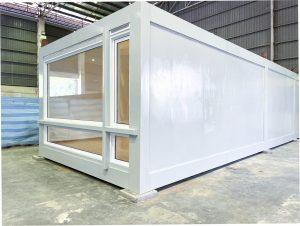
U.S. construction tech company Cassette has launched new stackable apartment pods that assemble into full apartment buildings. The first-of-its kind product is expected to shave half the time off construction schedules and help get more affordable rental homes to market faster. The new line was produced in collaboration with California modernist design luminaries, Hodgetts + Fung.

Taking a new approach to modular construction, Cassette says its business model was inspired by process-oriented brands that have successfully transformed complex industries, such as air travel, food distribution, and now construction.

“Cassette’s entire apartment units are manufactured in a factory then stacked quickly like LEGOs,” said Founder & CEO Dafna Kaplan. “We are focused on standardizing the multifamily building process and making sure it works for every developer, every time, and that it is easy for any architect or contractor to use.”

In the U.S., where a national housing shortage due to record low interest rates and a decade of under-building has led to a severe supply-demand imbalance, new housing construction has fallen drastically behind. Home sales have boomed, active housing listings have dropped, and the median home sale price has surged. In 2020, 46 per cent of American renters spent 30 per cent or more of their income on housing, and now rents have reportedly hit a record high for the 17th month in a row.

Cassette’s process

With a goal to reduce the cost of multifamily housing construction by 30 per cent in three years while also doubling the speed of housing production, Cassette says its streamlined process involves simultaneously producing the housing pods in a factory as the land undergoes preparation, a step that can shave 30 to 50 per cent off the schedule. Also, by converting 50 per cent of building design toward a fixed product and pricing model, more predictability can be achieved.

The first one-bedroom apartment pods are just under 600-square feet in size, and include an “impeccably detailed” bathroom, bedroom, laundry cabinet, double wardrobe, and chef’s kitchen. The interiors, designed by Hodgetts + Fung, feature a bedroom with a large clerestory window to draw in natural light and a sliding wall panel.

Find out more by visiting: Cassette – Modular Construction Systems (cassettesystems.com) 

Bulk contracts post Rogers outage

On the morning of July 8, 2022, beginning around 5 a.m. eastern time, 12 million Rogers subscribers and more than 25 per cent of our nation’s population lost all wireless and wireline connectivity. Some businesses couldn’t take payments, families couldn’t reach their loved ones and many government functions – including the arms-length CRTC who oversees our national telecommunications policies – couldn’t be reached.

Additionally, if you were part of a growing cohort of condominium corporations who inherited a single service provider contract for your internet communications infrastructure from your developer (otherwise known as bulk contracts) – and that contract happened to be with Rogers – your entire community was disconnected. So ubiquitous and vital has our internet connectivity become, being without it brings many of our lives to a standstill. Especially post-pandemic with many working from home, not being able to connect meant loss of income and potential disaster if responsible for critical issues.

While having no internet, TV, or news could be considered a blissful respite from the constant stream of information we consume, for condo corporations that are increasingly using internet connected sensors to monitor water leaks, the internet to connect fire panels and VOIP emergency phones in elevators, this bliss could very quickly become life-endangering and a significant crisis in the making.

Policies and choice

Until relatively recently it was standard development practice to have the major telcos in each region build into every new condo at the telco’s expense. This ensured that: a) each resident had their choice of provider; and b) the building had redundant networks as part of its infrastructure, which provided a level of resiliency the community could count on as outages occur.

Additionally, if a resident wanted a telco that hadn’t built in, the corporation had an obligation to work with that resident’s telco of choice and get an appropriate access agreement in place, so the telco could service that resident and community—the end user choice being primary.

Over the past 10 years, however, developers have shifted away from this practice. The reasons for this even being allowed in telecom policy and condo law are complicated but the way it works is simple. In exchange for a significant upfront fee from the telco, developers turn to a single provider for all internet communications services, not only for the common areas, but for individual unit owners (and their tenants) as well. The cost for this service is then passed on through common element fees.

Normally this type of bulk deal for service would require a bylaw and vote by a condo board as it’s usually considered a “substantial change”. By embedding this in the declaration and the common element fees from inception, this democratic provision is avoided. The question remains, however, is this a good thing?

The benefit to the developer is clear. They get a significant extra boost of cash they wouldn’t otherwise receive from the telco. They also reduce their administrative and building costs slightly by not having to build infrastructure to accommodate numerous telcos.

For the telco who has been selected, there is also a huge benefit. While they will lose money for the first few years, they have a guarantee of cash flow and profit at some point in the contract and, effectively, a monopoly. Most consumers are resistant to moving providers so even when bulk contracts are over (if not renewed), then chances are the incumbent will retain the vast majority of subscribers in perpetuity.

From a consumer standpoint, there is also a benefit in that these bulk internet fees are lower than what would typically be available in the marketplace, potentially saving them money if this was a service they wanted anyway.

So far so good. What’s the problem then?

Bulk contracts: an overview of issues

First, as was made evidently clear from the Rogers outage, it means an entire condo community – sometimes the size of a small town – can be without connectivity and, if this happens, their safety systems will be affected. This brings into sharp focus numerous liability issues should something go wrong. Outages occur to every telco and if these systems were on another telco’s network that had one, you’d end up with the same result. However, not having other networks available removes the corporation’s choice to divvy up these services amongst various telcos to minimize an outage’s detrimental effects.

Second, buildings and individual condo units are increasingly being valued based on their communications resiliency and options. Having a single network feed into a building lacks this in spades and potentially lowers its value.

Third, “end user choice” is denied. Most people like to choose the businesses they work with. By inheriting this deal, the condo board is now responsible for locking all their residents into a deal they neither agreed to nor might want. A house owner would never accept a mayor of a town telling them they have to buy from “x”, so why should a condo owner have less autonomy because of the built form of the home they have?

Fourth, as time and innovation marches on, a corporation could be stuck with less than ideal service and no way out.

Finally, while another telco could build into the community if a resident or the condo board requested, there is no incentive for them to do so. What most people want is access to the internet so they can work, browse the internet and stream their favourite shows. If everyone is already paying through their common element fees, a new telco has no hope of making back its investment to bring its network to the community as there’s no market to compete for.

Additionally, most bulk contracts have clauses that allow the incumbent to match or beat any new telco’s offer once the initial agreement has expired. Since the incumbent has already sunk its costs and become profitable, they can do this easily and retain the contract – ensuring a lack of resiliency continues.

Condo boards have a duty to their residents and are always having to balance the good of the collective versus the rights of the individual. Boards are also bound to ensure the ecosystem of their buildings is as resilient as possible. Determining what kinds of services we provide for our residents requires carefully reviewing the opportunity, the risk, the economics and the dexterity with which we can change those decisions as innovation progresses.

Todd Hofley is the president of Toronto Standard Condominium Corporation 2164. He is also the VP of Policy and Communications at Beanfield Metroconnect.


Big Sky Beach House – Andrea McLean Studio

Big Sky Beach House is a private residence located near Vancouver’s Kitsilano Beach that successfully takes design cues from modern Australian beach houses. The 2,400 square foot house evokes simplicity, creating a contemporary home that is cozy, and warm.

Designed by Andrea McLean Studio, the paired back approach to materiality including walnut, concrete, and linen delivered a home that is both sophisticated and relaxed.

To maximize the efficiency of the floor plans, the design employs a reverse plan with the living levels up for full access to sunlight, natural breeze and views while the bedrooms are on the ground level.

“Space limitations were a big challenge. This is a 33’w lot, so the space planning needed to be efficient. Pocket doors were used in some areas in order to limit encumbrances, and to join spaces by blurring the lines between rooms. Materiality was used consistently, in particular, the walnut millwork,” says interior designer Andrea McLean. “The millwork also allowed us to conceal storage, structure, and mechanical drops.”

The millwork, by Lauten Woodworking, is exceptional.  To achieve a rustic warm wood with character and texture, a number of flat cut Walnut veneer bundles were sourced with natural colour variation and defects from different logs. All the plumbing and appliances are white. The same tile is used in every bathroom. Every floor is concrete. The linen drapery is also consistent.

“It goes without saying that a good client relationship, and trust is essential to a successful project. What was unique with this project, is that our clients were really one of the design partners. They were very dedicated to the vision, and maintained the vision throughout the project. The result is a home that is a true representation of their aesthetic, lifestyle, and values,” she says.

The project earned double honours at the 2022 IDIBC Awards of Excellence, receiving an Award of Excellence and the Robert Ledingham Award. The firm also won an Award of Excellence and Specialty Award for White Rock Residential.

Winning the Robert Ledingham Award is an emotional and personal experience for McLean. Her first job as a junior designer was with Ledingham.

“During that time I was exposed to the highest level of design, and hard work. This time groomed me and left a lifelong impression on me. Bob was warm and giving, and extremely talented, patient, and professional,” says McLean. “He taught me the importance of interior design, and how careful observation can be applied to any design problem with a poetic outcome that betters the lives of those experiencing that environment. Yes he had impeccable taste that was unmatched but what impressed me most was that his design approach went way deeper than surface aesthetics.”


ROBERT LEDINGHAM AWARD &
IDIBC AWARD OF EXCELLENCE
RESIDENTIAL TOTAL

Interior Designer: Andrea McLean, RID
Photographer: Ema Peter

Bold Coupland art sculpture unveiled at Metrotown

A new art installation called Fordite by Douglas Coupland has been unveiled at Station Square in Metrotown, Burnaby.

The art installation, which is the first Coupland piece to join Metrotown’s growing public art collection, nods to the site’s transformation from a former Ford Motor Company assembly plant that existed on the site between 1938-1988 into the award-winning mixed-use residential development, Station Square.

“For the Station Square site I created stacks of polished fordite gems that are deliberately bold to remind people in a jubilant way that we once, not even long ago, lived in a world where car colours were used as they still are in fashion, to hasten a vehicle’s shortened lifespan and to build expectation for newer and more differently coloured cars,” says Douglas Coupland.

Coupland’s installation, which includes four separate pieces, the tallest of which reaches 50 feet, is designed to look like the gemstone-like material that is created through the buildup and hardening of automotive paint slag, called fordite. The installation sits at the intersections of McKay Ave and Kingsway and Kingsborough St and Silver Dr, outside of Station Square’s final two towers, 6000 McKay and 6080 McKay.

“It is fitting, that what was once a car factory, then a vacant lot, then a strip shopping centre, and now the modern urban village of Station Square – a comforting place for thousands of people’s daily use – is symbolically graced by this amazing piece by Douglas Coupland,” says Eric Carlson, CEO, Anthem. “Fordite is something new and creative, made from what was before, stimulating the senses and appreciation for both the esthetic and the idea of renewal. It is a bold signature, finalizing this significant development, created in partnership between Anthem and Beedie.”


Peter Templeton affirmed at USGBC helm

Peter Templeton has been affirmed as president and chief executive officer of the U.S. Green Building Council (USGBC) after serving as the interim leader during the past year. He assumes the helm with experience in key positions at the USGBC and its project certification and professional credentialling arm, Green Business Certification Inc. (GBCI), as part of a 25-year career dedicated to high performance and sustainable practices in the built environment.

“Our boards are thrilled that he has agreed to take on the CEO role at this critical juncture in the history of the green building movement,” says Aaron Bernstein, chair of the USGBC board of directors. “We must accelerate action on the climate crisis. Peter has worked tirelessly throughout his career to advance green building and, in doing so, combat climate change and protect our health.”

Templeton was one of the USGBC’s first employees, joining to help with the launch of the LEED rating system. He was also the GBCI’s first president from 2009 to 2012. Just prior to stepping in as the USGB’s interim president and CEO, he was the president and CEO of the Cradle to Cradle to Products Innovation Institute from 2018 to 2021.

Templeton serves on the boards of the World Green Building Council and Sustentabilidad paraMexico. His USGBC leadership also comes with responsibility for GBCI and the sustainability performance platform, Arc Skoru.

“Peter is a passionate leader with a clear vision for taking green building to the next level,” declares Don Anderson, chair of the GBCI board of directors. “He is committed to evolving our frameworks and ramping up capacity needed for building owners and occupiers to meet aggressive goals for decarbonization, resilience, health and equity in the built environment.”

NS to offset revenue loss from Fiona shutdowns

The Nova Scotia government will offset revenue loss for small business operators forced to shut down during and in the aftermath of Hurricane Fiona. Contractors, independent retailers, private daycares, accommodations and hospitality businesses, performing arts venues and fitness facilities can qualify for a one-time $2,500 grant if they were closed for five or more customary business days between September 23 and October 7 and do not generate more than $5 million in gross annual income.

Eligible recipients can apply online and are promised a cheque within two to four weeks.

“We will continue to work with the business community to understand the ongoing impacts on their operations,” Nova Scotia Premier Tim Houston says.

The grants are in addition to the up to $200,000 in disaster financial assistance available to help private and not-for-profit enterprises cover repairs or replacement of uninsurable essential property. Eligible recipients have until January 31, 2023 to apply for the latter relief, which will be dispersed to qualifying fulltime operators with at least a 50 per cent ownership stake in a business generating yearly gross revenues between $10,000 and $2 million.

Homeowners and tenants can also apply through a separate portal for similar types of Fiona-related relief. As well, households can receive $100 to compensate for food spoilage resulting from power outages of 48 hours or longer and $250 toward the cost of removing felled trees from their property.

ALiAS Condos begins to rise in Old Toronto

Construction has started on a 45-storey condo that is inspired by the “freedom and glamour of rock and roll.” The 546-unit high-rise at Church and Richmond in Old Toronto, called ALiAS Condos, will include 18,000 square feet of indoor and outdoor amenity space and more than 7,000 square feet of street-level retail space.

Amenities include a co-working lounge, fully equipped fitness centre, indoor and outdoor private play areas for children, party rooms complete with a pizza oven, an experiential pet spa, and much more.

ALiAS Condos

Co-working lounge. Photos courtesy of Madison Group.

Madison Ground started construction at the end of September, with Teeple Architects and Turner Fleischer Architects as designers, interiors by Studio Munge and landscapes by MBTW.

At the groundbreaking ceremony, Stephen Teeple, founding principal at Teeple Architects, described how the “glazed black brick is designed to cascade down the building façade like a waterfall, topped with an iridescent gold crown meant to ignite the evening sky.”

ALiAS Condos

The streetscape. Photos courtesy of Madison Group.


ALiAS Condos


Power failure tips for high-rise condo owners

A crane hit a high-voltage transmission line in Toronto in August and caused thousands to lose power for a prolonged period of time. Numerous high-rise condos were impacted, but ultimately safe.

Incidents such as this are often learning experiences. Having an active risk management program available for staff to follow will save time when seconds count. Here are some tips to ensure high-rises are ready for the next power failure.

Have portable lighting ready

Building supervisory staff such as superintendents and front desk security should have rapid access to emergency-use flashlights, complete with spare batteries in the event of a power failure. To ensure they are always available and ready, implement a monthly checklist to test batteries and make sure the flashlights are ready.

Check and inspect the emergency generator once every seven days

Building staff should inspect the emergency generators every seven days. A 15-point inspection is required that must be documented by the building owner every week to ensure there are no leaks, corrosion, troubles and more. Failing to complete or document these inspections is a violation of the Ontario Fire Code.

In addition to this weekly inspection, your high-rise residential building generator will also require a monthly test. The property management team is required to maintain documentation of these monthly tests. When these systems are inspected and tested when required, they will work and better protect everyone in the building.

Keep the fuel level topped up and storage clear

Fuel levels for your building’s emergency generator should be checked every 30 days and be documented by either your building superintendent or security guard during routine patrols.

The level of fuel for the tank should never go below 80 per cent as this generator fuel provides emergency power to the building’s critical life safety systems during power failures.

The diesel fuel tank is typically protected by a spill moat that is designed to hold 110 per cent of the volume inside the fuel tank, allowing this moat to be a secondary containment area. In the event the tank leaks or fails, the spill moat is designed to capture all of the spilled diesel. Never store any materials inside the spill moat area as this decreases the area available to safely collect the diesel in the event of a spill.

Keep both staff and residents up-to-date

During a power failure, be prepared to update the occupants of your condominium via the building’s emergency voice communications system. Building staff require training on how to use this system and the correct wording and advice to provide residents during power failures. A building’s emergency response plan will capture all of these procedures, including what to explain to the residents.

Both the fire alarm system and emergency voice communications system will continue to function during failures as they are backed up by the generator. If the generator fails, the fire alarm system will still protect the building due to local batteries inside the panel.

Introduce domestic water pumps to the emergency generator

Domestic water pumps ensure that water arrives to all the floors as needed to boost municipal water pressure. Some residents won’t receive water during power failures if these booster pumps are not connected to emergency power.

Develop an emergency preparedness and response plan

High-rise power failures are a “reasonable” and “foreseeable” emergency that could occur in a condominium. Having policies, procedures and documented prevention and mitigation efforts is already a requirement for the most common, foreseeable emergencies.

Most property managers develop emergency preparedness and response plans specifically for their building for professional documentation. In Ontario, for example, there is significant legislation such as the Occupational Health & Safety Act, Occupier’s Liability Act and even fire codes that have unique requirements that can be met through documenting and implementing such a plan. Consideration should always focus on the major themes of: prevention, preparedness, mitigation, and response

Jason Reid is the senior adviser for Fire & Emergency Management with National Life Safety Group in Toronto. He has worked with international embassies, government, public and private sector critical infrastructure facilities; commercial/residential high-rise buildings; world class shopping centres and mass assembly facilities. He can be reached at: [email protected] Main: 647-794-5505 Toll Free: 1-877-751-0508 www.nationallifesafetygroup.ca.

Alberta eyes reno of vacant provincial building

A vacant provincial building in Calgary’s beltline office district will be set up for repositioning. The Alberta government has announced plans to bring the 44-year-old, six-storey structure back into active service, in keeping with the recommendations that a provincial taskforce on revitalizing downtown Calgary submitted earlier this year.

“This project is part of Alberta Infrastructure’s goal to effectively use existing spaces, revamping these buildings and getting them in the best shape to serve Albertans for many years to come,” says the Minister of Infrastructure, Nicolas Milliken.

Known as the Red Cross building, it has been empty since Canadian Blood Services ended its tenancy in 2020 — contributing the current 32.9 per cent office vacancy rate in downtown Calgary. Construction and abatement crews are slated to begin what’s expected to be a six-month interior demolition and hazardous materials remediation project in the winter of 2023. From there, redevelopment and new uses are meant to be reflective of guiding principles affirmed in the taskforce report, which endorse downtown vibrancy, diversity, safety, security and quality of life.

“These kinds of initiatives are key to boosting our local economy, as they offer clean, modern spaces that will keep business in downtown Calgary and offer new opportunities for expansion in the years to come,” asserts Deborah Yedlin, president and chief executive officer of the Calgary Chamber of Commerce.

GBAC publishes cleaning validation and auditing guide

The Global Biorisk Advisory Council™ (GBAC), a Division of ISSA, has released its Validation and Auditing Technology Resource Guide and Directory, aimed at educating industry professionals about the current and emerging technologies for cleaning validation and auditing. The guide is available complimentary to ISSA members and GBAC customers.

“With cleaning for health more important than ever, it is important to audit and validate a cleaning program’s efficacy,” said GBAC Senior Director Dr. Gavin Macgregor-Skinner. “We are excited to offer this resource to ISSA members, GBAC customers, and the industry as a whole to make it easier for them to identify the best partners for their cleaning performance validation and auditing needs.”

This publication includes education regarding cleaning validation and auditing technologies, environmental hygiene monitoring, and data collection and analysis.  Some technologies outlined include ATP portable microbiological tests, quantitative polymerase chain reaction (qPCR), air pathogen detection, fluorescent marking, sensors, software, and more.

Several GBAC STAR Registered Technologies have participated in this initiative. Products that have achieved the GBAC STAR Registered Seal have been assessed by the GBAC Scientific Advisory Board for scientific validity, usability, practicality, safety, and efficacy.

GBAC STAR Registered Technologies included in the resource guide and directory are:

  • AllClir Sensors by AllClir
  • AnniList® by Annihilare Medical Systems, Inc.
  • Biosafety Intelligence System by Poppy Health, Inc.
  • EnSURE™ Touch by Hygiena
  • GeneCount® Q-16 by LuminUltra Technologies Ltd.
  • Highlight by Kinnos
  • Kikkoman A3 by Kikkoman Biochemifa Company
  • Optisolve Ltd.

Exclusive Participating Technologies referenced in the resource guide and directory are:

  • 2nd Generation ATP® by LuminUltra Technologies Ltd.
  • 3 Rings of Defense by ThinkLite
  • Cleancode, Powered by CORA Technologies
  • CleanTelligent Software
  • Clean-Trace Hygiene Monitoring and Management System by 3M Health Care
  • DAZO® Environmental Monitoring and Verification System by Ecolab
  • Mero Technologies Inc.
  • Smart InspectTM and Simple CheckTM by Core America
  • UVC Dosimeters by Intellego Technologies

The Validation and Auditing Technology Resource Guide and Directory is available at no cost to ISSA members and GBAC customers here.