CB September/October 2023
Reply



Commercial real estate is a showcase sector for climate-related impacts and the practicalities of risk management. Recently released guidance for investors and owners/managers highlights likely physical threats, recommended safeguard measures and key questions for gauging the preparedness of assets.
The University of Waterloo’s Intact Centre on Climate Adaptation has developed six industry-specific climate risk matrices to inform financial market participants in their decision-making and to encourage asset owners/managers to evaluate their holdings. These are presented in user-friendly chart form meant to be compatible with what’s characterized as an “ESG alphabet soup” of assessment and reporting frameworks many industries are now juggling.
“Fulsome disclosures must not only identify risks, but also identify what measures need to be implemented to reduce those risks and, in so doing, allow institutional investors to meet their duty as fiduciaries,” submits Kathryn Bakos, managing director of the Intact Centre and co-author of its new report on integrating climate risk analysis into institutional investing.
This comes as costs mount from a lengthening sequence of severe natural events, and a growing cast of regulatory bodies call for more and better response strategies. Data from the Insurance Bureau of Canada (IBC) shows that insured losses due to extreme weather surged from an average of $250 to $450 million per year in the period from 1983 to 2008 to an average of about $2 billion annually over the subsequent 14 years. The Fort McMurray wildfire accounted for the majority (70 per cent) of the chart-topping $6 billion in insured losses in 2016. However, $3.1 billion in weather-related claims in 2022 — the third highest amount for any year thus far — are considered a more insightful harbinger because they arise from multiple events occurring nationwide.
“Climate change models predict geographically dispersed impacts, and that is what Canada is experiencing,” the report observes. “Extreme weather, driven in concert with a changing climate, will continue to evolve and become increasingly severe over time, thus generally rendering greater costs across industry sectors. Market participants and stakeholders must, therefore, be vigilant and cognizant of the increasing potential for severe weather to impact investments over time.”
Commercial real estate was chosen for an illustrative climate risk matrix — along with: electricity transmission and generation; property and casualty insurance; banking/residential mortgages; hydroelectric generation; and wind electricity generation — for its fit with the Task Force on Climate-related Financial Disclosure (TCFD) definition of sectors that are well placed to serve as models for broader industry. Those are sectors in which severe weather events can significantly disrupt operations and/or damage assets, but which generally have the expertise to understand potential business impacts and available means to mitigate risk.
Commercial real estate also provides the template for the report’s case study of the returns on investment in climate change adaptation. It models three scenarios — no adaptation; early adaption; late adaptation — for impact on rent income and share price, and concludes that early adapters will be in the best position to protect and enhance asset value.
“Laggards will bear the full financial consequences of the pricing-in of climate-related market-level impacts,” it warns.
The climate risk matrices are promoted as tools to help investors and associated financial market participants benchmark investees against standard thresholds of preparedness. Meanwhile, companies using the matrix to drive the process of identifying and mitigating climate risk should glean results that can also inform TCFD or other initiatives such as the Sustainability Accounting Standards Board (SASB) or the Carbon Disclosure Project.
“Relative to the physical risks of climate change, the outstanding challenge for market participants is to: (1) identify which extreme weather events have the highest probability of affecting individual industry sectors/sub-sectors, and (2) assess whether potential investee companies have implemented appropriate actions to mitigate extreme weather risks specific to sectors/sub-sectors,” the report states.
In developing the matrices, Intact Centre researchers surveyed experienced senior managers in each of the six sectors — ensuring representation from Canada’s eastern, central, western and norther regions — for their rankings of the most common climate-related threats and most severe impacts on their business operations, and their insight on risk-mitigation measures for those impacts. As well, the matrices draw on resources from organizations such as ISO, Standards Council of Canada, National Research Council, Canadian Standards Association, Sustainability Accounting Standards Board, Global Reporting Initiative, and the International Electro-technical Commission Standards.
Feedback from 13 institutional investors, which collectively hold $2 trillion in assets under management, also helped shape the final format — in particular their request for more detail in the risk reduction section of the matrices.
“The financial community should lead the way in developing climate risk matrices. There is no point in talking about TCFD, Sustainability Accounting Standards Board (SASB), ESG or any other combination of letters, if, at the end of the day, this stuff doesn’t translate into action that lowers the risk profile of the investable universe,” reflects the report’s other co-author, Blair Feltmate, head of the Intact Centre.
The climate risk matrix for commercial real estate identifies floods and windstorms as the top two perils in a list of prevalent climate-related hazards that also includes wildfires, extreme heat, ice/hail/snow loading and thawing permafrost. Flooding comes with an ominous legacy of property/equipment damage and destruction, subsequent mould infestations and business disruptions, and also brings potential health and safety risks for building occupants. Meanwhile, windstorms can severely damage or propel the liftoff of roofing, carry debris that can break windows and other fragile structural features and drive water into buildings.
In total, the CRE matrix lists 16 risk-reduction measures across the six categories of climate threats. Of these, top priority is given to placing critical infrastructure for HVAC, electrical and communications systems above expected flood levels or at least flood-proofing equipment where it cannot be feasibly elevated, and to reinforcing roofing with additional fasteners at the perimeter and corners.
Among the recommended measures, some involve capital outlay, such as improvements to building foundations to protect against thawing permafrost or installing higher-resistance glass (windstorms), thermal imaging cameras (loading), water sensors (floods) or HEPA filters (wildfires). However, others are tied to emergency planning, such as ensuring procedures are in place to respond to floods or extreme heat, or maintenance, such as keeping sites, including roofs and gutters, clear of combustible materials or proactively removing ice and snow from roofs.
To guide investors, the matrix includes a key performance threshold for each of the six climate-related risks with a suggested question to pose to asset managers. For example, to address flood risks the question is: Are HVAC, electrical, communication systems, and server rooms elevated or otherwise flood protected? To address wildfires it is: Does the HVAC system have capacity to cleanse smoke from the air? Senior CRE managers provided input in setting the thresholds for acceptable performance.
The risk matrix for electricity transmission and distribution targets the same six climate-related threats, but places the most emphasis on wildfire, which arcing from powerlines can trigger, and snow/ice loading, which can topple lines and towers. Risk matrices for the industries providing residential services focus on five threats — floods, wildfire, hail, wind and snow/ice — with the highest priority tied to floods and wildfire.
When the summer season officially comes to an end, cleaning, repairing, and storing your outdoor equipment effectively should be part of your fall maintenance strategy. Proper storage will save you money by prolonging the life of your equipment, avoiding repair or replacement, and will ensure that they are ready to use when you need them in the spring.
When properly maintained and stored, your outdoor equipment can last many years, through all seasons. Make outdoor equipment storage a priority in your maintenance plan to save on repairs and replacement and keep your equipment running all year.
Greyspring Apartments continues to expand in the Montreal market with the recent acquisition of an 11-storey, 180-unit apartment building. Located at 335 Deguire Blvd. the property is just down the road from two previously announced acquisitions, including a 412-unit rental community on de Choisy Street.
Referring to the latest purchase as a strategic move, Greyspring says the Dequire property increases the company’s presence in the borough of Saint Laurent to over 550 units while offering operating and execution efficiencies.
Meanwhile at the de Choisy Street property, a comprehensive value-add program is underway, including common area and suite improvements along with building efficiency enhancements.
“We are very pleased to add this acquisition to our growing Canadian portfolio, particularly in Montreal which has recently seen substantial economic growth,” said Karl Brady, President, Greyspring Apartments. “This central location provides residents with convenient transit options and numerous amenities. We are excited to implement our value-add program to enhance the resident experience.”
The Saint-Léonard neighbourhood offers residents easy access to established transit, retail, academic institutions, hospitals and other essential services close to major highways and thoroughfares.
Greyspring describes itself as a “rapidly growing asset management firm that acquires, strategically repositions and manages multifamily assets in growing and stable markets within Canada.” With an expanding portfolio of more than 2,000 units and over $395 million in assets under management, Greyspring is an investment and asset management firm jointly owned by Greybrook Realty Partners and Marlin Spring.
Visit www.greyspring.com for more info.
Seismic activity is a natural occurrence that happens throughout the world. Defined as the sudden movement of the earth’s crust caused by the release of stress accumulated along geologic faults or by volcanic activity, severe earthquakes don’t happen very often, but when they do the results can be catastrophic. From triggering tsunamis to leveling buildings, the worst earthquakes in history have led to death tolls in the thousands, making them among the worst natural disasters known to civilization.
So, what does this mean for Canadian building owners? According to Leon Plett, Managing Principal at RJC Engineers, it’s a complicated issue with different rules and levels of urgency depending on where you live. While some regions in Canada are at higher risk of experiencing ground motions capable of structural damage—namely, along the east and west coasts of the country—no area is completely immune to the threat. As such, local governments have been calling on building owners for years to invest in upgrades to make their buildings more resistant to ground motion and soil failure due to earthquakes and tremors.
“Here in BC, we have a significant stock of 1960s and 70s, four-storey, wood-frame buildings, most of which was constructed without an engineer on board,” Plett says. “Many of these have soft storeys, undersized beams, and no defined seismic system. They were not built to withstand excessive ground shaking.”
That said, there’s still no requirement to improve the safety of an existing building against a seismic hazard. Only new building designs or buildings undergoing a significant change in use or renovation must upgrade for seismic resilience in accordance with the local municipality’s guidelines.
While the cost of a typical seismic upgrade is estimated to be less than $20,000 per unit for low-rise, wood framing buildings, the real deterrent for multi-residential building owners is the loss of income over the construction period, which Plett estimates can take six months to a year-and-a-half to complete.
“Upgrading a wood-frame building for seismic resilience involves strengthening the shear walls and the foundations, and a few other key areas,” he explains. “There’s a lot of plywood and nails and steel hardware needed but it’s relatively straightforward. We might have to put new anchors from the walls into the foundations to resist uplift, strengthen the walls with plywood sheathing, and improve the floor and roof diaphragms which distribute those forces to the walls.”
Challenges & Opportunities
While it is possible to complete the work in phases, as tenants move out leaving some areas of the building vacant, Plett says doing it all at once is still the best approach as it helps reduce the cost and invasive nature of these structural modifications. For reference, the current code in Victoria requires a building to withstand an 8+ magnitude earthquake despite the rarity of such an event occurring. (Also for reference: this type of catastrophic earthquake only happens about every 600 years in the Cascadia region, with the last one being 300 years ago.)
Of course, should such a disaster strike, the consequences of delaying seismic retrofits are unthinkable. Meanwhile, the costs and risks associated with other pressing issues like climate change, accessibility, and affordability are taking precedent.
As Plett points out, “We have a housing crisis in Canada, and we’re trying to build and maintain affordable housing. However, we’re also seeing increasing building costs due to energy targets, which require more expensive windows and wall assemblies and mechanical systems, and design and accessibility requirements that increase building areas and articulation while further adding costs. These are worthwhile initiatives that result in better buildings, but they don’t generate revenue. So, we’re seeing all these added costs that are impacting building owners and developers combining with increasing construction costs and reduced construction capacity. We’ve seen many rental projects being put on hold.”
But this presents some opportunities for existing building owners—and with seismic upgrade mandates expected to come into play by 2030, now’s a good time to plan the path forward:
With significant infrastructure already in place, adding a few more storeys to offset the cost of your seismic improvements (if zoning allows), will increase revenue once the project is complete. At a time when more rental housing is desperately needed, this will bring valuable new units to market.
With sustainability targets also dictating future building upgrades, doing them together will help reduce operational costs and improve efficiencies, while also improving your building’s appeal and resilience.
 Calculating Risk
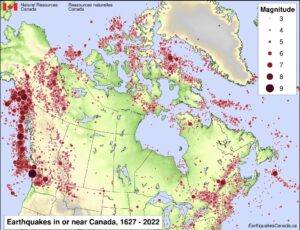
If you’re curious about the seismic risk level at your building site, a quick search of the online map at the Canadian Geological Society website will tell you the likelihood of your area experiencing an earthquake, as will using the Seismic Calculator at Earthquakes Canada (nrcan.gc.ca).
Seismic hazard is measured in terms of the history of tectonic movement for a location combined with the earthquake records that have been accumulated for decades. Plett and other structural engineers combine this knowledge with the building characteristics, the soil, and other key values associated with a site when determining the extent of structural strengthening needed.
For more information on seismic upgrades, visit www.RJC.ca or contact Leon Plett directly at [email protected]
Nearly one-in-five Canadian households are prepared to undertake major renovations within the next 5 to 10 years to mitigate the impacts of severe weather events like wildfires, floods and tornadoes.
In Aviva Canada’s How We Live report, released in August, a new chapter on sustainability and climate change probes how prepared Canadians are for climate adaptation measures. Among respondents, 24 per cent are choosing what home to buy based on whether it’s located in a flood zone, with the highest concern among respondents aged 18 to 34. Most Canadians said that governments, municipalities and real estate agents and builders should provide flood zone information to prospective homeowners.
Ontarians indicated the biggest awareness gap when it comes to understanding flood zones. The report calls for stronger public education programs as less than half of respondents said they understand where to source information on flood risks.
“While we commend the government on Canada’s first National Adaptation Strategy and Action Plan, execution can’t be far behind,” said Susan Penwarden, managing director, personal lines, at Aviva Canada. “Governments need to incentivize homeowners, update flood maps and building codes now because playing environmental catch up is a hard game to play with no winners.”
When it comes to inside their homes, eco-friendly renovations are top of mind for 71 per cent of Canadians who are planning to switch to energy saving appliances; 69 per cent would switch to eco-friendly cleaning products and 60 per cent favour using reclaimed materials or products for renovations or upgrades.
Outside the home, 42 per cent said they’re planning to purchase an electric vehicle within the next five years, while 58 per cent will choose brands or services provided by companies that are taking action on climate change.
As back-to-school approaches, custodians are facing the daunting task of keeping the environment sanitized and safe for students, teachers, and visitors, as people are constantly coming and going. Getting ahead of the game is one way to stay prepared for the challenges that heavy traffic and changing weather bring.
As part of your cleaning protocols, consider these five steps to getting – and keeping – schools clean and healthy this fall:
There are a few other elements that you may need to consider when prioritizing cleanliness and safety in schools:
As back-to-school looms and custodial staff are working hard to get ready, these protocols will help keep buildings clean and safe throughout the year.
The federal government and B.C. government announced a joint investment of more than $8.4 million to support upgrades to the Montrose Avenue Transit Exchange in the City of Abbotsford.
Project funding will help with the construction of an enhanced transit exchange on Montrose Avenue in downtown Abbotsford. This exchange is required to create the Transit Future Network in Abbotsford and surrounding regions. Further, once completed, the Montrose Exchange will feature approximately 10 bus bays, transit shelters, new bike lockers, bike racks, cycling amenities, bus operator washroom facilities, and improvements to pedestrian and road infrastructure.
“This investment is another great example of the province, the federal government and BC Transit’s shared commitment to improving public transit and providing people with cleaner, more affordable travel options. Upgrading and modernizing our transit exchanges to accommodate growth is one of many ways we can attract new riders and build a world-class transit system that meets the needs of our communities long into the future,” said Rob Fleming, minister of transportation and infrastructure.
The Government of Canada is investing $3,370,966 in this project, while the Government of British Columbia is investing $3,370,966 and BC Transit is contributing $1,685,482.
The Government of Canada’s funding comes from the Public Transit Infrastructure Stream of the Investing in Canada Infrastructure Program. This stream supports the building, expansion, and upgrading of urban and rural transit networks.
To date, 54 infrastructure projects or project bundles under the Public Transit Infrastructure Stream have been funded in British Columbia, with a total federal contribution of more than $2.5 billion and a total provincial contribution of over $3.8 billion.
Diamond Schmitt has been honoured as a finalist with two projects in Fast Company’s 2023 Innovation by Design Awards.
Listed among the best architectural designs of 2023, David Geffen Hall and Manitou a bi Bii daziigae have both been named finalists in the Spaces and Places category, which recognizes buildings, structures and interior designs that solve problems in the built environment. For 12 years running, Innovation by Design has celebrated the people and companies behind some of the world’s best and most thought-provoking design work.
The new David Geffen Hall goes beyond acoustical quick fixes to a larger reinvention of purpose. It addresses the overdue confrontation around equity and inclusivity that cultural institutions have faced in recent times by creating a highly flexible and user-driven space that offers an uncompromised and welcoming experience for all. Not only does it meet the social and technical needs of the present, but it anticipates those of the future, ensuring its success and sustainability in the decades to come as both a performing arts venue and a civic hub.
Manitou a bi Bii daziigae facilitates ‘thinking and learning’ and offers flexible, high-tech, and interactive spaces; more importantly, it provides an atmosphere that nurtures creativity and collaboration. Innovation is expressed through the adaptive re-use of a heritage building —repurposed and transformed to achieve a new standard for energy efficiency. The new facade is made of Building Integrated Photovoltaic panels that change colour depending on the angle of view and weather. This innovative concept – a Canadian first – conceals solar cells behind nano-coated glass panels. Their animated appearance conveys a sense of wonder that itself is an outward expression of the path of learning and innovation.
The City of Edmonton has opened its 31st fire station and the city’s first net-zero energy building.
The Windermere Fire Station’s total amount of energy usage on an annual basis is expected to be equal to the amount of renewable energy created on the site.
“The new Windermere Station is a great example of how we are getting greener as we grow,” said Mayor Amarjeet Sohi. “This needed infrastructure will serve a local community, but also all of Edmonton as we strive to reach our goal of becoming a net-zero corporation by 2040.”
The Windermere Fire Station features a rooftop solar installation, a geothermal heating and cooling system, and other climate-resilient design features. Energy generation and reduction features of the building include:
City centres across Ontario are growing busier again as fear of a global pandemic recedes. Yet as people leave their homes to return to work and regular activity, the criminals have also returned. And while 2020 boasted the lowest property crime rate in more than 50 years, crime rates have not continued to sink since then.
For real estate owners and operators – especially those who manage high-rise condos in the city centres – the property crime rate is the one to watch. Although non-violent crime is down slightly across the province, the rate isn’t down enough to alleviate all concern.
Experts agree that organized crime is rising across Canada, and no one is even certain how many groups exist. Law enforcement struggles to prevent and prosecute those crimes, but property owners and operators are left to foot the bill – an expensive proposition in today’s uncertain economy.
As a result, building security is growing in importance. For example, common areas in condo towers house a variety of important spaces, including vehicle parking, storage lockers and bicycles, all under one roof. Offering the right security to protect these belongings – as well as their owners – goes a long way toward protecting your building overall.
Yet insurance coverage is no longer the simple proposition it once was. Underwriters are nervous about which buildings should be able to secure coverage. Property owners also can’t assume their buildings will be safe just because the neighbourhood is safe. They will need to take other steps to protect themselves and their buildings.
Today, property owners must face real estate crime head on by taking active steps to protect their investment and minimize their losses. These tactics work together as a single system, introducing risk mitigation practices and securing appropriate insurance coverage to protect you from the worst.
Here are five tips for increasing safety and security at your high-rise property:
Assess your property
Begin at the beginning; a thorough risk assessment will reveal any weak links and problematic issues, from great to small. Remember, even buildings in terrific neighbourhoods can be the focus of criminals. The risk assessment identifies improvements that building owners and operators can take to reduce the threat of crime, especially when it comes to increasing security.
Train employees
The most important component of building security is employee and resident safety. While staff members don’t need to also provide building security, they should be trained to ensure safety in case of a crime on the premises. If possible, hire extra security services to reduce crime, particularly if your building is in an area where law enforcement cannot respond quickly.
Bulk up
A building that creates the illusion of a bigger footprint can deter criminals as well. Add high-intensity LED lights in public areas and be sure you have sufficient outside lighting. Expand building security systems to include cameras in all public areas. Finally, perform regular maintenance on all security measures already in place, including locks, alarms, generators and backup systems.
Take advantage of technology
High-tech solutions can support building safety in a variety of ways. High-rise buildings benefit from electronic key cards and other barriers to entry. Visible security cameras and alarms discourage criminals, while silent alarms protect building staff. Finally, video surveillance and analytics software will help to provide a record that can be used to support a claim after the fact.
Secure real estate crime insurance
Many property owners rely on their general liability (GL) insurance to cover them in the event of a crime, but there are limits to what GL can cover. In fact, it only covers third-party bodily injury and property damage. Anything related to a crime must be covered by real estate crime insurance (CI). Property owners should determine a maximum allowable crime loss and ensure their CI coverage is commensurate with that amount.
All of these tactics, taken together, tell a risk story to the underwriters. By increasing safety and security, you demonstrate that your property is a “good” risk, securing appropriate insurance coverage in the process. Consult with your broker to see what your building needs to support a stronger risk story and secure appropriate coverage.
Drew Fenton is the Ontario Real Estate Practice Leader for Hub International.
Ontario will again rely on 2016 market values to apportion property tax in 2024. Earlier this month, provincial Finance Minister Peter Bethlenfalvy filed a regulation to postpone property reassessment for another year, thus stretching the assessment cycle to double its originally intended time span.
In making the decision, the Ontario government cites concerns about inflation, financial stress related to mortgage renewals and the need for householders to have budgetary predictability. Critics counter that the delay is indiscriminately driving up property tax rates as municipalities grapple with their own cost pressures, and is stalling needed tax shifts within the commercial property tax class to reflect the change in economic circumstances from eight years ago.
“A reassessment allows for rebalancing and readjusting of value as it relates to each property tax class. With that, comes a higher revenue base for the municipality, which allows it to adjust the tax treatment relative to the property class,” observes David Gibson, managing director of the property tax and assessment advisory firm, Yeoman & Company. “Without that growth in assessment and rebalancing of the allocation, municipalities are just increasing taxes across the board.”
Accurate assessments are particularly key to apportioning the tax burden among commercial ratepayers because of the range of asset types — office, retail, hotel, warehouse/logistics — lumped together with a single tax rate. In general, it’s presumed that office properties would be carrying a lesser share of the overall commercial allocation and warehouse/logistics properties would shoulder more if assessed values were brought up to date.
“This year there were a number of municipalities with pretty significant tax rate increases. It certainly would have been a good time to have a reassessment in place so the increases were distributed fairly and equitably,” says Jeff Arnott, a vice president with Altus Group’s property tax division. “When reassessment is delayed, the anomalies in the system — some people are paying more than they should; some people are paying less than they should — just get compounded. The scale of this problem is getting larger by the year. ”
Based on the governing legislation in Ontario’s Assessment Act, updated assessments tied to January 2023 property values are now theoretically expected to be in place for the 2025 tax year. However, Bethlenfalvy makes no commitment to any firm date in a recent letter to the Association of Municipalities of Ontario (AMO).
“Our government will conduct a review of the property tax assessment and taxation system that will focus on fairness, affordability and business competitiveness,” he advises. “In order to maintain stability for taxpayers, we will continue to defer property reassessment until our work is complete.”
AMO, an umbrella policy support and advocacy group for Ontario’s local governments, has been actively urging the provincial government to proceed with reassessment and is now reiterating that it will continue to do so.
“AMO is concerned that further delays will compound uncertainty for residents and businesses. Outdated assessments are inaccurate, increase volatility and are not transparent,” a statement on the association’s website asserts. “Further deferring property reassessment during the review means municipalities could be waiting awhile before a reassessment is conducted.”
“Continuing to push out the assessment period creates continued uncertainty for our industry as we try to forecast where taxes are going to be and provide good information for our tenants,” concurs Dean Karakasis, executive director of the Building Owners and Managers Association (BOMA) of Ottawa. “In today’s climate of overall economic slowdown, increasing interest rates and shifting tenant needs, having more unknowns is not helpful to creating a stable market for our tenants.”
Property values are updated on an annual or biennial schedule in most other Canadian provinces except Quebec, where reassessment occurs at three-year intervals. (Manitoba added an extra year to its assessment cycle during the COVID-19 pandemic, but is now back on schedule.) Prior to Ontario’s hiatus — which was invoked in the early days of the pandemic and subsequently extended — the province had settled into a four-year assessment cycle with a mechanism to phase in assessment-related tax increases in increments of 25 per cent over those four years.
Gibson argues that the phase-in already reinforces the predictability and transparency that the provincial government claims to be seeking. Both ratepayers and municipalities can plot how assessed values will rise and how the corresponding tax rate should drop with each year’s new quotient of assessment growth. That should also make it straightforward for property owners to distinguish between assessment-related and spending-related tax increases.
“Provided there’s a reassessment for the 2025 tax year, property owners won’t see the full implications of upward revisions until 2028,” Gibson notes. “In the meantime, the hard-hit retail, the hard-hit office and other markets that are struggling in other parts of Ontario may get a benefit from the reset that they’re not getting today.”
In contrast, the connection between 2016 values and the actual market becomes murkier with every additional year before a reassessment and the potential grows for dramatic tax shifts once updates finally do occur. Notably, in the late 1990s when the Ontario government first adopted a regular assessment cycle, properties in many municipalities had not been reassessed in multiple decades. That necessitated an elaborate apparatus of caps and clawbacks to ease the severe tax swings and more gradually move to an equitable alignment.
“It was extremely complicated and cumbersome, and it was outrageously confusing for the business community,” Arnott recounts. “By 2020, it had seemed, with the long troubled history of getting there, that Ontario assessment had reached a point where it was stabilized. Now it feels like we’re going backwards.”
Tax shifts are typically more moderate when assessments are updated more frequently. However, even the considerable jump in home values that has occurred since 2016 is expected to cause little fallout for residential ratepayers because it is a sector-wide phenomenon for a single asset type.
“When the market value of the whole residential sector doubles, the tax rate goes down by half, and the majority of residential taxpayers don’t see a huge impact because they follow the average of the residential change,” Arnott explains. “We know that the thought of a reassessment, or just mentioning that a reassessment might happen, scares politicians about residential taxes even though, historically, it doesn’t have the impact that everybody thinks it’s going to. But, if assessments are updated on a very consistent basis, there will be no surprises. Nobody’s assessment will shoot up dramatically; the taxes won’t shift dramatically.”
Barbara Carss is editor-in-chief of Canadian Property Management.
After 26 years of dedicated service, including the past nine years as city manager, Vincent Lalonde has decided to retire from the City of Surrey.
Council has appointed Rob Costanzo, general manager of corporate services to serve as acting city manager.
“This decision has not been an easy one, but after 26 years of an incredible run at the city of Surrey, I am announcing that I am hanging up my skates as city manager,” said Lalonde. “As I reflect on the years we have spent working together at the City of Surrey, I am filled with immense pride. The growth we have achieved, the challenges we have overcome, and the innovative spirit that defines Surrey have all been truly exceptional. I want to express my deepest gratitude to all city staff for your hard work, dedication, and unwavering support throughout my time as city manager. Thank you for being an integral part of my journey and for making the City of Surrey a truly remarkable city and place to work.”
Lalonde has held various positions at the City of Surrey over the last 26 years including GM of the engineering department. He has also served as the chair of Metro Vancouver Regional Administrators Advisory Committee and as the B.C. board representative of the Canadian Association of Municipal Administrators.
“On behalf of Surrey city council, I want to thank Vince for his remarkable dedication to the City of Surrey,” said Mayor Brenda Locke. “His leadership has brought Surrey through the COVID-19 pandemic and has put into place an exceptional senior management team to ensure the City of Surrey continues on its forward path. Vince’s legacy will be felt for a very long time and I wish him only the best in this next chapter of life.”
The cooler weather is on its way, and when that happens, windows and bay doors start to stay closed, so facilities need to do what they can to improve indoor air quality (IAQ). According to the Canadian Centre for Occupational Health and Safety, poor indoor air quality can lead to increased health issues, along with absenteeism, and loss of productivity.
Poor air quality can be the result of several different air contaminants, including:
There are some simple steps you can take to improve the air quality in your building through the fall and winter:
The health and safety of the occupants of your building is an important reason to worry about IAQ, along with more comfort, increased efficiency, and better productivity. Keeping IAQ top of mind ensures that your strategy remains proactive in improving indoor air quality for the sake of your business.
The federal government is providing more more than $2.5 million to the Southern Alberta Institute of Technology (SAIT) to establish the Alternative Construction Technologies Centre.
The construction industry is a major driver of Alberta’s economy, employing thousands of workers across the province and contributing billions in economic activity. Across Canada, this sector needs skilled talent to build the critical infrastructure, affordable housing, and facilities that Canadians use every day.
This new facility will bring together the manufacturing, automation and robotics, material science, and construction sectors to create innovative technologies used in the construction industry. It will be home to specialized equipment and laboratories that small- and medium-sized businesses can use to develop, test, and commercialize new products, processes and services. The result will be lower cost construction projects that can be completed faster, at a higher quality and with less environmental impact.
The Alternative Construction Technologies Centre will support approximately 50 small- and medium-sized firms, leading to approximately 50 new jobs and training for about 60 students and industry personnel over the next four years. It is expected to be fully operational by 2025.
“This investment in smart manufacturing and materials will create vital new opportunities to collaborate with industry in their efforts to advance faster, greener and more affordable home construction. As a leading talent provider and one of Canada’s top five research colleges, SAIT is committed to supporting the ongoing transformation of manufacturing and industrial processes in the construction technology sector as a key driver of economic growth throughout the province,” said Dr. David Ross, president and CEO, SAIT.