



Articles Archive - Page 178 of 927 - REMINET
REMI

State of good repair lags in City of Toronto

Toronto is backsliding on the upkeep of municipal facilities, with a state of good repair (SOGR) backlog that’s projected to surpass $1 billion this year and then continue accumulating to nearly $1.47 billion over the next decade. The proposed 10-year capital plan for the City’s diverse and extensive real estate portfolio — released last week, ahead of Council’s upcoming 2024 budget deliberations — also highlights more than $2 billion worth of unfunded needs, including the SOGR backlog, $360.5 million to achieve targeted greenhouse gas (GHG) emissions reduction and $65.3 million for waterproofing and preservation of the iconic Nathan Phillips Square.

For 2024, Mayor Olivia Chow’s proposed budget earmarks a net operating budget of $121.5 million for corporate real estate management (CREM) and nearly $258 million in capital spending. That applies across 474 buildings collectively encompassing 12.5 million square feet of space in civic offices, community/recreation facilities, fire/police/paramedic stations, works depots and notable public venues like City Hall, Old City Hall, St. Lawrence Market and Union Station.

Inflationary impact on salaries, benefits, utilities and service contracts underpins much of the contemplated $14 million, or 12.8 per cent, year-over-year increase to the operating budget. Other new costs arise from extra security for city parks, new staffing and operating costs related to the pending opening of the St. Lawrence Market north facility and new safety and security measures at Union Station. Two energy managers are among 35 new staff positions, which otherwise are related to security, safety and the St. Lawrence Market expansion.

Leasing revenue stagnates, but operational savings expected from space rationalization

Leasing revenue is projected to fall by roughly 20 per cent, from about $60 million last year to slightly less than $48 million in 2023. That’s largely attributed to the Ontario courts’ move from rented space in Old City Hall to the new purpose-built Toronto courthouse and to a diminished payout from the revenue-sharing agreement with the Toronto Parking Authority due to lower office occupancy. It’s anticipated rental space coming available in the St. Lawrence Market expansion and at Union Station will push earnings back up above $50 million for 2025, but City administrators nevertheless caution there will be “stagnant revenues” from leasing in the next few years.

“CREM is working with CreateTO and other City divisions on planning investments and improvements to Old City Hall and are exploring future uses and other leasing opportunities,” the budget document states. “CREM continues to build out its property management functions and will focus on keeping leases up-to-date and at market rates to ensure the City receives optimal value from its lease portfolio.”

Sustained operational savings are forecast to come with the rollout of a space rationalization strategy that will consolidate municipal staff in 15 locations, empty out 34 leased and eight City-owned sites and trim 1 million square feet from the corporate office footprint. Thus far, 19 leases have been terminated, returning 176,000 square feet of office space with a resulting $6.9 million in annual savings.

Ultimately, the plan targets $30.5 million in annual operating savings and $450 million in “unlocked” land value in the eight municipal properties, which is to be used for affordable housing, community and environmental purposes. It’s also expected to help ease the SOGR burden, both through the reduction of real estate inventory and the improvements slated for five designated core buildings.

Chronic underfunding underpins growing  backlog of deferred maintenance

City administrators calculate more than $1 billion of SOGR investment is now required, representing 17.2 per cent of asset value in a portfolio with an estimated replacement value of $6.3 billion. Accompanying analysis links the growing backlog to chronic underfunding — annual budgeting for asset maintenance at about 1 per cent of portfolio value falls short of the recognized industry standard of 2 to 4 per cent — and recent diversion of funds to meet other City operating budget imperatives.

At the current rate of funding, the backlog is projected to balloon to $1.47 billion or 23.4 per cent of total asset value by 2033. A new citywide asset management program is identified as a “priority action” to be funded with $17.6 million over five years ($3.25 million per year from 2024 to 2028).

“This includes strategic approaches to addressing the growing backlog, as well as identifying and implementing appropriate tools, processes and practices across City programs. This, in conjunction with the appropriate preventative maintenance programs, will reduce the overall cost of ownership of assets, improve performance and reduce failure, downtime and major maintenance investments,” the budget document states.

The $1.45-billion, 10-year capital plan is divided into three broad categories: aging infrastructure/SOGR; service improvement, enhancement and growth; and health and safety and other legislated requirements. A wide gamut of targeted investments include: improvements to comply with the Access for Ontarians with Disabilities Act; the new Etobicoke Civic Centre; building automation systems; energy conservation and demand management; and upgrades to fire and life safety, mechanical and electrical and elevator systems.

The budget document notes that many of the latter group of projects should deliver energy savings and operational efficiencies that will have a flow-through impact on operating costs. “Savings generated can be used to offset expected utility price increases and to invest back in City facilities to meet the TransformTO GHG reduction targets,” it states.

The City has lowered annual GHG emissions from its corporate portfolio by more than 20,000 tonnes over the last 15 years ago, but must cut nearly 80,000 additional tonnes per year just to meet its interim 2030 target of a 60 per cent reduction from 2008 levels. Thus far, strategists do not have the commitment they seek for $48 million to fund retrofits at “five key civic facilities” or the larger sum of $312 million for future fuel-switching projects that would mostly occur between 2027 and 2033.

“Incremental capital investment is required to implement this plan to drive reductions in GHG emissions, supporting the City’s net zero targets. If incremental funding is not secured, meeting the City’s long-term targets will be in jeopardy,” the budget document states.
Research shows accessibility retrofit costs are low

The Rick Hansen Foundation (RHF) and architecture and design firm HCMA, have published new research on the costs and strategies to retrofit existing office towers and schools to improve accessibility.

The extensive study estimates that RHF Accessibility Certified Gold can be achieved through upgrades in an office tower at less than 0.5 per cent of the replacement cost, and in a K-12 school for less than 1.5 per cent of the replacement cost (all buildings built between 1974-2019). The study outlines strategies that management can take to increase the feasibility of upgrades and to cost-effectively improve accessibility for people of all ages and abilities.

Rick Hansen Foundation Accessibility Certification (RHFAC) is a national rating and recognition system that measures and certifies the level of meaningful access of buildings from the perspective of people with varying disabilities.

The new study included 10 RHFAC rated office towers (base building spaces only) and 10 RHFAC rated schools, all built between 1974-2019 in B.C. and Ontario, in or near large urban centres. The researchers then developed prototype buildings based on typical conditions and features of these sites to determine average costs to retrofit.

“Understanding what it takes to retrofit existing buildings and schools is critical to achieving an accessible country for people of all ages and abilities. I encourage building owners, managers, and designers to take a good hard look at this new research which provides helpful data on the costs to recuperate an accessibility retrofit over time. The study also highlights the numerous ways to improve accessibility at no to minimal cost with the goal of more inclusive school and work environments for everyone,” says Doramy Ehling, CEO, Rick Hansen Foundation.

Changes that improve building accessibility at no cost include relocating furniture and waste bins thereby clearing space and ensuring adequate clear widths and turning aisles. Changes that improve accessibility at minimal cost include introducing assistive listening systems at reception desks; adding braille lettering to directory boards and room signage; installing directional signage with prominent colour contrast; and moving washroom accessories and dispensers to accessible heights and locations. Examples of higher cost retrofits include upgrading fire alarm systems and creating accessible kitchens and universal washrooms.

The new research also shares the cost to retrofit to RHFAC Gold as a cost per square foot of gross floor area, calculated at $1.50 for office buildings and $9.00 for school buildings.

“The cost to achieve a meaningful level of access is remarkably low when building owners amortize the cost over time. Owners are constantly investing money to maintain and update their buildings. Dedicating cents per square foot to make these buildings more inclusive should be standard and expected,” said Darryl Condon, managing principal of HCMA.

The report shows that funding barriers may be overcome through a phased implementation strategy that includes accessibility upgrades as part of planned project and maintenance upgrades, allowing costs to be amortized over time.

CRE construction activity tops 5-year U.S average

New data on the pace of commercial real estate development in the United States shows that 904 million square feet of non-residential space was in the works last year, representing nearly USD $207 billion in hard construction costs for labour, materials and project management. Adding in costs for soft construction services, site development and tenant improvements takes the tally up to USD $409.5 billion in direct expenditures, which flows through to an estimated USD $1.158 trillion contribution to the country’s gross domestic product (GDP).

The NAIOP Foundation’s newly released economic impact analysis pegs CRE’s total GDP impact at USD $2.5 trillion last year, when also factoring in operation of existing buildings. The latter includes USD $503.6 billion in direct spending for the oversight of 56.2 billion square feet of inventory. This supports more than 8.8 million direct and indirect jobs, resulting in nearly USD $465 million in personal earnings.

“Overall, commercial real estate continues to be a vibrant and important contributor to the nation’s economy,” says Marc Selvitelli, president and chief executive officer of NAIOP.

Although 2023 construction expenditures fell by USD $28.3 billion from 2022, representing a 12 per cent year-over-year decrease, spending surpassed the five-year average for the period since 2019. (Meanwhile, the five-year average of USD $164.4 billion for 2019-23 is more than 56 per cent higher than a five-year average of USD $105 billion for the preceding period from 2014 to 2018.)

For 2023, office construction expenditures were up by 5.4 per cent from the previous year, to hit USD $56.3 billion. That was also the highest level in 11 years; the next most, active year for office construction occurred in 2019, with USD $54.5 billion in expenditures. (The NAIOP report includes the qualification that data centres are categorized as office.)

Retail construction spending in 2023 nudged down by 0.7 per cent from 2022 to USD $19.3 billion. Last year was the fifth most active since 2013, as 2022 expenditures also fell short of 2015, 2016 and 2017.

The steepest drop from 2022 occurred in the industrial/warehouse sector, which nevertheless posted the widest margin over the five-year average. Last year saw USD $131.3 billion in construction of manufacturing and warehouse facilities versus USD $162.3 billion in 2022. However, 2023 activity represents a nearly 34 per cent jump from the five-year average of USD $98.2 billion.

“We are seeing some adjustment in construction activity in the industrial sector, where growth had been on a record-setting trend following changes to the retailing paradigm driven by the pandemic and other economic forces,” Selvitelli observes. “We are bullish that as those forces settle out, commercial real estate will expand in 2024.”

Toronto strip plazas considered for tax discount

Nearly 30 per cent of Toronto strip plazas are in line for a property tax break if City Council approves the proposed new measure in its upcoming 2024 budget deliberations. That will extend eligibility for the small business sub-class and a 15 per cent discount on the commercial property tax rate to approximately 235 neighbourhood/convenience retail centres with a maximum footprint of 25,000 square feet.

The small business property tax sub-class — which the Ontario government enabled and gave municipalities leeway to voluntarily adopt — first came into effect in Toronto in the 2022 tax year. Generally, eligibility is restricted to commercial properties with a current value assessment (CVA) no greater than $1 million. However, the original rules also include properties with CVAs of up to $7 million that are located in specified areas such as downtown, the waterfront, or a designated arterial “Avenue” or “commercial centre” in Toronto’s official plan and fall within maximum space thresholds of 7,500 square feet for standalones or 2,500 square feet within a commercial condominium. About 29,635 properties will qualify for the sub-class in 2024 under these existing parameters.

Under proposed conditions for strip plaza eligibility, properties must have a CVA no greater than $7 million, a single landlord entity and comprise at least two connected retail establishments that share a parking lot. Plazas could be located anywhere in the city, but neither the total site area nor gross floor area can exceed 25,000 square feet, and the Municipal Property Assessment Corporation (MPAC) land use classification must be: community or neighbourhood shopping centre, or neighbourhood shopping centre without an anchor.

CBRE Canada’s recently released retail rent survey for the second half of 2023 shows that strip/convenience plazas in Toronto command more modest rents than their equivalents in most other major Canadian markets. Average net asking rents in Toronto are pegged at $20 to $25 per square foot (psf) versus $35 to $45 psf in Ottawa, $35 to $40 psf in Vancouver and $40 to $45 psf in Calgary. Only Winnipeg, with average net asking rents in the range of $18 to $28 psf, and Montreal, at $20 to $30 psf, have somewhat on par pricing.

That’s for a retail format CBRE characterizes as unenclosed, less than 40,000 square feet and serving a “very limited trade area”. Meanwhile, Toronto achieves some of the highest rents in the country for other types of venues — notably regional malls ($155 to $165 psf) and street-based locations in downtown shopping districts.

If Toronto Council approves, the extended eligibility for the sub-class would apply to approximately $526 million worth of commercial assessment. City finance officials calculate the 15 per cent property tax reduction would equate to collective savings of $1.06 million for affected properties in 2024. This would necessitate a 0.06 per cent, or $8.65, increase for all fully taxed properties in the commercial class.

Along with the 15 per cent discount on Toronto’s tax bill, eligibility for the small business sub-class would entitle strip plaza landlords to a corresponding reduction on the provincial education tax levy.

Keeping ants out of your facility this spring

Maintenance managers know that dealing with pests can make your job harder, and keeping your facility ant-free can be a challenge. Not only are they pests, but they can affect the impression your business leaves on employees and guests. As the weather gets warmer, the risk of ants entering your building increases. From early detection to prevention, this article will cover everything you need to know to keep ants out of your facility.

Spotting ants and their nest

If you see ants in your building, follow the trail. These trails are both a highway for food transport and a signpost pointing straight to potential nesting sites within your space. Not sure what to look for? A nest looks like tiny mounds or piles around areas with ample moisture. Taking note of these early signs—the parade-like trails and elusive nests – is crucial for timely intervention.

Natural ant deterrents and remedies

When it comes to keeping your property free of ants, avoiding harsh chemicals is often a priority. In this case, citrus can save the day. The scent of lemon juice not only messes with their sense of tracking but also destroys the pheromone trails they leave behind. It’s as simple as mixing some fresh lemon juice with water and giving high-traffic areas a good spritz. Don’t stop there; orange peels soaked in warm water create a citrusy concoction after steeping overnight, which you can use to mop floors and wipe down surfaces where these six-legged trespassers love to roam.

Essential oils can also help address this issue as well. A few drops of peppermint oil on cotton balls placed at potential entry points give your facility minty freshness while telling ants to “keep out.” Tea tree oil and cinnamon oil can also help deter these little pests and their visits.

You may have heard the old-school trick of drawing chalk lines to keep ants at bay. Believe it or not, this method has its merits. The powdery texture of chalk disrupts ant pheromones (the chemical trail they leave behind for their friends to follow) which confuses them and stops them from crossing the line into your space. Creating these barriers around entry points like windowsills and doorways can be an effective first line of defence.

If these methods do not take care of your pest problem, it may be time to call in the professionals to help destroy the nests and deter future infestations.

Preventive measures

Being proactive can help you avoid ants altogether, with the right approach. Sealing entry points is the first step, so caulk and weather stripping will come in handy to eliminate their potential access. Look around windowsills, door frames, and baseboards – these spots commonly provide an opening for ants to enter.

Keep your kitchen in mind too. Ensure that staff are using sealed containers, cleaning dining areas, and wiping down countertops to avoid attracting ants to the area.

In addition to routine cleanups, consider incorporating weekly deep cleans where appliances get pulled from walls (ants love those hidden nooks) and spills get mopped up. This might sound like overkill, but prevention could mean avoiding a pest problem altogether.

Remember, early detection is your best friend here – notice those ants and their trails before they take up residence. Prevention is the key to keeping ants at bay and staying in a pest-free facility.

Troy Teeples is an expert in pest control services, offering valuable insights and solutions for maintaining pest-free environments. As the visionary behind Beeline Pest Control, Troy dedicates his writing to educating homeowners and businesses on effective pest management strategies, the importance of preventative measures, and the latest trends in pest control technology.


Restoring in-person hearings at the LTB

For years, the Landlord and Tenant Board (LTB) has faced criticism for not effectively serving the needs of landlords and tenants seeking a fair resolution to their disputes, and the switch to online hearings has seemingly done more harm than good. As one of the busiest tribunals in Ontario’s administrative justice system, the LTB receives approximately 80,000 applications a year. But, according to an Ontario Ombudsman’s Report issued in May 2023, the Board has since “spiraled into a moribund state” and is unable to contend with the increasing backlog of applications awaiting resolution.

As apart of the LTB’s 2020 “digital first” strategy to modernize the sluggish process, most hearings have been scheduled through Zoom. The Ombudsman found that this move to online hearings has created an imbalance between landlords and tenants facing barriers such as low-incomes, disabilities, and digital limitations. The report also found that the removal of in-person services and other operational decisions made in 2020 increased the backlog of cases from 22,803 to 53,057 by March 2023.

As such, City Council has requested the Government of Ontario take the following mitigation steps:

  1. Make in-person hearings the default format while providing the choice of digital or virtual hearings if both parties agree and clearly understand the process;
  2. Develop clear guidelines that are easily accessible that outline how to request a change in format for a hearing or identify challenges during a virtual hearing;
  3. Consult with legal clinics, tenant advocate groups, people with lived experience and landlords in advance of making digital hearings an option to ensure challenges that surfaced using the digital method are addressed; and
  4. Restore and enhance funding for legal aid clinics so that tenants have the support required to participate meaningfully and with support if needed in Landlord and Tenant Board proceedings.

“The exclusively digital format has caused delayed hearing times for tenants and landlords and amplified inaccessibility issues for tenants including for: people living with poverty who do not have sufficient broadband or devices to participate; people who do not speak French or English; survivors of intimate partner violence where home is not a safe space to conduct a hearing; and individuals with disability, literacy, or numeracy challenges,” the Ombudsman wrote.

For the full list of recommendations, click here: Agenda Item History – 2024.MM14.2 (toronto.ca) 

Investment shopping list considered for 2024

Retail, multifamily and industrial assets are all on the investment shopping list for 2024, survey data from Avison Young reveals. The firm’s recently released cap rate and investment trend report projects more vendors will come to the market this year and prospective purchasers will move from the sidelines as interest rates stabilize and pricing becomes clearer.

Nationally, cap rates climbed an average of 5 basis points (bps) for all retail formats except street-front locations during the fourth quarter of 2023, with other asset classes generally posting sharper upticks — from 10 bps for industrial and downtown Class A office to 15 bps for downtown Class B and suburban office. It’s a trend that Avison Young analysts suggest could provide “more room for real estate premiums” depending on bond rate trajectory, but they also stress the importance of looking deeper than the macro-level numbers.

“Average national cap rates smooth over underlying pricing challenges as market conditions vary considerably between jurisdictions, between property types and by building quality; especially the durability of the rent roll,” they advise.

Findings from the firm’s market sentiment survey show expectations that industrial and retail cap rates will mostly hold steady in the first quarter of 2024. Office caps are anticipated to rise in Vancouver, Toronto, Ottawa and Montreal, but remain steady in Calgary and Edmonton. Ottawa and Calgary are expected to post lower multifamily cap rates, while they remain stable in other major markets.

Private equity funds and private individuals are tapped to be among the most active buyers of all asset types in the coming year, although pension funds are expected to be active acquirers of multifamily and retail properties. More “motivated sellers” are expected across all asset types as owners come to the end of their debt terms and face tighter credit conditions.

The market sentiment survey shows a heavy predisposition to divest office properties, with pension funds and REITs ranked as the most active sellers. However, that’s in the context of what’s currently a “frozen” downtown office market with a paucity of prospective purchasers for the assets institutional players are looking to unload.

“If a deal gets done, this will likely result in a cascade of writedowns at higher cap rates of portfolios,” Avison Young analysts submit. “All eyes are on the cap rates of office transactions in 2024 to set off a series of more transactions as institutional investors re-evaluate their portfolios.”

The benchmark national cap rate for downtown Class A office currently stands at 7.15 per cent, while, within the regional markets, it ranges from a low of 5.6 per cent in Toronto to a high of 8.55 per cent in Calgary.

Built to Serve and Endure

Recreation and community centres are important hubs that serve many roles for an area’s residents, whether it’s playing host to weekly fitness classes, providing key social services, or acting as a shelter during an extreme weather event. Given the range of uses these large public facilities exist to fulfill, a lot goes into their planning and design.

“Recreation centres are high-importance buildings,” explains Meredith Anderson, Principal with RJC Engineers. “From a structural perspective, they are designed for higher loads and have more stringent requirements for seismic design given they can be important spaces in the case of, say, a large earthquake. In addition, they must be welcoming and accommodating to all users in the community. Programs such as the Rick Hansen Certification provide great guidelines to ensure their design meets the highest standards for accessibility.”
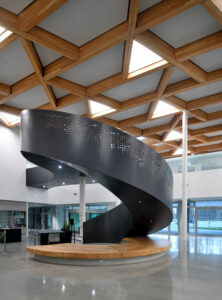
In a perfect world, there would be no budgetary limitations on a space that serves so many roles, but the reality is quite the opposite. As such, those involved in creating community centres have their work cut out for them; not only is the goal to deliver an aesthetically pleasing facility that will endure, but one that embodies community togetherness, heath and wellness, and reflects the unique history and culture of the area at large.

As Anderson puts it, “Structural systems need to respond to the needs of the building and meet the budget constraints that come with the funding models for these building types. With the continuing escalation in construction costs, it’s harder to make these projects become reality.”

And then there’s the sustainability piece—which every new building today has come to prioritize. Fortunately, wood is the material of choice for most community centres, and Anderson has a lot of love for this versatile renewable resource.

“Wood brings huge benefits to the overall carbon footprint of a building when looking at it from the perspective of the embodied carbon through a Life Cycle Assessment,” she says. “In terms of architectural intent, wood is a beautiful building material.  There is an efficiency in using the building structure to express the architecture, rather than needing to cover the structure with finishes.”

Another amazing benefit of wood is its proven ability to improve the wellbeing of those that use the building. It can also be procured locally; for instance, BC has a mature timber industry and some of the most advanced mass timber production facilities in the world.

“It only makes sense to utilize these resources close to home,” Anderson concludes.

 Designing for the times

 In our increasingly urban environments, these community spaces are taking on a more important role than ever before, especially as dwellings become smaller and more individuals are living alone.

“Community centres are providing places for people to serve their own health and wellness needs, as well as to get out and socialize,” Anderson points out. “This means that along with dedicated spaces for sports and fitness, more flexible areas for social gatherings are becoming an important part of programming. We are also seeing multiple uses coming under the same roof, with pools, fitness rooms, arenas, and multipurpose rooms being combined with libraries, childcare, and the arts.”

Take Clayton Community Centre in Surrey, BC, for example. In addition to being the first community centre in North America to be Passive House Certified, the award-winning building is a recreation, library, arts, and parks facility all in one. According to Anderson, the architectural design features a unique pinwheel-shaped structural element that was developed for the main roof, and this form was expanded to wrap around the entire facility, showcasing wood’s beauty and versatility as a building material.

Another example is the Strathcona Gardens Recreation Centre, which is currently underway in Campbell River, BC. “In this building, a three-dimensional wood truss was developed for the long spans over the main pool areas,” she says. “The timber trusses are an important architectural feature, with hints of the mountainous surroundings in their form.  The structure was designed to facilitate off-site fabrication of the trusses along with roofing and embedded mechanical services.”

For more on mass timber’s important role in the design and building of community centres, please visit rjc.ca or contact Meredith Anderson directly at: [email protected]

A talented team keeps the ROM looking its best

Housekeepers are often the unsung heroes, heading into unoccupied guest rooms, empty offices, large-scale venues, and everything in between to refresh and replenish, leaving spaces clean and tidy. But what happens when the spaces are public-facing, attracting regular crowds and daily attention, like at the ROM?

The Royal Ontario Museum (ROM) first opened its doors in 1914 and features over 13 million works of art, cultural objects, and historic specimens among 40 gallery and exhibition spaces. The uniquely designed building occupies a large block at the corner of Queen’s Park and Bloor in Toronto, and as Canada’s largest museum, the ROM sees hundreds of visitors each day.

With so many spaces and so much traffic, the ROM requires a large housekeeping staff with a particular skillset to navigate its labyrinth-like, ever-changing layout. In fact, the team is made up of 38 full and part-time unionized housekeepers who work 12-hour day and night shifts, so there is always a team member available when needed.

“It’s certainly never a dull moment for the housekeepers,” says Housekeeping Manager, Jeanette Braund. Between the museum’s design, ever-present traffic, and fluctuating layout, cleaning the ROM presents a unique set of challenges for the housekeeping team.

Rising to the challenges

Day and night-shift workers face different demands as they complete their regularly scheduled duties. For the daytime staff, much of the team is focused on cleaning the administrative space and labs located back-of-house, spending their time deep cleaning and filling supplies.

However, the gallery space is also attended to, along with maintaining the washrooms used by visitors. The housekeeping responsibility doesn’t stop there, though. Their day-to-day also means engaging with the public to answer questions, direct patrons to security guards and exhibits, and more. In many venues cleaners are unseen, coming in and out of spaces while everyone has gone home, but the housekeeping team at the ROM are constantly communicating with the public, adding customer service to their extensive list of talents.

Often considered the face of the museum, their uniforms need to be pristine during the day as they push clean carts and act as museum ambassadors. “Wayfinding is an important part of their day, interacting with guests to help them navigate through the museum and make the most of their visit,” says Braund.

Flexibility is the foundation of the housekeepers’ skillset. Physically, cleaning requires distinct movements like twisting, bending, and crawling into tricky spaces. Mental flexibility is also a necessity as circumstances change on a daily basis. Exhibits come and go, and that means housekeepers need to clean the empty space once it’s been vacated, prepare it from top to bottom for the new exhibit, and clean up after the construction once the new exhibit has been created. Along with those tasks, the day shift can regularly be found setting up for evening events, often taking three to four hours to complete the set-up, using a stanchion system to section off areas where they are working. Deep cleaning happens throughout the museum on Mondays, when it is closed, as long as it isn’t a holiday Monday when visitors fill the halls and exhibit spaces.

When the night crew arrives, they take care of other duties around the museum until the event is over, and then they clean up after the party, continuing with their regular tasks to get the museum ready for visitors coming in the morning. The housekeeping team must focus on maximizing their time, keeping optimal routes and limitations in mind.

Each exhibit poses its own unique challenges, requiring a great deal of caution as teams navigate around set-ups, artifacts, art, and photographs to maintain heavily trafficked flooring, glass cases, stainless steel surfaces, and beyond. Staying mindful of factors like HVAC, temperature, and humidity controls is critical as these conditions need to be maintained even during the cleaning process. Something as simple as opening multiple doors can alter these conditions, posing a risk to the gallery and its contents.

Using two-way radios, the housekeepers stay in contact, helping to alert security guards when they need to arm and disarm certain areas throughout the night as housekeepers do their job.

The museum is filled with many narrow spaces that can make cleaning more demanding, where equipment must be handled very carefully. Floor machines are something that challenges cleaners, as they don’t fit everywhere, and require mindful steering to protect the irreplaceable artifacts. Equipment like auto scrubbers, swing machines, and floor machines must be handled carefully, using extreme caution to monitor speed and direction. “It’s a tricky job certainly, but at the end of the day, it’s doable with the right approach and the right training,” says Braund.

This much-loved venue attracts visitors from far and wide, hosting everything from special events to kids’ camps, each posing their own unique trials for the housekeepers. The visitor experience is paramount, so washroom cleanliness and supply stocking remain top priorities, along with high-touch areas like exhibit doors, allowing guests to enjoy a clean and safe museum visit.

Post-pandemic practices

As with most businesses, the museum adjusted its hours and followed mandated protocols during the pandemic, as they struggled to track personal protective equipment (PPE) and hand sanitizer amid ongoing supply chain delays. With so many touch points and well-visited areas, it became a formidable – and vital – task to keep these areas clean and sanitized. Thankfully for the housekeeping team, their expertise remained essential during this time, as they cleaned when the museum was allowed to be open and maintained the space for staff continuing to work like contractors, security guards, and technicians feeding onsite wildlife. Though schedules were reduced to eight-hour shifts, all housekeeping staff remained employed during those trying days.

The hardworking housekeepers were recognized for their efforts through the pandemic, often working alone at the museum, risking their health, and taking responsibility for the safety of the public. “Our team was encouraged to work within their comfort zone, and they did their very best, coming in when needed and getting the job done,” says Braund.

With green cleaning, safe chemical use, and environmentally friendly products already being employed, the team developed strict hygiene and sanitization protocols that remain in practice today. Paying extra attention to points of contact like door handles, swipe clocks, and control rooms is something that the team has included in their daily routine, heightening the cleaning and sanitization in those areas and across the whole museum. “We have not reduced those protocols, recognizing that they are still needed and beneficial as part of our day-to-day practices,” confirms Braund.

Part of the team

It takes dedication, flexibility, and teamwork to take care of the museum every day. The ROM’s housekeepers put in long shifts, working together to tackle their responsibilities, adjusting daily to accommodate for complications ranging from floods to accidents to missing set-ups, as they get pulled into many – often unexpected – directions.

With newcomers being trained by experienced staff, and passing on tricks of the trade, the ROM’s housekeepers are a unique group with a valuable skillset and a dedicated team mentality.

The culture created in the housekeeping department demonstrates that caring starts at the top. “My management team is fabulous, nurturing me so I can nurture my staff,” says Braund, who leads the team with passion and compassion. Explaining the vast housekeeping role succinctly, she says, “We are a vital part of the museum, and our good reputation as housekeepers should walk in before we do.”

This article was originally published as the cover story in the Winter 2024 edition of Facility Cleaning and Maintenance Magazine.

Photo courtesy of ROM©

Beedie celebrates 70 years

Beedie is celebrating 70 years of being Built for Good this February. Originally named Beedie Construction, the company was founded in 1954 by Keith Beedie.

Since then, Beedie has grown into one of the largest real estate development, investment, and property management companies in Canada.

“When he started the business, my dad was passionate about building homes that people loved to live in,” said Beedie president Ryan Beedie. “Believe it or not, in 1954 you could buy one of my dad’s brand-new construction homes for about $12,000. He worked so hard to make a go of it in those early days. And when I think back to Beedie’s beginnings, I don’t think he ever could have imagined how far we would come.”

As it reaches its platinum anniversary, Beedie is one of the largest developers in the nation with four separate brands under its umbrella: Beedie Industrial and Beedie Construction, with more than 35 million square feet of completed industrial space across British ColumbiaAlbertaOntario, and Nevada. Beedie’s residential arm, Beedie Living now has more than 11-thousand homes in planning and development. And Beedie Capital is the company’s thriving private investment firm.

The company, to date, has also donated and committed nearly $135 million to more than 350 organizations in need through the Beedie Foundation and corporate contributions. In addition, Beedie Luminaries awards post-secondary scholarships to single parents, refugees and other resilient students facing financial adversity.

“Giving back to the communities we live and work in has always been central to how we operate,” said Beedie. “Staying true to our values has helped us build a business – and a legacy we’re proud of. And as we look back on our first 70 years, we are so grateful to everyone who has helped us along the way. Thank you to our wonderful team members, our external community of trades, purchasers, tenants, partners, community members – everyone who has played a huge role in our journey to 70. And as excited as I am about reaching 70, I can’t wait to be celebrating Beedie’s 100th!”


VRCA launches trades in schools program

The Vancouver Regional Construction Association (VRCA), in partnership with Burnaby Board of Trade (BBOT), British Columbia Institute of Technology (BCIT), and Burnaby School District, has launched “Bring Trades to Schools.”

The VRCA’s Bring Trades to School initiative is aimed at bringing trades training directly into schools including mechanical, welding, carpentry and electrical training.

“This marks a significant milestone for the VRCA team as we inaugurate this innovative initiative. Originating from VRCA’s Education Committee, with valued contributions from our esteemed program partners, the concept has flourished. By bringing trades directly into schools, we aim to inspire and empower the next generation of skilled professionals while working to increase B.C.’s skilled workforce,” said VRCA president Jeannine Martin.

The program will allow for students to engage in practical workshops and immersive experiences while interacting with educators and industry experts.

“Skilled trades are and will continue to be in high demand, so providing students with the opportunity to explore different skilled trades through hands-on, practical experience is a win for everyone. Students connect with well-paying career options, and Burnaby gains more tradespeople to continue building and growing our local community and economy,” added BBOT director of workforce initiatives Ryan Leonhard.

Through collaborative efforts, the partners aim to create a supportive environment that nurtures talent, encourages creativity, and promotes lifelong learning among students.

Investment returns show slipping values in 2023

Canadian investment returns for 2023 show retail improvement, industrial deceleration and continuing office value decline. Analysts and industry insiders on-hand to digest last week’s release of annual results from the MSCI/REALPAC Canada Property Index also highlighted the steadier outlook for commercial real estate in Canada than in the United States or many other global markets, and shared their views on promising opportunities.

“If you’re going to invest, this is the country that you want to invest in because the others have a bunch of issues,” Mark Rose, chief executive officer of Avison Young, told a gathering in Toronto. “In the U.S., they’re overbuilding; there’s far less discipline; there’s probably still a question around regional banks. That’s not what we’re dealing with up here. It’s just a very different structure.”

“I’m quite positive with Canada and what we’re seeing in the country with the growth in population and everything that entails,” added Marie-Josee Turmel, general manager, real estate investments, with Canada Post Corporation Registered Pension Plan. “It’s going to help continue growth. We’ll have new development, new construction and it should help the overall sector.”

Flat total return as capital loss and income gains balance out

Last year saw a flat average total return on standing assets in the Canadian index — comprising 2,264 assets held in 52 portfolios collectively valued at CAD $165.7 billion — as a 4.7 per cent drop in capital value cancelled out the 4.6 per cent income return. Retail emerged as the best performing asset type (for the first time since 2014) with a total return of 3.2 per cent, while industrial posted a total return of 0.3 per cent and slipped down after six years on top.

All asset types lost capital value, but the slippage was most muted for multifamily, with just a 0.5 per cent negative trajectory. It recorded a 3 per cent total return, retaining standing as the second-best performer for the seventh consecutive year. Office bottomed out the field with a -5 per cent total return and a nearly 10 per cent drop in capital value.

That rippled through to regional markets, where MSCI executive director Ken O’Brien linked negative total returns in Ottawa, Toronto and Montreal to their higher proportion of office assets. In contrast, he attributed Calgary’s revived showing — ranking as the second-best market with a total return of 4.6 per cent — to a “strong component” of retail in the asset mix and the removal of some office inventory for conversion to multifamily housing.

Office is also fingered for flagging returns in other countries where MSCI has recently unveiled 2023 investment results. After a flat total return in 2022, Ireland charted a -8.5 per cent total return in 2023, which O’Brien deems “an office story” given that it accounts for 60 to 65 per cent the country’s index. The slide was even steeper in the United States, falling from a 4.5 per cent total return in 2022 to -8.4 per cent in 2023. There, office represents about 21 per cent of the index, but suffered a 20 per cent decline in capital value (versus a 12 per cent loss in Ireland).

“I think the numbers did come as a bit of a surprise to the constituents that are in our fund index,” O’Brien observed. “There were significant writedowns on the office sector in our U.S. portfolios.”

“Most office buildings other than Class A and AAA buildings are probably at 40 to 50 per cent, and some are selling at 60 to 90 per cent less than their value from a couple years ago,” Rose noted.

Outbound investment falls off, foreign interest picks up

Yet, there’s little evidence Canadian investors are bargain shopping. Jim Costello, chief economist with MSCI Real Assets, tracked the pullback on foreign investment. Typically, about 50 per cent of Canadian investment in commercial real estate is for acquisitions outside the country, but that contracted to about a third last year.

Investors were more active buyers at home across most asset types, with the exception of apartments and hotels. While office investment within Canada shrank by 52 per cent relative to the pre-pandemic period, it practically evaporated in the U.S.

“Looking at Canadian capital flowing into the United States, in 2023 what’s missing from there is the office sector. People are still afraid of jumping into offices until we see where the bottom is,” Costello said. “Where they’re doing more globally than at home is apartments. In the United States the apartment market is just so large; it’s so liquid. If you want that exposure, it just provides that opportunity. So that’s the one thing that has been a constant for the Canadian investor.”

On the flipside, Phil Stone, managing director and head of Canadian research with BentallGreenOak, tallied foreign investment at 23 per cent of transactions in Canada last year — a large shift from a historical average around 4 per cent. “There were some pretty big names across multiple sectors, even in office,” he recounted.

“I think we’re going to see pension funds of non-domestic investors coming to Canada,” Turmel reflected. “We have some very nice trends and the growth in population is one of them.”

Despite a 28 per cent year-over-year drop in investment transaction value within Canada, 2023 activity was largely on par with the five years preceding 2020. “The sharp declines are really about the falls from the excess highs we had in 2021 and 2022 when interest rates were at record lows and investors were hungry for yield,” Costello advised.

What’s different from last decade is a shift in preferences. Excluding land purchases, about half of last year’s investment was in industrial assets — up from about 18 per cent in the 2015-19 period.

“Industrial had been a $5-billion a year market and it’s up to now, on average, a $15-billion a year market,” Costello reported. “The office sector had been almost a $9-billion a year market, down to $4-billion.”

As in the U.S., Canada’s Class B and C office stock is hardest hit. In contrast, downtown office is again outperforming suburban, albeit as both sub-markets registered negative total returns last year.

Post-pandemic adjustments for retail and industrial

Super regional malls show more marked improvement, boasting a total return of 4.7 per cent in 2023 and surpassing community/neighbourhood shopping centres for the first time since 2017. Retail was also the sole asset type to deliver positive total returns in all eight major regional markets represented in the index, ranging from 0.5 per cent in Ottawa to 6 per cent in Calgary.

“Admittedly, it’s a function of where retail has been,” O’Brien acknowledged. “This is a story everybody knows, how retail literally fell off a cliff.”

Drilling down to property categories, population growth, redevelopment and intensification potential and lack of new supply are all considered positive factors for enclosed shopping centres. Meanwhile, grocery-anchored plazas have consistently been tapped as a preferred asset in recent years and are expected to remain so.

“It is a little crowded in grocery-anchored retail, but we think it’s resilient from an income perspective,” Stone affirmed. “We just haven’t built enough of it to support the tremendous population growth that we’ve seen.”

Costello similarly projects prospects should be sound for the many investors who have moved into industrial since 2020, given that e-commerce was already on course to steadily gain market share before the pandemic intervened to spike up demand. Activity has slipped from those heights, but is still about where it was plotted to be in the absence of the pandemic.

“It’s tapering down into what was the previous trend, but that previous trend was favourable for industrial. If you’re doing a little bit more activity every year in e-commerce sales, that generates a little bit more demand for logistics space. So it’s not like the fact that industrial is so crowded takes away from demand for it in the future,” Costello maintained. “It’s still on that nice steady growth path.”

Industrial assets delivered a total return of 0.3 per cent to Canadian investors in the index last year, further breaking down to 3.8 per cent income return and -3.3 capital growth. That follows outsized total returns of 17.5 per cent in 2022, 31.6 per cent in 2021 and 12.7 per cent in 2020.

“For the last couple years, industrial rents and industrial values were going up 70, 80, 90, 100 per cent. You’ve got to give that time to catch up. Then we started to build and build and build and build,” Rose remarked. Still, he picks new industrial as a likely strong performer, along with multifamily, data centres, cold storage, outdoor storage and student housing.

Familiar and emerging favoured assets

Turmel foresees more value loss for various assets within the index, but with expectations of a turnaround relatively soon. Among best investment bets, she picks demographics-driven categories such as multifamily and logistics, stating a preference for “new generation” assets, but conceding those are difficult to find in multifamily.

“There’s more writedowns to come, yes, because the numbers are still light in a few sectors. It should be done in ‘24 some time,” she said.

Stone similarly picked multifamily and small-bay industrial as favoured assets and agreed with Turmel’s outlook on values. “I don’t know if anything looks cheap at this point. There still has to be some repricing,” he mused.

Prospective investors also await a catalyst to unlock the conundrum of purpose-built rental housing. Demand looks assured into the future, but current economic conditions are undermining the momentum that was brewing a few years ago.

“That’s a place where we should all be putting money, but it just doesn’t pencil out,” Rose said. With a boost to clear the upfront hurdles to new construction, he suggests both public backers and private investors could be big winners — providing stability for key players in Canada’s labour force and tapping into a stable, lucrative tenant base that is increasingly being priced out of homeownership.

“Today, around the world, teachers, nurses, firefighters, police officers can’t afford their homes. Workforce housing is under siege right now,” Rose asserted. “The public sector needs to bring money to the private sector and we can get rolling. It is something that is really available to invest in and make a lot of money.”

Construction to begin on Abbotsford transit exchange

Construction of a new transit exchange on Montrose Avenue in downtown Abbotsford is set to begin.

The contract for this project was awarded to Ballina Contracting, with construction scheduled to start early in 2024 and be completed by the end of the summer 2024. During construction, some traffic impacts and delays can be expected, but local access to the area will be maintained and accessible pedestrian detours will be in place.

The new transit exchange will provide residents with greater access to transit, support the city’s future transit network, accommodate future increases in transit service levels and improve rider experience. It will feature 10 bus bays, new shelters with bench seating, accessible sidewalks, bike lockers and racks, cycling amenities, garbage bins, improved street lighting, in addition to new crosswalks and wayfinding.

This new infrastructure will also enhance connections throughout Abbotsford by supporting the city’s future transit network between Highstreet Shopping Centre and the University of the Fraser Valley.

“The City of Abbotsford has seen significant population growth over the past decade and as we continue to expand as the cultural and economic Hub of the Fraser Valley, public transit is becoming vital to the accessibility of our city. The new transit exchange will not only enhance the experience for transit users, but will create a vital link from Historic Downtown to other key areas of our community and we’re excited to have Ballina Contracting on board and starting construction,” said Mayor Ross Siemens, City of Abbotsford.

This project is funded in part thanks to investments by the Government of Canada and the Province of BC, including $2.2M from the province’s Growing Communities Fund.


Dewalt celebrates 100th anniversary

Dewalt is celebrating its 100th anniversary of powering the pros. Through its commitment to innovation, safety and productivity, Dewalt has been delivering tools to meet the needs of professional tradespeople around the world since 1924 when Raymond DeWalt’s forward-looking vision resulted in the founding of the company.

Raymond was a tradesman in Pennsylvania in the early 1920s and became a power tool pioneer when he sought a way to streamline and expedite wood-cutting operations without sacrificing quality or safety. His journey led to the invention of the “Wonder-Worker,” an adjustable electric radial arm saw that provided the ability to efficiently execute multiple operations on one affordable piece of equipment, and the creation of Dewalt.

“Dewalt has been committed to professional tradespeople for the past 100 years, and Raymond DeWalt’s founding principles of innovation, safety and productivity remain the core ethos of our company today,” said Chris Nelson, chief operating officer, executive vice president and president, Tools & Outdoor at Stanley Black & Decker.

Dewalt has championed the trades sector since its founding, and in 2019, the company began offering annual Dewalt Trades Scholarships to support and grow the next generation of trades professionals.

Dewalt continues to expand its commitment to the future generations of tradespeople. In 2023, Dewalt pledged $30 million over five years toward its Grow the Trades initiatives to support active and aspiring tradespeople. In addition, Dewalt contributed nearly $7 million last year to programs that support tradespeople, including trade schools, VOCTEC schools and other training organizations, while also collaborating with industry and non-profit partners on increasing women, diversity and veteran participation in the trades.

Dewalt, (now a Stanley Black & Decker brand) will celebrate its milestone anniversary in multiple ways this year.

IFMA initiates competency model advisory committee

The International Facility Management Association (IFMA) is searching for volunteers to steer a new competency model advisory committee that will help shape and elevate careers in facility management.

IFMA is accepting applications from its members with five or more years of experience in the field. The committee will oversee the updates and maintenance of a dynamic, career-based competency model for FM professionals. The application deadline is February 23, 2024, for a three-year commitment.

The goal is to create a committee of applicants that represent a variety of stakeholder groups working in: international locations; urban and rural areas; and public and private organizations, both large and small. Diversity is key, with varied educational backgrounds, facility types and military experience.

More information can be accessed here.


15-storey patient tower coming to Toronto Western Hospital

The Ontario government is spending nearly $800 million on a new 15-storey patient care tower at Toronto Western Hospital.

The investment will bring more beds and operating rooms to University Health Network’s campus on Bathurst Street in downtown Toronto, which currently serves about 450,000 people.

The plan entails more comfortable space for family members, modern digital infrastructure, and 82 patient and critical care beds with single-patient rooms to enhance infection control.

Twenty new operating rooms will also make space for complex neurosurgical and spinal procedures. It’s expected that The number of surgeries are expected to increase by more than 20 per cent over the next decade. Total completion is expected by 2028.

Dr. Kevin Smith, President and CEO of UHN, said the hospital is increasingly serving patients across the province, not just Toronto.

“Our surgical teams perform some of the most advanced surgical procedures to treat the most complex patients,” he said. “We’re incredibly grateful to the Government of Ontario for this remarkable investment which will help UHN enhance our pioneering work particularly in caring for complex neurological and orthopedic cases from across the province.”

EPA highlights Green Seal’s PFAS prohibition for federal purchasers

The U.S. Environmental Protection Agency’s (EPA) released an update to its federal purchasing search tool that highlights the per- and polyfluoroalkyl substances (PFAS) prohibitions and plastic waste reduction requirements in Green Seal’s product standards. The newly revised tool allows users to identify which ecolabel standards contain PFAS and plastic reduction criteria, making it easier for federal purchasers to meet sustainability goals and mandates.

EPA’s Recommendations of Specifications, Standards, and Ecolabels for Federal Purchasing give preference to multi-attribute standards and ecolabels and are intended to help federal purchasers identify and procure environmentally sustainable products and services. The newest revisions to the Recommendations’ search tool allow users to view the standards by how they address PFAS and plastic in addition to their product category.

This update showcases Green Seal’s commitment to taking a leadership position on addressing hazardous “forever chemicals.” Green Seal’s standards have long prohibited long-chain PFAS formally classified as hazardous. However, a growing body of evidence indicates that short-chain PFAS have the same harmful health and environmental effects as the legacy PFAS they are replacing. Green Seal updated its standards for cleaning and personal care products in 2022 to prohibit all approximately 12,000 chemicals in this class and is currently updating the PFAS prohibition in its standards for paints and coatings, floor care products, adhesives, and degreasers.

RELATED: What are “forever chemicals” and how do they affect your building?

For detailed information on EPA’s Recommendations of Specifications, Standards, and Ecolabels for Federal Purchasing, visit epa.gov/greenerproducts/recommendations-specifications-standards-and-ecolabels-federal-purchasing.

