




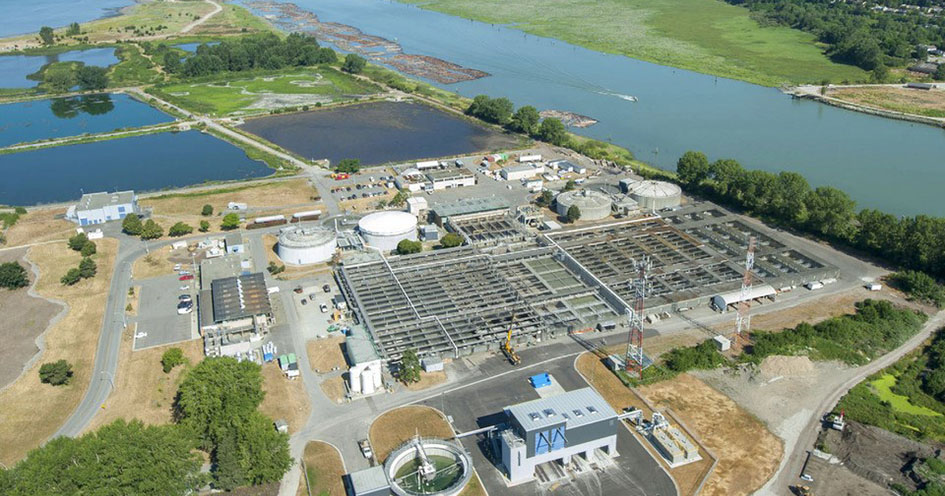
Metro Vancouver has redefined the scope for the Iona Island Wastewater Treatment Plant, cutting $4 billion from the original cost.
The Iona Island Wastewater Treatment Plant Projects plan has been updated to encompass a smaller scope of work, with a new cost estimate of $6 billion, compared to the previous $9.9-billion plan approved in 2022.
Rather than building an entirely new facility, Metro Vancouver will rehabilitate the existing primary treatment plant and deliver phased upgrades to achieve compliance for secondary wastewater treatment. This approach is possible in part thanks to more space-efficient wastewater treatment technology.
“Over the past year, Metro Vancouver has carefully examined options to deliver secondary wastewater treatment as quickly as possible, while ensuring cost sustainability for our region,” said Metro Vancouver board chair Mike Hurley. “In the past year, we’ve selected a technology that has given us an opportunity to rescope the Iona project to something we can deliver for $6 billion, a reduction of almost $4 billion compared to the previous project over the same time period. This is a great opportunity for us to keep annual rates as low as possible for residents, while still ensuring we’re protecting human and environmental health.”
In July 2024, Metro Vancouver awarded a contract for preliminary design work and to explore alternative options to deliver the upgrades. As part of this work over the last year, the technology for secondary treatment was selected and several condition assessments of the existing primary plant were conducted. This work provided a basis for the recommendation to the Board for an alternative approach for the Iona Projects.
The new proposed approach will:
- Add incremental secondary treatment to the existing plant to improve effluent quality sooner.
- Rehabilitate the existing primary plant and replace it as a future project.
- Focus on the delivery of project components that will help meet regulatory compliance.
- Reprioritize and defer sub-projects not required for secondary compliance.
“The updated approach is an innovative way to make sure we’re meeting our regulatory requirements, protecting the health of the environment, and being mindful of what residents are able to contribute financially to this important project,” said Liquid Waste Committee chair Malcolm Brodie. “While we understand that deferring projects is never ideal, we had to make an important decision about what we could afford to do all at the same time.”