




Periodic Reserve Fund Studies offer crucial insight into the financial forecasting of any multi-residential or commercial building. The importance of completing a Reserve Fund Study (RFS) cannot be overstated. The report is an in-depth planning tool that projects capital repairs and replacement costs over a thirty-year span. As a “living” document, it must be adjusted every three years to best reflect a property’s evolving condition.
Many residential and commercial buildings in the GTA were built during a construction boom in the late 20th and early 21st centuries. As these properties reach a critical age where major components require renewal, reserve fund planners are becoming increasingly aware of municipal and federal expectations for reducing greenhouse gas emissions. With initiatives such as Toronto Net Zero 2040, sustainability metrics and environmental performance are becoming integral aspects of long-term reserve fund planning.
 Reserve fund studies typically outline the expected costs of “like-for-like” repair and replacement of major building components. They do not yet account for the less visible costs associated with improving building performance, lowering long-term operating costs, or reducing carbon emissions. New policies such as Toronto’s Building Emissions Performance Standards (BEPS) will require boards, owners, and property managers to consider their building’s environmental impact and incorporate reduction plans into their financial planning.
Introducing the Enhanced Reserve Fund Study
An Enhanced Reserve Fund Study (ERFS) builds on the foundation of a traditional RFS by incorporating the impact of emissions reduction strategies into long-term financial forecasting. While it still covers the anticipated costs of standard repairs and replacements, it also examines how energy and carbon reduction measures can change the trajectory of a building’s repair and replacement needs over the same thirty-year period.
An Enhanced RFS will incorporate three key components:
- Energy Benchmarking: The first step to taking control of a building’s energy performance is the development of an annual energy and emissions profile. This provides a clear picture of building’s current energy consumption and waste and allows for year-over-year tracking of improvements. With this baseline in place, the ERFS identifies projects that align with legislative requirements and decarbonization objectives.
- Beyond Like-for-Like: Smarter Component Replacement: Rather than assuming like-for-like replacement of major assets like roofs, HVAC systems, boilers, windows, and cladding, alternative strategies that offer improved durability, efficiency and environmental performance will be considered. Examples of such strategies include ground and air-source heat pumps, solar PV installation, enhanced air sealing and insulation, heat recovery systems, and smart thermostats.
- Scenario Modelling: A building that completes an ERFS can expect to receive two capital plans: one that follows a tradition “business-as-usual” approach with “like-for-like” replacements, and another that integrates energy-efficiency and decarbonization measures into renewal decisions. This dual approach provides a clear roadmap for achieving lower emissions over time, while also demonstrating how those outcomes can be financially attainable.
The Pretium Advantage
Pretium Engineering is well-positioned to deliver Enhanced Reserve Fund Studies to the property owners and managers exploring this option. With building science expertise spanning capital planning, building condition assessments, and energy modelling, Pretium is ready to take on a comprehensive, technically rigorous and energy-centric approach to long-term forecasting.
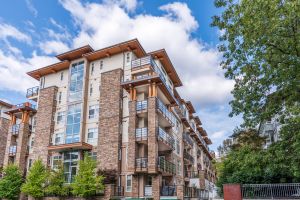 Enhanced Reserve Fund Studies represent the next evolution of reserve fund planning in Ontario. They allow property managers and owners to move beyond mandatory repair planning, and towards strategic, future-focused planning that aligns with climate objectives. Pretium Engineering is ready to help all buildings take the next step toward resilience and decarbonization.
Condominium properties can currently take advantage of The Atmospheric Fund’s Retrofit Accelerator Initiative, a funding program covering up to 70% of the ERFS cost. This measure brings the overall cost close to a standard RFS. To learn more, contact Pretium Engineering at www.pretiumengineering.com