





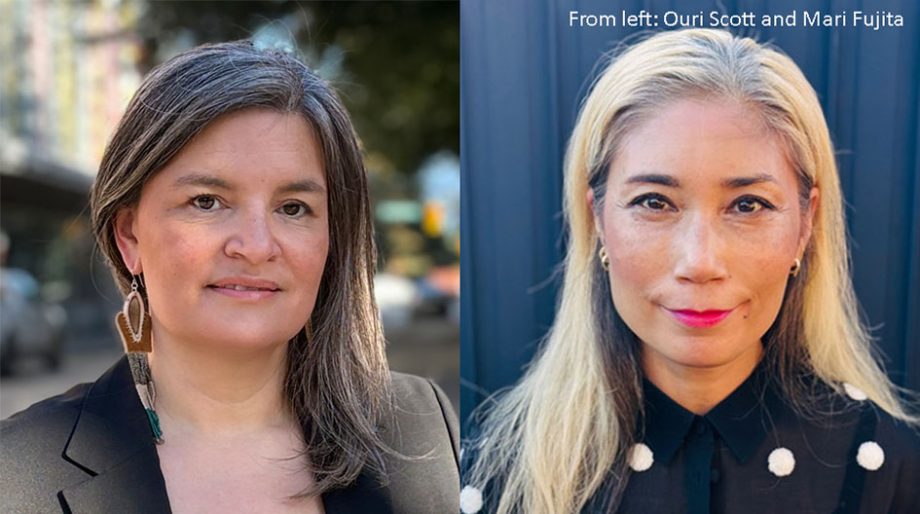
The University of British Columbia School of Architecture and Landscape Architecture (UBC SALA) has named Ouri Scott and Mari Fujita as the recipients of the 2026 Margolese Design for Living Prize.
One of the highest design accolades in Canada, the $50,000 Margolese Prize spotlights designers whose work encourages a greater understanding of the built environment. This year, two Margolese Prizes were awarded: One to a practitioner (Scott) and one to a UBC faculty member (Fujita).
“We are honoured to be able to recognize two such tremendous designers and thought leaders through this year’s Margolese Prize,” says UBC SALA director Thaïsa Way. “Both Ouri and Mari use design to bring communities together to create a lasting difference.”
A Tlicho Dene architect architect and principal at Urban Arts Architecture, Scott has dedicated her practice to designing housing and community infrastructure grounded in meaningful collaboration. Among the first Indigenous female architects in British Columbia, Scott integrates land-based practices, ceremony and gathering with contemporary design, creating spaces that are responsive to climate and long-term community needs. As a designer, teacher and advocate, Scott is a leading contributor to a growing national and global dialogue on how Indigenous knowledge can inform contemporary architecture.
“I am honoured to receive the Margolese Design for Living Prize and to be recognized alongside an exceptional group of thought leaders and past recipients. The award provides a unique opportunity to pursue research that will enhance my practice and deepen my understanding of how the built environment can contribute to reconciliation,” said Scott.
Fujita’s work as an educator, researcher and designer is grounded in reciprocity, long-term partnership and accountability to communities. An associate professor at UBC SALA, her practice spans architecture, community design, urban installation and product design, with a commitment to design in service of people, place and a more equitable and resilient future. Through projects with communities whose relationships to place are precarious, Fujita explores questions of cultural memory, living heritage, environmental change and social justice.
“I believe passionately in the power and beauty of people and community. I also believe in the power of design to strengthen our relationships with one another and with place,” said Fujita. “I am tremendously grateful for the opportunity to continue this work, deepen existing partnerships and build new ones.”
