



More than 500 new student beds are coming to the University of Victoria (UVic), with funding approved by the B.C. government for student housing designed for upper-year undergraduate and graduate students.
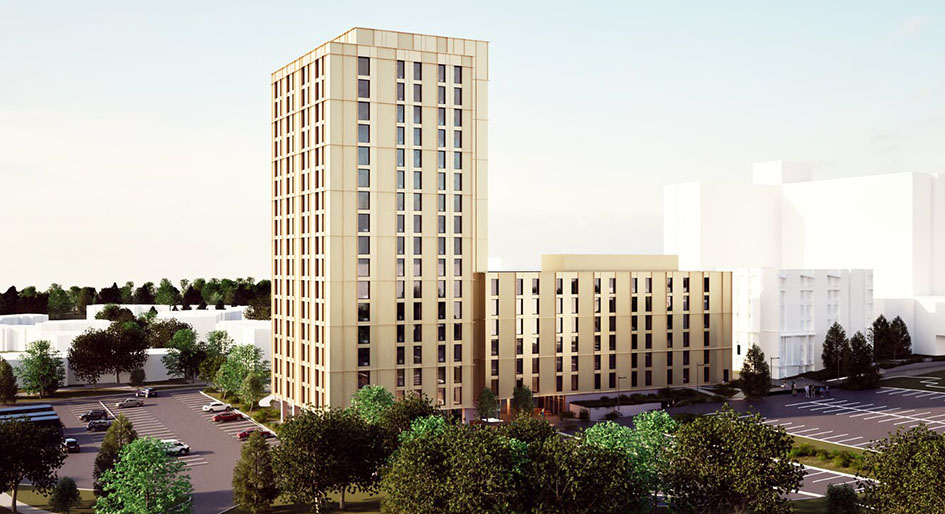
Once complete, the 510-bed residence building, with a proposed location behind the Tower Residence, will have a high-rise wing with 360 beds (90 quad units) for upper-year undergraduates, and a mid-rise wing with 150 studio apartments for graduate students. This will bring the university’s total student-residence capacity to more than 3,500.
“The new student residence will be transformative for our upper-year undergraduate and graduate students, many of whom face challenges finding affordable housing near campus,” says Dr. Robina Thomas, acting president and vice-chancellor. “The new units will also play a pivotal role in relieving pressure in Victoria’s rental market, while ensuring more students can live and learn in a supportive community.”
The new student residence will enable more students to live on campus, building the campus community and providing students with greater access to on-campus supports and resources. It will also expand housing options for upper-year undergraduate and graduate students. For those who apply in time, first-year UVic students are currently guaranteed housing to help ease the transition to university.
The new building will include:
- a highrise tower with 360 beds in 90 four-bedroom apartment-style units for upper-year undergraduate students;
- a seven-storey adjacent wing will contain 150 studio apartment units for graduate students;
- amenities for students to connect, including a student lounge, outdoor and multi-purpose spaces, and a community kitchen; and
- secure athletic storage for sports equipment and bicycles.
Delivering a fully electric, zero-carbon building designed to achieve LEED Gold certification supports the objectives of CleanBC and UVic’s climate and sustainability action plan. The building will serve as a model of climate-resilient design and demonstrates the province’s commitment to a more sustainable future.
The estimated capital cost of the project is $178 million, with $121 million coming from the province. Construction is expected to start in spring 2026, with estimated completion in fall 2029.