




Six trailblazers were recognized for their pioneering work in reducing embodied carbon in British Columbia’s built environment at the third annual Embodied Carbon Awards.
The Zero Emissions Innovation Centre (ZEIC), through its Carbon Leadership Forum BC (CLF BC) program, hosted the awards on May 22 to highlight and celebrate what’s possible in low-carbon construction.
Embodied carbon comes from producing, transporting, and installing materials like steel, concrete, and insulation, as well as from demolition and disposal. It is estimated that by 2050, embodied carbon will represent 46 per cent of B.C.’s annual building sector emissions based on current practices.
British Columbia and Vancouver are leaders in this space, adopting practices like designing for less materials, using low-carbon materials such as sustainable mass timber, or moving to re-use construction waste in new builds.
This first-of-its-kind event in North America celebrates the leadership and innovation in reducing embodied carbon and aims to inspire broader action from industry and government.
“Carbon Leadership Forum BC brings together the innovators leading the way on embodied carbon reductions—rethinking how we build and advancing low- and zero-carbon materials. The BC Embodied Carbon Awards recognize and celebrate the companies and governments in British Columbia that are driving down construction emissions,” said Stephanie Dalo, program manager, Carbon Leadership Forum BC, Zero Emissions Innovation Centre.
WINNERS
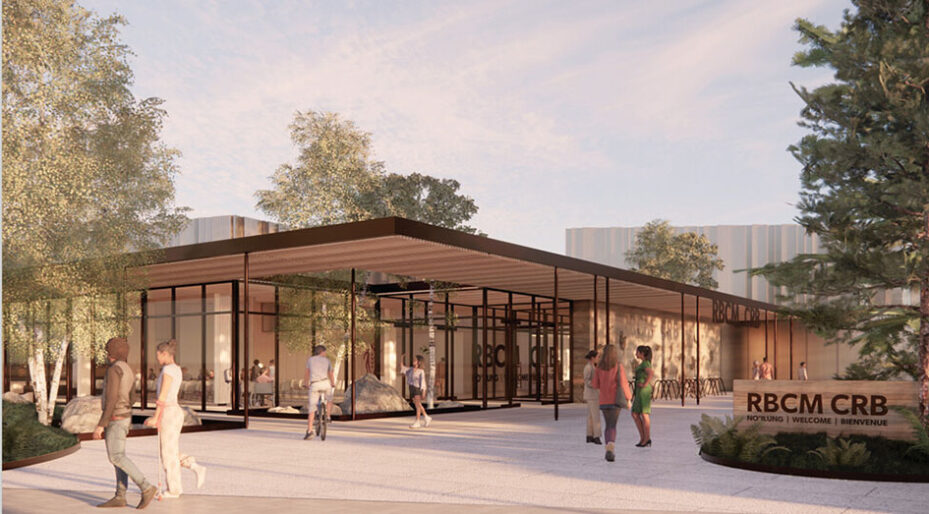
Large (Part 3) Buildings: Equilibrium – Royal BC Museum PARC (photo)
For their innovative approach in designing the Royal BC Museum PARC Campus, using materials like rammed earth—a mixture of soil, sand, and clay compacted into durable walls with minimal environmental impact—and wood-to-wood connections for mass timber elements instead of steel. They integrated embodied carbon into the design build agreement, demonstrating a committed approach.
Small (Part 9) Buildings: Deep Green Development – 1908 to Net-Zero
For turning a 117-year-old Vancouver home into three net-zero dwellings—a truly innovative retrofit that sets a national example for low-carbon urban living. Their use of salvaged materials, carbon-storing insulation, and commitment to community partnerships and knowledge-sharing made this project a standout in sustainable construction.
Organizational Commitment to Change: Third Space Properties
For Third Space’s commitment to cutting carbon emissions in their buildings and across operations. By tracking embodied carbon at design, development, and construction phases of each project, Third Space goes above and beyond standards, showing their commitment to real savings. They break down learnings into practical, actionable steps for industry, setting a new standard for transparency and impact.
Public Sector Leadership: City of Richmond
For its systems-level approach to reducing embodied carbon, integrating it into economic development and procurement strategies; and creating accessible resources and real-world case studies that help turn climate goals into practical, scalable action. The municipality was also praised for fostering collaboration and dialogue across a complex municipal system, laying the groundwork for lasting change.
Commitment to Circularity: Perkins&Will
For their team effort to reduce emissions through smart reuse of materials and thoughtful design to minimize waste during their major office move, considering embodied carbon at every stage. They went a step further by sharing their insights publicly to help advance the industry.
Strengthening the Practice: Jason Shanks, CBRE’s Turner & Townsend
For redefining sustainability in office moves, an often-overlooked area, by reusing materials, cutting waste, and measuring embodied carbon savings. This pioneering work is challenging industry norms, setting a higher standard in transition and move management, while proving that environmental and economic goals can align.
