Articles Archive - Page 622 of 929 - REMINET
REMI

Ivanhoé Cambridge opening five Birks stores

Ivanhoé Cambridge has signed an agreement with the Birks Group for the opening of five Birks stores at Ivanhoé Cambridge shopping centres in Canada.

Under this agreement, two new Birks stores will open this coming October at Guildford Town Centre (Surrey, British Columbia) and Oshawa Centre (Oshawa, Ontario).

Three other Birks stores now located at Bayshore Shopping Centre (Ottawa, Ontario), Southgate Centre (Edmonton, Alberta) and Place Ste-Foy (Quebec City, Quebec) have had their leases renewed for the long term. All three stores will also be relocated to new, entirely renovated spaces.

“We are extremely proud to maintain and grow our partnership with Birks, Canada’s leading jeweller. Our customers are increasingly demanding and they expect us to continually enhance both the physical and online shopping experience,” said Claude Sirois, president, retail, Ivanhoé Cambridge.

The new Birks stores at Oshawa Centre and Guildford Town Centre, as well as the relocated stores at Bayshore Shopping Centre, Southgate Centre and Place Ste-Foy, are designed around a “monobrand” concept, where customers are offered only Birks collection products.

The size of the new stores will enable Birks to offer a selection of its most popular collections, including silver, gold and diamond jewelry, along with diamond engagement rings and wedding bands. The new store design is inspired by the very latest concept developed by Birks and unveiled for the recent opening of the Birks store at Yorkdale Shopping Centre in suburban Toronto.

“We are pleased to announce the opening of new stores in partnership with Ivanhoé Cambridge, which will enable us to expand Birks’ visibility in Canada with a store format tailored to each regional market,” said Jean-Christophe Bédos, president and chief executive officer, Birks. “The construction of new stores reflects our desire to constantly stay attuned to the preferences of our customers across the country, and the choice of the monobrand format is in line with our goal of continuing to grow the Birks brand.”

Contractors selected for Trans Mountain pipeline

Contractors have been selected for the Trans Mountain pipeline expansion project. The six major contractors were announced by Kinder Morgan with construction activities expected to begin in September 2017.

The six are Midwest Pipelines, Ledcor Sicim Limited Partnership, Sureus Murphy Joint Venture, Macro Spiecapag Joint Venture and Somervile-Aecon Energy Group for various sections. Kiewit Ledcor TMEP Partnership will tackle the Lower Mainland scope which includes the Burnaby Mountain tunnel and three terminals, Westridge Marine Terminal, Burnaby Terminal and Sumas Terminal.

The pipeline construction and associated terminal expansions are expected to take approximately 28 months to complete, with the work distributed among several sections, along the route between Edmonton and Burnaby, B.C.

The contractors will directly hire the individuals and sub-contractors needed for each contract and scope of work.  This will include union, non-union and Aboriginal workers and will be in accordance with Trans Mountain’s commitment to maximize employment opportunities for Aboriginal, local and regional communities. As part of its negotiated commitment with the B.C.government, Trans Mountain has committed to a “British Columbians first” policy for hiring and contracting work within B.C., giving the first opportunity to qualified and competitive B.C. companies.

“Getting the construction contractors on board represents a significant milestone for Trans Mountain and demonstrates our commitment to delivering the project in a timely, cost-effective manner,” says Ian Anderson, president of Kinder Morgan Canada Limited. “We’re pleased with the calibre and experience of the contractors. Each contractor was chosen for its expertise in delivering quality work and the individual needs and complexities of each portion of the project.”

The project continues to proceed with planning, permitting, engagement and design required to meet NEB and B.C. government conditions and necessary local permitting. The pipeline is expected to be in operation at the end of 2019.

Single Speed Elevators Holding Property Owners at Risk

New directives by the Technical Standards & Safety Authority (TSSA) are placing greater liability on property owners with legacy elevator technology.

On August 1, 2017, a revised TSSA director’s order went into effect that allows building owners to continue operating single speed elevators – even with their known propensity for not levelling properly with the floor.

“Single speed elevators do not stay flush with the hall sill,” explains Phil Staite, Vice President with Quality Allied Elevators. “Even after an elevator technician has adjusted a single speed elevator, it can go out of adjustment shortly afterward and without warning depending on the load or a change in humidity or temperature.”

At issue is the fact that single speed elevators were designed to be stopped by their brake. The lining for those brakes, however, was originally made with asbestos, which is not available today. Therefore, Staite says, “Brakes today are designed to hold an elevator, not stop an elevator. The only brakes available are less effective at stopping elevators and cause sliding, resulting in the single speed elevator to be out of level.”

single speed elevators

These new TSSA directives replace the non-profit organization’s original orders for owners to upgrade or replace their single speed elevators – many of which are between 40 and 80 years old. Now, owners are being asked to conduct thorough and regular maintenance on their single speed elevator brakes instead. While this may seem less onerous on paper, the reality is that many elevator maintenance companies have ceased to provide services for single speed models. In fact, many have reached out to clients with such elevators to warn them that they are fully liable if and when an injury occurs as a result of them not being level.

This lack of maintenance support leaves property owners with the option of either undergoing expensive replacements or doing nothing and hoping their single speed elevators level out. And the former, says Staite, is really no option at all: “This directors order has put even more risk onto building owners, because there are many who aren’t even aware of the levelling problem. Also, there’s the risk of building owners thinking their elevators are safe and don’t fall under these new orders, so they go about their business not knowing that, in fact, they might be paying a lot of money if something happens.”

The solution? More awareness, for starters. In light of the TSSA’s somewhat ambiguous mandate, it’s essential that property owners know that while it is legal to keep single speed elevators in operation, they are fully liable if the worst happens.

“The best thing owners can do is upgrade their elevators so that they come in flush. If they decide not to do that, though, they should be aware what they’re doing so they aren’t blindly believing they’re not at risk,” notes Staite, adding, “At the end of the day, it’s their building, their elevators, and their decisions – but they need to fully understand the risks.”

Phil Staite is vice president with Quality Allied Elevator (www.qualityalliedelevator.ca).

Few wash hands properly in germy schools

A new school year has kicked off across Canada and the millions of students piling into classrooms every day aren’t just bringing in stories about their summer vacations, but germs and viruses, too.

According to the Public Health Agency of Canada, 80 per cent of common infections can be spread through contaminated hands, and some studies have found a typical human hand can carry 10,000 to 10 million bacteria.

Keeping hands clean to fight infections like the common cold and flu or foodborne illnesses like E. coli and Salmonella is one of the most important steps people can take to avoid getting sick and spreading germs. However, researchers have found only one in five people regularly wash their hands, and of those who do, only 30 per cent use soap. In order to truly prevent bacteria from spreading, it’s crucial that students also learn to wash properly.

Learn the Proper Practice

When educating children and young adults about good hand hygiene practices, it’s important to implement the right handwashing practices:

  • Pay particular attention to frequently neglected body parts, such as the backs of the hands and fingertips that harbour viruses, and make sure hands are wet and cupped before dispensing a dose of soap;
  • Rub palm to palm;
  • Rub palm over back of hand, fingers interlaced;
  • Palm to palm, fingers interlaced;
  • Fingers interlocked into palm;
  • Rotational rubbing of thumb clasped into palm;
  • Rotational rubbing of clasped fingers into palm.

Rub both hands together for at least 20 seconds. Students can hum the “Happy Birthday” song from beginning to end twice. Skin should always be properly dried to avoid risk of chapping, particularly during the winter months. Clean towels should be available at all times, as dirty towels expose skin to more dirt and the risk of infection. Ideally, single issue disposable towels should be used because using communal towels can lead to contamination.

From an early age, children should be taught to wash their hands before eating or touching any food, and after using the bathroom, touching and feeding animals, blowing their nose, coughing or sneezing, playing outside and after touching garbage or dirt.

Supplement with Sanitizer

Use sanitizers where access to running water is inconvenient; they may kill germs, but won’t physically remove them. Modern sanitizers have been designed to kill 99.999 per cent of common germs and are a very effective way to prevent the spread of bacteria in schools.

With frequent use, sanitizers may even be less harmful to the skin compared to an equivalent number of hand washes; however, it’s recommended that children under the age of two do not use sanitizers due to their immature skin barrier. Children at day-care age can use them as long as it is under careful direction and adult supervision.

Make Handwashing Fun

Highlighting the importance of handwashing through artistic expression promotes cleanliness in a fun way. Students don’t always listen when teachers and parents tell them to wash their hands, so it’s important to find ways to make it more engaging.

Teachers can use colouring books, handwashing puppets and posters to help students learn when, how and why to wash. Use a magnifying glass to take a closer look at hands and nails. Show children places where germs can live and get them to inspect the lines on their hands and fingers. If the budget allows, use colourful child-friendly soap dispensers and a foaming soap, as children of all ages love to play with bubbles, and award them with stickers or other surprises for their efforts.

Preventing Outbreaks in Schools

Repetition and accountability are critical to any successful infection prevention program, and frequent hand washing is one of the best ways to prevent the spread of infection throughout the school year. It’s also a crucial step to prevent seasonal and non-seasonal outbreaks, such as norovirus and influenza that can easily and quickly spread from one person to another.

Students and teachers are one part of the solution, but the staff responsible for cleaning must also understand how easily germs can spread from room to room during an outbreak. Ensuring surfaces, light switches, door knobs, keyboards and other frequently touched surfaces are properly cleaned and disinfected can greatly reduce this risk.

Zuzana Bleha is the marketing and communications manager at Deb Canada, the world’s largest occupational skin care company.

Mattamy Homes names Margaret Whelan to Board

Mattamy Homes, the largest privately owned homebuilder in North America, has appointed Margaret Whelan to its Board of Directors. Whelan is described as a seasoned executive and real estate industry expert with deep knowledge of industry drivers, players, valuation and financing.

“We’re very excited to have an individual with Margaret’s background, expertise and network joining Mattamy’s Board of Directors, and look forward to benefiting from her advice on a range of strategic and business issues,” said Peter Gilgan, Mattamy Homes’ founder and CEO, in a press release. “In particular, Margaret has a wealth of experience in global capital markets, having worked with many North American homebuilders in a banking and financial advisory capacity. Her diversity of skills and experience will be invaluable on our Board as we continue to significantly grow our business across North America.”

Whelan founded Whelan Advisory LLC in 2014 to provide strategic and financial counsel to public and private companies, and is currently serving as the firm’s CEO. Previously, she ran the finance group of Tricon Capital Group and spent 18 years on Wall Street, largely focused on the real estate sector.

Whelan earned her Bachelor’s degree with honours in Commerce from the University College of Dublin, Ireland in a 1994. She currently serves on the public board of TopBuild Corp., and is also an advisor on the private board of John Burns Real Estate Consulting LLC, an independent research and consulting services firm to the US housing industry.

Whelan joins Mattamy Homes’ Board of Directors, an external Board of knowledgeable advisors formed in 2010 as a governance best practice. In addition to Whelan, other members of Mattamy’s Board include Dave Williams, former non-executive chairman of Shoppers Drug Mart and former CFO and president, Eastern Canada Operations, of Loblaws Companies Ltd.; Rupert Duchesne, former group chief executive of Aimia; and The Honourable David H. Wilkins, former US Ambassador to Canada and partner, Nelson Mullins Riley & Scarborough LLP.

B.C. cancels construction of George Massey bridge

B.C.’s new NDP government has cancelled the current construction schedule for a new George Massey bridge, and is sending the project to a technical review.

The Ministry of Transportation and Infrastructure is proceeding with an independent technical review of the tunnel to find a solution that gets people and goods moving and makes sense for commuters across the region.

Pending the outcome of the review, the current procurement process has been cancelled and the project will not be budgeted for in the government’s capital plan until a solution has been identified. The terms of the request for proposals dictate that each of the two final bidding teams will be paid up to $2 million to help offset their expenses to date.

So far, the province has spent approximately $66 million on the estimated $3.5-billion project. BC Hydro has spent approximately $25 million on its transmission relocation project. Work completed to date is expected to be utilized regardless of which option is chosen. Valuable property has been acquired, pre-load construction work along the Highway 99 corridor is wrapping up, and technical work and analysis will be considered as government moves forward to improve the crossing.

The ministry is in the process of recruiting the individual to lead the technical review, and will support the review with expertise in highway infrastructure construction, transportation planning and traffic engineering.

The review will focus on what level of improvement is needed in the context of regional and provincial planning, growth and vision, as well as which option would be best for the corridor, be it the proposed 10-lane bridge, a smaller bridge or tunnel.


What are millennials really like in the workplace?

Are millennials really the acclaim-craving, job-hopping, social-media junkies they have variously been portrayed as? The answer, apparently, is a resounding no.

That’s according to the Fortune magazine article “Five myths about millennials in the workplace,” whose message was recently reiterated by a panel of International Facility Management Association (IFMA) members. The panel of young professionals, who ranged in experience from fourth-year college student to more than a decade in the workforce, shared an industry-specific take on these myths this spring in the Facility Fusion Canada session Where’s the next FM?

The takeaway was that while it may be tempting to turn to stereotypes as a mental shortcut, it may not be productive in terms of truly understanding the needs and wants of millennials.

And understanding the needs and wants of millennials is critical for organizations as the battle to attract and retain talent heats up, with baby boomers expected to make a mass exodus from the workforce over the next decade. Right now, IFMA is focused on building a career track starting from high school for a profession that moderator Geoff Williams, general manager, Corporate Event Centre at CHSI, pointed out is commonly entered mid-career.

“What I do see a lot in millennials is that they do want that plan in place, they want to see how that path is going to work,” said Nick Heibein, past president of IFMA Toronto and current PMO lead – RBC account at JLL.

Heibein chafes at the generalizations made about millennials. He said he disagrees that his demographic cohort has different career goals and expectations, observing that aspirations and motivations will vary between individuals, as they would in any generation.

Something that is undoubtedly unique about millennials is that they’re the first generation to grow up under the spotlight of social media — but that doesn’t mean they don’t know how to put down their phones or manage their online presence, as some would believe.

Sarah Pinckard, senior project manager, MovePlan, spoke, for example, of maintaining distinct personal and professional social media accounts. There may even be opportunities for organizations to leverage the social media expertise of millennials to promote their company brand on various platforms, she pointed out.

When entrusted to do so, these young professionals are quite capable of working autonomously, said Drew Dickson, enterprise facilities planner, Great-West Lifeco, contrary to any misconceptions.

“If you have a strong leadership group who’s set clear expectations, you are empowered to make those decisions and you will make them independently,” said Dickson.

Heibein said that even young professionals who have strong opinions, such as himself, may solicit input from their colleagues in the interest of finding the best possible solution.

“We’re being much more encouraged to collaborate with our colleagues,” added Pinckard. “Of course you’re going to ask them to weigh in.”

And the confidence to stake out a clear position and act decisively may come with experience.

“It kind of comes down to the name of young professional,” said Kamil Glowacki, PMO analyst, RBC account, JLL. “We’re young in the profession, so why not reach out and get the opinion of somebody who’s actually done the work that you’re trying to do.”

One of the obstacles to seasoned professionals sharing their knowledge with millennials may be the perception that members of the demographic cohort have a propensity to job-hop, so why invest the time? The panelists offered a number of reasons why young professionals may leave positions prematurely, such as misalignment of core values and poor fit with the corporate culture.

“If you’re not passionate about your work, should you be there, and it’s not so much about jumping ship, but it’s about finding something that engages you,” added Dickson. “The jumping ship piece – that’s just the nature that the world is going in: people aren’t working for companies for 30, 40 years anymore.”

For his part, Dickson stands in contrast to some of the common stereotypes about millennials in the workplace. He has been with the same company for more than six years, having been given the opportunity to progress through five different positions there. And he has eschewed all social media platforms, except for the professional networking site LinkedIn.

He said he suspects that baby boomers went through the same sizing up by the generations before them as the demographic cohort entered the workforce.

“We need to break down some of those barriers and focus on knowledge transfer and building capabilities of the younger generation,” said Dickson.

Michelle Ervin is the editor of Canadian Facility Management & Design.

NZ quake study gets to heart of housing damage

Seismic performance standards could support both building and cardiovascular resilience, a newly released study of the aftermath of New Zealand’s 2010 and 2011 earthquakes theorizes. Researchers have drawn a link between destabilized housing conditions and a higher than normal heart attack rate among Christchurch residents aged 45 or older in the year following the September 2010 and February 2011 events, which, together, caused 185 deaths, 6,000 personal injuries and approximately NZ $30 billion (CAD $26.4 billion) in damage to residential properties.

“Our research question was whether the level of residential earthquake damage in the area in which someone lived was associated with a greater number of cardiovascular events in the three months, one year, and two to five subsequent years after the earthquake,” the New Zealand based research team state in a paper published in the medical research and news digest, The Lancet Planetary Health. “This is the first study to our knowledge that has linked insurance assessment of housing damage in small geographical areas to cardiovascular disease rates. Our findings relate specifically to housing damage in a high-income country.”

Data from New Zealand’s national Earthquake Commission, a crown agency that managed damage claims and insurance payouts, and Christchurch’s Canterbury District Health Board underpin the findings. The degree of housing damage was categorized based on the ratio between the payout — which was capped at a maximum of NZ $100,000 (CAD $88,000) — and the assessed property value. Researchers could then plot greater and lesser destruction across small zones of no more than 50 dwellings, and compare relative levels of hospitalization for heart attacks and a range of other cardiovascular issues.

From the sample group of 148,000 people living in earthquake-affected areas of the city: 1,296 were admitted for cardiovascular disease within three months following the earthquakes; 4,530 were admitted during the first year; and 12,260 were admitted in the second to fifth years after the quakes. Researchers concluded that cardiovascular health was undermined in the hardest-hit areas, resulting in 66 more admissions, 29 more heart attacks and 46 more deaths related to cardiovascular disease during the year following the quakes than among residents of areas sustaining the least amount of damage.

Acute stress is tagged for much of the blame. “Our findings are consistent with the 23 per cent increase in psychological disorders in the first year post earthquake for people living in the most earthquake-affected areas compared with those living in the rest of the city,” the researchers observe.

Taking into account other possible economic, social and cultural factors that can help to ameliorate stress, researchers suggest their findings can help inform future preparedness strategies. “Pre-earthquake measures to minimize housing damage in an earthquake are likely to reduced the psychological stress experienced in a natural disaster by limiting the time and cost of repair and loss of homes. These measures include policies and standards for building construction, insurance policies and processes and local government planning,” they advise.

From a health care planning perspective, other resiliency stakeholders suggest the findings reinforce the “secondary surge” theory that disaster events trigger increased medical needs arising from chronic diseases, in addition to injuries and other health issues related directly to the emergency. An accompanying review of the research from public health and disaster research scholars, Suzanne Phibbs and Christine Kenney, urges disaster planners to consider this likely need for services for seniors and other vulnerable groups.

They also call for more research. “Research findings might potentially provide valuable in-depth information about health stresses associated with rent hikes, relocation challenges and difficulties accessing essential health and social services , which could enhance planning for more effective health services in post-earthquake contexts,” they maintain.

Emily Carr University opens new campus

Emily Carr University of Art + Design in Vancouver has opened its new 290,000 square foot campus. The renowned 92-year-old institution relocates to the east side of downtown Vancouver from Granville Island to a purpose-built facility designed by Diamond Schmitt Architects.

The landmark building anchors the regeneration of an industrial zone and is a catalyst for its redevelopment and connection with the city. To engage the community of this emerging cultural and academic precinct, the campus has an open and accessible design that welcomes the public into the creative processes on display.

“The building’s design creates a multitude of places both indoors and out for informal gathering, presentation, making and remaking, which is at the heart of Emily Carr’s multidisciplinary arts learning,” said Donald Schmitt, principal, Diamond Schmitt Architects. “The needs and collaborative spirit of students and faculty inform the fundamental principles of the architecture.”

Composed as a sequence of interconnected program areas, the building is linked by light-filled atria that create nodes of visual connection, transparency and social interaction.

There are dedicated studios for advanced digital media and virtual reality design, 3D production, Health Design, Robotics, Data Visualization and Media, Communication Design, Industrial Design and Graduate Studies in all areas as well as the traditional arts of painting, sculpture, photography, illustration, drawing, print media and ceramics.

“Communal space facilitates a dialogue between these digital and analogue disciplines and the multi-storey Learning Commons serves as a crossroads for exchange that connects with the full-length Concourse and the outdoors,” said project architect Ana Maria Llanos, who heads thecVancouver office of Diamond Schmitt.

The building captures views of the Vancouver skyline and the Coastal Mountains from many vantage points, including terraces and workshops and the fully glazed, north facing painting and drawing studios on the fourth floor. At ground level, the transparent façade reveals sightlines into the building and highlights galleries and other public elements of the campus. A colour palette drawn from the works of the namesake British Columbia artist Emily Carr punctuates the white metal cladding.

Dr. Ron Burnett, president + vice-chancellor of Emily Carr University, says the “opening marks the start of a new chapter for the University on a campus designed to facilitate learning and studio practices in the major disciplines in art, media, design and graduate studies.”

ARCSI announces Professional Image Award winners

The Association of Residential Cleaning Services, International (ARCSI), a division of ISSA, the worldwide cleaning industry association, named the winners of its Professional Image Awards, which recognizes excellence in the residential cleaning industry.

Chairman’s Award

The ARCSI Chairman’s Award represents the importance of quality, professional office staff in residential cleaning companies worldwide. This year’s recipient is Nikki Irwin of The Cleaning Pros

“Nikki’s dedication and professionalism has helped The Cleaning Pros continue to grow financially and has helped each employee grow individually,” said Chuck Terpstra, owner of The Cleaning Pros in Odessa, Florida. “Personally, she has grown from an office assistant three years ago to general manager today because of her hard work and determination. She is dedicated to make the Cleaning Pros both a financial success and a premier place to work.”

Professional Cleaner of the Year (Presented by PerfectClean)

The PerfectClean Professional Cleaner of the Year Award is given annually to recognize a cleaning technician who represents excellence, professionalism and integrity in the profession. This year’s recipient is Irene Trujillo of Helping Hands Maid Services.

Gosia Baran, owner of Helping Hands Maid Services in Elmhurst, Illinois, proudly nominated Trujillo for this award for going above and beyond time and again on the job.

“Many times, she puts in 60 hours a week because we are in a bind with last minute calls, or to cover for someone who had to leave early,” Baran says. “On one occasion, she even cancelled her planned vacation because we had too much work and not enough employees. What commitment on her part!”

Awards will be presented during ISSA/INTERCLEAN North America 2017, which takes place September 11-14.

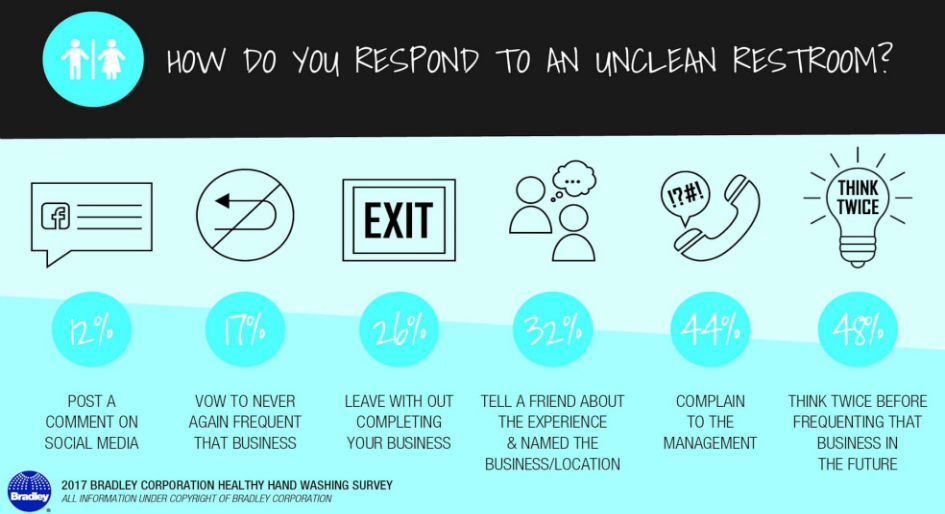
Employee perceptions of workplace restrooms: survey

The condition of a workplace restroom reflects how much a company values its workforce, according to 89 per cent of Americans who were queried in Bradley Corporation’s 2017 Healthy Handwashing Survey.

The annual survey asked 1,042 U.S.-based workers about their workplace restrooms, handwashing habits in public restrooms and concerns about germs, colds and the flu.

Even though 67 per cent of workers ranked their restrooms as excellent or very good, they still flagged a need for improvement. Their wish list included installing more touchless fixtures, such as automatic toilets and motion-activated faucets. They also want air fresheners at their disposal, full-length mirrors, shelving for belongings and electric hand dryers.

Nearly half of respondents say they’ve experienced issues with their workplace restrooms that a little deodorizer or automatic fixtures could address. The top complaints uncovered by the survey were unpleasant smells, clogged or unflushed toilets and empty or jammed toilet paper dispensers.

Handwashing

The survey also explored handwashing behaviors in and out of the workplace. Sixty-one per cent of workers say they’ve seen a colleague leave the restroom without washing his or her hands. That’s a marked increase from the 2016 survey when less than half (42 per cent) said they had witnessed a co-worker skip handwashing.

When it comes to sick colleagues, the overwhelming majority of survey respondents consciously take steps to protect themselves. They avoid the person, abstain from shaking hands and wash their own hands more frequently.

Proactive measures outside of work

The survey found 70 per cent of Americans ramp up their handwashing practices during flu season. Hygiene actions include washing more frequently and more thoroughly or longer after using a public restroom.

“It’s positive news to find out that Americans are consistently using handwashing as their first line of defense against contracting a cold or flu,” says Jon Dommisse, director of global marketing and strategic development at Bradley Corp.

To avoid getting or passing germs onto others, respondents said they utilize a three-pronged approach. They wash their hands more frequently, stay home when sick and sneeze into the crook of their elbow. They also change the way they greet people by waving hello, not shaking hands altogether or using a fist bump.

workplace restrooms

Regina pilots new pavement preservation technique

Regina, Saskatchewan is investing $350,000 from its existing paving maintenance budget in a new pavement preservation technique designed to restore and rejuvenate the surface of the asphalt at a fraction of the cost of repaving the roads.

The treatment seals the pavement, preventing moisture from penetrating into it and causing cracks and erosion. It’s environmentally-friendly and less invasive. The pavement will be evaluated over the next year to determine how the sealant stands up in the environment.

“The total cost to apply these treatments is estimated at one tenth that of repaving a roadway,” said Mayor Michael Fougere. “Should the pilot program be successful, lifecycle maintenance costs for treated roadways could be reduced by as much as 60 per cent. If this treatment is successful, this would allow us to allocate more resources to roads that have greater and higher cost needs like repaving or reconstruction.”

Roads have to be free of ruts, potholes and wide cracks, as well as structurally sound. Pavement preservation work will be completed on 20 test locations.

“This approach is about investing in infrastructure maintenance at the right time to extend the lifecycle of our assets,” added Norman Kyle, director of roadways and transportation. “It’s a new technique that is different than anything we’ve done before with the main difference being the type of road surfaces selected. These roads are often newer roads which look like they do not require any work. But the treatment, if successful in our environment, will sustain the life cycle of Regina’s roads at a fraction of the current cost.”

Having uncomfortable conversations in condos

It can be tempting not to have a difficult discussion. Even though an uncomfortable situation will almost always persist — or even worsen — if nothing is done to address it, the discomfort, anxiety and stress associated with speaking about an issue can make procrastination a very attractive option.

This is especially the case in the condominium environment as directors, property managers and residents often hesitate when they first face the potential of having a hard conversation. It can seem easier to send an e-mail or template letter than to address a matter in person — in part, because best practices encourage record keeping — however, impersonal options often intensify rather than ease tensions and are rarely the best way to raise a concern.

There are many potential reasons why people avoid difficult discussions. A situation may pose emotional triggers or raise delicate subjects. There may be dread surrounding the reaction of the person on the other side of the discussion — he or she might get angry or react in a way that hurts an ongoing relationship. There may be uncertainty as to the outcome of bringing up the matter, and potential risk that doing so may not improve the situation but worsen it. To this end, the status quo may even offer a degree of comfort.

Mediation concepts apply to these types of considerations. In weighing whether or not to try to address an uncomfortable situation, a person often considers the different options that are available and goes with the choice that seems best.

Weighing the options

The option of doing nothing is typically only appealing for so long. Eventually, a person reaches a point where he or she no longer feels that a situation is tolerable or may somehow miraculously improve on its own.

Rather than agonizing over the unknown and getting lost in the world of what-ifs, spend some time reflecting on the situation. What makes it difficult, and what could improve it? What is known and unknown about a circumstance? Who is involved? What is the root of the issue?

Say, for example, a condominium resident is regularly annoyed by the loud barking of a neighbour’s dog. Perhaps the difficulty in addressing it is not wanting to be seen as a complainer and not wanting to risk upsetting the neighbour. There may even be fear that raising the issue may cause the neighbour to retaliate — perhaps making counter-complaints about noise.

A factor that may increase the difficulty of the situation is the forced ongoing relationship between neighbours — before, during and after the conflict. It may not be important for neighbours to be the best of friends, but developing friction can be quite uncomfortable. It could perhaps even get worse with each chance encounter, leading them to purposely try to avoid each other as they go about their business in and around their homes.

The thing is that the constant barking is annoying to the condo resident, increasingly so with each passing week. The resident’s mind turns to more extreme options, choices that would surely escalate the situation but seem more appealing as emotions rise with the negative impact on the enjoyment of his or her home.

Raising the issue

Think about the best strategy for raising an issue. Select the delivery, tone and approach of the message based on what is most likely to achieve the desired outcome. It’s possible to present the situation in a positive and encouraging way. One approach would be to gently express to a neighbour that his or her beloved pet can be heard from one’s own unit, and offering to work together to address the issue. Compare that to another approach, such as referring to the dog as an ugly, smelly, flea-infested nuisance who should move out at once.

That being said, it’s not possible to control another person’s reaction. In her “guide to conquering life,” YouTube sensation Lilly Singh illuminates this with a video game analogy. Specifically, she points out that video game players can only control their character — as opposed to other characters or circumstances in the game. Remembering this fact of life and thinking about the controllable aspects of a situation — one’s own behaviour — can productively complement a good communication strategy. Imagine the worst possible response and think through how to respond.

In many condominiums, everyone is a stranger. However, when neighbours are able to put names to faces, exchange pleasantries as they go about their business and otherwise get to know one another, it can be much easier to approach uncomfortable subject matter together. It is much easier to consider how best to approach a situation and reflect on the reality of the situation with a better understanding of those involved.

Planning and strategizing the best ways to approach a difficult discussion and to carry oneself, even when it may get emotional, can help answer when to address an awkward situation and lay the foundation for constructive next steps. Too often, people wait until a situation has gotten worse than it needed to be to find their voice and take active steps to address an issue. Communicating positively, earlier on, can often make these types of interactions far less painful.

Marc Bhalla holds the Chartered Mediator (C.Med) designation of the ADR Institute of Canada, the nation’s most senior designation available to practising mediators. He focuses his mediation practice on condominium conflict management. Marc leads the CONDOMEDIATORS.ca team and manages MarcOnMediation.ca.

Simon Fraser University closer to becoming zero waste

Simon Fraser University is another step closer to becoming zero waste.

The Shrum Chemistry Building on the Burnaby campus has just earned a LEED Gold rating for its renovations and upgrades, the university reports in a press release. LEED-certified buildings reduce waste, conserve energy, decrease water consumption and improve operating cost efficiencies. Overall, they have a healthier indoor environment through better indoor air quality, the use of less harmful products and more natural daylight.

Of all the science buildings on campus, Shrum Chemistry is now one of the most energy efficient. It incorporates new systems for water efficiency and reduction, optimized energy performance and waste management. It has also adopted green cleaning practices.

Other sustainability achievements include diverting at least 75 per cent of construction waste from the landfill, and installing new laboratory fume hoods that exhaust 50 per cent less air when users close the sash.

“Exhausting conditioned air is wasteful,” said Ken MacFarlane, director, facilities and technical operations in the Dean of Science office. “In our old laboratories, a single fume hood consumed as much energy every year as heating three houses.”

All of these measures helped achieve a LEED score of 40 points in six categories: site design, construction materials and resources (20 per cent regional content), water efficiency (30 per cent improvement), indoor environmental quality, and innovation and design.

Wendy Lee, development manager Facilities Services, said the chemistry building was one of the first major renewal projects to be tackled back in 2010.

“It’s been a little while cooking,” she said. “With previous projects, because of cost and certification requirements, we’ve tended to see the rating system as a benchmark, or guide, rather than actually pursuing certification.”

But when the B.C. government introduced a carbon-neutral government policy in 2010, mandating LEED Gold certification for major public-sector projects, she said SFU’s design team was inspired to aim higher.

“Although there is always room for improvement, particularly with rapidly evolving new building technologies, and changing teaching and research needs, Shrum Chemistry’s LEED Gold rating is truly an achievement we are proud of.”

Photo courtesy of Simon Fraser University

National Music Centre receives $5-mil investment

The National Music Centre, located in Calgary’s East Village, recently received a $5 million federal investment in support of Studio Bell, home of the NMC, through the Canada Cultural Spaces Fund.

The investment supported the final stages of construction for Studio Bell, including exhibition spaces; three recording studios; electrical, audiovisual and mechanical systems; Solar Drones, a public art piece; and an integrated ticketing system.

In its first year of operation, Studio Bell received international acclaim for its architecture, won awards for its exhibition design, hosted major events, and supported over a dozen artists-in-residence. It continues to celebrate Canadian music pioneers and icons through the on-site Canadian Music Hall of Fame, Canadian Country Music Hall of Fame Collection and Canadian Songwriters Hall of Fame.

“The support provided through the Canada Cultural Spaces Fund was critical to our growth and the success of our opening year,” said Andrew Mosker, president and CEO of the National Music Centre, in a press release. “We thank Canadian Heritage for its support for our vision and commitment to amplifying love, sharing and understanding of music from coast to coast to coast.”

Ground-breaking for the new Calgary building took place in February 2013. Studio Bell is a new state-of-the-art facility designed by Brad Cloepfil of Allied Works Architecture. It is the first national cultural institution of its kind dedicated to celebrating music in Canada in all its forms.

Ontario grant to help fund new dialysis facility in Scarborough

Ontario is providing a grant to Scarborough and Rouge Hospital to help the hospital plan and construct a new dialysis facility as well as helping fund other programs including diabetes education.

Scarborough and Rouge Hospital is one of the largest regional kidney disease programs in North America, with over 6,000 patients receiving care. It is one of 26 Regional Chronic Kidney Disease programs in Ontario and one of three Regional Chronic Kidney Disease programs within the Central East Local Health Integration Network. These are outpatient programs that provide patients with a range of specialized services to help them maintain a good quality of living while living with chronic kidney disease.

The new, modern facility will provide treatment to patients with chronic kidney disease and respond to the growing needs of the community. It will accommodate 45 dialysis stations, including 19 new stations and 26 stations that are being relocated from other facilities.

In addition, the new facility will accommodate six home hemodialysis stations relocated from the General site, as well as three new home hemodialysis training stations, which will be used to train and support patients who wish to perform their own treatment at home, without medical intervention.

“SRH is thrilled to receive this support from the Government of Ontario that will allow us to begin the planning and construction of a new community-based facility to meet the growing needs of Scarborough,” said Elizabeth Buller, president and chief executive officer, Scarborough and Rouge Hospital, in a press release. “This new facility will greatly improve patient access to care and provide dialysis treatment close to home for those living with chronic kidney disease.”

Canada cracks down on antimicrobial resistance

Canada is taking new steps to confront the reality of antimicrobial resistance (AMR), one of the most serious global health threats facing the world today.

This week, Minister of Health Ginette Petitpas Taylor and Minister of Agriculture and Agri-Food Lawrence MacAulay introduced Tackling Antimicrobial Resistance and Antimicrobial Use: A Pan-Canadian Framework for Action. The Pan-Canadian Framework was developed jointly with provinces and territories and other key partners in the human and animal health sectors to tackle AMR in Canada.

AMR on the Rise

Existing antibiotics are becoming less effective at treating infections and the development of new drugs is not keeping pace. The leading cause of increased AMR is the overuse or inappropriate use of antibiotics for preventing or treating infections in people and animals.

Unless action is taken, even common infections could become life-threatening and estimates indicate that by 2050, annual worldwide human deaths attributable to AMR could reach 10 million.

The Framework

The Framework identifies opportunities for action and desired outcomes under four pillars: surveillance, stewardship, infection prevention and control, and research and innovation. A Pan-Canadian Action Plan will be developed to define specific commitments, measurable outcomes, and timeframes to put the Framework into use.

“Our government is committed to taking action to mitigate the impact of antimicrobial resistance on Canadians,” said Minister of Health Ginette Petitpas Taylor. “We are enhancing surveillance; promoting good infection prevention and control practices; promoting the responsible use of antimicrobials; and supporting research and innovation for new prevention and treatment products.”

The Pan-Canadian Framework builds on existing efforts on AMR. It also complements the Federal Action Plan on Antimicrobial Resistance and Use in Canada, released in March 2015, which laid out concrete actions Canada is taking.