Articles Archive - Page 586 of 929 - REMINET
REMI

School of Creative Arts buildings open at UWindsor

A ribbon-cutting ceremony was held on March 22 to celebrate the opening of the University of Windsor’s new School of Creative Arts (SoCA) buildings, located on downtown Windsor’s Freedom Way. At the ribbon-cutting ceremony, UWindsor’s president and vice-chancellor, Alan Wildeman, announced that the Armouries main lobby will be named Veterans Hall to honour the building’s military heritage.

The new buildings, located between Park St. and University Ave., saw the conversion of the historic 46,000-square-foot former Armouries Building into a 66,000-square-foot arts hub, designed by CS&P Architects’ Craig Goodman and his team. The adjacent Freedom Way building, constructed on the site of a former restaurant, provides an extra 20,000 square feet of creative space.

Goodman and his team was tasked with transforming the Armouries building, built in the late 19th century Romanesque style, into light, lofty spaces meant to foster creativity. The architect says every square inch of the space was carefully considered, to pay homage to the building’s historic past, including repointing nearly all the original bricks. One hundred years of paint was removed from the bricks lining the Armouries’ interior walls, while 12,000 bricks from the addition built in 1935 were dismantled, cleaned and re-installed in the new recital hall.

New windows were custom-built to match the original look of the building, and the oak doors at both entrances, while too large and heavy for everyday use, were restored and have been repurposed to remain permanently open within the building, while the entrance openings were enclosed with glass vestibules.

“The Armouries building will now serve an entirely new generation and has been joined by the Freedom Way building as spaces where academic creativity is nurtured and developed with an eye to the future,” said Dr. Wildeman, in a press release. “We know that creative arts are an essential part of a community’s well-being.  The new teaching and creative work spaces, and the synergy that is being created by more closely connecting our students, faculty and staff with community musicians and artists, will benefit our region for generations to come.

The Armouries Building features 12 practice rooms for musicians, a performance and practice hall, a library, classrooms, offices, a keyboard and computer lab, photography and painting studios, and the Visual Arts and the Built Environment (VABE) studio. The Freedom Way facility features film production studios, editing suites, a sonic art studio and making studio for sculpture, metal and woodworking. Currently, the SoCA buildings are home to approximately 500 students.

End of era results released for BOMA BEST v2

The newly released BOMA BEST Green Building Report, tracking building performance for the 15-month period from Jan. 1, 2016 to March 31, 2017, highlights 1,749 new certifications to end out the Version 2 era of the assessment and benchmarking program for sustainable buildings operations. In step with the philosophy of continuous improvement, BOMA BEST 3.0 is now fully in place.

“The past year presented us with some rewarding moments as well as some interesting challenges,” Benjamin Shinewald, president and CEO of the Building Owners and Managers Association (BOMA) of Canada, observed in his introduction to the new report. “It was a year of transition, replacing BOMA BEST Version 2 with the much more robust and comprehensive BOMA BEST 3.0, and a year of opportunities which we were thrilled to embrace.”

Looking back to Version 2, he commends the 108 per cent increase in certifications over the previous reporting period and a jump of eight basis points in the average score. “This was the highest year-or-year change in performance and fantastic culmination of BOMA BEST v2 achievement,” the report reiterates.

Participating buildings are scored in six categories: energy; water; waste reduction/enhancement; emissions and effluents; indoor environment; and environmental management systems. From Jan. 1, 2016 to March 31, 2017, slightly more than 52 per cent of participating buildings achieved a score of a least 70 per cent for a silver or higher certification. An average score of 78.9 per cent across these 917 buildings was the best result since 2010.

Office buildings account for the largest proportion of higher scores, as 597 or nearly three quarters of properties in that sector attained at least a silver certification. Fifty-six office buildings received BOMA’s highest rating of platinum via scores of 90 per cent or higher — collectively reducing their carbon footprint by 69,000 tonnes of greenhouse gas (GHG) equivalent. Another 253 office buildings gained gold standing with scores between 80 and 89 per cent.

In general, office buildings matched the best energy use intensity (EUI) yet recorded with an average of 27.1 equivalent kilowatt-hours per square foot (ekWh/sq2) for those achieving at least silver certification. Average water use intensity of 0.69 cubic metres per square metre (m3/m2) was up from a best ever average of 0.65 m3/m2 in 2012, but down slightly from the 2015 tally. The same group of buildings achieved an average waste diversion rate of 63 per cent.

Light industrial buildings represent the next largest group with 561 certifications, of which 30 per cent were silver or higher. A similar portion of the 249 open-air retail properties registered scores of 70 per cent or higher, whereas 94 enclosed shopping malls collectively boasted the best performance among the sectors with fully half achieving gold or platinum certification.

In contrast, multi-residential participation lagged behind the other sectors. Just 25 buildings were certified and just four achieved scores of 70 per cent or higher, translating into one silver and three gold certifications.

More landlords use child care to bolster amenities

As provincial governments take baby steps to advance accessibility to child care, corporate tenants are increasingly demanding daycare centres in their buildings to help female employees go back to work and pursue their careers after maternity leave.

Some landlords, in turn, are prioritizing these spaces as they would a fitness centre or a meeting area, looking at child care as a property investment to attract companies.

“There’s definitely a continuing growth trend,” says Tyler Sopik, principal and lead sales representative with the Retail Services Group at Avison Young and broker for Kids and Company, a national daycare provider with more than 100 locations across North America. “Landlords are beginning to get into mixed-use real estate, which is more prevalent in all markets. With cities like Toronto being more live-work-play, 24/7, having this amenities in a building is a continuing trend.”

Kids and Company has 15 more spaces scheduled to open in the next 24 months. In Toronto, Crown Realty Partners is about to start construction on a Kids and Company centre in The Link at 300, 302 and 304 The East Mall in Etobicoke. The goal is to attract tenants to the suburbs and cater to young professionals, giving them options they would be more privy to in the downtown core.

“We have a very large pocket of vacancy right now in the suburbs of about 140,000 square feet,” says Scott Watson, partner of leasing and marketing at Crown. “We see this as putting in many amenities to attract major corporations that will also serve the surrounding residential community.”

child care

300 302 304 The East Mall in Etobicoke, Ontario.

The Link, formally the Valhalla Executive Centre, was constructed in the early 1970s. Older buildings like this often hinder landlords from building out child care centres.

“Office buildings constructed 40 or 50 years ago were never designed to accommodate these types of uses,” notes Sopik. “A lot of retrofits are happening, but I’d say a lot of our new deals in terms of expansion are in new construction buildings.”

Child care spaces require a dedicated, exclusive outdoor play area, appropriate pick-up and drop-off areas and accessible ground or second floor space with lots of natural light, among other features. Property managers at The Link had to change the zoning plan, get site approval and licensing.

“It’s one of the most highly regulated industries out there,” notes Sopik. “What takes these deals so long is the amount of high-level design, expensive buildout and making sure regulations are met to the highest degree and that it’s a safe place.”

Depending on the organization, obtaining provincial licensing can also draw out the process.

“Sometimes it takes independent child care organizations well over a year to operate the daycare,” says Watson. “It’s tough for a landlord to sit on that empty space for so long in the hopes they get their license.”

On the plus side, landlords can also acquire more rent with a child care centre in place.

“When you compare class-A office spaces that have or don’t have it there’s compelling evidence you can charge higher rents,” says Sopik. “All the buildings we occupy across the country are 60 to 70 per cent office buildings and those landlords claim their biggest amenity is child care.”

Better deals can also be negotiated with landlords who ask Kids and Company to lease their space. The savings are then passed onto the employee whose fees become less expensive, since fees fluctuate based on the cost of rent.

The Link’s child care centre will be one of Kids and Company’s smallest in the country at 4,300 square feet and a 60-child capacity. Most are 8,000 square feet and accommodate 100 to 120 infants and toddlers. They reside in class-A office space in cities across the country, but are less prevalent in areas like downtown Vancouver where vacancy is low.

“But in Calgary, with tons of vacant space, we’re a hot commodity because we can potentially fill up the buildings or move tenants over,” says Victoria Sopik, CEO of Kids and Company who is working alongside her son Tyler. Both are passionate about making child care more accessible in the country where infant care in lacking.

Recent provincial budget announcements show investment in child care is gaining ground. In Manitoba, a new refundable corporation income tax credit will be available for private corporations that create new child care centres in workplaces.

“To open up child care is very expensive; its capital intensive, so the more programs that help open up spaces, the better,” says Tyler.

But proposed new laws laid out in other provincial budgets don’t benefit all women returning to work after 12 or 18 months when parental leave ends. Many of these women desire convenient and flexible daycare so they can retain executive positions right away or balance a more entrepreneurial lifestyle. According to the recent Rosenzweig Report on Women at the Top Levels of Corporate Canada, just over 90 per cent of the most senior jobs continue to be held by men at the country’s 100 biggest publicly-traded companies.

Many corporations, such as banks, law firms and insurance companies, where the majority of women work in the lower rungs of leadership, are located in class-A office buildings where such an amenity could promote gender parity in the workplace. Inaccessible child care is believed to cause women to work from home. Knowing they have a guaranteed space for their child after parental leave and access to other child care centres if a company moves is one way to relieve the burden.

“More and more companies are understanding how important it is to retain talent by supporting them having children,” says Victoria. “Every year that goes by, we see more support from all the stakeholders. We see a huge need for child care in Canada and we’re happy to be part of the expansion.”

StorageVault expands in Ontario

StorageVault Canada has announced the $68.7 million acquisition of three stores in Ontario. The trio of sites were purchased from separate vendor groups in what the company has described as “arm’s length transactions.”

It is anticipated that the formalities of all three purchases should go through before May 21. The acquisitions bring the number of StorageVault owned shops in Ontario to 27 and 93 overall across Canada. The company also manages an additional 31 stores in the province and 56 nationwide.

StorageVault owns and operates storage locations in the provinces of British Columbia, Alberta, Saskatchewan, Manitoba, Ontario, Quebec, and Nova Scotia.

Hard quotas unlikely in gender parity push

Hard quotas appear to be an unlikely tool in the growing push to promote gender parity in the real estate industry if commentary at a panel hosted by the Urban Land Institute’s (ULI) Toronto chapter on International Women’s Day is any indication.

A movement to set, measure and track soft targets for diversity and inclusion has only emerged in the last few years. The success to date seen by early adopters of this strategy suggests that looking at how an organization is faring in promoting women at all levels, and then establishing goals, may be enough to realize gender parity.

The Ontario government, for example, announced in 2016 that it would aim to fill at least 40 per cent of appointments at all provincial agencies and boards with women by 2019. At least one provincial agency, Infrastructure Ontario, has already surpassed that target, reaching perfect gender parity in both the boardroom and the C-suite.

Speaking at the ULI Toronto panel, Toni Rossi, president of the real estate division at Infrastructure Ontario, credited the leadership of its board chair in driving action on diversity and inclusion. However, Rossi said that there is more work to be done, noting that middle management is one part of the organizational chart where the provincial agency has struggled to move toward gender parity.

“We’ve been very deliberate about progressing a measured basline,” she added. “I personally have a visceral feeling when I hear the word quota.”

Rossi may not be alone in feeling this way. Aspiring leaders have expressed to at least one real estate executive that establishing hard quotas may diminish merit-based promotions.

“The feedback that we get from our strongest people is: ‘Please don’t put a quota in there because who wants to be that person who’s looked at as: You have two spots; therefore, I’m one,’” said Blake Hutcheson, president and CEO of Oxford Properties Group, speaking at the ULI Toronto panel.

Also speaking at the ULI Toronto panel, Leslie Woo, chief planning and development officer at Metrolinx, added that there are alternatives to quotas in the push for gender parity that have yet to be used. Woo has pressed recruiters to go back to the labour pool after they’ve sought out female candidates and come up short.

She said Metrolinx, another provincial agency, has set a goal of reaching gender parity from the manager level up within three years in an effort to reflect the demographic composition of the region it serves, the Greater Toronto and Hamilton Area. Its 14-member board of directors has a 50-50 split between men and women and its executive team has a 60-40 split that favours women, but it has some ground to make up from the manager level up, where it currently has 28-per-cent female representation.

“Part of what we’re trying to do in our organization is to call it, and enable people to call it when they see it,” said Woo. “When I go into a boardroom or meeting, I take a picture and I show everybody: ‘Did you notice what our boardroom meeting looked like? Let’s mix it up a little bit.’”

Metrolinx is also turning to its women’s network and diversity and inclusion council for ideas. Woo said organizations need to determine what their status quo looks like in order to know where to place their focus. She had to approach the HR department for demographic data when the women’s network was being formed.

REALPAC, a national trade association representing the largest real estate companies in Canada, started to track diversity and inclusion statistics in 2017, including gender, as part of its annual compensation and benefits survey. “Collecting data on male-to-female breakdowns within organizations will establish a baseline from which to chart trends,” said Michael Brooks, CEO of REALPAC.

REALPAC’s move to track male-to-female ratios comes as part of a broader initiative, led by an advisory council and a staff committee, launched last year to promote diversity and inclusion in the industry, including gender equality. Brooks said a scan of global best practices showed the Canadian real estate sector is trailing its counterparts in the U.S., Europe and Australia. Male members of the Property Council of Australia, for example, have pledged not to participate in ‘manels’ (all-male panels).

The statistics currently available suggest the real estate sector is also trailing the Canadian economy at large on gender parity. Women in the real estate sector may find the top rungs of the corporate ladder harder to reach compared to some of their peers in other sectors, an analysis of Canadian Property Management’s 2017 Who’s Who in Canadian Real Estate Survey revealed.

“It’s been a journey, and I’ll admit that we’re not getting this right — not as a society, not in this industry, and not at Oxford,” said Hutcheson, “but I have been a huge champion of both inclusion and diversity, and I’ve just watched the company evolve over nine years.”

“We make better decisions when we have a diverse group in the room,” he said.

Hutcheson was also recently appointed CEO and chief pension officer at OMERS, which, similarly to Metrolinx’s diversity and inclusion efforts, provides forums for women’s and LGBTQ groups. He said the impetus to promote diversity and inclusion isn’t limited to social responsibility, citing research coming out of Harvard University that shows it drives shareholder value.

What’s more, a new index from MSCI Canada that tracks a sample of publicly traded entities that meet criteria to be considered leaders in women’s diversity saw higher returns than a broader investable market index over the span of a year and a half.

Recognizing the research that exists, Rossi said she worries about the ability of the real estate industry to attract top talent in the future, having looked around the room at one of the biggest conferences of the year and not seen a lot of diversity.

In the classroom at Ryerson University where Brooks teaches the capstone real estate course, he sees plenty of women and visible minorities preparing to enter the sector, but he said that the industry needs to change the signals it’s sending.

“Put yourself in their shoes looking for a job at any organization in Canada — ‘I think I’ll check out the C-suite’ — and all you see is white men,” said Brooks. “That doesn’t send a reaffirming message about the future and what your opportunities are.”

There are encouraging signals to be found. ULI Toronto’s Women’s Leadership Initiative (WLI) recently marked an important milestone as it strives to do its part to promote gender parity in the local real estate and development industry through its She With He campaign. Having made a concerted effort to increase its female ranks, ULI Toronto now claims the highest level of women members globally — 36 per cent — among ULI’s district councils of comparable size.

Michelle Ervin is the editor of Canadian Facility Management & Design.

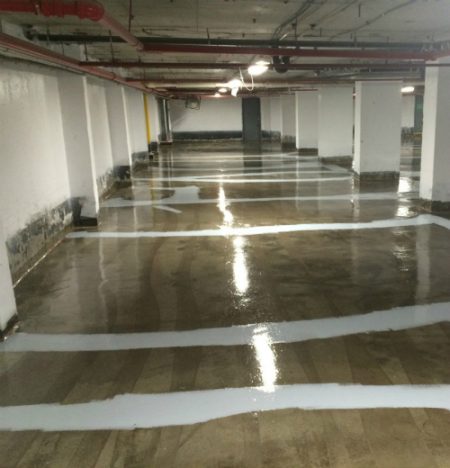
Top Considerations for Parking Garage Restorations

On a list of big-ticket items, few property expenses stand out more than a parking garage restoration. All the more reason, then, for managers and owners to consider their options and ensure they are taking the right approach before breaking ground.

“Repair or upgrades to underground parking garages can be a massive undertaking, and we regularly see certain aspects of these projects that are commonly overlooked or not fully considered,” says Michael Pond, Principal, Building Science and Restoration with RJC Engineers (RJC).

Certainly, it pays to have a solid plan before heading below. Here are some considerations to keep in mind.

Get the real numbers

It’s common for property stakeholders to rely on a reserve fund study to budget for parking garage work. Yet while that study can provide a ballpark figure, a more comprehensive condition survey will reveal the true anticipated cost.

“A lot more goes into evaluating a parking garage that doesn’t get covered by reserve fund studies,” says Pond. “Those are helpful for planning, but they typically don’t give provide stakeholders with the level of detail you need.”

Moreover, specialists who conduct reserve fund studies don’t often have the time or resources to capture the true condition of every property component. However, with a more detailed and comprehensive review one can obtain a clearer idea of what work is required and how much money to budget.

“The number on a reserve fund study can vary wildly and open property managers and owners up to extra expenses, whereas a comprehensive survey gives you the granular detail to create accurate tendering drawings and specs that are geared toward the current condition,” adds Pond, noting, “That way, when you go to tender the work, you know exactly what you’re looking for.”

parking garage restorationPlan for overages

You know what they say about planning for the unpredictable? The same rings true for any major renovation, repair or retrofit. That’s why it’s best practice to add extra room in a project’s budget to accommodate for any surprises.

“We often recommend clients carry a 10% contingency allowance for this type of work in order to handle any unforeseen conditions that may arise,” Pond offers.

Time your tendering

There are good times and costly times to tender a parking structure project. Around mid-summer, for example, most contractors will already have their year planned out and be busy with current projects. As such, it’s likely their quotes won’t be favourable.

In the winter, on the other hand, is when contractors are planning their next year and want to keep seasonal workers on the payroll. That can make a weather-proof project like a parking garage restoration more appealing, leading to more competitive bids.

Overall, Pond suggests: “Whenever possible, our advice is to tender late in the calendar year or early the following year when everyone is trying to secure next year’s work. For example, tendering in January and doing the work in August is better than tendering in July and doing the work in August.”

Have a phasing plan

When it comes to working down below, remember to phase the work accordingly and consider the full impact of the restoration on all building occupants.

“You’re likely going to need to shift cars around or find some limited offsite parking, so having a phasing plan in place from the beginning is important,” says Pond, adding that it’s equally important to remember that work on one floor of parking garage can affect the one below. “If you have a multi-level underground parking garage and you want to do concrete repairs and replace waterproofing system on P1, for instance, you have to close the P2 level because you’re going to be dropping concrete and removing protection for the cars below.”

Stay vigilant

No matter how old (or young) your parking garage is, it’s a good practice to routinely assess its condition.

“You want to keep up on maintenance and inspections, and that includes getting your parking garage assessed by a structural engineer on a regular basis,” says Pond. “If you let that maintenance work slide, or you just fix it and forget it for years, you’ll be opening up your tenants and residents to safety risks.”

Parking garage restorations are never cheap. With solid planning, accurate budgeting, and ongoing oversight, you’ll be setting the foundation for a smart investment.

Michael Pond is Principal of Building Science and Restoration with RJC Engineers. Learn more at www.rjc.ca.

Quebec foresees return on energy retrofit loans

The Quebec government and the labour-sponsored investment fund, Fondaction, have pledged $30 million to underwrite energy efficiency improvements in commercial buildings. The 2018 provincial budget, released last week, announced the new loan fund as part of Quebec’s commitment to greenhouse gas (GHG) reductions, and promised more details soon.

“The government’s participation will take the form of an investment with expected return,” the budget document states. “This fund will aim not only to help reduce GHG emissions and improve businesses’ carbon footprint, but also to generate financial savings for participating businesses.”

In addition to contributing half the working capital ($15 million), Fondaction will administer the energy retrofit loans. Quebec’s energy ministry and the not-for-profit public interest group, Association québécoise pour la maîtrise de l’énergie have been tapped to provide technical advice to the recipients in the commercial building sector.

For homeowners, the new budget allocates $172 million to offer the RénoVert refundable tax credit for another year — extending the deadline to qualify for a rebate of up to $10,000 on energy and water efficiency improvements and renewable energy installations until March 31, 2019. The ÉcoPerformance program, which supports businesses, municipalities and other public sector institutions in implementing low-carbon energy systems and other process improvements, also receives a $30 million boost.

“These programs are critically important to our advanced renewable technology,” observes Ted Kantrowitz, chief executive officer of the Canadian GeoExchange Coalition. “GeoExchange technology helps make Quebec highly efficient and renewable and can provide a deeply effective method of decarbonization in one of the world’s least expensive energy environments.”

Ontario budget to support new SickKids Patient Care Centre

Ontario’s Hospital for Sick Children (SickKids), one of the world’s largest and most respected pediatric hospitals, will be receiving $2.4 billion as part of the province’s 2018 budget to build a new Patient Care Centre.

The investment will go towards the design and construction of the new Patient Care Centre, part of a massive redevelopment that will modernize aging equipment and spaces and provide more space to increase the hospital’s capacity. The new facility will house vital services, including emergency and critical care, surgical care, bone marrow transplants, as well as diagnostic services and specialty clinics.

“This historic and important investment will ensure that we are able to deliver safe, cutting-edge care to the most critically ill children in Ontario for generations to come,” said Dr. Michael Apkon, president and CEO of the Hospital for Sick Children, in a press release. “It will allow us to build a state-of-the-art facility that will continue to give patients and families hope and comfort as they face serious illness and injury. A redeveloped SickKids will also attract more of the world’s top clinicians and researchers to join SickKids in our fight against childhood illness and disease.”

SickKids is the largest pediatric centre in the country and is the only hospital in Ontario that conducts pediatric heart transplants, bone marrow transplants and most solid organ transplants.

Ontario is investing over $19 billion over the next 10 years to improve and expand hospitals across the province. There are currently 40 major hospital projects either under construction or in the planning stages. In addition to building new hospitals, the province is also increasing operating funding for hospitals by $822 million in 2018-19. As part of this investment in operations, SickKids is also receiving a funding increase of $15.4 million in 2018-19.

Study of employee wellness programs shows positive effects

Employee wellness programs in the workplace are lacking despite evidence showing their effectiveness. An evaluation of a year-long workplace wellness program, a new paper published by researchers from McGill University in the March issue of the Journal of Occupational and Environmental Medicine, highlights the benefits of such programs for Canadians.

“Health promotion and disease prevention through healthy lifestyle changes are poorly supported in our health care system, where the medical focus is primarily on medication or other forms of medical care,” Dr. Steven Grover, director of the McGill Comprehensive Health Improvement Program (CHIP) and the study’s senior author said in a press release. “Employee wellness programs are therefore much less common in Canada and published reports showing the results of a program of this nature are very rare.”

To conduct their study, the researchers collaborated with Merck Canada Inc., who in 2014, with strong senior management support and dedicated resources, launched a comprehensive wellness program called LIVE IT.

The researchers set out to establish baselines for participants through health screenings conducted at the beginning of the program, asking participants to track their activity and evaluate the results at the end of one year. From a pool of 730 eligible employees, 688 registered for the program. While not all those who signed up stuck with the program for its duration, 66 per cent tracked their activity for more than 6 weeks.

“To our knowledge, these are the most impressive results published to date in a Canadian setting, on a large group of employees, with follow-up results after one year,” says Dr. Ilka Lowensteyn, clinical research director at CHIP, Adjunct Assistant Professor at McGill and the lead author of the study.”

He adds that participants who completed a second health assessment after the first year showed great improvements in systolic blood pressure and reductions in poor sleep quality, high emotional stress and fatigue. The team was also able to demonstrate a dose response effect where the employees who participated the most were also the ones who improved the most.”

Subsequent programming will continue to encourage physical activity but will also address healthy eating, weight loss and stress management. Ongoing follow-up will evaluate the sustainability of the lifestyle changes adopted by participating employees and will assess the financial costs and benefits associated with this type of program to gain a better understanding of the potential clinical and economic impacts.

“With many Canadian adults spending six to nine hours each weekday at work, the workplace may provide a particularly effective setting for changing health habits,” wrote the authors. “The short-term results of this program are promising and appear to have resulted in a healthier employee base and may provide important guidance for developing effective programs in other Canadian companies.”

Bentall Kennedy adds to Montreal real estate portfolio

Bentall Kennedy has purchased two office buildings in Montreal’s Mile End district from Mile-End Investments Inc.

The acquisition of 7250 and 7450 rue du Mile End, made on behalf of Sun Life Financial, will serve a growing technology and innovation sector in the city, and adds almost 400,000 square feet of office space to Sun Life Financial’s portfolio in Quebec.

“The Mile End district specifically has a unique creative, out-of-the-box vibe,” said Robert Dumas, president and CEO of Sun Life Financial Quebec. “That’s why we opened a new office for our employees on De Gaspé Avenue – where our IT innovation center is located – and deployed numerous initiatives to be part of this great community.”

The properties occupy a prime location at the border of the Mile Ex and Mile End neighborhoods in midtown Montreal and sit directly adjacent to the train station Parc, providing a direct connection to downtown Montreal, and within walking distance of two Metro subway stations.

“Both properties boast outstanding location in a vibrant part of Montreal, and a tenant base that exemplifies the new economic opportunities for the technology sector in Montreal,” said Phillip Gillin, executive vice-president and portfolio manager for Bentall Kennedy (Canada) Limited Partnership and Sun Life Investment Management. “This investment, combined with our acquisition of the L’Avenue retail office project adjacent to the Bell Centre, reflects our confidence in the growth and diversification of the Montreal economy.”

Are your condo property’s master keys secure?

Two recent events in Toronto have called into question the security of master keys in condo buildings.

In one case, a Riverdale condo is facing a bill of $30,000 to $40,000 to re-key its building after its master key was snatched from its fire safety box and used to steal a bike secured in a storage locker, according to a CBC news report.

In the other case, a locksmith company in Toronto has been advertising that it will copy security locks for condo owners. In addition, a quick check of Google reveals several chat forums in Toronto and the U.S. where condo owners are advising each other of potential locksmiths that will ignore the instructions, ‘DO NOT DUPLICATE,’ emblazoned on these keys. These owners are also comparing notes on how to approach the locksmith for the best results.

These two events highlight the importance of protecting master keys to condo buildings from unauthorized duplication and use.

Preventing unauthorized duplication

It comes as a considerable surprise to most condo managers and board members that those three magic words printed on their building’s master keys — DO NOT DUPLICATE — are merely a request to all locksmiths to respect the condo’s wishes. Hard as this may be to believe, there are no laws or rules in Ontario that prevent the locksmith from duplicating condo keys without proper authorization.

Obviously, this trend should be very alarming to property managers and boards of directors, who expend considerable effort in ensuring the safety and security of their property and its residents. So, is there anything that can be done to rectify this issue?

First, it is recommended that condos only work with reputable locksmiths. Most, if not all, professional management companies maintain a list of preferred contractors who they know to be both reliable and ethical in their work and pricing. If a condo becomes aware that its locksmith company is copying keys without proper authorization, the condo may want to take its business to a company that abides by the rules, even if they are unspoken.

Second, experts within the locksmith industry recommend using restricted keyway locks. The reason that companies are able to copy keys with the ‘DO NOT DUPLICATE’ instruction is because the key blanks used are readily available to most locksmiths. As their name suggests, restricted keyway locks restrict access to the key blanks to the condo’s authorized locksmith.

To copy a restricted keyway lock, a person would have to identify the condo’s locksmith, and then convince him or her to produce a duplicate. Given that this locksmith has a business relationship with the management company, it is unlikely that the locksmith will copy the key without proper authorization.

But these precautions may be for naught if a condo’s master keys are poorly secured.

Preventing unauthorized use

Security audits for Ontario condos frequently find master keys stored in fire safety boxes in condo vestibules. These areas are considered semi-private, but are accessible to anyone. Occasionally, these lock boxes are not very sturdy and can be pried open.

Master keys should be considered a critical asset of the corporation and, as such, have additional layers (or protection) surrounding them. If a condo has 24-hour security on site, it’s recommended that the master keys be stored within the security guard’s line of sight, as well as inside the lobby (as opposed to the vestibule). A condominium would also be well-served to create a master key log, where anyone taking the key must sign it out and back in — establishing the dates and times of use and the person responsible.

If there is any suspicion that the integrity of a condo’s master key system has been breached, condos should discuss re-keying. The risks associated with misplaced master keys are significant — ranging from simple break-ins/thefts to crimes against people (assault or even worse) within residents’ units.

If a condo is considering re-keying, it’s strongly recommended that it undertakes a security audit to ensure that there are no further vulnerabilities before coordinating the project with a reputable locksmith professional and educating staff on proper key control policies.

It’s also worth noting that security audits for new condos commonly recommend the re-keying of master keys used for restricted common elements. That’s because the first board of directors usually does not have any way to determine how many keys were provided to contractors during the building and warranty phase of the condo.

Condos can avoid having to re-key by maintaining the integrity of their master keys through measures aimed at preventing their unauthorized duplication and use.

Scott Hill of 3D Security Services has been a practicing RCM with ACMO since 2012, a Physical Security Professional (PSP) with ASIS and a Certified Security Project Manager (CSPM) with the Security Industry Association.

Demand for introvert-friendly space emerges

Facilities managers are looking for ways to carve out introvert-friendly space as collaborative networkers increasingly suck all the air out of open office plans. Designers and human resources professionals are also pondering the options, which include respite rooms for workers with reserved personalities and a social media campaign to encourage extroverts to accept and respect temperamental diversity.

“There are some people who are actually most productive when they are sitting quietly at their desks concentrating on a task, and that’s not a bad thing,” acknowledges Viv Acious, chief trends officer with the marketing and public relations firm, We Hope You Are Doing Well! “It’s just that those needs aren’t always compatible with today’s sharing dynamic and the huge body of anecdotal evidence, backed by pop psychology treatises, that creativity and innovation spring from having lots and lots of meetings.”

“Ideally, we’d like to help introverts embrace our superior style of working, but they usually just sigh and roll their eyes,” concurs Constance Giggler, team leader, social outreach, with the multi-platform solutions provider, Solutions! Solutions! Solutions! “Nevertheless, we are committed to inclusivity and will continue to demonstrate to them how much happier they would be if they were like us.”

Engineered buffers to better accommodate reticent, loner staff — such as sound masking and acoustical panels — are preferred over more draconian measures like mandatory quiet time. However, a confluence of factors in Ontario currently poses new challenges for vulnerable segments of the population afflicted with bombast intolerance and hyper-gloating sensitivity.

“With the Leafs in the playoffs, the added fulminating rhetoric of the provincial election campaign is a real stressor,” reports Des Olate-Sensfan, one such sufferer. “We just need an antagonism-free environment. Quieter offices would help us retain the stamina to face the onslaught after the work day.”

Electric vehicle charging regs green-lit for May

It will become easier to install electric vehicle charging stations on condo properties in Ontario starting this spring. Two out of five regulatory proposals put forward for public feedback last fall have received the green light for implementation May 1.

As adopted, the changes will relax requirements under the Condominium Act to provide notification and secure approval to alter corporation assets or common elements for the purpose of installing electric vehicle charging stations.

Condo corporations will have to wait as few as 60 days after notifying owners to proceed with plans to install electric vehicle charging stations. For corporations to bypass the possibility of owners requisitioning a meeting to put this type of proposal to a vote, the estimated cost of the installation can’t exceed a certain amount (10 per cent of the annual common expenses budgeted for the current fiscal year) and the installation can’t, in the board’s reasonable opinion, be expected to be seen by owners to materially interfere with the enjoyment of their units or corporation assets or common elements.

Condo corporations will also be expected to respond to owner requests to install electric vehicle charging stations within 60 days and approve applications that satisfy certain conditions. There will be limited grounds for rejecting this type of application, such as if a qualified professional is of the opinion that it carries the serious risk of damaging property or harming people.

Provided it won’t saddle the owner with unreasonable extra costs, the corporation will have the leeway to ask the owner to alter the method or location of the installation to comply with its governing documents or prevent material interference with owners’ enjoyment of the property. Corporations will have another 90 days after approving applications to install electric vehicle charging stations to enter into agreements with owners setting out the terms of the arrangement, such as who is responsible for costs and maintenance.

The regulatory changes appear to abandon proposals that would have made it easier for owners to swap parking spaces to access electric vehicle charging stations; enabled a certain number or percentage of owners to request electric vehicle charging stations to be installed in common element parking spaces; and let corporations put reserve funds toward the cost of electrical capacity upgrades needed to support the installation of electric vehicle charging stations.

Condo corporations will have to use updated status certificate and status certificate in amalgamation forms that reflect the new rules around installing electric vehicle charging stations on condo properties starting May 1. A plain language guide to recent reforms to Ontario’s condo laws has also been updated with information about these latest regulatory changes.

Spring cleaning to-do list for windows

Cleaning windows is a tough job with many factors affecting the end results. Here, Irina Kem, senior director of marketing at Swish Maintenance Limited, points out critical elements that facility maintenance crews must address this spring in order to achieve streak-free sparkling windows.

What challenges come with cleaning windows?

There are many challenges that must be considered and addressed to achieve sparkling, streak-free windows. Glass surfaces are often high and difficult to access. There are different types of glass with different cleaning behaviours; some coatings are extremely hard to clean.

Window frames and construction materials sometimes peel and soil windows with traces of lime, making them even harder to clean. Water hardness can play a negative role, as well as direct sunlight, which dries windows quickly and makes them more susceptible to streaking or gusty winds that increase safety concerns.

How can one get desired results?

Products, tools and processes are three major factors affecting the quality of window cleaning, but they’re also easy to control.

Choose a proven professional cleaning product

While cleaning with water may be sufficient in some cases, most windows and glass surfaces require the use of a window cleaning solution to break the bond between the surface and the soil. Some multi-purpose cleaners claim to be streak-free, but fail to deliver. Select a professional-grade, fast-drying glass cleaning solution that is formulated specifically for streak-free windows and glass cleaning.

Select window-cleaning tools that help you clean faster

Select professional-grade tools for the job from a trusted supplier. These tools are much more durable and help increase cleaning efficiency and reduce fatigue. Depending on the application, a traditional squeegee may work just as fine. For higher productivity though, you may want to consider a window vacuum to speed up the drying stage or an integrated indoor glass cleaning system that combines microfibre technology with a pivoting, triangular, solution-fed head on a telescopic pole.

 Follow the process

  • Prepare: having the proper tools, including personal protective equipment, at your fingertips helps save time and labour. Be sure to avoid very hot days.
  • Pre-Clean: check the glass or window surface for any aged deposits like adhesives or leaves, and remove them using a safety scraper or scrub sponge.
  • Clean: when cleaning large glass surfaces, use a rectangular bucket. Use a scrub sleeve to apply the cleaner. Using the squeegee, start at the bottom and pull upward, framing the window. Wipe your squeegee dry after each pass to prevent streaking.
  • Gain productivity: use a window vacuum to cut the drying time and an integrated window cleaning system to clean hard-to-reach areas easier and safer, while using less cleaning solution.

Determine the process that works best for your facility, windows and staff and ensure it is being adhered to. Following the proper procedures with quality products will deliver exceptional end results.

What are some incorrect cleaning methods?

Lack of preparation

From having limited supplies and ignoring hot weather conditions to not removing deposits before cleaning windows, little misses add up. While not everything can be foreseen, the more prepared you are, the better and faster the results.

Trying to clean too many windows at once

Cleaning windows requires time and an unexpected amount of energy. Start small and do it right the first time. Start and finish one window or one set of windows; it will be easier to continue. Depending on the number of windows you have to clean, consider a professional window cleaning service to help get the job done faster and safer.

Thinking more is better

Using more cleaning solution will not be helpful; you’ll end up with extra work, removing excess liquid.  Cleaning solutions that are specially formulated for window and glass cleaning do the job with only a little amount, saving you time and money. Always follow the directions on the window cleaner label.

Spraying product directly on a surface

When using a spray bottle, spray a small amount onto a microfibre cloth, wipe the window or glass surface that needs cleaning and use a dry cloth to wipe away excess liquid. Integrated high-reach window cleaning systems accomplish this task with the solution applied to the microfibre pad that cleans the window.

Ignoring safety risks

The safety of your workers, as well as the public, must be a priority when cleaning windows. Errors and faulty equipment may lead to injuries and even deaths. From personal protective equipment and safely securing the ladders to using special high-reach window cleaning tools that enable you to clean from the ground, these are some of the steps you can take to reduce the risk of injuries and increase safety for all involved.

How can you eliminate the risk of injuries?

More than 40,000 workers get injured annually due to fall accidents, according to the Canadian Centre for Occupational Health and Safety (CCOHS). A ladder is the most commonly used tool when washing windows, making it a high-risk job. Much can be done to reduce the risk of falls and injuries by adhering to ladder safety rules. CCOHS offers an online course on ladder safety that can get you and your employees up to date on best practices.

Research other options. You can reduce the risk of falls with newer indoor battery-powered window-cleaning systems. They are ergonomically built and can reach up to 13 feet using multiple lightweight extending poles.

For outdoor window cleaning, consider high-reach systems with water-fed poles. These light-weight, yet rigid poles, help safely clean upper-storey windows from the ground level. The extension poles can attach easily to reach heights from 10 to 65 inches.

With inexpensive operating costs and ergonomic design, both indoor and outdoor high-reach window cleaning systems help increase productivity and safety, while reducing fatigue.


Irina Kem is the senior director of marketing at Swish, a leading distributor of professional cleaning products, solutions and equipment throughout Canada. Her marketing career in sanitation, distribution and manufacturing spans more than 15 years. She is passionate about promoting safe and effective cleaning solutions and the key role of the sanitation industry in creating cleaner, safer and healthier working and living environments.

AR tech a turning point for future cleaning sector

The cleaning industry has been around for a while, but new technologies like augmented reality (AR) and virtual reality (VR) are new to the field. Some tech specialists believe that by 2020, most companies will be forced to use enhanced versions of reality in training programs in order to stay competitive and attract younger employees as the aging workforce retires.

“As digital natives, this younger generation is acutely aware of their future and where they want to invest their time and energy,” says Alan Smithson, CEO of MetaVRse, a leading VR and AR consulting and product development company. “Having a VR training program not only assures them a company is cutting edge, but also allows them to learn in ways that increase efficiency across a spectrum of learning.”

AR overlays computer graphics on top of someone’s view of the real world, while VR completely immerses users in that world. These technologies are quickly impacting the automotive sector, but exist at more conceptual levels within the cleaning industry.

Some members, however, are undergoing a digital transformation to keep up-to-date with the modern user experience. Diversey, a cleaning and hygiene company, expects more exposure seeping into the daily lives of average consumers as Google and Apple invest heavily in reality technologies.

“We need to make sure that we, as an industry, align to the personal user experience,” says Marc Robitzkat, global director of marketing technology at Diversey. “In the old days, individual consumers were seeing laptops and computers at work. Today, it’s almost the reverse effect; users exposed to state-of-the-art technology at home on their personal devices are not exposed to smart technologies at work.”

Remote guidance and immersive solutions

Supporting technical service is one way AR technology can address issues within the cleaning and maintenance industry. As Smithson points out, enabling maintenance workers with AR headsets gives them step-by-step instructions in a novel way, instead of looking at a manual, website or phone.

Another “very, very new” solution currently being tested at companies like Airbnb is the concept of geotagging a flag and leaving sticky notes in AR space. These notes, which facility managers could use to tackle various problems in need of repair, would float around in mid-air for staff to discover at the beginning of a work day.

These solutions can also manage significant turnover the industry contends with, upskilling employees anywhere and anytime, without the need for onsite training. Employees learn to self-troubleshoot and guide themselves through a process, which can help reduce errors and address knowledge transfer.

“Training and re-training can be a costly affair,” says Robitzkat. “Using AR could guide employees through real-time simulation on a piece of equipment or process without their having prior knowledge of that task. Re-training can be self-guided through smart technology.”

Diversey has been experimenting with AR technology for a while with its Intellibot Robotics floor cleaning machines, which don’t have to be in a room in order to train people. Instead, users can walk around and experience 360 degree interaction with a life-size projection and learn about its components.

This can also be used operationally onsite. In a troubleshooting scenario, replacing parts, for example, AR technology would project onto the actual device, pinpointing where to unhinge a screw, change a pack or pull a wire. During a night shift, an untrained employee would have to make a quick decision, rather than depend on an integrated video that is more time consuming.

“In maintenance, you want this technology to increase and speed up the process,” adds Smithson. “What is being developed right now is testing assumptions that AR will make us faster, and it’s showing a 20 to 25 per cent decrease in training time and increase in retention rates.”

Less training time could raise health and safety concerns, but proponents of AR tech feel it adds more benefits than human errors.

“Like with any operational process, health and safety standards must be ensured and followed with or without technology,” notes Robitzkat. “Using tools like AR as an enabler can only emphasize that right steps are taken and the knowledge to do it right is at hand.”

In VR training, Smithson adds, it’s either hands on a machine or a 2D screen training simulator. People learning from their computers or phones are not really paying attention or fully engaged.

“When using AR and especially VR, you’re completely immersed in that training, and managers have an incredible amount of data because headsets are tracking where you are looking at any given time,” he says. “With complex and expensive machinery, you can train people in advance without their ever touching it, reducing injuries and danger.”

Increased safety and efficiency is just one aspect that may propel reality technologies into the mainstream professional arena with wider adoption across the industry on a global level.

“It’s really about seeing these technologies that are emerging as enabling technologies,” says Robitzkat. If we want to be in touch with today’s technology trends and make sure we can be sustainable with the business in the future, these are things we can’t ignore. There are many opportunities to deploy smart technologies in our industry.”

Conference focus on marijuana in the workplace

The Vancouver Island Construction Conference on April 27th will have a session on Marijuana in the Workplace, which is proving to be one of the most popular. The Vancouver Island Construction Association (VICA) has pulled together a panel that will look at the issue from a medical, legal, and safety perspective.

Marijuana legalization is coming, and so is the effect on workplaces. But are workplaces ready to deal with marijuana in the workplace? With only a few months to go before the new legislation comes into effect, employers are left with many unanswered questions.

“With legalization on the horizon, our members are looking for advice on how to be prepared to deal with any issues arising from the legislation,” states Rory Kulmala, CEO of VICA.

Employers have many questions, including how to test for impairment, how to deal with second-hand smoke, and how to handle possible false-positive tests. Due to the nature of the work, the construction industry is particularly anxious to ensure safety on their jobsites.

“Marijuana is a psychoactive drug with effects that are not fully understood,” states Dr. Richard Stanwick, Chief Medical Officer for Island Health, one of the panelists, “particularly when looking at the consequences of chronic, intermittent, or binge usage.”

The panel also includes N. Nima Rohani, an associate with McConnan Bion O’Connor and Peterson, and Tom Brocklehurst, director of Prevention Practices and Quality at WorkSafeBC.

More information on the conference and the panelists can be found at www.vicaconference.ca.

Quebec and Newfoundland proffer homebuyer funds

The Quebec and Newfoundland governments have pledged new funds to bolster homeownership. Provincial budgets, released in both provinces on March 27, outline different approaches to financial assistance that’s projected to benefit about 430 recipients in Newfoundland and 47,000 in Quebec.

First-time homebuyers and purchasers moving into accommodations better suited to their disabilities can claim Quebec’s new non-refundable tax credit for sales closing on or after January 1, 2018. The credit applies to non-mortgage costs associated with the purchase of a principal residence, including inspection, legal and property transfer fees and moving expenses, and is capped at $750 of tax relief. However, in combination with the federal tax credit for first-time homebuyers, qualifying claimants could realize up to $1,376 in tax savings.

“We want to facilitate homeownership for first-time buyers,” Quebec Finance Minister Carlos Leitão said, as he announced the ongoing credit forecast to cost the province $28 million annually.

Meanwhile, existing homeowners will have an extra year to take advantage of the RénoVert refundable tax credit of up to $10,000 for energy and water efficiency upgrades, renewable energy installations and/or rehabilitation of contaminated soil. The new budget allocates $172 million to extend the program, which was launched in 2016, to March 31, 2019.

Programs unveiled in Newfoundland and Labrador target both homebuyers and home builders. The First-time Homebuyers Program replaces and expands upon the province’s previous Down Payment Assistance Program, while the new Home Purchase Program will disperse grants of $3,000 to the first 330 qualified applicants.

“These are innovative programs that will stimulate new home construction, economic activity and job creation,” Finance Minister Tom Osborne told the Newfoundland and Labrador Assembly as he introduced the budget.

Funding has been allocated for approximately 100 first-time buyers who can qualify for a combination of loans and grants, prorated to their household income and the location of their new homes. Recipients with household incomes of up to $75,000 are eligible for a $2,000 grant and loans equivalent to 5 per cent of the purchase price of homes to a maximum of: $10,500 in St. John’s and Labrador; $8,000 in Clarenville, Gander, Grand Falls-Windsor, Corner Brook and Stephenville; or $4,750 elsewhere in the province. First-time buyers with household incomes up to $84,000 qualify for the full $2,000 grant, but an incrementally reduced loan amount.

Qualifying criteria for the Home Purchase Program are tied to the product, not grant recipients. Homes must be new to the market and priced at less than $400,000, including HST.