





Articles Archive - Page 512 of 929 - REMINET
REMI

Global adjustment status quo foreseen into 2020

Commercial landlords have been left off the stakeholder list for Ontario’s in-progress consultation on industrial electricity prices, but any resulting overhaul of hydro rates is expected to flow through to the operating costs of a broad range of non-residential buildings. Hosts of a recent seminar to help commercial electricity customers explore options to mitigate the global adjustment (GA) apportionment on their hydro bills caution that the rules could be changing.

“We all know it’s quite a complex topic and there are a lot of things happening,” observed Bala Gnanam, vice president, energy, environment and strategic partnerships with the Building Owners and Managers Association (BOMA) of Greater Toronto. “Before, it was confusing and somewhat stable. Now, it’s confusing and somewhat chaotic. But the one thing that’s consistent is that it’s confusing.”

Delivery of conservation and demand management (CDM) incentives is also in flux as Ontario’s Independent Electricity System Operator (IESO) assumes oversight of a more modest program following the March 21 directive from the Minister of Energy, Northern Development and Mines, Greg Rickford, which terminated the previous government’s conservation framework. Insiders affirm that the departure of CDM account managers from local distribution companies (LDCs) — with reportedly dozens suffering job loss at Toronto Hydro and Alectra Utilities in recent weeks — leaves a gap in service.

“We are being asked to do a whole lot with way less funding,” Rob Edwards, the IESO’s private sector business manager, told seminar attendees. “There is going to be an impact. We will not be offering the same hand-holding component.”

IESO settling in as CDM delivery agent

BOMA Toronto schedules the annual event in advance of the mid-June deadline for large consumers with average monthly peak demand of at least 1 megawatt (MW) to opt in as Class A customers for the purposes of Ontario’s Industrial Conservation Initiative (ICI) program. However, with a new government taking office last summer, this year’s edition touched on hinted or already enacted energy policies with repercussions for the commercial real estate sector.

Given the ongoing consultation with industrial consumers and the ICI program’s customary July 1 to June 30 timetable, the current formula for allocating GA costs is generally thought to be locked in for at least another year. Changes in the CDM regime are unfolding more rapidly.

Amendments to the Electricity and Ontario Energy Board Acts, adopted on May 9, now give the government flexibility to fund CDM programs through general tax revenues rather than the electricity rate. That likewise gives the government discretion to adjust or cancel that budget as it chooses, although, the IESO is working on the premise that funds will continue to flow.

“What we understand is that we will be doing programs post-2020,” Edwards reported.

In the interim, the Minister’s directive — which did not require legislative approval — has begun to play out, with LDCs now largely relegated to administering CDM contracts that were in place before April 1. The IESO has developed and is rolling out a replacement slate of offerings for April 1, 2019 to December 31, 2020, largely mirroring eight of the 16 incentive programs the LDCs previously offered.

“It’s not an all-bad-news story,” Edwards asserted. “There is an emphasis on business programs and continuity for low-income and Indigenous communities.”

For the buildings sector, financial support will continue to be available for in-house energy managers, lighting and equipment retrofits and/or building system upgrades, and whole-building energy performance. Applicants will now deal directly with the IESO, which is formally and informally procuring resources to help handle its new responsibilities.

An RFP will soon be issued for third-party technical reviewers and program support, while energy service providers are tagged as an important part of outreach efforts. “We have great relationships with our trade allies and we want to grow that immensely,” Edwards reiterated.

Instead of vetting applications, LDCs are now invited to join the applicants. Ontario’s 68 LDCs will have access to a $27-million pot earmarked for specialized local programs, but there is no guarantee of continuity of earlier efforts, such as Toronto Hydro’s race2reduce, which the Minister’s directive effectively shut down. LDCs will now have to apply anew for IESO approval and funding for such programs.

2019-20 ICI program cycle set to begin

Meanwhile, commercial electricity customers large enough to qualify as Class A customers are waiting for LDCs to release peak demand factors, derived from each eligible account’s peak energy demand during the five hours between May 1, 2018 and April 30, 2019 when the highest total system demand was recorded. Should they choose to participate in the ICI program, the peak demand factors will be used to calculate Class A customers’ monthly share of the global adjustment from July 1, 2019 to June 30, 2020.

The larger remainder of commercial accounts will be designated as Class B and will pay for the bucket of costs the GA encompasses on a straightforward per kilowatt-hour (kWh) basis. That’s determined after the Class A portion is subtracted out every month.

The commercial sector’s discontent with this split is longstanding and well-documented. Keith Sandor, vice president with the energy storage developer/provider, NRStor Inc., noted that, on average, Class A customers paid 7 cents/kWh toward the GA last year, while Class B customers paid 11 to 12 cents/kWh.

“That’s roughly a 35 per cent difference between Class A and Class B,” he said. “If you’re Class B, you’re a price taker.”

Nevertheless, having relatively recently gained standing for larger commercial buildings when the threshold for ICI program participation was lowered to 1 MW in the fall of 2016, commercial real estate operators and advocates are wary of future policy shifts. Beyond seven sessions to hear specifically from consumers in the automotive, forestry, mining, agriculture, steel, manufacturing and chemicals sectors, the consultation on industrial electricity prices has asked for feedback on nine questions — beginning with a multi-part question related to the effectiveness of the ICI and its peak-hour triggers.

“Obviously, they are getting their asses lobbied off by big industrials,” suggested Adam White, chief executive officer of the energy management analytics firm, powerconsumer inc.

White traced the ICI program’s decade-long evolution, arguing that it was originally conceived largely as an instrument to support trade-exposed manufacturers in the wake of the 2008 financial crisis, which had bonus complementary benefits for the electricity system. Sandor pointed to “skyrocketing GA costs” and concern about spiking peak demand as other key factors in the ICI’s genesis.

“The GA was roughly one-third of what it is now,” Sandor noted.

“The justification at the time was there were about 250 (eligible) customers in Ontario and they all had the right meters in place,” White recalled. “Now there are thousands of customers eligible to opt in. It has gone maybe about as far as it can go.”

After opening the program to larger commercial accounts — a 350,000-square-foot office building would typically have an energy load in the 1 MW range — the former government also extended access to manufacturers with peak demand of at least 500 kilowatts. However, White noted that the initial 250 or so large industrial consumers still represent half of the overall Class A load, while approximately 50,000 customers make up the other half.

Online submissions to the consultation process will be accepted until June 14 — in sync with this year’s deadline for eligible Class A customers to register for the ICI program. “It affects all of us so we should try to get our voice heard,” urged Scott Rouse, managing partner with the consulting firm, Energy@Work.

No imminent changes to GA allocation formula expected

Seminar presenters advise both Class A and B customers to assume a global adjustment status quo, at least for their short-term decision making. In particular, the next four months could have a critical influence on costs for 2020-21 since the five peak hours almost invariably occur in the summer.

Rouse endorsed an energy management strategy that considers how to curb energy loads when those peaks are projected and/or in progress, but also focuses on minimizing energy use in general. The latter will be imperative for Class B customers.

“The support you are going to get from the LDC now that the CDM group is gone is going to be a lot different,” he predicted. “One of the real valuable tools is real-time monitoring. Letting the operations team see what’s happening, when it’s happening, is extremely valuable.”

“Once you are Class A, you are chasing peaks for the following year,” Abdi Mohamed, IESO business manager for LDCs, reminded seminar attendees. “It’s becoming a bit of a challenge to chase those peaks, but it’s not impossible.”

And it’s likely less perilous than gambling on other scenarios. An outcome from the consultation on industrial prices is not expected before this fall, and a reduction in CDM program costs will make a negligible dent in the various program and contracted supply costs — including the multi-year nuclear refurbishment commitment — opaquely lumped into the GA.

“The actual quantum in the global adjustment isn’t going anywhere. When Pickering (refurbishment costs) comes out, it will come down in real terms and then it will stay flat,” White advised. “How’s it going to be allocated? That’s the big question.”

Energy and conservation policy advisor Marion Fraser has watched the global adjustment’s purpose change and its momentum build throughout the 21st century. “The GA was created by the then IMO (Independent Electricity Market Operator) in order to deal with a new adjustment based on largely out-of-market purchases for reliability, and it became this new other thing,” she reflected. “No matter what decision is made, in the short term, someone will lose out and someone will benefit.”

Barbara Carss is editor-in-chief of Canadian Property Management.
Hamilton church slated for condo transformation

Hamilton, Ontario’s James Street Baptist Church is up for a major renewal thanks to plans to transform the aging church into the new “Connolly” condo tower.

The development will turn the 180-year-old property in a 30-storey mixed-use tower with residential units, ground-floor commercial space, modern amenities, and fully-automated parking systems. It is the first project for Hue Developments, the Canadian branch of Vietnamese developer Hoa Binh Corporation (HBC), who is partnering with Toronto’s LCH Developments for the ambitious build.

“Our biggest focus since taking over this project has been to do a better job at showcasing the church, and re-integrating it into the building and community. We recognize Connolly’s impact will be greater than just the building – we are filling a void in Hamilton,” says Luke Wywrot, Managing Partner of LCH.

Hamilton’s own mcCallumSather will serve as the architecture, interior design, and heritage conservation partner for the project. According to firm director Drew Hauser, the goal is to achieve a meaningful re-interpretation of the iconic landmark, noting, “The tower is juxtaposed against the historic asset and speaks to its modern urban context. We look forward to seeing the community engage with our contemporary design and this important part of Hamilton’s history.”

Under the current vision, Connolly will feature a two-storey high entrance, porcelain and wood finishes, and wood and stone textures replicating the look of a stained-glass window. Throughout, it will offer residents 7,000 sq. ft. of amenity space, including a co-working space, entertainment lounge, solarium, and a gym overlooked by a rose window spanning 30 feet across the tower’s façade.

On the ground floor, residents and neighbours alike will have access to commercial retailers and an outdoor patio.

Speaking to the overall plans, Allen Le Nam, CEO of Hue Developments, says, “Having lived in Hamilton, I’ve always admired the heritage buildings preserved in this city, so the church’s façade was a natural draw. Connolly presented the perfect opportunity to bring our expertise to Canada by creating a sophisticated building that complements its surroundings.”

Ten things FMs should know about eyewashes

Many in facility management (FM) believe that eyewash stations are only necessary for industrial locations where powerful or potentially dangerous chemicals are used. That is not the case.

Eye injuries, of which there are approximately 300,000 annually in the U.S., can occur in just about any work setting.

“In fact, eye injuries in office buildings, schools, and public spaces are far more common than many people realize,” says Dennis Knapp director of product development for Impact Products, a manufacturer of safety tools and equipment.

“Invariably, the faster these injuries are addressed, the less likely they can cause permanent injury.”

To protect workers’ eyes, the following information is what facility managers need to know:

  1. Seconds. The first few seconds after an accident are critical. Victims of an eye injury should be able to reach some type of eyewash station within 10 seconds, the equivalent of about 55 feet.
  2. Minutes. If a built-in eyewash station is installed, eyes should be rinsed for five minutes for non-chemical irritants; 15 to 20 minutes for more severe or chemical-related accidents; up to 60 minutes if the worker’s eyes are exposed to strong alkalis such as sodium or calcium hydroxide.
  3. Open and rotate. The worker should hold their eyelids open and rotate their eyeballs in all directions.
  4. Repeat. If irritation persists, repeat the process.
  5. No shower. Injured workers should not take a shower. A conventional shower can exert too much pressure on the eyes and cause further damage.
  6. Face and eyes. Note that eyewash cleaning solutions are for the face and eyes only. They are not designed for head or skin rinsing.
  7. Visible. Eyewash stations or solutions should be easily visible, on the same floor, and near an emergency exit.
  8. Report. All eye injuries, as with most work-related injuries, must be reported to management.
  9. Eyewash fluids. Managers can also install supplemental eyewash “plastic stations” to be used until a worker is brought to an emergency centre. These are specially designed plastic bottles filled with a saline solution. Select bottles that have a “wide-mouth” to help cover the entire eye when used
  10. You decide. In some cases, the worker may want to go back to work after using an installed or plastic eye washing station. This is a management decision, not the workers. It is usually best that the worker visits an emergency centre to be sure their eyes have not sustained damage and that they are okay to return to work.

Dennis Knapp, director of product development for Impact Products, a leading manufacturer of safety tools and equipment.  

The preceding article has been adapted and reprinted with permission from the Impact Products.

EllisDon announces new senior management

EllisDon announced several new appointments to its senior level management team, including a new chief operating officer.

Kieran Hawe has been appointed as COO and executive vice-president, construction operations. Hawe will be responsible for EllisDon’s core civil, buildings and industrial divisions across Canada and abroad, an operation currently with annual revenues in excess of $4 billion.

Kieran joined EllisDon in 2000 and has more than 20 years of experience in commercial, institutional, and residential construction on major projects in Canada, the United States, Germany, Ireland and Singapore. He began his career in the mechanical and electrical field and progressed to project and construction manager roles

In B.C., David McFarlane has been appointed to senior vice-president, buildings division, Western Canada, responsible for overseeing the Vancouver, Edmonton, and Calgary area offices.

McFarlane started his career with EllisDon in 1996 as a co-op student and has held many positions including various field operations positions and director of construction management in Toronto in early 2004. In 2007 he relocated to Vancouver, BC, to assume the role of vice-president and area manager for the Pacific Region. McFarlane is a past chair of the Vancouver Regional Construction Association.

The company has appointed Craig Enns to take over McFarlane’s former position as vice president and area manager for B.C.

Since 2008, Enns has help to build and grow the British Columbia office and in recent years, he has taken on a more senior role as a construction manager overseeing key projects and pursuits, and has acted as a mentor to help develop the area’s growing team.

Manitoba launches new eviction fact sheet for landlords

The Manitoba government announced that it plans to launch an eviction fact sheet for landlords to clarify the process for evicting tenants who are breaking the law and putting others at risk, Justice Minister Cliff Cullen announced.

“We know that landlords have for too long struggled to gather and present the evidence they need to evict drug dealers and other criminal elements from their rental properties,” said Cullen. “The Manitoba government is committed to making our communities safer, and this new resource gives landlords the clarity and guidance they need to navigate the system quickly so they can protect their property and the safety of other tenants.”

The minister said if a landlord wants to evict a tenant engaging in unlawful or unsafe activity, a hearing must be requested through the Residential Tenancies Branch (RTB). For these types of applications, the RTB will schedule hearings on short notice. The new landlord fact sheet clarifies the evidence that landlords may submit to support an order of possession application.

This includes:

  • video, photographs or audio evidence of the incident(s) in question;
  • incident reports, warning letters or written confirmation from law enforcement agencies that unlawful activity is taking place in the rental unit (incident numbers are not sufficient);
  • any incident reports from security staff, property managers, maintenance, paramedics, fire department, health and bylaw inspectors, alarm companies or police that proves the behaviour may be escalating;
  • verbal or written statements from anyone who has direct knowledge of the tenant’s conduct; and
  • financial statements or receipts for repairs.

To further assist landlords and tenants, Manitoba Justice’s Public Safety Investigation Unit (PSIU) provides dedicated support to all Manitobans who are concerned about illegal drugs and other dangerous activities occurring in their residential neighbourhoods. The PSIU can help landlords gather the evidence necessary to secure an order of possession, the minister added.

The Residential Tenancies Branch will also continue its public education outreach programs, so all Manitobans can access information on landlord and tenant rights and responsibilities. For more information about the PSIU, click here.


RAIC names 2019 Awards of Excellence winners

Eight projects and individuals are receiving 2019 RAIC Awards of Excellence, reflecting outstanding achievement in architecture through innovation, green building, allied arts, advocacy, and journalism.

The awards, given out every two years, will be presented at the RAIC Festival of Architecture in Toronto, taking place October 26 to 30, 2019.

“This year’s projects demonstrate that delightful environments are possible in buildings designed towards zero carbon,” said Cox. “For example, we see innovation applied to extend the structural capacity of timber, the cleaning abilities of biological systems, and the thermal performance of construction,” says RAIC president Michael Cox, FRAIC.

The Green Building award goes to the Campus Energy Centre at the University of B.C., designed by Dialog. The award, given by RAIC and the Canada Green Building Council, recognizes outstanding achievement in buildings that are environmentally responsible and promote the health and wellbeing of users.

This state-of-the-art hot water facility supports the university’s target of eliminating the use of fossil fuels on campus by 2050. The centre uses almost 63 per cent less energy and 31 per cent less water than a baseline building of its type.

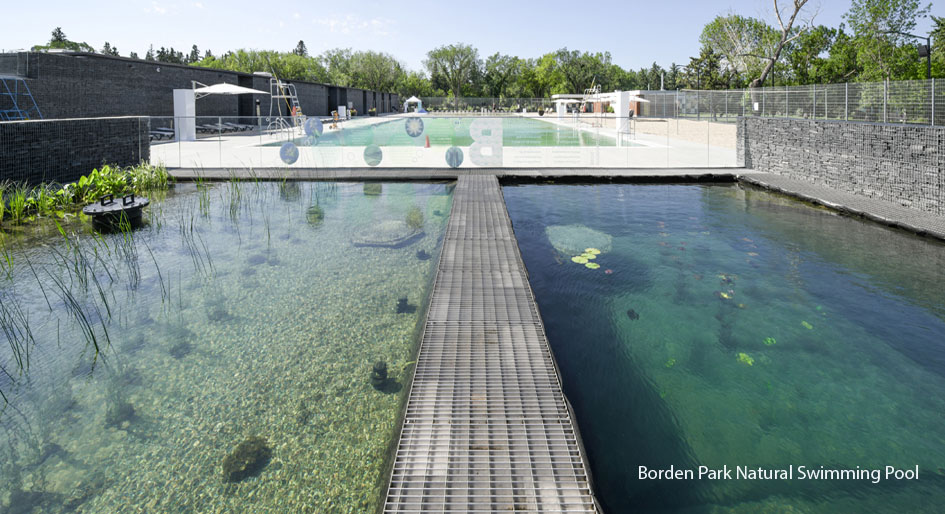
Natural Swimming Pool


The pool in Borden Park, Edmonton is an Innovation in Architecture award medal recipient. Designed by gh3, the pool is the first chemical-free public outdoor pool in Canada. The design process involved developing a pool technology that cleanses water through stone, gravel, sand, and botanic filtering processes.

Architect Brent Bellamy of Number TEN Architectural Group based in Winnipeg is the recipient of the 2019 Advocate for Architecture award. The award celebrates an individual who has made a public contribution to architecture in Canada by means other than the practice of architecture. It recognizes a long-term commitment to the profession at a national, regional or local level.

Bellamy has become a leading advocate for sustainable city building and human-focused design through public speaking, teaching, mentoring, writing, and conventional and social media. Since 2010, Brent has contributed a regular column to the Winnipeg Free Press, and his political engagement has brought opportunities to influence public policy.

NRC reveals ENERGY STAR Canada award winners

Natural Resources Canada (NRCan) announced its 2019 ENERGY STAR Canada Participant Award winners, spotlighting 20 organizations that have demonstrated excellence in practicing and promoting energy efficiency.

Winners of the ENERGY STAR for Products include:

  • Advocate of the Year: Canadian Coalition for Green Health Care (Branchton, ON)
  • Energy Efficiency Program Administrator of the Year: efficiency PEI (Charlottetown, PEI)
  • Manufacturer of the Year – Appliances: Samsung Electronics Canada (Mississauga, ON)
  • Manufacturer of the Year – Commercial: True Refrigeration Canada (O’Fallon, MO (USA))
  • Manufacturer of the Year – Electronics: Ricoh Canada Inc. (Mississauga, ON)
  • Manufacturer of the Year – Windows and Doors: Centennial Windows & Doors (London, ON)
  • Manufacturer of the Year – Heating and Cooling Equipment: Venmar Ventilation ULC (Drummondville, QC)
  • Manufacturer of the Year – Lighting: L’Image Home Products Inc. (Montreal, QC)
  • Promoter of the Year – ENERGY STAR Most Efficient: Daikin Industries, Ltd.(Markham, ON)
  • Promotional Campaign of the Year: Rheem (Brampton, ON)
  • Recruit of the Year: HP Canada (Mississauga, ON)
  • Recruit of the Year: Restaurants Canada (Toronto, ON)
  • Retailer of the Year – National: The Home Depot Canada (Toronto, ON)
  • Retailer of the Year – Regional: GEM Windows & Doors (Toronto, ON)
  • Special Recognition: Veritas Technologies LLC (Halifax, NS)
  • Sustained Excellence: Whirlpool Canada LP (Mississauga, ON)
  • Utility of the Year: Hydro One Networks Inc. (Toronto, ON)

The Canadian Coalition for Green Health Care received its Advocate of the Year nod for the group’s role in facilitating the adoption of ENERGY STAR qualified products within Canada’s health services sector. Executive director Linda Varangu said the award serves as further motivation to continue improving energy efficiency within Canada’s healthcare sector through the use of more sustainable products and services, insisting, “We take very seriously our commitment to improving energy management practices within the sector and our advocacy of ENERGY STAR is a key component in promoting energy efficient and climate change resilient health facilities.”

Several of Canada’s residential builders were recognized in the ENERGY STAR for New Homes category. They included BC’s Naikoon Contracting Ltd. (small), Ontario’s Doug Tarry Homes (mid-sized), and Ontario’s Activa (large), the latter of which also received the award for New Homes Promotional Excellence award.

“Energy efficiency in our homes and buildings helps Canadians save money, creates jobs, reduces pollution and contributes to our clean energy future,” said the Honourable Amarjeet Sohi, Canada’s Minister of Natural Resources. “I am proud to recognize these organizations for their leadership in improving energy efficiency in Canada. Investing in the energy efficiency of our homes and buildings is one of the easiest ways to combat climate change while delivering concrete social and economic benefits to Canadians.

Canada shines during 2019 International Day of Light

May 16, 2019, marked the 2019 International Day of Light, a global event generating awareness and appreciation for light and light-based technologies, and the role they play across all facets of life.

“From the birth of the universe to the creation of all kinds of new technologies, from X-rays to radio waves, in fields as diverse as medicine, agriculture, energy, optics, and countless others, light has shaped – and continues to shape – our world,” said Audrey Azoulay, Director-General of UNESCO. “By understanding light, we are able to achieve the greatest of scientific and technological progress.”

The event is organized by the United Nations Educational, Scientific and Cultural Organization (UNESCO) in partnership with lighting groups, companies, and academic partners across the world. It was inspired by UNESCO’s 2015 International Year of Light and Light-based Technologies, which saw more than 13,000 activities organized across 147 countries.

“An International Day of Light will provide an enduring follow-up to the International Year of light in raising the profile of science and technology, stimulating education, and improving the quality of life worldwide,” UNESCO declared.

2019’s International Day of Light included 200 events across 54 countries, which took place on and around May 16. Canadian highlights included:

  • Light Fantastic: An educational event for primary and high school children emphasizing the importance and far-reaching effects of laser invention (Burnaby, BC).
  • The Optical Terrace: A public outreach event created to generate interest and excitement of photonics to the general public (Montreal, Quebec).
  • “Light Sprang Forth 2”: An online exhibit celebrating International Light Day through an artistic lens (Victoria, BC).
  • Blue Skies, Red Sunsets, and Polarized Light: A polarized lighting education program for elementary students (Kitchener, Ontario).
  • Passive Silicon Photonics Fabrication Training 2019: A hands-on training program at the University of British Columbia focusing on the design, fabrication, and test of (photonic integrated circuits) PICs.

See a full list of worldwide events.

New Brunswick issues RFP for iconic Centennial Building

The Government of New Brunswick has issued a request for proposal (RFP) for Fredericton’s Centennial Building with the intent to ink a new chapter for the historic facility.

The RFP follows a fall 2018 announcement that the NB Government would be redeveloping the property as part of its plans to address the provincial deficit. At the time, funding had not yet been allocated.

“Our government has been discussing a number of possibilities for this property, and moving to a request for proposals will give us additional ideas to consider from the private sector,” said Transportation and Infrastructure Minister Bill Oliver in his latest release. “We understand that the development of this property is important to downtown Fredericton, and we think it is in the best interest of New Brunswick taxpayers and the City to consider all options, including those that would not involve taxpayer dollars.”

The RFP was issued from a newly established interdepartmental steering committee. It will evaluate submissions based on several factors, including:

  • Highest bid and best use of property
  • No inclusion of public money or risk to provincial taxpayers
  • New Brunswick content
  • Open and transparent process
  • A requirement to develop the property, not leave “as is”

The RFP also includes considerations for artwork within the building, and plans for the province to retain ownership to ensure its accessibility to the public.

“While the goal is to determine the best possible option for the Centennial Building, we will have to consider all possibilities before we would move forward with any potential sale,” said Oliver.

B.C. funding for new school in Coquitlam

The Government of B.C. is providing $67.6 million to build a new, 430-seat elementary school on Sheffield Avenue in Burke Mountain for Coquitlam students.

“The new Sheffield Avenue elementary school and 390 additional spaces at three other Coquitlam schools are part of our government’s work to deliver better education for every student in B.C.,” said Premier John Horgan. “These new student seats will help provide the positive, engaging and inspiring environments children need to have the best learning experience possible.”

Funding will also go to expansions at the following schools:

  • Dr. Charles Best Secondary, $8.4 million, 150 new seats
  • Panorama Heights Elementary, $6.2 million, 90 new seats
  • Westwood Elementary, $5.7 million, 150 new seats

The Coquitlam School District is providing an additional $5 million toward the cost of the new Burke Mountain school, which has a total budget of $52.3 million and is expected to be open in 2021. The Westwood Elementary expansion will be complete in 2020, while Panorama Heights’ and Dr. Charles Best Secondary’s expansions are expected to be complete in 2021.

“Enrolment has grown in Coquitlam since 2007, but only one new elementary school was built in the last decade,” said Rob Fleming, Minister of Education. “When students are in modern classrooms, not portables, they are more successfully engaged with their studies.”

Currently, nearly 110 portables are in use throughout Coquitlam, and just one new elementary school was built in over a decade. These projects will go a long way in giving students classroom space they need to make full use of the new curriculum so they can be better prepared for life in B.C.’s growing, sustainable economy.

In the past two years, government has made record investments in education, including $472 million for new student seats, which eliminate the equivalent of over 300 portables throughout British Columbia. Budget 2019 includes a record $2.7 billion for school capital investments to continue this momentum.

A look at 2019 residential tile trends

2019 is proving to be an exciting year of emerging lifestyle ideas for tile trends. Mindfulness of place seems to be a leading thought that creates new and exciting environments. The focus of attention to detail on smaller projects like powder rooms, laundry rooms and kitchen backsplashes are a way to really make a statement in a home.

Having a welcoming environment is a big desire – mixed patterns and textures you can feel and see visually have been popular to achieve this. 3D effects for tile and combining a matte finish with a polished, shiny finish also are on the rise.

We continue to see layering of different patterns that include many Art Deco influences. Florals, botanicals and all things green seem to be having their moment. Curves and organic movement are back. A mix of warm metals with hints of black is on the rise as well as any material with a handmade feel. Large format tiles are not going anywhere, the bigger the better. Our company is carrying porcelain slabs five foot by ten foot.

The trend towards edited and organized spaces is at an all-time high, all tied into wellness and how to have an impact on a person’s long-term happiness. The goal is to create a calming and inspiring atmosphere with a hint of whimsy. White and grey looks continue to be strong. Marble looks with mixed patterns and muddy new pink and taupe undertones are at the height of fashion. A cloudy or muted look with movement is also emerging.

tile trends 2019

OUTDOOR SPACE

Interiors, melding with outdoor space to create an extended space and lifestyle environment, continue to be a leading focus on new home plans as well as renovations. With the increased offering of 2 cm thick porcelain tile pavers, you can use the same series or tile flowing indoors to out. The 2 cm thick pavers can be placed on pedestals, which allow for lighting, wiring and gas lines to run seamlessly underneath and are easy to access.

ENVIRONMENTLY FRIENDLY

Consumers want to be environmentally responsible and tile is a perfect choice. Porcelain tile does not retain any antigens, allergens or dust. The fact that porcelain does not host mold or mildew is a big factor in outdoor patio use. Decreasing waste and using products that have longevity make sense. Material that optimizes air quality is a high priority.

Tile has no VOC’s (Volatile Organic Compounds) which can be harmful to animals and humans over a long time of exposure. Over the next decade there will likely be more changes in the housing industry than ever before to regulate issues like VOCs. Also, by the year 2030 one in four Canadians will be over the age of 65 – designers and home builders are going to have to rise to the challenge of accommodating this aging population.

ACCESSIBILITY

We are seeing an increase in barrier free showers and bathrooms. Tile can run the entire bathroom with no barriers and using a line drain water can be sloped to this long drain. Wheelchairs or other aided equipment easily can move back and forth. Tiling entire walls in bathrooms and kitchens is a trend for practicality as well as a way for kitchen designs to have less cabinetry on upper walls and can really personalize a space and be easy to clean.

Porcelain tile is nonporous and water resistant, therefore it does not require sealing (note that the grout still requires sealant). With its durability and ease of cleaning maintenance (simple vacuum, broom and water) porcelain is a responsible choice.

HEATED FLOORS

Heated floors are another wonderful luxury that can be added to the tile experience. Cables running under the tile to create warmth can’t be beat. Wi-Fi enabled thermostats are even available to remotely control floor heating through smartphones from anywhere!


Lorie Grant is director of A&D at Ames Tile & Stone. She has been in the design industry for more than 20 years. Ames is an exclusive dealer of the Diesel Living branded tile from Iris Ceramica with four exclusive lines that reflect the trend forward metals and industrial textures.


TSSA gives residents fuel safety tips

With the recent onset of spring’s unprecedented rainfall across various regions in Ontario, the province’s fuels-safety regulator, Technical Standards and Safety Authority (TSSA), is advising residents and facility/property managers of important fuel-related safety tips as they work to recover from devastating flooding.

With key energy infrastructure temporarily out of commission and persistently cool and wet temperatures, many residents may be tempted to use portable fuel-fired generators or camp heaters to heat their homes or garages, as well as propane BBQs and stoves for cooking indoors.

Why is it critical to address fuel safety during flooding? 

During emergency situations such as floods, ice storms, and power outages, the public may encounter or create unintended hazards. For example, a flooded basement can create an electrical shock hazard.  Flooded fuel-fired equipment may also not function properly, which can create leaks, carbon monoxide exposure, or electrical issues.

During flooding, fuel tanks can float if not anchored in place. This creates the potential for fire and explosion, but also environmental issues if a fuel oil tank floats and tips, breaking fuel lines and releasing fuel into the environment.

“These dangers apply to both homeowners and property/facility managers, as apartment basements or mechanical rooms can also become flooded,” says John Marshall, director of fuels safety, TSSA.

Ways to stay “fuels safe”

  • Never use a fuel-fired generator, heater, camp stove, lantern or BBQ inside your home or in an enclosed space such as a garage – these are designed for outdoor use only. Open doors, windows or fans will never provide enough ventilation to prevent CO gas from rising to toxic levels.
  • When using a generator outside, as intended, ensure it is situated away from any open windows, doors, and vents of your house, garage or cottage – CO gas can even accumulate in a carport or covered patio.
  • Make sure you fully understand and follow the proper operating procedures before starting your generator follow the manufacturer’s maintenance and repair guidelines.
  • Always allow the generator to cool before attempting to refuel it to avoid risks of potential fires from gas splashing on hot components.
  • Consider using a battery-powered CO detector in the area where you’re operating your generator.
  • If drying out your basement with commercial ventilating fans, you must vent any fuel-burning appliances and equipment, including furnaces and water heaters, to the outside.  Ventilating fans can create a “negative” pressure environment, which can cause CO to spill back into the home.
  • As always, carbon monoxide alarms are required in all homes with a fuel-burning appliance or an attached garage. At a minimum, install a certified CO alarm adjacent to each sleeping area.

“It’s important to ensure that all fuel-fired equipment is properly inspected and maintained by TSSA-certified technicians and registered contractors,” Marshall adds.

To find one near you, Marshall suggests visiting the TSSA’s website and select “Find a registered fuels contractor.”

Residents unsure of any conditions that may affect their fuel-fired appliances should consult a professional TSSA fuels-certified technician. To determine if a technician is certified, ask to see a certificate number or contact TSSA at 1-877-682-8772 for verification. TSSA also encourages everyone to visit www.safetyinfo.ca for safety tips and information about all the areas TSSA regulates, including fuels.

World’s first brain protection hard hat launch

Swedish safety helmet firm MIPS has partnered with industrial safety firm Guardio to create the world’s first hard hat that offers a brain protection system.

By partnering with MIPS to create the Armet helmet, Guardio is poised to build a safer environment for workers around the world.

According to the Centers for Disease Control and Prevention, “the construction industry has the greatest number of both fatal and nonfatal traumatic brain injuries (TBIs) among U.S. workplaces.” It further states that from 2003 – 2010, 25 per cent of all construction fatalities were caused by a TBI.

The MIPS brain protection system is designed to reduce the rotational motion transmitted to the brain from angled impacts to the head. Rotational motion can affect the brain and increase the risk for minor and severe brain injuries. MIPS’ added protection system has been proven to reduce the rotational motion when implemented in a helmet by absorbing and redirecting energies and forces otherwise transmitted to the brain.

“We are very excited about the partnership with Guardio which means that we now can add protection to safety helmets as well,” says Max Strandwitz, CEO of MIPS.

“This is a new category for us but a category that MIPS have been looking at for a long time. Guardio is a partner that shares our values and we are looking forward to when the helmet will be released on the market.”

The Guardio Armet MIPS helmet will be available starting in June 2019.

Energy efficiency leaders enrich New Brunswick

Six newly named recipients of New Brunswick’s 2019 Energy Efficiency Excellence Awards include early adopters of energy and water-saving technology, long-time conservation advocates and service providers steering clients to power and cost savings. The honours were bestowed in conjunction with NB Power’s annual energy efficiency conference, held in Moncton last week.

“We are pleased to recognize the best of this province’s energy efficiency leaders and highlight the tremendous work they are doing,” affirms Gaëtan Thomas, president and chief executive officer of NB Power.

This year’s winners demonstrate how energy efficiency can support business strategy and consumers’ quality of life. The Innovation Award winner, ski resort operator, Crabbe Mountain, achieved both objectives through technology that injects a biodegradable corn by-product into the water used for making snow. The resulting increased volume of snow resulted in four million gallons in water savings and a 98-megawatt-hour (MWh) electricity saving attributable to reduced operation of energy-intensive pumps and compressors, while also extending the ski season, as ski runs could open earlier and better withstand milder temperatures.

Education Award winner, EOS Eco Energy Inc., literally delivers energy efficiency in a party setting. Draft-proofing work parties are part of the Sackville-based community organization’s portfolio of programs, offering up a certified energy advisor to facilitate the three-hour instructional and hands-on events. EOS Eco Energy supplies the materials to draft-proof the host venue and, equally importantly, teach homeowners and their guests how to do it.

Tobique First Nation, the Community Award recipient, has integrated energy efficiency and green energy into its economic development and future growth strategy. The award recognizes the implementation of a community energy plan underpinning the goal of total reliance on renewable power by 2050. That includes plans for solar and wind generation to replace diesel-fired power supply, and a complementary focus on energy-efficient housing through retrofits and energy-efficient new construction.

The Conservation Council of New Brunswick received the Legacy Award in acknowledgement of 50 years of advocacy for environmental protection. That’s recently been channelled into the Climate and Energy Solutions program, an initiative to inform New Brunswickers about the repercussions of an increasingly volatile climate and the opportunities the low-carbon economy presents.

Renewable energy developer, Naveco Power Inc., and energy service provider, MCW Maricor, rounded out the slate of award winners. Naveco Power received the Rising Star Award, which recognizes newcomer companies or individuals younger than 30. MCW Maricor received the Partnership Award for its work with NB Power in delivering energy efficiency programs.

Alberta residents to benefit from Housing for Health initiative

At a press conference in Edmonton, key government representatives were on hand to announce that the Public Health Agency of Canada (PHAC) is investing $4.4 million over a five year period to support the University of Alberta’s Housing for Health project.

The University of Alberta will partner with the Christensen Group of Companies, an Alberta-based real estate developer, and many other organizations to incorporate active design features into two new residential buildings and surrounding neighbourhoods in Edmonton and Whitecourt.

“The neighbourhoods where we live, learn, work and play are an important foundation for healthy living,” said Hon. Amarjeet Sohi, Minister of Natural Resources. “Investing in the University of Alberta’s Housing for Health initiative is just one of the ways the Government of Canada is working with partners on innovative projects to encourage healthy living and to help prevent chronic diseases by addressing common risk factors. By working with developers at the design stage, we have a great opportunity to support built environment projects that can have positive long-term impacts on the health and well-being of Canadians.”

As research has shown, designing communities that encourage regular physical activity and make healthy eating the easier option can improve overall health and help prevent chronic diseases like type 2 diabetes, heart disease, and some cancers. It can also help people remain more independent as they age in their communities.

The Housing for Health project aims to design buildings and communities in a way that encourages physical activity, healthy eating and a sense of community belonging. Community design features may include the creation of green spaces and paths around the housing developments to encourage walking, biking and playing. Gardens may also be created to promote physical activity outdoors, access to healthy foods, and community engagement. In addition, the project will provide residents with health promotion programming.

“Cities and communities can be designed and built to set people up for success so that healthy choices are the easier choices,”  said Dr. Theresa Tam Chief Public Health Officer of Canada. “The University of Alberta’s Housing for Health project is an example of how we can address chronic disease risk factors, like sedentary behaviour and unhealthy eating, by designing communities and neighbourhoods to serve as a foundation for healthy living.”

Throughout the initiative, the communities and key stakeholders—such as developers, planners, transportation and housing organizations and academia—will be engaged in the planning and implementation of active design features. PHAC’s investment in the project will support community engagement strategies and bring together multi-sectoral stakeholders to help incorporate active design features into the housing site designs.


Prevent pests from populating your property

Whether it is a single pest or a full-blown infestation, pest sightings should never occur on your property. Most facilities offer plenty of food, water, and shelter that attracts pests and sustains them, making commercial properties the perfect place for pests to settle down. While pest pressures will vary between facilities, implementing a consistent pest control program is essential to prevent pests from infiltrating your business.

Popular Pests
No matter the time of year, pests are professionals at making their way into your facility, seeking shelter from the elements in colder months and places to breed in warm seasons. These unwanted visitors not only can cause structural damage but also can prove to be health risks to employees and customers alike. Common pests to keep an eye on around your facility include:

  • Cockroaches – If you find droppings that look like pepper flakes, especially in cupboards and cabinets, these sneaky pests may be in close proximity.
  • Ants and Flies – These pests can find their way into your building through unscreened windows, open doors and the tiniest cracks or crevices. If you spot them, be sure to act quickly to prevent an infestation.
  • Rodents – Droppings, gnaw marks or chewed electrical wires can all be indicators of a potential rodent problem in your facility.
  • Bed Bugs – While bed bugs may not seem like your typical office pest, they can be brought into your facility by anyone and can easily hide in office furniture.

Potential Pest Hotspots
Unfortunately for your facility, pests are masters when it comes to breaking and entering. In addition to using open windows, doors, cracks, and crevices to sneak their way inside, pests can be quite inventive when finding their way inside your space. When inspecting your facility for pest activity, make sure to check each of the following areas to ensure your facility isn’t unintentionally attracting pests.

Outside

  • Landscaping – Fruit-bearing trees, sweet-smelling flowers, nuts, and seeds are attractive to insects, birds, and rodents, as they provide food and potential nesting sites. Bushy shrubs, thick vines, and other heavy vegetation can also provide shelter for pests.
  • Rooftop – Often overlooked, roofs are a common entry point for both birds and roof rats. Check the airflow of HVAC units to ensure insects are not being pulled into your facility and inspect any rooftop vents that could be potential entryways for curious pests.
  • Trash – Dumpsters, trash cans, and other waste disposal areas are a haven for pests if not maintained properly.
  • Low spots – Standing water in parking lots, adjacent properties and low spots can attract pests. Other areas to check for pest activity include ditches, soggy flower beds, catch basins and even soggy soil.
  • Lighting – While it may not be the first thing that comes to mind when you think of pest protection, lighting can attract bugs. So, place light fixtures with soft, yellow lights away from the building, with their light shining on the building façade. Avoid bright white lights that tend to attract insects.

Inside

  • Floor drains – Drains not only can be a sanitation issue but also can act as a possible breeding source and entry point for pests like small flies, drain flies and American and oriental cockroaches. The buildup of debris and other organic materials can attract pests like small flies to the drains in your facility.
  • Storage areas – Areas that are hard to reach or are not regularly inspected by employees, such as voids, dead-end spaces and flat ledges above head level, can become major hotspots for pests to hide and thrive. Storage areas are prime examples since they don’t undergo regular cleanings.
  • Break rooms – The smallest crumb can be a meal for pests. Pests are counting on your employees to be messy eaters, so encourage team members to clean up any area where food is being consumed. Also be sure to clean behind vending machines, as these areas easily accumulate dirt, crumbs and other debris.

Keeping Pests Out
Once pests have managed to settle down in your facility, it can be difficult to kick them to the curb. That’s why it is so important to have a preventive pest control program in place to proactively stop pests from claiming your space.

Scheduling a pest control audit is the first step to pest prevention. Your pest control provider can help pinpoint potential pest hotspots in your building and help create a plan that works best for your property.

Implementing a consistent facility maintenance schedule is the next step to keeping pests at bay. Routinely cleaning your facility ensures that potential pest attractors, like food and clutter, are removed from the premises.

Finally, establish exclusion techniques to keep pests where they belong – on the outside. Exclusion strategies can be used to fortify your facility and stop unwanted visitors from coming inside. Effective exclusion strategies include:

  • Door sweeps/seals – Gaps under doors are inviting pathways for pests. Door sweeps contain thousands of dense nylon bristles that ensure smaller pests like rats and cockroaches are barred from entry.
  • Air curtains – Mounted in doorways and windows, air curtains use high-speed fans to create a powerful wall of air that proves a daunting challenge for flying insects.
  • Water-resistant sealant – Cracks along floors, walls, baseboards and ceilings can be hard to spot – but if they exist, pests will find them. Weather resistant caulking keeps these crevices sealed.
  • Rodent bait stations – When baited with appropriately approved and labeled baits and placed around the exterior of the facility, rodent bait stations help control rat and mice populations. Anchored, tamper-proof bait stations protect bait from accidental exposure to other animals or humans.
  • Insect Lights Traps (ILTS) – These devices are strategically placed in the interior of the facility and use ultraviolet light to attract flying insects to a non-toxic sticky board inside a confined trap unit.

Implementing a proactive, preventive pest control plan is essential to keeping unwanted visitors at bay and can save you from a pest-provoked headache in the long run. If you have a pest problem in your facility, contact your local pest control specialist to create an Integrated Pest Management (IPM) program that works best for your workplace and stops pests from eating away at your business.

Alice Sinia, Ph.D. is quality assurance manager – regulatory/lab services for Orkin Canada focusing on government regulations pertaining to the pest control industry. With more than 20 years of experience, she manages the quality assurance laboratory for Orkin Canada and performs analytical entomology as well as provides technical support in pest/insect identification to branch offices and clients. For more information, email Alice Sinia at [email protected]. 

Record hotel performance to drive new construction

According to CBRE Canadian Hotels 2019 Outlook report, new supply of hotel product will increase by two per cent in 2019, marking the highest single year of supply growth in the Canadian hotel market since the financial crisis of 2008.

“Canadian hotel operating performance and investment metrics have never been stronger, and all indications point to investment volume matching if not exceeding historical averages in 2019,” said Bill Stone, executive vice-president, CBRE Hotels in the firm’s press release.

Stone explained that the only factors that cause significant shifts in the hotel market are either geopolitical events — such as 9/11 and the global financial crisis — or the delivery of new hotel supply.

Driven by owners who are flush with capital pursuing new-build development opportunities in the suburbs of Canada’s largest cities, where land acquisition and development costs remain reasonable new supply will shift to smaller cities in 2019. CBRE further predicts that hotel investment volume will exceed last year’s total of $1.5 billion, and surpass the 10-year average of $1.8 billion.

Other report highlights include:

  • RevPAR, the hotel industry’s key metric of revenue per available room, is projected to grow four per cent this year.
  • Mixed-use commercial projects with a hotel component should continue to draw attention from a variety of investors beyond traditional hotel owners and developers. Notable new projects include Four Seasons Hotel Montreal (which opened May 2019) and Riu Plaza Hotel Toronto (slated to open in 2021).
  • Central Canada will lead the Canadian hotel market in 2019. The region accounted for over 60 per cent of total hotel transaction volume in 2018 — with Ontario representing 69 per cent of the deals in the region ($641 million) and Quebec following at 31 per cent ($293 million).

“The hotel industry in Canada is performing at all-time highs, with record occupancy, average daily rates, and RevPAR, as well as bottom-line performance,” added David Larone, senior managing director, CBRE Hotels in the press release. “Our hotels are full, and we are in good shape to continue to grow top and bottom lines in 2019.”

Visit https://researchgateway.cbre.com/Layouts/GKCSearch/DownLoadPublicUrl.ashx to download the report.