Articles Archive - Page 469 of 928 - REMINET
REMI

TASCHEN library opens at Fairmont Pacific Rim

Located on the second floor of Fairmont Pacific Rim in Vancouver, the new TASCHEN Library is an artistic collaboration that is one of only two retail locations in Canada completely dedicated to the art book publisher.

The new library offers a full catalogue of TASCHEN titles, with more than 275 books available, ranging from TASCHEN’s approachable artist monographs to their prestigious limited and signed Collector’s Editions.

With floor-to-ceiling bookshelves, guests can browse and shop TASCHEN’s diverse portfolio of eye-catching books that celebrate innovation and cultural creativity, including best-selling titles covering pop culture, fashion, music, contemporary art, photography, travel, and gastronomy.

“The addition of the TASCHEN Library highlights the hotel’s commitment to artistic partnerships in all forms while introducing another world-class brand to Vancouver,” comments Jens Moesker, regional vice president and general manager, Fairmont Pacific Rim.

The TASCHEN Library will be open daily from 10:00am-6:30pm (12:00pm-5:00pm on weekends) with a team of retail experts on-hand to guide guests through the library and find the perfect coffee table book or souvenir to bring home. Those traveling internationally can opt to have their purchases shipped to their home.

“TASCHEN is pleased to partner in this creative collaboration with the Fairmont Pacific Rim and looks forward to enhancing our presence in the great city of Vancouver,” says TASCHEN director, Creed Poulson.

New agreement advocates for Skytrain to UBC

The City of Vancouver, the University of British Columbia and the Musqueam, Squamish, and Tsleil-Waututh Development Corporation have signed an agreement to help extend TransLink’s SkyTrain light-rail transit network all the way to UBC’s local campus.

The unique partnership was struck late last year via a Memorandum of Understanding. The three organizations committed to jointly advocate for federal, provincial, and regional support and funding for the extension of the Broadway Millennium Line beyond the currently planned terminus at Arbutus St.

It’s the first MOU in Canada that brings together an academic institution, a First Nations development corporation, and a municipality to seek investment in major transit infrastructure.

“This agreement sets a new example for how city-building in the 21st Century should work,” said Mayor Kennedy Stewart. “Building SkyTrain all the way to UBC is a regional priority that will not only help connect academic and health sciences along Broadway with the rest of Metro, it will put Reconciliation into practice as we work in partnership with the MST Development Corporation.”

The three organizations are united in the pursuit of SkyTrain to UBC for its potential to achieve their shared aspirations of improved transit in the region, more affordable housing, better post-secondary accessibility, increased economic growth, and reduced GHG emissions.

The daytime population of UBC exceeds 80,000 people. It is the third largest employment centre in all of BC. Of the 55,000 UBC students, faculty, and staff who live off campus, about half of them pass through Vancouver on their way to work or school from other municipalities.


Technology meets tradition

As the original inhabitants of the place that today we call British Columbia (B.C.), First Nations are the holders of thousands of years of traditional knowledge about these lands. Although there is no universally accepted definition of traditional knowledge, the Assembly of First Nations says it is commonly understood as “the collective knowledge of traditions used by Indigenous groups to sustain and adapt themselves to their environment over time.” This knowledge is deeply rooted in First Nations history and culture and is passed down through generations.

Today we often talk about sustainability as “meeting the needs of the present without compromising the ability of future generations to meet their own needs,” as it has been defined by the United Nationsʼ Report of the World Commission on Environment and Development. Increasingly, we are discovering the linkages between traditional knowledge and the call for more sustainable practices. Yet, to a large extent, the western world has been slow to incorporate this knowledge into natural management approaches. However, with the growing role of First Nations in the forest sector, the acknowledgement of rights and title, and the leadership of First Nations in land use planning, traditional knowledge is beginning to take its rightful place—assuming a larger role in the environmental conversation among industry, academia, and government.

Matt Wealick is a member of the Ts’elxwéyeqw Tribe near Chilliwack in B.C.’s Fraser Valley. Their territory is over 95,000 hectares and is “rich in Ts’elxwéyeqw cultural history, natural beauty, and resources.” Their mission is “to achieve strength, unity, and success by managing natural and cultural resources for the well-being of our people and our environment.”

Wealick’s family has a long history rooted in the forestlands of B.C. His father worked in forestry, which led him to northern Vancouver Island, where Wealick grew up—deep in the heart of the forest industry. After spending several years on logging crews and as a professional hockey player, he earned his bachelor of science in forestry, and later a master of arts in environment and management. Today he is a Registered Professional Forester.

But his formal training in traditional knowledge began not in university, but in 2002 when he started working with Lennard Joe, general manager of Stuwix Resources, a joint venture owned and operated by eight First Nations in B.C.’s Southern Interior. “It was an eye-opener for me. Up until that time, I hadn’t put a First Nations lens on forest management—it’s not something that we learned in university,” says Wealick. “Through Lennard and community members, I began to learn about the significance of honouring the forests through conducting ceremonies before logging; protecting fish, water, and plants that sustain our people to this day; and the spiritual and cultural values and history of the area.”

In 2004, when the Ts’elxwéyeqw Tribe received its first forest licence, Wealick knew it was time to come home. “Here I was, a professional forester, but I knew I had so much to learn about traditional knowledge and the history of my people,” says Wealick. He spent his first three months on the job going through archives, visiting sacred places, and speaking to community leaders, members, and Elders. “To truly achieve the goals of our people I had to develop a forest stewardship plan that went beyond the regulatory requirements and my university education. I needed to incorporate the Tribe’s values, like water, plants for food and medicine, wildlife, and important spiritual areas—these are things that aren’t legislated but are integral to the survival of our community and all living beings.”

technology

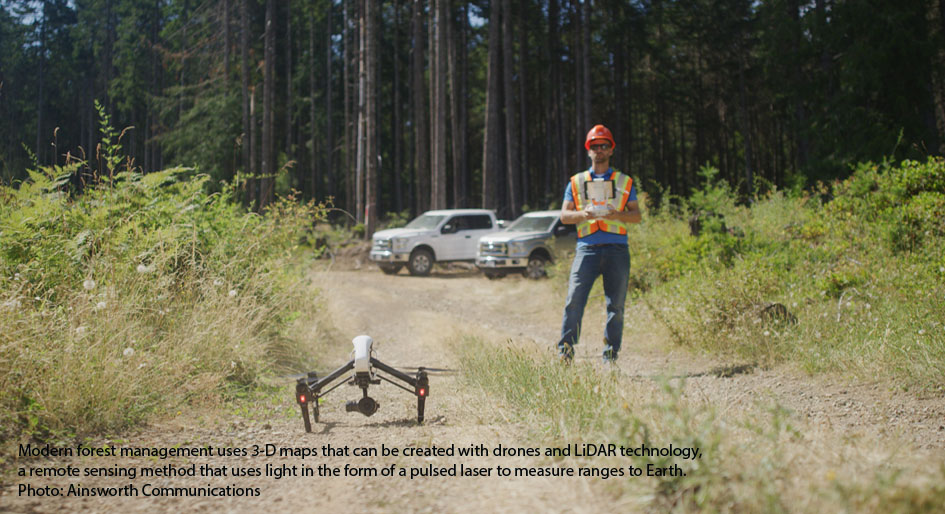
He has since developed a database for many of these values, and is using LiDAR—an aircraft-borne laser scanning tool—to capture much of the forest and plant data which will be modelled into future forest plans and shared with other forest companies operating in the territory.

There are a number of people and organizations who believe, like Wealick, that sharing traditional knowledge with non- Indigenous peoples—who make up 95 percent of B.C.’s population—is integral to sustainability. It’s also something that is on the mind of John Innes, the dean of the Faculty of Forestry at the University of British Columbia.

The university has launched Indigenous forestry initiatives that provide First Nations students with a specialization in community and Aboriginal forestry, but Innes believes more needs to be done to weave traditional knowledge into the forestry curriculum for all students. “When it comes to traditional knowledge, I don’t believe students in North America are getting the knowledge they need,” says Innes. “Our goal is to create a centre of excellence in traditional use and management, with at least half of the instructors being of First Nations descent.”

Forest companies also know that incorporating traditional knowledge is good for the environment, business, and relationships with First Nations. For example, one B.C. company has signed an agreement with the shíshálh Nation that includes a joint decision-making process to ensure that forestry operations uphold shíshálh laws and values. And Canada’s third-party forest certification systems are also embracing the use of and respect for traditional laws—with specific and auditable requirements for forest companies.

Governments are beginning to recognize traditional knowledge in legislation. The Species at Risk Act states that “the traditional knowledge of the aboriginal peoples of Canada should be considered in the assessment of which species may be at risk and in developing and implementing recovery measures.”

Managing our forests and ensuring a healthy planet and communities for generations to come is a goal we all share. Wealick believes it can be achieved by combining thousands of years of traditional knowledge with the professional training of land managers and the latest technology. Both Wealick and Innes agree that twenty years from now, First Nations values and traditional knowledge will be a keystone in natural resource management in B.C. “We have work to do, but we are headed in the right direction,” says Wealick.

Articles like this are featured in a newly released book, Naturally Wood, which showcases B.C.’s sustainable forest management, cutting‐edge wood architecture, design and technologies. The beautifully illustrated, 160-page publication contains more than 65 innovative wood buildings and projects.

Four continuing education units have been developed based on the book. They are recognized by the Architectural Institute of British Columbia and are available at naturallywood.com/naturally-wood-ceus.

Download the Naturally Wood e-book at naturallywood.com/nwbc.

Water damage restoration standard open for review

The Institute of Inspection, Cleaning and Restoration Certification announced that a revised draft of the BSR/IICRC S500 Standard for Professional Water Damage Restoration is now open for public review and comments from January 10 to February 24.

The standard provides a specific set of practical guidance for water damage restoration. It does not attempt to teach comprehensive water damage restoration procedures. Instead, it provides the foundation for basic principles of proper restoration practices.

BSR/IICRC S500 does not attempt to include exhaustive performance characteristics or standards for the manufacture or installation of structural components, materials and contents (personal property). The draft standard is available for review and comment as part of the ANSI 45-day public review period.

Download the revised draft standard and submit your comments online here: https://www.iicrc.org/page/SANSIIICRCS500. All comments must be submitted using the online comment form.

Condo prices predicted to rise in Montreal this year

The migration boom in Montreal will further propel residential sales and condo prices in 2020.

The Quebec Professional Association of Real Estate Brokers (QPAREB) recently looked back on 2019 and made some predictions for the future, stating the market will once again be the strongest in the province with condo prices possibly accelerating.

The average condo is predicted to reach $285,200. Last year, the average price was $267,900, an increase of five per cent compared to 2018. The same goes for single-family homes, which could go up six percent to $360,700.

Sales

Overall sales are expected reach a new high this year. Last year, a record 51,329 residential sales happened in Montreal, a 10 per cent increase compared to 2018. The condo market sold the most dwellings, with a 14 per cent increase.

High-end properties are also fetching strong demand, as condo sales above $1 million jumped by 33 per cent (221 transactions) and sales of single-family homes above $1.5 million increased by 12 per cent (368 transactions).

“In addition to registering record sales in 2019, selling times were down sharply and price increases were sustained,” said Charles Brant, economist and director of the QPAREB’s Market Analysis Department. “By property category, condominiums stood out most in terms of the number of transactions, but plexes registered the largest price growth.”

Many sales were also going above asking prices and commanding multiple offers. Tense market conditions now give sellers the upper hand in negotiations

“Condominiums are increasingly exposed to situations of multiple offers, with sales being concluded at a price higher than the asking price,” Brant noted. “This phenomenon has become increasingly prevalent in the large areas on the periphery of the Island of Montreal and has even become endemic in many neighbourhoods on the Island of Montreal.”

Mastercard set to open cyber centre in Vancouver

Mastercard has announced it will open a new Intelligence and Cyber Centre in Vancouver, Canada.

The Vancouver centre is being launched in partnership with the Government of Canada through its Strategic Innovation Fund, with an additional $510 million investment by Mastercard.

The new space in Vancouver will become one of six global technology centres for Mastercard and will develop cyber solutions for the payments ecosystem globally.

“Ensuring payments are both convenient and secure has always been a top priority for Mastercard,” said Ajay Banga, president and chief executive officer of Mastercard. “The Vancouver centre will help us meet the growing demand for technology solutions to reduce the cost of cyber-attacks, enable today’s connected devices to become tomorrow’s secure payment devices, and address the growing vulnerabilities associated with the Internet of Things.”

Mastercard’s new Intelligence and Cyber Centre will be based at The Exchange office tower on Howe Street, which includes Amazon.com Inc. among its tenants.

The Mastercard office will house Vancouver-founded cyber security firm NuData Security Inc., acquired in 2017. NuData currently works out of The Exchange tower.

The project is targeted to complete in June 30, 2024. Mastercard also has a Canadian headquarters in Toronto and global technology centres in New York, St. Louis, India, Dublin, and Sydney.

Announcing the inaugural REMI Summit 

Coming June 10th to the Metro Toronto Convention Centre, MediaEdge is proud to present a high-calibre forum, designed with input from prominent players in Canada’s property management industry. The one-day event will draw on globally-sourced presenters, well-vetted case studies, effective management strategies, and a host of game-changing new technologies to deliver critical insight into the real issues  commercial building owners and facility managers face today.

Delving into “essential learning” through panel discussions and organic networking opportunities, industry newcomers and veterans alike will have the opportunity to hear from and meet with frontline professionals who are responding to challenges, solving problems and driving innovation.

“The industry is changing fast. We need to be looking ahead at what’s next rather than maintaining the status quo,” observes Sandi Mileta Clancy, Vice President Property Management at Triovest Realty Advisors Inc. “What’s happening in other markets? What are some of the ideas driving the industry forward in Europe and the United States? Toronto is a sophisticated market, but we need to look outside ourselves in order to keep up with the pace of change.”

In addition to a global outlook, the REMI Summit committee is calling for “honest” and “accurate” case studies that reflect what didn’t work as much as what did. Neil Lacheur, Executive Vice President Real Estate Management Services Canada, Avison Young, and David Giddings, Director, Nationals Programs REM, Oxford Properties Group, both underscore the need for more agnostic learning opportunities. “Not everything we do goes according to plan despite our best intentions,” says Giddings. “These types of insights are invaluable.”

Frank Mazzone, Regional Manager, Real Estate, TFI International, adds: “Smart buildings, emerging tech, tools to help PMs be more successful at their jobs. Quality presentations that offer real value and help solve real problems—that’s what will resonate with attendees.”

Beyond the physical aspects of buildings, the REMI Summit will explore the needs of the people inside them. “Young professionals seek advice and mentorship, and welcome educational or information sessions that relate to their particular roles,” points out Janbee Monsod, Director, Property Management at Crown Property Management Inc. “A topic such as tenant retention continuously draws attention, as managers are always looking for different ideas for further enhancement.”

Professional development, staff recruitment, and service delivery also figure among concerns to be tackled.

“The sessions must be topical and focused on emerging trends,” advises Chris Crozier, Director, Property Management, GWL Reality Advisors Inc. “They should reflect what’s actually happening in our buildings. For example, what are the legal ramifications of allowing pets indoors? How are tenant needs changing, and are the features and services we’re currently offering still relevant to those needs?”

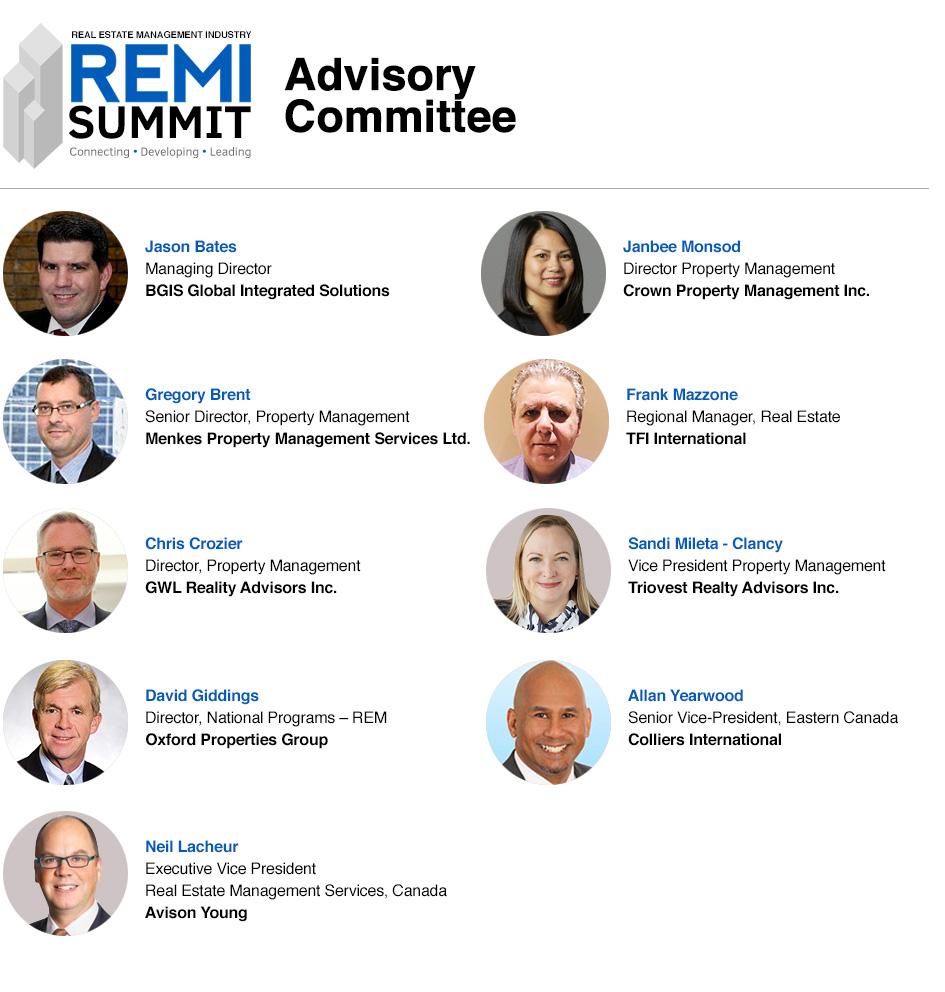
That all ties into the four cornerstones of property management. “Operations, Finance, Technology, Leadership—having individual tracks like these will give structure to the program,” reiterates Jason Bates, Managing Director at BGIS Global Integrated Solutions.

Held alongside ISSA Show Canada, REMI Summit counts on the support of notable industry associations and partners, to be confirmed. Ten per cent of registration revenues will be donated to Tree Canada.ca – a registered charity dedicated to greening communities and reforestation through the planting and nurturing of trees.

As the June 10th event fast-approaches, the committee will continue to consult on the education program with the broader goal of delivering a forum that provides real value to the commercial building industry.

Special thanks to our committee members for sharing their time and insight:


remi_advisory_committee_graphic_revised

Turnaround tales of value-add assets

Value-add assets are commercial real estate’s ugly ducklings, typically entering portfolios as less-than-glamorous acquisitions, but with the potential to catch the mainstream current and make a splash for investors. Prominent Canadian asset managers recently recounted their experiences in repositioning underperforming properties — including a shared example from two of the panellists’ portfolios — offering insight on turnaround logistics and the role value-add assets play in investment strategies.

Discussion moderator, Peter McFarlane, senior vice president with Fiera Real Estate, set the context with statistics showing the shrinking share of capital allocated to repositioning over the period from 2012 to 2017 as companies, funds and REITs shifted their focus more to core assets. In part, he suggested, that reflects a retrenchment after a pickup in activity immediately following the 2008 financial crisis.

“Value-add can be hard to keep rolling forward because a lot of it is in closed-end funds,” he told seminar attendees at The Buildings Show in Toronto.

“It’s an exercise that has a very, very targeted mandate,” concurred Angelo Di Palma, principal and portfolio manager with BentallGreenOak, defining himself as a niche player inside what’s chiefly a core management company. “It’s really designed to fix and then sell.”

Similarly, Theresa Warnaar, vice president, portfolio management, with KingSett Capital, confirmed that “value-add opportunities” are mostly channelled into the investment firm’s growth funds. In contrast, John Ballantyne, senior vice president, asset management, with RioCan REIT, connected his company’s repositioning efforts to a new direction for the portfolio that has seen it shed assets in the United States and smaller Canadian markets in favour of six large urban regions.

“Our business plan now is to add value to 225 properties,” he reported. “It’s really capitalizing on where there is density. What we are trying to do is not only grow value, but really create an atmosphere of live, work, play, eat, shop.”

Leveraging density for a mixed-use hub

The recently completed $300-million makeover of the Yonge Sheppard Centre is part of that strategy. Situated in a rapidly intensifying node of Toronto’s north Yonge Street corridor, the office-retail complex boasts connections to two Toronto transit subway lines amid a steadily growing population of local condominium dwellers requiring services and leisure attractions. Still more residential density is coming as construction nears completion on the 36-storey rental apartment tower RioCan is developing on the site.

Looking back to the acquisition, asset managers easily saw the nascent elements of a dynamic mixed-use hub, but had to squint a little around the reality. A swath of vacant retail spaces were barricaded behind an opaque, circa-1970s facade that could only be breached via subterranean or second-storey entrances. Other operational deficiencies abounded.

“It wasn’t pretty. You literally had a moat around the asset,” Ballantyne recalled. “The office buildings leaked like sieves. Water would come in; energy would go out.”

Today, it’s an outward-facing retail mall with an emphasis on food and lifestyle services, including a grocery store and fitness centre as anchor tenants. “We really touched every square inch of this shopping centre,” he said.

Adjusting the tenant mix — “Fashion is a killer,” Ballantyne asserted — was perhaps an easier aspect of the transformation. While inner city locations underpin the potential of value-add assets, a frenetic daytime pace and nearby population that wants to sleep at night create complications for scheduling some tasks and deliveries.

“It’s really tough to do the actual construction. You are going to be doing a lot of work at odd hours and it’s just going to take longer to get it done,” Ballantyne advised.

Reversing decline and diversifying tenancy

Turning to an office example, Warnaar outlined a dual-track process of stabilizing a building that had fallen behind on upkeep and priming it to compete for a new kind of tenant. In this case, the 250,000-square-foot, 22-storey tower in Ottawa’s central business district had enjoyed a long run on the federal government’s official accommodations list, but was in danger of losing its status.

With an ultimate goal of reducing dependency on government occupancy, the short-term priority, nevertheless, was to hold on to public service clientele. That took form in a $10-million capital injection to overhaul key building systems and update dowdy common areas, along with a new property management team tasked with improving strained relations with the tenancy.

“The capital spend was needed to stay on the government’s long-term accommodations list. If you’re not on the list, you don’t get the renewal,” Warnaar explained.

Yet, even without that pressure, she noted that prudent asset managers address deferred maintenance and explore retrofit opportunities as an inherent element of repositioning. There are often many low-cost upgrades that will serve investors well, particularly in older acquisitions.

“If you make your buildings run more efficiently, you can really find a lot of savings,” she reiterated.

Meanwhile, the government’s evolving workplace fit-up standards and associated reduction of its mandated space-per-person ratio served up another dilemma. Ottawa’s flourishing tech sector presents a lucrative source of demand expected to become increasingly important as the government’s office footprints shrink, but KingSett strategists concluded characteristically freewheeling tech personnel wouldn’t necessarily mesh with the Department of National Defence (DND) recruiting office at lobby level of the building. They made the seemingly paradoxical decision to terminate the DND tenancy when it came up for renewal.

“We had to get rid of the people we were trying to keep,” Warnaar reflected. “We’ve re-launched this property without having the DND office on the ground floor.”

Notably, of the three model suites KingSett introduced — one in accordance with the government’s workspace specifications; one targeting the tech sector; and one aimed at a general private sector audience — the tech space was the first to lease up.

Rightsizing to a competitive market position

Rightsizing has been central to the repositioning strategy for London, Ontario’s Westmount Shopping Centre — a process the previous asset manager, Bentall Kennedy (forerunner to BentallGreenOak), instigated before KingSett acquired the property in 2017. Both Di Palma and Warnaar characterize the now nearly 50-year-old enclosed mall as weak competition for the city’s regional malls, which include CF Masonville, ranked 14th in the Retail Council of Canada’s Top 30 most productive shopping centres with sales of $974 per square foot in the 12 months ending June 30, 2019.

“This was a case of too much (within London) built in the same asset class. It was too big for its market position,” said Di Palma, hearkening back to 2006 when Bentall took ownership. “On the bright side, it had some really strong anchor tenants. You had the makings of a strong community shopping centre even though it was dressed up to look like something bigger.”

Taking what he terms “a less-is-more approach”, the asset managers opted to demolish a 130,000-square-foot section of the mall. They moved all non-anchor retailers to the main level and began the process of converting vacated upper level units into office space. The latter strategy proved prescient given sometimes unforeseen retail sector upheaval during Bentall’s tenure.

“We were hoping Target was going to show up and be a good anchor tenant. It was there for about 10 minutes and then we were in another pickle,” Di Palma quipped.

After holding the property for approximately three years longer than the initially envisioned seven-year period, Bentall cashed out its gains. The new owner took on the ambitious task of filling two vacant two-storey anchor stores — formerly Target and Sears — sticking largely to the previously launched plan.

At roughly halfway through KingSett’s projected redevelopment timeline, a portion of that lower level space has now been leased to a fitness centre, while the upper level of the former Target space has been converted to office uses. Prior to leasing, facade upgrades and proactive fit-up of the new commercial space, including installation of a green living wall in the entrance lobby, were aimed at giving prospective tenants a tangible sense of the retail-to-office transformation.

“For them to actually walk through and see it, that was a game changer,” Warnaar maintained.

As of December, deals were in place for more than 26,000 square feet of that office space. On the ground floor retail level, the first vendors have arrived in a newly forged food court with expectations of an expanding customer base as the office space fills.

“We built on what Bentall had started in the upper level,” Warnaar said. “Bentall had reached the end of their investment horizon. It was the next owner’s (work) to do.”

Delivering on a realistic vision

For both owners, that work aligns with her advice for repositioning projects in general: “Be true to the vision you can deliver.”

“We didn’t think this would be a competitive mall in the London market,” she said. “The vision was that we wanted to fill a void. We worked with the team to find a way to market this to the community.”

And the construction, project management, property management and leasing teams that panellists typically turn to have an understanding of value-add assets. “You really need specialists in this area,” Di Palma submitted.

Repositioning is also a matter of re-establishing credibility. “Stigma is something that develops over a long time. It takes years to develop and you cannot fix that fast,” Di Palma asserted. “Until the community buys in, you’re going to be working hard to try to win them back.”

Missteps and/or unforeseen turmoil do occur. “You don’t know what you don’t know sometimes. Sometimes the market demographics outgrow your property,” Ballantyne mused.

However, there is a consistent starting point for a successful turnaround. “You have to be realistic in your underwriting. Don’t underestimate the cost and time you need,” Warnaar said. “If you’re underwriting something that’s unreasonable, you will never achieve the expectations.”

Barbara Carss is editor-in-chief of Canadian Property Management.

Calgary Central Library wins 2020 AIA Awards

The Calgary Central Library, designed by Snøhetta and Dialog, is a recipient of a 2020 Architecture Awards by the American Institute of Architects (AIA). The awards celebrate the best in contemporary architecture and highlight the many ways buildings and spaces can improve lives.

Completed in 2018, the library fits seamlessly into the complex urban condition surrounding it, boasting 75,000 square feet of entry plaza and outdoor amphitheater.

The library is wrapped in a striking triple-glazed façade composed of a modular, hexagonal pattern. Variations of the pattern are scattered across the building’s curved surface in alternating patterns of fritted glass and aluminum, giving rise to shapes that evoke familiar forms.

According to the jury, the project is a “thoughtful, integrated and exemplary design that artfully weaves together the collective vision and values of design, client, community and sustainability….a true reflection of Calgary as well as this AIA Honors Award.”

The nine-member jury selects submissions that demonstrate design achievement, including a sense of place, purpose, history, and environmental sustainability.

This year’s other recipients are:

  • Chhatrapati Shivaji International Airport Terminal 2 (Mumbai, India) by Skidmore, Owings & Merrill;
  • Ed Kaplan Family Institute for Innovation and Tech Entrepreneurship (Chicago, Illinois) by John Ronan Architects;
  • Floral Court (London, United Kingdom) by Kohn Pedersen Fox Associates;
  • Glenstone Museum (Potomac, Maryland) by Thomas Phifer and Partners;
  • Jishou Art Museum (Jishou, China) by Atelier FCJZ;
  • Minnesota State Capitol Restoration (St. Paul, Minnesota) by HGA; and
  • Tivoli Hjørnet (Copenhagen, Denmark) by Pei Cobb Freed & Partners.

Alberta allowing 12 storey wood buildings

Alberta will now allow wood-building construction for up to 12 storeys. While other jurisdictions in Canada, like British Columbia, currently allow for 12-storey wood construction, Alberta will become the first province in Canada to allow the practice provincewide.

“We made this change knowing that mass timber products are safe and that these buildings will meet all necessary standards,” said Minister of Municipal Affairs Kaycee Madu.

Current Alberta and national building codes allow wood-building construction for up to six storeys, but the next edition of the National Building will allow for the use of tall wood construction with fire-resistant material for up to 12 storeys.

The encapsulated mass-timber construction component of the 2020 National Building Code has already been reviewed by the National Building Code committees and fire-safety specialists, structural engineers, architects, scientists, and builders. The next edition is expected to be published at the end of 2020.

Alberta will issue a notice – based on technical provisions developed for the next edition of the National Building Code – to allow early use of tall wood or mass timber construction for up to 12 storeys using fire-resistant material in time for the upcoming construction season.

Advancements in fire-protection and wood-product technology are allowing for the construction of taller wood buildings without compromising safety.

The building codes will require tall wood buildings to be built as encapsulated mass timber construction, where the solid or engineered wood has been surrounded by fire-resistive material. Buildings of mass timber construction will also be fully sprinklered.

Taller buildings constructed with engineered wood exist in Vancouver, the United States and Europe.

Push to broaden pet-friendly parameters

Animal welfare advocates in the United States are funding research to explore the mutual benefits for people and pets when they live together. Sponsors of the newly launched Pet-Inclusive Housing Initiative point to results of a recently commissioned survey of renters and property managers to make the case that pets can be good for business in the multifamily market.

“We hope to bring the housing providers and the pet care community together so everyone can learn and benefit from this data,” says Steven Feldman, executive director of the Human Animal Bond Research Institute (HABRI), one the two non-profit organizations behind the venture.

The survey polled 500 property owners and managers and 1,049 renters, 749 of whom are currently pet owners. All groups provided relatively positive feedback on pets, with 93 per cent of property managers agreeing that pets are important members of a family and 86 per cent reporting they have a positive relationship with most renters who own pets.

That’s reflected in existing allowances. Responding landlords confirmed that 76 per cent of their rental units are classified as pet-friendly, but typically with some qualifications. Restrictions on dog breeds and size apply in half their units and limits on the total number of pets are in place for 28 per cent of the units.

Dogs are more widely accepted than cats, with 77 per cent of units permitting dogs versus 64 per cent permitting cats. A slight majority of pet owners — 51 per cent — were required to meet extra contractual conditions such as signing additional clauses and/or providing documentation of pet health records, training certificates or insurance.

Nearly a quarter of the surveyed tenants reported that they had moved, at some point, because of their pets. The average tenancy tenure of surveyed pet-friendly buildings was 4.6 years compared to 3.8 years in buildings where pets are not allowed.

Several renters reported unfulfilled inclinations for pet ownership. One third of surveyed residents of existing pet-friendly buildings said they would add to their menageries if limits on the number of pets were lifted; 35 per cent of surveyed residents where pets are disallowed said they would get a pet if the rules were changed.

“We know that we can use this research as the basis for a positive dialogue to increase the availability of pet-friendly rental housing to everyone’s benefit,” suggests Aimee Gilbreath, executive director of Michelson Found Animals Foundation, the other co-sponsor of the research initiative.

There’s no indication whether non-pet owners were asked if they had ever moved to avoid animals or if they would move in future if existing restrictions on pets were rescinded.

Keeping a condo’s meeting minutes professional

Property managers have challenging jobs. They are responsible for coordinating the maintenance of the building, supervising outside contractors for any major projects, keeping in close communication with the board of directors, and managing the daily issues that arise. With many irons in the fire, monthly board meetings can be an extensive amount of work to prepare for.

Since property managers are the ones who are most aware of all of the activity that is happening in the condo, it would seem natural for them to also keep the minutes of the board meeting. However, there are many reasons that the manager may not be the best person for the job.

Impartiality

When aspects of the property manager’s job are being questioned or challenged by board members, it can be difficult to keep impartial and professional minutes. However, it is essential for information to be conveyed without bias or emotion. It would be nice if every board of directors got along harmoniously and worked together, but this is not always the case. Residents need to know that they are getting the impartial truth and will not have to question what they are reading.

Professionalism

It is easy to get caught up in the “he said, she said” of board meetings. However, minutes from board meetings are not a transcript of every word that was said. In properly formatted minutes, things like decisions, approvals, and motions need to be included. Of course, there are things that need to be left on the cutting room floor (e.g., “he said, she said,” table fodder, personal opinions or preferences, etc.). It is also important that minutes are recorded in a proper format that makes the document easily readable, understandable, and consistent from month to month. As well, points need to be laid out clearly and succinctly to avoid reader misinterpretations. Property managers have tremendously demanding jobs. If they are responsible for taking the minutes, it’s possible that editing and formatting may take a back seat to other priorities that require more immediate attention. This, as well as other factors, can cause a delay in their completion and accuracy.

Active vs. passive participation

Robert’s Rules of Order is a parliamentary model for conducting board meetings which provides procedures and rules that permit a deliberative assembly to come up with efficient decisions. It is used by many types of organizations, including the United Nations. Robert’s rules suggest that minute takers are not to be active participants in the conversation.

Minutes that will stand up in court

Minutes are an official and legal record of a meeting. Having properly documented minutes is required under the Condominium Act. Unfortunately, there are times when minutes are required in the event of a lawsuit. No one wants their corporation to be liable because of minutes that were not taken properly. Clear and concise minutes will only help a corporation in the case of a potential lawsuit.

CMRAO Code of Ethics

The Condominium Management Regulatory Authority of Ontario (CMRAO) is a self-funded non-profit corporation that is accountable to the Ontario Ministry of Government and Consumer Services (MGCS). This corporation helps managers and management companies by providing protection in the increasingly popular condo market in Ontario. The Code of Ethics gives the rules that condo managers and management companies need to follow. One of the requirements covered by the Code attempts to prevent fraud, error, or conflict of interest. Having a manager or board member take the minutes can be a conflict of interest.

Sharing the responsibility

There are numerous reasons managers should avoid taking minutes. But who should take over? One option is to use a board secretary or another board member to record the minutes. Although it is not ideal, it is a better option than having it fall to the busy property manager. Another option is to consider a third-party professional to record the minutes for your meetings. This will ensure unbiased and honest records about the decisions the board is making. Moreover, using a minute-taking professional will give residents confidence and trust in their condominium board and manager. Whatever the decision, it’s important that minute-taking is done responsibly, both to ensure the integrity of the board and to keep residents content. After all, happy residents ultimately make the job of a property manager much easier.

Marko Lindhe and Noah Maislin, Founders of Minutes Solutions Inc. (minutessolutions.com)


Deal-making functions migrate to proptech

Proptech’s encroachment into traditional deal-making functions has caught the attention of 400 global commercial real estate (CRE) executives responding to Altus Group’s annual survey of the industry’s uptake of digital and data-based tools. They foresee technology-enabled multifamily co-living will be the most significant disruptor to the status quo within the next three years, while trends like office co-working, retail brandbox and industrial flex space cause upheaval in other property sectors.

On the flipside, survey interpreters suggest industry leaders — including approximately 40 Canadian participants — are generally optimistic about the gains in efficiency and deeper dive into the market that proptech can deliver. Insight is drawn from representatives of companies with at least USD $250 million in assets under management, amounting to more than USD $2 trillion in collective holdings across the survey base.

“Several of the most disruptive technologies as identified by CRE leaders — online transaction marketplaces, cryptocurrencies and social media apps — are platform and transaction-based and arguably disintermediary in nature with the intent of connecting processes and people,” the newly released Altus CRE Innovation Report observes. “Technologies viewed to have a high potential for significant cost savings and operational efficiencies are oriented around analytics and automation.”

Notably, only two per cent of CRE executives reported they had not used an online platform for a transaction or deal. Of these, online lending marketplaces were most popular — seeing take-up from 63 per cent of survey participants — while only 49 per cent of respondents used online property exchanges.

Respondents based in the United Kingdom are among the most prolific online deal-makers, while Canadians are generally less enthusiastic than their peers in other regions and slip below the global average in use of three of four types of online platforms. For example, one third of Canadian respondents have used online property exchanges versus 64 per cent of respondents from the UK; 43 per cent of Canadians have used online leasing marketplaces versus 68 per cent of respondents from the UK; 58 per cent of Canadians have used online lending marketplaces versus 80 per cent of UK participants.

Canadian respondents stand out more for their focus on data analytics — reporting fewer impediments related to fragmented data or lack of corporate buy-in than did their peers in other global regions. Even so, 45 per cent of Canadian respondents indicate that issues related to data accuracy are an impediment. Globally, data management challenges are seen to be increasing in step with a rapidly expanding sources of data, but Altus analysts also see signs the industry is committed to sorting through the issues.

“Despite the growing complexity stemming from the proliferation of data, the industry is clearly shifting from a stage of trial and testing to one of practical innovation to solve their current challenges,” maintains Bob Courteau, chief executive officer of Altus Group.

Survey respondents were also generally upbeat about how proptech melds with the CRE workforce — suggesting that jobs are shifting rather than disappearing. While a large majority expect some tasks and professional roles will be eliminated, they also predict new types of jobs will be created. More error-free work accomplished in less time should also free up resources for other kinds of higher-value projects.

Drilling down to commercial real estate’s various disciplines, automation is projected to benefit property management the most and make the least impact on investment and finance. Meanwhile, a practical application of automated valuation models (AVMs) is not expected just yet.

“Applying AVMs to commercial real estate is a challenge the industry is facing given the complexity and numerous variables involved in the valuation of commercial buildings. However, the appraisal industry continues to develop artificial intelligence/machine learning to automate and speed up processes such as reviewing leases and searching for sales comparables,” the report notes.

Tight market conditions persist in GTA

Despite rising supply in both primary and secondary GTA rental markets, tight market conditions persist according to the latest rental market survey from CMHC.

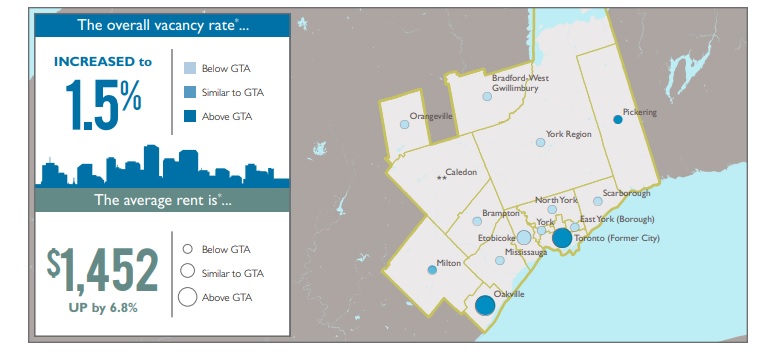
Driving the demand are millennials and newcomers to the city looking for temporary accommodations in favourable locales. Although some improved supply growth in the purpose-built rental market was achieved, the average apartment vacancy rate remained low at 1.5 per cent in 2019, up slightly from 1.2 per cent the previous year.

High homeownership costs coupled with tightened mortgage regulations have encouraged individuals to continue to seek, or remain in, rental accommodations. House prices continue to recover following unprecedented levels back in 2017, but remain elevated relative to previous years. Furthermore, prices of multiple-family dwellings (such as condominium apartments and townhouses), which are typically more popular among first-time homebuyers, have showed stronger price growth than other housing types over the past 12 months, thus pushing demand towards the rental market.

Average rents

According to CMHC, these tight rental market conditions allowed landlords to charge new tenants higher rents, and in turn, average rent growth in the GTA significantly exceeded the provincial guideline of 1.8 per cent for 2019. The average rents for the matched two-bedroom units on a year-to-year basis have been growing at an increasing rate. While this growth is predominantly driven by tight rental market conditions, a rising number of renovations may have also put some upward pressure on the average rents of existing units.

GTA 2019 graph CMHC

The number of newly completed purpose-built rentals (which typically charge higher rents) has also been increasing in recent years, which has contributed to the growth of average rents for the market as a whole. The turnover rate decreasing to 9.5 per cent in 2019 from 11.2 per cent in 2018 is indicative of existing renters remaining in their rental properties, likely influenced by the fact that recently the average asking rents charged for vacant units are about 25 per cent higher compared to that of occupied units in the Toronto market.

Key demographics

As stated, the primary sources of new demand for rental housing are newly formed households headed by younger age groups and migrants. As of October 2019, the population of individuals aged 25-44, a key demographic in the rental market, saw the strongest year-over-year growth in almost two decades at 4.9 per cent. This demographic cohort has also experienced significant year-over-year growth in full-time employment, which has enhanced their ability to enter the rental market.

Economic conditions in the GTA have been improving with broad-based employment growth across industries (particularly in the technology sector), rising average weekly earnings, and a low unemployment rate. These favourable economic conditions continue to draw immigrants and temporary workers to the GTA, which is helping to strengthen rental demand. Additionally, international students are on the rise, a cohort that has been growing faster in the GTA than other major Canadian metropolitan area.

Momentum in rental construction

Strong rental demand in recent years has resulted in increased construction of rental properties across the GTA. Rental apartment starts have increased over the past five years following a dearth in construction during the preceding decade, but continue to lag that of condominium apartments. Total rental apartment starts jumped by 6 per cent to reach 3,4356 units over the 12-month period ending June 30, 2019 (which is the cut-off point for the survey) while condominium apartment starts rose by 3 per cent to 22,124 units and continue to amount to less than a fifth of the total condominium apartment starts.

Rising rental starts activity has meant the pace of their completions has also risen – with a 25 per cent increase in rental apartment completions between the survey periods. A strong increase in rental apartment completions, along with conversions and units re-added after renovations, helped the total purpose-built rental universe to increase by nearly 1 per cent in 2019.

Reportedly, the Halton Region has recorded the highest growth in units at 4 per cent (about 590 units). Strong transportation networks such as the GO-Train service, which provide easy access to downtown Toronto, has made this region an attractive market for young renters.

Condominium apartment market

Tight rental market conditions in the primary rental market has extended to the secondary rental market, with the average condominium apartment vacancy rate edging up but remaining low from a historical standpoint at 0.8 per cent in 2019. The lack of purpose-built rental supply in the primary rental market has meant that the condominium apartment market has acted as the de-facto rental accommodation supplier for many years in the GTA. Data shows that the share of rented condominium apartments in 2019 amounted to a third of the total condominium apartment universe, and is indicative of persistent investor demand.

Meanwhile, the stock of rental condominium apartments has grown by 6 per cent in 2019 compared to a more restrained rate of 3 per cent during the previous year. These supply increases are due to a higher share of newly completed condominium units and previously owner-occupied condominium units being leased. Relatively low interest rates, low yields for some other investment asset classes and stronger growth in resale prices have discouraged investors from selling at completion. In addition, low vacancy rates and higher rent growth have encouraged both new and existing condominium apartment owners to lease out their properties either as a long-term investment or in anticipation of future price appreciation, which is consistent with tight market conditions prevailing in the resale condominium sector this year.

As supply struggled to keep up with the increasing rental demand, property owners have been able to charge higher rents from tenants. The matched-sample average rent for condominium apartments is nearly 13 per cent higher than the previous year, almost double the rate of increase recorded for private purpose-built rental apartments.

Design for Ottawa Public Library LAC revealed

The design for the new Ottawa Public Library and Library and Archives Canada Joint Facility has been revealed.

The building’s design draws from Ottawa’s rich history and natural beauty with a dynamic form reminiscent of the nearby Ottawa River; the stone and wood exterior reflect the adjacent escarpment and surrounding greenspace on the western edge of downtown. The windows, top floors and rooftop offer unparalleled views of the Ottawa River and Gatineau Hills in Quebec.

The design by Diamond Schmitt Architects and KWC Architects will create an inspiring place for gathering, learning and discovery. The project will target a minimum of LEED Gold.

“With exhibition and collections space, reading rooms, creative centre, children’s area, a genealogy centre and café configured around a large town hall, the new facility will be a welcoming home for the stories of Ottawa residents and all Canadians,” said Gary McCluskie, principal, Diamond Schmitt Architects.

The planning included a public co-design process that asked residents, Indigenous communities, and Canadians from coast to coast to provide input and comment at every stage of design.

At four public workshops and with online feedback, major themes included creating an accessible, iconic destination, a place to spend time, not be merely transactional, with views, connection to nature and have a multitude of offerings and a mix of quiet and vibrant spaces.

“The location at a cultural crossroads of a route that traces the three founding peoples – French, English and Indigenous – underscores the spirit of confluence in the building’s design and the possibilities for these memory institutions in a modern facility to advance the Canadian story,” said Donald Schmitt, principal, Diamond Schmitt Architects.

The joint facility has a total 216,000 square feet over five floors. Ground breaking is scheduled in 2021with the opening expected in 2024.

Snow storage pad offers green solution for salt

The City of Guelph, along with consulting firm GHD Limited and Melfer Construction, has developed a new snow storage pad to reduce the environmental impacts of salt collected in the city.

Partly built from recycled concrete and asphalt, the pad is 18,600 square metres—about twelve times as big as a hockey rink- and located near a wastewater treatment facility. An empty field was previously used for the past 30 years as each spring snow would melt directly into the sandy soil below and around the field.

“The pad is equipped with a drainage system and low permeability lining to reduce erosion and protect the natural environment,” says Prasoon Adhikari, an environmental engineer with the City. “Now as snow melts on the pad, it’s collected and directed to a stormwater management pond where it’s slowly filtered before making its way into nearby wetlands.”

As part of the project, the city conducted an environmental impact study and planted native plant species known to attract bee and butterfly pollinators, as well as salt-resistant native trees and shrubs, throughout the site.

The city also built a year-round weather station and a commercial net-metered solar panel system that will help reduce the site’s carbon footprint and support its goal to achieve a net-zero carbon future by 2050.

The project was realized through a $3.5 million grant from Infrastructure Canada’s Clean Water and Wastewater Fund.

Photo: Mayor Cam Guthrie, members of City Council and City of Guelph staff cutting a blue ribbon at new snow storage pad.

B.C. pilot project benchmarks carbon emissions

Four British Columbia Lower Mainland cities have kicked off a pilot project designed to help building owners and managers easily “benchmark” and disclose the energy and emissions of their properties.

Building owners and managers who opt in to the voluntary Building Benchmark BC pilot project will receive detailed energy and carbon performance data and a clear picture of how their building’s performance stacks up on carbon emissions relative to similar buildings. This information will help them make more informed decisions on capital investments and upgrades.

The following cities are actively engaged in the pilot: Burnaby, Richmond, Surrey, and Vancouver, along with the University of British Columbia and Metro Vancouver. The pilot aims to help all of the above parties identify areas and building types that will need extra support from energy efficiency rebates.

“Within the past year we’ve seen unprecedented support for climate action; dozens of cities have declared climate emergencies,” said David Ramslie, vice president of sustainability for Concert Properties, one of the project participants. “As a result, building owners and managers are paying attention to energy and emissions.”

The companies that choose to benchmark and disclose their energy and emissions at BuildingBenchmarkBC.ca will not only understand where they rank relative to others, they’ll be contributing to a community of practice and research that could help to transform the whole building industry.

OPEN Green Building Society convened a range of stakeholders to develop the pilot, which was made possible with funding from Natural Resources Canada and BC Hydro.

Interested building owners and property managers can participate in the Building Benchmark BC pilot project via BuildingBenchmarkBC.ca.