Articles Archive - Page 440 of 928 - REMINET
REMI

Teams shortlisted for Burnaby Hospital expansion

Three qualified teams have been shortlisted for Phase One of the Burnaby Hospital Redevelopment Project. The project includes the new Keith and Betty Beedie Pavilion, a new Energy Centre, and upgrades to existing buildings on campus.

These upgrades include enhancements to the emergency department, operating rooms, pre- and post-operative recovery spaces, and the medical device reprocessing department.

“In these times, more than ever, we recognize the importance of our health care system, and our commitment to redevelop Burnaby Hospital acknowledges the priority we place on timely access to quality health care services. This key milestone gets us one step closer to getting shovels in the ground to bring the very best health care facilities to the diverse community of Burnaby,” said Adrian Dix, Minister of Health.

The Request for Proposal (RFP) materials were issued to three successful proponents of the request for qualifications process: EllisDon Design Build Inc., Ledcor Design-Build (B.C.) Inc. and Canadian Turner Construction Company Ltd. The successful proponent will be identified by mid-2021.

The provincial government announced the approval of the Burnaby Hospital Redevelopment Project on September 3, 2019. Phase one will include the new six-storey Keith and Betty Beedie Pavilion with 78 rooms, most of which are single-patient.

The Beedie Pavilion will include a mental health and substance use inpatient unit; a new maternity and labour and delivery unit; and a general medical inpatient unit including negative pressure rooms to enhance infection control. Construction is expected to begin in 2021 and complete in 2024.

Phase one of the redevelopment will also expand and renovate existing buildings on the health care campus. This will include a larger emergency department, add four new operating rooms, additional pre-operative and post-operative recovery spaces and a new medical device reprocessing department. These upgrades are expected to be complete by mid-2025.

The estimated $577-million cost of phase one of the redevelopment project is funded by the province, Fraser Health, and the Burnaby Hospital Foundation.

Ontario guide helps buildings restore water quality

Many buildings have been vacant for months due to pandemic shutdowns. As Ontario enters its second stage of reopening the province, owners and managers are responsible for water flushing activities to restore water quality and ensure the safety of drinking water. Sometimes this process could take up to 12 weeks for returning a building back to service.

The Ministry of the Environment, Conservation and Parks has released a new resource to help with this process. The Guide for Maintaining Building Plumbing After an Extended Vacancy outlines procedures to ensure water in a building is safe. It is also important to communicate with tenants, local public health units, and, if necessary, the municipality, to ensure water quality is delivered.

When the water use declines in a building for an extended period of time, the quality of the water standing in the plumbing pipes will deteriorate due to a decrease in disinfection residual, increased corrosion of metals and an increase in the temperature of the standing water remaining in the pipes. If water sits in pipes for too long this can create favourable conditions for the regrowth of pathogens such as Legionella and Mycobacterium avium—both harmful to human health.

More information or any questions can be directed to [email protected].


Vancouver amends zoning and development bylaw

Amendments to the zoning and development bylaw for C-2 commercial districts in Vancouver will allow developers and property owners to build taller, denser developments in an effort to increase the city’s inadequate rental housing supply.

Currently, the zoning and development bylaw only allows for four-storey buildings with commercial space on street level and residential space—typically condominiums—on the upper floors. Through the additional two storeys zoned as “rental-only housing”, developers will have the incentive to build something other than condominiums, which traditionally have offered a quicker return on investment.

Other requirements put forth in the ammendment include that 35 per cent of the new units must be sized for larger families, and that the buildings must fulfill enhanced green building requirements, such as the Passive House design standard.

The amended C-2 zoning districts will apply to areas outside of recently approved community plan areas, including the Cambie Corridor, Marpole, Grandview-Woodland, and the Central Broadway Corridor. Previously, projects of this nature would have had to pursue a rezoning application; these amendments will enable developers to go straight to the development permit process, potentially shaving off between one and two years from the application and review timeline.

Although the City of Vancouver does not anticipate a significant increase in new rental housing built within C-2 zoning, there will likely be a shift from some of the anticipated condominium developments to rental.

Quadrangle and Human Space launch Wellness Ready

Facilities are beginning to reopen across the country, but offices, retail, educational facilities and community spaces face much uncertainty on how to do this safely and sufficiently, with wellness in mind.

To help, Quadrangle and Human Space have launched Wellness Ready, a program to support businesses as they adapt their buildings and interiors to create healthy environments, while also looking at long-term practices to foster relationships with employees and customers.

The program is rolled out in a three-stage approach that considers policies and protocols for health and safety, building performance, inclusion, wellness and good design.

Stage One: Assessing

This step examines current spaces and needs like business requirements, surveys and engagement, organizational policies, operational procedures and maintenance and cleaning. A space review includes, areas and use, occupant densities, common touch elements, circulation and flow and air quality and ventilation.

Stage Two: Define

The second stage defines protocol frameworks and spatial solutions. Organizational policies, operational procedures and maintenance and cleaning protocols are analyzed. Space and systems planning takes into account floor plan densities and distancing, zoning and use reconfigurations, circulation and directional flow, wayfinding systems, touch-free locations and technology and air quality and ventilation strategies.

Stage Three: Implementing

This stage considers training needs, spatial interventions and performance metrics and monitoring to ensure a business is prepared, informed and “wellness ready.” Training involves policy and protocol training, business communications, performance metrics and monitoring. Space intervention is a goal here, aiming to make updates and improvements to reconfigure and modify space, materials and product selection, graphics and signage, coordinate supply and install, air quality and ventilation changes and performance metrics and monitoring.


HRAI develops COVID-19 awareness training program

HRAI is developing a training program that will prepare HVACR contractors for engaging with customers during the COVID-19 pandemic. The initial focus of the training will be on residential applications, but it may expand to include small commercial and ICI sectors.

Created with financial support from FortisBC, the HRAI program is focused primarily on the health and safety of HVAC contractors, their employees, and their customers. Through this training, contractors and their employees will also be able to speak to the benefits and risks associated with COVID-19 and specific HVAC technologies that contribute to indoor air quality, such as ventilation, air cleaning, filtration, and humidity control.

Gord Cooke, an HVACR trainer and a renowned expert on indoor air quality, will oversee this proposal and lead subsequent course development and delivery. Cooke will be assisted by a small group of technical advisors, including ASHRAE instructor Robert Bean and other relevant experts from the organization.

Three separate modules will be included within the training, each approximately two hours in length and followed by a test necessary for certification:

  • “Principles for Running a Business in a Pandemic”: A self-guided module that will mostly specify protocols for ensuring company compliance with personal and public health and safety protocols.
  • A scheduled, moderated webinar in a virtual classroom format, led by Gord Cooke, that will focus on how contractors should speak to the benefits of HVACR upgrades.
  • A smaller virtual classroom session focused on specific roles for HVACR contractors to play in maintaining healthy homes and buildings in a post-COVID-19 environment. Topics will include humidity levels, filtration, ventilation, UV light, electrostatic, dehumidification versus cooling load design, ventilation versus heating load design, and forced air system considerations. During this session, participants will be able to speak to each other in a group discussion format.

Sessions are expected to start as early as the middle of July, beginning in British Columbia. For more information, visit HRAI’s website.

Q2 leaves most downtown office markets unscathed

Second quarter vacancy rates and rent trends provide a first look at Canadian commercial real estate markets during widespread COVID-19-triggered business shutdowns, and the picture compares favourably to the immediate aftermath of the 2008 global financial crisis. CBRE’s newly released Canada Q2 2020 quarterly statistics for 10 major markets peg the overall office vacancy rate at 10.8 per cent, with high double-digit levels in four of those markets largely responsible for pushing the average up to that threshold.

“Most Canadian markets entered the economic slowdown at or near record office conditions and should be well positioned in the short-term. Downtown markets, which were among the tightest in North America, would remain competitive even if no leasing activity were to occur for another year,” CBRE analysts maintain.

Across the 10 markets, downtown office space saw a 70 basis point (bps) jump in overall vacancies, climbing from 9.3 to 10 per cent. That includes a 4.7 per cent increase in direct space, or an extra 956,000 square feet compared to Q1, and a 19.7 per cent expansion in sublet space as about 778,000 square feet emptied out over Q2. Average Class A net rent fell by $0.15 per square foot to $21.96. Suburban office space lost comparably less ground in the occupancy front with a 30 bps increase in vacancies, and registered an increase of $0.27 per square foot for average Class A net rent, pushing it up to $17.87.

Drilling down to key markets, reversals stand out most notably in Vancouver and Toronto with the downtown vacancy rate jumping 110 bps and 70 bps respectively in the two cores. However, that should be seen in the context of preceding booming quarters. Overall vacancy rates remain well below the national average in both cities at 4.6 per cent in Vancouver and 6.8 per cent in Toronto, with even tighter vacancies in downtown office markets at just 2.7 per cent in Toronto and 3.3 per cent in Vancouver.

Average downtown Class A rents in Vancouver fell by $1.62 per square foot to $44.62, while Toronto sustained a $1.53 per square foot decrease for a downtown Class A average of $35.38. The gap between downtown and the suburbs is wider in Toronto, where the average suburban Class A net rent is $17.50 per square foot with a vacancy rate of 11.6 per cent versus a suburban vacancy rate of 6 per cent and average Class A net rents of $24.44 per square foot in Vancouver.

Sublet space grew to a 42 per cent share of Vancouver’s total downtown vacancies, as nearly 220,000 square feet of office was released back to the market. In Toronto, nearly 300,000 square feet of sublet space opened up, boosting the total downtown sublet supply to nearly 650,000 square feet, but still equating to just a tiny fraction of the 88 million square feet of downtown inventory.

“The markets continue to be underscored by tight and competitive fundamentals,” asserts Jon Ramscar, CBRE executive vice president and managing director. “Rising sublet availability remains modest, with only a few companies adjusting to changing market conditions at this stage.”

Canada-wide, sublet space now accounts for approximately 1.7 per cent of the total office inventory after it jumped 11.3 per cent to hit 8.1 million square feet over the course of Q2. CBRE suggest that’s actually an encouraging sign in data that’s “often an indicator of current sentiment and future activity” since it’s more moderate than the 12.5 per cent increase in sublet space recorded in Q4 2008. One year after events that triggered the global financial crisis, sublet space peaked at 2.3 per cent of Canada’s office inventory in Q4 2009. However, Ramscar contends it’s too early to forecast Q2 2021.

Montreal, Ottawa, Winnipeg and Waterloo Region also emerged from Q2 on the preferred side of the national vacancy rate, with Montreal and Ottawa somewhat in lockstep with downtown vacancies at 7.3 and 7.7 per cent respectively. Montreal commanded average Class A net rents of $24.37 per square foot — a $0.30 increase despite the 90 bps jump in vacancies from Q1.

Average Class A net rents likewise rose, by $0.15 per square foot, to reach $15.81 in Montreal suburban office space. An extra 62,000 square feet of sublet space was absorbed during the quarter, depleting availability to 353,000 square feet, while the overall suburban vacancy rate rose 30 bps to just below 14 per cent. “COVID-19 is anticipated to have a limited impact on the suburban market due to its higher concentration of life sciences and pharmaceutical companies,” CBRE analysts observe.

Ottawa’s Class A downtown rents slipped $0.78 per square foot from the previous quarter, to an average of $23.18. Downtown Ottawa was another rare submarket with a shrinking supply of sublet space, albeit by less than 5,000 square feet, while a larger share of nearly 160,000 square feet of direct space emptied out over the quarter. The suburban market is tighter, posting a vacancy rate of 6.8 per cent and helping to bring Ottawa’s overall vacancy rate down to 7.2 per cent.

Together, the downtown and suburban markets recorded a 60 bps increase in vacancies for the quarter, but that’s still 220 bps below the five-year market average. “Heavily stabilized by the government sector, Ottawa’s office market is well positioned to mitigate the short-term impacts brought on by current conditions,” CBRE analysts speculate.

Looking to Alberta, Calgary suffers the highest overall office vacancy rate, at 24.5 per cent, among the 10 markets CBRE analyzes. Edmonton is one step down with a vacancy rate of 19.8 per cent. That follows a relatively moderate 40 bps increase in the overall vacancy rate in both markets during Q2.

Another 119,500 square feet of direct space and 112,000 square feet of sublet were released back to Calgary’s beleaguered downtown market, making a fairly muted ripple in the 11.3 million square feet of vacant office space that was already there. Class A net rents increased by $0.03 per square foot, nudging the downtown average to $17.54. Suburban Class A net rents enjoyed a stronger of $0.26 per square foot boost, elevating the average to $19.74.

“Likely reflective of deals negotiated pre-crisis, the suburban office market recorded 76,000 square feet of positive absorption in Q2 2020,” CBRE analysts report. “Reductions in deal volume and market activity will take place in the quarters ahead and are anticipated to significantly impact market fundamentals in the near-term. Looking forward, we expect more layoffs and vacancy to rise downtown due to increased consolidation by small to mid-cap energy companies.”


Design team named for Calgary’s event centre

Design firms HOK and Dialog have been selected to design Calgary’s new $550 million event centre. The new building was approved by city council last year to replace the iconic but aging Saddledome.

Calgary Municipal Land Corporation (CMLC) says the companies were chosen based on their combined relevant expertise, thoughtful understanding of the guiding principles of the project and connection to how the event centre will contribute to, and fit within, the area supporting a vibrant Culture & Entertainment District. The companies also worked together to design Edmonton’s downtown arena, Rogers Place.

“Our passion for collaboration and combined experience in providing state-of-the-art design solutions, backed by thorough technical sport and entertainment expertise will create an unparalleled visitor experience,” says Rob Adamson, principal, Dialog. “Our design team is proud to have the capacity and experience to tailor the design of the Event Centre with the needs of Calgarians at the forefront. We are committed to this project team and look forward to working along side our partners to successfully deliver this project.”

Calgary’s CANA, which built the original Saddledome, and U.S.-based Mortenson Construction earned the construction contracts.

“The event centre will be a year-round entertainment facility that will serve as an extraordinary civic amenity for Calgarians and visitors to enjoy for generations to come,” says Kate Thompson, president and CEO, CMLC. “First and foremost, we were looking for a team to work alongside us for the next five years, we’re confident in our selection of Dialog and HOK and CANA and Mortenson based on their collective experience, capabilities and understanding to deliver a venue that demonstrates Calgary’s pride and spirit.”

The centre is part of the revitalization work in east Victoria Park and the third major community-building project ongoing in the Rivers District—after the BMO Centre expansion and 17th Avenue Extension.

Construction of the Event Centre is set to begin in August 2021, with completion slated for May 2024.

First Peoples’ Gathering House set for SFU campus

A First Peoples’ Gathering House will be built at the Simon Fraser University (SFU) campus in Burnaby, B.C. The provincial government announced $6.4 million for the project, which will be jointly funded with SFU for a total cost of $15 million.

When completed in 2023, Indigenous students will have a home away from home and the university community will have a ceremonial space in which to celebrate Indigenous knowledge and culture.

The SFU First Peoples’ Gathering House will be a 1,346 square-metre (14,485 square-foot) gathering house with a large ceremonial hall for hosting special events of up to 300 attendees. Other features of the new space will include a dressing room, an Elders’ room, a classroom, a wellness room and a multi-generational Indigenous peoples’ lounge, as well as a food service kitchen.

“The First Peoples’ Gathering House will provide a culturally appropriate space for Indigenous gatherings and for enabling the university community to gain a deeper appreciation of Indigenous knowledge and culture,” said Andrew Petter, president, SFU. “We are very thankful for the provincial government’s support of this important facility, which will assist the university to advance the process of reconciliation through education and engagement.”

With the ceremonial hall as its focal point, the new gathering house will expand SFU’s capacity to support Indigenous students in a culturally relevant space designed in the Coast Salish traditions and iconic typologies.

SFU’s enrollment figures for 2019-20 show a total of 781 Indigenous students, including 559 undergraduates and 222 graduate students.

“Providing this kind of beautiful, culturally relevant space for Indigenous learners to come together, to celebrate, to practise cultural traditions, to learn and to make lasting friendships and connections is something I could have only dreamed of when I attended SFU,” said Melanie Mark, Minister of Advanced Education, Skills and Training.

Broccolini’s River & Fifth condo begins to rise

River & Fifth, Broccolini’s first residential tower in Toronto, began its 37-storey ascent today in a virtual ground-breaking ceremony that illustrated the future of the emerging downtown east side.

The 580-unit condominium, designed by Graziani Corazza Architects, NAK Design Strategies, is located at Dundas Street East and River Street in Corktown, a historic neighbourhood wedged between Regent Park and the Distillery District.

The development brings more housing to what Councillor Kristin Wong-Tam notes is “the largest revitalization housing site in North America.” About 59 per cent of people who live in Corktown are renters, in an area where rents are still relatively cheap.

Although the major commercial expansion at East Harbour will bring 50,000 employment opportunities and proximity to Google, developers also envision residents intricately connecting to the natural surroundings known to the area, such as Corktown Commons, Riverdale Farm, the Don Valley and Evergreen Brickworks.

“River & Fifth is a really special project because it marks our first residential tower property in Toronto and we feel really grateful it can be in a neighbourhood with so much promise and connected to green space and public parks,” says COO Anthony Broccolini. “Greenspace and public parks in urban settings are so important, as we’ve seen over the last few months.”

When it’s completed in 2023, it will have a mix of studio to three-bedroom units, ranging between 485 to 900 square feet. There will also be access to outdoor amenities on three floors and 8,800 square feet of indoor amenity space, including a children’s play area, a pet-washing station and co-working space.


Toronto to refine investment decision process

Update: Toronto Council approved the proposed policy amendments at its meeting of June 29-30, 2020.

United Nations sustainable development goals (SDGs) will be formally factored into Toronto’s investment decision process if City Council approves. Earlier this week, Council’s executive committee endorsed proposed amendments to the City’s investment policy that would also adjust parameters for allocations to real assets.

The updates flow from an annual review of the investment policy mandated under the City of Toronto Act. The same legislation establishes Toronto as one of the few Canadian municipalities with prudent investor status, which gives it leeway to invest in vehicles beyond provincially prescribed options with the guidance of an investment board.

Introducing the 17 UN SDGs into the investment board’s oversight criteria will not be a dramatic change to the existing environmental, social and governance (ESG) framework since all of the city’s selected third-party investment managers are already signatories to the United Nations Principles for Responsible Investment (UNPRI). However, the proposed amendments more explicitly underscore the pertinence of the sustainable development goals and add a statement to affirm: “Environmental, Social and Governance (ESG) factors are material to risk/return outcomes and must be considered and integrated in the investment approach.”

An accompanying report from Toronto’s Chief Financial Officer and Treasurer notes that prominent Canadian pension funds, including OMERS (Ontario Municipal Employees Retirement System), have adopted similar policies. The city is also applying for membership in the Responsible Investment Association (RIA), which now encompasses more than 100 Canadian organizations that embrace ESG to guide investment in a societally positive way and to mitigate exposure to risk in their own portfolios.

“The recommendations do not change any of the basic principles, objectives, or overall portfolio risk profiles in the current Investment Policy, but are intended to highlight and focus the City of Toronto’s commitment to sustainability and in particular climate change,” the CFO’s report states. That includes UN SDGs that specifically address climate change, affordable and clean energy, and sustainable cities and communities, along with goals related to promoting equity, health, access to basic services, opportunities for innovation and advancement, and freedom from violence and corruption.

Proposed changes in the allocations to real assets are characterized as a housekeeping measure. Currently, the investment policy stipulates a 10 per cent allocation to real assets for both Toronto’s long-term and sinking funds, and further steers it to two sub-categories: Canadian core real estate; and global core infrastructure. The amendment will allow for investment in core and open-end funds that focus more broadly throughout North America and beyond for both asset classes.

“The allocation to real assets was originally included in the strategic asset mix due to its significant diversification properties and beneficial risk and return characteristics,” the CFO’s report states. “These changes could provide greater liquidity and transparency. In addition, widening the geographical scope of both of these sub-categories provides more options and flexibility to improve the portfolio’s risk and return profile.”

Toronto Council will consider the proposed amendments at its meeting next week. The executive committee also supports new requirements for assurance that all investment firms and fund managers working on the city’s behalf are compliant with the policy’s ESG criteria and semi-annual reporting to Council on the investment portfolio’s exposure to climate change risk.

New ASHRAE handbook highlights systems, equipment

This month ASHRAE announced the release of its 2020 handbook, designed to help system designers and operators select equipment best fit for specific applications and scenarios.

HVAC Systems and Equipment details various systems and the components or assemblies they comprise. The chapters have been reviewed and revised by subject matter experts from ASHRAE’s technical committees to ensure they reflect current technologies and practices.

The volume contains many updates, including:

  • Chapter 9, Applied Heat Pump and Heat Recovery Systems: Contains new content on waste heat recovery, district applications, and industrial process heat pumps
  • Chapter 19, Duct Construction: Extensive revisions on system leakage and air dispersion systems
  • Chapter 24, Desiccant Dehumidification and Pressure‑Drying Equipment: Updated to include expanded content on applications, air filters, and liquid strainers, plus recommendations from ASHRAE research project RP-1339 on rating equipment at altitude
  • Chapter 25, Mechanical Dehumidifiers and Related Components: New content on psychrometrics, outdoor air, controls, and industrial dehumidifiers
  • Chapter 37, Solar Energy Equipment: Data on worldwide solar technology use has been added, plus an expanded section on photovoltaic equipment
  • Chapter 51, Dedicated Outdoor Air Systems: An entirely new chapter that presents detailed information on DOAS

ASHRAE has completed distribution of complimentary copies of its handbook to members and is now offering the resource to the public. The handbook is also available in an annotatable PDF version which users can highlight and add notes and comments.

Copies of the print volume, online version, PDF download, or individual chapters in PDF format can be purchased through the ASHRAE bookstore.

ANSI Standards for UV-C devices under development

The Illuminating Engineering Society (IES) and the International Ultraviolet Association (IUVA) are gathering experts to develop American National Standards (ANSI Standards) for the measurement and characterization of ultraviolet C-band (UV-C) device performance.

In recent years UV-C devices have increased in popularity, particularly during the COVID-19 pandemic, though there remains an absence of standards to enable accurate measurements and comparisons of products. Through this partnership, IES and IUVA aim to cooperatively promote awareness and improve the application of ultraviolet technology in the healthcare system. The organizations will work to accomplish this goal through the development of standardized measurement methods of ultraviolet products with disinfection claims such as UV lamps, luminaires, and lighting/radiating systems, utilizing both discharge (e.g. low-pressure mercury and xenon) and solid-state (e.g. light-emitting diode) technologies.

Each year 99,000 Americans are estimated to die from healthcare-associated infections (HAIs), and HAIs are estimated to result in $10 billion in direct medical costs annually and up to $147 billion in total societal costs. UV-C emissions are known to cause photochemical damage to nucleic acids and proteins, inactivating and rendering pathogens incapable of reproducing, making UV-C disinfection devices useful in healthcare settings to reduce the risk of exposure to patients and healthcare workers, when combined with standard cleaning strategies.

Two ANSI standards are slated for publication by the end of 2020. The first standard, “Approved Method for Electrical and Ultraviolet Measurement of Discharge Sources,” will detail laboratory procedures for the measurement and characterization of low-pressure mercury and other discharge sources. The second, “Approved Method for Electrical and Ultraviolet Measurement of Solid-State Sources,” will do the same for UV-LED components.

HAVAN recognizes outstanding builders

Top builders from around Metro Vancouver were recognized by the Homebuilders Association Vancouver (HAVAN) with 2020 Awards for Housing Excellence. The Awards Gala presentations were moved online this year and streamed live from an opulent house in North Vancouver. Celebrating the 11th awards season, 31 builders were awarded 55 prestigious HAVAN Awards.

Naikoon Contracting Ltd. (North Vancouver) celebrated five wins including Grand HAVAN Award: Custom Home Builder of the Year, plus Best Custom Home: $2 Million – Under $3 Million for Deep Cove Cliffhanger; Best Custom Home: $3 Million and Over and Best Certified High-Performance Home: New or Renovated for West Bay Net Zero; and Best Infill Development (six units of less) for The Ridge.

“We feel so lucky to be given the opportunity to bring the architect’s visions to reality for our clients with these special projects. This year was especially exciting because of the diversity of winning projects that were entered,” said Joe Geluch, Naikoon president. “Our team at Naikoon is so proud and excited be named 2020 custom home builder of the year and we will continue the celebration well into the summer!”

Miracon Developments Inc. (Surrey) also collected a total of five wins, including two Grand HAVAN Awards for Best Residential Community: Single Family for SOUTHCREST, and Grand HAVAN Award: Single-Family Home Builder of the Year. Other awards included Best Single-Family Detached Home: 2,400 S.F. and Over, and Best Interior Design Display Home: Singe-Family Home (Production) for SOUTHCREST -Estate B, and Best Single-Family Detached Homes Development (Production) for SOUTHCREST.

My House Design Build Team (Surrey) brought home four awards including Grand HAVAN Award for Residential Renovator of the Year, plus Best Renovation: Over $1 Million for Skaha Vista; Best Townhouse/Condominium Renovation: $250,000 and Over for Creekside Glamour; and Best Kitchen Renovation: Under $75,000 for Modern Refuge.

Marble Construction Ltd. (North Vancouver) notched four wins including Best Custom Home $1.5 Million – Under $2 Million, Best New Kitchen: $100,000 and Over, and Best Outdoor Living Space: Custom or Renovated for Rosebery, plus Best New Kitchen: Under $50,000 for Montroyal.

Other Grand HAVAN Award winners included Park Ridge Homes Inc. (Surrey) for Best Residential Community: Multi-Family, and Zenterra Developments Ltd. (Surrey) for Multi-Family Home Builder of the Year.

More than 400 entries were juried by a peer-reviewed panel of award-winning builders, renovators, and designers from outside the Metro Vancouver area. The complete list of winners can be viewed at www.havan.ca/awards/.

ICBA Benefit acquires Nexgen Advisory Group

ICBA Benefit Services Ltd. has acquired Calgary-based Nexgen Advisory Group as part of a plan to grow its benefits brokerage and third-party administration business and expand in markets outside of British Columbia.

The acquisition enhances ICBA Benefits’ product and service offerings, expands its client base in Alberta, and adds significant talent to ICBA’s business development team.

ICBA Benefits, a wholly owned subsidiary of the Independent Contractors and Businesses Association, is a leading third-party provider of group health and retirement benefits in B.C.

“ICBA Benefits has long been one of the largest independent providers of group health and retirement benefits in B.C. and now we are taking that successful formula in a more deliberate way to markets outside of BC,” said Chris Gardner, ICBA president. “Our third-party administration business recently landed significant blocks of business in Saskatchewan, Manitoba, Ontario and Nova Scotia, and we are excited to add Nexgen and Alberta to our team.”

ICBA Benefits plans to keep the Nexgen brand and grow the Calgary office, with Nexgen’s David Harstrom taking on the role of ICBA Benefits’ vice president, underwriting and consulting.

“Joining with ICBA Benefits gives our Nexgen clients a whole new level of service and value,” said Harstrom. “I am pleased we are joining a company with a great history of supporting their clients and partners and finding innovative ways to meet their group health and retirement benefits needs.”

Harstrom will work closely with ICBA’s underwriting, operations and account management teams as the company rolls out new products and services and grows business in key markets.

“We are thrilled to have David and his team join ICBA Benefits, bringing their experience, knowledge, insight and passionate commitment to serving their clients,” said Mark Spence, ICBA senior vice president, group health and retirement benefits. “David’s reputation of caring for clients and working hard to give them superior service, reliable and stable benefit solutions, and the best overall value possible, meshes perfectly with our philosophy at ICBA.”


Survey finds half of renters plan to seek more affordable housing

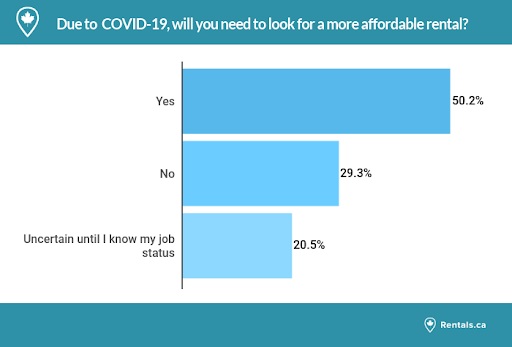
A recent survey of 16,000 renters across 181 Canadian cities found that half of respondents are planning to look for more affordable housing due to the effects of COVID-19. Another 20 per cent said they are unsure given the uncertainty surrounding their job status.

Conducted in May, the five-question survey posted on Rentals.ca also queried renters on their apartment search method as a result of the pandemic, and how much more they would rely on online tools in order to avoid in-person contact.

41 per cent said they would take a 3-D virtual tour, but only to narrow down their housing options and not to ultimately sign a lease.

Another significant finding from the survey is that more than 50 per cent of respondents said they were planning to move at all—or at least were thinking about it, a number in keeping with other years at the onset of summer.

affordable housing rentals.ca survey

“There was a significant increase in website traffic on Rentals.ca in May,” said Matt Danison, CEO of Rentals.ca. “It appears prospective tenants are doing their research to move or at least to prepare for a move in the near future.”

Safe and more affordable

Along with affordability, health and safety measures have emerged as important features for renters seeking new digs with 43 per cent saying they would only rent from property managers who offer safe cleaning practices.

Many property managers and landlords have already implemented new cleaning regimes, which will most likely stick long after the coronavirus is beaten down.

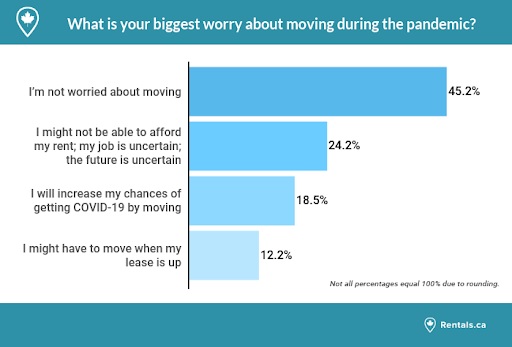
Meanwhile, despite the unprecedented times we currently find ourselves in, 45 percent of survey respondents said they weren’t worried about moving during the pandemic, indicating we will likely see the same type of summer movement as in previous years.

affordable housing survey rentals.ca

Toronto Pearson launches infectious disease mitigation program

The Greater Toronto Airports Authority (GTAA), which operates and maintains Toronto Pearson Airport, has launched an infectious disease mitigation program with support from BlueDot outbreak risk software.

Toronto Pearson’s “Healthy Airport” commitment outlines the steps the facility and its partners are taking in the wake of the COVID-19 pandemic to ensure a safe experience for travellers and airport employees. BlueDot, a company specializing in advanced data analytics and technologies to predict and monitor infectious disease risks, has entered a strategic partnership with GTAA that will support this endeavour.

The commitment and health measures included in this program are aligned with the global aviation measures established by the International Civil Aviation Authority, International Air Transport Association, and Transport Canada’s framework for addressing COVID-19 and the recovery of the aviation sector.

“Toronto Pearson is an international leader in the aviation sector, having set the standard for exceptional passenger service among large North American airports for three years in a row,” said Deborah Flint, president and CEO of the GTAA, in a statement.  “As government restrictions on air travel begin to be lifted and flights increase, Toronto Pearson is ready, and we are intent on exceeding international standards.”

Dr. Kamran Khan, founder and CEO of BlueDot and practicing infectious disease physician, commented, “Smarter airports deliver a safer experience for travellers. And safer travellers contribute to a healthier world. BlueDot is incredibly proud to partner with the GTAA to use advanced data analytics and digital technologies to stay a step ahead of global infectious disease risks.”

Elements of the “Healthy Airports” initiative include touchless check-in, a disinfection corridor for airport workers, facility monitoring for congestion, autonomous floor cleaning machines, and air quality monitors. Additionally, the GTAA has partnered with BlueDot to monitor and manage risk from COVID-19 and other infectious diseases.

More than 400 organizations operate out of Toronto Pearson. Many are implementing health and cleaning measures and are working with the GTAA to ensure their employees comply with the airport’s new commitment. Airport-wide workforce education sessions on infectious disease mitigation have been instituted, and the GTAA is also working with public health officials and a growing number of airport employers to develop a voluntary COVID-19 case log.  In addition, the GTAA is working with Wipro, a global technology company, to conduct a pilot of wearable tracing and physical distancing technology for airport workers.

Office-using sectors show relative resilience

Except for retail properties, the Canadian commercial real estate market was on firm footing heading into the COVID-19-triggered lockdown. Driven by an insatiable appetite for logistics and warehousing space, the industrial market was setting historical benchmarks in availability, rental rates and new construction. The downtown office market was experiencing robust demand from a thriving tech sector, while leasing activity in transit-oriented suburban markets was strong.

The strength of the labour market, eroding home ownership affordability and robust immigration were key drivers of multi-residential demand. Retail was already undergoing a significant transformation which will only be accelerated by COVID. While the death of retail is greatly exaggerated, ongoing challenges will continue to reprice the sector.

The extent of the impact on these demand drivers is just beginning to unfold, but a fundamentally sound commercial real estate market is well positioned to withstand the economic shock without any major dislocation. Growth drivers are most evident in large corporate and population centres such as Vancouver, Toronto and Montreal. Given their economic and social diversity, these major Canadian markets should lead the recovery and continue to thrive over the long term.

To date, rent collection has surprised to the upside with most of the stress occurring in retail, particularly enclosed shopping malls. This suggests that government support programs are working and that perhaps businesses were more resilient than business sentiment surveys indicated.

Nevertheless, there is plenty of uncertainty and little consensus on the economic outlook for Canada and the United States. It is becoming clear that it will not be a V-shaped recovery, and it is more likely to be uneven and prolonged.

Household consumption drives both countries’ economies and will play an important role in the recovery phase. Absent a vaccine, many service-oriented sectors are likely to face both capacity and demand challenges. Elevated household debt in Canada will weigh on consumer spending, particularly for discretionary items.

The Canadian economy is also more dependent on trade, especially with the U.S. with respect to commodity and manufacturing exports. This poses additional challenges if U.S. and global demand remains weak.

Employment loss and fortitude varies across sectors

The labour market has lost approximately 2.6 million jobs since February, pushing the unemployment rate to an all-time high of 13.7 per cent. This understates the full impact on the labour market as Statistics Canada estimates that one third of the labour market is either out of work or working less than 50 per cent of their regular hours.

May’s figures were encouraging with a net gain of almost 300,000 jobs. This suggests that many are being hired back as a result of the economy reopening and/or government programs working effectively to preserve payrolls.

The shape of the recovery will depend on how swiftly the economy reopens, workers are rehired and demand rebounds. Additionally, the current massive government stimulus may be distorting the underlying economic reality. This raises questions. Will sustainable demand return by the time government programs expire in the fall? Will there be an enduring shock to consumer and business confidence?

Compared to prior employment downturns, the COVID-19 lockdown has disproportionately impacted people-facing industries. Office-using sectors such as finance, insurance, and real estate (FIRE) and professional/scientific/technical have held up much better to date, but there is risk to these jobs the longer the economy takes to restart. Meanwhile, industrial-oriented sectors such as construction and manufacturing experienced sizable job losses in March and April but experienced a mild recovery in June as plants reopened and development projects ramped up again.

The longer the downturn, the greater risk of a second wave of job losses that could spread to other sectors, including white collar professions. The extent of job losses will depend primarily on an individual firm’s financial health. Aggregate sector financial positions offer a glimpse of where stress is more likely to materialize.

From a liquidity, solvency and profitability standpoint, office-using sectors such as FIRE and  other professional and technical services are better positioned to withstand the current shock. These sectors are also more responsive to work-from-home arrangements and face fewer operational disruptions.

The accommodation/food services sector is highly leveraged and tends to operate with slim working capital and profit margins, while wholesale/retail trade is much more liquid and solvent. Meanwhile, the financial position for industrial-oriented sectors is rather mixed.

There have been a few notable retail bankruptcies in Canada to date, including retailers Reitmans and Sail Outdoors and we expect more insolvency issues across both small business and larger enterprises.

Vulnerabilities and strengths in Montreal, Toronto and Vancouver

The impact of the job losses varies across metros, with larger cities such as Montreal, Toronto and Vancouver among the hardest hit. Collectively, the three metro regions have lost more than 900,000 jobs combined this year, representing more than 50 per cent of the national total.

These metros saw the their labour forces shrink by 13-15 per cent and have nearly given back all the jobs that had been gained since the global financial crisis within the span of five months. Energy dependent economies in Alberta also experienced significant job loss as they have been ravaged not only by COVID-19 but a plunge in oil prices.

As the main economic and corporate hubs in Canada, Montreal, Toronto and Vancouver are well positioned to bounce back, especially if tourism and consumer demand recover quicker than anticipated. However, given their density, these metros are particularly vulnerable to a second wave and a more prolonged economic downturn. Montreal and Toronto have been COVID-19 hot spots and the interconnectedness across their metropolitan areas, along with a greater propensity for global travel, are vulnerabilities.

The three metros’ economies are also dependent on trade and more exposed global economic conditions. Any material disruptions in the supply chains of intermediary goods will negatively impact the manufacturing sector in Montreal and Toronto. Meanwhile, weak global demand for commodities will weigh on Vancouver’s resources sectors. On the upside, these markets continue to be premier destinations for the tech sector, and this will be a key driver of economic growth over the longer term.

The preceding article is excerpted and adapted from the BentallGreenOak Canada Perspective Midyear 2020 Update.