




Articles Archive - Page 438 of 928 - REMINET
REMI

Rethinking restroom design

How will restroom design change post COVID-19? The global pandemic is fast tracking infection control technologies and products in public restrooms.

“While cleanliness has always been a goal in designing restrooms, coronavirus has underscored the need for hygienic, sterile and safe environments,” said Jon Dommisse, director of strategy and corporate development, Bradley Corp., a global manufacturer of restroom equipment.

Companies, educational institutions and municipalities are all now evaluating new procedures and products for their restroom facilities.

“Businesses are looking at short-term and long-term fixes for operating safely,” said Michelle Kempen from Milwaukee-based architectural firm Kahler Slater. “The goal is to create safe and healthy indoor environments that reduce the spread of airborne and surface contaminants.”

Kempen and Dommisse identify the following design strategies to help guard against coronavirus and other germ transmission in public restrooms:

No-touch fixtures
“Today’s touchless hand washing models incorporate advanced sensing technology for continuous and reliable washing,” Kempen said. “Voice command and IoT are other up-and-coming hands-free technologies for restrooms. Automatic door openers typically seen to support accessible design are now also being implemented in locations to prevent hand-surface contact.”

Dommisse added that the Healthy Hand Washing Survey by Bradley Corp. shows that 91 per cent of Americans believe it’s important that public restrooms are equipped with touchless fixtures. “Touchless restrooms are here to stay,” he said.

Improved ventilation
“We are seeing clients consider using more robust HVAC systems throughout their facilities but especially in shared spaces such as in restrooms,” Kempen explained. “Ventilating with outdoor air is vital to diluting airborne contaminants.”

According to Centers for Disease Control (CDC), the coronavirus appears to spread indoors through close personal contact and via poor circulation of building ventilation systems. The American Society of Heating, Refrigerating and Air-Conditioning Engineers (ASHRAE) advises that ventilation and filtration provided by heating, ventilating, and air conditioning systems can reduce the airborne concentration of SARS-CoV-2 and thus the risk of transmission through air.

Modified layouts
Even before Covid-19, European restroom models with gender-neutral layouts were gaining popularity. “A parallel can be drawn between the benefits of a restroom planned to be gender-neutral and planned to address Covid-19 concerns. The European model of stalls forming a perimeter around communal washing stations with open circulation may be a layout we see more of,” Kempen predicted. “This design can help facilitate one-way traffic and minimize cross-traffic.”

Design elements like eliminating doors, adding S-curved and automated doors and widening doorways are also gaining traction.

Avoiding wet floors
Water dripping from hands onto floors can cause slips and falls, and breed bacteria, Kempen noted. To avoid wet floors, she suggests locating soap and drying options close to sinks so people needn’t move from the sink with wet hands. “I see a big opportunity for sleek all-in-one hand washing fixtures that have the soap, faucet and dryer all in one unit to contain water.”

Antimicrobial finishes and materials
Some high-touch restroom surfaces like grab bars are available with antimicrobial coatings. “Before Covid-19, the design community was seeing a lot of antimicrobial layers and coatings on products. We are now seeing a rise from facility managers and building owners requesting this option as an enhanced safety precaution for their customers,” Kempen said. “Clients are also considering products that are inherently antimicrobial such as copper.”

Sink materials and designs
“For sinks, using smooth and nonporous materials with seamless construction like solid surface and natural quartz helps prevent bacteria, mold and delamination accumulation,” Dommisse said. “For multi-user restrooms, new washbasin designs with increased space between the hand washing areas allow for social distancing while washing hands.”

While there are a number of infection control measures on the horizon for restrooms, in the short-term it’s still important to keep six feet of distance between people, wash hands with soap and water, dry hands completely, wear masks and limit crowding in restroom areas, he noted.
QPAREB appoints new board leaders

The Quebec Professional Association of Real Estate Brokers (QPAREB) appointed Marc Lacasse as president and Sylvie Blouin as vice-president of its board of directors.

Lacasse has more than 25 years of experience in the real estate industry, including eight as a broker. He sat on the board of directors of the Greater Montreal Real Estate Board (GMREB) between 2013 and 2018, where he acted as the spokesperson for French-language media. He has also been a member of the board of directors of Société Centris inc.—the technology subsidiary of the QPAREB – since 2016. In addition, Lacasse has served on various advertising committees, including those of the QPAREB and the GMREB. He is beginning a two-year mandate as president of the Association.

With 22 years of real estate experience, including nine as an agency owner, Blouin was elected to the QPAREB’s board of directors in 2019, where she sat on the governance and ethics committee, the audit committee and the professional practices committee. She has also been a member of the board of directors of the Collège de l’immobilier du Québec for the past five years. Prior to that, she was a board member of the GMREB for two years. She begins a one-year mandate as vice-president.

“We are very pleased and fortunate to be able to rely on experienced and qualified individuals like Marc Lacasse and Sylvie Blouin at the head of our board of directors,” said Julie Saucier, president and chief executive officer of the QPAREB. “We know there will continue to be considerable challenges over the next year, but it’s reassuring to see that the QPAREB can count on a strong and experienced board of directors to meet these challenges.”

GTA home sales climb back up in June

Greater Toronto Area realtors reported 8,701 home sales in June, a 1.4 per cent drop compared to June 2019, and a much larger increase compared to sales results in May that saw a 53.7 per cent decline year-over-year or even the first part of April that saw a 69 per cent dive.

The Toronto Regional Real Estate Board (TRREB) also found the majority of home sales happened in the detached and townhome markets outside Toronto. Most of the demand in the city was seen in condo apartments (1,793 homes sold) and detached homes (4,445 homes sold). Although, looking at last year’s stats for June, condo sales were down 16.3 per cent with a 7 per cent increase in price.

Overall, GTA home prices were up in all segments by almost 12 per cent since last June, averaging $930,869. Compared to a year earlier, detached and semi-detached markets in Toronto saw the most price growth at 14.3 per cent and 22 per cent respectively, pointing to a resurgence in higher-end homes.

“Before the onset of COVID-19, there was a great deal of pent-up demand in the market,” said TRREB President Lisa Patel. “This pent-up demand arguably increased further over the past three months. We are still in the early days of recovery, but barring any setbacks, we should continue to see stronger market conditions in the second half of 2020 as households look to satisfy their ownership housing needs.”

There still aren’t enough listings to keep up with demand. In June, new listings were up 2.1 per cent year-over-year, but active listings were down 28.8 per cent compared to June 2019.

“The persistent lack of listing inventory in the GTA understandably took a back seat to COVID-related issues in the short term, but supply should once again be top-of-mind once the recovery takes hold, in order to ensure long-term affordability in the GTA,” said TRREB CEO John DiMichele.

Cleaning program, product analysis imperative post-COVID

A new white paper endeavours to explain why a greater emphasis will be placed on facility cleaning and maintenance following the coronavirus pandemic, including an increase in cleaning program and product analysis. The paper claims this shift will apply not just to building cleaners and facility managers but also to C-suite executives in a variety of industries.

Prepared by Secure Clean Building Services, “Cleaning in the Post-Coronavirus Environment” illustrates how professional cleaning will change following the COVID-19 pandemic with a specific emphasis on its impact on facility managers and cleaning contractors.

“One of the points I tried to make is that ‘looks clean’ and ‘good enough’ clean will not suffice in the post-coronavirus world,” says company founder and CEO Rick Vanderkoy, the author of the paper. “Managers will demand cleaning that stops the spread of infection.”

Another change, he notes, is that C-suite executives will take a more hands-on approach as to how their facilities are cleaned and maintained

“Top executives are now responsible for their staff’s health and welfare, continued business operations, brand reputation, and the bottom line,” he writes. “Whereas effective cleaning has played a relatively minor role in C-suite responsibilities in the past, it now plays a commanding position.” As an example, Vanderkoy references the May 2020 work stoppage by Amazon employees over concerns about cleaning and safety and the $4 billion the company applied to COVID-mitigating measures.

Quality-based cleaning will also overtake what Vanderkoy refers to as “price-based” cleaning, which was at one point pervasive in the industry. “If one contractor says they would charge $10,000 per month to clean a facility and another says they would only charge $6,000, it is pretty easy to guess which one is hired,” he states in the paper. “But that is over with COVID.”

The review of cleaning procedures and products will also increase in importance, and with good reason, Vanderkoy argues, breaking this point down into three areas:

Product Analysis: “Due to COVID, [cleaning professionals and business managers] must be able to easily select disinfectants that meet criteria established by the Environmental Protection Agency for use against viruses that can cause COVID-19,” he notes.

Credential Analysis: Vanderkoy lists several credentials and certifications that may be useful to cleaning workers as well as business owners and managers, including those from ISSA, IICRC, and GBAC.

Frequency Analysis: Though there will be cost implications, Vanderkoy stresses that an investment in increased cleaning frequency “to ensure surfaces are cleaned, sanitized, and disinfected as often as they should be” will be imperative.

To download the full white paper, visit Secure Clean Building Services website.

What does Toronto’s mask bylaw mean for condos?

Masks or face coverings are now a must-do in all indoor public spaces in Toronto as of today. The city voted in favour of the temporary bylaw to help stop the spread of COVID-19 since the province is now in stage two of reopening.

While the new bylaw applies to everything from real estate presentation centres to hotel lobbies, it does not apply to condominiums or apartments, which means corporations need not mandate mask-wearing on common elements.

However, the new bylaw is prompting legal minds in Toronto to point out the health and safety risks associated with public spaces in the bylaw mirror risks in a condo’s common elements.

According to Josh Milgrom, an associate at Lash Condo Law, condo corporations should think about implementing a requirement to wear masks in the interior common elements.

“Condo corporations are responsible to manage the common elements and to ensure that the property is reasonably safe,” he wrote last week. “Condos also have obligations under the Occupational Health and Safety Act to employees and other workers to maintain a safe and healthy workplace and take all necessary precautions for the protection of the workers. In accordance with their authority and obligations under the Condominium Act and the Occupational Health and Safety Act, in our view, condo corporations have the power to mandate mask-wearing on the interior common elements.”

He advises that condo corporations can pass a COVID-19 Temporary Mask Policy, passed by way of a board resolution.

“The policy would outline its rationale (similar to that of the city bylaw), as well as other specific references pertaining to condo corporations (i.e. enforcement and section 117 of the Condominium Act),” he writes. “The policy would be in place until further notice, utilizing guidance from the public health authorities and the city, consistent with the city mask bylaw. The exceptions for those not required to wear masks listed in the city mask bylaw would also be incorporated into the policy.”


Canada ensures true international BOMA executive

Canadians now fill half the executive officer positions of the Building Owners and Managers Association (BOMA) International with the election of Randal Froebelius as vice chair. The past chair of BOMA Canada and Toronto-based president and general manager of Equity ICI Real Estate Services Inc. is attending his first BOMA International conference in his new role via a virtual format. The three-day annual event is unfolding on connected devices worldwide from July 7 to 9.

Froebelius joins an executive slate that includes: newly elected chair and chief elected officer Shelby Christensen, who was most recently senior vice president of operations with Liberty Property Trust based in Philadelphia prior to the company’s acquisition by Prologis earlier this year; and chair-elect Mark Dukes, vice president, asset management, with Physicians Realty Trust, based in Atlanta. As secretary-treasurer, Keith Major, managing partner with BentallGreenOak’s Canadian office and industrial division, is the fourth BOMA International executive officer — a position he was first elected to in 2017.

Froebelius previously served on the BOMA International executive committee and has been actively involved as an officer and committee member with BOMA Canada and BOMA Toronto for more than 25 years. He is a BOMA Fellow and a recipient of both BOMA International’s and BOMA Canada’s prestigious Chair’s Award, recognizing exemplary commitment to and accomplishments within the BOMA organization and the commercial real estate industry.

“I have had the privilege of working with Randal for the past eight years and have come to rely on his sage advice and insight into an industry that continues to evolve,” says Benjamin Shinewald, president and chief executive officer of BOMA Canada. “Randal’s breadth of experience, collaborative leadership style and unequalled dedication will take our industry to amazing new heights.”

Contract awarded for last Calgary Ring Road portion

The contract for the final portion of the West Calgary Ring Road has been awarded to Calgary Safelink Partners for $277 million. The consortium includes Carmacks Enterprises Ltd., Graham Infrastructure and Vinci Infrastructure Canada Ltd.

Construction will get underway this summer on the south portion of the road, which is expected to be completed in 2024.

“The ring road is a critical project that has been years in the making and Calgarians have been waiting decades for it to be completed,” said Ric McIver, Minister of Transportation. “When construction wraps up, the ring road will provide more than 100 kilometres of free-flow travel, making it faster and easier for Calgarians and job creators to get around Alberta’s largest city. Most importantly, this major infrastructure project will help get Albertans back to work by supporting thousands of much-needed jobs.”

Another milestone was recently marked by the completion of about 80 per cent of the Southwest Calgary Ring Road, which is on schedule to be completed in fall 2021. A portion of the road will open this fall.

“The Calgary Ring Road is a necessary project that will bring greater efficiency and free flow of traffic to our city, and I eagerly await the final phase to begin construction this summer,” said Mike Ellis, MLA for Calgary West.

Budget 2020 allocated approximately $1.4 billion to the project, which began in 2016.

The West Calgary Ring Road will be completed in three sections: North project (Trans-Canada Highway to Old Banff Coach Road); West Bow River Bridge project; and South project (Old Banff Coach Road to Highway 8).

The South project is targeted for completion in 2024 due to delays in relocating the ENMAX utility line, which required Alberta Utilities Commission approval, as well as considerations for the COVID-19 pandemic.

The new Bow River Pathway is now open, and work continues on the Trans-Canada Highway and Valley Ridge Boulevard NW interchange.

Carpet care key for post-secondary institutions

The majority (82 per cent) of Americans would “take action” after seeing a dirty carpet at a college or university, and nearly half of that group would question the school’s commitment to students and staff if its carpet care was not adequate, according to a new online survey by The Harris Poll.

Conducted on behalf of Whittaker from June 18 to 22, the survey asked more than 2,000 U.S. adults their opinions surrounding carpet care in post-secondary institutions.

“As many colleges and universities prepare to welcome students back to their campuses this fall, it’s important to review cleaning procedures, including carpet care,” said Joe Bshero, director of technical services at Whittaker, in a statement. “Clean carpet not only supports good indoor air quality, it gives staff, students, and visitors a positive first impression.”

Forty-seven per cent of those who said that they would take action after seeing dirty carpet at a college or university reported they would complain to management, while 42 per cent would assume the campus is not cleaned properly. More than a third (35 per cent) would tell friends, family, or other students.

The results indicated that dirty carpet may also impact enrolment and funding. Twenty-one per cent of those who would take action also said they would consider attending an alternative college or university, while 14 per cent would consider donating to another educational institution.

City of Richmond honoured for district energy system

The City of Richmond has received international recognition for having the first district energy system in Canada to provide heating and cooling to large format retail buildings using this innovative, environmentally friendly technology.

The Central at Garden City expansion of the city’s Alexandra District Energy Utility was honoured with the 2020 Canadian Energy Globe National Award by the Energy Globe Foundation. The prominent award is presented annually to projects focusing on energy efficiency, renewable energies and the conversation of resources.

The Alexandra District Energy Utility (ADEU) consists of an award winning energy plant that utilizes renewable, low carbon geo-exchange technology (from the ground) to provide space heating, cooling and domestic hot water heating to more than 10 buildings including a fire hall, 1,736 residential customers and commercial space, totalling over 176,000 square metres (1.9 million square feet) of floor space.

Its latest project phase is the Central at Garden City expansion which became operational in 2015 and incorporates a unique and innovative approach to service commercial customers.

The heating and cooling energy plant has been installed on the roof of the Central at Garden City retail development in Richmond. Powered by low-carbon air source heat pumps that provide cost effective and reliable heating and cooling to approximately 26,000 square metres (284,000 square feet) of new retail space, the system reduces greenhouse gas emissions by reducing natural gas use by at least 70 per cent compared to conventional alternatives.

This new energy plant is also interconnected with the current ADEU energy plant, allowing for energy sharing with the main ADEU distribution system. A further expansion is currently in the planning stage which, when completed, will double the renewable capacity of the system by adding two additional geo exchange fields.

This is the second award that the City of Richmond’s district energy initiatives have received from the Energy Globe Foundation. The City of Richmond received the Canadian Energy Globe National Award for ADEU’s first phase in 2013.

The pros and cons of Bill 184

Ontario’s “Protecting Tenants and Strengthening Community Housing Act”—otherwise known as Bill 184—has raised the ire of tenant advocacy groups in recent weeks over concerns it will drive cash-strapped renters further into debt while making evictions easier for landlords.

Since mid-March, Ontario rental-housing providers have been unable to evict non-paying tenants in an effort by the Province to protect vulnerable households impacted by COVID-related income loss. But as the health crisis eases and the moratorium on evictions comes to an end, the enactment of Bill 184 will require anyone with rent arrears to pay back their landlords in a structured repayment plan.

Sound fair and reasonable? To some onlookers it might, but for those on either side of the rental transaction, the bill isn’t gaining widespread support. Many small landlords—having been stretched too thin by the ongoing pandemic as it is—say the income loss they’ve incurred to date has already put their businesses in jeopardy.

“The net profit from a rental property is much lower than tenants, the media, and the government seem to think,” said Chris Seepe, president of the Landlords Association of Durham and owner of a mid-sized rental portfolio. “It’s these same entities who collectively believe residential landlords are playing the system and can afford to carry all the losses of COVID-19.”

Arguing that landlords shouldn’t be expected to absorb months of missed rent payments while shouldering the heightened costs of operating a rental property safely amid a pandemic, Seepe and other landlords are defending their right to retroactively collect unpaid rent—or evict those unable to honour the terms of their lease agreements. Meanwhile, tenant advocacy groups concerned that the bill will lead to a spike in evictions and eventual homelessness are calling for better protection for renters and more restrictions on future rent increases.

Kenneth Hale, the Director of Advocacy and Legal Services at the Advocacy Centre for Tenants Ontario (ACTO), contends that government programs are available to support businesses and can be expanded to help small landlords, while vulnerable tenants cannot afford to shoulder that cost. “Protecting public health must take priority over protecting the financial wealth of property owners,” he said in a statement. “Putting tenants in jeopardy of homelessness and increased poverty is cruel, and puts the lives of all Ontarians at risk.”

Key points of contention

At a hearing in late June, ACTO representatives urged members of the Social Policy Committee to scrap Bill 184 and adopt alternative recommendations it believes would better serve and protect vulnerable tenants. Primarily, the group raised concerns over the pressure the bill will put on COVID-impacted renters to sign repayment plans they cannot afford, permitting landlords to seek eviction orders without a hearing should they falter. But the recommendations put forth by ACTO were rejected in favour of amendments that will speed up the new eviction rules and force landlords and tenants into a mediation process.

According to Joe Hoffer of Cohen Highley LLP, the bill makes some practical changes that will benefit tenants and others that will benefit landlords, but the big problem is that it doesn’t address the bureaucratic and procedural paralysis of the Landlord and Tenant Board/Social Justice Tribunal.

“In my view the entire adjudicative structure has abandoned its statutory mandate to deal with proceedings expeditiously and cost-effectively and there is a cohort of “bad tenants” out there who cannot believe their good fortune while gloating about the fact that they can live rent free and the landlord can do nothing,” he said.

Adding to that, Hoffer warned that any small landlord who tries to avoid RTA rules in order to gain vacant possession to flip apartments are at risk of very harsh consequences. “Some innocent landlords will likely blunder into a situation where they are offside with the changes and will be greatly and unfairly harmed by the bill,” he said. “Other landlords abusing the current rules warrant the more rigorous legislative oversight.”

Hoffer also sees the two-year limitation on rent repayment as a potential source of concern. “The short time frame by which landlords must initiate formal proceedings at the LTB could significantly and negatively affect all involved,” he said. “Currently a landlord can go back six years when working with tenants to catch up with missed payments. If Bill 184 passes, the landlord will have to be rigorous in going after a tenant within the two-year time frame.”

On the positive side, the ability to recover charges such as unpaid utilities at the LTB rather than having to go to Small Claims Court, will make life easier for landlords. “However,” Hoffer said, “there is a gap in Bill 184 for the mobile home sector, where landlords will still have to go to Small Claims Court to recover unpaid property taxes and water testing charges even though the LTB is best equipped to adjudicate such changes.”

What ACTO wants in place of Bill 184:

  1. The continued restriction of evictions to urgent cases where public safety is at stake.
  2. Restricting rent increases to maintain current rent.
  3. Eliminating rent increases in newer units that are exempt from rent regulation as of November 2018.
  4. The limiting of “rent gouging” by landlords by restricting rent increases between tenancies.
  5. Assurance that the Landlord and Tenant Board’s rules make ongoing preservation of homes the object of the dispute resolution process.


Ontario stalls energy management paybacks

A temporary adjustment to Ontario’s electricity pricing scheme eliminates cost-saving opportunities that many operators of large commercial buildings were anticipating this summer. Instead, an estimated 90 per cent of customers eligible to participate in the Industrial Conservation Initiative (ICI) will be locked into the formula that currently dictates their share of the global adjustment (GA) for an extra year, and will not realize the benefits of any recent investments they’ve made to manage peak energy demand until at least July 2022.

As announced in late June, the ICI cycle that began on May 1 has now been cancelled for the vast majority of eligible participants. This follows earlier COVID-19-related interventions, including capping the global adjustment — the envelope of fixed costs for contracted supply, nuclear facility refurbishment programs and conservation and demand management initiatives that accounts for upwards of 80 per cent of the commodity cost of electricity — at 11.5 cents per kilowatt-hour (kWh) for the months of April, May and June, with the deferred amount above that threshold to be collected beginning in 2021.

Under conventional ICI program rules, commercial electricity customers with average monthly demand of at least 1 megawatt (MW) and manufacturers with average monthly demand of a least 500 kilowatts (kW) have an annual opportunity to reduce their next year’s GA costs based on how effectively they can curtail energy loads during the five hours between May 1 and April 30 when highest overall system demand is recorded. The temporary rule change postpones that exercise until May 1, 2021 for all except prospective participants that don’t have an existing result — known as a peak demand factor — that can be applied again next year.

“Today’s announcement will allow large industrial employers to focus on getting their operations up and running and employees back to work, instead of adjusting operations in response to peak electricity demand hours,” Greg Rickford, Ontario’s Minister of Energy, Northern Development and Mines, maintained in a statement released on June 26th.

However, a larger share of commercial building owners/managers won’t be able to take advantage of a drop in energy demand resulting from COVID-19-triggered business shutdowns. With the expectation that office towers will remain partially or predominantly empty this summer, many had foreseen lower-than-usual loads relative to the five peak hours. That could have resulted in a highly favourable peak demand factor, which would be used to calculate their share of the GA for the entire year from July 1, 2021 to June 30, 2022.

“Commercial properties would have seen peak demand factors go down with low occupancy this summer,” contends Jon Douglas, director of sustainability with Menkes Developments. “This change provides stability to the market, but I think calling it ‘fair’ is questionable. It takes away mechanisms of the market.”

Eroding clean-tech investment and employment

Beyond losing the strategic advantage of low occupancy, many owners/managers will be foregoing payback on investments they’ve made over the past year. Current peak demand factors are prorated to ICI participants’ (known as Class A for the purposes of the program) energy demand during the five peak hours of the 12 months between May 1, 2019 and April 30, 2020, all of which occurred in July 2019. Advocates for the commercial real estate sector suggest program participants could have been given a choice whether to retain that peak demand factor for an extra year or pursue a new one.

“We are not pleased that this was made mandatory for all Class A. Economic benefits from conservation measures implemented by any of our members since the last assessment period will now have to be deferred until 2022-23,” says Bala Gnanam, vice president, energy, environment and advocacy for the Building Owners and Managers Association (BOMA) of Greater Toronto. “This might also significantly slow down the advancement and adoption of energy storage and other behind-the-meter curtailment technologies.”

Investments made since last summer would otherwise have delivered energy management paybacks in July 2021 when new peak demand factors were applied. As for capital budgeting priorities, the near-term business case for investing in demand management may have lost some of its persuasive sway for the handful of buildings within Crossbridge Condominium Services’ portfolio that qualify for the ICI program.

“We were talking to all of our Class A buildings about adopting technology to reduce their peak demand factors,” reports Rob Detta Colli, manager of energy and sustainability with Crossbridge. “We were looking at solutions to balance the delivery of electric heating. Instead of allowing the entire building to come ‘on’ at once, this technology cycles 50 per cent of the building through ‘on’ and ‘off’ every 15 or 20 minutes. This cuts the demand in half with an imperceptible impact on temperature thanks to the thermal mass of the building itself.”

There could also be challenges for energy management and clean-tech companies with service contract business models that derive their cash flow from clients’ energy-related cost savings. “Many of these companies sold the technology fully financed to end-customers so their banks are now expecting to get a payment every month,” observes Tomas van Stee, founder and chief executive officer of the energy forecast and analytics firm, EnPowered.

Likewise, consultants who provide clients with guidance on the timing of peaks and when to curtail energy loads will face a dip in demand for their services — adding to COVID-19’s negative fallout for the energy management sector, which the public education and advocacy organization, Efficiency Canada, estimates accounted for approximately 436,000 Canadian jobs as 2020 began.

Potential upside for beleaguered hotel sector

On the flipside, van Stee identifies some clear and potential winners. The first group is expected to include many of the large industrial customers Minister Rickford references in his June 26th statement. Additionally, some of commercial real estate’s most beleaguered players could be in line to catch a break.

“Anyone who did really well (responding to peak demand) last year is laughing,” van Stee says. “They’ve got an advantageous peak demand factor that’s locked in for another year without having to do any additional work to achieve that.”

Indeed, he predicts that electricity demand will soar this summer since many of the largest consumers have no reason to try to shed load. Meanwhile, commercial operators are facing new COVID-19-related pressures for heightened ventilation, which will tax mechanical systems, and will still be cooling their buildings even if they aren’t fully occupied. Residential energy loads are also forecast to climb as the workforce ensconced at home cranks up the air conditioning earlier in the day.

All that actually works in the best interests of the small number of prospective Class A customers that will still be chasing the five peaks. Especially if their energy demand has dropped below last year’s levels due to low occupancy, their peak demand factor is likely to work out to a smaller portion of a higher peak and will position them favourably among the greater majority of Class A customers retaining peak demand factors derived in 2019. In one potential silver lining for a sector that’s suffered significantly due to COVID-19, many of the properties falling into this minority are hotels.

“For a variety of reasons, many hotels that qualified as Class A have never opted into the ICI program,” van Stee says. “They’re positioned to do well now without necessarily having to do much to respond to the peaks.”

Class B customers remain wary

Under the ICI program rules, newly eligible participants won’t have to make the decision to opt in until next June after Ontario’s local distribution companies advises them of their peak demand factors. Notably, for the July 1, 2020 to June 30, 2021 period, many Class A-eligible customers opted for Class B — joining the larger ranks of small and mid-sized commercial buildings that are charged global adjustment on a volumetric cents-per-kWh basis — because peak demand factors prorated to their energy use in July 2019 could translate into an unfavourable share of the overall GA bill if province-wide energy consumption remains low.

“Once you’ve opted into Class A, your GA costs are locked,” van Stee reiterates.

Nevertheless, there is plenty of speculation that Class B is also in line for electricity price increases. Beyond the looming requirement to make up for April, May and June’s deferred GA costs in 2021, Class B consumers are wary of what the ICI program adjustments could mean for them since they are left to pay all remaining GA costs after Class A’s fixed share has been subtracted. That could be problematic over a coming year when Class A has less incentive to try to manage demand and the cost of the vague components of the global adjustment may continue to escalate.

“I would be very surprised if the total GA does not increase,” Gnanam says. “This means that Class B will face a higher than normal rate of increase in their GA costs.”

Barbara Carss is editor-in-chief of Canadian Property Management.

Metro Vancouver achieves carbon neutrality

The Metro Vancouver regional district has achieved corporate carbon neutrality for 2019 and potentially through 2022.

“It’s so great to see Metro Vancouver reach carbon neutrality in their 2019 operations,” said the Honourable Jonathan Wilkinson, the federal Minister of Environment and Climate Change. “Local governments play an essential role in the fight against climate change and it’s leadership like this that will help Canada exceed our Paris Agreement targets and achieve net-zero emissions by 2050.”

Metro Vancouver’s carbon neutrality is attributable to projects such as:

  • Ecological restoration of Burns Bog, which sequesters large amounts of carbon, and improves the ecology of North America’s largest urban bog, affectionately known as “The Lungs of the Lower Mainland.”
  • Parkland acquisitions at Widgeon Marsh in Coquitlam and Codd Wetland in Pitt Meadows, which sequester carbon, protect ecosystems and help people connect with nature.
  • Trenchless tunnel construction methods for major liquid waste infrastructure projects, which cut down on heavy trucking and cause fewer community disruptions.
  • Installation of energy-efficient boilers and appliances in Metro Vancouver Housing sites, to reduce emissions, save on operating expenses and help deliver more affordable housing.
  • Increasing the share of electric and hybrid vehicles in Metro Vancouver’s vehicle fleet, which reduces emissions and contributes to cleaner air.

Metro Vancouver has implemented innovative actions in order to reach carbon neutrality as an organization, and is seeking feedback on innovative and transformative “big ideas” that are needed at the regional level to extend that achievement and reach the targets of a climate neutral, resilient region by 2050.

Implementation of Climate 2050 is underway and is structured around 10 different issue areas, each with its own Roadmap for climate action. Public and stakeholder engagement is currently ongoing on the individual roadmaps and the Clean Air Plan, which will be the next iteration of Metro Vancouver’s plan to manage air quality and greenhouse gases in the region.

Now is the time to invest in deep energy retrofits

The benefits of investing in deep energy retrofits have been touted by building experts for years. Yet still, here we are heading into the second half of 2020 and not everyone has been quick on the uptake. Adding to the slowdown, Canada is in the midst of emerging from a deadly health crisis—the economic consequences of which will be felt for years to come. As offices and businesses gingerly attempt to reopen, some building owners may be reluctant to undergo an extensive retrofit project. But now, says Terry Bergen, Managing Principal at RJC Engineers, is precisely the time to do it, and he is optimistic municipal, provincial and federal governments will continue, if not expand their support of Canadian businesses in the building and construction sector.

“Retrofit work, particularly for substantive deep energy retrofits, is generally labour intensive. Aside from the positive environmental impact retrofitted buildings will provide, there is a multi-layered economic benefit to the Canadian workforce,” he says. “Recognizing that new construction will continue, there will be a significant skilled labour and contractor shortage for retrofit construction. This shortage will create opportunities for a new generation of workers in high value construction jobs, and the work they perform will support and further stimulate materials and supply industries.”

From improved operational efficiencies, to job creation, to significant community benefits, deep energy retrofits also help lower greenhouse gas (GHG) emissions as Canada strives to fulfill its ambitious 2030 climate change targets. Given all these positive outcomes, Bergen isn’t alone in his belief that Canada needs to include deep energy retrofits in its post-pandemic government stimulus package.

“Existing buildings over 20 years of age make up the vast majority of building stock in Canada,” he says. “Improving the performance of these buildings is a key strategy to retrofitting buildings at a national scale. It will provide generational stimulus to the Canadian economy.”

Why incentive is needed

With most of the “low hanging fruit” in terms of retrofit projects having already been picked, many older buildings require more substantive improvements—work that is often invasive and leads to disruptions in building use and occupancy. In the absence of external incentives or pressure due to operational failure or deficiency, most building operators will generally plan more significant upgrades to coincide with planned major renewals, often in 10-year capital renewal cycles. “This doesn’t mean that operators aren’t investing in their buildings,” Bergen points out. “It’s just that they need to be strategic so as to minimize disruptions for all parties.”

In addition, substantive deep energy retrofits may have ROI periods that are greater than other capital return opportunities—which is where incentives, or stimulus, can be of particular benefit to building owners while also providing advantages to occupants (via comfort) and the environment (via reduced energy use and net carbon footprint).

Furthermore, the rapid speed of innovation can be daunting, leaving many operators unsure about how or when to take advantage of new equipment. “Building technology, instrumentation and controls are evolving quickly,” says Bergen. “Good professional relationships with consultants and suppliers can alleviate much of this concern.”

Next level improvements  

Assuming most building owners have already upgraded their mechanical/HVAC and electrical/lighting systems, next level improvements with better performance gains are what’s needed to bring most of Canada’s aging building stock up to a sufficient level.

According to Bergen, these “deep” retrofits will often begin with further mechanical/HVAC upgrades in conjunction with improving the airtightness of the building envelope. Additional performance gains will be achieved with window and glazing upgrades or replacement, and further improved with insulation upgrades to the walls and roofs, potentially combined with over-cladding and shading additions. In areas where seismic activity is a concern, operators should consider making structural upgrades to augment operational resilience. For all buildings, energy modelling and life cycle assessment for embodied carbon intensity is required to determine the optimal solution.

These projects are by no means “low hanging fruit”, but as the benefits show us, the investment is well worth it. That said, to enable full-scale uptake on deep energy building retrofits, Bergen says support and services from related professional and construction partners are needed.

“Engineers for energy, envelope, embodied carbon, mechanical and electrical assessments, models and designs. Architects for potential alterations and changes of use for improved comfort, health and efficiency,” he says. “Also, incorporation of on-site renewables or local energy districts to further reduce grid demands and improve building specific ROI would greatly benefit the retrofit sector.”

The time is now. Canada is lagging.  Your aging building will only depreciate unless the right steps are taken today.

To find out more about deep energy retrofits and what RJC can do for you, please visit www.rjc.ca or contact Terry Bergen directly.


Smart tech energy upgrades to HVAC systems

As more people live and work at home 24-7, some property managers, condo boards and other tenant organizations are paying close attention to how smart tech helps clarify energy usage and what that means for resident comfort and costs.

In the middle of a pandemic, it’s hard to shift attention to things like condo energy use and increased building emissions output, but improving energy efficiency is important to consider. Innovative, smart energy management technologies can make residential buildings more comfortable, ultra energy-efficient, lower-carbon emitters and more resilient to unforeseen economic downturns like COVID-19.

Meeting these objectives calls for smart-tech upgrades to the heating cooling and air conditioning (HVAC) systems of multi-residential buildings. This is the easiest option for improved energy efficiency for one core reason: HVAC equipment in most existing condos is dated.

HVAC primarily operates with two settings — on and off — but we would never want other infrastructure in our lives to run this way. Take a car for example. Imagine driving a car that only has an off switch to go 0 km/h, or an on switch that drives at 150 km/h. There isn’t any balance and it’s simply not efficient to drive this machine.

So, instead of fronting the cost to fix dated HVAC equipment with a retrofit or replacement, condos can look to alternative energy and cost-efficient solutions. Installing a lean energy management automation system is one simple yet dynamic way to improve energy efficiency at a building-wide level.

Automation systems come in many shapes and sizes. Look for energy management systems that harness smart tech like artificial intelligence (AI), Internet of Things (IoT), data and analytics to accurately target energy inefficiencies.

Smart Tech Lowdown

How does it all work? Energy management platforms that attach to HVAC start to look at data. AI systems learn what normal operations look like, how to identify states of failure, and where efficiencies can be found. It’s important to find these patterns because a building with an older, largely retired demographic will present a different data pattern than a much younger working demographic at 9 a.m. for example. AI can help segment the exact needs and usage patterns of varying buildings and see in usage patterns how best to provide comfort to residents.

With a subset of data that shows areas for improvement, like a need for better air filtration or faster hot water boiling, energy management software can apply discipline to the controls of the building like streamlining energy use, temperature control and equipment performance. Another example is IoT sensors that can detect higher than normal CO2 levels in the lobby of a condo. This signals HVAC control to start pumping air throughout the building to improve ventilation and air filtration, resulting in better air quality and a healthier living environment for residents.

By applying smart tech to the boiler room of a condo, condo managers will see the changes in less than a month with virtually no disruption in building operation. Not to mention a 30-50 per cent decrease in carbon emissions.

Not only does condo-wide energy efficiency benefit the end-user, but making condo buildings more energy efficient as a whole helps to do a lot of good things including modernizing the energy grid; helping meet environmental carbon emission goals; creating resilient infrastructure that’s equipped to weather economic downturn; and stimulating economic activity for boiler room mechanics and energy engineers across Canada.

Brad Pilgrim is the CEO and co-founder of Parity Inc. Over the past three years, Brad has led the company to develop and deploy an AI-powered energy management platform for multi-residential buildings in order to eliminate energy waste in buildings and cultivate more sustainable urban environments.

The expanded role of restrooms in spending and operations

During a time when many businesses and property owners are striving to safely reopen facilities and bring back customers after lockdown, the importance of offering clean and hygienic restrooms has taken on extraordinary significance, and can even drive customer spending.

Before coronavirus, research showed that public restrooms had emerged as one of the key elements affecting the overall business satisfaction of customers, employees, and stakeholders. Now, these frequently used spaces are even more valuable to buildings and their occupants due to their critical role in providing stations with soap, water, and dryers for proper hand washing – one of the key actions recommended for protecting people from hand contact with illness-causing germs.

As businesses aim to provide hygienic, functional, and well-designed restrooms in these unprecedented times, it’s interesting to note that restrooms can be business powerhouses. Pre-pandemic research showed that consumers increasingly evaluate businesses based on the condition and appearance of restrooms, and the state of a restroom can even influence spending behaviours.

According to the Healthy Hand Washing Survey, conducted in December 2019, 62 per cent of consumers said that experiencing clean restrooms in businesses increases their spending; compare that to two years earlier, when only 45 per cent said they would spend more. The study also found that almost three out of four consumers make it a point to visit a business because they know it has nice restrooms. Women are especially likely to show preferential treatment, as are millennials and Gen Xers.

Here’s the troubling part: While consumers are willing to reward restroom-friendly businesses, more respondents reported having unpleasant experiences in a public restroom. In 2019, a record-high 76 per cent reported having a particularly bad encounter due to poor restroom conditions.

Unfortunately, there is a business blowback from bad restrooms. The survey found that public restrooms that are dirty or in disarray generate negative impressions causing customers to take their business elsewhere. Close to 60 per cent of respondents will leave such a business immediately or say they are unlikely to return after encountering an unpleasant restroom.

What constitutes a bad restroom? The following grievances in public restrooms trigger the highest levels of frustration: clogged/unflushed toilets (85 per cent), empty/jammed toilet paper dispensers (83 per cent), and partition doors that don’t latch shut (78 per cent).

Perhaps most disconcerting – especially during the pandemic – is that poor conditions are the main culprit behind people skipping hand washing during a restroom visit. Lack of soap or paper towels and dirty or non-functioning sinks are the two most common reasons for not washing hands.

Clean, consumer-focused commercial restrooms

As facilities begin to reopen, reversing the trend of negative bathroom experiences has never been more important to consumers from a business and health standpoint. Restroom conditions are important – but so is the need for hygienic, sterile, and safe restroom spaces.

Companies, educational institutions, and municipalities are now evaluating new procedures and products for their restroom facilities. The goal is to create safe and healthy indoor environments that reduce the spread of airborne and surface contaminants.

The following are some key ways to improve restroom operations:

Touchless fixtures in facilities are certainly having their moment in the age of coronavirus, and no-touch fixtures are especially important for high-touch restrooms. The Healthy Hand Washing Survey shows that 91 per cent of consumers believe it’s important that public restrooms are equipped with touchless fixtures. Having access to touchless fixtures is also consumers’ number-one request when asked about their top restroom improvements, followed by keeping them cleaner and better stocked.

There are touchless operators for all high-touch areas in restrooms – everything from doors, toilet flushing, toilet lid closures, faucets, soap dispensers, paper towel dispensers, and hand dryers. The touchless trend is likely here to stay, especially with the proliferation of technologies like voice command and IoT.

Eliminating wet floors and surfaces goes a long way in improving restroom conditions. Water dripping from hands onto floors and countertops not only makes restrooms look unkempt, it is also a safety concern when floors are concerned, as water can cause slips and falls, and breed bacteria. On the topic of touchless fixtures, newer sink and faucet models incorporate a touch-free soap dispenser, water, and hand dryer into one integrated fixture so the user needn’t move with dripping wet hands to reach for the dryer or a paper towel.

Increasing privacy in restrooms is another trend that appeals to customers while better containing germs. With heightened coronavirus transmission via toilet plumes, privacy partitions that have extra height and depth with no gaps around the doors may better contain aerosolized germs. Plus, people naturally want greater privacy and personal space in multi-stall restrooms.

Partition materials are key. Today’s partition choices include durable and easy-to-clean materials like powder-coated, phenolic, stainless steel, solid plastic, and plastic laminate.

Privacy partition models feature 72-inch-tall doors and panels mounted 6 inches above the finished floor for standard stalls, and 69-inch-tall doors and panels mounted 9 inches above the finished floor for ADA stalls. To provide additional space, panels are available up to 84 inches deep and feature a stacked panel design that is seamed together with an aluminum H-bracket, providing a cleaner design aesthetic and faster installation.

Rethinking restroom layouts in the age of COVID-19 will also be key. In addition to placement of hand washing elements to avoid pooling water, consider placing trash receptacles near restroom exits. Research shows that 65 per cent of Americans use paper towels to avoid contact with restroom doors and faucets. Therefore, keeping paper towels and waste containers near exits can be helpful so people can throw them away upon exiting.

Looking longer-term, a parallel layout with hand washing stations alongside the toilet area and separate entrances and exits has been gaining popularity in Europe and may be a layout we see more of in North America. This design helps facilitate one-way traffic and minimize cross-traffic. Design elements like eliminating doors, adding S-curved and automated doors, and widening doorways are also gaining traction.

Restrooms certainly have a ripple effect on business operations. Thoughtful restroom designs and increased cleaning and maintenance will go a long way in mitigating germs, addressing customer concerns and demands, and encouraging repeat business and increased spending.

Bradley is the industry’s leading source for multi-function hand washing and drying fixtures, accessories, partitions, solid plastic lockers, as well as emergency safety fixtures and electric tankless heaters for industrial applications. Headquartered in Menomonee Falls, WI, USA, Bradley serves commercial, institutional and industrial building markets worldwide. For more information, visit Bradley’s website.

Modular classroom supports outdoor education

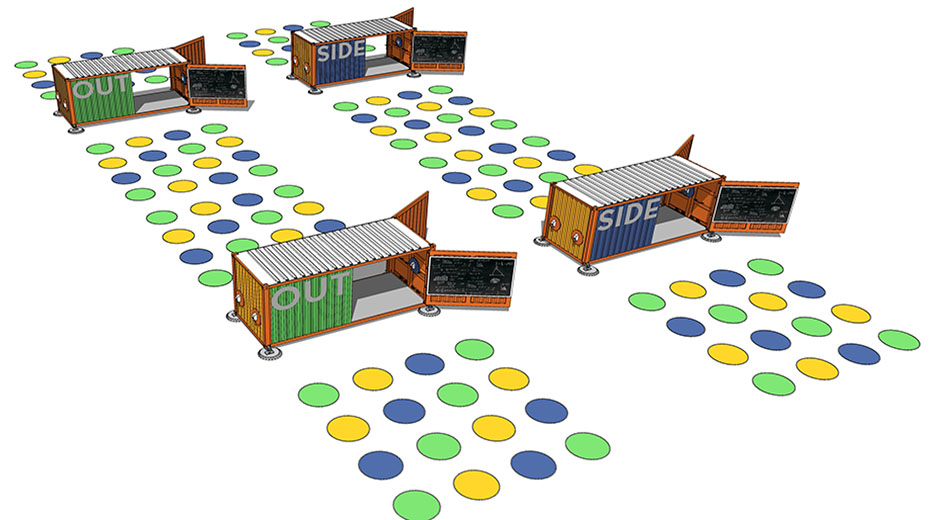
Toronto-based Weiss Architecture & Urbanism Limited has collaborated with Wonder Incorporated to create a modular ‘front of classroom’ teaching support unit designed to facilitate healthy, fresh air, outdoor, education during COVID-19 called OUTSIDE the Box.

Along with hygiene, screening and social distancing, the provision of good ventilation is understood to be an essential measure. In older schools, mechanical systems and windows that provide a comfortable and healthy cross breeze are very often lacking.

OUTSIDE the Box supports outdoor teaching. With two back to back outdoor classrooms, the space can be easily placed down on school lots or fields. It is a lockable unit that swings open to provide generous chalk and whiteboard presentation surfaces.

classroom

Inside the unit, closets and cabinets provide teachers with storage and organizational space for stackable desks, recycling bins, and other items.

OUTSIDE the Box is equipped for best practice student and staff hygiene practices and COVID-19 precautions. Bright, graphically marked hand cleaning stations are provided on the exterior for easy and safe access by the students.

The interior is fitted with a Cleaning Centre to wipe down chairs, assignments, and supplies commonly handled by students and staff. An Assignment Chute provides a safe, physically distanced way for students to turn in work.

OUTSIDE the Box is a bright and colourful classroom unit that can be customized for each site or client. It durable design provides a practical and alternate solution for facilities where the interior environments may not be able to provide the indoor air quality needed.

Ontario offers free online health and safety training

The Ontario government has announced an investment of $3 million to provide free online health and safety training for job seekers, a first for the province. The courses will help workers obtain essential qualifications while practising physical distancing and preventing the spread of COVID-19.

“In this new environment, we need to look for new and innovative ways to deliver services, while keeping people safe and healthy,” said Ontario Premier Doug Ford in today’s announcement. “This virtual approach to safety training will ensure employers and employees have access to the latest information without the need to physically interact with others. In this way, we also reduce the risk of spreading this deadly virus.”

Ten free online workplace health and safety courses are now available through Employment Ontario, for up to 100,000 job seekers. Topics covered include infection control; conducting health and safety incident investigations; ladder safety; slips, trips, and falls prevention; and preventing workplace violence and harassment. Workers seeking employment who wish to enroll in the health and safety training can contact an Employment Ontario service provider in their area.

Worker and employer members of Joint Health and Safety Committees can also now use video conferencing to take training in real-time with qualified instructors from training providers approved by Ontario’s chief prevention officer.

Ontario’s chief prevention officer has extended the time for completion of refresher training for more than 8,000 certified committee members whose certification would have expired between February 28 and August 31, 2020. The new deadline to renew is November 30, 2020.