Articles Archive - Page 40 of 928 - REMINET
REMI

B.C. business leaders slam PST expansion

Key business leaders across B.C., including those in engineering, are calling on the provincial government to scrap the newly announced expansion of the provincial sales tax (PST) in Budget 2026. The expansion will hit a wide range of professional services, including accounting, engineering, architectural, security, and commercial real estate services.

A 7 per cent PST will be applied broadly and a partial 30 per cent tax base applied to architectural, engineering, and geoscience (AEG) work, effective October 2026.

Budget 2026 also confirmed a planned $80 billion increase in the debt over three years and a record $13.3‑billion deficit for 2026–27.

A joint statement said: “B.C. cannot afford policies that raise input costs, discourage investment, and weaken our competitive position. B.C.’s PST is already the most uncompetitive sales tax in Canada, and Budget 2026 doubles down. This expansion creates a massive new administrative burden and a ‘tax on a tax’ for every project.”

According to the B.C. Construction Association, the expansion of PST to architectural, engineering, and related professional services will add real cost to virtually every project in B.C. Professional services typically represent 8–15 per cent of total project value. Applying PST to those fees adds an estimated 1–2 per cent to overall project budgets.

For schools to hospitals – projects that can cost upwards of $100M to $1B, these are additional, unnecessary costs ranging from $1-10 million.

These costs will reduce project scope, extend timelines as budgets are revised, or get absorbed back into the public purse. This risks undermining the Budget’s capital commitments. At a moment when the province is trying to stretch infrastructure dollars as far as possible, adding cost friction at the front end of the project delivery pipeline works against that goal.

Budget 2026 tables or defers decisions on several significant healthcare capital projects, including long‑term care facilities and the Burnaby Hospital redevelopment. This will reintroduce uncertainty into an industry that relies on long‑term visibility to function efficiently.

Housing costs remain elevated in urban centres

Unaffordable housing costs persist in several urban centres across Canada despite recent improvements. Canada Mortgage and Housing Corporation’s (CMHC) latest Housing Affordability Composite Index (HACI) reports that the issue now extends beyond Toronto and Vancouver.

The newly released index considers a few indicators, including potential interactions between the rental and homeownership markets. Affordability remains at crisis levels due to a combination of high costs, constrained supply and demand pressures, and incomes that have not kept pace with rent or mortgage payments. The analysis also considers discretionary income that can be used to make space for a greater housing budget.

“Affordability started recovering slightly since 2023, when it reached historical lows,” said Mathieu Laberge, chief economist and senior vice-president housing insights. “For homeownership, we observed improved affordability, while for renters we saw stabilization over the last two years. “Even with these improvements, we cannot overlook how much housing affordability has eroded in recent years, especially in Ottawa, Montréal and Halifax, clearly demonstrating that Canada’s housing affordability crisis is no longer limited to Toronto and Vancouver.”

Regional shifts

The HACI analyzes housing affordability trends for seven major centres: Vancouver, Edmonton, Calgary, Toronto, Ottawa, Montréal, and Halifax, and is updated regularly.

At the national level, homeownership affordability fell to its lowest point since the 1990s during the second quarter of 2022. However, conditions have slightly improved since then.

A focus on recent affordability trends overlooks a slow erosion that began in the early 2000s. Homeownership affordability peaked in the second quarter of 2001 and then declined in three distinct waves: 2001 to 2007, 2015 to 2020, and 2020 to 2023.

During the second half of the 1990s, affordability in all seven centres remained above their collective long-term average. This shifted drastically between 2001 and 2007 and again between 2015 and 2020, as both Vancouver and Toronto became increasingly unaffordable to homebuyers. These first two periods of erosion in homeownership affordability were driven solely by these two markets.

From 2020 to 2023, conditions deteriorated in traditionally more affordable cities like Ottawa, Montréal and Halifax due to remote work during the COVID-19 pandemic. Since 2023, affordability has slightly improved across key markets and stabilized in Montréal, Calgary and Edmonton.

Inflation drives the recent decline in rental affordability

The erosion of rental market affordability is more recent. Different factors drive this trend. Rising ownership demand outside Toronto and Vancouver reduced affordability, while inflation and high immigration pushed rental costs up across Canada from 2022 to 2023.

Renters have less discretionary income than homeowners, making it harder to cover rising costs or borrow short-term. As a result, their housing budgets are more easily compressed and reduce their ability to pay for a rental unit. CMHC states this explains why rental affordability fell nationwide in 2022-2023 and has since stabilized at a lower level.

Market intelligence clarifies trends

Aggregate indices often mask trends in specific market segments. The analysis revealed that elevated condominium inventory in Toronto and Vancouver is boosting rental supply, raising vacancy rates, and slowing rent growth for higher-end repurpose-built rentals. Sustained relaxed market conditions with ample options may increase affordability for rental condos and higher-end purpose-built units compared with historical levels.

At the other end of the rental market spectrum, where more affordable units are found, market intelligence points towards slower increases in supply, the absence of direct substitute and sustained high demand.

All these factors help explain why the more affordable rental market remains especially tight and is less likely to see the same gains in affordability as the higher-end segment. Increasing and sustaining supply in this market would moderate rent growth and allow incomes to catch up.

CMHC’s Housing Affordability Composite provides a more holistic view of housing affordability in Canada. Specific regional data can be accessed here.


Ontario condo fees outpace other provinces

Condo buildings in Ontario attract residents who desire urban convenience without the hassle of home maintenance. Yet behind these vibrant communities lie the oft-debated condo fees. While monthly payments are a frequent point of contention for owners, comparing costs to other provinces and building types provides insight into their value.

At their core, condo fees are designed to cover the expenses required to maintain and operate the building and shared amenities. These monthly payments are not arbitrary; they represent each owner’s share of costs for services such as landscaping, snow removal, garbage removal, electricity, and security. The fees also fund the maintenance and repair of common elements: lobbies, elevators, hallways, swimming pools, fitness centres, and parking garages, all of which contribute to a functional and comfortable living environment.

The structure of Ontario condo fees is often opaque to new buyers. A condo’s overall budget is divided into three main categories:

Operating Budget: Day-to-day costs like utilities (water, electricity, gas), cleaning, maintenance, property management, and insurance for the building.

Reserve Fund Contributions: A legally mandated fund, set aside for major repairs and replacements. This fund will pay for significant costs that do not occur annually, such as roof replacement, HVAC upgrades, and façade restoration. Ontario’s Condominium Act requires regular reserve fund studies to ensure adequate savings.

Special Assessments: Occasionally, unexpected expenses arise (such as emergency repairs or legal costs) that the reserve fund cannot cover, resulting in additional levies on owners.

The first two categories, operating budget and reserve fund contributions, comprise the monthly condo fees. The actual fee amount varies widely, influenced by building age, amenities offered, location, and fiscal prudence. Luxury buildings with extensive amenities often charge higher fees, while older or smaller complexes may offer lower monthly rates, sometimes at the expense of needed upgrades. Special assessments may occur on top of the condo fees, and while they certainly happen in Ontario, provinces such as British Columbia see them far more frequently under the name special levies.

Increasing fees and financial transparency

Ontario’s condo owners frequently express concern over rising fees, sometimes outpacing inflation and wage growth. Deferred maintenance and inadequate reserve funds can lead to sudden increases, catching owners off guard. The lack of transparency in some condo boards’ financial reporting fosters mistrust, with residents demanding more clarity and input into budget decisions. Yet, Ontario maintains formal audit requirements that neither Alberta nor British Columbia mandate.

Another issue is the potential for special assessments, which can put significant financial strain on owners, particularly retirees and first-time buyers. Cases reveal residents facing tens of thousands of dollars in unexpected charges due to mismanagement or unforeseen repairs, prompting calls for stricter regulatory oversight and improved governance. Yet once again, Ontario’s requirement to have adequate reserve funds relative to engineering studies places itself in a better position relative to other provinces.
condo fees

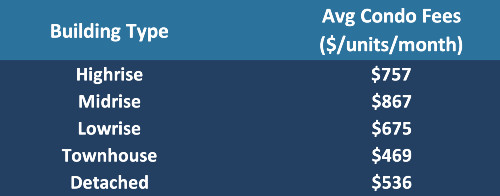
Ontario condo fees by building type, as of February 12, 2026.

Building type significantly influences fees. High-rise (11-plus storeys) and mid-rise (5-10 storeys) structures command the highest fees in Ontario, with elevated operating costs and often more amenities in areas of greater density. Townhomes and detached homes attract the lowest condo fees, though some upkeep is the responsibility of the owners.

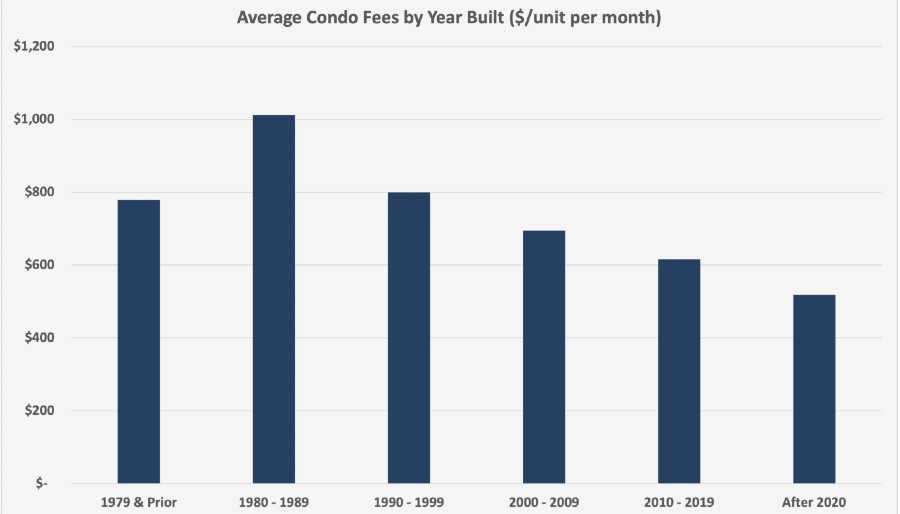
Age also tells a story. Buildings from the 1980s demand substantially higher fees, reflecting higher levels of capital replacement and reserve funding in communities of that vintage. Those built in other periods, prior to 2000, are not immune either, as they reflect the impact of capital improvements and, to a lesser extent, reduced energy efficiency.
condo fees

Ontario’s average monthly unit condo fees as of February 12, 2026: 1979 & Prior ($779), 1980 & Prior ($1,012), 1990-1999 ($800), 2000-2009 ($695), 2010-2019 ($616), and after 2020 ($518). Source, the Eli Report.

What prospective owners should know

Condo buyers in Ontario are advised to scrutinize a building’s financial health before purchasing. Reviewing the status certificate (a document outlining the condo’s finances, reserve fund, and any pending legal issues) can reveal red flags. What the status certificate does not describe are the issues affecting the community; those matters are discussed in AGM and meeting minutes, as well as the full reserve fund study.

Why those documents are not considered core records or mandatory disclosure in Ontario, when they are in British Columbia and Alberta, remains a a mystery. A buyer cannot understand from a status certificate whether the building has ongoing problems with its elevators, a pest infestation, or may be undergoing a significant envelope project over the next couple of years.

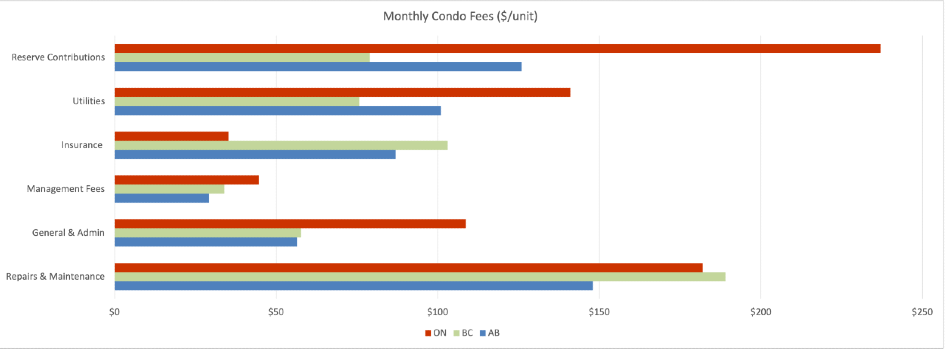
Regardless, condo buyers should review and benchmark the condo fees against other communities of a similar type, size and age to get a better understanding. Drawing on analysis of 10,000+ condo communities across Canada, a clearer picture has emerged with respect to operating budgets and reserve fund allocations from condo fees across Ontario, Alberta and B.C.:
condo fees

Cross-country comparison as of February 12, 2026. Source, the Eli Report.

What is immediately apparent is that Ontario’s fees are a couple hundred dollars a month higher than other provinces. Higher fees in Ontario reflect a regulatory framework that prioritizes financial stability over short-term savings. The main driver is the higher reserve contributions, though utilities, management and administration costs are also higher.

Regardless of the baseline, engaged boards and professional management can help keep fees predictable, while proactive maintenance avoids costly surprises. While Ontarians pay more in monthly fees, the reduction in special assessments relative to other jurisdictions is significant.

Condo fees are the price of shared ownership and collective responsibility. As the condo market evolves, expectations must rise to meet new challenges, ensuring that fees serve everyone’s best interests. Ultimately, the balance between quality of life, financial stewardship, and active community involvement rests on informed and engaged owners. By requesting reserve fund studies, meeting minutes, and insisting on open board communication, Ontarians can help condo living fulfill its promise, delivering both peace of mind and a strong sense of community.

Thomas Beattie is CEO of OctoAI Technologies, a condo intelligence company that provides reports and data to buyers, owners, property managers, realtors and businesses that serve condo communities.


The role of scents in commercial cleaning

As the commercial cleaning industry continues to evolve, what role does scent play in product choice, hygiene results, and sustainability efforts? From the perception of cleanliness to air quality and beyond, cleaners and facility managers need to consider scents r in their overall health and safety strategy.

The perception of cleanliness

Often, people associate a clean environment with the smell of citrus, pine, or bleach, but a clean smell does not mean a clean and sanitized space. 9 out of 10 visitors consider cleanliness to be a crucial factor in deciding whether to visit a business again, so companies want to leave a positive lasting impression.

But when a pleasant scent improves 82 per cent of people’s perception of the restroom’s cleanliness, how can companies leave that lasting impression without using the traditional scents?

  • Shift from odour masking to odour neutralizing strategy is one way to stay hygienic while avoiding unnatural or chemical scents.
  • For subtle scents, choose essential oils and natural products as fragrance alternatives.
  • Focus on removing foul odours at the source with frequent deep cleaning and prompt attention to spills and messes to simplify adding subtle scent to the space.

Sustainability

More and more companies are prioritizing ESG goals as part of their commercial cleaning programs. The growth of sustainability, transparency, and the use of environmentally friendly products means that some of these fragrant products will no longer make the cut. Many of these “natural” ingredients that create that “clean” smell are achieved through synthetic fragrances and VOCs. As the demand for transparency continues to grow, these ingredients will need to be listed on cleaning labels, making them less desirable for companies to use.

VOCs are problematic for indoor air quality, as they can contribute to chronic respiratory issues, asthma, allergic reactions, and headaches. Many cleaning products contain VOCs, including air fresheners, chlorine bleach, dry cleaning chemicals, detergents and dishwashing liquid, rug and upholstery cleaners, furniture polish, and oven cleaners.

How can facility managers and commercial cleaners better protect building occupants?

  • Switch to low or no VOC, scent-free cleaning products. Use resources like the Environmental Protection Agency (EPA) or Green Seal for a list of cleaning products that meet their standards.
  • Educate staff and visitors on the effects that scented cleaning products can have on health, IAQ, the environment, and more.
  • Stay transparent by posting cleaning schedules, promoting clean products, and publishing the labels from products used, so occupants and visitors can be assured that you are practicing consistent cleaning.

Commercial cleaners and facility managers need to be conscious of the effect that scent has on the environment, air quality, and the health and safety of the building occupants, despite the common misconception that a clean smelling means a clean facility.

Inclusion plan renewed for Vancouver’s 2STGD+ community

Vancouver City Council approved the renewed 2STGD+ Safety and Inclusion Action Plan and framework that advances equity, safety and wellbeing for Two-Spirit, transgender and gender diverse (2STGD+) people in Vancouver.

“Every Vancouverite deserves to feel safe, valued and included,” said Mayor Ken Sim. “This renewed 2STGD+ Safety and Inclusion Action Plan builds on the work our city began in 2016 and focuses on clear, practical steps to strengthen safety and belonging.”

2026 priority actions

Two-Spirit, transgender and gender diverse people continue to experience higher rates of discrimination and systemic barriers. The renewed plan reflects community priorities and best practices and features actions the City will advance towards five long-term goals:

  • Housing and Homelessness: Increase inclusive, accessible housing and shelter options for 2STGD+ community members.
  • Community Spaces and Safety: Ensure public spaces are welcoming and accessible.
  • Programs and Services: Expand programs tailored to diverse 2STGD+ needs.
  • Visibility and Engagement: Strengthen representation in City communications and engagement processes.
  • Human Resources and Staff Experience: Foster an inclusive, supportive workplace for 2STGD+ staff working at the City of Vancouver.

The City has engaged extensively with 2STGD+ community members on the plan, alongside partner agencies such as the Vancouver Police Department, Vancouver Board of Parks and Recreation, Vancouver School Board and Vancouver Public Library.

Manitoba rolls out hospital safety upgrades

The Manitoba government is boosting hospital safety measures across the province. The initiatives reflect ongoing consultations with front-line staff and health-care unions.

“Our government is implementing a layered approach shaped by what health-care workers have asked for, including tools like the SAFE app, trained institutional safety officers and stronger access controls to create safer environments for both staff and patients,” announced Health Minister Uzoma Asagwara.

The SAFE mobile app, now implemented at St. Boniface Hospital, Health Sciences Centre Winnipeg and Brandon Regional Health Centre, provides staff with real-time safety alerts, a direct connection to security services, emergency notifications and personal safety tools within a single mobile platform to improve communication and situational awareness. Manitoba is currently the only health system in Canada using an integrated mobile safety alert platform of this kind to support front-line staff.

The government has also hired 128 fully funded institutional safety officers who receive specialized training in crisis intervention, de-escalation and emergency response.

Amnesty lockers have been installed at select facilities, including Thompson General Hospital and Swan River Hospital. The lockers offer secure storage at entry points to reduce the risk of prohibited items entering hospitals, alongside stronger monitored access points, expanded surveillance systems and enhanced emergency communication tools as part of a layered strategy.

At Health Sciences Centre, safety upgrades include AI-enabled weapons detection systems, expanded CCTV monitoring, enhanced cellular connectivity to eliminate communication dead zones, improved tunnel and parkade safety features, additional panic alarms and increased collaboration with Winnipeg Police Service through on-site presence and joint patrols.

In northern Manitoba, facilities have introduced co-ordinated regional safety leadership for the first time, including the hiring of a regional security manager in December 2025. This occurred alongside a larger emergency department security presence, secure monitored entry points and more efficient emergency protocols.

Across Prairie Mountain Health facilities, safety enhancements include workplace violence prevention programming, safe-walk programs for staff and visitors, improved visitor registration processes, more security patrols and regular staff safety huddles that help identify risks and inform ongoing improvements.

How risk is impacting B.C. projects

British Columbia’s development pipeline is under pressure. Interest rates, labour constraints and shifting buyer demand dominate headlines. But behind the scenes, another factor is shaping outcomes just as significantly: insurance capacity.
In 2026, financing, construction timelines and insurance are no longer separate conversations. They move together, and the projects that recognize this early are the ones most likely to maintain momentum.

A Changing Risk Environment
Greater Vancouver presents a uniquely complex underwriting environment. Seismic exposure, dense project values and insurer accumulation limits make capacity deployment more cautious. With earthquakes common in B.C., and their ability to cause cascading impacts such as liquefaction, fires and infrastructure disruption, the built environment carries a higher risk profile than many other regions in Canada.

At the same time, the total cost of risk has risen. Canada’s catastrophe losses continue to influence insurer appetite and terms. CatIQ’s early 2026 reporting notes 2025 insured catastrophe losses of CAD $2.4B and underscores that catastrophe frequency remains high even in “lower” loss years compared to record-breaking periods. The Insurance Bureau of Canada has also highlighted how extreme weather losses have become a persistent affordability and availability issue for the market.

Uncertainty itself has also become a risk factor. Geopolitical pressures, trade policy shifts, material lead times and equipment availability make construction timelines harder to defend. Meanwhile, condo presales are softer than in previous cycles, and some projects are not transitioning cleanly from planning to construction.

In response, more developers are leaning into purpose-built rental as for-sale economics tighten. That shift changes both the risk profile and the operational mindset. Developers are increasingly building assets they intend to hold and operate, and insurance must evolve accordingly.

Why Insurance Now Influences Financing
Insurance has become a structural input that influences whether a lender will advance funds, questions if the contractual risk allocation is financeable, and decides if a schedule is credible.

Public and private lenders are also taking a deeper look than before. Many now hire third-party consultants and scrutinize coverage terms more closely. Some are willing to revisit insurance requirements, but only when supported by strong rationale and defensible risk controls. Within the CMHC ecosystem as well, we’re seeing clearer policy direction and more emphasis on construction risk documentation and mitigation.

Projects stall most often at the intersection of viability and proof: when pro formas are strained and the insurance submission cannot clearly demonstrate disciplined execution.

Common Misconceptions About Underwriting Construction Risk
A common misunderstanding among developers is thinking that the insurance decision is primarily about the premium. Premium matters, but underwriters are really evaluating risk clarity. They want to know the answers to these questions: Who holds what risk contractually? How is the project phased, and what is the real exposure at each stage? What technology and controls are in place to prevent high-frequency losses (especially water damage)? How will delays be managed and communicated?

When brokers are brought in too late, there is less room to structure risk effectively, particularly on contractual risk allocation and lender-driven insurance conditions that can be negotiated with evidence and context. Engaging early is often the difference between flexibility and friction.

Lessons from a Major Burnaby Development
A recent large, multi-phase development in Burnaby illustrates the pressures the market is facing.

Positioned beside rapid transit and planned as a high-density, mixed-use community, the project required complex insurance structuring for several reasons.

One, it sits in a high earthquake-exposure region where insurers are mindful of geographic accumulation. It also includes significant underground work and multiple towers built over shared infrastructure, creating concentrated values at key construction stages. And it required the insurance program to adapt to scope changes and schedule realities.

The solution was to structure coverage around actual phased exposure, aligning declared values and limits to what was truly at risk at each stage, rather than insuring the entire completed project from day one. This approach helped insurers deploy capacity progressively and gave lenders greater confidence that coverage would remain responsive as the project evolved.

Across B.C., and increasingly across the country, projects that are moving forward tend to share several traits: They quantify and communicate risk early. Values-at-risk analysis, NatCat and seismic considerations are addressed upfront, making underwriting more predictable. They adopt technology that prevents losses, not just documents them. Water mitigation sensors reduce claims and increase insurer confidence because they demonstrate proactive management. And they treat risk advisors as part of the project team. Early engagement reduces late-stage surprises that jeopardize timelines and financing.

Despite ongoing friction in the real estate market, insurance capacity exists. The market can support development, especially where risk is well-managed.

The Bottom Line
Insurance is actively shaping B.C.’s development future by forcing early conversations around risk structure, resilience and execution quality. Financing, timing and insurance capacity are now one conversation. Projects that start that discussion early are better positioned to maintain momentum and deliver the housing and infrastructure outcomes the province needs.


Sarah Hanson is senior vice president and B.C. and Alberta regional leader for Property and Casualty at NFP, an Aon company. She can be reached at [email protected].

Hamza Jamal is vice president and account executive for Property and Casualty at NFP, an Aon company. He can be reached at [email protected].


Toronto Community Housing unveils 130 Augusta Ave

Toronto Community Housing (TCHC), alongside community leaders and elected officials, celebrated a major milestone this week with the official opening of the new Atkinson Co‑operative building at 130 Augusta Avenue. The building marks the latest achievement in the ongoing revitalization of Alexandra Park and represents a significant expansion of affordable housing options in the city.

The new 103‑unit building includes 99 replacement Rent‑Geared‑to‑Income homes and four net‑new affordable rental units administered by the City of Toronto. Designed to support families and strengthen community life, the building features a fifth‑floor outdoor mews with community gardens, an amenity room with a community kitchen, and a street‑level childcare centre offering 62 spaces for children aged 0–4. The City of Toronto has invested more than $9 million in the project, including $7.6 million through Section 37 funds, in partnership with TCHC, Tridel, and the Atkinson Co‑op.

“I am proud to be here today to celebrate this new cooperative housing building in Alexandra Park, alongside a new City of Toronto operated daycare opening in June, said Toronto Mayor, Olivia Chow. “I remember when this vision first took shape in the 1990s… The City has invested millions to help make this project possible. This co‑op is an example of how we are delivering a safe, affordable and caring city for everyone.”

Built with development partner Tridel, the building incorporates a fully electric HVAC system and high‑performance, thermally efficient windows to improve energy retention and reduce noise. Meeting Toronto Green Standard Version 3 Tier 2 for heating and cooling, the project demonstrates that public housing can be both sustainable and architecturally forward‑looking.

According to TCHC, the Alexandra Park revitalization continues to reflect its commitment to delivering safe, well‑maintained, affordable homes that align with the City’s broader housing strategy. The Atkinson Co‑op also highlights TCHC’s capacity to collaborate with partners to deliver new housing on their behalf, expanding the range of affordable options available to Torontonians.

“130 Augusta shows what new public housing can be,” said Sean Baird, President & CEO, TCHC. “This is what TCHC and the City of Toronto can build together, and we’re ready to continue this work to create even more affordable housing for the people of Toronto.”


Mississauga moves to unlock more housing

The City of Mississauga announced it is moving forward with a comprehensive review of its urban design requirements as part of ongoing efforts to boost housing supply and improve affordability. At a recent meeting of the Planning and Development Committee, City staff outlined early recommendations from the Urban Design Program Review, identifying immediate changes that could help unlock more homes in key urban areas.

“Housing supply and affordability remain key issues facing Mississauga residents,” said Andrew Whittemore, Commissioner, Planning and Building. “Reviewing our urban design program will help remove housing barriers without compromising the standards that make our communities great places to live. Cities are not static. As planners, we must be ready to respond to changing demographics, infrastructure needs and economic conditions.”

Mississauga currently uses a range of guidelines—such as wind and shadow studies—to ensure new development contributes to healthy, vibrant communities. The ongoing review will assess these guidelines, along with related Official Plan policies and zoning by-law regulations, with the goal of removing unnecessary barriers to housing while maintaining strong design standards.

The initiative also responds to recommendations from the Mayor’s Housing Task Force, a group of more than 30 industry and non-profit representatives. The Task Force noted that certain design requirements have increased costs and slowed construction without delivering meaningful community benefits.

Updating urban apartment zones

In late 2024, Mississauga introduced two new urban apartment zones intended to streamline approvals for mid- and high-rise housing. Staff are now recommending updates to design requirements in these areas, including:

  • Replacing angular plane rules with simpler setbacks. Many cities are rethinking step-back requirements, which can reduce buildable space and increase construction complexity without improving livability.
  • Reducing tower separation distances from 30 to 25 metres—more typical in urban settings. Staff say this change will support efficient layouts and better site use, especially on smaller or irregular parcels.
  • More flexibility for amenity areas, ground-floor windows and street-level entrances.

As the review progresses, the City says it will engage developers and residents to refine updates. Proposed zoning changes for urban apartment zones and amenity areas are expected to go to Council in April.

B.C. interior designers recognized for excellence

The Shine Awards of Excellence 2026 were held at the Vancouver Convention Centre, celebrating the best professional interior designers in B.C.

A total of 20 awards were given out in different categories with design solutions that span commercial and residential interiors.

Organized by the PIDAA (Professional Interior Designers Advocacy Association), the annual Shine Awards of Excellence showcases the excellence and innovation of registered interior designers in B.C.

Awards of Excellence or Awards of Merit are presented to the outstanding submissions, culminating with the prestigious Designer of the Year and Robert Ledingham Award.

The Robert Ledingham Award was presented to Markus Brown of Perkins & Will for the Vancouver Studio project. Designer of the Year went to Jennifer Hoffbek, Earls Kitchen & Bar, for the Miami Worldcenter.

Award of Excellence Winners

  • Stark Architecture & Interiors for Queensway Office, Workplace
  • Box Interior Design for Juu Ku, Food and Beverage
  • Earls Kitchen & Bar for Miami Worldcenter, Food and Beverage
  • Perkins & Will for Vancouver Studio, Climate Action

Perkins & Will was a multiple winner this year, taking home two Awards of Merit as well in the Workplace category for the Vancouver Studio and Blakes law firm.

Earls Kitchen & Bar also won an Award of Merit for Las Olas. An Award of Merit for Diversity, Equity and Inclusion went to Root Interiors for MMFN Administration Building.


Accessible restrooms improve efficiency and guest experience

Often, restrooms are overlooked by facility and maintenance managers as a valuable guest experience tool. Visitors get an impression about your business, and are able to determine sustainability and cleanliness standards they experience your restrooms. Accessibility is a vital component in the guest experience, mandated to some degree by the government, but  more important than remaining compliant is prioritizing barrier-free access that affords everyone the same accommodation when they visit your building.

RELATED: First-ever coalition is launched to drive inclusive hygiene in public restrooms

There are more than eight million Canadians with disabilities, and about 20 per cent of the country’s population is 65 and older. Functionality for everyone is a proactive approach to public restroom, and there are steps that maintenance and building managers can take to ensure their restrooms are more accessible for users:

  • Check on building codes and local legislation to stay compliant and on top of regulatory changes as they happen.
  • Along with stalls that are wheelchair-friendly, ensure that the path to those stalls is wide enough for a wheelchair to easily maneuver.
  • Install sinks, taps, and hand dryers or towel dispensers that can be reached by those in a wheelchair and accessed by those who require mobility aids. Install grad bars or support nearby for those who may need them.
  • Include clear signage with a large font to help visually impaired visitors. This includes public signage that directs guests to the restrooms throughout the building.
  • If entering your restrooms requires opening a door, install large automatic or sensored openers to simplify entering that part of your building. This could be a helpful feature for a wide range of guests including families with strollers, guests using walkers, wheelchairs or needing mobile assistance, people unable to push or pull a heavy door, and beyond.
  • Touchless features like taps and toilets can help make your restrooms more accessible for those with dexterity challenges, so consider these upgrades when budgets allow.
  • Include features like non-slip flooring or coatings to minimize slip and falls and increase safety for all users.

Offering guests an accessible restroom experience means improving your lasting impression and helping to make the world a little easier for those with accessibility needs. Maintenance and facility managers should stay informed about regulation changes and tools that become available on the market to offer functional restrooms that are accessible to everyone.

Navigating Ontario’s drug activity regulations

Ontario is considering a new regulatory framework that could significantly reshape how landlords and property managers respond to illegal drug activity in their buildings. The proposed regulations under the Measures Respecting Premises with Illegal Drug Activity Act, 2025 (MRPIDAA) introduce new responsibilities, heightened risks, and expanded enforcement tools that rental housing providers are advised to prepare for. The Ministries of the Solicitor General and Municipal Affairs and Housing are currently consulting on these proposals, and apartment owners have until March 8, 2026, to provide feedback through the Regulatory Registry.

“MRPIDAA is intended to curb illegal drug production and trafficking by placing clear obligations on those who control or manage properties,” said Kristin A. Ley, Partner at Cohen Highley LLP Lawyers. “For landlords, this means a more explicit duty to prevent illegal drug activity to avoid steep penalties if they knowingly allow it to occur. It also expands police powers in ways that could directly affect building operations, tenant relations, and property access.”

The Act creates new provincial offences, with penalties that may include fines of up to $250,000 for corporations and fines and/or imprisonment for individuals. These penalties would apply to landlords, property owners, managers, and even tenants who sublet if they are found to have knowingly permitted their premises to be used for illegal drug activities such as production, trafficking, or possession of proceeds related to these offences. If police have reasonable grounds to believe illegal drug activity is occurring, they may seize evidence, order the closure of non‑residential spaces used for illegal drug activity, and even recover certain enforcement costs from responsible parties. For housing providers, particularly in mixed‑use or multi‑tenant buildings, these expanded powers could create significant operational challenges.

According to Ley, the Ministries are considering formally designating offences related to unauthorized production of controlled substances, unauthorized production of precursors, and trafficking activities; they are also considering exemptions for housing providers whose operations differ from typical private‑market rentals, recognizing that many operate within regulated care or social‑service frameworks. Proposed exempt categories include retirement and long‑term care homes, student residences, rehabilitative or therapeutic programs, short‑term respite care, accommodations governed by specific provincial statutes, among others.

For all housing providers impacted, Ley suggests conducting a formal review of policies to ensure lease agreements, screening processes, and building guidelines clearly prohibit illegal drug activity and outline consequences for violations.

“Because the Act focuses on what landlords ‘knowingly permit,’ maintaining clear records of inspections, complaints, and follow‑up actions will become essential,” she said, adding that front‑line staff and property managers should be trained to recognize what constitutes illegal drug activity, understand early signs of potential risk, and know when and how to address concerns appropriately.

At the same time, landlords should balance “vigilance with respect for tenant rights,” taking reasonable, non‑intrusive steps—such as improving lighting, enhancing access controls, and conducting routine checks of common areas—to reduce the likelihood of illegal activity and support a safer building environment.

How other provinces approach drug activity 

While most provinces already allow landlords to end a tenancy for illegal activity, none currently impose a separate, proactive duty to prevent drug‑related conduct in rental units. In British Columbia, Alberta, and across the Prairies and Atlantic provinces, drug activity is handled within existing tenancy laws—typically as a ground for eviction when it endangers safety, damages property, or constitutes a substantial breach.

By contrast, Ontario’s proposed MRPIDAA framework goes further by creating a stand‑alone legal regime that prohibits landlords from “knowingly permitting” drug activity and may require them to take “reasonable measures” to prevent it, with potential penalties outside the normal Residential Tenancies Act process. In other words, where other provinces give landlords tools to respond to illegal activity, Ontario is shifting toward a model that makes landlords active participants in prevention and enforcement, creating obligations that do not currently exist elsewhere in Canada.

That said, the regulations are not final, and apartment owners have an opportunity to shape how the Act is implemented. Feedback can be submitted through the Ontario Regulatory Registry at regulatoryregistry.gov.on.ca.


Vancouver realtor commission rules under scrutiny

The Competition Bureau has obtained a court order to gather information from Greater Vancouver Realtors (GVR) and advance its ongoing investigation into real estate commission rules in Canada.

These rules dictate how real estate agents are paid, who pays them, and how those payments must be disclosed on multiple listing service (MLS) systems.

The Bureau is investigating whether the commission rules and the Canadian Real Estate Association (CREA) may contravene the abuse of dominance or other civil provisions of the Competition Act.

When the investigation began in 2024, the Bureau focused on CREA policies and how rules may impact competition among real estate agents. Under these rules, the seller’s agent must offer compensation to the buyer’s agent when a property is listed on an MLS system.

The investigation has now expanded its scope to examine GVR’s enforcement in the Greater Vancouver market. GVR, formerly the Real Estate Board of Greater Vancouver, represents more than 15,000 real estate professionals and is one of CREA’s largest member boards.

The Bureau aims to determine whether rules discourage buyers’ agents from competing by offering lower commission rates or alternative pricing models, encourage “steering,” a practice in which agents are motivated to guide buyers toward homes with higher commissions, and affect competition in other ways, potentially resulting in higher costs for both buyers and sellers.

Resources address repetitive strain injuries

In recognition of International Repetitive Strain Injury (RSI) Awareness Day on Monday, February 28, the Canadian Centre for Occupational Health and Safety (CCOHS) is urging employers to boost prevention efforts aimed at reducing risk in the workplace.

Repetitive strain injuries develop gradually over time when workers perform repetitive motions such as typing, lifting, twisting, pushing, or pulling. These injuries can affect muscles, tendons, nerves, and joints in the neck, shoulders, back, arms, hands, and other parts of the body. If not addressed, they can cause discomfort, pain, stiffness, reduced function, and even permanent damage.

“Repetitive strain injuries can affect any worker, in any industry,” said Shazard Bansraj, an occupational health and safety specialist at CCOHS. “They develop slowly over time and can be painful and sometimes even debilitating. “It’s important to identify repetitive movements that can be hazardous so we can develop prevention strategies to protect workers from injury.”

Awareness and action

Repetitive strain injuries can be prevented by addressing hazards at the source and putting effective controls in place. CCOHS encourages workplaces to adopt practical strategies, including reducing repetitive work, improving job and workstation design, providing education and training on early signs and symptoms, and planning frequent rest breaks to reduce strain and fatigue. Other factors, such as posture and force, should also be assessed.

Resources to support RSI prevention

To help workplaces promote awareness and take preventive action, the CCOHS website offers free posters, infographics, social media images and fact sheets on International Repetitive Strain Injury Awareness Day.

Construction Business Archive

Facility Cleaning And Maintenance Archive

Canadian Facility Management And Design Archive