Articles Archive - Page 39 of 928 - REMINET
REMI

Michael Brooks triggers REALPAC succession plan

Michael Brooks has announced plans to depart from the Real Property Association of Canada (REALPAC) at the end of 2027 after serving as the national industry association’s chief executive officer for nearly 30 years. During that tenure, he has shown progressive leadership that has advanced the interests of Canada’s largest institutional, public and private real estate investment and development companies and steered them in new directions for changing times.

REALPAC wields an influential voice on regulatory issues, evolving business dynamics and commercial real estate’s connections to the broader economy and social fabric. Brooks emerged as an early champion of energy efficient, sustainable and climate-resilient built assets, making the now widely accepted case for their environmental, financial and productivity paybacks. He has also been a strong advocate for affordable housing, corporate social responsibility, transparency and industry professionalism.

“Both REALPAC, and the Canadian commercial real estate industry, have undergone significant transformation during my time as leader, and REALPAC has grown to be a trusted and influential voice. I am proud of what we have accomplished together,” Brooks says.

He currently serves on the Canadian government’s Sustainable Development Advisory Council, is a recipient of the Canada Green Building Council’s lifetime achievement award, and has served on the boards of the World Green Building Council, GRESB BV, Eva’s Initiatives for Homeless Youth and the Toronto Foundation. He is a former partner and real estate practice leader with Aird & Berlis LLP, has had a long visiting academic association with the Ted Rogers School of Management at Toronto Metropolitan University, and is the author of the instructional textbook, Canadian Commercial Real Estate: Theory, Practice, Strategy.

REALPAC’s board of directors will begin the search for a successor later this year, with the aim of having a candidate in place for a transitional period prior to Brooks’ departure.

The business case for short-term rentals

As housing needs evolve across Canada, short-term rentals (STRs) are gaining traction among professionals on assignment, relocating families, and travellers seeking flexible, home-like accommodations. Unlike hotels or year-long rental leases, STRs offer convenience, comfort, and adaptability, making them an increasingly popular choice. Between 2017 and 2023, the number of STRs in Canada surged by nearly 60 per cent, reflecting a broader shift in how people live, travel, and work. This rapid growth is prompting some property managers to reconsider their strategies and explore the potential of short-term rental models, especially in provinces like B.C. and Ontario, where STR growth has been the highest.

That said, transitioning from long-term to short-term rental management requires a clear understanding of regulatory frameworks, operational shifts, and financial trade-offs. According to the Canada Mortgage and Housing Corporation (CMHC), STRs are most common in neighbourhoods with strong transit access and proximity to downtown amenities. Their affordability and high turnover potential allow owners to generate consistent income without relying on premium rents. Their appeal includes:

  • Flexible terms – they are Ideal for seasonal stays, work assignments, or family visits.
  • Low-commitment trials – they provide an easy way for prospective residents to test a city before committing.
  • Fully furnished convenience – enabling turnkey living for those avoiding furniture purchases or moves.

 Local rules and zoning

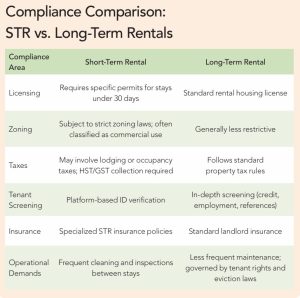
In Canada, municipalities impose a range of restrictions on short-term rentals (STRs), including licensing fees, zoning limitations, and specific tax requirements, all of which can impact profitability and scalability. Property owners looking to transition should stay fully compliant to avoid financial penalties. This includes securing and renewing required permits, declaring rental income and remitting applicable taxes such as HST or GST, keeping up with evolving local bylaws, and clearly communicating guest rules such as quiet hours, parking expectations, and recycling protocols. It also helps to build community trust by engaging with neighbours, addressing concerns proactively, and encouraging guests to support nearby businesses.

Operational considerations

Transitioning to STRs involves more than regulatory compliance—it also demands operational agility and consistent service delivery. One of the most significant shifts occurs with staffing, given the higher turnover rates require more frequent housekeeping and maintenance to ensure units are clean, functional, and ready for incoming guests.

Technology also plays a critical role in STR operations. Dynamic pricing tools are essential for optimizing rental rates during peak seasons or local events, particularly in high-demand areas such as downtown cores or beachside communities. These tools allow property managers to respond quickly to market fluctuations and maximize revenue potential.

ROI and revenue models

While STRs offer the potential for higher gross revenue, they also come with increased operational costs and management demands. Compared to long-term rentals, STRs benefit from higher nightly rates and flexible pricing strategies, but they rely heavily on tourism trends and seasonal demand. Furnishing requirements are more extensive, with fully equipped units demanding greater upfront investment. Maintenance is more frequent due to guest turnover, and specialized insurance policies are often necessary to cover short-term risks.

In contrast, long-term rentals provide steady income, lower setup costs, and reduced management intensity. Before making the shift, property managers should conduct detailed occupancy forecasts and cost-benefit analyses to determine whether the STR model aligns with their financial goals and market conditions.

Resident and neighbour experience

In mixed-use or multi-unit communities, maintaining a positive experience for both short-term guests and long-term residents is essential. Property managers should establish clear property rules and expectations, communicate noise and conduct policies transparently, and maintain open channels for feedback and concerns. Reinforcing a sense of community and mutual respect helps foster a welcoming environment and minimizes friction between different types of tenants. A well-managed resident experience not only enhances the property’s reputation but also reduces turnover and builds long-term tenant loyalty.

Building a sustainable STR strategy

Successfully integrating STRs into a property portfolio requires strategic planning, adaptability, and continuous performance review. Property managers who monitor guest feedback, stay informed about local regulation changes, and refine operational systems are best positioned to sustain profitability and long-term success. By balancing short-term opportunities with long-term stability, STRs can complement traditional leasing models and evolve alongside shifting market demands.

Ellen O’Connor is the Marketing & Leasing Manager at Accora Village (Ferguslea Properties), Canada’s largest privately owned rental community.

Alberta allocates $59M for cardiac care and ICU capacity

Alberta’s newly tabled budget promises $59 million over three years to advance cardiac services and intensive care capacity.

If passed, the investment will add a new catheterization lab in Lethbridge and expand intensive care and diagnostic capacity at Chinook Regional Hospital and Medicine Hat Regional Hospital. The funding will bring shorter wait times and better outcomes for families across southern Alberta.

Subject to final design and construction, up to 54 intensive care beds are anticipated at Chinook Regional Hospital and 18 at Medicine Hat Regional Hospital. The cardiac catheterization lab in Lethbridge is expected to serve approximately 1,500 to 1,700 patients annually once fully operational. Currently, more than 1,300 patients are transferred out of southern Alberta to Calgary to receive cardiac services.

“Lethbridge and Medicine Hat play a vital role as regional centres supporting rural and remote communities across the South Zone,” said Justin Wright, parliamentary secretary for rural health (south). “Investing in cardiac and intensive care capacity at these sites strengthens regional infrastructure and helps ensure the broader health system remains stable and sustainable.”

OSCRE tackles waste data management

The Open Standards Consortium for Real Estate (OSCRE) is tackling the third element of its planned trio of environmental management standards. With frameworks for consistently tracking and reporting energy and water data in place, the global industry organization is now exploring how best to manage data related to solid waste generation and diversion.

The effort has been launched as real estate operators and their suppliers come under regulatory pressures in many jurisdictions to minimize waste output, ensure maximum recovery of recyclable materials and assume more responsibility for the end-of-life management of the packaging and products they’re delivering to the market. Building operators face stricter rules for separating recyclables and organic waste in tandem with rising monetary penalties for non-compliance; suppliers increasingly come under extended producer responsibility (EPR) provisions; and there is a demand all round for accurate waste audits and reporting.

“There isn’t one single set of new waste rules. The rules and the fines depend heavily on where you are and what kind of waste you’re talking about — household, commercial, construction, hazardous, food waste, recycling contamination, etc.” OSCRE communications observes.

That’s galvanizing the need for consistent, defensible proof of performance that can be presented to regulators, used for corporate governance and communicated to investors, clients and the general public. OSCRE will outline the scope of its new waste data standards project in an upcoming webinar.

New partnership advances arena hygiene and sustainability at BC Place in Vancouver

Tork, an Essity brand, and BC Place in Vancouver have announced a strategic partnership to elevate hygiene standards, sustainability, and the overall fan experience at one of Canada’s premier venues. Home to the BC Lions of the Canadian Football League and the Vancouver Whitecaps FC of Major League Soccer, BC Place is preparing to welcome millions of international visitors for major sporting events in 2026, making this partnership a timely investment ahead of a landmark year for the venue.

Superior hygiene across a facility elevates the fan experience, encourages food and beverage spending and makes the work easier for the staff maintaining those spaces – which is why Tork is deploying its high-capacity PeakServe® and OptiServe® families of dispensers and solutions across BC Place’s 54,500 seat stadium. With over 1,000 dispensers deployed throughout the facility – including 129 washrooms – comprehensive hygiene solutions strengthen BC Place’s operational excellence.

“At BC Place, finding a hygiene partner who can contribute meaningfully to both our operational performance and our sustainability journey is vital” said Chris May, General Manager at BC Place. “Tork provides solutions that will help us progress towards our goal of Zero Waste Certification, while maintaining the clean, welcoming spaces our guests expect and enjoy.”

Both organizations share a strong commitment to creating environments that deliver exceptional guest experiences while advancing environmental stewardship. In 2025, Essity, the parent company of the Tork brand, was recognized on the Corporate Knights’ Global 100 list and CDP’s A List for forests, while BC Place is pursuing Zero Waste Certification by 2026. Tork solutions, including the carbon neutral certified and SEAL Sustainability Award-winning dispenser systems, will be instrumental in achieving this goal, reducing consumption and minimizing waste across the facility.

“Essity and BC Place have a long‑term partnership built on close collaboration, value creation and continual improvement to elevate the customer experience,” said Brandy Afoon, Account Manager, Essity. “With innovative, sustainable Tork solutions supporting venue operations, we’re proud to help BC Place continue delivering a clean, comfortable environment for every guest.”

CPP Investments inks Nordic data centre deal

Canada Pension Plan Investment Board (CPP Investments) is furthering its collaboration with the global digital infrastructure company, Equinix, through joint acquisition of the atNorth data centre portfolio, stretching across five Nordic nations. CPP Investments will contribute roughly USD $1.6 billion to secure a 60 per cent controlling interest in atNorth, which encompasses eight operational data centres and three high-density colocation facilities now in development.

“The Nordics are an attractive market for data centre growth and the opportunity to partner with Equinix on this acquisition allows us to deploy capital at scale into a high-quality platform,” says Maximilian Biagosch, senior managing director and global head of real assets with CPP Investments.

The two investors are already part of a three-way partnership with the sovereign wealth fund, GIC, focused on developing hyperscale data facilities in the United States. The atNorth deal aligns with CPP Investments’ data centre strategy and augments publicly traded Equinix’s presence in the Nordics, where it currently operates eight data centres in Helsinki, Finland and Stockholm, Sweden.

The new acquisitions will continue to operate under the atNorth brand, which is headquartered in Reykjavik, Iceland, with presence in Denmark, Finland, Norway and Sweden. The data centre provider has 800 megawatts of installed or in-development capacity, and has power agreements in place to enable an additional 1 gigawatt of capacity and a move into hyperscale services. Its existing portfolio applies renewable energy resources, heat reuse technology and design efficiencies to reduce environmental impacts — also in step with Equinix’s renewable energy footprint for its European operations and target for net-zero emissions globally by 2040.

“Combined with our joint focus on sustainability, this acquisition is expected to enhance our ability to help customers unlock the full potential of the Nordics’ expanding digital landscape,” maintains Bruce Owen, president of Equinix in the EMEA (Europe, Middle East, Asia) market. “We are delighted to partner with CPP Investments, whose long-term track record of investing in the sector is highly complementary to Equinix’s connectivity services.”

“I’m extremely proud to announce the next step in our chapter, welcoming this investment from CPP Investments and Equinix, which will enable access to capital, global enterprise and hyperscale relationships, and supply chain strength required to scale at pace,” says Eyjólfur Magnús Kristinsson, atNorth’s chief executive officer.

The USD $4.2 billion agreement covers both the acquisition and capital for future expansion, with underwriting advanced by Canadian and European lenders. It will be finalized subject to regulatory approvals and other closing conditions.

Pier 4 REIT acquires large multi-res asset in London, ON

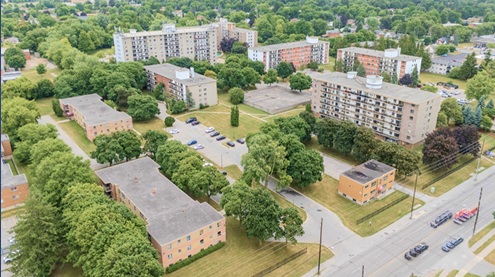
Pier 4 Real Estate Investment Trust announced the successful acquisition of a multi‑residential asset comprising nine low‑rise buildings in London, Ontario.

The newly acquired portfolio is situated in a well‑connected neighbourhood close to grocery stores, health centres, parks, and restaurants, giving residents convenient access to essential services and lifestyle amenities. The buildings range from three to ten storeys and include a total of 558 units, offering a mix of 10 studio apartments, 235 one‑bedroom suites, and 313 two‑bedroom suites. The property also features a range of on‑site conveniences, including laundry facilities, elevators, a playground, a splash pad, and a dog park, supporting a family‑friendly and community‑oriented living environment.


In announcing the acquisition, the trust emphasized the strategic importance of expanding its presence in one of Ontario’s fastest‑growing mid‑sized cities: “We’re excited to share Pier 4 REIT’s latest acquisition — a premier multi-residential asset consisting of nine buildings in London, Ontario,” said Darrell Ashby
Chairman & Co-founder. “This strategic investment underscores our commitment to enhancing residential communities in London and aligns seamlessly with our focus on acquiring properties in prime locations.”

The purchase reflects Pier 4’s broader strategy of targeting stable, well‑located multifamily assets that offer long‑term value and strong rental demand. According to the REIT,  London’s growing population, diversified economy, and increasing need for quality rental housing continue to make it an attractive market for institutional and private investors alike.

Pier 4 is a private real estate investment company that aims to “give everyday investors access to the multifamily real estate sector without the operational responsibilities typically associated with property ownership.” Through acquisitions like this one, the trust says it aims to build a portfolio of professionally managed residential communities while offering investors exposure to a historically resilient asset class.

Click here for the official announcement from Pier 4: 1126-1154 Adelaide Steet North

Fostering connection and creativity

When Stark Architecture & Interiors undertook the design for its new office in Squamish, every element was shaped to encourage connection, within the studio and with clients, through spaces that support dialogue, shared focus, and collective making.

As a physical expression of the firm’s values, the new interior was was conceived as a workspace rooted in collaboration, authenticity, and local craft.

The design transforms a simple industrial shell into a studio that celebrates material honesty and creative exchange. Warm Canadian maple millwork, locally crafted furniture, and exposed concrete surfaces establish a dialogue between raw structure and refined detail.

The layout supports a range of working styles. An open collaborative studio forms the heart of the office, encouraging informal exchange and creative momentum. Adjacent breakout rooms provide moments of quiet focus, while glass-enclosed conference rooms balance transparency with privacy. Supporting spaces, including a locker room and thoughtfully designed washrooms, are integrated with the same attention to comfort and function.

Every element, from the felt ceiling grid to the curated material library, was designed to foster connection, transparency, and hands-on exploration. The result is an environment where design and craftsmanship converge, supporting an open, creative culture and a deep sense of place.

Coordinating custom millwork and furniture with multiple local makers required precise detailing and material consistency; close collaboration and clear documentation ensured quality alignment. Integrating acoustic and lighting systems within the exposed ceiling also demanded technical coordination to maintain both performance and visual coherence.

The impactful design earned the project a Shine Awards of Excellence, workplace category.


UBC’s Gateway Health centralizes student wellbeing

UBC’s newest building, Gateway Health, is opening as a hub for student health, interdisciplinary teaching and collaborative research.

The 270,550-square-foot building gives a purpose-built home to the school of nursing, consolidates kinesiology programs from eight campus locations, and centralizes student health and wellbeing services for the first time.

Students now have access to modern teaching facilities, labs and study spaces designed to encourage collaboration. Later this year, Gateway Health will also host a new interprofessional teaching clinic, established through UBC Health, that will act as a unique space for developing and testing innovations in education and care.

The six-storey mass timber building houses a mix of spaces such as lecture theatres and classrooms, wet and dry labs, clinical spaces, gym and fitness facilities and office and administration areas.

Architectural elements include warm wood finishes, exposed timber, terracotta cladding and filtered daylight in the atrium. Artworks by six Musqueam artists have been installed indoors and outdoors.

Gateway Health was designed to achieve net-zero carbon certification and meet LEED, WELL and Rick Hansen accessibility standards. Its hybrid mass-timber structure makes sustainability visible. The project was delivered with UBC Properties Trust, Perkins&Will, Schmidt Hammer Lassen Architects and Heatherbrae Builders.

“The Gateway Health building reflects UBC’s commitment to student health and wellbeing—bringing the best in learning, care and collaboration together under one roof, and creating new opportunities for interdisciplinary teaching and research in health,” said Dr. Benoit-Antoine Bacon, UBC president and vice-chancellor.


Alberta budget confirms tax and fee increases

Commercial ratepayers in Alberta can expect a 4.25 per cent jump in their education property taxes this year. The provincial government aims to collect an extra $468 million in the 2026-27 fiscal year as part of its plan to cover one third of education operating expenses through the levy.

The increase — boosting the non-residential education property tax rate to $4.17 per $1,000 of assessed value — was confirmed in the newly released 2026-27 Alberta budget. It also announces a 2 per cent bump up in the tourism levy applied on hotel, motel and other short-term accommodation rates, and various fee increases that are expected to raise an additional $400 million in revenue during the 2026-27 fiscal year.

This is the second consecutive year education property taxes have climbed, following a 6.4 per cent rise in 2025 that pushed the non-residential rate from $3.76 to $4.00 per $1,000 of assessed value. Meanwhile, residential ratepayers swallowed a slightly lower 6.25 per cent increase last year, taking their education property tax rate up to $2.72 per $1,000 of assessed value, and will see a 4.4 per cent escalation in 2026 when the rate rises to $2.84 per $1,000 of assessed value.

“In 2026-27, the education property tax will fund 33.4 per cent of education operating costs, increasing funding from the historically low levels of less than 30 per cent in 2023-24 and 2024-25,” the budget document states.

Provincially mandated licenses and registrations will cost Alberta businesses and charities 33 per cent more beginning in 2026 — resetting required service fees to a range from $223 to $2,660. There will be an additional 3 per cent increase for corporate registries fees.

Some businesses that rent public lands are in line for hefty new expenses. Most notably, aerodrome operators face a hundredfold rate spike from $2.30 to $230 per acre. As well, public land rental rates for commercial and industrial work camps and some other unspecified uses are tapped to jump by up to 65 per cent.

Other announced fee increases will filter through to the real estate, facilities management and construction sectors. These include:

  • increases of $25 to $75 in the fee schedule for residential tenancy dispute resolution services;
  • increases of $3 to $45 for land titles fees;
  • and a new $25 charge for resubmissions of land titles and surveys.

Information requests, certificates and other approval processes related to compliance with the Environmental Protection and Enhancement Act or Water Act will also cost more.

Application fees for five types of trades training will be standardized at $150. That represents:

  • a 328 per cent, or $115 increase for the apprenticeship education program;
  • a 150 per cent, or $90 application fee increase for trade qualifier programs;
  • a 200 per cent or $100 increase to apply for blue seal trades training; and
  • brand new $150 fees attached to entrance exams and applications for red seal trades training.

Elsewhere on the labour and economic development front, efforts to attract entrepreneurs and talent for prioritized professional fields or industry sectors will adjunctly become a revenue-generating mechanism. A new $135 “expression of interest fee” will be introduced for applicants for permanent residency through the Alberta Advantage Immigration Program.

Business and recreational travellers will pay more for overnight stays at hotels, motels or other short-term accommodations beginning April 1 when the provincial tourism levy climbs from 4 to 6 per cent. This is projected to generate an additional $66 million in revenue over the course of the 2026-27 fiscal year.

Travel costs will rise still more for those who rent small passenger vehicles beginning in January 2027. The Alberta government plans to collect a new 6 per cent car rental tax that’s expected to yield about $36 million when it’s in effect for the full 2027-28 fiscal year. Legislation to authorize the surcharge — intended to apply on car rental rates, excluding the federal goods and services tax (GST) and line items for insurance and fuel costs — will be introduced later this year.

“The new tax will be a stable source of revenue and generate revenue from visitors to Alberta,” the budget document states. “Vehicles under long-term leases, as well as non-passenger vehicles such as cargo vans, moving trucks and similar types of vehicles, will be excluded from the tax.”

Sightseeing and educational field trips to provincial historic sites will also cost more. Admission fees are set to rise by $2 to $5.

Cutting costs and raising revenues for your cleaning company

Today’s marketplace is crowded and competition is fierce. As cleaning companies fight for attention, build their businesses, and protect their margins, finding simple ways to decrease spending can differentiate you from your competition. Rising prices, supply chain disruption, and inconsistent labour have all contributed to a challenging few years in the industry, but all is not lost. Cleaning companies can leverage technology, increase efficiencies, and improve operational practices to cut costs this year.

Examining your business costs is the first step in controlling them this year. Expenses typically include labour, supplies and equipment, transportation and fuel, administrative costs, and any other miscellaneous expenses, so total these to start to see opportunities to save.

Labour

Labour is the most expensive part of a cleaning business, but a crucial part of efficient labour management is schedule optimization. Money can be wasted with poor scheduling resulting in additional fuel charges, vehicle maintenance, lost time, and fewer customers being serviced. Take the time to look at your scheduling and optimize your operations. Making sure you are staffing efficiently means scheduling the correct number of employees per job – understaffing could mean less volume and an underwhelming customer experience, and overstaffing could mean wasting money where it could be better allocated. Evaluate each job to gauge the personnel needs, cross-train employees to save staff, and implement efficient systems for cleaning to optimize performance on each job. These cost-cutting techniques will help you to better manage scheduling for more efficient operation, without any additional expenses.

With the increasing cost of labour, there can be a temptation to hire cheaply to reduce overhead, but the investment should be made on retention instead. Turnover is very expensive, inconvenient, and can cost companies clients, due to poor experiences and negative reviews.

Investing in your employees with training and recognition helps build a competent work force, create positive company culture, increase loyalty, and reduce employee turnover. Knowledgeable, invested employees also save money by limiting accidents and mistakes, offering consistency for clients, and minimizing management disruption and interference. Offering a competitive wage may seem like an expensive proposition, but it can help cleaning companies avoid labour shortages, which can limit the number of jobs you take, decrease repetitive training and hiring costs, and help attract quality candidates – all of which boost your bottom line.

Equipment

Put maintenance programs in place to ensure that your equipment stays in top shape. Regular maintenance can help lengthen the lifespan of your equipment, saving you major replacement expenses and operational delays.

When the time comes for replacement or upgrade, spend the time to evaluate the best value for your money. For example, one piece of equipment may cost substantially more than another, but if it offers the opportunity to expand your services or lessen your labour needs, it may be worth it over the long haul. Look at your equipment as investments and determine value based on a long-term benefits for your business.

Revenues

Along with a cost-cutting strategy, take a look at your revenue and find opportunities for growth and improvement. Of course, increasing prices is an option, but it may not be your first choice in today’s  competitive marketplace.

Can you broaden your services without any or much investment? Are there add-ons that your current clients could benefit from? Can you prioritize long-term contracts over one-time opportunities?

Improving your marketing efforts can also help strengthen your branding, attract new clients, and build a strong reputation – with little to no investment. Ask your regular clients for positive reviews, request that long-term staff leave company testimonials, and respond promptly to all inquiries and online traffic. Also, focus on populating your social media channels with interesting, informative content that will engage your audience, follow and engage with your clients, and share relevant content to encourage users to share your content.

Budgets

From labour to equipment to marketing and technology, even a small budget can help your cleaning company get ahead. Find out where your clients are spending their time. Is your money best spent on Google AdWords? On an email campaign? On social media ads? Or is there a better way to market your business?

Technology can also help relieve some of the labour stress and provide a better experience for your customers. Investing in automation can help streamline quotations, scheduling, and inventory management, leaving your staff to focus more on clients. As well, making improvements to your website, like adding chatbots, can help provide better, consistent customer service whenever it’s required.

As the market continues to change, and challenges persist, companies looking to cut costs and increase revenues need a solid strategy for the year ahead.

Saskatchewan probes government building accessibility

The government of Saskatchewan is conducting accessibility assessments on more than 500 provincially-owned buildings.

The Ministry of SaskBuilds and Procurement is inspecting the interior and exterior of each building to identify opportunities for more inclusive and accessible spaces. Each facility will receive an audit report that highlights barriers in public-facing areas and helps inform future planning, investments, and improvements.

Planning for the project began in spring 2025, with pilot assessments launched in November 2025. So far, 18 buildings have been assessed, with all evaluations expected to be completed by the end of 2027.

“These assessments are an important step in ensuring that our government facilities support and accommodate all residents,” SaskBuilds and Procurement Minister Sean Wilson said. “The results will support planning to enhance accessibility across Saskatchewan.”

This project aligns with the Government of Saskatchewan Accessibility Plan 2024-2027, required under The Accessible Saskatchewan Act, and prioritizes accessibility in public buildings. More information on the legislation can be accessed here. 


Morguard announces $1-billion portfolio investment

Morguard Corporation and Morguard Residential REIT are set to make a landmark investment in Canada’s apartment sector, committing $1.0 billion for a 20 per cent undivided interest in a national multi‑suite residential portfolio valued at approximately $5.0 billion. The portfolio, currently owned by TD Asset Management (TDAM), represents one of the largest institutional rental housing platforms in the country and marks a significant expansion of Morguard’s presence in the sector.

The agreement also establishes a new strategic relationship between Morguard and TDAM. As part of the transaction, Morguard will assume full property management responsibilities for the portfolio, creating a major institutional mandate that aligns ownership with operational oversight. This transition positions Morguard as a key operator across a broad and diversified collection of rental communities.

“This transaction represents significant growth in Morguard’s residential services, enabled by our depth of experience and success as an asset and property manager for institutional‑quality multi‑suite residential communities,” said Angela Sahi, President and Chief Executive Officer. “We are advancing our owner‑operator model, demonstrating our alignment with partners and strength in execution, and building upon our existing relationship with TDAM.”

The portfolio includes 106 properties and more than 15,500 suites, spanning major urban and suburban markets nationwide. Approximately 36 per cent of the assets are located in the Greater Toronto–Hamilton Area, with additional concentrations in Southwest Ontario, Ottawa, Alberta, Quebec, and Nova Scotia. These properties are situated in established rental markets supported by strong population growth and sustained housing demand. The portfolio also contains a select group of newly completed and in‑progress developments, offering embedded growth potential and opportunities for modernization.

For TDAM, the investment realignment supports a broader capital deployment strategy within its diversified open‑ended real estate fund. “The multi‑unit residential sector is a strategic allocation within our diversified open‑ended real estate fund, and this transaction positions the portfolio well to redeploy capital into exciting value‑add and development projects,” said Andrew Croll, Managing Director and Head of Global Real Estate Investments. “Morguard brings operational expertise and a long track record in this asset class, supporting both stability and future growth across the TDAM Real Estate platform.”

The transaction is expected to be immediately accretive to both Morguard Corporation and Morguard Residential REIT. It will also significantly expand Morguard’s third‑party residential management business and deepen its presence in Montreal, Calgary, and Edmonton, while adding new exposure in Halifax. Financing will be provided through a mix of vendor financing, assumed mortgages, cash on hand, and short‑term borrowings. Closing is anticipated in Q3 2026, subject to approvals and due diligence.

Morguard’s confidence in the multi‑suite residential sector is supported by strong fundamentals. Over the past four years, the company’s Canadian residential portfolio has delivered average same‑property NOI growth of approximately 7.4 per cent, reflecting resilient demand and consistent operational performance across high‑quality assets.

Beginning in the second quarter of 2026, Morguard and TDAM will initiate a structured transition plan focused on operational continuity, employee integration, and maintaining a consistent resident experience. Day‑to‑day operations are expected to continue without disruption as responsibilities shift to Morguard.

Upon completion of the transaction, Morguard’s owned and managed assets—including its investment management platform—will total approximately $24.0 billion. Its residential platform will expand to 162 properties and 33,300 suites across Canada and the United States, reinforcing multi‑suite residential as a central growth driver within a diversified real estate portfolio that also includes office, industrial, retail, and hotel assets.

According to Morningstar DBRS, the transaction—expected to close in the third quarter of 2026 pending approval of Canada Mortgage and Housing Corporation mortgage assumptions—will also transfer full property and asset management responsibilities for the 106‑property, 15,892‑suite portfolio to Morguard. The firm anticipates that the acquisition will strengthen Morguard’s business risk assessment by increasing its weighting toward stabilized multi‑suite residential assets, which offer lower cash‑flow volatility and higher asset‑quality characteristics. Residential net operating income is projected to rise to 48 per cent of Morguard’s total NOI, up from 37 per cent at year‑end 2024, as Morguard assumes management of the entire $5‑billion portfolio.

Morningstar DBRS noted that Morguard’s operating performance as of September 30, 2025, remained consistent with expectations, with leverage and coverage ratios of 9.3x and 2.1x, respectively, on a non‑consolidated basis. While leverage is expected to increase to the mid‑ to high‑10x range by year‑end 2026 due to acquisition‑related debt and ongoing development spending, the agency maintains visibility into a clear deleveraging path. Ratios are forecast to decline to the mid‑ to high‑9x range in 2027 and to the mid‑ to high‑8x range in 2028 as full‑year NOI contributions, stabilized management fee income, and the completed Cawthra development flow through results. EBITDA interest coverage is expected to remain stable around 2.0x in the near to medium term.

Although the transaction is modestly credit‑negative in the short term because of higher leverage, Morningstar DBRS believes the anticipated improvement in asset quality provides Morguard with greater long‑term financial flexibility. The agency maintains that, despite leverage temporarily exceeding the previously stated upgrade threshold referenced in its April 2025 release, the enhanced stability and quality of the portfolio could support stronger financial metrics over time.


Providing the proper PPE for your employees

Protecting your employees is non-negotiable, and PPE is a part of that protection. Whether it’s cleaning or maintenance, providing the proper PPE helps keep your employees safe, healthy, and productive. While there has been some progress made in PPE management, nearly 30 per cent of workplace injuries in Canada are linked to inadequate PPE usage.

According to the Canadian Centre for Occupational Health and Safety (CCOHS), employers are responsible for ensuring that workers use the appropriate PPE, provide instruction on the required PPE, provide information on the maintenance and cleaning of the equipment, and educating and training workers on the proper use of PPE.

Here are some factors to consider when planning, managing, and purchasing PPE for your employees:

  • Ensure that you stay stocked with the PPE most commonly used, so you know you it’s available when you need it. Keep a close eye on inventory, strengthen supply chains, and create an order schedule to manage supplies efficiently.
  • Focus on the fit. A survey of 3,000 Canadian women who use PPE daily for their jobs revealed that more than 80 per cent have experienced issues with their equipment due to improper fit, uncomfortable wear, or inadequate selection. Rather than employing a one-size-fits-all approach or simply scaling down the men’s versions, work to get the right fit for all your employees.
  • Seasonality should be a factor. While 84 per cent of safety professionals consider weather when purchasing PPE, Randall sees an opportunity for further education.
  • Be proactive in determining and providing what you need. Studies show that often changes and improvements in PPE only come after an incident or workplace accident, but monitoring your changing needs, researching new products, and listening to user feedback, you can get ahead of your company’s PPE needs.
  • Design a PPE program to remain compliant, protect your workers, and improve working conditions. Your program should include regular inspections and maintenance like care, cleaning, repair, and proper storage.

Providing the right PPE to your staff is critical to ensure their safety, remain compliant, keep staff productive, and protect your business from liability. PPE acts is a line of defense against workplace hazards, and using improper or ill-fitting gear can be dangerous, so cleaners and maintenance managers need to practice responsible and proactive PPE usage.

Affordability pressures ease for renters

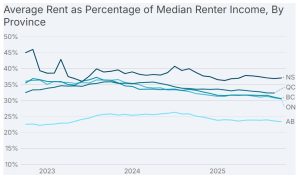
Affordability pressures are beginning to ease for Canadian renter households as rent growth slows across many markets, according to a new analysis from Rentals.ca and Urbanation. Using CMHC’s affordability benchmark of 30 per cent of pre-tax household income, and average asking rent data generated from the platform, the analysis finds that the share of median renter household income required to afford rent has declined from peak levels reached back in 2022 and 2023.

Although rents remain historically high and many households continue to feel stretched, the gap between renter incomes and asking rents has narrowed meaningfully in several major cities.

“Affordability can worsen quickly, and take time to recover,” said David Aizikov, Manager of Data Services at Rentals.ca. “While not all markets are moving at the same pace, recent trends in rent growth and income gains suggest conditions are stabilizing relative to the peak.”

Of Canada’s major rental markets, Vancouver has seen one of the most notable improvements. Average asking rents in the city peaked at 42.4 per cent of median renter income in June 2023 before dropping to 32.3 per cent by October 2025—a 10‑percentage‑point improvement. Over the same period, average asking rents declined by roughly $566 per month, from $3,304 at their peak to $2,738.

Toronto has experienced a similar shift. After reaching a high of 38.1 per cent in November 2022, the share of income required for average asking rents fell to 29.8 per cent by October 2025. Average rents decreased by about $337 per month, from $2,896 at peak levels to $2,559.

Montreal’s affordability has also improved. In October 2025, average asking rents represented 30.3 per cent of renter income, down from 34.2 per cent in October 2023. Average rents declined by approximately $95 per month, from a peak of $2,052 to $1,957.

Meanwhile in Alberta’s largest cities, affordability conditions remain comparatively strong. By October 2025, average asking rents accounted for just 23.2 per cent of renter income in both Calgary and Edmonton. Calgary’s average rents have fallen by about $320 per month since their September 2023 peak, while Edmonton saw a more modest decline of roughly $88 per month from its September 2024 high.

Nominations open for 2026 VRCA Awards

Nominations for the 37th Vancouver Regional Construction Association (VRCA) 2026 Awards of Excellence are open.

The gala, taking place October 16, 2026, will allow the industry to showcase its commitment to outstanding projects, innovation, and industry leadership.

Building on feedback from recent AoE participants, judges, and VRCA members, thoughtful updates have been made to the 2026 nomination and adjudication process to better support nominees and showcase excellence across the industry.

The judging committee and VRCA staff will be incorporating refinements aimed at further streamlining the presentation and adjudication process, while maintaining transparency and fairness. In addition, the project videos submitted last year were a great enhancement to the gala experience.

“We are excited to receive even more high-quality submissions this year, along with stronger photo and video representation to showcase each project,” said the association.

View eligibility criteria and submit completed nominations by March 31, 2026. Following the initial review, VRCA will notify nominees after May 1, 2026 if they advance to the presentation round. Presentations will be conducted virtually via Microsoft Teams between May 21 and June 5, 2026.


Condominium market collapse brews change

Untenable pro formas, skittish lenders and reluctant buyers are intertwined features of a condominium market collapse destined to further complicate Canada’s already perilous affordable housing shortage. As the shortfall to a targeted 4.8 million new dwelling units by 2035 grows wider, the bad news is, the delivery pipeline is more sluggish than it may appear.

Canada Mortgage and Housing Corporation (CMHC) tallies housing starts at the point that a construction project emerges above grade. A wide range of necessary advance inputs into future housing supply — development approvals, unit pre-sales for condo projects and financing — aren’t captured, but, recently, a lot of projects have dropped out of the pre-construction queue.

“The housing starts that you’re seeing reported reflect decisions that were made in 2024,” Benjamin Tal, deputy chief economist with CIBC Capital Markets, advised while speaking at the Real Capital conference in Toronto earlier this week. “What’s happening right now is zip. Nobody’s building anything, but you don’t see it in the headline numbers.”

“Unfortunately, condominium starts are going to be particularly weak here in Toronto where pre-construction sales fell to multi-decade lows in 2025. We’re seeing projects delayed and we’re seeing them cancelled as financing thresholds are just harder to meet,” concurred Jessica Harland, a senior vice president with CBRE Capital, who, along with her colleague, Joshua Sonshine, presented newly released findings from her firm’s annual survey of lenders’ views on opportunities in commercial real estate.

Responses from 47 financial entities that collectively hold more than $200 billion worth of Canadian commercial real estate loans are generally upbeat for 2026. Survey participants confirmed plans to increase their loan books relative to 2025 for almost every asset class except high-rise condo construction and development land.

For those two asset classes, it’s the third consecutive year a reduction in available capital is envisioned. As well, 89 per cent of surveyed lenders now deem that development land poses an elevated or significantly elevated credit risk on refinancing — up from about 68 per cent who expressed that opinion last year.

Margins have been squeezed particularly tight for developers who acquired land at peak prices in 2020-21 then encountered rising interest rates and climbing construction costs soon after. Meanwhile, federal legislation has been in effect since Jan. 1, 2023, placing a four-year moratorium on non-Canadians buying residential real estate (with some exceptions).

“Those purchase prices haunt pro formas to this day,” Sonshine submitted. “Once interest rates and construction costs are inclining, the models for condo sales, construction and the related financing were essentially broken. Not to mention that we have a lack of foreign investors in the condo space and student immigration is falling.”

While there’s little momentum for project launches right now, there is building consensus that market recovery will require a reapportionment of costs and risk, and greater diversification of product. Tal hypothesizes that senior levels of government are getting ready to offset many of the costs that development charges cover. He also projects that a current Canada-wide glut of nearly 19,000 recently completed, unsold condo units — of which, roughly 9,000 are located in Vancouver and Toronto — should be absorbed over the course of the next two years.

“Prices are still too high to buy, but too low to build. The market is broken, and without reducing significantly the cost of delivery of new housing, we’re not going to move in the right direction,” Tal asserted.

In the existing condo stock, crash-triggered price drops will open up ownership possibilities to more buyers, including one of the fastest growing segments of the recent housing market — households that have doubled up. “With prices going down, some of them will be decoupling and that will be another source of demand,” Tal said.

For the future, pro formas free from development charges would give builders more room to manoeuvre and lenders more confidence that they could do so. Developers will also have to offer prospective buyers a product that they want to buy, which Tal characterizes as family-sized units that can be delivered on a timely schedule.

“If you’re a family, you need larger units and you cannot wait five years from pre-sale, he said. “This business of 80 per cent pre-sale will not be the future, I believe. We’re going to see a situation where developers will need to put more equity in the project. Banks will have to take more market risk and spreads will be different. That will be a new emerging condo market.”

As for the likelihood of lenders coming on board, Harland highlighted the quick turnaround in the office sector’s prospects. In the 2024 edition of the survey, zero lenders reported that they intended to increase loan allocations for office, while, two years later, 45 per cent of respondents are planning to expand loan books for office relative to last year. Lenders’ assessment of all categories of office except suburban Class B has grown rosier, with downtown Class A office properties boasting the most improved profile among the 22 categories of assets the survey monitors.

“In 2025, lenders proved that they would be there for strong projects, and, in my experience, that even applied to condo project financing if the project made sense and it was in the right market,” Harland reported. “The office sector was in the same place (as condo construction and development land) two years ago, and look how sharp a turnaround is possible with lenders’ intentions. All is not lost, but we certainly aren’t going to see a shift in 2026.”

However, Tal foresees an ultimate transformation.

“The condo market is going to change dramatically in a very significant way. You can not go through this kind of shock without change,” he maintained.