


Articles Archive - Page 349 of 928 - REMINET
REMI

The new architecture of schools

From improved indoor air quality and disease prevention to versatile and student-centred design, now more than ever, the architecture of schools is under scrutiny. Whether it’s early childhood to senior secondary facilities, how we build schools is rapidly evolving to meet the ever-changing needs of our fast-moving world. The school of the future is more flexible, versatile and adaptable to the wider community it serves. It supports hybrid learning models, equipping students to seamlessly access online and bricks-and-mortar resources. It reduces its carbon footprint using renewable materials, promotes health and well-being, inspires new ways of learning and teaches students environmental values and citizenship.

Unconventional school design

And for some B.C. schools, the future is already here. For the better part of a decade, innovative school designs have been cropping up across the province, characterized by an abundant use of wood, sustainable technologies and unconventional open floor plans flooded with sunlight. In some instances, they incorporate unusual features such as retractable garage doors, little to no traditional desks and minimal hallways. Such designs that once might have seemed ahead of their time—even quirky—are proving functional and timely in 2020, affording adjustable classroom configurations, fresh, natural ventilation and better indoor-outdoor connectivity.

Such is the case with the 480-student Lord Kitchener Elementary School located in Vancouver’s Point Grey neighbourhood. Completed by the IBI group in 2012, the project entailed a rehabilitation, seismic upgrade and adaptive reuse of an existing century-old wood structure along with the construction of a new building. The added facility, constructed of glulam timber post-and-beams, includes community-use facilities and does away with the traditional division between classrooms. Mechanical garage doors line one wall of each classroom, opening on to a shared common area.

The design accommodates collaborative teaching methods and gives teachers opportunities to work one-on-one in a designated quiet room with their students while their colleagues watch their classroom from the common area. The two-storey space features a grand staircase that links the two levels of learning studios. The main entrance area is spacious enough to accommodate student drop-offs, informal meetings and more formal concerts and performances. Extensive glazing draws in light while connecting students to outdoor learning areas. A community garden for the students reinforces a strong link with nature.

Top of the class
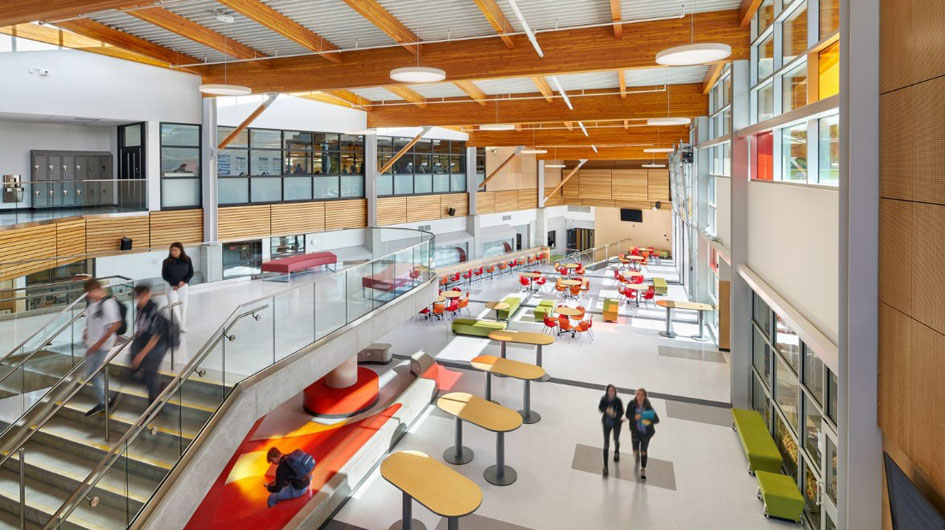
École Salish Secondary | Photo credit: Ed White Photographics courtesy KMBR Architects

The province’s high schools are also increasingly adopting more sustainable construction, natural materials, such as B.C.-sourced timber, along with less conventional, forward-thinking designs.

One of the newest to join the list is École Salish Secondary in Surrey, B.C.’s fastest-growing municipality. The 13,000-square-metre facility features immense collaborative spaces that can be partitioned off with sliding glass walls, an open-air rooftop yoga studio, and whiteboard desks, along with state-of-the-art technology, including a theatre, ubiquitous WiFi, and huge screens for students to project work onto.

Designed by KMBR, the firm set out to re-envision a new school from the ground up. This required a fresh perspective, according to the firm, starting with new names for traditional spaces. Music, arts and drama are “MAD Labs” and the metal and wood shops are “TED (Technology Engineering and Design) Labs”. Learning spaces incorporate discovery labs, break-out and multi-purpose gathering spaces, and a learning commons with creative areas called “Makerspaces”. The result is a design that accommodates “anytime-anywhere, collaborative, project, and inquiry-based learning,” according to the design team.

The energy-efficient facility features argon-filled windows and automated motorized shutters to reduce solar heat gain and loss. This in turn minimizes the use of HVAC systems.  A double-height atrium features exposed glulam beams and interior wood finishes along with large operable overhead doors—a boon for improving natural ventilation and increasing outside airflow throughout the building.

Other high schools throughout the province are also demonstrating innovative and sustainable designs such as Southern Okanagan Secondary School and Abbotsford Senior Secondary School.

Learn more at info.naturallywood.com/schools
ESG benchmarking tallies growing global uptake

ESG benchmarking is continuing to gain momentum in the commercial real estate sector, as GRESB, the global assessment of environmental, social and governance performance for commercial real estate portfolios and infrastructure assets, recorded another impressive surge in participation for 2021. This year’s 26 per cent jump in reporting entities follows an 18 per cent increase in 2020.

“We are pleased to see such a high level of participation in this year’s GRESB benchmark coverage, particularly considering the business disruptions we have all experienced over the past year and a half,” says Sebastien Roussotte, chief executive officer of GRESB BV.

The 2021 real estate results, slated to be released later this fall, will draw from a database of 1,520 entities collectively reporting on 117,000 assets valued at USD $5.7 trillion. Participants include 1,187 non-listed property funds, 326 listed companies and REITs and seven governmental entities. A 24 per cent increase in respondents this year — up from 1,229 in 2020 — also boosts the numbers of assets in the database by nearly 22 per cent and the value of assets under of management by nearly 19 per cent compared to 2020.

Meanwhile, another 31 funds joined GRESB’s infrastructure fund assessment, lifting 2021 participation to 149, and 132 assets were added to the asset-level assessment. The latter exercise now encompasses 558 assets located in 69 countries and collectively valued at USD $738 billion.

GRESB’s investor membership now stands at 140 institutional and financial investors with more than USD $47 trillion in assets under management. They mine the data to monitor the performance of their holdings and to inform their investment decision-making.

“Increased engagement with a standardized benchmark demonstrates a strong industry commitment to ESG transparency and collaborative action,” Roussotte maintains.

BEIC Unveils Building Energy Innovation Report 

The time to embrace clean building technologies is now, but it takes stakeholders across the real estate community to make the shift. This is the philosophy behind the Building Energy Innovators Council (BEIC) and the underlying message in its newest report.

“The relevance of the BEIC has never been greater, given the pivotal role the real estate sector can play in Canada’s COVID economic recovery,” writes Gordon Hicks, BEIC Chair & CEO of BGIS, in the report’s opening pages. “Ours is an industry-driven initiative established to accelerate the collaboration, innovation, and adoption of clean building technologies, including energy efficiency and renewable power solutions that will transform the built environment, while developing world-class cleantech companies, creating jobs, and enabling economic prosperity in a future low carbon era.”

The report, entitled Clearing a Space for Clean Building Technologies, turns a deserved spotlight on organizations that are using cleantech innovations to create greener, healthier, and more efficient homes, offices, and facilities. It also features insights from public and private sector leaders and a look at the innovations that are reshaping Canada’s built environment.

Articles include:

  • BEIC’s Mission Overview, outlining the Council’s origins and the many ways it promotes clean building technologies.
  • The Well: Toronto’s Building Innovation Showcase, spotlighting the GTA’s ambitious mixed-use project and how multiple innovations are being used to create an unparalleled occupant experience.
  • Taking Savings into Account, profiling TD Bank’s carbon-neutral strategy and recent energy-saving initiatives.
  • Inspiring Innovations at PSPC, detailing building energy innovations throughout Public Services and Procurement Canada’s headquarters.

BEIC’s report also includes an 8-page directory of BEIC members, each of which is playing a critical role in the design, production, and promotion of cleantech advancements.

Clearing a Space for Clean Building Technologies is available to read online at no cost. Organizations interested in joining BEIC are encouraged to visit Beic.ca or contact Brad Moore, BEIC National Manager, at [email protected] or 647-467-7708.

Canadian hotels await post-pandemic recovery

Canadian hotels still aren’t making the Dean’s list for investment performance, but market analysts appear confident that rallying conditions are pushing the sector in a positive direction. Colliers’ review of trends in the second quarter of 2021 gauges investor sentiment at a C+, while Avison Young’s mid-year Canada hotel market summary underscores expectations for improvement in Q3 and Q4.

Both reports examine the interplay of COVID-19-related depressants that will have to lift before occupancy levels, revenue per available room (RevPAR) and average daily rates (ADR) can recover to pre-pandemic levels, and acknowledge that will take some time to fully occur. However, the steady increase in Canada’s vaccination rates, rebounding domestic travel and prospects for the return of cross-border and international visitors are all cause for optimism. The United States also provides some indication of expected demand once pandemic-related restrictions ease.

“In the U.S., Memorial Day occupancy and RevPAR numbers were better than those posted during the 2019 Memorial Day holiday weekend, reaffirming that when it comes to travel, people are looking to make up for lost time,” Avison Young analysts observe. “This is a trend that will likely also take place in Canada, but several months behind the U.S.”

The firm’s proprietary analytics platform, which measures the weekly influx of people into downtown Toronto, Vancouver and Montreal shows that the three cores are becoming more active, suggesting an associated pickup in demand for hospitality services. Combined with national survey findings that 59 per cent of prospective vacationers intend to do so within Canada this year, the sector is considered well positioned to attract a restless population that’s still hesitant to go farther afield.

“The leisure segment of the hospitality industry will likely have the quickest recovery, while markets that rely on corporate bookings will struggle until organizations relax business travel restrictions,” the Avison Young report projects.

“We expect a nice rebound in drive-to leisure demand this summer, but we’ll be watching business travel trends in the fall,” Colliers Canada analysts concur. “We view international business travel and international convention/conference business at the most risk through the medium-term and this will be a drag to major urban markets and larger conference box hotels.”

Varying activity across markets and service brackets

Thus far, Vancouver is seeing more noticeable activity, while Toronto’s longer-lasting lockdown measures are considered a major factor in the city’s weaker numbers. Averaged across the six major markets Avison Young surveys — Vancouver, Calgary, Edmonton, Toronto, Ottawa and Montreal — it charts an occupancy rate of 36.5 per cent for June 2021, more than 50 per cent lower than in June 2019. Only Vancouver surpassed the national average, registering a 44.8 per cent occupancy rate. Toronto’s hotel rooms were approximately one-third full, at 33.4 per cent, while bookings were scarcest in Montreal, with an occupancy rate of 27.2 per cent.

Average RevPAR for the six markets remained below $50, or 66 per cent lower than it had been 24 months earlier. Again, Vancouver was the only market where RevPAR exceeded the average. Nevertheless, it was more than 72 per cent short of Vancouver’s June 2019 benchmark, which was then just shy of $250.

Economy, midscale and upper midscale accommodations are showing the best recovery. Occupancy levels are highest in this service bracket — at roughly 40 to 43 per cent — and the gap from June 2019 bookings and revenues is the narrowest. As of June 2021, economy and midscale hotels were about 38 per cent below June 2019 occupancy rates and lagged June 2019 RevPAR by about 49 per cent. Meanwhile, luxury hotels were still nearly 73 per cent below the occupancy rates they achieved in June 2019 and more than 78 per cent behind on RevPAR.

That said, hotels in the luxury, upper upscale and upscale bracket have slipped from a much greater original height and are still outdistancing their more affordable counterparts for RevPAR. For luxury hotels, RevPAR was at nearly $300 in June 2019, while upper upscale commanded about $200. Both segments enjoyed occupancy rates in excess of 80 per cent, whereas the pre-pandemic rate for economy hotels hovered around 60 per cent.

The looming expiry of pandemic relief programs is now causing some wariness across all hotel market segments. Currently, the Canada Emergency Rent Subsidy (CERS) and Canada Emergency Wage Subsidy (CEWS) are scheduled to end Oct. 23 — timing that overlaps with the off-season for leisure travel. The spectre of a fourth wave of COVID outbreaks, also a feared possibility for fall, would likely delay resumption of business travel.

“Hoteliers emphasize that they require 30 to 35 per cent occupancy for limited and select-service, and 40 to 45 per cent for full-service, to break even on their costs. With Vancouver the only market above 40 per cent occupancy in June 2021, and Toronto, Ottawa and Edmonton just above 30 per cent, the hospitality sector is trending toward that break-even point,” the Avison Young report surmises.

Purchasers focused on conversions in large urban centres

On the investment front, trades have picked up somewhat after the 2020 lull. Colliers Canada blames a paucity of debt financing for stifling transaction activity, but notes that equity capital is “generally bullish” and vendor-take-backs have facilitated some deals. Q2 saw $548 million in transactions, pushing the 2021 first half total to $748 million.

“The average deal size is under $8 million given most trading activity is smaller assets in secondary/tertiary markets,” Colliers analyst recount. “Assets that are selling in urban markets have principally been for conversion to an alternate use.”

In the latter category, 26 properties, largely located in Ontario and British Columbia, were sold for conversion to social housing, seniors housing or other residential uses. That includes the Best Western Plus Uptown Hotel in Vancouver, the Super 8 Downtown Toronto, the Lakeview Signature Inn Calgary Airport and the Carleton Suite Hotel in Ottawa. Representing a different, non-urban locale, two resort properties encompassing 250 suites in Ontario’s Lake Simcoe/Georgian Bay area also sold for conversion for a combined price of $60 million or approximately $240,000 per suite.

Notable traditional trades during the first half of 2021 include the Four Points Hotel and Conference Centre in Gatineau, Quebec; Irwin’s Mountain Inn in Banff, Alberta; the Ambassador Hotel and Conference Centre in Kingston, Ontario; and the Hilton Garden Inn Saskatoon Downtown.

“No significant discounts on pricing were evident among the notable transactions that did occur during the first half of 2021. For now, assets are unlikely to trade unless buyers are willing to pay close to pre-COVID-19 asset values, but this could change depending on the timing of the withdrawal of government support for the sector. The market could look completely different if owners aren’t able to service their debt,” Avison Young analysts contend. “Distressed-asset sales have not been a major factor to date, but will be something to keep an eye on in the second half of the year and into 2022.”

The outlook on Canadian hotels is generally in sync with international trends, as findings from JLL’s recently released global hotel investor sentiment survey mirror much of the optimism about vaccine rollout and rebounding business and leisure trends. The report tracks an increase in investment activity, with USD $30 billion deployed in the first half of 2021 and 71 per cent of survey respondents stating intentions to be net buyers this year.

Among the COVID-19-triggered obstacles, 43 per cent of respondents have encountered more difficulty obtaining debt financing than during the pre-COVID era. Meanwhile, 70 per cent foresee a three- to four-year timeline before RevPAR returns to 2019 levels.

10 ways the cleaning industry can fight climate change

The threat being posed by climate change just grows and grows, as do the warnings of the dire consequences it holds.

According to the August 2021 Intergovernmental Panel on Climate Change (IPCC) report, scientists have observed significant recent changes in the Earth’s climate in every region of the world. The report also indicated that many of these changes are happening far faster than anyone thought.

But what can the professional cleaning industry do about it?

“Here in the U.S., we see the ramifications of climate change from coast to coast,” says green cleaning expert and sustainability advocate Steve Ashkin of The Ashkin Group, an internationally recognized consulting firm working to help make the professional cleaning industry greener. “The recent rainstorms in Tennessee have been attributed to climate change, as have the fires and drought in the western half of the country.”

Not taking sufficient action can have the potential for catastrophic consequences.

So, what does Ashkin recommend?

  1. Use only green-certified cleaning solutions as these protect natural resources, release fewer or no ozone-depleting volatile organic compounds (VOCs), and generate less waste.
  2. Use disinfectants sparingly and only as needed to help reduce the number of VOCs entering the atmosphere.
  3. Consider using disinfectant alternatives such as hydrogen peroxide.
  4. Purchase cleaning solutions in concentrated, bulk sizes, stored in recyclable containers, with minimal packaging. “This reduces shipping and packaging needs, protects natural resources, reduces greenhouse gas emissions, and costs,” explains Ashkin.
  5. Purchase paper products made from 100 per cent recycled materials. This reduces millions of tons of CO2 emissions.
  6. Increase the use of cleaning equipment using engineered water. These systems use tap water that is activated, ozonated, electrolyzed, or treated, turning it into an effective cleaning method without chemicals.
  7. Buy from green- and sustainability-focused distributors. “I am always impressed [with] how many distributors have become specialists when it comes to green cleaning and protecting the environment,” says Ashkin.
  8. Replace auto fleets with electric or hybrid vehicles.
  9. Keep learning. “With training and education, our ‘frontline’ custodial workers can have a major impact on reducing cleanings impact on our environment,” adds Ashkin.
  10. Remember this famous quote incorrectly attributed to Winston Churchill: “A pessimist sees the difficulty in every opportunity. An optimist sees the opportunity in every difficulty.”

CNC opens new Vanderhoof campus for trades

A new Vanderhoof campus of the College of New Caledonia (CNC) has officially opened to meet the growing demand for trades training and post-secondary programs in the region.

Programs offered at the Vanderhoof campus include: trades training on a rotational basis, including millwright, piping, carpentry, welding and trades discovery; applied business technology – administrative assistant (certificate); and university studies, bookkeeping, human services and business courses.

“The College of New Caledonia is a leader in hands-on training and this new campus means more people can stay in their community,” said Andrew Mercier, parliamentary secretary for skills training. “A new campus is a vital investment in the future of Vanderhoof and the regional economy. It means students can train closer to home, so that employers have access to the skilled workforce needed to help British Columbia thrive.”

The new campus is a renovated building CNC purchased in 2017 with financial support from the province. Able to accommodate 136 student spaces, the facility has been converted to include classroom, shop and library areas with a focus on physical and digital accessibility.

Digital Delivery Instruction (DDI) will make it possible for students to join classroom instruction in Prince George, while completing coursework and projects in Vanderhoof.

“The opening of a new campus in Vanderhoof strikes at the core of CNC’s new strategic plan, lhulh whuts’odutel’eh – Learning Together,” said Dennis Johnson, president, CNC. “This campus reflects the responsive approach CNC takes to the diverse needs of the communities in our region. We look forward to working with students and partners to support training and educational goals in Vanderhoof and beyond.”

There are CNC campuses in Vanderhoof, Burns Lake, Fort St. James, Mackenzie, Prince George and Quesnel.

Facilities management market predicted to surge

The size of the international facilities management market is expected to grow by US$660.29 billion over the next four years, according to a new study from market research firm Technavio.

That growth would come in the form of a compounded annual growth rate (CAGR) of nearly 8.3 per cent.

The growth in the market is anticipated to be spurred by rising demand for smart facilities and increasing emphasis on outsourcing building management services, two trends that are thought to have been accelerated somewhat by the pandemic.

However, the report warns that a rise in budgetary constraints will limit the market growth during the next few years. Growth of the market is thought to have exceeded four per cent in 2021 as the facilities management industry – and others – have found their feet ahead after the initial shockwaves sent around the world by the pandemic.

According to Technavio, healthcare facilities will be responsible for more than two-fifths of the global revenue share of the facilities management market. Geographically, 43 per cent of the market’s growth will stem from the Asia-Pacific region, with North America forecasted to be a key revenue-generating economy for facilities management due to the increasing demand for cloud-based management solutions.

The report also notes that market vendors should make the most of the opportunities to help further recover from post-COVID-19 impact by focusing more on the growth prospects in the fast-growing segments while maintaining their positions in the slow-growing segments.

Bidding wars are back in the GTA

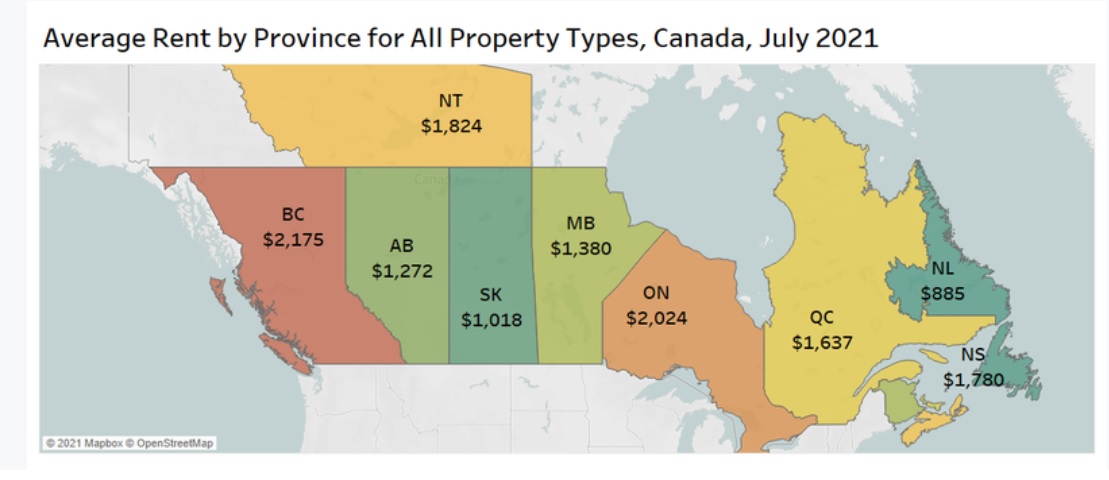
For the fourth consecutive month, rent is rising for residential dwellings in the Greater Toronto Area, and leasing agents have even begun to report bidding wars on prime rental suites. Barring a setback from the Delta variant, the GTA rental market should continue to see a steady rise in rents as Toronto and the rest of Canada continue to awaken from their COVID-19 hibernation.

According to the August Rent Report from Rentals.ca and Bullpen Research & Consulting, the average rent has increased month over month in most GTA municipalities, with Toronto experiencing the largest monthly increase at 4.7 per cent and Etobicoke close behind at 4.6 per cent. In Oshawa, average rent was up 4.3 per cent month over month.

Additionally, many of the largest units outside of downtown are being snapped up quickly on TorontoRentals.com, and bidding wars have been reported for units in prime locations and newer buildings. Meanwhile, some tenants are still looking for larger rentals outside downtown Toronto, signalling that they don’t expect to be going back to the office full-time in the immediate future.

“After the unprecedented rent declines experienced during the pandemic, the rental market is seeing renewed interest, with rents starting to increase more rapidly than they declined,” said Ben Myers, president of Bullpen Research & Consulting. “Toronto’s average rent jumped 4.7 per cent monthly, a huge increase in the face of increasing demand.”

The average rent in 2021 for condo rentals and apartments was highest for one-bedroom units in Oakville, while Toronto recorded the highest for two-bedroom units. For three-bedroom units, Vaughan took the top spot while Whitby recorded the lowest average rent for all unit sizes. Living in a two-bedroom unit in Whitby compared to Toronto saves a tenant about $900 per month.

Condo rentals

Looking at select neighbourhoods in Toronto using data from May to July in 2020 and 2021, the average rent per square foot for condo rentals in select neighbourhoods in Toronto was generally higher last year compared to this year, while the average unit size has stayed about the same.

One-bedroom units experienced the smallest increase from $1,763 to $1,773 in July, an increase of less than 1 per cent, demonstrating that tenants are still looking for more space than they were in the pre-pandemic period.

bidding wars are back

Other key takeaways:

  • In July, the average rent for a single-family home was $3,207 per month—a year-over-year increase of 13.2 per cent. Condo rentals and apartments have experienced small increases in average rental rate since January. In July, condo rentals had an average rent of $2,204 per month, a year-over-year decrease of 4.2 per cent, while apartments had an average rent of $2,103 per month, a year-over-year decrease of 2 per cent.
  • The average rent per square foot for condo rentals and apartments have increased from January to July with the exception of studios.
  • Looking at a sample of condo rentals and apartment developments in Etobicoke shows  the average rents per square foot have generally decreased from 2020 to 2021.

See the complete report here: National Rent Report


Masonry Institute of BC establishes training fund

The Masonry Institute of BC (MIBC) has established a new training fund with the Construction Foundation of BC that aims to provide tuition and training support for individuals entering or continuing education in the masonry trades.

“The masonry trade has a rich and vibrant history. Some of the world’s greatest architectural achievements have been built by masons and have lasted lifetimes,” said Joshua French, general manager of HS Masonry Inc and president of the Institute and Canadian Masonry Contractors Association. “We established this fund because we are proud of our trade and look forward to sharing these skills with future generations.”

With a mandate to enhance the development of masonry in B.C. through technical support to designers, educators and building officials, MIBC established the training fund to bolster supports for masons who are planning to advance their skill level with the trade.

“Masons are in high demand in the province,” said Bill Olexa, district manager of Scorpio Masonry and vice president of MIBC. “The earning potential for new entrants to the industry is substantial and I would encourage anyone who is looking for a career with staying power to consider masonry.”

Eligible applicants will receive up to $1000 to be applied to training costs incurred at the Trowel Trades Training Association.


The Shipyards receives international design award

The City of North Vancouver’s transformation of The Shipyards has received international recognition for excellence on the waterfront.

The Shipyards received top honours in the ‘Excellence on the Waterfront Awards Program’ from the Waterfront Centre which was established in 1987 in the United States to recognize top-quality waterfront planning, design and development work from around the world.

Over the past decade, the city has transformed its waterfront lands into a unique, interactive, year-round public space that includes over 85,000 square feet of commercial and community amenity space.

Designed by Dialog, The Shipyards is now a dynamic waterfront tourism destination that features restaurants, cafes, shops and services, two hotels, space for community events, concerts and markets, plus the region’s largest outdoor skating rink in the winter and a splash park in the summer.

“People always tell me how much they love our revitalized waterfront,” said Mayor Linda Buchanan. “The Shipyards is of great historical and economic importance to our city although it needed transformation for modern use. That is why the city has delivered a space that embraces our history, grows the economy in new ways, and offers vibrant and welcoming spaces for all people. It’s an honour to take home the 2021 Excellence on the Waterfront award.”

The redevelopment of The Shipyards provides local businesses with an opportunity to expand and grow as part of a lively waterfront destination that attracts local and regional visitors and is home to creative year-round programming, events and attractions and unique seasonal experiences. Public spaces at The Shipyards have been reimagined to support local businesses and provide family friendly, safe and welcoming spaces for people to connect and socialize through expanded outdoor patios and outdoor alcohol approved zones in response to the COVID-19 pandemic.

The Shipyards took top marks in meeting the award criteria including the sensitivity of the design to water, quality and harmony of design, civic contribution, environmental values, enrichment, and degree of difficulty.

The awards are selected by an interdisciplinary panel made up of professional planners, designers, city officials and representatives from business, community and development sectors. The awards were announced earlier this month.

“The Shipyards offers a public amenity that is distinctly North Vancouver, and promises to be a regional attraction for a new generation in this historic precinct,” said Shane Oleksiuk, Dialog project architect.


New condo project planned for Stockyards District

Greybrook Realty Partners is expanding into Toronto’s Stockyards District neighbourhood alongside developer Marlin Spring, with a $20-million investment in a mid-rise condo project.

Greybrook announced it will oversee development of a prime parcel of land, located at 2237, 2255, and 2283 St. Clair Avenue West, between Runnymede Road and Keele Street. The partners intend to develop the land into two connected buildings with over 380 units.

The site is minutes from RioCan’s Stock Yards Village—a 500,000-square-foot shopping centre—and the proposed future St. Clair – Old Weston GO Station, which is said to commence operations in 2026. Other nearby amenities are Runnymede Park, an outdoor ice rink at George Bell Arena are other nearby amenities

“The development site is directly across the street from our Stockyards District Residences that is expected to begin occupancy in early 2022, and adjacent to our Upper Junction II development,” said Jared Berlin, executive director, asset management, Greybrook Realty Partners. “These developments, along with others in the neighbourhood will encourage more retail and lifestyle amenities as the buildings are completed and add to a neighbourhood known for its strong community roots and excellent current and future transit options.”

UV-C technology myths debunked

UV-C air purifiers have been used for years to eliminate airborne pathogens, in healthcare settings in particular. However, in 2021, caused or accelerated by the pandemic, they are also now being used to protect health in schools, offices, and all types of commercial facilities.

Versatile and convenient, these standalone units can be easily moved from one room to another, allowing them to protect occupant health wherever they are needed.

But, as versatile as they are, some building owners, facility managers, and cleaning professionals are new to this technology, and many may have heard unsubstantiated myths about these air purifiers.

RELATED: The power of UV-C light

Jenna Riffer, EVP for Incharged, which manufactures LUX UV-C Air Purifiers, told CleanLink that there are several myths to be debunked about these technologies and their usage.

UV-C systems are “electric” disinfectants

This is false as these systems are not disinfectants but germicides that destroy harmful microorganisms.

All systems are alike

This technology comes in a range of systems. To be effective, all systems must produce 254 nanometres of light, such as those manufactured by LUX.

No one knows how this technology works

In fact, studies indicate that UV-C light penetrates pathogen cells, causing them to rupture or lose their ability to reproduce.

Most diseases are spread by touching contaminated surfaces

While this is true of some diseases, many others like the coronavirus, tuberculosis, the flu, and other viruses are primarily transmitted via the air.

The Centers for Disease Control and Prevention (CDC) does not approve of UV-C

The opposite is true, as the CDC has recommended using these systems in healthcare settings for years.

UV-C air purifiers are the same as traditional air purifiers

While traditional air purifiers can capture some airborne contaminants, these air purifiers take air purification to the next level by inactivating airborne pathogens as pointed out in this video.

To purify the air, all you need is HEPA filters

HEPA filters do capture some pathogens, but these filters can become contaminated which negatively impacts their effectiveness. UV-C works with advanced HEPA filters to capture and inactivate pathogens on filters and incoming air.

“The final myth regards the safety of UV-C air filtration systems,” adds Riffer. “Along with being proven effective, UV-C technology is also proven perfectly safe.

Teams shortlisted for Calgary’s Deerfoot Trail

Alberta Transportation has shortlisted three groups to submit proposals to complete improvements on Deerfoot Trail using a public-private partnership (P3) delivery model.

As part of Alberta’s Recovery Plan, this project will create jobs for Calgarians while making Deerfoot Trail safer and more efficient.

The three shortlisted groups are:

  • Calgary Safelink Partners – Vinci Highways SAS; Graham Capital Partners; Carmacks Enterprises Ltd.; Graham Infrastructure LP; Vinci Infrastructure Canada Limited; and Parsons Inc.
  • Deerfoot Trail Partners – Aecon Concessions; Aecon Infrastructure Management Inc.; Meridiam Infrastructure North America Fund III; Stantec Consulting Ltd.; Wood Environment & Infrastructure; CH2M-Hill Canada Ltd. (Jacobs); and COWI North America Ltd.
  • Deerfoot Trail Infrastructure Partners (EllisDon) – EllisDon Capital Inc.; EllisDon Construction Services; Lafarge Canada; and Aecom Canada Ltd.

“Calgarians know what traffic on the Deerfoot is like. That’s why we’re taking action to ease traffic and make life better for Calgarians with significant improvements to Deerfoot Trail.  Alberta’s Recovery Plan is investing a record amount, more than $20.3 billion, on improving and building the infrastructure that Albertans need. This P3 project will not just make Deerfoot safer and less congested while creating good jobs for Calgarians, it will also save tax dollars,” said Rajan Sawhney, Minister of Transportation.

Four teams responded to the May 2021 request for qualifications. The submissions were evaluated based on company experience, personnel, past performance and financial capability. The groups include financing, construction, design and maintenance companies.

The three shortlisted groups have until July 2022 to submit their proposals and financial bids, after which the successful proponent will be selected. Construction is anticipated to begin in fall 2022. Deerfoot Trail is Alberta’s busiest road. These improvements are necessary to ensure the road will continue to get Calgarians where they need to safely and efficiently.

Improvements will include:

  • Twinning Ivor Strong Bridge
  • Improving Anderson Road/Bow Bottom Trail Interchange
  • Twinning the bridge over Glenmore Trail
  • Reconfiguring the 17 Avenue SE and Memorial Drive Interchanges and eliminating weaving traffic
  • Widening between 17 Avenue SE and Airport Trail to four lanes in each direction.

Retail renovation strategies in a post pandemic world

As the COVID-19 pandemic continues to take a toll on the retail industry, commercial contractors will play a crucial role in keeping perseverant retailers open by renovating their spaces to accommodate post-pandemic customer needs.

“Other than temporary measures that focused on hygiene and wellness, such as installing sneeze guards, aisle stickers and signs, retail design has been on-hold throughout the pandemic,” explained Sam Cicero, president of Cicero Construction Group. “For retailers to survive in these tough times they’ll need to renovate their outlets according to the rules of the new normal.”

Cicero believes that COVID-19 gives brands an opportunity to review their current retail strategy and strengthen it. He offers these post-COVID tips that may further accelerate a retail renaissance:

  • Coherent Brand Identity: Positive customer experiences increasingly depend on the flow from online to in-store, generating an even greater need for a brand image to be well-executed and consistent across all platforms. The idea is to fully stitch together a brand identity and create a strong visual personality through store signage, colour themes and other interior design elements.
  • Make Safety Permanent: Replace temporary sneeze guards with permanent designer glass. Working protective elements into the aesthetics of a space will help safety feel more natural, and it won’t affect the overall experience that the customer has in-store.
  • Social Distancing: This could include widening aisles, reducing clutter to open space, and having a one-way flow of traffic. Remove racks and shelving from the middle of the store to help people stay further away from each other. Utilizing real plants and functional art as partitions are a creative way to create a safe distance between guests that feels intentional.
  • Air Quality: Upgrading air filtration systems helps mitigate viruses and bacteria. Installing windows or taking down interior walls can also help flush out stale air.
  • Safer Surfaces: Studies have shown that COVID-19 can live for up to 72 hours on commonly used materials such as plastic and steel. Copper and other anti-microbial materials should be incorporated wherever possible in high-touch areas of the store.
  • LED Lighting: Consciously or not, a key factor that determines whether passers-by will go into a store is the perception that it is safe. One way for stores to feel welcoming and safe is LED lighting. Not only does LED lighting improve the customer experience and make merchandise look more appealing, it can reduce electricity costs by as much as 60 per cent.
  • Dressing Rooms: Dressing rooms are typically small and crowded. A makeover will accommodate social distancing and other preventive measures. This means cubicles being expanded and the walking space widened.
  • Multiple entrances: By adding another entrance or two, retailers encourage customers to spread out in a store as they come in and begin their shopping journey.
  • Touchless Technologies: Thermal scanning and contactless POS/self-checkout systems will become more prevalent, along with automatic sliding doors at storefronts and self-service wherever possible.
  • Pick-Up Areas: As more customers use curbside pick-up, retailers have to adapt to this change. Many retailers have already introduced separate areas for online pick-up. It is only a matter of time before we see loading areas being repositioned for customer pick-up coordination. In areas of the country that are prone to adverse weather, retailers might want to cover pickup areas for driver comfort.
  • Fear-free Spaces: Even though the catalyst for this new retail design is grim, it doesn’t mean the aesthetic has to reflect fear. The key is a balance of conveying to shoppers that they are in a pristine space, but without it feeling sterile. Incorporate wood grains and a softer colour palette to add sophistication to an airy environment. Shades of grassy green bring fresh pops of colour into the space, while hints of earthy clay and natural metals throughout add underlying balance and warmth.

“In the first phase of the pandemic, stores responded swiftly to safety requirements. Now, this trajectory has to continue, with retailers acting agilely to get ahead of strong consumer demand,” said Cicero. “I think brick and mortar is going to boom since people want the opportunity to be out and about again. So, from a design perspective, retail outlets are going to have to be refreshed.”


Acciona celebrates 20 years in Canada

Over the past 20 years, Acciona has delivered critical infrastructure projects throughout Canada, from highways and bridges to hospitals and windfarms.

Since being awarded the Deep Lake Water Cooling project in Toronto in 2001, Acciona has grown to more than 2,000 employees, and has delivered signature infrastructure projects across Canada, including the Royal Jubilee Hospital in Victoria, the A-30 Express in Montreal, the Lameque Wind Farm and the Walterdale Bridge in Edmonton.

Acciona continues to grow, and is now building iconic projects including Vancouver’s Broadway Subway Extension, the North Shore Wastewater Treatment Plant, the Pattullo Bridge and the Site C Clean Energy Project.

Acciona has delivered modern infrastructure solutions that advanced sustainability and innovation, eased congestion, reduced reliance on fossil fuels, or improved mobility and transportation.

Acciona’s arrival in Canada two decades ago was driven by two factors.

“Canada was an early adopter of the P3 model, and Acciona had already established a global success in that domain prior to establishing in Canada,” said Carlos Planelles, managing director of Acciona North America. “Canada shares a commitment to sustainability, which is central to the nation’s identity and matched Acciona’s DNA.”

Planelles said Acciona’s success is built on a blend of global excellence and local expertise.

“Delivering safe, modern infrastructure requires a team with diverse skills and backgrounds.  We bring talent to deliver projects more efficiently.  We are also committed to increasing the number of women in our workforce and having teams that reflect the diversity of the communities in which we work – that diversity is our strength. It brings innovation and leads to stronger execution,” he said.

“We are delivering projects that drive economic development. They attract a knowledgeable and skilled workforce, which makes Canada even stronger. We are proud to be a part of delivering infrastructure projects built by Canadians for Canadians”.

Paper towels still a better drying experience: survey

In the ongoing debate over whether paper towels or air dryers are more effective for cleaning, it seems people still prefer paper towels.

According to a May 2021 survey conducted by GP PRO, a division of Georgia-Pacific, two-thirds of consumers stated that drying their hands with 100 per cent recycled fibre paper towels is more efficient and more effective than drying their hands with a jet air dryer with a HEPA filter.

Specifically, the survey found that of the 405 consumers with a preference regarding speed, 67 per cent felt paper towels provided a faster hand dry, and 63 per cent of the 415 consumers with a preference regarding drying ability felt paper towels performed better at fully drying their hands in an acceptable amount of time.

These findings follow a September 2020 GP PRO consumer survey that found that while 72 per cent of consumers are comfortable washing their hands in a public restroom, 81 per cent want to get in and out of that restroom as quickly as possible.

According to Julie Howard, vice president and general manager of GP PRO’s towel, skincare and air care categories, the company’s September survey provided great insight into why consumers want their public restroom experience to be fast. This survey, however, sheds light on what building owners, facility managers, and custodians can do to help provide that fast experience.

“These findings offer clear-cut information on one way to help give consumers what they want, which in this case is a fast restroom experience — stock the restroom with paper towels,” said Howard.

Howard added that with new, more transmissible variants of the coronavirus circulating throughout the country, these recent survey findings also provide information on how to help consumers recommit to proper hand hygiene.

“From the outset of the coronavirus, health organizations have promoted the benefits of proper handwashing and hand drying, the latter of which means drying the hands completely. If two-thirds of our respondents feel paper towels are more effective at drying their hands in an acceptable amount of time, then I believe offering paper towels can help encourage and advance proper hand drying and potentially help curb the spread of this disease.”

To view the full survey results, visit GP PRO’s website.

iOFFICE merges with SpaceIQ

A new merger between iOFFICE and SpaceIQ creates one of the most complete workplace technology companies in the world as the era of hybrid work unfolds.

iOFFICE is an industry leader in workplace experience and asset management solutions, and SpaceIQ is an integrated workplace management system (IWMS), space management, and employee experience provider.

Monumental shifts in workplace, facility management, and business-critical equipment requirements, intensified by increased employee expectations for workplace experience and flexibility, have driven demand for tools that help businesses adapt more quickly than ever before. With more than 10,000 customers in over 85 countries, and the most comprehensive product portfolio, combining these two companies creates more opportunities to address these needs.

Thoma Bravo is joined by JMI Equity, the previous majority investor in SpaceIQ, as primary investors in the combined company.

“After tracking the workplace and asset management spaces for years, this investment comes at a unique time when modern technologies are critical for managing corporate office space and assets,” said A.J. Rohde, senior partner at Thoma Bravo. “These complementary franchises will accelerate innovation and we’re excited to work with the team to continue building a world-class business in a market with exceptional growth opportunities.”

Wain Kellum, CEO of SpaceIQ, will remain as CEO of the newly integrated organization. Mark Peterson, CEO of iOFFICE, will focus on leading iOFFICE through the transition to set the merged company up for success.

“By combining the resources of SpaceIQ and iOFFICE, the company will significantly accelerate plans for expanding products and capabilities that help companies succeed in the era of hybrid work,” said Brian Hersman, general partner at JMI Equity. “We’re excited to continue our partnership with SpaceIQ and this newly integrated organization to support their next phase of growth.”