



Articles Archive - Page 327 of 928 - REMINET
REMI

Labour shortages, supply chain challenges endure

The instant understanding that came with the ‘COVID excuse’ in the first few months of the pandemic seems to have faded and residents want things ‘back to normal’. They want their gyms re-opened, their lawns tidied up, and the repairs that were put on hold from last spring completed. But the reality is that the pandemic is still finding new ways to impact our lives as the weeks and months go by.

Benjamin Franklin once said: “He that is good for making excuses is seldom good for anything else,” and as the days go by, managers are seeing, more than ever, that their residents are not as patient and understanding as they were last year when the virus frenzy was just beginning.

According to recent publications from the Business Development Bank of Canada, 64 per cent of Canadian businesses say labour shortages are limiting their growth, and Statistics Canada has reported a record number of job vacancies in the construction industry.

Labour shortages are a real problem. Residents who are perplexed about why the leaves have still not been blown out from under their deck might not realize that in many cases the company owners themselves are working 16-plus hour days to keep up with existing client needs while struggling to reacquire employees lost during the pandemic.

CERB is just ending and that will not immediately fix the labour shortage, considering that many who were working during the pandemic have recently taken leave from their jobs because of company vaccine policies.

COVID is also impacting maintenance routines. For example, as a colleague recently experienced, waiting 16 months for the repair of special gym equipment only to be told the trade elected to decline the scheduled service due to a recently implemented vaccine policy at the condominium for shared facilities.

As policies continue to change and the labour market remains unsettled, managers must continue to ride the waves.

Supply chains are another area where the pandemic fluctuations continue to impact managers. Renovations continue to increase at a steady pace. A recent survey conducted for Formica Canada by Léger asked more than 1,000 homeowners across the country about their renovation plans and revealed that 16 months after the pandemic emerged, interest in renovations remains strong with more than 30 per cent of respondents planning to renovate their kitchen or bathroom in the next 12 months.

The current wait time for some appliances is eight months or more. If something needs replacing at a site with older equipment that is hard to source, there could be a long wait until things are back in operation. A site with 100 units and two elevators is really going to struggle if one elevator is out of service for weeks, or months.

Suspicion still lingers in the air from when COVID first hit. Rather than Lysol-spraying groceries, many remain acutely aware of every item they touch and the potential harm that such transference may conjure. There is great tension in many interactions, and this is especially true when residents who are tired of hearing the “COVID excuse” reach a manager who is equally tired of repeating it as an honest justification.

A recent case highlighted by Gardiner Miller Arnold’s Ontario Condo Law Blog saw an owner complain that the condominium corporation had acted oppressively by failing to replace his windows when he wanted them replaced (with no evidence that his windows required replacement).

A graceful exit from the dark tunnel of COVID challenge to the light of normalcy just ahead requires trust, mutual respect, and ongoing patience to give us all safe passage—together. Be kind.

Kirsten Dale is an Ontario licensed condominium manager (CMRAO) and a registered condominium manager (ACMO) with MCRS Property Management, based in Huntsville, Ontario providing condominium management services in Simcoe, Muskoka, Parry Sound and Haliburton.


 

DIALOG files patent for hybrid timber floor system

DIALOG has filed for the patent of its Hybrid Timber Floor System (HTFS). Once approved, the system could lead to the introduction of mass timber structural solutions into the supertall tower category.

The patents have been filed by the international design firm in Canada, the United States, the European Union, Australia and China.

The HTFS combines cross-laminated timber panels with steel, and concrete to build high rise towers with a significantly reduced carbon footprint. When incorporated with other smart building technologies, such as photovoltaic panels, algae bioreactors, or other renewable energy solutions, towers as tall as 105-stories could achieve carbon neutrality.

“Floor plates typically comprise approximately 70 per cent of building material utilized in high-rise towers. By focusing our talents and resources on creating more innovative floor plate solutions like this one, we believe that we can make a major dent in the environmental footprint of the built environment in the not-so-distant future,” said Craig Applegath, AIA, a founding partner at DIALOG and one of the project’s key leaders.

With post-tensioned steel cables encased in concrete bands and embedded into cross laminated timber (CLT) panels, DIALOG’s HTFS will allow for a 40-foot (or 12-metre) column-free span, where standard CLT design systems currently span just three-quarters of that distance. With the novel combination of these materials and its unique features, the HTFS could be deployed in buildings, around the world, to dramatic heights.

“This HTFS will maximize the use of sustainably harvested wood in high-rise construction in the most cost efficient, energy efficient, and elegant manner. In doing so, the design will also give occupants access to sustainable, beautiful, exposed natural wood in their spaces,” said Thomas Wu, a structural engineer and partner with DIALOG.

Once the patents are approved, the structural system will then require localized approvals to coincide with area code requirements around fire, health, and life safety. While awaiting patent approval, DIALOG is working in partnership with global construction firm EllisDon to develop scaled panels for thorough structural testing.

“The hybrid panel presents a unique value proposition allowing for carbon sustainability, the ability for offsite prefabrication, and long-span exposed ceilings desired by many commercial tenants,” said Mark Gaglione, P.E. the director of building and material sciences with EllisDon. “We are excited to be working with DIALOG to help make this concept idea a reality as soon as possible.”


Braving the great indoors: IAQ solutions for higher education

As we continue to manage life alongside COVID-19, there comes a time to brave crowded indoor spaces again. For building managers and administrators in higher education, this societal re-entry to the great indoors requires careful attention to indoor air quality (IAQ).

With ageing HVAC, inefficient ventilation, and even some well-meaning but ill-performing short-term fixes widely marketed to address IAQ, it seems hurdles are everywhere in the face of an airborne pathogen. Infection rates soar in closed indoor areas with insufficient ventilation, and as the virus mutates and becomes more infectious, building administrators are clamouring for better solutions.

One extreme, if common, solution deployed in higher education settings is the replacement of HVAC systems for more modern infrastructure with better air filtration. This wholesale approach to improving IAQ can be time- and resource-intensive, driving some administrators to seek smaller-scale, portable air filters to save time, resources, and space.

However, not all portable filtration systems are created equal, and significant variability in IAQ can be a huge safety challenge in the age of COVID-19.

According to a survey of 500 higher education workers in the U.S., no less than 78 per cent of schools upgraded their HVAC systems to improve filtration. However, only 40 per cent deployed portable HEPA filters, despite these being vastly less expensive and significantly more efficient air purifiers. Perhaps most regrettably, 14 per cent of respondents implemented ionization solutions that are under increased scrutiny from researchers for not being effective.

Though we now have accurate knowledge of how SARS-CoV-2 is transmitted, and the tools to defend against it, many universities are still struggling to determine the best course of action regarding IAQ. What is most effective, what makes the most sense for a specific space, and what can be deployed efficiently must all be balanced in the final safety equation.

RELATED: 3 ways schools can address poor IAQ

Identifying relevant specifications

Effectiveness can be difficult to ascertain if you focus too much on marketing terms commonly deployed within the air quality product sphere. It is all too commonplace to see terms like CFM, HEPA, and 99.99 per cent in isolation, but understanding what these specifications mean in context is the key to selecting the right product for the job.

The air purification industry on the whole does not make this calculation easy. Dr. Jeffrey Siegel, an engineering professor at the University of Toronto, estimates these products to be 50 to 75 per cent illegitimate. “You’re dealing with an industry that doesn’t want consumers to understand these devices and how they work,” warned Siegel recently.

Take HEPA specifications, for example. It’s tempting to base a buying decision on the efficiency of the filter. However, the efficiency of the entire system will determine how well the equipment performs. To evaluate efficiency, pay attention to Clean Air Delivery Rate (CADR), which reflects the airflow measured in cubic feet per minute (CFM) multiplied by the efficiency of the entire system.

What use is having an efficient HEPA filter specification and high CFM, if a significant percentage of the airflow is not running through the filter? If the CADR is not within one per cent of the CFM on a product’s specification, beware. The solution will not deliver the expected Air Changes per Hour (ACH).

Approaching IAQ in a space-specific manner also requires savvy administrators to be wary of new technology that makes bold claims about safety yet has very little real-world evidence to back these claims up. Always prioritize solutions that have been proven to be efficient in operational conditions that mimic the exact environments in which they will be used (an office floor, a classroom, a training centre, etc.).

Another key consideration is the efficiency of the solution for your bottom line: the cost of ownership of these devices, which includes filter costs. The annual consumable replacement costs can be 50 per cent of the upfront machine cost. Many consumer-grade filters get clogged every few months and so need to be replaced multiple times per year. This is not only costly but a significant maintenance headache. Driven by COVID-19, industrial specification HEPA solutions that are designed for professional workplaces are now available. These systems are 99.99 per cent efficient and require filter changes only every one to two years.

Buyer beware: without considering effectiveness, your space needs, and cost efficiency together, it’s easy to make a high-profile mistake. The disappointing recent purchase of HEPA units by NYC Schools cost at least US$43 million, yielding devices that ultimately were “definitely underpowered,” in the words of Dr. Siegel.

Bottom line

Universities that have been sitting stagnant for over a year due to COVID-19 are starting to bustle again with activity. It’s more important than ever to keep students, staff, and the larger community healthy by improving IAQ in the buildings they use every day. Portable, professional-grade air cleaning systems are a powerful tool to help us achieve this, but we need to educate ourselves and better understand whether or not these devices are truly working. Cutting through the misinformation will deliver clean and safe air, helping everyone breathe more easily.

Paul de la Port, CEO of Omni CleanAir, has been delivering commercial-grade air purification systems to eliminate airborne illnesses in office buildings, schools, hospitals, and nuclear power plants for over 35 years.

Ontario announces new Housing Affordability Task Force

The Ford government announced it has appointed nine members to a new Housing Affordability Task Force assigned to provide key recommendations on measures to help boost Ontario’s affordable housing supply.

“Young families, seniors and all hardworking Ontarians are desperate for housing that meets their needs and budget,” said Premier Doug Ford. “At a time when our government is hard at work building an economy that works for everyone, this Task Force will provide us with concrete, expert advice that will support our government as we make it easier for more Ontarians to realize the dream of home ownership.”

Plans for a housing task force were first announced as part of the 2021 Ontario Economic Outlook and Fiscal Review: Build Ontario. The mandate of the new panel is to explore measures that will:

  • Increase the supply of market rate rental and ownership housing;
  • Build housing supply in complete communities;
  • Reduce red tape and accelerate timelines;
  • Encourage innovation and digital modernization, such as in planning processes;
  • Support economic recovery and job creation; and
  • Balance housing needs with protecting the environment.

Chaired by Jake Lawrence, CEO and Group Head, Global Banking and Markets at Scotiabank, the panel includes a diverse range of experts in not-for-profit housing, Indigenous housing, real estate, home builders, financial markets and economics.

“I’m honoured to have been appointed as the Chair of Ontario’s new Housing Affordability Task Force,” Lawrence said. “I’m proud to work with a diverse team of experts who are committed to ensuring improved housing affordability for current and future Ontarians. We are eager to begin our work to identify and recommend actionable solutions and policies to support the government’s efforts to address the province’s housing affordability crisis.”

“Our government’s policies under the Housing Supply Action Plan are working to address affordability, but more needs to be done at all levels of government,” added Steve Clark, Minister of Municipal Affairs and Housing. “The Housing Affordability Task Force will help our government build on our progress by identifying more opportunities to increase the supply of all kinds of housing, especially the missing middle. Under Mr. Lawrence’s strong leadership, I am confident in the expertise and experiences of this Task Force, and I thank them for their commitment to help us address the housing crisis.”

According to the official release, Ontario will continue to work with municipal partners in an effort to “unlock housing and make finding a home more affordable for hardworking Ontarians.” This includes working with municipalities through the upcoming Provincial-Municipal Housing Summit and a special session with rural municipalities leading up to the ROMA conference in January 2022. The chair’s report outlining the Task Force’s recommendations will be published in early 2022.

The complete list of Task Force members can be found here: news.ontario.ca


Canadian named Young Tunneller of the Year

Michael Mains, a senior design lead with AECOM in Vancouver, has capped off the first decade of his career with the 2021 Young Tunneller of the Year award from the International Tunnelling and Underground Space Association. The honour is one of seven the Swiss-based organization bestowed this year to recognize innovation and excellence in tunnelling and underground construction projects.

Young Tunneller of the Year“For the companies he has worked for, Michael not only assumes leadership roles on a project level but has a demonstrated history of leading internal working groups on various technical subjects and has written several internal company design manuals on a variety of tunnel related subjects,” the award citation proclaims.

Thus far, his expertise has taken him from Vancouver to San Francisco to Paris and back to his home province of British Columbia, during which time he has worked on some of the world’s biggest projects. He is a licensed professional engineer in both Canada and the United States, and holds a Bachelor of Civil Engineering from McGill University and a Master of Civil Engineering from University of British Columbia.

The Young Tunneller of the Year is the only individual award in the annual competition. This year’s other accolades went to projects in Argentina, China, France, Malaysia and Norway, including the €900 million (CAD $1.28 billion) Klang Valley Mass Rapid Transit (KVMRT) Putrajaya Line Tunnels and Underground Station Works in Malaysia, which was named the Major Project of the Year.

Vancouver projects honoured with Brownie Awards

Three Vancouver projects were recognized at the 22nd Annual Brownie Awards, which provide recognition and celebration of brownfield projects, people and policies across the country.

These renewed residential and commercial projects contribute to the growth and resilient recovery of healthy cities and communities. The Brownie Awards are presented by the Canadian Brownfields Network.

RENEW
Development at the Community Scale
Historical North Vancouver Shipyards
(photo above)

Activities from historical use as a shipyard produced metal and hydrocarbon contamination on a waterfront site in North Vancouver which required a multi-year environmental clean-up to bring the brownfield site up to numerical standards with removal of contaminated soil and risk assessments to protect human health and the environment to prepare the site for redevelopment. The area has transformed into a vibrant residential area around the site and residents are able to utilize the various restaurants, cafes, shops, and public spaces that offer outdoor seating and year-round programming. 

REACH OUT
Communications, Marketing and Public Engagement

Arbutus Greenway Design Vision and Implementation Strategy

 The Arbutus Greenway Design Vision envisions the transformation of a 9km decommissioned rail corridor compromising 42 acres of open space into a destination which fosters movement and rich social interaction inspired by nature and the stories of the places it connects. By planning for a streetcar, the greenway makes way for future transit investment and transit supportive land uses in some of Vancouver’s lowest density neighbourhoods. When the design vision is realized, the greenway will make space for native planting, songbird and pollinator habitat, rainwater management, rolling and walking, and a series of public space destinations. 

BEST SMALL PROJECT
Richards Complete Streets 

Richards Street is Vancouver’s first example of a blue-green system, an eight-block system that incorporates rainwater tree trenches and permeable pavement alongside an all ages and abilities separated bike lane.  This blue-green system adds more than 100 new street trees that help manage and treat 15 million litres of rainwater runoff annually, diverting 11 million litres of urban rainwater from the sewers each year. 

Top B.C. transportation contractors honoured

The 2021 B.C. Transportation Contractor of the Year Awards of Excellence, which recognize the contractors behind some of the province’s most important transportation and infrastructure projects, took place on Dec. 3, 2021.

Since no awards were given out last year due to the pandemic, awards were given out at this year’s ceremony for both 2020 and 2021.

“As the past few weeks have shown, British Columbians can always count on the province’s heavy construction industry to step up when they’re most needed,” said Minister of Transportation and Infrastructure Rob Fleming. “Though these are annual awards, it’s especially important this year for us to acknowledge these contractors who tirelessly maintain our province’s highways and roads. The expertise and resilience of the winners and nominees is greatly appreciated.”

Workplace Health and Safety

Lafarge Canada Inc., (2020) for its ground-personnel collision-reduction initiative. By introducing a lighting system that provides a red line of light encircling asphalt paving rollers and mandating the use of a hard-hat lighting system for on-site technicians, Lafarge was able to reduce reported incidents by 37%, first-aid incidents by 41% and had zero reportable injuries in 2020.

Norland Limited (2021) for an online training portal that helped significantly reduce workplace injuries. The portal provides workers in all of the company’s divisions consistent communication on organizational and safety policies, programs, procedures and expectations.

Bridges and Structures

Dorosh Construction Ltd. (2020) for its work on the Carolin Bridge. Dorosh resurfaced the bridge deck, installed new bearings and paved the approaches to this important connection on the Coquihalla (Highway 5).

Coquitlam Ridge Constructors Ltd.(2021) for its work on the Cortiana Bridge. This project included building a new two-lane, 10-metre bridge, replacing culverts and reconstructing highway approaches in a challenging location – Highway 6 in the Monashee Mountains.

Grading

Copcan Civil Ltd. (2020) was the grading award winner for its work on the Highway 93/95 Intersection Improvements Project in Radium Hot Springs.

Lafarge Canada Inc. (2021) for its work on the Highway 1 Lower Lynn and Lynn Creek Connectivity Improvements Project.

Paving

All Roads Construction Ltd. (2020) for its work on asphalt resurfacing of Highway 1 from Willingdon to Gaglardi.

Dawson Construction (2021) Its project had two sites, the first located on Highway 97 through 100 Mile House.

Community Service

In recognition of its ongoing contributions to enabling facility access for the Nechako Valley Exhibition Society and Murray Ridge Ski Area and Terrain Park, the 2020 award for community service went to Yellowhead Road & Bridge (Vanderhoof) Ltd.

The 2021 award for community service was given to Mainroad Lower Mainland Contracting LP. Since 2011, Mainroad has supported Critter Care Wildlife Society to secure food for the animals, develop better housing, strengthen enclosures and spread awareness in the community about the society.

Road and Bridge Maintenance

The 2020 Road and Bridge Maintenance award was given to Dawson Road Maintenance for its work in the south Cariboo region. Dawson Road Maintenance provides maintenance for 5,873 kilometres of roads, four rest areas, approximately 180 bridges, avalanche and rockfall areas, and an inland ferry.

In 2021, Yellowhead Road & Bridge (Nicola) Ltd. for its work in the Nicola region. Yellowhead is responsible for approximately 3,400 kilometres of roads, 168 bridges, the Lytton Reaction Ferry and a snowshed.


CSA Group takes lighting services to California

Toronto-based CSA Group has opened a lighting testing facility in Irvine, California. With the new venue, CSA Group promises to hasten turnaround times for getting products into the marketplace through centralized offering of testing, inspection and certification services, including certification requirements for Canada and Europe.

“Establishing our Lighting Center of Excellence in Southern California, in close proximity to many of our customers, will help us strengthen the customer experience,” says KC Fletcher, manager of the new facility — noting that North American lighting manufacturers are “faced with an increasingly competitive marketplace and ongoing supply chain challenges.”

The facility is a nationally recognized testing laboratory (NRTL) in compliance with the U.S. Occupational Safety and Health Act (OSHA), and is also equipped to provide photobioligcal, photometric, acoustic and energy performance testing. This should help manufacturers avoid delays that might arise in a multi-locational testing and certification process.

3 ways schools can address poor IAQ

A recent report from the 21st Century School Fund found that 2016’s US$46 billion gap in the level of funding for the maintenance and periodic capital improvements needed for public schools has increased to US$85 billion by 2021. And indoor air quality (IAQ) is chief among the concerns.

The report also found that the most common out-of-date feature in American public schools is the HVAC systems, with 41 per cent of U.S. school districts reported needing an upgrade.

“Studies show that the physical environment in which kids learn affects everything from student behaviour and truancy rates to academic achievement,” says the report. “Heating and cooling systems, [indoor] air quality and filtration… all make a dramatic difference to student health and performance.”

That shortfall, in tandem with the developments of the COVID-19 pandemic over the last two years, has further elevated IAQ concerns.

Steve Ashkin, a professional cleaning industry advocate for Green Cleaning and healthy schools, concludes that creating healthy school environments should be “an urgent national priority”, noting that the report and the pandemic have brought to light the serious IAQ challenges faced in many schools.

While the challenges are considerable, Ashkin offers three suggested steps that school administrators can take immediately at little or no added cost to help improve and protect the IAQ in their facilities.

Transfer to Green Cleaning

Green cleaning products and strategies help protect indoor air quality. “View green cleaning as a system; it involves using third-party, Green-certified products and a trained workforce, skilled in effective Green Cleaning practices,” says Ashkin.

Ask for support

Organizations such as EPA’s Tools for Schools Program, the Collaborative for High-Performance Schools, and the Center for Green Schools, offer proven guidance and support, helping schools create effective Green Cleaning and related programs to protect IAQ. Ashkin notes that “the health concerns are too significant to go it alone and there is no need to reinvent the wheel”.

Get involved

Work with organizations and attend local school board meetings to advocate for greater investment in healthier facilities. “We have to stay focused on the root cause of the problem and that is a lack of funding for cleaning and facility maintenance,” concludes Ashkin. “Adequate funding is essential if we want to truly improve our schools.”

Climate change and ESG pervade CRE projections

Climate change is more ominous than the spectre of regulations and taxes for a small majority of commercial real estate leaders responding to REALPAC’s recent survey of their expectations for the next decade. An overwhelming majority — 94 per cent — also indicates that the industry is well positioned to reduce greenhouse gas (GHG) emissions.

Those findings are among more than two dozen projections gleaned earlier this fall when industry strategists and decision-makers were asked to identify societal and organizational challenges and opportunities, and to assess their preparedness to respond. Drawing on REALPAC’s membership comprising many of Canada’s most prominent commercial real estate companies and investment managers, insight comes from 33 highly placed players who collectively represent more than 16,500 direct employees and more than CAD $220 billion in assets under management.

More than 50 per cent of respondents see climate change and regulations/taxes as significant business challenges, with a slightly higher margin (55 vs 52 per cent) assigning concern to the climate. Talent attraction and retention ranks as the next most pressing challenge, with 30 per cent of respondents deeming it significant.

When viewed through the lens of potential policy constraints, taxation is rated considerably more threatening (71 per cent) than ESG (environmental, social, governance) policies (32 per cent). Policies related to affordable housing (43 per cent) are also viewed as more daunting than potential ESG regulations, while deficit spending (29 per cent) is less off-putting.

In addition to 94 per cent consensus that real estate can be a societal leader on climate action, respondents also suggest the industry has a role in: affordable housing (73 per cent); equity, diversity and inclusion (55 per cent); health and wellness (30 per cent); and accessibility (18 per cent).

Capital improvements and retrofits are the most frequently named options for reducing GHG emissions (37 per cent), while equal quotients of respondents are looking to new technologies or investment and financing strategies (26 per cent).

Nearly three quarters (73 per cent) of respondents will rely on investment criteria to navigate the physical risks of an extreme climate, while 38 per cent expect to augment resilience measures within buildings. There is less certitude in new technology for climate change adaptation, with only 8 per cent of respondents ranking it as a trending tactic.

Looking to investors’ expectations and evolving performance criteria, 82 per cent of respondents agree that investors will demand ESG strategies and 70 per cent expect those demands will be explicitly stated in mission statements and directions to the board. Also aligned with climate action, 13 per cent of respondents foresee heightened emphasis on risk management.

Those are themes that REALPAC chief executive officer Michael Brooks likewise underscored in early November during the online presentation of the 2021 Canadian results of the GRESB assessment and benchmark of ESG performance in commercial real estate portfolios.

“One of the things we’re going to see is climate competent boards. Not just one person; the whole board needs to be trained on what’s happening in this space,” he predicted. “There’s also convergence of major standards occurring. The new Value Reporting Foundation, for example, is all about the integration of sustainability in financial reporting. There are more groups popping up and everybody is converging on the same goal, and that’s going to continue to push ESG.”

In addition to overarching ESG policies, 36 per cent of respondents predict investors will specifically scrutinize equity, diversity and inclusion, and 30 per cent anticipate companies will reflect commitment through performance metrics, mission statements and/or board composition. Respondents also recognize equity, diversity and inclusion as a foremost expectation of employees and as a key means to attract and retain staff.

Interestingly, after equity, diversity and inclusion (71 per cent), respondents were most likely to cite flexibility (61 per cent) as an employee expectation. However, a flexible work environment (34 per cent) was considered less critical to attracting and retaining staff than compensation (52 per cent), positive corporate culture (41 per cent) or equity, diversity and inclusion (38 per cent). Similarly, although a positive corporate culture is ranked as the number two lure for attracting or retaining employees, only 14 per cent of respondents see it as an employee expectation.

Meanwhile, tenants’ ESG demands are deemed less pressing. Across the four main commercial real estate functions — office, retail, industrial and multifamily — respondents only discern expectations from office and multifamily tenants, and, in both cases, ESG is slotted fifth in the top five considerations.

Flexible space (48 per cent) is ranked the top tenant expectation for office tenants, while multifamily tenants are considered to place most emphasis on amenities and services (68 per cent). Industrial and retail tenants are both tagged to favour strategic locations. However, respondents see that as a more clear cut choice for industrial (70 per cent) compared to retail (38 per cent), where demands for e-commerce support (33 per cent), amenities and services (33 per cent) and technology (24 per cent) are also noted.

Bird announces new Indigenous student fund

Bird Construction and Colleges and Institutes Canada (CICan), in partnership with Paul and Gerri Charette, have announced the establishment of the Bird Construction/Paul and Gerri Charette Endowment Fund.

The new fund will ensure the ongoing financing of a brand-new bursary offered to  Indigenous students across the country.

The fund has been established to advance reconciliation and empower Indigenous individuals and communities by removing barriers to education for learners, while promoting a culture of respect and inclusion.

Thanks to the support of Bird and the Charettes, who both provided $100,000 in funding, CICan will be able to provide financial support, by way of bursaries, to Indigenous students attending a college or institute in Canada. It will help individuals who demonstrate financial need and who face greater challenges and barriers to participate in and complete post-secondary education.

The fund of $200,000, will be held in perpetuity with annual disbursements. For the 2021-2022 school year, the first distribution of the Bird Construction/Paul and Gerri Charette Fund will include four bursaries of $2,500 each. For future years, the number and the amount of bursaries will be dependent on the investment income generated by the fund.

“Bird strives to be a positive contributor to the overall well-being of Indigenous peoples across Canada, including being committed to building an equitable and inclusive future. I am pleased to establish this fund as a meaningful way to support Indigenous students. Paul Charette has been an integral part of Bird for many years and has been a tireless supporter and champion of college and institute education and we are honoured to support this fund in his name,” said Teri McKibbon, president and CEO of Bird.

Charette has over 50 years of experience in construction, having been active involved with Bird Construction as well as many industry associations. He and his wife, Gerri, are long-term supporters of student bursaries and scholarships.

New app connects builders to materials

TOOLBX, a platform that digitizes and expedites the construction materials procurement and delivery process for residential and commercial builders and contractors, has launched in Vancouver.

The platform enables builders to source materials from any local supplier on one platform, and have them delivered directly to job sites within just two hours. The platform gives back time and provides relief against skilled labour shortages, and material delays, currently faced by Vancouver builders.

“There’s no shortage of construction software out there right now, but finding one that’s useful, that’s easy to use and helps keep our workers on the job site has been hard to find,” said North Shore-based homebuilder James Young, president of West Coast Turn Key. “Construction material procurement is a tedious process and TOOLBX is removing the pain points so we can keep our trades working versus off-site sourcing materials.”

The app developer says the platform eliminates the inefficiencies that have long been associated with the offline construction material procurement process for decades. After years of working in the construction industry, founder Erik Bornstein started the company to bring the entire process online and make it more efficient.

Dedicated TOOLBX drivers deliver directly to the job site, so builders and trades can use their skills where they are needed most instead of wasting valuable time and money sourcing and driving to pick up materials.

“So far, the time we’ve saved by sourcing our materials on one platform and having them delivered directly to the job site has translated to about $3,500 a month in savings. The good news is, we can also pass those savings onto our clients,” added Young.

TOOLBX provides options for finding construction materials from lumber to rebar to drywall and beyond while providing a single point of contact that builders and contractors can call anytime.

FRPO announces 2021 MAC Award recipients

The Federaton of Rental Housing Providers of Ontario (FRPO) hosted its 2021 virtual MAC Awards gala on Friday, December 3rd, to recognize the year’s notable leaders and achievements. The annual event is the largest of its kind in Canada, offering a vast array of categories that span all facets of the business of operating rental housing in Ontario. MAC Awards are given to those who lead, innovate, and continue to raise the bar across the sector.

The 2021 MAC Awards winners include:

Social Media Award of Excellence
Fitzrovia

Best Advertising Campaign
Fitzrovia
The Waverley – Boutique Rental Living at College & Spadina

Best Property Management Website
Fitzrovia – www.fitzrovia.ca

Best Suite Renovation Under $25,000
Hapfield Developments – 160 Elgin Street North, Mount Forest

Best Suite Renovation Over $25,000
QuadReal Property Group – 44 Jackes Avenue, Toronto

Best Lobby Renovation
BentallGreenOak – Residential Services
93 Bold Street, 75 Bold Street and 90 Duke Street, Hamilton

Best Curb Appeal
Rhapsody Property Management & Rockport Group
25 Montgomery Avenue – Toronto

Best Amenities (Renovated or Existing)
Hazelview Properties – 2870 Cedarwood Drive, Ottawa

Best Amenities (New Development)
Fitzrovia – The Waverley
484 Spadina Avenue Toronto

Rental Development of the Year – Over 200 Units
KG Group – 18 Erskine Avenue, Toronto

Rental Development of the Year – Under 200 Units
Fitzrovia – 484 Spadina Avenue, Toronto

Environmental Excellence
Skyline Group of Companies

Property Manager of the Year
Sarah-Jane Beehoo – BlueStone Properties

Leasing Professional of the Year
Lily Luckin – BlueStone Properties

Resident Manager(s) of the Year
Rose Sekaric – Greenwin Corp.
Darlene & Michael Scott – Realstar

Certified Rental Building Program Member of the Year
Sterling Karamar Property Management

Community Service Award of Excellence – Supplier Member
Wyse Meter Solutions

Community Service Award of Excellence – Rental Housing Provider
QuadReal Property Group

Outstanding Company Culture
Ferguslea Properties

Customer Service Award of Excellence
KG Group

Impact Award
Skyline Living

Click here for more info: frpomacawards.com


Constructing the future with drones

Construction companies today grapple with a number of factors that can potentially impede productivity and make it more difficult to compete for business. Managing labour shortages, cost pressures and environmental regulations make it hard to remain competitive in an ever-evolving industry. Before the COVID-19 pandemic, the industry was starting to experience a shift towards technology as a way to drive greater productivity. As we begin to move past COVID, technology is playing an even more important role in addressing the challenges of improved efficiencies on jobsites and across the business.

Drone technology is changing the industry. A decade ago, the average construction company could not afford to purchase or operate a drone; the cost of gathering aerial data and imagery was too high compared to traditional methods, and there was the technical expertise and time required to understand and analyze the data. Today, ease of use and affordability has made drones far more accessible.

Drone technology is advancing very quickly across multiple industries, helping companies monitor and track progress in a way never before possible. From site surveying to tracking equipment and data, drones are mapping areas and gleaning information in less time and at a lower cost than manual mechanisms.

Driving innovation across industries

 Drones offer a range of possibilities for the future of mapping, surveying, inspection and data gathering. From agriculture to environmental monitoring and conservation, drones are a multipurpose tool with the potential to revamp the way some industries operate.

Forestry companies are using drones to do inventory on logs and surveying vast, hard-to-reach areas at a fraction of the cost of a plane. Farms are deploying sophisticated drones with near-infrared and thermal sensors to monitor growth, pests and stressors in a field. They are being used to create aerial surveys of buildings, bridges, roads and highways – saving projects time and cost in the process.

Drones can enhance and, in some situations, replace manual inspections and maintenance inspections of high structures, even tightening a bolt on a bridge. The data collected can help plan maintenance of a structure and with thermal imaging, can also detect leaks and even identify compromised areas, giving companies the ability to proactively maintain facilities or structures.

Collecting valuable data and insights

Greater competition and increased accessibility in the drone manufacturing space has driven costs down to where they are more readily available and affordable to all businesses. And the benefits are numerous. To start, they can survey large areas quickly and easily and generate detailed 3D imagery of the project and surrounding area. This not only reduces cost, but the data can be used to navigate the site in 3D before construction starts. Access to greater data and insights can also create sophisticated maps, allowing for highly accurate measurements of distances/depths, surface anomalies, elevations and volumes.

Getting the right data is often limited by access, surveying resources, safety restrictions or changes that occur between the time the survey was conducted and the job starts. An inaccurate estimation of work can be the difference between winning and losing a bid. Using data analytics, construction companies can now invoice and estimate a job with greater accuracy which is changing the bidding process and driving competition in the industry. The right drone and software can capture data on a typical site in hours or just minutes. Progress is then tracked against the schedule and invoices are sent to the customer immediately.

Greater customization of information and insights has also changed how data is made available and shared on construction projects. Stakeholders involved in a project can monitor progress in real-time, from any location, providing customers with immediate information and updates as often as needed.

Leveraging drone technology to minimize risk

Safety is a big driver of drone use, especially in the inspection business, which is an important part of the pre-construction phase of a project. Large sites, landfills, busy highways, mines, tall buildings or electric poles can be challenging to access and dangerous for workers. With drones, access can be quickly attained without having to send a worker in to do the job manually. Being able to monitor and inspect hard-to-access areas can not only reduce workers’ exposure to hazardous areas and potential dangers but it’s also cost-effective and faster.

Another challenge construction companies face is monitoring large sites. As regulations tighten and projects become more complex, they also mean increased hazards for workers. Drones can serve as a key tool to monitor sites efficiently and safely, sending real-time data on site conditions to project managers and other stakeholders, whether they are close by or hundreds of miles away. Data can be quickly and easily analyzed and compared to initial site plans, and track workers, materials and equipment.

Drones are changing construction and attracting a new generation of workers

 As a result of technological advancements, roles in the construction industry are shifting to ones that are more data-focused. With many construction workers reaching retirement age in the coming years, companies face extreme pressure to ramp up hiring and technology like drones is providing an opportunity to attract new, tech savvy workers to the industry.

Those thinking about new ways to attract a younger workforce are already revising their training, apprenticeship and recruitment initiatives to align with technological advancements in the industry. Drone education and training programs can provide the next generation of workers with the skills and knowledge necessary to integrate the technology into jobsites, under a variety of applications. These courses not only provide training on using drones safely and proper data collection, but place workers ahead of the curve as they prepare to enter the industry.

 Greater demand for drones will drive the industry forward

Drone technology is quickly becoming the latest in an arsenal of technological advancements in the construction industry and it is evident they are here to stay. But there is still much to learn about new ways of applying the technology and the capabilities. As technology continues to evolve, drones will become an even more common tool on jobsites, helping to improve workflows, increase profit margins and streamline the operational efficiencies of construction projects.


Bryan Rolph has been the product and service sales manager with SITECH Western Canada since 2019. SITECH Western Canada, a Finning Enterprise, delivers high-tech solutions for the construction industry providing service and support to customers through Western Canada, Yukon & NWT.


Common Good – Andrea McLean Studio

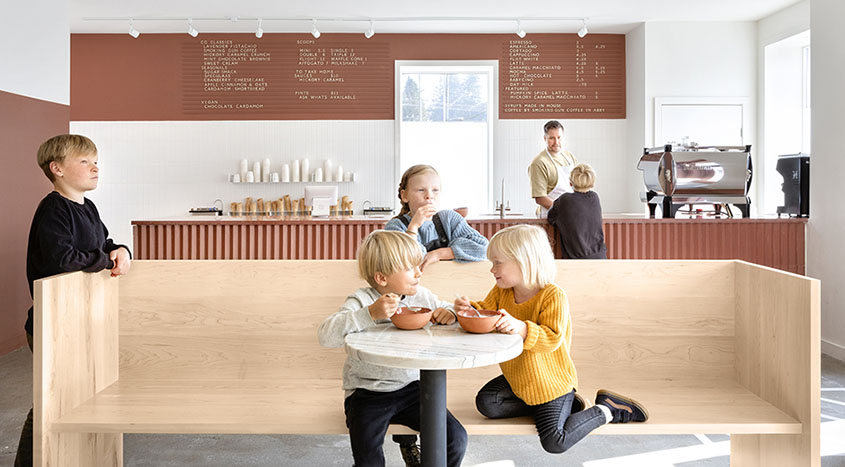
Common Good is a modern new ice cream cafe in Abbotsford with fun, and inspiring ice cream flavours using local and quality ingredients. The restrained interior design by Andrea McLean Studio creates a warm and welcoming space for guests to enjoy their treats.

The goal was to incorporate modern materials that reflect the iconic gelaterias of Italy, and the textures and colours of ice cream and ice cream cones. The iconic Rombini tile designed by the Bouroullec Brothers for Mutina was chosen as a beautiful connection to the ‘cone’ or ‘waffle’ texture that is below the ice cream.

Despite a very limited budget, materials were used in refined and thoughtful ways elevate the mundane into something very unique and beautiful. Instead of using the dimensional tile throughout, coloured paint was used in some areas to extend the concept visually. The stone table tops were remnants sourced at a local stone yard, and since the concept was to have all tops different, it was easy to find at affordable prices.

The space planning allows for a clearly defined service area and seating is divided by a large seating bench. The result is a vibrant gelateria that speaks to the local community.


IDIBC AWARD OF EXCELLENCE
FOOD AND BEVERAGE

Interior Designer: Andrea McLean, RID
Design Team: Marcela Trejo, Lou Stringer
Photographer: Tina Kulic

How to improve at saving water this winter

Saving water should be on a facility manager’s list of priorities all year round. Water is our most precious natural resource and it, like many things, is getting more expensive.

Added to those rising costs, it’s important to remember that energy and water are inextricably paired: the more water used, the more it costs to distribute water to facilities and deliver it back to water treatment centres. Water delivery itself also requires and expels energy, which increases the number of greenhouse gasses released into the atmosphere.

So, what can building owners and managers do to get better at saving water and in turn cut their costs, especially during the winter months?

Klaus Reichardt, CEO and founder of Waterless CO. Inc., manufacturers of no-water urinals, cites five key steps among others that facilities and managers can take right now.

Educate users

People think it is in the summer months that we use the most water. Reichardt notes this is partially true, but water consumption is still significant in the winter because more people are inside.

Install irrigation sensors

A simple way to reduce winter water consumption is to install sensors in irrigation systems. Sensors detect when precipitation is present, turning off programmed irrigation systems and preventing unnecessary irrigation.

Locate the shutoff valve

During the winter months, millions of gallons of water are wasted when pipes freeze. “All too often in an emergency, locating the shutoff valve is a mystery to some building owners and managers, wasting millions of gallons of water annually,” says Reichardt. The valve is usually found where the water utility pipes connect to the building’s lines.

Keep buildings warm enough

Building temperatures should be kept above about 13 degrees Celsius as a minimum, especially for schools and other facilities that are closed for prolonged periods during the winter.

Upgrade to water-efficient fixtures

The winter months are an excellent time to install no-water and water-efficient washroom fixtures, especially in facilities used less during the winter. “When they make the upgrades, building operators discover that water and cost savings occur the day the switch-out occurs,” concludes Reichardt.

Winter maintenance strategies that work

With experts predicting an early start to Canada’s cold season, the time to get started on winter maintenance is now. We’ve all heard that the best defense is a good offense; well, the same concept applies to winter-proofing apartment buildings. Having a business continuity plan and preventative measures in place is not only good practice, but it can also significantly decrease expensive and overwhelming insurance claims.

The key is to remember how winter impacts people’s homes and lives. Specific considerations need to be made for apartment buildings given residents are relying on their management team to ensure certain safety steps are in place. Being prepared can help mitigate cold-related risks such as flooding and slip and falls, while also helping to reduce the risk of costly litigation.

Overcoming common pitfalls

Experienced facility managers understand that things won’t always go as planned, especially when weather is involved. However, there are a few common pitfalls managers should be aware of to help them prepare for any issues that may arise.

Relying on an undefined or unclear set of plans or systems is the best way to be caught by surprise. Not having a preparedness plan or not identifying the risks a building faces can have costly consequences. Conducting a full risk-assessment of the building with the goal of identifying potential issues is a start. Creating procedures to follow in case of emergency or weather-related disasters can be the turning point in ensuring an issue doesn’t become a crisis.

Another stumbling block is not having a good understanding of your building’s infrastructure. Winter can be harsh on the infrastructure of apartment buildings. Important questions abound: do you know where the shutoff valves are?

By being aware of risks, maintenance issues and repairs, managers can protect properties through the shifting seasons and keep residents happy and safe.

 Be proactive

Facilities managers can be under increasing pressure to avoid unnecessary expenses and do more to operate efficiently. That’s why implementing a proactive winter maintenance strategy is critical for capturing cost savings while instilling trust and confidence in residents. A proactive plan requires not only understanding the current infrastructure but the existing and projected needs of the building.

The following tips can help managers keep their properties in good working order, reduce costs and mitigate situations, so they’re not left out in the cold:

  • Inspect roof space and clear debris. Clear your building’s roof space of leaves and anything that can cause blockage of roof drains and gutters as this can impede the proper flow of melting snow away from the building. Ensure you keep two metres away from the edge of the roof and only clean up debris if it can be done safely.
  • Routinely check property during cold periods. Check your commercial spaces regularly during the winter months.  Make sure stairwell doors are closed as cold air can cause hydronic heating lines to freeze and burst.
  • Beware of moisture and mould buildup. Ice and snow can quickly turn to water that seeps through foundations and cause mould which can lead to extensive damage and health risks. Always inspect for any visible cracks and ensure foundations are sealed.
  • Check furnaces. Ensure filters are in good condition and that the furnace is working efficiently and properly to avoid expensive repairs or unwanted heating interruptions. Your HVAC provider should complete maintenance in advance of cold weather and ensure boilers are working optimally.
  • Check alarms. Check carbon monoxide and smoke alarms. During the winter, people stay indoors longer and increased use of heaters can lead to risks of fire and carbon monoxide poisoning.
  • Avoid frozen pipes and plumbing issues. Compromised pipes and water management systems can be a messy or catastrophic situation if not adequately cared for. Winter plumbing and water issues tend to take place in batches and impact multiple units at once. Water issues are expensive in general, but when they affect multiple units, they can be astronomically costly.
  • Regularly check for exposed sprinkler lines to ensure they are either properly insulated or have heat trace cables to prevent them from freezing. Ensure isolation valves that supply water have been closed and that snow melt systems that use glycol are serviced and working properly.

Finally, trying to find leaks in multi-residential buildings is not always easy. By installing leak detection technology, abnormal water flows can be detected and alerted to management. Installing leak detection systems in buildings also allows building managers to analyze usage patterns and identify methods to reduce water consumption which can help with sustainability goals.

In the depths of winter, we learn that nothing burns like the cold. Buildings have continuous issues, but through proactive winter maintenance strategies, apartment managers can take steps to keep residents and infrastructure safe and resilient no matter what the season brings.

Craig Smith is Director, Commercial Business Development, First Onsite Property Restoration