Articles Archive - Page 320 of 928 - REMINET
REMI

Industry group formed to push prompt payment

An industry working group has been established by the B.C. provincial government to accelerate progress on prompt payment legislation.

The group is tasked with providing industry expertise and guidance to shape development of legislation specifically for B.C., informed by work already underway across Canada, the US, and the UK.

“We’d like to thank the many members who have played a key role in moving this issue forward. The formation of this working group is a key towards getting prompt payment introduced in B.C., and there is no time to waste. We hope to see this legislation tabled in the Fall 2022 session,” stated Chris Atchison, president and CEO of BCCA.

Urgent creation of the working group can be attributed to a recent series of Town Hall meetings (November 2021) hosted by Electrical Contractors Association of BC (ECABC), the Mechanical Contractors Association of BC (MCABC) and the BC Construction Association (BCCA), which illuminated the success of legislation in Ontario and showed the strong support for action from BC’s construction industry.

“Our members deserve to always be paid in a timely manner for the work they complete, no matter the market dynamic,” said Kim Barbero, CEO of MCABC. “This has been the basis of our advocacy from the outset, and we will continue to advocate for it as members of this newly-established working group. We look forward to working with the Ministry of the Attorney General to advance this work, including how best to ensure it is implemented to help all businesses relying on it throughout B.C.”

The working group will be managed by the Ministry of the Attorney General and include industry organizations representing all major stakeholders, as well as BCCA, ECABC, and MCABC. Additional participants will be confirmed and announced shortly.

ECABC, MCABC, and BCCA will be providing regular updates to their members throughout the process.

“We are pleased to see this important piece of legislation continue to move forward, and we will be dedicated in our role as part of this working group to ensure our members’ voices are heard and that the process moves swiftly and efficiently towards the implementation of this piece of common-sense legislation,” said Deborah Cahill, ECABC president.


Trio of transactions refines REIT’s portfolio

Skyline Commercial REIT has sold 24 industrial buildings in three separate deals occurring over just two business days. The vendor pockets $297.4 million and hands over 1.3 million square feet of space in the Montreal, Ottawa and Greater Toronto Area markets.

“The capital from these sales will be redeployed toward our development pipeline of modern industrial assets and acquisitions involving primarily newer facilities,” reports Michael Mackenzie, president of Skyline Commercial REIT.

The trio of transactions kicked off Friday, Jan. 21, with the $80-million sale of four small-bay, multi-tenant buildings in the Montreal suburbs of Dorval and Lachine. KingSett and Candev Immobilia are the new owners of the 403,000-square-foot portfolio.

Monday, Jan. 24 saw Woodbourne Capital Management and Epic Investment Services jointly acquire 692,600 feet of space in18 small-bay industrial properties in Ottawa. The deal came with a $154.5 million price tag. Also on Jan. 24, Pure Industrial acquired nearly 208,000 square feet in two industrial properties in Vaughan and Whitby for a total price of $62.8 million.

“Skyline Commercial REIT remains active in refining its portfolio to increase its weighting in the warehousing, distribution, and logistics sector⁠,” Mackenzie affirms. “As always, our ultimate goal remains to create further value for Skyline Commercial REIT investors through capitalizing on opportunities that are accretive to unit value.”

NORR announces residential leadership transition

NORR announced the promotion of George Sorich to vice president, residential and residential care effective April 1, 2022. The promotion is a planned succession and leadership transition from Bruce McKenzie who will be stepping back after 20 years at the helm. McKenzie will continue to provide strategic advisory services through 2022.

“The transition is a natural progression that reflects the successful leadership of Bruce in building and mentoring a strong residential and residential care team at NORR,” said Brian Gerstmar, president and CEO.  “We see new opportunities for growth in Canada, the US and UK, and believe George is well-positioned to lead global projects and identify housing trends in the decade ahead.”

McKenzie has deep roots in Calgary where he started his career 40 years ago, and over time has been a driving force in shaping the landscape with some of the city’s most notable buildings. He is an advocate for affordable housing, more options for seniors living and transit-oriented developments.

“The pandemic has been a big disruptor in the residential and residential care sectors and as designers, we are balancing the spectrum of walkable communities, optimizing the use of available square footage, developing healthy buildings through sustainable design and managing new space standards,” said McKenzie. “George is in lockstep with the complexities of the sectors and the external forces of change that will make him successful in the transition to this leadership role.”

Based in the Chicago office, George has been a practicing architect for 30 years and began his career in residential.  “I am passionate about the sector,” said Sorich. “It’s in our collective DNA to be part of a movement designing beautiful buildings that help to establish smart cities and resilient neighborhoods.”

IRL Construction wins ICBA safety innovation award

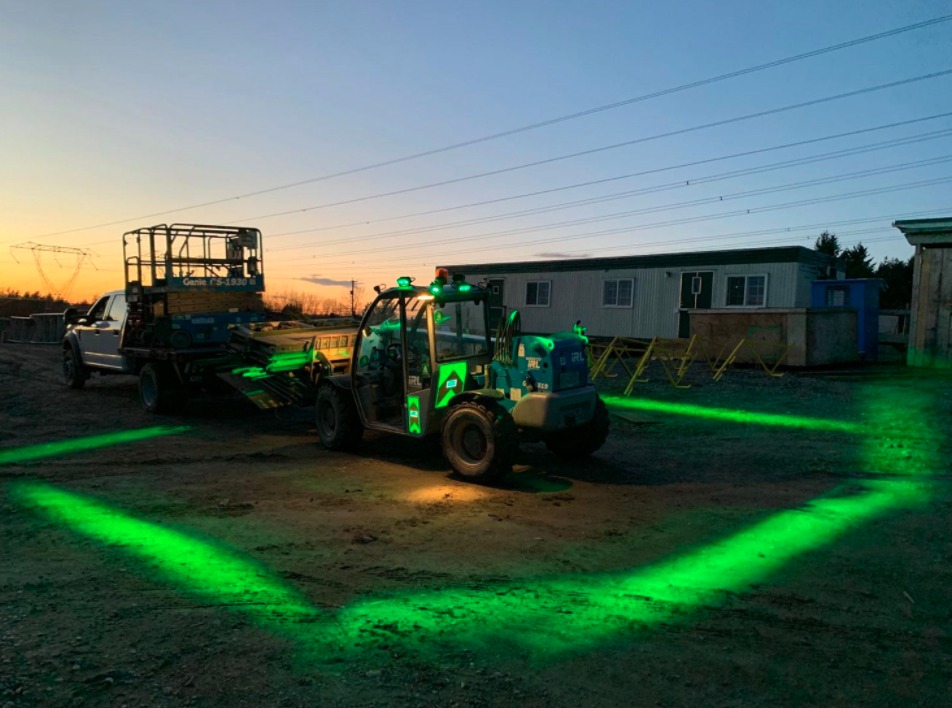
IRL Construction’s new intelligent illumination safety system has earned the Independent Contractors and Businesses Association’s (ICBA) 2022 Gord Stewart Workplace Health and Safety Innovation Award.

IRL partnered with a UK-based company called FHOSS to install intelligent lighting on several pieces of equipment, including the:

  • FHOSS Halo Exclusion Zone (a lit-up box that keeps people clear of moving equipment),
  • FHOSS Light Livery (lit, impactful and reflective graphics on the outside of working equipment), and
  • FHOSS Halo Lights (which attach to hard hats, making workers even more visible).

“As a company, we wanted to take extra steps to ensure workplace safety, especially around heavy equipment,” said IRL Construction CEO William Donnellan. “We find the exclusion zone is especially helpful for new workers who may not be aware of the appropriate distances to work safely – and it serves as a reminder for even our most seasoned workers.”

Awarded in partnership with WorkSafeBC and named for former ICBA president Gord Stewart, ICBA’s Workplace Health and Safety Innovation Award is presented annually to individuals and companies for campaigns and innovations aimed at preventing workplace incidents, injuries and illnesses. By honouring safety leaders and sharing their ideas, ICBA and WorkSafeBC hope to encourage new programs, policies, and projects that improve the health and safety of workers.

“IRL’s lighting innovation is exactly the kind of idea aimed at making the workplace safe that we want to honour with our award,” said ICBA president Chris Gardner. “Every day, 250,000 men and women go to work on a construction site in B.C., and our number one priority as an industry is to make sure every single one of them gets home safely. IRL’s leadership in using illumination to better identify danger zones helps keep workers safe.”

The award recognizes an employee or team of employees who come up with an innovative program, policy, tool or project that demonstrates a proven accomplishment in the area of health and safety for the construction industry sector. The award comes with a $5,000 prize, co-funded by ICBA and WorkSafeBC.

Understanding and identifying fire and smoke damage

Fire damage can be so much more than burned wood and scorched facilities, and it’s vital that facility owners, operators, and maintenance staff understand the scope of the work that restoration workers do when it comes to fire and smoke damage.

Of course, the flames themselves are a huge threat in the event of a blaze. But just as potentially damaging to buildings, their structure and fittings, and their occupants are the immediate and residual smoke damage, the effects of the heat, and the corrosive substances that are produced by a fire.

David Oakes, an RIA Certified Restorer, IICRC-approved restoration instructor, and chairman of the ANSI/S540 2021 Consensus Body, highlights the dangers of fire and smoke damage, including heat and pressure damage, and what can be done to mitigate it.

RELATED: Recognizing the relevance of restoration’s role

Oakes notes that the residues and gases produced by fire can include particle matter (PM), polycyclic aromatic hydrocarbons (PAHs), carbon dioxide, carbon monoxide, heavy metals, dioxins, and other complex chemical compounds, according to the U.S. Environmental Protection Agency (EPA) and Centers for Disease Control (CDC). As particles settle and vapours condense, those products form a film that is generally acidic and often contains numerous carcinogens. These residues can also produce offensive odours and damage surfaces and finishes.

The good news is that the high levels of toxicity in these residues dissipate significantly when the fire stops burning. However, depending on the severity of the damage, ventilation and/or HEPA air scrubbers and personal protective equipment may well be needed.

Temperatures in a structure fire can reach around 1,000 degrees Celsius, far higher than the level of heat that can cause serious damage. The heat line, a visible demarcation between heavy and light smoke residue, can be used as a reference to determine whether structural components and contents are fully restorable.

In addition to the sheer physical damage caused by such heat, these temperatures exacerbate the effects of the fire’s toxic residues, which are then locked into surfaces and materials by the cooling process. This type of damage requires not just cleaning but also sealing, refinishing, or replacement. It’s worth noting, says Oakes, that this kind of heat damage often does not manifest itself until an item is moved or cleaned.

In summary, all fire damage has a pressure component that spreads the coverage of toxic residues. Thermal dynamics will cause these to be attracted to cool surfaces either by pressure or condensation. For example, spaces behind cabinets and appliance mounting cavities, cool closets, and interiors can be heavily impacted even if not directly subjected to the fire. If there is significant pressure and a pathway such as an opening or physical damage, these residues can also be deposited in the interstitial areas behind the drywall. If, for example, a ceiling is breached in a fire and smoke reaches the attic, the pressures created in the attic can force smoke down into the wall cavities. These smoke tracks leave telltale signs that the drywall will need to be removed and residue needs addressing.

Source: Cleanfax Insider

Canada’s Rapid Housing Initiative exceeds goal

The federal government announced that over 10,000 new affordable housing units will be created across the country through the Rapid Housing Initiative (RHI), exceeding the initial goal of 7,500 new units. The new homes are intended for vulnerable Canadians and those at risk of homelessness. A third of the new units will support women and children, and another third will assist Indigenous Peoples.

Since launching, the Government of Canada’s $2.5 billion RHI has been helping vulnerable individuals and families find safe and affordable housing while simultaneously helping to grow the middle class by creating thousands of jobs in the housing and construction sector.

“We know that finding a safe and affordable place to live is a challenge for many Canadians across the country,” said Trudeau. “Through the Rapid Housing Initiative, we are building more housing units, increasing affordable housing, and working to end chronic homelessness. As we build a better future for everyone, we will continue working to improve access to housing, particularly for our most vulnerable, while putting home ownership back in reach for all Canadians.”

The government will continue working with provincial, territorial, and municipal governments, Indigenous governing bodies, as well as stakeholders and organizations to quickly create more homes for people in need of housing.

The RHI is delivered by CMHC under the National Housing Strategy (NHS), Canada’s 10-year plan to invest over $72 billion in affordable housing development. It provides capital contributions (upon signing a funding agreement with CMHC) under two streams— Cities Stream and Projects Stream — to expedite the delivery of affordable housing units.

How to manage winter cleaning in your facility

Winter can be a messy time for facilities. Excess moisture, salt, sand, and debris, combined with an uptick in contagious germs, can feel daunting for any business. However, it’s critical that facilities focus extra attention on winter cleaning for both appearance and health.

A recent study revealed that 88 per cent of Americans plan to be extra cautious regarding germs even after being fully vaccinated against COVID-19. As cleaning expectations continue to evolve, businesses must clean correctly – and often – to stop the spread of germs and protect building patrons.

To keep up with these winter challenges, it’s important to review and potentially modify cleaning procedures to continue to maintain a clean, safe facility throughout the season and into spring.

Increase daytime cleaning for infection prevention

Cleaning only at night isn’t ideal anymore. Busy facilities need to be cleaned more often during the day to help stop the spread of germs. Everyday items collect more germs than many realize. In fact, a study revealed that desks can harbour 10 million bacteria – 400 times more than germs found on a toilet seat. With the pandemic still ongoing and cold and flu season at its peak during the winter months, regular cleaning is crucial.

Increased daytime cleaning allows time for more infection control and prevention, especially on high-touch surfaces. Create a daily disinfectant schedule for winter that focuses on cleaning and disinfecting common touchpoints such as doorknobs, light switches, elevator buttons, and kitchen areas consistently throughout the day. Review disinfectant instructions and dwell times with staff to ensure products are being used properly to meet virus kill claims.

Focus resources on floors

Moisture, salt, and sand can damage floors if left unattended. On top of that, dirty floors can also negatively impact the image of your business. To protect floor finish and the life of carpet and tile, it’s important to clean these surfaces regularly, especially during the winter months when contaminants and moisture are frequently tracked inside. Update your floor cleaning schedule and assign staff to monitor entrances to address any messes or pools of water immediately. Installing walk-off indoor and outdoor matting and vacuuming it regularly can also keep floors cleaner and safer by collecting soils and moisture as people enter your facility.

Cleaning floors is a time-consuming task for many facilities, and in the winter, it can feel impossible to keep up with increased demand. Consider the use of robotic floor care equipment to help ease the burden. Robotic machines work by cleaning pre-determined routes while avoiding obstacles like people and walls. This helps ease the repetitive motion and strain on employees and frees up time for them to focus on other important cleaning tasks such as infection control. These collaborative robots – often referred to as “cobots” – do not replace the need for human cleaning professionals. The machines still require supervision and setup for their routes. However, they deliver consistent, reliable results, which can be an advantage for facilities with floor that requires extra attention during winter.

Improve indoor air quality

Monitoring indoor air quality (IAQ) is an essential factor to help keep your facility clean and safe. According to the Environmental Protection Agency (EPA), indoor air can contain two to five times more concentrations of pollutants than outdoor air. More time spent indoors combined with cold, dry winter air also gives viruses room to spread.

Cleaning has a huge impact on IAQ in a facility. Untrained cleaning staff may push dust and dirt around, making air quality worse. Revisit proper dust removal procedures with employees to ensure they clean properly from the highest surface and work their way down, and implement vacuums with HEPA filters to thoroughly capture air pollutants.

Additionally, consider using sustainable chemicals that won’t release volatile organic compounds (VOCs) into the air. Electrochemically activated solutions (ECAS), which are cleaners and disinfectants created using salt, water, and electricity and an on-site generator, are becoming increasingly popular. This is because facilities can generate their own products using safe ingredients, while eliminating issues with supply shortages. Other tips to improve IAQ include making sure the HVAC system is bringing in fresh, outdoor air and using vacuums with HEPA filters to capture dust and debris, rather than re-polluting indoor air.

Provide ongoing training

Training is essential for professional cleaners year-round to help keep them safe and ensure tasks are completed correctly, but winter is an excellent time to review procedures and protocol. Even the most seasoned cleaning professionals can benefit from tool, chemical, and procedural reviews. Hands-on training combined with occasional shadowing ensures that employees follow protocol and it gives them the confidence required to perform tasks properly and consistently. Empowering and investing in staff creates a positive work atmosphere and helps everyone achieve their goals to provide a safe, clean environment held to the highest cleaning standards.

Keeping up with increased winter cleaning can be a challenge, but it’s not impossible. By proactively updating the cleaning schedule, training staff, and providing advanced technologies, cleaning chemicals, and equipment, you will be armed to tackle the season’s specific cleaning needs with ease. The result is a facility that prioritizes health, safety, and appearance.

Kurt Kuempel is the vice president of GSF USA, a leading provider of cleaning services. For more information, visit www.gsf-usa.com or contact Kuempel at [email protected]

PCL celebrates 100 years of building in Edmonton

PCL Construction announced the centennial anniversary of its Edmonton Buildings and Civil district – 100 years of building in Edmonton, Northern Alberta, the Northwest Territories and Nunavut.

“We are so proud of our history and the people and partnerships that have allowed us to play a significant part in building our communities,” said Jason Portas, vice president and district manager, Edmonton Buildings and Civil. “PCL’s legacy is our people. As we reflect on achieving 100 years in construction, we recognize the contributions our diverse teams have made to our company and our Edmonton community.”

Over the last century, Edmonton Buildings has partnered on more than 4,800 construction projects, building some of the most significant infrastructure and other developments in the Alberta Capital Region, including West Edmonton Mall, University of Alberta, Stollery Children’s Hospital, Edmonton International Airport, the ICE District and Rogers Place, and PCL’s first Edmonton project in 1922, the Edmonton Public Library.

“Looking back at all we have built over the last century, it is incredibly fulfilling for us to be such an essential part of Edmonton, Northern Alberta, the Northwest Territories and Nunavut,” said PCL’s president and CEO, Dave Filipchuk. “The rich history of PCL is intertwined with the rich history of this region, and our PCL family has always been passionate about where we live and how our work contributes to our communities. We look forward to continuing to build a better future, together.”

Giving back to the community is central to PCL’s values-driven culture. As PCL looks ahead to the next 100 years, the company said its commitment will continue to drive the district and its communities forward.

Throughout 2022, Edmonton Buildings will celebrate its centennial and recognize its partnerships, people and communities with a public art installation and appreciation events.

Surrey breaks ground on new Nicomekl River Bridge

City of Surrey broke ground on the new Nicomekl River Bridge crossing on King George Boulevard with construction anticipated to be complete by winter 2022/2023. It will replace the aging two-lane timber trestle bridge and the decommissioned single-lane Bailey Bridge.

The new crossing will be earthquake and flood resilient and increase capacity for the busy corridor from three vehicle lanes to four and add multi-use paths for walking and cycling.

“With some parts of our region still feeling the devastating impacts of last year’s flood events, we have seen firsthand just how critical it is to replace aging infrastructure,” said Mayor Doug McCallum.

“A modern crossing is long overdue and the new Nicomekl Bridge will ensure there is safe and efficient movement for people, goods, and emergency vehicles in and out of the growing South Surrey community. I am really proud of our continued commitment to public safety and would like to thank the Provincial Government for their collaboration on this project.”

The total project cost is estimated at $22.5 million and is being led and delivered by the City of Surrey. The Province of B.C. has an agreement with the City of Surrey to provide $11.5 million for construction of ministry-owned infrastructure.

There will also be other road improvements made along King George Boulevard from the Park and Ride intersection to Crescent Road. These improvements, along with the new crossing will increase the safety, connectivity and traffic flow in this corridor which is a critical link in connecting Surrey’s communities to each other and the region.

Assessing likely cleaning industry trends for 2022

The cleaning industry in Canada and beyond has changed significantly and likely on a permanent basis since the onset of the COVID-19 pandemic, and 2022 is only likely to see further evolution. But what cleaning industry trends should we be expecting?

Cleaning product distributor Afflink shed some light on the matter as it recently conducted a survey of its members. That survey found that marked increases in technology and digital communication were cited by many as one of the major trends expected this year.

“[Our members] believe technology has been ‘recharged’ due to the pandemic with more technological advances expected right around the corner,” said Michael Wilson, vice president of marketing and packaging at Afflink.

Certainly, the pandemic has proven that the impacts on the cleaning industry, from new practices to supply chain stresses, are global. Businesses have long since realized that COVID-19 has changed everything, and more changes are coming.

The survey of Afflink members also found that many are expecting to see a new reality in workspaces. After many workers travelled less and more and more began to work remotely during the pandemic, it is now unrealistic that businesspeople will willingly return to working in office settings as often as they did before.

Respondents also predicted a further shift from physical to virtual operations as well as an increase in the use of artificial intelligence (AI) technologies. AI can perform many human tasks and allow cleaning businesses to identify customer purchasing patterns and recommend products as well as reduce inventory waste, optimize inventory, and enhance supply chain management.

New York scrutinizes public projects contracting

New York State is set to launch a review of public projects contracting, addressing longstanding complaints from several contractor and trade associations that bidding processes are onerous and standard terms and conditions related to payment, completion timelines and dispute resolution are unfair. Newly enacted legislation establishes the 23-member Construction Industry Advisory Council on Public Contracting Reform, which will be tasked with delivering recommendations on how public contracts should be crafted, awarded and administered.

The enabling legislation, adopted in the New York State senate, also acknowledges that inefficiencies in the public contracting processes drive up construction costs and undermine contractors’ competitiveness. “Many prior, piecemeal attempts to address these inequities through individual approaches have proven unsuccessful, and therefore a more equitable and comprehensive approach is warranted,” it states.

The New York Electrical Contractors Association and the Subcontractors Trade Association are two of the leading voices calling for the review. Other supporters include: Building Trades Employers’ Association; Mechanical Contractors Association of New York; Association of Master Painters and Decorators of New York; Association of Contracting Plumbers NYC; Sheet Metal and Air Conditioning Contractors’ National Association of Long Island; Women Builders Council; the National Electrical Contractors Association; and the Empire State Subcontractors Association.

How will the tissue industry evolve in 2022?

The issue of supply shortages has affected most industries over recent months, and cleaning service providers have certainly not been exempt from that struggle. As the industry continues to learn about the current and long-term impacts of the COVID-19 pandemic and how to operate around them, Cascades Tissue Group senior market analyst Audrey Salle suggests that these challenges will continue through 2022 for various sub-sectors including the tissue industry.

Cascades recently outlined three major trends that the tissue industry should expect to see this year, and issued guidance for end users, distributors, and manufacturers to prepare for the year ahead:

An increased emphasis on hygiene

Consumers and industry workers have maintained their elevated sense of hygiene nearly two years into the pandemic. A poll conducted in October 2021 by Cascades found that over 75 per cent of consumers still wash their hands more frequently compared to before COVID-19. That, of course, impacts purchasing decisions, particularly those relating to hand drying products. Consumers still seem to prefer paper towels, a trend that was first noticed at the height of the pandemic.

Shifting B2B transactions

When it comes to the B2B tissue market, 40 per cent of all sales were via e-commerce between December 2020 and December 2021. B2B buyers preferred paying via websites (80 per cent), email (77 per cent), and phone (72 per cent), according to a study from Virtual Analytics. Manufacturers and distributors should respond by altering the way they present and provide access to products.

Going environmentally friendly

Finally, a key goal of companies, residents, tenants, and the general public continues to be going as green as possible. As a result, products come under increased scrutiny ever year. Cascades notes that many consumers prefer recycled fibres and corrugated packaging instead of harmful plastics, and are also placing a premium on products that can achieve green certifications.

Based on Cascades’ predictive models and forecasts, the company does not expect all tissue products to catch up to 2019 levels in 2022. It concludes the paper towel category is the most promising in 2022 due to a growing need for more hand drying and surface cleaning. Paper towels were also the category whose growth was the least negatively impacted in 2021.

Construction underway at Burnaby Hospital site

Construction has started on the Burnaby Hospital campus with the removal of the Cascade building to prepare for redevelopment on the site.

The building’s removal is expected to complete in March 2022, and will make way for phase one redevelopment activity/construction staging as well as the proposed future phase two patient tower and cancer centre.

“As part of our commitment to build and expand health care services, I’m pleased to mark this important step forward in phase one of the Burnaby Hospital redevelopment,” said Adrian Dix, minister of health. “This new, modernized health care campus will increase access to health care services for people in Burnaby for decades to come.”

Phase 1 of the redevelopment includes the new Keith and Betty Beedie Pavilion, expansion of the Support Facilities Building to include a new energy centre, and renovations to existing buildings on campus.

Once complete, phase 1 will provide improved access to emergency, surgery, maternity, and mental health and substance use services. Construction is expected to begin in early 2022 and completed in 2026.

“I’m excited to mark this pivotal next step forward for a new, state-of-the-art health care campus that by design will be patient-centred. Throughout the pandemic and with historical challenges such as Burnaby Hospital fire, our teams have demonstrated extraordinary dedication and care for our patients, families and communities. I am pleased that the new health care campus will support our staff, medical staff, trainees and volunteers to deliver exceptional care experiences,” said Dr. Victoria Lee, president and CEO, Fraser Health.

Taking learnings from COVID-19, the hospital redevelopment will also be designed with enhanced features in place to respond to future pandemics, including outbreak control zones, vestibules for putting on and taking off personal protective equipment, and airborne isolation rooms.

With funding from the province and the Burnaby Hospital Foundation, phase 1 of the Burnaby Hospital redevelopment will cost approximately $612 million.

Elementary school bound for new condo in Toronto

An elementary school will be fully integrated within a new mixed-use condominium in downtown Toronto. Ontario is collaborating with Menkes Developments and the Toronto District School Board on this provincial first and investing $44 million into the project.

The Lower Yonge Precinct Elementary School will be situated at the podium level, offering more student spaces for the lower Yonge and waterfront neighbourhoods.  Minister of Education Stephen Lecce said the model could be replicated in other developments as a solution to solve educational access in urban high-density settings.

“We are thrilled to build Canada’s first elementary school that is completely integrated within a high-density mixed-use development right in downtown Toronto,” said Stephanie Donaldson, Trustee, Ward 9, Davenport and Spadina – Fort York. “This is great news for students in the area and an exciting opportunity for the Toronto District School Board to shape an innovative urban school model that can be used across Ontario and Canada.”

The project is part of a newly announced province-wide investment of more than $600 million to support new school and child care spaces, which is part of a larger $14 billion to fund school construction over 10 years.

There are currently more than 300 child care and education building-related projects in development across Ontario with more than 100 actively under construction.

Greystar, Ivanhoe Cambridge form joint venture in Chile

Greystar Real Estate Partners LLC and Ivanhoé Cambridge announced they have formed a joint venture to pursue multifamily real estate opportunities in Chile. The new partnership represents the first global institutional capital investment in multifamily real estate in Chile, marking an important milestone for the industry and country alike. It also marks the first investment Ivanhoé Cambridge has made in this emerging market.

Over the years, Greystar and Ivanhoé Cambridge have partnered on multiple North American and international joint ventures. The partners say they intend to develop and acquire multifamily projects in the Santiago market, as well as submarkets that are centrally located, well-connected, desirable, and with strong rental demand.

The venture’s mandate is “to seek innovative, sustainable, accessible, and efficient ways to bring purpose-built and professionally managed rental housing communities to new markets, and to enrich lives and achieve superior investment returns through renter-centric designs and exceptional service delivery.”

“Our joint venture with Ivanhoé Cambridge in Chile is a landmark achievement and key indicator of the continued growth and strength of our global strategic alliance as we expand further into international markets,” said Tom Livelli, Managing Director at Greystar. “Together with Ivanhoé Cambridge’s capital investment and Greystar’s in-house capabilities and extensive local relationships, we are opening the door to transform the renter experience in Chile, where we continue to see a bright future and tremendous long-term potential.”

“We’re delighted to launch this new investment strategy in Chile and to diversify our portfolio in Latin America,” added Adriano Mantesso, Managing Director, Head of Latin America at Ivanhoé Cambridge. “We believe in the growth potential of the residential rental market in major cities across the region, increasingly attracting global institutional capital and meaningfully transforming the renter experience. We are very excited to once again join Greystar as an early mover in delivering the next generation of rental housing communities in a new market and contribute to setting new standards in resident services and community design for the people of Chile.”

Click here for the official press release. 

Air purification supplier ramps up production

An Ontario manufacturer has been awarded $2.5 million in provincial funding to help keep pace with booming demand for air purification systems. Abatement Technologies currently has a $20-million expansion project underway to increase production capacity at its facility in Fort Erie.

The grant comes from the Ontario Together Fund, which was established in April 2020 to support homegrown suppliers of products contributing to public health protection and pandemic response then topped up with an additional $50 million commitment in the 2021 provincial budget. Over the course of the COVID-19 pandemic, funds have also been allocated to Ontario-based manufacturers of ventilator components, personal protective equipment and disinfectant materials.

Abatement Technologies designs and manufacturers HEPA air purification and containment products for a range of commercial, residential and institutional applications. “From pop-up testing sites to increased patient isolation capacity and making common areas safer, we feel our equipment is really making a difference,” says Justin Larsen, the company’s director of marketing and product innovation.

“Through the Ontario Together Fund, our government is making strategic investments in domestic businesses with the ideas and solutions to help us through this pandemic,” concurs Vic Fedeli, Ontario’s Minister of Economic Development, Job Creation and Trade.

Hamilton tower becomes world’s largest residential Passive House

The Ken Soble Tower in Hamilton, Ontario, has become the world’s largest residential building retrofitted to the Passive House standard, achieving the EnerPHit certification.

The 18-storey, 146-unit CityHousing Hamilton building has achieved a 94 per cent reduction in greenhouse gas emissions and a 91 per cent reduction in heating energy demand. At its peak, the total energy required to heat and cool a unit would be equivalent to the energy needed to power three incandescent light bulbs.

“We could not be more thrilled that the Ken Soble Tower project has achieved Passive House – EnerPHit certification,” said Chris Ballard, CEO, Passive House Canada. “With over 10,000 towers across Canada in need of deep energy retrofits, the team at ERA Architects, PCL and CityHousing Hamilton have shown great leadership and we congratulate them on this tremendous achievement.”

To meet the rigorous Passive House standards, a team specializing in apartment retrofits was brought together. This included ERA Architects, a Toronto-based architecture firm with experience in low-carbon retrofits and the force behind the Tower Renewal initiative, and PCL, Canada’s largest general contractor with deep expertise in building revitalization and in-house envelope engineering.

Using the Passive House EnerPHit standard, the Ken Soble Tower was retrofitted to support resident health and climate resilience, with embodied carbon in the building’s structure being saved through building re-use and revitalization of all146 units. The retrofit also included a reconfiguration of all indoor and outdoor spaces to accommodate aging-in-place. Over 20 per cent of apartment suites now meet barrier-free standards, with expanded community facilities that support seniors’ programming.

Using 2050 temperature projections as a guiding foundation for the design, the Ken Soble Tower is climate resilient, supporting indoor health and comfort during both extreme heat and cold climate events anticipated in coming decades. Building performance was achieved in part through an ultra high-performance building envelope, with exterior and interior insulation that meet stringent airtightness requirements, triple-glazed windows, and heat recovery in all building penetrations. Obsolete and unhygienic HVAC systems have been fully modernized to provide fresh air to each suite. Building performance was achieved in part through an ultra high-performance building envelope.

To achieve EnerPHit certification, the team had to confirm that the final building was constructed and performed as designed. This was achieved through a comprehensive air tightness testing and quality management program developed by the project team and guided by PCL’s in-house envelope engineer and construction team. Final operational whole building airtightness tests demonstrated that targets were surpassed  by more than 50 per cent at 0.235 air changes per hour (ACH) at 50 pascals pressure (Pa).

“Congratulations to CityHousing Hamilton on their innovative vision for the Ken Soble Tower project. Achieving EnerPHit certification reflects the expert rigor, best practices and collaborative efforts between our client, consultants, trades, and PCL,” said Marc Pascoli, Vice President and District Manager of PCL’s Toronto District Office. “The outcomes we’ve achieved demonstrate that high-performance building envelopes are possible on large-scale retrofit projects, paving the way for ultra-efficient retrofits to support a low carbon future.”

“We are very proud to have worked alongside CityHousing Hamilton to realize the renewal of the Ken Soble Tower as affordable and resilient housing, and one of the largest EnerPHit projects in the world,” added Graeme Stewart, Principal, ERA Architects. “Showcasing that low carbon retrofits are the path for a resilient future, offering health, safety and comfort to residents, the Ken Soble Tower is a true model for addressing the growing climate and housing crises of our time.”

As the oldest high-rise multi-residential building in CityHousing Hamilton’s (CHH) portfolio, Ken Soble Tower at 500 MacNab Street North has been a fixture of Hamilton’s West Harbour neighbourhood since 1967. The building was fully occupied until 2014 when a mix of aging infrastructure and increasing capital costs led it to fall into disrepair.

Following several studies and consultations with residents and community members to explore the future of the building, including renovation, sale or replacement, a decision was made to retrofit the tower in 2016. Through the vision and leadership of the CityHousing Hamilton Board and CEO Tom Hunter, the Passive House standard was chosen for the project.

Moving forward, the Ken Soble Tower will become a teaching tool, offering real-time lessons in retrofit design. CHH, in partnership with the University of Toronto, ERA and PCL, will study and measure the impacts of the building on its residents and surrounding environment, including building performance, resident health and safety, and economic impacts, among others.

“