




Articles Archive - Page 299 of 928 - REMINET
REMI

Large electricity customers step into the 2020s

The 2020s are finally set to begin for large electricity customers enrolled in Ontario’s Industrial Conservation Incentive (ICI) program. Over the past 22+ months, their share of global adjustment costs has been tied to their energy use in pre-pandemic July 2019, but they’ll soon be receiving notice of their updated cost allocation factors along with a June 15 deadline to opt into the program for another year.

The ICI program’s formula for locking in global adjustment (GA) allocations will likely be more favourable for many eligible commercial participants this year since it will be based on their energy use during the five hours of system-wide highest demand between May 1, 2021 and April 30, 2022. Those all occurred during August 2021 and, more importantly, in sync with the protracted period of low office occupancy arising from the COVID-19 pandemic.

That follows last year’s hold-over of old numbers after the Ontario government cancelled the May 2020 to April 2021 cycle of the program. Nevertheless, energy management specialists participating in a webinar sponsored by the Building Owners and Managers Association (BOMA) of Greater Toronto last week stressed the importance of evaluating past and future load pressures before making a decision.

“We’re kind of at the tail end of the pandemic. Things are opening back up again; people are coming to the office, but we don’t know exactly what’s going to happen,” mused Edward Newton, an energy analyst with the consulting firm, Energy@Work. “It seems that there is going to be some kind of hybrid workplace model appearing, which means your kilowatt-hour (kWh) profiles won’t be like what we saw during the pandemic; they won’t be like what we saw prior to the pandemic.”

To qualify for the ICI program, commercial electricity customers must register an annual average monthly electricity demand of 1 megawatt (MW). Known as Class A for purposes of the program, their share of monthly GA costs is prorated to their energy use during the five hours of highest system-wide demand during the period from May 1 to April 30. This is fixed as a consistent denominator, known as the peak demand factor (PDF), for the following 12 months from July 1 to June 30.

After the Class A allocation is subtracted out, non-qualifying customers, known as Class B, pay the remainder of monthly GA costs on a volumetric per kWh basis. In 2021, that averaged about 7.35 cents/per kWh or roughly 72 per cent of the commodity cost of electricity.

If year-over-year occupancy levels don’t decline dramatically during the pending new billing period, from July 1, 2022 to June 30, 2023, many Class A commercial customers could see some savings compared to the previous two years. Newton cited the example of a building with an 800-kilowatt drop in peak demand from its 2019 tally.

“During the current adjustment period, the building is paying according to its peak demand factor that was set in 2019. This is going to result in a much lower PDF and potentially much lower Class A costs,” he affirmed.

However, that’s also to be considered in the context of other price dynamics, including a reduction in GA cost with the transfer of approximately $3 billion attributable to renewable generation contracts to the provincial government, and the rising wholesale price of electricity. The latter averaged about 2.8 cents/kWh in 2021 versus 1.39 cents/kWh in 2020.

“For Class A buildings, the increase in the HOEP (Hourly Ontario Energy Price) is becoming more and more important for managing kWh. It has a bigger impact on the amount you spend,” Newton said.
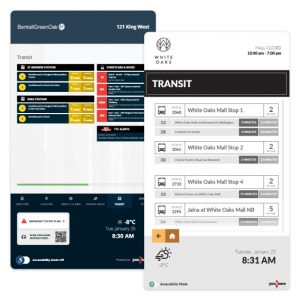

Light up Your Lobby with an Interactive Digital Screen

Not too long ago, property managers had to rely on posters and paper notices to keep residents informed of maintenance matters, local events, safety protocols, and other building information. But thanks to advancements in digital technology, communication has come a long way. Interactive display screens have made content-sharing faster, easier, and more captivating than ever. Today, it’s about seamlessly integrating all your building’s communication channels with one turnkey solution that enhances the resident experience without the resulting litter or time required to post and later remove paper posters.

“Imagine you’re a resident of a large condo tower in the downtown core,” says Scot Martin, President and CEO of youRhere Inc. “During the morning rush hour, a live TTC transit feed displayed in the lobby will tell you exactly when the next #12 bus is coming so you don’t have to stand in the rain. It will also show you the professional sports schedule and alert you to any big concerts in the area that will draw additional congestion. If there’s a deal at the local pub, it will give you those details as well. There’s really no end to the uses for these interactive information hubs that can be updated by building management simply using a laptop or a smartphone.”

From weather alerts and neighbourhood deals to amenity closures and recycling tips, if it’s of interest to your residents, then your digital screen is the place to share it. As Martin points out, people today are accustomed to getting their information digitally: “Whether it’s a check-in kiosk at the airport, a digital directory in an office building, a wayfinding map in the mall, or a newsfeed on the elevator, digital technology is ubiquitous, and most buildings today are increasingly opting for some form of time-saving digital solution. Condominiums shouldn’t be the exception.”

Digital screens offer convenience without the clutter, content without the clean-up—and in emergency situations, they can even step in as powerful tools for delivering life-saving information.

“When an incident occurs at or near the building that requires the immediate attention of residents, digital screens can be used to quickly relay safety information,” says Martin. “Instructions for various emergency scenarios can be prepared and saved ahead of time so when they’re needed, they’re easy to access and update using our intuitive CMS systems.”

Units can be equipped with various accessibility capabilities, multiple language options and Content Management Systems, ensuring important messages are seen and heard by all. This can be especially handy for properties catering to specific segments of the population. They’re also a great way to share company sustainability goals, showcase charitable drives, or simply highlight new building features or amenity schedules.

In short, the benefits and opportunities are boundless, and when used to their full potential, digital screens can lead to an exceptional resident experience. Supported by intuitive software and built to fit within any budget, your condominium’s lobby, mail room or amenity space will light up like never before.

Top 5 Uses for your Interactive Digital Screen


Whether you’re considering going digital or already have a screen in your lobby, here are five great ways to make the most of this all-in-one content management solution:

  1. Display maintenance alerts

Effective property managers know that communication is key to cutting back on the number of complaints that typically arise due to maintenance and construction. By informing residents of upcoming work and preparing them for any inconveniences, your complaints will significantly reduce.

  1. Highlight important building announcements

Whether it’s a notice about an upcoming Board meeting or an invitation to a resident barbecue, updates can be made quickly and removed with zero hassle (unlike posters and paper notices).

  1. Provide live transit schedules

Commuters relying on local transit will greatly appreciate the convenience of having a live transit feed in the comfort of the lobby, especially on cold or rainy mornings.

  1. Showcase ESG and other achievements

Residents will appreciate seeing the results of your community outreach programs and charitable activities; also, digital screens are a great place to post waste reduction targets, results, and showcase your green initiatives.

  1. Partner with local businesses

Aside from promoting nearby establishments and supporting the local economy, offering advertising opportunities to local businesses can be a great way to subsidize the cost of your digital screens.

To find out more about the benefits of a digital screen, visit www.youRhere.ca


Don’t rely on social media for cleaning product storage tips

The American Cleaning Institute (ACI) has issued a statement which calls for social media platforms to stop the spread of unsafe cleaning product storage trends.

One can find anything and everything on social media these days, and that includes “advice” on how to store potentially hazardous cleaning products. One trend on Pinterest shows storing liquid laundry packets and other cleaning products in unmarked glass or clear plastic containers instead of their original packaging for the sake of making a storage area aesthetically pleasing.

Instead, as any cleaning product professional will attest, it creates a serious safety hazard for anyone — particularly young children or adults with cognitive disorders — who may be tempted to consume the unlabeled products.

A recent ACI survey found that nearly one-third (30 per cent) of Americans have reported seeing social media posts where cleaning products or liquid laundry packets were removed from their original packaging and stored in clear or glass jars for decoration. Of those who have seen these types of posts on social media, more than two-thirds (68 per cent) said they have tried or considered trying a new storage idea for cleaning products that they saw online.

To try to combat this misinformation, the ACI has launched a series of Pinterest adverts under the title of Store Not Decor which educates social media users on safe product storage tips, as well as sending a letter to the Pinterest executive committee alerting them to the trend and reminding them of their responsibility to not propagate dangerous practices.

“Laundry detergent packets and all cleaning products should always be kept in their original containers and stored out of sight and reach of children,” said Brian Sansoni, ACI senior vice president of communications and outreach.

Ontario Liberals announce plan to bring back rent control

The Ontario Liberal party announced it intends to introduce a single rent control system across the province should it win the upcoming provincial election. In all, the plan includes nearly forty housing policies the Liberals say will make “buying, renting, and living in a home” easier and more affordable for Ontarians.

“The Ford Conservatives ended rent control to help their well-connected friends, making renters’ lives unpredictable and less affordable each year,” the official plan states. “We’ll prevent sudden rent hikes by reinstating rent control everywhere in Ontario – putting an end to the two-tiered rental market and providing much-needed stability to renters.”

It will also enforce larger fines for persistently negligent landlords, and punish those who choose to keep their rental homes vacant; international owners would pay a five per cent tax, while domestic owners would pay a two per cent tax.

Other housing promises include increasing the supply of deeply affordable homes by 138,000 and building 78,000 new units of social or community housing. The Liberals estimate that the construction work associated with these new buildings would employ 150,000 people per year.

“It’s hard to have a conversation these days without hearing about the skyrocketing cost of housing,” said Liberal Leader Steven Del Duca. “The fact is, it’s getting harder and harder for people to live in the neighbourhoods they grew up in. Our Ontario Liberal plan will double the pace of homebuilding next year, and keep that pace going until we’ve built 1.5 million new homes on places like poorly used stripmalls, land held for speculation, and available government properties.”

Other key party promises:

– Cutting Ontario’s carbon pollution in half by 2030, and expanding the Greenbelt and provincial parks;

– scrapping the proposed Highway 413 and using the savings to build new schools and repair existing ones;

– allocating $1 billion toward clearing surgical backlogs and lowering wait times in Ontario hospitals;

– creating a universal workplace benefits package for contract workers that includes 10 paid sick days and drug, vision and dental care;

– raising the minimum wage to $16 an hour and boosting disability payments by 20 per cent;

– lowering transit fare to $1 per ride until 2024 and bringing back Grade 13 for students negatively impacted by COVID-19.

For more, visit: www.ontarioliberal.ca


Prioritizing industrial projects to meet demand

As B.C.’s economy rebounds from the pandemic, demand for industrial space is expected to accelerate through 2022. According to Josh Gaglardi, principal at Orion Construction, it’s more important than ever to prioritize high-density industrial projects and develop large-format industrial centres to provide more industrial space for businesses in the region.

Q: What is the current state of B.C.’s industrial market?

Josh Gaglardi: The vacancy rate remains at an all-time low of 0.4 per cent in the Greater Vancouver area with the industrial asking net rental rate reaching a new all-time high in Q1 2022 to $16.93 per sq. ft. according to a recent market report by Colliers. In this tight industrial market, supply is lacking, but demand continues to soar as businesses look for a new workspace to expand into. The pandemic has led eCommerce companies to thrive, and they are now fighting for space and struggling to expand. Landlords have higher power than ever before as they lease these coveted spaces to the highest bidder, creating an unstable and highly competitive market across Canada.

Q: What innovative solutions are there to bring more supply to B.C.’s industrial market?

Josh: Amid a shortage of developable land, it’s important to streamline the industrial development process and prioritize projects that meet the needs of our changing economy. For contractors like Orion Construction, we provide a simplified full-service recipe to get projects done on time, even with supply chain challenges, as it’s pivotal to keep the region’s economy moving forward. We are now having to look at new regions outside of the Lower Mainland for development due to land scarcity.

Q: Where do developers need to look to build new industrial developments?

Josh: As the availability of industrial space and warehouses in the Metro Vancouver region larger than 100,000 sq. ft. has dropped to virtually zero, we now have to prioritize the development of large-scale warehousing in other B.C. communities. Locations like Kamloops, Kelowna, Victoria, and Langford all present opportunities for expansion. To keep the B.C. economy moving forward and provide space for businesses to grow their footprint, construction companies, developers and occupiers must look to the Thompson-Okanagan, the Capital Region and other communities for space. We’ve already seen our clients exploring these regions as Metro Vancouver no longer presents an option for them.

Q: A growing trend has emerged across major cities in Canada – active listings not having a posted asking rent. Why has this trend emerged, and what caused it?

Josh: With low availability across the board, it’s natural for landlords to hold more power as they simply omit an asking rent. They’re in a position where they can field offers from prospective tenants and lease the space to the highest bidder. Everything comes down to land scarcity and lack of supply. Supply chain disruptions have had a major impact on construction timelines, which is causing delays in bringing new supply to the market.


Edmonton Carbon Budget tool wins planning award

The City of Edmonton was recognized at the 2022 American Planning Association Sustainable Communities Division Awards for its work developing the Edmonton Carbon Budget, a tool to integrate greenhouse gas emissions into the city budgeting and prioritization process.

In December 2020, Edmonton became the first city in North America to develop a carbon budget, embedding it within The City Plan. The following year, the city took the concept one step further in its Community Energy Transition Strategy, asking: what if the city budgeted for carbon emissions the same way it handles finances?

“This is North America’s first municipal carbon budget, meaning that in addition to measuring the dollars and cents of the budget now Edmonton will also measure the amount of greenhouse gas emissions that a project adds or takes away from the environment,” said Howaida Hassan, general supervisor of the Urban Growth Unit with Urban Planning and Economy Branch. “Many people are putting time and effort into making this work. It’s an iterative project and we are still learning every day. As other municipalities begin to look at carbon budgeting as well, we are now able to share what works and what doesn’t to make sure the process is as effective as possible.”

The carbon budget caps Edmonton’s total carbon emissions over the next three decades, and allows the city to measure its planned actions and progress towards that goal each year and adjust as needed.

“The city is integrating the carbon budget into the overall 2023-2026 budget cycle, which means that city council will also be considering projects in terms of how they affect emissions,” said Harmalkit Rai, deputy city treasurer and branch manager of Financial Services. “For example, a road expansion will now be considered in light of its impact on the carbon budget and the project’s impact on air quality, public health and long-term costs.”


Electricity price embedding cycle begins anew

Ontario’s large commercial customers have begun a new cycle of electricity price embedding with somewhat more straightforward parameters for carving out their share of the global adjustment in 2023-24. A recently filed Ontario regulation now ties the five hours of system-wide peak demand, which are central to large customers’ cost calculations, to real-time consumption from the provincial electricity grid.

Previously, analysts with the Independent Electricity System Operator (IESO) also factored in the volume of energy storage that hydroelectric generating stations drew to meet system demand. The five peak hours were identified from the resulting tally, which is known as the adjusted allocated quantity of energy withdrawn (AQEW). This presented an added challenge for customers aiming to reduce their energy loads during the five peak hours since the track record of Ontario’s Industrial Conservation Initiative (ICI) shows that the adjusted AQEW can vary by 300 to 900 megawatts (MW) from the real-time reading.

“This change will allow peaks to be more confidently predicted,” observes Neal Bach of Brightly, which is now the parent company of the energy management and analytics firm, Energy Profiles Limited. “There will no longer be a 20-day wait for the AQEW to be finalized to solidify the peak hour, and it will prevent occurrences like last year where a peak shifted from 5 p.m. to 8 p.m. based on the AQEW.”

Speaking last week during a webinar sponsored by the Building Owners and Managers Association (BOMA) of Greater Toronto, Tim Christie, director of electricity policy, economics and system planning with the Ontario Ministry of Energy, advised that the new peak hour baseline and other accompanying tweaks to the regulation governing the ICI program arise largely from a 2019 stakeholder consultation. At the time, Ministry officials directly conferred mainly with industrial electricity users, but commercial customers — both the larger entities that qualify to participate in the ICI program and the greater number of accounts that do not — were also invited to make submissions.

Under ICI program rules, all customers with monthly average energy demand of 1MW and designated manufacturing sector players with average monthly demand of 500 kilowatts (kW) can opt in as Class A participants. Their share of the global adjustment — which even after the removal of an estimated $3 billion in costs related to renewable generation contracts still averaged about 7.35 cents per kilowatt-hour (kWh) in 2021 — is pegged to their energy usage during the five hours of system-wide highest demand between May 1 and April 30, and then fixed for the following 12 months from July 1 to June 30. After the Class A allocation is subtracted out, non-qualifying or Class B consumers pay the remainder of each month’s GA costs on a volumetric $ per kWh formula.

“For Class A, what it really comes down to is preparing for the five hours. You don’t know when exactly they’re going to occur so you have to use the information available and target maybe 20 days during the peak season, with a four-hour window,” Edward Newton, an energy analyst with the consulting firm Energy@Work, told webinar attendees. “Generally, for each kW you reduce, it amounts to between $100 and $120. So decreasing 100 kW during one of the peaks, that can lead to $12,000 in savings, but the reverse is true if you get caught during a peak and your demand is high.”

Christie suggests peak hours based on real-time consumption should make that exercise a little less perilous. He reiterated that the Ministry’s prime objective is to encourage demand response, not create booby traps.

“We heard a lot of concern from consumers that hours could fall in or out once they were adjusted. People could make decisions about taking conservation measures using the real-time demand and, after the fact, that could change. It led to a lot of frustration,” he reported. “So we changed the regulations. This should make it easier for people to participate with a little bit less volatility and a little more transparency.”

Administrative streamlining measures and data collection authorization

The regulatory amendments also include a couple of streamlining measures that could be of interest to the commercial real estate sector. The regulation now includes a mechanism to recognize that a campus of buildings registered as a single Class A consumer in the ICI program could split into smaller components if one or more buildings are sold to new owners. The amended rules allow existing and new holders of the properties to remain in Class A until the end of the current ICI cycle (June 30) provided they have a formal agreement of how the billing will be divided and the necessary metering in place.

“It’s come up a handful of times over the years,” Christie noted. “The reg didn’t have language to identify how to deal with that situation so we’ve now clarified that.”

Property owners would still need to work through the details with their local distribution company (LDC) or the IESO, depending on their grid connection. Additionally, LDCs or the IESO will now handle all administration related to changes in property ownership without having to wait for the Ministry of Energy’s instructions to do so.

“Prior to this point, if you wanted to change control of your facility, you would write to the Minister, and the Minister would approve or deny it. In practice, they were all approved so it just became a paperwork exercise,” Christie said.

Another new regulations authorizes the Ministry of Energy to collect more information from Class A consumers on an annual basis, including: total electricity consumption; average maximum monthly demand; the peak demand factor (PDF) used to allocate their share of the global adjustment; and their code under the North American industry classification system (NAICS). This will augment the Ministry’s current records of Class A consumers’ addresses. However, much of the additional information, with the exception of the NAICS codes, will be converted to anonymized data.

“We will use that information to do program analysis and evaluation,” Christie explained. “The ICI program over the years has — as we’ve reduced eligibility criteria and the wholesale price has gone down and the GA has gone up — become a very material program. A lot of money is allocated for this program and we increasingly didn’t have sufficient data to be able to do appropriate analysis and evaluation. We had decent data for IESO-connected consumers, but for LDC-connected consumers, we always had issues actually determining who was participating.”

Barbara Carss is editor-in-chief of Canadian Property Management.

CAPREIT acquires Red Deer housing community

CAPREIT announced it has acquired a manufactured housing community in Red Deer, Alberta, for a purchase price of $16.5 million. Developed in 2000, the community is currently 100 per cent occupied.

“With this acquisition, we now own and operate 77 manufactured housing communities, well-located in key markets across Canada totaling 12,375 MHC sites,” said Mark Kenney, President and CEO. “Looking ahead, we will continue to further diversify our residential portfolio, including a strong focus on the MHC sector due to its contribution to housing affordability, the strength and stability of its revenue streams, and the attractive return profile.”

According to Kenney, CAPREIT has invested close to $100 million in the repositioning of its MHC assets, largely to improve to common areas, amenities and infrastructure.  “These investments ensure we attract and retain families looking for quality living and, importantly, increase our commitment to providing an affordable alternative to the high cost of home ownership across Canada,” he said.

In addition, CAPREIT announced it has sold an 82-suite apartment property located at 88 Isabella Street in downtown Toronto, which was built in 1968. The buyer is acquiring the building as part of a land assembly transaction. CAPREIT will be paid $56.0 million for the property.

“These two transactions are indicative of the value we are generating for Unitholders through our active asset management,” Kenney staaid. “We are selling a property at a capitalization rate that is below 2 per cent, and deploying funds in a property at a capitalization rate that is above 5 per cent. Looking forward, we will continue to consider opportunities where we can strategically access attractive equity capital for redeployment into more accretive growth opportunities.”

Nova Scotia quashes property tax surcharge

The Nova Scotia government has cancelled plans to impose a property tax surcharge on non-resident home and cottage owners. The announcement comes less than two weeks after enabling legislation was adopted through the Financial Measures Act, which enacted the 2022-23 provincial budget.

“My intentions all along were to improve home affordability, not to be at odds with our core value of being a welcoming province,” Premier Tim Houston maintained, as he announced a pullback from the policy he first unveiled during his election campaign last year.

As proposed, then approved this spring, residential property owners who paid income tax in jurisdictions outside Nova Scotia would be levied an additional $2 per $100 of assessed value. With exemptions for multi-residential dwellings with more than three units and other properties that accommodated Nova Scotian tenants, the budget projected the surcharge would generate about $65.5 million in new revenue in the 2022-23 fiscal year.

Meanwhile, home purchasers from outside Nova Scotia are subject to a new deed transfer tax as of April 1 this year. That measure, which was also introduced in the 2022-23 budget, will collect a one-time fee equivalent to 5 per cent of the value of the property transaction, and is projected to generate about $15.5 million in new tax revenue for 2022-23.

Non-resident purchasers will be exempt from the deed transfer tax if they move to Nova Scotia within six months of the closing of the sale.

Unique park in downtown Vancouver opens

A brand new park has opened in Vancouver’s downtown core – the first one in 10 years. Located at Smithe and Richards streets in Yaletown, the 0.8 acre site has been transformed by an innovative design to offer dynamic spaces for residents and visitors.

“This park marks an important chapter in the transformation of downtown Vancouver. Setting a standard for innovative, high-capacity, three-dimension community spaces, this park demonstrates how to deliver access to nature, leisure, health, and community connection in a dense urban setting – and is like nothing Vancouver has seen before,” said Dave Hutch, director of planning and park development at the Vancouver Board of Parks and Recreation.

Designed by Dialog, a third of the park is planted with over 6,000 shrubs, perennials, climbers, and mature trees, many of which are significant to and used in Indigenous culture, food, and medicine. Rain and water from the plaza’s water feature is collected, filtered, and channeled for irrigation and flushing toilets, or cleaned by aquatic plants before entering the city’s storm sewers. The on site cafe is designed with a 30 per cent reduction in energy use and features a green roof.

The park features dynamic play areas, climbing frames, hammocks, cozy seating nooks, art installations, towering skyframes, and multi-dimensional walkways that go far beyond the traditional concept of a park.

“This park will be a gathering place in the city like no other. It’s a symbol of connection to one another, to the land, and an opportunity to build further collaboration with the host Nations for education, programming, and artwork,” says Park Board chair Stuart Mackinnon. “I’m beyond excited for the communities that make up this city to unite in the burst of colour and joy this park brings to the downtown core.”

An official naming ceremony will announce the name gifted by the host Nations for this park in June 2022.

HAVAN announces housing award winners

The Homebuilders Association Vancouver (HAVAN) have announced the Awards for Housing Excellence winners. Celebrating the 13th annual awards season, 33 builders and designers were awarded 61 prestigious HAVAN Awards.

“We are thrilled to be back hosting an in-person event for our members. It is important to be able to celebrate the accomplishments of our industry as the builders, renovators and designers adopt BC’s advancing energy Step Code requirements,” said HAVAN CEO Ron Rapp.

‘The Step Code is raising the bar for higher performance homes with advanced techniques and technologies, resulting in improved energy efficiencies, consistent comfort, and better indoor air quality for the homeowner. It is exciting to see the broad variety of archetypes winning awards. From innovative laneway homes to character renovations, luxurious ultra modern houses, and the full spectrum of multi-family developments in-between, the HAVAN Awards showcase our members’ best in housing.”

Forge Properties (White Rock) with Form Creative (White Rock) received eight wins including Grand HAVAN Multi-Family of the Year. Additional wins include Best Multi-Family Condominium Unit: 800 S.F. and Over; Best New Kitchen: Multi-Family Production Home; Best Primary Suite: Multi-Family Production Home; Best Interior Design Display Suite: Multi-Family Home, and Best Outdoor Living Space: Single-Family Production or Multi-Family Home (The Wraith at Fantom), with Best Multi-Family Midrise Development; and Best Multi-Family Amenity Space (Fantom).

Vesta Properties (Langley) celebrated six wins including two Grand HAVAN Awards for Single-Family Home Builder of the Year and Best Residential Community: Single-Family (Brookswood Mills) with four additional awards including Best Single-Family Detached Home Development (Production): More than 10 Units (Brookswood Mills); and Best New Kitchen: Single-Family Production Home; Best Primary Suite: Single-Family Production Home, and Best Interior Design Display Home: Single-Family Production Home (The Sperling II @ Brookswood Mills.).

Infinity Properties (Langley) won four awards including the Grand HAVAN Best Residential Community: Multi-Family (Eastridge Panorama), plus Best Townhouse/Rowhome Unit: 1,500 S.F. and Over; Best Townhouse/Rowhome Development and Best Marketing Campaign (Eastridge Panorama).

Sarah Gallop Design Inc. (Delta) won a total of five awards including the Grand HAVAN Interior Designer of the Year, plus Best Interior Design Renovated Residence, and Best Kitchen and Greatroom Renovation (Still Life) with Best Builders Ltd.; and Best Bathroom Renovation: Under $50,000 (Farmhouse Dreams), and Best Custom Home: $1 Million – Under $1.5 Million (Front Porch Looking Gin) with Clay Construction Inc.

Naikoon Contracting Ltd. was honoured with the Grand HAVAN Custom Builder of the Year and also celebrated three additional awards for Best Custom Home: $1.5 Million – Under $2 Million (West 29th) with Architrix Design Studio Inc.; and Best Custom Home: $5 Million and Over, and Best Energy Labelled Home: Custom (White Rock Next Zero) with Capital Home Energy Inc.

Best Builders Ltd. earned Grand HAVAN Renovator of the Year Award.

Close to 400 entries were juried by a peer-reviewed panel of award-winning builders, renovators, and designers from across the country.

Priced-out buyers flock to condos in Montreal area

April was the least active month for home sales in the Greater Montreal Area since 2017, according to the Quebec Professional Association of Real Estate Brokers’ (QPAREB) most recent residential market statistics.

“Considering that 2017 references the most subdued year of activity in the last five years, this step backwards is indicative of a significant slowdown,” noted Charles Brant, director of the QPAREB’s Market Analysis Department. “This is particularly true for single-family homes, where, to find a month of April that is comparable, you must go back to 2014, which was one of the least active years of the last 20 years.”

Sales of condos and plexes, on the other hand, remained at sustained levels.

“If this situation can be explained primarily by a lack of single-family homes available on the market, we must face the facts: the current pricing level is crowding out a sizable portion of potential buyers for this property category,” Brant added. “The most determined buyers who remain unimpressed by market conditions are flocking to the more affordable condominiums faster than ever. These buyers are no doubt being pressured by the prospect of interest rates escalating faster than expected in the face of the current inflationary environment or by the need to find a property that meets their priorities.”

Condo sales still experienced a 16 per cent decline in April. Small income properties had the most significant drop at 19 per cent.

The northern sectors experienced larger declines than the others, with a 21 per cent decline in Laval and a 20 per cent decline on the North Shore. The Island of Montreal also experienced a significant decline, falling by 17 per cent compared to April 2021. The activity slowdown also affected other areas, but not as much.

The latest statistics also show that active listings rose to 10,454 in the CMA, a slight increase compared to March, which represented the fourth consecutive month of residential listings increases, a situation that has not been seen since 2013.

Average prices continued to grow significantly. QPAREB is expecting this trend to fade in the near future, given weakening sales and a stabilizing process in active listings. Single-family homes rose 16 per cent from April 2021 to $580,000. This price had hit $566,000 in March 2022. Prices for condominiums and small income properties had a similar increase. Condominiums gained 15 per cent to reach $410,000, while small income properties gained 14 per cent to reach $780,000.


Rodenticides nixed for B.C. mice and rat control

British Columbia is poised to make a temporary ban on favoured rodenticides for mice and rat control permanent within commercial and residential properties. A proposed amendment to the provincial integrated pest management regulation would limit application of second-generation anticoagulant rodenticides (SGARs) to a small list of designated essential scenarios.

SGARs, which contain the active ingredients brodifacoum, bromadiolone or difethialone, are described as “the preferred pesticide product choice by most pest management professionals” in the B.C. government’s newly released draft of intended new policies and rules. Health care facilities, food production and distribution facilities, critical infrastructure sites, mortuaries and agricultural land would be among the few venues where they’d be allowed in the future.

“The abundant use of SGARs to control rodents has led to an unacceptable level of non-target wildlife poisonings. The proposed changes aim to broadly reduce access to SGARs to reduce overall exposure of wildlife to these products,” the intentions paper states.

The amendment is tentatively scheduled to take effect in January 2023 as a current 18-month ban on SGARs lapses. Stakeholders and the broader public have until June 19 to submit comments on the proposed new rules.

As outlined, even where allowed, rodenticides would have to be applied within the context of an approved integrated pest management program and could not be used as preventative bait. Designated essential users would have to be licensed to purchase the product and employ a certified technician to apply it. Vendors would have to request and keep records of purchasers’ documentation. The intentions paper also hints at future increased fines for non-compliance with the regulation.

As for commercial and residential venues where the rodenticides would be disallowed, the intentions paper maintains that they have become an over-used option among a range of potential solutions.

“Good rodent management relies on a combination of approaches such as prevention, exclusion, trapping and potentially the responsible use of rodenticides,” it states. “Solely relying on direct SGAR baiting as normal practice is not effective rodent management. Alternative control measures must be considered to resolve rodent infestations over the long term.”

North Island College opens Indigenous space

Indigenous students, faculty and staff have a new culturally relevant space for connection and celebration with the official opening of the Indigenous Gathering Place at North Island College’s Campbell River campus.

“This new Indigenous Gathering Place is a beautiful, welcoming and safe space for people to gather, learn and support each other,” said Anne Kang, minister of advanced education and skills training. “We know from the Truth and Reconciliation Commission’s calls to action and the United Nations Declaration on the Rights of Indigenous Peoples that providing cultural spaces on campus is important to Indigenous students, faculty and staff.”

The building is called Q̓ə pix ʔidaʔas and its design represents a traditional drum with a Liqwiltokw Big House at its centre. It is home to the Elders in Residence program, student support services, and offers a large community room for cultural celebrations, events and art displays. The Gathering Place will also provide a space to deliver Liq’wala language courses and other Indigenous education programming.

“It is my hope that the Indigenous Gathering Place will encourage Indigenous student success by creating a greater sense of belonging on campus, fostering community and supporting Indigenous-led learning in environments where students can thrive,” said Lisa Domae, president, North Island College.

The college consulted with the Wei Wai Kai and Wei Wai Kum Nations and students throughout the project’s development to inform its design and to honour the location of the institution within the territory of the Liqwiltokw People.

“The Gathering Place will serve as a safe and welcoming place for our Indigenous students,” said June Johnson, North Island College Elder in Residence and member of the Wei Wai Kai First Nation. “It will be used as a dedicated space for cultural, language, social and academic teachings. I’m looking forward to being in this beautiful and spiritual space with students.”

The new Indigenous Gathering Place provides an indoor space for students and college community members to gather year round. The existing outdoor gathering structure will also be maintained.

The $2.5-million cost to build the 222-square-metre (2,390 square feet) Indigenous Gathering Place was shared between the Ministry of Advanced Education and Skills Training ($800,000) and North Island College ($1.7 million).

AKRA will be a residential retreat near Yonge and Eglinton

Despite the growing hustle and bustle of Midtown Toronto, a new 22-storey condo called AKRA promises to be a retreat in the sky, just a few blocks north of the busy intersection of Yonge and Eglinton.

Curated Properties is seeking to balance the intense development taking place in the area with a relatively modest, human-scaled residence centred around good health and mindfulness.

Recent studies estimate the global wellness market at more than $1.5 trillion, growing at a rate of five to 10 per cent annually. For Curated Properties partner Adam Ochshorn, the sustained growth in the sector is evidence of a fundamental shift in consumer behaviour that will guide how people live in a pandemic-influenced world.

“As residential developers we have an opportunity to respond to this growing demand with the buildings we’re bringing to market,” he says. “Wouldn’t it be nice to live somewhere that positively contributed to your overall health?

“From leveraging environmental factors like improved air quality to creating spaces that are conducive to leading calmer, more organized lifestyles, we’re taking an evidence-based approach to ensure that the amenities and features at AKRA enhance the lives of future residents.”

Five wellness categories were identified by Curated Properties and their consultants, which include architects RAW Design, interior designers Chapi Chapo and landscape architects Alexander Budrevics & Associates. Health, fitness, nutrition, sleep and mindfulness are the foundational wellness elements that inspire AKRA’s communal areas and in-suite designs.

Building amenities will include communal herbal and Zen gardens, with planters dedicated to herbs with medicinal properties, as well as private fitness rooms with Aura Air filtration, which uses UV filters to reduce particulate levels in the air.

A dedicated spa, branded AKRA Rituals, will feature infrared saunas with integrated red light and halo therapy, hot and cold plunge pools, and an experiential shower with integrated chromotherapy, among other offerings.

Spa features were carefully programmed to optimize health benefits for future residents. The infrared saunas were selected for their ability to improve blood flow and muscle recovery, comfortably supporting the lymphatic and central nervous systems to help heal and rejuvenate cellular tissue.

Similarly, the cold plunge pool stimulates the skin and awakens the circulatory system, reinforcing the cardiovascular and immune systems while providing pain relief, muscle healing, and inflammation reduction.

Outside of AKRA Rituals, every unit will be equipped with an energy recovery ventilator device to provide a dedicated, continuous supply of fresh air to each suite. HVAC units will be equipped with HEPA/MERV filters to maintain a high standard of indoor air quality across all suites and high traffic areas throughout the building.

“The choices we make as developers dictate the lifestyle available to our residents. We have found that focusing our projects on relevant themes allows us to deliver buildings that live and breathe and offer a better quality of life for our residents,” says Curated Properties partner Gary Eisen. “We had great success focusing our last project, The Plant, around urban agriculture. We expect to replicate that success with AKRA, providing residents with the best environment to build daily rituals that will help them lead healthier, happier lives.”

With 211 residential units, AKRA’s sculpted form reflects the development’s focus on health and mindfulness, utilizing a warm material palette of brick and brushed bronze panels along with generous outdoor space.

On Erskine Avenue opposite a public park, a series of carefully plotted setbacks nestle AKRA between a neighbouring residence and a bank of townhomes to the east. The setbacks create a sense of privacy and intimacy amid the intense transformation taking place at Yonge and Eglinton, and also allow for a wide range of private terraces and common outdoor amenities.

“The conditions of the site necessitated a series of setbacks, but as a result, we have a great collection of outdoor spaces, including terraces that are the width of the unit and ten feet deep, with views overlooking the park,” says Roland Rom Colthoff, RAW Design.

Interiors for AKRA were helmed by Chapi Chapo, leveraging the firm’s extensive international hospitality experience designing spas and wellness clubs for leading brands like The Ritz-Carlton, Four Seasons and The St. Regis.

Upon entering the lobby, residents and visitors will be greeted by double height ceilings and pre-programmed lighting levels based on the time of day to support healthy circadian rhythms.

Common areas emphasize layered textures, warm, natural materials like woods, and indirect lighting to maintain a sense of calm. In suite, thoughtfully designed built-in closet units, pantries and linen closets will provide future residents with multiple in-suite storage enhancements.

Integrated Curated Intelligence technology powered by Smart One will offer features such as hands-free entry, automated parcel delivery, and smartphone access to your home, providing connected, efficient, and organized living spaces.


AKRA

More than 800 patios set to bloom in Toronto

More than 800 patios have been approved for Toronto sidewalks and curb lanes this spring and summer, and city officials expect there could still be room for more. With the arrival of warmer weather, works crews have begun the roadside installations to accommodate a third season of the CaféTO program.

The initiative was launched in the pre-vaccine era of the COVID-19 pandemic to help restaurateurs and bar owners conduct business in settings with reduced public health risks, and quickly proved popular with the public. Businesses had to submit complete applications proving compliance with the city’s guidelines by April 2 in order to be guaranteed operating space for 2022. However, city staff is continuing to process applications received after that date.

This year, operators of sidewalk and curb lane patios can also apply to the CaféTO Property Improvement Program, which will provide grants to cover up to 50 per cent of various design preparations and furnishings, to a maximum of $5,000, and up to 50 per cent of accessibility improvements to a maximum of $2,500.

As well, amplified live music will be allowed from May until November at pre-approved patios during specified evening and afternoon hours from Thursday to Sunday. Although still a pilot program, after a trial run in four of the city’s 25 wards last year, it has spread out to eight for 2022.

Musicians seeking performance opportunities can apply through the city’s portal, contact Business Improvement Areas (BIAs) within the eight wards — primarily comprising the old city of Toronto and Scarborough Centre — or directly contact participating venues.

“I am thrilled to welcome back what will be an exciting patio season in Toronto,” says Toronto Mayor John Tory. “The CaféTO and the Amplified Live Music on Patios programs are just two of the many ways we are adding vibrancy back to our city while also encouraging residents to dine and support local restaurants and bars and musicians.”

Creating a safe haven in clean schools

At times since the start of the pandemic, some commercial cleaning companies may have seen a spike in business as people are more concerned than ever that their facilities remain as germ-free as possible to protect their customers and employees. Alternatively, others may have lost clients as some businesses were forced to close while others transitioned to a virtual work environment with no need for the level of office space that was being utilized pre-pandemic.

Many schools across North America reopened as soon as possible as the benefits of students attending class in person were seen to outweigh the risks of COVID-19, the mental impact of isolation, and the financial impact on dual-income families. This required more stringent cleaning protocols to make sure the schools were as safe as possible. And it meant more schools were calling in professionals.

Traditionally, schools maintained their own janitorial staff on-site to handle messes as they happened and then empty the trash and mop the floors after students left for the day. This is no longer optimal for a number of reasons. First, low unemployment rates have led to a shortage of personnel to hire. Second, school janitors are not trained in the best disinfecting and sanitizing practices to get rid of the virus. And third, they may be using harsh chemicals that could actually wind up making children sick.

The importance of clean schools

Typically, a child’s immune system isn’t fully developed until they are seven or eight years old. Keeping a school germ-free will not only help protect them against COVID-19, but it will also help prevent other common viral infections like colds. And don’t forget the teachers. Keeping them healthy reduces paid sick leave and the need to hire substitutes, helping the school system save on its bottom line.

As we’ve known for decades, the cleanliness of our schools is more than just a health issue. A landmark study by EPA scientist Dr. Michael Barry established a link between the cleanliness of schools and the performance of the students. Having a clean environment raises the morale of students and teachers and promotes pride in the parents as well as the community itself.  A clean classroom environment also contributes to “presenteeism”; the ability of the student to be present and focused while at school.

The importance of outsourcing

As the pandemic continues, parents are demanding transparency when it comes to the cleaning protocols that help keep schools safe for their children. This means even more schools will be outsourcing the job to make sure it is done correctly.

Professionals know that cleaning a school is different from cleaning a store or an office building. The times that it’s cleaned are different, students generally track much more dirt (and mud) into their classroom than office workers bring into their buildings, and there is the question of what cleaning solutions to use in these surroundings. The biggest question is how to best keep the children safe.

The U.S. National Education Association (NEA) continues to be concerned about the misuse and overuse of strong disinfectants in school settings. In a recent report, they argue that these toxic chemicals may be making students and teachers sick, especially those with asthma or other pre-existing respiratory conditions. And, in very young children, exposure to harsh chemicals can be more harmful to their health than the germs themselves.

The importance of green cleaning

That is why any commercial cleaning company that wants to work in schools needs to be a proponent of green cleaning practices. Green Seal-certified cleaning chemicals let parents, teachers, and administrators know that the products won’t leave behind harsh smells or toxic residues. They will have confidence that your team can properly disinfect and sanitize the school in order to keep their children safe.

If your commercial cleaning business is not taking advantage of the opportunities for cleaning schools, you are missing out on a viable, recession-resistant income stream. Beyond this, clean schools help to keep children safe, leading to greater job satisfaction as well as a positive public image for your company.

Doug Flaig is the President of Los Angeles-based international green commercial cleaning franchise company Stratus Building Solutions.

