Articles Archive - Page 288 of 928 - REMINET
REMI

Almadev brings dual meaning to Elad rebrand

Elad Canada has adopted a new name with dual meaning. The real estate development, investment and asset management company is now known as Almadev, but will retain its corporate structure and leadership team.

Alma, which translates as “soul” in Spanish and “world” in Aramaic, was chosen to signify the 20-year-old company’s specialization in master-planned communities in tandem with a portfolio of income-producing properties. Galleria on the Park, a mixed-use redevelopment of an aging shopping plaza in midtown Toronto, and Emerald City, a 35-acre mixed-use development near Toronto’s Sheppard subway line, are among the high-profile projects currently on Almadev’s roster. The company also holds about 6 million square feet of office and industrial space in Canada and the United States.

“Almadev perfectly encapsulates our unique ethos around real estate, and it represents our drive to continuously improve and push ourselves in new directions,” says chief executive officer, Rafael Lazer. “We remain committed to delivering quality communities that thoughtfully integrate a diverse mix of uses, including: residential, retail, affordable rental, commercial, community hubs and green space. At the same time, we will continue to cement our position in North America through quality ownership of office and industrial properties through Agellan Commercial REIT.”

ACTO files human rights complaints against LTB

The Advocacy Centre for Tenants Ontario (“ACTO”) has filed human rights complaints against the Landlord and Tenant Board (“LTB”) and Tribunals Ontario (“TO”) on behalf of multiple Ontario tenants alleging that the “Digital First” strategy employed during the pandemic has led to systemic discrimination.

Since late 2020, the LTB has been holding hearings online—a practice ACTO says leaves behind vulnerable Ontarians and excludes many tenants from meaningful participation in their hearings. Specifically, ACTO alleges that the system favours landlords and homeowners over certain tenant groups including social assistance recipients, the elderly, and people with disabilities.

ACTO says it has selected the Human Rights Tribunal of Ontario as the appropriate forum for these cases because, for many tenants, the LTB’s failures during this period have violated their human rights.

“Through this litigation we are demanding justice for the tenants who have suffered as a result of the ‘Digital First’ strategy,” commented Ryan Hardy, Staff Lawyer at ACTO. “Beyond ensuring immediate justice for those affected, we are also seeking systemic reform to improve the LTB experience for all tenants and protect people from unnecessary evictions.”

Although the LTB provides the option for in-person hearings, the process has been criticized by users for being obscure, confusing, and interminably drawn-out. In fact, to date ACTO says it is not aware of any in-person hearings having yet been held at the LTB since March 2020, despite hundreds of requests.

“Requiring all communication to be digital is like locating a Board office on the second floor of a building that doesn’t have an elevator,” he said. “You are excluding a whole category of people de facto. It should be about actively offering accommodation rather than making it a puzzle the accommodation-seeking individual has to solve. Design the system with vulnerable individuals in mind, not lawyers.”

Meanwhile, landlords have been equally dismayed by the Tribunals Ontario Portal, calling it “dysfunctional” and plagued with technical glitches. The Ontario government recently announced it had earmarked $19 million over three years to help contend with backlogs at both the Ontario Land Tribunal and the LTB, but so far few improvements have been noticed.

Acting on behalf of vulnerable tenants, ACTO says it has found that the LTB’s refusal to grant in-person hearings has been in violation of Ontario’s Human Rights Code: “The LTB is a service provider under s. 1 of the Code,” noted Hardy. “These applications allege that s. 1 was breached on a number of grounds, including but not limited to: age, marital status, family status and disability,”

Mairghread Knought, a Community Legal Worker with the Nipissing Community Legal Clinic, added: “It is required by law, and through these applications to the HRTO, we intend to achieve justice for those whom the LTB has callously chosen to cast aside.”

For more information or to follow these developments, visit: Home – Advocacy Centre for Tenants Ontario – ACTO

Skyline REIT introduces new name and president

Skyline Industrial Real Estate Investment Trust (REIT) is introducing a new president along with a new name. Mike Bonneveld, formerly vice president and director of acquisitions with Skyline Asset Management Inc., has taken the helm at the former Skyline Commercial REIT as it rebrands to reflect its investment focus on the warehouse, distribution and logistics sector.

The privately managed alternative investment product is a subsidiary of Guelph, Ontario based Skyline Group of Companies and holds more than $1.2 billion in assets under management. That includes a portfolio of 55 industrial properties across Ontario, Quebec and the three prairie provinces and nearly 1.7 million square feet of new industrial space in development in six projects in the Montreal area.

“The REIT’s management team made the decision that its name should evolve to better reflect the portfolio,” explains Michael Mackenzie, a member of the REIT’s board of trustees and its president prior to Bonneveld’s appointment in mid-June. “It has been a pleasure leading the REIT’s performance for the past eight years, and I look forward to seeing the REIT continue its growth trajectory under Mike’s exceptional leadership.”

Bonneveld brings more than 28 years of experience in the Canadian real estate industry to his new role. He joined Skyline in 2009 and was previously responsible for sourcing all new acquisitions, dispositions, property due diligence, and closing investment transactions for Skyline Apartment REIT, Skyline Industrial REIT, Skyline Retail REIT, and SkyDev.

“I’m honoured to be stepping into the role of president of Skyline Industrial REIT,” he says. “The REIT is playing a key role in bringing new, purpose-built industrial stock to major Canadian markets that addresses the high demand for warehousing and distribution properties.”

RFP issued for Surrey hospital and cancer centre

The B.C. government has issued a request for proposals (RFP) for the new $1.72 billion Surrey hospital and BC Cancer Centre.

Two proponents are on the short list to lead the project design and construction as a result of the request for qualifications process, which ended on March 17, 2022. The proponents are EllisDon Design Build Inc. and PCL Construction Ltd.

The RFP process normally takes about a year to finalize. Construction is expected to start in summer 2023 with the facility scheduled to be ready for patients in 2027.

The project is proceeding with a design-build procurement process in which the preferred proponent enters into a fixed-price, fixed-schedule contract with Fraser Health to design and build the facility to meet standards and performance requirements specified by Fraser Health.

“Our government is delivering on its commitment of a new hospital for people in Surrey, and we are proceeding to the next stage of the procurement process,” said Adrian Dix, minister of health. “This important next step means we are closer to seeing what the hospital will look like, to shovels in the ground and construction starting, and to the new hospital opening for patients.”

The new hospital will have 168 beds, a surgical/perioperative suite with five operating rooms, four procedure rooms, an emergency department with 55 treatment spaces, and virtual care options in all clinical service areas.

The facility will have a large medical imaging department, including three CT scanners and two MRI machines, as well as pharmacy, laboratory and academic spaces.

There will also be a dedicated area for spiritual care and family gatherings that support cultural diversity and spiritual practices.

The new BC Cancer Centre will include an oncology ambulatory care unit with 50 exam rooms, 54 chemotherapy treatment spaces and room for six linear accelerators for radiation therapy to provide care and support for people diagnosed with cancer.

The project also includes a 49-space child care centre and 730 parking spots and will pursue opportunities for innovation and automation to address future needs.

ApartmentLove Inc. acquires short-term rental company

Calgary-based ApartmentLove Inc. announced it has acquired an established short-term vacation rental company with operations in the United States, Canada, Mexico, and the Caribbean. The aggregate cash purchase price for the aquisition was $375,000, and the deal is set to close on or before July 15, 2022.

ApartmentLove Inc. is a leading online marketing services provider with rental listings in more than 30 countries around the world. Completing this acquisition represents the company’s foray into the short-term vacation rental space, a segment it refers to as one of the fastest-growing in terms of online listings.

As a “PropTech” company, the goup says it will be actioning growth through a new  acquisitions program that will see it buy up competing businesses that have “a history of recurring revenues, positive cashflows, and custom technologies that both accelerate and destress the renting experience around the world.”

The website acts as a free resource for renters seeking vacant rental properties, allowing landlords to connect with interested parties, schedule viewings, and fill vacancies with minimal hassle to all. It commenced trading on the Canadian Stock Exchange under the ticker symbol “APLV” in September, 2021.


Where do BSCs and PMs go from here?

Over the past two years, building service contractors (BSCs), frontline cleaners, and property management (PM) individuals have performed admirably and remarkably in difficult circumstances to keep facilities and the public safe.

Even with the worst of the pandemic behind us, though, BSCs, PMs, and the sanitation and real estate industries are facing major challenges moving forward. Whether it is hiring and retaining workers, increasing operational efficiencies, wages, inflation, education and training, or the balance between several of those factors, these are serious issues that must be spotlighted and addressed.

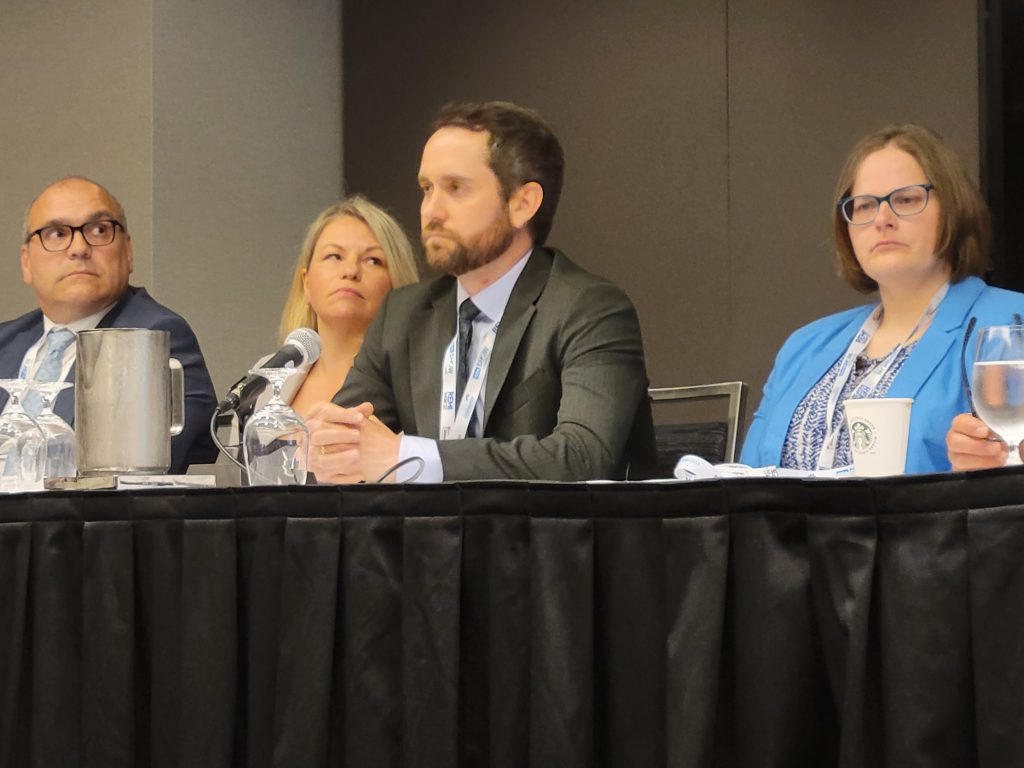
At the recent 2022 ISSA Show Canada in Toronto, a keynote panel made up of leaders in the BSC and PM industries delved into these issues and assessed the potential path forward.

Moderated by Phillippe Mack, Senior VP of Customer Service and US Expansion at Bee-Clean Maintenance, the panel consisted of John Castelhano, VP of Strategic Sourcing at BGIS; Elspeth Evans, Director of Office East at QuadReal Property Group; Kimberly Train, Director of Platform Services and Procurement at OMERS; Chris King, Senior VP at Hallmark Housekeeping Services Inc.; Roberta Polyak, VP of HR at Bee-Clean; and Tony Raposo, Regional VP of Operations at GDI Services Canada.

Technology’s ROI for cleaning

The discussion kicked off with a look at evolving technologies in the industry and how they can increase return on investment for PMs and BSCs.

Hallmark’s King noted that while technological development in the industry has historically been linear –a company or vendor’s new singular product is implemented by service providers for one particular task – now, automation allows for broader application and exponential gains and is redefining cleaning and scheduling.

Particular technologies to have grown in prominence in recent years include robots for floor cleaning and vacuuming, unprecedented automation and data collection, and sensory intelligence. Those shifts look set to dominate the landscape in the coming years.

Of particular interest to the panelists was IOT-based sensory tech. Utilizing these tools means PMs or cleaning managers and staff can know in real-time which areas of a facility are due for cleaning – for instance, washrooms that have seen high traffic in a day rather than those that have been barely used. In turn, this allows for dynamic scheduling and deployment of resources instead of static schedules that can end up wasting resources.

In short, sensory tech allows workers to concentrate their efforts where they are needed most.

BGIS’s Castelhano added that technology and automation are “absolutely critical” for the modern property manager or sanitation provider, and have their place and ROI from top to bottom, proving useful in everything from recruiting and training new employees to procuring products and services and improving and service delivery validation.

“On that last point, our clients want service validation, they have been repeatedly telling us that,” Castelhano said. “Tech solutions can certainly help with that, as well as increasing their efficiencies and pushing the boundaries of what they can do.”

Castelhano and Mack also both highlighted the role technology and automation can play in streamlining time management and payment processes, as well as quality control. “Moving from manual timekeeping processes to automated time and attendance platforms streamlines process, and the same could apply to manual quality control,” added Mack. “Think of the benefits of replacing manual inspections with real-time tablet-based QA platforms.”

OMERS’s Train also emphasized the role that technology can play in visibility and performance reporting.

“As a head-office person in PM, I have the luxury of robotics reports but not reports about the fulfillment of cleaning,” Train noted. “Our customers and contractors want that visibility. They – and we – want to ensure that high-priority tasks are fulfilled to the required quality.” The increasing adoption of automation and AI lends itself neatly to that demand by automatically logging and tracking tasks and performances.

GDI’s Raposo concluded that while there is still some work to do on the tech front – areas like chemical production, waste management, and carbon footprint reduction, he says, are often under-utilizing the solutions that can be available – the ROI on these new technologies is clear. “Set against the context of inflation and wage increases, automation can provide a significant boost to your bottom line by streamlining your operations. But we must ensure that we act on the intelligence we derive from technology.”

The panelists did have one warning for the industry: technology must be implemented smartly.

“We need to adapt robotics to meet the specific needs of sites,” Train told the audience. “Don’t try to do too much; the technology you implement needs to solve an actual problem or deficiency to be worth the investment.”

L-R: Raposo, Evans, King, Polyak

The labour concern – a balancing act

Meanwhile, the facility management and cleaning industries have been confronting a labour problem that has intensified since the depth of the pandemic.

The panelists were unanimous in identifying attracting workers as the foremost challenge faced by BSCs and PMs in mid-2022. Given that Canada’s decades-high rate of inflation does not look like falling back anytime soon, workers are expecting – and in many cases demanding – higher wages than the industry has typically offered.

“The applicant pool is shrinking, turnover is rising and quickening,” said King. “Some of the big factors in these challenges include the demand for workers and the need to balance wages against inflation. The industry still has some catching up to do. Money is the big allure.”

Bee-Clean’s HR VP Polyak noted it is not just wages that need addressing but the perception of the industry overall. “How do you attract employees and break the stigma and stereotypes that still, unfortunately, surround the cleaning industry?” she asked the panel and the audience.

Polyak called the dilemma ‘The Great Expectation’. “Workers want to know what you are going to do for them,” she added. “That’s a question that employers are increasingly needing to answer right off the bat.”

Asked what keeps them up at night these days, the panelists cited the balance between labour constraints and the need to protect the bottom line as a key dilemma – one which is likely to be familiar to anyone in the industry right now.

Similarly to Polyak, Train gave the problem a moniker: ‘The Great Squeeze’. “It becomes a question of what has to be reduced or eliminated in order to allow us to raise wages while also delivering what our customers demand,” she said. “Cutting or limiting costs but paying attractively and fairly is an exceptionally difficult line to walk.”

The panel session concluded that while technology and automation’s increased ROI can mitigate some of the effects of the labour crunch by reducing employees’ workload and allowing them to focus on specialized tasks without being spread too thin, it is a delicate balance and one that must take workers into account – don’t “techwash,” as Raposo put it.

“Technology is naturally concerning for employees as a potential threat to their livelihood,” advised Polyak. “Service providers like us need to show employees and contractors that it is a help, not a threat. Engage staff in discussions about technology and automation – seek their feedback.”

When it comes to employee attraction and retention, the best strategy is to pay them enough to get them on board – “meet them with money,” says Polyak – and then create a family culture wherein you take care of your employees and communicate.

“As well as the obvious bottom-line concerns, it’s all about the wellbeing of employees,” Polyak added. “The right culture, training, and recognition equate to a stickier relationship with associates, which displays opportunities for advancement and lowers turnover.”

Raposo echoed the declaration that cultivating a warm and welcoming culture is paramount to employee retention. “Your company’s beliefs and values will pass onto your employees if you are vocal and consistent with them.”

Collaboration is key

Doing all this, of course, is not easy. Paying competitive wages and providing the kind of support and flexibility that workers are looking for all while protecting your bottom line and maintaining efficiencies of performance is an almighty challenge.

Technology can certainly help, but the panel’s parting advice was on the importance of collaboration.

“It’s not just about how tech factors into our staffing model,” said QuadReal’s Evans. “It’s about how we can boost that staff retention and ensure that our cleaners are reflective of us as a company. How can we work with our janitorial provider to share a team feel and culture?”

Castelhano added that BSCs and PMs must be sure to invest in and focus on making all the administration and overhead processes as efficient as possible, as well as exploring new efficient methods to deliver training and education, to help offset costs. “That responsibility is not solely on BSCs and it’s not solely on PMs,” he stressed. “It has to be a joint effort.” That was echoed by Raposo, who noted that the pandemic has illuminated the need for a highly transparent and collaborative partnership.

“Client happiness, employee care, budget management – this is all a real balancing act,” concluded Polyak. “A new and heightened level of collaboration is required to create a win/win situation for all parties. Increased transparency at all levels is a must, and that’s the key to successful and lasting partnerships and helping to mitigate the unfortunate reality that the pandemic and inflation have imposed upon our industry.”

Toronto’s waterfront to get new public art trail

The Pierre Lassonde Family Foundation is donating $25 million to the City of Toronto to create a new waterfront public art trail along the banks of the new mouth of the Don River in Toronto’s transformed Port Lands.

The contribution marks the single largest arts-related gift the city has ever received and includes $10 million to commission two landmark permanent art works, and up to $15 million to establish a new non-profit organization that will manage the art trail, with the intention of raising additional matching funds to sustain the organization over the long term.

Waterfront Toronto is building the parks, as part of the Port Lands Flood Protection Project. The art trail will be a free, open-air route and will be curated by a new non-profit organization to be endowed by this gift. Two permanent pieces – one by a leading Canadian artist and another by an international artist – will anchor the trail. A rotating cycle of contemporary installations from local, national and international artists will also be featured.

Pierre Lassonde is a Canadian businessman. In a statement last week,  he said, “if one wishes to have a profound and lasting impact on the wellbeing and happiness of Torontonians, the waterfront offers a multitude of philanthropic opportunities.”

A City staff report to Toronto City Council at its meeting of 19 and 20 July will seek authority to negotiate and enter into agreements to accept the public artwork donations in the coming months. If approved, the Pierre Lassonde Family Foundation will appoint an executive director for the new non-profit organization, to be called the Lassonde Art Trail, and launch an international competition to commission the two new signature art works, in partnership with the City and Waterfront Toronto.

“Toronto’s revitalized waterfront is becoming an art destination in itself,” said Chair of Waterfront Toronto Stephen Diamond. “This gift is transformational for Toronto’s waterfront and will contribute to making Villiers Island a major destination for all.”

Halifax approves 1000-plus homes across two sites

Municipal Affairs and Housing Minister John Lohr has approved development agreements for two sites designated as special planning areas under the Housing in the Halifax Regional Municipality Act.

One of the agreements  is for a mixed-use community of up to 905 units on the former Penhorn Mall lands in Dartmouth. The proposed development by Clayton Developments Ltd. and Crombie REIT will include 860 apartments and 45 townhouses, as well as new parks, trails and an active transportation network.

HRM will receive 12 per cent of the appraised value of the site from the developer and will invest the majority of those funds in new or existing affordable housing and the rest in community art or cultural spaces. The appraisal process is not yet complete; however, it is expected to generate millions to be invested in affordable housing options at the Penhorn location or another site in HRM.

The other approval is for Armco Capital’s proposal to develop up to 150 lots at the Indigo Shores special planning area in Middle Sackville. To support the development, the Minister also approved an amendment to a by-law that limited development within the subdivision to 25 lots a year.

The projects are still subject to required permitting, fees and regulatory requirements as specified in the Housing in the Halifax Regional Municipality Act.

“Overcoming this housing crisis is going to take a unified approach, creative solutions and a willingness to do things differently,” said Minister Lohr. “Our population is growing, and these special planning areas are an example of how the elimination of red tape and working in partnership with HRM and the development community will help thousands of people access housing faster.”


Canada transparently draws investor confidence

Canada retains its fifth place ranking and its status as a highly transparent real estate market in JLL’s newly released biennial survey of key drivers of investor confidence. For 2022, the Global Real Estate Transparency Index evaluates 94 countries and 156 urban regions on 254 metrics related to regulatory certainty, market governance, transaction oversight, data availability and ESG factors, drawing on both quantitative and qualitative evidence.

“We believe that a robust global benchmark is an essential tool for the real estate industry,” asserts Richard Bloxam, JLL’s chief executive officer, capital markets. “Transparency is the foundation which allows corporate occupiers, investors and lenders to operate and make decisions with confidence.”

He tallies “geopolitical conflict, the climate emergency and wide scale changes in how we live and work, together with mounting economic pressures” in the defining backdrop of this year’s results. Those are conveyed via composite scores in range of 1 to 5, with 1 being the highest possible score, and a further breakdown into six variously weighted sub-categories.

The five most transparent markets are all repeats from 2020. The United Kingdom tops the list with a score of 1.25. France and the United States come next with matching scores of 1.35, followed by Australia at 1.38. Canada’s composite score of 1.44 is a 0.07 improvement since the 2020 analysis and one of the 10 largest gains achieved across the database.

Seven other countries — the Netherlands, Ireland, Sweden, Germany, New Zealand, Belgium and Japan — also rank in the highly transparent tier with scores ranging from 1.54 to 1.88. Finland’s score of 1.96 earns it the top place among the 22 countries in the second tier of transparent markets, which ends with Thailand’s score of 2.63.

Investment performance measurement and the country’s regulatory environment are weighted most prominently among the sub-categories, together accounting for 48.5 per cent of the composite score. Other transparency considerations hinge on tracking of market fundamentals, monitoring of transaction processes, governance of listed investment vehicles and sustainability reporting.

Canada’s highest rank is third in the regulatory and legal sub-category, which includes considerations such as real estate tax, land use planning, building controls, property registration, enforceability of contracts and debt regulation. Its lowest rank is 10th in transaction processes, which includes considerations such as pre-sale information, professional standards for agents, bidding processes and regulations to address money laundering.

Interestingly, Canada actually outperformed its composite score in the transaction processes sub-category, with a score of 1.20. However, five countries — the U.K., France, Ireland, Denmark and New Zealand — attained perfect scores of 1.

Four countries — the U.S., Australia, the U.K. and Ireland — likewise achieved the highest possible score for governance of listed investment vehicles, a category in which Canada was ranked eighth with a score of 1.17. Leaders fell farthest from the mark for availability of data about market fundamentals, which the U.S. bested with a score of 1.48, and sustainability reporting, where France and the U.S. registered matching top scores of 1.70.

Comparisons of the 20th ranked scores reinforce the discrepancies between some of the sub-categories. Notably, the best 20th placing is Belgium’s 1.46 for transaction process; the worst is Slovakia’s 3.08 for sustainability. Canada placed fourth in the sustainability sub-category with a score of 1.90, just behind the U.K.’s 1.80 and one notch ahead of Australia’s 2.10.

“The sustainability transparency sub-index is the lowest scoring within the survey on average,” JLL analysts confirm. “Beyond the leading markets, there is still low implementation of mandatory standards in areas such as building resilience standards and emissions reporting, as well as in the uptake of green leases and financial performance tracking. The regulatory environment and industry practice around measuring and reporting sustainability metrics is also highly fractured across jurisdictions and companies, making it even more difficult to navigate.”

Meanwhile, JLL analysts cite recent Canadian initiatives that complement burgeoning investor interest in alternative asset classes and sustainability. “In Canada, higher-frequency and non-traditional data has become more available, while the national government’s move towards TCFD-aligned company reporting and a beneficial ownership registry have also been supplemented with plans to drive higher sustainability standards, like Toronto’s Transform to Net Zero strategy and Vancouver’s Zero Emissions Building plan,” they observe.

Ahmed Group shares plans for Mississauga rental development

The Ahmed Group has shared plans for a new rental housing development it intends to build at 1000 and 1024 Dundas Street East in Mississauga. If given the green light, the two-tower project will bring 462 rental units to the area, which is lacking in much-needed supply.

Designed by WZMH Architects, the walkable, transit-oriented community will offer a mix of unit sizes, ample green space, improvements to the public realm, community space, an urban farm, and ground-level commercial space for retail and office-use. The Ahmed Group is currently involved in the development of over 1,500,000 square feet of new purpose-built rental construction across Ontario.

“Our city is richly diverse, inclusive, vibrant and growing. It is clear people want to live, work and play in Mississauga,” said Moe Ahmed, President and CEO of Ahmed Group. “My father came to this country as an immigrant to chase his dreams and raise his family here. I was born in Toronto, raised in Mississauga and have never left. My wife and I are proud to live in Mississauga with our families. We want more families, seniors, students and young professionals to have the opportunity to reside here.”

Mississauga is home to more than 717,000 residents, thousands of businesses, 60 Fortune 500 offices, the University of Toronto’s Mississauga campus, Sheridan College, Pearson Airport and much more. With vacancy rates in Peel at an all-time low and the demand for housing at an all-time high, the announcement of the Ahmed Group’s proposed development is welcome news.

“We’re in the midst of a housing supply crisis here in Peel, and frankly all over the province. We see this proposed development of our properties at 1000 and 1024 Dundas as a logical step in doing our part to help tackle the lack of housing availability,” Ahmed said. “Few places have been more impacted by the housing crisis in this country than the GTHA and the Ahmed Group is dedicated to providing quality rental options.”

Advancing the City of Mississauga’s vision

The Ahmed Group’s proposed development comes after a series of important steps taken by the City of Mississauga, the Region of Peel, and the Province to guide future urban growth and intensification of the region.

In June 2018, Mississauga City Council endorsed the Dundas Connects Master Plan to establish a vision for the Dundas Street Corridor, supporting major improvements to transportation, sustainable transit-supportive development, intensification, and the public realm along the 19.5-kilometre corridor of Dundas Street.

In March 2022, the federal, provincial and municipal governments committed $675 million to support three transit initiatives in Mississauga, including the Dundas bus rapid transit system (Dundas BRT) that will run through Mississauga connecting Toronto to Oakville. In addition to the BRT, Mississauga will build the Hurontario Light Rail Transit (LRT) which will connect with the Dundas BRT, creating north-south and east-west transit connectivity across the rapidly growing region. Shortly after, the Region of Peel voted to approve its Official Plan to 2051, expanding the Region’s urban boundary—the area within which landowners and homebuilders are allowed to submit applications for development.

“We are encouraged by the steps that the City, the Region of Peel, and the Province have taken to address the need for more residential housing, mixed-use transit-oriented developments, walkable communities and greenspace,” Ahmed said. “Ahmed Group is committed to creating projects that support the City and Region’s vision and serve as a catalyst for transformative change in Mississauga’s Dundas East community.”

For more info, visit: Ahmed Group – Building a better tomorrow.

More Canadians expect to rent forever

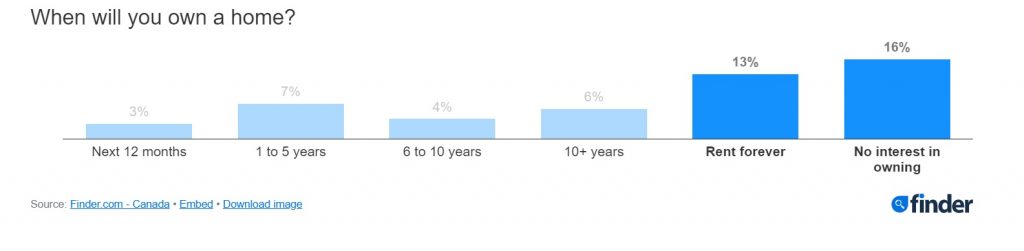
According to a new survey from Finder.com, 29 per cent of adult Canadians have resigned themselves to never owning a home. While 16 per cent (more than 5 million Canadians) said they were no longer interested in homeownership in 2022, another 13 per cent (roughly 4 million) said they expect they will remain renters for life.

Referred to in the survey as “Generation Rent”, the data could significantly alter the housing market and the types of dwellings needed over the coming years.

“Buying a home is a significant decision that requires a large emotional and financial commitment,” said Romana King, Senior Finance Editor with fintech comparison platform Finder.com. “For many, the erosion of housing affordability combined with rising mortgage costs, means the barriers to homeownership now appear almost insurmountable.”

Survey findings:

  • Approximately nine million Canadians aged 18-plus have resigned themselves to rent forever.
  • While 1 in 10 said they are optimistic about becoming a first-time home buyer within the next five years, almost a third (29%) confessed that “renting forever” is the far more realistic option.
  • 16 per cent (or five million adults) said they were no longer interested in homeownership in 2022 — a 60 per cent increase from 2020.
  • Another 13 per cent (or four million Canadians) said they expect to rent for the rest of their lives.
  • While both men and women share this attitude equally, 17 per cent of women reported no interest in homeownership in 2022—up from 9 per cent two years ago.

“Getting on the property ladder can feel out of reach for many potential first-time home buyers,” King said. “While there are significant obstacles to overcome—such as a large down payment and qualifying for loans at higher mortgage rates—it is still possible to fulfill the homeownership dream. The work to make this happen starts long before you open up the ‘for sale’ apps.”

For the survey results, click here: Generation Rent: 9 million Canadians settle to rent forever | Finder CA

Grosvenor acquires Oakridge Transit Centre

Grosvenor has acquired the Oakridge Transit Centre (OTC), one of the largest undeveloped sites in Vancouver, with plans to turn the 14-acre site into a new 1.5 million square foot, mixed-use community.

The project will feature approximately 17 buildings ranging in size from four to 26 storeys and 1,630 homes, including strata, market rental, affordable rental and social housing.

More than 20 percent of the homes are designated as affordable housing, from city-owned social housing to moderate income rental housing. The development will also deliver a new childcare facility, two-acre public park and improvements to local pedestrian and cycling infrastructure.

“This is a unique opportunity to acquire and develop a rarely available development site, one of the most significant in Vancouver,” says Michael Ward, senior vice-president and general manager, Grosvenor’s Vancouver office. “The acquisition allows Grosvenor to utilize our expertise in building exceptional communities and bring a significant amount of new housing, both market and non-market, new retail, community amenities and public realm benefits to the Oakridge neighbourhood. We look forward to building an integrated, sustainable and high-quality community at this prime Vancouver location.”

Grosvenor’s development will follow the master plan that was designed by Vancouver architect, James Cheng, and approved by the City of Vancouver in 2020. Notably, more than 40 per cent of the site will be set aside as publicly accessible spaces, including a two-acre public park and shops running parallel to Oak Street.

“This is an incredible site at the heart of Vancouver that will become a serene, walkable, self-sustaining community with significant green space,” says Cheng. “This project is all about connecting to nature, with greenways, green roofs and a major publicly-accessible park – all designed for a sustainable, walkable lifestyle in a safe, central location that is close to everything.”

Cheng previously worked on the Grosvenor Ambleside. He added, the vision for OTC, he says, is to create a community around a park, a finely scaled neighbourhood with gentle density and an internal greenway system that will provide a calm, healthy central hub for residents and the neighbourhood alike.

In addition to a 69-space day-care, retail, park and public plazas, Grosvenor will deliver more than 180 market rental, 45 moderate income housing units and 175 social housing units. This is in addition to the 1,120 residential strata homes and 24,000 square feet of commercial space.

The project is multi-phased with a 10-year timeline and will meet Grosvenor’s net zero carbon commitments, as well as LEED Gold certification.

HCRA amends New Home Construction Licensing Act

Ontario’s Home Construction Regulatory Authority (HCRA), the regulator responsible for licensing the people and companies who build and sell new homes in the province, has made changes to the New Home Construction Licensing Act.

Condominium Information Sheet

O. Reg 454/22 under the New Home Construction Licensing Act, 2017 came into force on July 1, making it mandatory for all agreements of purchase and sale to attach the HCRA’s updated condominium information sheet as the first page of the agreement.

The required document for buyers of new and pre-construction condos was first rolled out in February 2021 for any projects where the sale was made before January 1, 2020. This grandfathering is no longer available as of July 1.

Licence Application Forms

License application forms for new builders and vendors regarding financial disclosure were also updated on July 1. All new applicants must declare compliance with the Condominium Act, as well as all federal, provincial and municipal tax laws.

The amended licence application forms with the new statement are available on the HCRA Builder Portal, commencing June 30, 2022. As stated in an Aird & Berlis LLP release, any applications commenced online before July 1, but not yet fully submitted until after July 1, will be required to include the new statement.


625 Sheppard begins ascent in Bayview Village neighbourhood

Canderel broke ground at 625 Sheppard, a 10-storey mid-rise in the Bayview Village neighbourhood at Bayview and Sheppard.

The suites range from studios to three-bedroom suites and are designed to maximize living space, many with private balconies or terraces.

The project team, joined by Councillor Shelley Carroll, celebrated with a on-site ceremony last week.

“This building offers a diverse range of highly crafted living options, from spacious, two-storey townhomes and combo suites to first-home buyer suites,” says Ben Rogowski, COO, Canderel. “The intention is to accommodate unique lifestyles, ultimately improving the quality of living in our communities.”

625 Sheppard

The outdoor terrace and exterior lobby.

With architecture by Graziani + Corazza Architects and interiors by II BY IV DESIGN, the exterior is defined by black and white metal and precast. A modern retail frontage grounds the northeast corner of the building. Interiors include soft accent lighting, wood paneling and artisanal millwork to create a sense of calm elegance throughout the building.

625 Sheppard

625 Sheppard

625 Sheppard is 98 per cent sold, with 75 per cent occurring in the first two weeks.

Feature photo: From left to right: Joshua Berger, Vice President, Investments & Development, Canderel; Ben Rogowski, Chief Operating Officer, Canderel; Shelley Carroll, Councillor, Don Valley North; Richard Diamond, Senior Vice President, Canderel; Riz Dhanji, President and Founder, RAD Marketing

Alba Condos breaks ground in Mississauga

Alba Condos, a 418-suite tower that launched last June, broke ground in downtown Mississauga. Edenshaw Developments is planning to integrate a geothermal heating and cooling system to reduce the energy required to operate the condo’s central building systems.

Geothermal buildings, such as Alba, are said to expect a carbon reduction of about 80 per cent compared to a similar building heated by natural gas, with lower maintenance fees for residents.

Alba Condos

Alba Condos is slated for completion by the summer of 2025, with proximity to the Cooksville GO Mobility Hub, Hurontario LRT (Hazel McCallion Line), Trillium HealthWorks and Square One Shopping Centre.

Alba Condos

Designed in conjunction with architectural firm CORE Architects and interior design firm Cecconi Simone, this tower will rise 32-storeys, and comprises over 20,000 square feet of
indoor and outdoor amenity spaces, including a substantial co-working lounge, maker’s studio, children’s play area, pet spa with connected outdoor dog run, and a wellness
centre.

“We are pleased to be commencing construction at Alba, which marks our first residential
condominium development that integrates geothermal technology within the building systems,” said David McComb, president and CEO of Edenshaw Developments. “We are proud to be part of building a sustainable future for Mississauga.

Probing election promises for housing supply

With Ontario’s Progressive Conservatives (PCs) entering another four-year term, the development community is keeping close tabs on election promises made around housing affordability, including the pledge to build 1.5 million residential units over the next decade.

Sweeping reforms recommended through the government-commissioned housing task force this year come with urgency in a province of 15 million people and growing. Ontario’s housing market is said to be cooling, but beneath a decline in average prices lurks the overriding issue of supply—one fueled by new economic headwinds, labour shortages and rising construction costs.

During a post-election event hosted by the Urban Land Institute, Peter Norman, vice-president and chief economist at Altus Group, observed how the war in Ukraine is causing supply chain disruptions and higher commodity prices, with the challenge of inflation becoming suddenly more meaningful. There are also 20,000 vacant positions, as of June, in Ontario’s construction sector— double than about a year ago.

Moderator Chris Loreto, managing principal at Strategy Corp, noted that the industry is expecting aggressive action to meet the massive target for home starts, and panelists at the session, Ford Government, Second Term: Getting to 1.5 Million New Homes, all agreed there’s no going back to the housing status quo.

But questions remain about the reality of follow through. How can this agenda reasonably move forward in the Greater Golden Horseshoe and what gutsy policy changes could roll out to expedite the process? In doing so, how can the province realize a balanced housing mix so intensified areas don’t end up gentrified?

Good-bye to the status quo—what to expect in the next few years?

As it stands, there are an estimated 90,000 units currently in the pipeline for this year and into 2023. According to Altus data, Norman observed this number leans somewhat more to single-family than apartment starts in the GTA, which are down due to the sales pause in 2020, but likely to resurge next year when projects break ground. Going forward, the panelists expect much more ground-breaking to come, as there is now “a blueprint” to further action on supply challenges, with 55 recommendations stemming from the task force report.

“I am feeling optimistic we can make a big dent in supply and continue that upper momentum we need for 1.5 million over 10 years,” said Tim Hudak, chief executive officer of the Ontario Real Estate Association. “The Ford government has a very positive record when it comes to housing—the largest increase in housing starts that we’ve seen in over 30 years. We may not see that this year, but we are at least going in the right direction in getting supply. We built more homes in the 1970s than we did in the 2000s. No wonder we fell behind.”

There were post-election concerns that “high-performing” ministers would be shuffled out. On June 24, Doug Ford’s newly sworn-in 29-member cabinet returned Steve Clark to the role of Minister of Municipal Affairs and Housing and added an Associate Minister for housing. Michael Parsa, the member of provincial parliament for Aurora-Oak Ridges-Richmond Hill, will work alongside Clark.

“This is an opportunity to shape-it-up to do things differently, and I think there’s a recognition in this government that that needs to happen,” said Lorraine Huinink, director of rapid transit and transit-oriented development with the Region of Durham. “There’s a recognition that doing the same is not going to change the situation; we’re not going to relieve the crisis that we’re in.”

Dave Wilkes, president and CEO of BILD, said the industry needs to stay mindful of long-term structural challenges in the face of variable changes, reiterating how interest rates will come and go. “The biggest risk is that we get distracted by the short-term and fluctuations,” he said. “When we get out of this and the economy always does, we will still have a structural problem.”

On the municipal level, he does see an evolving discussion emerge of which he is most hopeful. “It’s a slow burn, but there’s a recognition that things have to change; there’s a recognition that government fees and taxes are part of the affordability challenge, and there’s a recognition that we need to look at things holistically different.”

What bold changes are expected?

Legislation tabled before the election vowed to speed up approvals at the municipal level, but recoiled from ending exclusionary zoning to spur the density of missing middle housing.

Michael Cook, land use planning and development lawyer at Blake, Cassels, & Graydon, said there’s some expectation that gutsy policy changes will address exclusionary zoning, which, he adds, isn’t a silver bullet. He also foresees continued reliance on the Ontario Land Tribunal—where developers go to seek arbitration on approvals. “I think it is easier to rely on the OLT than it is to move forward with bold public policy changes—hopefully I am wrong,” he said. “For far too long we’ve been relying on policies that aren’t solving the crisis.”

“Certainly, reforms to the Ontario Land Tribunal, I think, are another one that will move forward—hopefully putting more bodies there,” said Hudak. The Tribunal is under-resourced and faces a backlog of more than 1,000 cases. The task force report argues how opponents to even municipal-approved projects can appeal with a $400 fee—knowing the project could be delayed until its economic feasibility is quashed.

Answering the call for a large housing delivery fund to reward municipalities that commit to boosting supply is also expected from the PCs.

“The most obvious things moving forward are the carrots because they are easier than using sticks,” said Hudak. “The municipalities that are playing ball . . . adding on new homes and welcoming newcomers to their community, while ensuring their young people have a place to call home, reward them for that. Their projects for transit, new roads and bridges and recreational projects go to the top of the list.”

As part of the More Homes for Everyone Act, 2022, the Community Infrastructure and Housing Accelerator (CIHA) was introduced. The tool, which requires municipalities to consult the public when they wish to issue a zone change, is similar to Minister’s Zoning Orders (MZOs), which give the minister of municipal affairs and housing the power to decide.

Such a tool not without opposition. In April, the National Farmer’s Union of Ontario voiced concern that the problems associated with MZOs are replicated with the accelerator tool, which “neither specifies affordable housing as its aim, nor does it adequately protect agricultural land outside of the Greenbelt.”

From a municipal perspective, Huinink sees “more certainly” around the CIHA, with “a bit more collaboration and partnership coming.” “It won’t work if you have people digging in your heels,” she said.

When it comes to municipal finances, Wilkes believes it’s a priority issue that requires “a very structured conversation.” Property taxes and growth funding tools are currently the only ways to pay for growth in municipalities. On the same topic, Huinink observed that a carrot-and-stick approach to municipal finance reform is best. “When you ask for stretched resources to be innovative to change, they won’t; they simply can’t.”

Supply means prioritizing the right supply

“It’s not just about supply; it’s about the type of supply and I do believe the market will play an influence on that and people will express their choice through the products that they’re demanding,” said Wilkes.

“Through things like the accelerator fund, we can’t be so laser-focused and say supply, supply, supply. It’s got to be the right supply.”

As a board member of non-profit Black Planner’s and Urbanists Association, Cook highlighted how the housing affordability crisis is affecting BIPOC communities.

In its response to the task force report, BPUA identified several areas for further consideration, such as including more moderate-low-income community members in the planning process and defying housing needs through the planning approvals processes.

“There is a fear of consultation with communities,” said Cook. “A lot of that is because the communities we’ve heard most vocally from aren’t communities that need housing—probably communities that have paid off mortgages a long time ago.”

“One of the ways we have to move forward is to continue community consultations, but with the right communities,” he added. “If you talk to those people, you’ll hear them making the supply arguments as well. These are allies in the fight and we need to keep them engaged and do a better job of engaging them.”

The BPUA also recommended various types of funding moving forward. Last year, the City of Toronto adopted an inclusionary zoning policy, requiring new residential developments to include affordable housing units.

“The way the City of Toronto moved forward with inclusionary zoning is the wrong way because it’s putting all of the burden on the developer and not going to get built if there is no government investment,” said Cook. “The best affordable housing comes when the government and the private sector are partners and we need to see more of that as well.”

“If you want the market to provide affordable housing, the government absolutely needs to step in and make that proforma whole,” said Huinink. “You do that by looking at where the costs are. If you can afford to bring a battery plant to this province, you can afford to put the (development charges) back into the housing; you can afford the land transfer tax deferral. Those are the only ways you will incent the market to provide what has not typically been provided.”

As a board member of Habitat for Humanity GTA, she stresses the importance of governments empowering and partnering with non-profits to help deliver affordable housing.

“This is a crisis—the people who stock our shelves, drive the buses, who help us in our hospitals—they need to live where they work,” she said. “Soon, we will not have that kind of balanced community. We need to be jumping on this big time.”

More commercial-to-residential conversions, including for underutilized government buildings to open up capacity, is something on Hudak’s radar. “One thing the task force called that I hope is enforced is the as-of-right ability to have a secondary suite in your home,” he added. “It supports renting, it helps pay down a mortgage faster, but it enables a quality place to live in pretty well any place in Ontario.”

Leading up to the election, all four major political parties made housing a key point of their platforms, with the PCs more recently pledging to an “aggressive” housing plan. Even so, there are risks that could potentially hinder momentum on getting supply rapidly built.

“If we move too quickly without bringing other folks along, you’re going to hear from the public and that can throw us off quickly,” said Huinink. “We need to be very measured and careful about how we no longer carry on with the status quo.”

“The industry needs to stay woke and keep collaborating,” added Cook. “If we fail to deliver, you’re going to hear municipalities start to push back.”

Meeting targets requires radical shifts, added Wilkes. “I do believe we need to rock the boat a little bit in order to create change; I think some turbulence in the way we do things is appropriate and I remain hopeful.”