Articles Archive - Page 259 of 928 - REMINET
REMI

Major Abbotsford business park starts construction

Construction of a large industrial park project on Mt. Lehman Road in Abbotsford has begun.

QuadReal and Hungerford Properties announced the launch of Xchange Business Park after receiving regulatory approval on the first two buildings. The 140-acre project is slated to include 11 buildings and 1.3 million square feet of industrial space. It is located at 3407, 3459, 3481 and 3583 Mt. Lehman Rd.

“What will be available at Xchange is ideal for a wide range of uses,” said Hungerford Properties partner Michael Hungerford. “We’re excited to begin construction on much-needed industrial space that will begin serving tenants in early 2024, particularly given the scarcity of developable industrial land across the region.”

The proposal is one of the largest industrial developments in recent years and consumes the last large chunk of developable industrial land in west Abbotsford north of Highway 1. The block of land encompasses one-sixth of all the land approved for exclusion by the Agricultural Land Commission in 2005.

The park is preserving more than 40 acres of green space and will include an amenity building that honours the nearby Matsqui First Nation people. The facilities are designed to alleviate strains to the supply chain through features such as dock loading, high ceilings and immediate access to Highway 1.

“We’ve all heard of the challenges posed by a lack of industrial space close to metropolitan centres,” said Jeff Rank, senior vice-president of leasing for QuadReal Property Group. “The demand in Metro Vancouver is largely driven by e-commerce and logistics requirements. And for almost a decade, demand has outstripped supply, so Xchange is filling a very definite need in the local supply chain.”

The first two buildings are expected to be ready for tenants in early 2024.


Condo project financing confronts new math

More cautious criteria for condo project financing could upend some development pro formas and potentially constrain housing starts in the coming months. CBRE Canada’s annual survey of lenders finds them generally less open to loans on high-rise condo projects than they were 12 months ago.

“Headwinds are hitting the condo sector. A tightening in underwriting is on the way,” Carmin Di Fiore, CBRE’s executive vice president, debt and structure finance, warned during the online release of the 2022 survey results earlier this week. “Cost-push inflation and rising interest rates are pencilling out very differently compared to previous years.”

In the period between November 2021 and November 2022, high-rise condos have shifted from being one of the least worrisome underwriting candidates to midway in the pack of 18 categories of commercial real estate assets. More than 30 per cent of respondents — from a total survey base of 29 companies that collectively hold about $200 billion in real estate loans — expressed reservations versus fewer than 10 per cent naysayers last year.

That still gives high-rise condo developments a significant margin of comfort over all types of office properties, hotels and regional malls, while eight other asset classes garner more favour. That includes three other types of housing: single-family development;, seniors housing; and multifamily rental buildings. Notably, the latter shares preferred status with grocery-anchored retail, eliciting no concern from lenders.

Prospective condo developers will now be seeking capital in an environment where 67 per cent of surveyed lenders want more upfront equity and 39 per cent will looking for unit purchasers to make larger deposits with shortened payment schedules as a condition of financing. Upwards of 25 per cent of survey respondents also indicate they will demand greater development contingencies and fewer presale assignments.

“It could be a game-changer for many projects in the pipeline,” Di Fiore said. “The condo market could see a slowdown based on the changing arithmetic.”

He also foresees potential hiccups for mixed-used developments given lenders’ considerably less enthusiastic outlook on new office space. Declaring the office development cycle effectively over in most Canadian cities, Di Fiore hypothesized that only a fully pre-leased office project with a credit tenant financing structure is likely to attain lenders’ approval in the current environment.

“Given recent trends toward more mixed-use high-rise developments, there may be a spillover. Those projects featuring an office component will be much harder to underwrite,” he maintained.

Few surveyed lenders suggest they’ll exert pressure for loan candidates to scale back the size of their projects or to phase completion over a longer period, leading CBRE analysts to conclude “lenders are adjusting to increased risk solely through financing adjustments rather than to the development process itself”. That appears to be aligned with general expectations for sustained housing demand.

For 2023, 19 per cent of survey respondents intend to increase their budget for high-rise condo loans with a smaller 13 per cent portion pulling back from their 2022 levels. However, lenders show more enthusiasm for other housing types, with 54 per cent of survey participants augmenting their 2023 budgets for multifamily rental and 30 per cent increasing budgets for single-family housing. Nor are any lenders cutting their budgets for either of those asset classes.

Also related to new condo development, land experienced the steepest fall from grace over the course of 2022, with 52 per cent of surveyed lenders now expressing hesitancy compared to about 17 per cent with such concerns last year. Land is also the only asset class for which no lender has an expanded budget in 2023. However, a significant majority (72 per cent) is committed to holding steady with 2022 loan levels, in contrast to the 59 per cent that intends to reduce office budgets next year.

Peter Senst, president of capital markets for CBRE Canada, further qualifies that sites zoned for multifamily development are capturing the most attention within the diverse asset class. “When you break down land between ICI and residential, you can see it’s all about residential values and activity. As you go further into this, it’s all about high density,” he said.

In almost all cases, borrowers can expect higher financing costs at least in the near-term future. Year-over-year loan spreads widened in 2022 and a significant majority of lenders (65 per cent) anticipate further stretching in 2023. Most project that will be in the range of 10 to 30 basis points (bps) on a five-year term, while 52 per cent foresee a 20 to 40 bps increase on 10-year terms.

“The implication of rapidly inflating costs of capital since the first quarter has created some new math across every investment sector, including real estate,” Di Fiore reiterated.

Barbara Carss is editor-in-chief of Canadian Property Management.

Kate Ulmer named VICA board chair

Kate Ulmer, Herold Engineering principal, is the new board chair of the Vancouver Island Construction Association (VICA) for 2022-2023.

Ulmer represents the second woman ever to be VICA board chair in the 110-Year history of the Vancouver Island Construction Association, with Carole Bissett being first in 2009. As the industry continues to encourage women in find careers in construction, having women in leadership positions at the highest level of the sector will optimistically inspire women and girls to consider construction as a vocation.

“I am very grateful for the opportunity to serve as the chair of the VICA board for 2023. I look forward to ongoing collaboration with our talented and diverse board, the VICA members, and VICA staff for their continued commitment to our industry as we work to deliver projects that positively impact Vancouver Island Communities. As chair, I am committed to supporting VICA’s pillars of advocacy, professional development, good governance, and member value to keep our Island industry positioned for continued success,” said Ulmer.

Joining Ulmer on the executive are Stuart Cuthbert, Slegg Building Materials, as vice-chair; Barclay Ellis, Trades Labour Corporation (TLC) Victoria, as treasurer, and Scott Torry, AFC Construction, as secretary.

Continuing to utilize online voting software, the 2022/23 election saw a high percentage of eligible members participate in the election. Each industry member is entitled to one vote per election. 2022’s Annual General Meeting represented the first AGM since the loosening of pandemic restrictions, allowing VICA members and their guests to celebrate their new board. The 2022 AGM was held at Sea Cider Farm & Ciderhouse in Saanichton, B.C.

VICA members also welcomed Joshua Fayerman, Milestone Equipment Contracting, Mark Donahue, EllisDon, and Mark Wong, Kinetic Construction, to the board. Incumbent directors James Clapp, Wilson M Beck Insurance Services and Chris Williams, Houle Electric, were re-elected for another term.

Outgoing director Mark Liudzius, Kinetic Construction, was recognized for his years of service on the VICA board. He has been a pivotal figure in the industry for more than 40 years.


Jim Pattison donates $30M to RCH Foundation

Canadian philanthropist and business leader Jim Pattison has donated $30-million to the Royal Columbian Hospital Foundation (RCH), which will be used to support the second phase of the hospital’s redevelopment. The Acute Care Tower will be named after Pattison.

Royal Columbian is undergoing one of the most ambitious hospital redevelopments in Canadian history. The $1.49 billion project represents an unprecedented opportunity – and challenge – to elevate critical care at a hospital that serves one-third of B.C.’s population. With construction set to be complete in 2025, the Acute Care Tower is the crown jewel of the project.

“We want to express our sincere gratitude to Jim Pattison for this historical donation. Royal Columbian Hospital serves B.C.’s biggest health region and this gift, the largest in our region’s history, will ensure we can provide exceptional care to the patients who rely on the Columbian. Upon completion, the Acute Care Tower will further elevate the lifesaving care Royal Columbian Hospital already delivers to patients across the province,” says Jeff Norris, CEO, Royal Columbian Hospital Foundation. “Major improvements are being made in service to an even larger vision: ensuring uncompromising care to every single person who needs it. The generosity of Jim Pattison—and all the donors who have answered our call—serves as a source of inspiration for others to help us achieve this vision.”

As the regional referral hospital for cardiac, trauma, neurosciences, high-risk maternity and neonatal intensive care, Royal Columbian provides the highest level of care to some of the most critically ill and injured patients throughout the province. No other hospital in British Columbia provides all these services, at this level of care, on one site.

Building on Royal Columbian’s legacy, the new Acute Care Tower will include an interventional super floor featuring operating rooms and suites for interventional radiology and cardiology, a new Emergency Department with its own imaging unit, and new larger maternity, pediatric, and neonatal intensive care units, as well as multiple floors for acute and critical care patients. With almost double the current footprint, the redevelopment will increase the capacity of Royal Columbian by approximately 50 per cent to 675 beds.

‘Tis the season for slip and fall claims

Residential landlords are responsible for preventing “slip and fall” accidents on their properties, especially in the winter when surfaces can turn from icy one moment to slick the next. Failing to take the necessary precautions in terms of snow removal, floorcare, and proactive, preventative maintenance, can lead to costly litigation while marring the reputation of a building and its management.

According to the National Flooring Safety Institute, some eight million people visit hospital emergency rooms each year after a fall, with 12 per cent of those incidents resulting from a slippery surface. When a fall occurs in an apartment lobby, parking lot, walkway, or high-traffic communal area, the injured party may opt to pursue a claim against the owner or manager if negligence can be proven.

“Landlords are easy targets for slip and fall claims because they carry good insurance policies and are not always on the property to investigate the site in a timely way when it happens,” said Joe Hoffer, Partner, Cohen Highly LLP Lawyers.  “If the landlord has adequate documentation of inspections, snow removal protocols, and video monitoring, these things can go a long way to mitigating questionable claims by opportunistic people.”

Whether it’s a single-family home, a townhouse complex, or a multi-residential apartment building, the property owner is ultimately responsible to ensure all communal areas are hazard-free. That said, occupiers (i.e., the tenants) also have an obligation to keep their entries clear. Those unable to address a potential risk from, say, a heavy snowfall or a spillage, should promptly notify the owner or manager who will be held responsible if an incident were to ensue.

Hoffer’s advice? “Stay vigilant and document everything because the onus will be on you.”

Outdoor best practices   

In the past, many building managers have relied on de-icing salts such as rock salt or sodium chloride to lower their risk of outdoor accidents, but recent studies have exposed this method for its negative environmental impacts.

Effective as de-icing chemicals are, their extensive use can lead to the salinization of freshwaters, which degrades habitats for aquatic organisms and impacts drinking water for humans. Commercial property owners today are encouraged to seek out sustainable alternatives while also prioritizing safety.

To help achieve this goal—and to get ahead of government regulations that are expected to come in the near future—a new set of best practices were developed in response to a two-year Harvard study that looked at the drivers and variables influencing road salt application. Known as “SWiM” the strategy helps building operators better manage snow and ice, save money, and reduce their environmental impacts. The SWiM audit guidelines include more than 100 criteria that must be met to earn a SWiM certification, but facilities can also access the standards for their own informational purposes.

Anti-slip coatings  

While frequent inspections and proactive maintenance will help minimize the risk of a tenant slipping on slick, weather-exposed surfaces, there are anti-slip coatings available to improve safety in high-traffic, high-risk areas.

According to one New York-based contractor, Roger Williams, the best anti-slip coatings are “safe and durable” while also delivering on their promise to minimize the potential for slip and fall accidents. Having recently explored several options for a project at a residential complex, Williams discovered that not all coatings were created equal, and that while some solutions can only be applied to a specific substrate, others may be applied to a wider range of surfaces.

“One product, which was very expensive, claimed it made wet surfaces ‘non-slip,’ but it did not work well on the steps that were known to get slick when wet,” he said.

Furthermore, to use the product, it meant several coats of concrete sealer needed to be stripped prior to application—a costly, messy, and time-consuming ordeal. Instead, Williams opted for a “true epoxy binder” with embedded aggregate that not only improved the traction of the steps, but also maintained the aesthetics of the Chattahoochee stone.

In conclusion, Williams advises those in the market for an anti-slip coating to do their research and choose one that will “resist shrinking, retain aggregate to improve traction and endure many years of wear.”

For more on this coating, visit: form-a-tread.com

Commercial cleaning on a grand scale

With the heightened focus on hygiene and sanitation these last few years, what does commercial cleaning look like post-pandemic? Things have changed and the once almost-invisible teams of people and the tasks they perform are now taking centre stage.

For companies like Impact Cleaning Services, some parts of the job have certainly shifted, but what matters most has stayed the same.

In the beginning

Impact’s company history began in 1954, although under a different name. Since 1997, it has been led by President and CEO Chris Boutsalis. Today, it’s a family affair, with the next generation of Boutsalis siblings heading up the company. Two team members with a shared history at the company, Vice President Yiannis Boutsalis and Director of Operations Lucy Reid, now guide Impact Cleaning’s operations.

Starting off by servicing buildings on the ground, Yiannis began working for the company during the summers. Over the last 10 years, he worked his way up from a cleaner, to operations supervisor, project manager, director, and now vice president. Reid, once Yiannis’ supervisor, started at Impact as an operations supervisor, working her way up to director of operations, and has been with the company for 15 years.

“In an industry that’s so male-dominated, Lucy really stands out on her own,” says Boutsalis, calling Reid and her team “the backbone of the company.” It’s this statement that really speaks to the company’s ethos and why Impact has thrived through the pandemic.

Commercial cleaning and its challenges

Cleaning on this scale is no easy feat. Between staffing, scheduling, and managing scope and scale, it takes a very specific skill set to get the job done.

“No two events are alike,” explains Reid. “Sporting events, fairs and festivals, and performances all have unique and specific needs. Something as simple as confetti in a large arena can have an effect on your operations.”

Not only are there a lot of moving parts, but commercial cleaning companies are put to the test with double-headers, too, when a venue is hosting multiple events on the same day, sometimes with completely different set-ups. Transitioning from a concert to a sporting event could involve adding double crews, following up with deeper post-event cleanings, and rushing to get everything done before the rest of the event set-up happens.

At the time of this interview, Impact was working a stretch of 17 events in 16 days at the same venue with events of all sizes and setups. What’s the best way for a company to manage a job of this size? Planning ahead is key. “Our ability to connect with our staff and have very good relationships is what helps us stay nimble and organized,” explains Boutsalis. “Whether it’s a fair for 100,000 people, an event for 20,000 guests, a 5,000-person seated event, or an office building, we make sure the standard is the same, and it’s because we are so hands-on”.

It’s this “all-hands-on-deck” mentality in its approach to management that has Impact continuing to grow in this market. “We invest the time and effort to give a better working experience and to support our staff as much as we possibly can,” adds Reid.

Cleaning on this scale has always required agility, problem-solving, flexibility, and resourcefulness, but COVID-19 has shone a light on this industry and how they operate.

Cleaning through the pandemic

Most of us have been hyper-aware of cleanliness and hygiene as safety tools during the last few years. With the world looking at disinfection under a microscope, cleaning companies have certainly felt the pressure to manage expectations, handle health and safety for their own employees, and provide a safe and clean workplace for the staff and guests of the venues they serviced.

The commercial cleaning industry was once an out-of-sight-out-of-mind operation for most, without a lot of transparency. Working at night, at off-peak hours, how did companies really know how well their facilities were being cleaned? With the increased need for safety came the heightened expectation that cleaning companies could and would actually deliver on their promises.

For Impact, the added attention did not complicate matters. In fact, it reaffirmed its existing practices. “We had a very high standard already, so that didn’t affect us so much. There was perception and education to address, but we were already performing to the highest standard, with systems in place. We were as ready as we could have been,” Reid says.

It was a lack of consistency that presented the biggest challenge for commercial cleaners like Impact. Opening and closing, stopping and starting, and ever-changing protocols made it difficult to plan ahead and execute with regular efficiency. The evolving landscape also made it tougher to accrue necessary supplies, have enough for everyone who needed them, and manage rising costs for those high-quality products.

“Everyone had different expectations,” explains Boutsalis. “We adapted to every client’s expectations, holding ourselves to the highest standard, using the healthcare requirements as our guide.”

The future of the industry

The pandemic changed the cleaning landscape for good, shifting the public mindset and creating a new level of “normal” when it comes to germs and sanitation. Commercial cleaning companies have had to adjust their scope of work, now focusing on touch points and contact surfaces more than ever.

Hybrid work systems also need to be factored in, as they become more common in all types of workplaces. With more people coming and going with less consistency, and different people crossing paths each day, this presents a new challenge for the cleaning staff.

So much more attention is being placed on cleaning and sanitation and leaving a venue “looking clean” is no longer enough – there needs to be a cleanliness guarantee for safety.

For many companies like Impact, these adjustments are a way to focus on the process, the products, and the principles. Reid emphasizes that Impact was already committed to managing the risks for its teams and following protocols to deliver the results it promises. “While these practices are new for a lot of our clients, and they’re now looking closely at the processes, they aren’t new to us,” she says.

From challenge, comes innovation

As well as its numerous pain points, the pandemic has also spurred progress within commercial cleaning. The demand for transparency and the desire to minimize exposure have made room for technological advances to streamline processes, track supply consumption, monitor traffic, and more.

Impact is working with property managers to implement these tools to better mitigate risk and maximize safety, using that data for visibility and to access building insights while they are off-site.

Following the heightened attention to sanitation protocols, cleaning companies have been able to capitalize on a growing demand for hygiene management. This has certainly been the case for Impact, which recently started up its own hygiene division, offering this much-needed service while already on site to add value, save clients time and money, and help minimize additional traffic in the building.

The future of Impact

Not only has Impact adapted to address the growing needs of its clients, but the company has also identified other ways it can add value for its clients. In 2019, they began operating a few cafeterias under the banner of Impact Food Services. This endeavour paused with the pandemic, pivoting and expanding to offering coffee services to offices.

What does coffee have to do with cleaning?  Boutsalis explains it is all about the overall client experience. “We were already servicing these clients, so we simply expanded the ways we could help them,” he says. Approaching this vertical with the same ambition as the rest of its business, the Impact team relies on its very strong onboarding process, building relationships, and executing the highest standards wherever its staff goes.

“What makes us different?’ asks Reid. “It’s our people, they are the key to all our success. They make all the difference.”

The commercial cleaning industry landscape looks different today than it did three years ago, with more educated clients, higher standards, and new expectations. The need for transparency and automation will continue, but for companies like Impact, it’s the company culture and the level of service that is the secret to success.


Alberta issues RFPs for Highway 3 twinning

The Government of Alberta has issued a request for proposals for the first of eight sections of work on Highway 3 between Saskatchewan and British Columbia.

The eight phases of this project include:

  • Phase 1: 46 kilometres – A request for proposals has been issued to the shortlisted design build proponents to twin Highway 3 between Taber and Burdett. Construction is expected to start in 2023.
  • Phase 2: 10 kilometres – Highway 3X/Coleman Bypass. Functional planning studies have been completed and detailed engineering design will begin in spring 2023.
  • Phase 3: 15 kilometres – East of Seven Persons to Medicine Hat. Functional planning studies have been completed and detailed engineering design will begin in spring 2023.
  • Phase 4: 47 kilometres – Blairmore to east of Highway 6 at Pincher Creek. Functional planning studies have been completed and detailed engineering design will begin in 2023.
  • Phase 5: 28 kilometres – East of Bow Island to east of Seven Persons. Functional planning studies have been completed and detailed engineering design will begin in summer 2023.
  • Phase 6: 23 kilometres – East of Burdett to east of Bow Island. A functional planning study has been completed and the province will continue to consult with the Town of Bow Island and other stakeholders in order to finalize the alignment.
  • Phase 7: 38 kilometres – Pincher Creek to west of Fort Macleod. A functional planning study through Piikani Nation is underway and will continue for some time.
  • Phase 8: Eight kilometres – Alberta-B.C. border to Highway 3X. Continued engagement with B.C. is necessary to consider alignment with improvements being planned through the B.C. portion.

“Alberta is focused on visionary province and nation-building projects that support local businesses, secure people’s jobs and strengthen communities,” said Alberta Premier Danielle Smith. “Our economy relies on our highway network and the ability to connect Alberta to markets outside the province.”

Stantec Selected for Cariboo Road Projects

Stantec has been selected for the project management of the Cariboo Road Recovery Projects in British Columbia. The region has experienced unprecedented snow melt, wildfires, and road washouts, creating an imminent need for rehabilitation and resilience measures.

For more than three years, the Cariboo community has been impacted by the changing road conditions, which have resulted in significant travel disruptions for the community and restricted the supply chain in the region.

“We are so proud to be a part of such a critical infrastructure project that will serve so many communities in the Cariboo region,” said Sarv Jahankhani senior principal and western Canada regional business leader, transportation. “The opportunity to repair the damaged roads and set the region up for years of stability with resilience planning is one we don’t take lightly. This is a critical area for British Columbia’s trade network and completing these 10 projects will make a significant difference to those in and around the Cariboo area.”

The Stantec OE team and sub-consultants will undertake the program and project management services to advise, assist, and support the Ministry’s program team. The firm will also coordinate and manage a multidisciplinary team of engineering and technical specialists and provide support for the management, design, procurement, construction, and implementation of the 10 projects. Stantec will also focus on measures that promote resilience in the area, future proofing these critical transportation networks.

The Cariboo Road Recovery Projects will address the transportation impact on 10 major locations such as Highway 97 at Cottonwood Hill and Blackwater Road at Knickerbocker. Stantec will provide engineering oversight, project management, project controls, risk analysis, environmental/climate services, geotechnical services, quality management, and Indigenous engagement support related to the projects.


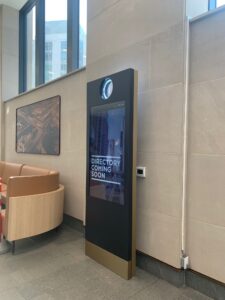
More than a directory: The real potential for digital information hubs

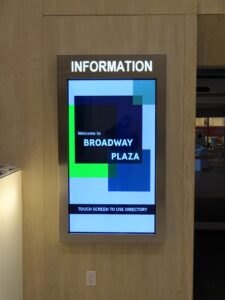
There’s more to digital signage than static names and numbers. Thanks to innovative tech and expertise, today’s digital information hubs feature a wealth of interactive services that benefit facility occupants, visitors, and staff alike.

“The old-fashioned view of a digital directory is something that lists the tenants and what floor they’re on, and that’s it,” says Scot Martin, President and CEO of youRhere. “In reality, digital directories – or as we like to call them, digital information hubs – do so much more. The facilities that have recognized this are doing some very interesting things with them.”

That’s not to say modern digital information hubs aren’t still used to help facility occupants and visitors get their bearings. However, the difference between now and then is that the screens which used to house tenant directories are far more interactive and information-rich while being offered alongside a suite of other services that can enrich the user’s experience.


Getting the word out

Digital information hubs are an attention-grabbing feature in any lobby, office, or public space. That also makes them an effective way to communicate a facility’s key messages, updates, and initiatives.

“Say you had a fun event coming up, a community fundraiser going on, or a non-profit organization you’re trying to support. You can use that big, bright screen you already have in the lobby to bring attention to those messages and drive engagement,” suggests Martin.

At the same time, facilities can program their digital signage assets to share information regarding their sustainability goals and milestones. Already, says Martin, many of YouRhere clients are leveraging their digital information hubs to convey the many ways they’re saving energy, reducing emissions, eliminating waste, or otherwise contributing to a healthier indoor environment. Some facility managers are even taking their communications further by displaying real-time stats on their environmental initiatives.

“More than ever, facility tenants and visitors want to know what’s being done by their building to lower its environmental footprint, and a digital hub can be used to display digital posters that show what the facility team is doing and the successes they’ve had to date,” adds Martin.

Certainly, whether the goal is to promote facility events, share news, or engage occupants and visitors in important initiatives, digital information hubs are an eye-catching way to get the word out.

Supporting facility teams

Digital information hubs aren’t just for tenants and visitors. They are also being used to convey important announcements and updates to staff as they walk through the door.

“Increasingly, we’re seeing people use their hubs to thank their staff for their efforts and promote their accomplishments,” says Martin. “As well, we’re seeing facility teams use their digital displays to share important staff updates in a way that gets noticed.”


Ultimately, he adds, digital information hubs can enhance facility team communications, noting: “People are often looking at their phones and not really paying attention to the static hubs around them. That’s where these signs can pique their interest and grab their attention as they’re entering or leaving the facility.”

Driving the occupant experience

From the beginning, digital signs were created to help facility tenants and visitors get to where they’re going quickly and conveniently. That remains true, but modern digital hubs can be much more interactive than before, offering key information, directions, and helpful videos and images at the tap of the screen. Moreover, the same hubs can be programmed to provide all of the services mentioned above and other communications in multiple languages, ensuring all tenants and guests feel welcome and have the information they need to get around.

And then, says Martin, one of the most helpful services a modern digital information hub can provide is simply helping people get to and from the building: “A lot of the clients that use our digital information hubs are offering live transit feeds that help their tenants and visitors get to where they’re going. For instance, say you have someone leaving a meeting; they can hit a button on the screen and find out exactly when their next bus is coming, how close they are to other transportation hubs, or even get  information for a ride-share.”

“Not only does that make using transit easy and convenient,” he adds, “It also means people don’t have to wait outside in the rain or snow for their ride. They know exactly when it’s going to be there.”

Promoting safe buildings

Digital information hubs have been invaluable in enforcing health and safety protocols and educating the public on best health and safety practices. This is true during the pandemic and will remain true as facility health and safety remain key priorities.

It’s also important that real-time information is critical in times of emergency. Here, again, is where digital information hubs can display essential safety information when needed most.

“People are tying their signage into their building for emergency systems,” says Martin, explaining. “If a disaster occurs and they need to evacuate people quickly, those signs will display critical emergency information like where to go, what to do, and when things are safe again.”

Blending in

We’ve come a long way from the days of static digital directories. Even still, some facilities may be reluctant to install a digital information hub within an existing building for fear it might not blend in with the building’s established decor.

“It’s not like we’re sticking a big black square pylon in the middle of a beautiful marble lobby or historic wood building,” says Martin. “We’ve done a lot of work with different architects and designers to incorporate the digital information hub in a way that blends in with the existing building and complements the existing decor, rather than stand out from it.”

Unlocking the full potential

From connecting tenants to supporting visitors, raising awareness or championing sustainability, facilities are tapping into the full potential of their digital displays.

“We’re seeing a range of different and creative uses,” agrees Martin. “All it takes is a bit of imagination, and certainly, we’re more than happy to share best practices with buildings and their management teams to make sure that they’re really getting the full value for their investment.”

Scot Martin is the CEO of youRhere, a leading provider of digital signage solutions for commercial, retail, healthcare, and educational properties across Canada. For more information, visit www.yourhere.ca.

BentallGreenOak commits to Kids Help Phone

BentallGreenOak is signifying its commitment to community mental health and wellness with a $108,000 donation to Kids Help Phone, a 24/7 counselling service for Canadian youth. The commercial real estate owner/manager also plans to build awareness and support the outreach of Kids Help Phone programs throughout its portfolio of more than 60 million square feet of office, retail, industrial and multifamily residential space.

“The opportunity for BentallGreenOak to partner with Kids Help Phone on a national scale is a true privilege that connects our employees, tenants and residents, clients and partners to a cause that is incredibly close to our hearts,” notes Keith Major, managing partner and head of Canadian real estate management with BentallGreenOak.

Kids Help Phone provides free confidential counselling in English or French at any hour of the day and across various digital mediums. It has recently introduced service options in additional languages including Ukrainian, Russian, Pashto, Dari, Mandarin, Arabic, Plains Cree and Ojibwe. BentallGreenOak’s inaugural donation is drawn both from its corporate philanthropy program, BGO Inspired, and the contributions of its office and industrial tenants, and represents the beginning of an envisioned multi-year collaboration with the service provider.

“We are so grateful that the community of BGO stakeholders responded through a year-end donation that will support our e-mental health services and programs,” says Jenny Yuen, senior vice president, national partnerships and government relations, with Kids Help Phone. “BGO is helping us reach deep into communities through physical and digital spaces, where young people and caring adults live, work and congregate.”

A recap of IFMA’s World Workplace

The more things change, the more things stay the same. In the weeks since IFMA World Workplace, I’ve been thinking a lot about that saying. What its author — the French writer Jean-Baptiste Alphonse Karr — meant was that no matter how turbulent or emphatic changes may seem, they never really affect reality on a deeper level other than to reinforce the status quo. The underlying reasons for why the world is how it is never change. In other words, we are doomed to repeat the same mistakes.

This isn’t a comment on the event itself, certainly not a negative one. The 2022 World Workplace was great. The opportunity for the industry to come together after a crazy two and a half years was important. But it says something fascinating about the forces driving facility management — and many other industries for that matter.

What has changed?

Clearly, there has been a seismic shift in how we think and talk about the workplace. And the tremors from COVID-19 could be felt throughout both the convention hall and the conference program at Nashville’s Music City Center.

Hybrid working is the new norm. Try as they might, employers can’t convince their people to return to the office. Even blanket mandates don’t work. A recent study by Stanford University found that nearly half of employees are simply ignoring requirements to return to the office full time, leaving business leaders flummoxed. According to research by the CBC and Angus Reid Institute, more than half of Canadians working from home said they would look for a new job if they were asked to return to the office, with almost a quarter saying they would quit on the spot.

Andrew Mawson, managing director of global management consultancy Advanced Workplace Associates (AWA), told World Workplace delegates that the major factor behind the reluctance to return was that few organizations have gotten hybrid working right so far. “People are having a poor experience in the office and it’s not encouraging them to come back again,” he said.

AWA research backed this up, Mawson said. The Hybrid Working Index, research comprising nearly 80,000 employees globally undertaken during the summer of 2022, revealed that average daily attendance was just 26 percent. More importantly, the study found that having a hybrid working policy in place led to higher office attendance, and even higher attendance if the policy was decided at a team level, suggesting that the sweet spot is somewhere between sweeping mandate and total flexibility. No easy task.

Everything is tech

Elsewhere, it was fascinating to see the huge influx of technology companies at World Workplace – both on the exhibition floor and in the conference program. In the past, cleaning suppliers, landscapers, and pest control companies dominated FM shows. Not anymore. Now it’s all space booking systems, occupancy and utilization sensors, and analytics software.

This was already the industry’s direction of travel, but the pandemic has sent it into hyper speed. Organizations are looking to make significant changes to their real estate strategies, especially in terms of how much space they need in this new hybrid era, and boardrooms want the data to help them make the right decisions.

Time and time again in Nashville, client-side facility managers were asking the same questions. How can they attract employees back to the office? Do they even need to come back? What happens to all that space they have if they don’t? And perhaps, most importantly, what was everyone else doing?

World Workplace sought to provide some answers. Jeffrey Saunders, CEO of Nordic Foresight and IFMA’s Director of Research, revealed the results from a recent IFMA member survey. On property strategy, 59 per cent said they plan to reduce square footage, 44 per cent said they would be leveraging co-working spaces, and 54 per cent said they would be focusing on more flex space with short leases. On the potential impacts of a recession, 40 per cent of members said they would make greater use of distributed working to reduce personal costs, such as transportation and time. Meanwhile, nearly half agreed that technology adoption will be pivotal in creating the kind of frictionless offices and office experiences that underpin hybrid working.

In a separate session, Darlene Pope, president at IWMS provider Planon, argued that this technology needs to be mobile-first. “The future of buildings should be based on the technology we use outside of them,” she said. “GPS is a great example. Everyone is walking around with an occupancy measurement tool in their pocket.”

World Workplace

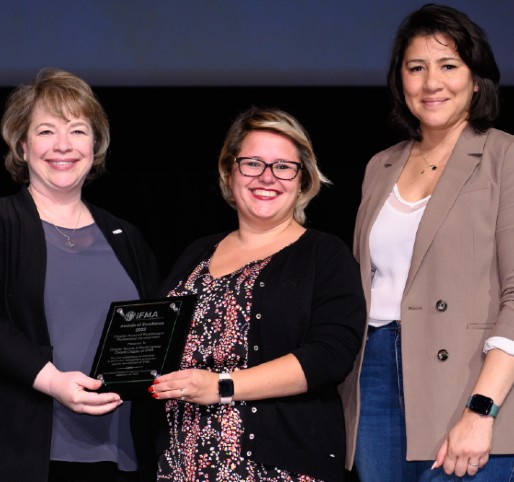
Greater Toronto & South Central Ontario IFMA Chapter wins Award for Excellence in Professional Development.

Seeking to assuage privacy concerns around tracking employee movement, Pope said we’re already being tracked all the time.

She suggested that younger generations are very comfortable with sharing their location with friends on apps such as Snapchat and pointed to the everyday use of Uber. “We give our location because we see value in it,” Pope added. “Could you imagine ordering an Uber if they couldn’t find out where you are?”

There were less familiar technologies being discussed at World Workplace too. Worktech provider Eptura explored the potential for digital twins – BIM-powered digital 3D building replicas – to help make facility managers’ lives easier by providing historic and real-time lifecycle asset and space management data.


Cody Grey, senior director of product asset management, and Matt Meservy, VP of product, said there’s a misconception of digital twins as Tony Stark technology, but that’s just not true. They explained that everyone must embark on a maturity journey across four pillars: the initial asset data, the visual model, the operational model, then the analytics. “These are the building blocks to get there,” Grey said. “The aim is to get all your FM and building tech pillars to talk.”

Interestingly, the facility managers in the audience were worried about age-old concerns. “How do we demonstrate return on investment to those who sign the checks?” they asked.

Well-being, well said

Another undeniable shift since COVID-19 began is the growing demand for workplaces that prioritize occupiers’ health and wellbeing. Employees want workspaces that are effective and supportive. They want workspaces to work harder for them, giving them a reason to make the gruelling, monotonous commute. They also want to know that they are being looked after.

World Workplace

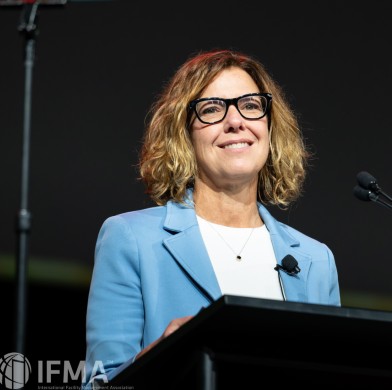
Dr Jessica Green delivers Thursday’s Plenary session.

In a plenary session, scientist and CEO of Phylagen Dr. Jessica Green, told delegates what the heightened expectations around indoor air quality might mean for their profession in the long run. “100 years ago, people lived with waterborne diseases; then we figured out how to modernize sewage,” she said. “Today, we just accept airborne diseases such as the cold and flu. We move around, breathing in air that’s not clean. What will people say about this 100 years from now?”

While Dr. Green said that the uptick in corporate interest for better indoor air quality was encouraging, it has also highlighted some urgent environmental challenges. “If you have airborne diseases in indoor environments, the primary solutions we have are ventilation, filtration, and air treatment. Right now, all these systems require energy,” she said. “We’ll see a feedback loop. Climate change is making hundreds of diseases much worse. And more airborne diseases means that we need to use more carbon to tackle them.”

Dr. Green finished the session with a call to action for delegates: Now is the time to invest in green tools and new, environmentally friendly technologies for cleaner air.

Age-old issues

Despite these monumental changes, the tenor at World Workplace felt very much like it had in the FM conferences of previous years. It’s a sector that is still unsure of itself despite having so much to give; still battling to gain acceptance and the budget from the boardroom; still wondering if it’s strategic enough; still uncertain about its jurisdiction – how much influence and control does it really have over people? Should it be called something different?

In one of the final sessions of the conference, Eptura’s Mike Petrusky, host of the Workplace Innovator Podcast, held a five-year reunion with some of his favourite podcast guests. HOK’s Kay Sargent was one of them, and she perhaps summed it up best. “[The COVID-19 pandemic] has made us stupider,” she said. “We have an opportunity to make a difference. Don’t blow it by acting like we know nothing.”

Sargent is right. FM doesn’t need to repeat the same mistakes. It’s in the driving seat during one of the most monumental events in modern history and has a unique opportunity to shape the future.

Simon Iatrou is the communications director for North America at Magenta Associates.

New coalition forged to promote accessibility

Commercial real estate owners/managers, homebuilders and organizations that provide services and advocacy for people with disabilities have joined forces to promote accessibility in the built environment. The newly forged Accelerating Accessibility Coalition (AAC) is particularly targeting new housing construction as an opportunity to incorporate barrier-free universal design principles with minimum extra cost.

“It’s time to unlearn the practices that have established generations of inaccessible design and replace them with inclusive methodologies that reflect the authentic diversity of needs that people with and without disabilities require throughout life,” urged Maayan Ziv, founder and chief executive officer of AccessNow, an app offering navigational support and accessibility ratings.

Her organization is among the AAC’s 21 founding members represented at yesterday’s launch event in Toronto. A compendium of those members’ experiences and best practices — dubbed the Accessibility Toolbox — has also been made available as a resource for developers and property managers looking for guidance on accessibility standards and certification and/or connections to organizations involved with people with disabilities.

“Let’s do the right thing today, rather than wait until we’re required to do so. The Accessibility Toolbox makes it easy to take those important first steps,” maintained Jake Cohen, chief operating officer with The Daniels Corporation, an AAC member, which also hosted the event in the company’s World Urban Pavilion community space in the Regent Park neighbourhood.

Choice Properties REIT, BentallGreenOak and Cadillac Fairview likewise figure as prominent commercial real estate players in the coalition. The Toronto District Council of the Urban Land Institute (ULI) will serve as the AAC’s secretariat, while the 10 participating accessibility organizations include the Rick Hansen Foundation, Accessible Housing Network, CNIB Frontier Accessibility and Community Living Toronto. CivicAction, the originator of the Race to Reduce campaign for commercial buildings, and the University of Toronto’s Faculty of Architecture, Landscape and Design have also signed on.

AAC plans to host a series of events, webinars and workshops in the coming months. That lines up with the agenda of Accessibility Standards Canada, the federal agency tasked with developing accessibility standards and funding related research.

“We are proud to be part of this networking event and are looking forward to advancing discussions on accessibility with AAC members,” affirmed Philip Rizcallah, chief executive officer of Accessibility Standards Canada. “We want Canadians to experience accessibility in a consistent and seamless way, no matter where they live. Collaborations like these are mutually beneficial. They can only lead to a greater positive impact in the lives of all Canadians.”

FMs: From backroom professional to essential team member

Throughout the last couple of years, facility management professionals have seen a large shift as upper management and co-workers took more notice and came to understand the significant role that FMs undertake in their respective facilities.

Many FMs were placed in sensitive and unprecedented situations in support of business operations and customer care, and staff and customers came to appreciate these efforts.

Roles and priorities included overseeing and ensuring that the built environment continued to comply with health and safety regulations. This entailed air quality, protocols for facility entry, workplace space design, hygiene, and personal safety measures. Our knowledge brought a greater appreciation of our skills and experience because we quickly offered all our stakeholders a workplace standard.

FMs became leaders, executors, and advisors, recognized as part of the team. They participated in many discussions that impacted all stakeholders of the facility and were recognized as equal peers, offering essential services that helped keep the building environment in good condition to continue with business practices.

People acknowledged FMs’ ability to pivot quickly during a crisis with agility, flexibility, and their wisdom to balance all the moving parts, adapt to immediate situations and produce practical solutions.

Now, as pandemic protocols begin to wane, FMs must continue to shine and maintain the profile they earned and the renewed relationships built and established throughout the past two-plus years. Ensure your roles and responsibility garner the respect that you created.

Continue to be proactive, to communicate and share ideas and recommend required services. Some ideas may be new or may not have previously materialized; however, now is a great time to pitch your idea.

Demonstrating adaptability, agility and quick responsiveness has given FMs a voice at the team table versus being the backroom professional. It boosted our ability to provide exemplary services. Our hidden talents were spotlighted along with a better understanding of our skills and communication in the FM field.

Use your newfound relationships created during the pandemic and continue to be seen as peers and an essential part of the management team to make an impact on your company and your FM role.

Marcia O’Connor is president of AM FM Consulting Group. She is a strategic-minded leader with more than 20-plus years of progressive experience in corporate real estate, asset management, and integrated facilities management. Marcia has a passion for mentoring young professionals and helping people, teams, and organizations see their potential. She is the lead instructor for the University of Toronto School of Continued Studies’ facilities management courses, including the FM Certification Program and many others.

How to keep your parking garage clean

If you manage a building with a parking garage, keeping it clean means protecting one of your biggest assets, saving you from major potential expenditures down the line. With winter coming, now’s the time to get your lot in great shape as part of your fall maintenance plan before the weather turns.

RELATED: Building a fall maintenance plan checklist that ticks all the boxes

There are some simple things you can do to keep your parking garage in good shape, prolong its life, and protect your budget.

Start by getting the lay of the land with a quick walkover to check on working smoke and carbon monoxide detectors, debris, and anything that looks out of place. Beginning with a quick tidy will get the area ready for any major cleaning you may need to do next.

Second, focus your attention on any grease stains. Besides being an eyesore, these stains can be slippery, posing a slip-and-fall risk on your property. It’s best to treat them with a de-greaser to minimize these stains.

Once you’ve addressed the grease stains, use a power washer to remove all the salt, sand, and dirt that gets into all the corners and cracks and embeds itself into the surface of your parking garage.

As all that dirt and debris is released, it tends to collect throughout the lot, so you will need to dispose of that, so it doesn’t get redistributed on your property. Check walls, windows, handrails, and doors, too, to make sure that they got clean during the washing process. Dispose of the sediment in containers to remove it from your property.

It’s a good idea to go through these steps once more, completing the whole process a second time. This way you make sure that all grease stains have been treated, and all the loose debris and sediment have been removed, so you can start fresh for winter.

Follow these steps in the spring and fall to keep your parking garage clean and appealing for visitors, as you minimize the risk of major expenditures in your future.

Portaramp: Innovation in building accessibility

The ability to safely enter and exit a building is something many of us may take for granted. And yet, for a significant portion of the population, accessibility is a daily challenge.

“We have to remember that people with disabilities face obstacles that others might not see,” says Christian King, General Manager with Kee Safety Ltd. “For example, getting into a home, building, or even a vehicle is something you might do every day without thinking about it, but for a person in a wheelchair, those tasks can be difficult without support.”

Property managers and owners have done well to provide that accessibility support over the years. Similarly, modern buildings are being designed, developed, and retrofitted to optimize accessibility for all building occupants and visitors. This progress notwithstanding, however, there are always opportunities to improve and innovate the ways to make buildings safer and more welcoming for all that pass through their doors.

Upholding expectations

It goes without saying that accessibility is more than a “nice to have.” Today, property stakeholders are compelled to make building accessibility a priority in order to fill their units, keep occupants and visitors safe, and comply with ever-evolving accessibility guidelines and regulations.

Surely, compliance is a big driver for building accessibility. Nationwide initiatives like the Accessible Canada Act and provincial/territorial mandates such as the Accessibility for Ontarians with Disabilities Act (AODA) spell out specific expectations concerning accessible buildings while building codes from coast to coast also hold asset owners and managers to similar standards. What’s more, the regulatory landscape is continually adapting as jurisdictions across the country share best practices and strategies between borders and move towards broader, global standards.

Portaramp: A case study in building accessibility

Work is being done at a high level to make building accessibility a priority. On the ground floor, however, accessibility specialists and innovators in the private sector are also drawing on modern practices, equipment, and technology to help people with disabilities navigate their built environments.

One case in point is Portaramp, a company out of Concord, Ontario, that is clearing a path for portable ramp solutions. Its Portaramp Portable Ramp, for example, is a foldable and slip-resistant ramp made from lightweight aluminum designed for quick deployment when people with disabilities require safe access to their homes, work, shops, restaurants, and everywhere in between. The intent, according to the disability access ramp maker, is to replace permanent ramps with provide a portable, affordable, and easily storable alternative.

“Some buildings weren’t initially designed for permanent ramps, while others have areas where adding one isn’t really possible,” says King, adding, “With a portable accessibility solution like Portaramp, It’s about making accessibility as easy to establish, both for property managers and the people they serve.”

Portaramp’s portable ramp is an example of a simple and effective solution for making buildings safer for all occupants and visitors and keeping property stakeholders in compliance with evolving accessibility regulations. And naturally, accessibility products like these have been adapted for use in assisting individuals with disabilities in other areas of their active lives. Portaramp’s safe access ramps for rail, for example, offer equally portable and convenient solutions to help those with wheelchairs safely enter and exit trains.

Whether the goal is to build inclusive homes or safer transit, accessibility counts. And with a growing portfolio of access ramp solutions, such as its flat panel ramp, trio ramp, travel ramp, and door wedge ramp, Portaramp is also an example of the innovators making Canada’s built environment more inclusive for all.

For more information on Portaramp and its accessibility ramp products, www.portaramp.ca.