Articles Archive - Page 256 of 928 - REMINET
REMI

Prepare your facility for winter storms

Winter weather brings all sorts of storms, and as a building manager or operator, planning ahead to mitigate risks and spare your budget is an important part of your job. Being unprepared for a winter storm could result in production delays, work stoppage, or unexpected repair work.

Create a backup plan to ensure your building and your employees are prepared, no matter what the winter weather brings.

Stay informed

The best way to avoid scrambling for a solution is to stay on top of the weather. While not all storms can be accurately predicted, typically there is a 24 to 48-hour weather warning issued. If you’re vigilantly watching the updates, you can be ready to act, as long as you already have your winter storm contingency plan in place.

Consider creating winter storm checklists for all sorts of weather events, so that when one arrives, you have quick access to all the steps you’ll need to take. Be sure to communicate impending weather and the response plan to your staff so everyone is on the same page, should the need arise.

Protect your power

Power outages can stop productivity, pose safety risks, and result in lost data. Consider a backup generator to minimize these risks and keep your business running smoothly. There are options that run on gasoline, so as long as you can keep a supply handy, you’ll be prepared. Using a generator that runs on natural gas means that you can connect to your existing lines for quick and easy access when you need it most.

There are a few other things you can do: install emergency lights, keep battery-powered candles or flashlights around the building, implement automatic data backup, and keep your team feeling safe and protected.

Worry about water damage

Winter temperatures fluctuate and burst pipes and flooding can occur in your building, becoming an inconvenient – and expensive – issue. The key is to keep your pipes warm, so they are not subject to dropping temperatures.

Taking steps to maintain a warm interior temperature throughout the winter, wrapping your pipes in insulation, and testing your valves before the first freeze will lower the chance of your pipes bursting this winter.

RELATED: How to top your pipes from freezing in the winter

Having a plan in place ahead of time will allow you to protect your building from winter storms causing lost productivity, interior damage, and costly repairs.

Digital Hubs: Upgrading the hospital experience

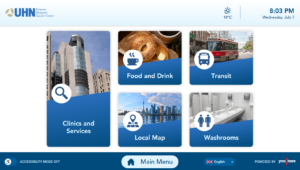
Healthcare facilities are always in pursuit of ways to enhance the patient, visitor, and staff experience. After all, anything that contributes to a more inclusive, efficient, and stress-free environment leads to better outcomes for all. Technology has a central part to play in these objectives, and here’s where unlocking the full power of a digital information hub can lead the way.

“The digital directories you find in a hospital have come a long way since the days of static listings and occasional messaging,” says Scot Martin, President and CEO of youRhere. “Today, these signs – or as we now call them, digital information hubs –can do much more to make a healthcare environment more welcoming and accessible.”

That’s not to say digital information hubs aren’t still used to help hospital visitors get to where they’re going. Now, however, digital information hubs within a healthcare facility can be far more interactive and information-rich while offering a suite of services that enrich everyone’s experience.

Promoting accessibility

Hospitals must serve all segments of society, including those with disabilities or people who don’t speak English or French as their first language. And in an environment where accessibility is fundamental to care, having digital information hubs that can be read and understood by all demographics is key.

“In any healthcare setting, accessibility must be emphasized in every sense of the word,” says Martin. “That not only means including ramps and elevators for people with mobility challenges, but having digital information hubs that display information at appropriate heights, languages, and with audio options for the visually impaired.”

These hubs can also make a hospital more accessible by keeping patients and visitors updated on what’s happening within the facility. Here again, notes Martin, they offer an effective and eye-catching way to communicate hospital announcements and initiatives: “Say you have a hospital fundraiser going on, or an upcoming event or initiative you want to get people excited about. You can use that big, bright screen in the lobby to bring attention to those messages and drive engagement.”

A helping hand

Initially, digital directories were primarily used to help hospital patients, guests, and visitors get to where they were going quickly and conveniently. That remains true, but modern digital hubs can be much more interactive than before, offering key hospital information, directions to onsite stores and services, and helpful videos and images at the tap of the screen.

“Going to a hospital is often a stressful experience, both for the person who is there for treatment and for their friends or family members coming to visit. So anything you can do to make that environment more welcoming and less of a headache to navigate makes a big impact,” says Martin.

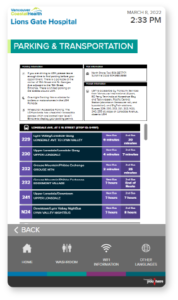
For instance, he adds, one of the most helpful services a modern digital information hub can provide is simply helping people get to and from the building: “A lot of the clients that use our digital information hubs are offering live transit feeds that help their patients and visitors get to where they’re going and then back home again safely and efficiently. For instance, say you have someone leaving a visit or appointment; they can hit a button on the screen and find out exactly when the next bus to their destination is coming, how close they are to other transportation hubs, or even get information for a ride-share.”

“Not only does that make using transit easy and convenient,” Martin continues, “It also means people don’t have to wait outside in the rain or snow for their ride. They know exactly when it’s going to be there.”

Upholding health and safety

Digital information hubs have been invaluable in enforcing health and safety protocols and educating the public on best health and safety practices. This was true during the pandemic and remains so as healthcare facilities strive for clean, hygienic, and comfortable environments.

It’s also important that real-time information is critical in times of emergency. Here, again, is where digital information hubs can display essential safety information when needed most. “Many healthcare facilities are tying their signage into their building for emergency systems,” says Martin, explaining.

“If a disaster occurs and they need to evacuate people quickly, those signs will display critical emergency information like where to go, what to do, and when it’s safe to return again.”


Championing sustainability

Sustainability is fast becoming a priority for the healthcare community. To that end, many of youRhere’s clients are leveraging their digital information hubs to demonstrate how they’re saving energy, reducing emissions, eliminating waste, or contributing to a healthier indoor environment. Moreover, some healthcare facility managers are even taking their communications further by displaying real-time stats on their environmental initiatives.

“More than ever, hospital staff and visitors are interested in knowing what’s being done to lower the building’s environmental footprint, and a digital hub can be used to display digital posters that show what the facility team is doing and the successes they’ve had to date,” adds Martin.

Supporting healthcare teams

Digital information hubs aren’t just for patients and visitors. They are also being used to convey important announcements and updates to staff as they walk through the door.

“Increasingly, we’re seeing people use their hubs to thank their staff for their efforts and promote their accomplishments,” says Martin. “As well, we’re seeing hospitals use their digital displays to share important staff updates in a way that gets noticed.”

Ultimately, he adds, digital information hubs can enhance facility team communications: “People are often looking at their phones and not paying attention to the static hubs around them. That’s where these signs can pique their interest and grab their attention as they’re entering or leaving the facility.”

Unlocking the full potential

From connecting patients to supporting visitors, raising awareness or championing sustainability, the healthcare community is tapping into the full potential of their digital displays.

“We’re seeing a range of different and creative uses,” agrees Martin. “All it takes is a bit of imagination, and certainly, we’re more than happy to share best practices with healthcare providers to make sure that they’re getting the full value for their investment.”

Scot Martin is the CEO of youRhere, a leading provider of digital signage solutions
for commercial, retail, healthcare, and educational properties across Canada. For
more information, visit www.yourhere.ca.

Tory’s 2023 Housing Action Plan approved by City Council

Toronto City Council announced it has approved the 2023 Housing Action Plan, brought forward by Mayor John Tory and seconded by Councillor Brad Bradford (Beaches-East York), Chair of the Planning and Housing Committee. The new  plan for the 2022-2026 term of Council focuses on “getting more homes built or made available in Toronto as quickly as possible while also making housing more affordable.”

Updates to the City of Toronto’s planning rules and regulations are intended to help the City  “meet or exceed” its target of building 285,000 homes over the next 10 years. Council has directed the City Manager to report to Executive Committee on the 2023 Housing Action Plan no later than March 2023 with specific details, including timelines, measurable targets, and specific units created as this Plan is actioned.

The new plan addresses all aspects of the housing spectrum, from student housing to affordable housing to housing targets for the Portlands and Waterfront communities, and removes exclusionary zoning rules that have led to “focused growth” in just a few areas of the city, limiting choice for residents.

“The 2023 Housing Action Plan takes bold, aggressive action to address the affordability and housing crises facing our city. I will keep looking for new, innovative approaches so there are more affordable options for Torontonians to build their future in our city,” Mayor John Tory said. “This new Housing Action Plan sets aggressive targets to get more housing built with lightning speed. With Council’s support this week, we’ve taken a major step forward to ensuring that every Toronto resident has a place to call home. We are working together to tackle this housing crisis and ensure that our city is a welcoming place for everyone.”

Official Plan Policy and Regulatory Components of Tory’s 2023 Housing Action Plan:

  • Amend the City-wide Zoning Bylaw to be more permissive from a housing opportunities perspective
  • Complete the review of the City’s Official Plan to ensure that it aligns with the need for more housing in areas of the City identified for residential opportunities
  • Review the City’s urban design guidelines, heritage standards and urban forestry policies to ensure alignment with the priority of optimizing the delivery of housing opportunities for a range of housing forms
  • Amend the Zoning Bylaw to increase zoning permissions on major streets
  • Amend the Zoning Bylaw to create transition zones between commercial and residential areas
  • Increase density within Neighbourhoods through additional permissions, including but not limited to multiplex permissions and to remove exclusionary zoning
  • Revisit the plans for the Portlands, Waterfront and other major change area projects to ensure housing density is optimized.

Housing System Policy and Program Components:

  • Develop community housing intensification plans with specific targets that support and grow existing co-op and non-profit rental homes, plus add capacity for the sectors to be able to operate the new homes
  • Update the Open Door Program and existing affordable housing programs to prioritize partnerships with non-profit and co-operative housing partners to create permanently affordable housing
  • Create a post-secondary housing strategy in partnership with post-secondary institutions to increase the availability of student housing
  • Develop a strategy to engage with school boards to encourage the creation of housing on their lands
  • Develop training, trade and strategies to promote local hiring as necessary to increase construction market capacity and other industrial strategy approaches and levers that can be advocated to increase housing production
  • Revisit approved Housing Now Initiative sites, including the opportunity to increase the residential density at 140 Merton Street, with the intention of increasing housing supply and supporting affordable housing delivery.

Public Accountability on Progress towards Overall Goals:

  • Develop a publicly available database to track affordable rental units approved, under construction and built, and demolished under Chapter 667 of the Toronto Municipal Code and replaced through rental replacement and dwelling room Official Plan policies
  • Ensure intensification is considered through the lens of the right to adequate housing, complete communities and the growth of infrastructure necessary to support livability, inclusion, sustainability and prosperity, and explore the acceleration of infrastructure development to match the acceleration of housing development.

Zoning bylaws

In addition to the 2023 Housing Action Plan, Council approved a new regulatory framework for Multi-Tenant Houses. This includes amendments to the licensing and zoning bylaws, which will make way for multi-tenant houses to operate legally across Toronto, subject to certain limits. Current zoning bylaws do not allow multi-tenant houses city-wide.

According to the City, this new regulatory framework will help it better respond to protect those already living in illegal housing and regulate deeply affordable and safe homes in all parts of the city. It will make it mandatory for all operators of multi-tenant houses across Toronto to obtain an annual licence, as well as introduce consistent standards, regulatory oversight and enforcement to help protect the safety of tenants and respond to neighbourhood concerns.

The new zoning and licensing bylaws come into effect on March 31, 2024. Until then, the current restrictions on multi-tenant houses apply. The staff report that outlines the new multi-tenant housing framework, including the phased approach to implementation, is available as part of today’s Council agenda .

“Access to safe, secure, affordable and well-maintained housing is fundamental to health and success within sustainable and successful communities,” said Deputy Mayor Jennifer McKelvie (Scarborough-Rouge Park). “The 2023 Housing Action Plan offers an ambitious vision and framework for actions and measures to be taken immediately. We are committed to working hard to continue maintaining existing affordable homes and create new homes that are affordable as fast as possible.”

For further details visit: Agenda Item History – 2023.CC2.1 (toronto.ca)

New Brunswick rent increases uncapped for 2023

The temporary cap holding New Brunswick rent increases to 3.8 per cent will expire at year-end. In its place, the provincial government has introduced amendments to the Residential Tenancies Act that would enable the phase-in of rent increases over a period of up to three years in certain circumstances. As well, tenants will have more time to challenge rent increase notifications and landlords will have to meet new specifications for how such notifications are conveyed.

“The amendments will help tenants adjust to the rising cost of housing and inflation that is being experienced not only here in New Brunswick, but throughout Canada,” maintains Jill Green, the Minister of Service New Brunswick.

That includes a new 60-day window for tenants to apply for a Residential Tenancies Tribunal ruling on rent increase notices — doubling the current 30-day period — and criteria for phasing in rent increases. Provided proposed increases keep rents at a level comparable to those charged for similar units in the vicinity, Tribunal members can order that rent increases be phased in over two years if they exceed the consumer price index but are no more than double the CPI rate. Increases that are more than double the CPI rate are to be phased in over three years.

This follows other measures introduced over the past year to reduce tenants’ vulnerability, including; limiting allowable rent increases to once annually; requiring six months’ advance notice for rent increases; and giving the Residential Tenancies Tribunal authority to review proposed rent increases and deny those deemed unreasonable.

“There cannot be last-minute rent increases at the beginning of the new year, as any rent increase for Jan. 1 would need to have been communicated to tenants this past July,” Green observes.

NB ACORN, a group advocating for tenants, had been calling for the continuation of the cap on rent increases — suggesting it should be set at 2 per cent for 2023. It calls the new amendments an “ineffective response” and notes that the neighbouring provinces of Quebec, Nova Scotia and Prince Edward Island all have annually set limits on allowable rent increases.

“Rents are going to skyrocket towards even more unaffordable levels in New Brunswick,” predicts NB ACORN’s chair, Nichola Taylor.

Fast + Epp wins structural engineering awards

Vancouver Fast + Epp has won not one but two awards at the 2022 National Council of Structural Engineers Associations’ (NCSEA) Structural Engineering Excellence (SEE) Awards.

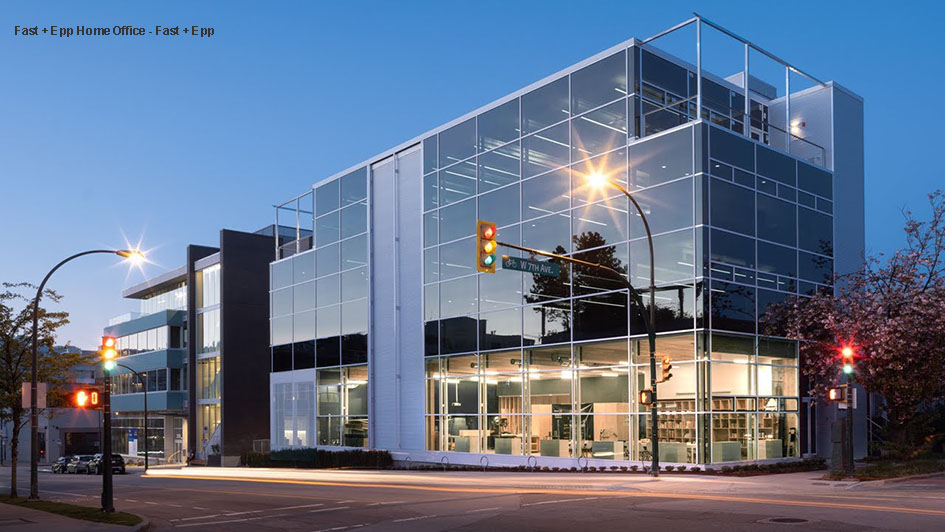
The SFU Stadium received the Outstanding Winner Award in the Other Structures category while the Fast + Epp Home Office Building was an award winner in the New Buildings under $30 Million category.

Each year, the NCSEA presents the SEE Awards to some of the most innovative and creative projects in the world. The SEE Awards highlight structural engineering ingenuity and incredible achievements in the profession. awards were presented in eight categories, each with an outstanding project winner.

The SFU Stadium project features a striking CLT canopy which cantilevers 16 metres, providing weather protection and unobstructed views for the spectators below. Supported by steel girders, the canopy required careful structural detailing to ensure the exposed structure was seamlessly coordinated with the design team’s vision.

The structural solution drew on local expertise trade including specialist steel and CLT fabricators based in British Columbia, contributing to the local economy. The prefabricated strategy resulted in fewer errors on site and a shorter overall construction time and minimize impact on site adjacent ‘live’ sites. The completed use of wood structure celebrates the sustainable credentials of the wood product as both a structure and a finish.

The design of the Fast + Epp Home Office is a direct reflection of the firm and embodies the notions of innovative integrated systems and biophilic design – all coming together in harmony for a truly holistic design.

ACEC


The office serves as a “living laboratory” with new ideas and technologies incorporated both during construction and throughout the life of the building. With an emphasis on promoting employee wellness and productivity, the building combines the latest in sustainable design strategies as well as taking full advantage of the spectacular mountain views to the north.

Acciona Canada using drones for reforestation

Acciona Canada is contributing to reforestation efforts in British Columbia by planting 20,000 trees using drones. The commitment is in celebration of 20 years building sustainable infrastructure in Canada.

The company commissioned Flash Forest – a Canadian start-up using drone technology to automate reforestation – to plant 20,000 native trees, including Douglas-fir, Hybrid Spruce, Western Larch and Lodgepole Pine, in natural disaster-affected areas of the province.

Using innovative drone technology enabled seeds to be planted across more than 30 hectares of forest, and up to 10 times faster than traditional planting techniques.

“Acciona is fully-committed to investing in and regenerating our planet,” said director of quality, health and safety, environmental and sustainability for Acciona North America, Caroline Miwa.

“‘Planet Positive’ is one of the four pillars underpinning ACCIONA’s Sustainability Master Plan 2025. Supporting the regeneration of impacted forests in B.C. contributes to our global organizational goal of planting and monitoring the growth of one million trees within five years.”

The company achieved carbon neutrality in 2016 and has ambitious carbon reduction targets across its portfolio that aim beyond net-zero.

“Our nature-based solutions approach in B.C. brings us one step closer to neutralizing Acciona’s carbon footprint by 2025 and contributes to the Canada-wide goal of net-zero emissions by 2050,” added Miwa.

Flash Forest is continuing to monitor germination success over consecutive seasons to determine if further planting is required.


BCIT receives $2.5M from forestry sector

British Columbia Institute of Technology (BCIT) today announced a $2.5 million contribution from forestry sector leaders to its INSPIRE Campaign which will benefit students in more than 20 trades and technology programs that are critical for the future growth of B.C.’s globally renowned forestry sector.

A collection of forestry organizations including Canfor, West Fraser, Tolko, Hampton Lumber, Interfor, Mosaic Forest Management, Paper Excellence, and Binational Softwood Lumber Council have come together to invest in trades programs through the new BCIT Trades and Technology Complex (TTC), made possible with funding from the Province of BC and industry partners. The TTC will include spaces that inspire integrated learning and facilitate inter-trade collaboration. It will also add training capacity for hundreds of new full and part-time student spots annually, helping to meet the growing demand for skilled trades professionals in B.C. over the next 10 years.

“British Columbia is facing a demand for an estimated 85,000 new trades jobs over the next decade. The generous donation from our forestry partners to the new Trades and Technology Complex will help ensure future BCIT students have access to the best tools, instruction, and equipment needed to be job-ready,” said Paul McCullough, interim president, BCIT.

B.C.’s forestry industry employs thousands of skilled workers—from engineers and millwrights to forest technicians and data scientists. The transformed learning environment and renewal of programs will bring together students from both trades and technologies as well as bachelor’s and master’s degree programs into the same building promoting practical knowledge transfer.

The Trades and Technology Complex will be a major economic stimulus. The various projects will employ a wide range of construction trades and specialists in the design, project management, and technology sectors. The project’s capital value of $220 million is estimated to generate between 950 and 1,175 direct jobs with an equivalent number of indirect jobs.


Class B awaits dynamic electricity pricing

The Ontario government’s newly announced plans to test and compare approaches for dynamic electricity pricing should be seen as very early notification for the small and mid-sized commercial customers identified as possible beneficiaries. For now, the Ontario Energy Board (OEB) is still working on recruiting pilot project providers so the details on how consumers can enroll are unlikely to be released any time soon.

Ultimately, though, both the provincial government and the OEB are committed to exploring how Class B electricity customers who pay the global adjustment (GA) as a straightforward cost per unit of consumption can tap into a more advantageous price structure. That option has already long been available for larger commercial customers with average monthly demand of a least 1 megawatt (MW) through their eligibility for the Industrial Conservation Initiative (ICI) and to residential and small business customers who pay time-of-use pricing.

“Keeping electricity costs down for businesses helps create jobs and promote economic development,” says Todd Smith, Ontario’s Energy Minister. “That’s why we’re launching our new dynamic pricing pilot to give them more choice in how they use and are billed for electricity.”

As outlined in the call for submissions of interest the OEB issued earlier this fall, three types of pilot programs are proposed. These include:

  • Time-of-use prices, which vary by an established amount on a set schedule throughout the day;
  • Demand-based hourly pricing, in which the price can vary from hour-to-hour according to system-wide demand; and
  • Critical peak pricing, in which prices are generally low, but can escalate for periods of up to several hours in response to peaking system demand.

“There is, within each of these models, considerable room for flexibility and innovation, and proponents are encouraged to consider how such designs may be optimized for the benefit of participating consumers and the wider electricity system,” the OEB’s call-out states.

Following the November 30 deadline for submissions of interest, the OEB is expected to invite follow-up applications from suitable candidates by year-end. Chosen proponents will be eligible for funding to cover 75 per cent of pilot project costs, to a maximum of $12 million.

Focus on winter carpet care

Winter brings a unique challenge to carpet care. During the warm and dry periods of the year, the soil that builds up in the carpet can act like tiny razors, slowly cutting away at carpet fiber with regular traffic. Fortunately, most of that soil is dry, so it can be vacuumed and removed from the carpet without causing too much damage.

However, it becomes more challenging when that soil is mixed with moisture and ice melt. Ice melt is mostly made from salt (sodium chloride), calcium chloride, and magnesium, and it is designed to form a liquid solution when mixed with ice. However, when it builds up in the carpet, it can leave a residue that damages carpet fibers, reducing their life span. It can also trap germs, mold, or mildew, possibly impacting the health of your facility.

RELATED: Extending the lifespan of carpet

It is estimated that up to a pound of soil can build up in a carpet before it gets noticed. With a reactive approach, the carpet may not be cleaned until that time, and that’s too late. By then, the soil and moisture may have permanently damaged the carpet fibers and shortened the carpet’s life span.

Fortunately, there are steps managers and cleaning professionals can take to help prevent this from happening. Here are some of the steps necessary to implement a proactive winter carpet care program:

  1. Document which carpeted areas are most prone to soiling during the winter months, so you can focus on those areas to keep soil and moisture from spreading throughout the facility.
  2. Consider that winter carpet care challenges vary by facility. For instance, the carpet on lower floors in an office building is typically the most soiled, but traffic patterns differ in all types of buildings. What works for one facility may not be the best approach for another.
  3. Use entry mats and indoor floor mats to help keep carpets clean and healthy. An effective year-round matting system includes three types of entry mats:
  • Install scrapers outside building entries. As the name implies, these scrape off large debris from shoe bottoms.
  • Install wipers/scrapers directly inside the building. These continue the scraping process, also wiping moisture off shoe bottoms.
  • Wipers should be installed after the wipers/scrapers and in key walkways inside the facility as your final line of defense.

By installing five to 10 feet of each type of mat at building entries, you can trap and capture as much as 85 per cent of soil and moisture before it can travel through your building.

  1. Develop a comprehensive carpet cleaning program that maintains the facility’s health, protects the carpet, and decreases winter carpet cleaning costs. For example, a large facility has carpeted floors throughout the building. For two months, all carpet is cleaned monthly using a shampoo or bonnet system to quickly remove top-level soil. In the third month, it’s cleaned with an extractor, which is a slower method, but it removes soil deep in carpet fibers. This three-step system will help to improve the longevity of the carpet.
  2. Use an expert. Maintaining a building can be complicated and all-too-often results in trial-and-error purchasing. Working with a knowledgeable janitorial distributor can accelerate results and save you money.

Janitorial distributors know cleaning – that’s their job. Further, if they are part of a network of distributors, they can access ongoing training programs, so they stay up to date on new technologies, systems, and products to help customers keep their facilities healthy and looking their best through winter and the rest of the year.

Joshua Robertson is the Director of Marketing for AFFLINK, a leading sales and marketing organization for distributors throughout North America. He can be reached at www.afflink.com


Survey finds Montrealers desire green housing

A vast survey on residential real estate in Québec has been released from the Fonds immobilier de solidarité FTQ, the Société d’habitation du Québec, the Quebec Professional Association of Real Estate Brokers (QPAREB) and the Service de l’habitation de la Ville de Montréal.

The web-based survey, conducted by Léger in the fall, polled 6,755 people on their home buying and selling intentions in the next five years. A similar study was conducted in 2021. The 2022 edition was designed to gauge whether the pandemic is having a lasting impact on consumers’ housing choices and to find out to what extent environmental factors play into these choices.

Green housing

Fifty-nine per cent of homeowners and future buyers in the Montreal CMA would be willing to pay a premium for an environmentally friendly home. This is higher than the provincial average.

Although this premium should be associated with savings or greater resale value, the Montréal CMA has the lowest percentage of people who would refuse to pay such a premium (33 per cent compared to 36 per cent for the province as a whole).

Only 34 per cent of buyers in the Greater Montréal Area feel they have enough information to assess the environmental impact of a property. The Montréal CMA is also where the largest proportion of homeowners and future buyers would like to see standardized environmental assessment criteria for housing.

Enthusiasm for green housing is slightly lower among renters in the CMA, with 56 per cent willing to pay a premium for green housing. Only 28 per cent say they have enough information to assess a building’s sustainability.

Energy performance

Both owners and renters rank energy efficiency as the top measure of a home’s sustainability. Owners then look at the quality of the materials and whether the location reduces the need for car travel. For renters, the second most important factor is a location that facilitates active transportation, followed by material quality.

Noise pollution

This year’s survey added soundproofing as a selection criterion for apartments and condominiums. This new criterion topped the list of desirable features for both condos and apartments. Limiting noise pollution emerged as a major concern for those living in residential buildings.

Intentions to buy a home remain unchanged

This year, only 24 per cent of households plan to buy a property in the next five years. However, despite the uncertainties and the increase in interest rates, 13 per cent plan to buy a property in the next two years, the same level as in 2021.

When asked why they don’t plan to buy, unlike the older cohort, the youngest age group cites financial inability. The preference would be for urban centres if prices were more affordable, rising from 24 per cent in 2021 to 28 per cent in 2022.

“The rapid increase in prices over the past three years in the Montréal CMA and the sudden rise in interest rates in 2022 have had a negative impact on the buying intentions of younger buyers,” said Charles Brant, director of the QPAREB’s market analysis department. “However, the proportion of households that plans to purchase a property in the next two years remains stable.”

“People have adjusted their budget since the average home price in Montréal has gone up from $440,000 to $458,000 and will remain there in 2023, and assuming they’ve taken into account the increase in the cost of financing. This information indicates that Montréal households still want to buy a home.”

Renters for longer

Renters are also affected by rising prices. Twenty-eight per cent said they rented because they could not buy in their neighbourhood. This compares to 22 per cent in 2021. Due to high rents and a housing shortage, tenants in Greater Montréal are staying put, with forty-nine per cent planning on moving to another apartment within the next five years.

Overcoming budget challenges in today’s market

In today’s condo market, inflation and its impact on condo fees is a hot topic. As we come to the end of the COVID-19 pandemic, condos are facing new economic pressures. With consumer inflation impacting costs today, and construction inflation impacting both short-term and long-term capital project costs, many condos are asking: what are some measures for overcoming budgeting challenges and dealing with unexpected costs and deficits?

There are many factors that determine the right level of condo fees for a condominium corporation. The expenses are unique to each building, depending on what is included in the corporation’s operations. But all condominiums in Ontario have one thing in common—their only major source of revenue is contributions made by owners through their monthly fees. Because funds come from individual owners, it is always difficult to communicate a large increase in condo fees as this places financial strain on community members.

In building a better budget there are a few major points of consideration:

  • While it is of course important to ensure that small expenses are not being spent frivolously, place the most focus on the areas of the budget that have the largest impact on the monthly fees. This can help lead to meaningful discussions about how the largest costs can be better managed, lowering overall operating costs.
  • Do not overlook the overall financial position of the corporation. Ensuring that any budget supports a healthy surplus puts a condominium corporation in a better position to handle unexpected costs. A good guideline is to ensure 1-2 months of projected expenses in surplus at any given time, but this can and should be adjusted to reflect the needs of the individual corporation. Consider insurance premiums, deductibles, history of receivables, and any other unique financial issue.
  • Special assessments and sharp increases in fees are not the only options. Especially when dealing with a major shortfall, it’s important for a condo board to complete reasonable due diligence and consider all options which includes borrowing. Only by considering all options can a volunteer board member communicate to owners that they made every effort to budget in the best interests of all owners.
  • Deferral of major projects is not helpful in reducing condo fees. Major components still need to be repaired or replaced at some point, and pushing projects further into the future compromises the value of the property and subjects the corporation to inflationary pressures (the work gets more expensive every year). Construction inflation historically, and today, is very high. The cost of borrowing may be less than the cost of inflation and borrowing funds to complete an important capital repair project, instead of deferring it, helps to protect values.
  • Remember that it’s not realistic to never increase condo fees. Keeping fees affordable and in line with comparable real estate is important but keeping fees artificially low only hurts in the long run. The sooner you start recovering from a shortfall the easier it is long-term.

Ultimately, a budget is a plan that is intended to support the projected costs for the upcoming year. It’s an exercise in reasonability, ensuring that the corporation has enough cash flow to meet its obligations under the Condominium Act and its own declaration and bylaws. If there is concern that a condominium corporation has a shortfall, or needs more funding, being realistic is most important. Condominium boards and the property managers supporting them should explore their options and look for real solutions to help keep fees at reasonable levels.

Often, the best ways to minimize increases are to look objectively at large contract expenses, utility retrofits, and also to develop better plans for long-term capital repair funding. There are experts who can help to guide the process, helping anyone responsible for the preparation of a budget to be confident in their due diligence process and the reasonability of their budget.

Lyndsey McNally is President of the Toronto & Area Chapter of the Canadian Condominium Institute and Director of Condominium Finance at CWB Maximum Financial where she works exclusively with condominium corporations, property managers and other condominium stakeholders to develop and implement customized financing solutions. She is also a licensed condominium manager.


Nova Scotia adds more funds to address housing supply

The Nova Scotia government announced it is investing an additional $19.5 million toward the preservation and modernization of its existing affordable housing supply, and toward the creation of new modular housing for those experiencing homelessness.

“To tackle this housing crisis, growing our community housing sector will be key to increasing housing supply,” said Municipal Affairs and Housing Minister John Lohr. “We also need to protect and preserve the affordable housing units we currently have in this province. This investment will help preserve existing homes and strengthen organizations for future growth.”

$12.5 million of the new investment will come from the Community Housing Infrastructure and Repair Program, which helps co-operative housing groups and non-profit housing providers complete necessary capital repairs, including accessibility, health and safety improvements. This includes $7.5 million in forgivable loans to the Housing Trust of Nova Scotia to upgrade 150 units in Halifax Regional Municipality. An additional $2.5 million will come from the Community Housing Growth Fund, which supports non-profits and co-ops with capacity building and the design and planning of new affordable housing development projects. Another $2.5 million will be invested in the Rental Residential Rehabilitation Assistance Program, which assists landlords in upgrading the condition of existing affordable units while maintaining low-end of market rents for tenants.

Having already budgeted more than $12.4 million for the above three programs, the government’s total investment in 2022 has topped $29.9 million.

An additional $2 million in funds is allocated for new modular housing to support people who may be experiencing homelessness. The modular units will be located in areas where there is available land and urgent need.

“We know people are struggling right now, and this investment of $2 million will help provide safe, temporary homes for those experiencing, or at risk of, homelessness,” said Karla MacFarlane, Minister of Community Services. “Modular housing helps deliver homes more quickly to those in need, reduces the cost of independent builds, and is an innovative solution to increasing affordable housing options in our province.

Rethinking staffing models amid a labour shortage

The pandemic has prompted a widespread reevaluation of the workplace across industries, but some members of Ontario’s condo sector have long foreseen shifts that are necessary to improve a property manager’s working conditions and ease the labour shortage that is expected to hit a crisis level.

There are now fewer experienced managers for boards to choose from. Ontario currently houses 12,120 condo corporations and, according to the most recent data from the CMRAO, 3,858 licensed managers, of which 2,417 are general licensees.

Stacey Kurck, Vice President of Client Engagement and Business Development at FirstService Residential, says flexible staffing models could be one way to attract and retain skilled talent, while relieving some financial pressure that boards are experiencing amid rising costs.

“Most buildings in the GTA request a full-time experienced manager in the site office,” she says. “By changing the staffing structure at buildings, in this labour shortage market, we can create staffing models that align with the budget of the building and yet still maintain good quality managers.”

The Canadian workplace is undergoing a mindset shift, where being on-site Monday to Friday, nine-to-five, isn’t necessarily making workers more productive. As Kurck explains, for condo managers, while much depends upon the community (perhaps it’s a brand-new high-rise that requires a lot of directional guidance) and what sorts of issues pop up (“if you have a flood in the building that changes everything; it’s all hands on deck”), there’s not much of a difference between being on-site versus managing the asset from home or a head office.

Flexibility could also trickle down to cost savings, specifically when considering the addition of on-site support staff. “If the board agrees to reduce the needed site hours of the general licensed property manager because their management company is able to manage most of the administrative tasks from their operations support centre, this would provide a reduction in need of an onsite property manager and, therefore, reduce the budget for management somewhat,” explains Kurck.

“Additionally, for the communities that still want the presence of someone onsite, having a limited licensed property manager and/or a qualified condo administrator can fulfill those needed site hours.”

She advises that condos with more than 350 units could support a full-time property manager and administrator. Condos with more than 800 units could have three staff onsite such as a property manager, assistant property manager and administrator. “To have one property manager assigned to the community full-time is considered a luxury customer service model, compared to other markets such as British Columbia.”

Staffing perspectives from the West Coast

Strata managers, as they are called in British Columbia, are not sited, but rather handle portfolios from a head office. One manager oversees multiple buildings from afar, and this has always been the case since the industry started up. There is heavy reliance on trades, where vendors and other site staff keep them abreast of the daily happenings within the multi-residential buildings.

Sean Ingraham, Senior Vice President of FirstService Residential BC, says within his company there are seven to eight buildings per strata manager, compared to the industry average of 12 to 16. Up until the pandemic, the 102 licensees were traveling to their downtown Vancouver office every day to care for their buildings.

When COVID hit, the B.C. branch had a strong IT background and was able to send employees home to work with little interruption. “We’re seeing greater flexibility on our end with what strata managers do,” he says. “If they have an AGM and don’t get home till midnight, we’re flexible on their start time.”

Vancouver is also one of the most expensive places to live in Canada. Some of Ingraham’s team members live far out in the suburbs and were commuting almost one-and-half hours each way. Now, some are able to travel to the office one day a week and work the other four days at home.

“Productivity for us is actually better because they don’t have to commute,” says Ingraham. “It’s also better for our managers because with the shift to technology and being able to work remotely, they’re able to work from site.”

In that respect, customer service has also improved. Managers are able to spend time at the condo, to “get the scope” of various projects while working from an amenity room via Wi-Fi. “It’s been really interesting to see that shift, where now our managers can be more fluid and move around buildings and their home and still continue to do work,” says Ingraham, noting “a large part of the job is administrative.”

A looming danger

Companies with fluid staffing models have an easier time recruiting talent, says Ingraham. “Some of our competitors are going back to old school— ‘got to be in the office at 8:30 every day’—and I know we’re winning talent from those that are inflexible.”

His company recently hired a strata manager to facilitate onboarding teams. Although she lives four hours from the office, they were able to hire the “class-A talent” by being flexible.

“We have four-and-a-half day work weeks here in Ontario for FirstService,” adds Kurck. “Essentially, we know managers manage more than eight hours a day. . . I’d say 90 per cent of boards have no problem with it and believe it’s the right thing to do.”

“It’s also about retaining top talent—the ones we are training to keep here,” she says. For instance, a senior manager at the company who works at a 1000-plus unit high-rise in downtown Toronto recently moved over an hour away.

“The board didn’t want to lose her and said they’d be flexible. She committed to twice a week on site,” says Kurck. “Because of her senior position, she trained the on-site staff. . . they have their daily meetings over Zoom. At the end of the day, we’d find her another home if that board was not going to be flexible.”

In B.C., a group of associations started waving red flags to the BC Financial Services Authority (BCFSA). “We are warning the government and regulator that there is a danger to the public coming because so many managers are in the older demographic,” says Ingraham.

New data from the BCFSA reveals that 36 per cent of managers in B.C. are Boomers, between 56 and 75 years old. “It’s rare in our industry that someone works at 65,” he says. “It’s going to be a crisis soon if they start retiring in the next four to five years because there are not nearly enough people coming into the industry to replace them. There are lots of new stratas being built, and legislation, compliance and legal are getting more and more challenging.”

The same issues apply to Ontario, except Boomers already started retiring early in 2017 when CMRAO licensing rolled out. “We already had approximately 25 per cent attrition, and the GTA region is seeing over 50 new condos register per year,” says Kurck.

“We’re typically not an industry that has people fresh out of high school, and rarely college,” she adds. “It’s about learning that skill and it usually takes time for someone to mature to deal with people who maybe aren’t at their best.”

Shifting the paradigm and future trends

In B.C., there are few companies with dedicated people who train new hires on how to manage a building. “In most cases, like when I started, you’re thrown the keys on day two and you’ve got to learn,” says Ingraham. “So, attrition in the industry is super high. All these people are in sink or swim and most of them sink.”

FirstService BC kickstarted a training program that has been running for five years. Out of its 102 strata managers, 27 per cent went through the program. They had been newly licensed and trained to be portfolio managers over six months. “It’s a big financial investment, deep into the six figures every year for us, but it’s better because we’re getting great candidates. Out of all the managers who trained—we only lost two.”

There is also a shift to more of a ‘support network around managers’, for instance, specialists with technical know-how who help managers to handle portfolios. “The expectation of the client is that sometimes the manager knows everything—from HR and working with the on-site associates to being a roofing expert. “It’s nice to see the industry shift where there is support around that manager so they don’t have to be the expert in everything, and I think we’re going to continue to see that trend,” says Ingraham.

In the shift to progressive staffing models in Ontario, management companies could offer flexible solutions like back-end operational teams or administrators. Kurck acknowledges this extra support is typically seen with larger management firms who can roll out policies with flexible workplace models.

If a company has a 24-7-365 customer care department to address common questions, she says a condo could migrate 50 per cent of a property manager’s day-to-day administrative duties. This would allow for more focus on the property, meeting with specialists and working on the budget. “The overall expenses can be reduced by a variety of ways, such as using AvidXchange and having a verified vendor program like VIVE.”

Board members also figure highly into the paradigm shift, as newer members might have less antiquated ideas of what a manager’s workplace should look like.

“If you’ve never been a board member, you have a fresh perspective,” says Kurck. “There are a lot more people living in condos than ever before who are new to community living, but they’re professionals for the most part. Maybe they’re an accountant by day and join the board because they want to take control of their assets. When they’re learning that, they can learn by saying what is needed.”

For starters, must the friendly face downstairs be a general licensed manager since there are only 2000 to go around? Or, can boards be open to new faces who are being trained, eager to learn and backed with resources?

“Boards are always looking to save money, although it’s not always possible if you want quality management. Let’s continue to ensure managers are employed and paid appropriately, while also providing a more flexible work environment, benefits that matter, and a work environment that is harassment free.”


The future of common area design

Whether we realize it or not, design has a direct impact on our outlook and overall health. Every surface and every object we’re surrounded by can impact us – and, therefore, must serve a purpose. With the pandemic forever changing how we interact with our residential spaces, leveraging design as a tool to bring true value to a personal moment, an experience, a project, or a community in a meaningful way has become more important than ever.

After a prolonged period of isolation, urban residents seek ways to improve their mental wellbeing and build meaningful and inspiring human connections. As a result, it is no surprise that developers and interior design firms are seeing an increased interest from modern city dwellers in condominium and rental developments that promote and support a sense of community, foster social interaction and togetherness, add value and enrich the lives of those who live there.

From upgraded co-working space amenities that respond to the needs of apartment dwellers to inter-culturally inclusive spaces, Mason Studio’s design team shares top ideas – as well as what’s on its way – in the design of common areas in multi-unit residential buildings.

Going back to traditional models of gathering

In a condo, the units can be quite modest for entertaining, and space is at a premium. As the “key holders” to a space, designers have the opportunity to create amenities that would serve as an extension of home and encourage people to feel as though they could walk out of their unit, come down and still feel comfortable.

In the last couple years, the interior design space has witnessed a shift where lobbies were no longer valued as they were seen as unused spaces. Residents want more opportunities to get to know their neighbours, and with that, the developments are starting to explore different ways of how these spaces could be revived and reactivated.

design

The lobby at DuEast in Toronto . Photo by Yasmin Osman.

One such example is the integration of more casual programs into the lobbies and an attempt to turn them into social hubs. The idea has become widespread as condo buildings are revving up their lobbies with community events or adding bar and service counters to create a sense of hospitality and allow tenants or residents to use these features as an amenity for themselves, to host special events or larger family gatherings.

Going forward, the idea towards more classic and traditional areas for gathering is expected to draw popularity and gain traction, thanks to how effortlessly it sets the scene to create connections and encourages residents to meet one another and socialize.

Taking co-working spaces to the next level

The concept of a co-working space added within the condo program is not new, and over the past few years, Toronto has seen a surge in the amenities of this type. These spaces feature a variety of open tables, private desks, specialized rooms for meetings and conferences, and lounge areas, and have become increasingly popular among remote-working residents.

However, as more buildings with shared working spaces appear on the market each day, a new trend has emerged. For those in need of designated spaces-to-create or places for handiwork, developers are introducing ‘upgraded’ working spaces for various types of activities – noisy and messy ones included. Similar to hobby rooms, these workspaces house functional workstations, provide a much-needed storage space (when it is possible!), and are attached to traditional shared workspaces to maintain a work environment within the space.

Additionally, a modern workspace in a multifamily building should be adaptable and has to take into account different working styles and preferences. And so as might be expected, interest is soaring in mini spaces or private nooks – carved out of unused spaces in a building – for work that would offer some privacy and accommodate all residents who are either temporarily or permanently working from home.

Bringing inclusivity to the forefront

Fostering an environment in which any resident is welcomed, respected, supported and valued as a fully participating member is one of the main goals of a project. And in today’s globalized world where communities are made up of people from diverse cultures and multiple ethnic backgrounds, common spaces should be thoughtfully designed to reflect a blend of different ideas and norms.

By incorporating culturally specific spaces like a multi-faith room for residents to practice their traditions and spiritual practices, a residence is sure to deliver a sense of place that feels familiar and welcoming, and encourage both social connection and individual expression.

Artwork is also an essential element that helps reinforce a sense of place throughout the building. Instead of art as a passive aspect of decoration, the art program within a larger development should be reflective of the exceptional talent of artists in the community. The building, therefore, will become a gallery and an extension of the neighbourhood, showcasing the talented artists who live and work in the area and, importantly, will be reflective of the issues they care about.

Prioritizing well-being is (and will remain) key

According to a recent report from the American Society of Interior Designers, homeowners are increasingly searching for designs that promote and support good health. And with well-being top of mind for the world, there’s no denying that wellness-oriented spaces in multi-family residential settings will be prioritized during the design and build process.

Lighting is an integral element in the interior architecture, which can highlight the interior finishes and support the function of the space. Common spaces with an abundance of natural light are the new norm – and that’s not likely to change any time soon. Not only does natural light have an incredible impact on mental health by increasing energy levels, but it also helps create a place that is aesthetically pleasing. By thoughtfully incorporating and placing windows throughout the shared spaces, this connection with nature and the outside world can be easily facilitated.

Stanley Sun is the Co-Founder and Creative Director of Mason Studio.

Feature Photo: The co-working space at Ledger in Washington D.C. Photo by Jennifer Hughes.


Average monthly rents top $2,000 in Canada 

Average monthly rents have surpassed $2,000 in Canada with no signs of slowing, according to the Rentals.ca and Urbanation latest National Rent Report. This represents a 12.4 per cent increase since last November, and a 2.5 per cent increase since October 2022.

“Rents in Canada are rising at an exceptionally high speed, which is having a profound effect on housing affordability as interest rates continue to rise,” said Shaun Hildebrand, president of Urbanation. “With the most expensive cities experiencing very low supply and the fastest rates of rent increase, regions with high population growth are seeing demand shift into more affordable areas.”

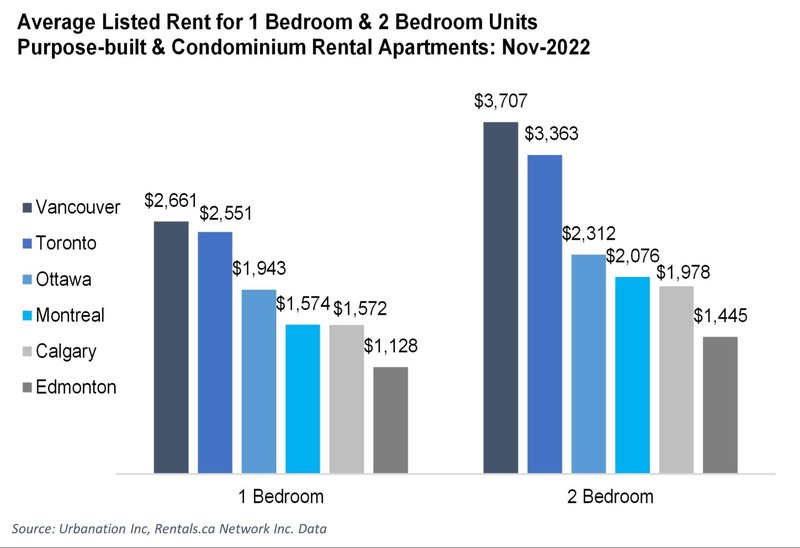
image8Among major markets in Canada with populations over 1 million, average monthly rents for purpose-built and condominium apartments increased fastest for the most expensive cities, with Vancouver and Toronto rents up 24.3 and 23.7 per cent respectively. One-bedroom rents averaged $2,661 in Vancouver and $2,551 in Toronto, while two-bedroom rents averaged $3,707 in Vancouver and $3,363 in Toronto.


Calgary represented the third fastest growing rental market among Canada’s largest cities, posting annual growth of 21.9 per cent. Rents in Calgary were substantially less expensive than in Vancouver and Toronto at an average of $1,572 for one-bedrooms and $1,978 for two-bedrooms.

Montreal, which is Canada’s largest rental market, had the slowest annual rent increase among major metros at 7.6 per cent, with rents that have become comparable to Calgary at an average of $1,574 for one-bedrooms and $2,076 for two-bedrooms.

Among medium-sized markets, purpose-built and condominium rents rose the highest over the past year in several GTA cities and areas, including Brampton (up 28 per cent to $2,430), North York (up 25.8 per cent to $2,470), Etobicoke (up 24.5 per cent to $2,568), Scarborough (up 22.9 per cent to $2,301) and Mississauga (up 19.2 per cent to $2,452).

Two markets west of the GTA also recorded strong rent increases in November, with London and Kitchener rents up 27.9 per cent to $2,012 and 24.1 per cent to $2,159, respectively. Outside of Ontario, the fastest growing medium-sized municipalities were Halifax ( up 24.2 per cent to $2,201) and Burnaby (up 23.6 per cent to $2,814).

Rents grew by 17 per cent to 19 per cent in Barrie, Hamilton, Lethbridge, and Surrey.

Atlantic Canada (consisting of the four provinces of Nova Scotia, Newfoundland and Labrador, New Brunswick and Prince Edward Island) continued in November to have the fastest growing rents for purpose-built and condo rentals rising 31.8 per cent.

Average rents for purpose-built and condominium rents rose 16 per cent annually in British Columbia and 15.3 per cent annually in Ontario.

Alberta rents were also up double digits in November by 15 per cent year over year; Saskatchewan rents grew by 12.9 per cent in November; Manitoba average rents for purpose-built and condo rentals increased 9.8 per cent annually and Quebec average rents rose 6.3 per cent.

For more information, visit: Rentals.ca December 2022 Rent Report

ICBA offers reward for worksite attack

The Independent Contractors and Businesses Association (ICBA) has posted a $100,000 private reward for bring to justice the people responsible for the attack at the Coastal GasLink LNG worksite near Houston B.C. last February. 

The initiative was launched in partnership with Metro Vancouver Crime Stoppers, which stands ready in this special program to administer the reward and accept anonymous tips from anyone with information that will lead to arrests and charges. 

RCMP say video footage shows approximately 20 masked individuals attacked nine security guards and construction workers, heavy equipment, and outbuildings in a clearly premediated and coordinated nighttime assault by attackers with axes. In one case, a worker trapped inside a truck had his window smashed out by an axe. 

Fires were set and heavy equipment was hijacked to batter other onsite equipment and shred trailers. Lights and video surveillance at the site had been disabled, a school bus was parked to block access in or out of the site and the Morice River Service Road was blocked by felled trees, fires, and spikes. 

While no one was seriously injured, the attack caused millions of dollars in damaged equipment and was traumatic for those working on site that night as well as their colleagues, families, and friends. 

Sending a message that violence in the workplace and on job sites should never be tolerated, the ICBA decided to offer the $100,000 reward to help find those responsible. 

“The people working on this pipeline are highly trained and skilled and are building an incredible national legacy of which we can all be proud,” said Chris Gardner, ICBA president. “Their expertise and hard work should be upheld as an example of Canadian ingenuity and exceptionalism. They deserve no less than a full investigation and the assurance that the perpetrators of this attack will be held accountable and brought to justice. ICBA is proud to stand up for construction and energy workers and offer this reward.” 

Please contact Metro Vancouver Crime Stoppers at 1-800-222-8477 or visit www.solvecrime.ca. 


Canada’s premium office rents pose global value

Vancouver and Toronto are placed 69th and 70th in JLL’s 2022 rankings of premium office rents in 134 markets worldwide. Montreal is slotted 100th in the annual survey of the highest achievable rent within the premier building in the city’s or sub-market’s most prestigious office district.

All three Canadian cities are categorized as “value” markets with total occupancy costs below USD $60 per square foot (CAD $81 psf ) — status they share with nearly 60 per cent of the survey base. In contrast, just 19, or 14 per cent, of markets are considered “high-end” with occupancy costs greater than USD $100 psf. The remaining 35 markets are classified as “mid-level”.

Central Hong Kong and Midtown New York are holdovers from 2021 with the two priciest premium rents, but with a wider gap this year between total occupancy costs of USD $259 psf in top-ranked Hong Kong versus USD $220 psf in New York. London’s West End, Beijing’s Finance Street and California’s Silicon Valley fill out the top five spots with occupancy costs ranging from USD $182 psf in London to USD $149 psf in Silicon Valley.

Across the entire survey base, JLL reports a 4.8 per cent year-over-year increase in premium office rents. JLL analysts suggest that evidence aligns with findings from the firm’s global survey of workplace trends, conducted earlier in the year.

“With 77 per cent of corporate real estate professionals agreeing that investing in quality space is more important than increasing space, upward pressure on rents for premium space is likely to continue,” they project. “Flight to quality extends to environmental sustainability features, with green building certification now a de facto requirement of premium office space: 87 per cent of premium office buildings in our survey have a certification in environmental sustainability, such as LEED, BREEAM or NABERS, up from 84 per cent last year.”

In other trends, the strengthening U.S. dollar juggled the rankings, pushing occupancy costs upwards in several U.S. markets, while European and some Asian markets slipped in the positioning relative to last year. As well, analysts point to climbing rankings for the Middle East markets, Dubai (16th), Riyadh (46th) and Abu Dhabi (54th).

Premium office rents in Vancouver and Toronto are pegged at USD $54 psf (CAD $72.90 psf), sandwiched between Amsterdam at USD $55 psf and Hangzhou at USD $53 psf. The nearest U.S. markets on the scale are San Diego, ranked 59th with a premium office rent of USD $59 psf, and Denver, ranked 75th with a premium office rent of USD $51 psf. Other U.S. cities with premium rents falling below Toronto’s, but above Montreal’s include: Nashville; Houston; Atlanta; Philadelphia; Phoenix; Baltimore; and Charlotte, which is ranked just above Montreal with a premium office rent of USD $40 psf.

Montreal’s premium rent of USD $39 psf (CAD $52.65 psf) places it atop Lisbon, which posts a premium rent of USD $38 psf. Montreal outranks two other U.S. cities: Minneapolis (104th) and Detroit (118th) as well as several European and South American capitals: Helsinki; Prague; Warsaw; Budapest; Bucharest; Bogota; and Santiago. Meanwhile, this year’s five best bargains for premium office space are found in Rio de Janeiro, Hyderabad, Durban, Johannesburg and Cape Town with occupancy costs ranging from a high of USD $18 psf in Rio to USD $15 psf in Cape Town.

Looking at tenancies, banking and financial services are predominant in the priciest space — accounting for 72 per cent of occupancy in high-end markets. That quotient falls to just 37 per cent across the entire premium office survey base. Professional and business services occupy a consistent 22 to 23 per cent share of premium space in mid-level and value markets, but just 11 per cent of high-end premium space. Technology firms occupy about 19 per cent of all premium space.