Articles Archive - Page 247 of 928 - REMINET
REMI

Improve the air quality in your building with healthier paint

Indoor air quality (IAQ) can have a significant impact on the health and productivity of the occupants of your building. As a facility manager, indoor air pollution is something you should be addressing as part of your regular maintenance.

RELATED: The importance of air purification

There are many factors that can affect the IAQ in your building, from your manufacturing to outdoor pollutants to the existence of volatile organic compounds (VOCs).

What are VOCs?

 The Environmental Protection Agency defines VOCs as organic chemical compounds that can evaporate under normal indoor conditions, known as off-gassing. This process may have an odour, making it easier to detect, but that’s not always the case.

VOCs are a threat to the people in your building because they can cause short-term and long-term health issues for people who are exposed. Paint is often a source of VOCs due to the combination of hazardous chemicals they contain.

Low or no VOC paint

Cleaning practices, improved HVAC systems, and interior design have all been used to lower the risks of poor IAQ in buildings, but paint is often one of the greatest offenders.

To help mitigate the risks from off-gassing, choose low or no VOC paint for your building. Low VOC means that it contains less than 50 grams per litre of VCC, while less than 5 grams qualifies the paint as no VOC.

If you are choosing regular paint, latex is often less risky. Even though it does off-gas, it contains fewer VOCs than many other types of paint. Where a typical gallon of oil-based paint has approximately 350 grams of VOCs per litre, flat, interior latex paint contains about 150 grams per litre.

Building your budget

While low or no VOC paints are becoming more available, they are also more expensive than the traditional types, raising your expenses anywhere from 25 to 50 per cent. Not only that but you may require more coats of paint to cover the surface when you are using low or no VOC paints. These are factors you need to build into your budget when you are working to improve the IAQ in your building.

Even while using low or no VOC paint, proper ventilation is required to maximize and improve your building’s indoor air quality for your occupants, employees, and visitors.

Nova Scotia amends Residential Tenancies Program

Effective February 3, 2023, landlords in Nova Scotia can raise rents on any day of the year and not just on the anniversary of the day the lease began. Additionally, they cannot raise rent more than once in a 12-month period and must continue to give at least four months notice before rent can be raised.

On the privacy front, Nova Scotia landlords are now required to give a tenant 24 hours notice before entering the unit, even if the tenant has given notice to end the lease. Landlords can only enter a unit without notice if there is an emergency.

“We listened to feedback from tenants and landlords and are making changes to the program that will provide flexibility and more clarity to processes,” said Colton LeBlanc, Minister of Service Nova Scotia and Internal Services. “With any change, we consider the needs of both tenants and landlords – and we continue to look for ways to help them know and understand their rights and responsibilities.”

Other changes include:

  • landlords cannot charge tenants different amounts for different rental terms. For example, they can’t charge different amounts for a year-to-year, month-to-month or fixed-term lease.
  • a lease can be terminated if a tenant sublets a unit without the landlord’s permission.

More information on Nova Scotia residential tenancy laws, rights, responsibilities, and other information can be found at: https://beta.novascotia.ca/programs-and-services/residential-tenancies-program.

Vancouver approves $656M waters plan

The City of Vancouver has approved the $656 million Healthy Waters Plan, a 70 per cent investment increase in sewage and draining systems over the next four years.

The Healthy Waters Plan will be vital in cost-effectively addressing pollution from combined sewer overflows and rainwater runoff, renewing aging infrastructure, enabling housing and growth, and responding to climate change through investments that include nature-based solutions like green rainwater infrastructure.

“Better infrastructure will allow us to see healthier ecosystems and safer, cleaner waterways around our city,” said Mayor Ken Sim. “The Healthy Waters Plan will help us deliver on Vancouver’s long-range growth strategy, the Vancouver Plan, while protecting the environment, and ensuring resilient and sustainable service delivery in the years to come. It also advances our commitments in the UNDRIP Strategy and the Rain City Strategy.”

Since the 1970s, the City has been replacing combined pipes with separated pipes, and since 2010 we have been accelerating the implementation of green rainwater infrastructure. Green rainwater infrastructure uses soil and plants to capture and treat rainwater closer to where it falls, reducing the volume of rainwater entering pipes. This work is happening alongside policies and community initiatives that address pollution at the source, and promote development and behaviour that reduce water use.

Green rainwater infrastructure is also a core tactic of the Rain City Strategy which reimagines the city’s design to embrace rainwater as a valued resource while setting a target of capturing and cleaning 90% of rainwater.

“The Healthy Waters Plan is the kind of leadership other major cities around Canada and North America can look at as an example of what needs to be done in addressing sewage pollution at the root of the issue,” said Mark Mattson, CEO of Swim Drink Fish.

First skyscraper in Greece begins ascent

Lamda Development has broken ground on The Riviera Tower, the tallest building and first ever skyscraper in Greece, set to rise by March 2026.

Designed by Foster + Partners, the 200-metre high-rise will feature a collection of one-to-five-bedroom residences and penthouses near the beach and is pre-certified with LEED v4 BD +C at a Gold Level.

The tower will rise along the Athenian Riviera coastline within The Ellinikon, one of the largest urban regeneration projects in the world. A 6.2 million square metre sustainable, smart city on the grounds of Athens’ old abandoned international airport, the project nearly doubles the amount of green space in the Athens Metropolitan Area and creates the largest coastal park in Europe at two million square metres.

Developers have planned a net zero carbon footprint economy through energy conservation strategies and emission-reducing systems. The Ellinikon will also be self-sufficient in irrigation and electricity needs and feature a mix of uses.

Greece

The Ellinikon will become a ground-up, environmentally conscious smart city in Athens.

Some features are the luxury-geared Riviera Galleria retail complex, a commercial hub that  will offer the first mall to earn LEED Gold Certification in the country, Greece’s tallest commercial building, hotels and a casino resort with convention spaces. Other plans include a 310-berth marina, electronic vehicle infrastructure, AR navigation, IoT in residential and commercial spaces, and smart water-level sensors for coastal resilience.

“We are at a moment in history when sustainable development and investment need to be bold to meet the need for change in how we conceive of urban experiences,” said Odisseas Athanasiou, CEO of Lamda Development. “The Ellinikon will have a transformative effect on both Greece and the world, providing a new benchmark for smart, inspiring indoor and outdoor spaces that excite people, while also significantly advancing sustainability in the places we live, work, and enjoy ourselves for the long term.”


Input sought on downtown Ottawa revitalization

Residents, business operators and all those generally interested in the vibrancy of Canada’s capital are invited to share their opinions with the Downtown Ottawa Revitalization Task Force. The 13-member volunteer group is seeking input through a newly launched online portal aimed at gleaning ideas and gauging priorities for the downtown’s role in the life of the city and Canadian culture more broadly.

As a first step in a planned three-part engagement process over the next two months, the online survey poses 10 questions exploring views about, experiences in and aspirations for the downtown, and asks respondents to rank existing services and amenities on a scale of one to five. It will be open for responses until February 21, after which the task force plans to follow up on the major emerging themes.

“It is my firm belief that Ottawa’s downtown core is vital to the economic health and well-being of our entire city,” says Hugh Gorman, chief executive officer of Colonnade BridgePort, who sits on the task force as the representative of the Building Owners and Managers Association (BOMA) of Ottawa. “A vibrant core attracts tourism and talent. It fosters an environment for creativity and innovation. It becomes a catalyst for the creation of sustainable 15-minute communities, and its commercial tax base allows for city wide investment in infrastructure including public transportation, affordable housing, and other social services.”

The task force also includes representatives from the Ottawa Board of Trade, Tourism Ottawa, downtown business improvement areas (BIAs) and community associations, housing and heritage advocates, the Indigenous community and private developers. Its co-chairs are Graeme Hussey, president of the non-profit housing developer, Cahdco, which is based in Ottawa’s Centretown, and Neil Malhotra, vice president of Claridge Homes.

Yasir Naqvi, Member of Parliament for Ottawa Centre, is both the task force’s creator and a member. “We need to take a deep look at the future of downtown Ottawa with all relevant and interested voices around the table,” he observed when he unveiled his plans for the task force last summer.

Drought, water conservation, and water efficiency

According to The Canadian Drought Monitor, droughts are a “creeping phenomenon.” They are “difficult to define and measure, slow to develop, continuous, cumulative, and long-lasting. [Further] there is no universally applicable tool for measuring drought; as impacts are non-structural, spread over large areas, and best described by multiple indices.”

According to the Monitor, even though some northern areas of Canada are not analyzed, at least 40 percent of Canada is currently experiencing abnormally to exceptionally high drought conditions. For facility managers in these provinces, practicing and instituting water conservation and efficiency measures to reduce consumption is a must.

While these terms – efficiency and conservation – are often used interchangeably, they are undoubtedly different. Knowing the difference between these terms will help facility managers reduce water consumption, lower costs, and help minimize the impact of water-related costs in the future.

How are efficiency and conservation different? Amy Vickers, president of Amy Vickers & Associates, a water-related consulting firm in the U.S. defines water conservation simply as a “beneficial reduction in water loss, waste, or use.”

Typically, this means putting policies, programs, and practices in place to change consumer behavior so that they use only as much water as needed. Little things like waiting until the dishwasher is full before running a load, turning off the water when shaving or brushing teeth, and reducing the number of times outdoor vegetation is irrigated can all be applied here.

It should be noted that water conservation is often short-term. When an area of Canada is impacted by drought, government officials may ask consumers to voluntarily reduce water consumption, or they may impose water restrictions. But once the drought is lifted, so are the restrictions, and these water conservation measures evaporate.

Water efficiency is different. Vickers defines it as “The minimization of the amount of water used to accomplish a function, task, or result.”

This means doing more with less, over the long-term. Vickers adds, “Water efficiency usually relies on well-engineered products and fixtures such as low-flow toilets or waterless urinals or HVAC systems designed to use less water.”

In many commercial buildings today, HVAC systems draw more water for cooling and heating, often accounting for nearly half the facility’s total water consumption.

For even more clarity, let’s put them into practice in different situations.

Outdoor irrigation:

Conservation. During a drought, water conservation would mean irrigating every other day, on specific days of the week, or watering at night or during cooler times of the day to reduce evaporation and maximize your efforts.

Efficiency. Introducing drip irrigation systems or monitoring technologies can reduce water consumption in the long term. In Canada, xeriscaping – switching to native vegetation – is often an effective long-term water reduction strategy.

Restrooms:

Conservation. Reducing the amount of times we flush is something that needs to be considered. Many of us still flush the toilet unnecessarily, for instance, when disposing of facial tissue. That is considered a wasteful use of water and should be kept to a minimum.

Efficiency. Technology is on our side when it comes to restroom water efficiency. Once using about 7.8 to 11 litres of water per flush, most toilets now use about 6 litres. Low-flow faucets are also commonplace throughout Canada today.

Sewer charges:

Conservation. Unfortunately, in some parts of Canada, water and sewer charges are still based on a flat rate, so there is little or no incentive for consumers to reduce consumption in that situation.

Efficiency. Most studies indicate that when water is charged based on the amount consumed – referred to as metered rates – consumers, businesses, and commercial facilities tend to use less water.

Metering:

Conservation. Awareness of how much water a facility uses is one of the most important first steps in water conservation. This means learning how to read water meters. Usually, it involves having someone check the meter about every two weeks. A spreadsheet should be created to record these measurements and to use as a benchmark. This is also a good diagnostic tool for leaks. For example, should water consumption unexpectedly jump, that could indicate a serious leak needs to be investigated.

Efficiency. Submetering can be done to take this one step further. When several water meters are installed, we can benchmark how much water is typically consumed in each area of a facility. This allows control and information about specific areas of the building, and should there be an unexpected spike, it is much easier to determine where the problem is and to address it.

For facility and maintenance managers, it is important to read their monthly water utility bills. All too often, these go to an accounting department, are paid, and that’s the end of them. Reviewing each bill helps us monitor and measure, and we need monitoring and measuring to reduce water consumption, short or long-term.

Knowing the difference between conservation and efficiency is how maintenance managers will mitigate the effects of drought, reduce water consumption, and lower water-related costs for the future of their buildings.

Klaus Reichardt is CEO and founder of Waterless Co, Inc, pioneers in advancing water efficiency.  Reichardt founded the company in 1991 with the goal of establishing a new market segment in the plumbing fixture industry with water efficiency in mind. Reichardt is a frequent writer and presenter, discussing water conservation issues.  He can be reached at [email protected].

Canadian designs win best of kitchen and bath

Three Canadian interior firms have won National Kitchen & Bath Association (NKBA) Design + Industry Awards 2023.

The annual awards recognize the design professionals and projects that are setting the bar for the way we live, work and entertain in our homes.  Each reflects the purpose of the association – envisioning a world where everyone enjoys safe, beautiful, and functional kitchen and bath spaces.

The three Canadian winners were:

First Place, Specialty Kitchen (photo above): Rebecca Foster, Director of Design at Welton Design Group, Surrey, B.C. for “North Vancouver Laneway”. Read about the project here.

Second Place, Small Kitchen (under 300 sq.ft): Svetlana Tryaskina, founder of Estee Design, Toronto, ON for “Contemporary and Chic Kitchen”.

The project transformed a dark and dated kitchen in a midtown Toronto condo into a comfortable, well-lit space with plentiful storage and prep areas. The design plan required rearranging the layout to create an open-concept living/kitchen space.

Second Place, Primary Bath: Kendall Ansell, principal of Kendall Ansell Interiors, Coquitlam, B.C. for “Treetop Oasis”.

For a primary bath remodel in a residence in North Vancouver, the goal was an “everlasting oasis” and the space was designed around an existing skylight, which Kendall accentuated with floor-to-ceiling wall tile and a large matte black soaker tub by Victoria + Albert. According to the designer, the challenge with “Treetop Oasis” was configuring the layout to fit the tub, along with a vanity, shower area, and water closet — and allow two people to use the space at the same time.

More than 30 awards were handed out at the ceremony, including the NKBA Student Design Competition winners as well as the NKBA Innovative Showroom Awards Competition winners.

Best Overall Kitchen went to Sarah Robertson, founder and principal, Studio Dearborn. Best Overall Bath went to Mary Maney, Crystal Kitchen + Bath.


New rental development opens in Whitehorse

Right On Property Group, the recipient of a Yukon Housing Corporation Housing Initiatives Fund, has completed an 87-unit rental development in the Whistle Bend  neighbourhood of Whitehorse.

Known as Boreal Commons, the new rental development consists of three multi-residential buildings offering a range of suite sizes, from bachelor to two-bedroom. Of the 87 units, 18 are affordable, meaning they have below market rents, of which ten will be prioritized for young adults (18–25 years of age) and newcomers to Canada. The project also includes 12 accessible units to  support seniors and people with mobility challenges.

Boreal Commons received support from the Government of Canada , the Government of Yukon, the City of Whitehorse, and other partners. The project is an example of how collaborative efforts across governments and the private sector can make significant progress in addressing gaps in the Yukon’s housing continuum and improve the affordability and accessibility of housing for all Yukoners.

“I am thrilled to see another housing developer complete their project with support from the Yukon Housing Corporation through the Government of Yukon’s Housing Initiatives Fund and the Municipal Matching Rental Construction Program,” said Premier Ranj Pillai. “Boreal Commons addresses a much-needed demand for rental housing for young adults, newcomers to Canada as well as seniors. Our government is committed to continuing to invest aggressively in housing and we know we need to work together with all partners across sectors to help ease pressure in the territory. I encourage developers who have housing projects ready to take advantage of the options and apply for the Housing Initiatives Fund sixth intake.”

Applications for the Housing Initiatives Fund is open from November 14, 2022, to February 3, 2023.


Indigenous-led justice centre opens in Kenora

The new Kenora Justice Centre has opened in Ontario to address the overrepresentation of Indigenous people in the correctional system who may struggle with poverty, mental health, addictions and insecure housing.

The design process involved a community-needs assessment with Indigenous leadership, Elders, justice participants and Indigenous-led organizations.

Programs and services will be tackling the root causes of crime, with community-led supports through health care, education, housing and other social services. At-risk youth and young adults will have space for personal growth while working with Elders to heal from trauma.

“There are many barriers limiting access to justice for First Nations in the North. We need new, innovative approaches for our disadvantaged citizens that find themselves in the correctional system,” said Derek Fox, Nishnawbe Aski Nation Grand Chief.

“The co-development of this community justice centre with Grand Council Treaty #3 has created a new environment in Kenora where Indigenous youth, young adults and their families can access justice services in a culturally-inclusive and trauma-informed space. We look forward to building on this experience and working toward additional centres within the NAN territory.”

The Kenora Chiefs Advisory, who owns the buildings, is working with the province on creating various spaces within the centre including a courtroom that supports rehabilitation and dialogue, an Elder/cultural liaison room for participants to work with on-site Elders and interpreters to create healing plans, a primary health-care room for Indigenous-led health and treatment services, and a technology room for those who lack reliable access to internet services for court appearances, tribunal hearings or medical appointments.

Smudging is welcome in all justice centre spaces and a community room will prioritize opportunities for ceremony, workshops and training for all community partners

B.C. boosts assessment appeal filing fees

Assessment appeal filing fees are jumping from $30 to $300 for commercial and industrial property owners in British Columbia. The B.C. government has announced the tenfold increase ahead of this year’s May 1 deadline for filing a second-level appeal with the provincial Property Assessment Appeal Board (PAAB), with fees for residential, farm, non-profit and recreational property classes remaining at $30.

Under B.C.’s two-stage system, all property owners had until January 31 to submit a request to the Property Assessment Review Panel for a gratis reconsideration of a property’s valuation. Those dissatisfied with the Review Panel’s decision then have the option to file a second-level appeal.

The Appeal Board’s work is funded through a combination of filing fees and property taxes. In justifying the new fee schedule, the B.C. government’s communique notes that rates had not increased during the past 20 years and had fallen well below those charged in other provinces — citing examples of filing fees ranging from a low of $318 in Ontario to potentially more than $1,000 in Quebec.

“The increase of the filing fee from $30 to $300 will reduce the Board’s reliance on the levy collected from property owners in the province,” the communique states. “Over the past five years, fewer than 2 per cent of all commercial and industrial property owners have launched a secondary appeal — most of them large businesses.”

Bettie Allard YMCA opens its doors

The new Bettie Allard YMCA, a state-of-the-art, 55,000-square-foot facility, has opened its doors to the Tri-Cities and Burquitlam neighbourhoods. The facility, located just steps from the Burquitlam SkyTrain Station’s Evergreen Line, is the result of an innovative partnership between the YMCA, the City of Coquitlam and Concert Properties.

“A project of this magnitude and significance would not have been possible without the incredible support from the City of Coquitlam and Concert, and the generosity of our valued donors and volunteers,” says Heidi Worthington, president and CEO, YMCA BC. “Creating a welcoming, safe and inclusive centre of community is just as important to the YMCA as our high-quality programs and services. Now that we are open, we look forward to welcoming people of all ages, stages, backgrounds and abilities to the Bettie Allard YMCA, supporting their journey to live healthier, happier lives, and providing them with the quality experience they deserve and we expect to deliver at the YMCA.”

The project was announced in 2016 to develop a community recreation facility at the heart of the Burquitlam neighbourhood, providing residents with new public facilities, infrastructure and benefits to enjoy for generations to come. Highlights include:

  • A 55,000-square-foot YMCA with an indoor pool, gym, fitness studios and equipment, multi-purpose space, child minding, a family development centre and other amenities;
  • A 3,700-square-foot Community Policing Station;
  • A 222-stall underground parkade, including stalls dedicated for park-and-ride;
  • 2.55 acres of new parkland, including the expansion of Cottonwood Park and a redesigned Burquitlam Park;
  • Transportation improvements such as new multi-use paths and an upgraded and realigned Emerson Street.

Two residential towers developed by Concert Properties include: 55One, a rental tower with 308 homes and 100 non-market rental suites operated in partnership with 43 Housing Society. Move-ins begin April 1, 2023. Myriad, a 50-storey tower with 468 condominium homes, is currently under construction.


Helping improve energy efficiency of buildings

Buildings are significant producers of greenhouse gas (GHG) emissions. According to Natural Resources Canada, energy consumption of homes and buildings accounted for 17% of GHGs in 20141. Improving buildings’ energy efficiency is an important component of Canada’s plan to reduce GHG emissions by 40% by 2030 (compared to 2005 levels). The need for new solutions for the building sector in Canada is also outlined in recent federal initiatives, such as the Pan-Canadian Framework on Clean Growth and Climate Change2. Moreover, such solutions can bring significant cost savings to building owners and occupants.

There are many energy-efficient solutions and practices that can be implemented in the design and construction of new buildings. Repairs, renovations, retrofits, and recommissioning can further increase energy efficiency of existing buildings. While buildings use most of the energy for space heating, air conditioning, and lighting, other systems, from elevators to water heating, also contribute to overall energy consumption. A growing number of building owners and building managers are implementing energy management and smart control strategies to improve efficiencies across all energy-using systems holistically. CSA Group standards support these efforts.

Leading the way toward system-level standards

CSA Group’s Energy Efficiency program has a long track record of developing discrete performance-based standards for use and application in buildings. These standards address buildings’ lighting, HVAC and refrigeration systems, as well as residential and industrial products. Many of these standards are referenced in Canada’s federal and provincial energy efficiency regulations and harmonized with the United States. While the development of this type of standards continues, there is a strong need for broader, system-level approaches.

Under the oversight of a new Technical Committee on Building Energy Systems, CSA Group launched several initiatives considering the interaction of various building components and subsystems to derive an overall system efficiency. These new system-level standards address building commissioning, thermal bridging, and standardize energy modeling methodologies. They purposefully tackle both new and retrofit construction and various building types.

Currently, some of these complex system standards are being considered for incorporation by reference into the National Energy Code of Canada for Buildings (NECB) and provincial energy codes such as the BC Energy Step Code.
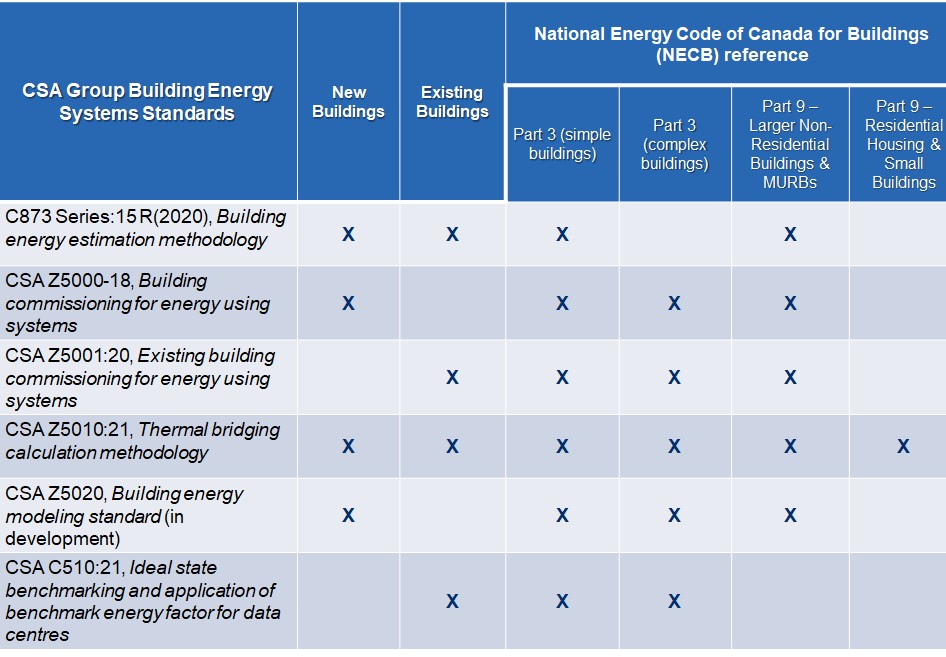
Figure1: Summary of CSA Group Building Energy Systems Standards currently published or in development.

Effective commissioning can help save energy

While buildings have to meet the requirements of the national and provincial codes and standards, it is also important to ensure that, once in use, the energy systems operate as they were designed. Effective commissioning of these systems can save 5 to 15% of energy annually3,4.

CSA Z5000-18, Building commissioning for energy using systems and CSA Z5001:20, Existing building commissioning for energy using systems, provide protocols, best practices, and recommendations for commissioning of the energy and water system components in new and existing buildings, respectively. Consistent with current building management practices, these Standards can help you reach optimal performance and efficiencies of energy systems to conserve energy and reduce costs. Both CSA Z5000-18 and CSA Z5001:20 are available for no-fee view access on the CSA Store.

Consistent methodology for building energy modelling

Building energy modelling (BEM) emerged as an important tool that can help predict future building performance. Considering the geometry of the building, construction materials, energy systems, and control strategies, BEM is used to optimize the design of new buildings, inform retrofit projects, and document compliance with energy codes for green certification and utility incentives programs.

BEM is inherently a complex methodology, and many BEM programs developed their own frameworks with tools and practices for modelling, reporting, and evaluating outcomes. The new standard CSA Z5020:23, Building energy modelling standard, takes a holistic approach to improving the quality of modelling outcomes by providing a consistent methodology for modelling of building energy systems. This can help set the standard practices for BEM services and increase the administration effectiveness of BEM programs.

Learn more about CSA Z5020:23.

Addressing thermal bridging to help reduce heat loss

As space heating and cooling consume a significant portion of energy in Canada’s commercial, institutional, and residential buildings, the building envelope’s thermal performance plays a critical role in reducing heating loads.

Thermal bridging occurs when a building component extends out of the conditioned space, allowing for heat transfer. Disregarding thermal bridges can result in underestimating the total heat loss through walls by 20 to 70%. If major thermal bridges are not addressed, adding insulation may not significantly reduce the overall heat loss through the walls.

The new National Standard of Canada, CSA Z5010:21, Thermal bridging calculation method, provides a consistent methodology you can use to calculate thermal bridging in buildings and estimate its energy impact on building envelope heat loss and gain.

CSA Z5010:21 is available for no-fee view access on the CSA Store.

Facilitating the deployment of new technologies

New emerging technologies, from renewable energy production to thermal storage and connected devices, have the potential to further improve energy efficiency of buildings and reduce their environmental impacts. New standards can help high-performance, intelligent buildings reach their full potential. CSA Group recently launched a project that will help standardize requirements for information and communication technology infrastructure and data management for buildings. One of the overarching purposes of this systems-level standard is to support the safe and secure interconnection and communication of intelligent building systems, such as HVAC, lighting, security, or elevators.

References

1. Natural Resources Canada, Canada’s Building Strategy, https://www.nrcan.gc.ca/energy-efficiency/buildings/canadas-building-strategy/20535 (accessed February 2022).

2. Government of Canada, Pan-Canadian Framework on Clean Growth and Climate Change, http://publications.gc.ca/collections/collection_2017/eccc/En4-294-2016-eng.pdf (accessed February 2022).

3. Natural Resources Canada, Commissioning for new buildings, https://www.nrcan.gc.ca/energy-efficiency/buildings/new-buildings/commissioning-for-new-buildings/20679 (accessed February 2022).

4. Natural Resources Canada, Recommissioning for existing buildings, https://www.nrcan.gc.ca/energy-efficiency/buildings/existing-buildings/recommissioning/20705 (accessed February 2022).


 

Skyline reports strong performance in 2022

In a recent update, Guelph-based Skyline Apartment REIT announced it finished 2022 in good standing and anticipates further growth opportunities for the year ahead. In 2022, the REIT made several new additions, adding more than $360.4 million in land and property assets and bringing the total number of suites in its portfolio to 22,259. Skyline Apartment REIT currently comprises 250 properties in 61 communities in seven provinces across Canada, with 22,259 total suites.

Over the course of the year, Skyline Apartment REIT acquired:

While Skyline Apartment REIT typically maintains a buy-and-hold strategy, in 2022 the REIT said it identified several non-core assets that were appropriate for strategic disposition. The sale of these six assets, totaling 582 suites and 81,531 square feet of commercial space, resulted in a combined sales price of $182.9 million. The equity surfaced from the sales will be used toward accretive property acquisitions to ensure maximum value for Skyline Apartment REIT Unitholders.

In 2022, the REIT also completed construction on two new Ontario developments in communities with low vacancy rates. In August 2022, it opened Lancaster Park Apartments, a new development in Welland, Ontario, and later opened Twamley Manor Apartments in the community of Listowel.

In B.C., Skyline purchased two new properties adding 108 rental suites to the rental market in Nanaimo and 122 rental suites in Parksville.

2022 also saw Skyline and partners break ground on a Permanent Supportive Housing development that will provide living spaces for 32 people in the Guelph, Ontario, area.  Skyline donated the land for the development, and various businesses within Skyline Group of Companies will continue to provide expertise and resources until the project is complete.

Outlook for 2023

As the rental market continues to see high demand due to inflation and rising interest rates causing many would-be home buyers to keep renting, Matthew Organ, President, Skyline Apartment REIT, anticipates the trend will continue through 2023.

“While demand for affordable rental housing is strong, new supply has not been able to keep up, as labour shortages and high construction costs are impacting development,” he said. “New construction is essential to meeting the rising demand for rentals and addressing the housing supply shortage that Canada is facing. Skyline Apartment REIT sees value in continuing to advance new rental housing development in markets where this supply is needed most.”

Visit SkylineWealth.ca to learn more.


The path to “Better and More” housing

More needs to be done to improve Canada’s housing supply, yet barriers continue to stand in the way. To address the issue, Canada’s national association representing large real estate companies and institutional investors, REALPAC, has launched an online campaign highlighting the essential role the rental market plays in filling housing need.

While owners of aging apartment towers are faced with choosing between completing vital repairs and managing increased operating costs, developers trying to pursue healthy new rental projects are contending with inflation, high interest rates, high construction costs, slow development timelines, and high development taxes in addition to stringent government regulations and sustainability mandates.

And these are just some of the challenges impacting the rental housing sector.

“The cost pressure that people feel in Canada are also felt by landlords,” said Michael Brooks, CEO, REALPAC. “Many rental buildings are over 50 years old, and fixing them is both necessary and expensive. Developers and investors are willing and ready to do their part to help rejuvenate the purpose-built rental sector, and we ask all orders of government to work with us to enable the process.”

According to REALPAC’s “Working Together for Housing Solutions” campaign, a healthy Canadian real estate environment relies on the ability to attract investment to maintain and update existing buildings, and to build new rental stock. Through taking a few fundamental steps, the organization asserts that the rental apartment sector can be regenerated in a way that protects those who need it most, while also allowing the growth needed to house Canadians for generations to come.

“We want to bring awareness to the fundamental role purpose-built rental plays in the housing market,” Brooks said. “More purpose-built supply will help to stabilize rental prices, which contributes to affordable and attainable housing. Our members care about the housing they provide and are asking government to use a holistic lens when thinking about regulation and government process. Does the regulation bring more investment, and does the process make housing less expensive? If we can answer in the affirmative to both questions more often, we will be one step closer to affordable and attainable housing.”

rental apartmentHere are REALPAC’s four recommended steps to improve housing supply in Canada:


  1. Re-invest in Canadian rental housing.

Government and apartment owners need to work towards better housing for residents, by attracting investment to the rental housing market. Tax credits or incentives can be used for acquisition, development, or retrofit activities to support lower-income households or for building decarbonization.

  1. Accelerate housing supply.

Canada’s leading economists agree that Canada has not been building enough housing to keep it attainable and affordable. We need to strengthen incentives to attract investment, and encourage investors to build more purpose-built rental communities, including affordable housing. Zoning and land use rules, development charges and upfront fees, property taxes, and development approvals, need to enable investment in Canada’s rental housing market.

  1. Increase rental supports for Canadian residents who need it the most.

Encourage governments to increase rent supplement and rent support programs, particularly for those without the financial means to keep up with necessary rent increases.

  1. Improve security of tenure for residents. 

Where possible and financially feasible, minimize the impacts of renovations and new development on existing residents’ tenures. Building new communities, or revitalizing established ones, requires a professional approach that adheres to the law while being sensitive to the needs of residents.

The campaign also emphasizes that finding and executing successful solutions hinges on all levels of government, housing advocates, non-profits, cooperatives, and the private sector working together in partnership.

“The participation of all sectors supports the pathway to better housing and more housing,” the website states. “Our end goal is the same: to support Canadian communities by strengthening access to secure housing and to build more quality rental housing to match our surging population growth – today, tomorrow and continually.”

Find out more at: Working Together for Housing Solutions – REALPAC

Canadian engineers lauded for innovative design

Lianne Cockerton, a mechanical HVAC engineer with Montreal-based Martin Roy et Associés, has won the 2023 ASHRAE Award of Engineering Excellence for her work as lead design engineer on the Local 144 headquarters and plumbing training facility in Pointe-aux-Trembles, Quebec. She received the honour for attaining the top score among international-level Technology Award winners in nine building categories.

Canadians engineers captured a third of this year’s awards recognizing innovative building design that promotes effective energy management and indoor air quality, which were bestowed February 4th during ASHRAE’s 2023 winter meeting in Atlanta. Cockerton also received the Technology Award in the institutional building category, while Simon Kattoura, vice president, construction at Kolostat Inc. in Laval, Quebec, won in the industrial facilities category, and Adrianne Mitani, mechanical associate with Smith + Andersen in Ottawa, took honours in the residential category.

All recipients advanced after first winning Technology Awards at the ASHRAE chapter level in 2022. Contenders are judged on six design and operational outcomes: energy efficiency; indoor air quality; innovation; maintenance and operations; cost effectiveness; and environmental impact.

The Local 144 administrative and training centre is home to Quebec’s pipe trades workers affiliated with the United Association. The LEED Platinum certified facility links its two components — the mass timber office pavilion and the steel frame training centre — via a suspended walkway, and boasts a high-performance building envelope, a 430-panel rooftop photovoltaic array and a combination geothermal and variable refrigerant flow (VRF) air source heat pump system.

It achieves an annual energy use intensity of 133 kilowatt-hours per square metre, translating to a 81 per cent reduction relative to a baseline reference building under the ASHRAE 90.1-2010 energy standard. Annual average water consumption of 1,612 litres per occupant is also 81 per cent below the LEED reference building.

Kattoura’s industrial facility accolades are for his work on upgrades to the central cooling plant and ventilation system at Hood Packaging Corporation’s Glopak division in Montreal. Mitani was recognized for Claridge Homes’ Loop, a 27-storey luxury rental apartment tower in downtown Ottawa.

Cockerton and Kattoura are both members of ASHRAE’s Montreal chapter, while Mitani belongs to the Ottawa Valley chapter. They join a global slate of Technology Award winners for 2023, who received their honours for work on buildings located in Tokyo, Hong Kong and the United States.

Commercial cleaning challenges in 2023

In the wake of the last few years, the commercial cleaning industry has changed and evolved, moving past a lot of the challenges we faced through the pandemic. But that doesn’t mean we’re out of the woods yet. While 2023 brings trends to improve processes and efficiency, the industry will still struggle with staffing and profitability as we move through this year.

Put a plan together for your cleaners to thrive through whatever this year brings. Taking the time to look at 2023’s trends and adapting them to work for your customers and your business is a great place to start.

Staffing and technology

Attracting and keeping talent has been an on-going issue for cleaners and it is still a challenge. Standing out from your competition by offering something unique and desirable will help you build – and keep – your team.

Here’s where some of the trends could help! Using technology like updated equipment may help to attract talent interested in progressive processes. Use innovation to your advantage to promote your company and boost the efficiency of your services.

Profitability and green cleaning

With an industry average of less than seven per cent profitability, every dollar counts, and if you’re competing for talent, rising labour costs may also factor into your bottom line. As your customers continue to face inflation, too, it may be difficult to raise your prices to increase profitability. So, what’s the secret to survival? Here, the green cleaning trend may be a way to distinguish yourself and increase your margins.

With green cleaning taking centre stage this year, it means that the pressure on cleaning companies to incorporate green practices and products is on. This is an opportunity to get ahead of the pack by embracing and marketing these products and practices to your customers. With the demand for green cleaning so high, taking a healthier, more eco-friendly approach may just be the way to get ahead this year.

The commercial cleaning industry has changed significantly in the last few years and will continue to evolve with technology and ecology dominating the trends for 2023. As we continue to manage staffing shortages and work towards boosting profitability, planning ahead to tackle these challenges could mean the difference between success and failure in 2023.

OpenCircle appoints Line Porfon as CEO

Line Porfon has been appointed chief executive officer of OpenCircle (formerly Merit Contractors Association).

Porfon brings more than 35 years of not-for-profit and public service and administrative experience to her new role. She has served in various senior leadership capacities at OpenCircle over the past nine years.

“Line has proven to be valuable to the organization, and we have every confidence that she will lead this organization in a positive direction,” said OpenCircle board of directors chair, Alan Kuysters. “Line personifies our new brand and the direction this organization is taking. Her unshakable dedication to member support and exceptional quality of programming will ensure uninterrupted service through this transition.”

During her tenure she has been responsible for working on and seeing through the implementation of the association’s strategic plan, risk assessments, and the operationalization of programs with revenues that have contributed to the organization’s bottom line.

“I am thrilled to be able to bring my passion for our organization, membership and industry to the CEO role,” said Porfon. “Innovation and new strategic initiatives have been a focus throughout my career, and I have had successes in creating opportunities in times of change, like those we are experiencing at OpenCircle. As the organization enters a pivotal phase in our expansion, I couldn’t be more excited to work with the board and staff to better serve our membership.”

According to OpenCircle, the world has changed, and the association is adapting along with it, creating innovative programs and services to support the unique needs of members so they can confidently compete and thrive in this new world.