Articles Archive - Page 238 of 928 - REMINET
REMI

Vancouver long-term care home moves forward

The 13-storey St. Vincent’s Heather long-term care home in Vancouver is in the procurement phase with construction expected to start in fall 2025.

“As people age, they want to know they will have access to the right care services that will allow them to stay healthy, active and safe in their community,” said Adrian Dix, minister of Health. “St. Vincent’s Heather will offer vital long-term care for seniors and wraparound services that will support their happiness and well-being in a home designed to meet their needs. This includes culturally safe living spaces and services for Indigenous Elders, such as a sacred space for smudging ceremonies, with access to traditional medicine gardens for spiritual ceremonies.”

St. Vincent’s Heather will be built on the former site of St. Vincent’s Hospital, which served the Vancouver community for 65 years. Providence Health Care, in partnership with the Roman Catholic Archdiocese of Vancouver, is contributing the land to build the 240-bed long-term care home that will replace other beds at aging Providence care homes.

The facility will include 20 “households” that will accommodate 12 residents, each in single-bed rooms, and include the social and recreational spaces found in a typical home, such as a living room, dining room and activity space. Every room will have a wheelchair-accessible ensuite bathroom. Some specially designed suites with connecting doors will allow couples and families to remain together.

The care home will include community spaces on the main floor, allowing residents, families, visitors and staff to access recreational, social and health services. These spaces will include: a community hall; café; non-denominational sacred space for worship, reflection and spiritual practice, including Indigenous ceremonial practices; creative, exercise and therapy space; hairdressing services; a 37-space child care centre; and dental and primary-care services.


St. Albert Place retrofit receives funding

The Government of Canada and the City of St. Albert announced more than $13.9 million in joint funding to retrofit St. Albert Place, St. Albert’s main community hub.

St. Albert Place is a key piece of infrastructure that not only serves as the municipality’s city hall, but is also its primary cultural facility, containing the public library, Musée Héritage Museum, Arden Theatre, and visual arts studios.

“Our government is committed to supporting infrastructure projects, such as the St. Albert Place retrofit, that improve life for Canadians and help move us towards our emissions goals. This project will benefit St. Albert socially, culturally, and environmentally through energy savings, emissions reductions, and accessibility improvements for an essential multi-purpose community facility,” said Randy Boissonnault, minister of tourism and associate minister of finance and MP for Edmonton Centre.

The funding will lead to major energy savings, GHG emission reductions, and improvements to the building’s climate resiliency. Funding will also improve the facility’s accessibility, allowing community members of all ages and abilities to enjoy everything it has to offer for years to come. These improvements are expected to reduce the facility’s energy consumption by an estimated 29.17 per cent and greenhouse gas emissions by 558.8 tonnes annually.

“Thanks to the investment from the Green and Inclusive Community Buildings program, we are thrilled that our city hall, and hub of our community, will showcase St. Albert’s commitment to being more energy efficient,” said Cathy Heron, mayor of St. Albert. “These upgrades to the 39-year-old building not only take into consideration its historic significance, but also directly take action against climate change. At the same time, we are excited to include renovations that will increase accessibility for all who enter its doors.”

The Government of Canada is investing $5,704,871 in this project through the Green and Inclusive Community Buildings program, while the city is contributing $8,260,571.


402 Dunsmuir wins gold urban design award

B+H Architects has won a Gold Urban Design & Architecture Design Award 2023 for 402 Dunsmuir, an office tower in Vancouver that encourages people to live, work and play.

Responding to the city’s recent market renaissance and evolution to a North American technology hub, 402 Dunsmuir — a 150,000 sq.ft., 10-storey, Class A office tower – is one that directly aligns with the city’s ambitions of attracting North America’s top technology and entrepreneurial talent. Its design is inspired by local urban loft and industrial conversions and appeals to tech clients looking for industrial style and creative design, but also modern amenities and building efficiencies that older retrofits simply cannot provide.

Located within the diverse urban context of downtown Vancouver, the proposed building has been designed to both address and respect neighbouring massing, window fenestration, design features, and façade treatments. Focused attention was given to the massing and articulation of the 411 Dunsmuir “Labor Temple” building, the Holy Rosary Cathedral, and the Canada Post Building that are directly adjacent to the site. The building floors are architecturally clustered into groups that step and shift in response to the horizontal datums surrounding the development. The massing articulation provides increased access to daylight for tenants in both the existing and new tower and allows for the creation of usable South and North-facing terraces.

The height of the tower and the set-back of the top floors both preserves views to the church spire and minimizes shadow impact on the park north of the Development. At street level the massing also steps back to create a colonnade that provides pedestrians with an overhang for weather protection. The public realm is further enhanced with the proposed landscaping offering better opportunities for public gathering while providing a range of different outdoor spaces. High-canopy trees are offered versus low, clustering bushes to ensure visibility through the site and to provide shade to tenants and visitors.

Planning, process, and technology are used to their fullest potential as the project responds to Canada’s vision for smart, better, and greener communities. Featuring a dynamic building envelope – which incorporates operable windows all throughout the tower and a high performance, triple-glazed curtain wall – and best-in-class mechanical and electrical systems, the building is LEED Gold certified and will stand as an exemplar of sustainable design in the downtown Vancouver commercial corridor.

402 Dunsmuir was also the recipient of the Best Office Development Award, 2022 NAIOP Vancouver Commercial Real Estate Awards of Excellence.

Design Team
Patrick Fejer and Adele Rankin

Three types of facility audits

Even with a quality control program in place, facility audits are a smart move to address any ongoing issues and prevent surprise expenses for facility managers. Also, when conducted by a third party, audits allow you to look at your facility from a broader perspective to identify any areas where you might be able to improve your processes or products.

In a recent episode of Straight Talk!, Randy Burke, CEO and founder of DCS Global describes three types of audits you can implement in your facility to help improve and enhance your cleaning and maintenance programs.

Visual Audit

This type of audit focuses on the cleaning quality visually available to the auditor; how clean the building appears when they look around. The value of this type of audit is that the inspector first gets a clear idea of the expectation and standards, and then evaluates where the facility lies within those parameters.

Typically, the auditor selects a random sample (about 20 per cent of the building) and looks for issues or areas of concern where cleanliness is not meeting the expectations and criteria. The facility gets graded accordingly, and facility managers can take the results and adjust their cleaning practices and standards for better performance. This is a great audit to conduct monthly so that you stay on track and on top of any ongoing issues, as you continue to up your cleaning standards and refine your practices.

Hygiene audit

Rather than simply a visual inspection, this type of audit looks at levels of sanitization and how they are being addressed in the building, testing areas in the building against the standard. This can be an intense audit, and it can be difficult for the building to meet the set expectations on the first go around. If a building does not reach the standard the first time, typically, two more audits are scheduled to complete the process.

There are a few sets of standards that can be used, but as an example, there may be a set score assigned to a passing grade. For example, the standard may require a score of 300 or less, with 70 per cent of the readings falling under 300, to qualify as meeting the standard.

When the unannounced audit is complete, the results are shared and reviewed with the service provider and building management, and a follow-up audit is scheduled. Often, once a building “passes the test,” it leads to the beginning of a certification process resulting in audits being carried out every six months going forward. Getting a third-party inspector to assess your sanitization levels is an effective way to increase health and safety of your staff and visitors.

Green cleaning audit

This type of audit is often a condition for association membership or as part of a certification process, and it measures the success of your green cleaning program. Along with products and procedures, this audit looks at training and material readily available to cleaners, equipment and tools, and environmental impact as part of its criteria. Room types are also taken into consideration. For example, with less than five room types, all rooms must be inspected, and with more than five room types, 10 per cent of the rooms must be inspected. This is to get a comprehensive representation of the practices in our building.

Following the parameters set by the governing body, the inspector conducts a visual cleaning audit to achieve a cleaner and greener facility, with as little impact on the environment as possible. As sustainability becomes even more important for businesses, these types of audits can help you to develop and execute a functioning, eco-friendly cleaning and maintenance plan.

Audits are a collaborative process, helping to make the cleaners’ job easier by identifying obstacles like access, density, poor specifications, and more. When a building operator receives a negative audit, it can seem like bad news, but it actually helps to identify and eliminate issues like underpriced contracts, labour training and turnover issues, ineffective cleaning schedules, and more.

The final advantage to conducting facility audits is that it affords building managers the opportunity to track improvement from one audit to another, using the data as a reference to continue to improve standards and practices within the facility.

Refurbishing waste equipment in a circular era

As private and municipal hauling costs in Canada continue to grow, facility managers, multi-residential property owners, and large retailers across the country are feeling the strain of increasing costs in their entire waste stream and are looking for sustainable, cost-effective alternatives.

Despite the massive scale of the environmental movement, smaller efforts that collectively focus on sustainability—including, environmental, economic, and social—are required to enact change. Case in point, the waste industry.

Recycling tends to take all the glory and centre-stage of sustainability narratives in the media. Garbage, on the other hand, is a significant problem that is rarely discussed.

When people shop at big box retailers or live in a condo/apartment, they are often unaware of their individual impact on the environment. However, the people tasked with facility management are being met with increasing sustainability targets that are part of environmental, social and governance (ESG) mandates across business and society.

In fact, facilities are already at the forefront of change through reduced water and energy use and streamlined building systems. Technology in waste equipment and service is also being reimagined in this regard.

Sustainability refers to environmental as well as economic and social safeguarding. It’s about building a resilient community for all. In our little corner of business, that means thinking of the ways for facility managers and the waste equipment industry to innovate toward sustainability.

Refurbishing programs can generate financial benefits for everybody. To that end, the environment versus the economy is not a zero-sum game. It is about synchronization and safeguarding the environmental, social, and financial necessities for all.

In this industry, we typically think of the environmental impact of garbage itself – landfill, garbage trucks on the road, etc. However, what happens when large industrial garbage compactors and equipment reach a point of disrepair that they are discarded and then become waste themselves?

Despite the cost advantages of refurbished equipment, one key challenge has always been the stigma associated with used equipment. However, more and more facilities are understanding the benefits of refurbishment as a component of ongoing innovation in business.

The refurbishment concept has always resonated with managers and owners at smaller facilities (for cost savings naturally). But lately, large national companies and big facilities find they can effectively drive more capital and meet their environmental and sustainability goals more easily with this route.

Advantages for facilities using refurbished equipment

Refurbishing equipment helps with bottom line decisions, reduces equipment costs by as much as 50 per cent, and easily fits in house sustainability and environmental targets.

A facility can also lower its carbon footprint, and reduce landfill waste, the use of natural and man-made resources, wastewater and supply chain transportation and labour costs. The success of refurbishment programs also enables companies to reinvest back in their business.

Technological innovation: An IoT approach to trash

The Internet of Things (IoT) refers to a series of interconnected devices that use shared data to provide insights and increase efficiency. The rise of IoT over the past two decades has been significant, with a projected 30 billion connected devices by 2030.

Refurbishing equipment, such as compactors and balers, also allows retrofitting with IoT technology for fullness diagnostics and remote troubleshooting, thereby avoiding a service technician’s visit to the facility and improving the long-term lifespan of equipment.

Circular economy

Products have historically been designed for convenience but with no consideration of the waste left behind. The way our society traditionally extracts, uses, then disposes of resources puts pressure on natural systems, communities, and public health. This is what’s referred to as a linear economy—in that it moves in a straight line from resource mining to waste disposal.

Canada is at a watershed moment in time. The country will benefit from a circular economy that is restorative and regenerative by design, and aims to keep products, components, and materials at their highest utility and value at all times.

In a circular economy, products last longer and nothing is waste. The circular economy retains and recovers as much value as possible from resources by reusing, repairing, refurbishing, remanufacturing, repurposing, or recycling products and materials. This creates more value for future generations.

Circular business models, including waste equipment refurbishing, will prove essential in the waste equipment industry and will enable facilities owners and managers to help future-proof their businesses.

For facility managers and waste equipment, the bottom line is simple: less time and resources devoted to dealing with garbage leads to a reduction in the overall carbon footprint of waste management. That includes fewer trucks on the road, fewer bins, refurbished equipment, less downtime, and longer equipment lifecycles.

Danny Mauti is CEO and president of Metro Group, which includes Metro Compactor Service, a Canadian company with over 40 years focused on sales and service of waste and recycling equipment.




Quebec’s school maintenance budget gets top-up

The Quebec government is adding another $200 million to its school maintenance budget over the next five years. The top-up, which is in addition to funds already allocated in Quebec’s 10-year infrastructure plan for 2022-32, was announced in the newly released 2023-24 provincial budget.

“Many schools are aging. There is a need to increase the amount of money spent on maintaining the school building inventory,” it acknowledges.

As well, the budget provides $8 million over two years to implement infrastructure management software across the school system. “This tool will provide a clearer picture of the state of the school building inventory and better guide the investment strategy to maintain and improve infrastructure,” the budget document states.

The budget also allocates $100 million over five years to allow post-secondary institutions to lease extra classroom space. This extends a measure introduced in 2022 to address the space shortage on many campuses, and aligns with the budget’s other stated goals to increase enrollment at Quebec’s four medical schools and to draw more French-speaking international students.

The budget promises $20 million per year for each fiscal year from 2023-24 to 2027-28 to underwrite short-term leases in commercial buildings. “As a result, universities will be able to increase student numbers,” it states.

Broadway subway’s second TBM breaks through

The Broadway Subway Project has reached another milestone. Phyllis, the second tunnel-boring machine (TBM), has broken through at the future Mount Pleasant station as it builds the westbound tunnel.

The custom-built, 150-metre-long machine is named after Phyllis Munday, a well-known nurse and mountaineer who founded the Girl Guides in British Columbia. Since departing from Great Northern Way last fall, Phyllis has excavated 725 metres of tunnel and 494 concrete liner rings have been installed along the new section of tunnel.

The first TBM, named Elsie after notable B.C.-born aircraft designer Elizabeth (Elsie) MacGill, broke through at Mount Pleasant Station in late January 2023. Elsie began tunnelling toward the future Broadway-City Hall Station on March 4.

The TBMs, which launched separately from Great Northern Way-Emily Carr Station, will each take about one year to reach their final destination at Cypress Street, near the future Arbutus Station.

Progress continues to be made at the elevated guideway, where crews are installing girders to connect the 21 columns between VCC-Clark Station and the future Great Northern Way-Emily Carr Station. Excavation and construction of the station foundations are ongoing at the Broadway-City Hall, Oak-VGH, South Granville and Arbutus sites.

At these sites, traffic decks have been installed to keep people and vehicles moving along Broadway and to preserve access to this area as a transportation and retail corridor.

Construction of the interior columns is underway at the future Mount Pleasant and Great Northern Way-Emily Carr stations.

The Broadway Subway Project is scheduled for completion in 2026 by Acciona Canada and joint venture partner, Ghella. It will extend the Millennium Line 5.7 kilometres from VCC-Clark Station to West Broadway and Arbutus Street.

Quest to curb climate crisis more urgent than ever

The newest report from the Intergovernmental Panel on Climate Change, released on March 20, warns that the global average temperature is expected to reach 1.5 C during the first half of the 2030s and that maintaining this threshold, as nations committed to in the 2015 Paris Accord, is becoming even more challenging with the ongoing rise of greenhouse gas emissions.

The synthesis report braids together major findings on the state of climate change from the IPCC’s sixth assessment cycle. As it lays out, emissions should already be declining. By 2030, they will need to be slashed by nearly half as every increment of global warming, from 1.5 C and higher at 2 C, will escalate the hefty list of hazards, from heat-related events and food insecurity, to flooding and biodiversity loss.

Every region across the Earth is already on track to face increased climate hazards for the near term (defined as the period until 2040). So far, the global surface temperature has reached 1.1 C since 1880, with fossil fuels being a primary factor, alongside unsustainable energy and land use.

To limit warming to 1.5 C and deter potential fallout, contributors to the report, which concludes the AR6 cycle, say efforts now require “deep, rapid and sustained greenhouse gas emissions reductions in all sectors.”

The building industry—and other sectors, including electricity and transport —figures as a primary player on this front. Climate resilient development is a solution that integrates adaptation and mitigation across the world scale, for example, low-carbon electrification, walking, cycling and public transportation to improve air quality and employment opportunities, and clean energy and technologies to improve health.

Although, all of this is becoming progressively more difficult as warming increases, the report urges, adding, “there is a rapidly closing window of opportunity to secure a liveable and sustainable future for all.”

In response, Canada affirmed its role on the international stage this week, as Federal Environment Minister Steven Guilbeault pointed to increasing ambition around climate action.

“We know that Canada is warming at twice the average global rate, with even higher rates in the north,” he said. “We’ve moved from modelling to experiencing devastating real-world consequences on communities and the economy. It is critical that we continue to take rapid and ambitious action to fight climate change.”

For the next five years, researchers believe that choices must be socially acceptable, grounded in diverse values: scientific knowledge, Indigenous knowledge and local knowledge.

“The greatest gains in wellbeing could come from prioritizing climate risk reduction for low-income and marginalised communities, including people living in informal settlements,” Christopher Trisos, one of the report’s authors, said in a statement. “Accelerated climate action will only come about if there is a many-fold increase in finance. Insufficient and misaligned finance is holding back progress.”

Minister Guilbeault reiterated how Canada has doubled its climate finance commitment to $5.3 billion over the next five years for developing countries to fight climate change and protect biodiversity.

Following the COP27 climate talks last year, Canada also announced its first-ever National Adaptation Strategy, with actionable targets to protect against extreme weather events. Also introduced in 2022, the 2030 Emissions Reduction Plan outlines goals for every sector to cumulatively reach Canada’s emissions reduction target of 40 per cent below 2005 levels by 2030 and net-zero emissions by 2050. The plan envisions a 38-megatonne cut in the output of carbon dioxide equivalent (C02e) from the buildings sector as a key milestone.

The last Synthesis Report of the IPCC Sixth Assessment Cycle, can be found here

Ontario to fund skilled trades training centres

The Ontario government has allocated $224 million under its Skills Development Fund to help build, expand or upgrade training centres for the skilled trades. Qualifying organizations will be invited to submit applications later this spring.

The potential roster of recipients includes existing training centres — typically operated by labour unions, industry associations that draw their workforces from the skilled trades and/or community colleges — and organizations with plans to build new facilities. Further details are promised in the pending provincial government, to be released March 23.

“We’re supporting employers, unions and other training providers so that they can build and improve the facilities we need to attract and prepare our next generation of skilled trades workers,” says Monte McNaughton, Ontario’s Minister of Labour, Immigration, Training and Skills Development.

“As our population grows, we’re working hand-in-hand with labour unions, business groups and our colleges and universities to train the skilled workforce that will build the roads, highways, houses, public transit, hospitals and schools our economy needs,” concurs Ontario Premier Doug Ford. “It’s all hands on deck.”

UVic laws centre construction underway

Construction is now underway on the University of Victoria’s National Centre for Indigenous Laws (NCIL). Completion is on track for fall 2024.

The Law Foundation of British Columbia announced it is increasing its total commitment to NCIL to $11 million, boosting their initial $5-million funding commitment to help complete the new centre. The foundation is UVic Law’s largest donor since the inception of the faculty in 1976.

“The Law Foundation of BC is honoured to support the construction of a beautiful and fitting new home for scholars who are working to advance the recovery and resurgence of Indigenous laws. This new space will help breathe life into the learning and work that takes place there, where teachers and students support Indigenous communities seeking to articulate and apply their laws to contemporary challenges. UVic is leading the way in transforming what legal education means and the new centre will be at the heart of that transformation,” said Josh Paterson, executive director, Law Foundation of British Columbia.

The law foundation’s latest gift is in addition to commitments from the B.C. government of $13 million in 2020 and $9.145 million from the federal government in 2019.

The NCIL building has been designed to reflect and honour the long-standing relationships between the law school and the Songhees, Esquimalt and WSÁNEĆ peoples. It will house the joint degree program in Canadian Common Law and Indigenous legal orders (JD/JID), and the Indigenous Law Research Unit.

The building, a 2,440 square-metre addition to the current UVic Fraser law building, will also house the Environmental Law Centre, the Business Law Clinic, and the Access to Justice Centre, an Elders’ room and garden, and spaces for gathering, ceremony, and sharing of histories and knowledge. The design of the building will facilitate place-based learning and will create a flow between the old and new buildings and indoor/outdoor space including an outdoor learning deck, a sky classroom and a maker’s room.

The NCIL building design was by Two Row Architect, Teeple Architects and Low Hammond Row Architects. Construction management company is Chandos.


Multifamily remains favoured investment asset

Purpose-built rental housing is tapped to be a favoured investment asset for awhile yet. Industry analysts cite Canada’s demographic trends and seemingly chronic housing supply-demand imbalance as two fundamentals that should drive robust returns well into the future despite the complications of inflated construction costs and higher interest rates.

Speaking last week during an online overview of current commercial real estate dynamics, Peter Norman, chief economist with Altus Group, underscored the expanding market share that purpose-built supply could capture. Over the next five years, it’s projected that, Canada-wide, about 85,000 newly formed households will be taking up the search for accommodations every year — coming into a market where the national vacancy rate sat at 2 per cent in the fall of 2022 and is expected to slip lower.

“It’s for good reason that we’re seeing new supply coming on. It continues to be a market that provides some promise,” Norman said. “It continues to be a market that provides a return and it’s also one that shows that there is further demand for more growth.”

New household formation is actually ebbing from an earlier pace of nearly 100,000 new entrants annually while the millennial age cohort was absorbed into the rental market, but Norman argues there is still a lucrative void for purpose-built rental to fill. Now ascendant Gen Z renters are less numerous than their immediate predecessors, but growth is expected to exceed the levels of the 1990s and early 2000s. It’s also instructive to consider where new renter households are settling, as about one third took over tenancy of single-family homes over the past five years.

“That is actually the rental asset class which is exploding the fastest right now,” Norman reported. “It is below a lot of people’s radars. A lot of it is repurposing of what were previously owned homes, but it might be investors buying new homes. There are a variety of experiences in that segment.”

Across Canada, 68,000 new purpose-built rental housing starts last year demonstrated a dramatic uptick in development momentum, accounting for more than half of all multifamily starts. “That’s in stark contrast to even going back five or 10 years ago when the purpose-built sector was more like 20 or 30 per cent of a much smaller apartment supply pipeline,” Norman said.

However, recent new construction — averaging out to roughly 41,000 unit starts per year over the past five years — hasn’t translated into an equivalent gain in the rental universe because demolitions have occurred along with, or as a precursor to, new development. Norman pegs the net addition of new units at closer to 20,000 per year and characterized this as the sector renewing itself. In the process, it’s already re-tilting the balance with rental condominium supply.

“The investment-grade asset that provides a variety of amenities and modern features is a very dominant product in the market,” he maintained. “If it’s competing against 30-year-old buildings; if it’s competing against 25-year-old condo buildings that are owned by individual investors; if it’s competing against carve-outs in single-family homes, there’s a lot of room for that investment-grade market to continue to take a larger share.”

Based on conventional turnover patterns, millennials should be exiting the rental market. “They’re now all in prime homebuying years. Certainly, in the decade ahead, that will be the predominant influence that millennials will have,” Norman said.

Yet, there are some unprecedented impediments to the traditional generational trajectory. Recent research from CBRE Canada calculates that residents of the Greater Toronto Area need an annual income of nearly $240,000 to affordably purchase a single-detached home at the region’s current average price or earnings of $146,000 for a condominium. The threshold for required annual income is even steeper in Greater Vancouver at $340,000 for a single-detached home or $160,000 for a condo.

“An increasing number of Canadians are being priced out of home ownership and their only option is to rent it,” Paul Morassutti, chair of CBRE Canada, observed in a recent address in conjunction with the release of the firm’s 2023 Market Outlook report. “Because of this, rents have surged.”

There is broad consensus that more affordable ownership and rental housing is imperative to support and nurture a productive population that underpins a strong and innovative economy. In turn, there is general acknowledgement that it will take some time to resolve a supply-demand imbalance that developed over decades. For investors looking for long-term sustainable returns, there is limited opportunity to acquire existing multifamily assets, but also assurance for prospective developers that there won’t be a glut of product any time soon.

“Demand is not down. It’s the lack of supply in the marketplace that’s affecting apartment transaction activity,” Raymond Wong, vice president of Altus Group’s data solutions and research division, advised during his firm’s online presentation.

“It is certainly encouraging that every level of government is finally responding and there are definitely good initiatives underway, but the chances of meeting the proposed target of 1.5 million new homes in Ontario over the next decade stands somewhere between slim and none. We have to do more and, yet, there are really no easy solutions,” Morassutti mused. “If you own apartment buildings, it means continued upward pressure on rents.”

Barbara Carss is editor-in-chief of Canadian Property Management.

Trash talk:

As single-use plastics become a thing of the past for Canadians, condo owners and property managers need to adapt the way they handle garbage in their buildings. Typically, tenants use grocery store plastic bags to line their home trash bins, filling them up and tossing the entire bag down the building’s garbage chute. When people no longer have the option of using plastic bags to contain their garbage, they may opt to throw garbage down the chute unbagged, creating a host of problems for the building.

This continuous practice could cause major build-up on the walls of the chutes leading into the compactor, a strain on the internal mechanisms, and increased odour, as well as creating a breeding ground for insects and an overflow space that will eventually attract rodents. Safety could also become an alarming issue, with increased risk of fire and higher health risks for the staff.

With disposable grocery bags becoming a thing of the past, how can you keep your garbage chute clean and the building safer for your tenants?

“Managing a building is an enormous responsibility and consulting a professional can take some of the stress off your shoulders,” says Andrew De Bartolo, division lead at Metro Jet Wash. “Knowing you have expert help to give your tenants the best living experience you can makes such a big difference.”

While many buildings have “wash-down systems,” De Bartolo says, these systems are superficial and may hold you over by spraying a deodorizer and a degreaser down the chute, but they offer little benefit to the compactor itself. Your chute and compactor need focused, professional attention, and a proactive maintenance approach to save time and money in the long run. High-pressure water and manual scraping is the most effective way to clean waste equipment.

Established in 2003, Metro Jet Wash specializes in offering expert solutions for property managers, assisting them with maintenance programs that keep your equipment clean and smelling good. You won’t have happy tenants if the issues with your chute and compactor mean that your equipment causes causing odours and is unclean.

A maintenance plan entails hiring a professional to keep your equipment clean, ensuring it stays in good working order while spotting potential issues you can avoid or plan ahead for, and adjusting your budget. “It really makes a difference when these expensive pieces of equipment are cleaned regularly,” De Bartolo says.

Prioritizing the maintenance of your chute and compactor lets your tenants know that you value your property, your equipment, and the quality of life for the residents in the building. Pride in your building spreads, and when it’s important to you, it will be important to them, too.

With single-use plastics disappearing, property managers need a plan to address their waste equipment cleaning. Metro Jet Wash is a one-stop shop in property maintenance solutions, offering compactor and chute cleaning, odour control systems, and professional guidance as part of their long list of expert services.

For more information about Metro Jet Wash and how they can help, please visit their website.

Ontario requiring clean and safe washrooms

The Government of Ontario is making washrooms on construction sites private, clean and safe, while also requiring women’s-only washrooms.

According to the government, there are nearly 600,000 construction workers in Ontario, but only one in 10 are women. These changes, if approved, would make the skilled trades more accessible to women by ensuring they have access to at least one women’s-only washroom on jobsites and properly fitting equipment such as uniforms, boots and safety harnesses.

“Access to a washroom is a basic human dignity and something every worker should have the right to,” said Minister of Labour, Immigration, Training and Skills Development Monte McNaughton. “Careers in construction offer six-figure salaries with pensions and benefits, and it is an injustice only 10 per cent of them are filled by women. Under the leadership of Premier Ford, our government will continue to stand with these heroes. Everyone has the right to a safe and welcoming workplace.”

Portable washrooms will be improved by requiring them to be private and completely enclosed, have adequate lighting and hand sanitizer (where running water is not reasonably possible). Additionally, the government is doubling the number of toilets on most jobsites.

“Ensuring women have access to tools to reach their full potential in the construction industry will strengthen retention, eliminate barriers, attract talent and empower a stronger sense of belonging on-site,” said Victoria Mancinelli, LiUNA director public relations, marketing, Strategic Partnerships.

The proposed regulatory amendments, if approved and filed, would come into force on the July 1, 2023.

“Every skilled trades professional has the right to a private and clean washroom so they can get on with the jobs they were hired to do. I fully support Ontario’s efforts to make construction sites more accessible to all workers. These changes not only promote safety and dignity for women in the skilled trades, but will help remove barriers to create a more inclusive and welcoming workplace for all,” said Melissa Young, CEO and registrar of Skilled Trades Ontario.


Social and affordable housing in Canada

With Canada’s national vacancy rate hovering at 2.5 percent in 2022, social and affordable rental housing continues to be in high demand as rental rates climb and homeownership wanes. The two groups most in need of housing assistance, according to the latest survey from CMHC, are families with children at 34 per cent followed by seniors at 23 per cent. Single men and women occupied roughly 10 per cent of total units surveyed, while persons with physical and mental disabilities accounted for just 3 per cent.

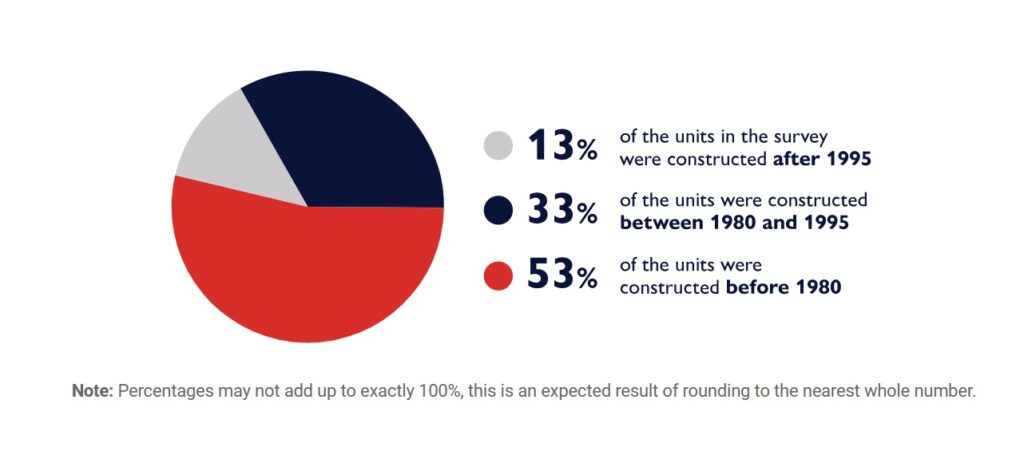
On the building stock front, new data suggests that social and affordable housing conditions aren’t dismal, but they aren’t stellar either: 38 per cent of the 565,000 units surveyed by CMHC are deemed to be in “fair/poor” condition; 19 per cent are in “average” condition; and 43 per cent are in “good” or “excellent” condition. Over half the units surveyed were constructed prior to 1980, with the oldest among them naturally making up the bulk of those considered less favourable.

The good news is more housing is on its way, whether it’s purpose-built market rentals or supportive housing for those requiring assistance. Funding through programs like the National Housing Strategy’s National Housing Co-Investment Fund (NHCF), the Rapid Housing Initiative, and BC Housing’s Community Housing Fund are making it possible to bring more of what’s needed to market faster.

Earlier this month, B.C. announced it was moving forward on a three-storey, low rise apartment building (pictured above) in Tofino, offering “rent-geared-to-income” units at 30 per cent of the tenant’s income as well as units reserved for those with very low incomes (i.e. those with disabilities).

“Through investments in affordable housing, our government is providing assistance to those who need it most here in British Columbia and in all corners of the country,” said Taleeb Noormohamed, Member of Parliament for Vancouver Granville. “We are committed to making communities stronger through projects like these. These investments help create new jobs and stimulate the local economy, while providing access to safe, affordable homes for Canadian seniors, families, and individuals.”

Another example of a supportive housing project underway is the “Chez Doris” in Montreal, a 19-room safe living environment for vulnerable women at risk of homelessness. Estimated to cost $10.5 million, future residents here can expect to benefit from quality, new housing and access to community support programs designed to help them thrive as they forge their way toward independence.

“Our government is committed to helping those in need, which is why we are proud to have invested in this initiative in Montréal,” said Soraya Martinez Ferrada, Parliamentary Secretary to the Minister of Housing and Diversity and Inclusion for Hochelaga. “These 19 new units for vulnerable women are providing more than just a safe, stable roof over their heads. For its residents, the building will become a true home, the key to a better life.”

Getting off the ground 

Reportedly, there are some 283,800 households in Canada with at least one family member on a waitlist for social and affordable housing. To contend with the backlog, the Affordable Housing Innovation Fund was launched to support new ideas and generate approaches to evolve the affordable housing sector. Projects like 220 Terminal, Vancouver’s first moveable modular housing development, are examples of what can be achieved using forward-thinking housing solutions. Organizations may be eligible for funding if their proposals meet the innovation criteria set out at: Affordable Housing Innovation Fund (cmhc-schl.gc.ca)

Highlights from CMHC’s social and affordable housing survey:

  • 65% of those occupying social and affordable housing units were served by government organizations and 21% by non-profit organizations. Individuals exiting homelessness and those with disabilities had a higher likelihood of being served by non-profits than other groups like families, single people or veterans.
  • New Brunswick had the highest share of units constructed prior to 1980 while Quebec had the lowest share with the exception of Northwest Territories and Nunavut.
  • Nationally, 43% of units across Canada are deemed to be in “excellent” or “good condition” while 38% of units are considered to be in fair or poor condition.
  • Building conditions varied widely ranging from only 7% of units rated as excellent or good condition in Manitoba’s social and affordable housing stock, to between 61% and 63% in British Columbia and Quebec, respectively, and up to around 85% of units in both P.E.I and Newfoundland and Labrador.
  • In Ontario, Alberta and Manitoba, units in fair or poor condition formed the plurality of units surveyed, ranging from 47% in Ontario, 60% in Alberta, and 91% for Manitoba.
  • When age of the stock is accounted for, 75% of units built in Canada after 2003 are rated in excellent or good condition, while only 38% of units built before 2003 are rated similarly.
  • Nationally, nearly 19% of buildings in Canada do not expect to make any repairs in the next five years. The most common building features that were expected to be repaired within the next five years were exterior building enclosures (32%) along with heating, ventilation and air conditioning (24%).
  • Nationally, 73% of structures have accessibility features.
  • Paved walkways for wheelchairs, street level entrance without steps and accessible parking were the most common accessibility features offered.

How were rents determined?

  • At 88%, household income was the most common mechanism used to set rents.
  • In British Columbia and in Quebec, income was the main rent-setting mechanism for only 58% and 75% of units respectively; however, this percentage is at least 85% in almost all other provinces and territories.

Find out more at: Housing Survey Results for Rental Structures | CMHC (cmhc-schl.gc.ca)

Preparing your winter equipment for storage

Spring is officially here, and that means storing your winter equipment is something that maintenance managers need to start thinking about as the weather warms up. It’s not just about where that equipment will be kept, but proper indoor storage involves preparing the equipment to stay inside and out of use in the off-season.

Properly storing your winter equipment is important to extend its lifespan and avoid preventable repairs. As well, if your equipment is new and you have a warranty, storage may well fall under a maintenance clause in the agreement.

When it’s time to store your winter equipment, you want to be sure you leave it ready to be used as soon as you need it next year, so be sure to conduct a thorough inspection and address any issues before you put it away.

Fuel and oil

Leaving fuel in a machine over the spring and summer can cause breakdown, deposits, and buildup that can permanently damage your fuel system. To avoid this, you can drain the fuel system or add a stabilizer to the tank. If you are going to add a stabilizer, it is recommended that you add it to a full tank and then run the engine for a few minutes to ensure that the stabilizer runs through the entire system. Also, check fuel lines for cracks and replace them where needed so everything stays in good working order.

This is also a great time to change the oil, as old oil can contain moisture and contaminants, causing damage over time.

Batteries

If your equipment needs a battery that will not be used for spring or summer jobs, remove the battery, check its efficiency, and clean any grease or debris. It is not recommended that your store your battery directly on the ground, as it can lose its charge, so store it in a clean, dry place where you can easily access it when you need it next.

Snow removal equipment

Cleaning the underside of your snow removal equipment is a valuable step in extending its lifespan. Be sure that it is clean when you put it sway, free from debris, salt, moisture, or anything else that may cause rust. Scrape away dirt and debris and wash the underside with soapy water to get it clean. As an extra step, you may want to use a silicone spray to help repel water during storage.

Want to store and reuse your de-icer or salt? Simply sweep it up and put it in an airtight container to use again next year.

It’s important to take the best care of your equipment possible, even when it’s being stored for the next season. Check on the equipment periodically through the off-season for damage so that you can be sure it’s ready for you when you need it next winter.

B.C. First Nation health centre breaks ground

The Sts’ailes Community Care Campus (SCCC), which will be owned and operated by the Sts’ailes First Nation, broke ground in Harrison Mills, B.C.

“When it opens, the Sts’ailes Community Care Campus will provide a fully integrated blend of contemporary medical services and person-first, culturally appropriate health and wellness services to Indigenous and non-Indigenous communities and residents alike,” said Minister of Health Adrian Dix.

The campus will combine primary health care, social services and Indigenous health supports into one team that will provide culturally safe, person-first health-care services to residents in Harrison Mills and north of the Fraser River between Agassiz and Mission, while restoring traditional laws of health and wellness. Once fully staffed, patients will benefit from approximately 14.7 full-time health-care workers, including primary-care providers, Traditional Healers and allied health practitioners, as well as administration support, leadership and clinical services.

“Our vision is to ensure everyone living in the northern Fraser region has access to the health-care services they need and deserve. The SCCC will weave together traditional and contemporary approaches to health care to help several individuals, families and communities access timely, person-centred health-care that is closer to their homes,” said Angela George, SCCC clinic director.

The campus will work collaboratively with the Chilliwack Primary Care Network. Several more First Nations-led primary-care centres are being planned as part of the province’s primary-care strategy.

The First Nations Health Authority (FNHA) has existing partnerships with First Nations primary health-care centres in Fraser Health and throughout the province. FNHA will continue to engage with these partners, including First Nations communities, the Ministry of Health and Fraser Health, to support the provision of culturally safe care for Indigenous Peoples in the region.


Vancouver invests in natural infrastructure

The Government of Canada and the City of Vancouver announced a joint natural infrastructure investment of more than $36.2 million towards Vancouver’s Rain City Strategy, which outlines a series of actions to improve the water quality, increase resilience to climate change, and enhance ecosystems.

The strategy aims to enhance the use of natural infrastructure to prevent urban flooding and improve water quality. Its goal is to capture and clean 90 per cent of Vancouver’s average annual rainfall and help manage rainwater runoff from 400,000 square metres of drainage area. Examples include using absorbent landscaping, rainwater tree trenches, wetlands and stream restoration, capturing rainwater closer to where it falls. Ecological processes will serve to remove pollution from urban runoff, improve water quality, mitigate greenhouse gas emissions, increase climate change resilience, protect species, and preserve biodiversity and habitats.

“Increasing natural infrastructure in Vancouver has numerous benefits for residents and the species we share our city with. We’re very thankful for this support from the Government of Canada’s Natural Infrastructure Fund. This investment will contribute to a more livable Vancouver, a stronger future in the face of coming climate pressures, an opportunity to grow our local green economy, and healthier waters in Still Creek, False Creek, Burrard Inlet and the Fraser River,” said Vancouver Mayor Ken Sim.

The Government of Canada is contributing $18,900,000 to this project, and the City of Vancouver is contributing $17,325,000.

“It’s not often we celebrate our infamous rainwater but in these changing climates, it is a pleasure to announce this valued investment that makes use of our most plentiful natural resource. From stream restoration to increased flood resilience to species protection, this investment in green infrastructure will support our growing city’s climate, wildlife and population for years to come,” said Scott Jensen, chair of the Vancouver board of Parks and Recreation.