Articles Archive - Page 224 of 928 - REMINET
REMI

Economic program wins BCEDA award

The City of Surrey, Richmond and Township of Langley have won a British Columbia Economic Development Association (BCEDA) Award recognizing achievement in initiatives that support economic development.

The three municipalities won the Economic Recovery and Resiliency Award for communities more than 20,000 in population for its joint Supply Chain Resiliency Program that identified existing industrial capabilities that could be retooled to support future emergency production needs, and helped manufacturers diversify their businesses by focusing on emerging opportunities in new sectors.

“Utilizing creative collaborative processes, the Supply Chain Resiliency Program was a unique project both in terms of its research methodology and its deliverables. The outcomes can now inform regional economic development efforts and encourage investment and innovation in B.C.’s manufacturing space. I thank the City of Richmond and the Township of Langley for partnering with the City of Surrey on this award-winning initiative,” said Surrey Mayor Brenda Locke.

The Supply Chain Resiliency Program was a joint initiative of the three municipalities and involved three key deliverables – an industrial capabilities inventory; a toolkit for de-risking emerging market opportunities; and a seminar series educating manufacturers to adopt technology. Over 380 manufacturers participated in the program, and more than 200 manufacturing businesses took part in in Technology Adoption Workshops.

“Recognizing and supporting businesses through the challenges of the pandemic was a cornerstone of Richmond’s economic strategy,” said Richmond Mayor Malcolm Brodie. “By working closely with our partners in Surrey and Langley to identify and implement meaningful supports, the Supply Chain Resiliency Program helped businesses succeed in a rapidly-changing market. This award recognizes that innovative partnership and the work of all involved.”

BCEDA awards recognize programs and projects that represent a successful recovery initiative from natural and man-made disasters, including COVID-19, as well as submissions that represent replicable measures undertaken to promote long term resiliency and/or sustainability from future disasters.

This year, BCEDA teamed up with FortisBC to announce the winners of the 2023 BC Economic Development Awards at the BCEDA’s annual awards presentation held at the Penticton Trade and Convention Centre in Penticton during the BC Economic Summit.


Trophy office towers widening gap from the pack

Trophy office towers could be anchored atop the market for the long term as the past decade’s wave of new building subsides and little further development is anticipated. Speaking during a recent online presentation, Nick Axford, chief economist with Avison Young, reiterated the office sector’s dual woes of retrenching tenancies and uncertain financials, and maintained that winners are already emerging from the unfolding upheaval.

“Now, more than ever, this is a real estate market that is hugely differentiated, not along conventional geographic or sector boundaries, but along quality lines,” he asserted. “I can absolutely see rents continuing to push ahead pretty strongly at the top end of the market, but, below that, vacancy rates moving up more significantly with potentially some quite significant rental declines.”

Axford and his colleague, Richard Chilcott, a Toronto-based principal and sales representative with Avison Young, sketched out a second-quarter Canadian market picture that’s showing signs of a pickup in transactions after several months of lull. However, they noted that vendors and purchasers are still coming to an understanding of asset pricing in an environment with rising cap rates, aloof lenders and general nervousness about trends in office demand.

That’s in contrast to the momentum of 2021 and into the early part of 2022. Chilcott hypothesized that “pent-up energy” coming out of a record-breaking year kept deals flowing even after interest rates spiked upward in March 2022, until a new reality eventually set in.

“Things started to slow. That was really driven, I think, from the debt perspective. People were starting to look at: What is happening with occupancy? And what is happening with construction costs? And where are my returns going? And do I need to do this transaction?” he recounted. “Then, into Q4, there were very, very few transactions. It was just: We’ve had enough. We don’t know where things are going. We’ll just sort of sit on our hands.”

Eight months later, he reports that transactions are occurring in all property sectors, but typically with painstaking and prolonged due diligence. Looking to the future, the analysts foresee a return to more active deal-making when interest rates stabilize, there’s more clarity around pricing and refinancing pressures prompt more vendors to move.

“There is capital awash to invest,” Chilcott said. “It does come down to what’s a quality location and what’s a quality building. ”

He drew parallels with the tail-end of the global financial crisis period when some investors proactively acquired assets with an eye to long-term returns, and suggested that purchasers with private equity backing are well positioned to do that again. Meanwhile, Axford heralded the return of old-school savvy.

“People who are in the market simply playing that spread between what you can borrow at and the cap rate on the building, hoping to benefit from continued cap rate compression or financial engineering — a lot of those players are going to be taken out of the market. Understanding what to pay for a building is going to be so asset-specific,” he submitted. “People who’ve got those traditional real estate skills of understanding the qualitative and quantitative aspects, who’ve got the capital to deploy and can take advantage of the current market are going to find it a really, really productive market.”

Perhaps counterintuitively, he suggests a slowdown in job growth, demonstrated in recent cuts in the tech sector, could bode well for office occupancy levels. That’s in combination with humans’ basic need to interact with others and employers’ continued priorities to attract talent and replenish an aging workforce.

“We’re seeing this huge structural change coming through in the way that people are currently thinking about working and whether or not to go into the office to do it,” Axford mused. “Weakening of the labour market will mean that people will not just want to be working, but will want to be seen to be working.”

Data from Avison Young’s proprietary urban analytics platform, which uses mobile phone data to track building users, shows a steady incremental rise in attendance in urban downtown locations. Although a larger number of people initially returned to suburban locations as the COVID-19 pandemic ran its course, those attendance levels have now stagnated or even slipped slightly. Axford concludes that people are once again looking for the attributes that conventionally drew them downtown.

“Quality of environment and quality of location are going to be key differentiators in pricing. Great assets, particularly in high-quality locations — that’s sustainable buildings and attractive amenity-rich parts of cities — will end up thriving and will perform better,” he hypothesized. “Poorer quality commodity office space in poorer locations that doesn’t offer those benefits will actually see quite a material decline.”

“Office will work its way through in terms of what is in demand and what isn’t,” Chilcott concurred. “Transactions right now are very slow to get done, but that doesn’t mean it doesn’t get done. We’ve done some extremely low cap rates on office with little or no vacancy because it was a rare opportunity for the investors to get their hands on it.”

Barbara Carss is editor-in-chief of Canadian Property Management.

New Edmonton Stadium LRT Station opens

The City of Edmonton announced that redevelopment work at Stadium LRT Station is complete, undergoing $50 million worth of improvements. It’s the first major LRT station rehabilitation to be completed in Edmonton.

Stadium Station was one of the original five stations on the Capital Line LRT system that opened in time for the 1978 Commonwealth Games in Edmonton.

“Stadium Station is not only an important historical transit hub in northeast Edmonton, but also a critical connection to the Commonwealth Recreation Centre and major events at Commonwealth Stadium. The redeveloped station not only enhances transit safety and accessibility, but also ensures the station will continue to serve Edmontonians for decades to come,” said Bruce Ferguson, branch manager, LRT Expansion & Renewal.

Work began in 2020 and includes:

  • A new platform on the west side of the tracks for event traffic from Commonwealth Stadium.
  • New, more accessible, street-level ramps at the end of each platform.
  • The addition of heated shelters, a security office and public washrooms.
  • A new open-design overhead roof canopy.
  • New public art installation, benches and furnishings.
  • Updating and relocating the communications and electrical rooms.
Commonwealth Stadium will once again host major events this summer, and the city encourages attendees to use public transit. Stadium station now offers more convenient transit service for thousands of riders accessing Commonwealth Stadium.
“We’re excited to welcome transit riders to a more accessible, comfortable, open-concept LRT station,” said Carrie Hotton-MacDonald, branch manager, Edmonton Transit Service. “We remain committed to delivering safe, reliable and convenient service that continually evolves and enhances the rider experience.”
The redeveloped station also offers easy connection to Edmonton’s active transportation network, shared-use paths and transit-supportive development such as Muttart Crossing and Stadium Yards.

How to make your floor care greener

Sustainability is on everyone’s minds, and making your floor care more environmentally friendly is a great start for a sustainable maintenance strategy.  As the “green cleaning” trend evolves into assessing the long-term effects of your products and practices, how can you adjust your floor care? Green products and practices are important, but lowering your carbon footprint means prioritizing your entire environmental impact, like waste generation, water usage, and chemical usage.

RELATED: Evolving from green cleaning to sustainability

There are three main types of floor care to consider: preventative, restorative, and maintenance, and each type of program will have varying sustainable elements. For example, maintenance cleaning may involve mopping the floors, which can help limit airborne particles. Work on creating a plan specific to each type of cleaning to get the most out of your sustainability strategy.

There are several things you can do to lessen your environmental impact while keeping your floors in tip-top shape:

  • When the time comes time to replace your tools, consider swapping out your old mops for new ones made with wood and recycled rags. There are also many options available that are zero-waste so your carbon footprint is minimal when they get to the end of their lives.
  • Upgrade your equipment to make the most of innovation. For example, orbital cleaners do not use any chemicals or water, so you don’t have to worry about water usage or chemical disposal. Using a mechanical action and a pad, these machines are very effective; some even remove one layer of polish in one pass.
  • Limit your water use by sweeping, dry mopping, or vacuuming before you wet mop to save the amount of water it takes to get the floors clean. You can also switch to more efficient tools like dual-cavity mop buckets. As well, refine the use of your products by testing how much you actually need to get the job done and sticking to the minimum amount for standard maintenance.
  • Look at traffic patterns to determine when cleaning is most beneficial. This will help you avoid having to repeat the process, multiplying your efforts and the products you are using.
  • Beware of “greenwashing,” where companies make false or misleading claims about how their products affect the environment. For confirmation, look for ECOLOGO®, a Canadian certification given to products with verified reduced environmental impact. This lets you know that your cleaning products comply with standards set out in the certification and prioritize the environment with minimal health effects.
  • Get all the information you need to create a strategy for your building. There are many third-party certifications that will help you gather all the information to arm yourself with the products and equipment you need.

As we continue to work towards minimizing our carbon footprint, create a plan for your floor care that can help you execute an overall sustainability strategy for your building.

Too Much Gas? You’re Not Ready for the Future

Property owners using fossil fuels should prepare for a rude awakening. By 2050, Canada’s legislated goal is to reduce our greenhouse gas (GHG) emissions to net-zero, a prospect it concedes is an ambitious but necessary measure to control climate change and sustain a livable future.

The next 25 years will be critical. According to Canada’s Green Building Strategy, the country’s built environment is responsible for 13% of its GHG emissions. The Canadian Net-Zero Emissions Accountability Act became law on June 29, 2021, and the building industry is a primary focus in reaching the 2050 net-zero goals and initiatives.

It begins with how new buildings are constructed, reducing emissions from the cement manufacturing industry through the Net-Zero Carbon Concrete roadmap, and the extensive and accelerated retrofit of existing buildings to make them as energy-efficient as possible.

According to the Department of Natural Resources, ‘Over 78% of operational building emissions come from space and water heating, the majority of which is due to equipment that runs on fossil fuels.’

Decarbonization of these systems is something property owners should be thinking about sooner rather than later, says Jeff Livingstone, Project Principal and Mechanical Practice Leader with Pretium Engineering. “Mechanical equipment installed today will still be in operation at the time when Government recommendations for net-zero building operation will be in effect. Ideally, at that time, we will not be relying on gas for heating in our buildings,” he says. “If we are aiming to be at net-zero for greenhouse gas emissions, then all gas-fired devices must be reviewed. The plan is to look at transitioning from gas to another energy form and generally, that is electricity.”

That’s where Pretium Engineering comes in. Although the targets don’t come into play until 2040, Livingstone, who has completed Building Condition Audits and Electrification Studies for clients such as the University of Waterloo and Dream Properties, stresses that this is only a few years away and building owners should be considering the new targets when planning for replacements of existing equipment.

Livingstone advises that a switch to electric heat pumps will be at the heart of many building retrofits and will require an integrated approach for which Pretium Engineering is well-positioned to provide the necessary consulting services.

Based on historical data released by the Ontario Energy Board (OEB) and Enbridge Gas, electricity costs are estimated to rise by approximately 20% by 2030 while natural gas prices are expected to rise by approximately 36%. These cost increases coupled with the ability of electric heat pump systems to produce more heat for a given input amount (Coefficient of Performance (COP) of 2.5 or greater) means that heat pumps will become more economical in the future as relative operating costs are decreasing when compared with natural gas.

Livingstone stresses there is no one-size-fits-all solution to carbon reduction in buildings. “Equipment and building elements are all interrelated,” he says, “so you can’t necessarily change an aging boiler directly to a heat pump because hydronic systems in the building may not work as intended due to changes in system operating temperatures. We want our clients to understand that they need to look at the building holistically, as natural gas-fired equipment installed today will be in place at a time when it may no longer be compliant with the federal targets, and possibly mandates.”

Building envelope components are critical to the successful and cost-effective implementation of building carbon reduction strategies. An integrated approach allows for better use of resources and investment dollars for your assets, advises Livingstone. “If we take an existing gas boiler out of a building today, we have to design for a large and potentially oversized heat pump,” he says. “But if we can phase it in such a way that we upgrade windows to provide better insulation and air tightness, a smaller heat pump system can be used. The benefits to “right-sizing” equipment include reduced electrical demand, which is easier on the electrical grid for the province, and reducing or eliminating the need for building electrical upgrades.”

Although we don’t yet know what potential mandates or enforcement will look like in years and decades to come, according to the Green Buildings Canada Strategy, energy benchmarking will be used on all buildings to ‘help drive data transparency on energy costs and incentivize building investment decisions.’

This information will be made publicly available, a move which according to Natural Resources Canada, for residential buildings ‘could dramatically transform our real estate market.’

The Federal Government has created a roadmap for common building sectors which outlines the changes that will be required to meet national net-zero targets. These roadmaps do not take into account building lifecycle and budgeting limitations, which typically drive investment decisions for building owners.

With this in mind, Pretium Engineering is seeing some clients tackle the problem head-on. Combined with retrofits of windows, roofing, and lighting, building owners are including carbon reduction as a major consideration at their next building condition assessment. The Pretium Engineering team urges building owners to plan for integrated building upgrades, before replacing expensive mechanical systems with products that may not be suitable for future net-zero initiatives.

“If you are spending money on your building, take a long-range approach,” says Project Principal and Leader of Pretium’s Energy and Carbon Reduction Team, Jennifer Hogan. “If your building is using more energy or carbon than it’s supposed to be, you will be paying for it, as the cost for energy and carbon is projected to continue to rise. On the other side, there are ever-evolving incentives to complete projects that will reduce your energy and carbon consumption. Start the conversation now and find out what is out there.”

Each jurisdiction across Canada will be responsible for working with low-carbon solutions. The City of Vancouver made headway in 2022 by passing the Vancouver Building By-Law requiring zero emissions equipment for space and hot water heating in new builds. By 2025, Vancouver will require all replacement heating and hot water systems to have net-zero emissions. The City of Toronto’s strategy for net-zero emissions calls for the decarbonization of all privately-owned homes and buildings by 2040.

The zero-emissions building mandate is combined with the need for more climate-resilient buildings to counteract the imposing effects of climate warming such as increases in temperature and weather-related events.

The race to achieve zero-emissions buildings is on, and Pretium Engineering is at the forefront, providing integrated consulting solutions for Clients. Recognizing the urgent need for restructuring HVAC systems, Pretium Engineering now holds the advantage of having an in-house mechanical team.

“At Pretium Engineering, our teams work in mechanical engineering, building envelope, roofing, and energy audits. Each of these building elements is called out specifically in the Federal decarbonization roadmaps,” says Livingstone. “We are perfectly positioned to provide complete consulting and engineering services needed to meet net-zero targets.”

Jeff Livingstone, P.Eng., LEED® AP is Project Principal and Mechanical Practice Leader for Pretium Engineering. Jennifer Hogan is a Project Principal and the leader of the Energy and Carbon Reduction team. Pretium Engineering has offices in Toronto, Newmarket, Burlington, Kitchener/Waterloo, with satellite offices in Windsor and Ottawa. Connect at www.pretiumengineering.com.


 

Why night audits might make more sense

Do you conduct regular audits of your property and building to assess performance, production, safety, efficiency, and more? If you do, you are likely conducting those audits during business hours, but studies suggest that night audits are better for business.

There are several reasons that night audits make more sense for your building and incorporating them into your maintenance program can help you achieve better efficiency and have a better handle on the status of your building and equipment.

A different perspective

Night audits allow you to identify challenges or issues that only occur at night, shedding light on opportunities for improvement you might not observe during the day. You may find that you have more time to address these issues, too, and implement solutions, when you are not dealing with your day-to-day responsibilities at the same time. So you may well be able to conduct a more efficient survey at night, minimizing your labour and time.

Less disruption

Auditing during the day often means a need to stop work and that means unnecessary disruption to your business, like checking on heating and cooling, or lighting, for example. When you can conduct assessments without interrupting your workflow, you limit the effects on your business. As well, it makes for a better audit if you can get the job done without customer or staff interruptions, something you may be able to avoid outside of regular working hours.

Improved safety

If you have areas that require heights or heavy equipment, a night-time audit may limit the risk to your team. With less traffic and distraction, you can better assess the risks at your building, while minimizing the risk to others. This allows you to conduct a rigorous assessment of your processes and equipment, adopt preventative and corrective measures, and proceed as safely as possible.

Reliable scheduling

Your days are filled with a million things to do, and often scheduled or regular audits get delayed in favour of something more pressing. When your audits are scheduled at night, you can avoid most emergency disruptions, scheduling conflicts, and getting off track. Regular assessments mean increased efficiency, safety, and fewer budgetary surprises, so it’s important to stay consistent with your auditing schedule and conducting them after-hours may make that easier.

Auditing your building’s performance is important, so conduct those assessments when it works best for your business – and that may mean adding night audits into your regular maintenance schedule.

ISSA Hygieia Network opens nominations for annual awards

ISSA Hygieia Network, an ISSA Charities™ signature program dedicated to the advancement and retention of women in the cleaning industry, is seeking nominations for its annual awards recognizing individuals and companies who embody Hygieia’s mission and vision. ISSA Hygieia Network is now accepting award nominations through September 13, 2023 at hygieianetwork.org/awards. 

“We are honored to present these awards to individuals who advocate and support the advancement for women in the cleaning industry,” said Dr. Felicia L. Townsend, ISSA Hygieia Network Program Director. “We are asking for the public’s involvement in helping decide who will be awarded one our prestigious awards at this year’s show.”

The annual awards acknowledge individuals and organizations who have made a significant contribution to the global cleaning industry. Nominations will be evaluated by a select group of jury members. Winners will be announced at the ISSA Hygieia Network 2023 Awards Reception on Wednesday, November 15th, at the Mandalay Bay Convention Center during the ISSA Show North America 2023 in Las Vegas.

The public is invited to submit nominations for the following categories:

  • ISSA Hygieia Network Member of the Year, which recognizes a person’s involvement in activities that align with Hygieia’s mission and vision.
  • ISSA Hygieia Network Rising Star of the Year, which honors a woman age 45 or younger who has made significant achievements and demonstrated consistent upward mobility in their career within the industry.
  • ISSA Hygieia Network Company of the Year, which celebrates a company’s involvement in activities that align with Hygieia’s mission and vision.
  • ISSA Hygieia Network Ally of the Year, which recognizes a person who has shown tremendous support toward Hygieia’s mission.
  • ISSA Hygieia Network International Member of the Year, which recognizes a person’s involvement in activities outside of the US that align with Hygieia’s mission and vision.
  • ISSA Hygieia Network Mentor of the Year, which recognizes a mentor who has shown great leadership qualities and support to their mentee via the ISSA Hygieia Network Mentoring Program.

RELATED: ISSA Hygieia Network Reveals 2022 Award Winners

To submit your nomination(s), fill out the form at hygieianetwork.org/awards.

Two firms boost footprint in Numa’s historic Auto BLDG

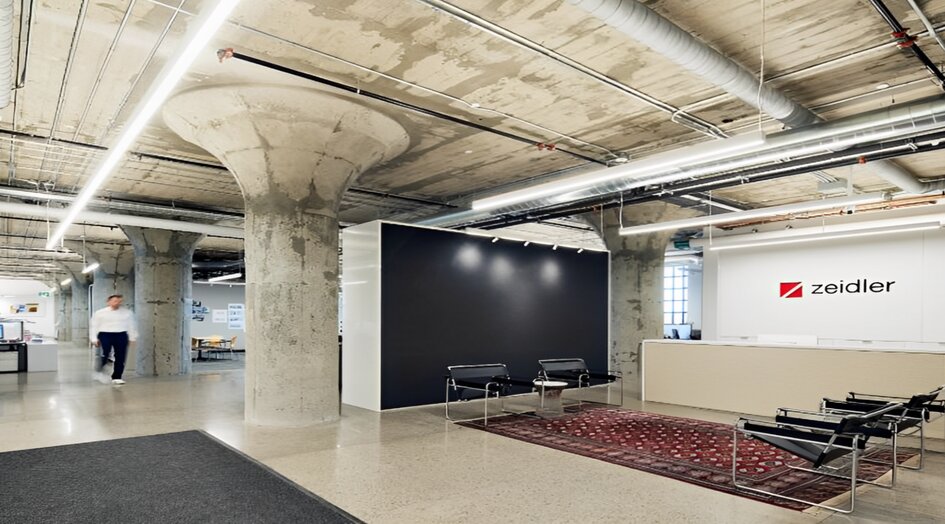
Pride Toronto and Zeidler Architecture have both expanded their office space at Castlepoint Numa’s historic Auto BLDG in Toronto’s Lower Junction Triangle.

After outgrowing their existing spaces in just over two years, Pride Toronto has doubled down, expanding from roughly 4,000 square feet to 8,000 square feet, while Zeidler has expanded their space by 25 per cent.

Built in 1919 and now 90 per cent occupied, the Auto BLDG was adaptively reused to support office space for those in the creative, cultural and digital sectors. Some amenities include rooftop terraces, at-grade eateries, high-speed internet connectivity, secured bike room, storage facilities and more.

“We are pleased that both Pride Toronto and Zeidler have extended their commitment to the Auto BLDG, a move that reinforces our belief that even though we are in a hybrid environment, a well-located, well-designed, sustainable office space that fosters community building will continue to meet the needs of modern tenants,” said Harley Valentine, partner, Castlepoint Numa Developments.

Pride Toronto made the Auto BLDG its headquarters in 2020. With its staff count already doubling in size, and continuing to grow, additional space was needed to foster a collaborative environment coupled with smaller meeting rooms for private meetings. The turnkey, open-concept space supports the organization’s expanding programming, including community working sessions, parade logistics and a safe space for external 2SLGBTQI+ agencies.

Bobby MacPherson, director of operations at Pride Toronto, said the organization has experienced much growth over the last few years. “While we quickly outgrew our original space, we were not ready to say goodbye to this location and community,” he said. “During our time here, we’ve had an opportunity to create and grow relationships with the Auto BLDG community, including the likes of MOCA and Akin Collective. This building has a strong history of arts and culture, and Pride Toronto looks forward to continuing this legacy for 2SLGBTQI+ generations to come.”

Zeidler also moved into the Auto BLDG in 2020. The expansion of their office space comes with immense growth in the architecture firm’s business, across Canada. As an award-winning adaptive reuse heritage project, the Auto BLDG aligns with Zeidler’s reputation as sustainable and responsible architects.

“The Auto BLDG has many linear embodiments to the values of our firm, from adaptive reuse and sustainability to fostering a collaborative community for arts and culture,” said Edward Chan, partner, Zeidler. “This space is representative of how we want to work, offering opportunities for collaboration, spontaneous interactions, and open discussions.

“We were originally drawn to the Auto BLDG because of the area’s renaissance, which represented how our firm was growing and changing. As our work in Ontario continues to expand, we wanted to stay within the confines of this building to maintain and grow the culture created at the Auto BLDG.”

Auto BLDG

Zeidler Architecture increases its footprint by a quarter.

An Amazing Opportunity to Engage Your Residents: The Conscious-Living Giveaway Returns

Over the next 25 years, building owners and managers will become increasingly responsible for green initiatives as part of each property’s operational mandate. According to Natural Resources Canada and the Canada Green Building Strategy, each building will be called upon to reduce its carbon footprint so that by 2050, Canada will be as close to net-zero emissions as possible.

Working towards this, the Canadian Certified Rental Building ProgramTM (CRBP) requires each property to meet set standards toward Environmental Management, a facet which includes “working with residents to ‘green’ apartment communities and lower their environmental footprint.”

The CRBP was formed by the Federation of Rental-Housing Providers of Ontario (FRPO) in 2008 as a resident-focused apartment building certification program. Opening up the conversation with residents around green-living ideas, the CRBP introduced its Canada-wide ‘Conscious-Living’ Box Giveaway in 2020. The contest encourages participants to enter for a chance to win one of 100 eco-sustainable packages focused on helping reduce their carbon footprint.

The contest opens June 15 and runs until September 15, with draws throughout the summer. One hundred entrants will be randomly chosen to receive a curated box with purposeful and sustainable products. The ‘Conscious-Living’ Box Giveaway is open to all residents of apartments, condos, and homes across Canada. Entrants do not need to live in a CRB apartment building to take part.

Now in its third year, the Conscious-Living box highlights the CRB’s Living Green TogetherTM component, an integral step in the certification process for Canadian Certified Rental Buildings. In multi-residential properties, managers often hear from residents who want to be more productive regarding recycling and composting practices but feel they lack control in relation to building policies.

The Conscious-Living Box Giveaway campaign drives resident engagement at the community level as well as on social media. Two social media influencers, Flora Law (@thefloralaw) from BC, and Sarah Robertson-Barnes (@sarah.robertson.barnes) from Ontario, are championing the campaign.

The CRBP’s Environmental Management assessment focuses on energy consumption and water usage — with a requirement for building managers to act quickly if a leaky water source is reported — and ways to reduce garbage and increase recycling.

“All CRB-approved buildings are Living Green TogetherTM certified. In addition to the Program’s 55 standards-of-practice, are an additional 10 standards-of-practice that are ‘green’ and ‘eco-conscious’ focused,” explains Maria Arangio, Marketing and Creative Director at Creativo Advertising, who leads the Conscious-Living Box campaign for the CRBP.

“This national campaign aims to educate the public that everyone’s environmental efforts matter, especially in our multi-residential communities. For industry members that are actively engaged in environmental, social, and governance (ESG) and Global Real Estate Sustainability Benchmark reporting, the Canadian CRBP provides impactful support to these endeavours. As a GRESB-approved green building sustainability program, it provides members with quantifiable measures for incorporating ESG factors into daily operations and supports their efforts with residents, the community, and government stakeholders.”

As we count down to 2050, information regarding each property’s energy efficiency will become public knowledge — a move which could shake-up the real estate market and ensure the mindset of green living as a daily practice.

The CRBP encourages building managers to provide information about the Conscious-Living Box giveaway to their residents to grow their communities’ engagement and kick-start conversations around environmental impact.

Winners of the boxes receive products from 8 to 10 Canadian eco-focused businesses. The box also comes with a LookBook showcasing each product including a quick review of green initiatives undertaken in CRB properties Canada-wide, and further ideas for sustainable living.

The online entry form includes a short series of questions focused on their existing environmental practices. Additionally, winners will get the opportunity to win a $100 gift card if they post a photo or video reel opening their box to social media with the hashtag #LOVECRB.

Arangio explains when a property undergoes the steps to become a Canadian Certified Rental Building, it shows a level of transparency, awareness, and commitment to their residents and the industry. For potential renters, it provides a sense of comfort knowing that the building’s management and operations are considered to be well-run, well-managed and well-maintained.

“Having attended more than 50 resident BBQ events throughout the GTA and Ottawa on behalf of the CRBP, it was exciting to connect with residents and share awareness on how every effort matters. We can make a difference within our apartment communities through Living Green TogetherTM.”

Tony Irwin, President and CEO of FRPO explains, “The CRB Conscious-Living Giveaway is a powerful initiative that empowers property managers to take the lead in promoting Green Apartment Living among their residents. By sharing this giveaway in our communities, we can inspire a generation of conscious individuals to make small yet impactful changes in their daily lives. With the program expanding nationally, we aim to support our members and help educate residents that our individual efforts matter.”

Arangio said the 2022 campaign was a huge success and she expects 2023 to triple in entries. “Last year’s giveaway was a huge success with incredible participation, exposure and online engagement,” says Arangio. “With FRPO member support, I anticipate this year will be even more successful. A win-win for everyone!”

To make it easy for building owners and managers, the CRBP has created marketing materials which can be easily distributed to residents. The Conscious-Living Box giveaway kicks off on June 15th.

For more information, visit https://www.crbprogram.org/conscious-living-box/

MTA design firm rebrands to Metafor

MTA, a design firm with studios in Calgary and Edmonton, is changing its corporate name to Metafor to better align with its accelerated growth, integrated service offerings, and positioning as an industry innovator.

The company has also unveiled a new purposeful brand that reflects the studio’s desire to better define its core values, vision, and niche, while also celebrating its deep-rooted history, experience, and human-centric approach to designing a more inclusive and accessible society for all.

“As architects we have the opportunity to affect actual change within the community and society as a whole,” said Claudia Schaaf, managing principal of Metafor. “By listening to our client’s needs and understanding the challenges they face as they try to fulfil important mandates within the communities in which we all live, work, and play. We realize that Metafor is more than architecture and interior design – we believe in being collaborators, truly integrating design, sustainability, and building science to achieve superior results. Responsive and responsible design is here to stay, and we are embracing this new way of thinking to ensure we make tomorrow better than today.”

To ensure the company moves forward in a meaningful and impactful way, Metafor’s bold new identity not only leverages its impressive legacy and built-in brand equity, but it is also positioned to build upon the momentum of new leadership and clear direction on socially and sustainably focused projects.

“We believe in the power of community and doing what’s right,” says Chris Sparrow, principal of Metafor. “Our convictions are the inspiration behind how we do business, treat one another, and support the communities in which we operate. We proudly embrace our role in helping shape the fabric and landscapes of our cities, towns, and communities and our work reflects the value we put on placemaking and keeping people connected.”


Hospitality program transforms office portfolio

Lobbies in major downtown office towers were originally designed to intimidate and impress, with hard surfaces and bright lighting, offering a less-than-cozy place to hang out, says Brett Miller, CEO of Canderel.

His company, which manages more than 24 million square feet of real estate across Canada, is changing that approach through a new philosophy that not only transforms lobbies into a boutique hotel feel, but fully focuses on employee needs across the entire building.

The traditional view of locking in a tenant for 15 years and collecting the rent is outdated, maintains Miller. “Now, the office building is a community to fulfill your life. It’s a welcoming place to learn, network, connect, stay fit.”

Such is a crucial approach at a time when companies are figuring out how to convey the value of their office space to talent who have shifted to remote work arrangements.

Over the next three months, Canderel will begin rolling out a workplace hospitality program called OKKTO across its buildings in Montreal, Toronto, Ottawa, Edmonton and Calgary. The idea is to help tenants entice their workers back by offering much more.

The transformation includes adding a conference-meeting floor with a co-working lounge, individual work pods, conference centres, and a cold kitchen for catering—open spaces where employees can interact across various layouts with new technologies fit for hybrid meetings. “Tenants can take a little less space in the leased area because they don’t have to have a large boardroom or employee lounge,” says Miller.

workplace

A flexible co-working lounge for employees at Constitution Square in Ottawa features various areas for work and socializing. Photo courtesy of Canderel.

Lobbies will be reimagined with soft seating and lighting, signature aromas, calm music, lower ceilings and a hospitality-trained concierge team.

Club-like building activities for socializing could include an art exhibit in the lobby, a lunch-time walking club through the local park or a five-to-seven cocktail hour.

Spa-like gyms with mindfulness rooms, spin bikes, towel services and trainers might encourage people to swap their fitness club membership for a free pass in their office building. The program will connect with professional wellness service providers, from massage therapists to life coaches, to create a holistically healthy workplace.

All buildings across Canderel’s portfolio are set for an OKKTO make-over, although some might feature a few components of the brand, say, a smaller suburban office building under 200,000 square feet. Larger towers might offer all amenities, such as at Constitution Square in Ottawa, Edmonton City Centre and Stantec Tower in Edmonton.

Advisors will help employers along the way. One large tenant renewed its lease on condition that a property manager partner with them on animating and engaging their employees. “You used to just collect the rent and now it’s much more about running a community,” says Miller.

Some reasons people do want to come back were explored in numerous focus groups that were instrumental for developing the program. “People said the reason I want to come back to the office is I feel I can contribute to the culture of the company, training young people, being social or giving ideas,” Miller shares. “People are motivated to give back, not just take.”

Across the portfolio, the number of employees currently working in-person varies. Small and medium-sized companies are “pretty much back,” with more reluctance among large companies. Some have found they can work more remotely; others are cautious to make any statements. A reason for the OKKTO program is to avoid a draconian approach and mediate the conversation into a two-way dialogue.

“I think it’s a discussion,” says Miller. “To say, here is the value as to why we want you back from a company perspective and here’s what you get back as an individual. It will be a much more complete experience.”

Feature photo: The lounge at Edmonton City Centre. Photo courtesy of Canderel.

How smart glass can benefit your building

Many building operators are looking to lower their carbon footprint and go greener, and products like smart glass can help you get there. On average, buildings make up 27 per cent of annual global carbon dioxide emissions, but there are products out there that can help you save the environment – and money – over the long haul.

What is smart glass?

This innovative product is also called dynamic glass, which means that its tint level can be automatically adjusted. It works with thin layers of metal oxide, which change the tint levels when electricity is applied to those layers, causing the ions to move within them.

What it means for your building

According to studies, incorporating smart glass in your building could mean about a 20 per cent savings on your heating and cooling bill. Allowing the glass to make the most of natural light is the key. When you want more natural light to come in to heat the building, you can limit the tint. Conversely, increased tint in the summer months, as the sun is hitting the building, means some solar radiation is blocked, reducing the heat coming in.

Essentially, it’s an aid to your heating and cooling system, helping to offset some of your heating and cooling costs – and by allowing for HVAC system to work smarter, it also alleviates some of your equipment costs. Smart glass can help the overall load, too. If more buildings in the area invest in that system, together you can help offset the load during peak times, lessening the burden on the grid.

This technology is still evolving, adding access to the cloud to allow users the ability to monitor and adjust the tint remotely. This part of the innovation also helps users get smarter with their green initiatives, providing data to become even more efficient.

Smart glass could help you save time and money on cleaning and maintaining the interior of your building, as well, because it may eliminate the need for blinds or shades throughout your building.

What’s the downside? As always, new tech can be costly; depending on your building, this may be a large-scale project. However, keeping your eye on technology like smart glass allows you to plan and budget accordingly over time.

Lowering your building’s carbon footprint by investing in technology like smart glass puts you ahead of the curve, allowing you to go greener while lowering some of your costs over the long run.

CAGBC launches low carbon trades training

The Canada Green Building Council (CAGBC) is launching A Low Carbon Trades Training Strategy funded by the Government of British Columbia through the Sector Labour Market Program.

The 2018 CleanBC climate plan and CleanBC Roadmap to 2030 highlight the importance of low-carbon building design, construction, and materials to meet B.C.’s emissions target. However, research into workforce readiness suggests that B.C will need a larger workforce with the specific skills that meet the anticipated demand for highly efficient, low carbon buildings.

“Meeting the province’s emission reduction targets requires support from across the building sector, including a skilled and robust workforce,” said Thomas Mueller, president and CEO of CAGBC. “Through this new initiative, CAGBC will engage with stakeholders from across the education, industry, employer, and union spheres to develop a collaborative strategy that supports the expansion and training of B.C.’s low-carbon workforce.”

In drafting the strategy, CAGBC will work with the Zero Emissions Building Exchange (ZEBx), specifically their Building to Electrification Coalition (B2E), in addition to SkilledTradesBC, BC Building Trades, Trades Training BC and the Ministry of Energy Mines and Low Carbon Innovation (EMLI).

“B2E’s expanding industry capacity committee identified a need for training coordination to meet the workforce needs of the future,” said Mariko Michasiw, program manager of Zero Emissions Building Exchange. “Skilled trades play a critical role in new construction and retrofits that can reduce greenhouse gas emissions from the building sector. B2E is excited to support the coordination and stakeholder engagement needed to bring this strategy forward and will play a role in implementing it.”

By applying this strategy, B.C. can accelerate the number of trades workers skilled in green building and retrofit techniques, helping the sector keep pace with the progressive low-carbon building standards outlined in CleanBC.

“The opportunity for skilled trades professionals to work with current and emergent green technologies and materials is an important step in the growth of the skilled trades,” said Dr. Neil Fassina, chair of Trades Training B.C. “With the rapidly increasing demand for skilled trades professionals in British Columbia, this strategy is an important contributor to ensuring a sustainable future for the province.”