Articles Archive - Page 167 of 928 - REMINET
REMI

Portage Place site to become health and housing hub

The overhaul of Portage Place in downtown Winnipeg is moving forward. A healthcare centre and a 15-storey multi-family tower are in the works. The Manitoba government announced its collaborating on the project with True North Real Estate Development and Southern Chiefs’ Organization.

The province signed a letter of intent with TNRDt to create a 300,000-square-foot, 12-storey Health-Care Centre of Excellence, with plans to lease the space for 35 years.

The centre aims to create access to doctors and specialists, including a primary-care clinic, mental health and addictions support services, additional renal dialysis capacity, as well as an expansion of Pan Am Clinic.

Construction on the healthcare centre is planned to begin in 2025, with completion in 2028.

The revamp is being touted as an urban renewal project, to transform the downtown area into a connected campus of affordable and family housing, a grocery store, urban green spaces and local services.

TNRED and SCO have entered into a letter of intent regarding shared ownership of the 15-multi-family tower with market-leading percentages of affordable and accessible one- two- and three-bedroom units.

Construction is set to begin in 2025 and finish in 2026. The tower will anchor the west pad of the Portage Place redevelopment and provide a physical and symbolic connection to the Wehwehneh Bahgahkinahgohn affordable housing project by way of the skywalk bridge connecting the two developments.

“Together, we have agreed to principles of shared ownership and key priorities for the multi-family housing tower that will provide much-needed safe, accessible, and affordable housing in downtown Winnipeg with direct connection to our Wehwehneh Bahgahkinahgohn project at the former HBC building,” said Grand Chief Jerry Daniels, Southern Chiefs’ Organization.

The province said the principles of reconciliation, inclusion and building thriving communities are core to the partnership and will ensure more opportunities for mentorship, on-the-job-training and leadership for First Nations people throughout the project.

“We are grateful for the shared vision and the immense priority and commitment that all levels of government are placing on these community needs in order to materially advance the well-being of our downtown residents and neighbourhoods,” added Jim Ludlow, president of True North Real Estate Development.

U.S. government announces PFAS-free purchasing requirement

The Biden-Harris Administration announced it is directing government contractors to buy only Green Seal- or Safer Choice-certified cleaning products and hand soaps for use in federal buildings to ensure products are free of toxic “forever chemicals.”

RELATED: What are “forever chemicals” and how do they affect your building?

The directive is in line with President Biden’s Federal Sustainability Plan, which orders federal agencies to “prioritize the purchase of sustainable products and services including products without added per- and polyfluoroalkyl substances (PFAS),” according to the joint announcement by U.S. EPA and the U.S. General Services Administration (GSA).

This new requirement protects custodial workers, federal employees, and building occupants in 300,000-plus federal buildings across the country, leveraging the $650 billion annual purchasing power of the federal government for goods and services. It also highlights Green Seal’s commitment to taking a leadership position in addressing PFAS, a toxic class of chemicals that has persisted in the environment for hundreds of years, causing serious health and developmental impacts.

Green Seal’s standards have long prohibited long-chain PFAS formally classified as hazardous. However, a growing body of evidence indicates that short-chain PFAS have the same harmful health and environmental effects as the legacy PFAS they are replacing. Green Seal updated its standards for cleaning and personal care products in 2022 to prohibit all approximately 12,000 chemicals in this class.

Green Seal’s broad definition of PFAS also aligns with emerging state regulations on PFAS, including California, Colorado, Maine, Maryland, Minnesota, Oregon, and Washington, helping brands stay ahead of the curve on ingredient bans.

“Everyone deserves protection from the harmful effects of forever chemicals, including the workers who use cleaning products, federal employees, and those who visit government buildings every day,” EPA Administrator Michael S. Regan said in an EPA press release. “EPA has well-recognized and established tools to help our partners in the federal government identify cleaning products that use safer ingredients and do not contain intentionally added PFAS to keep people safe and healthy.”

“As the largest single buyer of goods and services in the world, the federal government can play a big role in helping reduce PFAS through its purchasing,” GSA Administrator Robin Carnahan said in the press release. “Changing the requirements in our contracts is a way to answer President Biden’s call for the federal government to lead by example in buying sustainable products and services.”

For detailed information on the Biden-Harris Administration’s federal purchasing update, visit https://www.epa.gov/newsreleases/biden-harris-administration-takes-action-cut-pfas-us-government-custodial-contracts.

Nick Sully named a 2024 RAIC Fellow

Shape Architecture managing partner Nick Sully has been named a 2024 RAIC Fellow for his contributions to the profession.

A Fellow of the RAIC College is a member of the RAIC who has achieved professional eminence or has rendered distinctive service to the profession or to the community at large. Nomination and advancement to Fellowship is administered by the RAIC College. Fellowship is bestowed upon individuals through a nomination process and recognizes members for their contribution to research, scholarship, public service, or professional standing to the good of architecture in Canada, or elsewhere.

Sully co-founded Shape Architecture in 2007 on the premise that critical design practice can be both commercially viable and environmentally responsible. Over the last two decades, his focus has been on place-making; unlocking design potential with low energy / high performance design solutions and progressive engagement with technology.

His work on ecological densification in Vancouver in the 2000s helped pave the way for fundamental changes to Vancouver’s Land-Use bylaws which enabled multiple residences on single-family lots across the City, transforming the way families live in Vancouver.

Sully’s work has been recognized with the 1999 AIBC Gold Medal, several City of Vancouver Urban Design Awards, the 2016 RAIC National Urban Design Medal, 2018 Lieutenant Governor’s Medal and the 2020 Governor General’s Medal.

He has over twenty five years of experience leading both local and international projects at multiple scales. Nick was also previously chaired the UBC Advisory Design Panel, and was a former board member for the UBC School of Architecture and Landscape Architecture.

This year’s 41 Fellows will be officially inducted to the RAIC College on May 16 during the 2024 RAIC Conference.


LEED v5 embraces three underpinning fundamentals

Decarbonization, quality of life and ecological conservation and restoration are the underpinning fundamentals of LEED version 5, which has just been released for a first round of public input. Developers at the U.S. Green Building Council (USGBC) expect the next iteration of the rating and certification system will be finalized by early 2025.

“Buildings offer immediate opportunities for addressing climate change, biodiversity loss, equity, health and so much more when they are designed, built, and operated with intent,” maintains Peter Templeton, the USGBC’s president and chief executive officer. “This is the architecture behind LEED v5, which targets areas where accelerated progress is most needed while creating pathways that are accessible and applicable.”

The public is invited to submit comments until May 20 on the proposed updated prerequisites and credits for LEED for new construction, existing buildings and commercial interiors. These will still be organized around various categories of concern, such as energy and atmosphere (EA) and materials and resources (MT), but now they’ll all be tied to at least one of the three identified fundamentals, which a LEED v5 summary document calls “critical to facilitating the transformational changes required in the built environment”.

LEED v5’s decarbonization considerations will cover operational, embodied and transportation-related carbon. Quality of life considerations will encompass a range of “human-centric” strategies, including human and community well-being, and equity and inclusion. Ecological conservation and restoration considerations will address asset-level initiatives to limit environmental degradation and/or rehabilitate and restore ecosystems.

As well, LEED v5 will impose minimum decarbonization requirements for achieving LEED Platinum certification. For new construction and commercial interiors that will include 100 per cent reliance on renewable energy and no on-site greenhouse gas emissions other than for emergency or backup needs. Existing buildings must have low operational emissions, procure renewable energy or generate it on-site and have plans for further operational emissions reduction. All LEED Platinum buildings must be highly energy-efficient, with existing buildings achieving an Energy Star score of at least 80, and new construction and commercial interiors earning all 10 available credits for enhanced energy efficiency.

“Platinum is the highest level of certification available for LEED, and it denotes a level of leadership that is only attained by the most exceptional, high-performing buildings,” the summary document reiterates. “Because of the urgency of reducing carbon emissions, Platinum projects must show leadership in this area.”

New heights for Ontario mass timber construction

Mass timber buildings are set to reach new heights in Ontario. The provincial government has announced plans to allow encapsulated mass timber construction of up to 18 storeys.

Promised pending amendments to the Ontario building code will lift up the allowable height threshold from the current 12 storeys. This follows a recent joint consultation process with the provinces of British Columbia and Quebec.

“Modern building techniques, including mass timber and modular construction, are part of our multi-pronged approach to boost housing supply and make homes more affordable,” says Rob Flack, Ontario’s Associate Minister of Housing.

“Advanced wood construction will help bring long-term investments to northern communities that will create new, good-paying jobs while increasing housing supply and supporting Ontario’s largest renewable natural resource sector,” adds Graydon Smith, Ontario’s Minister of Natural Resources and Forestry.

The recently released 2024 Ontario budget confirms modular housing is part of the government’s planned “attainable housing program,” which will seek to boost homeownership and Ontario-based industry. The budget also commits $60 million over three years to extend the forest biomass program, which was launched with $19.6 million in 2023.

The latter program is focused on finding productive uses for peripheral materials such as bark, shavings, sawdust and low-grade trees, and supports research, development and commercialization related to converting biomass: to mass timber products; biodiesel and other biofuels; bioplastics; 3D printing; and medicine. Thus far, 41 projects have received funding.

B.C. launches TradeUpBC to enhance skills

Tradespeople in British Columbia now have access to new and specialized training opportunities through TradeUpBC, an online hub that supports experienced trades professionals and employers.

TradeUpBC is a one-stop shop with information about trades-training opportunities available at public post-secondary institutions around B.C., including professional development offerings, micro-credentials and short-term training.

“Today’s economy and workplaces are rapidly evolving, providing both challenges and opportunities for workers,” said Janet Routledge, parliamentary secretary for labour. “So, it is critical that workers can access focused skills training to help them keep up to date on industry changes, build their careers and prepare them for the future.”

These offerings provide additional reskilling and training opportunities for tradespeople that fall outside of formal apprenticeship training programs. They are designed to promptly address the demands of emerging skills in rapidly evolving job markets. Courses are available through various modalities, such as online learning, virtual delivery, in-person sessions or blended options, including evening and weekend classes.

“TradeUpBC is a testament to the collaborative efforts of B.C.’s public post-secondary institutions,” said Ken Armour, CEO of Trades Training BC. “It reinforces our commitment to advancing the skills and careers of tradespeople across British Columbia. Together, we are shaping the future of our province’s workforce by providing accessible, relevant and diverse training options that align with the evolving demands of the job market.”

Experienced or certified tradespeople can visit the TradeUpBC website for course offerings in a variety of sectors, including construction trades, environmental trades, hair and cosmetics, hospitality, manufacturing, maritime trades and transportation trades.

“By joining post-secondary institutes across B.C. in providing short-term microcredentials and flexible professional development opportunities through TradeUpBC, we are further supporting skilled tradespeople in continuous learning to ensure they have the in-demand skills for career growth,” said Dr. Jeff Zabudsky, BCIT president.


New $150M funding for Olympic Village school

A new elementary school for the Olympic Village neighbourhood of Vancouver is taking a significant step forward with $150 million in funding.

“Our government is focused on building new and expanded schools in communities that are growing and facing enrolment pressures,” said Rachna Singh, minister of education and child care. “As communities in B.C. continue to grow, we’ll continue to invest in services that families need.”

The Olympic Village four-storey school will have capacity for 630 students and will include a neighbourhood learning centre that will have space for child care and a rooftop play area. The school is expected to be complete by fall 2029.

Additional funding was also announced for the Henry Hudson Elementary, currently under construction. The school is being expanded to include space for 145 more students with more than $15 million in additional funding. The six-classroom addition will bring the capacity of the school to 535 students. The school is still expected to be complete by 2025.

“These investments will support families in our community for years to come once these projects are complete,” said Brenda Bailey, MLA for Vancouver-False Creek. “They mean so much more than just classrooms and child care. They provide meaningful support to families, ensuring they can stay in the neighbourhood they’ve come to love, while maintaining our community’s wonderful diversity.”

Over the past six years, the province has invested $526 million in new, expanded and upgraded schools in the Vancouver School District, including the recently completed David Lloyd George Elementary and Bayview Community Elementary schools, and recent seismic updates completed at Edith Cavell Elementary and David Livingstone Elementary.


Shaping Toronto’s skyline

Looking back on the evolution of condominiums in North American cities, especially in Toronto, it is fascinating to see how social, legislative, technical, and economic factors have spurred their development and what the future holds for this type of housing.

Condos are likely to remain a major residential force in Ontario. Between 2010 and 2018, 165,828 condo units were finished, and from 2002 to 2018, 186,000 condo units were registered, accounting for 72 per cent of the city’s growth. By 2020, condos became the preferred way to accommodate Toronto’s burgeoning population. More recent data from Urbanation found that almost 32,000 condo units were set for completion in the Greater Toronto Area in 2023.

But the condo culture shifted dramatically long before that. In 1991, a court ruling cited adult-only buildings as unconstitutional under Canada’s Human Rights Code. Once the go-to for seniors and empty-nesters, condominiums then became available to all segments of the marketplace, from professional singles to families. As people got busier, the appeal of having major maintenance handled for them through a condominium corporation was enormous, and still is to this day.

Another situation that contributed to the condo craze was Ontario’s protection of the Greenbelt and other sensitive areas. This essentially cut down on the available land for development. The answer was to build up instead of out—and intensification, especially in Toronto, became the target. Developers were encouraged to build condominiums in urban locations close to amenities and public transit, and they have done just that.

Today, the question is, how can we possibly increase supply and make housing within reach of the average Canadian? Explosive immigration has spawned demand for all housing, which, in turn, has caused prices to skyrocket. Of course, the pandemic and the supply chain problems it brought added complexities to that situation.

One approach is to study the past, especially where government intervention and cooperation with the private sector have been involved. For example, wartime houses were a staple in Canada during the 1940s. It was announced in December 2023 that the federal government is reviving a Canada Mortgage and Housing Corporation program to provide standardized housing blueprints to builders. Although this is not an overarching solution, some of it may work and, frankly, the experimentation process is necessary. It’s a step in how the public and private sectors can actively work together.

While improvements in construction technology, metallurgy and resource management have helped developers to build high-rises at more feasible costs, the design process could be more closely considered. Over the past few years, condominiums have allowed many buyers to enter homeownership, but this trend has also brought challenges for residents. To name a few, there may be a lack of areas where children can play, some balconies may be unusable because of high winds, and high-rises that are clustered along the street can limit the sunlight that gets through.

Amid all of this, consumer preferences in housing have evolved as well. Today’s buyers are quite different from those who purchased condos decades ago. As we go forward, we need more research on how intensification affects infrastructure and services, how people use spaces, as well as post-occupancy assessments to guide policies for future design. Sustainability is another major consideration, as buyers are more educated than ever before on the topic of carbon footprints. Climate change and new laws pertaining to it will take their place in future design.

Multi-residential living has changed dramatically over the years, dating back to the ancient Roman insula, large apartment buildings where the lower and middle classes of Romans lived, some with 200 stairs. Centuries later the first condos in Toronto were built in the 1960s. Over the coming years, condos will continue to evolve—to satisfy changing needs, laws and preferences, and the industry will need to adapt to meet the inevitable challenges and opportunities.


Nick Ainis is the author of “Building Toronto’s Skyline: Toronto Condominiums Through the Decades.” From the precursors to condos such as boarding houses and apartment buildings, through to the explosive demand for condos in the late 20th and early 21st centuries, the book presents an exploration of what makes a condo a condo in Canada, the pros and cons of this type of housing, as well as the future of what condos might become.

Nick is also the Founder & CEO of Fusioncorp Developments, a boutique construction management company and general contracting organization specializing in multi-unit residential condominiums.

Feature photo by James Wheeler

Resilience still lacks climate action profile

As the market gets more adept at computing green premiums and brown discounts, attention is turning to how resilience fits into that picture. Climate change adaptation measures are typically viewed as risk management, to avoid costs and safeguard assets, rather than levers for investment returns, but they are inherently linked to building and portfolio value.

“It is clear that managing physical climate risk is now expected of serious, world class real estate investors and managers around the globe,” Darryl Neate, vice president of sustainability with the Real Property Association of Canada (REALPAC), asserted during a recent webinar that tackled the topic. “We need to learn how to navigate the complexity and uncertainty. It it is new and we’re still all working our way through it, but it comes down to decision-making for asset management and development professionals.”

Floods, wildfires and a barrage of extreme weather events resulted in $3.4 billion worth of insurable losses in Canada in 2023, and that tally is generally presumed to triple or quadruple when uninsured losses are added in. This is at the high end of a trend that has seen insured losses average $2.1 billion annually since 2009, even while those years demonstrate a dramatic upward spike from losses in the range of $250 million to $450 million per year during the period from 1983 to 2008.

Webinar presenters applauded evidence of the commercial real estate industry’s progress in reducing greenhouse gas (GHG) emissions, while expressing concern about its general vulnerability to various weather-triggered calamities. Kathryn Bakos, managing director, finance and resilience, at Waterloo University’s Intact Centre on Climate Adaptation, cited the United Nations Environment Programme’s (UNEP) 2023 findings that climate adaptation momentum is slowing globally. Meanwhile, climate volatility is expected to persist even if the global average temperature increase is held within the targeted 1.5 degrees Celsius.

“We can slow down the rate of change, but we cannot reverse it, at least not with the technology that we currently have,” Bakos reiterated. “So much emphasis is being placed on mitigating greenhouse gas emissions, which is incredibly important, but you can reduce greenhouse gas emissions at site level or across supply chains and still be impacted by the physical risks of climate change. We have to be thinking about it from both sides.”

Webinar presenters sketched out some of the available resources, including: risk assessment matrices to broadly identify prevalent climate-related hazards and effective responses; benchmarking to plot, compare and disclose portfolios’ preparedness and vulnerabilities; software to calculate the building-level potential financial impact — known as climate value at risk — of chronic and acute climate-related hazards; and methodologies to help translate all this data into investment metrics.

Last year the Intact Centre released six industry-specific climate risk matrices to guide financial market participants in their decision-making and to encourage asset owners/managers to evaluate their holdings. Commercial real estate was included in that group because it aligns with the Task Force on Climate-related Financial Disclosure’s (TCFD) definition of sectors that are well placed to serve as models for broader industry — i.e. those with operations and assets that can be significantly disrupted or damaged by severe weather events, but also possessing the expertise to understand potential business impacts and available means to mitigate risk.

The climate risk matrix highlights likely physical threats, recommended safeguard measures and key questions for gauging the preparedness of assets in a user-friendly chart form. Drawing parallels with the well-known ASHRAE energy audit process, Mike Williams, vice president, climate and performance engineering, with RWDI Consulting Engineers, characterized the matrix and similar approaches as a Level 1 adaptation exercise to map out physical risks across a portfolio.

“It’s a great activity to undertake,” he said. “There are a lot of different providers out there and the cost has become sufficiently accessible that most folks with a portfolio of commercial real estate can do that.”

From there, Level 2 takes the scrutiny down to individual buildings and their key systems to help decision-makers determine where and how to act. Software and reliable data are instrumental to that process. When armed with both, Williams explained the possibilities for gauging how chronic and acute climate-related conditions and events can affect building systems and the capital needed for their upkeep and replacement.

To demonstrate chronic risks, he used the example of a chiller to explore the impact of an increasingly hot environment. Computer modelling, via RWDI’s ClimateFirst software, shows how today’s expected 25-year life cycle diminishes to 16 years and then 12 years at points along the projected trajectory of a 250 per cent increase in cooling degree days over the next 35 years.

For acute risks, software modelling considers increased frequency of major storms and changing loss probabilities so that, in Williams’ cited example, the average annualized loss for a backup generator increased from $2,800 to $3,500. A comprehensive analysis of chronic and acute risks across all critical systems delivers what he describes as a “climate-adjusted cumulative capital forecast” for the building.

“We can then look at the climate value at risk at any point in time and really begin to think about: what is at risk to this building?” Williams said. “We can think about where we might begin to make increased investments in the building to shore up against these very known physical climate risks.”

Some Canadian entities participating in the GRESB global benchmark for the ESG performance of commercial real estate portfolios appear to be doing that. Breaking down resilience-related findings emerging from the 2023 survey, Erik Landry, GRESB’s director of climate change, noted that a larger percentage of the 80 Canadian participants reported than their portfolios are exposed to “most acute hazards and chronic stressors” compared to entities from other global regions. However, he hypothesized that could be as much due to the quality of insight as the quantity of risk.

“In Canada we’re seeing a lot more comprehensive risk assessment frameworks where we’re actually seeing things like climate value at risk being calculated and used to inform decision-making, whether that’s for maintenance or retrofit decisions or things like that,” he affirmed.

That’s also, of course, how proponents want such frameworks to be used.

“Right now, I think a lot of the industry is at a point of learning climate risk analyses and ingesting whatever data is available just for the sake of it — maybe for regulatory disclosure or saying that they’ve run a climate risk assessment,” Landry mused. “I’d like to see that move away from a checkbox exercise to something more decision-useful.”

The other webinar presenters concurred that capturing a picture of physical climate risk is generally easier than coming up with resources to address it. Williams offered the statistic that about 90 per cent of investment to date has been channelled to mitigation efforts and addressing transitional risk. However, Bakos argued it’s hard to quibble with the formula that shows $1 spent on adaptation saves $3 to $8 over a 10-year period.

“It’s not a return on investment, but it’s money you don’t have to pay out over a longer- term period,” she said. “It’s cost avoidance, and it’s an opportunity cost that’s not being lost. That’s money that’s now available to use for other initiatives.”


Building your cleaning business

As we look back at the first quarter of 2024, you may be planning to grow your cleaning business by adding new team members and clients to your roster. Scaling your business is not an easy task, from finding talented labour to growing your existing accounts to attracting new clients. The commercial cleaning industry in Canada generates over nine billion dollars in revenue (and growing) each year, including 34,000 businesses and about 190,000 employees. In such a large industry, what can you offer to attract great candidates, increase your client list, and stand out from the competition to build that bottom line?

Define your customer

The first step in selling to more customers is to define your ideal customer so you can identify their pain points and decide how best to address their needs. Get specific with this by including business size, location, scale of work, preferred industries, and any other pertinent details to really be able to target this potential client.

Build your brand

Building your reputation and credibility means growing your online presence to help candidates and prospective customers find your business and want to contact you. From creating engaging social media to soliciting online reviews to developing a comprehensive website, implement marketing strategies that speak to your targeted audiences with unique, expert, interesting messaging. Branding can also happen offline, when you join industry associations, attend events, and start to create a word-of-mouth campaign that can garner attention for your business.

Differentiate yourself

Commercial cleaning companies can be very similar, offering the same services and using comparable products. Find a way to attract attention to your business. Is it superior customer service? Is it offering more cleaning options? Is it better value or advanced technology? Standing out in the marketplace will give you something to sell to potential customers and will appeal to people looking to try someone new.

RELATED: Use AI to build your commercial cleaning business

Superior staffing

Growing your customer base means growing your teams too. Finding, training, and retaining a skilled and reliable team makes providing exceptional experiences simple. Don’t forget to do your research. Conduct thorough background checks and offer current, competitive wages to attract the candidates you want to represent your company.

Once you have your team, implement systems to make their jobs easier, prioritize work-life balance, and encourage training and development to create a culture that attracts employees and entices them to stay.

Building your commercial cleaning business is hard work and often a slow process, but get started by knowing your ideal customer, focusing on your selling points, getting attention, and growing a superior team will have you seeing success through 2024 and beyond.

Next phase begins for Bravo Condos in Vaughan

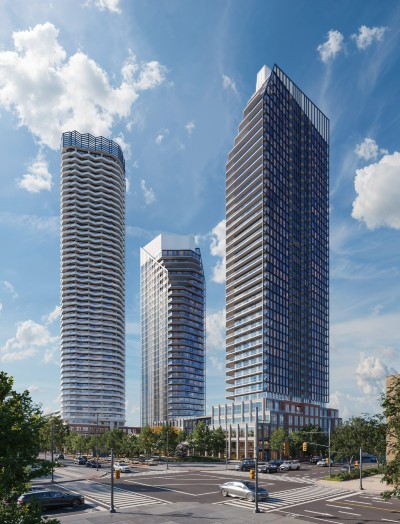
Menkes and QuadReal have started construction on the next phase of the largest mixed-use development in the Vaughan Metropolitan Centre. The team broke ground on the East Tower of Bravo. The condo community will be a trio of towers consisting of 32, 41 and 51 storeys.

The towers contain 1,654 residential units, at-grade retail, a pedestrian mews, and a privately-owned public space, known as POPS. It will feature a range of indoor and outdoor amenities, open spaces and an animated retail promenade, with bistros, cafes, and shops. The developers are also touting its proximity to transit, including Vaughan Metropolitan Centre Station.

An array of amenities for both adults and children are also in the works to reach the growing segment of young families living in condos today. They include, a co-working space, chef’s kitchen; a fully-equipped gym with a dry sauna and meditation areas, a music lounge, an indoor children’s playroom and outdoor play area, outdoor screening theatre, and social spaces for adults.

Bravo

Bravo Condominiums in South VMC. Photo courtesy of Menkes.

“With our partners at QuadReal, we are committed to creating a truly urban new community in the heart of the VMC, said Jared Menkes, executive vice president of high rise at Menkes. “Bravo is designed around the themes of connectivity and convenience, offering future 905’ers a lifestyle typically only available in the heart of downtown Toronto.”

The project is part of Menkes and QuadReal’s master-planned redevelopment of the 83-acre community known as Assembly Park in Vaughan, bounded on the north and south by Highways 7 and 407, and Hwy 400 to the west.

The first two towers—East and West—at Bravo launched last summer. Occupancies are anticipated to begin early 2028.

“The City of Vaughan is an important partner, and we are thrilled to see our shared vision for the VMC take another step forward,” said Toby Wu, executive vice president of development at QuadReal.

“QuadReal is excited to work with Menkes to deliver much needed housing and create a community and cultural hub, complete with retail, green spaces, and infrastructure dedicated to arts and cultures. All of which are essential elements for a vibrant VMC.”


Feature photo. From left: Chris Ainsworth, Vaughan City Councilor; Jay Claggett, SVP Development at QuadReal; Steven Del Duca, Mayor of Vaughan; Toby Wu, Executive Vice President, Development, QuadReal, Mario Racco, Regional Councilor, Vaughan; and Jared Menkes, Executive Vice President, High Rise Residential, Menkes Developments. 

Cedar LNG moves forward with facility construction

Cedar LNG, a proposed floating liquefied natural gas (LNG) facility in Kitimat, is moving forward on engineering and construction work following the signing of several long-term sales deals.

This marks a critical milestone to secure financing before a final investment decision can be made to go ahead with the project, which is expected in mid-2024.

The issuance of the notice to proceed instructs the engineering, procurement, and construction contractors, Samsung Heavy Industries and Black & Veatch, to complete the engineering and design and start construction of Cedar LNG’s advanced floating LNG (FLNG) facility.

“I am incredibly grateful to our nation, all levels of government, Pembina, and our partners who have supported our journey to advance a project that protects our environmental and cultural values, while delivering prosperity for decades to come,” said Crystal Smith, chief councillor for Haisla Nation.

Depending on a final investment decision, once finished, the FLNG unit will be moved from Korea to the Cedar LNG site in the Haisla traditional territory in the Douglas Channel.

With major development milestones achieved, Cedar LNG is preparing for construction, with pre-FID early works commencing in May 2024, including tree clearing and rough grading activities at our proposed marine terminal near Kitimat. Then anticipated in-service date is in late 2028.

“We are on-track to deliver an Indigenous majority owned, best-in-class LNG facility – one that will benefit the Haisla Nation, Pembina and its customers, the region, and all of Canada, while meaningfully contributing to the transition to a lower-carbon economy,” said Scott Burrows, Pembina’s president and chief executive officer.


Surrey Bear Creek Stadium grandstand complete

The Bear Creek Stadium grandstand in Surrey is now complete. The $24 million project includes 2,200 covered seats, changerooms, washrooms, meeting rooms, officials’ rooms, concession stand and box office.

“The new Bear Creek Stadium is a game-changer for the City of Surrey’s sports amenity infrastructure,” said Mayor Brenda Locke. “This significant investment is a strategic move to boost community involvement in sports, support local athletic talent, and attract visitors to Surrey. The stadium will be vibrant hub of activity, elevating Surrey’s reputation as a destination for sports and community events. More than just a venue for events, this facility is dedicated to providing top-notch amenities for training and promoting physical activity, ensuring that our expanding population has access to quality athletic opportunities.”

Designed to be a premier venue for large sporting events, particularly in track and field, the Bear Creek Park Stadium upgrades will allow Surrey to consider bidding on major prospective sports tourism opportunities through organizations like Athletics Canada that will allow for significant economic impact to the community.

Key organizations like BC Athletics, and BC School Sports will have access to a modern, well-equipped venue for hosting a variety of sporting events and grass roots competitions, which will not only draw in crowds but also provide local athletes with excellent facilities for training and competing.

The completed Bear Creek Stadium grandstand contributes positively to the character of the park, exhibiting design excellence, incorporating repurposed structural wood materials and is built for resiliency and longevity.

The $3.1 million athletics track upgrade is the final phase of work planned for the Bear Creek Stadium project and is scheduled for completion by fall 2024.


National office vacancy rate nudges up in Q1

The national office vacancy rate nudged up 10 basis points (bps) to 18.4 per cent during the winter of 2024, but 439,000 square feet of positive absorption marked the first time since the summer of 2022 when newly leased space surpassed the amount vacated. First quarter analysis from CBRE Canada attributes that outcome largely to preleasing in developments coming on stream in Vancouver and Winnipeg, while Toronto and Montreal continue to post losses.

Toronto saw more than 696,000 square feet of space empty out during the quarter — nearly 488,000 square feet downtown and nearly 209,000 square feet in the suburbs. Montreal made some gains downtown, with 108,000 square feet of positive absorption, but 300,000 square feet of negative absorption in the suburbs overshadowed that momentum.

Canada-wide, CBRE analysts point to “some green shoots” in downtown markets, noting that five cities have registered small declines in downtown vacancy in each of the last three quarters, albeit not consistently the same five. This time, that group includes Vancouver, Montreal and three centres with some of Canada’s highest downtown vacancy rates: Edmonton (22.3 per cent); Waterloo Region (22.5 per cent); and London, Ontario (28.1 per cent).

“A noted influx of large-block direct spaces came on the market this quarter, driving vacancy up,” CBRE analysts report. “Downtown Class B/C vacancy has continued to rise as tenants undergo flight-to-quality moves, leaving increasingly outdated product with little options for backfill.”

Nationally, the downtown Class A office vacancy rate stands at 16.7 per cent, while buildings defined as trophy assets register an 11.2 per cent vacancy. Almost a quarter of downtown Class B/C inventory — 24.4 per cent — is now unoccupied. However, about 870,000 square feet across eight cities was slated for conversion and taken out of service during the first quarter.

“Market bifurcation will continue to persist in Canada as lower-quality assets increasingly fall behind,” CBRE analysts state. “A cumulative 5 million square feet of former office product has begun conversion since 2021, equal to 1.1 per cent of inventory. Overall, we could see this number rise to 6 million square feet by the end of 2024.”

Heading into spring, Vancouver enjoys the lowest overall office vacancy rate — at 9.5 per cent — among the 10 major urban markets CBRE surveys. With an average Class A net rent of $40.57 per square foot (psf), it also exerts the most powerful upward pull on the national average, which inched up to $25.36 psf in Q1 from $25.35 psf at year-end 2023. Only Vancouver and Toronto ($28.61 psf) surpass the national average, while average Class A net rents in the other eight markets range from $21.98 psf in Montreal to $15.48 psf in London, Ontario.

Toronto’s overall vacancy rate is now at 19.2 per cent, a jump of 170 bps since Q1 2023; Montreal’s overall vacancy rate is 18.1 per cent, up 130 bps over the past 12 months. The two markets also host the major share of 11.2 million square feet of office space under construction in Canada, with about 5 million square feet in progress in Toronto and 2 million square feet still to be completed in Montreal.

Calgary registers the highest overall vacancy rate of the 10 markets, at 30.3 per cent, but that’s nevertheless a 170 bps improvement from one year earlier. As well, it’s commanding higher Class A net rents, both quarter-over-quarter and year-over-year, with current average net asking rents of $19.02 per square foot (psf) reflecting an increase of $1.15 psf since Q1 2023.

Toronto and Montreal stand out as the only two markets where downtown space is tighter than in the suburbs. The once significant gap appears to be steadily closing in Toronto — from a spread of 480 bps in Q1 2023 to 260 bps currently — with the total downtown vacancy rate now at 18 per cent compared to 20.6 per cent in the suburbs. However, the story changes when drilling down to Class A space. That lens shows a 810 bps differential, with a downtown Class A vacancy rate of 15.5 per cent, while 23.6 per cent of Class A suburban space is vacant.

Timber Hybrid Building Technology

Mass timber is known for its strength, beauty, sustainability and versatility, and its use in construction is growing year by year. With innovative new products and repeatable building methods making wood more cost-effective and reliable, it’s no surprise complex wood-centric architectural designs are rising in popularity across Canada.

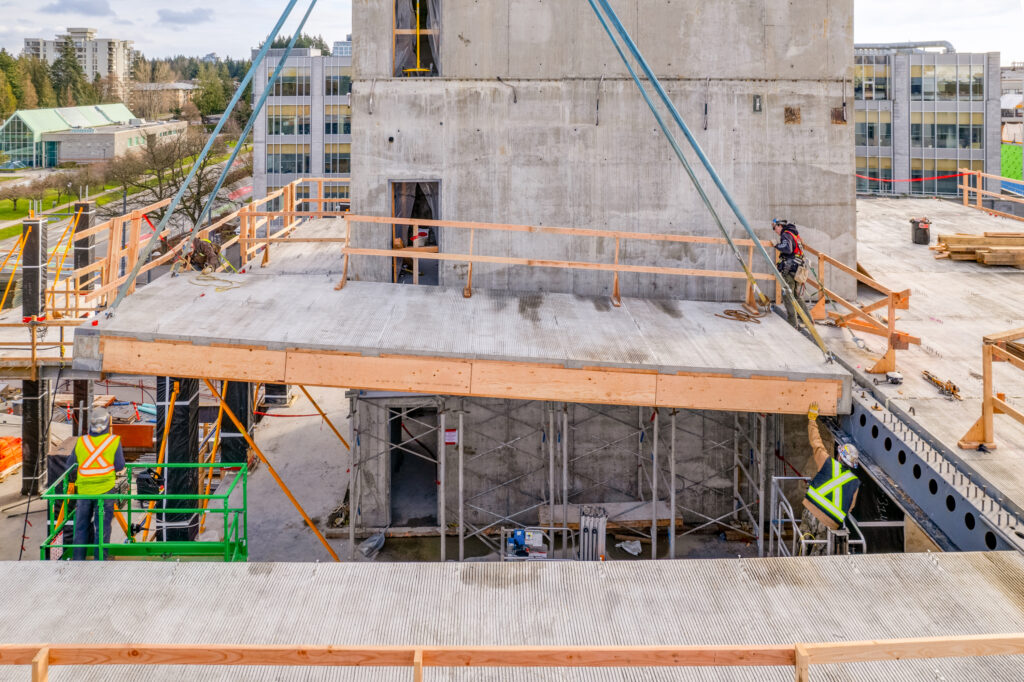
According to Jenny Si, a design engineer with RJC Engineers in Vancouver, the Gateway Building, currently underway at the University of British Columbia (UBC), is a stunning example of what can be achieved using innovative building solutions like the CREE Timber Hybrid System. Chosen for a multitude of reasons—namely, its ability to efficiently span large distances between columns with less material, use timber in all its major structural components, and minimize the project’s embodied carbon—it also offers reliable, repeatable steps that can be executed quickly with lower risk, to facilitate the creation of high-quality, aesthetically pleasing, timber-hybrid buildings. The CREE system also delivers a pleasing aesthetic of exposed timber.

“Essentially, it’s a timber-concrete-composite system of floor panels, beams, columns, and exterior walls, with concrete core walls,” Si explains. “All the components are meant to be prefabricated, although the engineer can make the final decision. Once the pieces are brought on site, they can be put together easily, like Lego blocks. It’s a collaborative and versatile method with steps that speed up construction and may be tailored to any specific project and market.”


Engagement & Collaboration

Located at the principal entry point to UBC’s Vancouver campus, the seven-storey Gateway Building will soon house the School of Nursing, the School of Kinesiology, Language Science, and Integrated Student Health Services under one roof. It was envisioned with health and wellness in mind, but equally influenced by the Musqueam’s unique culture given it resides on the traditional, ancestral, and unceded territory of the Musqueam people.

In 2006, Musqueam and UBC formalized relations with the signing of a Memorandum of Affiliation, and since then, have worked together to interweave the land’s history with the campus through visible representations of Musqueam art and language.

“For me, this project stands out for both its meaningful engagement, and for its use of the CREE system to create the upper floors of the building with ease and accuracy,” Si says. “The columns and floor panels were fabricated with precision off site, allowing for rapid and intuitive installation on site.”

Si adds that given the intended purpose of the building as an educational facility for health and fitness, extra consideration needed to be given to column locations, loading conditions, and vibration requirements to accommodate the lab space, clinical space, large lecture halls and amenities. This was all considered in the selection of a steel-framed Level 2, and the CREE system in the upper floors.

“The intended look and feel of the interior is light and open, with exposed timber, a skylit 6-storey atrium, and many windows for views to the outside,” she says.

Meanwhile, the exterior is meant to be “welcoming and dignified” given it’s the main entry point into UBC. Mass timber, naturally, will contribute to this desired aesthetic while also being an important structural component of the 270,550 square-foot building. Scheduled to open in the fall of 2024, Si expects it will resonate with students and the community at large for years to come.

Find out more about this and other mass timber projects at www.rjc.ca or contact Jenny Si directly at [email protected]


Washing the winter away

The winter often leaves salt and sand on walkways, in parking lots, and at building entrances that the rain won’t wash away. As part of your spring maintenance plan, use a pressure washer to remove the dirt, add curb appeal, and start the season off with a clean and tidy look for your outdoor surfaces.

RELATED: Spring cleaning commercial spaces

Using a pressure washer can save you the time it takes to clean outdoor surfaces with brushes and soap, allowing you to focus on the high-traffic areas on your property. And, by keeping sidewalks, walkways, and parking lots clean, you decrease the time, supplies, and labour needed for the inside, as less dirt and debris will be tracked through your building.

There are several factors to consider before adding pressure washing to your spring outdoor maintenance practices:

  • You will need to choose from an electric or gas-powered sprayer. The electric models are quieter, typically cheaper, and lightweight. The gas models are typically more powerful and don’t have a cord, which can be cumbersome during use.
  • Pressure washers also come in hot- and cold-water models. While cold-water models are best for moving dirt and dust, hot-water washers can clean surfaces up to 60 per cent faster than their competition.
  • Choosing the appropriate nozzle for different surfaces can ensure that you achieve your cleanliness goals without incurring damage to your property. Similarly, spray pressure matters for optimal results. For example, if you are cleaning a fence, you might take the paint off if the spray pressure is set too high. Sprays vary from 15 to 30 to 40 degrees, with 15 being the most concentrated. Start conservatively and test a section to avoid damage and clean surfaces efficiently.
  • Positioning the nozzle too close to the surface can also result in damage like removing the finish. Experts recommend spraying four to 12 inches from the area you are cleaning for best results.
  • Stay consistent. By using tools like wands, you may be altering the spray distance as you pass the nozzle along the surface, resulting in varying results and increased time. Look for accessories that help you achieve the results you are looking for quickly and efficiently.
  • Stay safe by using PPE and being protective with safety glasses, boots, and long pants to protect you from flying rocks, sand, or anything else that is dislodged by the spray.

Add power washing to your spring outdoor maintenance plan to increase safety, simplify your groundskeeping, and improve your curb appeal.

BC Hydro issues RFP for clean electricity

BC Hydro has issued a request for proposals (RFP) to acquire approximately 3,000 gigawatt hours per year (GWh/y) of electricity. This is BC Hydro’s first competitive call for power in 15 years and will add 5 per cent to its current supply, providing enough clean electricity to power 270,000 homes or approximately one million electric vehicles per year.

“British Columbians are on the front lines of the fight against climate change and seeing the devastating impact it is having on our communities. The switch from fossil fuels to clean power has never felt more urgent,” said Josie Osborne, minister of Energy, Mines and Low Carbon Innovation. “That’s why we are working in collaboration with BC Hydro, First Nations and the independent power industry to generate more of the electricity that B.C. needs to build a clean economy and power our future.”

The development and construction of new clean-energy projects in response to the call for power will generate an estimated $2.3 billion to $3.6 billion in private capital spending throughout the province and create approximately 800 to 1,500 jobs on average annually.

Electricity demand is expected to increase by 15 per cent between now and 2030. This is due to population growth and housing construction, increased industrial development, including in the mining sector, and more homes and businesses switching from fossil fuels to clean electricity, among other factors.

“We’re taking action to create thousands of construction jobs for skilled workers as major infrastructure projects like Site C reach completion,” said Osborne. “Together with BC Hydro’s 10-year capital plan, today’s call for power – the first in over 15 years – will drive sustainable growth for communities all over the province, and ensure households and businesses can power up with clean, reliable and affordable electricity.”