Articles Archive - Page 165 of 928 - REMINET
REMI

Victoria High School opens after upgrade

Work is complete on the upgrade and expansion of Victoria High School. The new addition creates spaces for 200 more students, and includes a new library and learning commons.

“Our government continues to build, expand and upgrade schools throughout the province in order to meet the needs of B.C. students and their families,” said Rachna Singh, minister of education and child care. “I am excited that now more students will have access to an upgraded and modern Victoria High.”

The B.C. government provided $97 million to complete the seismic upgrade and expansion project, with the Greater Victoria School District providing $3 million.

Victoria High’s new neighbourhood learning centre includes new child care spaces with the province providing $1.3 million from the ChildCareBC New Spaces Fund. The spaces are expected to be available in 2025.

As part of the upgrade, the interior was reconfigured for more classrooms while keeping many of the historic features of the 110-year-old school, and incorporating Indigenous designs that honour local First Nations.

The school district worked with Indigenous artists and knowledge keepers for the design elements that are now a part of all areas in the school, including the Songhees Nation, Esquimalt Nation, Métis Nation of Greater Victoria, and the Urban Peoples House Indigenous Advisory.

Built with sustainability in mind, the addition also has energy efficiency features and holds a LEED Gold equivalent.


Toronto adopts renewed climate actions

Toronto’s goal of achieving net zero emissions by 2040 is at risk unless transformative actions are taken across all orders of government, businesses and residences, the city says. This includes making buildings more energy efficient and investing in a carbon-free electricity grid.

The city adopted a renewed series of actions to reduce greenhouse gas emissions as it released its first Annual TransformTO Net Zero Progress and Accountability Report yesterday.

“What this report tells us is that our actions are making a difference, but it also clearly shows that we are a long way from achieving our 2040 targets,” said Councillor Dianne Saxe. “The time to do more is now, and we have set in motion a coordinated and renewed approach that ensures long-term climate resiliency in Toronto.”

The report outlines how climate accountability requires a renewed focus and highlights the moderate progress made to address critical steps since the net zero strategy’s adoption in December 2021.

Stopping the use of fossil fuels to heat buildings and power transportation are crucial in this matter. The Toronto Green Standard has been addressing new buildings while various city-led projects and programs are working to reduce fossil gas consumption in existing buildings.

One of the biggest impacts in existing buildings could come through Emissions Performance Standards (EPS), the report states. The environment and climate division is developing a by-law for council to adopt in 2024 that would establish requirements for all buildings to eventually meet reasonable and achievable performance standards that limit their GHG pollution. Meeting those standards could come through technologies like heat pumps that save money annually and run on clean electricity.

To boost efforts, city staff are recommending a fully coordinated, integrated and equitable city-wide approach to making assets, services and communities more resilient. Staff will report back to the Infrastructure and Environment Committee in the fourth quarter of 2025 with a new governance approach that integrates climate resilience into decision-making.

The next iteration of the TransformTO Net Zero Implementation Plan for 2026-2030 will also be developed with a timeline, resources and processes for the next generation of policies and programs to reach net zero by 2040. The plan will include targets for the installation of clean technologies and mechanisms to track Toronto’s progress towards these goals.

Also this year, as part of the first annual carbon budget prioritization process, the city will start identifying more actions to reduce GHG emissions for decision-making as part of the 2025 budget process.

Climate adaptation is a key focus in the report as more extreme weather events are predicted. Data suggests that by 2080 Toronto will experience a 19 per cent increase in annual precipitation and extreme rainstorms with 30 per cent more rainfall than the historical baseline (1971-2000). This could cause flooding, infrastructure damage and severe disruptions to services. Extreme heat events are also accelerating in Toronto. The number of days per year with temperatures above 30°C has increased to about 18 days annually from an average of eight days in the 1950s.

Data management capabilities get tax perk

Canadian businesses investing in data management capabilities before January 1, 2027 will be able to deduct the full capital cost of some key purchases in the year they come into use. The newly released 2024 federal budget opens an approximately 32-month window, granting 100 per cent capital cost allowance (CCA) for designated “innovation-enabling and productivity-enhancing” assets.

These include:

  • patents or the licences to use them, which normally have a 25 per cent CCA rate;
  • data network infrastructure equipment and related software, which normally have a 30 per cent CCA rate; and
  • general-purpose data processing equipment and related software, which normally have a 55 per cent CCA rate.

The accelerated CCA applies for assets acquired on or after April 16, 2024 and is only available in the year that they come into use, which must be before January 1, 2027. It is estimated it will be a $725 million benefit to claimants over the lifetime of the program.

“Businesses that invest in cutting-edge technologies are a key driver of Canada’s economic growth,” the budget document states. “The government wants to encourage Canadian businesses to invest in the capital — both tangible and intangible — that will help them boost productivity and compete productively in the economy of tomorrow.”

The 2024 budget also introduces temporary accelerated CCA for new purpose-built rental housing, increasing the annual depreciation rate from 4 to 10 per cent. This will apply for projects that commence construction between April 16, 2024 and December 31, 2030, and are ready for occupancy before January 1, 2036

Other eligibility requirements mirror those already in place for the elimination of the goods and service tax (GST) on new rental housing construction — applying to new rental housing construction, additions or conversions from commercial uses that comprise at least four private apartments or at least 10 suites or rooms.

“Increasing the capital cost allowance rate from 4 per cent to 10 per cent will incentivize builders by moving projects from unfeasible to feasible, through increased after-tax returns on investment,” the budget document states. “Allowing homebuilders to deduct certain depreciation expenses over a shorter period of time allows homebuilders to recover more of their costs faster, enabling further investment of their money back into new housing projects.”

Industry’s mixed reaction to federal budget 2024

Housing is a major focus of the 2024 federal budget and industry reaction has been mixed.

There is a promise of at least 1.2 million more homes for Canadians and along with the $6 billion Canada Housing Infrastructure Fund, an additional $500 million will be spent over five years for municipal community, culture and recreation facilities through the Green and Inclusive Buildings Program.

The Canadian Construction Association (CCA) believes the federal government’s housing strategy is a long-awaited step forward to build more homes, but significantly more investment is needed to address critical infrastructure and the housing crisis.

The association said an additional $128 billion is needed to build, support, and connect the federal government’s proposed 1.2 million homes to essential housing-enabling infrastructure – a major shortfall in the investment needed. 

“Budget 2024 sets a bold objective to help Canadians buy homes but misses the mark on delivering sufficient investment and a plan to ensure a steady flow of funds to address our nation’s infrastructure challenges,” said Mary Van Buren, CCA president. “While we acknowledge some initiatives, such as funding for creating affordable apartments, training and recruiting more workers, and upgrading water and wastewater systems, the conditions attached and lack of strategic vision are concerning.”

With growing demands to not only build more homes but also the inevitable requirement for the necessary housing-enabling infrastructure to connect these homes to the services they need, CCA says the urgency to collaborate with provinces, municipalities, and the industry is more pressing than ever.

“We need investments in infrastructure that are made based on the real needs of Canadians – projects that are shovel-worthy rather than just shovel-ready,” said Van Buren. “This visionary and consultative approach is what Canadians deserve.”

BC Construction Association echoed CCA’s concerns, noting the 2024 federal budget falls short on a number of policies required to meet the needs of B.C.’s construction industry, specifically in terms of workforce solutions and infrastructure.

The Federation of Canadian Municipalities applauded the significant new investments contained in Budget 2024 such as the $1 billion for urgent community infrastructure, including water and wastewater management. But it also stressed the housing crisis cannot be resolved without investing in local infrastructure.

“FCM has been clear that for every new home built, there must be a corresponding investment in infrastructure. Ottawa has heard us on this front. We will work in collaboration with the federal government to discuss the details of the funding and how we can deliver these important immediate investments to Canadians in parallel with fixing our funding model for the long term,” said FCM president Scott Pearce.

The Independent Contractors and Businesses Association slammed the budget, saying the government’s spending plan does nothing to move the needle on housing affordability.

“The sheer volume of pre-budget announcements on housing and the billions committed by Ottawa reveals the sense of panic that has gripped the federal government. The policies are disjointed, ill-conceived, confusing, and often conflict with those of not only other levels of government but also of Ottawa itself. None of this is going to deliver any meaningful relief to Canadians being crushed by the weight of the affordability crisis,” said ICBA president Chris Gardner.

ICBA called the budget a missed opportunity to address the inherent systemic problems holding back Canadian prosperity.

“Canada faces a trifecta of closely linked economic problems: stagnant productivity, a pattern of weak business investment, and declining global competitiveness. Unfortunately, there is little in Budget 2024 that tackles these problems in a meaningful way,” said Jock Finlayson, ICBA chief economist. “Expanding the size and cost of government won’t reverse the negative trends that are weighing on living standards and sapping Canada’s economic vitality.”

The Greater Vancouver Board of Trade echoed similar sentiments.

“While there were some positive measures, we hoped for a budget that would create the conditions for inflation and interest rates to moderate, while also spurring private sector investments to foster robust economic growth and high quality, family supporting jobs,” said Bridgitte Anderson, president of the Greater Vancouver Board of Trade.

“Instead, we face $120 billion in deficits over the next three years combined with government policy that has thus far been unable to reverse our lagging productivity, flat growth, and a worsening cost of living crisis.”


Cheryl Mah is managing editor of Construction Business.

Sean Penn named Chandos CEO

Chandos Construction announced the appointment of Sean Penn as its new chief executive officer (CEO).

Penn’s career at Chandos spans more than 20 years, from his years working as a carpenter to his tenure as chief operating officer (COO). He has showcased leadership and an unwavering commitment to Chandos’ core values of inclusion, collaboration, innovation, and courage.

“Our board’s decision to appoint Sean as CEO reflects our confidence in his abilities and visionary approach” said Roger Babichuk, chief financial officer, Chandos Construction. “His remarkable leadership, dedication to our people, deep understanding of our industry, and his vision for the future, make him the ideal candidate.”

Penn was recognized by the board for his role in driving the organization to success and fostering growth. As the new CEO, he aims to steer Chandos toward its exciting next phase.

“I am deeply honoured to lead Chandos as its CEO,” said Penn. “I’m excited about the opportunities that lie ahead, and I’m committed to building upon our legacy of excellence in the construction industry.”

Prior to his appointment of chief executive officer, he held the position of COO for nearly six years.  Preceding his role as COO, Penn served as the vice president of operations and managing director for the Calgary district, where he was instrumental in shaping the company’s operations and strategic directions.


4 ways that facilities can help support the planet

As many companies evaluate their impact on the planet, developing programs and practices that align with their ESG goals, facility cleaning and maintenance are certainly areas to consider.

“In today’s landscape, where sustainability dominates discussions, there’s a heightened urgency to enact changes that will truly help our planet,” said Carlos Albir, Jr., Vice President of Operations, ABCO Cleaning Products.

It’s estimated that 40 per cent of the ocean’s surface is covered in plastic waste and global plastic waste generation is projected to triple by the year 2060. In an effort to lessen environmental impact, ABCO Cleaning Products offers four ways that maintenance managers and cleaners can prioritize sustainability for greener practices, reduce their carbon footprint, and support the planet.

  1. Promote waste reduction and recycling. Implementing a waste reduction program can help decrease the amount of waste sent to landfills, thereby helping decrease greenhouse gas emissions. Encourage employees to reduce waste by providing colour-coded recycling bins, composting, and waste bins. Develop practices that encourage teams to minimize and better manage waste.
  2. Invest in renewable energy. Consider installing solar panels to help generate clean, renewable electricity onsite. Switching to renewable energy at facilities helps reduce dependence on fossil fuels and lowers carbon emissions and energy costs. Today’s technology can also help managers obtain the data they need to make greener decisions, lower energy use, and reduce emissions.
  3. Use third-party certified cleaning tools. Cleaning tools certified by a reputable third-party organization, such as Green Seal®, help ensure the product is sustainably sourced, manufactured and packaged. Using cleaning tools from certified, trustworthy organizations helps steer clear of greenwashing tactics, allowing companies to make a real impact and get closer to attaining their ESG goals.
  4. Conduct regular sustainability audits. A sustainability audit provides valuable insights into a facility’s social, environmental, and economic performance. Utilize the findings to develop targeted strategies, upgrade equipment, and streamline practices to better benefit the environment.

As more companies move towards increasing sustainability in cleaning and maintenance, simple steps like these can help pave the way for a greener approach.

The Importance of Clean and Maintained Garbage Rooms in Multi-Residential Buildings

Waste disposal systems in multi-residential buildings are under a great amount of pressure. Every day, residents pack their garbage down the interconnecting metal chutes which make up a building’s garbage disposal system, culminating in the garbage room. Cleanliness and garbage rooms may not instantly seem conducive, but the sanitary health of the waste disposal room is more important than you think. Here, we learn from the team at MJW Team the importance of ensuring garbage room maintenance is never overlooked:

  1. Hygiene & Pests

“Food waste and household garbage is going down chutes unbagged. This is creating problems.” – Frank Spadafora, General Manager of MJW Team

  • Health: Dirty trash chutes are a breeding ground for harmful bacteria and fungal pathogens which can significantly affect resident health. Ensuring a regular cleaning program will alleviate this risk.
  • Pest Infestations: If garbage chutes aren’t cleaned regularly, the walls get thick with grease and organic matter. This creates a food source for pests like cockroaches. If waste collection bins and rooms are not thoroughly cleaned, rodents can become a problem. Cockroaches, mice and rats are some of the pests that can thrive in unsanitary garbage rooms, rapidly breeding. A building manager can reduce pest control costs by keeping waste management systems clean.

cleaning-garbage-room-chute

  1. Odour Control

“Every time the garbage is picked up, the bin needs to be washed, and not just with water. We provide industrial degreaser to building staff—the same product that our teams use when onsite for scheduled cleanings.” – Albert Perri, Accounts and Business Development Manager of MJW Team

  • Unpleasant Odours: Regular cleaning helps control unpleasant odours which come from the garbage room making living conditions more pleasant for residents and guests.
  • Industrial-Grade Cleaning Products: In-between cleaning visits, MJW educates onsite staff on recommended cleaning products and odour control methods and provides helpful recommendations for day-to-day upkeep. When used properly, the industrial-grade cleaning products give your staff the upper hand with cleaning garbage areas. Coupled with eco-friendly odour control products from shopmjw.com, the dirtiest room in the building can be kept clean, safe and hygienic.
garbage-chute-before-cleaning

BEFORE

garbage-chute-after-cleaning

AFTER


  1. Equipment Preservation & Fire Safety Systems

“Regular maintenance and cleaning of a building’s waste system allows for essential repairs to be identified and completed before they become an issue.” – Frank Spadafora, MJW Team

  • Damage to Equipment: While the first noticeable sign of a problem is often the lingering smell from the chute, garbage bin, and the garbage room itself, there’s a bigger problem to contend with. Grease, oil and residue eat away at the waste equipment—that’s when things stop working correctly. In addition, the corrosive nature of garbage eats away at floors and waterproofing systems.
  • Long-Term Savings: Establishing a regular cleaning regime preserves the life expectancy of waste disposal equipment and saves on emergency repair and replacement costs.
  • Fire Safety: A building’s garbage disposal system consists of a network of garbage chutes which collect garbage from building floors and lead it to the garbage compactor. The area is protected from fire by a fire damper, a spring-loaded shield device at the bottom of the garbage chute which is an essential life safety system. “If there’s a fire within the compactor, a mechanism within the fire damper melts away releasing a spring-loaded door so that the fire is unable to travel up the chute,” Spadafora explains.
  1. Maintenance Made Easy

“Regardless of whether you’ve got a 5-storey or a 60-storey building, the condition of the garbage chute remains dirty and needs to be maintained.” – Frank Spadafora, MJW Team

  • Waste Equipment Maintenance Plan: For boards and managers, a specialized garbage room maintenance plan can ensure safer living conditions for residents, cut building maintenance costs, and save time. While the biggest complaint around garbage might be the smell and infestation concerns, the fire safety significance should not be overlooked. MJW offers a convenient waste equipment maintenance plan to make things easy for busy building managers.
  • Predictable Monthly Fee: Using a predictable monthly fee, garbage chute maintenance and odour control can be easily built into the property’s annual budget with payments spread out during the year.
  • Quality Control and Waste Equipment Inspection: Following a cleaning by MJW, a representative will return to the building to complete a Quality Control and waste equipment inspection. Going floor-by-floor checking chute doors, fire dampers, sorters, compactors and bins, MJW will provide a full report on the mechanical and sanitary health of the waste control equipment. Recommendations for any faulty or damaged parts are noted along with quotations for their repair or replacement.
  • Cost Savings: Extending the scope of possibilities, over the course of a three-year commitment, MJW maintenance plan clients ensure priority booking, and are able to take advantage of 10% off any other service offered by MJW, services which include underground and parking lot sweeping, washing and waterproofing, drains and catch basin cleaning, and parking lot striping and painting.

Establishing a regular maintenance plan with MJW for waste disposal systems makes it easy for boards, building owners, and managers to focus on matters which really need their attention. The services offered by MJW play a crucial role in supporting clean, hygienic garbage rooms, positively impacting residents’ health and living conditions, and keeping budget costs down.

MJW Team offers services throughout the Greater Toronto Area, London, Ottawa and Montreal. To learn how the MJW team can help service your building, call 416-741-3999 or visit www.mjwcanada.ca.

Budget 2024 misses the mark for first-time buyers

The federal government introduced new budget measures to help first-time homebuyers who have been shut out of various housing markets across Canada.

A 30-year amortization period for insured mortgages on new construction is a key change. The Home Buyer’s Plan also increased from $35,000 to $60,000 so buyers can use the tax benefits of an RRSP to save $25,000 more for their down payment faster.

The Residential Construction Council of Ontario (RESCON) said these initiatives aren’t quite enough to support first-time homebuyers, especially as incomes aren’t accelerating alongside the housing costs. Housing starts are also expected to decline as prices rise.

“We commend the federal government for seriously trying,” said RESCON president Richard Lyall. “There are positive measures here to assist purpose-built rental housing supply. That much is encouraging. But there is no relief for first-time buyers who have been pushed out of the market.

“They are being taxed on new housing at rates which would have crushed their parents and grandparents. Why are we doing that to them? Housing is a vital need and we are taxing it like alcohol and cigarettes. The cost of housing used to be three times the average household income but now it’s 10 times.”

Thirty-one per cent of the cost of buying a new home is attributable to taxes, fees and levies, according to a study done by the Canadian Centre for Economic Analysis.

Seventy-six per cent of people seeking to buy a home can’t afford to buy and live in what is being built. The average Canadian home costs $741,000 and the minimum income required to qualify for a mortgage is $195,000.

“The government’s failure to take solid steps to help first-time homebuyers is short-sighted and self-defeating in terms of meeting the challenge of the housing affordability and supply crisis,” says Lyall. “To ensure the health of our economy, we must do more to help these homebuyers get a foothold in the market. The budget missed the mark on that front.”

Proposed LEED V5 may be a setback for the cleaning industry

The US Green Building Council (USGBC) is proposing several changes to its LEED for Existing Buildings: Operations + Maintenance Rating System Version 5 (LEED-EB: O+M V5).

The proposed changes, if implemented, could set our industry back significantly and disregard all the hard work, time, resources, and progress our industry has made in improving cleaning effectiveness, reducing cleaning’s impact on the environment, and protecting human health.

Fortunately, Version 5 is now open for public comment, allowing industry members to express their views and thoughts about Version 5 directly to the USGBC. Your comments will help ensure that the USGBC better recognizes the critical role of cleaning in safeguarding occupant health and in supporting over one hundred million frontline workers in the cleaning industry around the world.

“The critical issue with Version 5 is that it undervalues cleaning,” says Steve Ashkin, father of green cleaning and the leading advocate for sustainability in the cleaning industry. “This is a disservice to our industry, our customers, and the communities we serve.”

Ashkin goes on to say that while he applauds many of the new initiatives proposed in Version 5, “when it comes to our industry and professional cleaning, we need to work together to improve LEED-EB: O+M V5, address the issues just mentioned along with other shortcomings.”

Among these shortcomings are the following:

  • Version 5 eliminates the green cleaning prerequisite, which goes back over a decade and has become an established standard in our industry.
  • It eliminates requirements on management systems and the number of points earned for green cleaning.
  • It does not adequately address social equity issues in our industry.

LEED v5 for Building Design and Construction (BD+C), Interior Design and Construction (ID+C), and Operations and Maintenance (O+M) rating systems are all open for public comment through May 20. The current drafts and comment forms are available on the USGBC website.

Housing plan falls short on climate resilience

Measures announced in the federal government’s housing plan include funding for energy efficiency retrofits like the installation of heat pumps and home energy labeling, while helping to make homes more climate-friendly and cheaper to heat. But sustainability proponents are also flagging missed opportunities to meet national climate commitments by 2050.

An estimated $903.5 million is being invested into the Canada Greener Homes Affordability Program as part of the Solving the Housing Crisis: Canada’s Housing Plan. “It’s a good start and now we hope this investment is matched by all other orders of government and utilities to increase the pace of deep retrofits and meet our carbon reduction targets and ensure new housing is built right the first time,” said Betsy Agar, director of the buildings program at the Pembina Institute.

Pembina’s recent modeling estimates that federal and provincial governments and utilities will need to give an average annual investment of $2.8 billion from 2025 to 2050 to provide zero cost retrofits for low-income households living with energy poverty. “Incentives and subsidies are only part of the puzzle, provincial energy efficiency regulations need to be updated to align with net-zero goals that include targets and accountability,” Agar added.

Deep retrofits can make housing more climate resilient and affordable to heat and cool through low-carbon materials, new technologies and integration with smart electricity grids. Agar said the government must boost new construction that is climate-safe without burdening homeowners with high energy costs and the need for future retrofits.

Pembina recommends tying supports for new builds to upper building code tiers to protect homeowners from increasingly frequent extreme weather and escalating utility costs.

“While these investments represent progress on some priority issues for greener housing, it leaves significant gaps on other critical housing safety and affordability challenges for Canadians and falls short of what’s needed to reach a rate of 600,000 home retrofits per year,” she said. “A successful market transformation also requires provincial regulations and policies to phase out fossil fuel-based heating, require resilient construction and prioritize the health and safety of Canadians. We look forward to seeing a suite of tools and mechanisms built into the much-anticipated Canada Green Building Strategy.

As communities face escalating climate risks, such as frequent and severe weather events, the Insurance Bureau of Canada also noted how the pre-budget plan omits details on how future homes will be resilient to climate change.

“While we commend the federal government for delivering a plan to build 3.87 million new homes by 2031, these new homes must be built in the right way and in the right places,” said Craig Stewart, vice-president, climate change and federal issues at IBC. “The federal government must lead by urgently updating the National Building Code to incorporate resilience and deploy necessary programming restrictions to discourage continued building and rebuilding of homes in high risk flood and wildfire zones.”

He said the housing strategy is the right place to incorporate climate resilience measures recommended by the Task Force for Housing and Climate and Climate Proof Canada.

“Insured damage related to extreme weather events in Canada has a clear upward trend with losses exceeding $3 billion annually in both 2022 and 2023,” he noted. “By comparison, between 1983 and 2009, Canadian insurers averaged $400 million a year in losses related to severe weather.

“Just this week, the government warned that 2024 will likely be another record-setting wildfire season, and highlighted the need to invest in measures to adapt to our changing climate. The choices we make now will determine how prepared Canada will be to cope with the risks we face in the next few years and beyond.”

Facility Maintenance Made Easy: The Importance of a Single Point of Contact

The role of the facility manager is complex. Overseeing all the moving parts that make up the operations is a big responsibility. Ensuring everything runs smoothly while creating as little disruption to occupants as possible is the goal.  

If responsible for the care and maintenance of a facility, you will already be familiar with the challenges. At any given time, there’s an immense number of tasks on the go. Proper scheduling is critical, and no day is a repeat of yesterday. 

 A lot of the “hunting and gathering” such as sourcing quotes and finding the right contractor falls on the shoulders of the facility manager. They may be calling or emailing different companies for quotes and service requests, receiving calls from multiple properties requiring urgent maintenance, and coordinating contractors and notices—all while keeping within budget. The workload can quickly become overwhelming and burn-out can occur. 

Key Person to Call 

In any industry, having a single point of contact (SPC) is highly desired, but when working with multiple contractors, that goal has been nearly impossible to achieve.  

 At least until recently.  

Understanding the benefits of making one phone call as opposed to twenty, City Wide Facility Solutions simplify things by becoming a facility’s single point of contact, taking the burden of sourcing and scheduling off a building manager’s shoulders. 

Each City Wide customer is assigned a Facility Solutions Manager (FSM) who acts as the single point of contact for the client, conducting quality checks, sourcing vendors, and proactively identifying service and maintenance needs.  

 Extending The Team 

City Wide services complement in-house maintenance staff by managing projects and vendors outside of their wheelhouse. By saving time spent normally making multiple calls and emails, customers are able to focus on their truly important responsibilities. City Wide act as an extension of a facility’s management team, and not as another contractor. 

“Our role is to save the customer time so they can focus their time on other responsibilities.” – Kasey Skala, Director of Marketing, City Wide Facility Solutions 

Floor to Ceiling Solutions 

Beginning in 1961 as a janitorial company, City Wide expanded in the late 90s to cover the wider range of building maintenance services repeatedly requested by their clients. Now offering over 20 different floor-to-ceiling interior and exterior facility solutions, City Wide works with independent local contractors to provide quality service at a consistent price to their clients. If an issue with service arises, a new contractor is sourced and the price to the client remains consistent. This saves the client time, a guaranteed monthly rate, and ensures zero interruption to their maintenance or cleaning. 

Services covered by City Wide include annual building maintenance, flood restoration, mold remediation, pest control, interior and exterior painting, handyman services, landscaping, lighting, parking lot services, roofing, pest control, security and more! 

Serving multiple industries including medical facilities, day cares, schools, commercial offices and auto dealerships across the US and Canada, busy facilities are reaping the benefit of working with an FSM to deliver their facility’s daily and annual needs. 

When meeting with a potential new client, City Wide conducts a thorough building evaluation and meets face-to-face to establish immediate and long-term goals for the facility. City Wide delivers regular site visits, fluid lines of communication, and expert project management.

By streamlining building maintenance needs, facility staff can focus on important tasks. By aligning with independent contractors, City Wide ensures clients can easily access specialized services. In developing and fostering relationships with contractors, small to medium sized businesses are given the opportunity to develop alongside a company with a proven and established track record. 

Now Operating in Canada

To kick off 2024, City Wide added a fourth Canadian location by opening a franchise in Vancouver, BC. This is the latest addition to City Wide’s imprint on the Canadian market, supplementing its existing three franchises in Ontario.  

With just over 100 franchises currently across North America and the intent to nearly double that number by 2028, City Wide manages more than 400 million square feet of commercial space every day of the week and is quickly growing its client base. 

To learn how City Wide can help manage your facility, visit www.gocitywide.com or call (855) 879-293


Modern Facility Management: The Challenge of Organizing Infrastructure

From an infrastructure standpoint, each component of a facility introducing a proportion of risk requires proper maintenance. Managing the multitude of assets spread over a large area can be challenging. Buildings, Facilities, Infrastructure, Roadways, Highways, Parks and Green Spaces are a prime example. Each needs to be certified as safety and risk compliant, and there is a clear expectation that set standards will be adhered to.

Thankfully, modern facility management software is evolving to make things easier. The use of geospatial data has been a turning point. It is now possible to recreate maps and plans of buildings—including hydrants, wind farms, water plants and greenspaces—to give proper orientation for facility workers and provide data pinpoints on a massive scale. VertiGIS FM provides Facility Managers a view of what is happening in their environment today, so they can make better informed decisions for tomorrow, all in one intuitive platform.

In a school setting, the log of maintenance responsibilities is extensive. There are many different facets of facility maintenance in multitudes of settings. Keeping track of information from a compliance level to ensure adherence to provincial and municipal regulations is extremely important.

When a Catholic School in Austin, Texas, decided to merge their K-8 and 8-12 schools thereby doubling the amount of square footage, buildings and maintenance activities, it was obvious they needed a better way of managing their combined “to-do” lists.

Email a Drag on Efficiency

At that time, the schools were responding to incidents and maintenance requests via email, a time-consuming process which failed to adequately track maintenance history. The school began looking for a simple, cloud-based software solution to align with their immediate and long-term goals, and selected VertiGIS FM to help them reach their vision.

VertiGIS started with an assessment of the school’s current environment. It was clear the school needed a more automated system to streamline day-to-day activities, and to provide clearer strategy for when issues arose. An overview of each asset was established, along with insight into each asset’s location and those which were most critical. The VertiGIS FM core functionality modules for Buildings, Maintenance, and Contracts were integrated providing a springboard for the school to operate. By creating an understanding of the school’s critical assets and processes, a short, medium and long-term plan was established.

Geospatial Data Transformation

With the school now expanding over two campuses, geospatial data was implemented to clearly identify locations and pinpoint areas carrying defects or pending repairs. By providing spatial representations of the school buildings, facility management expenses could be better managed and budgeted. Data information previously logged in spreadsheets was imported into VertiGIS FM and missing information flagged. Essential processes such as cleaning, inventory, and security access became easy to manage and record with standardized documentation. In addition, occupational health and safety hazards were identified and legal obligations consistently met.

With more control over their environment, the school was able to expand its use of the VertiGIS FM out-of-the-box approach to facility management. It was possible to visualize energy and utility consumption, identify cost risks, and standardize historical information. They are now equipped with visibility into what is happening in their environments today, so they can make better decisions and investments for the future.

Meanwhile, in California, a VertiGIS FM client was looking for a system to better manage flood prevention efforts. The customer was then using Google Maps and pins and sending to coworkers via email, attaching photos of the intended location. The system worked, but was only as efficient as the information sent, and was frequently off-target. In the VertiGIS FM platform, information is sent directly from within the software interface and automatically creates a work order to efficiently track the task workflow. This, combined with secured information via geospatial data made communicating locations needing attention a more efficient and swifter process.

Simplifying Building and Facility Management

VertiGIS FM simplifies building and facility management in a lightweight, easy-to-use application which can be accessed by anyone, anywhere—even when offline. It allows for a deep-dive into a facility’s critical assets, identifying risk and cost measures for each, and tracking warranties, invoices, schematics and drawings—all in one interface.

VertiGIS FM offers 7 solutions to meet facility obligations, risk minimization, cost reduction and optimization of infrastructure processes. Based in Victoria, BC, and with offices worldwide, Vertigo’ FM is designed to make things easier. To learn more, visit www.vertigis.com

VertiGIS-colour-logo

Alberta to tighten grip on public sector FMs

Public sector facilities managers in Alberta could be forced to snub available funds for building and infrastructure improvements under proposed legislation that will constrain agreements between provincially controlled entities and the federal government. Through the newly tabled Bill 18, Provincial Priorities Act, the Alberta government is moving to tighten its grip on municipalities and health and education-related agencies and institutions that are defined as “creatures of the province,” yet have conventionally had leeway to seek and accept direct federal investment.

The proposed legislation would require provincial approval before any such conveyance of funds could occur — a move that is presented as a response to federal activity in matters that are constitutionally designated as provincial responsibilities.

“Since Ottawa refuses to acknowledge the negative impacts of its overreach, we are putting in additional measures to protect our provincial jurisdiction,” says Alberta Premier Danielle Smith.

“Alberta’s government will ensure federal funding is aligned with provincial priorities, rather than with priorities contrary to the province’s interests,” states the media release issued along with the introduction of the bill. “Under the proposed legislation, provincial entities include Alberta public agencies and Crown-controlled organizations, as well as public post-secondary institutions, school boards, regional health authorities, Covenant Health, municipal authorities and housing management bodies.”

The Act would give the provincial government authority to validate or invalidate any new, extended or amended agreement a provincial entity enters into with the federal government or its various agencies, boards, commissions and corporations — including organizations such as Canada Infrastructure Bank, Accessibility Standards Canada and the National Research Council. Details of the envisioned provincial vetting process would be contained in yet-to-be-developed regulations.

Provincial government departments and specified public agencies — Alberta Gaming, Liquor and Cannabis; Alberta Securities Commission; and Travel Alberta — already must receive approval from Alberta’s Minister of Intergovernmental Affairs before embarking on intergovernmental agreements with the Canadian, other provincial/territorial or foreign federal and state governments. Adding the broad slate of provincial entities into that mandate would replicate a policy that is in place in Quebec, but no other Canadian province.

Both Premier Smith and Alberta’s Minister of Municipal Affairs, Ric McIver, conflate the effort to intensify provincial oversight with ongoing tension around overlapping federal and provincial spheres of influence and the transfer of federal funds to the province. They contend the provincial government’s rightful role is being circumvented.

“For years, the federal government has been imposing its agenda on Alberta taxpayers through direct funding agreements with cities and other provincial organizations,” McIver says. “Not only does Alberta not receive its per capita share of federal taxpayer dollars, the money we do receive is often directed towards initiatives that don’t align with Albertans’ priorities.”

Public sector facilities managers nationwide have long tapped into federal funding to upgrade buildings and infrastructure, whether through special arrangements or more widely available incentive programs. Many recent examples are tied to federal programs to promote energy efficiency, reduction of greenhouse gas (GHG) emissions, climate change adaptation and accessibility. Proponents of those measures are wary that such funds could either become more cumbersome to obtain or be taken off the table entirely in Alberta.

“The health care sector has shown great enthusiasm for reducing its carbon footprint and we have had a lot of support from federal government programs that help health facilities do that,” observes Dr. Myles Sergeant, executive director of the Canadian Coalition for Green Health Care. “If health facilities in Alberta are not able to participate in these kinds of programs, they will fall behind the rest of the country.”

Provincial/territorial governments have also been included among the prospective recipients for most of these recent federal funding initiatives. Brendan Haley, director of policy research with Efficiency Canada, which promotes the dual economic and environmental benefits of energy and water efficiency, gives the example of funding that assists either provinces/territories or municipalities to adopt progressive building codes and support compliance with more rigorous energy performance standards.

“Federal energy efficiency initiatives often work best when partnering with provinces or municipalities,” Haley says. “I don’t understand why the Alberta Premier wouldn’t want money invested in the province.”

Commenting on Bill 18 in the Alberta legislative assembly, Rachel Notley, leader of the official opposition, New Democratic Party, called it unduly intrusive in local decision-making and damaging to economic development.

“Albertans democratically elect entire councils who fight to get funding for their communities. That’s local representatives standing up for their community. No one has elected this Premier mayor or councillor, so why does she think she has the mandate to pretend that they did?” Notley said. “This bill is giving major cities in every other province a huge competitive advantage over the Alberta mayors that she has now shackled with her red tape.”

Information posted on the Alberta government’s website notes there will be “comprehensive stakeholder engagement” to gather input for the regulations. That’s expected to occur in the summer of 2024, after the bill has passed into law. “It is anticipated the legislation will come into force in early 2025 once the regulations are finalized,” the website states.

National Urban Design winners announced

The 2024 National Urban Design Awards winners have been announced by the Royal Architectural Institute of Canada (RAIC), the Canadian Institute of Planners (CIP), and the Canadian Society of Landscape Architects (CSLA).

The National Urban Design Awards are awarded every two years and recognize the important link between architects, planners, and landscape architects in achieving successful urban design. They strive to raise awareness of the crucial role that urban design plays in maintaining and improving the quality of life in Canadian cities and acknowledge the efforts of individuals, organizations, firms, and projects in this field.

According to the jury, “The submissions were consistently very high quality, and focused on many of the topics we as designers are all focusing on in our ever-changing world – justice, equity, diversity and inclusion, on climate change, on resiliency and as always – on high quality design for the many end users we strive to serve. Projects were described in the submissions with high quality graphics, photos of built projects and evidence that these projects have made significant changes to the quality of life of Canadians across the country.”

Winners in the six National Urban Design Award categories:


Cleaning pet-friendly spaces

From restaurants to hotels to office buildings, many places now welcome pets on-property, which can become a challenge for cleaners. As office spaces continue to change and evolve, cleaners need to know how best to clean and sanitize pet-friendly environments for their clients.

Planning ahead

Get the information to be able to accurately estimate labour and time to accommodate for any additional services required to clean up after pets. Ask about the number of pets, the frequency of their visits, scheduling, and hygiene expectations to be able to maintain your margins and provide a superior customer experience. Getting a scope of work, including details like whether you are responsible for cleaning toys and bowls is also key to estimating and pricing the job.

Planning ahead means scheduling additional time for tasks like cleaning welcome mats that may need extra attention, storing supplies out of reach from animals, and any other required duties that take you away from your regular cleaning tasks.

Products and practices

The fact that there may be additional hair, stains, and odours may lead cleaners to use strong chemical cleaners for optimal sanitization. However, many of these products are not pet-friendly and can harm animals if they come into contact with them.

Indoor air quality is also important if there is fur or dander in the air, but some products contain VOCs and fragrances that can actually contaminate the air inside.  Choose pet-friendly, natural, organic products where possible to mitigate any risk to pets and improve air quality. Be careful if using essential oils, many of these are toxic to pets if exposed to or ingested. As well, if an air filtration system has not been installed, clean with windows and doors open where you can, to let in clean, fresh air.

Creating a detailed schedule that includes regular vacuuming, dusting, and hair removal will also help keep the pollutants out of the air and the space clean.

Be prepared

Even when you know the scope of work, cleaning up in a pet-friendly environment can mean unexpected tasks and surprises. Put together an ‘emergency kit’ for unforeseen situations on-site, so your team is prepared and can efficiently handle all tasks. Include lint rollers, safe pet-safe stain remover and odour reducer, pet waste bags, hand sanitizer, and more to ensure that staff is confident and prepared when they get to work.

Work environments continue to evolve and that means that cleaners will need to be prepared to handle anything that comes their way. Pets add a challenge, but cleaners who are prepared with a plan can offer efficient, organized, and safe results.

Metro Vancouver home construction hits record

Construction of homes in Metro Vancouver set a new record last year, according to B.C. real estate developer Rennie.

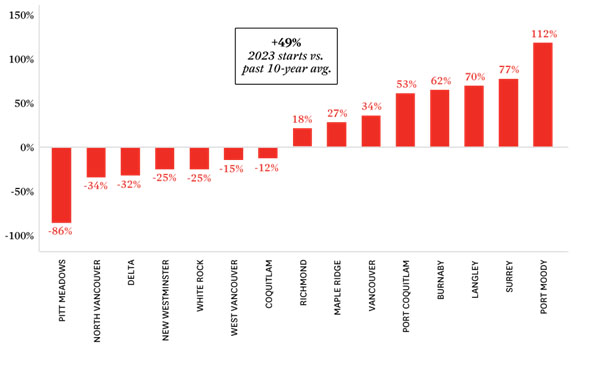
The spring 2024 edition of rennie landscape, a semi-annual compilation analyzing housing markets in Metro Vancouver, Kelowna and Victoria, shows more than 33,000 homes, a 28 per cent increase from 2022, were started in 2023.

“Though we still need many more homes for the people that are coming to our region — as well as, don’t forget, the ones that are already here — it’s far from insignificant that we began construction on a record number of homes this past year,” said Rennie head economist and vice-president of intelligence Ryan Berlin.

“Having said that, this record-setting housing starts activity was not enjoyed by all parts of Metro Vancouver evenly, with more than one-third of municipalities recording below-average starts last year. There’s an opportunity to do more.”

Municipalities in the Lower Mainland with potential for an increase in housing starts due to a below-average level of construction include Pitt Meadows, North Vancouver, Delta, New Westminster, White Rock, West Vancouver and Coquitlam.

Rennie’s intelligence division also stated:

  • The national unemployment rate is rising due to population growth outpacing job growth.
  • Retail sales and GDP are both rising, but not when adjusted for population growth.
  • Interest rate cuts are on the horizon now that inflation is back inside the Bank of Canada’s target range.
  • Borrowers are spending more income than ever before to service mortgage debt, even as they take on less new debt overall.
  • C.’s population is expected to grow by two million over the next 20 years as increasing international migration has led to revised population projections.
  • Rental rates are rising in B.C. as the purpose-built rental market remains undersupplied, with both vacancy rates and turnover rates historically low.