




Articles Archive - Page 16 of 928 - REMINET
REMI

Canadian excellence gains international profile

Canadian excellence drew accolades as the Building Owners and Managers Association (BOMA) International bestowed the 2026 TOBY awards and recognized individual leadership at its annual Conference and Expo, in Long Beach, California, last week. This year, Canada delivered up five international champions emerging from the three-stage process to identify and honour top performers in 19 building categories, along with three prominent contributors who were acknowledged for their work and commitment within BOMA and the broader industry.

“From coast to coast to coast, Canadian commercial real estate showed up strong on the international stage,” observes Benjamin Shinewald, president and chief executive officer of BOMA Canada. “It’s a proud moment for our industry and a true reflection of the people, passion and excellence behind these properties.”

The BOMA International TOBY award-winners are chosen from a pool of candidates that have already been declared best in their categories at a local and then regional level. (Canadian competitors in 2026 are all 2025 recipients of BOMA Canada national awards and initial awards from their own BOMA chapters.) A fresh slate of judges renders the decisions at each stage, but does so based on consistent criteria that considers: community impact; tenant and employee relations programs; energy management; accessibility; emergency evacuation procedures; building personnel training programs; and overall excellence.

Notably, three distinct Canadian owner/manager teams combined to sweep the retail awards in this year’s International TOBY competition. Those winners include:

  • Park Place Shopping Centre, Lethbridge, AB, in the category of enclosed malls with a maximum footprint of 1 million square feet. The property is owned by Primaris REIT and managed by Primaris Management Inc.;
  • Scarborough Town Centre, Toronto, ON, in the category of enclosed malls encompassing more than 1 million square feet of space. The property is jointly owned by Oxford Properties Group/OMERS and the Alberta Investment Management Corporation, and managed by Oxford Properties Group; and
  • Taunton Gardens, Whitby, ON, in the category of open-air and strip malls. The property is owned by Canada Post Pension Plan and managed by Colliers.

Nor were there any owner/manager repeaters in the other two Canadian wins. Those are:

  • Transport Depot, Edmonton, AB, in the industrial building category. It is owned by bcIMC Realty Corporation and Canadian Core Real Estate LP, and managed by QuadReal Property Group; and
  • Eleventh Avenue Place, Calgary, AB, in the category of office buildings ranging from 100,000 to 249,999 square feet. It is owned HOOPP Realty Inc. and managed by GWL Realty Advisors.

Turning to individual honours, Don Fairgrieve-Park received the BOMA International Chair’s award for a remarkable second time this decade. The award recognizes meritorious leadership that has benefited the commercial real estate industry and broader community and served as a role model for commitment and professionalism. Fairgrieve-Park is an executive vice president, operational excellence, with QuadReal Property Group and a member on BOMA British Columbia. He is a BOMA Fellow, the recipient of the 2020 BOMA Canada Chair’s Award and 2023 recipient of the BOMA International Chair’s Award.

Richard Morden, a member and past chair of BOMA Calgary, was named Regional Member of the Year, representing Canada. He is senior vice president, western Canada commercial properties, with QuadReal Property Group.

BOMA lifetime member status was conveyed to Kim Saunders, a member of BOMA Newfoundland and Labrador. The designation is reserved for exemplary BOMA members of at least 20-years standing who have retired from the industry. Saunders is a BOMA Fellow, a recent retiree from East Port Properties, and a stalwart of BOMI Education Canada, in which she has held the roles of chair and board member.

Saskatchewan invests $43M in healthcare IT infrastructure

eHealth Saskatchewan will invest $43.6 million in information technology (IT) capital and operational spending in 2026-27. The funding will support new projects that improve connected and accessible healthcare and upgrade existing digital infrastructure.

Examples of planned work include:

  • Investing in network infrastructure and clinical technology for new facilities currently in construction, including the Prince Albert Victoria Hospital, Saskatoon Urgent Care Centre and La Ronge Long Term Care facility, as well as renovations including technology enhancements at existing health facilities;
  • Providing rugged IT devices for emergency responders in ground and air ambulances. This investment in durable devices designed specifically with emergency vehicle usage in mind will allow easy sharing of electronic records between services and providers through a newly improved records management platform, improving communication and supporting continuity of care;
  • Maintaining secure and reliable access to information and systems by replacing laptop and desktop computers across the health system on a regular cycle. Proactive replacement reduces unplanned downtime that may interfere with patient care; and
  • Making ongoing enhancements and expansions to strengthen the IT infrastructure that is the foundation for access to safe and timely care. This includes routers, Wi-Fi connection points and more to enable access to health records, support informed decision making and maintain communication throughout the system.

“Having the right technology in the right place at the right time makes it possible to deliver on our Patients First Health Care Plan, by ensuring reliable and secure technology is there to support everything from a routine appointment to a medical emergency,” said Health Minister Jeremy Cockrill. “IT infrastructure creates vital connections that ensure patients and providers can access information and services from anywhere, including rural and northern areas.”

How can building managers weather potential water shortages?

Canada has long been regarded as a water-rich nation, with abundant freshwater resources. Over the coming decade, however, that picture is expected to become far more complex. While some regions will continue to have abundant supplies, others will face shortages and growing water uncertainty.

Several factors are driving these emerging challenges, including shifting climate conditions, uncertain groundwater availability, and aging or inadequate water infrastructure.

Although these challenges will vary by region, their economic, environmental, and social impacts will be felt nationwide. Canada can remain water-rich, but doing so will require stronger and more proactive water management than is common today.

For businesses, focusing on water efficiency can offer the following benefits:

Reduces consumption, protects vital resources: Using less water for daily operations means lowering your carbon footprint and working towards your ESG goals, as well as keeping more water in aquifers and rivers.

Cuts emissions: Less treatment and transport lower your carbon impact and include your supply chain in your environmental planning.

Lowers energy costs: Save power used to pump and heat water with conservation, while lowering your bills and budgeting better.

Reduces expenses: Beyond already listed, efficient water use also cuts utility and sewage bills.

But understanding the risks of increasing water challenges begins with examining each of the major forces reshaping Canada’s water future.

Shifting climate conditions

By the 2030s, changes in climate are expected to make both drought and flooding more significant challenges across Canada. Changes in precipitation, snowpack, and seasonal runoff will affect not only how much water is available, but also when it is available.

Some regions may still receive ample precipitation, but it may come at less useful times of year. Earlier snowmelt, hotter summers, and longer dry periods can leave rivers, reservoirs, and soil under stress when demand is highest.

These shifts in seasonal water availability will be especially challenging for agriculture, where water is needed at precise stages of the growing season. Cities, households, and businesses will also need reliable supplies throughout the year. Balancing these needs will require a shift from reactive water management to proactive planning, with greater emphasis on efficiency, reuse, recycling, and storage.

A changing climate will also bring periods of intense rainfall that can overwhelm communities in a matter of hours. Flooding can close highways and rail lines, overwhelm drainage systems, trigger erosion, and damage soil through physical, chemical, and biological changes. These impacts can reduce soil fertility and harm ecosystems, as well as supply chains. Some areas may recover with time and investment, while others may face lasting damage.

Uncertainty about groundwater

Across the United States, many communities have become increasingly dependent on groundwater, and in some regions, that dependence is now viewed as a growing crisis. Water utilities are drilling deeper to meet rising demand from agriculture, expanding businesses, population growth, and now data centres that require tremendous volumes of water for cooling. At the same time, many aquifers are being depleted. Because this water accumulated over centuries, it will take centuries to replenish.

Canada will likely increase its reliance on groundwater during the coming decade. Fortunately, it has an opportunity to avoid many of the problems now emerging south of the border. Better monitoring, mapping, and data sharing can help slow groundwater depletion in Canada, reduce the risk of future shortages, and protect this long-term water supply.

Aging infrastructure

Aging infrastructure represents another growing concern. As an example, a major water main failure in Calgary illustrates just how disruptive these failures can be. In a January 22, 2026, Maclean’s article, Emre Erkmen described how a critical feeder main carrying about 60 per cent of the city’s treated water suddenly ruptured. When the pipe failed, millions of litres of water poured into nearby streets and flooded a major roadway. Although no one was killed, the rupture disrupted water service for months, required millions of dollars in repairs, and forced severe water restrictions across much of the city.

Such incidents are likely to become more common as Canada’s water infrastructure continues to age. Much of the system is now more than 50 years old, and about 40 per cent is rated in fair, poor, or very poor condition. By the 2030s, water mains, treatment plants, pumping stations, reservoirs, and storm water systems will need to withstand conditions more extreme than those they were designed for. Without sufficient investment, communities may face more breaks, leaks, service interruptions, and pollution events.

What Canada should prioritize now

Despite these challenges, Canada can reduce many future water risks through proactive planning and investment. The same lesson applies to countries around the world: one of the most effective steps is to improve water efficiency.

Water conservation and water efficiency are often treated as the same idea, but they serve different purposes. Conservation usually means temporarily reducing water use, such as during a drought. Water efficiency focuses on permanently lowering demand through better technology, upgraded infrastructure, and smarter management.

In other words, water efficiency is a long-term strategy for using less water every day. This is already visible in water-saving technologies and restroom fixtures that use little or no water. One example is waterless urinals, which are becoming more common in both Canada and the U.S., due primarily because of their water and cost savings.

Additionally, Canada still has time to prepare. If water utilities and governments act now. In the next few years, they should focus on the following priorities:

  • Modernize or replace water infrastructure
  • Improve drought and flood forecasting
  • Expand groundwater monitoring and aquifer protection
  • Strengthen water efficiency in homes, farms, and industry
  • Treat water data collection as essential to Canada’s future

Final thoughts

Canada’s water challenges in the 2030s will be shaped by variability, uncertainty, and the need for smarter management. The country may remain water-rich overall, but that alone will not protect communities from drought, flooding, infrastructure failures, or groundwater stress. The key question is whether Canada can build flexible, resilient systems that can adapt to a changing climate.

For policymakers, utilities, businesses, and communities, the message is clear: water can no longer be treated as a background issue. In the 2030s, it will be one of Canada’s defining sustainability and resilience challenges.

Klaus Reichardt, founder and CEO of Waterless Co. LLC in Vista, California, is a recognized authority on water efficiency. Since 1991, he has led the company to innovate plumbing products like the Waterless No-Flush urinal, which operates entirely without water. To contact Klaus, click here.

Ontario throws shade on solar PV incentive

Solar photovoltaic systems will generate more modest rebates for some prospective investors aiming to connect to Ontario’s electricity grid. As of last week, incentives offered through the provincial Save on Energy program will top out at $770 per kilowatt (kW) of capacity for installation of new small-to-medium systems ranging from 10 kW to one megawatt (MW). That’s a 10 per cent drop from the $860/kW previously offered for systems of that size that could augment distributed energy resources (DER) in the province.

The new lower rate is one of five adjustments under Save On Energy’s prescriptive measures stream, which conveys set dollar amounts tied to specified types of equipment. There is also a 14 per cent cut in the incentive for networked lighting controls, reducing it from $0.35 per kilowatt-hour (kWh) to $0.30 per kWh, along with lower incentives for three other energy-efficient lighting products employed in greenhouses or cannabis growing operations.

A summary of the changes posted on the Save on Energy website advises that the revised incentives are more in tune with the energy and peak demand savings that the five measures deliver and will support the “cost-effectiveness and affordability” of the overarching retrofit program. However, applications submitted into the approval queue prior to June 30, 2026 will still qualify for the more lucrative incentives if they are deemed to be complete.

Retrofit project proponents could also now qualify for a newly introduced incentive for energy-efficient clean water pumps. That’s offered provincewide at rate of $15 per horsepower (HP) of capacity to a maximum of 200 HP, but applicants based in designated areas where the electricity transmission system is deemed to be “constrained” qualify for a regional adder, pushing the incentive up to $30/HP.

The recent changes come in sync with the launch of a new online tool to provide navigational assistance through the maze of energy efficiency programs and incentives. The Save on Energy Funding Finder has been designed to steers users to available options for their consumer category and project purposes through a series of simple prompts and clicks.

Prospective applicants in the commercial real estate and facilities management sectors can quickly get channelled into the applicable stream for commercial, multifamily or institutional properties, then led to a breakdown of measures under the broader categories of: equipment upgrades: peak demand management; energy management and coaching; and feasibility study funding. Other program information pathways are laid out for small businesses, agri-businesses, residential householders and First Nations.

Ontario’s new LTB rules now in effect

Ontario has introduced several amendments to the Residential Tenancies Act (RTA) and Landlord and Tenant Board (LTB) processes through Bill 60 and Bill 97. The reforms, which took effect July 1, aim to reduce delays, improve consistency, and strengthen compliance across the rental housing sector. While many landlords will welcome the faster procedures and efficiencies, several changes are expected to create new operational challenges.

“There are some significant positive changes and many nuanced amendments to current procedures,” said Joe Hoffer, Counsel, Cohen Highley LLP. “For landlords, it means staff training and tweaks to policy and procedures in house. The bigger changes will require landlords to educate themselves and their staff to avoid exposure to  financial loss arising from missed deadlines or missteps in properly interpreting the rights of landlords vs. tenants, particularly when it comes to the new air conditioning rules and requirements.”

One significant rule change is the reduction in the deadline for requesting a review of an LTB order. Previously, parties had 30 days after receiving an order to request a review. That period has now been cut to 15 days, in an effort to reduce prolonged uncertainty and help decisions move toward resolution more quickly.

“Landlords with successful orders for rent arrears or evictions may benefit from fewer opportunities for delay,” Hoffer said – adding that parties can still request a review after the 15-day deadline, but they must also apply for an extension of time and explain why the deadline was missed. Related timelines for Above Guideline Increase (AGI) applications have also been adjusted to align with the shorter review period.

More limited grounds for reviews

The province has also narrowed the circumstances in which final LTB decisions can be reviewed. Reviews are now intended to address genuine procedural issues, significant errors, or exceptional circumstances, rather than functioning as a routine second hearing. According to the new rules, a review may be granted where a party was unable to reasonably participate in the original hearing—for example, because they did not receive proper notice, were affected by an LTB error, received misleading information, or experienced a serious emergency such as hospitalization, severe illness, a death in the immediate family, incarceration, incapacity, or a natural disaster.

Reviews may also be available where there was a significant flaw in the hearing process, including breaches of procedural fairness, jurisdictional errors, material errors of law or fact, or remedies that fall well outside the range of what would ordinarily be considered appropriate. In addition, a review may be permitted where important new evidence emerges that was unavailable during the original proceeding and could not reasonably have been obtained earlier.

For landlords, these changes should reduce review requests filed primarily to delay enforcement, while preserving an avenue of relief for parties with legitimate procedural concerns or exceptional circumstances.

Mandatory payment agreement forms

The province has standardized the documentation required for rent arrears repayment arrangements. Moving forward, when landlords and tenants reach a repayment agreement before a hearing under section 206 of the RTA, they must now use the official LTB Payment Agreement Form and submit it before the hearing.

While largely administrative, the requirement should reduce misunderstandings by creating a clear and consistent record of repayment terms. Property owners should update their arrears recovery procedures to ensure the form is used whenever applicable.

Increased penalties for non-compliance

Maximum fines under section 236 of the RTA have increased significantly: individual penalties have doubled from $50,000 to $100,000, while corporate penalties have increased from $250,000 to $500,000.

Although these fines are generally reserved for serious violations, the increases signal stronger enforcement and greater accountability within Ontario’s rental housing sector. Landlords should review compliance practices, provide staff training, and seek professional advice when handling complex tenancy matters.

New rights for tenant-installed ACs

Perhaps the most significant operational change for Ontario landlords relates to tenant-installed air conditioners. Under the new rules, tenants have a statutory right to install a window or portable air conditioner in units where the landlord does not provide air conditioning, provided certain requirements are met. Before installation, tenants must notify the landlord in writing and, where electricity is included in the rent, provide any available information about the unit’s energy efficiency and anticipated electricity consumption.

Any air conditioner installed by a tenant must comply with applicable municipal bylaws and safety requirements, be securely installed, and be maintained in a way that does not damage the rental unit or residential complex. However, while intended to improve tenant comfort during periods of extreme heat, the new rules have raised concerns among landlords, particularly those operating older buildings with limited electrical capacity.

Importantly, these rights override lease clauses that prohibit air conditioners. If the legal requirements are satisfied, tenants may install a window or portable unit even if the lease says otherwise. The rules also apply to many air conditioners installed before July 1, 2026, although notification and energy-information requirements do not apply retroactively. Landlords may still pursue approved seasonal air-conditioning charges through the regular rent arrears process where permitted by law.

Impacts on housing providers

While the new rules aim to improve tenant comfort during increasingly frequent heat events, they have raised concerns across the rental housing industry. Many older apartment buildings were not designed to support widespread use of tenant-installed air conditioners. Owners are concerned about electrical capacity, fire safety risks, infrastructure strain, and potential liability if building systems cannot safely accommodate increased demand.

Industry organizations, including the Federation of Rental Housing Providers of Ontario (FRPO), have urged the government to provide additional guidance, particularly for older buildings with limited electrical capacity. Until further clarification is available, landlords should evaluate their building systems, document any capacity concerns, and consult qualified electrical professionals where necessary.

As the new measures take effect, Hoffer advises landlords to review policies and procedures to ensure compliance. Key priorities include adapting to the shorter review timelines, understanding the stricter review criteria, implementing mandatory payment agreement forms, strengthening compliance practices in light of higher penalties, and establishing procedures for managing tenant-installed air conditioners.

“Property owners who proactively adjust their operations will be better positioned to reduce risk, improve efficiency, and navigate Ontario’s evolving rental housing landscape,” he said.

The outdoor smart lock multifamily has been waiting for

Not every apartment unit sits behind a climate-controlled corridor; plenty of rental portfolios include buildings where every unit door opens directly to the outside, and every lock on those doors is exposed to the harsh Canadian weather year-round. Think garden-style complexes. walk-ups with open breezeways, ground-floor patio units, townhome-style stacked rentals, bungalow clusters, casita communities, and cabin-style resort properties. At turnover, someone is out there with a rekeying kit, standing in the rain or the cold, swapping pins on a mechanical deadbolt that could have been replaced years ago if only there had been a better option that could survive everything Mother Nature could throw at it.

Inside those same buildings, the access control story is different. Lobbies, amenity rooms, mail centres, fitness areas, and parking garages run on cloud-managed platforms that issue and revoke credentials remotely, log every access event, and eliminate rekeying entirely. Residents expect it: NMHC reports that 67 per cent of renters now want keyless entry. The gap is not inside the building; the gap is at the building envelope.

Where the workarounds break down

Property managers have tried to close that gap: some installed consumer-grade smart locks on exterior doors, but the electronics corroded and keypads froze. Warranty claims went nowhere because the locks were never rated for outdoor use. Others stuck with mechanical deadbolts and absorbed the costs: rekeying at every turnover, managing duplicate key inventories, and accepting the security liability of credentials that can be copied at any hardware store for a few dollars.

Neither approach is scalable. A 150-unit garden-style community with two turnovers per unit per year is rekeying 300 locks annually. That involves labour, parts, coordination, and time a maintenance team could spend on work that actually improves the property. Meanwhile, the exterior doors remain the only access points on the property without audit trails, remote credential management, or the ability to reissue a lost key instantly.

Why did the hardware not exist until now?

lock

Building a smart lock that survives outdoors is not a matter of simply adding a rubber gasket; the electronics have to function reliably in temperatures from -35º to over 60º. Those temperature extremes stress batteries, digital displays, and the delicate interior electronics like wireless antennas at each extreme. The housing needs an IP55 rating to resist dust and water from any angle. The lock still has to meet fire door assembly standards, because many exterior-facing unit doors sit on rated openings. ANSI/BHMA Grade AAA certification and a UL 10C fire rating of 180 minutes on metal doors are code requirements in multifamily, not optional upgrades.

It also must fit existing holes. Retrofitting a rental property does not come with the luxury of reframing doors. Whatever goes on needs to drop into the existing deadbolt door prep, the standard round bore hole that mechanical deadbolts have used for decades. A product that requires new holes or hardwired power is a non-starter when people are living behind those doors, and the budget has to work across the portfolio.

lock

A deadbolt that checks every box

Salto has addressed this challenge with the new DBolt Touch Outdoor, a smart deadbolt  built for exterior residential doors that meets the benchmarks and code requirements above. It runs on three AA batteries rated for up to 85,000 cycles, fits into a standard deadbolt hole with no additional drilling or door modification, and a maintenance tech can swap out a mechanical deadbolt with a screwdriver.

The touchpad accepts RFID cards and fobs, NFC credentials, Bluetooth digital keys, and PIN codes. That credential range ties outdoor doors back into the rest of the building, so a resident with a single card or phone can now move from parking garage to lobby to elevator to fitness room to their exterior-facing front door – with one key.

What changes on the operating side?

The exterior door joins the same managed smart access ecosystem as every other door and access point. Credential issuance, revocation, and audit logging happen in one platform, so rekeying disappears and the security gap at the building envelope closes.

The resident experience is upgraded: a renter in a garden walk-up or a ground-floor patio unit gets the same modern keyless convenience that luxury high-rise residents have had for years. Their front door works the same as the pool gate, workout room door, and main entrance. For multifamily owners competing for tenants in a tightening rental market, that parity matters. The fact that the unit door faces a snowstorm instead of a hallway no longer means it gets left behind.

For more information: saltosystems.ca

lock

Digby Ferry Terminal slated for redesign in N.S.

A redesigned Digby Ferry Terminal in Nova Scotia will replace two separate buildings that were constructed in the 1970s. The new facility will house the terminal, ticketing booths, and other services in a single structure, creating a more passenger-focused experience.

Public Services and Procurement Canada and Transport Canada recently unveiled the winning design team for the project. As prime consultant, Arcadis will lead the architecture, interior design, landscape architecture, and engineering, while working within the site’s existing footprint.

As a key gateway for vehicles and passengers traveling between Digby and Saint John, New Brunswick, the new terminal will accommodate operations, including ticketing, waiting and arrival zones, and public bathrooms, as well as administration services, from intelligent transportation communications facilities to staff amenities.

“We’re delighted to be expanding Arcadis’ ferry terminal work in Canada through the revitalization of the Digby Ferry Terminal,” said Neo Mahfouz, practice group manager, transit facilities and marine structures at Arcadis. “Working with Public Services and Procurement Canada and Transport Canada, our aim is to deliver a modern, resilient, and efficient terminal that is accessible to all and will improve the overall passenger experience.”

This project builds on the firm’s global experience in marine and port infrastructure, including its work on the Port of Calais in France and the Vlaardingen terminal for DFDS in the Netherlands. The project expands Arcadis’ transportation sector portfolio in Atlantic Canada, which includes its current design work on the Wrights Cove Transit Terminal in Dartmouth, Nova Scotia that supports bus rapid transit.

Image courtesy of Bay Ferries Limited.

IFMA announces 2026-27 global board of directors

The International Facility Management Association (IFMA) announced the member-elected executive committee and appointees to the global board of directors for the 2026-27 fiscal year (1 July 2026 – 30 June 2027).

Luis R. Viña began his term as board chair. He is joined by First Vice Chair Wayne Whitzell and Second Vice Chair Nick Heibein.

“Luis has spent years influencing the FM industry in Latin America, raising awareness, growth and collaboration,” said IFMA President and CEO Michael V. Geary, CAE. “His global experiences will help IFMA continue to connect professionals and further our ability to guide our members to be positive forces for the organizations and people they serve.”

Viña, a native of Madrid, has lived in Mexico City since 2013. He has an MBA, as well as degrees in philosophy and theology. He has built his career around real estate, integrated facility management and workplace services for global portfolios. Viña has served on IFMA’s global board of directors since 2022 and was the second vice chair in 2024-25 before becoming first vice chair in 2025-26. Since 2019, he has participated in IFMA’s development in Latin America through a variety of initiatives.

“I am very grateful to IFMA’s membership and Global Board of Directors for entrusting me with the leadership of the association for the 2026-27 term,” said Viña. “IFMA has come a long way since 1980. We want our association to continue being that North Star pointing the way for leaders and professionals in the built environment across the globe for the next 45 years. How do we lead in a fast-paced, AI-enhanced world? How do we serve as a global organization? These are questions I intend to address during this term with the support of our membership and board of directors.”

Returning board members Tariq Chauhan (UAE), Ted Cohen, (Canada), Giselle Holder, (Trinidad and Tobago) Frank Ngoh (Singapore), Bobby R. LaRon (United States) and Darin Rose (United States), are joined by newly appointed board members Andrew (Drew) DePriest (United States), Alexandra (Alex) Liz (United States) and Maria O’Callaghan-Cassidy (United States). These individuals bring a broad range of subject matter expertise to the organization, including emerging technologies, real estate and accommodations, change management, tactical execution, stakeholder management and client relations.

Outgoing Chair Christa Dodoo has been a visible and vocal advocate for FM and IFMA. Among her many accomplishments, Dodoo has increased IFMA’s membership to more than 26,000 global members, including a 10 per cent increase in EMEA, expanded IFMA’s job board to include global FM career and internship opportunities, unveiled IFMA’s Top Global FM Influencers, reactivated IFMA’s Young Professionals network,launched chapters in Indonesia, Uganda and Rwanda and reorganized the formation of the Caribbean Chapter.
She has also published several training resources and secured participation in the United Nations Commission on Indoor Air Quality.

“IFMA and its diverse, global membership worked as one unit to accomplish so much this year,” she said. “We set new benchmarks for what stewardship and advocacy can achieve in the facilities management profession and strengthened IFMA’s position as a true global partner across various sectors within the built environment. Thank you, IFMA, for a wonderful year. I’m excited to see Luis’ positive influence in the year to come.”

Feature photo: Luis Viña

Addressing Brampton’s rental boom

Renter expectations across Canada continue to shift toward high-quality, amenity-rich, transit-connected living — and nowhere is this more evident than in Brampton, Ontario, one of the country’s youngest, fastest-growing, and most diverse cities. With a population now surpassing 700,000, Brampton faces sustained pressure to expand its rental housing supply. Unlike markets where demand has softened, rental demand in Brampton remains strong, driven by the city’s large share of newcomer settlement, a growing workforce, and a significant proportion of households seeking high-quality, purpose-built rental options.

According to joint developers Skyline and Solmar Development Corp., the new Rose Towers project aligns directly with Brampton’s intensification strategy and  goal of creating complete, connected communities, particularly within the Queen Street Corridor — one of Ontario’s designated Urban Growth Centres and a future higher order transit spine.

“Rose Towers is designed to appeal to a broad mix of renters seeking high-quality, professionally managed rental housing in a well-connected urban location,” said Greg Jones, President of SkyDev, Skyline’s development division. “We expect to attract interest from young professionals, families, downsizers, and long-term renters who want access to transit, amenities, and modern rental options in Brampton’s core.”

Jones noted that recent provincial policy changes were instrumental in advancing the feasibility of Rose Towers. The removal of HST on new purpose-built rental construction, combined with time-limited development charge waivers from the Region of Peel and the City of Brampton, significantly improved the economics of the project.

“Without the policy changes, the rents required to support construction would have been significantly higher and less attainable for many residents,” he said. “These policies helped bridge the gap between development costs and market affordability, enabling projects like Rose Towers to move forward at a time when new rental supply is urgently needed.”

The approvals process for Rose Towers was supported by a collaborative and responsive approach from both the City of Brampton and the Region of Peel. According to Jones, municipal staff provided thorough and timely reviews, helping to keep the project progressing smoothly.

“While large-scale developments inherently involve complex coordination, there were no unique challenges specific to this project. All parties worked diligently together, which reflects our shared goal to get shovels in the ground for new rental housing,” he said. “The positive collaboration on this project demonstrates what is possible when the public and private sectors align around a common goal for the benefit of the community.”

A major draw for future residents will be the development’s proximity to grocery stores, Brampton Civic Hospital, Algoma University, restaurants, downtown amenities, and extensive parks and green spaces.

“Together, these features create an exceptional opportunity to live, work, and play in one of Brampton’s most vibrant and evolving neighbourhoods,” Jones said.

Kicking off construction

Skyline and Solmar marked the official construction kickoff on May 25th with a ground-breaking ceremony joined by numerous project partners, stakeholders, and federal and city officials.
“Our government is cutting red tape and creating the conditions to speed up homebuilding across Ontario so projects like Rose Towers can get off the ground,” said Housing Minister Rob Flack. “Our measures to remove the HST on purpose-built rentals, simplify planning and approval tools, and make the Ontario Building Code the single standard across the province are helping to get more homes built faster.”

With momentum now underway, Rose Towers is poised to become one of the most significant purpose-built rental additions in Brampton’s recent history. The multi-residential community — comprised of four high-rise buildings ranging from 26 to 30 storeys — will deliver a substantial boost to the city’s rental supply. Each tower will include ground-floor retail and a full second floor of resident amenities, supporting Brampton’s vision for vibrant, mixed-use urban corridors that integrate housing, services, and community life.

Brampton Mayor Patrick Brown highlighted the project’s alignment with the city’s long-term planning priorities: “Projects like Rose Towers are critical to keeping pace with Brampton’s rapid growth. Adding new rental housing along the Queen Street Corridor supports our long term planning priorities and adds much needed rental homes in a key urban area in our city.”

Rose Towers will feature luxurious, open concept suites with high-quality finishes, designed for residents seeking a comprehensive mix of indoor and outdoor amenities. The community will offer fitness centres, resident lounges, outdoor barbeque areas, and pet wash stations, along with three levels of underground parking to support long term convenience for tenants. Its location — less than two kilometres from Highway 410 — provides easy access to transit, retail, dining, and recreational amenities, aligning with renter preferences for connected, amenity rich urban living.

Brampton by the numbers

Brampton continues to rank among Canada’s most competitive rental markets, with strong population growth and limited new supply driving sustained demand for purpose built rentals. Recent data from Rentals.ca highlights the scale of that pressure and the opportunity for new projects like Rose Towers.

• Population growth: Brampton’s population now exceeds 700,000, with annual growth rates consistently among the highest in the country. The city is projected to surpass 900,000 residents by 2041, driven largely by newcomer settlement and a young demographic profile.

• Rental demand: Brampton remains one of the GTA’s most in-demand rental markets, with average asking rents rising year-over-year in Rentals.ca reporting throughout 2024 and 2025. Demand has remained resilient even as other markets have cooled.

• Affordability pressure: Rentals.ca data shows that two bedroom units in Brampton regularly rank among the highest priced in Ontario outside Toronto, reflecting a shortage of modern, purpose-built rental supply.

• Limited inventory: Purpose-built rentals represent a small share of Brampton’s total housing stock, with most renters relying on secondary suites or investor owned condos. This imbalance has contributed to tight vacancy rates and upward pressure on rents.

• New construction momentum: After years of under building, Brampton is seeing renewed activity in the purpose-built rental sector. Projects like Rose Towers are part of a growing pipeline responding to the city’s intensification goals and long-term housing needs.

• Younger renter base: With a median age of 36, Brampton is one of Canada’s youngest large cities — a demographic that increasingly prefers professionally managed, amenity-rich rental living.

Beyond Rose Towers, Skyline is actively expanding its rental developments across Ontario, positioning it as a major contributor to the province’s purpose-built rental supply. The numbers include:  600+ apartments completed, 1,350 currently under construction and 3,000+ additional suites in the development pipeline across five additional communities.

For more information, visit: SkyDev.ca

Cleaning lessons from school janitorial teams

Even though summer has just started, cleaners can learn to plan ahead and create a winning fall strategy by taking a look at some of the school janitors and how they expertly manage scheduling and execution. As they start to prepare for back to school a little later in the season, janitorial staff maximize productivity, safety, and user satisfaction – practices commercial cleaners can use to better manage and scale the business.

Here are some of the back-to-school practices cleaners can adapt to work for their summer clients:

  • Taking the time to reset or deep clean can be effective in the summer. Before the messier weather arrives, sell services like stripping or waxing hard floors, stain extraction, dusting those hard-to-reach areas, cleaning fabrics and upholstery, and thoroughly sanitizing neglected spaces. This can be sold as an annual or semi-annual service to clients.
  • Improve your operations and safety with a colour coded system for cleaning. Custodians often use a system that limits tools to certain areas (bathrooms, kitchens, and more) to avoid cross-contamination when covering large areas.
  • To optimize efficiency, many school custodians have a system where they start at the top with vents and light fixtures and work down to the baseboards, from one side of the room to another. This kind of system helps to standardize cleaning protocols as well as only focusing on each surface once.
  • Documentation is a common part of the janitorial process, and it can also help cleaners provide transparency and improve communication with clients. Create logs to document work in progress and leverage software to track task completion, provide inspection results, and send time-stamped photos to your clients.
  • Auditing inventory annually is an important part of the custodial process throughout the year, as they are constantly mid-project. Implement this for your business and your clients with routine assessments, comprehensive inventory management, and efficient storage. Using supply-tracking software can help to ensure you never run out of chemicals, microfiber cloths, or PPE, and that you follow manufacturer’s instruction and discard expired materials on time.

Janitorial staff work hard throughout the year to maximize results and optimize operations. While they have a period in the summer without occupancy, their techniques can help commercial cleaners adopt practices to help improve efficiency and provide improved service.

Insurance market shift demands budget vigilance

Although the high insurance premiums that have rattled Ontario’s condo corporations are declining after years of substantial increases, industry professionals are cautioning boards to remain vigilant about various insurance-related risks that can impact the financial health of their communities.

Roughly six years ago, insurers incurred severe losses, primarily from water damage claims. This led to annual premium increases of 20 to 40 per cent for about three consecutive years, higher deductibles, and fewer insurers who were willing to cover condominiums.

Chris Di Pietro, account executive at Selectpath Insurance, said now that insurers have become profitable again and more companies have entered the market, this renewed competition is driving costs down. “I believe rates are as low as they can get and they may stay this way unless insurers start becoming unprofitable and then the cycle starts again,” he said during a CCI Huronia webinar this past spring.

Not all condo corporations are realizing decreases. Older buildings with features such as aluminum wiring or fuse panels may see higher costs and limited coverage options. Insurers also factor in a property’s location and claims history, and generally offer more favourable pricing to best-in-class condos.

According to Tom Gallinger, senior vice-president at Atrens Counsel Insurance Brokers, condos are still viewed as better insurance risks compared to apartment buildings because they have professional management, pride of ownership, and better overall maintenance standards.

“It’s a good time for insurance purchasers in the current marketplace because brokers are going to bat with the companies and are able, in a lot of cases, to secure competitive premiums for their clients,” said Gallinger. If premiums fall below what condos have budgeted for, he suggested investing those savings into additional safeguards, such as cyber coverage and higher liability limits.

But cost is only one part of the insurance equation. “It’s always important to take a look at the insurance companies that are backing up that premium and make sure you have some comfort and confidence in them,” he urged.

What to look for when purchasing coverage

Sandy Fantino, vice president, client executive and team lead at brokerage firm BFL Canada, explained that a corporation isn’t just buying a policy; it’s purchasing a long-term risk management service that goes beyond the bottom line and protects the corporation’s assets.

Insurance is often a condo’s largest operating expense, so naturally, unit owners expect their boards to secure the lowest premium. However, accountability also means education and following a strategic procurement process.

“Insurance decisions impact financial stability, claim outcomes, owner relations, and even director liability,” said Fantino. “As such, premiums should be viewed as only one component of the value.”

Boards should assess the overall insurance program through myriad factors, including the broker itself. A good broker shops for coverage among multiple companies, helps negotiate renewals, and provides ongoing advocacy and strategic guidance during disputes.

“A condo corporation insurance program is only as effective as the advice behind it, the clarity of the coverage, and the responsiveness during a claim,” said Fantino. “Claims are where insurance is truly tested and valued.”

When purchasing a policy, boards should ask: Who will interpret the coverage during a claim? Who will challenge denials, limitations, and depreciation? Who will coordinate with adjusters, engineers, lawyers and restoration firms?

Other elements to scrutinize are coverage gaps and wording. Policies often exceed 300 pages. Not all are created equal, so the “devil is in the details,” Fantino explained. Key areas where differences matter include, water damage and sewer backup limits, deductible structures, deductible buy-down options (worthwhile in unique circumstances), standard unit bylaw coverage, directors and officers enhancements, loss assessment coverage, equipment breakdown insurance and inflation and rebuilding cost provisions.

”Our role as a broker is to identify those coverage gaps, explain exclusions in plain language, and align coverage to the corporation’s governing documents and risk profile,” she stressed. Renewal strategies also matter. A broker can approach multiple insurers and create competitive tension in the marketplace, prepare boards for upcoming changes, and reposition any risks.

Boards and property managers should further expect brokers to educate them about policy changes, deductibles, owner communication, and how to integrate insurance with reserve planning and risk management. “Strong governance requires informed decision-making,” said Fantino. “This level of education is core to the broker’s responsibility.”

Resilience is key for good insurance budgeting

Over the years, condo insurance has transitioned from a routine annual expense to one of the most talked-about budget issues. Tricia Baratta, condo manager at Thorne Property Management Ltd. and a former broker, remembers how that conversation began to shift after catastrophic events like the 2016 Fort McMurray wildfire in Alberta. The fire totalled $3.58 billion, making it the most expensive disaster for insurers in the country’s history.

“We did start to see the impact here and there was that 30 per cent increase that happened overnight to our condo corporations,” she said. “They hadn’t budgeted for a potential shortfall and it took a long time to recover from that.”

When budgeting for insurance, she advises boards to value a long-term perspective. “One of the biggest mistakes I’ve seen boards make is budgeting solely based on last year’s numbers,” she said. “It’s more recommended to look back 3 years, 5 years, 10 years.”

Instead of simply adding a percentage increase, boards and managers can review the insurance history to identify trends in premiums, deductibles and claims. In many cases, the premium is the most visible part of a condo’s financial exposure; however, budgets should also consider hidden costs, such as deductible payments, mandatory appraisals, legal costs, and potential gaps in third-party claim recoveries. As Baratta cautions, subrogation doesn’t always recover the full replacement costs, even when another party is responsible for damage.

As the budget is compiled, a “stress test” is essential. “If your budget only works when everything goes right, then it’s not a very strong budget,” she maintains. Boards should ask whether the corporation could absorb a 20 per cent premium increase without creating a shortfall or imposing financial hardship on owners.

Doing so is yet another way to ensure the corporation is financially prepared for the unknown. Managers are also advised to contact their broker well before renewal and glean insight into market conditions that can be used during budget discussions.

“They’re not going to be able to tell you what your premium is in six months (there might be losses or a change in the market) but they can tell you right now, and you can rely on that information and feel confident going into that budget discussion with your board,” she said. “Good insurance budgeting isn’t about optimism. It’s about resilience.”


Renewing amenity spaces in midtown Toronto

At 319 Merton Street in Toronto, the condominium board recently completed a comprehensive refurbishment of its nearly 20-year-old amenity floor. Rather than focusing solely on cosmetic upgrades, the board approached the project as an opportunity to reimagine how shared spaces could better serve the building’s residents.

The project demonstrates how careful planning, extensive resident consultation, and a collaborative design process can transform existing amenities into vibrant community spaces.

Establishing clear goals

At the outset, the board established several guiding objectives for the project. These included addressing wear and safety concerns, updating aging interior finishes, improving accessibility, and enhancing amenities to better meet the needs of residents who are living in the 239-unit community.

Equally important was the board’s desire to create spaces that fostered community interaction while supporting the long-term value of the property. Modernized amenity areas can significantly influence how residents experience their building and how prospective buyers perceive it. With these goals in mind, the board committed to a planning process that placed resident input at the centre of decision-making.

Engaging with residents first

Before any design concepts were developed, the board undertook an extensive consultation process to better understand how residents were using the building’s amenities.

An online survey gathered detailed feedback about which spaces residents valued most, how frequently they used them, and what improvements they would like to see. The board validated these findings using FOB data to track actual usage, including the frequency and number of units accessing specific amenities. Together, this analysis provided clear insight into both heavily utilized amenities and those that were underused.

To deepen this understanding, the board also organized targeted meetings with groups such as regular gym users and residents with mobility or visual challenges. These discussions helped identify practical improvements related to accessibility, equipment needs, and spatial layout.

Resident engagement continued throughout the design phase, with six information sessions where residents reviewed renderings and material samples, helping shape final decisions. Ongoing communications through monthly board updates and clear construction messaging kept residents informed and minimized rumours and misinformation.

Rethinking underused spaces

The survey results revealed that some existing amenity rooms were no longer serving their intended purpose. The billiard room and executive dining room ranked among the least used spaces. Rather than simply refreshing them, the board supported a redesign that prioritized flexibility.

By removing the wall between the two spaces, the project created a larger multi-purpose room—now known as the Common Room. The space now functions as a social lounge, games room, media space, and informal gathering area.

Flexible furnishings, integrated media equipment, and a convertible billiards/table-tennis table allow residents to adapt the room to a variety of activities. The space is often left open and accessible, encouraging residents to drop in and use it throughout the day.

A more flexible party room

The party room also underwent a significant transformation. Residents had indicated that they wanted the space to accommodate a wider variety of gatherings, from casual social events to larger celebrations. To support this flexibility, the previously enclosed kitchen was replaced with an open-concept kitchen anchored by a large island.

Movable furniture now allows the room to shift easily between formal dining setups, movie nights, yoga sessions, or larger gatherings. Design elements such as a fireplace, stone feature wall, and large television screens help create a comfortable and inviting atmosphere.

The design also incorporates black-and-white photographs of the nearby Beltline trail, adding a local connection to the space.

Upgrading a highly valued fitness centre

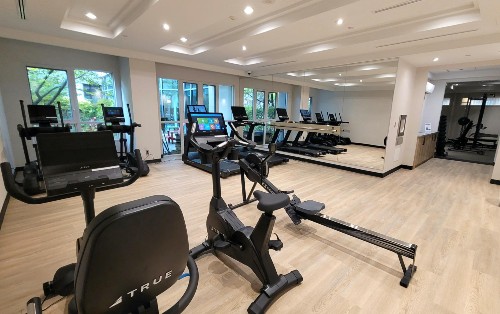
amenityThe fitness centre was considered to be the second most valued amenity. Feedback from regular users highlighted opportunities for better ventilation, reduced noise transmission, additional equipment storage, and more exercise choices.


The renovation introduced noise-reducing rubber flooring, improved natural lighting through added windows, upgraded cardio equipment with integrated wireless technology, and expanded range of weight-training options.

Modernizing guest suites

The condo corporation also refreshed its two guest suites—a key amenity that generates revenue to support the operating budget. They were updated with new finishes and furnishings, additional electrical outlets, improved storage, small refrigerators, and a convertible chair-bed to increase sleeping capacity. Accessibility considerations were incorporated into bathroom design to better support residents and visitors with mobility challenges.

The importance of board leadership and communication

The board of directors played a critical leadership role in shaping the vision, driving the agenda and translating resident feedback into clear priorities and direction. They also approached the project through a risk management lens, ensuring decisions protected long-term value while meeting resident needs.

Melissa Minor, senior condominium manager and vice president of pre-construction services at Icon Property Management, emphasizes the importance of board involvement in guiding complex projects like amenity refurbishments.

“Board involvement is essential—not just in approving a project, but in shaping it,” she says. “When the board is engaged, informed, and aligned, the entire process becomes more efficient and transparent. For our building, the amenity project wasn’t just about updating a space; it was about understanding what our residents needed and ensuring the final result reflected those priorities.”

Throughout the renovation, residents were kept informed about project timelines, expected disruptions, and progress updates through regular communications. This transparency helped manage expectations so residents understood how the improvements were unfolding.

Strengthening community connections

Since the completion of the renovation, the building’s amenity spaces have become an active centre of community life. The social committee has welcomed new events such as wine socials, trivia nights, and a book club. Long-standing movie nights now feature improved seating and updated audio-visual equipment.

According to the board, resident response has been overwhelmingly positive. The refreshed design and flexible layouts have created welcoming spaces that encourage residents to spend more time in the building’s shared areas.

Lessons for other condo boards

Condo corporations considering similar projects should begin with meaningful resident consultation to guide the design and ensure the final results meet the community’s needs. Prioritizing flexibility allows spaces to evolve as resident interests change over time. And strong communication throughout the process helps maintain trust and support among residents.

As condo living continues to evolve, thoughtful planning and collaborative decision-making can transform aging amenities into dynamic spaces that strengthen both property value and community life.

John Margaritis is a principal at Armourco Solutions, a condominium refurbishment and restoration firm serving the Greater Toronto Area. He works closely with condominium boards and property managers on corridor, lobby, and amenity renewal projects, helping buildings modernize shared spaces while supporting long-term asset value and resident satisfaction.

Fengate, LiUNA open new Hamilton rental property

Fengate Asset Management has announced the official opening of 500 Upper Wellington, a new 260‑unit purpose‑built rental community in Hamilton’s Centremount neighbourhood. Perched along the Hamilton Escarpment, the development offers expansive views and modern, family‑oriented suites. It is the first property to begin leasing under Fengate Communities, launched earlier this year.

500 Upper Wellington is a LiUNA Pension Fund of Central and Eastern Canada (LPFCEC) project, developed in partnership with Fengate and The Hi‑Rise Group. According to the partners, the community reflects a shared commitment to expanding Canada’s housing supply and demonstrates a scalable, long‑standing approach to delivering high‑quality, attainable rental housing.

The opening comes amid sustained demand for purpose‑built rental housing across Hamilton and Ontario. Within three months of occupancy, 500 Upper Wellington reached approximately 30 per cent lease‑up, underscoring strong interest from residents seeking professionally managed rental options in the city.

“LiUNA has been helping build Hamilton and communities across Canada for generations, and our investment in 500 Upper Wellington reflects that long‑standing commitment,” said Joseph Mancinelli, Chair of LPFCEC, LiUNA International Vice President and Regional Manager for Central and Eastern Canada. “As demand continues to outpace supply, projects like this represent meaningful action toward increasing housing availability, creating opportunities for our members, and helping build stronger, more vibrant communities for today and for the future. We are proud to continue investing in Hamilton, creating lasting value for the community while helping ensure the city remains a place of opportunity, growth, and prosperity for years to come.”

Residents at at the new property have access to a range of lifestyle amenities, including a double‑height lobby, fully equipped fitness centre, resident lounge and dining space, outdoor terrace, dedicated children’s playroom, pet run and indoor pet wash station. More than 40 per cent of suites are two‑ and three‑bedroom layouts, supporting a variety of household sizes and living arrangements.

The building incorporates sustainability‑focused design features such as geothermal technology, heat recovery systems, energy‑efficient ventilation, smart in‑suite metering and EV‑ready parking. Its location near transit, parks, retail and healthcare services provides convenient access to everyday amenities and the broader Hamilton community.

“500 Upper Wellington is exactly the kind of community we are focused on delivering through our residential platform: high‑quality, thoughtfully designed rental housing in well‑connected neighbourhoods where people and families can build their lives,” said Jaime McKenna, President of Fengate Real Estate. “Together with LiUNA, we are responding to Canada’s housing supply challenge with communities that create enduring value for residents and investors. Through Fengate Communities, we are bringing this vision to life with vibrant, connected and resident‑focused living experiences across our growing portfolio.”

Earlier this year, Fengate launched Fengate Communities, unifying its residential properties under a single brand dedicated to fostering community and empowering prosperity for everyday Canadians.


Vancouver developer named to Order of Canada

Vancouver-based developer, Lorne Segal, president of Kingswood Properties, has been appointed to the Order of Canada. Governor General Louise Arbour announced his inclusion in a roster of 61 exemplary contributors to Canadian society just ahead of Canada Day 2026.

“These appointees, from diverse backgrounds and fields, reflect the talent and determination that shape Canada’s future. At a time of profound global change, their achievements highlight the strength of Canadians and the values we represent to the world,” she says. “Together, they remind us that building our country’s future is a shared effort that requires ambition and long-term commitment.”

The Order of Canada is one of the highest national honours that can be awarded to civilians. Established in 1967, its motto is DESIDERANTES MELIOREM PATRIAM, which translates to: They desire a better country.

The citation accompanying Segal’s appointment underscores the “principled enterprise and meaningful civic contribution” that has marked his real estate career and philanthropic endeavours in Vancouver and throughout British Columbia. At the helm of his multi-generation family real estate firm, he is known for pioneering the luxury condominium market category, embracing adaptive reuse and championing bold design, but that comes with associated objectives to spur positive improvements in people’s well-being.

“Lorne Segal is a respected business leader known for his visionary, detail driven leadership in landmark real estate development. He is equally recognized for his enduring commitment to community service, including leadership in major mental health and youth empowerment initiatives,” the Order of Canada citation affirms.

The circa-2001 Kingswood luxury condominium development continues to be one of the most notable entries in Kingswood Properties’ slate of projects, introducing an elevated standard of high-end residential design and amenities that launched a new market niche. In partnership with Bosa Properties, Kingswood now has more than 1,600 residential units in four towers under development in Vancouver, with roughly two-thirds set to be rental housing.

The Greater Vancouver Board of Trade, where Segal has served on the board of directors since 2003, is among the organizations expressing congratulations for his latest accomplishment.

“This prestigious honour is a well-deserved recognition of a lifetime of achievement and impact,” it states. “He has distinguished himself through visionary leadership, entrepreneurial excellence and an unwavering commitment to giving back. Through his work with Kingswood Properties and his extensive philanthropic contributions, he has helped shape stronger communities while inspiring others through his dedication to service.”

Canadian achievers garner 2026 ASHRAE awards

Canadian recipients of 2026 ASHRAE awards demonstrate achievements in advancing sustainability, innovation and professionalism in the HVAC&R and building sciences sectors at all career stages. This year, 15 Canadians number among the nearly 100 outstanding members recognized at the Society’s annual conference, currently taking place in Austin, Texas. Notably, Professor Carey Simonson of University of Saskatchewan earned accolades in two separate categories.

“ASHRAE’s strength is built on the expertise, dedication and leadership of its members,” Bill McQuade, ASHRAE president for 2025-26 observed as the honours were bestowed earlier this week. “Their achievements exemplify ASHRAE’s commitment to advancing the built environment and creating a more sustainable future.”

Dale Carter, an ASHRAE Fellow and Life Member from Comox, British Columbia, is among a select group of 17, worldwide, to be commended as a Distinguished 50-year Member this year. In addition to longevity within the Society, recipients must be an ASHRAE Fellow and/or have served as a chapter president or previously received a Distinguished Service award for their contributions. For Carter, who was named a Fellow in 2012, the new designation expands a slate of honours that also includes the Distinguished Service Award, the Exceptional Service Award, a Chapter Service Award in B.C. and a Regional Award of Merit.

At the early end of her career, Tina Abbasi, is one of three Individual Excellence award winners for Young Engineers in ASHRAE (YEA), for efforts to support and advance ASHRAE’s programs and ideals. Abbasi is Director of Operations with Zapas, a mechanical services firm based in Vaughn, Ontario, who serves as the 2025-26 secretary of the Toronto ASHRAE chapter. She has a Bachelor of Engineering in Mechanical Engineering from York University, an ASHRAE HVAC Design Essentials certification and a LEED Green Associate (GA) designation.

Eight Canadians are among the 41 recipients of Distinguished Service awards this year, including:

  • Niss Feiner, CHD (ASHRAE certified HVAC designer), principal mechanical designer at Delta-T Designs Inc., Oro-Medonte, ON;
  • Kyle Hasenkox, a principal at Rocky Point Engineering Ltd., Victoria, B.C.;
  • Heric Holmes, P.Eng. senior manager, mechanical engineering at Bird Construction, Edmonton, AB;
  • Genevieve Lussier, president, Eequinox, Montreal, QC;
  • Les Pereira, retired, Richmond, B.C.;
  • Carey Simonson, professor, Department of Mechanical Engineering, University of Saskatchewan, SK, (who also received a Exceptional Service award);
  • Elia Sterling, president, Theodor Sterling Associates, Vancouver, B.C.; and
  • Fitsum Tariku, P.Eng, professor, School of Sustainable Energy Engineering, Simon Fraser University, Burnaby, B.C.

Three Canadians are among the eight 2026 recipients of the Exceptional Service award, which recognizes previous winners of the Distinguished Service award who have continued to make exemplary contributions. They are:

  • Robert Bean, RET, PL(Eng), retired practitioner, Lake Chestermere, AB;
  • Isabelle Lavoie. general manager, Johnson Controls, Montreal, QC; and
  • Carey Simonson, professor, Department of Mechanical Engineering, University of Saskatchewan, SK. Earlier this year, he received ASHRAE’s E.K. Campbell Award of Merit, which recognizes outstanding service and achievement in teaching.

Two researchers from Quebec’s Université Laval have also earned accolades for the high-calibre insights they shared with delegates to the 2025 ASHRAE winter conference. Marie-Pier Trépanierand Louis Gosselin’s paper, When Variability on Climate and Occupants Meet: How Climate Change Can Affect Different Occupants in Their House? was judged the year’s best presentation at an interactive poster session at a Society conference. Trépanier is a PhD candidate and Gosselin is a professor in Laval’s Faculté des sciences et de génie.

Advancing resident-centred seniors’ housing

La Société immobilière Marc Lemieux (SIML) is advancing its long‑term strategy for seniors’ housing with the acquisition of three retirement residences in the Québec City region. The recent transaction, valued at $51 million, adds 436 units to its growing portfolio and reinforces its commitment to safe, dignified, and community‑centred living environments for older adults.

For SIML, the announcement represents both a strategic expansion and a deepened investment in the long‑term stability of Québec’s seniors’ housing sector.

“A seniors’ residence is first and foremost a living environment where everyone should feel at home, safe, and respected, and it is with this mindset that we begin this new chapter,” said Marc Lemieux, President of SIML. “As the market continues to evolve, we aim to contribute to a stronger and more sustainable ecosystem by investing in quality residences, supporting trusted operating partners, and helping create environments where residents can live with dignity, safety, and a genuine sense of belonging.”

The three properties—Pavillon Sekoïa in Lévis, Pavillon au Cœur du Bourg in Charlesbourg, and Pavillon de Claire in Vanier—were previously operated by LOGISCO and employ about 140 people. Michel Parent, President of LOGISCO, said the decision to sell was not easy, but added, “We are confident that SIML and Groupe Patrimoine will continue to build on what has made these communities successful.”

All parties have underscored the importance of continuity and partnership throughout the operational transition, emphasizing stability for residents while ensuring the benefits of renewed long‑term investment. Groupe Patrimoine—a Québec family‑owned company with more than 30 years of experience in retirement residence management—has been entrusted with day‑to‑day operations, and will keep existing teams, services, and routines in place while taking time to understand each community’s needs; it also plans to strengthen collaboration among private, public, and community stakeholders, an approach it considers essential to long‑term quality and stability across Québec’s seniors’ housing sector.

“For us, a retirement residence is much more than a building, it’s a home where every resident deserves to be known, respected and supported,” said Nathalie Paré, President and CEO of Groupe Patrimoine. “Our role is to help our communities evolve in line with the needs and expectations of residents and their loved ones, while preserving what makes each one unique.”

Mark Lemieux (MILS) and Nathalie Paré (Groupe Patrimoine). Photo courtesy of Felix Desforges

Meeting a growing societal need

SIML’s portfolio expansion comes at a time when Canada’s seniors’ housing sector faces mounting pressure, as demand outpaces new developments driven by an aging population and evolving expectations around comfort, care, and community. At the same time, rising construction costs, regulatory complexity, and significant capital requirements have slowed the creation of new residences.

According to Lemieux, many existing properties require modernization to meet updated government standards and support resident well-being.

“SIML sees a very strong long-term outlook for seniors housing in Quebec and Canada,” he said. “The aging population is creating sustained demand for quality housing options that combine comfort, services, care, and community.”

Lemieux added that demographic pressures are particularly acute in Québec, where an aging population is driving additional demand for housing that balances independence with access to services. SIML sees these dynamics as “creating meaningful opportunities for committed owners that prioritize quality, stability, and ongoing modernization.”

He also emphasized the importance of collaboration: “We believe the future of the sector will depend on strong relationships between long-term investors and experienced operators who understand the realities of residents, families, employees, and local communities.”

While the addition of 436 units marks a meaningful expansion for SIML, Lemieux says the company intends to continue growing its seniors’ housing portfolio through additional acquisitions in the years ahead. Its Quebec-based portfolio currently includes nearly 2,000 units across seniors’ residences, hotels, residential properties, and a shopping centre, all supported by more than 275 employees and experienced operational partners.

As Québec’s seniors’ housing sector continues to evolve, SIML’s acquisition of Pavillon Sekoïa, Pavillon au Cœur du Bourg, and Pavillon de Claire signals confidence in the future—and SIML’s belief that long‑term ownership, paired with experienced operators, can help build resilient communities where older adults feel supported, connected, and at home.


The hidden cost of reactive cleaning programs

For many facilities, cleaning (or the lack thereof) becomes most visible (and urgent) when something goes wrong: a restroom runs out of supplies, an entryway begins to look neglected, a tenant complains about overflowing trash or dirty common areas. The issue gets reported, the service provider responds, and the problem is resolved on paper.

On the surface, the process appears to work – a problem arises, action is taken, and operations continue. The challenge is that by the time a complaint is submitted, the real cost has already been incurred.

Too often, facility cleaning programs operate in a reactive mode, addressing issues only after they become visible to occupants, visitors, or tenants. While this approach may seem efficient, attentive, and productive in the short term, it will more frequently lead to higher operational costs, increased management burden, decreased tenant/customer satisfaction, and a diminished facility experience.

The most successful facilities take a different approach; rather than waiting for issues to surface, they build systems and processes that identify and resolve potential problems before they affect occupants – in other words, your customers.

Reactive cleaning creates hidden operational costs

When people think about cleaning costs, they often focus on labour, supplies, and service contracts, overlooking the indirect costs associated with service failures.

Every complaint requires attention. Facility managers must investigate the issue, communicate with vendors, follow up on corrective actions, and ensure the problem has been resolved. Even seemingly minor issues consume valuable time that could otherwise be spent on strategic priorities. Those interruptions add up quickly.

More importantly, reactive service often creates inconsistency. A facility may appear well-maintained one day and noticeably neglected the next, and while individual issues may be resolved, the building’s overall perception begins to suffer.

Occupants rarely judge a facility based on a single interaction; they judge it based on what they see every day. When standards fluctuate, creating differing perceptions of cleanliness, confidence in the operation declines, even if the underlying problems are eventually corrected.

Small problems rarely stay small

One of the biggest misconceptions in facility management (and, let’s be honest, most industries) is that minor issues are harmless and can wait until someone notices and reports them.

In reality, small issues often create larger operational challenges when left unaddressed.

An entryway that receives inadequate attention can lead to premature floor wear and costly repairs. Infrequent restroom inspections trigger complaints that affect overall occupant satisfaction. Overflowing waste containers can create sanitation concerns, pest infestations, unpleasant odors, and negative impressions for visitors.

Then there is “word of mouth,” when occupants share their experiences. In the restaurant industry, one common refrain is that a customer who has had one bad experience will tell 10 people. But if an occupant sees a bathroom that is not up to par, how many other occupants will that person tell?

The cost of correcting these issues after the fact is often greater than the cost of preventing them in the first place.

This is why proactive cleaning programs focus heavily on inspections, communication, and quality assurance. The goal is not simply to clean a facility; the goal is to identify developing issues before they become visible problems.

The value of proactive service

A proactive cleaning program shifts the focus from responding to complaints to preventing them altogether – before they become problems.

That begins with establishing clear service expectations and regular inspection schedules. High-traffic areas, restrooms, entrances, and shared spaces should be evaluated based on usage patterns rather than waiting for occupants to report concerns.

Communication also plays a critical role. The strongest facility partnerships involve regular conversations between facility managers and service providers. These discussions create opportunities to identify emerging challenges, adjust service levels when needed, and ensure expectations remain aligned.

Technology can further strengthen this process by providing visibility into inspections, service completion, and performance trends. However, even the best technology is only effective when paired with consistent oversight and accountability. And occupants who understand there are proactive systems in place are generally more forgiving of a slip in a process than they are of waiting to see how long it will take for someone to pick up a piece of trash.

Ultimately, proactive service is less about tools and more about mindset. It requires a commitment to anticipating needs rather than simply responding to them.

Building a culture of prevention

The highest-performing facilities share a common characteristic: they treat cleaning as a preventive function rather than a corrective one.

Their teams conduct regular inspections, communicate frequently, and address issues while they’re still manageable. Rather than measuring success by how quickly problems are resolved, they measure success by how rarely those problems occur in the first place.

This approach benefits everyone involved. Occupants enjoy a cleaner, more consistent environment, facility managers spend less time responding to complaints, and service providers operate more efficiently because they manage conditions rather than crises.

Most importantly, facilities maintain the professional appearance and operational consistency that occupants have come to expect.

Prevention is cheaper than recovery

Facility management will always involve unexpected challenges: buildings are dynamic environments, and no operation can eliminate every issue. However, there is a significant difference between managing occasional challenges and operating in a constant state of reaction.

The facilities that perform best over time are not necessarily the ones with the largest budgets or the biggest teams; they’re the ones that have built systems designed to identify issues early, maintain consistent standards, and prevent small problems from becoming larger ones.

In facility services, success is rarely determined by how well you respond to complaints. More often, it’s determined by how effectively you prevent those complaints from happening in the first place.

It has always been easier to destroy than to create, and reactive policies can destroy reputations and ultimately trust – in a matter of seconds. A proactive approach allows facilities to build trust and the expectation of an excellent environment – but it takes time, effort, and, most importantly, commitment.

Will Foust is the Master Franchise Owner for Anago of St. Louis, part of the Anago Cleaning Systems brand, supporting over 1800 franchises across the U.S. and Canada. For more information about Anago of St. Louis, visit www.AnagoCleaning.com/StLouis.