Articles Archive - Page 147 of 928 - REMINET
REMI

Liminal House embodies transitions

The Liminal House project site straddles the interstice between a suburban residential neighbourhood and West Vancouver’s natural stony seashore. Positioned on an expanded border between land and sea, the building form references the creatures that occupy this interstitial territory, whose physiology has adapted to such challenging conditions. In the same spirit, the house establishes itself in concrete, stained Accoya wood, and aluminum plate—enduring materials that can resist the battering effect of a shore environment.

The clients approached Vancouver-based McLeod Bovell at a pivotal stage in their lives as soon-to-be empty nesters. The evolving needs of a family became the impetus for how the designers imagined a house that could embody the state of transition at a conceptual and experiential level. The word liminal encapsulates ideas that have informed the design process: namely the feeling of inhabiting a transitory place; orchestrating movement through space; and dwelling in the moments between from and to…

Drawing from their experience negotiating complex topography and tight proximity with neighbours, McLeod Bovell has learned to abandon the reading of the project as a series of flat “elevations” which exist from an imaginary or inaccessible viewpoint. Instead, they embrace a scenographic approach where the house can be understood after having moved through and around it. The language of courtyards, cantilevered volumes, and extension of landscaped surfaces onto floor areas below dismantle boundaries between the house and the natural environment.

The changing outdoor atmosphere at the shore not only animates the house, but is in turn animated by the house: views are framed between solid walls and walls of glass; their images duplicated by a dark pool at the edge of the property and by the glazing of internal courtyards. Reflections and refractions of the outdoors evoke a feeling of being neither here nor there, but somewhere in between.

The Liminal House garnered both Jury Winner and Popular Choice recognition in Architizer’s 12th annual A+Awards for Residential Interiors (>3000 sf).


Incorporating fire protection into your maintenance program

As a maintenance manager, fire protection is a critical part of your preventative maintenance plan to stay compliant, protect your building, and keep your staff and visitors safe. Research shows that commercial building fires cost businesses about 155 million dollars in damage per year. Put proactive practices in place, create a fire safety plan, and ensure that your teams know what to do in an emergency.

As you work to prioritize fire safety here are some of the steps you can take to adjust your maintenance plan accordingly:

  • The most common fire safety hazards violations in commercial buildings include blocked exit doors, faulty emergency exit lighting, untested fire alarms and smoke detectors, missing fire extinguishers, not keeping proper records, and more. Stay on top of these areas and ensure that you avoid these risks with regular testing and inspection of these areas.
  • Regulations, codes, and requirements are ever-changing, so ongoing online and on-the-job training for your teams can help you stay on top of the requirements for your building.
  • Have available online resources for your area handy to reference or for training purposes.
  • Schedule technical diagnostics like infrared scans that can help detect potential safety hazards in your electrical system – link to the magazine article
  • Create a fire safety plan including emergency protocols, evacuation plans, fire drill information, staff training plans, and maintenance procedures. In Ontario, fire safety plans listed in section 2.8 of the Ontario Fire Code must be inspected by a Chief Fire Official with jurisdiction over the building. This means that you will need to prepare and submit a draft of your plan to your local fire department. For provinces outside Ontario, check with your local and provincial guidelines for specific information about getting approval for your plan.
  • Have equipment and measures regularly maintained and tested to remain compliant and confirm they are in working order.
  • Studies show that 18 per cent of fires start with electrical or lighting systems, and eight per cent from heating equipment, so inspect these systems regularly and perform recommended and preventative maintenance, along with repairs, to help reduce the risk of fire in these locations.
  • Conduct regular walk-throughs with your team to identify potential fire hazards and flammable liquids or gases, confirm fire extinguisher locations, identify electrical panels and equipment, and locate emergency exits so everyone is prepared, should there be an emergency.
  • Similarly, set a schedule to identify and test fire extinguishers, emergency lighting, sprinkler systems, fire detection systems, and more.
  • Conduct regular fire safety training with your teams.
  • Manage your data, from past issues to visits to predicted failure so you have the information at your fingertips when you need it most.

Fire protection is a crucial part of maintaining a commercial building, so stay vigilant with a proactive approach to fire safety.

Apartment performance down slightly in Q2

Yardi Canada has released its 2024 multifamily report, analyzing aggregated and anonymized client data from 476,000 units across 5,400 Canadian properties. The report provides a detailed overview of Canada’s Q2 2024 apartment performance, revealing a slight cooling in the market despite sustained high housing demand relative to supply.

According to the data, key metrics like rent growth and vacancy rates have moderated from recent peaks but remain strong by historical standards. Meanwhile, Canada’s economic growth remains modest, with GDP rising at a 1.7 per cent annual rate in the first quarter, as per Statistics Canada, and the unemployment rate standing at 6.4 per cent as of June.

Supply and demand 

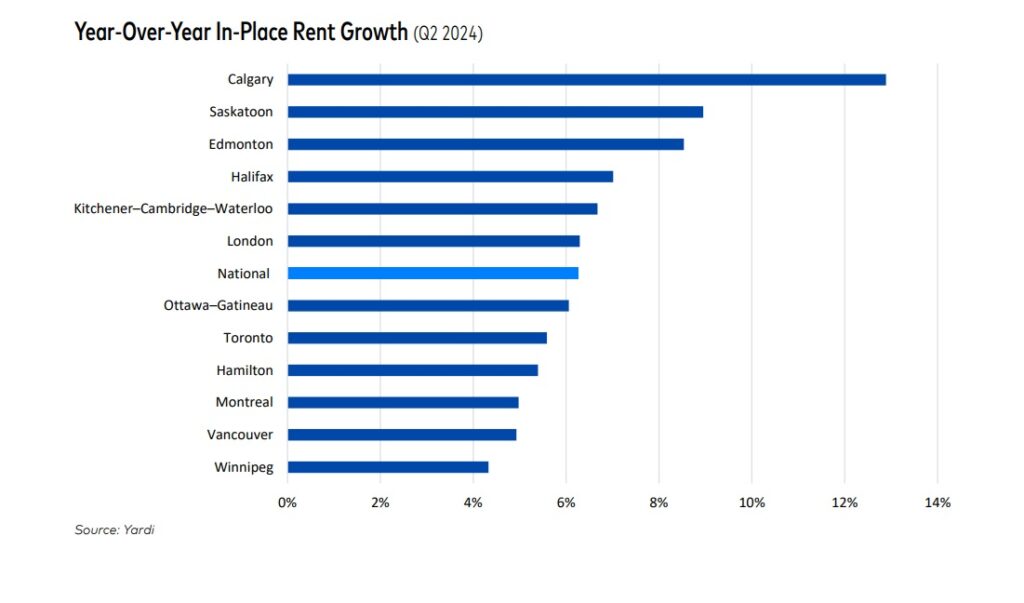
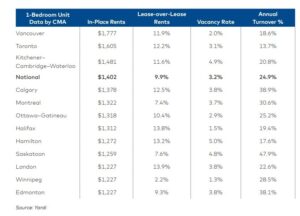
In terms of new builds, Yardi reports that Canada delivered over 110,000 apartments in 2023, but not enough to meet the growing housing demand—a sign that more construction is needed. The in-place annual rent growth rate declined to 6.3 per cent, primarily due to limited housing supply and rising population growth. Overall, Canada’s average national vacancy rate rose to three per cent, the highest its been since Q2 2022. Yardi theorizes that renters are staying put longer due to the high cost of living, making moving less affordable.

“Canada’s apartment market is demonstrating signs of cooling, but remains fundamentally strong,” said Peter Altobelli, vice president and general manager of Yardi Canada Ltd. “While rent growth has begun to decelerate from its peak, it persists at a robust level due to ongoing supply constraints. The disparity between housing demand and available units continues to be a significant factor shaping the rental landscape.”

Apartment performance by locale 

In-place rent growth was led by the prairie provinces, Alberta and Saskatchewan, which have been drawing households looking for more affordable markets in recent months.  CMAs with the largest year-over-year in-place rent growth during Q2 2024 were Calgary (12.9%), Saskatoon (9.0%) and Edmonton (8.5%), which notably are all markets without rent control. In-place rents rose by less than 5 per cent in only two CMAs: Winnipeg (4.3%) and Vancouver (4.9%).

While apartment construction is not nearly enough to meet the demand of the growing population, completions did reach a multi-decade high last year, with multi-unit purpose-built rentals comprising a growing share of Canadian housing development. According to the Canada Mortgage and Housing Corporation (CMHC), Canada delivered 112,819 apartments in 2023, making up 60.1 per cent of the 187,630 housing units that came online. This marks a large increase from 2003, when 40,711 new apartments represented 28 per cent of all new housing, and from 2013, when 65,157 new apartments accounted for 45.5 per cent of all new housing. Meanwhile, the share of semi-detached and single-family housing has dwindled.

Working against the number of completions and impacting apartment performance, according to Yardi, are lengthening construction times from start to finish due to difficulties in securing construction financing, delays in obtaining municipal approvals in many jurisdictions, and a shortage of workers.

Apartment types 

New lease rates in Q2 2024 were extremely consistent across bedroom types, with  rents rising by 10.1 per cent for two-bedroom units, 10 per cent for bachelor units and 9.9 per cent for one-bedroom apartments. New leases rose 9.3 per cent for three-bedroom units, which typically have lower turnover.

“The high cost of homeownership is fueling rental demand, as some families cannot afford the cost of owning a home,” Yardi concluded.

For more detailed insights, download the full report here.


Alberta sets housing construction record in June

Alberta set a new record in June with the most housing starts in the first six months of a year, according to new data from the Canadian Mortgage and Housing Corporation.

Canada had a 7% increase in housing starts in the same time period. Alberta’s housing boom of 54% is on track to set records as one of the busiest years ever. Edmonton increased its number of housing starts by 67% and Calgary by 38% since the same time last year. Starts also skyrocketed in smaller cities. Lethbridge has a 266% increase (289 compared to 79), while Red Deer had 194% boost (278 compared to 95)

Lower development costs for building new homes and less red tape has boosted the level of construction in the province. “Government policy significantly influences industry’s ability to develop new inventory for all Albertans,” added CEO Scott Fash of the BILD Alberta Association. “Effective policies empower builders to enhance efficiency, meet the needs of Alberta’s growing population, and expand housing options for all.”

As of March 31, Alberta’s government has committed $179 million to 1,187 units of affordable housing and $67.5 million to 435 units of affordable housing that are currently under construction.

A greener approach to public restrooms

Sustainability doesn’t always have to be complicated or costly. While many maintenance managers may be looking at adding technology like sensors or taking on a complete renovation project, if you are not at that stage, there are a few simple steps you can take for a greener approach in your public restrooms.

These steps not only help you work towards your ESG goals, but they may also have a broader appeal for your staff and visitors, as more and more companies move to adopting greener initiatives.

Consider making a few small changes to prioritize sustainability in your public restrooms:

  • Use environmentally friendly toilet paper. With built-in enzymes, many of these options can help eat away at bacteria on your pipes, helping to reduce the risk of issues with your plumbing.
  • Conserve water. According to the Environmental Protection Agency (EPA), a faucet dripping at one drip per second wastes 3,000 gallons of water annually. Switching out old faucets, replacing cartridges, and adding sensors can all help reduce your water consumption.
  • Lower your lighting costs. LED lighting offers up to 80 per cent more efficiency than fluorescent lighting, making it a good choice for large spaces. They also have a longer lifespan and perform better. Consider setting timers or motion sensors so that lights only have to be on when someone is in the room.
  • Get greener with your cleaning products. Choose products with low VOCs and natural ingredients to lessen your environmental impact. Look for product certifications like Green Seal or ECOLOGO® to choose products that meet the standards set out in the certification with minimal health effects. These products may also be safer to use for your cleaning staff.
  • Get smarter. If you are considering an upgrade, smart restrooms provide technology like sensored hand dryers and flushing toilets, real-time analytics to measure inventory levels, use and traffic, and programmable features.

With a few simple steps, you can make your public restrooms more sustainable, cut down on costs, and work towards your company’s ESG goals.

HSI merges with ISSA

ISSA, the worldwide cleaning industry association, and the Healthcare Surfaces Institute™ (HSI) are pleased to announce that HSI has merged with ISSA. HSI will now be known as the Healthcare Surfaces Institute, a Division of ISSA, and the HSI community can become members of ISSA immediately.

HSI was formed in 2015 at the first Healthcare Surfaces Institute Annual Summit. During the past eight years, HSI has had many accomplishments including, but not limited to, identifying the many aspects of the surface issues and how they support the spread of deadly pathogens via surfaces leading to unaddressed patient and healthcare worker safety risks. Surface disinfection compatibility issues are one of the many overlooked issues being addressed by HSI, and A published case study provided a real-life accounting of these gaps.

The institute includes an advisory committee of world-renowned experts in the fields of healthcare, infection prevention, facilities management, environmental services, manufacturing and engineering, regulatory agencies, microbiology, occupational health, and academia. This combination of professionals and thought leaders has brought professionals out of their silos of expertise to collaborate on projects that will support needed change for the creation of sustainable solutions that ultimately will reduce the transmission of deadly pathogens via surfaces. HSI’s work includes scientific research, development of guidelines and standards, and outreach and educational programs to support the use of surfaces that support effective and efficient cleaning and disinfection of healthcare facilities.

“The addition of HSI to the ISSA family furthers our association’s mission to change the way the world views cleaning and advance the professionalism of the cleaning industry,” said ISSA Executive Director John Barrett. “We are incredibly excited to welcome HSI to ISSA and look forward to adding the group’s knowledge and expertise to educate and empower our membership and our industry.”

The merger further augments ISSA’s extensive educational and certification offerings. With the addition of HSI, ISSA gains strength and subject matter expertise in the healthcare sector to bolster education and training and develop new programs to support the industry, especially in the fight against the rampant spread of healthcare-associated infections (HAIs) via surfaces. Cleaning and facility solutions professionals are invited to join HSI at a rate of US$290 per year and gain access to select ISSA benefits.

As part of the agreement, HSI Executive Director Linda Lybert becomes a full-time ISSA staff member. Lybert is a 25-year healthcare industry veteran and an established expert on infection control as it relates to the foundational issue of surfaces. She is a published author of numerous articles addressing issues of surfaces and the spread of microbes that can lead to deadly infections. Lybert’s background includes being appointed to the American Society of Healthcare Engineering (ASHE) Planning Design and Construction Committee, and she was instrumental in the development of ASHE’s Sub-Contractor Healthcare Construction Certificate Training program. In 2006, Lybert was appointed to and served on the Facilities Guidelines Institute’s (FGI) Revision Committee.

Lybert will lead the HSI division while working closely with the ISSA management team to develop and implement new training and certification programs, education events, and other engagement opportunities for the cleaning, facility solutions, and healthcare markets under ISSA’s global platform.

“I am very excited about this partnership and the opportunities it will deliver to not just the cleaning industry, but public health overall,” said Lybert. “Being able to combine HSI’s programs and subject matter experts with ISSA’s global network will allow us to increase awareness of how surfaces are active in spreading pathogens that cause deadly infections, and more importantly how we can work together to make the world a healthier, safer place for everyone.”

For more information, visit www.healthcaresurfacesinstitute.org or https://www.issa.com/industry-news/healthcare-surfaces-institute-merges-with-issa/.

Dianne Watts joins EllisDon board of directors

Former Surrey mayor Dianne Watts has joined EllisDon Corporation as a new board member.

“As our board of directors continues to grow, we are humbled to invite Dianne L. Watts to our group of leaders who are undoubtedly dedicated to supporting the future of EllisDon,” says Geoff Smith, chair, board of directors, EllisDon. “Dianne’s passion throughout her career showcases her desire to commit to the betterment of our organization and will bring a high level of diverse and well-respected opinions.”

Watts served as the mayor of Surrey from 2005 to 2014 and was passionately involved with policies to reduce Surrey crime and poverty. She supported construction and innovation in the city, leading to Surrey being identified as the number one place to invest in B.C. four years in a row by Real Estate Investment Network.

She also helped support the Homelessness and Housing Foundation and Fund, to support the creation of affordable housing. Watts’ dedication to the economic stability of her region also led to launching the Surrey Economic Summit. Watts is currently a director on the board of Canfor Corporation, co-chair UNITI Harmony Housing Project, a member of the Women of Options Affordable Housing, on the board of directors for Westshore Terminals, and a freelance contributor to CBC Radio, CTV, and Global TV.

“I am honoured to join EllisDon’s board of directors at an exciting time in the company’s growth and evolution,” said Watts. “This is the beginning of an exciting future with the EllisDon team, and I look forward to working with a great group supporting the entrepreneurial spirit as we move into the future.”

EllisDon is continuously dedicated to ensuring board members align directly with their values and personify this in their enthusiasm towards supporting its global teams.

The board is now comprised of nine directors, collectively bringing decades of expertise and experience to the company.


Many Canadians planning to renovate, not move

A new report found that 94% plan to remain in their current dwellings for the next year, rather than purchasing a new home. The newly released 2024 Canadian Homeowner Renovation Report, by Angus Reid and FinanceIt Canada Inc, also found a quarter are aiming to renovate during this time.

These findings are from a sample of 1,514 Canadians who were surveyed in June.

Respondents replied that rising costs, primarily groceries and gas, are keeping them situated at their current addresses. “With the very high current cost of living burdening so many Canadians, we’re seeing a notable shift in homeowner behavior,” said Michael Garrity, executive chair of Financeit. “More and more Canadians are choosing to stay where they are, and instead invest in renovating their current homes rather than moving to a new one. We understand that enhancing one’s current living space can be a more economical and satisfying option in the long run.”

The majority who plan to update their spaces over the next year want to improve the functionality of their home. Ontario homeowners are more likely to do so. Another 21% want to boost the value of their home, and in particular, 65% of Manitobans.

Owners are primarily looking to remodel their kitchen, bathroom or basement. Another 24% want to landscape and 17% hope to replace windows and/or doors.

Energy efficiency is also top of mind as spending habits shift. The data revealed that 62% of homeowners are likely to invest in energy efficient home renovations to save money on future utility costs. Owners in Atlantic Canada (71%) expressed the most enthusiasm for these types of upgrades.

More national and provincial data related to the study can be accessed here.

Upping the IAQ in your building

Allergens and dust are found in the air throughout the summer, so IAQ remains a priority year-round. Maintenance managers and commercial cleaners need to focus on ways to improve indoor air quality to continue to provide a safe environment for the people inside.

HVAC

Your HVAC system is a vital tool for keeping your building’s air fresh and clean. Be proactive in setting up a maintenance schedule with a professional for your HVAC system that includes changing the filters, cleaning the coils, checking belts and pulleys, cleaning inside the cabinet, checking the condensate lines, and recording all performed maintenance. Ensuring that your HVAC system is operating at peak performance will allow you to provide clean air for the occupants of your building.

Humidity

Humid air is a concern as high levels of humidity can create a breeding ground for bacteria and mould. Monitor your humidity levels to ensure that they are within the recommended range of between 40 and 60 per cent. If your humidity levels are high, improving ventilation with exhaust fans and using de-humidifiers can help you regulate those levels. Technology can also help you stay on top of your humidity levels with tools like sensors and smart thermostats that will report on humidity levels throughout your building, even when the spaces are unoccupied.

RELATED: Managing moisture and mould

Cleanliness

While this may seem simple, cleanliness – or lack thereof – can affect your IAQ. Dust that remains in carpets, on furniture, appliances or electronics can find its way into the air. As well, any garbage that is not removed promptly can affect the air quality with odour, biological contamination, and can attract pests.

It can also create the perception that IAQ is poor, which could affect employee performance. Adding greenery can help with IAQ, as plants absorb gases and VOCs, helping to clean the air. However, over-watering or spilling water can create a space for mould or fungi to grow and become airborne, so be vigilant with cleaning up spills and avoiding puddles or water inside.

IAQ does not just refer to germs, it is important to keep your HVAC in working order, monitor humidity, and prioritize cleanliness to provide clean, safe air throughout your building year-round.

Initiative seeks to close emergency response gaps

Asleep in bed, the sound of sirens outside your condo awakens you in the middle of the morning. You hear no alarm and no security announcement, yet the sirens blare loudly. Looking outside, countless fire, police and ambulance vehicles congregate below. Red lights glitter off your window as more vehicles arrive from the main street. Emergency responders huddle at the main entrance—waiting. Still no announcement. The distinct sound of radio chatter fills the air. You wonder what’s going on, what should I do, and how concerned should I be?

The lack of access to key areas of properties and critical information for emergency responders is an unfortunate common reality in high-rise settings across North America. What happens if a condo’s site security becomes incapacitated or is away from the desk, tending to a medical emergency?

What happens when there is no security presence at a site? The fire department can retrieve the keys from the fire key box or smash the door glass to gain entry (which happens more often than one would think), but experts often cite process and systemic failures as the cause.

Is this the standard of care that citizens deserve?

During inquests and post-incident inquires experts have identified three major solutions to overcome barriers that directly impede the effectiveness of emergency responders: immediate and unencumbered access to areas within high-rise sites in emergencies; advanced site layout knowledge so emergency responders know exactly it often takes too long for emergency responders to find and gain access into unfamiliar areas of the building without security assistance or site knowledge from key personnel who can assist.

Such delays have been well documented and have been repeatedly pored over by lawyers and experts alike throughout North America. The aftermath and critiques are never flattering. In many cases, emergency responders have been highly criticized despite not having the adequate tools to effectively do their jobs.

Post-incident analysis where the source of the problems are; and accessing immediate communication channels to key site personnel like the property manager, security, and building superintendent who know the site intimately.

Getting instant access and information are critical success factors for emergency responders. Do they have the proper tools now? No. Should they? Yes, as their primary duty above all else is the preservation of life. Are they frustrated? Yes, and they continue to openly voice their frustrations. This is not a local problem but something that emergency responders face throughout North America.

Emergency responders also face significant dangers personally when responding to emergencies. Whether incidents relate to active aggressors or hidden dangers because of improperly stored chemicals/ combustibles, the risk is real. Knowing the risks before emergency responders get to a scene by accessing critical information is the key to both saving lives and protecting their own lives, something that responders fear and know all too well.

In the United States, there have been countless mass casualty disasters where responders were frustrated by the lack of site access, information on site configuration, and/or access to key site personnel, which has led to unintended consequences including death.

An extreme example is the El Centro College shooting incident in 2016, one of the deadliest in U.S. law enforcement history, that involved an active aggressor. Post-incident analysis, criticism, and lawsuits focused on several failures. Delay in responding due to lack of information featured prominently in the aftermath analysis.

Major incidents are not limited to the U.S. although they have had more than their fair share. Back in 2014, an explosion at a condominium in downtown Toronto’s Liberty Village blew up an entire unit, resulting in a major fire. This was caused by an illegal methadone lab. The outcome was severe; luckily no lives were lost.

Advanced knowledge of dangerous materials is critical for emergency responders. They need to know exactly what is behind every single door, especially where chemicals are stored. Opening a door can fuel a fire and cause tremendous damage, serious injury, and very likely, the loss of life. The potential for explosions is also real in high-rise communities that turn a blind eye to illegal propane barbecues on balconies and improperly stored paint and chemicals inside high-rise locker rooms.

Moving towards a better standard of care

Dating back to 2008, the Ontario Incident Management System (IMS) is a science that emergency responders heavily rely upon as the benchmark standard during emergencies. IMS offers clear, straightforward guidance on communicating, coordinating, and collaborating during an incident response. Part of that significantly relies on quick access to key areas of sites and the control of information.

As it stands, Ontario’s current benchmark standard for access control and information in high-rise communities is the fire safety plan and key boxes that contain site access keys, floor plans, and a list of persons requiring special assistance.

Can you imagine in this day and age emergency responders having to flip through hardcopy floor plans (often out-of-date and faded) in the dark of night to determine important site areas when they arrive at a scene? This is not the standard of care that emergency responders should be working with. They deserve better. Much better.

It is not that people aren’t talking about this. Safety advocates and experts in Ontario are stepping up to the plate and pushing for more tools to help emergency responders. For example, a groundbreaking initiative is now underway in Ontario in several jurisdictions to reduce emergency response times and mitigate risk.

The Peel Regional Police Service is one jurisdiction that is leading what’s called the Building Emergency Access Program, which focuses on high-rise community safety and resident well-being. Peel has partnered with a company (Safe Buildings) to create an information and access online portal – an application specifically designed to help emergency responders.

Safe Buildings is currently piloting this program in Peel to test its reliability in high-rise communities. The technology involves a resilient online application that digitizes floor plans and information for site key contacts like the property manager and security. Emergency responders can access this information prior to reaching the site, which for them is a real game changer.

A critical component of this application is that it allows for immediate access to remotely open main doors of a site when no one is present to assist. This shaves vital seconds, and even minutes, off response times. New York City has already integrated a similar program as a mandatory feature for all high-rise buildings. The hope is that the same happens in Ontario.

Right now, this technology is not yet mandatory across the province. Registering sites online for this program is currently on a voluntary basis and only in a small area of Peel Region under the pilot project. The voluntary nature of this project makes it very difficult to gain enough traction so the program is effective for emergency responders.

Yet like other regulated minimum safety standards for high-rise buildings, such as emergency call buttons in elevators that are directed to third-party providers, Safe Buildings technology is specifically designed to save lives and in the view of many, including emergency responders, this program should be mandatory across the province.

The Safe Buildings program was created to be net-zero cost to all end users at high-rise sites. Ontario has already set aside monies for local governments to create initiatives to improve community safety. In response to provincial monies, local jurisdictions are finding ways to implement programs using these funds.

For instance, Toronto created the SafeTO program that was approved in January 2022. SafeTO is a long-term plan to spend provincial monies directed to improving community safety that involves prevention and well-being, not just crime and enforcement.

Although SafeTO money has not yet been earmarked for Safe Buildings technology in high-rise communities, it seems like a natural fit. Regulating this program province-wide will go a long way to mitigating risk and saving lives. The technology is working well in other jurisdictions. We just need the political will to make it mandatory.

Safe Buildings is led by Jason Reid, senior advisor for fire and emergency management with National Life Safety Group, and Aamer Merchant, a police professional with a strong technology background. Merchant says that embracing innovative technologies is crucial in today’s resource-constrained environment where vertical living is becoming more prevalent in urban settings.

“By adopting responsive technologies, governments can fulfill their commitments to serve their residents effectively while also safeguarding both citizens and emergency responders,” Merchant says. “It’s not just about keeping pace with the times, but also staying ahead to meet the evolving needs of communities.”

Quintin Johnstone is CEO of Riskboss Inc. and a former Toronto police officer. For more information on articles like this, or to answer any question on risk identification/mitigation, visit www.riskboss.com.

For more information on Safe Buildings technology visit: www.safebuildings.ca

Price increases predicted across luxury home market

Ontario condo sales have been sluggish lately, but more buyers will likely return to purchasing them once competition heats up again for single-family homes. That’s one prediction from Engel & Völkers’ 2024 Mid-Year Canadian Luxury Real Estate Market Report. The data focuses on $1 million-plus dwellings in Toronto, Vancouver, Ottawa and Halifax, between January and June.

Toronto and Ottawa

In Toronto, the market for homes valued at $1 million and higher showed consistency, especially in the detached market where rising interest rates had little impact. For instance, sale prices in Toronto grew by 4.73% for homes valued at more than $8 million.

On the other hand, condos stayed on the market longer between January and June. Units that weren’t located in prime neighbourhoods remained unsold.

In June, the Toronto Regional Real Estate Board reported that, at the end of May, the Greater Toronto Area had 8,183 apartment units for sale, which is the highest number compared to any month in recent history. High borrowing costs and purchase prices are factors.

The consensus from Engel & Völkers is that condos just aren’t big enough. One and one-plus bedroom units don’t meet the needs of family-focused millennials. Boomers who would normally move into downsizer-friendly condos are currently continuing to age in place because the inventory is either too expensive or not useful for their size needs.

According to the market outlook for Toronto, residential luxury real estate will see a 5 per cent increase by the end of the year, especially with the anticipated rate cut this fall.

“Once buyers begin getting priced out of the residential home market, they will not be able to compete, and consumer demand for condos will return,” Engel & Völkers state. “Investors should note that climbing rental rates will affect Toronto’s market outlook. Renters have a threshold, and many will reach a point where buying makes more sense than continuing to rent.”

Meanwhile, in Ottawa, the forecast calls for a 5 per cent price increase for both condos and residential homes by years-end.

Vancouver

Vancouver also experienced luxury market stability. Engel & Völkers expect a 4% price increase for condos and residential properties worth over $1 million by years-end, with a higher sales volume compared to the second half of 2023.

This year, many sellers had waited until spring to put their homes on the market. In April, there were 3,542 listings priced over $1 million and sales also grew to 1,213.

Buyers continued to have much choice during May. With little competition, many terminated their signed contracts due to issues with condo association documents, unacceptable home inspections and issues misaligned home appraisals and financing issues.

Meanwhile, government-imposed restrictions have pushed away potential investors who typically helped fulfill Vancouver’s rental supply. This shortage is causing rents to increase.

Halifax

Compared to the same period last year, there was a 14% increase in new listings and a 5% increase in sales for units worth over $1 million.

Up until April, homes priced under $700,000 sold fast due to ongoing population growth.  Halifax continues to be a seller’s market. Although, sales outside the city core were slow for homes over $1 million. Inventory isn’t as high due to high interest rates and a lack of foreign buyers who search for recreational properties.

“The foreign buyer ban has greatly impacted Halifax’s luxury market, especially condos and HRM waterfront properties,” said Donna Harding, an Engel & Völkers partner in Nova Scotia. “There is a misconception by buyers outside of Canada that it applies to the entire country rather than Census Metropolitan areas and Census Agglomerations.”

Engel & Völkers foresees a 6% price increase by the end of 2024 for this market.


Design captures Calgary Stampede experience

The newly opened Sam Centre in Calgary offers a year-round immersive experience that brings the ‘world of the Calgary Stampede’ – past, present and future – to life through technology, story-making and Western hospitality.

Designed by Diamond Schmitt, with associate architect Formed Alliance Architecture Studio (FAAS), Sam Centre expands on the Stampede’s culture of building community by bringing together diverse people from Southern Alberta, across North America, and around the world that has marked its culture from the inaugural gathering in 1912.

Drawing on historical Stampede structures and vernacular agricultural buildings and barns, the newly opened Sam Centre is a linear volume characterized by a large and expressive, horizontal pitched roof. Creating large overhanging soffits, the roof evokes the welcoming verandahs of traditional Alberta architecture.

The structure uses a repetitive hybrid steel frame with mass timber beams, echoing vernacular agricultural buildings. Exposed mass timber adds warmth to the interior, while horizontal terracotta panels in Stampede red clad the exterior, offering a modern yet durable nod to traditional barn boards. Sam Centre’s design and programming seamlessly blend to create an engaging, multifaceted visitor experience.

Comprised of 30,000 sf of space on one level, Sam Centre is a flexible platform for sharing the Stampede experience through programmatic spaces presenting an immersive multimedia showcase, exhibitions, and public programs supported by specialized artifact and archival collection spaces, giving visitors a visceral taste of the live Stampede experience.

“We have designed a welcoming facility that captures the rich Western culture and heritage celebrated by the Stampede and encompasses its core values of community,” says Peggy Theodore, principal at Diamond Schmitt. “We are excited to see how our design will facilitate telling Stampede stories, making a place of gathering—supporting the diversity of the individuals who for over more than a century have made the Stampede what it is today.”


Major B.C. highway upgrades for Tahltan Nation

The B.C. and federal governments are providing $195 million for a series of highway improvements in Tahltan Nation territory in the province’s northwest to enhance road safety and reliability.

The project will provide a series of improvements for Highway 37, including widening shoulders, creating pullouts for slow-moving vehicles, adding chain up/chain off areas, and increasing Wi-Fi access along 800 kilometres of roadway.

Work will also include Highway 37A, which provides access to Canada’s northernmost ice-free port, in Stewar, and Highway 51, connecting Telegraph Creek to Dease Lake and Highway 37.

“Our three Tahltan communities have struggled for generations with safe passage – via highways 37 and 51 – to southern communities where our people depend on the everyday facets of life, including emergency health care, food, and other everyday necessities often taken for granted by many residents of B.C. Resource development must result in the betterment of First Nation communities. While we applaud this announcement, there is more work to do, not only in Tahltan territory, but elsewhere in the province,” said Chief Carmen McPhee, Tahltan Band.

The Ministry of Transportation and Infrastructure provided $120 million of the funding for this project. The federal government contributed  $75 million through the Critical Minerals Infrastructure Fund.

“Safety is our number 1 priority,” said Rob Fleming, minister of transportation and infrastructure. “That’s why we are improving transportation infrastructure to support the safe and efficient movement of people and goods in remote B.C. communities, improve access for industrial development, and support community resiliency and reconciliation with First Nations communities.”

Scoping and site preparation for the Northwest BC Highway Corridor Improvements Project is expected to begin in late summer 2024.

The Northwest BC Highway Corridor Improvements Project is a key action of B.C.’s Critical Minerals Strategy, a top priority for the Tahltan Central Government and the mining industry in B.C. and a shared priority of the federal government.


CAPREIT announces sale of MHC portfolio

CAPREIT has entered into an agreement to sell its Canadian manufactured home community (MHC) portfolio to TPG Real Estate for a gross purchase price of $740 million. The portfolio includes 12,138 residential lots spread across 75 community sites located throughout Canada.

“We look forward to a smooth and successful transition with TPG Real Estate,” declared Mark Kenney, President and Chief Executive Officer of CAPREIT. “TPG Real Estate has advised CAPREIT that, as a longstanding investor in the Canadian real estate sector, it intends to partner with the existing team to manage and grow the MHC portfolio going forward.”

CAPREIT intends to use the net sale proceeds of its MHC portfolio for the repayment of the balance outstanding on its Canadian revolving credit facility and future acquisitions of on-strategy rental properties. Remaining funds will be used for general business purposes, which may include capital expenditures, debt repayment and the repurchase of trust units under its normal course issuer bid.

“We intend to use the net proceeds from this strategic sale to strengthen our balance sheet, enhance our liquidity and further fuel our high-grading capital allocation strategy,” added Julian Schonfeldt, Chief Investment Officer of CAPREIT. “This pivotal transaction is not only providing CAPREIT with a significant amount of capital, but it also increases management’s focus as a pure play apartment REIT. We’re excited to be simplifying our story and dedicating our resources to our core business, where our competitive advantages are strongest.”

The transaction is subject to compliance with the Competition Act (Canada) and other closing conditions customary in transactions of this nature. Subject to the receipt of all regulatory approvals and satisfaction of customary closing conditions, closing is anticipated in the fourth quarter of 2024.