Articles Archive - Page 128 of 928 - REMINET
REMI

New tax credits on CRE’s U.S. election wish list

New tax credits for investment in energy efficiency and office-to-residential conversions are on the wish list for commercial real estate ahead of the United States election. A coalition of organizations that champion decarbonization — including the U.S. Green Building Council (USGBC) — has released a 6-point proposed policy agenda for the incoming White House administration to consider.

It underscores the role commercial real estate plays in both the U.S. economy and its environmental footprint — noting that commercial buildings account for about 17 per cent of the country’s total energy consumption and 15 per cent of total greenhouse gas (GHG) emissions. The sector currently faces rising interest rates, insurance costs and climate-related risks, coupled with falling occupancies and building values and tenants’ ongoing wellness concerns coming out of the COVID-19 pandemic. Promoters of the new policy agenda argue this confluence of pressures make it “exactly the right moment” to incentivize building improvements through market-based, bipartisan actions.

“The next Administration can help revitalize America’s commercial property sector while improving its resiliency, addressing its impact on human health and the environment, and supporting U.S. economic competitiveness,” they urge. “These policies will reduce business costs, create tens of thousands of jobs across the building trades and manufacturing sectors, prepare the commercial building sector for the future and deepen private sector investment in communities across the country.”

Topping the list is a call to include investments in energy efficiency in the existing investment tax credit for clean energy. It’s suggested this could apply on qualifying technologies for high-performance building envelope, HVAC or energy management in either new construction or building retrofits.

Tax stimuli to encourage conversion of obsolete office space is the next ranked priority, with the qualifying stipulation that it must be tied to requirements for the resulting new building forms to be energy efficient, climate-resilient, sustainable and offer a component of affordable housing. In addition to offering tax credits and/or accelerated depreciation, a new federal administration is urged to consider seeding state-level revolving loan funds with capital to help subsidize conversion projects.

The proposed policy agenda also calls on a new federal administration to consider policies to:

  • encourage investment in U.S.-based production of construction materials with low embodied carbon;
  • increase financial and insurance industry recognition and support for efficient and resilient commercial buildings;
  • provide technical guidance and resources to help commercial building owners improve indoor air quality; and
  • better coordinate and increase access to federal agency data that is useful to the commercial buildings sector.

“Other sectors of America’s built environment, from multifamily housing and schools to state and Federal buildings, are also in need of new policies that support innovation, job creation, cost savings, resilience and future readiness,” the policy agenda states. “With the exception of commercial-to-residential-conversion, the incentives outlined herein can be designed so they are broadly available and useful to various building types and to nonprofits, governments and other entities that do not pay taxes yet are important participants in the economy.”

Along with USGBC, authoring organizations include the New Buildings Institute (NBI), Institute for Market Transformation (IMT) and Carbon Leadership Forum.

Managing an extended rodent season

Facility and operations managers across the country are bracing for a new challenge this season: rodents staying active longer. Thanks to higher-than-normal temperatures and an unseasonably mild fall, what used to be a relatively predictable slowdown in pest activity after summer is now extending well into autumn — and even into winter — resulting in a higher risk of infestations in commercial facilities. To protect your property, staff and customers from this growing threat, proactive rodent control strategies are more essential than ever.

Climate trends and rodent activity

Rodent behaviour is closely tied to environmental conditions. Typically, colder weather forces rodents to seek shelter in warm places and it also slows breeding, but when autumn remains mild, rodents continue to thrive outdoors and breed longer. As the breeding season extends, their population rises which means they naturally push into human environments in search of food, water, and nesting sites. As the temperatures drop, the rodents are forced indoors, increasing human encounters and property damage.

RELATED: Keeping pests out as warm weather continues

Rodent control challenges for facilities

Rodents’ risks extend beyond the annoyance of sightings, droppings and gnawed materials. They not only carry and transmit harmful pathogens such as salmonella, hantavirus, and leptospirosis but also harbour ectoparasites such as ticks, fleas, mites and biting lice, which are also vectors of various diseases. They also damage wiring and insulation, posing significant fire hazards and maintenance challenges to your building’s structure. For facility managers, this means higher operational costs, health risks for occupants and customers, and the potential for failed inspections, fines, and liability.

 With rodents staying active longer into the fall, facility managers and maintenance teams must adjust their pest control strategies to counteract rodent behaviour. In commercial environments, the risks are compounded by several factors:

  • Complex spaces: Large properties like warehouses, office buildings, and industrial facilities have numerous entry points, from loading docks to ventilation systems and hiding places. They provide abundant food, water sources and multiple spots for sheltering and nesting. Once inside, rodents can settle into even the smallest of spaces.
  • Frequent traffic: High foot traffic and regular deliveries make it challenging to maintain consistent exclusion measures, such as keeping doors closed. Rodents can also hitchhike inside on items shipped in.
  • Inconsistent cleaning protocols: Limited storage and poor storage practices lead to clutter which prevents proper cleaning and pest control inspections. Food spills/waste and clutter often accumulate unnoticed in hard-to-reach areas, creating ideal food and habitats for rodents.
  • High exterior rodent pressure: Most commercial facilities and offices are in busy commercial activity areas, next to fields, vegetation or landscaping.

 Proactive strategies for fighting rodent infestations

Fortunately, several effective rodent management strategies can help facilities proactively mitigate risks during a longer rodent breeding season. Here are some essential, expert tips to help keep rodents out:

Integrated Pest Management (IPM)

An Integrated Pest Management (IPM) approach is one of the most effective ways to help prevent and manage rodent infestations. IPM emphasizes a combination of tactics including monitoring, exclusion, sanitation and ongoing various treatments, rather than relying solely on chemical treatments.

  • Monitoring: Regularly monitor your facility for signs of rodent activity (droppings, gnawing evidence, grease marks along walls, nests, foul odours, etc.) to allow for timely, targeted interventions. This can be done by periodic in-house inspections by staff, a licensed pest management professional or the use of monitoring devices strategically installed in the facility after consulting your pest control provider.
  • Exclusion: Perform an exterior and interior inspection of the building for structural deficiencies such as worn-out door and window seals, damaged window screens, unscreened vents, gaps and holes in walls, openings around utility entry points, cracks in foundation etc. Seal and repair all deficiencies found and install door sweeps to block entry points.
  • Sanitation: Establish strict cleaning protocols to eliminate food sources and nesting materials (like paper and cardboard).
  • Ongoing control program: Work with your pest control provider to inspect your facility to develop a personalized interior and exterior rodent control program that can help prevent and manage the unique risks and issues at your business.
  • Harbourage and habitat reduction: Keep the building exterior free of overgrown vegetation that attracts rodents. Maintain a 30” to 36” wide vegetation-free strip around the building foundation filled with crushed ¼” crushed or pebble stones at 4” depth.

 Proactive facility maintenance

A proactive maintenance schedule can help facility teams stay ahead of rodent issues. Pest control experts recommend routine inspections to identify vulnerabilities in the building’s structure. Key areas to focus on include:

  • Rooflines and gutters: Check for gaps that allow rodents to access attics and ceilings.
  • Loading docks and exterior doors: Install automatic door closers and seals to help prevent rodents from slipping in unnoticed.
  • Vents and pipes: Use mesh covers or silicone-based sealants to block access through utility openings.

Rodent control technology

Modern pest control solutions increasingly integrate technology, making it easier to monitor and respond to rodent activity in real time. Remote monitoring devices can send alerts directly to maintenance teams when rodents are detected, reducing response times.

Some systems use infrared cameras or motion detectors to track rodent movements, helping managers pinpoint where infestations originate — even within a building’s infrastructure. In large facilities, this data-driven approach can significantly enhance pest control efforts by focusing treatments exactly where they are needed, which saves time and money.

Staff training and awareness

All employees should be part of the pest prevention process. Maintenance, cleaning and security teams need to understand the signs of rodent activity, including droppings, nests, gnaw marks and chewed packaging or products. Pest control providers often provide free staff training to help facility managers feel confident that all staff members are aware of reporting protocols. Additionally, it’s important to create a clear protocol for reporting pest sightings and educate staff on preventive actions, such as keeping exterior doors closed, disposing of food waste properly and identifying potential entry points.

Seasonal inspection plans

Because rodent behaviour changes with the seasons, facility managers should schedule regular inspections, especially during high-risk periods. Pest control experts recommend adjusting inspection and treatment schedules to align with the seasonal changes we are experiencing across the country. While facility teams can help manage some aspects of pest control, professional pest control services provide specialized expertise and equipment.

Your pest control partner can conduct thorough property assessments, identifying hidden vulnerabilities that in-house teams might overlook. Additionally, they stay updated on the latest products and technologies, ensuring treatment strategies are as effective as possible and compliant with health and safety regulations.

Staying proactive with rodent control

Milder fall temperatures are here to stay, meaning facility managers and maintenance teams must adapt their pest control strategies to handle an extended rodent breeding season. Taking a proactive, integrated approach using monitoring systems, exclusion methods and professional pest control services will help facilities stay ahead of infestations.

By understanding how rodent behaviour is evolving and investing in targeted solutions, facility managers can help protect their buildings, budgets, and people from the growing threat of rodent infestations. Preparing now will help ensure that when increased numbers of rodents inevitably seek warmth and shelter come winter, your facility won’t be on their list.

Alice Sinia, Ph.D., is the Quality Assurance Manager of Regulatory/Lab Services for Orkin Canada, focusing on government regulations pertaining to the pest control industry. For more information, email Alice Sinia at [email protected] or visit orkincanada.ca.

Nitrous gas squandered in health care facilities

Canadian health care providers will be urged to “nix the nitrous” in a new campaign to curb greenhouse gas (GHG) emissions from leaky centralized delivery systems for the anesthetic gas. Audits in some health care facilities have discovered that as little as 5 per cent of purchased nitrous oxide (N2O) actually makes it to patients via this route, with the much greater portion escaping into the environment.

Proponents of portable tanks for dispensing N2O in the location where it’s needed emphasize that this alternative approach would reduce leakage of a gas that has a global warming potential (GWP) 273 times greater than carbon dioxide and cut losses of health care supplies, thus saving money. The United Kingdom’s Association of Anaesthetists and the American Society of Anesthesiologists’ committee on environmental health have already called for a switch away from centralized N2O delivery.

In Canada, the Canadian Coalition for Green Health Care will spearhead the campaign as part of an outreach effort tackling prominent sources of GHG emissions in health care facilities. The planned three-year program draws on funding from the Canadian government’s Implementation Readiness Fund to support adoption of low-carbon technologies, and will also raise awareness about the hydrofluorocarbon content in inhalers prescribed for respiratory treatment, while continuing efforts to reduce fossil fuel-related emissions in facilities operations.

“This is the first major initiative in which the Coalition is addressing both the clinical aspects of health care and the physical infrastructure,” reports Dr. Myles Sergeant, the organization’s executive director. “We believe this effort will help break down the silos between these areas, fostering a better understanding of how each can work to reduce GHGs and contribute to building a more sustainable health system — all while ensuring the highest quality of compassionate patient care.”

The Coalition plans to offer training, resource materials and support for on-site green teams within health care facilities. The effort is now rolling out with endorsement from a range of health care organizations, institutions and practitioners, as well as environmental advocates, community-based groups and technology providers.

YVR north runway set for $133M upgrade

Vancouver International Airport (YVR) is moving ahead with a modernization program to refurbish its North Runway with an investment of $133 million.

Originally opened in 1996, the North Runway will receive a series of upgrades to enhance operational resiliency. Work is set to begin in spring 2025 and be completed by fall.  Construction will be carried out during the existing nightly closure of the North Runway.

The program includes a complete asphalt overlay of the North Runway and connecting taxiways with supporting works to upgrade drainage systems as well as electrical and lighting equipment.

YVR has selected Kiewit to deliver paving and construction services, and Tristar Electric to deliver lighting and electrical works. DeltaTec, a Musqueam-owned and -operated business, was selected as a subcontractor to Tristar.

”This program includes important and necessary work for the long-term resilience of our North Runway, which serves millions of travellers and businesses each year. We are pleased to be working with Kiewit, Tristar and their subcontractors to carry out the program safely and on time,” said Tamara Vrooman, president and CEO at Vancouver International Airport.

The program will generate an additional 100,000 person hours of work during construction, resulting in new jobs and economic value for the region.

“Kiewit, along with Lafarge Canada, is excited to have been selected by YVR to provide construction services for its North Runway Program,” said Ryan Tones, venior vice president at Peter Kiewit Sons ULC. “Our collective long histories of building important infrastructure projects across British Columbia, in addition to our long histories of successful projects at YVR and airports across North America, will serve us well. We look forward to bringing our highly skilled staff and craft workforce and wide network of local suppliers and partners to help ensure we safely deliver this crucial project in the region.”


Campus Energy Centre evolving at Fanshawe College

A new chilled water facility at Fanshawe College marks the first phase of a multi-year sustainability initiative, which aims to reduce greenhouse gas emissions by 50 per cent below 2013 levels by 2050.

Fanshawe is working alongside Doherty Engineering, EllisDon and Modern Niagara on the Campus Energy Centre (CEC) project that will transform Fanshawe’s energy infrastructure.

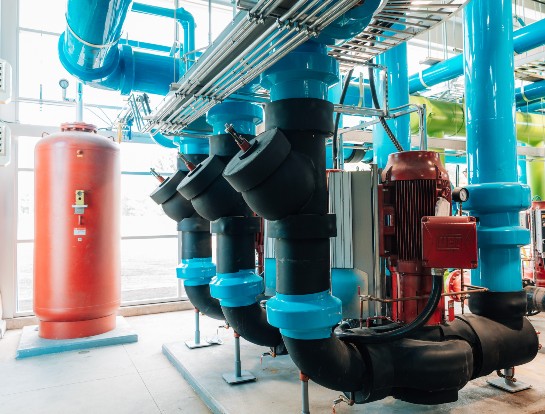
Once complete, the CEC, which houses three, 1,000-ton chillers that provide cooling to more than two million square feet of campus buildings, will also supply heating with the addition of electric hot water boilers as part of a 10.5 MW geothermal and heat pump district energy system.

“This project replaces outdated systems with advanced solutions designed to support generations of students and staff, ensuring a more comfortable and reliable indoor environment,” said Anderson Rosario, project manager at EllisDon Southwestern Ontario.

Fanshawe

The new chilled water facility at Fanshawe College.

Plans also entail retrofits of several existing buildings, removing traditional chillers and boilers and installing energy transfer stations. Modern Niagara has already installed more than 1.5 km of specialized, pre-insulated underground piping throughout the campus.

“When you consider the scale of this project, we’re essentially overhauling the energy distribution for a small city,” said Glen Marsland, construction manager at Modern Niagara, a member of the Mechanical Contractors Association of Ontario.

The next phases of the project will involve developing a geothermal borehole field and installing heat pumps within the CEC.

“This project is more than just an upgrade; it’s a commitment to a sustainable future for our students and the community,” added Jay Dillman, project coordinator at Fanshawe College. “As institutions across the country rethink how they power their campuses, we’re proud to lead the way with this transformative project.”

Accessibility advances in Nova Scotia workplaces

Nova Scotia’s Accessibility Advisory Board released a set of recommendations to guide the province’s accessibility employment standard for more inclusive workplaces.

The members of the committee, which was established in 2021, are persons with disabilities and other experts who are recommending a phased approach to improving employment barriers in the areas of recruitment, retention, advancement, workplace accommodations, and emergency preparedness, which begins with creating a space that is universally accessible.

As stated in the full report, “In Nova Scotia, 35.3 per cent of persons with disabilities are not in the labour force, compared to 16.5 percent of Nova Scotians without disabilities. This disparity, commonly described as “discouraged workers”, reflects the many barriers and inequities experienced by working-aged persons with disabilities.”

“Accessible employment is important because it ensures that all Nova Scotians can fully participate in our workforce, and employers across Nova Scotia are supported to prevent and remove barriers to employment faced by persons with disabilities,” said Accessibility Advisory Board Chair Max Chauvin,

While there may be exemptions depending on employer size, the board is generally recommending that employers have:

  • a workplace accessibility policy that ensures recruitment practices are accessible;
  • evacuation and shelter-in-place plans to ensure employees with disabilities are safe during an emergency; and
  • reasonable workplace accommodations so that everyone has what they need to do their job.

This specific standard is one of six accessibility standards being developed as part of the Access by Design 2030 strategy.

Prepare your facility for holiday crowds

As the holidays approach, many businesses are gearing up for a surge in foot traffic and that means more attention and labour will be needed to keep facilities clean and sanitized, with sustainability in mind, this season. ABCO Cleaning Products shares key tips to help your facility prepare for the influx of customers.

“As you prepare for the holiday rush, prioritizing both cleanliness and sustainability is crucial,” said Carlos Albir, Jr., Vice President of Operations, ABCO Cleaning Products. “Adopting environmentally friendly cleaning practices helps create an environment that benefits both customers and the planet.”

Consider the following tips for a successful seasonal strategy:

  1. Use sustainable cleaning tools. With 65 per cent of consumers preferring to buy from sustainable companies, adopting environmentally friendly practices is important. Consider using cleaning tools certified by a reputable third-party organization, like Green Seal®. This not only helps avoid greenwashing tactics but also demonstrates your commitment to sustainability.
  2. Optimize waste reduction and recycling. More visitors means more garbage. Ensure waste and recycling bins are easily accessible and emptied regularly to prevent overflow. Implementing an efficient waste management program can decrease your facility’s waste and carbon emissions, helping minimize your environmental impact.
  3. Increase cleaning frequency in high-traffic areas. During the holiday rush, high-traffic areas like entrances, restrooms and common spaces face more wear and tear. Increase the cleaning frequency in these zones to help keep your facility consistently clean.
  4. Maintain a stock of essential cleaning supplies. Plan ahead for the busy season by stocking up on essential cleaning supplies. This helps ensure you’re well-prepared for quick clean-ups, keeping your facility ready for anything the holiday crowds bring.

With sustainability in mind, facility managers and cleaners need to plan ahead for a busier holiday season. With a proactive approach, you can keep your facility clean and sanitized throughout the season, even with the increased traffic.

Acton Ostry Architects expands leadership team

Acton Ostry Architects (AOA) in Vancouver announced the appointment of an expanded leadership team.

AOA welcomes Ruth Chau as director of operations, Derek Fleming and Michael Fugeta as principals, Chei-Wei Tai as senior associate, and Rodrigo Alba and Andrew Carnochan as associates.

“We are extremely pleased to announce Ruth Chau as director of operations. Ruth has been with AOA for almost two decades, smoothly managing the behind-the-scenes work that has been vital to the success and growth of the practice,” said founding principal Mark Ostry.

In her new leadership role as director of operations, Chau will further strengthen the operational, managerial and administrative foundation of AOA in support of the firm’s continued growth and development.

As a principal, Fleming will take a lead role in business development at AOA and will continue to bring to each project his creativity, extensive knowledge of construction, exacting attention to detail, project management expertise and skillful communication.

Fugeta will continue to expand and diversify AOA’s mixed-use portfolio, leveraging his expertise in master planning, master programming, and rezoning work and drawing upon his comprehensive knowledge of by-laws, planning policies, community plans, and guidelines.

“New principals Derek Fleming and Michael Fugeta both share a passion for design excellence and a keen interest in innovation that has meaningfully shaped many AOA projects and strengthened the fabric of the practice,” said principal Alex Percy.

Principal Matt Wood acknowledged the new associates, “We are very pleased to recognize Che-Wei Tai as senior associate for his longstanding leadership, and Rodrigo Alba and Andrew Carnochan as associates at AOA.”


Photo: left to right: Mark Simpson, Alex Percy, Russell Acton, Derek Fleming, Mark Ostry, Matt Wood, Ruth Chau, Michael Fugeta

West Kelowna wins PWABC Project of the Year

The Public Works Association of British Columbia (PWABC) awarded the Project of the Year (small community) to West Kelowna for the Rose Valley Water Treatment Plant and Transmissions Mains.

The project was recognized for its innovative design, unique features and complexity, successfully enhancing West Kelowna’s water treatment capacity while adhering to high safety standards and preserving the environment. This award recognizes not only the project achievement but also the city’s ongoing commitment to excellence in public works.

“This award is a testament to the hard work and dedication of our team and the collaborative efforts of everyone involved in the design, construction and commissioning of the Rose Valley Water Treatment Plant,” said Mayor Gord Milsom. “This is the largest infrastructure project in the city’s history, and we are proud to provide the over 19,600 Rose Valley water service Area customers with a modern facility that not only meets current needs but also prepares us for the future. We also thank all the staff and contractors who worked so hard to deliver this state-of-the art facility.”

Although the plant remains in the Commissioning Phase and the city continues to work through challenges with unprecedented wildfire damage around the Rose Valley Reservoir, water quality would have been significantly worse without the plant during seasonal changeovers in the reservoir. Thanks also to the investments from the federal and provincial governments, the city was able to build the plant years earlier than originally expected. Maple Reinders Constructors was the general contactor.

The award winners were announced during the PWABC/BC Municipal Safety Association Joint Annual Conference and Tradeshow in Penticton.


U.S. clean energy spending flows to multifamily

The United States government’s clean energy spending has delivered benefits for both tenants and investors in class B rental housing, a large-scale holder of Class B apartment buildings maintains. Al Rabil, cofounder and chief executive officer, real estate, with the investment platform, Kayne Anderson, confirms that key elements of his company’s alternative asset strategy piggyback on policies that prioritize disadvantaged communities.

“We have a dedicated multifamily fund that is focused on ESG, but also focused on very high returns,” he reported during a recent online discussion sponsored by IPE (Investment & Pension Europe) Real Assets. “There’s a big focus on the E of that ESG and utilizing government subsidies that are available — local, regional as well as federal.”

Kayne Anderson, which boasts USD $36 billion in assets under management, launched its attainable housing strategy in 2021 to target acquisition and development of Class B apartment properties. That’s the same year the Biden administration introduced the Justice40 Initiative with the goal that 40 per cent of the benefits from federal climate, energy, affordable housing and other designated spending should flow to communities that suffer from underinvestment and/or pollution burdens.

For investors in what’s dubbed workforce housing, consistent demand from “middle market renters” is projected given rising home ownership costs and a new supply imbalance in the U.S. that has skewed nearly 85 per cent of multifamily rental starts to Class A during the past 10 years. As well, about 70 per cent of existing rental housing in the U.S. is at least 20 years and at a stage where energy and sustainability improvements are warranted.

“There are a significant number of incentives that are available to buyers and builders of affordable housing for everything from solar to geothermal heating and cooling to lower water utilities and a number of other dynamics,” Rabil said. “For those who have the capabilities of developing and utilizing these subsidies, they are a return enhancer, as well as, obviously, providing more affordable housing.”

That’s an outcome that may help keep some investment tax credits in place regardless of what happens in the upcoming U.S. election. “On a going forward basis, larger incremental incentives may not be on the table regardless of who’s in office if we have divided government, but I don’t think we’re going to be setting the clock back and trying to roll back the Inflation Reduction Act,” Rabil speculated.

Cultural biases hinder workplace safety outcomes

Workplace incident investigations across Canada will likely involve more consideration for risks beyond health and safety, such as cyber threats, remote working and sustainability issues. According to a new white paper from Avetta, which digs into reducing workplace safety hazards, there are a few cultural biases across organizations that make it challenging to deliver positive safety outcomes. These biases are only going to add more pressure as risks evolve.

Over the past few years, workplace injury rates have increased across the globe and businesses will need to anticipate error and monitor work-related practices more readily. “When incidents, near misses, or gaps in controls are discovered, the investigation process should be embraced as a method to impact the numbers with identification of solutions to prevent future occurrences,” the white paper states.

According to the 2023 Report on Work Fatality and Injury Rates in Canada, by Sean Tucker and Anya Keefe of the University of Regina, Northwest Territories and Nunavut witnessed the highest five -year average injury fatality rate (9.8 deaths per 100,000). Among other provinces with more than 100,000 workers. Saskatchewan’s average five-year injury rate ranked highest (4.4 per 100,000) closely followed by Alberta (4.2 per 100,000).

The long-term effects of these incidents can be detrimental for companies. In the United States, the National Safety Council found the total cost of work injuries in 2022 was USD $167 billion. On a worldwide scale. work-related injuries and illness account for 3.94 per cent of the global GDP, amounting to $2.99 trillion. According to the Institute for Work and Health, “the average estimated financial return on these investments was about $2.20 for each $1.00 invested in prevention.”

Despite a shift to implement technology-driven health and safety management systems, companies are struggling to improve safety,” the report suggests. The researchers identified three cultural biases that challenge proper workplace investigations. They include, recency bias, assuming employee error versus safety gaps, and a false belief that finding a root cause will fix the problem.

Recency bias

Recency bias assumes the most recent task that occurred just before the incident is the cause of the incident, which spotlights employee error and assumes a linear flow of work that isn’t influenced by non-linear systems surrounding the employee. This ultimately drives under-reporting and negative cultural perceptions among employees. Companies miss out on learning from past incidents and improving the systems of work that keep workers safe and deliver better business.

An “us versus them” mentality

Assuming that an incident is caused by employee not following the rules often leads to disempowered workers and a lack of knowledge on how to best improve work systems. Organizations are advised to elevate their view on how important workers are regarding system gaps. As the report suggests, leaders should offer positive feedback to workers and genuinely listen to their feedback. Incident investigations often highlight that workplace safety is an employee’s responsibility. Yet every leader in an organization plays a role in safety and needs to understand how that supports worker feedback during an investigation leading to better outcomes.

Finding fault fixes the problem

Leaders are a powerful influence in any organization who can find the nuances of incident investigations. Yet many try to find a root cause of an issue, such as employee error or recency bias, which misses critical pieces of information and opportunities to improve. As the paper notes, “In a typical industrial setup, there is often tension between safety and productivity, but what we want is balance. In such circumstances, it becomes the perceived norm for one to focus on productivity at the cost of safety, with the perception that we fixed a problem that led to last week’s injury; therefore, it won’t happen again.”

Impact of incident investigations

To truly solve workplace problems, it is key to understand the many reasons why incidents occur and move to data-driven, fact-based incident investigations rather than piling fault onto one individual person or business area. The report underscores specific focus areas , primarily that “the power of investigations lie in conducting them before events occur to improve performance results.”

Safety managers should be aware that companies need research and data; not just third-party proprietary investigation approaches. The CSA Z1005 Incident Investigation standard can assist safety professionals to develop an effective yet specific incident investigation program.

To streamline the process of incident investigations, companies are urged to identify the right data that captures all the contributing factors across the value chain, along with factors that influence behaviour.

Standard simplifies incident investigations

CSA Z1005, the only incident investigation standard in the world, was created to help organizations plan for potential hazardous incidents, control incident sites, collect proof and prevent them from happening. Based on meeting the company’s unique needs, rather than any particular investigative method, the CSA Z1005:21, the latest version of the standard, helps anyone form better safety systems from scratch or improve upon flaws.

The report further delves into this standard and offers an illustrative roadmap from Ontario’s Infrastructure Health and Safety Organization, which companies can use to curate their own incident investigation forms. Organizations looking to mitigate preventable incidents through the standard will also find that hidden cost savings come from robust investigations.

More information on driving positive workplace safety outcomes can be accessed here.

Gentle density roughs out space for infill

Family compounds could be within the reach of more income brackets through a combination of efforts to encourage accessory dwelling units (ADUs) and more infill housing supply on existing residential properties. That includes a range of financial incentives, new planning and zoning flexibility and innovative construction options to help reduce costs.

The Canadian government recently reiterated a promise to release the details of a new low-cost loan fund — first announced in the 2024 federal budget this spring — before the end of the year. That’s expected to make up to $40,000 available for the creation of secondary suites at residences that borrowers or their close family members occupy. As well, Deputy Prime Minister and Finance Minister Chrystia Freeland sketched out new rules for mortgage insurance that will take effect as of January 15, 2025.

The latter will raise the threshold for mortgage insurance to a maximum of 90 per cent of loan-to-value (LTV), also factoring in the added value that a new secondary unit represents. Borrowers will be eligible for mortgage insurance on up to $2 million of property value, an increase from the previous limit of $1.5 million. The maximum amortization period is set at 30 years.

To qualify, borrowers must already own the existing principal residence, add no more than three additional units and provide assurance that new units will not be offered for short-term rentals. The 90 per cent LTV threshold will be calculated on the total amount of loans secured by the property including other outstanding loans.

The revised mortgage insurance rules and pending loan fund are in keeping with the government’s agenda to promote small-scale residential infill. That’s also seen in the criteria for its Housing Accelerator Fund, which requires participating large urban municipalities to open up zoning to allow four units per residential lot as-of-right in low-density neighbourhoods.

“We think that sort of gentle density is a good way to allow Canadian families to participate in this great national project of increasing housing supply,” Freeland said earlier this month while giving a speech in Toronto. “I talked to a lot of Canadian families who are keen to add that space to their home, have a family member be able to live with them. This is going to allow them to do that and more generally add that gentle density.”

The Ontario government has adopted a similar policy through 2022 amendments to the provincial Planning Act that allow for up to three units per residential lot, including one within a separate structure from the main residence, provided municipal water and sewerage services are in place. As well, it has just wrapped up a public consultation on a proposed regulation that would exempt qualifying homeowners in urban areas from the requirement to obtain local Committee of Adjustment approval for minor variances under municipal zoning bylaws.

Various provincial governments also provide loans or grants to help homeowners cover the costs of adding an accessory apartment. In Ontario, that’s offered through a fund specifically scoped to low- and moderate-income homeowners, who must commit to charging below-market rent (maximum 80 per cent of market rent) for the newly created unit for a 15-year period.

Saskatchewan provides a grant to cover 35 per cent of eligible construction costs to a maximum of $35,000 for the creation of one interior or detached dwelling unit at the recipient’s primary residence. The grants are available to qualifying homeowners who create a new unit before March 31, 2026.

Nova Scotia’s potentially forgivable loan program provides up to $40,000 to cover 50 per cent of eligible costs. The loan will be forgiven if the newly created unit provides housing for a member of the borrower’s family who is at least 65 years old, a tenant with a disability or a low-income tenant who is charged a below-market rent.

Targeting middle class investors

Looking to municipalities, St. Catharines, Ontario, a city of roughly 140,000 in the Niagara Region, now boasts one of Canada’s most lucrative incentive programs, which is partially supported with funding from federal Housing Accelerator Fund. It underwrites additional residential units on properties currently accommodating single-detached, semi-detached or townhouse dwellings that are at least five years old.

Qualifying project proponents can receive rebates for up to 70 per cent of eligible costs to a maximum of $40,000 for new interior apartments or $80,000 for a new detached structure. That could go toward building materials, labour costs or required upgrades to plumbing or HVAC systems, but would not cover consulting fees, permits or appliances and furnishings. Up to two accessory units per property are allowed, subject to compliance with local planning and zoning rules, but with a per-property grant limit of $80,000.

Project proponents are also allowed to combine the municipal incentive with funding from other government programs, provided the money they obtain does not exceed total eligible costs. There is a 12-month timeline from the issuance of the building permit to complete the new units, and grants will be paid out after a final municipal inspection and the building permit is closed.

To help speed that process along, the City of St. Catharines has recently issued a call for proposals for template modular, prefabricated or conventional construction designs that it can pre-approve as an option for prospective proponents. It is seeking up to eight prototypes with small footprints of less than 540 square feet (50 square metres) or somewhat larger in the range of 540 to 860 square feet (80 square metres).

And at least one Niagara-based business is well placed to respond to that call. Xavier Toby, chief executive officer of the modular construction start-up, Axe Buildings, showcased his burgeoning product line earlier this month in conjunction with the release of the 2024 Sustainable PropTech Canada report.

That includes five models of stand-alone dwelling units, ranging from 350 to 1,000 square feet, and a recently completed two-storey, sixplex. The latter advanced from permit to completion in just six months, while simpler backyard structures take about a third of that time.

Installation of smaller units, which are assembled on a pre-dug foundation, can be accomplished in hours, with interiors then finished within a couple of weeks. The company’s basic prices range from $115,000 for the smallest 1-bathroom studio unit to $230,000 for a four-bedroom, 1.5-bathroom unit, but purchasers will also have site-specific costs for permits, surveying, servicing, transportation and foundations which are estimated to add another $25,000 to $40,000 to total project costs.

“We see the accessory dwelling unit as an amazing opportunity to help the middle class realize equity — to take their main asset, which is their home, and add value to it,” Toby submitted. “Once people realize that this is possible and once banks start to lend against the value of the asset, which is starting to happen, we know that this is really going to take off.”

Maintaining your commercial floors

Winter brings a wonderland of snow and ice, but it also ushers in a host of challenges for maintaining commercial floors. From the slushy mess tracked in by visitors to the salt and grit that can wreak havoc on surfaces, winter demands special attention. But don’t worry, keeping your floors safe and pristine doesn’t have to be an uphill battle. With these expert tips, you’ll navigate the colder months with ease.

RELATED: Prepare for winter with a fall maintenance checklist

The importance of matting

Imagine you’re walking into your office on a snowy morning, and upon your arrival, you notice that the floors are already a mix of wet footprints and salt stains. That’s where walk-off mats come in, acting as the unsung heroes of winter floor care! Walk-off mats are your first line of defence as they trap dirt and moisture before they can spread throughout your facility, significantly reducing cleaning time and costs.

Cleaning industry professionals and ISSA research indicate that effective matting can prevent up to 80 per cent of dirt and moisture from infiltrating a building. Furthermore, studies show that without sufficient matting, nearly 42 per cent of a floor’s finish can be stripped away within the initial six feet of an entrance with traffic from just 1,500 individuals.

To use these mats effectively, place them at all entrances. Consider asking a professional for advice on their placement and size. Choose strong, high-quality mats for high-traffic areas. Clean them regularly to keep them working well. A quick vacuum or shake can make a big difference to their effectiveness and longevity.

Hard surfaces

Hard surface floors like tile, vinyl, and hardwood are particularly vulnerable to winter wear and tear. Snow, slush, and ice melter can leave behind scratches and stains if not managed properly. Consistent cleaning is key. Regular sweeping, mopping and vacuuming to remove dirt and debris is essential to prevent grime from being tracked through the building and ground into the floor, which can cause scratches. Professionals always recommend using a cleaner suited to your specific floor type, for hardwood, a damp mop with a specialized cleaner works best. For tile and vinyl, ensure you’re not leaving too much water behind as excess moisture can warp or dull the surface.

We all know winter is synonymous with slippery surfaces so applying a slip-resistant treatment can enhance safety and mitigate risk. It’s a small investment for peace of mind and ensures that employees and customers are less likely to have accidents.

Carpets

Unfortunately, carpets bear the brunt of winter’s harsh conditions. Snow, salt, and moisture can lead to significant wear and tear. Frequent vacuuming is crucial as it removes dirt that can scratch carpet fibres and dull colours.

Again, walk-off mats should be placed at entry points to catch debris. These mats act as a buffer, protecting the main carpet from the worst of the winter muck. Deep cleaning helps restore the pile of your carpet and removes trapped salt and dirt that can damage carpet fibres. A monthly carpet maintenance program should be considered to protect your carpet investment over the long term.

Professional cleaning

While regular cleaning and maintenance will go a long way, professional commercial cleaners offer comprehensive services to keep your floors in top shape with advanced cleaning techniques that deep clean and rejuvenate floors and carpets. For hard surfaces, strip and wax treatments maintain shine and slip resistance. This proactive approach extends the life of your flooring, saving money on costly replacement. With a commercial cleaning service, you can focus on running your business while experts ensure your floors look their best.

Cleaning equipment and supplies

It is vital to stay on top of maintaining your cleaning equipment. Ensure that vacuums, mops, and other cleaning tools are in good condition and are stored appropriately. This not only improves cleaning efficiency but also prevents damage to floors. Regular maintenance of your cleaning equipment is just as crucial as cleaning the floors themselves. A poorly maintained vacuum can lose suction and leave behind dirt, which can eventually damage your flooring.

Incorporating eco-friendly cleaning products is essential these days. These products are not only better for the environment and indoor air quality, but they are also gentler on your floors. Many commercial spaces are now opting for green cleaning solutions as they are effective in removing dirt and stains without the harsh chemicals that can degrade flooring materials over time.

Maintaining your floors

A hands-on approach throughout the winter will keep your floors looking great, lasting longer, and staying safe for foot traffic. Here are some additional tips to help you maintain your floors this winter:

  1. Regular inspections: Frequently check your floors for any signs of damage or wear. Early detection can prevent more significant problems down the line and save money long-term.
  2. Quick response: Address spills and tracked-in snow immediately. Quick action can prevent stains, water damage, and slips and falls.
  3. Maintenance schedule: Establish a regular maintenance schedule with your commercial cleaners and stick to it. Consistency is crucial in keeping floors and carpets looking their best.
  4. Deep clean: Plan for a deep cleaning session at the end of winter to address any accumulated dirt and salt residues that regular cleaning might miss. This helps in restoring the floors and carpets, preparing them for the upcoming seasons. An end-of-winter deep clean can be incredibly beneficial to reset your floors, removing any buildup that could cause long-term damage.

Winter floor care might seem daunting, but with the right strategies and a bit of expert advice, you can keep your commercial floors in excellent condition. From the first line of defence with walk-off mats to the specialized treatments offered by professionals, every step plays a vital role. A proactive approach not only ensures a clean and safe environment but also protects your investment for years to come. So, as you admire the winter wonderland outside, rest easy knowing your floors and carpet are well taken care of. After all, a well-maintained floor is the foundation of a welcoming and safe space.

Daniel Loosemore is Chief of Sales and Operations at ServiceMaster Clean and Restore Canada. He and his team support over 120 franchises, delivering commercial cleaning services and emergency disaster restoration services from coast to coast. To find out more about their commercial cleaning services, visit ServiceMasterClean.ca.


Aecon consortiums awarded B.C. civil contracts

Aecon Group announced that Aecon-led consortiums have been awarded three civil-construction contracts for projects in British Columbia.

Aecon’s interest in two of the contacts is valued at $119 million with the third contract commencing under a development phase agreement.

Aecon-Emil Anderson Construction General Partnership (AEGP), a 50/50 consortium between Aecon and Emil Anderson Construction, has been selected for the BC Highway Reinstatement Program – Highway 8, Category B Project under a progressive alliance contract model.

AEGP will work during a 10-month development phase to finalize the design, scope and target cost of the project, with construction expected to commence in Q2 2025 and completion in late 2026. The scope of work includes replacing two temporary structures with permanent bridges and building approximately three kilometres of connecting highway approximately 15 kilometres east of Spences Bridge.

AEGP has also been awarded a contract by the Province of British Columbia for the R.W. Bruhn Bridge Replacement Project. The scope of work includes building a new four-lane bridge with a multi-use pedestrian and cyclist path connecting to the Trans-Canada Highway in Sicamous, widening 1.9 kilometres of highway to four lanes, and upgrading intersections between Old Sicamous Road and Silver Sands Road. Construction is expected to commence in the fourth quarter of 2024, with anticipated completion in the second quarter of 2027.

In Metro Vancouver, Aecon GIG General Partnership, a 50/50 consortium between Aecon and Gateway Infrastructure Group, has been awarded a contract by the Vancouver Fraser Port Authority for the Holdom Overpass Project. The scope of work includes the design and construction of a new four-lane overpass that will extend Holdom Avenue south across Still Creek and the CN rail corridor, connecting to Douglas Road in Burnaby.


Breathing new life into a Vancouver landmark

Perkins&Will has reimagined its studio in the renowned Arthur Erickson Place, a Vancouver landmark in the heart of the city’s central business district.

Designed to meet rigorous well-being and sustainability goals, the renovation of the 22nd floor of the heritage tower celebrates its timeless architecture.

Adjusting to a post pandemic world, the move allowed the firm to incorporate lessons learned about evolving workplace trends to create a workplace that supports emerging methods of collaboration, flexibility, and employee wellness.

Guided by Perkins&Will’s Living Design framework for excellence, the studio is the result of extensive collaboration and engagement with staff on design for health and well-being, resilience and regeneration, community and inclusion, and research and innovation. The workplace also meets the requirements of the firm’s Decarbonization Policy and Green Operations Plan that are central to meeting global commitments.

“Making Arthur Erickson Place our home marks an important evolution for our studio,” said Derek Newby, managing director and principal at Perkins&Will. “We are delighted to inhabit this place that has been a steadfast feature of our city for so long. We look to contribute to its story, reflecting the work that we do for our clients while representing our values and commitments to health and sustainability.”

The studio respects and complements the building’s original design intent, amplifying a holistic approach to wellness. Maintaining the integrity of the building’s offset halves, deeply recessed windows, and indirectly lit coffered ceilings allows for abundant natural light and views to enter while tempered with glare control. Consistent with the building architecture, the colour and materials palette are inspired by Canadian artist Emily Carr’s west coast artwork, creating a connection to nature with natural healthy materials, a green wall, and warm earthy tones.

The brutalist building’s ample daylight and views, amenities, and proximity to transit—in addition to its recently achieved CaGBC Zero Carbon Building—Performance Standard and LEED Platinum certifications—provides an ideal home for the firm’s design practice and proves that through adaptive reuse, well designed architecture can be enduring and high performing. The studio is targeting complementary certifications—WELL and RESET Air—as part of its commitment to a healthy workplace.

Using a circular design approach, the team selected material components and parts from the previous studio to give them a second life; they were reused, reassembled, or reimagined for a wide variety of uses, such as desks and shelving. The design of the space reduces embodied carbon emissions by more than half.

Embracing the needs and expectations of today’s workplace, the studio offers flexibility and choice in a comfortable, inviting, and inspirational environment. A variety of spaces, seating, and working options meet different needs throughout the day. Spaces include a reconfigurable design forum, a quiet room with library, open collaboration areas, meeting rooms, phone booths, and a model room. An expansive café/living room greets visitors, welcoming in the broader community.

“It is a privilege to have our studio reside at the acclaimed Arthur Erickson Place. Like the building, our space is inspired by the West Coast landscape, bringing wellness to the forefront as we create a forward-thinking workplace that fits the needs of staff now and into the future,” said Rufina Wu, design director and associate principal at Perkins&Will.


VRCA 2024 Gold Award winners revealed

The Vancouver Regional Construction Association (VRCA) announced the 2024 Gold Award winners at its annual Awards of Excellence gala.

This year’s competition featured 91 impressive submissions across 61 projects with a combined construction value of more than $2.9 billion. In addition to the Gold Award winners, outstanding achievements were recognized in categories such as Safety, Women in Construction, Young Construction Leader, and Education Leadership.

“This year’s Gold Award winners and Outstanding Achievement recipients have set a new standard for excellence. I also want to congratulate our Members of the Year Etro Construction, Division 15 Mechanical, and Super Save Group for their commitment to the industry and VRCA’s mission,” said VRCA president Jeannine Martin. “A special congratulations to our newest Life Member and former VRCA board member, Dave Fettback, whose contributions have greatly promoted quality and professionalism.”

The General Contractor over $100 million Award went to PCL for the Vancouver Post Office redevelopment. The Post is one of the most ambitious heritage redevelopments in Canada’s history. This landmark, once the main Vancouver sorting facility for Canada Post, has been modernized into a mixed-use development.

The other Gold Award winners in the General Contractor category include:

  • General Contractor – Up to $20 million: Edge Vancouver Construction Group, The Peak.
  • General Contractor $20 – $100 million: Etro Construction, 411 Railway.
  • General Contractors – Tenant Improvement – Over $5 Million: Canadian Turner Construction Company, YVR26 The Post: Premises A1.
  • General Contractors – Tenant Improvement – Up to $5 Million: Canadian Turner Construction Company, Plenty of Fish.
  • General Contractors – Civil/Industrial Construction – Up to $25 Million: Smith Bros. & Wilson (B.C.) – Dicklands Biogas Plant.
  • General Contractors – Civil/Industrial Construction – Over $25 Million: Kiewit Infrastructure BC ULC, B.C. Highway Reinstatement Program: Highway 5 – Category B Project.


Look for coverage of the VRCA winners in the Winter 2024 issue of Construction Business.


Canada aims to foster decarbonization capital

Buildings are identified as one of six priority sectors for investment in decarbonization and low-carbon activities in proposed new guidelines to align Canada with international efforts to foster capital for undertakings that reduce greenhouse gas (GHG) emissions. Earlier this month, Deputy Prime Minister Chrystia Freeland released an overarching framework for what’s been dubbed a made-in-Canada “taxonomy” for financial market participants.

This presents a standardized approach for categorizing investment and verifying its credibility. That’s to be grounded on scientific-based assurance that qualifying investments are compatible with the goal of limiting global warming to 1.5⁰ Celsius and, like a similar taxonomy in the European Union, that they meet “do no significant harm” criteria related to environmental, social and Indigenous objectives.

The proposed taxonomy arises from the work of the federal government’s appointed Sustainable Finance Action Council (SFAC) — a 25-member body with representation from Canada’s major banks, insurance companies and pension funds — and related consultations. From here, yet-to-be-named third parties at arm’s length from the government will develop and finalize further details and oversee governance of the framework.

The buildings sector has been designated a priority due to its significance to the Canadian economy, its current contribution of about 13 per cent of national GHG emissions and expectations for a high level of investment opportunity in green and transition-related projects and assets. In addition to categorizing types of investment, it’s also suggested that there could be company-level criteria tied to net-zero targets, transition plans and disclosure practices.

“The made-in-Canada sustainable investment guidelines will become an important, voluntary tool for investors, lenders and other stakeholders navigating the global race to net-zero by credibly identifying ‘green’ and ‘transition’ economic activities,” the government’s explanatory summary maintains. “The development of the metrics-based Canadian taxonomy would first focus on the following sectors for the Canadian economy: electricity; transportation; buildings; agriculture and forestry; manufacturing; and extractives, including mineral extraction and processing, and natural gas.”

It’s proposed that investments related to low- or zero-emission outcomes such as renewable power generation, electricity transmission lines and hydrogen pipelines would be classified as green, while transition investments would be those related to replacing existing emission-intensive outputs with low- or zero-carbon alternatives. Generally, green investments would involve no direct or indirect emissions related to energy sources (scopes 1 and 2); low to zero emissions related to how consumers use the product (scope 3); and would be deemed to benefit markets that enable transition to net-zero emissions.

Investments in buildings are more likely to fall into the transition category. These are defined as activities that “make significant emissions reductions” and do not face near-term debilitating market forces and/or lock-in a longer-term carbon dependency. Such investments could continue to register scope 1, 2 and 3 emissions provided there is a significant reduction in scope 1 and 2 emissions.

It’s suggested that qualifying investments in the buildings sector would include development or acquisition of high-performance buildings and retrofit activities in the existing building stock. As well, many products and technologies to help deliver low-carbon performance and retrofits in buildings are tapped to be qualifying investments in the manufacturing sector including production of energy-efficient building equipment, batteries and renewable energy technologies and low-carbon and/or energy efficient production processes for key structural materials like cement, steel, iron and aluminum.

The taxonomy is envisioned as something of a matchmaking service for sustainable project proponents/enterprises seeking financing and lenders/investors seeking more certainty. It’s also considered instrumental to forge capacity for the wider range and expanded scale of investment that is projected to be coming.

“Financial market participants, including banks, insurers, pension plans and asset managers, have indicated that they need clarity about what economic activities are considered green or transition,” the government’s summary document reiterates. “A taxonomy supports a wide range of use cases. For example, taxonomies can be used to set standards for classifying climate-related financial instruments (e.g., bonds or loans), and/or to evaluate the green or transition credentials of financial instruments and issuers. The aim of the Canadian taxonomy would be to mobilize investment in support of Canada’s net-zero transition by enabling investors to understand and communicate which key activities and investments will deliver a Canadian net-zero economy.”

While the taxonomy will be a voluntary framework, the Canadian government also advises that it is moving ahead with earlier announced intentions to mandate climate-related disclosure for specified large federally incorporated private companies. Parliamentary approval for authorizing amendments to the Canada Business Corporation Act will be required before any new dictates can be enacted. It’s also promised that regulatory requirements would be harmonized with pending new rules for publicly traded entities from Canadian Securities Administrators (CSA).

“The development of a sustainable investment taxonomy, paired with heightened transparency on climate disclosures, amounts to an important stepping stone for Canada on the path towards that cleaner economy,” says Steven Guilbeault, Canada’s Minister of Environment and Climate Change. “These initiatives will help mobilize needed private sector financial flows to build a cleaner economy and give investors who are looking for the sustainable option the clear direction they seek.”