Articles Archive - Page 114 of 928 - REMINET
REMI

OSCRE and ConnexFM forge administrative ties

ConnexFM, an industry association for multi-site facilities managers and supplier professionals, will assume association management services for OSCRE, the Open Standards Consortium for Real Estate, after its longtime chief executive officer, Lisa Stanley, steps down at the end of February. Stanley has steered OSCRE for the past 12 years, in sync with explosive growth in digital capacity and growing demand for increasingly sophisticated data management.

OSCRE represents a broad cross-section of stakeholders in the commercial real estate industry, including investors, investment managers, corporate owners and occupiers and external service suppliers — all committed to forging a consistent, platform-agnostic approach to collecting, managing, interpreting and sharing data. Member organizations from around the world collectively employ more than 900,000 people. Recent projects include the development of environmental data standards for energy and water.

Mike Maxfield, chair of OSCRE’s board of directors commends Stanley’s collaborative leadership and ongoing support for innovation, education, training and peer networking. “OSCRE is well-positioned to meet the expanding data management needs of the real estate industry,” he says.

“During my tenure at OSCRE, I’ve witnessed many evolutionary and revolutionary industry changes,” Stanley observes. “Seeing the industry’s recognition of the importance of data standards in a world increasingly influenced by AI is particularly encouraging.”

Richard Reyes, vice president, digital strategy, with ConnexFM will take on the role as OSCRE’s executive director. The two associations will remain independent, but with a shared priority on effective property-level data collection to underpin accurate reporting and informed business decision-making.

“This collaboration represents a significant opportunity to deliver even greater value to our respective members and the industry we serve,” says Bill Yanek, chief executive officer of ConnexFM.

The importance of managing the humidity in your building

Maintaining building humidity levels is vital to the performance of your building, but it is often overlooked as part of a comprehensive maintenance plan. Experts recommend that humidity levels be kept between 40 and 60 per cent for optimal performance, but studies show that these levels are below the lower end of the threshold about 42 per cent of the time.

How can humidity levels affect your building’s performance? Besides contributing to occupant comfort, keeping the humidity levels within the recommended range can help manage condensation, improve indoor air quality, and maximize structural integrity. It can also help reduce building equipment wear and energy consumption and extend equipment lifespans.

Stay vigilant in detecting signs of high humidity like bubbling paint, condensation, and swelling wood.  This can cause eventual damage to your foundation and interior, reduced air quality, and increased risk of mould.

RELATED: Managing moisture and mould

In cases of low humidity, you might see chipping paint, cracking adhesives, or splitting wood. This condition also increases the movement of viruses, bacteria, and dust particles, so hygiene and sanitization can become an issue.

Here are some of the steps you can take to help manage the humidity levels in your building:

  • Service and maintain your HVAC unit to keep it running efficiently and effectively.
  • Invest in smart technology for accurate, real-time readings. Tools like smart thermostats can help spare your HVAC unit from overworking by adjusting the temperature based on the humidity.
  • Use commercial de-humidifiers in spaces where the levels are high to help remove the moisture from the air before it travels through your building.
  • Do your best to ensure that your building envelope is airtight to make it easier to control the levels inside. Add insulation and seal or replace windows and doorways to help stop air travel.

Managing the humidity levels in your building means a more comfortable environment, better air quality, less risk of mould, and lower expenses for equipment maintenance and interior damage.

Insights from Yardi’s Q1-2025 multifamily report

As we enter 2025, Canada’s multifamily market remains tight, though the supply-demand imbalance is starting to ease, and rent growth is slowing down. According to Yardi’s latest report, the economic outlook is mixed, with lower interest rates fostering optimism for housing market activity and consumer spending. However, uncertainties loom, including the impact of the second Donald Trump administration in the U.S. and political changes in Canada following Prime Minister Justin Trudeau’s resignation, which will trigger a national election. New leadership is expected to implement policies that may reduce taxes, spending, and immigration quotas.

Economic growth and employment

Growth in 2025 is projected to be modest, with Moody’s Analytics forecasting a GDP increase of 1.0 per cent down from 1.3 per cent in 2024. Despite the creation of 414,000 jobs in 2024, the workforce grew by nearly double that amount, pushing the unemployment rate up to 6.7 per cent. Canadian households have accumulated savings that could boost growth, aided by a temporary holiday in the goods and services tax and lower interest payments.

Yardi notes that the possibility of tariffs poses a risk to the economy. With three-quarters of Canada’s exports going to the U.S., any tariffs on Canadian goods could increase inflation and force Canadian lawmakers to consider reciprocal measures. The stakes are high, as two million Canadian jobs are tied to trade with the U.S., particularly in sectors like automobile manufacturing.

Meanwhile, inflation has moderated to 1.9 per cent, below the Bank of Canada’s 2.0 per cent target, leading to a reduction in the benchmark rate to 3.25 per cent. Lower interest rates are expected to reduce interest payments for Canadians to less than 10 per cent of income in 2025, down from 11 per cent in 2024, freeing up cash for consumer spending.

Multifamily rent trends

Multifamily rents in Canada have moderated but remain high by historical standards. The average national in-place rent increased to $1,565 in Q4 2024, with a year-over-year rise of $85. Rent growth has slowed, with in-place rent growth falling to 5.8 per cent in Q4 2024. Gains are led by markets in Alberta and Saskatchewan, with Calgary, Edmonton, and Saskatoon showing the highest rent increases.

Toronto has proposed incentives to stimulate the construction of 20,000 new purpose-built rental units, including 4,000 for low-income renters. These incentives include deferring development charges and reducing property taxes. Metro Vancouver is considering waiving utility connection fees for affordable rental units. While rental housing construction is increasing, it remains small relative to demand, with apartment completions up 28.2 per cent year-over-year to 63,000 units in 2024.

Immigration and population growth

Immigration growth is set to slow, with the target for permanent residents reduced to 390,000 in 2025 from 500,000 in 2024. Admissions of temporary workers and students will also decrease, potentially impacting the rental market.

For a detailed overview of the multifamily market in 2025, download the report at: Yardi.com.

Mississauga task force proposes new housing actions

A new report recommends 30 actions the City of Mississauga can take to relieve the housing crisis. Mayor Parrish’s housing task force, made of experts from Ontario’s private and not-for-profit building and development industry, presented a Partners in Homebuilding report to City Council yesterday.

“I asked for collaboration and concrete solutions that could help address the crisis and they delivered,” said Mayor Parrish. “There was a 95 per cent drop in new high-rise sales in the region last year. It’s clear we can no longer afford to wait. We must do what we can right now to help get shovels in the ground – our residents deserve nothing less.”

As an immediate next step, the Mayor will bring forward a motion next week with actions the City will take to quickly address housing affordability. Recommendations fall under four priority areas:

  • Reform development charges, taxes and fees to help lower housing costs: Ninety-five per cent of new homes built in Canada are built by the private sector. The task force recommends 14 actions to help balance demand and incentivize more affordable housing developments.
  • Update building and design standards to help boost supply and make building more affordable: In a housing crisis, the aim of guidelines and standards must be to help – not hinder – good city-building. The task force recommends seven actions that will help create efficiencies across the industry to increase supply.
  • Transform zoning to unlock more housing: Zoning reform provides certainty for developers and can help streamline the development application process. The task force recommends five actions that will support Mississauga’s transformation into a dynamic urban city.
  • Create sustainable programs and funding that will mobilize industry to help meet the demand for affordable housing: The private sector can – and is willing to – play a significant role in helping to build affordable housing. The Task Force recommends four actions to help develop a sustainable, long-term funding program for affordable housing.

The report also outlines 14 actions that are already addressing the housing crisis, such as adding permissions for another 124,000 units to boost residential growth.

In the coming months, staff will update the City’s Housing Action Plan with recommendations that will be advancing from the Mayor’s Housing Task Force.


Primaris to trade three enclosed shopping centres

Primaris Real Estate Investment Trust (REIT) has pumped up its holdings of Canadian enclosed shopping centres with major acquisitions in Ontario and Alberta. The $585-million deal is expected to close Jan. 31, giving the REIT a 100 per cent interest in Oshawa Centre, a regional mall on the east side of the Greater Toronto Area, and a 50 per cent interest in Southgate Centre, a super-regional mall in Edmonton.

On the disposition side, Primaris also announces the pending sale of the 385,000-square-foot Sherwood Park Mall in suburban Edmonton. The $107-million deal, which is set to close Feb. 13, marks the first time the REIT has sold off an enclosed shopping centre, and accounts for a large share of $183.7 million worth of dispositions over the past 13 months. Other recent transactions include the open-air Edinburgh Market Place, a 113,000-square-foot, grocery-anchored centre in Guelph, Ontario, that sold for $31.5 million in mid-December.

The newly acquired malls will enter the Primaris portfolio at number one and number three in terms of all-store sales volume, and are projected to drive the portfolio’s same-store productivity up to $736 per square foot from $684 per square foot as of Sept. 30, 2024. Both are considered the leading performers in their categories within their respective markets.

“There is significant opportunity for growth at both centres including the conversion of tenants from variable to net rent deals, leasing up vacant space and temporarily tenanted space, and optimizing former department store space,” says Patrick Sullivan, the REIT’s president and chief operating officer.

Southgate Centre is an 846,000-square-foot mall on a 39-acre site in Edmonton’s Malmo Plains neighbourhood. It recorded same-store sales productivity of $1,375 per square foot for the 12 months ending Aug. 31, 2024 and has a long-term in-place occupancy of 87.5 per cent with a weighted average lease term of 5.9 years.

The Oshawa Centre is a 1.2-million-square-foot mall, including a 100,000-square-foot office component, located on a 79-acre site with close proximity to Highways 401 and 407 and linked into the GTA’s GO Transit system. Same-store productivity was pegged at $758 per square foot for the 12-month period ending Aug. 31, 2024. The long-term, in-place occupancy stands at 73.8 per cent, and the weighted average lease term is 3.8 years.

The purchase will take form as $335 million in cash, $75 million in the REIT’s series A units and $175 million in exchangeable preferred units.

“Since December 31, 2021, Primaris has acquired $2.4 billion of leading enclosed shopping centres from five of Canada’s 10 largest pension funds,” says Alex Avery, the REIT’s chief executive officer. “Consistent with prior acquisitions, these properties enhance the REIT’s value proposition with retailers, and offer a significant income growth opportunity consistent with the growth we see ahead for our existing assets.”

Calgary construction launches Tailgate Toolkit

The Calgary Construction Association (CCA) is launching the Tailgate Toolkit recovery resource pilot program.

Funded by the City of Calgary through the Mental Health and Addiction Investment Framework with an investment of $283,000, this marks a significant step in increasing substance awareness, providing access to support programs, and promoting safer workplaces across construction sites in Calgary.

Originally developed and successfully piloted by the Vancouver Island Construction Association (VICA), the CCA is expanding the program to address the unique needs of Calgary’s construction industry. Through tailgate meetings, targeted training, and engagement, the program raises awareness of the resources available to workers struggling with substance use while connecting them with recovery and support services.

“Collaborating with the Calgary Construction Association allows us to tackle these critical issues head-on,” said Mayor Jyoti Gondek. “Our investment in the Tailgate Toolkit program demonstrates our commitment to improving the quality of life and work conditions for Calgarians in this key industry.”

The statistics surrounding opioid use and mental health in the industry are alarming. According to Government of Alberta, trades, transport and equipment operators accounted for 53 per cent of opioid-related deaths among employed individuals.

The Centre for Disease Control suggests that men in the construction industry face a suicide rate three times higher than the national average, with 53.2 suicides per 100,000 workers, compared to 17.3 in the general population.

“Our industry recognizes the responsibility we have to prioritize the well-being of all construction workers,” said Bill Black, president and CEO of the Calgary Construction Association. “By collaborating with the city to bring the ‘Tailgate Toolkit’ to our community, we aim to equip workers and site supervisors with the resources they need to address substance use issues with compassion and informed support, ultimately fostering a safer, healthier and resilient workforce.”


BC introduces new short-term rental registry

The Province of British Columbia has announced the launch of a new short-term rental (STR) registry aimed at increasing housing availability by targeting illegal rental operators. The initiative is part of the larger goal by the government to provide more long-term housing options for residents in the province.

“We are taking action to help more people find a home in the communities they love by reining in speculators who are operating illegally,” said Ravi Kahlon, Minister of Housing and Municipal Affairs. “The launch of the registry is the next step to provide more long-term homes for people, giving hosts who are playing by the rules the ability to continue to legally operate and welcome guests while further cracking down on speculators who are breaking the rules.”

The primary objective of the STR registry is to regulate and monitor short-term rentals listed on platforms like Airbnb and Vrbo. This move is designed to crack down on illegal operators, ensuring that housing units return to the long-term rental market.

Registration, process and compliance

All hosts operating short-term rentals in B.C. will be required to complete an online registration process accessible on the provincial government’s website. Upon registration, hosts will receive a provincial registration number, which must be displayed on all online listings effective May 1, 2025. Non-compliant listings will be removed from platforms starting June 1, 2025.

The registry will implement a tiered fee structure of $100 per year for hosts renting out their principal residence; $450 per year for hosts renting out secondary properties and $600 per year for entire strata hotels.

Hosts who register by February 28, 2025, will receive a 50 per cent discount on fees, and those registering by March 31, 2025, will receive a 25 per cent discount. Revenue generated from these fees will support enforcement and compliance measures across various communities in B.C.

The provincial registry will function in addition to existing municipal regulations, including local business license requirements. This collaborative approach aims to provide a cohesive and comprehensive framework to address housing availability challenges. As Ken Sim, the mayor of Vancouver, stated, “Together, we’re finding the right balance – supporting our thriving tourism industry while also prioritizing housing for our residents.”

Preliminary data from the Ministry of Housing and Municipal Affairs indicates a 10 per cent decline in entire home listings on short-term rental platforms in regions with a principal-residence requirement since March 2024. This decline has opened up more housing options for long-term residents. The provincial registry is expected to enhance these efforts by providing additional tools to enforce regulations and prevent illegal listings.

To register, hosts need to complete an online application available here: https://gov.bc.ca/strregistry

Korean rental housing attracts CPP Investments

Canada Pension Plan Investment Board (CPP Investments) has entered the Korean rental housing market through a 95 per cent stake in a new venture targeting co-living and tenants looking for an in-house community. Teaming with domestically based, MGRV, the joint partners plan to develop projects in Seoul’s key business and university districts.

CPP Investments has committed up to CAD $133 million toward initial seed projects with expectations the joint venture will eventually invest CAD $500 million. MGRV develops and operates purpose-built rental housing targeting the co-living market, through its Mangrove brand. The new influx of capital will expand those holdings from the current six projects, accommodating approximately 1,200 residents.

“We are pleased to work alongside an experienced local partner like MGRV to enter this market segment, which we believe can generate attractive long-term returns for the CPP Fund,” says Sophie van Oosterom, managing director and head of real estate with CPP Investments.

“This strategic partnership marks a significant step in demonstrating the high growth potential of the Korean rental housing market,” says Cho Kang-tae, MGRV’s chief executive officer. “We will continue to drive the ecosystem innovation in the market by expanding community-centered properties.”

Toolkit supports mental health in the workplace

The Canadian Centre for Occupational Health and Safety (CCOHS) has released a free toolkit to help organizations create a psychologically safe environment for mental health at work.

The online resource includes informative videos, practical checklists, infographics, posters, and podcasts to help develop a strong mental health program, address hazards and risks, and hold meaningful conversations with colleagues. In the past, In the past few years, many Canadians have faced increased mental strain from being around a negative workplace culture. The toolkit also makes the connection between mental health and other human rights issues.

“Creating an environment where employees feel supported and valued not only improves their well-being but also strengthens organizations,” said Anne Tennier, CCOHS president and CEO. “This toolkit can help employers start their journey toward a mental health program in the workplace.”

Users can access the toolkit here.


Healthcare facilities launch nature-based programs

While a walk in the woods can boost mental health and emotional well-being, forest bathing isn’t always feasible for more vulnerable populations that could positively benefit from such experiences. Specifically in healthcare facilities, where sterile aesthetics replace trees, plants and flowers, nature-based interventions can support the well-being of patients and staff who spend much of their time indoors.

Amelia Fletcher, workplace health promotion coordinator at Nova Scotia Health, helped launch a hospital wellness garden, located on a public patio between the Abbie J. Lane Memorial building and Camp Hill Veterans Memorial building at QEII Health Sciences Centre in Halifax. She described the project during a recent discussion, hosted by the Canadian Coalition for Green Health Care, which featured perspectives about the convergence of health, nature and climate action.

Creating the green oasis was a team effort between patients and staff, with funding through the Nova Scotia Mental Health Foundation. The plan entails partnering with the mental health and addictions program and inpatient psychiatry, jumpstarting a native pollinator garden this spring and building accessible raised beds from recycled materials through a partnership with Lake City Works, an alternative vocational program that supports adults living with severe and persistent mental illness.

“The garden created an opportunity to access the evidence-based benefits of nature on physiological, cognitive and physical health in an urban setting,” said Fletcher. “Some of these benefits include self-esteem, mood, mental fatigue, attention, memory, problem solving, social connection, cortisol reduction and decreased length of recovery and pain management.”

Users are able to access healthy food choices, boost physical activity and social skills, learn about food insecurity, and then transition these skills into the community. “We worked with clients in the early spring to identify flowers and vegetables they would like to see grown in the garden beds and pots, and we incorporated daily gardening maintenance and harvesting into pre-existing programs and groups,” she added.

Some of these programs are mindfulness and cooking groups. Through an indoor gardening group, patients can plant seedlings from the facility’s plant library and receive nature-based coping strategies, such as accessing community gardens and green spaces after leaving the facility.

“Each month, clients would prepare a meal and the produce from our garden to donate to Shelter Nova Scotia,” Fletcher added. “Our garden also facilitated opportunities to build and practice sensory-based coping through mindfulness prompts and aromatherapy.”

Green spaces also improve employee health and well-being, from better job satisfaction and attention to support for mental fatigue and anxiety. “Word traveled quickly about our little garden, so we noticed people from all buildings and programs within the QE2 Health Science Centre coming to enjoy their breaks and their lunch,” said Fletcher. “You could often see staff reading, sunbathing or engaging with the mindfulness prompts that we had posted around the garden.”

From a sustainability viewpoint, the project fuelled larger discussions around carbon sequestration, biodiversity, composting and recycling, water use, climate change and making greener lifestyle choices. As she noted, feeling more connected with nature is linked to pro-conservation behaviours.

A garden experience year-round

To bring nature-based therapies inside healthcare facilities, the Forget For a Moment Foundation raises funds to finance the construction of natural structures in these settings, specifically creating restorative spaces through living green walls and healthcare planters.

“We do this to break down isolation and improve the physical and mental health of patients, residents, their families and caregivers alike, and to bring awareness of the healing power and benefit of bringing nature indoors,” said Michel Gauthier, the president and CEO.

Last year, a pandemic-inspired healthcare planter program was launched, with innovative garden planters that are mobile, adjustable and maintenance friendly. Designed with residents, patients and healthcare staff in mind, they feature a capillary watering system to prevent soil spillage. So far, 30 planters were distributed to healthcare and long-term care residences across Ottawa and Eastern Ontario.

The planters serve many purposes, such as creating a comforting atmosphere, stress reduction, opportunities for therapeutic horticulture, social connection and physical activity all year round, said Gauthier. Their versatility extends to seasonal and thematic arrangements, with seedling choices that can be transplanted in the outdoor wellness garden. The planters also bring a sense of hope, purpose and belonging for older populations who once enjoyed their at-home gardens.

A future goal is to establish a community of collaborators who engage with healthcare planter recipients. To date, the foundation has also brought four living green walls to healthcare facilities, such as a 30-by-10-foot installation completed during the pandemic at Montfort’s Aline-Chrétien Health Hub in Orleans.

Embedding planetary health principles

As a planetary health lead at Fraser Health Authority, which serves more than two million people in British Columbia, Darryl Quantz has helped coordinate various climate and planetary health-related projects and oversees the planetary health strategy.

“By taking a planetary health perspective, we recognize the ecological crisis that we’re facing and the loss of biodiversity and degradation and how this impacts people’s health and well-being,” he said. “We also recognize that reconciliation is not possible without environmental reconciliation and the importance of traditional ecological knowledge as essential to our solutions.”

Addressing the buildings’ carbon footprint and associated waste is crucial for an estimated 85 per cent of patients within Fraser Health’s facilities. Embedded in the strategy is a regional goal to develop new and existing spaces to protect and regenerate the natural environment.

Fraser Health created various working groups for its planetary health strategy, including a natural environment working group. Members also come from an Indigenous health team, public health, the facilities, interested clinicians and a health and well-being team.

Partnerships with local university students have also spurred opportunities to improve the natural environment, including a site analysis from Katie Mcpartlin, a graduate student in landscape architecture at UBC. Last summer, she visited six acute and long-term care sites to help re-imagine green spaces.

During one visit, she examined a forest that was overgrown with many invasive species and never developed due a steep slope and setback regulations. There were few entry or viewing points. Noticing the potential for stewardship and restoration, her site recommendations included creating a forest management plan with help from community partners, while using volunteers to take on some maintenance work.

Adding boardwalks and viewing platforms around the edge and adding interpretative educational signage will encourage positive natural connections. Increasing green space throughout the hospital grounds can also reduce disturbance to the sensitive forest habitat, in turn, boosting resilience against climate-related events.

Yet another challenges was a lack of diversity, with monoculture ground cover or shrub layer dominating planted areas. Street trees consisted primarily of a non-native maple species. To increase biodiversity in an urban setting, Mcpartlin identified opportunities to plant more native species and a greater variety of street trees.

This site analysis also brought an opportunity to consider temporary green spaces during construction, said Quantz. As healthcare projects evolve, reviewing how landscaping contracts impact decision-making is another critical piece, as well as understanding the role of facilities. “This project was a real opportunity to engage our facility staff and leaders,” Quantz acknowledged. “We know how busy they are, so we really need to understand what we’re asking from them.”


 

Memorial University rebuked for slipshod FM

Facilities management has been given a failing grade at Memorial University of Newfoundland. A scathing report from the provincial Auditor General, Denise Hanrahan, highlights $481 million worth of deferred maintenance and a slipshod approach to oversight that leaves administrators without a clear picture of the total space Memorial encompasses, the condition of buildings and infrastructure or the degree to which classrooms and laboratories are occupied.

“From a weak policy environment to poor space management practices to a questionable deferred maintenance procedure, it appears Memorial does not have the culture to manage its aging infrastructure,” Hanrahan observes in the audit report’s introductory overview. “There is a lack of oversight throughout the organization, with many of the figures and information used for our audit being unreliable or questionable.”

Although there is a capital renewal plan in place, spending on facilities upkeep is dramatically out of sync with the industry standard of reinvesting approximately 2 per cent of portfolio value annually. The auditor pegs actual investment at about 0.26 per cent. She hypothesizes the university should be spending $20 to $40 million every year, but is collecting just $7.8 million through the campus renewal fee charged to students, which is also the only dedicated funding source.

As of October 2024, no action had been taken on the deferred maintenance financing program that was approved in 2020 with the aim of borrowing $100 million to be applied to priority projects over an eight year period. As well, Memorial lacks guidelines for defining a capital renewal expense and the audit found that collected fees were sometimes used to purchase furniture, computers, software and other equipment. Meanwhile, Memorial’s Marine Institute, which leases its space from other entities that are responsible for its capital upkeep nevertheless received an allocation of renewal fees.

Looking at lease management, Memorial administrators were unable to confirm how much space the university leases. The auditor’s examination of 35 leases (out of a total of 60 for the period from Jan. 1, 2022 to March 31, 2024) found no evidence that other on-campus space options had been considered before third-party space was acquired.

Concomitantly, Hanrahan concludes: “the University did not effectively utilize its academic spaces”, also citing a recent consultant’s report that found that classrooms were in use about 40 per cent of the time and laboratories were in use about 22 per cent of the time during available daytime hours. The university added 1.3 million square feet of space (a 34 per cent increase) between the fall of 2012 and 2023, while the student population declined by 1.4 per cent.

Among her recommendations, Hanrahan calls for a comprehensive facilities management strategy “with attention to preventative, routine and deferred maintenance needs as well as space allocation, utilization and need” and “formal and consistent oversight processes”. She prescribes the development of a series of facilities-related policies, procedures and processes to guide delivery of the strategy and monitor outcomes. The latter would also include more rigour around leasing and renewal fees.

In response, Memorial administrators say they are working on those steps and have made some progress since the audit period ended, which was not captured in the report. “We will continue to seek innovative approaches to address infrastructure challenges,” maintains Dr. Neil Bose, the university’s president and vice chancellor.

Toronto parking review could allay tax exposure

Postponed debate about Toronto’s proposed commercial parking levy is set to resume with 2025 budget deliberations, while recommended changes to the City’s parking standards could present an opening for some landlords to reduce their potential tax exposure. A new staff report to Council’s housing and planning committee mostly focuses on the quantity and configuration of accessible and bicycle parking, but also makes a case for revising the zoning bylaw provision that prevents the removal of legacy parking spaces that are surplus to what would be dictated in new development.

“One of the objectives of introducing a commercial parking levy is to reduce the parking supply and thereby encourage people to consider other modes for their travel. This objective cannot be easily achieved while regulation 200.5.10.11(1)(C) is in place in its current form,” it states. “Staff recommend amending the regulation so that it only applies to residential developments.”

The report also suggests that, contingent on specified parameters, commercial/residential landlords and condominium corporations should have as-of-right flexibility to convert existing conventional parking spots into accessible spaces. That’s seen as a way to address projected growing need for accessible parking, conform with recent advice from a provincially appointed accessibility committee and meet the City’s objectives to reduce the per capita parking space ratio but expand the accessible quotient of parking inventory.

“This will reduce potential accessibility barriers by making it simpler, quicker and less expensive to retrofit buildings, including to comply with AODA (Accessibility for Ontarians with Disabilities Act), by eliminating the need to seek a zoning by-law amendment or minor variance to secure an approval,” the report states. “It will also make it easier for people who choose to age in place to remain in their existing buildings and retrofit parking spaces, where possible, should they require an accessible parking space.”

The remainder of the report’s recommendations pertain to new development, as part of the second phase of an ongoing comprehensive review of parking standards. As proposed, these could bring some cost savings and/or free up potentially leasable space through:

  • a 50 per cent reduction in requirements for showers and changing rooms associated with commercial bicycle parking facilities;
  • extension of the option to contribute funds to Toronto’s Bike Share program in lieu of providing up to 50 per cent of required visitor bicycle parking spaces to residential developments throughout the entire city; and
  • replacement of the minimum threshold of three visitor bicycle parking spaces with a new formula that’s tied to floor area.

Other recommendations call for a larger share of accessible parking spaces in both new residential development and a range of non-residential uses, including medical offices and clinics, recreational and cultural facilities and industrial properties. As well, all new accessible spaces would have to be EV-ready — equipped with an energized outlet with the capacity to power a Level 2 electric vehicle charger.

Recommendations for bicycle parking generally focus more on convenient access and storage configurations than the quantity of spaces. However, they do call for more short-term spaces (for visitor use) at educational facilities, more long-term spaces (for occupant or tenant use) at office buildings and medical office/clinics and the introduction of bicycle parking thresholds for seniors residences, long-term care homes and student residences. This is aimed at meeting “equity needs” and aligning with North American standards.

Findings from the associated public consultation process inform the recommendations for bicycle storage facilities, including: limiting the allowance for stacked or vertical racks; invoking minimum requirements for aisle width; requiring oversized spaces that can accommodate cargo bikes or bike trailers; and ensuring a direct and unobstructed route between outdoor entrances and indoor parking areas. These are set out in new design and management guidelines, which it’s proposed City planners would reference in evaluating development applications.

“According to the survey respondents, the security of bicycle parking (e.g. fear of bicycles being stolen) is the dominant factor affecting a person’s decision to use (or not use) a bicycle. Other important factors include the availability of bicycle parking, easy-to-use bicycle racks, access to bicycle parking areas, safety and cost,” the staff report notes.

The expansion of the payment-in-lieu of bicycle parking (PILOBP) program is seen as a way to avert those reservations and encourage more people to cycle. Although it hasn’t actually attracted any funds since its 2021 launch — within the area south of Lawrence Ave. bounded by Victoria Park Ave. and the Humber River on the east and west — the City’s number-crunchers calculate it could theoretically generate up to $6 million per year based on current rates of residential development. Initially, the citywide lieu rate for developers would be $538 per applicable parking space, indexed to inflation, which would be put toward purchase of communal bicycles and stations for public access.

“Expanding the Bike Share system through the PILOBP program is considered an alternative way to promote bicycling as it solves critical concerns about bicycle parking with its unique advantages (e.g. theft and vandalism protection, convenient access at street level, etc.),” the report maintains. “If the program is successful, new uses could be added to the program over time, or the permitted use of the funds could be extended to other forms of bicycle infrastructure.”

Pegging the minimum requirement for visitor bicycle parking to floor area rather than a mandatory three spaces is considered more flexible for small developments. “A minimum of three short-term bicycle parking spaces may not be suitable for all uses,” the report acknowledges. Meanwhile, the space-saving allowance for commercial shower and change room facilities is contingent on it being gender-neutral.

For now, City staff are making no recommendations related to electric bikes or vehicular visitor parking. Council’s housing and planning committee will launch the consideration of the report at its Jan. 23 meeting before the full Council weighs in at a later date.

VRCA announces AGM keynote speaker

The Vancouver Regional Construction Association (VRCA) announced Huw Williams, president of Impact Public Affairs, as the keynote speaker at this year’s Annual General Meeting. Renowned for his expertise in political strategy and public policy, Williams will deliver a timely and compelling update on the evolving state of federal politics and its implications for the construction industry.

The recent resignation of Prime Minister Justin Trudeau has ushered Canada into a new and uncertain political era. Williams will provide an in-depth analysis of this political shift, breaking down its impact on economic policies, infrastructure investment, and industry regulations. He will also shed light on how lingering challenges, such as economic uncertainty and the expected trade tensions and tariffs from the Trump administration, continue to ripple through the Canadian business landscape.

This keynote session is essential for construction professionals who want to stay informed about how federal priorities may evolve under new leadership. William’s insights will offer clarity and guidance for navigating this complex environment, which has potential ripple effects on supply chains, regulatory frameworks, and market stability.

“Huw Williams’s matter-of-fact approach will help our members make sense of these uncertain times,” said Jeannine Martin, president of VRCA. “His expertise will help the industry understand and anticipate the political challenges and changes in the months ahead.”

The Annual General Meeting is taking place on February 10, 2025 at the Delta Hotels Burnaby Conference Centre.


ISSA’s Hygieia Network introduces new resource library

ISSA’s Hygieia Network is working to create an inclusive industry for women to succeed in the workplace through education, mentoring, networking, and support programs. As an international community, the network is dedicated to the advancement and retention of women in all branches and at all levels of the global cleaning industry, with a special focus on cleaners’ advancement.

RELATED: ISSA Hygieia Network launches Educational Programs Grant

As ISSA Charities aspire to be the philanthropic vehicle for the cleaning industry, Hygieia’s primary objectives include:

  • Impacting society by increasing the charitable programs’ size, scale, and scope .
  • Elevating the overall stature of the global cleaning industry.

Recently, the ISSA Hygieia Network introduced its brand-new Resource Library, a hub for professional development and workplace excellence, featuring:

  • Educational content: Providing engaging videos, insightful articles, practical guides, and the latest research to help companies and their employees thrive.
  • DEI materials: Offering access tools to foster diversity, equity, and inclusion in the workplace to help create a stronger and more cohesive team.
  • HR essentials: Providing resources for businesses to simplify their HR processes with innovative tools designed to support hiring, training, and retention.
  • Additional resources: From leadership tips to productivity boosters, the Resource Library offers solutions to elevate various organizations.

The Resource Library allows cleaning professionals and their teams to become empowered with knowledge and tools that make a difference so that they can take their professional growth to the next level.

Click here to learn more about the Resource Library and here for more information on ISSA’s Hygieia Network.

Livingspace acquisition expands outdoor solutions

Livingspace Interiors announced the acquisition of Brougham Outdoor and Kerrisdale Lumber Home’s Outdoor Kitchen business. These two iconic Vancouver establishments now contribute to Livingspace Outdoor, which offers a selection of premium outdoor products and solutions.

Following the retirement of Brougham Outdoor owners Mark and Rex Panther, Brougham Outdoor’s Olympic Village showroom and retail space​ has been rebranded as Livingspace Outdoor ​and is retaining its knowledgeable staff, ensuring a seamless transition.

For more than 40 years, Brougham Interiors has been a cornerstone of Vancouver’s design community. Livingspace Outdoor will continue to serve Brougham’s longstanding clients while attracting new business as the Livingspace brand continues to scale and serve clients’ diverse home needs.

“Livingspace shares the same dedication to quality and community that defined Brougham and Kerrisdale Lumber Home’s Outdoor Kitchen business. I’m confident our legacy is in the best hands moving forward. I know they will honour our commitment to the community while bringing fresh energy and a new vision to Livingspace Outdoor,” said Mark Panther.

Livingspace has also acquired Kerrisdale Lumber Home’s Outdoor Kitchen business, which will become an extension of the Livingspace Outdoor showroom. Owned by Mark Perry and operated by Lyle Perry, the family-owned, multi-generational business has been a trusted supplier in Vancouver for over a century. This transition allows Kerrisdale Lumber to return to its original roots, focusing on its core business of selling premium building supplies.

“We’re proud to see our Outdoor Kitchen business join Livingspace Outdoor, where clients will continue to enjoy the exceptional quality and service they’ve come to expect,” said president Lyle Perry.

The addition enhances Livingspace Outdoor’s offerings, combining premium outdoor kitchens and appliances with its curated selection of furniture and heating solutions.

“Kerrisdale Lumber Home has been an integral part of Vancouver since 1921, and we’re proud to integrate their outdoor kitchen expertise into Livingspace Outdoor,” said Ross Bonetti, owner of Livingspace Interiors. “Together with Brougham Outdoor’s exceptional outdoor furniture offerings, these acquisitions solidify Livingspace as the premier destination for complete outdoor living solutions.”

New housing in Ottawa grows by 75 per cent

Townhouses dominated the volume of new housing in Ottawa last year, which recorded a 75 per cent increase over 2023.

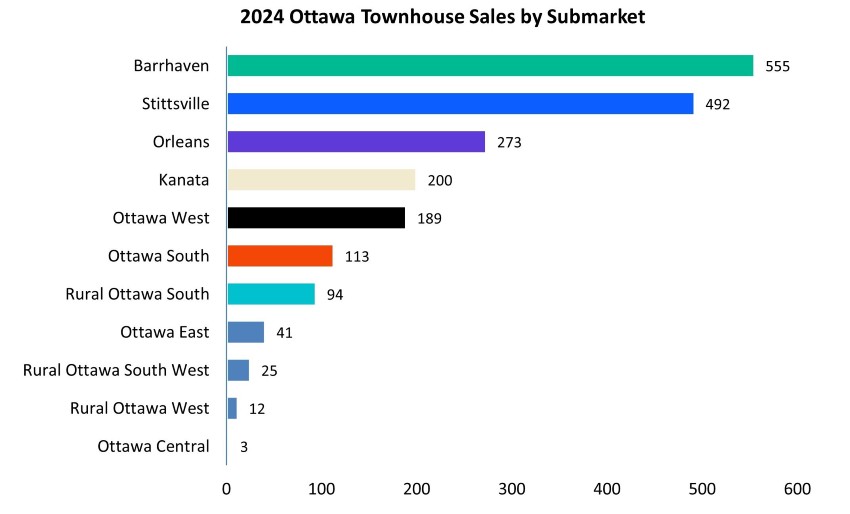
An estimated 2,079 multi-family units sold in 2024, according to Zonda Urban. The sale of 1,997 new townhouses saw demand for this building type rise 72 per cent year-over-year. About 858 townhouses were sold in Q4, up 84 per cent from a year ago.

There was also an uptick among new condominium apartments at 82 sales, a 204 per cent increase; however, the market for new apartments remains stagnant with a standing inventory of 225 unsold and built units at the end of 2024.

New master-planned communities in Ottawa’s west and southwest led in townhouse sales during the year. Barrhaven and Stittsville accounted for 52 per cent of all 2024 townhouse sales, with a further quarter of activity found in Kanata and Orleans. As of Q4, new townhouses, including stacked and traditional units, sold for an average of $584,532.

Fourteen new townhouse developments opened for sales last year with an absorption rate of 67 per cent of released units by the end of Q4 and an average sold price of $490,963.

Affordability was the key factor with nearly half of new units brought to the market being stacked, with an average sold price of $387,150 (1,066 square feet average unit size). At an average size of 1,801 square feet, traditional townhouses in newly launched developments sold for an average $588,334 in 2024.

Just two low-rise new condominium apartment projects launched in the market during last year sold at an average end-selling price of $431,293 (727 square feet).

“Ground related townhouses really are the engine of this market,” said Pauline Lierman, Zonda Urban vice president of market research. “By late 2023, Ottawa Region developers were already reworking their product and pricing, offering more stacked towns and compact traditional towns — the latter often marketed as ‘urban’ units in the 1,600 to 1,700 per square foot range, and priced below $650,000. The shift paid off during 2024 with buyers re-emerging.”

Zonda Urban anticipates this trend will remain throughout 2025 with relatively affordable price points in the newer Ottawa suburban communities.

Ottawa

Innovation and efficiency in construction

As construction organizations navigate issues such as the skills gap, efficiency, sustainability, and more, it’s a great time to have a look ahead at some of the trends and areas we see affecting the industry in 2025.

This year presents significant opportunities for Canada’s construction sector, especially for organizations that are willing to embrace digital transformation and capitalize on government infrastructure investments. Technology adoption, regulatory reform, and a focus on sustainability offer pathways to overcoming long-standing productivity gaps.

In particular, we expect AI will continue to make inroads and have a greater impact on the jobsite, from daily operations to enhancing overall productivity. The labour shortage and skills gap will continue to affect construction this year, but we’re seeing conversations and approaches shift to address it. We’ll also see different approaches in the areas of efficiency and budget management, along with other innovations on the jobsite.

Here are some areas of opportunities we see for the year:

THE IMPACT OF AI

AI Agents and Workflow Automation: This year we’ll see AI agents become standard in automating repetitive tasks such as writing RFIs, design versioning and project setup. By making it easier for teams to focus on higher-value tasks, these agents will empower construction teams to boost efficiency and streamline workflows.

New Approach to AI and Data-Driven Decision-Making: As generative AI becomes more mainstream, construction professionals can interact with software through natural language, making it easier to gain insights and make data-driven decisions. This solution will allow project managers to ask questions directly to the AI agent and receive instant, customized responses – a game changer for daily operations and productivity.

Generative AI as the Interface for SaaS Platforms: Generative AI will redefine how construction professionals interact with software platforms. SaaS products will rely more on natural language commands to trigger actions in 2025. This in turn will make them more intuitive and customizable for specific industry needs. We’ll see this shift lead to greater adoption, especially as companies see the benefits of voice-driven interactions in managing projects.

LABOUR AND SKILLS GAP

Revolutionizing the Skill Gaps: Leaders who embrace inclusive cultures and proactive tech solutions see greater workforce stability, a critical advantage in today’s competitive environment. As the workforce shortage intensifies, we’ll see construction organizations that prioritize upskilling and integrating diverse talent finding an edge over those relying on traditional methods.

Workforce Transformation and Upskilling with AI: AI will accelerate workforce development by helping new employees become experts faster through AI-driven training and recruiting tools. In 2025, expect companies to leverage generative AI for onboarding, training, and upskilling to help bridge the labour gap and improve overall productivity.

Maximizing Efficiency and Budgets
Efficiency takes Centre Stage: With economic pressures mounting, we’re seeing construction organizations turning to data-driven tools to do more with less, improve resource use, and cut costs. In 2025, we can expect widespread adoption to streamline project management and boost performance across the board.

Impact of Regulatory Standardization: Collaborating with the government to standardize building codes, permitting, and licensing processes across provinces will unlock efficiency and reduce barriers that have been preventing firms from scaling and adopting innovative practices.

Vertical Integration Grows: To protect their margins, general contractors and trades are bringing design and construction services in-house, to control costs and navigate current economic challenges. This year, more firms will vertically integrate to shield themselves from economic fluctuations and maximize profits.

INNOVATIONS ON THE JOBSITE

Connected Sites with IoT and Wearables: We’ll see a shift in job site technology in 2025, as wearables and IoT devices become commonplace. By collecting real-time data on worker safety and equipment tracking, these technologies will enhance project efficiency and make site operations more transparent, shaping the future job site.

Sustainable Innovations on the Rise: With more industries pushing for environmentally responsible practices, construction is set to embed sustainability into design and material selection. By leveraging a construction management platform, companies can align diverse teams to implement green solutions, from renewable-powered data centres to nuclear-powered projects that set the stage for a more sustainable future.

ADDITIONAL CONSIDERATIONS

In addition to the trends mentioned above, there are great opportunities this year for Canadian construction that should also be considered. For example, contractors have an enormous opportunity to participate in public projects in 2025, especially with both federal and provincial governments planning large-scale infrastructure projects across sectors such as transportation, energy, healthcare, data centres, and public utilities.

While this might put additional strain on the labour shortage, it can be overcome in part by proposing and developing creative delivery models—such as public-private partnerships (P3s), integrated project delivery (IPD), and other collaborative procurement strategies—that optimize resources, reduce timelines, and improve outcomes.

This also opens doors for the government to explore alternative procurement strategies to attract more bidders, streamline processes, and mitigate the pressure on labour supply. These alternative approaches can create room for smaller contractors to uplevel their experience and gain involvement in large public projects, expanding the pool of firms capable of handling significant workloads.

By refining their project delivery models, contractors can demonstrate their capacity to handle complex, large-scale projects, enhance their competitiveness, and meet the growing demand for infrastructure across Canada.

Nolan Frazier is regional sales director, Canada at Procore.