Articles Archive - Page 108 of 928 - REMINET
REMI

Ontario renters divided as election looms

A recent survey conducted by Rentals.ca highlights a significant divide among Ontario renters as the province heads into its upcoming election. With housing affordability and rental policies taking centre stage, the survey reveals renters’ concerns and their influence on voting decisions, showing that housing issues will play a pivotal role in shaping the election outcome.

While some renters said they feel informed about housing policies, a significant portion indicated they are still unclear about where political parties stand ahead of the election.

Voting intentions show a split among respondents, with a large group still undecided. 25 per cent of the 500 respondents said they are leaning towards the Conservative Party, 17 per cent are in favour of the Liberals, 12 per cent support the NDP, 8 per cent have chosen “None of the above,” and 3 per cent are leaning towards the Green Party.

Housing affordability 

An overwhelming 85 per cent of renters said they believe housing affordability has worsened over the past five years. Factors contributing to this decline, according to  respondents, include:

  • 19% Inflation and economic instability
  • 16% Lack of housing supply
  • 14% Wage stagnation compared to rising housing prices
  • 14% Government policies or inaction
  • 12% High interest rates
  • 7% Rising Construction Costs
  • 5% Zoning and municipal regulations
  • 5% Social and/or demographic factors
  • 4% Short-term rental markets (e.g. Airbnb)

When asked about their confidence in a political party’s ability to address the housing issue, no party faired particularly well. The majority of respondents indicated “low confidence” in the parties, including the Conservatives (48%) and the Liberals (53%).

For the full picture, visit: Ontario Election Survey 2025

Toronto offers heads-up on emission thresholds

Toronto could join the slate of North American jurisdictions that impose thresholds for allowable greenhouse gas (GHG) emissions from buildings sometime later this year. City staff are currently working on a proposed bylaw to set out those requirements, which is expected to be presented for Toronto Council’s consideration before the end of September. In the interim, building owners have been promised advance details and an opportunity for input.

“Our intention is to bring this out more broadly with a proposal of what we’re looking at — timeline, buildings that are in, who will be impacted and when — hopefully as early as May,” Sarah Rodrigues, a senior project manager with the City’s Environment, Climate and Forestry division, reported during a recent webinar hosted by the Toronto chapter of the Urban Land Institute (ULI). “We want political buy-in and engagement with impacted communities to get clear, realistic and achievable targets.”

The anticipated bylaw would be the instrument for implementing what’s known as building emissions performance standards (BEPS), and is part of a larger strategy to achieve citywide net-zero emissions by 2040. Buildings currently account for about 56 per cent of Toronto’s GHG emissions output, with the remainder attributed to transportation (35 per cent) and waste (9 per cent).

Toronto’s inventory of 436,000+ single-family homes contributes about 54 per cent of emissions from buildings or 30.3 per cent of the total, but Council has decided to initially focus on the smaller complement of approximately 40,000 commercial, multi-residential, institutional and industrial buildings. Emissions targets and associated penalties for non-compliance would come into effect for these larger properties first before being rolled out to the single-family sector.

Rodrigues and her colleague, Ana Maria Medina, another senior project manager with the Environment, Climate and Forestry division, sketched out progress since Council conveyed those instructions last year. Thus far, a series of City staff working groups and stakeholder advisory committees have tackled the technical, financial and legal implications and practicalities of implementing BEPS. The six advisory committees are drawn from sectors that will be subject to the standards, including low-rise and high-rise commercial/multifamily buildings and large institutional facilities, and those that will be key to reducing emissions, including retrofit service providers, the finance industry, and utilities and other public agencies.

“It’s a targeted engagement approach, trying to leverage a lot of expertise,” Rodrigues said. “These are folks who will be impacted and who will be influential in the success of this policy, who can help us understand what the policy should look like.”

They’re also weighing in on programs, policies and resources to support compliance, which have been promised as a companion piece to BEPS. That’s expected to include:

  • incentives, building on some of the retrofit programs the City already offers;
  • utility-level automation and data management efficiencies for collecting and transferring the energy and water-use data that building owners will have to upload to ENERGY STAR Portfolio Manager; and
  • more flexibility for properties that may encounter undue structural, technological and/or financial difficulties to stay within designated emission thresholds.

Representatives from some of the advisory groups thus far involved in the process also participated in the webinar discussion, and particularly stressed the importance of this element of the BEPS agenda.

Data collection obstacles delay City’s envisioned reporting timeline

Bryan Purcell, vice president, policy and programs, with The Atmospheric Fund (TAF), noted that obtaining aggregated data from utilities continues to be a “pain point” for many of the landlords and public sector facility managers currently obliged to report energy and water use under Ontario’s longer standing and the City of Toronto’s more recent mandates.

Specific to Toronto, the City now requires monthly consumption totals for electricity, natural gas, district energy (if applicable) and water from buildings larger than 50,000 square feet. Data for the previous calendar year is to be uploaded to ENERGY STAR Portfolio Manager by July 2 each year.

However, Toronto city staff are now recommending a one-year postponement of the reporting requirements for buildings in the range of 10,000 to 50,000 square feet, which would move the first annual deadline for submitting consumption data from July 2, 2025 to July 2, 2026. City Council’s Infrastructure and Environmental Committee will consider that matter this week, before it goes to the full Council at a later date. That’s after owners/managers of larger buildings were also given a short extension for submitting their first round of data last year, with the original July 2 deadline moved to Oct. 31, 2024.

“While progress is being made, automated solutions to providing aggregated whole-building utility data for buildings smaller than 4,645 square metres (50,000 square feet) but as large or larger than 929 square metres (10,000 square feet) are not yet in place,” a report from the executive director of the Environment, Climate and Forestry division acknowledges. “This (deadline extension) will allow additional time for: 1) the Environment, Climate and Forestry division to put in place a reporting help centre which will provide direct support for property owners; and 2) water, electricity and natural gas utilities to streamline access to aggregated whole-building utility consumption data.”

That’s data that has to be retrieved from four different sources: Toronto Hydro, Enbridge Gas, Enwave District Energy and Toronto Water. Purcell stressed that automation at the utilities’ end would greatly reduce both administrative burden for building owners and the potential for erroneous data entry, while Medina advised that work toward those goals is in progress.

“The City is currently working on a project to automate our water data aggregation process to reduce the amount of time that it takes to provide whole-building water consumption data to building owners, and we aim to eventually enable direct uploading of water consumption data into ENERGY STAR Portfolio Manager,” she confirmed. “In the case of Toronto Hydro, we are aware that they are working on enabling automatic upload of monthly aggregated electricity consumption data into our customers’ ENERGY STAR Portfolio Manager account.”

“I’m not sure where Enbridge is, at this point, with data aggregation and automation to ENERGY STAR Portfolio Manager, but I imagine that, as policy pushes forward, this is something that Enbridge will seriously need to consider, and Enwave will as well, as another provider of energy for large buildings downtown,” added Steven Pacifico, executive director of the Zero Carbon Buildings Accelerator Program with Toronto 2030 District, part of a global network of organizations advocating for decarbonization of the built environment.

Alternative compliance paths and financial supports recognized as necessary

Beyond the cost, time and labour for reporting, there is perhaps even greater unease about the potential for financial penalties if emissions from buildings surpass what the City dictates to be the allowable threshold. In New York City, for example, the fine has been set at USD $268 (CAD $380) per tonne for emissions exceeding the established limit.

“What kind of penalties is the City considering for non-compliance, and would there be alternative compliance pathways for complying with the bylaw?” asked Caroline Karvonen, senior director, sustainability and stakeholder relations, with the Building Owners and Managers Association (BOMA) of Greater Toronto.

“Right now, with everything that’s happening in the market, a lot of B and C class assets, especially commercial office, can be distressed and experiencing vacancy. An alternative compliance pathway will be important for them to help comply with the bylaw” Pacifico observed. “We’re getting a lot of questions around the requirements. We’re waiting to see a little bit more meat on the policy.”

More details are promised as part of the upcoming consultation period. In turn, feedback from the consultation will be considered and potentially incorporated into the plan that will be presented to Council sometime this summer. There’s also a recognition that some buildings will face greater costs to get within prescribed emission thresholds, which might be balanced with commensurate leniency, extra financial support or some combination of those two measures.

“We have the benefit of having access to the lessons learned and emerging best practices from jurisdictions that are ahead of us in this process, which we are also leveraging to inform in the consideration of alternative compliance pathways,” Medina said.

That group includes eight large cities in the United States, including New York, Boston, Seattle, Denver and Washington, D.C., that have already adopted emissions standards and dozens more that are on track to do so. Rodrigues highlighted various actions within those cities that provide extra supports for some designated types of buildings.

She reiterated that Toronto policy drafters are well aware of the massive upfront investment in existing buildings that will be required to meet the net-zero target, but they also want to underscore that “beneficial electrification” delivers paybacks in cost savings and improved asset value and resiliency.

“We know that we lean on a lot of other partnerships and levels of government to try to provide some incentives, rebates and really try to cultivate an environment in which it’s a bit more feasible for folks to do this,” Rodrigues said. “We also want to make sure people are planning their retrofits appropriately to realize the benefits.”

As part of the unfolding consultation process, the City has prepared information packages for business and community organizations interested in hosting discussions about the BEPS concept, and will be accepting feedback from those discussions until March 11. Opportunity to respond to an online survey, via the City of Toronto’s website, is also promised to be available soon.


Five benefits of building geothermal condos

Some condo developers are switching to clean heating and cooling in their properties for improved operations. However, one source stands out for its potential, resilience, reliability and health benefits — geothermal.

Geothermal heating and cooling use the Earth’s heat to warm buildings via a pipe distribution network. A geothermal heating and cooling system could be key to optimized electricity usage and other energy-efficient technologies to retain heat or cool air.

Why geothermal methods for condos?

The danger of climate change is imminent. In 2024, the Earth’s temperature was about 1.47 degrees Celsius (or 2.65 degrees Fahrenheit) warmer than in the late 19th-century. The last decade was the warmest ever recorded.

Non-renewable energy sources are significant contributors to climate change. In 2023, the United Nations Environment Programme revealed that 34 per cent of greenhouse gas (GHG) emissions were caused by human consumption of non-renewable energy sources like fossil fuels, which equaled 20 gigatonnes globally. In Canada, heating and cooling account for more than 40 per cent of energy bills, meaning households contribute heavily to GHG emissions.

Geothermal allows condo residents to use 80 per cent less power than standard furnaces, reducing their carbon footprints and utility costs. With its evident potential and Canada’s vast geothermal resources, condos have a greener avenue for heating and cooling.

The Benefits of Designing New Builds with Geothermal

Why should the condo industry design new buildings with geothermal heating and cooling? They offer a wide range of benefits beyond energy efficiency and long-term cost savings.

Less exposure to heat-related health risks

The traditional air conditioner and air-source heat pump do not eliminate heat — they simply move it to another location. Heat is often transferred to the structure’s surroundings, increasing the already-elevated local temperature. Consistent and extreme heat exposure can cause health problems such as heat stroke, dehydration, skin issues and even heat-related deaths.

A geothermal heating and cooling system is an excellent feature for tenants with older family members, children or those simply looking for healthier living options. The cooling works by eliminating heat in a building without pushing it to the surrounding area. In the colder months, this heat is reused through the thermostat, keeping the indoor temperature optimal for residents.

Ensure there are no leaks in your unit’s structure. These leaks could be through the walls, ceiling or even the window. Ensure your windows have a U-factor rating around .20 to 1.20 and higher SHGC rating between 0 to 1 for sound insulation and heat-retaining abilities.

Provides better aesthetics

A geothermal heating and cooling system does not need bulky fixtures outside the units, like air-conditioning vents or a chimney. It’s space-efficient and only needs one-third of a traditional heating and cooling system’s space.

Geothermal also negates the need for an exhaust vent, reducing the likelihood of drilling unnecessary holes and entry points in a condo building. This, in turn, decreases leak points, which can cause heat or cool air to escape. In addition, geothermal heat pumps are quiet and versatile — they can power heating, in-floor heating, hot water and air conditioning through a single unit.

Steadier service during cold season

Unprecedented weather events and the climate change crises can cause the temperature outside to fluctuate. They are becoming more common, which
makes resilient construction increasingly important. While many furnaces must work harder to withstand a low outside temperature, a geothermal heating system is reliable during colder and rainy seasons, as it draws from the ground. Developers can use it to future-proof new construction.

No harmful waste byproducts expelled

Traditional heating pumps produce harmful waste by-products, which can cause various health issues for building occupants. Alternatively, geothermal heat pumps have no toxic byproducts.

A recent study from the Ottawa-based Association of Community Organizations for Reform Now discovered 78 per cent of tenants believe it’s important that their residence is green. With a rising interest in this lifestyle reform, condos that emphasize sustainability and energy efficiency are more likely to attract long-term residents.

Resilient, clean and reliable temperature control

Geothermal heating and cooling systems are available 24/7, with minor environmental damage and fewer health risks associated with heat, pollution and cold weather. Constructing new builds with geothermal heating and cooling could be the solution for more sustainable, optimal and efficient energy usage and maintenance in your condo.

Evelyn Long is an experienced sustainability writer with publications on Globe-Net, Building Professionals Association, and Building Enclosure. She is also the editor-in-chief of Renovated Magazine, where she shares sustainability tips for homeowners.

EPA launches MyPest App to streamline pesticide registration for the cleaning industry

On January 17, The U.S. Environmental Protection Agency (EPA) launched its new MyPest App, which allows registrants of disinfectants, sanitizers, and other pesticide products to monitor the status of their pesticide registration submissions in real-time, providing much-needed transparency and efficiency to the often-complex registration process.

How this impacts ISSA members and the I&I cleaning industry:

For ISSA members involved in manufacturing, formulating, or distributing disinfectants, sanitizers, and other pesticide products that require EPA registration, MyPest will hopefully improve transparency and provide an easier way for registrants to communicate with the agency through the app.

ISSA encourages all eligible members to take advantage of this valuable tool to streamline their pesticide registration processes and improve communication with the EPA. This update represents a significant step forward in making the regulatory process more efficient and transparent for the cleaning industry.

Key features and actions for ISSA members:

  • Real-time tracking: Monitor the status of pending actions and, by early February, see projected completion dates (though these are subject to change).
  • Company administrator setup: Designate company administrators to manage access to the system. This is essential for using the app.
  • Action required: Log in to https://oppt.my.site.com/mypestapp/s/ and set up your company administrator(s) now. Multiple administrators are recommended.
  • Authorization letters: Follow the provided instructions (and attached template) for submitting authorization letters, especially for agents and consultants via CDX. C-suite signatures are required.
  • Authorized official verification: Check your authorized official status in PPIS (zip file) and submit any updates through CDX if needed.

Important Note: This new system only affects tracking and communication. The process for submitting pesticide registrations remains unchanged.

RELATED: EPA proposes banning a chemical found in cleaning products

If you have any questions or need further information, please contact Meché C. Ragland ISSA Regulatory Affairs Manager.

To learn more about ISSA, please visit the website.

Smart technology in commercial cleaning

Innovative technology can be a game-changer if you want to streamline your business operations and take your commercial cleaning or maintenance business to the next level. No matter the size of your business, there are plenty of tech solutions that can help you optimize operational processes, reduce costs, and keep your facilities spotless and functioning at optimal performance.

Smart scheduling and workforce management  

Managing a cleaning or maintenance team can be a juggling act, especially when dealing with multiple locations or a large facility. Intelligent scheduling software is a fantastic tool that can make your life much easier. These platforms use algorithms to create efficient schedules, considering the size of your facility, the number of tasks, and your team’s availability. Plus, real-time updates and notifications mean you can quickly address issues like last-minute absences or urgent cleaning needs. This technology functions as an assistant to ensure everything operates efficiently.

Automated inventory management

Running out of supplies can be a nightmare, but automated inventory management systems can help you avoid that headache. These systems use sensors and RFID tags to track your stock levels. When supplies run low, the system can automatically place an order with your supplier, so there is no scrambling at the eleventh hour to find what you need – it’s like having an assistant for your cleaning and maintenance supplies.

Data analytics and reporting

Data is your friend, and data analytics tools can give you valuable insights into your cleaning or maintenance operations. By collecting and analyzing data from service logs, equipment usage, and client feedback, you can identify trends and areas for improvement. For example, if a particular facility area consistently needs more attention, you can adjust your cleaning or maintenance schedule to focus on those areas.

Enhanced communication and collaboration

Effective communication is key, and smart technology can help you stay connected with your team. Mobile apps and communication platforms allow you to send real-time updates, assign tasks, and receive feedback. This ensures everyone is on the same page and can respond quickly to any issues. It’s like having a virtual meeting room where you can collaborate and solve problems as they occur.

Customer engagement and feedback

Happy customers are the key to success and smart technology can help keep them smiling. Online surveys, mobile apps, and social media platforms can make collecting and analyzing client feedback easy. You can build stronger relationships and enhance your reputation by actively engaging with your customers and addressing their concerns. Plus, positive feedback can be a powerful marketing tool.

Training and development

Investing in your team is always smart! Interactive training modules and virtual reality (VR) simulations can make learning more engaging and effective. These tools also track the progress of individual employees so you can identify areas where additional training may be needed.

Whether you’re just starting out or looking to take your business to the next level, plenty of innovative technologies can help you streamline your commercial cleaning or maintenance operations. The right technology can make a big difference, from easy-to-implement solutions like smart scheduling and automated inventory management to more forward-thinking options like IoT-enabled equipment and VR training.

So, what are you waiting for? Embrace the future and watch your business thrive!

Erik Buttlar is the Master Franchise Owner for Anago of San Antonio, part of the Anago Cleaning Systems brand supporting over 1800 franchises across the U.S. and Canada. For more information about Anago of San Antonio, visit AnagoCleaning.com/San-Antonio.

Construction starts on ARC heat recovery

Construction is underway on energy efficient upgrades to the Abbotsford Recreation Centre (ARC)

As part of the part of the Heat Recovery and Optimization (HeRO) project, this initiative aims to reduce greenhouse gas emissions while enhancing air quality, sustainability and patron experience of this staple community facility.

The ARC HeRO project involves retrofitting the facility’s existing HVAC system to connect all heating systems throughout the building. This retrofit will capture waste heat from the aquatic centre and arena and redistribute to other areas that require heating, thereby decreasing energy use and reducing carbon pollution.

These improvements are projected to reduce the facility’s energy consumption by an estimated 40 per cent and greenhouse gas emissions by 70 per cent. In addition to optimizing energy use, these upgrades will provide better ventilation and more consistent temperatures in the pool area.

Construction is expected to be completed by the end of 2025. ARC will remain open and operational throughout the construction period.

In addition to heat optimization and energy efficiency upgrades, this project also includes accessibility improvements to the wheelchair pool lifts, which were completed in fall 2023. These enhancements ensure that individuals with mobility challenges can navigate spaces independently and safely.

This ARC HeRO project is funded in part by a more than $4.45 million investment by the Government of Canada, through the Green and Inclusive Community Buildings (GICB) program, and a $4.2 million investment by the Province of BC, through the Growing Communities Fund.

“Abbotsford Recreation Centre is an extremely popular and well-used facility, contributing significantly to the health and livability of our community. These upgrades through the ARC HeRO project will not only help us to significantly reduce our carbon footprint but will also create a more comfortable experience for residents at our community’s largest recreation facility,” said Mayor Ross Siemens.


Surrey breaks ground on roundabout

The City of Surrey celebrated groundbreaking of construction of a roundabout at Harvie Road and 88 Avenue to keep traffic moving and prepare for growth. The roundabout will replace the all-way stop intersection near the Port Kells Library and Community Hall.

“Those who use this intersection during peak times know traffic gets backed up on all sides, causing frustration and long delays. This project is long overdue and I thank the Port Kells community for their patience. This roundabout is part of our commitment to ensuring we’re investing in all our communities and is part of our four-year $300 million investment in transportation projects throughout the city,” said Surrey Mayor Brenda Locke.

The intersection has seen considerable growth in traffic volumes causing traffic delays in the area. With the unique geometry of this intersection, turning movements, and proximity to community facilities, a roundabout was considered a better option over traffic lights.

The roundabout island will include landscaping and public art to enhance the area. The project also includes installing sidewalks leading up to the intersection to improve access for pedestrians.

Construction of the roundabout is expected to be completed by this summer.


SKYBLÜ 3 condo will be third tallest in Cité Mirabel

The next phase of the SKYBLÜ 3 Urban Condos project is underway in Quebec. The 15-storey tower will become the third tallest in Cité Mirabel.

Developer Ray Junior Courtemanche announced that SKYBLÜ 3 will bring 189 condos to  buyers from all generations. Planned amenities include an 82-foot outdoor swimming pool with a relaxation area, a fully equipped gym and rooftop terrace with panoramic views.

The overall project brings three towers to a neighbourhood that is experiencing increasing demand for larger condos.

Princess Auto to build new warehouse in Alberta

Plans are unfolding for the development of a design-build industrial warehouse for Princess Auto Ltd., located at Stoney North Logistics Centre in Balzac, Alberta. The facility will include features sought by large-scale distribution tenants, such as a 40-foot ceiling height, ample loading doors, and trailer storage.

Upon completion, Stoney North Logistic Centre, co-developed by GWL Realty Advisors (GWLRA) and Enright Capital Ltd., will offer more than two million square feet of Tier 1 industrial warehouse space across 118 acres. The first building will become a 605,000-square-foot warehouse, exclusively developed for Princess Auto Ltd., a Canadian retail chain specializing in farm, industrial, garage, hydraulics, and surplus items.

“GWLRA is very pleased to have completed this lease transaction, and we look forward to welcoming Princess Auto to the property upon completion in 2026,” said Robert Kavanagh, senior vice president for Western Canada. “Princess Auto Ltd. will occupy the property on a 15-year lease. They are a great lead tenant for our Stoney North Logistics Centre.”

GWLRA recently announced the project on behalf of its client The Great-West Life Canadian Real Estate Investment Fund No. 1 (CREIF).

“This project is in line with our ongoing strategy of investing in next-generation warehousing and logistics facilities in desirable locations,” said Steven Marino, executive vice president of portfolio management. “This project not only supports our strategic vision, but also demonstrates our strength in managing and developing industrial assets.”

Balzac serves as a primary distribution hub for Western Canada, attracting major retailers to establish their logistics facilities there. Stoney North Logistics Centre is located just north of the City of Calgary, offering easy access to Stoney Trail (Calgary’s ring highway) and Deerfoot Trail (Highway 2).

“We are thrilled to expand our distribution capabilities to better serve Canadians nationwide,” said Kris Heieie,  Princess Auto’s vice president of supply chain. “Staying in Northeast Calgary was important to us because of our incredible team. We wanted a location that supports our growth while keeping our team members close to home.”

How to Prevent Unauthorized Access to Master Keys in Your Condo Community

Imagine this: A resident comes home to find signs that someone has been in their unit: items moved, belongings stolen, or worse, an intruder waiting inside. Neighbours have reported similar incidents. The common thread? Unauthorized use of master keys. This scenario isn’t hypothetical; it’s happened in real condo communities.

While using master keys is a common practice, improper key management puts your condo corporation and residents at risk. In this article, we’ll examine common risks of master keys and how to protect your residents.

Common Master Key Risks

It can be challenging preventing master key misuse without the proper precautions. Some of the most common issues include the following:

  • Failing to Rekey After Construction or Renovations: When working on new construction or renovation projects, contractors might use construction master keys to provide easy access throughout the condo community. However, failing to rekey when the project is complete leaves residents at risk.
  • Unapproved Duplication: Stamping keys with “Do Not Duplicate” provides a false sense of security. This inscription isn’t a failsafe way to prohibit duplication of keys, and if someone wants a copy of a key badly enough, they’ll find a way to make one.
  • Unauthorized Key Use: Whether it’s a board member, vendor, or property manager, there’s always a risk that someone who has legitimate access to keys could use these keys for unauthorized reasons. Without a verifiable access log to track who’s removed keys and why, this risk increases.

A word of caution: As smart locks (also called digital locks or keyless entry) become more commonplace, you might think they provide more protection than physical keys. However, if a code, fob, or access card is programmed to grant access to the entire community—or even just a single building, it presents many of the same risks as master keys. To protect your residents, being aware of and addressing these risks is critical.

How to Reduce Key Control Risks

To protect your community, implement the following key security best practices:

Rekey When Necessary

If your community has recently undergone a construction project where workers had access to master keys or if a master key has gone missing, it’s important to rekey the locks.

Inform Residents

Whether your community uses a master key system or keeps a copy of each resident’s key on file, it’s important to let them know. Keep them informed about how you’ll secure keys, who has access to them, and what circumstances warrant use of those keys. Whenever a key is removed for the purpose of accessing a resident’s home, notify them ahead of time.

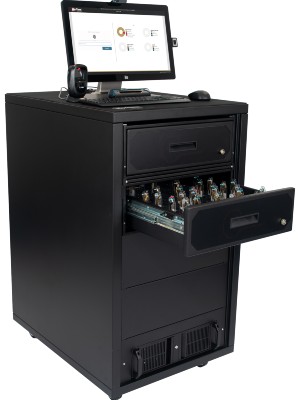
KeyTrak-Edge

KeyTrak-Edge

Create a Clear Key Control Policy

To hold keyholders accountable, create a clear key control policy detailing which employees, board members, vendors, and contractors are authorized to use which keys, when, and why. Update these guidelines at routine intervals, such as when a property manager resigns, a new board member is elected, or a resident moves in or out.

Secure Keys

Avoid storing keys in areas such as a desk drawer or on a pegboard in an open area. Ideally, store keys in an electronic key control system, which is a secure, automated solution consisting of a tamper-resistant cabinet, drawer, or wall-mounted panel.

Maintain Up-to-Date Key Control Logs

Every time someone checks out or returns a key, it’s important to document details such as the person checking the key out, date, time, checkout reason, and return time.

Using an electronic key control system to create an electronic log minimizes the possibility of human error or record falsification, as it will record each transaction instantly. If a key goes missing or there are allegations of misuse, this audit trail is invaluable.

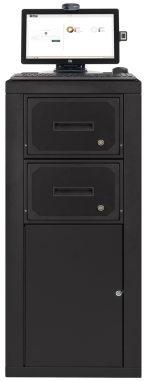
KeyTrak-Edge-SL

KeyTrak-Edge-SL

Choose the Right Key Control Solution

To secure keys, implement an electronic key control system that’s practical for daily use, while offering security features such as:

    • Secure, tamper-proof storage
    • User authentication through fingerprint identification or other secure method
    • User profiles with different access levels
    • Resident notifications when a key to their unit is checked out
    • Alerts for overdue keys and other security issues
    • System-mounted security camera to record videos of each transaction
    • Automatically captured records of when keys are checked out and returned
    • Key control reports to monitor key activity and identify potential security concerns

One solution that incorporates these essential features is the KeyTrak Edge system. Its flexible design works well in any condo community, providing a verifiable, automatic audit trail.

KeyTrak Mobile App

KeyTrak Mobile App

The system’s mobile app allows authorized users to check key status remotely, view system activity, transfer keys securely, and identify key tags by scanning a QR code.

For smaller operations, the KeyTrak EdgeSL system provides secure key control on a scale right for you.

Implementing property key control measures not only increases security but also provides peace of mind to your residents and protects your condo corporation from liability.

By understanding the risks of master keys and taking proactive steps to secure them, you’re investing in your community’s safety and trust.


To get started, visit keytrak.com.

Aaron Burton is the director of multifamily, condo, and commercial industries with KeyTrak.

KeyTrak

New supportive housing development opens in Toronto

A three-storey, modular housing development at 1120 Ossington Avenue in Toronto has officially opened, providing 26 deeply affordable homes for individuals experiencing or at risk of homelessness. Supported by the City of Toronto and the Canadian Mortgage and Housing Corporation’s (CMHC) Rapid Housing Initiative, St. Clare’s latest project was constructed using sustainable mass timber technology and erected in under three weeks.

“Twenty-six lives are being transformed as they move into their new homes on Ossington Avenue,” Mayor Olivia Chow said at the grand opening. “A bed, a safe place to eat, to heal and find community. Astoundingly, through the partnership with St Clare’s and the federal government, this housing was built in 17 days.”

Designed by Smart Density and McCallum Sather, and developed in partnership with Assembly Corporation, the building features colourful cladding, artful shading fins by artist Leo Krukowski and motel-style outdoor corridors.

1120 Ossington is being touted as a great example of what can be achieved when leveraging prefabricated components and sustainable materials, serving as a model for other neighbourhoods and cities facing similar housing challenges.

The supportive housing project is one of seven new affordable developments under phase two of the federal Rapid Housing Initiative. Collectively, these projects add 260 new homes to the city’s housing supply while enhancing the capacity and expertise of Toronto’s non-profit housing sector.

“The rapid construction of these deeply affordable homes demonstrates what is possible when multiple levels of government and community come together in support of innovative approaches to address homelessness,” said Nathaniel Erskine-Smith, Minister of Housing, Infrastructure and Communities. “Thanks to this vision, 26 more people who were homeless or at risk of becoming homeless will be opening the doors to their new homes.”

St. Clare’s is a charitable organization that provides affordable and mixed-income housing in downtown Toronto to a diverse cross-section of residents at risk of homelessness. The organization’s buildings are located within a geographical area that allows for close supervision and the implementation of best practices in property management and tenant support.

For more information on the project, visit www.stclares.ca

Nova Scotia to double deed transfer tax

Nova Scotia is doubling the deed transfer tax for out-of-province residential property purchasers as of April 1, 2025. The newly released 2025-26 provincial budget estimates that should yield an extra $13.2 million in tax revenue compared to 2024-25.

A 5 per cent tax on the sale value of residential properties that are no larger than a triplex was introduced for non-residents of Nova Scotia in 2022. This will now increase to 10 per cent. However, purchasers will be exempted if the property becomes their primary residence within six months of the closing of the sale.

The Nova Scotia government expects to collect roughly $14.5 million in deed transfer taxes for the 12-month period ending on March 31, and projects the new higher tax rate will bring in about $27.7 million in 2025-26. The new 10 per cent rate will not apply for purchase-and-sale agreements that are signed prior to April 1, even if the land transfer occurs after that date.

EllisDon launches VIBE scholarship award

EllisDon has launched the inaugural EllisDon VIBE Award, an initiative that aligns with the company’s value of inclusive diversity and its commitment to nurturing the next generation of industry leaders.

The VIBE Award is an initiative by EllisDon to foster innovation and driving transformation within the construction sector. This scholarship program is dedicated to supporting Black students in their educational journey, helping them build careers in construction and become the transformative leaders.

Starting with the 2025-26 academic year, the VIBE Award will offer annual scholarships ranging from $1,000 to $5,000 to eligible students attending the University of British Columbia, the University of Toronto Scarborough, Northern Alberta Institute of Technology, and Dalhousie University. These awards aim to ease the financial burden of post-secondary education and are a testament to EllisDon’s belief in the power of diversity to enhance communities.

The award is a direct result of the passionate efforts of EllisDon’s employee-led leadership group, VIBE, which is committed to enacting change and creating opportunities for Black Canadians in the construction industry. VIBE will continue EllisDon’s internal and external focus on taking concrete actions to combat anti-Black racism.

“VIBE is a feeling. An energy that you feel when you’re with other people. A sentiment that leaves you feeling like you want to go back,” said Jennifer Khan, EllisDon head of Inclusive Diversity. “Go back to a place where you feel like you belong, a place where you want to grow and do great things.”

Application details for the VIBE Award will be available on the respective universities’ awards and scholarships pages.

“We believe that an inclusive and diverse workforce is key to building not just structures, but a stronger, more equitable society,” said the company..

Starlight completes new Barrie infill project

Starlight Investments has officially completed The Shoreview, an 11-storey purpose-built rental community located in downtown Barrie, Ontario. The new infill project overlooking the Lake Simcoe waterfront brings 215 rental suites in a variety of layouts to the growing Barrie rental market.

Shoreview“We are pleased to complete this transformational purpose-built rental development in the beautiful city of Barrie,” said Howard Paskowitz, Vice President, Development, Starlight Investments. ​“The Shoreview reinforces our commitment to building sustainable and inclusive rental communities that provide quality of life and vibrant spaces for residents to live and thrive for the long term.”

Conveniently situated near schools, restaurants, grocery stores, and major transportation routes, The Shoreview offers premium amenities including a fully equipped gym, a social room, a pet spa, bike storage, and electric vehicle charging stations. The new community also features a rooftop terrace with views of Kempenfelt Bay and incorporates sustainable elements such as energy-efficient appliances and smart thermostats.

The Shoreview isn’t the only new property underway from Starlight Investments; according to Paskowitz, the leading Canadian developer is on track to deliver over 28,000 rental suites within the next decade. For more on this and other new projects from Starlight, visit www.starlightinvest.com.

Low-carbon revenues flow from buildings sector

Building products and services are propelling Canadian headquartered enterprises into the rankings of the global top 200 publicly traded companies with revenues tied to low-carbon ventures. The newly released Carbon Clean200 listing of top earners includes 11 Canadian companies, seven of which are commonly direct suppliers to the commercial real estate, facilities management and development sectors.

The Clean200 represent the most prosperous companies among a pool of 8,359 publicly traded entities that derive at least 10 per cent of revenues from goods and services aligned with clean energy, energy efficiency, the circular economy or sustainable production, finance, acquisitions or research and development. To qualify, Clean200 designees must also be free of any earnings associated with fossil fuels, deforestation, weapons or private prisons and have no history of human rights abuses or climate policy obstruction.

This year’s Clean200 are deemed to have collectively registered more than USD $2.5 trillion in sustainability-linked income in 2023. The annual report — jointly produced by the Canadian and American research endeavours, Corporate Knights and As You Sow — also compares the Clean200’s investment performance against the MSCI’s world (ACWI) and world energy indices.

It concludes that the Clean200 delivered a 190.9 per cent return on a sustainable revenue-weighted basis between July 1, 2016 and Jan. 29, 2025 versus 162 per cent for the MSCI ACWI index and 76.7 per cent for the MSCI world energy index during the same period. On average, 54.5 per cent of the revenue Clean200 companies generate is tied to sustainable products and services, while the MSCI ACWI index average is 15.5 per cent.

“The scale and global diversity of leading companies continue to expand and redefine the term ‘cleantech’ to be any company with products and services that will reduce demand for fossil fuels and water,” observes Andrew Behar, the report’s co-author, and the chief executive officer of As You Sow. “Sustainably sourced products are good for business, shareholder returns and the overall economy.”

“Stock markets care more about economic materiality of the parabolic growth in clean energy than the political leanings of the day,” concurs Toby Heaps, the other co-author, and chief executive officer of Corporate Knights.

The Clean200’s top 10 earners boast about USD $830 billion in sustainability-linked revenue for 2023. Six of the 10 derived upwards of two-thirds of their total annual revenue from products and services linked to a low-carbon economy — with earnings for the battery manufacturers, Contemporary Amperex and LG Energy Solutions, and electric vehicle manufacturer, Tesla, solely emanating from sustainable products.

The Clean200 are domiciled in 35 different countries and classified in 10 different industry sectors. The largest share of companies (41) are located in the United States. Canada and France are tied in fifth with 11 each, following after China (21), Japan (18) and Germany (14). Spain, South Korea, Brazil and Taiwan round out the top ten hosts, while the United Kingdom is slotted at 11th as the home of five Clean200 companies.)

The engineering and environmental consulting firm, WSP Global, is the top Canadian entrant on the list, ranked 95th for its sustainable revenue. Property owners, managers and investors are also likely to have business dealings with six other Clean200 companies:

  • Canadian Solar Inc., provider of equipment for solar power generation in commercial and residential applications, ranked 121st;
  • Manulife Financial Corp., an insurance and financial products provider, ranked 133rd;
  • Waste Connections Inc., a waste services company, ranked 152nd;
  • GFL Environmental, a waste services company, ranked 168th;
  • Cascades, a paper products producer, ranked 186th; and
  • Stantec, an engineering, environmental and architectural consulting firm, ranked 189th.

Other Clean200 designees based in Canada, include: BCE (109th); Canadian National Railway (127th); Telus Corp. (137th); and Canadian Pacific Kansas City Limited (169th). Ten of the Canadian companies are traded on the Toronto Stock Exchange, while Canadian Solar trades on the NASDAQ.

Although headquartered in the U.S., one of the three real estate ventures to make the Clean200 list has a presence in Canada. Equinix owns and operates data centres in eight Canadian cities, including Toronto, Montreal, Vancouver, Calgary, Ottawa, Winnipeg, Kamloops and Saint John. As well, Canada Pension Plan Investment Board (CPP Investments) recently committed USD $5.6 billion (CAD $7.9 billion) to take a 37.5 per cent stake in Equinix’s planned development of additional hyperscale facilities in the United States. The REIT is traded on the NASDAQ and ranked 163rd among the Clean200.

Singapore-based CapitaLand Investment has also made a modest foray into Canada with a low-rise multifamily development underway in Edmonton. However, the bulk of its holdings are in Asia where it boasts six listed property funds totalling USD $61 billion in funds under management. Ranked 160th in the Clean200, its global portfolio spans 45 countries, including the U.S.. It is traded on the Singapore Exchange.

City Developments Limited, also listed on the Singapore Exchange, is the final real estate entrant in this year’s Clean200, ranked 195th. Known as CityDev, its portfolio stretches to 29 countries, almost exclusively east of the Atlantic Ocean, with the exception of the U.S..

Looming tariff threat creating chaos and uncertainty

As the U.S. trade tariff dispute looms, construction businesses face uncertainty and potentially significant financial risks.

Since assuming office, U.S. President Trump has signed a rash of executive orders, imposing a punitive 25 per cent tariff on all Canadian imports, including steel and aluminum, and a 10 per cent tariff on energy products. Canada is responding with retaliatory measures.

While there’s a 30-day pause between the countries, the potential impacts are too significant to ignore.

The tariffs threaten to disrupt established supply chains, increase project and material costs and put more strain on an industry already facing tough market conditions.

The tariff uncertainty is creating “chaos,” stated Louis-Philippe Champagne, associate vice president, Canadian Construction Association during an industry webinar.

He said the tariffs will have two very significant indirect impacts on construction. First is the economic contraction and damage on both Canada and the U.S., leading most likely to a recession if the tariffs are sustained for several months. It will also mean less investment into projects due to owner concerns over risks.

Secondly, “most of our construction product comes from the U.S. We have a very integrated supply chain, not just in construction but Canada,” said Champagne. “The contraction of the economy created by the tariffs and then our dependence on the U.S. market will mostly likely have an impact on price.”

Finding solutions to offset the fallout from the tariff threats are made more complicated because of the interprovincial trade barriers in Canada, which hinder the movement of goods across the country. The interprovincial trade barriers impose the equivalent of a 21 per cent tariff on goods across Canada, noted Champagne.

“The way our legislation and trade infrastructure is built, it is easier to send product to the U.S. from Vancouver for example, and then buying it back in Quebec – in Ontario than it is to cross the country internally with our own materials,” he explained. “This is something the government can tackle and we’re working with them to see changes.”

But even if the trade barriers are removed or minimized, another challenge is Canada’s poor infrastructure that has “been bottlenecking Canadian resources.”

“The core challenge remains our infrastructure. We have a significant underinvestment in trade infrastructure,” said Champagne.

B.C. Construction Association president Chris Atchison stressed that the industry needs to work together to find solutions and be prepared to address the emerging threat.

“While we can’t change the decisions that are being made across the border, we can control how we prepare, how we protect our workers and how we work together to find solutions,” he said.

Atchinson shared that industry members are concerned and are calling for reduction of interprovincial trade barriers; financial assistance and subsidies for affected materials; and prompt payment legislation to mitigate tariff impacts.

Another key to reducing the tariff impacts is to carefully examine and fully understand the provisions set out in contracts, said Tyler Galbriath, partner Jenkins Marzban Logan.

He emphasized this is a time to be united, not divided and that there is no “silver bullet” or one-size-fits-all answer to the tariff threat.

“Have that open, frank and honest conversation with the person you’ve contracted with….go over contract by contract,” said Galbraith.

He advised that CCDC and CCA contracts have provisions, such as the section 10.1.1 and 10.1.2 of the CCDC 2, which contain tax and duty change protections. But if contractors are not using CCDC, they need to understand their contract.

For new projects, contractors have to ensure there is a tariff provision/adjustment clause in the contract to be adequately protected or decide to bid “with eyes wide open.” Galbraith also noted that force majeure is not a solution – “it only gets you time, not money.”

Champagne concluded by saying this potential trade war is a “wake up call” for the federal government. “Canada needs to rethink its dependence on the U.S. CCA has been advocating for quite some time for investment in trade infrastructure into our port and railroad and roads. This is long-time overdue,” he said. “In order to be able to rely on ourselves much more and buy our own steel – buy our own wood, we will need to see some significant investment and changes to policy.”

Since the webinar, the list of American tariffs now could potentially include a 25 per cent levy on lumber and forest products.


Cheryl Mah is managing editor of Construction Business.

Lack of regulations and data hinder LCA progress

Selecting the lowest carbon-emitting products across a building’s material portfolio could reduce emissions by more than one-third, according to new global findings. However, the absence of regulations for advancing life cycle assessment (LCA) practices and a lack of manufacturer environmental product declarations (EPDs) remain core obstacles for further progress.

The 2025 Carbon Experts Report, from construction life-cycle assessment software provider, One Click LCA, gathered insights from 150 architects, engineers and construction (AEC) professionals across the world (mainly in Europe and the UK & Ireland, with 10 per cent in North America), along with associated manufacturers.

Carbon reduction potential

More than 60 per cent of AEC respondents estimated at least a 10 per cent reduction in embodied carbon through LCAs, with a third predicting reductions exceeding 20 per cent. Thirty-one per cent have already successfully reduced embodied carbon by up to 20 per cent through LCA use, while 23 per cent have achieved reductions of up to 30 per cent. The majority of AEC professionals also conveyed that EPDs heavily influence their material purchasing decisions in building projects. This sentiment was highest in Europe and the UK & Ireland.

According to Gensler’s European Sustainability Lead Matt Reading, carbon transparency is key to reducing embodied emissions in building projects. “Builders, architects, and developers must understand the carbon profiles of materials to make informed decisions,” he states. “EPDs offer reliable data to assess material impacts, allowing project teams to compare and select low-carbon options effectively.”

The report also revealed obstacles in the journey toward decarbonization. Implementing consistent carbon reduction strategies across projects and regions remains challenging with great variations in national and local regulations and a lack of clear and consistent policies. While Europe advances with the revised Energy Performance of Buildings Directive and the Construction Products Regulation, other regions haven’t been as diligent with policy development.

Panu Pasanen, founder and CEO of One Click LCA, said this fragmentation poses significant challenges to decarbonization efforts but offers opportunities for knowledge sharing, industry leadership and policy harmonization.

“We hope these findings serve as a call to action for the industry and regulators,” he said. “We are now at a tipping point where technology, market demand, and regulations are coming together to speed up sustainable practices across the construction value chain.”

Factors hindering EPD progress for manufacturers

Manufacturers see EPDs as a competitive edge, critical to their long-term survival. However, more than 80 per said they continue to grapple with the high costs and complexity of creating EPD data and third-party verification. Many also struggle with the technical requirements of producing them. A lack of training continues to be a significant barrier as well. The fragmentation of this data makes adopting LCA and EPD practices even more complicated, hinting at a need for greater carbon and data transparency between the demand and supply sides.

Barriers to EPD adoption for AEC industry

The data underscores that the lack and variable quality of manufacturer EPDs are huge barriers to their broader adoption. All the AEC respondents in North America identified the absence of EPDs as a limiting factor.

Data gaps in material categories

Manufacturers flagged data gaps in several material categories (such as cements and binders), which require accuracy for informed decision-making.

For instance, mechanical, electrical and plumbing systems involve complex assemblies with mixed materials, which demand detailed data to facilitate better integration with life cycle assessments. Insulation also plays a key role in energy efficiency, yet data gaps can hinder evaluations of thermal performance and environmental impacts.

Meanwhile, a portion of manufacturers (36 per cent) noted a need for better product data across all material categories, suggesting a systemic issue where a lack of detailed environmental data spans the entire supply chain rather than being isolated to specific materials. “Addressing these gaps holistically could enhance transparency and foster innovation in sustainable construction fractions,” the report states.

Bridging the regulatory gap

A regulatory gap impedes both supply and demand. While manufacturers face uncertainty regarding compliance requirements, AEC professionals lack a consistent framework for requiring EPDs in procurement. Regional disparities in policy development are further complicating standardization, leading to barriers to wider LCA adoption.

To strengthen municipal and regional initiatives, the report suggests leveraging public procurement, such as the Buy Clean policies implemented in Vancouver and New York, which prioritize low-embodied carbon materials. Other strategies involve expanding local benchmarks and embodied carbon targets and scaling successful regional policies to national levels.

To incentivize industry compliance and innovation, building permits can be tied to carbon reporting. To ease cost burdens, financial incentives can be expanded for manufacturers to produce EPDs and verified low-carbon materials.

Promoting digitization and automation also emerged as a path to support manufacturers with the complexity of creating EPDs. Manufacturers listed LCA automation and other software tools as the biggest time-saver for assessments, followed by greater knowledge, data accessibility and a more LCA-trained workforce.

To learn more,  the 2025 Carbon Experts Report can be accessed here.