Articles Archive - Page 104 of 928 - REMINET
REMI

Making ladder safety a priority

March is National Ladder Safety month, and as spring is around the corner, it’s the perfect time to review safe ladder usage for building maintenance. While studies show a decrease of 21 per cent in ladder-related accidents from 2020 to 2024, conducting an annual ladder safety review can keep your employees safe and your business thriving.

Whether you are changing lights or cleaning gutters as part of your maintenance duties, here are some factors to keep in mind when practicing safe ladder use this spring:

  • Assess the risks to determine if fall protection is necessary.
  • Ensure that the weight capacity exceeds the weight of the person using the ladder, along with the required tools.
  • Examine the ladder for cracks, loose or corroded rivets, defective braces, or parts (including the slip resistant feet) that are in poor condition. Make sure it is free of grease, oil, or other slippery substances.
  • Set the ladder up on even or soft ground. Check for cracks and uneven surfaces before you extend the ladder – never place a ladder on top of another object.
  • Wear proper PPE that may include non-slip footwear, hard hat, gloves, and safety glasses.
  • Once it’s extended, lock it into place so it stays where it is supposed to.
  • When going up or down, always face the ladder, while maintaining three-point contact (2 hands and a foot or both feet and one hand).
  • Carry tools in a belt whenever possible to keep your hands free to climb the ladder.
  • Keep the ladder close to the work area to avoid having to reach out away from the ladder. Keep both feet on the ladder at all times to remain steady.
  • Keep ladders away from power lines, and if electricity is a hazard, a fibreglass ladder should be used.

Protect your employees year-round with safe maintenance practices, including responsible ladder use.

Housing construction amid global uncertainty

In a decisive victory on March 9, 2025, former central bank governor Mark Carney was elected as the new leader of Canada’s Liberal Party and Prime Minister-designate. The outcome was widely anticipated given Carney’s distinguished educational background and career achievements, which include his roles as Governor of the Bank of Canada and Governor of the Bank of England. Amid ongoing annexation threats and global economic uncertainty, Carney’s landslide win over his three esteemed competitors—including former Minister of Finance, Chrystia Freeland—highlights the Liberal’s preference for a leader with robust financial expertise and the ability to navigate tough tariff negotiations with U.S. President Donald Trump.

“We didn’t ask for this fight,” Carney said in his acceptance speech. “But Canadians are always ready when someone else drops the gloves. So, the Americans, they should make no mistake. In trade, as in hockey, Canada will win.”

On the campaign trail, Carney vowed to hold firm in his response to U.S. threats by keeping Canada’s retaliatory tariffs in place until the U.S. reverses its unjustified actions. He also spoke about the need to remove interprovincial trade barriers, invest heavily in infrastructure projects such as highways, rail, and ports, to improve Canada’s productivity and economic competitiveness, and to create a $6.5 billion aid package to mitigate the impact of the trade war on Canadian workers.

Meanwhile, housing development is an ongoing priority that is certain to be impacted by the tariff war. Material costs will go up, and housing starts will go down. But Carney says his party intends to “supercharge” Canada’s housing plan and take “aggressive action to ensure we can build enough homes for Canadians now.”

The Canadian Federation of Apartment Associations (CFAA)‘s interim president, Tony Irwin, issued the new federal leader a congratulatory message, adding that, “Our members continue to face significant economic pressures due to rising construction costs and expenses including property taxes, development charges, insurance, utilities, and maintenance. The ongoing trade war with the United States has created considerable uncertainty and has broader implications for Canada’s financial stability. As the leading national voice for the rental housing industry in Canada, CFAA is committed to working with the government to address these challenges and to ensure every Canadian has a place to call home.”

Rad Vucicevich, the director of development and construction at Medallion Corporation, echoed these concerns over the tariffs. With 1,100 rental units currently under construction and an additional 660 starting imminently, the company has already struggled through some challenging conditions here in Ontario to get shovels in the ground and projects underway. Nonetheless, Vucicevich acknowledged that certain programs introduced by the Liberals have been helpful.

“With Mark Carney coming in as the new leader of the Liberal Party, we are hopeful he will continue, or even expand, the Apartment Construction Loan Program, which has been great for encouraging affordable purpose-built rental projects across the country,” he said. “The biggest impact of the ongoing tariff rhetoric is the uncertainty it creates. The constant changes to what will be tariffed and by how much, doesn’t create an environment conducive to costing out projects. If we know something will be tariffed, we can plan accordingly for our near-term pipeline projects. We’re hopeful this situation gets resolved soon so we can continue delivering much-needed housing for Canadians, just as we have been for over 60 years.”

Carney’s “Team Canada” approach

The good news is, Canada’s housing crisis appears to be central to Carney’s plan. To minimize the impacts of tariffs and maintain a healthy pipeline, his vision includes using “all available tools” to remove barriers to construction and engage all levels of government in a “Team Canada” approach.

“We need strong leadership and a clear vision to confront the housing crisis head-on and build the strongest economy in the G7,” his government website asserts. “These policies, implemented now, will help determine Canada’s economic competitiveness and the quality of jobs for decades to come.”

Proposed tactics to spur housing development include:

  1. Doubling the pace of new housing construction over ten years.

 “We have been building an average of roughly 227,000 homes per year over the past decade. We need to double this rate by improving the way we build homes, so that we can build 4 million homes over the next several years. We will catalyse enormous private investment to build new affordable homes for younger Canadians by aggressively unlocking private risk capital for new home construction.”

  1. Boosting innovation and productivity in housing construction.

“We will also invest in new technologies that speed up completion times and improve quality. We will incentivize scaling in construction to build more houses much more quickly, including supporting the Canadian prefabricated and modular housing industry and deploying new building materials and novel construction methods.”

  1. Growing the construction sector workforce.

“Accelerated home construction will require a corresponding investment in our skilled trade workforce. We will expand and accelerate training and apprenticeship programs for skilled trades so that we can build the homes Canadians need. We will seize this once-in-a-generation opportunity to create a more competitive construction industry with great jobs in trades and manufacturing.”

  1. Cutting red tape, reducing fees, levies, and taxes.

“We need more incentives for investment and growth, not fewer. We will leverage new federal investments with provinces, territories, and municipalities to lower fees—such as development charges—that unfairly increase housing costs and create barriers to building new homes. We will provide new federal infrastructure funding to offset lost revenues from development charge reductions. We will expand the Canada Housing Infrastructure Fund beyond just water and wastewater systems to include other critical infrastructure for growing communities’ needs.”

  1. Reducing housing bureaucracy, zoning restrictions, and design criteria.

“We can no longer tolerate restrictive, outdated zoning and permitting laws that block us from building more affordable places to live. We need more housing options in the places that make sense, including near transit. We will strengthen conditions and streamline federal programs so that provinces, territories, and municipalities can build more homes faster.”

Toronto school operators eager to get building

Sluggish turnaround times for building project approvals have frustrated Toronto school operators. Toronto Council’s school boards advisory committee is asking why it’s taking 33 months, on average, to secure the go-ahead for renovation, expansion and redevelopment projects on school sites, and calling for action to speed up the process.

Council’s executive committee will consider that request next week, before potentially forwarding it to the full City Council. Maria Rizzo, a Toronto Catholic District School Board (TCDSB) trustee, brought the issue to light in a recent memo that charts the journey of nine of that board’s schools now in the queue to obtain a site plan agreement  that will allow construction to commence. Multiple years have elapsed since proposed plans were initially submitted to the City in eight of the examples cited, including one that is nearing the five-year mark.

In an accompanying letter Rizzo noted that the Ontario government has long since approved the capital funding for these projects, which the school board has not yet been able to deploy. In other cases, school boards have had to forfeit provincial funding to create new childcare spaces on school sites because prescribed delivery times could not be met. She warns against wasting an another prime construction season.

“School boards, like any other builder, take advantage to construct projects in warmer weather and, moreover, school boards attempt to do construction work in school communities when students are not attending school,” Rizzo stated.

Among the TCDSB’s complaints, the memo highlights delays and inconsistencies in receiving feedback from City staff, a lack of coordination among the various City departments involved in plan/proposals reviews, which also involves multiple requests to resubmit the same documents in various different formats.

“New comments are brought forward as late as the 3rd and 4th resubmission (eg. engineering, transportation services and fire services departments) which should have been brought up earlier,” it states. “This adds undue delay and burden on the Boards to revise work that was approved before and deemed acceptable in previous submissions.”

The school board advisory committee, which includes Toronto councillors and trustees from both the TCDSB and the Toronto District School Board (TDSB), is now asking City Council to intercede. It suggests Council should direct City staff to:

  • prepare a status report on outstanding approvals for school building projects;
  • meet with TCDSB and TDSB staff to discuss how the process can be streamlined; and,
  • recommend measures to improve the process and reduce processing times.

Canadian housing coalition response plan to tariffs

A coalition of leading Canadian organizations from across the housing system has come together to propose a policy plan to build resiliency, safeguard the housing industry, and protect Canadians.

The plan is in response to the trade war launched by the Trump administration, which will have a direct, negative impact on the Canadian housing market.

The coalition includes the Canadian Alliance to End Homelessness (CAEH), the Canadian Real Estate Association (CREA), Habitat for Humanity Canada, and the Canadian Housing and Renewal Association (CHRA).

The coalition says the trade war will strain Canada’s economy and labour market, and worsen unaffordability, which will further drive housing insecurity and more Canadians into homelessness.

“Tariffs will significantly disrupt the economy and the supply chains necessary for building affordable homes, putting additional strain on families already facing housing insecurity,” said Pedro Barata, president & CEO, Habitat for Humanity Canada.

The plan identifies 10 actionable pillars aimed at responding to the challenges at hand:

  • Create an immediate housing safety net for Canadians.
  • Protect renters from falling into homelessness.
  • Double the share of community housing.
  • Ensure access to the land and infrastructure required to build communities.
  • Create resilient housing material supply chains.
  • Develop a housing skills agenda for Canada.
  • Reform taxes to facilitate homebuilding.
  • Streamline permissions to facilitate homebuilding.
  • Accelerate innovation to build faster, less expensive and better homes.
  • Rapidly expand Urban, Rural and Northern Indigenous Housing.

“As we confront the realities of a housing crisis, mounting economic pressures and the resulting threat of surging homelessness, it’s imperative we unite as a sector to propose and implement the solutions Canadians need,” said Tim Richter, president, and CEO of the Canadian Alliance to End Homelessness. “This plan is more than just a response; it is a commitment to building a resilient housing system that works for everyone.”

The coalition stands ready to engage with all stakeholders and governments to advance this plan, ensuring swift and comprehensive action to protect Canadians and our housing systems.

Keerit Jutla joins ICBA as provincial director

Keerit Jutla has joined the Independent Contractors and Businesses Association (ICBA) as provincial director, based in Langford, near Victoria. Jutla brings a wealth of experience from his time as president of the Association for Mineral Exploration (AME), where he elevated the profile of B.C.’s mining sector and built strong connections across industries and government.

With ICBA’s growing presence on Vancouver Island, Jutla will focus on expanding our membership, strengthening relationships with stakeholders, and ensuring the voice of B.C.’s construction and resource industries is heard loud and clear—both on the Island and in Victoria when the Legislature is in session.

“Keerit’s track record speaks for itself – he’s a proven leader with deep connections across B.C. We’re thrilled to have him on board as we continue to expand ICBA’s reach and impact,” said ICBA president Chris Gardner, who was recently awarded the King Charles III Coronation Medal in recognition of outstanding contributions to philanthropy and community service in Canada.

Jutla will work with ICBA’s Mike Davis, regional vice president (who also received a Coronation Medal), to connect with members, visit job sites, and attend industry events.

“B.C.’s construction and resource industries are the backbone of our economy, and I’m excited to help strengthen ICBA’s presence on Vancouver Island,” said Jutla. “From advocating for fair and open competition to supporting contractors with best-in-class benefits and training, ICBA plays a critical role in keeping this industry strong. I’m looking forward to connecting with our members, growing our network, and championing the hardworking men and women who build our communities.”


U.S. tariffs will reduce growth in every province, analysis finds

U.S. tariffs are expected to reduce growth in every single province, while retaliatory tariffs can inflict significant pain on the U.S. economy in a number of targeted industries, new analysis shows.

The research, released on March 7, was undertaken for the Public Policy Forum by Navius Research, a non-partisan consultancy specializing in quantitative analysis. It assesses how damaging the U.S. tariffs will be on both Canada and the United States and also examines potential Canada-led strategies to respond to U.S. tariffs.

“We undertook this study to provide quantitative guidance to policymakers in real-time,” said Inez Jabalpurwala, PPF President and CEO. “The work reveals emergent areas of focus for Canadian leaders, including the urgent development of east-west, and west-east trade in Canada and beyond.

The report shows that sectors in every province decline or experience price reductions, from “gasoline and diesel refined in New Brunswick, aluminum exported from Quebec, steel and automobiles from Ontario, potash and uranium from Saskatchewan or oil and gas from Alberta.”

Vehicle manufacturing would endure a hit of $93.8 billion in Ontario over a five-year period, while the aluminum industry in Quebec would lose $12.7 billion over the same time frame.

Some sectors where trade flows east-west rather than north-south (trading between provinces or with Asia and Europe) are insulated from U.S. tariffs and may actually experience growth during this period.

“Sectors with access to broader markets, such as offshore oil production in Newfoundland and LNG production on the west coast, may actually benefit from tariffs, which might be a guide for how Canada can insulate its economy in the future,” said Jotham Peters, managing partner at Navius Research,

In fact, the analysis notes: “Greater trade networks to either the east or west coast will help insulate Canada from trade shocks with the U.S. and can act as leverage for the next tariff threat.”

Looking at the effect of a 25 per cent retaliatory tariff on imports of 23 classes of U.S. goods into Canada identifies the retaliatory tariffs that can inflict more damage on the U.S. than on Canada.

The U.S. would suffer more harm over a five-year period than Canada  due to retaliatory tariffs on: food, pharmaceuticals, fabricated metals, alcohol and tobacco, manufactured goods, steel, plastics, cement, non-ferrous metals, paper, mining products, clothes and wood products.

Conversely, Canada would do itself more harm than the U.S. by retaliating with tariffs on: oil, electric products, raw wood, natural gas, chemicals, refined petroleum, machinery, biofuels, agriculture and vehicles.

Taken together, the analysis shows that the pain of U.S. tariffs is a shared one, and that “we can’t afford to be split along regional lines. As well, it emphasizes the need for more east-west/west-east trade.

U.S. has slim window to evade aluminum tariffs

Aluminum tariffs open a wide portal for rising construction costs in the United States. Domestic production of the versatile metal has accounted for considerably less than 20 per cent of annual consumption in recent years so the U.S. government’s newly imposed 25 per cent import tax on all in-bound aluminum and steel products is expected to quickly flow to manufacturers and consumers.

The U.S. Window and Door Manufacturers Association (WDMA) is one of many industry associations voicing dismay. A temporarily threatened 50 per cent tariff on Canadian aluminum spurred particular worry given that Canada supplied about 75 per cent of the aluminum imports last year — 2.7 million tonnes, or nearly four times more than was produced in the U.S..

“Our members produce aluminum-clad windows of all sizes and types, and we all know that the commanding majority of aluminum that is utilized in the United States is coming from Canada.” advises John Crosby, the WDMA’s chief executive officer. “It’s going to have a downstream impact on the built environment. There’s no question.”

Similar to the automotive industry, some of the WDMA’s largest member companies operate in both Canada and the United States and have assembly processes that send products back and forth across the border two or three times before they are complete. Those manufacturers now face a 25 per cent surcharge on aluminum or steel components with each crossing. At the same time, Crosby notes that smaller players are less likely to have the resources to stockpile inventory ahead of the tariffs or the financial manoeuvrability to work out deals with the builders buying their products.

Prices could simply stabilize at the new higher level as a wider swath of prospective purchasers scrambles for the limited supply of untaxed U.S. aluminum. The averted threat (for now) of a 50 per cent tariff on Canadian aluminum allays the even greater inflationary pressure that would arise from obstructing such a large portion of the total market.

“With finite resources such as aluminum, if you create shortages, that will naturally escalate costs — manufacturing costs and, thus, downstream prices for construction companies that use aluminum products of any sort,” Crosby says. “In our industry, the small and mid-size window and door manufacturers are most subject to the winds of peril in the supply chain. We’re out there advocating for them, but they are largely defenceless when it comes to having to adapt to a market shock like that.”

Much will depend on how quickly trade disputes can be resolved, but Crosby suggests prolonged tariffs will particularly erode housing affordability, contrary to the federal administration’s 2024 election promise. Meanwhile, the Association of General Contractors (ACG) of America reports its members have already seen rising prices for key construction materials this winter due to market uncertainty, and predicts the imposition of tariffs will undermine development as rising costs delay or derail new projects.

“We all want to see more domestic suppliers of construction materials, but undermining demand for construction isn’t the right way to stimulate new domestic capacity,” maintains Jeffery Shoaf, ACG’s chief executive officer.

Both industry associations have presented these arguments to the U.S. administration, and WDMA is also planning an in-person foray to Washington, D.C. in April to talk to White House officials and members of Congress. Crosby also expresses some optimism for tariff exemptions, which are available under the same clause of the U.S. Trade Expansion Act that allows the President to invoke the tariffs — due to a purported national emergency — in the first place. However, that’s not considered a comprehensive solution.

“We have made our position to the Trump administration that we very much believe in free trade, especially with trusted partners to our country. We have been in contact with members of the administration, who, I would say, are sympathetic to our concerns, but aren’t necessarily the people making the final decision,” Crosby says. “The Trump administration believes tariffs are non-inflationary, and I think they are trying to test that. They are trying to test all American businesses, in particular manufacturing businesses, to either prove them right or wrong.”

Targets of the tariffs are also responding. Canada will apply a reciprocal 25 per cent tariff on designated U.S. imports as of March 13, 2025, valued at nearly CAD $30 billion worth of trade. That includes $12.6 billion worth of steel products, $3 billion worth of aluminum products and an additional $14.2 billion worth of goods manufactured in the U.S..

“The U.S. administration is needlessly disrupting an incredibly successful trading partnership. It is a completely unwarranted and unjustified move that will raise costs for Americans and Canadians alike,” says Canada’s Minister of Finance, Dominic LeBlanc.

Elsewhere, the European Union has announced a list of proposed countermeasures, representing €18 billion (CAD $28 billion) worth of trade, on U.S. imports. These are now open for consultation and could be imposed by mid-April.

Burnaby rec centre transcends dated ice arenas 

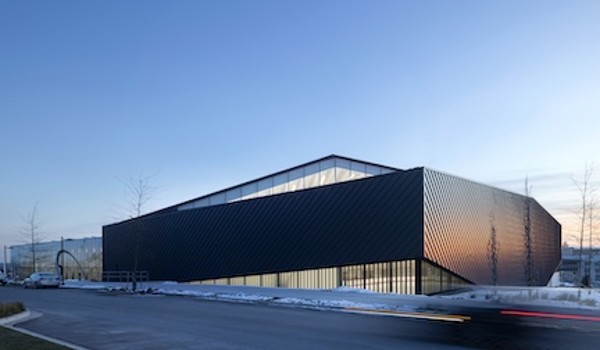
Windowless cold arenas are a thing of the past at the newly opened Rosemary Brown Recreation Centre in Burnaby, B.C. Inside the 91,999-square-foot community hub, natural light, exposed mass timber and a transparent, open layout bring warmth to the human-centred design.

To create a more dynamic public experience, hcma architecture + design imagined an inclusive facility that isn’t solely dedicated to sport. An abundance of north-facing light fills the rinks without impacting the quality of ice. The clerestories were possible through the flexibility of a hybrid steel-timber roof system, which allowed for a complex geometry.

Burnaby

Clerestory windows are visible from the exterior of the Burnaby–based recreation centre. Photo by Ema Peter.

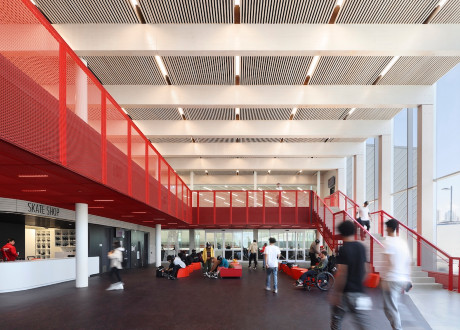
Wood greatly contributes to the centre’s character. Glulams serve as both beams and vertical columns that support the structure in the lobby and contribute to its warm, inviting ambience visible from both inside and outside, hcma described.

Nail-laminated timber, a century-old construction method, was used for the lobby’s decking system to offer superior acoustic integration, while enhancing the overall experience.

The site’s tight footprint led to a non-traditional arrangement of its two NHL-sized ice sheets: an L-shape with a central lobby located at their meeting point. This brings an openness between the lobby and the ice sheets, as well as a friendly, animated elevation to the street and community beyond. Both rinks have a total 411-seat capacity.

Burnaby

A view of the skate shop. Photo by Ema Peter.

Inside, the Burnaby community will also discover multipurpose rooms and spaces within the lobby for activities beyond ice sports, such as pickleball, pilates and playoff watch parties. There is a skate shop, concession and outdoor rooftop patio.

Warm-side galleries on the second floor offer accessible viewing, while informal play areas directly behind allow children to engage in casual, self-directed play.

The centre also embodies the legacy of Rosemary Brown —a trailblazing Canadian advocate for social justice and equality. Inclusivity is featured prominently through fully accessible washrooms and change rooms with gender-neutral options.

As well, the design considers how washroom accessories, such as hand dryers, impact neurodiversity.

Braille and tactile signage, created by hcma’s communication design team, support visual impairment. There are also wide circulation paths and high contrast wayfinding, elevator access to level two programming, and provisions for sledge hockey, benches and accessible furnishings throughout the facility.

“Rosemary Brown Recreation Centre is more than an arena; it’s a space designed to foster community through recreation and high-performance sport,” said Paul Fast, principal at hcma architecture + design. “The Centre’s ambition is to become an essential fixture in Burnaby’s Southgate community, supporting the next generation of athletes, weekend warriors, and recreation enthusiasts alike.”

Feature photo by Ema Peter.

AI project targets waste management at Montréal event centre

A technology project that uses artificial intelligence to manage event-generated waste will soon be underway at Palais des congrès de Montréal.

The international convention centre is collaborating with Polytechnique Montréal to integrate the system into its operations during the 2025 winter season.

A group of four undergraduate students in software engineering will design an intelligent system capable of identifying, characterizing and quantifying waste produced during each event. This process will provide the Palais with precise data on the environmental impact of the events it hosts. Each student will devote 270 hours to this project, for a total of 1,080 hours of work.

Through data collection, the Palais hopes to acquire a better understanding of event-related consumption habits and waste production. The ultimate goal is to develop customized strategies for each type of event to reduce waste production and promote more sustainable alternatives.

Spearheading the project is IVADO, an interdisciplinary, cross-sectoral research and knowledge mobilization consortium dedicated to advancing AI. IVADO is led by Université de Montréal and its four post-secondary partners: Polytechnique Montréal, HEC Montréal, Université Laval, and McGill University.

“This is a fabulous opportunity for our public organization to implement and benefit from an integrated AI system in our operational processes,” said Simon Harris, director of innovation and business intelligence at the Palais. “This project reflects our desire to improve our productivity through artificial intelligence, while optimizing the efficiency and precision of our services. The future of our organization rests on technological innovation and this project marks a key step in this digital transformation.”

This project is also builds on successful collaborations between the Palais and Polytechnique Montréal, in particular under a program led by Mitacs. The conference centre is developing other AI applications, such as a computer vision system to evaluate room occupation and management, and a performance optimization tool to gradually automate certain administrative tasks.

Maintainer-friendly dispenser design trends

Maintainers perform dozens of tasks every day that require time, effort, focus, and action, making their work both mentally and physically demanding. And the pressure on maintainers is only mounting as the needs for improved hygiene and improved productivity continue to increase. For this reason, designers of the products maintainers come in frequent contact with are taking a user-centered design approach.

User-centered design is grounded in understanding a product user’s needs, empathizing with their preferences, and designing a product to meet those needs and preferences. The approach results in products that are easy to use and intuitive to navigate.

Restroom paper towel, tissue, and soap dispensers are among the products maintainers most frequently interact with when performing their duties. Here are three emerging user-centered design trends that prioritize the maintainer experience:

Colour-coded directives

A paper towel dispenser looks quite simple from the outside, but automated touchless dispensers have a lot of moving parts and technology on the inside. When a maintainer opens a dispenser to replace a paper towel roll, all of those parts and systems can be intimidating, and it can be difficult to know what lever to pull or what button to press to complete what should be a quick and easy task.

Colour coding lets maintainers know which parts of the dispenser to touch. For example, levers or buttons that are blue could signify that maintainers use them to take a specific action or perform a needed task.

Another use of colour is with clearly visible indicator lights that let the maintainer – and consumer – know if a dispenser is out of product or requires service. Green could indicate the dispenser is loaded and working properly; red could indicate the dispenser requires attention. This type of functionality eliminates the need for maintainers to open each dispenser to check its status, freeing them to perform higher value cleaning tasks.

Harder working functionality

A common complaint among facility managers is that well-intentioned maintainers replace product unnecessarily, which is both wasteful and costly. Consider a multi-roll toilet paper dispenser. When maintainers open the dispenser to replace an empty roll, they often replace rolls that are almost empty as well, so they don’t need to do it later.

To meet the needs of facility managers who want to reduce waste and costs as well as maintainers who want to be efficient with their time, one new-to-market four-roll tissue dispenser has an independent roll spindle system. The system enables each roll holder to operate individually, dropping into the loading position only when empty. Not only does this technology eliminate stub roll waste, it has also been shown to reduce load time by 40 per cent.

With this and similar design features, the dispenser works harder so maintainers can work smarter. Maintainers don’t need to debate whether or not to replace a tissue roll or question the most efficient course of action because the dispenser only allows them to replace empty rolls.

Ergonomic features

There are countless steps involved in refilling a dispenser, whether it holds paper towel, tissue, or soap, and it seems, at times, that maintainers would benefit from having three or four hands to best complete this task.

Among the many principles user-based design incorporates is ergonomics, which is the study of people in their work environment. Ergonomics prioritizes a worker’s wellbeing and aims to eliminate their discomfort or potential risk of injury when performing their job. Among a number of benefits, applying ergonomics to dispenser design results in maintainers being able to easily and comfortably refill them.

One example of an ergonomic dispenser design feature is contoured soap bottles that are easy to hold in one hand while the other hand opens the dispenser and easily grasps and removes the empty bottle. Simply changing the shape of the bottle reduces how often maintainers must walk back and forth to their supply cart, allowing them to seamlessly complete the task.

In restroom maintenance, every minute and every movement counts for busy maintainers who are physically and mentally engaged for six, eight, even 12 hours at a time. Dispensers designed from a user-centered approach help maintainers improve their speed of service, successfully complete tasks on the first try, and focus more of their attention on higher value cleaning tasks. As a result, they also have the potential to improve company culture, giving maintainers a higher sense of confidence in their abilities and greater satisfaction in their work.

Ronnie Phillips, who has a Ph.D. in Chemistry from the Georgia Institute of Technology, is senior director of Washroom Innovation at GP PRO, the away-from-home division of Georgia-Pacific, and an adjunct faculty member in Georgia State University-Perimeter College’s Chemistry Department. GP PRO is a recognized leader in designing innovative restroom solutions that meet the needs of both restroom users and maintainers. To learn more, visit www.gppro.com. 

UCalgary Mathison Hall earns LEED Platinum

Mathison Hall at the University of Calgary’s Haskayne School of Business, has earned the Canada Green Building Council’s (CaGBC’s) Leadership in Energy and Environmental Design (LEED) Platinum certification.

Designed by Diamond Schmitt, in association with GGA-Architecture, the four-storey, 111,900-sf facility represents a forward-thinking approach to campus development—a sustainable vision for unparalleled learning, innovative research, and community engagement that supports the evolving needs of the Haskayne School of Business and its community. EllisDon was general contractor.

Mathison Hall prioritizes sustainability through a comprehensive and integrated strategy that incorporates energy-efficient systems, renewable energy solutions, and sustainable materials into its design:

  • The hall’s façade concepts are strategically selected to minimize TEDI by eliminating air leakage, minimizing thermal bridging and taking advantage of passive heating opportunities.
  • A hydronic system is used to heat and cool the building, minimizing energy consumption and maximizing space for ventilation systems. It ensures optimal comfort and air quality by providing the right amount of fresh air to every space in the building.
  • An articulated sawtooth façade encircles the large central atrium, with both an aesthetic and functional purpose, enabling natural ventilation and free cooling, further reducing energy needs.
  • Roof-mounted solar panels are used to generate clean energy, offsetting a significant portion of the building’s annual emissions. It is projected to generate roughly 280 tonnes of CO2 emissions per year associated with energy required for heating, cooling and electrifying the building.

With the focus on sustainability and achieving high performance energy efficiency metrics, Mathison Hall has been designed to contribute to the University of Calgary’s carbon neutral commitments and is one of the most energy efficient buildings on campus.


Green Seal Prohibits PFAS forever chemicals

Global non-profit Green Seal® has announced a prohibition on any per- and polyfluoroalkyl substances (PFAS) in Green Seal-certified paints and coatings, floor care products, adhesives, and degreasers, in line with the ecolabel’s commitment to eliminate these harmful “forever chemicals” from the supply chain for consumer products.

Green Seal is among the first eco-certifiers to enact an aggressive ingredient prohibition that addresses PFAS as an entire chemical class. Mirroring the definition used in the majority of U.S. state-level PFAS bans, the non-profit defines PFAS as a chemical with one or more fully fluorinated carbon atoms – the most expansive definition, encompassing more than 14,000 chemicals.

Green Seal-certified products already are leaders in material health, meeting one of the highest benchmarks for safety and environmental protection in the marketplace. Because of Green Seal’s stringent criteria, certified paints and coatings qualify toward points for both the LEED v4.1 Low-Emitting Materials credit and the LEED v4.1 Material Ingredient Optimization credit, making Green Seal’s certification standard one of a select few to achieve this recognition.

Now, the organization also will verify that certified paints and other building restoration products are formulated without any PFAS, putting participating brands in a leadership position on this toxic chemical and protecting companies against greenwashing by substantiating their sustainability claims. The update to building restoration product criteria follows a similar update to Green Seal’s criteria for cleaning and personal care products.

“Both producers and buyers know the hazards of PFAS but lack reliable ways to ensure products are formulated without these toxic chemicals,” said Doug Gatlin, CEO of Green Seal. “Green Seal’s standard criteria eliminate PFAS from the product formula while maintaining performance requirements, so buyers can confidently choose safer and more sustainable products.”

PFAS have carbon-fluorine bonds that make them very stable and effective at repelling oil, water, and heat. This unique chemical structure also makes them resistant to degradation, meaning they persist in the environment as so-called “forever chemicals.” PFAS are now found in the blood of most people around the world and are linked to numerous adverse health effects, including cancer, reproductive harm, and decreased immune response.

PFAS frequently are used as functional ingredients in building restoration products. A recent study found that half of tested paint products contain PFAS, which may be used for glossiness, to reduce peeling, or for stain resistance or water repellency. Most acrylic and wax floor finishes on the market contain PFAS as leveling and wetting agents, and PFAS are also used to increase wettability in adhesives.

Find the full list of Green Seal certified products in Green Seal’s product directory.

Saskatchewan advances disposal of derelict buildings

Rural Saskatchewan is teeming with abandoned buildings, so the provincial government is developing a pilot framework that would allow participating municipalities to work with volunteer fire departments to safely dispose of these municipal-owned structures for fire fighter training exercises.

Derelict buildings pose both public safety and economic issues, hindering redevelopment and posing safety hazards.

“As a municipality that absorbed a village in 2017, we have experienced first-hand the financial burden accompanying the demolition of derelict buildings,” Reeve of Kellross Rural Municipality No. 247 Thad Trefiak said. “This program will help us with the on-going challenges related to aging infrastructure.”

Bill Huber, president of the Saskatchewan Association of Rural Municipalities, said municipalities want to encourage families to live, work and stay in rural Saskatchewan and nothing is more discouraging than a surplus of abandoned buildings. “SARM is pleased to hear the provincial government is initiating a pilot program to assist rural municipalities with the removal and remediation of derelict buildings they have been forced to assume title on.”

It is anticipated that details of the pilot framework will be available in summer 2025. During the spring legislative session, the provincial government will address any regulatory or legislative changes required to support the framework.

Average asking rents declined in February

The average asking rent for all residential properties in Canada fell to $2,088 in February, marking a 4.8 per cent annual decline. According to Rentals.ca and Urbanation, this is the largest drop since April 2021 and the fifth consecutive month of year-over-year rent decreases. That said, despite recent declines, rents remain 5.2 per cent higher than two years ago and 16.9 per cent above pre-pandemic levels.

“Rents in Canada are softening as supply is outweighing demand,” said Shaun Hildebrand, President of Urbanation. “Apartment completions are currently running at record highs, while at the same time, population growth has slowed and the economy faces heightened risks due to a potential trade war with the U.S. Expect rents to continue decreasing in the near-term as these trends likely remain in place.”

Data from the latest Rent Report indicates average asking rents in Canada have decreased by $105 per month since February 2024. In contrast, rents rose by $209 per month from February 2023 to February 2024. Despite the recent decline, average asking rents remain $302 per month higher than they were five years ago.

Apartment rents in Canada decreased 2.9 per cent annually to an average of $2,084, with Ontario seeing the sharpest decline (-4.2% to $2,329), followed by British Columbia (-1.0% to $2,457) and Quebec (-0.6% to $2,329). Rents increased in Alberta (+1.4% to $1,732) and Nova Scotia (+1.2% to $2,171), while Saskatchewan (+5.2% to $1,329) and Manitoba (+3.4% to $1,606) recorded the strongest rent growth.

Among major cities, Calgary posted the largest annual rent decline for apartments (-7.0% to $1,916), followed by Toronto (-6.7% to $2,615) and Vancouver (-4.8% to $2,870). Toronto’s average rent remained unchanged month-over-month, holding at a two-and-a-half-year low. Rents fell across all unit types in Toronto, Vancouver, and Calgary, with the steepest declines for studio and one-bedroom apartments.

Ontario continued to dominate both the most expensive and most affordable rental markets. Oakville was Canada’s second most expensive market ($2,829), while Windsor ($1,620), Welland ($1,726), and Chatham-Kent ($1,787) ranked among the most affordable.

Quebec City led rent increases among mid-sized markets, rising 12.3% year-over-year, followed by Oakville (+12.1%) and Saskatoon (+10.3%). Meanwhile, Cote Saint-Luc (-18.2%) recorded the largest rent decline, with Kingston (-10.9%) and Windsor (-6.1%) seeing notable drops.

The shared rental market also experienced a slowdown, with listings declining 29 per cent from January. Shared accommodation rents fell 8.2 per cent in Toronto to $1,176 and 8.0 per cent in Montreal to $870.

Kelowna dedicates $150M to infrastructure projects

The City of Kelowna is set to make a significant investment in 2025, dedicating $150 million to infrastructure projects. The plan includes 52 transportation projects, 23 park projects, 38 utilities projects and 20 protection projects, all to be delivered this year.

“Many of the projects identified for construction this year focus on renewing existing infrastructure and making targeted investments to keep Kelowna running smoothly and safely while accommodating population growth,” said Brian Beach, infrastructure delivery manager. “Our goal is to keep citizens safe and healthy by enhancing services. At the same time, we are creating opportunities for economic development by providing the necessary infrastructure support for businesses to thrive.”

The city is making a significant investment this year, reflecting the rapid growth and increasing demands from residents. Kelowna is growing faster than projections anticipated, and the increase in housing construction has meant more funding is available for various infrastructure projects.

This year’s 133 projects will improve parks, transportation, utilities, facilities and restore natural habitats. Some notable projects that are set to start this year include:

  • Rutland Recreation Park, $3.9 million investment this year to begin work on two new artificial turf sport fields;
  • the K.L.O. bridge replacement, $16 million investment to replace the aging bridge and install a roundabout at Spies Road;
  • Mill Creek Flood Protection Work, $3.9 million investment on various flood protection projects throughout the city; and
  • the Glenmore Road sanitary trunk, $3.6 million investment on the construction of 1.5 km of a new 600 mm sanitary trunk main and $6 million to expand the current road from two lanes to four lanes from Union Road to Scenic Road.

Other projects underway this spring include additional city park improvements, Frost, Burtch and Hollywood Road extensions, the Royal View Transmission Main and stormwater upgrades.


GTA home sales decline

February home sales were down 27 per cent compared to the same period last year in the Greater Toronto Area. The Toronto Regional Real Estate Board is also reporting that listing inventory remained high—up by 5.4 per cent since January 2025.

TRREB Chief Market Analyst Jason Mercer said homebuyers have become less confident in the economy. “Uncertainty about our trade relationship with the United States has likely prompted some households to take a wait-and-see attitude towards buying a home,” he observed. “If trade uncertainty is alleviated and borrowing costs continue to trend lower, we could see much stronger home sales activity in the second half of this year.”

In total, TRREB recorded 4,037 home sales and 12,066 new listings.

“Many households in the GTA are eager to purchase a home, but current mortgage rates make it difficult for the average household to comfortably afford monthly payments on a typical property,” added TRREB President Elechia Barry-Sproule. “Fortunately, we anticipate a decline in borrowing costs in the coming months, which should improve affordability.”

The average selling price, at $1,084,547, was down by 2.2 per cent compared to February 2024, with home price index composite benchmark down by 1.8 per cent.

“With the Ontario provincial election just behind us and the federal political situation in flux, there is a lot to consider from a policy perspective when it comes to housing,” said John DiMichele., TRREB CEO. “Not only do policymakers and those vying for high public office need to make clear their direction on housing supply and affordability, but they also need to be clear on how they intend to tackle issues related to trade and the economy. Clear direction will go a long way to strengthen consumer confidence.”

Lenders exhibit decarbonization disconnect

Canadian lenders may be reassessing the urgency of decarbonization, but they still express enthusiasm for the sustainable assets and impact investments that appear to be losing cachet in the United States. Recently released findings from CBRE Canada’s annual survey of lenders’ attitudes and intentions toward commercial real estate reveal generally diminished expectations that buildings’ greenhouse gas (GHG) emission profiles will have a material impact on financing conditions in the near term.

Yet, while sustainability is not a ranking must-have, there is evidence that it’s a preferred attribute. More than 40 per cent of survey respondents currently offer better credit spreads, averaging out at 8 basis points, for assets with sustainability credentials such as LEED or BOMA BEST certification, and an additional 19 per cent say they will begin doing so in the near future.

“There is a bit of a disconnect here,” acknowledged Joshua Sonshine, a CBRE senior vice president, as he highlighted some of the survey results during a late February presentation in Toronto. “Basically, it pays to have sustainability-focused assets, but, no, the lack of those credentials won’t stop you from getting financing.”

Meanwhile, on the social benefits side of the equation, 86 per cent of surveyed lenders are looking to increase their budgets for CMHC-insured (Canada Mortgage and Housing Corporation) construction loans for purpose-built rental housing this year. That’s a category in which there has been robust developer uptake of the MLI Select program to support affordable, accessible and energy-efficient supply.

Improved outlook on most asset classes for 2025

The latest edition of the annual survey was conducted between Dec. 10, 2024 and Jan. 20, 2025, drawing input from 37 institutions — including domestic and foreign banks, credit unions, insurance companies, pension funds and private debt capital — that collectively hold more than $200 billion in commercial real estate loans. This year, 76 per cent of respondents plan to originate more loans, with 24 per cent targeting at least a 20 per cent year-over-year increase in capital deployed to commercial real estate. As well, lenders report an improved outlook on almost every asset class except for development land and high-rise condominiums.

Turning to asset characteristics, a larger share of respondents — 17 per cent versus 11 per cent in late 2023 — report that buildings’ carbon footprints already have a material impact on the availability of capital and mortgage terms. However, 47 per cent suggest that sustainability factors will not affect their decision-making for at least five years or perhaps not at all. As well, no respondents foresee material impacts on mortgage terms within the next two years, even though nearly 20 per cent made that prediction in the previous two annual surveys.

Among those who expect GHG emissions profiles will influence debt availability and mortgage terms before the end of this decade, just 11 per cent envision a significant impact while the larger share expect a limited to moderate impact. CBRE’s capital market specialists hypothesize that Canadian lenders are now taking more cues from the U.S., where the new federal administration shows little sign that it will push financial institutions to address physical or transitional climate risk, than from Europe, which has long been upheld as a harbinger of what’s looming on the regulatory front.

“As much as European lenders continue to ratchet up sustainability requirements, it just doesn’t seem like those practices or expectations will be a reality in Canada for many years,” Sonshine mused.

“These results also align with CMHC’s announcement in June of 2024 that the allocation of points available under the MLI Select’s energy efficiency criteria would be reduced in new rental construction,” observed his co-presenter, Jessica Harland, also a senior vice president at CBRE.

CMHC’s MLI select program galvanizes purpose-built rental production

Under the MLI Select program rules, prospective borrowers must achieve at least 50 points through any combination of designated options for affordability, accessibility and/or energy efficiency in order to secure loan insurance. At 50 points, they are eligible for backing for up to a 95 per cent loan-to-cost (LTC) ratio on the housing portion of a project (up to 75 per cent LTC on the non-residential component) with an up to 40-year amortization period. That jumps to a 45-year maximum amortization at 70 points and to 50 years at 100 points.

Currently, loan candidates can achieve a maximum of 100 points for affordability, a maximum of 50 points for energy efficiency and a maximum of 30 points for accessibility. Joining the presentation proceedings to provide more context, CMHC’s president and chief executive officer, Coleen Volk, characterized the program as both anomalous with the agency’s mandate to be a commercial supplier of insurance and a purposeful business deviation to try nurture more housing supply.

“We stand by that decision, but it has complicated our world because we are trying to operate a commercial enterprise with a very explicit policy element to it,” she maintained. “Now that we have this, the industry is greatly relying on it. It’s been very important to the purpose-built rental that has been built over the last little while.”

Rob Kumer, chief executive officer of KingSett Capital, underscored that fact in an associated panel discussion. He calculates that roughly $280 million raised through his firm’s affordable housing fund will translate into $2.5 to $3 billion worth of development because projects can be so highly levered.

“There’s a whole bunch of things going on in affordable housing that actually make a lot of sense. We’re finding a lot of success,” he said. “It’s taken us awhile to get here because, with every deal, you sort of start from scratch. You work with the City, the Province, the Feds, CMHC to try to put together a structure that makes sense and put you in a spot where you can get going, but, ultimately, you can find ways to be creative and make money in these projects.”

Volk expressed hope that others will catch on to the possibilities.

“Multiples is a huge business and it’s been growing by leaps and bounds. Wearing the social policy hat at CMHC, I say: I am so happy to see that growth and I am so happy to see that supply. As the insurance provider, I say: It would be so nice if we weren’t the only game in town,” she advised. “It would be great if we could see conventional players come in.”